
World News
Why Putin choose to invade Ukraine and what is his plan?

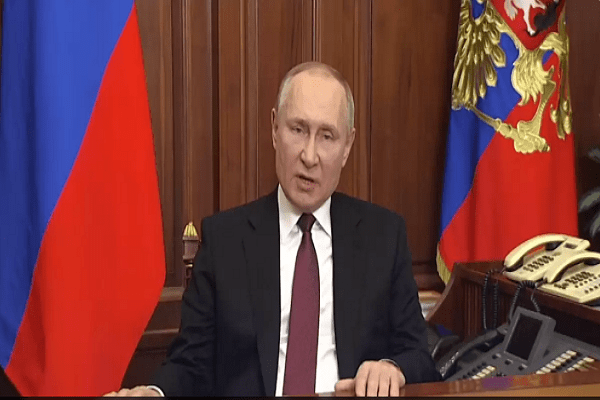
Why did Putin choose to invade Ukraine – Former KGB agent Vladimir Putin is not the most transparent world leader. The Russian president is considered mysterious and unpredictable and likes to mislead his opponents. His motives for the Russian invasion of Ukraine are therefore hotly debated. What do we actually know about that?
Why does Putin have a crush on Ukraine?
Before the first shots were fired during the night from Wednesday to Thursday, the Russian president explained his justification for the invasion of Ukraine in two speeches, on Monday and Thursday.
He claimed, among other things, that most of Ukraine is historically Russian and was detached by the leaders of the Soviet Union at the beginning of the twentieth century. A mistake, said the Russian president. He considers the Ukrainian national identity to be fictitious, fake.
Historians such as Yale professor Timothy Snyder make mincemeat of that argument: Ukraine’s historical identity is comparable to that of many other European countries. (Why Putin choose to invade Ukraine)
After the Maidan Revolution in 2014, the popular uprising that put brutal pro-Russian President Viktor Yanukovych on the run and is considered an armed coup by Putin, Ukraine became a pawn of NATO (read: the US), according to the Russian president.
Putin initially spoke with a neutral face about NATO and the US, but his tone became noticeably more vicious when it came to Ukraine. He sees Ukraine as fundamentally Russian. Ukrainians who choose the West are not only pawns for him, but also traitors.
In 2014, Russia responded by appropriating Crimea and supporting pro-Russian separatists in eastern Ukraine (who could be considered an extension of Moscow). The instability this entailed was a guarantee that plans for Ukraine’s NATO membership were shelved. Countries involved in a conflict over territory are not allowed to join under NATO rules.
Why did Putin choose to invade Ukraine
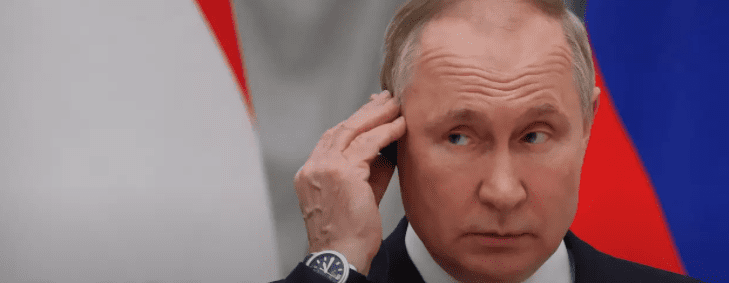
Ah, NATO. Russia is afraid that it will deploy all kinds of weaponry on its borders. Makes sense in itself, right?
Putin’s grievances against NATO go a little further than that. He believes that after the fall of the Soviet Union, the West did everything it could to keep Russia small. In fact, in his February 24 speech, he said the US and its allies have “tried to finish us, to destroy us completely”.
NATO “supports Nazis and nationalists in Ukraine, who will never forgive the people of Crimea for choosing to join Russia,” Putin said. According to him, Ukraine and the West are guilty of “genocide” against Russian speakers in eastern Ukraine. There is no evidence for that claim, clearly intended to arouse the Russian population for military action against Ukraine (read: the US). (Why Putin choose to invade Ukraine)
The current crisis can be traced back to 2008, when NATO announced that Ukraine and Georgia had taken the first step in the membership process. That proved a bridge too far for Russia, which invaded Georgia to support two separatist areas (Abkhazia and South Ossetia).
From that moment on, relations between Russia and the West went downhill. Major points of tension have included the war in Syria (Russia provided dictator Bashar Al Assad with direct military support against the rebels), Russian attempts to influence the 2016 US presidential election and the poisoning of a former Russian double agent in the UK. Salisbury. (Why Putin choose to invade Ukraine)
Russia was by far the most powerful country in the Soviet Union and therefore ruled the roost. Before that, too, it was the regional superpower on the eastern half of the Eurasian continent for centuries. That makes it painful when countries that – as it is called – belonged to the Russian sphere of influence, choose a Western course and turn away from Russia. Why Putin choose to invade Ukraine
In addition, it is threatening for Putin that large parts of the populations of Georgia and Ukraine chose to deal with an autocratic and corrupt elite through a people’s revolution and to continue the democratization of their countries. For the autocratic and corrupt Putin, that is a threatening picture.
Why did Putin choose to invade Ukraine

What does Putin want with Ukraine after the conquest?
Putin’s plans this time seem to go well beyond those for Georgia in 2008. He has made it clear that his intention is to replace the government in Kiev and neutralize the Ukrainian armed forces, making sure they can no longer pose any threat. .
Initially, it was unclear whether the Russians would be satisfied with occupying the eastern provinces of Donetsk and Luhansk, which were already about a third in the hands of the pro-Russian separatists. We now know that Russia is also moving towards the northern Kiev. On Friday morning, the first Russian armored vehicles were sighted in a suburb of the capital. (Why Putin choose to invade Ukraine)
In his speech on Monday, the Russian president may have hinted at the scope of his plans. He referred to Ukrainian efforts in recent years to deal with the communist past.
According to the Russian president, these also mean that the territory that the country received as a gift from the Soviet Union in his reading of history must be returned to Russia. On Putin’s map, Ukraine is then reduced to a small yellow spot just south of Kiev.
“Now grateful descendants have destroyed monuments to Lenin in Ukraine. They call it ‘decommunizing’,” he sneered. “Do you want to decommunize? Well, that’s fine with us. But you shouldn’t stop halfway. We are ready to show you what decommunizing means for Ukraine.”
JOIN US ON WHATSAPP
Why Putin choose to invade Ukraine / Why Putin choose to invade Ukraine


Skewed journalism – 11/14/2025 – Hélio Schwartsman
– Catch up on breaking White House updates, U.S. political headlines, and the latest celebrity drama shaping America’s entertainment world.
The BBC committed bad journalism by biasedly editing two different speeches by Donald Trump, giving the false impression that he made a direct call for violent action on the day of the invasion of the Capitol, in 2021. The story has already cost two of the broadcaster’s positions their jobs and could leave a huge bill for the British taxpayer. Agent Orange threatens to sue the BBC for US$1 billion in damages.
Journalism, as it tries to draft the story in real time, is an activity more prone to errors than occupations that deal with repetitive and more easily “protocolizable” tasks, such as surgeries or air transport. The problem is not so much making mistakes, but always erring towards the same side on politically charged issues.
The internal report that highlighted the error in Trump’s case also identified biases in the BBC’s coverage of Gaza and trans people. What to do? Part of the problem is that different professions attract different audiences. It is common to see a greater concentration of leftists in activities such as journalism and academia and of rightists in military careers or in the financial market.
It is a self-selection process based on personality traits and tastes. I don’t see much that can be done to counter this. To make matters worse, we live in a moralistic era, which socially rewards engagement and militancy.
The path that seems feasible to me is to create a culture that clearly distinguishes the personal sphere, in which militancy is legitimate, from the professional one, which needs to be guided by technical rigor and distancing from preconceived positions.
The concern of reporters and editors when preparing texts for publication should be to inform their readers and not transform the world. They also need to develop a kind of professional paranoia, constantly asking themselves if they haven’t let themselves be carried away by their preferences and ended up crossing some red line.
Professional journalism, to fulfill its mission, needs to be different from social media.
LINK PRESENT: Did you like this text? Subscribers can access seven free accesses from any link per day. Just click the blue F below.
Skewed journalism – 11/14/2025 – Hélio Schwartsman
and receive alerts From Hollywood stars to White House shocks—get today’s top U.S. entertainment stories with real-time political and presidential news.
 Follow AFRILATEST on Google News
SHARE POST AND EARN REWARDS:
Join our Audience reward campaign and make money reading articles, shares, likes and comment >> Join reward Program
FIRST TIME REACTIONS:
Be the first to leave us a comment – Skewed journalism – 11/14/2025 – Hélio Schwartsman
, down the comment section. click allow to follow this topic and get firsthand daily updates.
JOIN US ON OUR SOCIAL MEDIA:
Skewed journalism – 11/14/2025 – Hélio Schwartsman
Thanks for reading, know we love you and appreciate your supports!!

Tariffs: Trump ready to exempt coffee, cocoa and bananas – 11/14/2025 – Market
– Catch up on breaking White House updates, U.S. political headlines, and the latest celebrity drama shaping America’s entertainment world.
United States Trade Representative Jamieson Greer said this Friday (14) that President Donald Trump is ready to fulfill promises to grant tariff exemptions to some foods and other products that are not produced in the USA.
Greer told CNBC in a live interview that there are some “micro areas” of trade in non-U.S.-produced products, such as coffee, cocoa and bananas, where the U.S. doesn’t need tariffs.
He said the time is ripe for this, after approaching trade agreements with four Latin American countries on Thursday (13).
“And so the president has decided that now that we have this in place, we have these agreements in hand, it’s time to remove some of these tariffs on products. Products that we don’t make here.”
The White House announced on Thursday (13) that the country had reached preliminary understandings for trade agreements with Argentina, Ecuador, El Salvador and Guatemala.
According to the government, the agreements should be concluded in the next two weeks and open markets for US agricultural and industrial production. The four countries have committed not to impose taxes on digital services from big techs.
The White House indicated that the general tariffs of 10% imposed on products from Argentina, El Salvador and Guatemala, and 15% on those originating in Ecuador, will remain unchanged, but that there will be a reduction in a certain number of goods.
According to the White House, the American government has maintained good conversations with other countries in the region. Brazil, the target of 50% surcharges, was not mentioned in the agreements.
Tariffs: Trump ready to exempt coffee, cocoa and bananas – 11/14/2025 – Market
and receive alerts From Hollywood stars to White House shocks—get today’s top U.S. entertainment stories with real-time political and presidential news.
SHARE POST AND EARN REWARDS:
Join our Audience reward campaign and make money reading articles, shares, likes and comment >> Join reward Program
FIRST TIME REACTIONS:
Be the first to leave us a comment – Tariffs: Trump ready to exempt coffee, cocoa and bananas – 11/14/2025 – Market
, down the comment section. click allow to follow this topic and get firsthand daily updates.
JOIN US ON OUR SOCIAL MEDIA:
Tariffs: Trump ready to exempt coffee, cocoa and bananas – 11/14/2025 – Market
Thanks for reading, know we love you and appreciate your supports!!

US Senate approves agreement to end shutdown – 11/10/2025 – Market
– Catch up on breaking White House updates, U.S. political headlines, and the latest celebrity drama shaping America’s entertainment world.
The United States Senate approved this Monday (10) an agreement that ends the longest government shutdown in the country’s history, ending a weeks-long impasse that interrupted food benefits for millions of people, left hundreds of thousands of employees without pay and caused delays in air traffic.
The proposal, which had 60 votes in favor and 40 against, received support from almost all Republicans in the House and eight Democrats, who tried, unsuccessfully, to link government funding to the renewal of health subsidies that expire at the end of the year.
The agreement provides for a vote in December on these benefits, which serve 24 million Americans, but does not guarantee their extension.
The text restores resources for federal agencies whose budget expired on October 1st and suspends President Donald Trump’s campaign to reduce civil service, preventing layoffs until January 30th.
The bill now heads to the Republican-controlled House of Representatives. The President of the House, Mike Johnson, stated that he intends to approve it by Wednesday (12) and send it to Trump for sanction. The president classified the agreement to reopen the government as “very good”.
The agreement extends federal funding until January 30, keeping the government on track to add about $1.8 trillion a year to the public debt, which already totals $38 trillion.
The decision comes a week after Democrats won significant victories in state elections in New Jersey and Virginia and elected a democratic socialist as the new mayor of New York.
The outcome provoked irritation among Democratic parliamentarians, who point out the lack of guarantees that the Senate and the House, both under Republican control, agree to extend health subsidies.
“We wish we could do more,” said Senator Dick Durbin of Illinois, second in the Democratic leadership. “The government shutdown seemed like an opportunity to move forward with better policies. It didn’t work.”
A Reuters/Ipsos poll conducted in late October showed that 50% of Americans blamed Republicans for the shutdown, while 43% blamed Democrats.
American stock markets rose this Monday, driven by news of progress in the agreement to reopen the government.
Trump had already unilaterally canceled billions of dollars in spending and reduced the federal payroll by hundreds of thousands of employees, interfering with Congress’s constitutional authority over the budget.
These measures violated previously passed budget laws, and some Democrats questioned why they should support new spending deals under these conditions.
The approved text does not include specific mechanisms to prevent Trump from promoting new budget cuts.
On the other hand, the agreement guarantees financing for the Snap food subsidy program until September 30 of next year, avoiding possible interruptions if Congress once again paralyzes the government during the period.
US Senate approves agreement to end shutdown – 11/10/2025 – Market
and receive alerts From Hollywood stars to White House shocks—get today’s top U.S. entertainment stories with real-time political and presidential news.
SHARE POST AND EARN REWARDS:
Join our Audience reward campaign and make money reading articles, shares, likes and comment >> Join reward Program
FIRST TIME REACTIONS:
Be the first to leave us a comment – US Senate approves agreement to end shutdown – 11/10/2025 – Market
, down the comment section. click allow to follow this topic and get firsthand daily updates.
JOIN US ON OUR SOCIAL MEDIA:
US Senate approves agreement to end shutdown – 11/10/2025 – Market
Thanks for reading, know we love you and appreciate your supports!!
-

 Health and Fitness3 months ago
What are ‘hard bellies’ or Braxton-Hicks contractions?
-
Trending Entertainment News3 months ago
Nkeshemba – Ngixolele Mtanami MP3 Download & Lyrics
-
Trending Entertainment News3 months ago
Shatta Wale – Birthday MP3 Download and Lyrics
-
National3 months ago
Anambra Decides: Live Updates, Governor Election Results
-
Trending Entertainment News3 months ago
Mthandeni SK – 24/7 MP3 Download and Lyrics
-
Trending Entertainment News3 months ago
Esther Smith – Eye Ketewaa Bi MP3 Download and Lyrics
-
Black Celebrities3 months ago
Ibrahim Chatta tops Nollywood salary table and charges N5m – Otolo
-
Travel & Cars3 months ago
an alternative vision of electric mobility


