Nigerian Business
Moniepoint POS Network: How to Buy Dangote Shares
Learn how the Moniepoint POS network lets you buy Dangote Refinery shares with as little as N5,250. Step-by-step guide, fees, and risks.

You can now walk into a neighbourhood POS stand and walk out a shareholder. The Moniepoint POS network is being used to sell Dangote Petroleum Refinery shares at N525 each, with a minimum of 10 shares — that is N5,250. No broker. No investment app. No confusing financial language.
This guide shows you exactly how to use the Moniepoint POS network to buy Dangote shares, what it costs, and the mistakes to avoid.
**Why this matters**

Nigeria has 5.9 million active POS terminals. The Central Bank of Nigeria says POS terminals were used 15.66 billion times in 2025 — behind only internet payments. Nigerians are almost twice as likely to use a POS as they are to use an app.
Moniepoint has over one million active terminals and says its network covers all 774 local government areas. That physical reach is why the Dangote offer is being distributed this way. The IPO is targeting N2.15 trillion ($1.62 billion) and 10 million retail investors. Nigeria currently has about 2.7 million retail investors.
According to TechCabal, Moniepoint sees the IPO as a proof of concept for what its POS network could become: a physical distribution layer for financial products that have traditionally lived inside banks, brokerages, and investment apps.
Step-by-step: How to buy Dangote shares through the Moniepoint POS network
Step 1: Find a participating Moniepoint agent.
Not every agent may be live at first. Rollout begins with selected agents and will eventually cover the wider network.
Step 2: Ask for the Dangote IPO option.
Tell the agent you want to subscribe for Dangote Refinery shares. The agent selects the investment option on the terminal.
Step 3: Provide your details.
If you do not have a Moniepoint account, you will need to provide your Bank Verification Number (BVN). The terminal handles the registration and subscription process.
Step 4: Choose how many shares.
The price is N525 per share. Minimum is 10 shares (N5,250). Maximum is 500 shares per transaction. The POS channel is capped at N100,000 per person.
Step 5: Pay.
You can pay with cash or from your account. The agent processes the transaction on the terminal. You will get a receipt.
Step 6: Keep your receipt.
That receipt is your proof of subscription. The offer opened on September 14 and is scheduled to close on October 13, 2026.
What it costs
Moniepoint is charging N0 for processing the IPO. But agents still charge their usual commission. In one test, a N5,250 subscription attracted a N100 agent fee — about 1.0% of the transaction.
Dangote has earmarked an estimated N41.49 billion ($31.23 million) for offer expenses, covering issuing houses and professional parties. Fintechs will get a slice, but that does not come out of your pocket as an extra charge.
So a N5,250 purchase could cost you N5,350 in cash. A N10,000 budget buys 19 shares (N9,975), plus a N100 fee — total N10,075.
Mistakes to avoid
Mistake 1: Assuming the agent is a broker.
The agent is a distribution channel, not an investment adviser. They cannot tell you whether the shares are a good buy. If you do not understand what you are buying, ask questions before you pay.
Mistake 2: Using cash you need for something else.
The people this channel targets are often daily earners. Do not invest rent money or school fees. The minimum is small for a reason.
Mistake 3: Ignoring the N100,000 cap.
The cap is deliberate. Moniepoint says it does not want the channel to become an easy route for moving or laundering large amounts of money. If you want to invest more, use another channel.
Mistake 4: Thinking you are guaranteed profit.
An IPO subscription is not a fixed deposit. Share prices can fall. Dangote Refinery began commercial operations in 2024 and is Africa’s largest single-train refinery, but that does not guarantee your shares will rise after listing.
Mistake 5: Not checking your details.
Your BVN and subscription details must be correct. Wrong details can delay or void your allotment.
What happens after you subscribe
Your money leaves your account. You are now a subscriber, not yet a confirmed shareholder. Allotment happens after the offer closes. If the offer is oversubscribed, you may not get the full number of shares you applied for.
For Mrs Oyin Alade in Ojota, the experience was startling. She told BusinessDay that she had always associated shares with stockbrokers, banks, wealthy people and financial experts. She bought 10 shares for N5,250 through an agent she already trusted.
In Sapele, Delta State, a 400-level student had a similar experience. He walked in for a routine transaction and left a shareholder.
Is this the future of investing?
Moniepoint says the POS channel is growing faster than mobile for this offer. Daniel Ojinaka, Product Lead at TeamApt, told TechCabal that if the company does everything right, POS could surpass mobile.
But this is still an experiment. A POS transaction is not necessarily a unique person. Moniepoint’s network is only part of Nigeria’s total POS infrastructure. The reach numbers being discussed are scenarios, not forecasts.
What is clear is that the Moniepoint POS network is testing whether the same terminal that moves money can also help people own assets. For years, the capital market asked Nigerians to come to it. This time, the opportunity is being taken to where Nigerians already are — the roadside kiosk, the neighbourhood shop, the POS terminal around the corner.
Your first step today
Walk to your nearest Moniepoint agent. Ask if they are offering Dangote Refinery shares. If they are, confirm the price, the minimum, and the agent fee before you pay. Start with the minimum N5,250 if it is your first time. Keep your receipt. And remember: buying shares is not the same as saving in a bank.
Frequently Asked Questions
How much do I need to buy Dangote shares through Moniepoint POS?
The minimum is 10 shares at N525 each, which is N5,250. Agents may charge their usual commission, such as N100, bringing the cash needed to about N5,350.
Do I need a Moniepoint account to subscribe?
No. If you do not have a Moniepoint account, you can provide your Bank Verification Number (BVN) at the agent location to complete the subscription.
Is there a limit on how much I can invest through the POS channel?
Yes. The POS channel is capped at N100,000 per person, and a maximum of 500 shares per transaction. Moniepoint says the cap is partly a safety measure against money laundering.
Related Articles
- From Scholarships to Skills: Global Push to Train Youth
- Ikere Chamber’s NACCIMA Admission Validates Vision
- iPhone 18 Pro Max Review: Price, Specs, Verdict
- Court Strikes Out Oyefusi’s Suit Against Rhodes-Vivour, ADC
- Mexico vs Colombia: Márquez Debut Ends in Friendly

Nigerian Business
Dangote Petroleum Price Reduction Nigeria: Gate vs Pump
Dangote petroleum price reduction Nigeria explained: refinery gate prices fell to N1,070 but pumps still sell at N1,289 to N1,450. Why the gap persists.

IPMAN says petrol can sell below N800 a litre. The published record shows refinery gate prices near N1,070 and pumps between N1,289 and N1,450.
Abubakar Maigandi Shettima, national president of the Independent Petroleum Marketers Association of Nigeria, told a Monday meeting in Abuja that his members are ready to reduce the price to “even below N800, not even N900” a litre now that the Dangote refinery sells to them directly. What the Dangote petroleum price reduction Nigeria has booked so far is real, but it is smaller than that headline figure and it is measured at the refinery gate, not at the forecourt.
The distinction matters. IPMAN members control roughly 70 per cent of the country’s retail filling stations, according to BusinessDay. A price they quote is a retail intention. A price Dangote quotes is wholesale. Between the two sits everything that decides what a driver actually pays.
What The Direct Lifting Deal Actually Changed
Until the new arrangement, independent marketers bought through third-party private depots. Direct lifting from the refinery removes one markup layer between the tank and the pump. Shettima called it “a plus” and said the association is pushing for full deregulation so members can also import on their own licences.
His N800 line is conditional, not a commitment with a date. “Reducing the price depends on the way we buy the product from the private depot owners and Dangote refinery,” he said. No volume commitment, no timetable for the sub-N800 target, and no enforcement mechanism was published.
Why The Dangote Petroleum Price Reduction Nigeria Booked Has Not Reached Every Pump
ICIR reported the refinery cut its petrol gantry price by N60 to N1,070 per litre on Friday, November 20, from N1,130 two days earlier. On November 16 it had cut N51, from N1,210 to N1,159. The same outlet records gantry prices above N1,200 for months, touching N1,300 on November 3.
Retail did not track those moves naira for naira. NNPC’s Lagos pump price was reported at N1,289, down N61 from N1,350. NNPC Abuja was N1,325, while independent marketers in the capital charged N1,380 to N1,420. Punch put petrol at “between N1,370 and N1,450, depending on the location.”
On the best-documented Lagos pair, N1,070 at the gate against N1,289 at the pump, the wedge is N219 a litre. Source reports attribute that spread to transportation, distribution expenses, depot arrangements and individual marketers’ margins. None of the material reviewed here breaks out the tax and levy component, and no source isolates how much of the gap is statutory charge rather than logistics. That gap, not the gate price, is what a driver pays for.
The published figures also disagree with each other. Business Insider Africa reported Dangote’s ex-depot price at N1,075 with MRS at N1,074. Punch’s depot survey for Lagos put depot prices at N1,325 to N1,332. The reports appear to cover different dates, but a consumer budgeting around any single number is working with an estimate, not a quote.
What N61 A Litre Is Worth To A Driver Or A Shop
The arithmetic is modest. Fifty litres at N1,350 costs N67,500; at N1,289 it costs N64,450. The saving is N3,050 per fill, per MSME Africa. For a bus on a daily Lagos route, or a distributor running two vehicles, that is a genuine line item. It arrives only when the station has repriced, and a station holding stock bought at N1,350 has no immediate reason to.
Heineken Lokpobiri, minister of petroleum resources (oil), made that point directly: “Temporary gains realised from inventories acquired at higher prices should not become the basis for sustaining elevated pump prices after replacement costs have declined.” The same inventory logic explains why cuts lag crude moves on the way down and land faster on the way up. Lokpobiri put inflation at 15.9 per cent, down from 34 per cent in 2024, and warned that holding energy costs high where fundamentals have improved “risks undermining these gains.”
The Import Math Behind The N800 Question
MSME Africa reported the landing cost of imported petrol at about N1,063 per litre. Dangote’s gantry price on November 20 was N1,070. That N7 gap is thin headroom for a refinery that ICIR says supplies 87.5 per cent of national petrol demand, and it explains why IPMAN keeps asking for import licences. “If we request licenses for importation, independent marketers should be allowed to import by themselves,” Shettima said.
Crude benchmarks in the record do not agree either. Punch cited Brent at $99.77 and West Texas Intermediate at $91.17, with Murban up to $114.20. Business Insider Africa reported a one-day jump of more than 7 per cent after President Donald Trump ended the Iran ceasefire on July 8, 2026, taking crude from about $72 to near $80 a barrel. ICIR says the refinery prices on an EBOB-linked structure. A formula tied to import parity transmits a Middle East escalation into the gate price within days, which means a cut of N60 can be reversed by events nobody in Abuja controls.
What To Watch
Three numbers. Whether any IPMAN-member station posts a Lagos or Abuja pump price under N1,200, and by what date. Whether import landing cost stays below Dangote’s gantry price, which would make the N800 target arithmetically harder rather than easier. And whether the Nigerian Midstream and Downstream Petroleum Regulatory Authority turns its promised surveillance into published depot-to-pump data that a consumer can check before driving. Its chief executive, Rabiu Umar, spoke of interrogating “operational bottlenecks” and aligning on the National Strategic Stock.
Until that data exists, the Dangote petroleum price reduction Nigeria’s motorists keep hearing about is a wholesale event with a retail promise attached. The refinery has cut, repeatedly and in documented steps. The evidence that those cuts reach a filling station forecourt in full, and on schedule, is not yet in the public record.
Frequently Asked Questions
Is Dangote petrol actually selling for N800 per litre at filling stations?
No figure in the published record shows N800 at a pump. The N800 line came from IPMAN president Abubakar Maigandi Shettima as a conditional target, dependent on buying price and marketers’ margins. Reported retail prices range from N1,289 at NNPC Lagos to N1,450 in some locations.
Why is there a gap between Dangote’s refinery price and the pump price?
The gantry or ex-depot price is wholesale. Transportation, distribution expenses, depot arrangements and individual marketers’ margins are added before a station sells. The source material does not break out the tax and levy portion of the gap.
Does the Dangote petroleum price reduction Nigeria has seen mean cheaper transport and food?
Not automatically. A N61 per litre cut saves about N3,050 on a 50-litre purchase, and only once a station has repriced. Stations holding stock bought at higher prices have little incentive to pass the cut on immediately.
 Follow AFRILATEST on Google News
FIRST TIME REACTIONS:
Be the first to leave us a comment – Dangote Petroleum Price Reduction Nigeria: Gate vs Pump, down the comment section.
JOIN US ON OUR SOCIAL MEDIA:

About Paul Nwogo
Paul Nwogo is an engineer, published author, and the Head Manager at AfriLatest. He has written numerous books available on Amazon covering a diverse range of topics, including health, personal finance, relationships, work ethics, and scam survival. With his technical background and passion for writing, Paul now oversees the editorial direction of AfriLatest, delivering practical, accurate, and engaging content on trending news, music, and global lifestyle topics.
View all articles by Paul NwogoNigerian Business
Dangote Refinery Petrol Price: What the IPO Never Says
The Dangote refinery petrol price claim deserves scrutiny: the N5.85tn IPO prices shares, not fuel. Here is what the filings and coverage leave out.
The money is settled. The fuel question is not.
Dangote Petroleum Refinery’s public offer drew applications worth about N5.85tn, roughly $4.3bn, against a target of $1.6bn to $2.1bn, according to BusinessDay. Reuters reported the offer was increased by up to 30 per cent to about $2.1bn, with allotment of up to 5.33 billion shares including an overallotment option.
That is a capital-markets story. Ordinary Nigerians are being sold a different one: that the Dangote refinery petrol price is, or will soon be, the reason their transport fare and generator budget fall. The two claims are not the same, and the coverage cited here does not connect them.
What The Dangote Refinery Petrol Price Debate Actually Measures
At N525 per share, the refinery is valued at about N65.2tn, or $47.8bn, per Punch. One per cent of the company is worth roughly N652bn. Reuters puts the naira at N1,342.60 to the dollar.
Those numbers price future cash flows from a 650,000-barrel-per-day plant in the Lekki Free Trade Zone. They do not price a litre at a filling station. A shareholder buying at N525 is buying a claim on refining margins, export earnings and dividends. A driver buying petrol is paying for crude, freight, depot handling, haulage, levies and a retailer’s markup, each converted at the same exchange rate.
The refinery gate price and the pump price are separated by that chain. Nothing in the offer documents summarised in these reports discloses a gate price for petrol, and nothing discloses a pump price. Any claim that the Dangote refinery petrol price has been fixed at a specific figure cannot be tested against this material, because the figure is not there.
Where Refinery Gate Prices Stop And Retail Prices Begin
A refinery sells at its gate, in bulk, to marketers. Between that gate and a station forecourt sit depot charges, bridging costs for moving product inland, statutory levies and the margin the dealer needs to stay open. Each layer is priced in naira that somebody must buy with dollars. When the exchange rate moves, the pump price moves even if the refinery’s own efficiency improves.
This is why a refinery running at full rate can coexist with expensive fuel. Processing more crude lowers the cost of conversion. It does not cancel the crude bill, the haulage bill or the tax bill.
Small businesses feel this in the least glamorous places. A laundry in Surulere buying diesel, a cold-room operator in Kano, a bus operator on the Lagos-Ibadan corridor. Their cost line is the pump, not the share price. The IPO prospectus, as reported, has nothing to say to them.
Who Got Shares, And Who Got Nothing
The allocation table is where the practical trade-offs are visible. Retail investors are expected to receive all the shares they applied for, and domestic pension funds allocations close to what they requested, per Reuters. Foreign institutions bear most of the scaling back. “The guys that won’t get all their allotment are the offshore guys,” one lead adviser said.
South Africa’s Public Investment Corporation, which manages almost $220bn, sought about $500m of shares. Pan-African Refinery Investment SPV committed up to $400m, about 19 per cent of the enlarged offer. Nearly four million unique subscriptions came from investors in 120 countries, including every African country.
Aliko Dangote holds about 87.3 per cent now. That falls to roughly 84.4 per cent after the base offer and 83.6 per cent with the full over-allotment exercised; Reuters puts his post-IPO holding near 83.5 per cent, with NNPC Ltd down to about 6.5 per cent. A secondary sale of his personal stock, under discussion with the Securities and Exchange Commission, would cut it further. I don’t mind to be diluted as much as possible because I want people to actually be part of this good journey,” Dangote told ARISE News on 14 September.
The refinery had already raised about $2.5bn through two private placements covering 7.2 billion shares before the public offer. A Dangote spokesman declined to comment on the proposed secondary sale. The SEC postponed publishing allotments, due 17 November, to consider the transaction.
The Kenya Bill That Consumers Will Eventually Pay
Kenya plans tax exemptions for a proposed $16bn Dangote refinery at Lamu designed to process 700,000 barrels daily. Treasury Secretary John Mbadi told Citizen TV that capital goods would qualify for relief on value-added tax, excise duty and railway development levies, with taxes already paid on imported equipment refundable on claim.
Kenya’s tax expenditure stood at 262.6 billion shillings, about $2.02bn, or 1.5 per cent of GDP, last year, per ARISE. Exemptions are a cost carried by other taxpayers. That is the trade-off behind every refinery-for-fuel-price bargain, and it rarely appears in the price at the pump.
What To Watch Next
The allotment list is the first real test. A published list, a listing date and a disclosed gate price would let consumers and analysts measure something other than sentiment.
Dangote Cement hit the Exchange’s 10 per cent daily loss limit on 5 November and again on 17 November, a reminder that enthusiasm for the group’s paper can reverse quickly. The refinery’s valuation will not shield a transport operator from a fuel increase, and cheaper fuel will not rescue a shareholder from a bad entry price.
The forecast is narrow: expect strong subscription data, a pro-rata squeeze on offshore funds, and continued silence on retail pricing. Until the refinery publishes gate prices alongside its share allotments, the Dangote refinery petrol price remains a promise with no denominator, and the people who need the number most are the ones least able to read it in a prospectus.
Frequently Asked Questions
Will the Dangote refinery lower petrol prices at the pump?
The source material does not contain a gate price or a pump price, so no figure can be verified. Refining margin is one input among crude cost, freight, depot fees, haulage, levies and dealer margin. A refinery can cut conversion costs without cancelling the other layers, especially when the naira-dollar rate moves.
Why is Dangote selling part of his personal stake?
To meet institutional demand the IPO could not fully satisfy. Applications worth about N5.85tn came in against a target of $1.6bn to $2.1bn. The sale is under discussion with the Securities and Exchange Commission, which postponed the allotment list due on 17 November.
How much of the refinery will Dangote and NNPC own after listing?
Dangote’s 87.3 per cent falls to about 84.4 per cent after the base offer and 83.6 per cent with the full over-allotment, before any personal secondary sale. Reuters puts his post-IPO stake near 83.5 per cent and NNPC Ltd’s at about 6.5 per cent.
Receive alerts for Dangote refinery petrol price and more like it.
FIRST TIME REACTIONS:
Be the first to leave us a comment – Dangote Refinery Petrol Price: What the IPO Never Says, down the comment section.
JOIN US ON OUR SOCIAL MEDIA:
About Paul Nwogo
Paul Nwogo is an engineer, published author, and the Head Manager at AfriLatest. He has written numerous books available on Amazon covering a diverse range of topics, including health, personal finance, relationships, work ethics, and scam survival. With his technical background and passion for writing, Paul now oversees the editorial direction of AfriLatest, delivering practical, accurate, and engaging content on trending news, music, and global lifestyle topics.
View all articles by Paul NwogoNigerian Business
Dangote Refinery IPO Extended: 4.1 Billion Shares Up for Grabs
Dangote Refinery IPO extended to Oct 27 as subscriptions hit 4x the $1.6bn target. Here’s what the ₦525/share offer means for Nigerian investors.
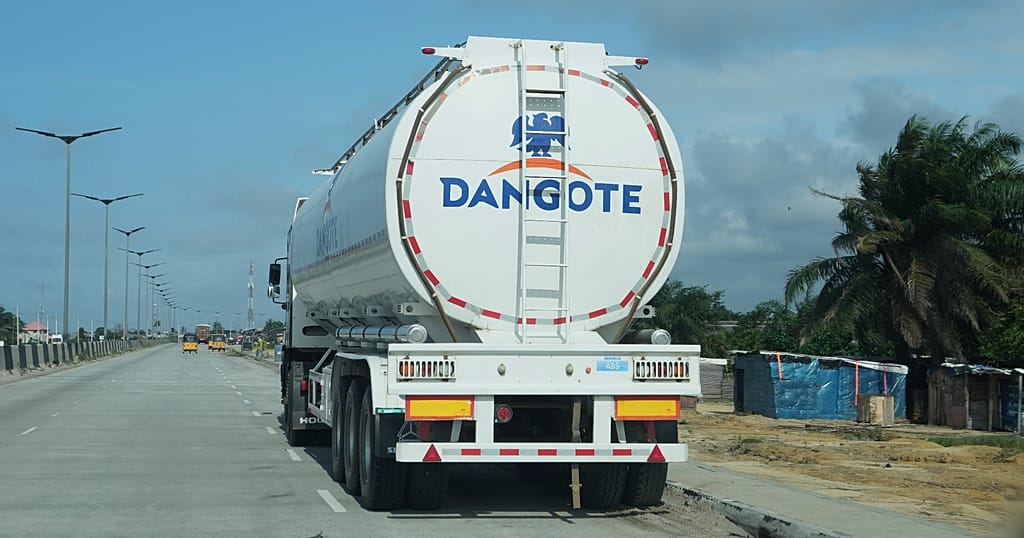
Dangote Petroleum Refinery and Petrochemicals has extended its $1.6 billion initial public offering (IPO) by two weeks, pushing the closing date from October 13 to October 27. The Dangote Refinery IPO, already the biggest in Africa’s history, has pulled in subscriptions more than three or four times the original target, according to the company. The extension, approved by Nigeria’s Securities and Exchange Commission, is aimed at letting more African investors buy in.
The offer opened on September 14 and was originally scheduled to close on October 13. It puts 4.1 billion shares on the table at ₦525 each, with a minimum subscription of 10 shares, or ₦5,250. That values the refinery at about $47 billion. A green shoe option allows an extra 30 percent of the shares to be sold if the offer is oversubscribed, potentially raising the total to about $2.1 billion.
Dangote said the decision to extend was not about the money. “We are going to extend the date because we want a lot of our African brothers and sisters to participate,” he told journalists during a tour of the facility on Monday. “It is not about the amount, it is about the number of people that we want to participate.”
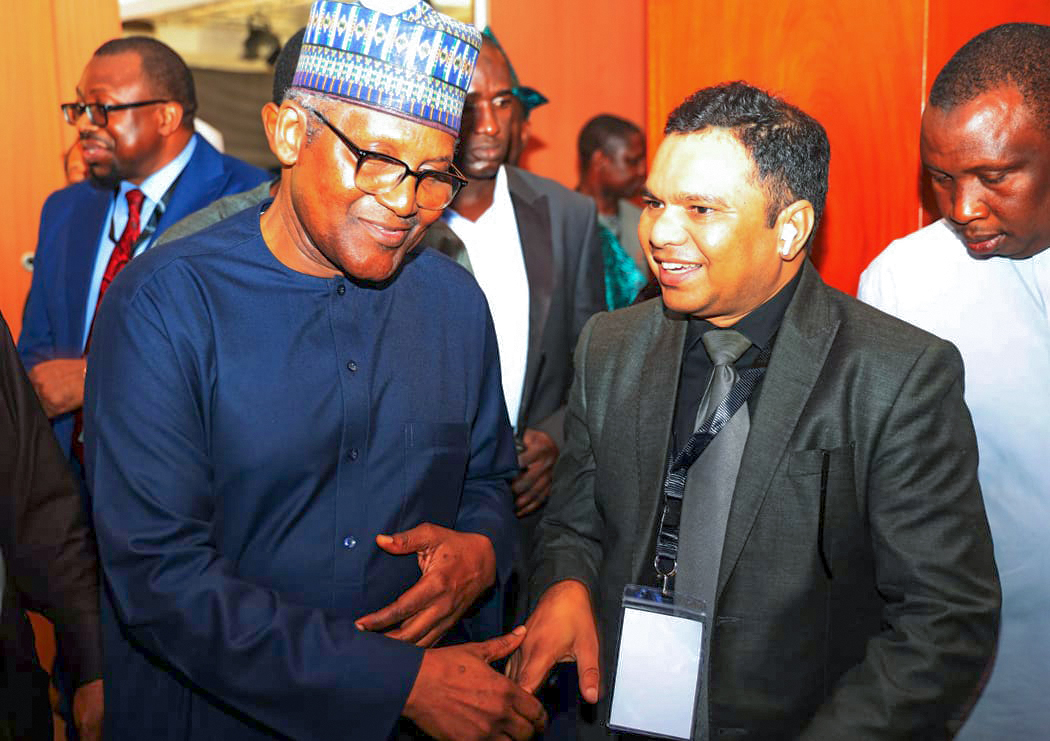
The company said it is working with the Nairobi Stock Exchange to open a route for East African investors through global depositary receipts. Up to $300.4 million of the offer, close to a fifth of the total, has been set aside for East African investors, according to Kenyan media. Kenya’s Capital Markets Authority has already cleared its residents to invest.
“Following our discussions with the Nairobi Stock Exchange, we have identified what we believe is the best way to facilitate participation,” Dangote said. “We are now trying to replicate that arrangement with other African exchanges.”
What The Extension Means For Investors
The extra two weeks gives retail investors more time to complete account opening, identity verification, and other regulatory checks. Several trading platforms, including Bamboo and Cowrywise, crashed on the first day of the offer as subscription traffic overwhelmed their systems. That suggests demand is coming from a much wider pool than the typical Nigerian stock market investor.
Only about 5 percent of Nigerian adults invest in the stock market. The refinery is targeting as many as 10 million retail investors, a figure that would transform the Nigerian Exchange’s retail base if achieved. The Aliko Dangote Foundation is also giving away shares worth about ₦40 billion, or $30 million, to tertiary students and vulnerable women. Students who buy 10 shares receive 10 more free.
David Bird, chief executive of the refinery, said the extension “will give more investors across Africa the opportunity to participate in the Offer.”
Under the revised timetable, results will be collated by November 3 and the basis of allotment sent to the SEC by November 10. Trading is expected to begin about 15 business days after shares are allotted.
Why The Refinery Needs The Money
The IPO proceeds will fund a $14.3 billion expansion that would double the refinery’s capacity to 1.4 million barrels a day by 2029. The plant, which cost about $20 billion and began operating in 2024, was designed to process 650,000 barrels a day and now runs at about 700,000 barrels a day. If the expansion goes ahead, it would be the world’s largest refinery, surpassing India’s Jamnagar.
“We are targeting for three years, and probably we may be even doing faster,” said Devakumar Edwin, a group vice president at Dangote Industries.
Dangote is also planning a separate 700,000-barrel-a-day refinery in Kenya, which would bring his total refining capacity to 2.1 million barrels a day. He has already broken ground on a new facility on Kenya’s Lamu island, promising tens of thousands of jobs. But the project faces a lawsuit from the local community over land rights, and Greenpeace has raised objections over the refinery’s environmental impact.
Who Wins And Who Loses
For Nigerian retail investors, the extension is a rare second chance to buy into a company that most would never access at this stage. The ₦525 price and 10-share minimum keep the entry ticket low. The free-share programme for students and women lowers it further.
For the Nigerian Exchange, a successful listing of this size would dwarf MTN Nigeria’s $876 million listing in 2019. Akin Dawodu, Citi’s head of banking for sub-Saharan Africa, said the deal could draw investors back to African bourses. “The size of the stock exchanges across Africa, Johannesburg excepted, is very small relative to the capital available,” he told Reuters. “We have to find a way to unlock that.”
For existing shareholders, the picture is more complicated. Dangote and his affiliates own about 80.7 percent of the company. State oil company NNPC holds 6.8 percent, and Greenview International holds 6.5 percent. The IPO represents about 3.4 percent of the company. If the green shoe is used, that stake gets diluted further, but the new capital funds growth that could lift the value of what they hold.
The risks are real. The refinery’s expansion depends on global crude markets, Nigerian regulatory stability, and the company’s ability to execute a project of unprecedented scale. The Kenya project faces legal and environmental challenges that could delay or derail it. And a stock market listing brings quarterly scrutiny that a private company does not face.
What To Watch
Watch the final subscription figures when they are released. The company has not published exact numbers, only saying demand is three to four times the target. If the green shoe is triggered, the final raise could hit $2.1 billion, making it one of the largest listings anywhere in the world this year.
Watch whether other African exchanges follow Nairobi’s lead. If the depositary receipt model works in Kenya, it could become a template for how African companies raise capital across borders, a shift that would matter for every founder and CFO on the continent.
And watch the share price when trading begins, expected about 15 business days after allotment. A strong debut would pull in the retail investors the refinery says it wants. A weak one would leave them holding paper and wondering why they bothered.
Frequently Asked Questions (Dangote Refinery IPO)
When does the Dangote Refinery IPO close?
The Dangote Refinery IPO now closes on October 27, 2026, after the Securities and Exchange Commission approved a two-week extension from the original October 13 date.
How much does it cost to buy Dangote Refinery shares?
Shares are priced at ₦525 each, with a minimum subscription of 10 shares, which costs ₦5,250. The offer includes 4.1 billion shares and a green shoe option for an additional 30 percent if oversubscribed.
Can non-Nigerians invest in the Dangote Refinery IPO?
Yes. The extension is specifically aimed at allowing more African investors to participate. Kenya’s Capital Markets Authority has approved a route through global depositary receipts on the Nairobi Securities Exchange, with up to $300.4 million set aside for East African investors.
Related Articles
- 113 Million Nigerians Deprived of Health: What You Can Do
- Herbal Remedies: Aishat Alagbo’s Safe Use Guide
- 29MB AI Model Runs on a $10 Chip: Here’s How
- Health Workers to Sue 20 Varsities Over Unpaid Allowance
- Taylor Swift Joins Beatles as Only Acts With 100 Weeks at No. 1
Receive alerts for Dangote Refinery IPO and more like it.
FIRST TIME REACTIONS:
Be the first to leave us a comment – Dangote Refinery IPO Extended: 4.1 Billion Shares Up for Grabs, down the comment section.
JOIN US ON OUR SOCIAL MEDIA:
-

 Car Reviews3 weeks ago
1955 Chevy Bel Air Restomod: What SEMA Really Proves
-
Celebrities4 weeks ago
Celebrity Traitors Final Predictions: Ex-Players On Tactics
-
Celebrities3 weeks ago
Hailey Bieber PMDD Diagnosis Followed Son Jack’s Birth
-
World News3 weeks ago
Céline Dion Air Bass At Metallica’s Sphere: What’s Confirmed
-
Nigeria News3 weeks ago
NAJA Names Weststar Chairman Auto Legend For 2026
-
Health and Fitness4 weeks ago
Dylan Dreyer Hair Part Change: What’s Real And What’s Hype