Celebrities
Hailey Bieber PMDD Diagnosis Followed Son Jack’s Birth
Hailey Bieber’s PMDD diagnosis came about six months after son Jack Blues was born. She told WWD the condition lacks research and open conversation.


Hailey Bieber was diagnosed with premenstrual dysphoric disorder roughly six months after giving birth to her son, Jack Blues, and says the condition remains thinly researched and rarely discussed in public. The Hailey Bieber PMDD diagnosis was set out in an interview with Women’s Wear Daily published on Oct. 30, and first disclosed months earlier on the SHE MD podcast.
“After I had my son, I struggled with [PMDD] a bit, and there’s just not a lot of conversation or research around it,” Bieber, 29, told WWD.
Jack Blues, her first child with Justin Bieber, was born on Aug. 22, 2024, according to People. Six months after that date falls in early 2025. No outlet has published a precise diagnosis date, and Bieber has not named the clinician who made the diagnosis.

What Is Confirmed And What Is Her Account
Two categories of information sit inside this story, and they do not carry equal weight.
Confirmed: the WWD interview exists and was published Oct. 30. Confirmed: Bieber said on the SHE MD podcast that she was diagnosed about six months postpartum, that the symptoms were more severe than the premenstrual syndrome she had experienced before pregnancy, and that they eased once her period began and improved gradually over time.
Her account, not independently verified: everything about severity. “You’re like, ‘Why does it feel like my whole entire life is gonna end?’” she said on the podcast. “You just have all these swirling thoughts and feelings, and just everything feels like the biggest deal in the world.”
On the same podcast she was blunter than in the WWD interview. “It sucks. It is also dangerous, and it should be taken seriously,” she said, according to Yahoo Entertainment.

The clinical definition is not in dispute. Johns Hopkins Medicine describes PMDD as a chronic condition causing severe emotional, behavioral and physical symptoms in the week or two before menstruation, subsiding once the period starts. The Office on Women’s Health, cited by People, notes symptoms can include intense mood changes, irritability, depression or anxiety.
Secondary reports do not agree on every date. One Yahoo Entertainment account places the SHE MD appearance in March. A separate Yahoo piece says May. The March date appears in more of the coverage, including Us Weekly, which described the WWD interview as coming two years after Jack’s birth. No primary transcript or episode date appears in any of the reports reviewed.
Why The Hailey Bieber PMDD Diagnosis Matters Beyond Hollywood
The sentence carrying the most weight is not about symptoms. It is about the research gap.
“There’s so much that happens when you are pregnant, during childbirth,” she said in the WWD interview. “There’s so many things that happen leading up to having a child.”
Her commercial interest followed the statement. Rhode, the beauty brand she founded, announced a $5 million, three-year partnership with the Foundation for Women’s Health, described by Yahoo as the brand’s largest philanthropic investment to date. The money is directed at medical research, education and care in what the reporting calls historically underfunded areas. It is an announced three-year pledge, not a completed grant, and no recipient institutions have been named.
For readers outside North America and Europe, the coverage leaves an obvious hole. All five reports reviewed for this article anchor their clinical definitions in United States institutions, Johns Hopkins and the Office on Women’s Health. None cites a prevalence figure for sub-Saharan Africa, an African clinician, or a study conducted on the continent. That absence does not prove PMDD is under-diagnosed in Africa. It proves the reporting does not establish the question either way, and that a global audience is being handed a US-framed condition without a global evidence base.

PMDD is diagnosed on cyclical behavioural criteria, which is precisely the kind of presentation that gets missed where menstrual health already carries stigma and consultation time is short. A celebrity disclosure travels faster than a prevalence study. It does not replace one.
Reaction And Prior Health History
The disclosure is not isolated. In 2022 Bieber was hospitalised for what the coverage describes as a stroke or ministroke, and later underwent a patent foramen ovale closure procedure to close a hole in her heart, a defect she said she was born with. She has described that episode as making her “a little bit extra hyper-aware” of her body.
TMZ reported that Bieber also said on the SHE MD podcast that she has a uterine septum, a condition associated with higher miscarriage and infertility risk. That detail does not appear in the WWD interview coverage and has not been corroborated elsewhere in the reports reviewed.
Her own explanation for speaking publicly is modest. “Conversation, for me personally, makes me feel less alone,” she said. “When we can identify with each other and have conversations relating to each other and talking about the things we’re dealing with and struggling with, I do think it makes it feel like less of a lonely journey.”
What To Watch
Three things will decide whether this becomes more than a celebrity health item.
First, whether the Rhode commitment produces named research grants in underfunded regions or stays inside existing US funding channels. The announcement gives a figure and a duration. It does not yet give a destination.
Second, whether clinicians in Africa and other low- and middle-income regions answer with prevalence data. Until someone publishes it, the global version of this story will keep citing Baltimore and Washington for a condition that affects women everywhere.
Third, whether the Hailey Bieber PMDD diagnosis moves other public figures to describe what they experienced rather than only that they experienced it. That is the one claim in the story a reader can actually test.
Frequently Asked Questions
When was Hailey Bieber diagnosed with PMDD?
Bieber said she was diagnosed about six months after giving birth to her son Jack Blues, who was born on Aug. 22, 2024, per People. That places the diagnosis in early 2025. No outlet has published an exact diagnosis date.
Where did Hailey Bieber first discuss her PMDD?
She first disclosed it on the SHE MD podcast, which most reports date to March, though one Yahoo Entertainment account says May. She restated it in a Women’s Wear Daily interview published Oct. 30.
What has Rhode committed to women’s health research?
Rhode announced a $5 million, three-year partnership with the Foundation for Women’s Health covering medical research, education and care in underfunded areas. It is an announced pledge; no recipient institutions have been disclosed.
 Follow AFRILATEST on Google News
FIRST TIME REACTIONS:
Be the first to leave us a comment – Hailey Bieber PMDD Diagnosis Followed Son Jack’s Birth, down the comment section.
JOIN US ON OUR SOCIAL MEDIA:

About Xavier Catherine
Xavier Catherine is the Technology Lead at AfriLatest. With a background in computer science and a focus on innovation, he oversees the platform's technology infrastructure. Xavier also contributes reporting on AI, gadgets, and cybersecurity, ensuring AfriLatest remains secure, reliable, and user-friendly.
View all articles by Xavier Catherine

Celebrities
Halle Berry Custody Battle: Abuse Claims And Court Filings
The Halle Berry custody battle explained: what court filings confirm, what remains alleged, and why Nigerian families abroad should read it closely.


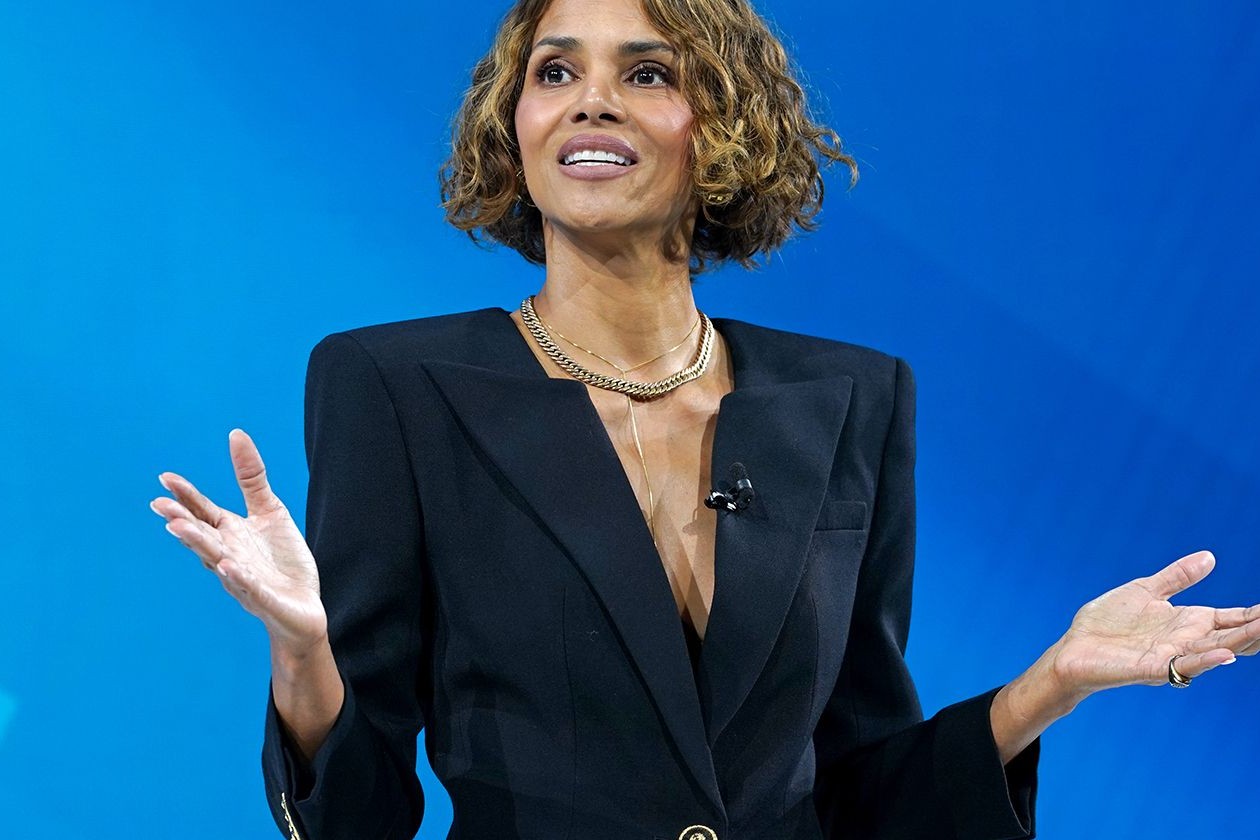
Halle Berry has asked a Los Angeles court to reinstate the 50/50 custody arrangement she once shared with ex-husband Olivier Martinez over their son Maceo, and to restore her tie-breaking authority on decisions about his schooling, health and therapy. The request, first reported by People, landed in the same week that a judge granted Martinez a temporary restraining order against her. The sequencing matters. The Halle Berry custody battle is now a public record of two parents accusing each other in filings, and almost none of it has been tested at trial.
you have a stake beyond the celebrity byline. The procedures on display — emergency applications, restraining orders, parental alienation claims, court-ordered family therapy — are the same procedures Nigerian families in the United States, Britain and Canada meet when a marriage ends abroad. Who drafts those filings, and what a judge does with them, decides where children sleep.
The Halle Berry Custody Battle: What Is Confirmed And What Is Alleged

Confirmed: Berry, 60, filed a request to restore the August 2023 custody agreement and to compel Martinez to attend the couple’s court-ordered therapy sessions, according to documents obtained by People. Confirmed: Martinez, also 60, filed a response asking the court to deny her request in full.
Confirmed: on October 1, a Los Angeles County judge granted Martinez a temporary restraining order covering both himself and Maceo, and modified Berry’s visitation to Mondays and Tuesdays between 10 a.m. and 8 p.m., plus Saturdays and Sundays over the same hours. The judge declined Martinez’s request that Berry’s sobriety be monitored, citing insufficient information.
Alleged, and denied: Martinez claims Berry physically abused Maceo on September 26. In the filing reported by Us Weekly, he says the boy phoned him from the house asking to be collected, and that he heard Berry shouting in the background. His account describes an argument over a virtual reality game, alleges she put her hands around the boy’s neck, and claims earlier incidents in which she wrestled Maceo to the ground or placed him in choke holds during mixed martial arts training. He requested sole custody and a no-contact order.
Berry denies it in her own filing: “I have never physically, emotionally, or otherwise abused Maceo. I am a victim of domestic violence, and I help victims of domestic violence.” Her lawyer, Marina Beck, called Martinez’s filing “entirely meritless and deliberately misleading” and pointed to what she described as a documented history of violated court orders and prior legal sanctions against him.
Her counter-filing argues that Martinez’s anger toward her shapes her disagreements with their son. She says Maceo returns from his father’s house “angry and combative,” needs two to three days to settle, and repeats private disputes between the adults while taking his father’s position.
Why This Custody Fight Matters To Nigerian Families Abroad
The figures in this file are Californian. The mechanics are not. Under the 2023 divorce settlement, Berry agreed to pay Martinez $8,000 a month in child support and 4.3 per cent of any income above $2 million. Few Nigerian households abroad operate at that scale, but the structure repeats everywhere: one parent holds the larger income, the other holds more day-to-day time, and every argument over school fees, football or therapy turns into a question of who has legal authority to decide.
The alienation argument Berry raises is one Nigerian parents in diaspora courts make constantly, and one that is notoriously hard to prove. Her filing asserts that Martinez’s “refusal to allow early interventions” pushed Maceo further behind at school. Martinez rejects the framing and says in his filings that Berry has been abusive across multiple incidents.
There is a second, sharper lesson. An emergency restraining order can be granted in days. A hearing on whether abuse actually occurred can take years. In that gap, visitation schedules, school terms and birthdays all pass. Maceo turned 13 on October 5, according to Extra. Several reports still describe him as 12 — a small discrepancy that shows how fast secondary details drift in a contested file, and why primary documents matter more than aggregation.
Court-Ordered Therapy And The Blended Family Problem
Berry wants Martinez compelled to attend the co-parenting therapy the couple agreed to in May 2024, which collapsed amid arguments over attendance. She also alleges he refuses to let Maceo attend family therapy with her fiancé, the musician Van Hunt, and claims Martinez told her their son was “old enough” to make his own decisions — a position she rejects.
This is the most transferable part of the case. Blended families are common across Nigeria and its diaspora; recognition of a new partner’s role in a child’s life is rarely automatic in any jurisdiction. Courts can order therapy sessions. They cannot order a parent to accept a step-parent, and no judge in Los Angeles can compel cooperation that one side has decided to withhold.

The Big Picture
Berry and Martinez met on the set of Dark Tide in 2010, married in 2013, separated in 2015, and needed roughly eight years to finalise a divorce. The Halle Berry custody battle is a continuation of that timeline by other means, and it will be settled on evidence rather than on filings. Until a judge weighs testimony, the confirmed facts are procedural: two competing applications, one temporary restraining order, a restricted visitation schedule, and a therapy dispute unresolved.
For Nigerian families watching from Lagos, London or Houston, the takeaway is procedural literacy. Keep records. Expect allegations to be litigated rather than settled. And understand that a temporary order is a holding position, not a verdict.
Frequently Asked Questions
What has Halle Berry actually asked the court to do?
According to court documents obtained by People, Berry asked the court to restore the August 2023 custody agreement that gave her and Olivier Martinez 50/50 custody of their son Maceo, to reinstate her as tie-breaking authority, and to compel Martinez to attend their court-ordered therapy sessions.
Has Olivier Martinez been proven to have abused or been abused?
No. Martinez has alleged in filings that Berry physically abused Maceo on September 26 and in earlier incidents. Berry denies this in her own filing and through her lawyer. A Los Angeles judge granted a temporary restraining order, which is a protective step, not a finding of abuse. No trial determination has been reported.
Why does a Los Angeles custody case matter to Nigerians?
The procedures involved — emergency filings, restraining orders, parental alienation claims and court-ordered family therapy — are the same ones Nigerian families in the US, UK and Canada encounter when a marriage ends abroad. The case shows how quickly temporary orders are granted and how slowly underlying allegations are actually resolved.
FIRST TIME REACTIONS:
Be the first to leave us a comment – Halle Berry Custody Battle: Abuse Claims And Court Filings, down the comment section.
JOIN US ON OUR SOCIAL MEDIA:

About Rose Green
Rose Green is an entertainment and lifestyle author at AfriLatest. With a passion for storytelling, she contributes creative and thought-provoking content, capturing the imagination of readers. Rose specializes in entertainment news, celebrity updates, and lifestyle trends, sparking meaningful conversations across diverse topics.
View all articles by Rose GreenCelebrities
Bobby Flay Controversy: Tanya Holland’s Allegations Explained
The Bobby Flay controversy explained: what Tanya Holland alleges, what is confirmed, and why Nigerian chefs should watch the record closely.

Bobby Flay still holds the most prominent seat on American food television. That part of the record is not contested. What is being contested, publicly and in detail, is what he did with that seat when a former colleague asked for help. Tanya Holland, who worked at his New York restaurant from 1991 and later ran the Michelin-recognised Brown Sugar Kitchen in Oakland, has published a YouTube video setting out her account of a relationship she describes as extraordinarily disappointing. Flay has not issued a public response in the material reviewed for this article. For Nigerian readers, the Bobby Flay controversy is not a celebrity spat to consume and discard. It is a detailed, first-person case of how access to global food media is handed out informally, person to person, and how little of that process is ever written down.
What Tanya Holland Actually Alleges, And What Is Confirmed
The confirmed timeline is short and specific. Holland joined Flay’s New York City restaurant, Mesa Grill, as a server in 1991, as ComingSoon reported. She has said she already had management experience but wanted to learn the business from the ground up. She moved into the kitchen and, by her account, mastered every station within months.
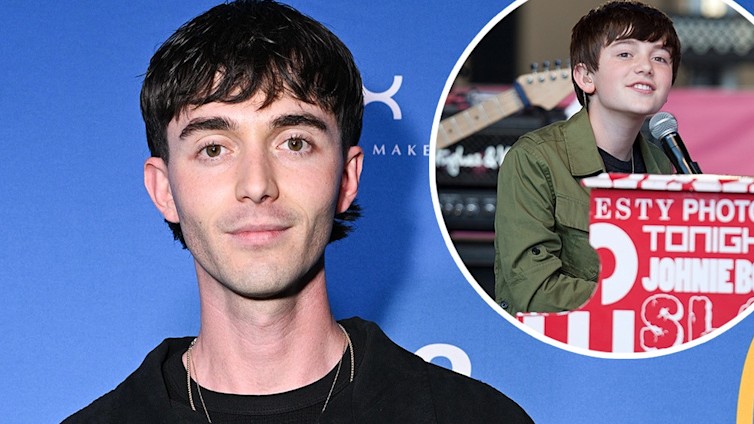
The allegation that carries the most weight concerns promotion. Holland says three male colleagues were given the chance to train as expediters, the kitchen role that coordinates orders between the line and the dining room, while she was passed over. That is her account, delivered on her own channel. It has not been independently verified, and no document confirming the staffing decision has surfaced in the material reviewed.
She also describes working through a fibroid condition without what she calls the compassion she needed. In one video she says: “I worked the line with a catheter on. Would you do that?” The quote is hers. The medical circumstance behind it cannot be confirmed beyond her telling.
Her career after Mesa Grill is a matter of public record. She worked in France and at Martha’s Vineyard before opening Brown Sugar Kitchen in Oakland in 2008, a restaurant that collected multiple Michelin Bib Gourmand designations before it shut in 2022. She competed on Top Chef Season 15 in 2017, finishing ninth of sixteen, a Bravo programme rather than a Food Network one. After that season she criticised what she called a bro culture, a remark reported by PARADE.
Holland further alleges that Food Network kept her off its radar from 2003 onward. That claim is hers alone. The network has not commented in the material reviewed.
The exchange at the centre of the dispute is documented in her telling. Flay texted her to ask whether he had done something to upset her. She replied: “I’m not angry. I’m just extraordinarily disappointed.” She told SFGATE that Flay could have opened doors for her as he had for countless others, and that his answers to her requests were dismissive: nobody’s investing right now, it doesn’t happen overnight. Those phrases are attributed to him through her account, not through a recording or a statement from Flay.

Not everyone supports her reading. Fellow Food Network personality Sunny Anderson has described Flay as a dependable friend and mentor. Her testimony sits against Holland’s, and neither can be treated as the final word.
Why The Bobby Flay Controversy Matters Beyond Food Network
The instructive detail is structural. Holland’s complaint is not that a rule was broken. It is that no rule existed. Mentorship in the culinary industry runs on favours, introductions and unrecorded phone calls. When those favours are withheld, there is nothing to appeal to: no committee, no scoring sheet, no grievance procedure. The same architecture governs which Nigerian chefs get pulled into international festivals, which Lagos restaurants attract foreign press, and which diaspora cooks get a second look from a commissioning editor.
Nigeria’s entry points into that system are narrow and mostly informal. The recognition ladder Holland climbed, a Michelin Bib Gourmand, a Top Chef run, a Food Network slot, has few direct Nigerian rungs. Nigerian food culture travels abroad through diaspora kitchens, social media and independent restaurants far more than through American cable commissions. That makes the informal favour more powerful, not less.
Timing sharpens the stakes. Food Network has built its holiday schedule around Flay. Its October announcement confirmed a new format for Beat Bobby Flay: Holiday Throwdown, turning the show into Team Flay versus Team Brooke Williamson, premiering Tuesday, Nov. 17 at 8 p.m. ET/PT, with Michael Voltaggio and Michael Jenkins on Flay’s side and Antonia Lofaso and Ayesha Nurdjaja backing Williamson, according to Yahoo Entertainment. No change to that plan has been reported. A network whose holiday ratings rest on one man’s likability has a commercial reason to handle allegations about his conduct carefully.
The Gap In The Record On Nigeria
In the source material reviewed, no Nigerian restaurant, partnership, visit or public statement by Flay is documented. No Nigerian chef or broadcaster has commented on the dispute. That absence is itself the finding. The global food-media circuit that produced this argument and the Nigerian food economy barely touch at the institutional level, even as the programming reaches African audiences through pay-TV and streaming bundles. The reputational question travels further than the business relationship does.

What the record does support is narrower. A woman says she asked for help for years and did not get it. A man who built a public persona partly on mentorship has not answered in the material available. A colleague defends him. None of these facts settles the dispute, and readers should treat the more sweeping claims on both sides as argument rather than evidence.
For Nigerian chefs watching, the practical lesson is about documentation. Ask in writing. Keep the reply. The favour economy is real everywhere, but people who can prove what was said hold power that Holland, working from memory and a text thread, did not.
The closing judgement on the Bobby Flay controversy will rest on what Flay and Food Network say next, not on what either party says now. Flay’s record as a builder of restaurants and television franchises is secure. Whether he is remembered as a man who opened doors is a separate question, and it now carries a public answer from a former colleague that he has yet to address.
Frequently Asked Questions
What exactly has Tanya Holland accused Bobby Flay of?
In a YouTube video, Holland says she asked Flay for professional support repeatedly over a relationship that began in 1991 and did not receive it. She alleges she was passed over for an expediter role while three male colleagues were advanced, and that Flay brushed off her requests for help with remarks such as nobody’s investing right now. These are her claims and have not been independently verified.
Has Bobby Flay or Food Network responded to the claims?
No public statement from Flay or Food Network appears in the source material reviewed. Holland says Flay texted her to ask whether he had upset her, and that she replied she was not angry but extraordinarily disappointed. Fellow Food Network chef Sunny Anderson has publicly described Flay as a dependable friend and mentor.
Why should Nigerian readers follow this story?
Because the dispute is about informal gatekeeping in a global industry that Nigerian chefs increasingly enter through diaspora kitchens, social media and independent restaurants rather than through American cable commissions. The recognition ladder involved, from Michelin Bib Gourmand to Top Chef to a Food Network slot, has few direct Nigerian entry points, which makes personal sponsorship more decisive and the lack of a written record more damaging.
FIRST TIME REACTIONS:
Be the first to leave us a comment – Bobby Flay Controversy: Tanya Holland’s Allegations Explained, down the comment section.
JOIN US ON OUR SOCIAL MEDIA:
About Rose Green
Rose Green is an entertainment and lifestyle author at AfriLatest. With a passion for storytelling, she contributes creative and thought-provoking content, capturing the imagination of readers. Rose specializes in entertainment news, celebrity updates, and lifestyle trends, sparking meaningful conversations across diverse topics.
View all articles by Rose GreenCelebrities
Stefanie Fair Settlement: $70K For A DUI That Never Was
The Stefanie Fair settlement pays the Wild Orchid singer $70,000 after blood work cleared her. What Tennessee’s records confirm — and what they don’t.


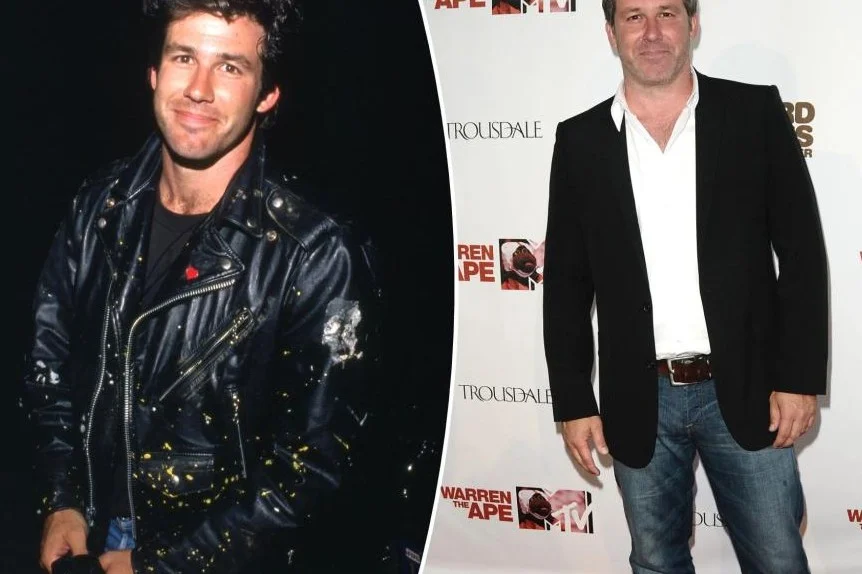
The Stefanie Fair settlement closed a two-year argument between a former 1990s pop singer and the state of Tennessee, and it closed with a figure: $70,000. Fair, identified in reporting as a former member of the group Wild Orchid, was arrested on suspicion of DUI in 2024. Blood work later showed she was sober.
That last detail is the whole story. It is also the detail most likely to get buried under the headline.
According to WBRC, the state Board of Claims approved the payout, and a spokesman for the attorney general’s office said the money should arrive within a few weeks. What the settlement does not do — and this matters — is explain itself. There is no admission of wrongdoing in the reporting. There is no statement from the trooper involved. There is a number, an approval, and a stack of court records sitting behind both.
If this were a record, the A-side would be the money. The B-side is the blood test.
There is a feed-friendly version of this story too. Nineties pop star, highway patrol, cash payout. It is punchy, it is shareable, and it skips the line that inverts everything — the state’s own lab work cleared her. That gap between the shareable version and the documented one is where most celebrity legal coverage lives. It is also why the boring paperwork deserves the scroll time.
The Record Behind The Stefanie Fair Settlement
Fair’s arrest was documented in WSMV4 Investigates’ “Sobering Problem” series, which is where the paper trail starts. Trooper Keith Velez said he detected alcohol. “There’s a very distinct odor of alcohol that comes from either the person or inside the vehicle,” he said, per the reporting. Fair’s response was flat: “But on my life, I don’t drink alcohol.”
Video obtained by the station shows Fair eating ice cream before the arrest. That is not proof of anything on its own. It is one piece of evidence that was available at the scene and, judging by the outcome, did not move the trooper.

Fair described the encounter in blunter terms than any press release would. “I was more scared being with that cop alone than I actually was inside the jail,” she said.
Her attorney, Ben Raybin, framed the payout as the state conceding the obvious. “I think that the state has recognized that a lot of these arrests are just completely legally unsupportable and that if they went to a jury trial, a jury would find against them,” he said. That is a lawyer’s read, not a court finding. Keep the distinction.
Nine Sober Drivers, One Trooper, And A Pattern
Here is where the story stops being a celebrity footnote and starts being a system story.
Fair is the second sober driver to settle with the Tennessee Highway Patrol. Thomas Manis was paid $75,000 after troopers arrested him for DUI in East Tennessee — more than Fair received, for whatever that is worth. WSMV4 Investigates has also reported on pending suits from NASA employee Labreesha Batey and former U.S. attorney Jane Bondurant.
Bondurant, per the reporting, was the eighth sober driver arrested by trooper James Zahn. A lawsuit filed this year by a Thompson Station man would make him the ninth. Court records show the Rutherford County Sheriff’s Office and La Vergne police have settled similar claims too.
The structural problem is not subtle. Tennessee offers sober drivers no route to recoup costs after a DUI charge is dismissed, even when the charge was wrong. Raybin’s point is that suing is the only door, and it is an expensive one.

That is a policy failure dressed up as a celebrity item. Pop fans scrolling at 11pm get the $70,000. They do not get the nine.
What The Reporting Does Not Confirm
Plenty, and the gaps matter as much as the facts.
The Stefanie Fair settlement does not, by itself, tell us what prompted the initial stop beyond the alleged odor of alcohol, or whether the patrol has changed any procedures since. It does not say whether Trooper Velez faced internal discipline. It does not confirm whether the agreement carries an admission of liability, and it does not give an exact payment date beyond “the next few weeks.” Anyone posting otherwise is filling in blanks with vibes.
There is also no word on what Fair plans next musically. Wild Orchid’s catalogue and full lineup are not detailed in the settlement reporting, and nothing here confirms a comeback, a single, or a tour. Treat any such chatter as unverified until a release, a label, or the artist says so.
For a global audience — Lagos, Nairobi, Accra, London — the lesson travels. Celebrity legal news from abroad arrives stripped of documents. A figure gets quoted, a mugshot circulates, and the underlying record stays in a Tennessee courthouse. The same discipline applies when African artists get swept into foreign legal stories: numbers travel fast, paperwork travels slow.
Should Fans Listen And Where To Start Reading
The verdict on the Stefanie Fair settlement is not complicated. On verified evidence, the state arrested a sober woman, held the charge long enough for blood work to contradict it, and is now paying $70,000 rather than face a jury. The Board of Claims approval and the attorney general’s office confirmation are the load-bearing facts. The rest is context.
What is missing is accountability at the individual level — which the record simply does not address — and any sign that the underlying arrest pattern has been fixed. Two settlements and a growing docket of lawsuits is a trend, not a correction.
So yes, fans should care, but not for the reason the headlines suggest. Skip the number. Start with the blood work, then the Board of Claims approval, then the nine names. That is the version of the Stefanie Fair settlement that survives a fact-check, and it is the only version worth sharing.
Frequently Asked Questions
How much is the Stefanie Fair settlement worth?
The Tennessee Highway Patrol will pay $70,000 to Stefanie Fair, a former member of the 1990s pop group Wild Orchid, over her 2024 DUI arrest. The state Board of Claims approved the settlement, and a spokesman for the attorney general’s office said the payout should be issued within a few weeks.
Why did Stefanie Fair win the settlement?
Blood work taken after her arrest showed Fair was sober at the time. Her attorney, Ben Raybin, said the state recognized that many of these arrests are legally unsupportable and would likely lose at a jury trial. The reporting does not state whether the settlement includes an admission of liability.
Is Stefanie Fair releasing new music after the settlement?
Nothing in the settlement reporting confirms a new single, album, or tour. Wild Orchid’s catalogue and full lineup are not detailed in the coverage either. Any comeback talk should be treated as unverified until the artist or a label confirms it.
FIRST TIME REACTIONS:
Be the first to leave us a comment – Stefanie Fair Settlement: $70K For A DUI That Never Was, down the comment section.
JOIN US ON OUR SOCIAL MEDIA:

About stephen Douglas
Stephen Douglas is a gaming and entertainment author at AfriLatest. With a background in social media management and community building, he covers the latest trends in the gaming industry, esports, and digital culture. Stephen creates engaging content that keeps readers connected and informed about the games and entertainment they love.
View all articles by stephen Douglas-

 Car Reviews3 weeks ago
1955 Chevy Bel Air Restomod: What SEMA Really Proves
-
Celebrities4 weeks ago
Celebrity Traitors Final Predictions: Ex-Players On Tactics
-
World News3 weeks ago
Céline Dion Air Bass At Metallica’s Sphere: What’s Confirmed
-
Nigeria News3 weeks ago
NAJA Names Weststar Chairman Auto Legend For 2026
-
Health and Fitness4 weeks ago
Dylan Dreyer Hair Part Change: What’s Real And What’s Hype
-
Africa News4 weeks ago
Stablecoins In African Trade Gain Ground, Costs Bite