
Savings & Investing
Sustained Investment in Teacher Education: Olowolafe’s Case
Olowolafe calls for sustained investment in teacher education. A comparison of Nigeria’s funding pipeline against its digital infrastructure model.

Two allocations sit inside Dr. Tunji Olowolafe’s convocation lecture, and they do not carry the same risk. One is the slow, five-year work of building teachers. The other is a solar-powered ICT centre with satellite bandwidth and someone paid to maintain it. The Chancellor of Ekiti State University wants both funded. The harder question, for anyone holding a budget line, is which one fails first when the money stops.
Olowolafe made the case for sustained investment in teacher education at the 2026 Convocation Lecture of the Sikiru Adetona College of Education, Science and Technology in Omu-Ajose, Ogun State. ThisDay reported that he called the Dual-Mandate NCE-Degree programme the most significant structural change to teacher education since the Ashby Commission of 1959. He spoke on Monday, November 23, 2026.
No financial instrument is being sold here, and no return is promised. Nothing in this analysis is personal financial advice. The lecture is better read as an argument about how public and philanthropic capital should be split between people and equipment.
What The Dual-Mandate Reform Changes, And Who Pays For It
The Federal Colleges of Education Act, signed in June 2023, allowed eligible colleges to award degrees. The Federal Ministry of Education operationalised the programme in May 2025. A student now earns the Nigeria Certificate in Education after three years and completes a bachelor’s degree in the same institution after two more.
That removes a structural ceiling. Colleges that could only issue certificates run a full pathway, which changes their ability to attract students and staff. It does not, by itself, change what happens in a classroom.
Two vehicles carry most of the money. Olowolafe said the Nigeria Tax Act 2025 strengthened education financing through the Tertiary Education Trust Fund and the Nigerian Education Loan Fund, and that NELFUND had disbursed more than N372 billion to over one million students for tuition and upkeep. PRNigeria quoted him saying about 80 per cent of SACOETEC’s buildings were funded through TETFund interventions.
The distinction matters for anyone assessing the sector. TETFund is grant capital for infrastructure. NELFUND is a loan book carried by students. One is a transfer; the other is a liability that has to be repaid.

Why Sustained Investment In Teacher Education Now Has A Deadline
Olowolafe put a date on the demand. “Nearly eight million babies will be born in Nigeria this year alone,” he said. “In 2032, those children will walk into Primary One classrooms across this country.”
Against that, he cited an estimated shortfall of about one million teachers in the basic education system. A five-year training pathway that begins today produces its first graduates after the children born this year have already started school. The pipeline is not slow by accident. It is slow by design, and the design was fixed years ago.
Risk, Diversification, Liquidity And Minimum Commitment
Risk on the teacher pipeline is attrition and continuity. A cohort that starts a five-year pathway needs funding in year one and again in year five, and budgets rarely hold that long. Risk on the infrastructure side is obsolescence and running cost. Solar arrays, bandwidth and equipment need maintenance long after the launch photograph.
Diversification is not optional here, because the two assets are correlated. An ICT centre without trained teachers sits idle. Teachers trained in digital methods without equipment teach the old way. Funding one and not the other buys a headline, not a capability.
Liquidity is the weakest attribute of both. Neither can be sold in a secondary market. Human capital walks out of the door if pay and conditions deteriorate. Hardware depreciates where it stands. Any classroom effect from children born this year runs to 2032.
Minimum commitments are where the source material goes quiet. Olowolafe disclosed no cost per trained teacher, no budget for the planned GOMTECH centre at SACOETEC, and no per-student training figure for the foundation’s existing centre in Are-Ekiti. The only hard number in the lecture was the N372 billion NELFUND disbursement. Anyone modelling this sector should treat the rest as undisclosed.
Where Returns Are Claimed, And Where The Evidence Stops
Olowolafe’s economic argument is that teaching quality determines the knowledge, skills, creativity and values available to the workforce, and that better teaching strengthens businesses and productivity. The chain is plausible. It is also unmeasured in the material released so far. No cohort completion rates, learning-outcome data or cost-per-teacher figures accompanied the lecture.
The commitments themselves are concrete. PRNigeria reported plans for a solar-powered GOMTECH Information and Communication Technology centre at SACOETEC with Starlink connectivity, to be constructed, equipped, funded and co-managed by the Tunji Olowolafe Foundation alongside the college’s Governing Council and management. Project Digi-Teach at EKSU aims to certify all 650 lecturers in digital and AI-enabled teaching. The GOMTECH centre in Are-Ekiti already trains rural schoolchildren, university students and teachers in artificial intelligence, coding, graphic design and Mandarin Chinese.
Punch reported the same announcements, including annual recognition for first-class degree graduates, NCE distinction holders and the lecturers rated highest by students. Recognition schemes shift incentives at the margin. They do not replace recurrent funding.
Olowolafe drew his own line on technology. “AI can explain a quadratic equation at midnight, but it cannot offer the steady, empathetic guidance of a caring adult,” he said. That sentence is the argument for keeping the people pipeline as the primary allocation.
Which Allocation Suits Which Funder
A government working through a tax-funded education budget should weight the teacher pipeline. Its payoff is slow and hard to photograph, but it is the only allocation that scales across a one-million-teacher gap. Leadership reported the same lecture with the same emphasis on funding, curriculum reform and technology integration.
A foundation or corporate donor should weight the equipment. A funded, co-managed ICT centre produces a visible asset in months rather than years, and the donor keeps a governance role. The trade-off is that it demands an operating budget long after the ribbon is cut.
A student should read NELFUND for what it is: a loan that eases tuition and upkeep, not a grant. Olowolafe urged SACOETEC management to guide eligible students through the application process. Borrowing to enter a profession with a one-million-person shortage is a different calculation from borrowing into a crowded field, but it is still borrowing.
For all three, the case for sustained investment in teacher education rests on a date rather than a forecast. The children born this year arrive in 2032 either way. The only variable is how many trained teachers are waiting for them.
Disclaimer: This article is for information and analysis only. It is not personal financial advice, and it does not recommend any security, fund or institution. No returns are guaranteed. Figures are as reported at the time of writing and may be revised.
Frequently Asked Questions
What is Nigeria’s Dual-Mandate NCE-Degree programme?
It is a reform enabled by the Federal Colleges of Education Act, signed in June 2023, and operationalised by the Federal Ministry of Education in May 2025. Eligible colleges of education can now award both the Nigeria Certificate in Education and bachelor’s degrees. Students take three years for the NCE and a further two years for the degree at the same institution.
How much has NELFUND disbursed to Nigerian students?
Dr. Tunji Olowolafe said in his 2026 SACOETEC convocation lecture that the Nigerian Education Loan Fund had disbursed more than N372 billion to over one million students for tuition and upkeep. The figure was reported by ThisDay, Punch, Leadership and PRNigeria.
Does this article constitute investment or financial advice?
No. No financial product is on offer and no return is promised. The article examines how public and philanthropic capital is being allocated between teacher training and education infrastructure. Readers should seek licensed professional advice for their own circumstances.
 Follow AFRILATEST on Google News
FIRST TIME REACTIONS:
Be the first to leave us a comment – Sustained Investment in Teacher Education: Olowolafe’s Case, down the comment section.
JOIN US ON OUR SOCIAL MEDIA:

About Paul Nwogo
Paul Nwogo is an engineer, published author, and the Head Manager at AfriLatest. He has written numerous books available on Amazon covering a diverse range of topics, including health, personal finance, relationships, work ethics, and scam survival. With his technical background and passion for writing, Paul now oversees the editorial direction of AfriLatest, delivering practical, accurate, and engaging content on trending news, music, and global lifestyle topics.
View all articles by Paul Nwogo


Savings & Investing
Nigeria’s Fragmented Crypto Regulation Raises Investment Fears
Nigeria’s fragmented crypto regulation now has a coordinating council. What the filings, flows and gaps mean for investors in 2026.
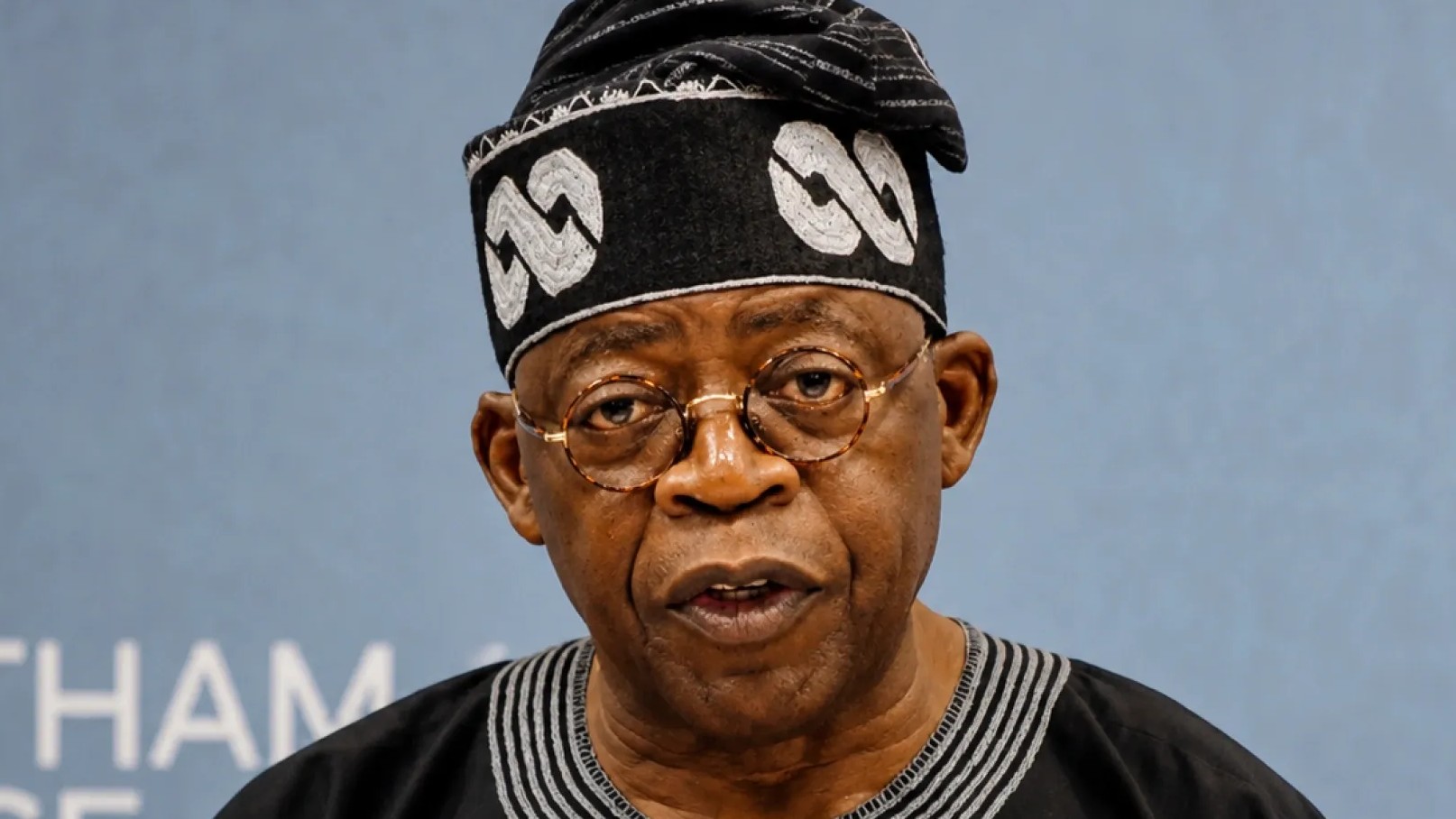
On 17 July 2026, President Bola Ahmed Tinubu signed the Presidential Executive Order on Virtual Assets Coordination, 2026. The order creates a Virtual Asset Council and places the Central Bank of Nigeria, the Securities and Exchange Commission, the Federal Inland Revenue Service and other institutions inside one framework covering the issuance, trading and taxation of virtual assets. Nigeria’s fragmented crypto regulation is the specific problem the order was written to address.
Read it as a coordination document. It changes which agency talks to which, and under what heading. It does not set a price, a yield, or a floor beneath any token.
What The 2026 Executive Order Actually Changes

The council holds a mandate covering strategic policy direction, coordination among the agencies, and work with the Attorney-General on a harmonised legal and institutional framework. Capmad reports that federal authorities frame the goal as closing loopholes used by fraudulent operators. A parallel set of measures applies Nigeria’s tax laws to virtual assets, so gains and income from crypto are treated with more certainty for taxpayers and service providers.
The history explains the urgency. The CBN instructed banks in 2021 to close accounts linked to crypto platforms. In 2023 it shifted towards oversight, issuing a framework for virtual asset service providers. Between those two positions, activity moved to peer-to-peer platforms that no comprehensive rule covered, a sequence Guardian Nigeria traces through successive CBN and SEC circulars dating to 2017.
The IMF had already recommended a joint monitoring framework across monetary, market and anti-money-laundering authorities. Its staff noted that supervision remained fragmented and that information sharing between agencies was limited.
Risk, Diversification, Liquidity And Minimum Ticket Sizes
Risk sorts into four buckets, and it belongs before any discussion of upside.

Issuer and credit risk. A tokenised bond is still a promise from a borrower. Recording that promise on a blockchain does not make the borrower solvent.
Technology and settlement risk. Nigeria’s digital securities platform runs issuance, trading, clearing and settlement on infrastructure supplied by Canadian firm Blockstation. Cutting days out of settlement cuts counterparty exposure. It does not cut the possibility of an operational failure.
Regulatory risk. Nigeria’s recent record includes a directive that closed bank accounts. An executive order can be revised, and the Virtual Assets White Paper meant to fix the long-term trajectory is still in preparation.
Diversification. One tokenised instrument from one SME is a single credit, not a portfolio. Fractional ownership widens access to a holding; it does not spread default risk across issuers.
Liquidity. Near-instant settlement is not a deep order book. NASD listed 46 securities as of May. Thin trading means an exit can move the price.
Minimum investment. The source material does not publish minimum ticket sizes for the September digital securities offering. Fractional ownership is described as lowering entry barriers, which implies small units, but no figure has been disclosed. Until an offer document states a minimum, treat ‘low minimum’ as unverified.
Nigeria’s Fragmented Crypto Regulation Meets A Tokenised Market
The SEC has approved trading of tokenised shares and bonds on the NASD OTC Securities Exchange, with a first public offering of digital securities scheduled for early September. Licensed brokers continue to execute trades under SEC supervision, and the exchange says SMEs are the primary audience. Acting CEO Chinwendu Ekeh calls the platform a faster, lower-cost pathway to market financing.
Why SMEs. A May 2025 Stears study found that only about 4% of Nigeria’s estimated 40 million MSMEs have access to formal bank credit. Tokenised issuance offers a route for companies too small or too early-stage for a main listing.
The scale question. NASD’s market capitalisation more than doubled in 2025 to ₦2.12 trillion, roughly $1.56 billion, from ₦1.03 trillion the year before. That is real growth from a small base.
The legal perimeter. The Investments and Securities Act 2025 gives the SEC authority over digital assets that qualify as securities, while the CBN keeps oversight of payment systems. cNGN, a naira-backed stablecoin, was issued under that Act. Financial Nigeria reports the Virtual Assets Council is chaired by the CBN.
What The Verified Figures Show, And What They Omit
Nigeria ranks among the world’s largest digital-asset markets by volume, with annual flows estimated at around $59 billion over a recent period, according to IMF staff cited in the presidential communication.
Ivorypay reported processing more than $80 million in cryptocurrency payments over the preceding year and onboarding over 9,000 merchants across several African markets by the time its Duffle app launched in Nigeria in April 2025. Those are volume and merchant counts. They are not revenue, margin or default figures, and none were disclosed.
Charles Olanrewaju, head of operations at Ivorypay, described the operational constraint plainly: ‘The product can be shared, but the operation underneath it cannot.’ On automation his rule is: ‘automate the rule, keep a person on the exception.’ The Guardian Nigeria account of his work makes the same point about licensing and settlement differences across borders.
Continental direction. The Nairobi Securities Exchange signed a memorandum with Tether in July to pilot tokenisation and instant settlement. The Central Bank of West African States convened regulators, bankers and academics in Dakar in May. South Africa’s Financial Sector Conduct Authority has been reviewing tokenised-asset frameworks.
What is missing. For all the coordination, Nigeria’s fragmented crypto regulation still lacks a published fee schedule for tokenised trades, a date for the White Paper, and an enforcement record for the Council. Days before the executive order, the communications minister suspended new cross-cutting rules from the NCC, NITDA and NDPC pending a consolidated digital governance framework, a reminder that the wider rulebook is also in motion.
Verdict: A Framework, Not A Recommendation
The order removes one category of risk: the chance that two regulators issue conflicting instructions to the same business. Market, credit, technology and liquidity risk sit exactly where they were.
Nigeria’s fragmented crypto regulation is being assembled into something with an address and a chair. That is progress for disclosure. It is not evidence of a return, and no agency statement reviewed here promises one. The documents worth watching are the September NASD offer document, the Virtual Assets White Paper, and the Council’s first enforcement actions.
This article is information, not personal financial advice. Any position in digital assets or tokenised securities should follow independent reading of the offer document, an honest assessment of your time horizon and capacity to absorb loss, and, where appropriate, guidance from a licensed professional.
Frequently Asked Questions
Does the 2026 executive order make crypto investing in Nigeria safe?
No. It creates a Virtual Asset Council to coordinate the CBN, SEC, FIRS and other agencies, and it adds tax clarity. Market volatility, issuer default, technology failure and thin liquidity are unchanged. Coordination reduces one kind of regulatory risk, not investment risk.
What is the minimum amount needed to buy tokenised securities on NASD?
No minimum has been published in the source material. Fractional ownership is described as lowering entry barriers, which suggests small units, but investors should wait for the September offer document before assuming any figure.
How liquid is the NASD digital securities market?
Settlement is near-instant on the blockchain platform, but settlement speed and liquidity are different things. NASD listed 46 securities as of May, a small universe where an exit can move prices.
FIRST TIME REACTIONS:
Be the first to leave us a comment – Nigeria’s Fragmented Crypto Regulation Raises Investment Fears, down the comment section.
JOIN US ON OUR SOCIAL MEDIA:
About Paul Nwogo
Paul Nwogo is an engineer, published author, and the Head Manager at AfriLatest. He has written numerous books available on Amazon covering a diverse range of topics, including health, personal finance, relationships, work ethics, and scam survival. With his technical background and passion for writing, Paul now oversees the editorial direction of AfriLatest, delivering practical, accurate, and engaging content on trending news, music, and global lifestyle topics.
View all articles by Paul NwogoSavings & Investing
NGX Tech Stocks: eTranzact’s 10% Jump Versus MTN
NGX tech stocks: eTranzact rose 10% on N18.67m turnover while MTN traded N1.01bn flat. A comparison of risk, ticket size and exit.

Two choices sat on the same board on the same afternoon, and they tell opposite stories about ngx tech stocks.
eTranzact International closed Thursday, October 29, 2026 at N17.60, up 10 percent, adding N1.60 to a previous close of N16. It traded 1.07 million shares worth about N18.67 million. MTN Nigeria closed flat at N825 on 1.24 million shares worth roughly N1.01 billion, the highest transaction value among the eight technology and telecommunications companies reviewed that session, according to Nairametrics.
One stock moved a lot on little money. The other moved nowhere on a great deal of money. That gap is the real subject of this comparison, not the 10 percent in the headline.
Four Things To Settle Before Any Return Talk
Risk is the chance of losing part of your capital permanently, not the size of a single day’s price move. A stock that rises 10 percent on thin turnover can fall the same way next week.
Diversification means spreading money so that one company’s failure does not decide your outcome. Holding one small-cap technology name is not diversification, however promising the sector looks.
Liquidity is how much you can sell without pushing the price down. It is measurable. eTranzact’s N18.67 million of turnover against MTN’s N1.01 billion is a liquidity comparison, not a popularity contest.
Minimum investment is the price per share multiplied by whatever lot or broker minimum applies. One eTranzact share cost N17.60 that day. One MTN Nigeria share cost N825. One Airtel Africa share cost N6,300. A fixed budget therefore buys very different share counts, and any fixed per-trade charge eats a larger slice of a small ticket than a large one.
Why The NGX Tech Stocks Board Looks Uneven Over One Session
Eight stocks were tracked. eTranzact led with 10 percent, Legend Internet added 1.47 percent to N3.45, Chams rose 0.30 percent to N3.33 on 6.41 million shares, and Omatek fell 0.74 percent to N1.35. MTN Nigeria, Airtel Africa, Computer Warehouse Group and NCR Nigeria all closed unchanged.
The All-Share Index rose 1,200.24 points, or 0.47 percent, to 254,083.02, with N57.36 billion traded across 35,821 deals. eTranzact’s N18.67 million was roughly 0.03 percent of that value. A 10 percent gain on a rounding error of market turnover is what thin trading produces; it is not a verdict on the business.
The session before had gone the other way. The index fell 0.44 percent to 252,882.78 on Wednesday, October 28, wiping N718.95 billion off market capitalisation. Two consecutive sessions, two opposite headlines, no new information about any company’s earnings.
Reading eTranzact Against MTN Nigeria On Fundamentals
eTranzact recently changed hands at the top. Trademarks Global Concepts Limited acquired a 56.18 percent stake, and board changes followed. No 2026 earnings figures appear in the trading report, so the 10 percent move cannot be tied to any disclosed result in the material reviewed.
The last detailed numbers in that body of coverage are older. Technext recorded a half-year 2023 profit of N1.01 billion, up 149 percent from N408 million, on revenue of N17.37 billion, itself up 49.37 percent. The share price moved from N3.50 to N7.40 between the start of that year and November 22, 2023. On quoted figures, without adjusting for corporate actions the sources do not mention, that N7.40 compares with N17.60 on October 29, 2026.

The longer record carries a warning. A 2019 company profile documented a N3.1 billion loss after tax for full-year 2018 against a N208 million profit in 2017, after First Bank of Nigeria reported an N11.49 billion fraud on the Fundgate platform on March 8, 2018. The Central Bank of Nigeria later directed that the net liability be split equally at N5.75 billion each, with N5.95 billion recovered from Smart Micro Systems shared the same way. The CBN also ordered the removal of the chief executive and two directors. Free float stood at 10.06 percent then, below the 20 percent main-board requirement. The trading report does not give a current free-float figure.
MTN Nigeria’s session data says only that buyers and sellers met at N825 in size. A dated description in the same coverage notes more than 70 million subscribers, which speaks to scale rather than to valuation. Nothing in the source material supports a claim that either stock is cheap or expensive.
Legend Internet shows why price and profit diverge. Its results for the year ended July 2026 put profit down 90.73 percent to N13.21 million and revenue down 7.44 percent to N1.10 billion, with borrowings up to N1.14 billion from N75.23 million. Its shares still gained 1.47 percent on October 29 and lost 5.80 percent in an earlier session reported by Investors King.
Costs, Exit And Who Each Stock Suits
Brokerage commission, exchange and clearing charges, and the spread between bid and offer all apply. On a N20,000 position, a minimum fee is a larger percentage drag than on a N2 million position. That arithmetic favours larger tickets and penalises small, frequent trades in any ngx tech stocks holding.
Exit is the second cost. Selling N18.67 million worth of eTranzact in a day took a full session. Selling N1.01 billion of MTN Nigeria also took a session, but at far greater depth. An investor who may need the money within a year is exposed to whatever price the order book offers on the day.
A small saver putting in irregular amounts should weigh ticket size and exit before a leaderboard. A shareholder who can hold through drawdowns and read filings should weigh ownership concentration, governance history and disclosed profit. Neither path is free of risk, and past price movement does not predict the next one.
For a first-time buyer with limited capital, the flat, heavily traded stock is the easier instrument to enter and leave, at the cost of a high price per share. For a buyer already diversified and willing to accept wide price swings, the smaller payments company is a concentrated bet whose case must rest on dated filings, not on a single 10 percent Thursday.
This article is general information, not financial advice. It does not recommend buying or selling any security. Prices and figures are as reported for the dates cited and change daily. Consult a licensed stockbroker or adviser before investing.
Frequently Asked Questions
Does a 10 percent one-day gain mean eTranzact is a good investment?
No. The 10 percent figure describes one closing price against the previous close on October 29, 2026. It does not measure the company’s profit, its cash flow or its valuation, and no 2026 earnings were cited in the trading report. A single session’s move is a price event, not a return.
Why does liquidity matter more than the percentage gain for small investors?
Liquidity determines whether you can sell at a fair price when you need the money. eTranzact traded about N18.67 million of value that day; MTN Nigeria traded about N1.01 billion. A thin order book means a sell order can move the price against you, which turns a paper gain into a smaller realised one.
What is the minimum amount needed to buy these NGX tech stocks?
The source material gives share prices, not broker minimums. One eTranzact share closed at N17.60 and one MTN Nigeria share at N825 on October 29, 2026, with Airtel Africa at N6,300. Actual minimums depend on your broker’s board lot and fee schedule, so the cash outlay must be confirmed with a licensed dealer.
FIRST TIME REACTIONS:
Be the first to leave us a comment – NGX Tech Stocks: eTranzact’s 10% Jump Versus MTN, down the comment section.
JOIN US ON OUR SOCIAL MEDIA:
About Paul Nwogo
Paul Nwogo is an engineer, published author, and the Head Manager at AfriLatest. He has written numerous books available on Amazon covering a diverse range of topics, including health, personal finance, relationships, work ethics, and scam survival. With his technical background and passion for writing, Paul now oversees the editorial direction of AfriLatest, delivering practical, accurate, and engaging content on trending news, music, and global lifestyle topics.
View all articles by Paul NwogoSavings & Investing
Hidden Medicare Fees Draining Your Retirement Savings
Hidden Medicare fees, IRMAA surcharges and tax drag quietly drain retirement savings. See the 2026 figures and the steps that limit the damage.

The goal is to find the money that leaves a retirement account every month without ever appearing on a household budget line, and to price it before it compounds. In the United States the largest of those leaks are hidden Medicare fees: income-linked surcharges bolted onto Part B and Part D premiums, plus a tax drag that bills investment returns before they can compound. The arithmetic is unforgiving, and it is not purely American. A household planning in Lagos or London meets the same structure, a health cost rising faster than the income that must pay for it.
The figures are now specific enough to audit. The 2026 standard Medicare Part B premium is $202.90 a month, confirmed by the Centers for Medicare & Medicaid Services in November 2025. The surcharge that sits on top of that number is where most retirement budgets break.
Where The Hidden Medicare Fees Hide
The Income-Related Monthly Adjustment Amount behaves as a cliff, not a slope. In 2026, single filers whose 2024 income exceeded $109,000, and married couples above $218,000, fall subject to the surcharge. A single filer one dollar over that line moves from $202.90 to $284.10 a month for Part B, an extra $974.40 a year on the published figures, which the reporting rounds to nearly $1,000. At the top income tier the same premium reaches $689.90 a month.
The mechanism runs on a two-year look-back, and that is the detail retirees most often miss. Someone enrolling at 65 has premiums set by income earned at 63, a period when a salary, a bonus or a business sale may still have been running. The floor is equally unforgiving in the other direction: a married couple drawing $200,000 in retirement income pays nothing extra until one spouse dies, at which point the survivor is assessed against the single threshold of $109,000 and can be pushed into a surcharge by the same income that was previously exempt.
The Lifetime Bill That Sits Beside The Nest Egg
Premiums are only the visible layer. The HealthView Services 2026 Retirement Healthcare Costs Data Report projects that an average 65-year-old couple retiring in 2026 will pay $688,996 in Medicare premiums across their lifetimes. Add hearing care, vision care, copays, deductibles and dental care, and the total averages $955,411. That is a second retirement to fund, and it is usually absent from the balance sheet households build around their savings.
The escalation rate explains why. Health-related cost inflation is projected at 5.6% long term, while Social Security cost-of-living adjustments have run at 2.8% for 2026, with a 3.6% adjustment determined for 2027 on 14 October 2026. Healthcare costs are therefore climbing at roughly twice the rate of the benefit index meant to keep pace with them, a gap that widens every year of a twenty-year retirement.

Scale sharpens the point. In a 2025 BlackRock survey, Americans put the figure needed for a comfortable retirement at $2.09 million on average, a target the firm’s chief executive, Larry Fink, noted was higher than expected and beyond almost everyone’s reach. Roughly 51% of Americans expect to outlive their savings, according to Northwestern Mutual research, while life expectancy is projected to reach 80.4 years for all sexes by 2050. A longer life against a faster-inflating health cost is the whole problem in one sentence.
Where The Tax Drag Quietly Compounds
A taxable brokerage account is billed whenever a dividend or a capital gains distribution arrives, even if no share is ever sold. Each payment interrupts compounding, and over decades the interruption matters more than the tax rate. For older investors the drag is smaller in absolute terms but lands at the exact moment withdrawals begin.
Roth accounts change the equation twice over. Qualified withdrawals from a Roth IRA or Roth 401(k) are free of tax, including tax on dividends and capital gains distributions, and they are excluded from the income calculation that sets the surcharge. Health savings accounts are treated similarly when withdrawals cover qualified medical expenses, which makes them the only account type that is tax-free going in, tax-free growing and tax-free coming out for care.
There is a trap attached to the HSA. Contributions must stop once enrolment in Medicare begins, and where enrolment is delayed past 65, contributions must cease up to six months before enrolling in Part A or claiming Social Security.
Roth conversions carry a matching trade-off. Moving money from a traditional IRA to a Roth raises income in the year of conversion, which lifts that year’s tax bill and can trigger a surcharge two years later. The manoeuvre can be correct for some households and wrong for others, which is why the source material directs the undecided to a tax professional or financial adviser rather than to a rule of thumb.
Reading A $1,500,000 Plan As A Fee Audit

The clearest evidence of how fees carve up a withdrawal comes from a worked case. A single 64-year-old holding $1.5 million across a traditional 401(k), a taxable account and a Roth IRA applies the 4% guideline and draws roughly $60,000 gross in year one. Federal and state tax on a pretax withdrawal of that size lands near $8,000, against a 2026 single-filer standard deduction of $16,100 and a 12% bracket running to $50,400.
Pre-Medicare coverage then takes its cut. Marketplace premiums plus out-of-pocket costs commonly reach $11,000 for a single 64-year-old in the year before eligibility, compared with the $202.90 monthly Part B standard once Medicare begins. Inflation erodes roughly $4,000 of the fixed portion. What remains is about $37,000 of real discretionary spending, which is a long way from what $1.5 million appears to promise on paper.
At 67 the mathematics softens. A Social Security benefit of about $36,000 a year arrives, carrying a built-in inflation adjustment the portfolio cannot replicate, and the 4% draw problem becomes roughly a 2% draw problem.
A Naira Household Faces The Same Shape
Nigeria operates no equivalent of the surcharge table, since there is no national Medicare premium to which an income test could be attached. The structural leak is different, but its direction is identical. Private cover, renewals and out-of-pocket hospital bills are paid from income that does not carry an indexation mechanism, while medical inflation keeps climbing at the pace described above.
A purely illustrative naira calculation shows the scale without asserting any market figure. If a retirement health plan rises by ₦8,000 a month, ₦96,000 a year leaves the drawdown budget before a single hospital bill arrives, and that sum is removed from capital that would otherwise compound.
Relocation does not solve it either. A retiring household trading one tax regime for another can still lose the difference to housing and care costs, as the Florida case shows: owners of a $425,000 Miami home pay $617 a month in association fees, property tax assessments reset to market rate on purchase, and the state records just 17 personal care and home health aides per 1,000 adults aged 65 and older against a national average of 65. A tax advantage is one line of a budget, not the budget itself.
Steps For Plugging The Leaks
The first step is reconstruction. A household approaching 65 should pull the tax return filed two years earlier and write the modified adjusted gross income figure next to the published surcharge thresholds. That single comparison reveals whether a premium is being set by the current budget or by an old pay slip.
The second step is placement. Income-generating holdings belong in accounts whose distributions and qualified withdrawals stay outside the surcharge calculation, which is where the Roth and the health savings account earn their keep. The third is a cash buffer of two to three years of planned spending, held in short-dated instruments so that equities are never sold into a downturn to fund a premium.
Fourth, conversions belong in the bridge years, when wages have stopped and Social Security has not started, and they must be sized against the surcharge threshold rather than the tax bracket alone. Fifth, ask for a lifetime health cost projection rather than an annual premium quote, because a single year of premium tells a household almost nothing about a twenty-year liability.
The pitfalls are consistent. Treating the first premium as permanent, contributing to a health savings account after Medicare enrolment, and modelling only the married scenario all produce budgets that fail in year three rather than year one.
What To Do This Week
One action step matters more than the rest. Before the next enrolment window closes, a household should write its two-year-old income, its projected health costs to age 90 and its current premium on one page, then compare that page with the plan it is actually funding. Most hidden Medicare fees are legal, disclosed and avoidable in part, but only for households that have priced them in advance. Nothing here is individualized advice; it is general education, and any conversion, withdrawal or account decision should be checked with a licensed tax professional or adviser against a reader’s own numbers.
Frequently Asked Questions
What is the IRMAA surcharge and how large is it in 2026?
The Income-Related Monthly Adjustment Amount is an extra charge added to Medicare Part B and Part D premiums for higher-income retirees. In 2026 a single filer with 2024 income above $109,000, or a married couple above $218,000, is subject to it. A single filer just over the line pays $284.10 a month instead of the $202.90 standard for Part B, roughly $974 more a year, and the top tier reaches $689.90 a month.
Why does the surcharge use income from two years earlier?
The government applies a two-year look-back, so premiums at 65 are set by income earned at 63. A salary, bonus or business sale in that earlier year can therefore raise premiums in the year of enrolment, even if income has since fallen. A surviving spouse can also be pushed into the surcharge because the same retirement income is then tested against the single threshold.
How can a household legally reduce the impact?
Qualified Roth withdrawals are excluded from the surcharge income calculation, and health savings account withdrawals for qualified medical costs are treated similarly, provided contributions stop before Medicare enrolment. Roth conversions made in bridge years before Social Security starts can help if they are sized against the surcharge threshold, but they raise income in the conversion year and can lift the premium two years later, so professional guidance is required.
Receive alerts for hidden Medicare fees and more like it.
FIRST TIME REACTIONS:
Be the first to leave us a comment – Hidden Medicare Fees Draining Your Retirement Savings, down the comment section.
JOIN US ON OUR SOCIAL MEDIA:
About Paul Nwogo
Paul Nwogo is an engineer, published author, and the Head Manager at AfriLatest. He has written numerous books available on Amazon covering a diverse range of topics, including health, personal finance, relationships, work ethics, and scam survival. With his technical background and passion for writing, Paul now oversees the editorial direction of AfriLatest, delivering practical, accurate, and engaging content on trending news, music, and global lifestyle topics.
View all articles by Paul Nwogo-

 Car Reviews3 weeks ago
1955 Chevy Bel Air Restomod: What SEMA Really Proves
-
AI & Technology4 weeks ago
AI Scam Protection in 2026: What Actually Works
-
Health and Fitness4 weeks ago
Medicare 2027 Changes: Costs, Drug Prices and What to Do
-
Celebrities4 weeks ago
Celebrity Traitors Final Predictions: Ex-Players On Tactics
-
Celebrities3 weeks ago
Hailey Bieber PMDD Diagnosis Followed Son Jack’s Birth
-
Business & Finance4 weeks ago
2027 Medicare Changes: Costs, Caps and Deadlines