Car Reviews
Britain’s Best Driver’s Car And The Parts Bill Behind It
Britain’s best driver’s car is the Alpine A110. Here is what it, the 911 and MX-5 really demand in parts, oil spec and upkeep in Nigeria.


Autocar’s ranking of the best sports cars on sale places the Alpine A110 at the top of the pile, and the verdict rests on feel rather than horsepower. The magazine’s deputy road test editor, Richard Lane, calls it “quick, agile, effusive and ultimately enormous, accessible fun.” On that evidence, the case for naming it Britain’s best driver’s car is settled.
A British road test is one thing. Keeping the same car alive in Lagos, Abuja or Port Harcourt is another. The gap between those two realities is where Nigerian buyers get hurt, and it has almost nothing to do with lap times.
Why The Winning Car Is A Parts Problem First
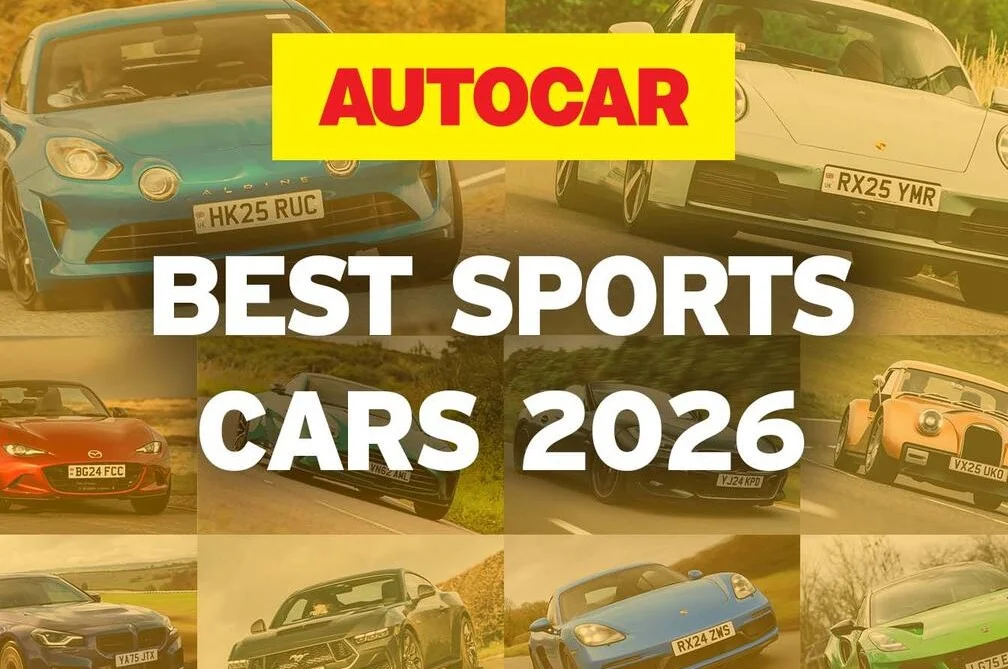
The A110’s hardware explains both its appeal and its upkeep. According to Autocar, it uses a lightweight aluminium body, a mid-mounted engine and double-wishbone suspension — a layout the magazine notes is mostly reserved for the most powerful supercars. The range arrived in 2017 with 248bhp, grew an A110 S with 288bhp, larger brakes and firmer suspension, passed through special editions such as the Légende GT, and now tops out at the A110 R Ultime. A replacement generation is due in 2027.
Every one of those details becomes an ordering problem in a market with no factory behind it. Aluminium panels cost more to repair than steel and demand a workshop that knows how to work them. A mid-mounted turbocharged engine sits where a boot would normally go, so routine access is slower and labour hours climb. Autocar’s advice to British readers — buy one before the 2027 replacement lands — reads very differently once it is translated into naira.
No verified naira parts pricing for the A110 exists in the public domain, and this publication will not invent one. What can be stated is the rule that protects a buyer: insist on a written quote with a part number for every component, and walk away from any invoice that lists a part without one.
OEM, Aftermarket And Counterfeit On Britain’s Best Driver’s Car
An OEM part is built to the manufacturer’s specification, either by the car maker itself or by the tier-one supplier that builds it for the production line. It carries a part number traceable to the model year. For fluids, the OEM route means the oil or coolant that meets the exact specification printed in the handbook.

Aftermarket parts come from independent manufacturers. They are legitimate, usually cheaper, and can meet or exceed the original specification — but only when the buyer reads the specification rather than the marketing on the bottle. A reputable aftermarket filter with the correct part number is not the same object as one that merely fits the thread.
Counterfeit parts are the third category, and the one that ends engines. They mimic OEM packaging, carry copied numbers and offer no traceability. Counterfeit oil is the most damaging example, because the failure surfaces thousands of kilometres later as sludge, worn bearings or a failed turbocharger — long after the seller has moved on.
Which brings the argument to the fluid itself. The best engine oil for Nigerian roads is not settled by ambient temperature, by what a mechanic has always used, or by what a group chat recommends. It is settled by the viscosity grade and specification printed in the owner’s manual for that model year. Manufacturer viscosity and specification requirements govern. Climate alone does not justify ignoring the manual.
Heat changes how oil behaves — that is physics, not folklore — but the answer is the correct specification, disciplined drain intervals and honest cooling system maintenance. Deviating to a random thicker grade moves the engine away from the conditions its designers validated, and no Lagos afternoon justifies that trade.
What The 911 And The MX-5 Offer Instead
The Porsche 911 is the alternative for a buyer who wants one car to cover everything. Autocar describes it as the most versatile sports car on the planet. It runs a 3.0-litre turbocharged flat-six in Carrera, Carrera T, Carrera S and Carrera GTS forms, with a hybrid GTS now in the range, and it comes as a coupé, a cloth-top Cabriolet and a folding fixed-head Targa, with rear- or four-wheel drive, an eight-speed PDK or a seven-speed manual. Turbo, Turbo S, GT3 and GT3 RS sit above.
The Mazda MX-5 is the third option and the one Autocar tags best for affordability. The fourth-generation car is shorter, lighter and more spacious than its predecessors. It gained 23bhp in a 2018 facelift to its 2.0-litre engine along with an adjustable steering column, then took a new limited-slip differential, retuned steering, more lenient stability control and interior updates in 2024. The 1.5-litre 130bhp version remains on sale.

The electric shift has not reached this corner of the market yet. Autocar notes that sports cars still hold to petrol power while other classes electrify, and Top Gear’s rundown of its top 20 electric cars is dominated by family transport — the Kia PV5, Skoda Enyaq, Volvo EX90, Porsche Macan — rather than mid-engined two-seaters. For a Nigerian buyer, that means the petrol parts chain remains the one that matters.
Best Value Comes Down To Consumables
Value in this class is not the sticker price. It is the cost of the parts actually bought — filters, pads, tyres, fluids — multiplied by how easily they can be sourced and how hard they are to fit. The MX-5 wins that arithmetic among the three: it is the affordability pick of Autocar’s group, and its service items sit at the simpler end of the sports car spectrum.
The 911 wins on breadth, because a long-running model line in dozens of variants gives independent workshops more experience and importers more reason to keep consumables on the shelf. The A110 wins on the thing Autocar rewards — the drive — and struggles on the thing Nigeria punishes hardest, which is running a low-volume aluminium sports car far from its supply chain.
Resale follows the same logic. A documented service history, correct specification fluids and traceable part numbers protect value far more than a polish and a fresh set of mats. An engine opened up by the wrong oil is a discount nobody recovers.
None of this overturns the verdict on Britain’s best driver’s car. The A110 still earns its place. The buyer who keeps it running in Nigeria simply has to treat parts and oil specification as part of the driving experience, not an afterthought — and treat the manual, not the climate, as the final authority on the best engine oil for Nigerian roads.
Frequently Asked Questions
Which car does Autocar rate as the best sports car on sale?
Autocar places the Alpine A110 at the top of its best sports cars ranking, praising its handling, its lightweight aluminium body, mid-mounted engine and double-wishbone suspension. The range starts from the 2017 car with 248bhp and runs up to the A110 R Ultime, with a replacement generation due in 2027.
Should Nigerian drivers use a thicker engine oil because of the heat?
No. The viscosity grade and specification printed in the owner’s manual for that model year govern. Heat affects how oil behaves, but the correct response is the specified fluid plus disciplined drain intervals and cooling system maintenance, not a random change to a heavier grade.
How do I tell an OEM part from a counterfeit one?
An OEM part is built to the manufacturer’s specification by the car maker or its tier-one supplier and carries a part number traceable to the model year. Counterfeit parts copy packaging and numbers but offer no traceability. Demand a written quote with a part number for every component and refuse anything that cannot produce one.
 Follow AFRILATEST on Google News
FIRST TIME REACTIONS:
Be the first to leave us a comment – Britain’s Best Driver’s Car And The Parts Bill Behind It, down the comment section.
JOIN US ON OUR SOCIAL MEDIA:

About Paul Nwogo
Paul Nwogo is an engineer, published author, and the Head Manager at AfriLatest. He has written numerous books available on Amazon covering a diverse range of topics, including health, personal finance, relationships, work ethics, and scam survival. With his technical background and passion for writing, Paul now oversees the editorial direction of AfriLatest, delivering practical, accurate, and engaging content on trending news, music, and global lifestyle topics.
View all articles by Paul Nwogo

Car Reviews
1955 Chevy Bel Air Restomod: What SEMA Really Proves
The 1955 Chevy Bel Air restomod at SEMA packs 741 hp and a dozen specialist suppliers. Here is what is confirmed, what is not, and why it matters.

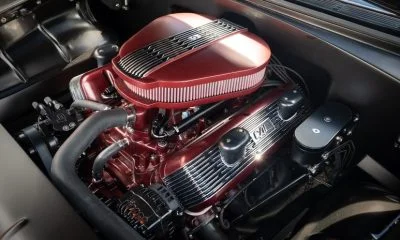
The 1955 Chevy Bel Air restomod unveiled in BluePrint Engines’ display booth at the 2026 SEMA show in Las Vegas carries a 598-cubic-inch V-8 rated at 741 horsepower and 703 pound-feet of torque, according to Car and Driver. Those figures are the easy part of the story. The harder and more useful part is the list of companies it took to make them usable.
Two published accounts of the build — Car and Driver’s show report and Hot Rod‘s preview of CAL Auto Creations’ SEMA projects — together name roughly a dozen firms behind the car. BluePrint Engines supplied the powerplant. Art Morrison supplied the frame. RideTech supplied the coil-overs, Baer the six-piston brakes, Bowler the automatic transmission, SpinTech the mufflers. Advanced Plating handled the nickel finishes. Leading Edge Machine and Design cut the one-off wheels. Santana Interior Design stitched the cabin. Dakota Digital and Vintage Air supplied instruments and climate control. CAL built the body and sprayed the paint in-house.
No single shop on that list could have produced this car alone. That is the substance behind the headline.
What This 1955 Chevy Bel Air Restomod Actually Changed
The engineering claim sits in the chassis, not the paint. CAL reworked an Art Morrison frame so the rear rails turn upward, dropping the ride height, while the centre crossmembers were raised to keep components above the scrub line. Car and Driver’s report describes the result as drivable even on pockmarked roads. Hot Rod describes a street-sweeping stance that still leaves enough suspension travel that the car, in its phrasing, “doesn’t ride like a rikshaw.”
That distinction separates engineering from cosmetics. A classic can be dropped cheaply by cutting springs and ruining the geometry. Building one that sits low and still absorbs bad surfaces requires fabricated parts and deliberate suspension design. The visible work — reshaped quarter panels, revised taillight bezels, a new grille surround, dark paint mixed specifically for this build, staggered one-off wheels colour-matched to the body — is the part a photograph can carry. The invisible work decides whether the car survives a speed bump.
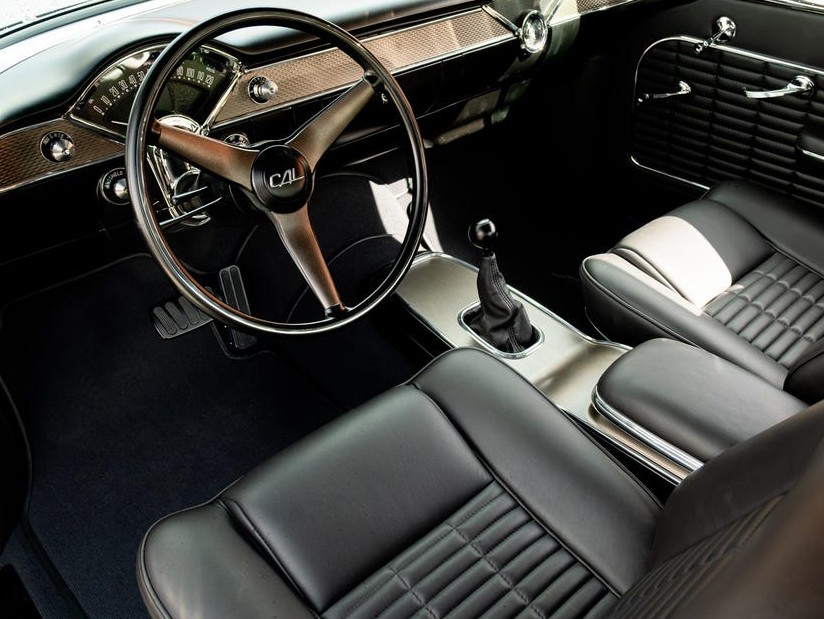
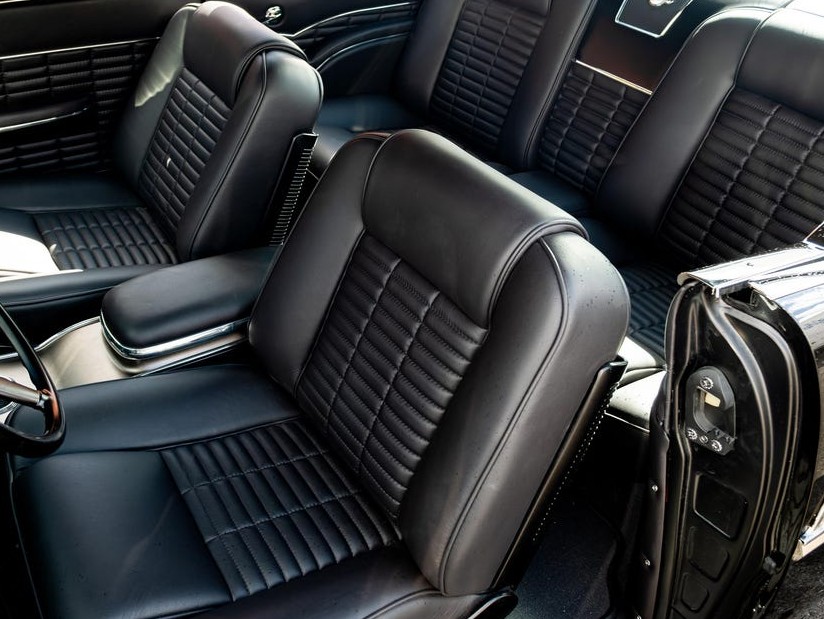
Inside, CAL and Santana Interior Design kept a period look while fitting a billet-machined centre console with cupholders beneath a sliding armrest, Dakota Digital instrumentation and Vintage Air climate control. Classic appearance, modern function.
Confirmed Specifications, And What Has Not Been Said
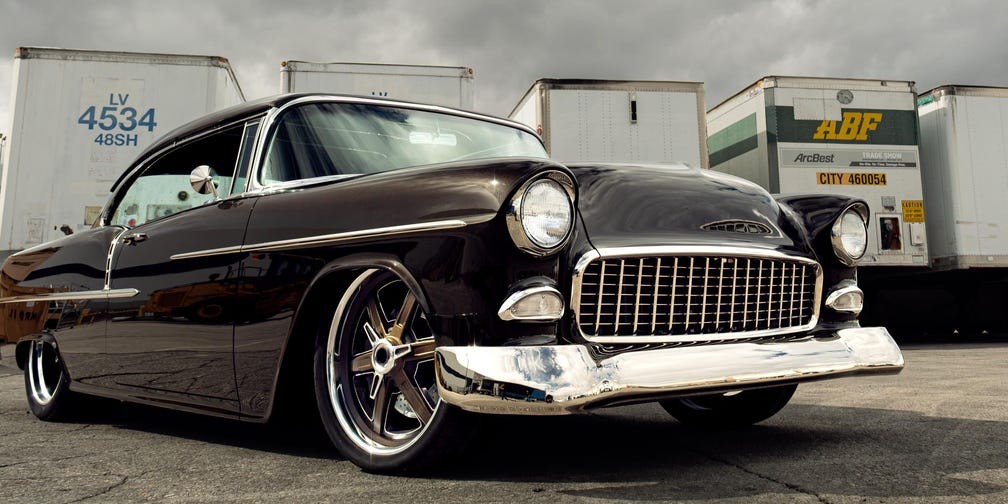
Verified across the published accounts: the engine’s displacement and output, a Bowler automatic transmission, a nine-inch rear end, Baer six-piston brakes, the modified Art Morrison frame, RideTech coil-overs, and the supplier list above. Hot Rod identifies the transmission specifically as a 4L80E; Car and Driver describes it only as a Bowler automatic. The two are consistent — one is simply more precise.
Not stated anywhere in the source material: the cost of the build, whether a customer commissioned the car or CAL built it as a showpiece, whether the engine is a catalogue item the public can order, the finished weight, or any measured performance figure. No dyno sheet, no quarter-mile time and no independent road test appears in either account. The horsepower number should be read as the engine builder’s rating, not as a measured result from the completed car.
The silence on price is the most consequential gap. It is what separates a show car from a purchase decision.
Why A Rendered Bel Air Tells A Related Story
The same nameplate lives a second life as digital art. autoevolution published renders by Emmanuel Brito of a 1956 Bel Air dropped on oversized wheels, finished in khaki with gunmetal details and a crimson interior. Commenters objected to the wheel design and to new door trim they judged out of place.
Those arguments cost nothing to settle. Nothing has to fit. That is why the renders belong in this story: they show the demand, while the metal car in Las Vegas shows the capability. The two are not rivals. They are opposite ends of the same pipeline, and the distance between a render and a running car is measured in suppliers.
That distance is the useful lesson for readers outside the market where SEMA happens. In most African markets, a build of this kind is constrained less by taste than by the absence of a domestic specialty supply chain — no local crate-engine builder, no chassis fabricator, no plating shop with the right process, and imported parts exposed to freight, duty and currency risk. Where the specialist network is thin, work migrates to generalist workshops and the timeline stretches accordingly.
The cost of that stack is not hypothetical. A Fountain Valley body shop owner told the Orange County Register in 2010 that about $150,000 had gone into restoring a 1955 Bel Air before a crash pushed it into his building. That figure was specialist labour and parts, not a sticker price.
The Bigger Picture
SEMA builds are usually read as entertainment. They are better read as an industrial census.
The 1955 Chevy Bel Air restomod is a demonstration that a particular economy — American, with Hot Rod placing CAL Auto Creations in Nebraska — can take a seventy-year-old design and re-engineer it to modern standards using off-the-shelf and made-to-order parts from a dozen independent firms. That capacity is the story, and it is not evenly distributed.
Confirmed: the parts exist, the suppliers exist, and the car runs and drives. Unconfirmed: what it cost, who owns it, and what it will do when someone finally puts a timing device on it. Readers should hold those two categories apart — the craft is documented, the performance is promised.
Frequently Asked Questions
What engine is in the 1955 Chevy Bel Air restomod at SEMA?
A BluePrint Engines 598-cubic-inch V-8 rated at 741 horsepower and 703 pound-feet of torque, paired with a Bowler automatic transmission and a nine-inch rear end, according to Car and Driver and Hot Rod.
How much does this Bel Air restomod cost?
Neither published account states a price. The cost of the build, and whether it was a customer commission or a showpiece, has not been disclosed by CAL Auto Creations or BluePrint Engines in the source material.
Is the low ride height achieved by cutting springs?
No. The reports describe a reworked Art Morrison frame with rear rails turned upward and raised centre crossmembers that keep components above the scrub line, combined with RideTech coil-overs that preserve suspension travel.
FIRST TIME REACTIONS:
Be the first to leave us a comment – 1955 Chevy Bel Air Restomod: What SEMA Really Proves, down the comment section.
JOIN US ON OUR SOCIAL MEDIA:
About Paul Nwogo
Paul Nwogo is an engineer, published author, and the Head Manager at AfriLatest. He has written numerous books available on Amazon covering a diverse range of topics, including health, personal finance, relationships, work ethics, and scam survival. With his technical background and passion for writing, Paul now oversees the editorial direction of AfriLatest, delivering practical, accurate, and engaging content on trending news, music, and global lifestyle topics.
View all articles by Paul NwogoCar Reviews
Why Naming Cars Is So Hard: The Jimmy And The Flex
Why naming cars is so hard: the GMC Jimmy revival, the Ford Flex resale problem, and what a badge costs Nigerian owners at the parts counter.
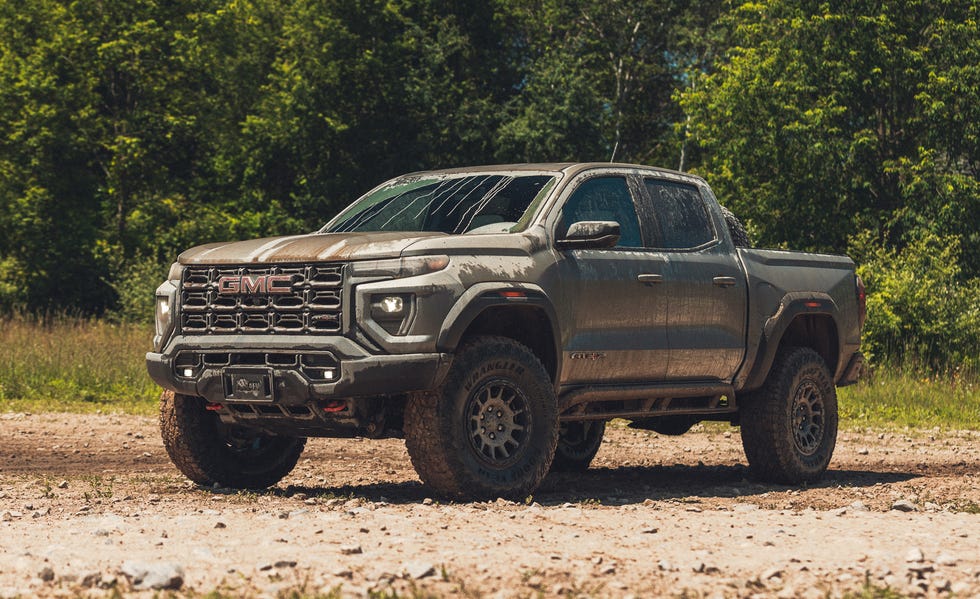
The vehicle at the centre of the newest argument about car naming is not a Ford, and it does not exist yet.
Explaining why naming cars is so hard does not need a manufacturer quote. It needs the resale column. A badge is a promise about structure, and buyers price that promise into what they will pay used.
According to Car and Driver, citing a report from GM Authority, GMC is developing a body-on-frame SUV that would revive the Jimmy nameplate. It would sit between the Terrain and the Acadia, share its platform with the Canyon and Colorado pickups, and fight the Toyota 4Runner, Ford Bronco and Jeep Wrangler. A turbocharged 2.7-litre four-cylinder is the likely engine, rated at 310 horsepower and 430 pound-feet in current pickup applications. A V-8 is reportedly under consideration.
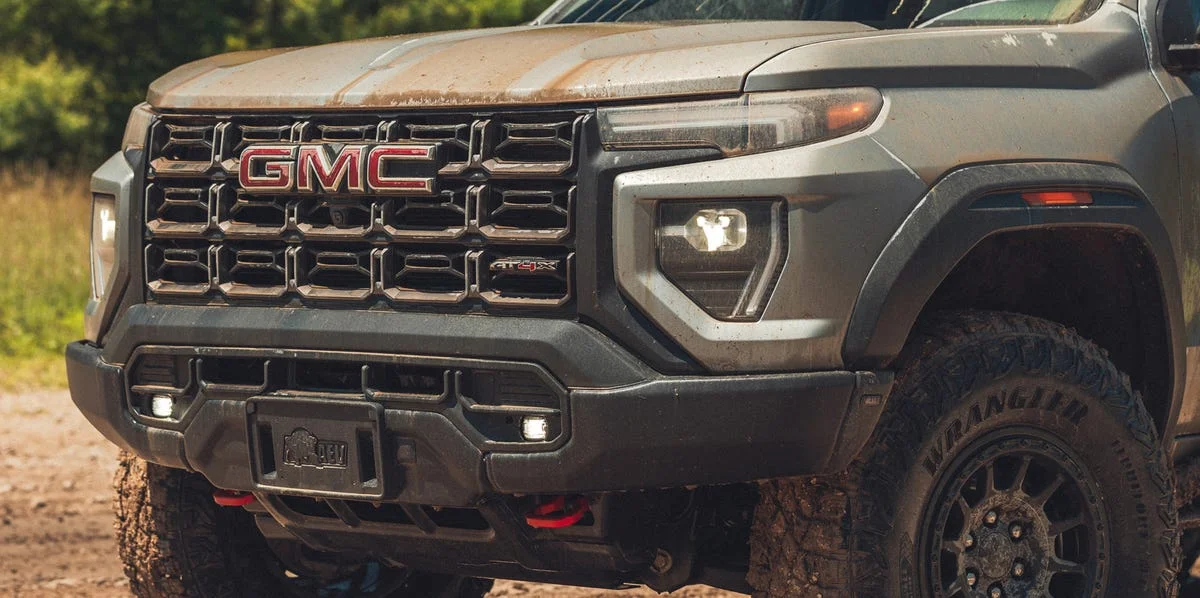
That is the specification story, and specifications are the easy part. The hard part is the badge.
No public Ford commentary on the difficulty of car naming appears in the source material available for this article, and none is invented here. The useful evidence sits in the product record instead.
The GMC Jimmy Revival Shows Why Naming Cars Is So Hard
The Jimmy’s history is exact, and it constrains what the new car is allowed to be. It was a large body-on-frame SUV sold in the 1970s and 1980s as a twin to the Chevrolet Blazer, then a smaller body-on-frame SUV sold from 1983 to 2005 in two- and four-door forms.
Car and Driver reports that enthusiasts remain wary because Chevrolet revived the Blazer badge on a unibody crossover. That wariness is rational. A name that once specified a ladder frame now specifies a family crossover, and the older name’s resale premium goes with the definition.
GMC’s reported decision to keep body-on-frame construction is therefore not a chassis choice. It is a naming decision with a price attached.
What The Ford Flex Reveals About A Badge That Has To Explain Itself
The Flex is the cleanest available case study in naming trouble, and it never involved a bad word or a bad joke. As Motor1 puts it in a used buying guide, the Flex wasn’t quite an SUV, wasn’t quite a station wagon and certainly wasn’t a minivan, at least that’s what Ford wanted buyers to believe. The same guide calls it an underappreciated oddball.
Underappreciated is a polite word for a resale problem. A name that needs an explanatory sentence fails the search-bar test. A used-car buyer in Lagos or Manchester types “seven-seat SUV” or “estate” or “people carrier” into a marketplace. Nobody types “Flex,” because the name does not describe a category the buyer already holds in mind. Volume falls, the aftermarket thins out, and the badge carries a discount for the rest of its life.
Where A Badge Decides What You Can Actually Fix
Parts availability is a naming outcome, and the OEM, aftermarket and counterfeit distinction explains how it happens.
OEM parts are manufactured to the vehicle maker’s specification and sold under its part number. Aftermarket parts are made by independent companies to their own interpretation of that specification. Counterfeit parts carry a brand’s markings and packaging without the engineering behind them. They copy the label, not the tolerance.
The depth of OEM and legitimate aftermarket supply depends on how many units of a given name were sold and how easily that name is searched. A high-volume, unambiguous badge attracts tooling from several aftermarket suppliers and a competitive price. A confusing or short-lived badge attracts neither, and counterfeit parts fill the space. That is the worst outcome for a Nigerian owner running a grey import.
TopGear’s list of the coolest car names shows the same mechanism from another direction. Mitsubishi sold the Pajero as the Montero in Spanish-speaking markets because the original word is vulgar there, a regional rename that splits the parts catalogue and the search traffic in two. Dacia’s Bigster is, by TopGear’s own reading, big plus Duster, which is literal and effective. Ferrari’s 812 Superfast is more literal still, and it works because the number backs the adjective.
Motor1’s round-up of the weirdest car names ever reaches the same conclusion through ridicule. The Renault LeCar was, at minimum, an accurate name. The Volkswagen Thing described an oddball honestly. Neither badge stopped the car being identified, which is the first job a name has to do.
Bad names are not the problem. Names that promise something the car does not deliver are the problem.
Is The Jimmy Worth Waiting For In Nigeria
There is no launch date, no production confirmation and no price in any currency, so there is no naira figure to quote here. Anyone offering one is guessing.
Nigeria’s new-vehicle market is thin, and body-on-frame SUVs at this size arrive mostly through the used-import route. Landed cost will depend on duty, freight and the exchange rate at the time of import, none of which can be modelled from the information currently available. The watch items are narrower: whether GMC holds body-on-frame construction through to production, whether the V-8 option survives, and whether the badge reaches showrooms at all. GM has put $888 million into its Buffalo, New York engine plant to build a next-generation small-block V-8, which supports the second point but does not confirm it.
For a Nigerian buyer, the practical question is not whether the Jimmy beats a 4Runner on paper. It is whether a revived name with a twenty-year gap in its history can build the parts depth a 4Runner already has.
That gap is the whole argument. Explaining why naming cars is so hard is really explaining why the badge is the longest-lasting component on the vehicle. It sets what the car is worth used, what a mechanic can source, and whether a buyer scrolling a marketplace ever sees it.
Ford has not published its reasoning in the material reviewed for this piece, and the Jimmy has not been confirmed for production. But the pattern is documented on both sides of the Atlantic, and it is not sentimental. It is arithmetic.
Frequently Asked Questions (why naming cars is so hard)
Will the GMC Jimmy be sold in Nigeria?
No announcement covers Nigerian availability. The reporting reviewed here describes a rumoured body-on-frame SUV based on the Canyon platform, with no launch date, no production confirmation and no price in any market. Any naira figure circulating now is speculation.
Why does a car’s name affect its resale value?
A name is a category signal. The Ford Flex sat between SUV, wagon and minivan, so used buyers searching for a defined body style never found it, and the guide describing it as an underappreciated oddball points to the same result. Names that specify structure clearly hold value better, which is why the Chevrolet Blazer’s move to a unibody platform unsettled the Jimmy’s expected buyers.
Do car names really affect parts availability?
Yes, indirectly. OEM parts are built to the manufacturer’s specification, aftermarket parts are built by third parties to their own interpretation, and counterfeit parts copy markings without the engineering. The number of units sold under a clear, searchable name determines how much genuine OEM and aftermarket supply exists. Thin supply is where counterfeit parts gain ground.
FIRST TIME REACTIONS:
Be the first to leave us a comment – Why Naming Cars Is So Hard: The Jimmy And The Flex, down the comment section.
JOIN US ON OUR SOCIAL MEDIA:
About Paul Nwogo
Paul Nwogo is an engineer, published author, and the Head Manager at AfriLatest. He has written numerous books available on Amazon covering a diverse range of topics, including health, personal finance, relationships, work ethics, and scam survival. With his technical background and passion for writing, Paul now oversees the editorial direction of AfriLatest, delivering practical, accurate, and engaging content on trending news, music, and global lifestyle topics.
View all articles by Paul NwogoCar Reviews
Ford Bronco ORV Package: $18,995 Ownership Reality Check
Ford’s Bronco ORV package adds Fox suspension and Raptor skid plates for $18,995. What it means for running costs, parts and Nigerian buyers.
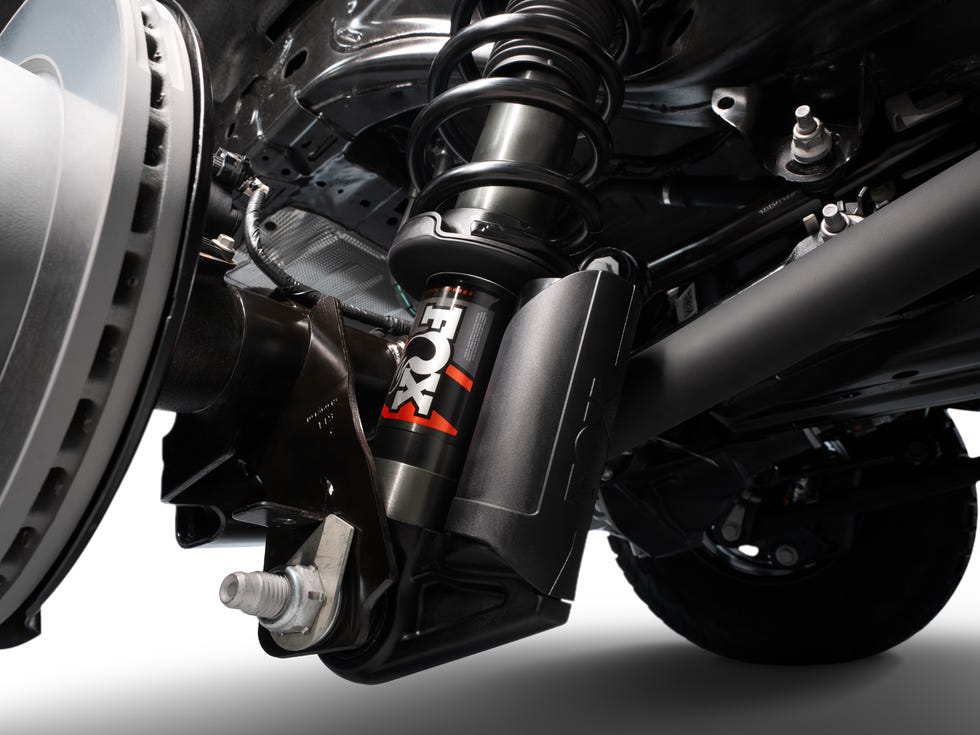
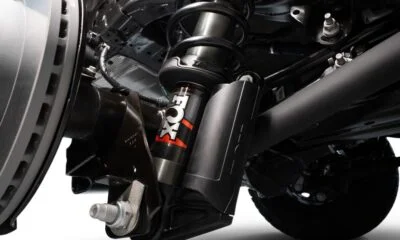
Ford has expanded the Bronco’s special-edition catalogue again, and this time the hardware is aimed squarely at dirt. The Ford Bronco ORV package, sold through Ford’s Custom Garage programme, adds a Fox off-road suspension kit, a skid plate and fuel tank plate lifted from the Bronco Raptor, Rigid LED auxiliary lights and a Ford Performance ProCal calibration tool. It fits 2025 and 2026 model-year Broncos.
The price is $18,995 on top of the vehicle, ordered through Ford dealers.
Ford’s motivation is not mysterious. The Bronco returned in 2021 as a direct rival to the Jeep Wrangler and sold 146,007 units last year. A model shifting in those volumes supports a long tail of variants, from the two-tone Heritage Edition to the desert-focused Stroppe Edition and the Free Wheeling trim. As Car and Driver reported, the Custom Garage programme is where those ideas now gestate.
What The Ford Bronco ORV Package Actually Adds
The package fits the base Bronco, the Outer Banks and the Big Bend, with or without the Sasquatch package.
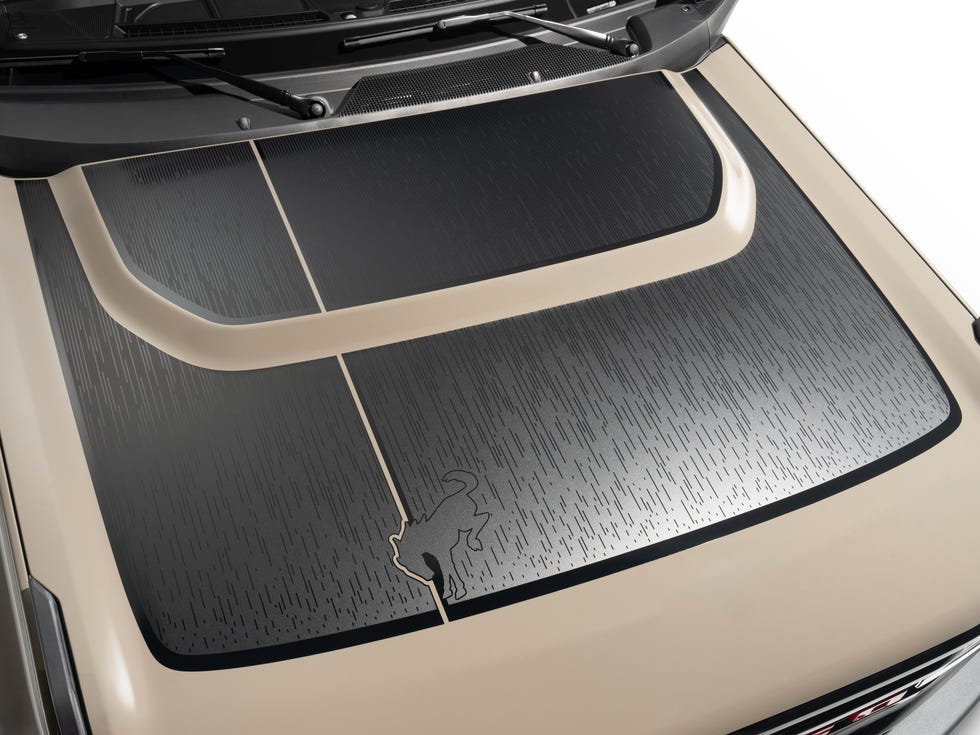
The visual kit is substantial: 17-inch black Weld wheels, more pronounced fender flares, red Bronco badging matched to red tow hooks, a Stealth matte black hood decal intended to cut sun glare, a smoked rear Ford badge and a triangular ORV logo on the fender. Optional sill plates carry Ford Performance branding.
The functional list is longer than the styling list. Beyond the Fox suspension and the Raptor-sourced underbody plates, buyers can add two lights on the hood, a roof-mounted light bar, a high-clearance Borla exhaust, a heavy-duty rear differential cover, a hydraulic hood lift kit and an ARB air compressor stowed under the bonnet.
The ProCal device is standard. Ford describes it as a calibration tool for data logging and diagnostics. The source material does not present it as a power upgrade, and buyers should treat any dealer claim of extra output from the ProCal alone with suspicion.
Ford calls the ORV a limited edition but has not said how many will be built. That silence matters at resale time.
Why $18,995 Changes The Ownership Maths
A sticker figure is not a cost. Almost everything in the ORV package is a wear item or a consumable.
Fox off-road dampers are serviceable components with defined rebuild intervals. Rigid LED lamps can be destroyed by a stone strike. A Borla exhaust is stainless steel but still a serviceable part. The wheels take the same punishment as any other wheel on Nigerian roads. The ARB compressor has seals. The Raptor skid plates exist precisely because the underside of an off-roader gets hit.
None of that is a criticism of the package. It is a warning about budgeting the $18,995 as an entry fee rather than a total.
The warranty terms soften the argument considerably. Ford attaches a supplemental three-year/36,000-mile warranty running from the new-vehicle in-service date, and fitting the package does not void the standard Bronco warranty. For a buyer paying close to a fifth of a base Bronco’s price again in accessories, that clause is the most valuable line in the announcement.
Fitting The Ford Bronco ORV Package Into Nigerian Buying
The Bronco is not mainstream dealer stock in Nigeria. Most units arrive as imports, and that reframes the arithmetic entirely.
A Nigerian buyer is not paying $18,995. The landed cost includes the vehicle, freight, clearing and duty, and the naira equivalent moves with the exchange rate at the time of import. Quoting a fixed naira price for this package would be dishonest. What can be stated plainly is that the package alone costs more than many complete used SUVs change hands for in Lagos, and it bolts onto a vehicle that already carries import costs.
Parts availability is the harder problem. Fox, Rigid, Weld, Borla and ARB are specialist American brands. In Nigeria, sourcing runs through parallel importers and specialist workshops, and lead times are measured in weeks rather than days. A damaged Rigid light bar or a leaking Fox damper is not a Monday-morning fix.
This is where the OEM, aftermarket and counterfeit distinction earns its keep.
The ORV hardware is OEM: engineered or validated by Ford, sold through Ford dealers, and covered by the supplemental warranty. An aftermarket Fox damper bought separately may be a genuine Fox product, but it is not the Ford-validated specification and carries no Ford coverage. A counterfeit shock absorber wearing a Fox sticker carries nothing at all, no specification, no traceability, no recourse. On a vehicle where suspension failure happens at speed on bad ground, that difference is not cosmetic.
The ProCal tool is the clearest example. A genuine unit is an OEM diagnostic device tied to Ford’s calibration data. A cloned tool of uncertain origin can brick control modules. Nigerian buyers importing US-spec trucks should insist on the boxed ProCal and its documentation.
Warranty administration deserves a written answer before money changes hands. Coverage is tied to a US in-service date and administered through Ford’s dealer network. Buyers importing privately should confirm, in writing, how and where a claim would be handled.
Road suitability is a mixed verdict. The 17-inch wheels leave meaningful sidewall, a genuine advantage on broken tarmac, because a smaller rim with more rubber survives potholes better than a large rim with a thin band. The Raptor skid plates are useful insurance against road debris. The off-road suspension, however, is tuned for trail work, and Ford publishes no on-road ride data for this build in the source material. Test drive before paying.
Running costs will not be modest. Ford does not publish fuel economy figures for the ORV build, and the added mass of skid plates, an air compressor and a roof light bar works against efficiency regardless of engine.
Resale value splits by market. Globally, a documented limited-edition Bronco with a factory warranty trail holds value better than a modified truck. In Nigeria, the pool of buyers for a special-edition off-roader is small, and a matte hood decal and red badging do not universally read as premium. The ORV badge helps with enthusiasts. It does little for everyone else.
Is It Worth Waiting For The Ford Bronco ORV Package
For a buyer in a market where Ford dealers stock the Bronco, service Fox dampers and honour the supplemental warranty, the Ford Bronco ORV package is coherent value: factory-validated hardware, a Raptor-derived underbody, and coverage that survives the modification.
For a Nigerian buyer importing privately, the calculation is narrower. The package is worth waiting for only if the importer can document OEM provenance, secure a service path for Fox and Rigid components, and get warranty administration in writing. Without those three, the $18,995 buys appearance and capability the owner cannot maintain, and a limited-edition badge is poor compensation for a truck parked waiting on parts.
Frequently Asked Questions
How much does the Ford Bronco ORV package cost?
The package costs an additional $18,995 on top of the price of the vehicle. It is ordered through Ford dealers and fits 2025 and 2026 model-year Broncos. Ford has described it as a limited edition without specifying the build number.
Which Bronco trims can be fitted with the ORV package?
The ORV package is available on the base Bronco, the Outer Banks and the Big Bend, with or without the Sasquatch package.
Does the Ford Bronco ORV package void the factory warranty?
No. Ford says installation does not void the standard Bronco warranty, and the package brings a supplemental three-year/36,000-mile warranty running from the new-vehicle in-service date. Buyers importing privately should confirm in writing how a claim would be administered locally.
FIRST TIME REACTIONS:
Be the first to leave us a comment – Ford Bronco ORV Package: $18,995 Ownership Reality Check, down the comment section.
JOIN US ON OUR SOCIAL MEDIA:
About Paul Nwogo
Paul Nwogo is an engineer, published author, and the Head Manager at AfriLatest. He has written numerous books available on Amazon covering a diverse range of topics, including health, personal finance, relationships, work ethics, and scam survival. With his technical background and passion for writing, Paul now oversees the editorial direction of AfriLatest, delivering practical, accurate, and engaging content on trending news, music, and global lifestyle topics.
View all articles by Paul Nwogo-

 Car Reviews2 weeks ago
1955 Chevy Bel Air Restomod: What SEMA Really Proves
-
Savings & Investing3 weeks ago
Hidden Medicare Fees Draining Your Retirement Savings
-
Car Reviews4 weeks ago
Ford Bronco ORV Package: $18,995 Ownership Reality Check
-
JAMB & WAEC4 weeks ago
JAMB Admission Process: What Changed And What Is Still Talk
-
Movies & TV4 weeks ago
Silo Season 1 Ending Explained: What the Showrunner Said
-
Movies & TV3 weeks ago
Wizkid Starboy Desire Ft Banky W Shaydee: Fact Or Fan Fiction?