Entertainment TV & Film
Silo Season 1 Ending Explained: What the Showrunner Said
Silo season 1 ending explained through verified showrunner interviews: why the finale leaned forward, and what Season 3 later confirmed.


Most people who finish the first season of Apple TV’s Silo go looking for one thing: a straight answer about that final shot. Search “silo season 1 ending explained” and the results arrive with total confidence. They disagree with each other, and many were written before anyone who makes the show had spoken on the record.
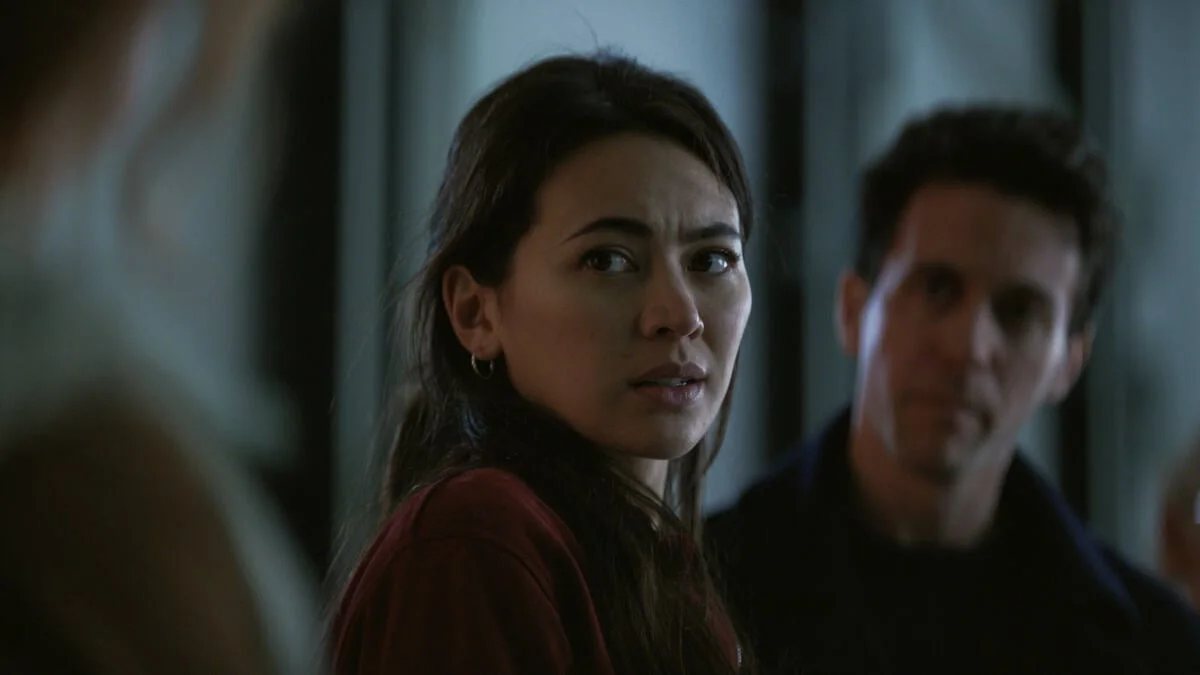
The verifiable account is narrower, and it begins with showrunner Graham Yost. In an interview with Deadline timed to the Season 3 finale, Yost described the first season’s closing beat in plain terms: the audience was left asking whether Juliette Nichols, played by Rebecca Ferguson, would live or die. His own read was dry. Ferguson’s face was on the poster, so she was probably going to survive.
That is the whole of the Season 1 cliffhanger as the show’s creator frames it. Not a code to crack. A held breath.
Why Most Silo Season 1 Ending Explained Posts Miss The Point
Yost draws a line between his show and the cliffhanger habit. Season 2, he told Deadline, ended with Juliette and Bernard (Tim Robbins) burning up in an airlock, then cut to two characters the audience had never met. A Pez dispenser in that final scene told viewers it was an origin story. Leaning forward, he called it. That approach “really became our thing.”
So the Season 1 finale was never built to be solved by a viewer with a pause button. It was a handoff. The answers were meant to arrive years later, and in Season 3 they largely did.
The plan itself predates production. Yost recalled a writers’ mini-room in early 2020 where author Hugh Howey, whose novels the series adapts, told them the architects of the silos are “not perfect” and that “things don’t work perfectly, but they do have this plan.” Yost described the series as an exercise in finding out what that plan is and how it has been carried out.
Season 3’s structure made the handoff visible. Yost said he proposed splitting one oversized script into episodes 9 and 10, and the writers’ room “revolted,” throwing things at a screen, because the split meant uniting the two timelines that had run in parallel all season: Juliette’s in Silos 17 and 18, and the Before Times thread with journalist Helen Drew (Jessica Henwick) and engineer-turned-politician Daniel Keene (Ashley Zuckerman). The cost was building Silo 1 a season early. “We had Nicole Northridge and her incredible team doing production design,” Yost said.
He was blunt about the alternative. Ending the season on the bomb, he argued, would have made Silo “a cliffhanger show,” and that is not what the first two seasons did.
What The Season 3 Finale Actually Confirmed
The Season 3 finale, titled “Troy” and written by Fred Golan, delivered the mechanism behind the whole silo system. Daniel wakes in Silo 1 under the name Troy, cryogenically preserved alongside Senator Thurman (Laura Innes) and others after a nuclear detonation near the newly built silos in Atlanta, Georgia.
Variety reports that Juliette regains her memories in the finale and declares war on Silo 1, after her team caps the safeguard — a pipe that would otherwise have flooded Silo 18 with toxic gas and killed nearly 10,000 residents. The alliance behind that move, among Juliette, Camille Sims (Alexandria Riley), Robert Sims (Common), Knox (Shane McRae), Shirley (Remmie Milner) and Sheriff Billings (Chinaza Uche), was described by Yost as tentative and uneasy.
Two details in that finale reach backwards. First, the memory wipe is real. Yost confirmed the founders remove memory and issue new names while preserving skills, and he cited an Oliver Sacks case to illustrate it: a patient with severe short-term memory loss who could still play an entire piano concerto. In Daniel’s case a residue survives. “The persistence of memory is love,” Yost said. “It’s Helen.”
Second, the voice in the vault is not a machine in the way viewers assumed. Yost said The Algorithm is ultimately a person speaking, filtered through an AI construct so that it sounds identical in every silo’s contact room. And the rulebook known as The Pact, Mashable reported, was drafted by Anna Thurman and Dr. Crnkovich — with help. “To be honest, AI wrote it,” Crnkovich says in episode 9. “We just did some editing.”
Where Confirmed Fact Ends And Fan Theory Begins
Some points are on the record. Others are silent, and the gap is where recaps blur.
Confirmed on screen: the silos were engineered for a nuclear strike. A tour guide in episode 9 tells Helen that Silo 18 was built to withstand a 30-megaton explosion as close as two miles. Confirmed by the showrunner: memory alteration, new identities and retained skills are all part of the founders’ design, and the architects knew something was coming.
Not confirmed: who launched the weapon. Episode 8 has trillionaire Per Stensen (Colin Hanks) insisting Iran and the United States are at war over Iranian nanoweapons, and he separately treats nanotechnology as the primary threat to humanity. Neither establishes responsibility for the blast, and Mashable noted the question remains unanswered.
Also not confirmed: bloodlines. Mashable raised the possibility that Helen, pregnant during the Before Times thread, could be an ancestor of present-day Silo 18 residents. The publication labelled that a guess, and it should be read as one.
This matters because of how the show is consumed. New Season 3 episodes dropped each Friday, per Mashable, which means recaps published within hours frequently preceded any public comment from the showrunner. That is how a reasonable theory gets filed as a plot summary, and it is why the Season 1 finale still generates confident, contradictory readings years after it aired.
What Season 4 Will And Will Not Settle
Yost has been explicit about the shape of the final season: “Season 4 is war.” He has also been coy about the nuclear question, deflecting a direct query about whether the bomb was part of the founders’ plan.
The honest state of play is this. A silo season 1 ending explained properly is not a list of reveals. It is a record of what the makers have said on the record, what the episodes have shown, and what remains open. Season 1 ended on a held breath. Seasons 2 and 3 explained why the breath was being held. Season 4 decides what happens when it is released.
Frequently Asked Questions
What actually happens at the end of Silo Season 1?
According to showrunner Graham Yost, the first-season finale leaves the audience asking whether Juliette Nichols, played by Rebecca Ferguson, survives. Yost described the ending as a deliberate lean forward rather than a puzzle to be decoded, and noted that Ferguson’s presence on the poster made her survival the expected outcome.
Does Silo Season 3 explain the Season 1 ending?
Season 3 confirms several mechanisms the earlier seasons only hinted at. Yost confirmed that the founders remove memories and assign new names while preserving skills, and that the voice known as The Algorithm is a person speaking through an AI filter. The Season 3 finale also shows Daniel Keene waking in Silo 1 as Troy.
Has Silo revealed who launched the nuclear bomb?
No. Episode 8 includes Per Stensen’s claim that Iran and the United States are at war over Iranian nanoweapons, but neither that episode nor the finale establishes who was responsible for the detonation. Yost declined to confirm whether the bomb was part of the founders’ plan.
 Follow AFRILATEST on Google News
FIRST TIME REACTIONS:
Be the first to leave us a comment – Silo Season 1 Ending Explained: What the Showrunner Said, down the comment section.
JOIN US ON OUR SOCIAL MEDIA:

About Rose Green
Rose Green is an entertainment and lifestyle author at AfriLatest. With a passion for storytelling, she contributes creative and thought-provoking content, capturing the imagination of readers. Rose specializes in entertainment news, celebrity updates, and lifestyle trends, sparking meaningful conversations across diverse topics.
View all articles by Rose Green

Entertainment TV & Film
The DSS Director General Award Story: A Reading Guide
Rights groups hail the DSS Director General over The Sun award. A reading guide to what the statements verify, and what stays unconfirmed.

The Centre for Public Integrity’s congratulatory statement on the DSS Director General landed in Abuja on a Saturday, signed by an executive director, and it ran on Premium Times under a promoted-content URL. That placement detail matters more than the praise itself.
The occasion: Oluwatosin Ajayi, Director-General of the Department of State Services, was conferred with The Sun’s Courage in Leadership Award. The awarding body is a Nigerian newspaper, which makes this an industry honour from a media house, not a finding by a regulator or a court. President Bola Tinubu appointed Ajayi; the Foundation for Democracy in Africa dates his tenure from August 2024.
What follows is a guide to the coverage, not to the man. The headline shape, rights group hails security chief, has become a genre in Nigerian press. Reading it well means knowing which sentences in these statements can be checked, and which cannot.

The Statements Behind The DSS Director General Commendations
One: The Sun Courage in Leadership Award. Why it matters: it is the peg everything else hangs on. Who it’s for: readers tracking how Nigerian newspapers use awards to shape security coverage. Verified: the conferment is asserted consistently across the CPI and FDA statements. Not verified: the award’s selection process, which none of the statements describe.
Two: The Centre for Public Integrity statement, carried by Premium Times. Why it matters: it makes the broadest claim in the set, that the Service has been steered away from traditional strong-arm perceptions toward intelligence-driven work. Who it’s for: policy readers. Read it knowing the piece sits in Premium Times’ promoted channel, a submitted statement rather than newsroom reporting. That does not make it false. It means no editor at that outlet vouched for it.
Three: HURIWA’s statement, published by The Guardian Nigeria. Why it matters: it is the only item here that names a specific citizen whose case was resolved, Lanre Arogundade, executive director of the International Press Centre, whose watchlist matter HURIWA says was settled. Who it’s for: media-freedom watchers.
Four: The Foundation for Democracy in Africa on Omoyele Sowore, reported by Pointblank News. Why it matters: it describes an institutional act aimed at a court, the DG asking the Federal High Court to consider halting the AAC presidential candidate’s prosecution until after the 2027 election. Who it’s for: election-law readers. The filing itself is not quoted anywhere in the statements, so the characterisation is the group’s.
Five: The Kaduna Democracy Day statements, carried by Vanguard. Why it matters: it supplies named case categories, convictions tied to the Owo St Francis Catholic Church attack and the Papiri schoolchildren abduction in Niger State, plus DSS school donations in Chikun Local Government. Who it’s for: readers who want community-level detail rather than rhetoric. A parallel statement from the Ifelodun Federation of Igboho Indigenes, reported by the Nigerian Tribune, ties the DG’s name to Sunday Igboho’s Iru Ekun Security Network in Oke-Ogun and to the release of Alhaja Kubura Aliqlas and her son Abdulmalik.
What HURIWA’s Hedged Language Admits
The most useful document here is also the most cautious. HURIWA writes of the reported review of old DSS watchlists dating back decades, reported compensation for people affected by wrongful detention, and reported reviews leading to releases. Three uses of reported inside a statement of commendation.
That is not a small thing. A rights organisation is endorsing reports it has not converted into documents, and it says so in its own text. The Arogundade case is the exception, because it names a person, and a named person can confirm or deny.
Separately, a statement from the Asiwaju Media Team, published by The Guardian Nigeria, carries a first-person account of conditions inside DSS custody: regular meals, toothbrushes and toothpaste, medical access, and the claim that bail is purely free. The passage is specific and human. It is also unattributed in the excerpt, with no name attached to the speaker describing his own detention. Vivid testimony without a named witness is not evidence. It is a lead.
Which Claims About The DSS Director General Survive Scrutiny
Sort the statements into three tiers and the picture sharpens.
Tier one: acts with paper trails. Court applications, releases, compensation payments. The Sowore request belongs here if the filing can be produced. HURIWA’s Arogundade reference belongs here if the resolution can be confirmed by Arogundade or the IPC.
Tier two: the award. Real as an event, but it certifies a newspaper’s judgement, not an audit.
Tier three: characterisations. Watershed moment. Gold standard. Paradigm shift. These are advocacy. They are allowed to be advocacy. They should not be reprinted as findings.
What is missing across every statement is arithmetic. No count of watchlist entries reviewed. No number of people compensated, no amounts paid. No figure for convictions secured. The CPI cites a string of landmark judicial victories without naming one. For a story about institutional reform, the absence of a single number is itself the finding.
The FDA statement does at least name instruments, the ECOWAS Supplementary Protocol on Democracy and Good Governance and the African Charter on Democracy, Elections and Governance. Those texts are checkable. Whether they apply to a domestic prosecution paused for electoral reasons is an argument, not a fact.
There is a sourcing pattern worth naming too. The endorsers span a newspaper, a rights writers’ association, two Kaduna civil society groups, a community federation in Oyo State, an Africa-focused democracy foundation and a media team. Breadth looks like consensus. It reads closer to a press-release circuit, where each statement draws on the same reports.
Top Pick
If you read one document from this cycle, read HURIWA’s. It names a citizen, it asks for human rights impact assessments, periodic detention reviews and citizen complaint channels, and it hedges its own claims with reported. That combination makes it auditable, which is more than most of the others manage.
The DSS Director General has an award, a stack of commendations and, by the account of one of his own endorsers, a court application any reporter can go and pull. That document, not the trophy, is where the story about the DSS Director General actually begins.
Frequently Asked Questions
What award did the DSS Director General receive?
The Sun’s Courage in Leadership Award. The conferment is referenced in statements from the Centre for Public Integrity and the Foundation for Democracy in Africa. None of the available statements describe how the award was decided.
Did HURIWA independently confirm the DSS reforms it praised?
No. HURIWA’s statement uses reported language for the watchlist review, the compensation payments and the releases. The one specific case it names is Lanre Arogundade of the International Press Centre.
What did the Foundation for Democracy in Africa say about Omoyele Sowore?
The group said DG Oluwatosin Ajayi asked the Federal High Court to consider halting Sowore’s prosecution until after the 2027 presidential election. The filing itself is not quoted in the statement, so the description is the group’s characterisation.
FIRST TIME REACTIONS:
Be the first to leave us a comment – The DSS Director General Award Story: A Reading Guide, down the comment section.
JOIN US ON OUR SOCIAL MEDIA:
About Rose Green
Rose Green is an entertainment and lifestyle author at AfriLatest. With a passion for storytelling, she contributes creative and thought-provoking content, capturing the imagination of readers. Rose specializes in entertainment news, celebrity updates, and lifestyle trends, sparking meaningful conversations across diverse topics.
View all articles by Rose GreenEntertainment TV & Film
Maxton Hall Season 3 Trailer Sets a 14-Day Countdown to the End
The Maxton Hall season 3 trailer confirms a December 9 return and a December 23 finale, but no viewership data backs the ‘international success’ claim.

The most exportable asset in the new Maxton Hall footage is not a kiss. It is a calendar.
Prime Video has released the official trailer for the third and final season of Maxton Hall — The World Between Us, and the Maxton Hall season 3 trailer does something more useful than tease a reunion: it timestamps the end of the argument. Harriet Herbig-Matten and Damian Hardung return as Ruby Bell and James Beaufort when the series comes back on December 9, 2026, per The TV Cave.
The order runs six episodes. Two land on December 9. Two more arrive each week. The series finale drops December 23. Fourteen days separate the first episode from the last. That gap is the only hard number Prime Video has attached to this season, and it is the number fans should actually plan around.

What The Maxton Hall Season 3 Trailer Actually Confirms
The trailer establishes the season’s central conflict without resolving it. According to The TV Cave, Ruby is placed directly at odds with Mortimer Beaufort, James’s father, played by Fedja van Huêt, whose determination to keep the couple apart persists into the final chapter.
The setup carries over from season two, which left Ruby falsely implicated in a relationship with a teacher. Her place at Maxton Hall is under threat. Her Oxford ambition is slipping. James stands beside her as the pair try to uncover the truth and clear her name, and the source notes that the closer they get to answers, the more tangled the situation becomes.
Two production facts are confirmed. The season adapts Mona Kasten’s novel Save Us, closing out the trilogy of source books. Sonja Weißer returns as Lydia, alongside the established ensemble. The series is a German-language production made for a global platform, and Prime Video is hosting the trailer through its own channels Prime Video.
What the trailer withholds is the outcome. The TV Cave’s published copy trails off mid-sentence at the exact question of whether Ruby and James end up together, which means any specific ending currently circulating online is unconfirmed. Treat definitive finale spoilers as invention until December 23.

Six Episodes And The Missing Viewership Ledger
The source describes Maxton Hall as a major international success for Prime Video. No audience figure accompanies that description in the material reviewed, and that absence is worth naming plainly.
Theatrical releases publish a box office number on Sunday morning. Streaming premieres publish a press release, and occasionally a chart position for a fixed measurement window. Neither is present here. Without disclosed hours viewed, completion rates, or a territory-by-territory ranking, the phrase “major international success” is a platform assertion rather than an audited result. That does not make it false. It makes it unverifiable from the public record.
Budget context is equally absent. No per-episode or season cost appears in the source material, so claims about the show’s cost-to-return ratio, its profitability, or its value relative to other Prime Video originals cannot be tested. Any figure circulating without a named origin is guesswork.
This matters for African and global fans who use streaming performance as a proxy for whether a show will be renewed, extended, or spun off. For a series already announced as ending, the metric is moot. The finale is happening regardless of the numbers.
Why Three Drop Dates Beat One For A Final Season
The schedule is the strategy. Six episodes across three drop dates hold a title in recommendation feeds for a fortnight and give social conversation three ignition points instead of one. A single bulk drop exhausts a fandom’s attention in a weekend. A staggered rollout converts patience into repeat visits.

For a final season, that calculation carries extra weight. Endings are the hardest product a romance series sells, because the audience arrives already braced for disappointment. Two episodes at a time lets viewers argue about Ruby’s choices in the gap between drops, which is precisely the behaviour that keeps a title visible without new marketing spend.
The risk runs the other way. Audiences trained on binge drops may simply wait until December 23 and consume all six episodes in one sitting, which would flatten the schedule’s advantage entirely. The bet, stated plainly, is that this fandom will not wait. Nothing in the source material confirms or denies that assumption.
The trailer’s craft choices support the retention plan. It withholds the resolution, foregrounds the parental antagonist rather than the couple’s reconciliation, and ends on pressure rather than relief. That is a trailer built to sell six weeks of argument, not one weekend of satisfaction.
A Note On What The Evidence Supports
The verified record is narrow and clean: a December 9, 2026 premiere, six episodes, a December 23 finale, Herbig-Matten and Hardung leading, van Huêt as Mortimer, Weißer as Lydia, and an adaptation of Save Us. Everything beyond that line — critical reception, audience size, awards prospects, whether the ending satisfies — sits outside what has been confirmed.
The Industry Takeaway
For fans, the Maxton Hall season 3 trailer is a promise with a deadline attached, and the deadline is the useful part. For the industry, the rollout is a reminder that a finale is a scheduling problem before it is a storytelling problem.
Fourteen days from December 9 to December 23 is the whole of the confirmed arithmetic. The trailer sells a fight for Ruby. Prime Video is selling something narrower and more measurable: a fortnight in which nobody stops talking about it. Whether that translates into the success the platform claims depends on numbers the platform has not published, and on an ending the trailer deliberately refuses to show.
Frequently Asked Questions
When does Maxton Hall season 3 premiere?
December 9, 2026, on Prime Video. The first two of six episodes arrive that day, with two more released each week and the series finale set for December 23, 2026.
Is the Maxton Hall season 3 trailer the final season?
Yes. Prime Video has billed the third season as the show’s final chapter, adapting Mona Kasten’s novel Save Us to close out Ruby and James’s story.
Does the trailer reveal whether Ruby and James end up together?
No. The trailer establishes the conflict with Mortimer Beaufort and the fallout from season two, but withholds the outcome. Any detailed ending circulating online is unconfirmed until the December 23 finale.
FIRST TIME REACTIONS:
Be the first to leave us a comment – Maxton Hall Season 3 Trailer Sets a 14-Day Countdown to the End, down the comment section.
JOIN US ON OUR SOCIAL MEDIA:
About Rose Green
Rose Green is an entertainment and lifestyle author at AfriLatest. With a passion for storytelling, she contributes creative and thought-provoking content, capturing the imagination of readers. Rose specializes in entertainment news, celebrity updates, and lifestyle trends, sparking meaningful conversations across diverse topics.
View all articles by Rose GreenEntertainment TV & Film
Diewait Ikpechukwu: What Nollywood Fans Should Know
Diewait Ikpechukwu died at 71. What official tributes confirm about the Nollywood actor’s career, the gaps in the record, and why fans should care.

The Kaduna International Film Festival has joined the tributes for Diewait Ikpechukwu, the veteran Nollywood actor who died at 71 on 5 November after what the Actors Guild of Nigeria and his family describe as a prolonged illness. The guild’s national president, Alhaji Abubakar Sanusi-Yakubu, announced the death in an Instagram tribute on 6 November.
KADIFF director-general Israel Audu issued a condolence message in Kaduna the following day, calling the passing “a painful loss, particularly to those of us who recognise the importance of preserving and celebrating the contributions of our creative pioneers.” The statement was carried by the News Agency of Nigeria and republished by the Gazette.
That much is confirmed about Diewait Ikpechukwu. What is more useful to fans than the condolences themselves is the career those tributes describe, and the gaps the record leaves behind.
What Diewait Ikpechukwu’s Filmography Actually Documents
He made his feature debut in Evil Men (1998) as a traditional ruler, in a production that also featured Pete Edochie, Alex Usifo and Liz Benson, according to Leadership. The credited titles that follow are Royal Palace (2005), The Guilty (2006), Across the River (2006) and Python King (2007), then, after a long silence in the published lists, Omera (2019), A Dance to Forget (2020), Emecheta (2021), Nwando (2021) and Ije Love (2022).
Read that list as a timeline rather than a filmography and it says something specific. The 1998 to 2007 run belongs to the straight-to-video era built around Lagos and Enugu. The 2019 to 2022 cluster belongs to the streaming and cinema-facing production boom.
A character actor who appears credibly in both is evidence that the industry’s craft base survived a change of format, not that he was idle in between. Published credits are incomplete by nature. Absence from a list is not absence from a set, and any fan using these titles as a definitive record should treat them as a starting point.
The Royal Father Was A Craft Role, Not A Prop

Both the NAN report and Leadership’s profile agree on the type he was cast to play: kings, traditional rulers, elderly statesmen, men whose authority the plot leans on. That is a narrow lane, and it is harder than it looks. The screen presence required is stillness, vocal control, and the discipline to hold a frame while younger leads carry the story.
Audu’s tribute frames Diewait Ikpechukwu as “more than an actor; he was a committed professional whose experience, passion and contributions helped shape the Nigerian film industry.” Strip the funeral cadence and a concrete claim remains: he worked repeatedly in the part of Nollywood that builds the world around the star.
Where the Record Thins Out
A few details in circulation do not fully line up, and the difference matters for anyone building an accurate picture. Leadership and the NAN copy both place him at the defunct Nigerian Telecommunications Limited as a business office manager; Legit.ng renders the same job as “business office manager at Nike.” The NITEL version appears in two independent reports and is almost certainly the accurate one.
Leadership describes him as pioneer chairman of the AGN’s Enugu State chapter. The NAN copy says he chaired the chapter and mentored younger actors there. Both can be true; neither says when he served.
There is also a date question. Leadership and Legit.ng both place the death on 5 November 2026, while the NAN copy carried by the Gazette gives 5 November without a year in the text.
The illness itself is not disclosed. That is the family’s business and should stay that way. What is confirmed: he studied Marketing at Kaduna Polytechnic, completed his NYSC service at Ahmadu Bello University, Zaria, and worked as a footballer and sports commentator before acting. Legit.ng also lists The August Meeting among his credits; the other reports do not, so treat that title as unconfirmed.

Fan Reaction and a Cluster of Losses
For a certain generation of Nigerian viewers, Diewait Ikpechukwu’s face was more recognisable than his name. He turned up in the video titles that circulated through the 2000s, usually in the role that settled a dispute or pronounced a judgement, and then appeared again two decades later in titles fans encountered on streaming platforms. That is the particular grief of a character actor: the work is familiar, the biography is not.
Legit.ng reports that his death lands weeks after those of Francis Duru and Cjay Nwoks, and notes that an old prophecy about deaths in Nollywood resurfaced online after Duru’s passing. That prophecy material is fan discourse, not verified reporting, and should be read as such.
What to Expect Next
No funeral arrangements have been announced. The family is expected to release them, and nothing further has been confirmed. KADIFF has said it believes the contributions of those who built the creative industry must not be forgotten, but the festival has not announced a specific tribute programme, screening, or award in his name.
The most useful thing fans can do with Diewait Ikpechukwu’s death is watch the work with credits in mind. Note the name in the supporting role, not just the star above the title. The industry’s memory is currently held together by guild Instagram posts and festival condolence messages, which is thin scaffolding for 25 years of labour.
Until Nollywood has a proper credit archive, the films are the archive, and the audience is the one keeping it.
Frequently Asked Questions
How did Diewait Ikpechukwu die?
The Actors Guild of Nigeria and reports carried by NAN and Leadership say he died on 5 November after a prolonged illness. The specific illness has not been disclosed, and no cause of death has been officially confirmed beyond that.
What films was Diewait Ikpechukwu known for?
His credited titles include Evil Men (1998), Royal Palace (2005), The Guilty (2006), Across the River (2006), Python King (2007), Omera (2019), A Dance to Forget (2020), Emecheta (2021), Nwando (2021) and Ije Love (2022). Legit.ng also lists The August Meeting, which the other reports do not mention.
Has a funeral date been announced for Diewait Ikpechukwu?
No. Reports say funeral arrangements are expected to be announced by his family, but as of the condolence statements from KADIFF and the Actors Guild of Nigeria, no date or venue has been confirmed.
FIRST TIME REACTIONS:
Be the first to leave us a comment – Diewait Ikpechukwu: What Nollywood Fans Should Know, down the comment section.
JOIN US ON OUR SOCIAL MEDIA:
About Rose Green
Rose Green is an entertainment and lifestyle author at AfriLatest. With a passion for storytelling, she contributes creative and thought-provoking content, capturing the imagination of readers. Rose specializes in entertainment news, celebrity updates, and lifestyle trends, sparking meaningful conversations across diverse topics.
View all articles by Rose Green-

 Car Reviews1 week ago
1955 Chevy Bel Air Restomod: What SEMA Really Proves
-
Startups2 months ago
What a Successful Dangote Refinery IPO Really Says
-
Health and Fitness1 month ago
Curly Hair Hydration: 5 Proven Steps That Actually Work
-
Savings & Investing3 weeks ago
Hidden Medicare Fees Draining Your Retirement Savings
-
Tech & Gadgets1 month ago
Apple Watch and AirPods Fall Deals: Save $120 Today
-
Health and Fitness4 weeks ago
9 Best Hair Thickening Shampoos for Men in 2026
-
University Admissions2 months ago
UNILAG 2026/2027 Admission: Direct Entry & Post-UTME Guide
-
Football2 months ago
South Carolina vs Alabama: Tide Roll to 35-10 Halftime Lead