Latest news today
State Department Visa Crackdown: 250,000 Revoked Under Trump
The State Department visa crackdown under Donald Trump has revoked over 250,000 visas. Learn who is affected and what comes next.

Scene Setter
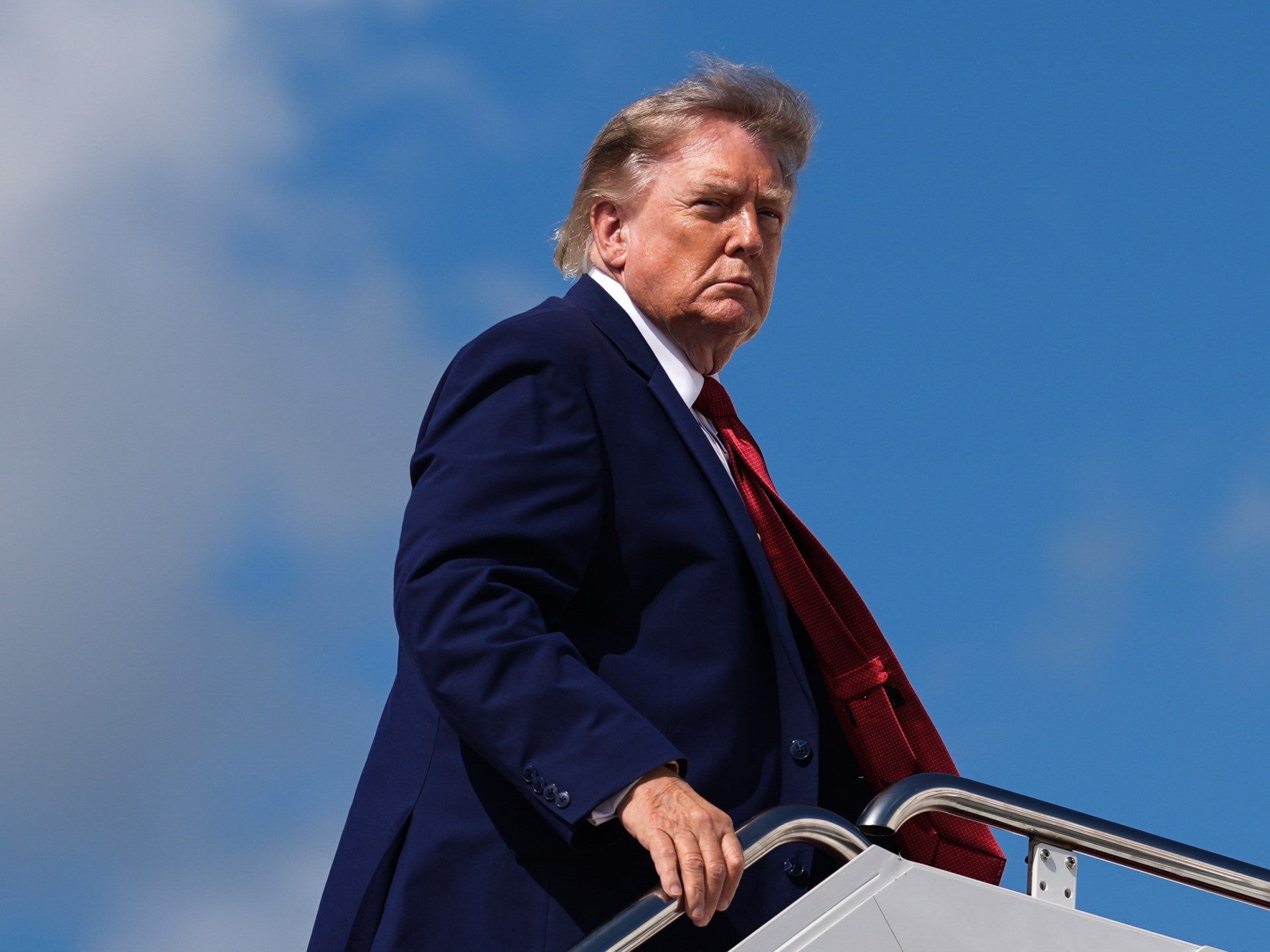
In a State Department briefing room in Washington, a spokesperson stepped to the podium and delivered a number that had been building for months: more than 250,000 visas revoked since President Donald Trump returned to office. The figure, confirmed to Fox News Digital on Wednesday, marks a historic milestone in the administration’s sweeping immigration crackdown.
A US visa is a privilege, not a right, State Department spokesperson Tommy Pigott said. If you violate the terms of that privilege, you will lose it.
The State Department visa crackdown has now stripped travel and immigration privileges from a quarter-million foreign nationals, according to department officials. The revocations span crimes, visa violations, fraud, calls for violence, and national security threats.
Why It Matters
The scale of the State Department visa crackdown reflects the broadest immigration enforcement push in modern US history. It touches tourists, students, business travelers, asylum seekers, and even foreign officials. The department says the effort protects Americans. Rights advocates say it threatens free speech and due process.
In August, the department announced it had revoked more than 175,000 visas. That number has since climbed past 250,000. In January, officials had cited more than 100,000 revocations, a record at the time.
Most revocations stemmed from law-enforcement encounters involving criminal activity, the department said. Assault, driving under the influence, theft, and drug offenses were the leading reasons. Reckless driving, sexual assault, child abuse, fraud, and embezzlement also featured prominently.
Specific cases cited by the department included a person charged with felony rape and sexual battery, another charged with kidnapping and human trafficking, and a person facing more than a dozen counts of possessing child sexual abuse material.
Birth Tourism and Asylum Crackdown
Among the revoked visas were 2,300 tied to birth tourism, the practice of pregnant foreign nationals traveling to the US specifically to give birth so their child automatically receives citizenship. A US embassy in North Africa revoked more than 100 visas from birth tourist parents, the department said.
Over the summer, the Trump administration began preparing to revoke business and tourist visas held by as many as 200,000 foreigners who had applied for asylum in the US. The effort targets B1 and B2 visas issued between 2016 and 2026 to foreigners who later sought asylum.
Deputy Secretary of State Christopher Landau said Americans were fed up with bogus asylum claims. Asylum is not supposed to be a loophole to circumvent immigration laws, he wrote on X. It is supposed to provide a narrow safe harbor for persons persecuted because of their race, religion, nationality, membership in a particular social group, or political opinion.
Landau noted that frivolous claims have swamped the system, which could take years to adjudicate whether applicants are entitled to asylum.
On Monday, the State Department revoked the visas of 27 Latin American officials, former officials, and their families over accusations of corruption. The officials are from Bolivia, Colombia, Ecuador, and Peru.
Social Media Vetting and Free Speech Concerns
The State Department visa crackdown has also expanded social media vetting and screening. The administration adopted a stricter policy on granting visas, with tightened social media review.
Some revocations involved foreign nationals who celebrated the assassination of Charlie Kirk, the conservative activist killed last year. One stated when fascists die, democrats do not complain. Another said he died too late.
Rights advocates and human rights experts have condemned the social media screening efforts, which they say threaten free speech and are akin to surveillance and singling out of immigrants.
A separate Guardian report described how the administration shifted to a quieter approach to immigration enforcement after federal agents fatally shot US citizen protesters Alex Pretti and Renee Good in Minneapolis in January. That incident marked a turning point. Large-scale street operations waned, but less visible enforcement continues to ramp up. Arrests, detentions, and forced departures have increased, putting millions more at immediate risk.
Many of those affected have legal status or ongoing cases for winning or upgrading their legal status, or years of crime-free life in the US. They are being rounded up, often with little access to due process or attorneys.
What Comes Next on (State Department visa crackdown)
Pigott said the administration would not stop until every foreign national who threatens the safety of US communities is held accountable. Every visa decision is a national security decision, he said. Through continuous vetting on a scale never seen before, we are identifying and removing those who commit crimes, support terrorism, defraud Americans, or abuse our immigration system.
Trump has also pushed to terminate birthright citizenship, though courts have opposed that effort. His administration has clamped down on commercial birth tourism instead.
The State Department visa crackdown is expected to continue. The department said it would keep using available authorities to revoke visas from people who abuse the privilege.
For the quarter-million people who have already lost their visas, and the millions more who could be next, the message from Washington is clear: the vetting will not slow down.
Back in the briefing room, the podium emptied. The number lingered.
Frequently Asked Questions (State Department visa crackdown)
How many visas has the State Department revoked under Trump?
The State Department has revoked more than 250,000 visas since President Donald Trump took office, according to spokesperson Tommy Pigott. In August, the department announced over 175,000 revocations. In January, it cited more than 100,000.
What are the main reasons for the visa revocations?
Most revocations stemmed from law-enforcement encounters involving criminal activity, including assault, driving under the influence, theft, and drug offenses. Visa violations, fraud, calls for violence, and national security threats were also cited. Birth tourism accounted for 2,300 revocations.
Who is affected by the State Department visa crackdown?
Foreign nationals with US visas, including tourists, business travelers, students, asylum seekers, and even foreign officials. The administration has targeted B1 and B2 visas held by up to 200,000 foreigners who later applied for asylum, and revoked visas of 27 Latin American officials over corruption accusations.
Related Articles
- Borno’s Multi-Billion-Naira Rehabilitation Scheme: Fueling Boko Haram?
- 5 Open-Source Android Apps to Unlock Your Device
- OPay Shutdown Rumour: What Customers Should Do
- NGX Market Cap Drops to N163.10 Trillion as Banking Stocks Drag
- APM Terminals Expands Scholarship Scheme: 2026 Guide





Health and Fitness
Hair Dye Safety: What Works, What Doesn’t, What’s Unproven
A practical hair dye safety guide: patch tests, bleach timing and scalp care, using celebrity colour changes as a cautionary case study.


The outcome you want is straightforward: a new colour that looks good, holds up, and leaves your scalp where it belongs. The fastest way to lose it is to copy a celebrity’s finished result while skipping the part of the process nobody photographs. That gap is where hair dye safety usually fails.
Jacob Elordi spent a weekend in New York City hiding his. According to Elle, the actor was photographed on two dates with Kendall Jenner, at Paranormal Activity on Broadway on Saturday and outdoors in fall layers on Sunday. He wore a beanie both times and added a hoodie on the second day for extra coverage. Even so, a patch of blond showed at the back of his hat. He has not said why he changed colour, and he has not shown the full look.
That concealment is a useful starting point for a health conversation, because it separates the outcome from the process. Blond is a result. Testing, timing and a professional who knows what your scalp can take is the process. Most hair damage happens when someone chases the first without the second.

Why Hair Dye Safety Matters More Than The Shade
Your scalp is skin. It absorbs, it reacts, and it remembers.
A dye applied to a calm scalp and the same dye applied to skin that is already irritated or freshly relaxed are not the same event. Dermatologists and dye manufacturers have long recommended patch testing before application, and most box kits carry the instruction on the leaflet. Allergic reactions to hair colour are a recognised, documented problem, not a freak accident. This is the strong end of the evidence: contact allergy to dye chemicals exists, it can develop after years of uneventful use, and once it appears it tends to persist.
The weak end is where most online argument lives. Questions about repeated dye exposure and long-term cancer risk have been studied for decades with mixed results. Research is still ongoing. No single study justifies panic, and no single study justifies dismissal either. Anyone who tells you the matter is settled is selling something.
What the celebrity coverage does establish is narrower and more reliable: professionals do not apply colour to an untested scalp, and they do not treat colour as a five-minute decision.

Hair Dye Safety Steps That Actually Hold Up
First, patch test 48 hours ahead. A small amount of dye behind the ear or on the inner forearm, left alone, tells you what your immune system thinks before your whole head finds out. Skip this and you are gambling on a reaction you cannot undo.
Second, be honest about your hair’s history. A relaxer, a recent henna application or a bleach job from six weeks ago changes what the next chemical can safely do. Salons in Lagos, Accra and Nairobi handle this daily, and the good ones ask. If yours does not ask, volunteer it.
Third, treat bleach as the serious step it is. Lifting dark hair to blond means removing pigment, and removing pigment means chemical stress on the shaft. Doing it in one sitting to save time raises the odds of breakage and scalp burns. Two sessions with a gap between them is slower, and safer.
Fourth, know what natural means on a label. Henna and herbal dyes are not automatically gentler. So-called black henna has been repeatedly flagged by dermatologists and regulators because it is often mixed with the same dye chemicals used in conventional colour, and applied to skin rather than hair. A plant on the box is not a safety guarantee.
Fifth, space out chemical services. Colour, relaxer and bleach inside the same fortnight is a schedule for damage. Give the scalp weeks, not days.
The Mistakes That Undo Everything

The biggest one is chasing a specific shade in a single appointment. The second is dyeing over an irritated scalp because an event is coming. The third is assuming a salon visit is protection. A salon reduces risk. It does not remove risk, and no stylist can test your immune system on your behalf.
None of this is exotic. Hair dye safety is mostly bookkeeping: what your scalp has already been through, and when.
It is worth noting that AOL reported Jenner’s platinum bob at the end of October, worn for a Paris, Texas Halloween costume. The same report notes she had gone blonde before, for looks referencing Pamela Anderson and Marilyn Monroe. Even with professional teams, this is a repeated, staged exercise across years, not one dramatic afternoon. AOL also reported that actor Paul Anthony Kelly went bleach blonde for a television role, in his case with highlights styled around the part rather than a full-lift from dark.
Meanwhile, AOL UK reports that Olivia Jade has been photographed in New York with art dealer PC Valmorbida following her reported split from Elordi. Personal lives move quickly. Scalp recovery does not.
Your First Step Today
Before you book anything, arrange a patch test. If you are using a box dye, test with the product you intend to apply, not a different brand. If you are going to a salon, ask to be tested before the appointment, and if they refuse, take your scalp somewhere else. That single step is the difference between hair dye safety being a phrase in an article and something you have actually done.
The realistic result is a colour you wanted, on a scalp that is not itching, weeping or shedding. You will not get certainty about every long-term question, because nobody can give you that today. What you get is control over the risks that are known and manageable, and a habit of not treating a preliminary headline as a diagnosis.
Frequently Asked Questions
Do I really need a patch test before dyeing my hair?
Yes. Patch testing 48 hours ahead is standard guidance from dye manufacturers and dermatologists. It will not predict every reaction, but it is the cheapest way to find out whether your skin tolerates a product before it goes on your whole scalp.
Is hair dye linked to cancer?
The research is mixed and still ongoing. Studies over several decades have not produced a settled answer, and no single study justifies either panic or dismissal. The risks that are well documented and manageable are skin-related: irritation and contact allergy.
Are natural or herbal dyes safer than conventional ones?
Not automatically. Products marketed as black henna, for example, have been repeatedly flagged because they are often mixed with the same dye chemicals found in conventional colour. Read the ingredient list rather than the front of the box.
 Follow AFRILATEST on Google News
FIRST TIME REACTIONS:
Be the first to leave us a comment – Hair Dye Safety: What Works, What Doesn’t, What’s Unproven, down the comment section.
JOIN US ON OUR SOCIAL MEDIA:

About Paul Nwogo
Paul Nwogo is an engineer, published author, and the Head Manager at AfriLatest. He has written numerous books available on Amazon covering a diverse range of topics, including health, personal finance, relationships, work ethics, and scam survival. With his technical background and passion for writing, Paul now oversees the editorial direction of AfriLatest, delivering practical, accurate, and engaging content on trending news, music, and global lifestyle topics.
View all articles by Paul NwogoWorld News
WTO Urges Africa To Build Regional Value Chains
WTO’s Okonjo-Iweala told an Abuja conference Africa must build regional value chains, citing 3% of global exports against 30% of critical minerals.


The final score out of Abuja reads 3 to 30, and it is the reason the World Trade Organisation spent Monday pressing African governments on regional value chains. Africa holds nearly 30 per cent of the world’s critical mineral reserves, including cobalt, lithium, manganese, copper, nickel and graphite. It accounts for only three per cent of global exports. WTO Director-General Ngozi Okonjo-Iweala used those two numbers to open a conference titled Africa and the Geoeconomics of African States, Integration, Power and Structural Transformation.
The event was organised by the International Centre for Regional Integration and Trade Research at Nnamdi Azikiwe University, Awka, and staged in the capital on Monday. Okonjo-Iweala was represented by Jan Yves Remy, identified in the News Agency of Nigeria account as a WTO adviser on international trade. The room included the WTO chair for Nigeria, a vice chancellor, and a federal government delegation. It did not include a single trade figure that flattered the continent.
What The WTO Means By Regional Value Chains
The director-general’s argument is about where value is booked, not how much raw material moves. “Africa must move beyond exporting raw materials to processing and manufacturing products locally to retain more economic value,” she said, according to the Peoples Gazette. She described the African Continental Free Trade Area as a geoeconomic instrument for expanding production and creating regional value chains.
The baseline is thin. Intra-African exports accounted for about 17 per cent of the continent’s merchandise exports in 2024. That is the number the AfCFTA is supposed to move, and it has barely moved.
Nigeria’s Lithium Factories And The Processing Test
Vice President Kashim Shettima made the parallel case for downstream industry at the same conference. “Resources confer potential. It is the capacity to process, transform, innovate, and negotiate that converts potential into prosperity,” he said, per Premium Times. Shettima, represented by Tope Fasua, the president’s special adviser on economic affairs, cited cocoa and crude oil as commodities the continent ships out without the plants to manufacture from them. He said the federal government is supporting three lithium-processing factories, in Nasarawa, Kaduna and Abuja.
Three plants do not build a value chain. They are a test case: if lithium leaves Nigeria as concentrate and returns as cells, the processing argument failed on its own home ground.

The Obstacles Named Are The Expensive Ones
Okonjo-Iweala listed infrastructure gaps, institutional weaknesses and non-tariff barriers as the major obstacles to implementing the continental agreement. The remedies she proposed — roads, ports, electricity, shipping connections, trade finance, efficient customs and predictable regulation — are capital-intensive and slow. Customs reform is unglamorous and decides whether a truck sits at a border for two days or two weeks.
The Gap Between Signing A Deal And Trading Under It
Prof. Ngozi Egbuna, the WTO chair for Nigeria and director of the hosting centre, put the implementation problem in plain terms. Signing agreements and establishing a continental market, she said, does not automatically produce economic benefits. The real test of the AfCFTA is whether African businesses can trade across borders, create jobs and retain economic value. She urged scholars to push research into negotiations and public policy rather than leaving it in journals.
Prof. Pat Utomi supplied the sharpest contrast of the day: Nigeria and the Democratic Republic of Congo sit on critical minerals while recording some of the world’s highest poverty levels. Endowment, in other words, is not a scoreboard.
Bond Anyaehie, vice chancellor of Nnamdi Azikiwe University, argued that trade liberalisation on its own does not build collective economic power, and called for infrastructure development, industrialisation and competitive local enterprises. Okonjo-Iweala’s final ask was intellectual: universities and the African Trade Group of WTO Chairs should strengthen research, training and policy engagement.
A note on scope. No game results, roster moves, injury reports or league records appear in the reporting cited here. Every figure above is a trade statistic, and it is treated as one.

The Standings Implications Of Regional Value Chains
The conference produced no binding commitments, no timetable and no financing pledge. What it produced was a public accounting. A continent holding roughly 30 per cent of the minerals that batteries, turbines and defence supply chains depend on, and capturing three per cent of global exports, is not short of geology. It is short of processing capacity, power, ports and customs systems that function.
That is the standings picture the WTO wants changed. The push on regional value chains is a demand that the 17 per cent intra-African export share rise, and that the margin on cobalt, lithium and cocoa be earned on the continent instead of abroad. Until the lithium plants in Nasarawa, Kaduna and Abuja run at scale, the score stays 3 to 30.
Frequently Asked Questions
What exactly did the WTO ask African countries to do?
Strengthen regional value chains, industrialisation and infrastructure so the continent increases its share of global trade. Director-General Ngozi Okonjo-Iweala said Africa must move beyond exporting raw materials to processing and manufacturing locally to retain more economic value.
How large is Africa’s share of global exports?
About three per cent, according to Okonjo-Iweala’s remarks in Abuja, despite the continent holding nearly 30 per cent of the world’s critical mineral reserves including cobalt, lithium, manganese, copper, nickel and graphite.
What share of African trade stays inside Africa?
Intra-African exports accounted for roughly 17 per cent of the continent’s merchandise exports in 2024, a figure the African Continental Free Trade Area is intended to raise.
Receive alerts for regional value chains and more like it.
FIRST TIME REACTIONS:
Be the first to leave us a comment – WTO Urges Africa To Build Regional Value Chains, down the comment section.
JOIN US ON OUR SOCIAL MEDIA:

About Clare Dominic
Clare Dominic is the Editor at AfriLatest. With a background in journalism and a passion for storytelling, she oversees the editorial process to ensure content is accurate, engaging, and relevant. Clare works closely with contributors to maintain the highest standards of journalistic integrity across all news, sports, and lifestyle coverage.
View all articles by Clare DominicNational
NAJA Names Weststar Chairman Auto Legend For 2026
NAJA names Weststar chairman Benson Uwatse a Nigeria Auto Legend for 2026. What the December award confirms, what it leaves open, and why distributors dominate.


The Nigeria Auto Journalists Association has selected Chief Benson Uwatse, chairman of Weststar Associates Limited, as the recipient of its Nigeria Auto Legend Award. The honour is due to be presented at the 19th Nigeria Auto Industry Awards, scheduled for Thursday, December 3, 2026, at the Civic Centre, Victoria Island, Lagos. When NAJA names Weststar chairman a legend that evening, he will be the third industry figure to hold the title.
That much is confirmed by three separate Nigerian publications. The rest — what the award measures, why this recipient, and what it says about the country’s vehicle market — requires separating the announcement from the analysis built on top of it.
What NAJA Has Confirmed, And What It Has Left Open
ThisDay, Independent and New Telegraph all reported the selection, and their accounts share near-identical phrasing: the same description of Weststar’s remit, the same reference to three decades with Mercedes-Benz, the same list of past winners. That pattern is consistent with a circulated announcement rather than three independent investigations.
None of the three reports links to a standalone NAJA statement. None quotes Uwatse. The selection process, the composition of any judging panel and the criteria that separate a legend award from an ordinary industry prize are not disclosed.
Confirmed: the award has two previous recipients. Chief Michael Ade.Ojo, founder of Elizade Nigeria Limited and chairman of Toyota Nigeria Limited, took it first in 2017. Dr Cosmas Maduka, president and chief executive of Coscharis Group, followed. Uwatse is the third — meaning NAJA names Weststar chairman to a list that has so far honoured only distributors of foreign brands.
Why NAJA Names Weststar Chairman For Its Legend Award
The citation rests on longevity and brand stewardship rather than on any published metric. Weststar began operations in February 2008, assuming responsibility for Mercedes-Benz sales and after-sales work in Nigeria. Its remit spans passenger cars, commercial vehicles, trucks and buses, alongside dealer support, marketing, technical training, genuine spare parts supply, warranties and after-sales service.
Uwatse’s own association with the brand runs back more than three decades. Before chairing Weststar, he served as managing director of MB Automobile Services Limited, one of the authorised Mercedes-Benz dealers in the country. The association has said his record reflects the kind of sustained industry commitment the award exists to mark.
Beyond that, the public record is thin. The reports give no age, no education, no earlier career, no ownership stake in Weststar and no figure for vehicles sold or revenue earned under his chairmanship. Any profile that supplies those details is filling gaps, not reporting.
The Roll Call Describes A Distribution Economy, Not A Manufacturing One
Read the three names together and a structural fact appears that none of the individual reports states outright. All three honourees built their businesses on distributing foreign brands. Ade.Ojo’s Elizade grew around Toyota. Maduka’s Coscharis Motors secured franchises for BMW, MINI, Rolls-Royce and Ford. Uwatse’s Weststar holds Mercedes-Benz.
None of the citations rests on a vehicle designed or manufactured in Nigeria. NAJA’s legend list works, in effect, as a map of imported brand power in the domestic market — a record of who controls access to foreign badges rather than who builds cars locally. That is a fact about the industry’s shape. It is not a verdict on the recipients’ commercial skill, which the award is explicitly designed to honour.
New Telegraph reported that the sector continues to contend with changing market conditions, rising vehicle acquisition costs, evolving distribution models and the need to strengthen local automotive development. The award coverage does not say how any of the three honourees has addressed that last item.
The Missing Context Of Who Can Actually Buy
Weststar operates in the premium and luxury segment, a narrow slice of Nigerian demand. The macro picture around it is stark. An International Monetary Fund 2026 Article IV assessment, cited by New Telegraph, estimated that 63 per cent of Nigerians were living below the national poverty line, with about 27 million people facing food insecurity in autumn 2025.
Those figures describe the country in which a luxury vehicle distributor operates. They are background, not an indictment of the award. But they explain why an industry prize for brand-building carries weight inside the trade and little visibility outside it: the business being celebrated serves a small fraction of the population.
No market share, unit sales, employment or tax contribution figures are attached to the Uwatse citation. The award, as reported, rewards tenure and representation. It does not attempt to quantify either.
A Legacy Measured In Franchises, Not Factories
The December ceremony will be the first real test of what the honour means in practice. Two things bear watching: whether the association publishes the criteria behind the legend award, and whether a fourth recipient eventually comes from vehicle assembly rather than vehicle distribution.
For now, the confirmed record is narrow and clear. NAJA names Weststar chairman Benson Uwatse a Nigeria Auto Legend on December 3, 2026, in Lagos, alongside Michael Ade.Ojo and Cosmas Maduka. His three decades with Mercedes-Benz are documented in the trade press and not in dispute. The numbers that would let an outsider weigh that career against the industry’s wider needs are missing. Until they are published, the award stands as a professional community’s judgment on one of its own — significant inside the market, unverified outside it.
Frequently Asked Questions
Who did NAJA name as the 2026 Nigeria Auto Legend?
The Nigeria Auto Journalists Association selected Chief Benson Uwatse, chairman of Weststar Associates Limited, the authorised general distributor of Mercedes-Benz in Nigeria. The award is scheduled to be presented at the 19th Nigeria Auto Industry Awards on Thursday, December 3, 2026, at the Civic Centre, Victoria Island, Lagos.
Who were the previous winners of the Nigeria Auto Legend Award?
Chief Michael Ade.Ojo, founder of Elizade Nigeria Limited and chairman of Toyota Nigeria Limited, was the first recipient in 2017. Dr Cosmas Maduka, president and chief executive of Coscharis Group, was the second. Uwatse is the third recipient.
What does Weststar Associates do in Nigeria?
Weststar commenced operations in February 2008, taking responsibility for Mercedes-Benz sales and after-sales activities in Nigeria. Its remit covers passenger cars, commercial vehicles, trucks and buses, plus dealer support, marketing, technical training, genuine spare parts supply, warranties and after-sales service.
Has Uwatse or NAJA issued a direct public statement?
None of the three published reports reviewed links to a standalone NAJA statement or quotes Uwatse directly. The reports carry near-identical language, which is consistent with a circulated announcement. The selection criteria and judging process have not been disclosed.
FIRST TIME REACTIONS:
Be the first to leave us a comment – NAJA Names Weststar Chairman Auto Legend For 2026, down the comment section.
JOIN US ON OUR SOCIAL MEDIA:

About Rosabella Eboh
Rosabella Eboh is an author at AfriLatest. With a passion for writing and a flair for creativity, she contributes original content and unique perspectives to the platform. Rosabella focuses on human-interest stories, cultural trends, and in-depth feature reporting.
View all articles by Rosabella Eboh-

 Car Reviews7 days ago
1955 Chevy Bel Air Restomod: What SEMA Really Proves
-
Startups2 months ago
What a Successful Dangote Refinery IPO Really Says
-
Health and Fitness4 weeks ago
Curly Hair Hydration: 5 Proven Steps That Actually Work
-
Savings & Investing2 weeks ago
Hidden Medicare Fees Draining Your Retirement Savings
-
Tech & Gadgets1 month ago
Apple Watch and AirPods Fall Deals: Save $120 Today
-
Health and Fitness4 weeks ago
9 Best Hair Thickening Shampoos for Men in 2026
-
University Admissions2 months ago
UNILAG 2026/2027 Admission: Direct Entry & Post-UTME Guide
-
Football2 months ago
South Carolina vs Alabama: Tide Roll to 35-10 Halftime Lead