Latest news today
Senator Adeola Awards 5,312 Scholarships and Bursaries to Ogun Students
Senator Adeola scholarships and bursaries reach 5,312 Ogun indigent students, with awards of up to N200,000 each from 17,000 applicants.

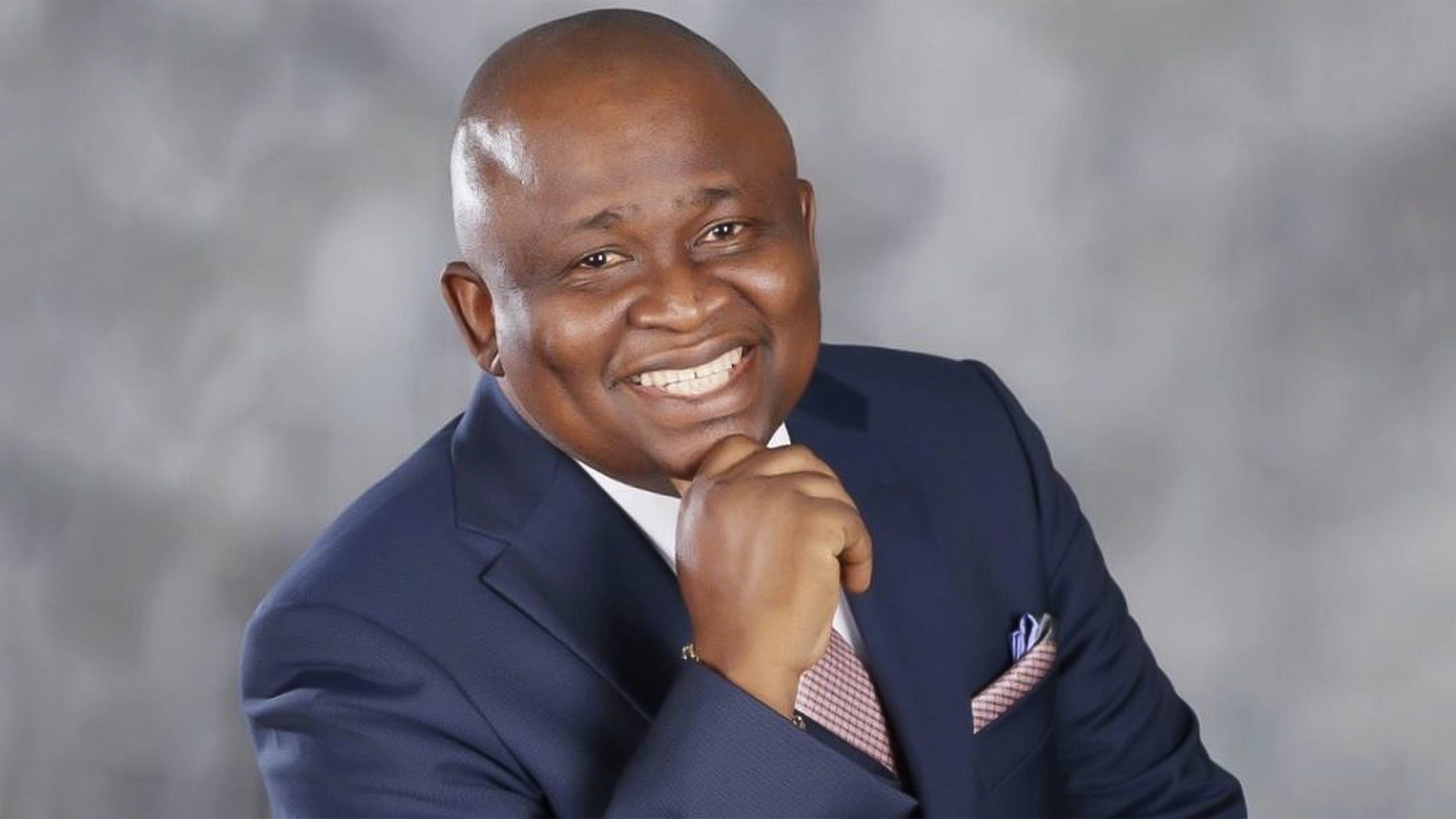
ABEOKUTA — Senator Solomon Olamilekan Adeola, the All Progressives Congress governorship candidate in Ogun State, awarded scholarships and bursaries to 5,312 indigent students on July 26, 2026, drawing from a pool of more than 17,000 applicants.
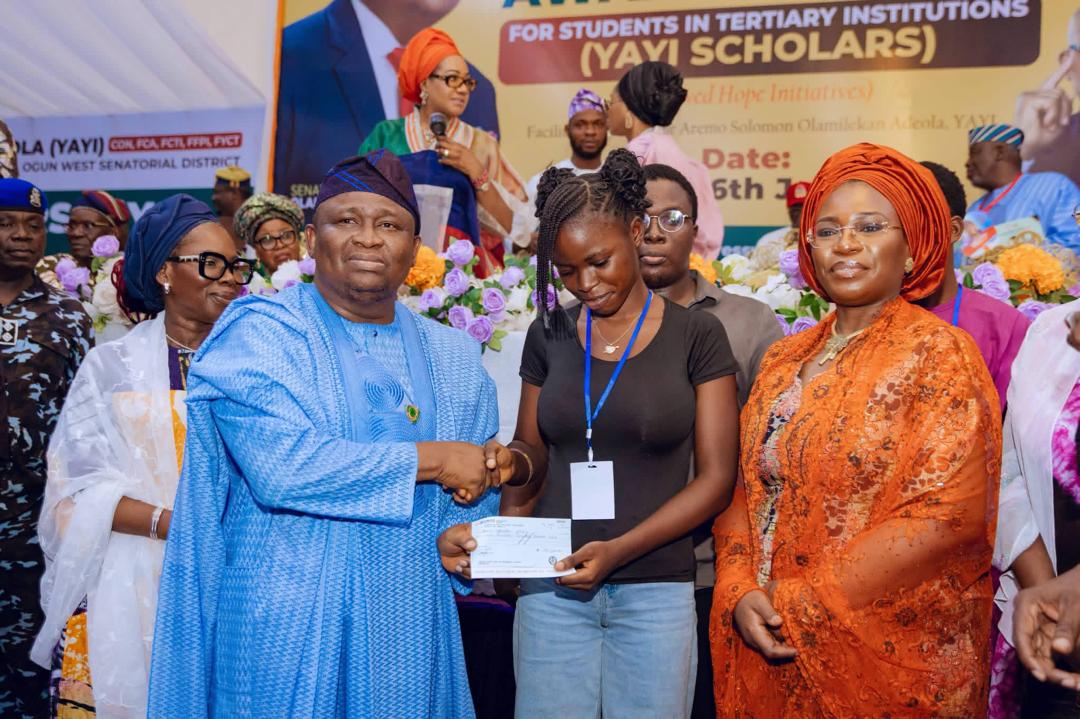
The third edition of the Yayi Scholarship/Bursary award programe, held in Abeokuta, awarded scholarships to 1,735 students and bursaries to 3,577. University undergraduates received N200,000 each, while polytechnic and college of education students received N150,000. Other beneficiaries received bursaries of N100,000.
Senator Adeola scholarships are open to students in tertiary institutions from all 20 local government areas of Ogun State. The programme, launched three years ago, aims to ease the financial burden on families, expand access to education, and support academically promising students from disadvantaged backgrounds.
WHY IT MATTERS
Nigeria’s cost-of-living crisis has made tuition and living expenses a growing barrier for students. The senator framed the intervention as a direct response to that pressure, saying no Ogun indigene should drop out because of unpaid fees or similar financial challenges.
“I am facilitating this scheme with the National Productivity Centre in line with the Renewed Hope Initiative of President Bola Ahmed Tinubu for the educational sector,” Adeola said at the ceremony. “The scheme is to further bring relief to students in their course of training and acquisition of knowledge, as well as supplement the funds from those who can get loans from the nigeria Education Loan Fund.”
He added: “I am doing this to give you a future without any condition attached to it.”
The scale of the programme — more than 5,000 awards worth hundreds of millions of naira — places it among the larger privately facilitated scholarship schemes in the South West. It also fits a broader pattern of state and federal interventions aimed at keeping students in classrooms as household incomes lag inflation.
APPLICATIONS OUTSTRIP AWARDS
The gap between 17,000 applicants and 5,312 beneficiaries underscores the depth of demand. Roughly two out of every three applicants were turned away, a ratio that suggests the programme’s budget, not its eligibility criteria, is the binding constraint.
Adeola said his motivation for financing education in Ogun State stems from a vision to deploy education as a tool for development. He described the initiative as a reflection of his long-standing commitment to empowering young people and ensuring financial challenges do not block academic aspirations.
Ogun State Deputy Governor Noimot Salako-Oyedele called the scholarship and bursary a timely intervention that would shape the state’s future. She congratulated the beneficiaries and urged them to use the funds judiciously.
Beneficiaries from universities, polytechnics, and colleges of education attended the Abeokuta ceremony. One of them, Imoleayo Fadunsin, a student at Ogun State Polytechnic of Health and Allied Sciences, praised the senator for his generosity and for giving hope to indigent students.
POLITICAL AND POLICY CONTEXT
The awards arrive as Adeola campaigns for governor of Ogun State. Hon. Kayode Oladele, a chieftain of the APC in Ogun State and former Acting Chairman of the Federal Character Commission, commended the senator for sustained investment in education, describing the initiative as a practical demonstration of his commitment to young people.
Oladele said the intervention aligns with President Tinubu’s Renewed hope Agenda, which places education and human capital development at the center of national progress.
“The intervention is not only easing the financial burden on thousands of families, it is also reinforcing the Renewed Hope Agenda’s emphasis on education, youth development and human capital as the foundation for national growth,” Oladele said. “Ogun State and indeed Nigeria stand to benefit immensely from this kind of visionary leadership.”
He urged other political leaders and public office holders to emulate the example, arguing that investment in education produces skilled manpower, reduces poverty, creates opportunities, and strengthens the foundation for sustainable development.
A COMPARISON WITH OTHER SCHEMES
Adeola’s program me is not the only senator-run scholarship effort in Nigeria. In Kano South, Senator Suleiman Kawu-Sumaila said his Waraka Scholarship Scheme benefited over 1,000 students between 2023 and 2026, covering 852 university students and 230 in colleges of health sciences, with tuition paid directly to institutions, according to VON.
That scheme also provided a monthly stipend of N10,000 to 450 beneficiaries and included 10 persons living with disabilities, 34 postgraduate students, and seven students studying abroad.
The two programme differ in structure. Adeola’s awards are direct cash payments to students; Kawu-Sumaila’s scheme pays tuition directly to institutions and adds stipends. Both target similar populations — indigent students in public tertiary institutions — and both cite federal policy frameworks as their anchor.
WHAT’S NEXT
The scholarship programmed is expected to continue, though the senator has not announced a date or budget for a fourth edition. With 17,000 applicants competing for roughly 5,300 slots in the third round, pressure to expand the scheme is likely to grow.
For now, the 5,312 beneficiaries will receive funds intended to cover fees and living costs for the coming academic session. Whether the programe scales to match demand — or remains a targeted intervention — will shape its legacy in Ogun State.
According to The Guardian Nigeria, the scheme is for students in tertiary institutions across the 20 local government areas of the state. Vanguard reported that beneficiaries received financial support worth hundreds of millions of naira at the Abeokuta ceremony.
Frequently Asked Questions
How many students received Senator Adeola’s scholarships and bursaries?
A total of 5,312 students benefited from the third edition of the Yayi Scholarship/Bursary award programme, held in Abeokuta on July 26, 2026. Of that number, 1,735 received scholarships and 3,577 received bursaries.
How much did each beneficiary receive?
University undergraduates received scholarships of N200,000 each, while polytechnic and college of education students received N150,000 each. Other beneficiaries received bursaries of N100,000.
Who is eligible for the Yayi Scholarship/Bursary award programme?
The programme is open to students in tertiary institutions from the 20 local government areas of Ogun State. More than 17,000 students applied for the third edition, but 5,312 were selected.
Related Articles
- Best iPhone 18 Pro Cases: 5 Picks Under $30 Tested
- Nigeria’s Economy Grows Over 4% in 2026: What It Means for You
- Shot on iPhone Duo Campaign: What Apple Isn’t Telling You
- Trump $500 Check Hits Mailboxes: Who Qualifies
- Honda Labour Dispute: What Nigerian Car Owners Must Know
 Follow AFRILATEST on Google News
FIRST TIME REACTIONS:
Be the first to leave us a comment – Senator Adeola Awards 5,312 Scholarships and Bursaries to Ogun Students, down the comment section.
JOIN US ON OUR SOCIAL MEDIA:



World News
Owen Thiele Tinder Campaign: What Is Actually Verified
The Owen Thiele Tinder campaign casts him as a dating wildlife narrator. What is confirmed, what is promotional, and what remains undisclosed.


Owen Thiele, the 30-year-old actor who plays Anton on FX’s Adults, is the face of a new Owen Thiele Tinder campaign for Group Hangouts, a feature that lets groups of friends meet other groups.
The spot was directed by twin sisters Fa and Fon Watkins. In it, Thiele narrates Gen Z dating as a wildlife documentarian, borrowing the cadence of Sir David Attenborough while watching people instead of birds. Variety reported the campaign and published an interview with Thiele on how it came together.
The verifiable core is small. Thiele appears in the advertisement. Fa and Fon Watkins directed it. The concept is bird-watching repurposed as people-watching. Everything past that point — media spend, target markets, release schedule, performance — has not been disclosed in the material available.
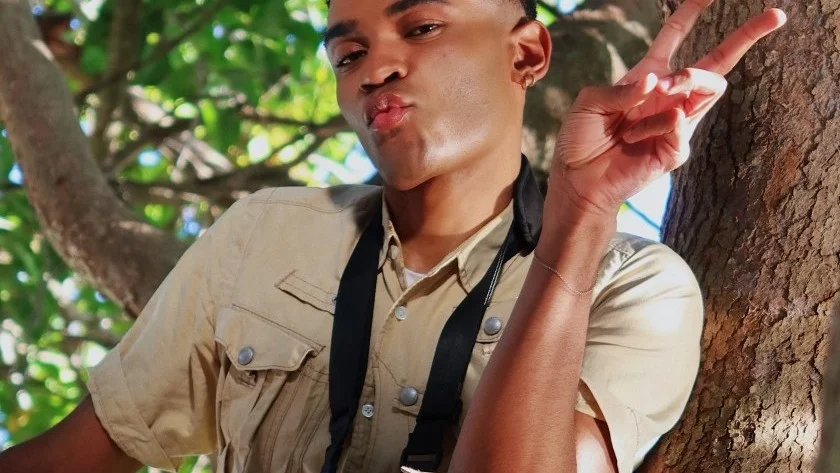
What The Owen Thiele Tinder Campaign Actually Confirms
The creative decision is specific. Thiele said the directors pitched a concept where he was bird-watching that was in fact people-watching, and that he signed on immediately. He also confirmed what he did not do: a British accent.
“I didn’t do a British accent, which is honestly the best, I think Tinder would have taken a fall of some kind,” he told Variety. “Stocks would have been down if I had done that.”
He was not new to the brand. Thiele said he had already been reading Tinder advertisements on his podcast, describing the company as a collaborative partner before the Group Hangouts approach. That is the confirmed record. The unconfirmed part is commercial: no figures, no named markets, no dates.
One caution applies to the whole package. A celebrity interview tied to a product launch is a promotional document as well as a factual one. Thiele’s description of the shoot can be checked against the finished video. His assessment of the campaign’s appeal cannot be checked against anything yet.
Ten Years Together, And A Pair Of Cut-Out Hands
The campaign is a second pass at an old assignment. Thiele has been with celebrity stylist Jared Ellner for a decade. Three months into the relationship, he said, a Tinder representative asked the couple to appear in a campaign.
“Our faces were cut out and it was just our hands interlocked,” he said. “So our hands are somewhere on a Tinder ad.”
Off screen, Thiele describes himself as an unreliable matchmaker. Most of his friends are single, he said, and his setups usually fail — with one exception. A friend he introduced to another friend has now been with that partner for eight years.
The feature itself is a structural shift, not just a slogan. As described, Group Hangouts moves the product from pairs into groups, which is a different social format from the one-to-one matching the brand was built on.
A Crowded 2026, With One Unanswered Question
The spot lands in a busy stretch, and the surrounding facts are checkable. Thiele confirmed that FX has not greenlit a third season of Adults, despite the second season ending with a kiss between his character, Anton, and Paul Baker. He said the writers have told the cast nothing. He also appears in the announced 13 Going on 30 sequel and in Peaked, an A24 comedy directed by his childhood friend Molly Gordon, working alongside Connor Storrie.

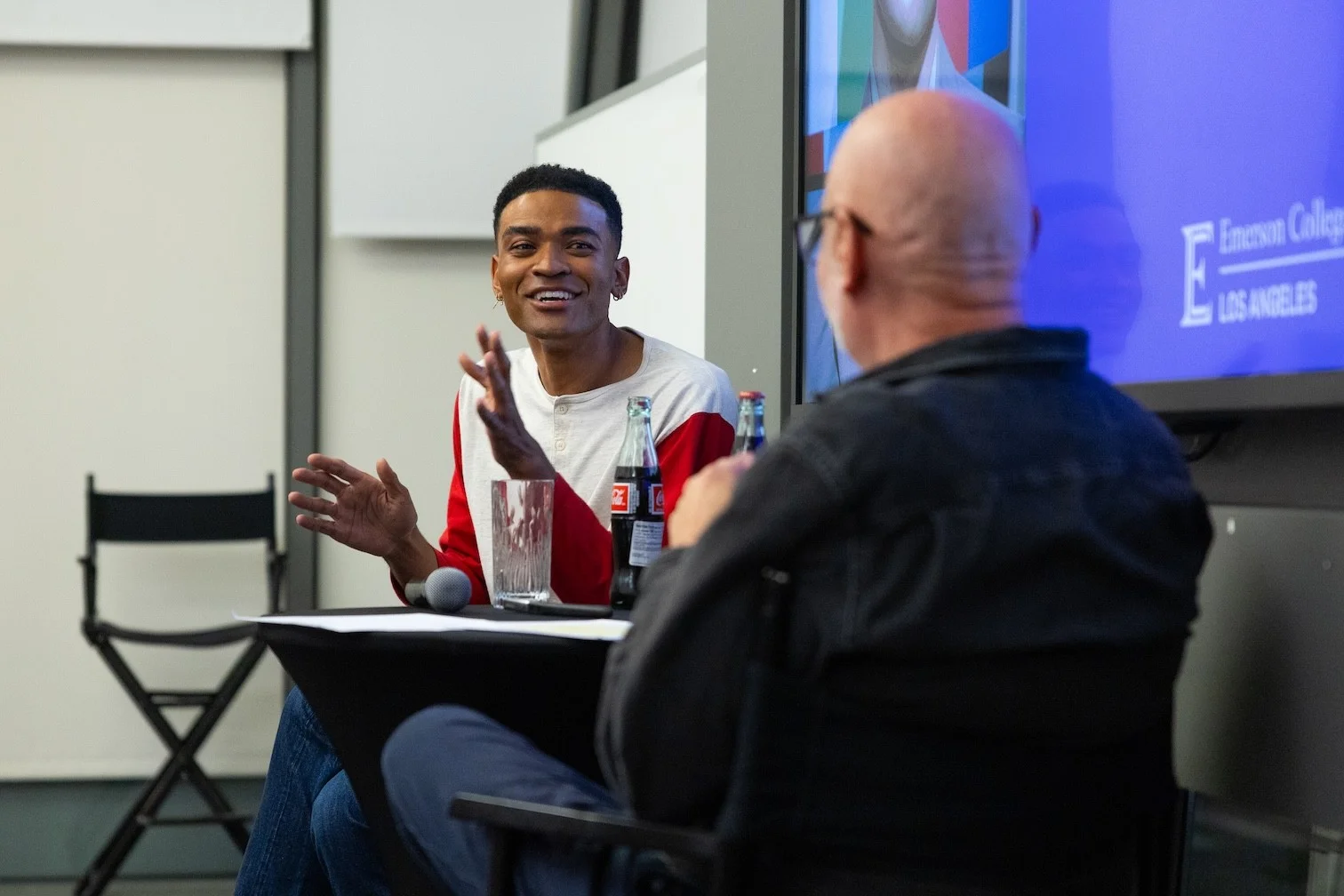
His wider public record is documented. On September 28 he spoke at Emerson College Los Angeles, where he discussed playing a Black queer character and said, “I’m so proud to be a Black queer on a Hulu show.” He also described the network rewriting Anton after the pilot to be lighter and closer to his own personality.
People reported that he posed with Andrew Garfield at the Academy Museum Gala on October 17, weeks after the two shared Delta Flight 958 from Los Angeles to New York, which diverted to Albuquerque on September 9. Delta’s statement said the aircraft diverted “due to a smoky odor in the aircraft” and landed uneventfully.
That timeline explains the casting logic. Thiele is a working actor with network credits, a podcast and a viral moment behind him — visible, but not saturated. Brands use that profile for targeted attention rather than blanket reach.
Why African Readers Should Separate The Ad From The Feature
Nothing in the source material places the campaign in any African market. No language versions, no broadcast windows, no local ambassadors, no pricing or availability detail for Group Hangouts itself.
For readers in Lagos, Nairobi, Accra or Johannesburg, the honest reading is this: a global celebrity campaign is evidence of marketing, not evidence of product availability. The two move on separate schedules. A viewer may see the spot on social platforms long before a feature appears in their own app, or never see it at all if the buy is restricted to specific regions. The test is not whether the advertisement travels. It is whether Group Hangouts does.
What To Watch
Three signals matter. First, whether Tinder publishes market-level detail for Group Hangouts, which would turn a creative talking point into a measurable rollout. Second, whether the spot is cut down or localized, a common indicator of where a brand intends to spend.
Third, Thiele’s calendar. A third season of Adults remains unannounced. Season two of Overcompensating, the Prime Video comedy in which he plays George, has no release date, though creator Benito Skinner told Thiele’s podcast that George is “a much bigger character” in the new run.
Until Tinder answers the distribution question, the Owen Thiele Tinder campaign is best read as what it is: a well-documented piece of casting with an undocumented commercial footprint.
Frequently Asked Questions
What is the Owen Thiele Tinder campaign promoting?
It promotes Group Hangouts, a Tinder feature that, as described in reporting on the campaign, lets groups of friends meet other groups of friends. Thiele appears in the spot as a wildlife-style narrator observing Gen Z dating.
Who directed the Tinder advertisement starring Owen Thiele?
Twin sisters Fa and Fon Watkins directed the spot, according to Variety’s interview with Thiele. He said they pitched the bird-watching concept that became the ad.
Has Tinder said where or when the campaign will run?
No market list, release schedule or spending figure was disclosed in the available material. That includes African markets, which are not mentioned in any of the reporting reviewed.
Is Adults renewed for a third season?
Not yet. Thiele said a third season has not been greenlit and that the writers have not told the cast what would happen to Anton and Paul Baker.
FIRST TIME REACTIONS:
Be the first to leave us a comment – Owen Thiele Tinder Campaign: What Is Actually Verified, down the comment section.
JOIN US ON OUR SOCIAL MEDIA:

About Clare Dominic
Clare Dominic is the Editor at AfriLatest. With a background in journalism and a passion for storytelling, she oversees the editorial process to ensure content is accurate, engaging, and relevant. Clare works closely with contributors to maintain the highest standards of journalistic integrity across all news, sports, and lifestyle coverage.
View all articles by Clare DominicHealth and Fitness
Heart Pain vs Chest Pain: How Doctors Tell Them Apart
Heart pain vs chest pain: doctors explain the clues that separate cardiac pain from muscle pain, and the moment to stop guessing and get help.

You want a straight answer to one question: is the pain in my chest my heart, or a muscle? The honest version comes first. You cannot always tell on your own, and no checklist, article or symptom quiz will settle it for you.
What you can do is learn the pattern that separates the two, understand where the medical evidence is strong and where it is still thin, and know the exact point at which guessing stops being an option.
Heart pain vs chest pain is a triage problem before it is a vocabulary problem. Get it wrong in one direction and you lose a night’s sleep. Get it wrong in the other and you lose heart muscle.

Why The Stakes Are Higher Than The Argument Suggests
Chest pain sends more than 6.5 million Americans to emergency rooms every year, according to Prevention, and a review in JAMA names it the most common symptom of acute heart problems, including heart attacks. The American Heart Association describes heart disease as the leading killer of both men and women, responsible for one in three women’s deaths each year.
The global figures are harder to argue with. WHO estimates cited by NDTV put cardiovascular disease at 19.8 million deaths in 2022, roughly 32% of all global deaths, with 85% of those caused by heart attack and stroke.
Notice the difference in the quality of that evidence. Population mortality data is replicated, consistent and strong. Symptom description, the part patients actually use at 2am, rests on clinical experience and cohort studies. Doctors are not guessing when they describe cardiac pain, but they are not working from the same certainty either.
How Doctors Separate Heart Pain vs Chest Pain In The First Minutes
Most cardiac pain begins when blood flow to the heart is reduced or blocked, usually by fatty plaques in the coronary arteries. The resulting lack of oxygen produces angina. When it appears on exertion and eases with rest or medication such as nitroglycerin, doctors call it stable. When it is new, worsening, or does not settle, they call it unstable, and that is a different conversation.
The sensation matters less than the shape of it. Cardiac pain is typically pressure, tightness, squeezing or heaviness rather than a sharp stab. It may travel to the arm, shoulder or jaw. It often worsens with exertion or stress and, this is the part people miss, it often comes and goes rather than sitting there constantly.
Cardiac pain usually brings company: sweating, breathlessness, fatigue, dizziness. Pericarditis, an inflammation around the heart, has its own signature, worse lying down and better sitting up.
What Muscle Pain Does That Cardiac Pain Rarely Does
Muscle pain is the common alternative, and it has habits of its own. Hard or unfamiliar effort tears chest muscle fibres, and delayed onset muscle soreness arrives a day or two later. Costochondritis, inflammation of the cartilage around the rib joints, can follow exercise or a long stretch of coughing. About one in three people who see a doctor for pain around the chest or ribs have it, according to Cleveland Clinic figures cited in the Prevention report.
The practical clue is reproducibility. With musculoskeletal pain, the patient can usually point to one spot that is tender when pressed. Twisting, lifting, reaching overhead, coughing or a deep breath can set it off. It lasts hours or days, and it improves with rest, ice, heat and anti-inflammatory drugs such as ibuprofen or naproxen.
That clue is useful. It is not a clearance certificate, and doctors treat it as one clue among several rather than a verdict.

The Evidence Gap That Makes Women And Diabetics Harder To Read
Women and people with diabetes frequently do not follow the textbook script. Their cardiac pain can surface as upper-abdomen discomfort that reads like indigestion, or as an ache or burning in the shoulder, arm or back. Cardiologists are moving away from calling this atypical, because the label minimises it.
The harder problem is the silent heart attack. Cardiologists estimate that about half of myocardial infarctions produce no clear symptoms, an estimate drawn from studies including ARIC and published in JAMA and Circulation, and these are often found months later as scars on the heart. Women, older adults and people with diabetes carry more risk. In diabetes, nerve damage can blunt the body’s pain signalling.
This is the uncomfortable part of the heart pain vs chest pain question. The people least likely to feel the classic warning include many of those at highest risk.
Standard testing has a documented blind spot. Research from NYU Langone, reported by ABC News, found that 38% of women with heart attacks had plaque that did not show on a standard angiogram. Between 40,000 and 100,000 women a year in the United States have heart attacks with arteries that look clear. That study dates from 2011 and centres on intravascular ultrasound. It is a real finding, not yet routine practice everywhere. Read it as a warning against false reassurance, not as a new protocol.
A Step-By-Step Way To Handle The First Ten Minutes
Step one: start a clock. Note when the pain began and whether it is constant or intermittent.
Step two: describe the sensation out loud, in your own words. Pressure and squeezing belong in one column. Sharp, pinpoint, movement-triggered pain belongs in another.
Step three: check for company. Sweating, breathlessness, nausea, dizziness or pain spreading to the jaw, arm or back moves this into emergency territory.
Step four: press gently on the tender spot. If you find one, note it, but do not let it end your assessment, especially if you have diabetes, high blood pressure, a smoking history or a family history of heart disease.
Step five: act on risk, not on certainty. Any new or unexplained chest pain lasting more than a few minutes, or that does not go away, needs medical assessment. Severe pain, pain that travels, or pain with breathing difficulty, nausea or lightheadedness is an emergency. Calling an ambulance instead of driving yourself means assessment can begin on the way.
Mistakes That Cost Time
Waiting for the elephant. The crushing elephant-on-the-chest sensation is real, but it is not the only presentation, and it is not the one most often dismissed.
Self-treating and going back to bed. Antacids and painkillers can quiet indigestion and muscle strain. They can also mask a cardiac event for hours.
Assuming a clear test closes the file. No single test is perfect. ECG, troponin blood tests, stress testing and imaging build the picture together.
Assuming youth is protection. Pre-test probability rises with age, diabetes, high blood pressure, smoking and previous heart events. It never falls to zero.
What To Do Today, Before The Next Episode
The first step costs nothing. Write down your risk factors, including blood pressure, blood sugar, smoking and family history, and identify the nearest facility that can run an ECG at any hour. Across much of Africa that facility is not a cardiologist’s office. It may be a general hospital two towns away. Knowing the route in advance removes the worst variable from a bad night.
Heart pain vs chest pain will not sort itself out through careful reading. The skill worth building is not diagnosis. It is speed of decision. Start tonight by writing down those risk factors and the address of the nearest 24-hour ECG, then keep the note where you can find it in the dark.
Frequently Asked Questions (heart pain vs chest pain)
Can I rule out a heart attack by pressing on my chest to find a tender spot?
No. Reproducible tenderness at a specific spot suggests a musculoskeletal cause such as costochondritis or delayed onset muscle soreness, and doctors do use it as a clue. But it is one clue among several. Cardiologists weigh it alongside the type of sensation, whether the pain travels to the arm, shoulder or jaw, whether it comes with sweating, breathlessness or dizziness, and your underlying risk factors. Any new or unexplained chest pain lasting more than a few minutes still needs medical assessment.
Why do women and people with diabetes get different heart attack symptoms?
Their cardiac pain often does not follow the classic crushing pattern. It can appear as upper-abdomen discomfort that feels like indigestion, or as an ache or burning in the shoulder, arm or back. In diabetes, nerve damage can reduce the body’s ability to send pain signals, which raises the odds of a silent heart attack. Cardiologists are moving away from calling these presentations atypical because the label plays down how common and how serious they are.
If my ECG or angiogram is normal, is my chest pain definitely not cardiac?
Not definitely. No single test is perfect. Research from NYU Langone found that 38% of women who had heart attacks carried plaque that did not show up on a standard angiogram, and an estimated 40,000 to 100,000 women a year in the US have heart attacks with arteries that look clear on that test. Doctors combine ECG, troponin blood tests, stress testing and imaging to build a fuller picture, and persistent symptoms deserve a second conversation rather than reassurance alone.
Receive alerts for heart pain vs chest pain and more like it.
FIRST TIME REACTIONS:
Be the first to leave us a comment – Heart Pain vs Chest Pain: How Doctors Tell Them Apart, down the comment section.
JOIN US ON OUR SOCIAL MEDIA:

About Paul Nwogo
Paul Nwogo is an engineer, published author, and the Head Manager at AfriLatest. He has written numerous books available on Amazon covering a diverse range of topics, including health, personal finance, relationships, work ethics, and scam survival. With his technical background and passion for writing, Paul now oversees the editorial direction of AfriLatest, delivering practical, accurate, and engaging content on trending news, music, and global lifestyle topics.
View all articles by Paul NwogoAfrica news
Nigeria’s $9bn Freight Loss Exposes Shipping Failure
Nigeria’s $9bn freight loss exposes a two-decade gap between shipping policy and vessels, as Sierra Leone launches a national carrier.

Nigeria loses an estimated $8bn to $9bn a year in freight earnings to foreign-owned shipping companies, Captain Ladi Olubowale, immediate past president of the Africa Shipowners Association, said, describing the drain as evidence that Africa’s largest economy has not converted its fleet into a carrier that trades under its own flag.
Olubowale, who is also group managing director of Seamate Maritime Services Limited, spoke after President Julius Maada Bio of Sierra Leone launched the Sierra Leone Ocean Shipping Company (SLOSCo). According to the Leadership report of his remarks, the launch should be read in Abuja as a comparison, not a compliment.
The gap between the two countries is measurable. Sierra Leone moved from statute to company. Nigeria has moved from announcement to announcement.

What Nigeria’s $9bn Freight Loss Actually Measures
The $8bn to $9bn figure is an industry estimate, not an audited customs or central bank number, and Olubowale did not set out a methodology for it in the reported remarks. The harder figures sit underneath it.
Nigeria is Africa’s largest ship-owning nation by vessel count, according to the United Nations Conference on Trade and Development, with 291 vessels in its indigenous fleet. Yet Nigerian-owned vessels account for only slightly more than half of one per cent of the global merchant fleet measured by value. A large count of small ships is not the same as capacity to carry the country’s trade.
Nigeria once had that capacity. Olubowale recalled the Nigerian National Shipping Line, which ran about 30 ocean-going vessels and trained a generation of seafarers. Its collapse took freight earnings, jobs and sea-going expertise with it, and no successor has replaced it.
Sierra Leone’s Route From Law To Vessel

The SLOSCo sequence is short enough to audit. Parliament passed the Sierra Leone National Shipping Agency Act in 2025, converting the national shipping company established in 1972 into an agency authorised to act as the national carrier for international trade. Parliament then ratified a joint venture agreement with China’s Zhejiang Xiehai Group in August 2026, and the company was launched.
Olubowale credited Minister of Transport and Aviation Ambassador Alhaji Fanday Turay, the leadership and staff of the Sierra Leone National Shipping Agency, and the MPs who ratified the agreement. He also attached a warning to the ceremony.
“In my years in African shipping, including as President of the Africa Shipowners Association, I have watched many national shipping ventures launched with ceremony. Some became fleets. Most became footnotes,” he said.
Nigeria’s own record supports the caution. In April 2026, the Minister of Marine and Blue Economy, Adegboyega Oyetola, announced progress towards establishing a national carrier, with reported interest from DP World and AD Ports Group. No vessel has followed. “Until a vessel flies the flag of a Nigerian national carrier, the announcement remains an announcement,” Olubowale said.
The Fund That Has Not Bought The Ships
The sharpest evidence against Nigeria is the Cabotage Vessel Financing Fund. Created under the Coastal and Inland Shipping (Cabotage) Act of 2003 and financed by a two per cent surcharge on coastal trade contracts, the fund was designed to give indigenous shipowners affordable long-term financing for vessel acquisition.
By Olubowale’s estimate it had accumulated about $700m by 2025. Under the present administration an application portal opened in January 2026, participating lending banks rose from five to 12, and an initial $25m was made available. President Bola Tinubu approved disbursement in September 2026.

Processing has not matched the approval. By the minister’s own September account, as cited by Olubowale, NIMASA had received 92 applications, passed 20 to the lending banks, and seen one reviewed and forwarded for final approval. The minister has since directed the agency and the banks to speed up.
“Twenty-three years after the law was passed, Nigerian shipowners are still waiting for vessels the fund was meant to buy,” Olubowale said. The report does not include a response from NIMASA or the Ministry of Marine and Blue Economy.
The $25m released against a fund of roughly $700m, and one application forwarded for approval out of 92, is the number that matters to a shipowner weighing a vessel purchase. It is also the number that tests whether a national carrier could be staffed and financed if it were announced tomorrow.
Who Pays For Foreign Freight
The cost lands on importers and, through them, on households. Olubowale argued that swings in international freight rates raise import costs and put pressure on African businesses and consumers, with local economies holding little control over the shipping capacity that serves their markets. The same dependence weakens the African Continental Free Trade Area: cargo moving between Lagos, Freetown, Accra and Abidjan still travels on networks owned outside the continent.
There is a training cost too. Thousands of Nigerians have trained in nautical science and marine engineering under the Nigerian Seafarers Development Programme but cannot obtain the sea time needed to certify, because there are too few vessels to serve as classrooms. Olubowale said the Ijaw Youth Council recently reported that more than 100 cadets sponsored over a decade ago were still waiting to complete certification. “Without the ships, the training is money spent on a promise,” he said.
Nigeria is not starting from zero. Olubowale cited the 291-vessel indigenous fleet counted by UNCTAD, the Lekki Deep Sea Port, the Federal Government’s Deep Blue Project, and the minister’s statement that Nigeria’s territorial waters have recorded no piracy incidents for four years. Those are assets. None of them is a national carrier.
What To Watch
Three things will show whether Nigeria’s $9bn freight loss is being addressed or merely restated. The first is drawdowns: whether the 20 applications already with lending banks convert into money and then into hulls. The second is SLOSCo: whether Sierra Leone’s new company takes control of cargo or becomes one of the footnotes Olubowale described. The third is the flag: whether a Nigerian national carrier appears as a registered vessel rather than a memorandum.
On the current record, the announcement has outlasted the fleet.
Frequently Asked Questions
Where does the $8bn to $9bn figure come from?
It is an industry estimate cited by Captain Ladi Olubowale, immediate past president of the Africa Shipowners Association, covering annual freight earnings lost to foreign shipping companies. He did not set out a methodology, and it is not an audited government figure.
How much money has the Cabotage Vessel Financing Fund actually released?
Olubowale estimated the fund had accumulated about $700m by 2025. An initial $25m was made available after the application portal opened in January 2026 and President Bola Tinubu approved disbursement in September 2026. Of 92 applications, 20 went to lending banks and one was forwarded for final approval.
What did Sierra Leone do that Nigeria has not?
Sierra Leone’s parliament passed the National Shipping Agency Act in 2025, converting the 1972 national shipping company into an agency authorised as national carrier, then ratified a joint venture with China’s Zhejiang Xiehai Group in August 2026, leading to the launch of SLOSCo by President Julius Maada Bio.
FIRST TIME REACTIONS:
Be the first to leave us a comment – Nigeria’s $9bn Freight Loss Exposes Shipping Failure, down the comment section.
JOIN US ON OUR SOCIAL MEDIA:

About Rosabella Eboh
Rosabella Eboh is an author at AfriLatest. With a passion for writing and a flair for creativity, she contributes original content and unique perspectives to the platform. Rosabella focuses on human-interest stories, cultural trends, and in-depth feature reporting.
View all articles by Rosabella Eboh-

 Startups4 weeks ago
What a Successful Dangote Refinery IPO Really Says
-
Health and Fitness2 weeks ago
Curly Hair Hydration: 5 Proven Steps That Actually Work
-
Trending Entertainment News2 weeks ago
Taylor Swift Joins Beatles as Only Acts With 100 Weeks at No. 1
-
World News1 month ago
Carney Calls U.S. Tariffs a Miscalculation as Canada Retaliates
-
Tech & Gadgets3 weeks ago
Apple Watch and AirPods Fall Deals: Save $120 Today
-
University Admissions4 weeks ago
UNILAG 2026/2027 Admission: Direct Entry & Post-UTME Guide
-
Football1 month ago
Mexico vs Colombia 2026: Márquez Debut Ends in Defeat
-
Fintech1 month ago
OPay No Dey Comot Nigeria: How to Verify Fintech News