Africa news
Fire Destroys Four Containers At Kano’s Gezawa Market
A fire destroys four containers and eight shops at Gezawa Market in Kano, two days after 110 structures burned at Kofar Ruwa.

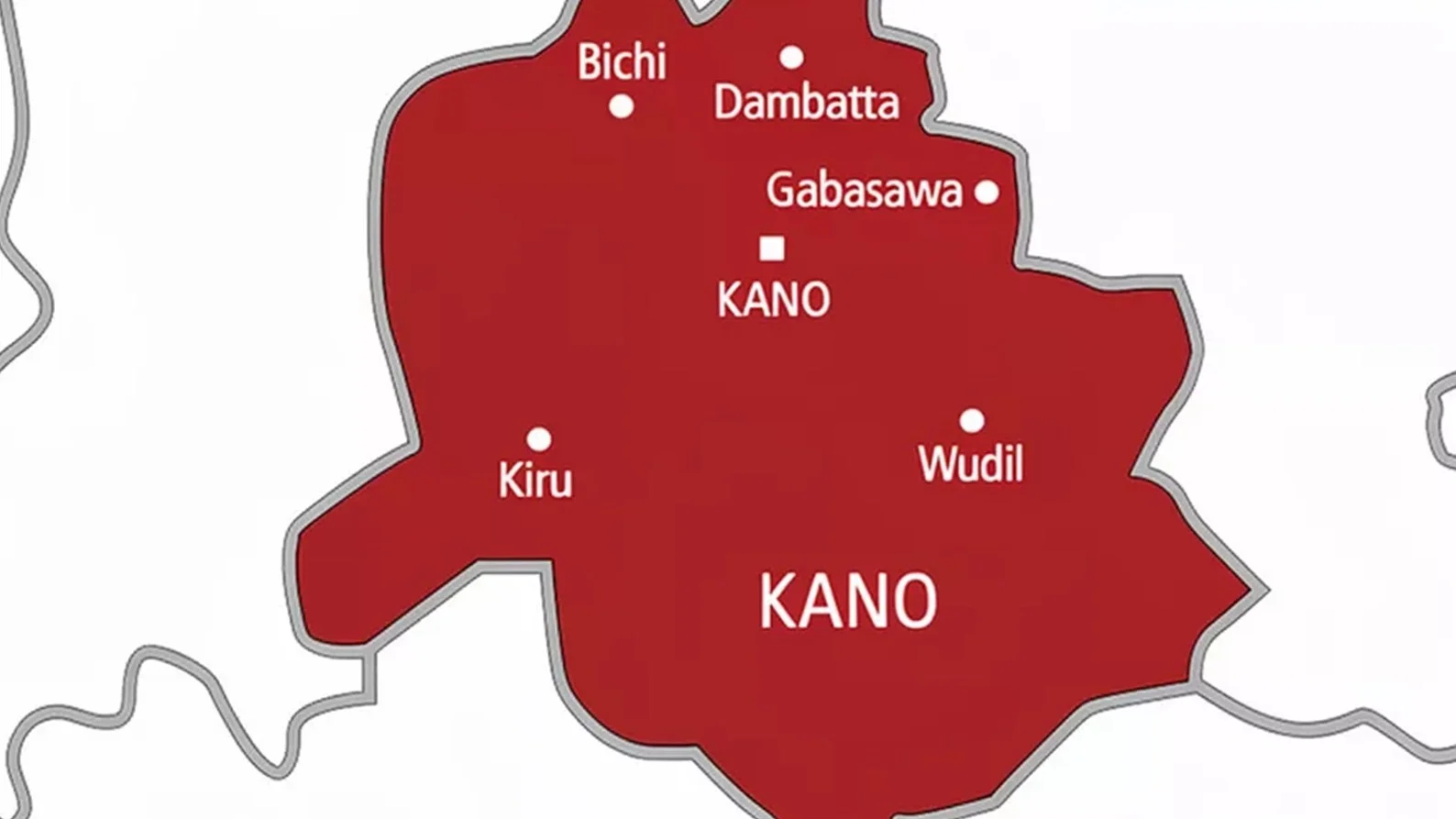
The Kano State Fire Service has confirmed that a fire destroys four containers and seven temporary shops at Gezawa Market in Gezawa Local Government Area, alongside one permanent shop — the arithmetic behind the headline figure of eight shops. The distress call came at about 5:15 am on Monday, 2 November 2026. Properties worth millions of naira were lost.
The record raises a narrower question than blame: what can actually be verified about this fire, and what is still assumption?
What The Kano Fire Service Statement Actually Confirms
The service’s Public Relations Officer, Kabiru Jafaru, confirmed the incident in a statement made available to The PUNCH on Wednesday, two days after the blaze.
The statement is specific on three points. It names the person who raised the alarm: one Ibrahim Sani. It fixes the time of the distress call at about 5:15 am on Monday, 2 November 2026. And it records the operational outcome in the service’s own words: “Upon receiving the distress call, our team promptly mobilised to the scene of the incident and successfully extinguished the fire, preventing it from spreading to other sections of the market.”
On the damage, the statement reads: “One shop was involved, alongside four containers and seven temporary shops, all of which were burnt by the fire.”
The Guardian’s report on the same incident carries the figure of four containers and eight shops. That reconciles with the Fire Service statement once the single permanent shop is added to the seven temporary ones. Two Nigerian outlets, one tally, no substantive contradiction.
Neither report gives a casualty figure. Neither gives a naira valuation beyond “millions”. Neither identifies a cause of ignition.

Two Fires In Three Days And A Harmattan Warning
The Punch report describes the Gezawa blaze as “another early morning fire outbreak” in Kano State. The reference point is close.
On Saturday, 31 October 2026, a fire destroyed no fewer than 110 buildings and structures at Kofar Ruwa Timber Market in Kano metropolis. The state Fire Service counted 75 permanent buildings and 35 temporary structures across different sections of that market.
Roughly 48 hours separate the two incidents. The same agency responded to both. The difference in scale is about ten to one.
That gap is measurable. Its explanation is not. The Fire Service has not published an assessment linking the difference to building materials, access roads, water supply or response times, and no independent damage assessment is in the public record for either site.
What the service did publish was a warning. Its Director urged members of the public to observe all necessary safety precautions, “particularly now that the harmattan season had set in”, to prevent similar incidents. That is a general advisory, not a finding about either fire.
Why A Fire Destroys Four Containers And Eight Shops In Minutes
When a blaze of this kind is reported, the first thing readers want is the cause. In this case it has not been stated. The Fire Service has not said what the containers held, where in the market row the fire began, or how long crews took to reach Gezawa.
Those gaps are not evidence of failure. They are the boundary of what can be asserted, and they should be labelled as such rather than filled in by assumption.
Disclosure practice elsewhere shows how quickly operational detail can be released. After a fire gutted a one-million-square-foot Medline Industries distribution facility in Tracy, California, the South San Joaquin County Fire Authority said the following day that the blaze was believed to have started at the roof, that sprinklers were not operating, and that there was no water pressure at the hydrants on site. Deputy Chief Brian Bagley told KCRA that the building was “fully consumed” within 40 minutes, with about 120 of roughly 900 employees on site at the time.
Kano’s equivalent account has not been published. What exists is a damage count and a safety reminder, issued two days later.
The Structural Point
Kano’s market rows are not uniform. The Fire Service’s own tally for Gezawa lists permanent lock-up shops, temporary stalls and shipping containers standing in the same footprint — three different kinds of structure, three different fire loads, one incident.
That mix is the verifiable pattern. Confirmed: the 2 November Gezawa fire, its 5:15 am timeline, its named caller, and an 11-unit damage list. Not confirmed: ignition source, response interval, water availability, and the value of goods inside those containers. Analysis, clearly labelled as analysis: the publication gap carries weight here precisely because a repeat incident inside one week is when an operational account would be most useful to traders preparing for the dry season.
What Is Confirmed And What Is Not
A caller named Ibrahim Sani reached the Kano State Fire Service at about 5:15 am on 2 November 2026. Crews stopped the blaze from spreading beyond one shop, seven temporary shops and four containers. Properties worth millions of naira were destroyed. Two days later, the service urged the public to take precautions as the harmattan set in.
Everything else is missing from the public record: no cause, no casualty toll, no valuation breakdown, and no comparison drawn by the agency itself between Gezawa and Kofar Ruwa.
A fire destroys four containers, eight shops and a season’s stock in the time it takes to make one phone call. Whether the next one is contained depends on information that has not yet been released.
Frequently Asked Questions
What was destroyed in the Gezawa Market fire in Kano?
The Kano State Fire Service said four containers, one permanent shop and seven temporary shops were burnt — the basis for the headline count of four containers and eight shops. Properties worth millions of naira were lost, according to the service’s statement released to reporters on Wednesday.
When did the Gezawa Market fire start and who reported it?
The Fire Service said its Public Relations Officer, Kabiru Jafaru, confirmed a distress call at about 5:15 am on Monday, 2 November 2026. The caller was named in the statement as one Ibrahim Sani.
Has a cause been established for the Gezawa Market fire?
Neither of the published Nigerian reports states a cause of ignition. The Fire Service statement gives a timeline, a damage count and a safety advisory, but does not identify where the fire began or what the containers held.
 Follow AFRILATEST on Google News
FIRST TIME REACTIONS:
Be the first to leave us a comment – Fire Destroys Four Containers At Kano’s Gezawa Market, down the comment section.
JOIN US ON OUR SOCIAL MEDIA:

About Clare Dominic
Clare Dominic is the Editor at AfriLatest. With a background in journalism and a passion for storytelling, she oversees the editorial process to ensure content is accurate, engaging, and relevant. Clare works closely with contributors to maintain the highest standards of journalistic integrity across all news, sports, and lifestyle coverage.
View all articles by Clare Dominic

Africa news
Nigeria’s $9bn Freight Loss Exposes Shipping Failure
Nigeria’s $9bn freight loss exposes a two-decade gap between shipping policy and vessels, as Sierra Leone launches a national carrier.

Nigeria loses an estimated $8bn to $9bn a year in freight earnings to foreign-owned shipping companies, Captain Ladi Olubowale, immediate past president of the Africa Shipowners Association, said, describing the drain as evidence that Africa’s largest economy has not converted its fleet into a carrier that trades under its own flag.
Olubowale, who is also group managing director of Seamate Maritime Services Limited, spoke after President Julius Maada Bio of Sierra Leone launched the Sierra Leone Ocean Shipping Company (SLOSCo). According to the Leadership report of his remarks, the launch should be read in Abuja as a comparison, not a compliment.
The gap between the two countries is measurable. Sierra Leone moved from statute to company. Nigeria has moved from announcement to announcement.

What Nigeria’s $9bn Freight Loss Actually Measures
The $8bn to $9bn figure is an industry estimate, not an audited customs or central bank number, and Olubowale did not set out a methodology for it in the reported remarks. The harder figures sit underneath it.
Nigeria is Africa’s largest ship-owning nation by vessel count, according to the United Nations Conference on Trade and Development, with 291 vessels in its indigenous fleet. Yet Nigerian-owned vessels account for only slightly more than half of one per cent of the global merchant fleet measured by value. A large count of small ships is not the same as capacity to carry the country’s trade.
Nigeria once had that capacity. Olubowale recalled the Nigerian National Shipping Line, which ran about 30 ocean-going vessels and trained a generation of seafarers. Its collapse took freight earnings, jobs and sea-going expertise with it, and no successor has replaced it.
Sierra Leone’s Route From Law To Vessel
The SLOSCo sequence is short enough to audit. Parliament passed the Sierra Leone National Shipping Agency Act in 2025, converting the national shipping company established in 1972 into an agency authorised to act as the national carrier for international trade. Parliament then ratified a joint venture agreement with China’s Zhejiang Xiehai Group in August 2026, and the company was launched.
Olubowale credited Minister of Transport and Aviation Ambassador Alhaji Fanday Turay, the leadership and staff of the Sierra Leone National Shipping Agency, and the MPs who ratified the agreement. He also attached a warning to the ceremony.
“In my years in African shipping, including as President of the Africa Shipowners Association, I have watched many national shipping ventures launched with ceremony. Some became fleets. Most became footnotes,” he said.
Nigeria’s own record supports the caution. In April 2026, the Minister of Marine and Blue Economy, Adegboyega Oyetola, announced progress towards establishing a national carrier, with reported interest from DP World and AD Ports Group. No vessel has followed. “Until a vessel flies the flag of a Nigerian national carrier, the announcement remains an announcement,” Olubowale said.
The Fund That Has Not Bought The Ships
The sharpest evidence against Nigeria is the Cabotage Vessel Financing Fund. Created under the Coastal and Inland Shipping (Cabotage) Act of 2003 and financed by a two per cent surcharge on coastal trade contracts, the fund was designed to give indigenous shipowners affordable long-term financing for vessel acquisition.
By Olubowale’s estimate it had accumulated about $700m by 2025. Under the present administration an application portal opened in January 2026, participating lending banks rose from five to 12, and an initial $25m was made available. President Bola Tinubu approved disbursement in September 2026.

Processing has not matched the approval. By the minister’s own September account, as cited by Olubowale, NIMASA had received 92 applications, passed 20 to the lending banks, and seen one reviewed and forwarded for final approval. The minister has since directed the agency and the banks to speed up.
“Twenty-three years after the law was passed, Nigerian shipowners are still waiting for vessels the fund was meant to buy,” Olubowale said. The report does not include a response from NIMASA or the Ministry of Marine and Blue Economy.
The $25m released against a fund of roughly $700m, and one application forwarded for approval out of 92, is the number that matters to a shipowner weighing a vessel purchase. It is also the number that tests whether a national carrier could be staffed and financed if it were announced tomorrow.
Who Pays For Foreign Freight
The cost lands on importers and, through them, on households. Olubowale argued that swings in international freight rates raise import costs and put pressure on African businesses and consumers, with local economies holding little control over the shipping capacity that serves their markets. The same dependence weakens the African Continental Free Trade Area: cargo moving between Lagos, Freetown, Accra and Abidjan still travels on networks owned outside the continent.
There is a training cost too. Thousands of Nigerians have trained in nautical science and marine engineering under the Nigerian Seafarers Development Programme but cannot obtain the sea time needed to certify, because there are too few vessels to serve as classrooms. Olubowale said the Ijaw Youth Council recently reported that more than 100 cadets sponsored over a decade ago were still waiting to complete certification. “Without the ships, the training is money spent on a promise,” he said.
Nigeria is not starting from zero. Olubowale cited the 291-vessel indigenous fleet counted by UNCTAD, the Lekki Deep Sea Port, the Federal Government’s Deep Blue Project, and the minister’s statement that Nigeria’s territorial waters have recorded no piracy incidents for four years. Those are assets. None of them is a national carrier.
What To Watch
Three things will show whether Nigeria’s $9bn freight loss is being addressed or merely restated. The first is drawdowns: whether the 20 applications already with lending banks convert into money and then into hulls. The second is SLOSCo: whether Sierra Leone’s new company takes control of cargo or becomes one of the footnotes Olubowale described. The third is the flag: whether a Nigerian national carrier appears as a registered vessel rather than a memorandum.
On the current record, the announcement has outlasted the fleet.
Frequently Asked Questions
Where does the $8bn to $9bn figure come from?
It is an industry estimate cited by Captain Ladi Olubowale, immediate past president of the Africa Shipowners Association, covering annual freight earnings lost to foreign shipping companies. He did not set out a methodology, and it is not an audited government figure.
How much money has the Cabotage Vessel Financing Fund actually released?
Olubowale estimated the fund had accumulated about $700m by 2025. An initial $25m was made available after the application portal opened in January 2026 and President Bola Tinubu approved disbursement in September 2026. Of 92 applications, 20 went to lending banks and one was forwarded for final approval.
What did Sierra Leone do that Nigeria has not?
Sierra Leone’s parliament passed the National Shipping Agency Act in 2025, converting the 1972 national shipping company into an agency authorised as national carrier, then ratified a joint venture with China’s Zhejiang Xiehai Group in August 2026, leading to the launch of SLOSCo by President Julius Maada Bio.
FIRST TIME REACTIONS:
Be the first to leave us a comment – Nigeria’s $9bn Freight Loss Exposes Shipping Failure, down the comment section.
JOIN US ON OUR SOCIAL MEDIA:

About Rosabella Eboh
Rosabella Eboh is an author at AfriLatest. With a passion for writing and a flair for creativity, she contributes original content and unique perspectives to the platform. Rosabella focuses on human-interest stories, cultural trends, and in-depth feature reporting.
View all articles by Rosabella Eboh-

 Startups1 month ago
What a Successful Dangote Refinery IPO Really Says
-
Savings & Investing1 week ago
Hidden Medicare Fees Draining Your Retirement Savings
-
Health and Fitness3 weeks ago
Curly Hair Hydration: 5 Proven Steps That Actually Work
-
Tech & Gadgets4 weeks ago
Apple Watch and AirPods Fall Deals: Save $120 Today
-
University Admissions1 month ago
UNILAG 2026/2027 Admission: Direct Entry & Post-UTME Guide
-
Football1 month ago
South Carolina vs Alabama: Tide Roll to 35-10 Halftime Lead
-
Football1 month ago
Mexico vs Colombia 2026: Márquez Debut Ends in Defeat
-
Trending Entertainment News3 weeks ago
Taylor Swift Joins Beatles as Only Acts With 100 Weeks at No. 1