World News
Delhi Air Quality Hits Severe Zone Ahead Of Diwali
Delhi air quality entered the severe band as GRAP Stage II took effect across the NCR before Diwali, with firecracker rules under scrutiny.


Delhi air quality crossed into the severe band in the first days of November, days before Diwali, with the Central Pollution Control Board network reporting an overall index reading above 400 and individual monitoring stations climbing past 450.
The Commission for Air Quality Management invoked Stage II of the Graded Response Action Plan across the National Capital Region on Monday, with immediate effect, according to The Week. The order binds civic bodies, traffic police and pollution control authorities across Delhi, Haryana, Uttar Pradesh and Rajasthan, four jurisdictions that share a single airshed and, on paper, a single emergency rulebook.
Stage II is the second rung of a ladder that tightens as pollution rises. Under it, agencies have been told to run daily mechanical or vacuum sweeping of roads, increase water sprinkling with dust suppressants before peak traffic hours, and inspect construction and demolition sites and identified hotspots, The Economic Times reported. Delhi Police ran vehicle checks at the Ghazipur border as the curbs took effect.

The BBC reported 20 additional weekday Delhi Metro trips and instructions to stagger government office timings to thin out peak traffic.
What The Delhi Air Quality Index Shows, And What It Does Not
The index runs on a 500-point scale. Figures from 301 to 400 are classed as very poor; anything from 401 to 500 is severe. On the Tuesday morning reading, two national outlets put the citywide figure at 451, while a third reported 452. The one-point gap is meaningless against the scale, but it points to something larger: the capital’s air is measured station by station, and the headline number compresses very different conditions into a single digit.
At 9am, eight of Delhi’s 57 monitoring stations sat in the severe category and 32 were very poor. Jahangirpuri recorded 452, Rohini 429, Punjabi Bagh 424 and Bawana 408. Jawaharlal Nehru University stood at 328, IGI Airport’s Terminal 3 at 287, and IMD Lodhi Road at 226, the last of these still inside the poor band.
Timing matters as much as location. The BBC reported an overall figure of 377, very poor but not severe, on a Wednesday morning, a reading consistent with a week in which the index moved in both directions. Single-day snapshots taken from different outlets on different mornings cannot be compared directly, and treating them as one trend line is a reporting error, not a data point.
How GRAP Escalates From Advisory To Restriction
The background is repetitive by design. Delhi and the surrounding plains choke every winter, and Diwali, celebrated with lamps and fireworks, sits inside the worst window. The deterioration follows a pattern: falling temperatures, weak winds, and smoke carried in from crop-residue burning in Punjab and Haryana. A storm brought rain and stronger winds that scrubbed the air, then the weather settled, northwesterly winds returned, and the smoke came with them.
That sequence followed an unusually clean October, when Delhi logged its lowest average AQI for the month in eight years, according to the BBC. The clean month is the useful baseline. It shows that weather, not policy, sets the pace of the swing.
The arithmetic behind the crisis is where emergency rules run into trouble. India’s Environment Ministry attributes 23% of Delhi’s winter pollution to vehicles, 20% to biomass burning including farm stubble, and about 9% to industry including coal-fired power plants. The largest share, 27%, comes from secondary particles formed in the atmosphere when gases from all of those sources react with one another.
Jacob Koshy, science editor of The Hindu and author of The Nitrogen Bomb, told The Straits Times that fertiliser ammonia is a feedstock for that chemistry: “The sheer quantity of ammonia that is going into the atmosphere creates a base layer for other pollutants to react with.” Secondary particles cannot be swept off a road or parked at a border checkpoint.
The health cost is documented. A 2024 study in The Lancet Planetary Health estimated that 3.8 million deaths in India between 2009 and 2019 were linked to air pollution.
Green Firecrackers, The Supreme Court And The Enforcement Gap
On Monday, India’s Supreme Court allowed the manufacture, sale and use of certified green firecrackers in Delhi and neighbouring areas for a limited period, the BBC reported. They may be set off only between 06:00 and 07:00 and between 20:00 and 22:00 local time on 7 and 8 November, and not within 300 metres of hospitals, care homes, schools and designated silence zones. Certificates carry QR codes so buyers and inspectors can check manufacturer and certification details.
The court also recorded the problem with its own earlier orders: conventional firecrackers have continued to be sold as green alternatives even under a full ban. Police have been directed to patrol sales areas, run random QR-code checks and seize illegal stock. Last year, Delhi woke to a toxic haze the morning after Diwali despite a court directive on low-pollution crackers.
That gap between an order and a street corner is the part of the story most transferable abroad. Cities in Africa and South Asia that share an airshed across state or provincial borders face the same design question the NCR is testing: whether one coordinating commission with enforcement powers across four governments performs better than four separate regulators. The evidence so far is mixed, and the Diwali weekend will produce more of it.
Mumbai offers the control case. India’s financial capital reached an AQI of 322, very poor, on 24 October, blamed on low wind speeds, construction dust, garbage burning and firecracker emissions, then fell to a satisfactory 89 by Wednesday. Coastal winds disperse what the Gangetic plain traps.
What To Watch After Diwali
Confirmed so far: Stage II is in force, the sweepers and sprinklers are deployed, and the stations are publishing. Forecast, not fact: officials say Delhi air quality will stay very poor for several days. Unresolved: whether only certified crackers reach the market, and whether a rule written for 48 hours of celebration can dent a pollution load that is 27% atmospheric chemistry.
The legacy question is not whether the index falls after the fireworks stop. It will, as it does each year. It is whether the enforcement machinery built around Diwali is ever scaled to the sources that operate in February, when the festival is forgotten and the monitoring stations still read above 300.
Frequently Asked Questions
What is Delhi’s air quality index reading ahead of Diwali?
On the Tuesday morning reading reported by national outlets, Delhi’s overall AQI was 451 in two accounts and 452 in a third, placing the city in the severe category on the CPCB’s 500-point scale. Individual stations ranged from 452 at Jahangirpuri to 226 at IMD Lodhi Road.
What does GRAP Stage II actually restrict?
Stage II requires daily mechanical or vacuum road sweeping, increased water sprinkling with dust suppressants before peak traffic hours, stricter inspection of construction and demolition sites and pollution hotspots, higher parking charges, added public transport, and staggered government office timings. It applies across Delhi, Haryana, Uttar Pradesh and Rajasthan.
Are firecrackers banned in Delhi this Diwali?
Not entirely. India’s Supreme Court allowed the manufacture, sale and use of certified green firecrackers for a limited period, restricted to 06:00-07:00 and 20:00-22:00 local time on 7 and 8 November, and banned within 300 metres of hospitals, care homes, schools and designated silence zones. The court acknowledged that conventional crackers have been sold as green alternatives.
What causes Delhi’s winter pollution spike?
India’s Environment Ministry attributes 23% of Delhi’s winter pollution to vehicles, 20% to biomass burning including farm stubble, about 9% to industry including coal-fired power plants, and 27% to secondary particles formed when gases from those sources react in the atmosphere. Falling temperatures and low wind speeds concentrate the load.
 Follow AFRILATEST on Google News
FIRST TIME REACTIONS:
Be the first to leave us a comment – Delhi Air Quality Hits Severe Zone Ahead Of Diwali, down the comment section.
JOIN US ON OUR SOCIAL MEDIA:

About Clare Dominic
Clare Dominic is the Editor at AfriLatest. With a background in journalism and a passion for storytelling, she oversees the editorial process to ensure content is accurate, engaging, and relevant. Clare works closely with contributors to maintain the highest standards of journalistic integrity across all news, sports, and lifestyle coverage.
View all articles by Clare Dominic


World News
California Billionaire Tax: Who Pays Under Proposition 40
California billionaire tax: Proposition 40’s one-time 5% levy on roughly 200 billionaires, the $100 billion estimate, and the billionaires who left.
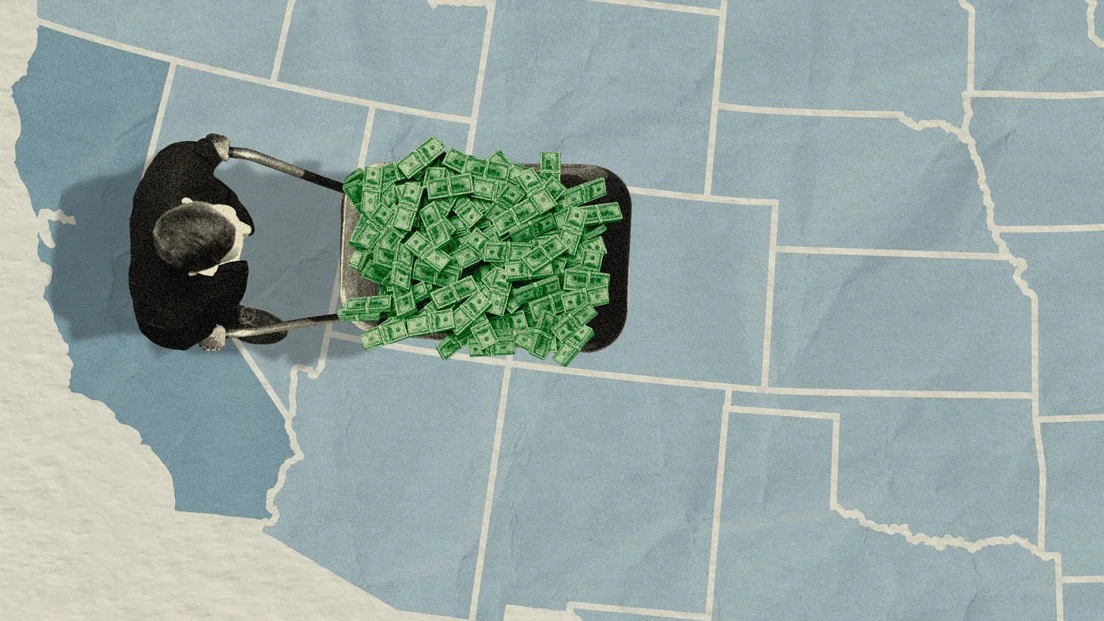
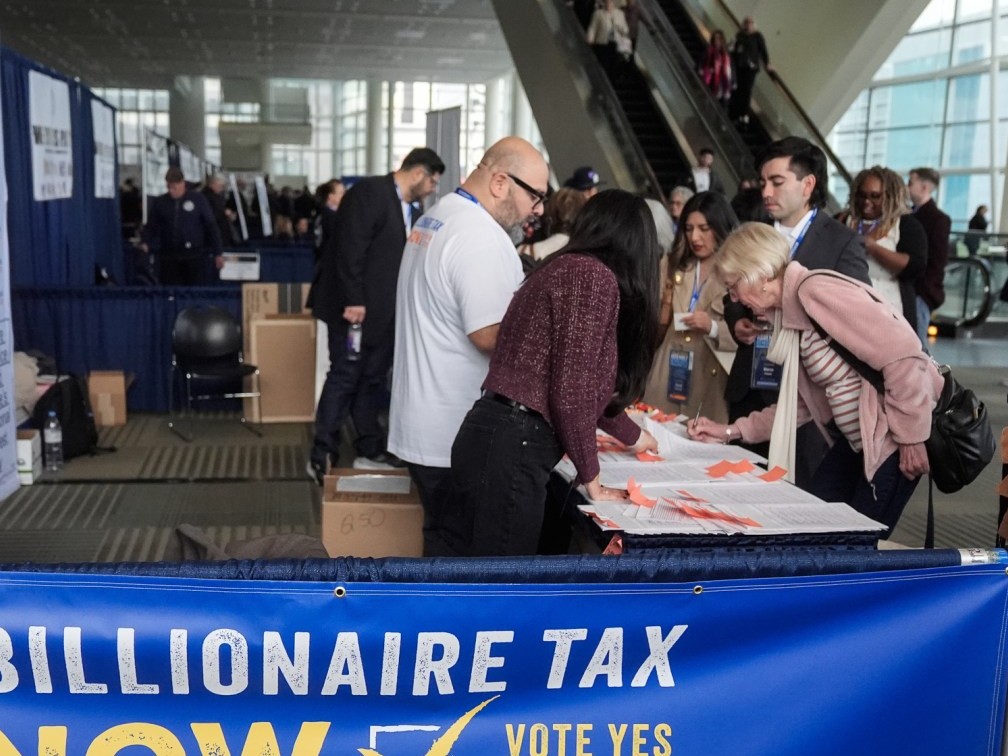
California voters will decide next month whether to impose a one-time 5% tax on the net worth of the state’s roughly 200 billionaires, a levy projected to raise $100 billion over five years and the first wealth tax of its kind to reach a statewide ballot.
The measure, Proposition 40, sits among 14 propositions on the ballot. It was placed there by the Service Employees International Union-United Healthcare Workers West and its president, Dave Regan, who frames it as a five-year bridge rather than a permanent fix. “We’re not trying to pretend that it’s a permanent solution,” Regan told CBS News, “but a five-year solution is better than no solution.”
What The California Billionaire Tax Would Actually Do
The initiative text confirms three things. It applies to California residents with net worth above $1 billion. It is levied once, at 5%. And it is written into the state Constitution, not merely state law, a detail that governs every argument about what happens after passage.
Ninety percent of revenue would flow into a special state reserve for healthcare, including Medi-Cal. Nearly one in three Californians depend on that program, according to the California Budget and Policy Center, as cited by USC Annenberg Media. The remaining 10% would fund K-14 public education and food assistance such as CalFresh and school nutrition programs.
The stated trigger is a specific federal law, not inequality in the abstract. Congress passed the One Big Beautiful Bill Act in July, cutting more than $1 trillion from federal healthcare spending over a decade. The California Department of Health Care Services expects the state to lose about $30 billion a year, Annenberg reported. Regan says 3.5 million people would lose coverage. That figure is his, and the source material contains no independent verification of it.
The Fight Over What Lawmakers Could Do Later
Opponents have built their campaign on a second-order claim: that the measure is a “Trojan horse” for wealth taxes on ordinary Californians, because it lets the Legislature amend the tax by two-thirds vote so long as changes are “consistent with and furthers the purposes” of the act.
CalMatters rated that claim partially true. California courts have granted lawmakers real authority over ballot initiatives that permit amendment. The Mental Health Services Act, a 1% income tax on millionaires passed in 2004, has been amended 10 times, though never on its rate. Election-law attorney Michael Colantuono told CalMatters that legislators “could probably adjust the structure of the tax in marginal ways,” but that they could not turn it into more than a one-time tax or lower the wealth threshold. Regan’s answer to the ad campaign was flat: “The billionaire tax is a tax on billionaires. Period.” Rob Lapsley, president of the California Business Roundtable, which funded the ad, said the intent was to show “what they could mean for taxpayers and the state’s economy.
Billionaires Who Left, And The One Who Said Yes
On one measurable point, both sides agree: since the California billionaire tax was proposed, some of the state’s richest residents have moved out. CBS News reported that venture capitalist Peter Thiel and Google co-founders Larry Page and Sergey Brin have left California. Brin is spending more than $100 million to oppose the measure.
Opposition is not confined to the wealthy. Governor Gavin Newsom calls Prop 40 “a flawed initiative.” Former congresswoman Katie Porter, who describes herself as a progressive, argues the design defeats its own purpose. “When somebody leaves California, we can no longer tax them,” she told CBS. “That is a permanent problem.”
One billionaire spoke on the record. Nvidia chief executive Jensen Huang, whose Forbes-listed net worth is about $200 billion, said he does not object to paying. Asked about a bill of perhaps $8 billion over five years, he replied: “The fact that I can afford to pay $8 billion in taxes over five years is a privilege.” He added: “I’m not afraid of paying taxes. I’m just afraid of being poor.” He did not say how he intends to vote, and the source material does not indicate whether he has taken a position on the measure.
Why Valuation, Not Politics, May Decide The Outcome
Beyond the campaign, the California billionaire tax creates an administrative problem the state has never faced: assigning a price to assets that are rarely sold, including private companies, art and car collections. Valuing a pre-revenue tech startup is especially difficult.
“The excise tax that’s being proposed here is on potential,” Chris Parker, a principal tax attorney at Baker Tilly, told CalMatters. “The question then is, if we open the door to taxing potential, when does that stop?”
Ray Madoff, a professor at Boston College Law, told CBS the underlying system is “deeply broken” because most billionaire wealth sits in stocks that are not taxed until sold. She compared the arrangement to “the aristocracy of pre-revolutionary France.” She also described Prop 40’s value as largely symbolic, arguing that meaningful change has to happen at the federal level.
What To Watch On November 3
Two competing measures could void the result. Proposition 41 would require pre-election audits of initiatives proposing special taxes once they report 25% of required signatures. Proposition 42 would bar taxes enacted on or after January 1, 2026 on the ownership or control of individually owned assets and personal savings. If either receives more votes than Prop 40, the wealth tax is nullified.
Polls have tightened, according to CBS News, and the outcome is not settled. The structural questions the California billionaire tax raises travel well beyond one state: how to value private wealth, how to keep a taxable base from moving, and whether a five-year sunset survives political pressure. Colantuono noted that temporary taxes have more than once become permanent because of “tremendous political pressure to prevent the sunset.”
Readers in African economies weighing similar levies face the same measurement and mobility problems, and this report draws no statistical comparison because the source material contains no data on African wealth-tax proposals. The comparison here is structural only. Regan is already predicting replication: “California is America’s coming attraction, and this is coming to a state near you after we pass it on November 3.” Whether that forecast holds depends less on the rhetoric than on the count, and on what courts do with the amendment clause if the California billionaire tax passes.
Frequently Asked Questions
What is Proposition 40?
Proposition 40 is a California ballot initiative that would impose a one-time 5% tax on the net worth of state residents worth more than $1 billion. It was placed on the ballot by SEIU United Healthcare Workers West and is projected by supporters to raise about $100 billion over five years, with 90% earmarked for healthcare.
Which billionaires have left California since the tax was proposed?
CBS News reported that venture capitalist Peter Thiel and Google co-founders Larry Page and Sergey Brin have left California since the wealth tax was proposed. Brin is spending more than $100 million to oppose the measure. The source material does not give departure dates or confirm the reasons for each move.
How could Proposition 41 or Proposition 42 block the wealth tax?
Both are competing ballot measures backed by opponents. Proposition 41 would require pre-election audits for initiatives proposing special taxes once they report 25% of required signatures. Proposition 42 would prohibit new taxes on the ownership or control of individually owned assets and personal savings enacted on or after January 1, 2026. If either receives more votes than Prop 40, the wealth tax result is voided.
FIRST TIME REACTIONS:
Be the first to leave us a comment – California Billionaire Tax: Who Pays Under Proposition 40, down the comment section.
JOIN US ON OUR SOCIAL MEDIA:
About Clare Dominic
Clare Dominic is the Editor at AfriLatest. With a background in journalism and a passion for storytelling, she oversees the editorial process to ensure content is accurate, engaging, and relevant. Clare works closely with contributors to maintain the highest standards of journalistic integrity across all news, sports, and lifestyle coverage.
View all articles by Clare DominicWorld News
Uncle Wins Tokyo Gap-Financing Market Top Prize
Yen Hao-hsuan’s debut Uncle won the Tokyo Project Award at the seventh Tokyo Gap-Financing Market and the Asian Gen-Z Award.

Taiwanese director Yen Hao-hsuan’s debut feature project Uncle won the Tokyo Project Award on Friday at the seventh Tokyo Gap-Financing Market, the financing forum held inside TIFFCOM, the content market attached to the Tokyo International Film Festival, Variety reported.
The same ceremony handed Uncle the Asian Gen-Z Award, decided by a committee of five film students and now in its second year. The project was one of 24 selected for this year’s market. Prizes went to a handful of them.
The other winners were the Japanese-Canadian co-production Wild Zero Overdrive, from Takegei Company Limited, which took the White Light Post-Production Award carrying $25,000 in services from Thailand-based White Light; and the Brazilian feature Nature Boy, directed by Matias Mariani and produced by Primo Filmes, which won the Mellow Tunes Sound Design Award, offering in-kind sound design valued at up to $10,000 from Thailand’s Mellow Tunes.

TIFFCOM managing director Ikeda Kaori hosted the ceremony. The jury was Nam Jongsuk, a programmer at the Bucheon International Fantastic Film Festival and managing director of the Network of Asian Fantastic Films; producer Meiske Taurisia of Palari Films; and Paolo Bertolin, a consultant for the Venice Film Festival.
What The Tokyo Gap-Financing Market Jury Actually Awarded
The Tokyo Project Award is a jury citation. Reporting on Friday’s ceremony did not state a cash value for it, which separates it from the Gen-Z prize’s JPY500,000 ($3,300) and from the in-kind awards given to the other two projects. That distinction matters for anyone reading the headline as a financing event. A market prize signals curator interest, not committed money.
Wild Zero Overdrive reached Tokyo through the Frontières fiction feature selection, part of TIFFCOM’s first partnership with the co-production market of Canada’s Fantasia International Film Festival. Directed by Takeuchi Tetsuro, it is a follow-up to his 1999 cult film Wild Zero and stars the punk band Guitar Wolf, who headlined the original. There was no acceptance speech; winners and presenters shouted “rock and roll!” instead.
A Taiwanese Feature Uncle Turns Eighteen Years Of Family Memory Into A Pitch
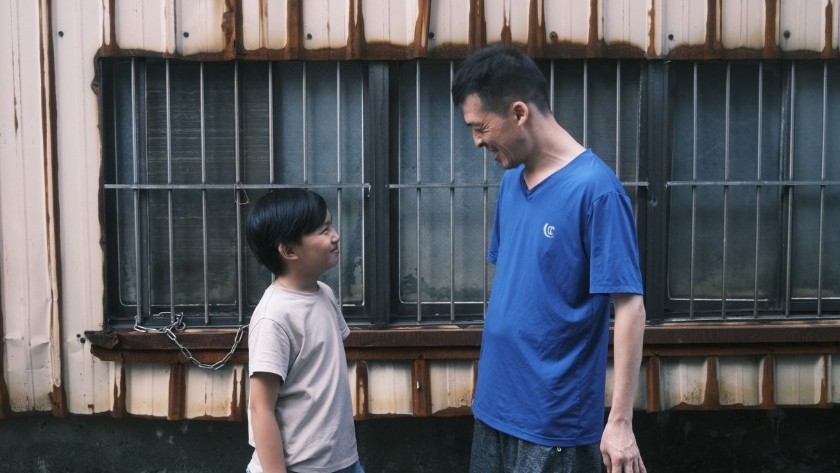
Uncle follows Wen, 10, and A-Tsik, the uncle he is inseparable from, in a rural Taiwanese household where Wen’s grandfather runs an illegal gambling den on the ground floor. The story runs from 1997 to 2000, with the island rebuilding after an earthquake and going through its first democratic handover of power. As Wen reaches adolescence his affection curdles into embarrassment, and the family’s attempts to police A-Tsik’s behaviour and sexuality expose how little say he has over his own life.
Yen lived with his uncle for 18 years, and the film tracks that arc: childhood closeness, teenage shame, then leaving for the city while A-Tsik stayed put. He kept the material out of his short films, unsure he could separate honesty from indulgence. “Making those short films and the time that has passed since, have given me enough distance to see him as a person, not only as a relative or as a material for a film,” he said ahead of the market, in an earlier Variety interview. “Now I think I’m ready.”
Patrick Mao Huang, founder of Flash Forward Entertainment, produces with Sung Chin-hsuan, with Flash Forward, wpd films and Soseki Studio presenting. Huang’s credits include Tiger Stripes, winner of the Cannes Critics’ Week Grand Prize in 2023. Sung’s work spans film, series and immersive media, including 2025 Venice Immersive Grand Prize winner The Clouds Are Two Thousand Meters Up. The project holds a Taiwan Creative Content Agency development grant and was developed in this year’s New Director Workshop at the Taipei Film Festival.
The award closes a fortnight in which Uncle went from the Busan Asian Project Market, its first Asian market outing, to the Tokyo Gap-Financing Market.
Praise, Precedent And The Risk Of Reading Too Much Into A Prize
Nam said the project “looks at society and bravely goes against prejudices, without sugarcoating the subject,” and the jury hoped Yen would deliver something “uncompromising.” The student committee called it “a story that demands to be told right now,” adding that it was “resisting simplistic emotional appeals.
Those are the opinions of a jury, not measurements. The firmer evidence sits with the producer. Tiger Stripes did win Cannes Critics’ Week in 2023, which establishes that Huang can carry a first-time director’s film through the international circuit. It does not establish that Uncle will follow.
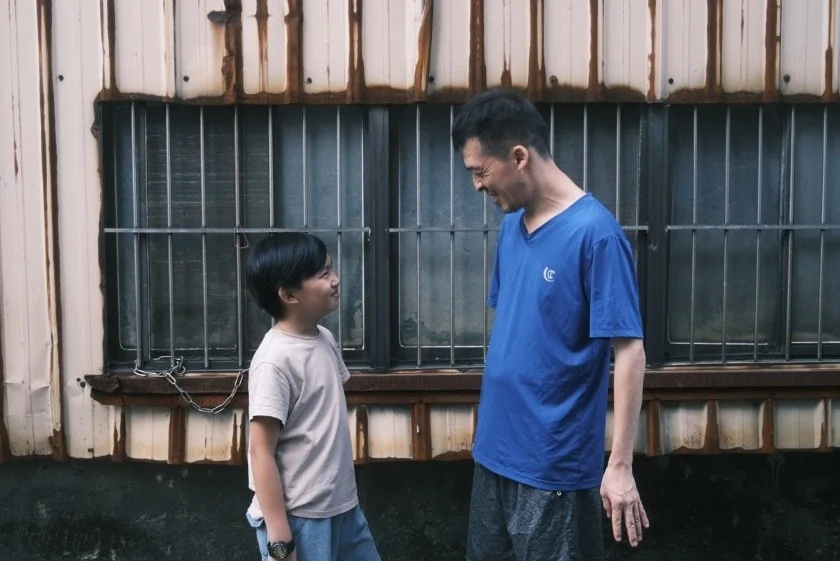
Yen said he had not expected the win. “I’ll take this as the energy to shoot and finish the film,” he said.
The prize also lands in a busy stretch for Taiwanese film more broadly. Left-Handed Girl, co-written and directed by Tsou Shih-Ching with Sean Baker, is Taiwan’s entry to the 2026 Academy Awards and made the December shortlist, while Shu Qi’s directing debut Girl opened in Singapore cinemas on April 16, The Straits Times reported. None of that transfers to Uncle. The projects share a passport and a festival circuit, not a budget or a distributor.
What To Watch Before Cameras Roll
Much of what would make this a completed film is still open. Yen is writing a fresh draft and working out the visual style. No budget, shoot date, cast, sales agent or distributor has been announced in the reporting available. The producers are courting co-production partners from Korea, Japan, elsewhere in Asia and Europe, along with financiers, post-production collaborators, sales agents and distributors.
Huang has said he wants a financing and creative setup that safeguards Yen’s voice and the film’s Taiwanese character, a constraint that narrows the field of potential partners.
The reporting also does not list the full 24-project slate for the Tokyo Gap-Financing Market, so the market’s geographic reach, and whether any African project was among the selections, cannot be verified from the coverage available. Confirmed: the prizes, the names, the jury quotes. Not confirmed: anything about the finished film.
What to watch is narrower than the headline. Whether Uncle closes its financing, signs a sales agent and sets a shoot date will say more about its prospects than any citation handed out in Tokyo. For now, the Tokyo Gap-Financing Market has given Yen an award, a small cheque and a line for his pitch deck. According to the reporting available, the film has not yet been shot.
Frequently Asked Questions
What prize did the Taiwanese project Uncle win at the Tokyo Gap-Financing Market?
Uncle, directed by Yen Hao-hsuan, won the Tokyo Project Award on Friday at the seventh Tokyo Gap-Financing Market. It also collected the Asian Gen-Z Award earlier in the same ceremony.
Is Uncle finished and ready for release?
No. The project is in development and financing. Yen is writing a fresh draft and working out the film’s visual style, and the reporting available does not list a budget, shoot date, cast, sales agent or distributor.
How much money does the Tokyo Project Award carry?
The reporting on the ceremony did not state a cash value for the Tokyo Project Award. By contrast, the Asian Gen-Z Award carries JPY500,000 ($3,300), the White Light Post-Production Award carries $25,000 in services, and the Mellow Tunes Sound Design Award offers up to $10,000 in in-kind sound design.
Receive alerts for Tokyo Gap-Financing Market and more like it.
FIRST TIME REACTIONS:
Be the first to leave us a comment – Uncle Wins Tokyo Gap-Financing Market Top Prize, down the comment section.
JOIN US ON OUR SOCIAL MEDIA:
About Clare Dominic
Clare Dominic is the Editor at AfriLatest. With a background in journalism and a passion for storytelling, she oversees the editorial process to ensure content is accurate, engaging, and relevant. Clare works closely with contributors to maintain the highest standards of journalistic integrity across all news, sports, and lifestyle coverage.
View all articles by Clare DominicWorld News
Selma Blair Breaks Silence on Airplane Incident Charges
Selma Blair breaks silence on the Delta airplane incident, apologising to those she alarmed, as two assault charges head for a January 2027 court date.
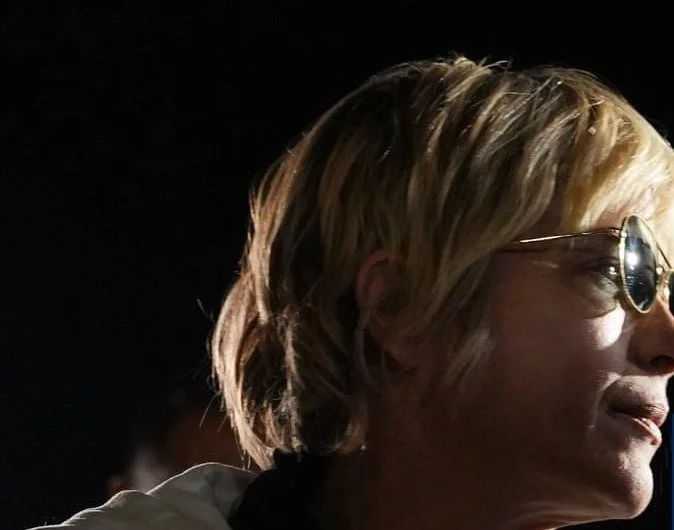
Selma Blair breaks silence three weeks after her arrest at John F. Kennedy International Airport, posting an Instagram video on Friday, 30 October in which she apologised to “the people that I disappointed, that I hurt, that I frightened, alarmed.” The 54-year-old actor faces two counts of second-degree assault in Queens Criminal Court, to which she pleaded not guilty on 12 October. Her case is adjourned until 19 January 2027.
The video runs barely a minute. It is the first direct statement from Blair since the night of 11 October, when Port Authority police responded at about 11 p.m. to a call about a “physically abusive passenger” aboard Delta Flight 938, which had just arrived from Los Angeles. She offers no account of what happened on the aircraft.
Why Selma Blair Breaks Silence Without Describing The Flight
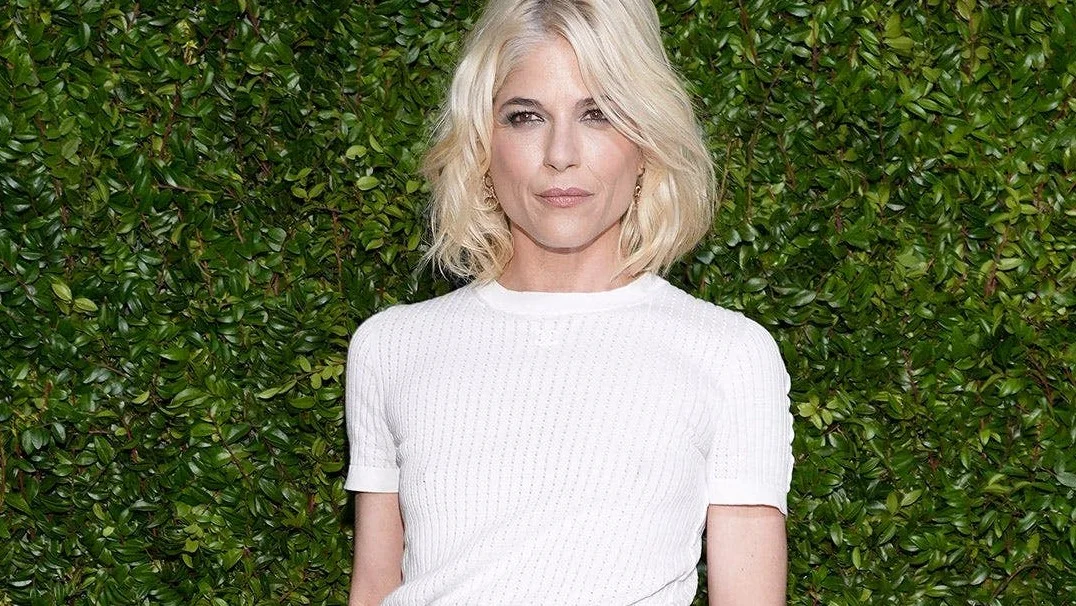
“I know I’ve been quiet for a couple weeks since October 11. And you deserve to hear from me directly, and I’m sorry that it’s taken this long,” Blair says, according to NBC News. “There is a legal matter going on, and my lawyers have asked me to not say anything about that day, and I’m listening to them.”
The legal constraint explains the shape of the statement. Blair does not describe the alleged conduct, does not name the complainants and does not repeat her representatives’ medical explanation. What she offers instead is a character defence: “not one day ever have I intended to hurt or frighten anyone a day in my life.”
She also confirmed that Scout, the Labrador service dog who travelled with her, is “also okay,” and said she would be “taking care of my health and my son, and thinking of you all with gratitude and love.
Background: From Cruel Intentions To A Public Diagnosis
Court reporting across US outlets identifies Blair chiefly through her 1999 film Cruel Intentions. The more consequential public record, for the purposes of this case, begins in 2018, when she disclosed a multiple sclerosis diagnosis in an Instagram post: “I am disabled. I fall sometimes. I drop things. My memory is foggy. And my left side is asking for directions from a broken gps,” she wrote, as recorded by USA TODAY.

She has advocated publicly for the disease since and has said in recent years that she is in remission. A spokesperson said in an October statement that Blair also has pseudobulbar affect, a neurological condition the Multiple Sclerosis Association of America describes as sudden, uncontrollable expressions of laughter or crying.
The service dog, Scout, is central to that account. Blair’s spokesperson said she travels with the dog because it does not leave her side, and that authorities took the animal from her at the airport.
What Is Confirmed, What Is Alleged, And What Is Disputed
The confirmed record is narrow and largely procedural. Port Authority police took Blair into custody at the gate and transported her to Jamaica Hospital Medical Center for evaluation. She was charged the following day with two counts of second-degree assault. Delta said only that law enforcement responded to an incident on arrival and that “Delta has zero tolerance for unruly or unlawful behavior, as the safety of our customers and crew always come first.”
The allegations are more specific. Charging documents allege that while Blair was secured to a stretcher, she pulled a leg free and kicked Port Authority Officer Maria Suarez repeatedly around the face, neck and chest, causing what Suarez described as substantial pain and swelling. A nurse moving her at the hospital alleged Blair kicked her in the chest.
Separately, TMZ, citing dispatch audio and sources, reported that two flight attendants were injured, one with a bloody nose and bite marks, and that Blair “bashed her head on the bulkhead.” One flight attendant was taken to hospital, Port Authority told USA TODAY. Those details come from leaked audio and unnamed sources, not from charging documents, and should be treated as unverified.
Some claims are actively contested. Deadline reported that Blair allegedly tried to open an aircraft door mid-flight. Her spokesperson rejected that directly: “There was no attempt to open the door of the aircraft. Selma did not intend to harm anyone.” The spokesperson also called suggestions that Blair does not have MS “outrageous.”

Reporting on bail illustrates how far the accounts diverge. The Guardian records bail set at $20,000 cash or $60,000 bond; Fox News reports the same figures with an added $60,000 partially secured option; Deadline describes an $80,000 bond. One figure, at most, is correct.
The Medical Defence That January Will Test
Blair’s lawyer, Shawn Barnes, told the arraignment judge that her actions were not intentional and that she had missed several doses of “a powerful medication that controls severe neurological symptoms.” He said she boarded in Los Angeles after a heavy workload, hit her head during the flight, and that these factors combined with altitude produced “a state of severe confusion and disorientation.”
NBC News reports Barnes also cited diagnoses of multiple sclerosis and Parkinsonism. The Guardian and USA TODAY, covering the same hearing, mention only the medication and the head strike. That gap matters: a medical defence built on Parkinsonism would rest on a diagnosis not established in the wider reporting.
Fox News, citing law enforcement officials, also reports that Blair was served with a separate FBI summons and faces one federal assault charge. No other outlet in this reporting set confirms that detail, and it remains a single-source claim.
Legacy And The Case Ahead
Blair’s public identity shifted years ago from actor to disability advocate, and that is the frame through which her statement will be read. Her decision to say almost nothing about the flight protects her defence; it also leaves the public record dominated by a police statement, which her own spokesperson complained about in October.
The next hearing is 19 January 2027. Until then, Selma Blair breaks silence only on her own terms: an apology, a confirmation that her dog is safe, and a promise to focus on health and family while the criminal case proceeds without her commentary.
A profile of a public figure in this position is a profile of two records running in parallel. One is a court file, built on sworn complaints and a plea of not guilty. The other is a news cycle, built on leaked audio, unnamed sources and unauthorised character assessments. The distance between them is where the truth of 11 October currently sits, and neither Blair’s video nor the charging documents have closed it.
Frequently Asked Questions
What was Selma Blair charged with?
Two counts of second-degree assault in Queens Criminal Court, relating to allegations that she kicked a Port Authority police officer and a nurse after a Delta flight from Los Angeles landed at JFK on 11 October 2026. She pleaded not guilty.
What did Selma Blair say in her Instagram video?
She apologised to “the people that I disappointed, that I hurt, that I frightened, alarmed,” said her lawyers had asked her not to discuss the day of the incident, confirmed her service dog Scout was okay, and said she would focus on her health and her son.
When is Selma Blair’s next court date?
Her case was adjourned to 19 January 2027, according to the district attorney’s office and court reporting.
FIRST TIME REACTIONS:
Be the first to leave us a comment – Selma Blair Breaks Silence on Airplane Incident Charges, down the comment section.
JOIN US ON OUR SOCIAL MEDIA:
About Clare Dominic
Clare Dominic is the Editor at AfriLatest. With a background in journalism and a passion for storytelling, she oversees the editorial process to ensure content is accurate, engaging, and relevant. Clare works closely with contributors to maintain the highest standards of journalistic integrity across all news, sports, and lifestyle coverage.
View all articles by Clare Dominic-

 Startups1 month ago
What a Successful Dangote Refinery IPO Really Says
-
Savings & Investing1 week ago
Hidden Medicare Fees Draining Your Retirement Savings
-
Health and Fitness3 weeks ago
Curly Hair Hydration: 5 Proven Steps That Actually Work
-
Tech & Gadgets4 weeks ago
Apple Watch and AirPods Fall Deals: Save $120 Today
-
University Admissions1 month ago
UNILAG 2026/2027 Admission: Direct Entry & Post-UTME Guide
-
Football1 month ago
South Carolina vs Alabama: Tide Roll to 35-10 Halftime Lead
-
Trending Entertainment News3 weeks ago
Taylor Swift Joins Beatles as Only Acts With 100 Weeks at No. 1
-
Football1 month ago
Mexico vs Colombia 2026: Márquez Debut Ends in Defeat