Startups
Building a Private Equity Business in Nigeria: Capital
How to build a private equity business in Nigeria, using diaspora capital, World Bank mobilisation, and real policy signals.


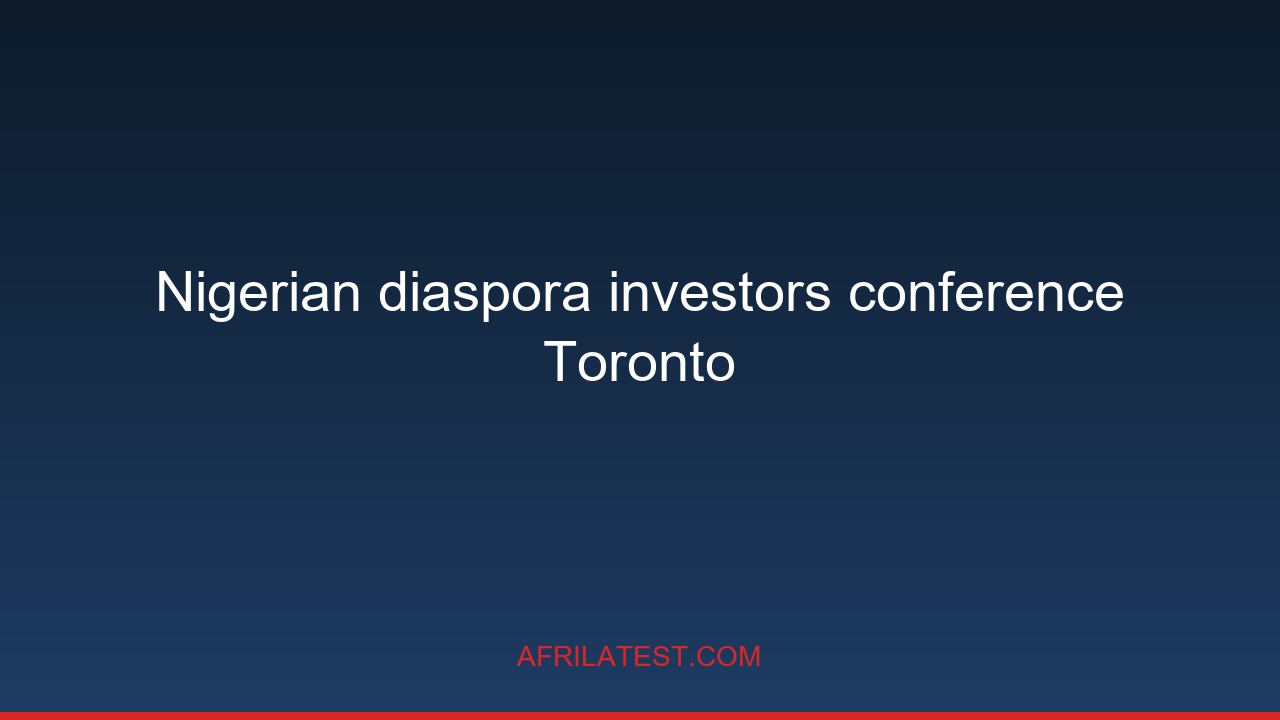
President Bola Tinubu has a blunt message for nigerians abroad: stop treating remittances as the finish line. Speaking at the inaugural Nigeria Diaspora Economic Conference in Toronto, he said the time has come to build a private equity business in Nigeria, not just send money home for school fees & rent. The policy shift matters because it changes who gets capital and on what terms.
Tinubu, represented by Chief of Staff Femi Gbajabiamila, told the Apopllo Convention Centre that “remittances must now become the floor of diaspora engagement, rather than its ceiling.” He wants professionally managed investment clubs, sector funds, co-investment vehicles and venture networks. That is a direct call for private Equity structures, not one-off transfers.
What the policy actually offers
Three new accounts are now central to the pitch: the Non-Resident Nigerian Ordinary Account, de Non-Resident Nigerian Investment Account and the Non-Resident Bank Verification Number. These are designeed to make it easier for Nigerians abroad to participate in the financial system. Tinubu also promised predictable rules, transparent project pipelines and stronger safeguards against fraud.
The macro numbers he cited are meant to close the sale. The economy grew 3.89 per cent in real terms in the first quarter of 2026, manufacturing expanded 3.29 per cent, inflation eased to 15.91 per cent, and foreign reserves closed 2025 at $45.4 billion. The IMF projects 4.1 per cent growth in 2026. The Bank of Industry disbursed N636 billion to businesses in 2025, its highest annual financing volume.
For anyone building a private equity business in Nigeria, those figures are the entry ticket. They suggest a market where deals can be priced and exits are imaginable, even if they are not guaranteed.
Where the money is coming from
The World Bank Group mobilised a record $112 billion in private capital for developing economies in fiscal 2026, up from $35 billion in fiscal 2022. Africa alone saw private capital mobilisation rise to about $22 billion from roughly $9 billion. The Bank issued more than $25 billion in guarantees in fiscal 2026, beating its $20 billion annual target by 2030 four years early.
That guarantee platform matters for Nigerian fund managers. It reduces the risk that a local private equity business in Nigeria must carry alone. The World Bank is also pushing an “originate-to-distribute” model to package investments for institutional investors, which could create a secondary market for Nigerian deal flow.
The Bank’s own data shows why the focus is on job-creating sectors. About 1.2 billion young people will reach working age over the next 10 to 15 years, but only around 420 million jobs are projected. The private sector accounts for nine out of 10 jobs in developing economies. In fiscal 2026, 55 per cent of the World Bank Group’s total financing went to infrastructure and energy, agribusiness, healthcare, tourism and value-added manufacturing.
Those are the same sectors Tinubu listed for diaspora capital: agro-processing, healthcare, technology, energy, housing, logistics, mining, education, creative industries and export manufacturing.
The proof it can work
Alitheia Capital has already run the playbook. The Lagos-based firm hosted 300 women-led enterprises at its W.O.M.A.N. 2026 conference in September. Managing Partner Tokunboh Ishmael said Alitheia IDF is “Africa’s first dedicated gender-lens private equity fund,” with over $250 million in assets under management.
“When you design capital for women-led businesses, the returns follow,” Ishmael said. “When women-led businesses scale, local economies scale. That is not a social argument. It is a financial one.”
Lagos State Commissioner for Commerce, Cooperatives, Trade and Investment, Folashade Ambrose-Medebem, put it more directly: “Investing in women-led enterprises is not charity. It is smart economics.” Lagos ranked No. 1 among Nigeria’s 36 states in the 2026 PEBEC Subnational Ease of Doing Business assessment.
The lesson for a new private equity business in Nigeria is that sector focus and governance screening are not optional. Alitheia screens for revenue-generating, growth-ready businesses before deploying capital. Most of the 300 founders had never accessed formal capital, which is a pipeline problem, not an ambition problem.
Who wins and who loses
Winners are fund managers who can show audited accounts, enforce corporate governance and conduct proper due diligence. Diaspora investors who pool resources into sector funds will have more leverage than those writing personal cheques to relatives.
Losers are the informal operators who rely on personality-driven transactions. Tinubu explicitly challenged the diaspora to move away from scattered deals. That closes the door on opaque intermediaries who charge fees without reporting returns.
There is also a risk. The World Bank noted that private capital mobilisation in low-income countries stayed flat at about $3 billion, showing how hard it is to attract investment in the most challenging markets. Nigeria is not low-income, but fraud safeguards and regulatory predictability remain the swing factors. Tinubu acknowledged that diaspora capital “will only flow at scale where investors have confidence in the regulatory and financial environment.”
How to respond
If you are building a private equity business in Nigeria, start with the accounts. The Investment Readiness Bootcamp at W.O.M.A.N. 2026 covered financial statements, unit economics and governance structures that capital providers look for. That is your checklist.
Second, pick a sector with policy tailwinds. Energy alone needs about $500 billion above business-as-usual spending to reach net zero by 2060, according to Nigeria’s Energy Transition Plan. The DARES project will reach over 17.5 million unserved Nigerians with solar and mini-grids. Those are bankable pipelines.
Third, use the new non-resident accounts to structure diaspora capital legally and transparently. The Non-Resident BVN is the first step.
Watch three things over the next 12 months: whether the N636 billion Bank of Industry disbursement pace continues, whether the World Bank’s guarantee platform actually reaches Nigerian fund managers, and whether Alitheia’s W.O.M.A.N. cohort shows measurable capital deployment. If those three move, the private equity business in Nigeria moves with them.
Frequently Asked Questions
What did Tinubu ask diaspora Nigerians to do?
He asked them to move beyond remittances and invest in professionally managed investment clubs, sector funds, co-investment vehicles and venture networks across agro-processing, healthcare, technology, energy, housing, logistics, mining, education, creative industries and export manufacturing.
How much private capital did the World Bank mobilise for developing economies?
The World Bank Group mobilised a record $112 billion in private capital in fiscal 2026, up from $35 billion in fiscal 2022. Africa’s share rose to about $22 billion from roughly $9 billion.
What proof exists that private equity works in Nigeria?
Alitheia Capital’s Alitheia IDF is Africa’s first dedicated gender-lens private equity fund, with over $250 million in assets under management. Its W.O.M.A.N. 2026 conference drew 300 women-led enterprises, most of which had never accessed formal capital.
Related Articles
- From Scholarships to Skills: Global Push to Train Youth
- Ikere Chamber’s NACCIMA Admission Validates Vision
- iPhone 18 Pro Max Review: Price, Specs, Verdict
- Court Strikes Out Oyefusi’s Suit Against Rhodes-Vivour, ADC
- Mexico vs Colombia: Márquez Debut Ends in Friendly

Startups
Seed Funds: Business Leaders Bridge Gap for Startups
Business leaders in Lagos and globally are bridging the gap to seed funds, providing mentorship and grants to early-stage startups. Here’s what it means for Nigerian entrepreneurs.

Access to seed funds remains the single biggest hurdle for Nigerian startups, but a growing network of business leaders is stepping in to close that gap. At the second Next Frontier Conference (NFC 2.0) in Lagos, over 300 entrepreneurs, in vestors, and professionals gathered under the theme “Beyond Boundaries: Building the Future” to do more than talk. They wrote cheques.
Ann Tame, founder of Washup Weekly, a laundry pickup and delivery platform, won the pitch competition and took home N700,000 in seed funds, sponsored by Masterpiece Energies Limited. The grant will help her buy more machines and expand marketing. “The grant will help us get more machines so we can increase our operational capacity and marketing to get more users,” Tame said.
Her business model is simple: a monthly subscription for laundry pickup and delivery. She and her co-founder spotted a gap. “My co-founder and I saw a gap in the laundry space with the existence of ap[ps like Chowdeck and Bolt, but not necessarily anything for laundry,” she said. The seed funds will now test whether that gap can become a sustainable business.
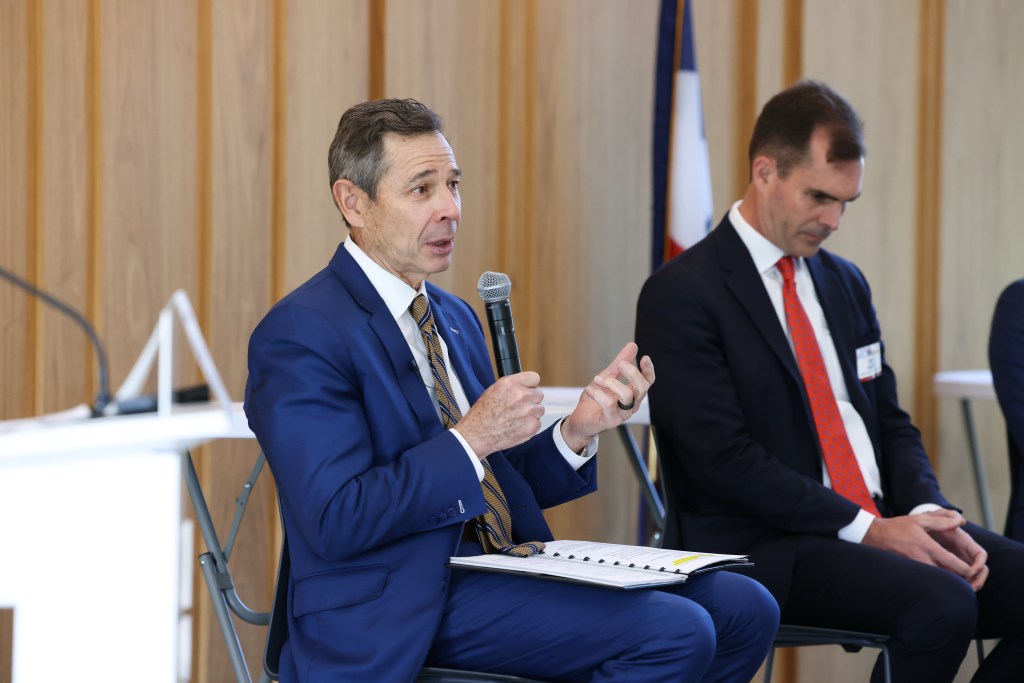
The conference, convened by Chigbo Okeke, founder of Jobrole Consulting Limited, was designed to move beyond economic dialogue. “We needed to go beyond conversations and create a platform where ideas, talent, capital and opportunity can meet,” Okeke said. “The next generation of Nigerian businesses will be built by people willing to challenge conventional thinking, develop relevant skills, embrace technology and build across boundaries.”
ather founders also received grants. Adelani Adeyinka Adelaja, founder of DelayFree, a courier delivery aggregator, emerged second runner-up with N300,000 to expand customer acquisition. Finalists included Future Ahiate of Cafers, Buhari Salisu of Vision Link AI, and Yusuf Oladejo of DSGlobal Elevare. The message is clear: seed funds are available, but the competition is fierce.
Why Seed Funds Matter More Than Ever
Nigeria’s economic environment has made traditional bank loans nearly impossible for early-stage ventures. Interest rates are high, collateral requirements are strict, and patience is thin. That’s why grants and seed funds from private sector players are becoming a lifeline. They don’t require repayment, and they often come with mentorship that is just as valuable as the cash.
The NFC 2.0 event also featured a speed mentoring session, connecting founders with experienced business leaders. Adora Ikwuemesi, founder of Kendor Consulting, told attendees that Nigeria is moving toward a skills economy. “We are in a skills economy, not in the job market,” she said. “A good part of work anpd earning a living comes directly from your skill set, knowledge and ability to solve specific problems.”
That shift means entrepreneurs must focus on solving real problems, not just building apps. Sola Oladunjoye, CEO of Aigle Limited, urged founders to master their core business before expanding into new verticals. The adviice is timely: many startups fail because they scale too fast without operational discipline.
Global Models for Bridging the Gap
The push to connect business leaders with early-stage founders is not unique to Nigeria. Around the world, similar programs are proving that mentorship plus seed funds can accelerate growth.
In New York, Standard Chartered and the Zahn Innovation Center at the City College of New York awarded USD15,000 in seed funding to Popped Up!, an app for pop-up event analytics. The program, now in its 12th year, pairs women-led startups with corporate mentors. “This experience has provided us with invaluable mentorship and resources to refine our vision,” said My Anh Phan, CEO of Popped Up!. The second-place prize of USD5,000 went to PlantPulse, a plant care kit.
In Alberta, Canada, the UCeed Founder Matching Program matches academic researchers with experienced business leaders. Dr. Valerie H. Taylor, a researcher at the University of Calgary, was paired with Ted Fleming, founder of Partake Brewing, to commercialize microbiome-based therapeutics for mental health. “This program is very helpful for us in identifying key areas where growth is required and to fast-track critical tasks,” Dr. Taylor said. The program aims to match 16 pairs over 18 months.
These examples show that bridging the gap to seed funds is a global challenge, but the solution is local: bring capital, mentorship, and networks together in one room.
What Nigerian Entrepreneurs Should Watch
The NFC 2.0 conference aims to become more than an annual event. Okeke wants it to evolve into a platform that continuously connects early-stage startups with grants, mentors, and opportunities. If that happens, Nigerian founders will have a year-round support system, not just a one-day pitch competition.
For small business owners and aspiring entrepreneurs, the lesson is to prepare. Grants like the N700,000 awarded to Washup Weekly are not life-changing sums, but they are enough to buy equipment, test a market, and prove traction. The real value is the mentorship and the network that comes with it.
As Nigeria’s economy continnues to shift toward skills and technology, the founders who succeed will be those who can solve specific problems, manage cash carefully, and build relationships with business leaders who have already walked the path. The seed funds are out there. The gap is closing. But you have to be ready to pitch.
What to watch next: whether the NFC platform secures more sponsors to increase grant sizes, and whether other Nigerian business leaders follow Okeke’s lead in writing cheques instead of just giving advice.
Frequently Asked Questions
What is the Next Frontier Conference?
The Next Frontier Conference (NFC) is an event convened by Chigbo Okeke of Jobrole Consulting Limited. It brings together entrepreneurs, investors, and business leaders to provide seed funds, mentorship, and networking opportunities for early-stage startups in Nigeria.
How much seed funding did Washup Weekly receive?
Washup Weekly, founded by Ann Tame, won N700,000 in seed funds at the NFC 2.0 pitch competition, sponsored by Masterpiece Energies Limited.
Why are seed funds important for Nigerian startups?
Seed funds provide early-stage capital without the strict collateral and high interest rates of traditional bank loans. They also often come with mentorship and networks that help founders avoid common mistakes and scale faster.
Related Articles
- Crude Oil Market Rises as US-Iran Talks Stall: What It Means for Nigeria
- Tinubu: Tough Reforms Necessary to Rescue Nigeria’s Economy
- Trump $500 ACA Refund Checks: What You Need to Know
- JAMB Nov 30 Deadline: Don’t Lose Your 2021–2025 Admission
- iPhone Duo Release Timeline vs iPhone 18 Pro
Startups
Why Nigerian startups struggle with expensive foreign AI compute
Nigerian startups face expensive foreign AI compute as experts warn weak local infrastructure keeps Africa a consumer of foreign AI technologies.
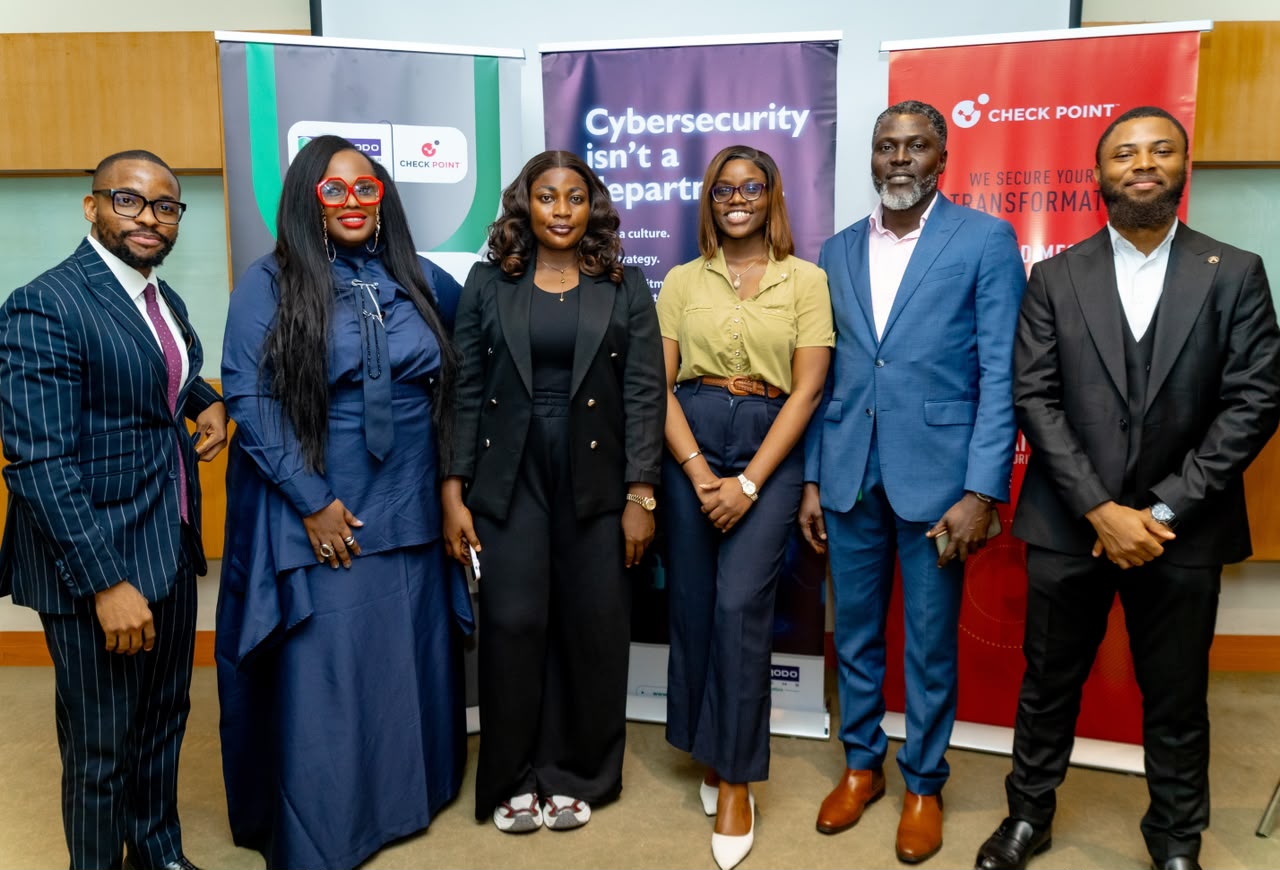
Nigerian startups building artificial intelligence products are paying a heavy price for expensive foreign AI compute, and industry experts say the country’s weak local infrastructure is the reason. At the West Africa Telecoms Infrastructure Summit and Exhibition (WATISE) 4.0 in Lagos, technology leaders warned that Nigeria’s AI ambitions cannot be separated from its telecom and data center capacity. Without that foundation, local startups will keep renting processing power from abroad at a premium.
The problem is simple. AI models need huge amounts of computing power, fast internet and local data hosting. Nigeria has limited capacity in all three. That forces startups to rely on foreign cloud providers for chipsets, cloud services and AI platforms, which drives up costs and slows product development.
Chidi Ajuzie, chief operating officer of WTES Group, said Nigeria’s future in AI would be determined by investments in connectivity, digital literacy, local hosting facilities and AI-ready infrastructure. He noted that the country remains heavily dependent on foreign providers for chipsets, cloud services and AI platforms, limiting its ability to capture value from the rapidly expanding global AI economy.
“To truly benefit from AI, Nigeria must move beyond consumption and begin investing in local capacity, including infrastructure, talent development and indigenous innovation,” Ajuzie said.
That dependence has a direct cost for founders. Every naira spent on expensive foreign AI compute is a naira not spent on hiring engineers, marketing or product development. It also exposes startups to exchange rate risk, since most foreign cloud providers bill in dollars.
Why local infrastructure matters
Seun Olorunisola of the Internet Exchange Point of Nigeria (IXPN) said keeping internet traffic within the country would significantly improve network performance and create a stronger foundation for AI applications. According to him, local traffic exchange reduces latency, enhances user experience and lowers the costs associated with routing internet traffic through overseas networks.
“Keeping more internet traffic within Nigeria will reduce latency, improve service quality and create a stronger foundation for AI applications and digital services,” Olorunisola said.
He stressed that AI systems require substantial computing resources and rapid access to data, making local data centers and internet exchange infrastructure increasingly important. Nigeria will need more data centres and computing facilities to support future AI workloads, including large-scale model training and deployment.
The numbers show why this matters. According to the Nigeria Inter-Bank Settlement System (NIBSS), electronic payment transactions reached over N1.07 quadrillion in 2024, a 79.6 percent increase from about N600 trillion in 2023. The Central Bank of Nigeria (CBN) reports more than 230 million registered bank accounts. That digital growth is creating demand for AI-powered fraud detection, customer verification and lending decisions, but the infrastructure to support it locally is still thin.
Olusola Teniola, director of strategic business initiatives at ipNX, said accessibility, availability and affordability remained the three pillars that would determine the success of AI adoption across Nigeria and the rest of Africa. He urged African countries to develop confidence in building technologies suited to local realities rather than depending solely on imported solutions.
“We must create an environment where infrastructure investments are protected and innovation is encouraged, enabling Nigeria to compete effectively in the global digital economy,” Teniola said.
His remarks come amid persistent concerns over fiber cuts, vandalism and theft of telecom equipment, challenges that industry operators say continue to increase operational costs and affect service quality nationwide.
Stephen Adeoye, National Secretary of the Association of Financial Inclusion Agents of Nigeria (AFIAN), highlighted AI’s growing role in financial services. He said banks and fintech companies are increasingly deploying AI-powered tools for fraud detection, customer verification and lending decisions. Stronger digital infrastructure would accelerate financial inclusion by improving transaction security and enabling wider deployment of intelligent financial services.
What it means for Nigerian businesses
For small businesses and startups, the immediate impact is higher operating costs. Renting expensive foreign AI compute eats into already thin margins. It also makes it harder to compete with better-funded global rivals who can train models faster and cheaper.
The broader risk is that Nigeria remains a consumer of foreign AI technologies rather than a producer. Experts at the summit warned that without foundational investments in broadband, local internet traffic exchange, data centers and telecom protection, the country risks staying on the sidelines of the global AI economy.
According to BusinessDay, the consensus among stakeholders was that Nigeria’s AI aspirations cannot be separated from investments in telecommunications infrastructure.
A separate report by BusinessDay noted that Africa remains one of the world’s fastest-growing digital markets but still suffers from limited data center capacity, unreliable electricity, expensive internet connectivity and inadequate fibre infrastructure. These challenges have slowed cloud adoption and increased the cost of digital services for businesses and consumers.
The event comes as policymakers, investors and technology companies prepare to gather in Lagos for the third edition of Hyperscale’s Convergence Africa (HCA) 2026, themed “Africa’s Great Digital Buildout.” The summit aims to move discussions beyond ambition to practical solutions for financing and building Africa’s digital backbone.
Temitope Osunrinde, executive director of Africa Hyperscalers, said Africa’s digital future will depend on infrastructure decisions being made today. The conference will address regulation, connectivity, cloud computing, AI, capital investment and data sovereignty.
Meanwhile, the fraud threat is rising alongside digital adoption. Experts at the CWG and Clari5 Anti-Financial Crime Summit warned that Nigeria’s expanding digital payments ecosystem is making the financial system a more attractive target for sophisticated cybercriminals. Adewale Adeyipo, Group Chief Executive Officer of CWG, said the rapid expansion of digital payment channels has naturally widened the attack surface for fraudsters.
“With the level of growth, especially as we begin to see the emergence of new payment rails within Nigeria’s financial ecosystem, it will naturally draw the attention of fraudsters within the ecosystem,” he said.
Dhruv Manga, Chief Revenue Officer at Clari5, said banks now need a unified fraud management platform. “Fraudsters are already leveraging AI to attack banks and customers. If banks do not leverage AI themselves, they are definitely going to be the losers.”
What to watch
The key question is whether Nigeria can build enough local data Centre capacity and internet exchange infrastructure to bring down the cost of AI compute for startups. The HCA 2026 summit in September will be a test of whether the talk translates into financing and policy action.
For now, Nigerian founders should budget for expensive foreign AI compute as a fixed cost, explore local hosting options where available, and watch for government incentives around data centers and broadband. The companies that survive the next two years will be those that treat infrastructure cost as a core business problem, not an afterthought.
Frequently Asked Questions
Why is AI compute expensive for Nigerian startups?
Nigeria lacks sufficient local data center’s, reliable electricity and high-speed broadband. This forces startups to rely on foreign cloud providers for chipsets and AI platforms, which are billed in dollars and add exchange rate risk to already thin margins.
What infrastructure does Nigeria need to reduce AI compute costs?
Experts at WATISE 4.0 said Nigeria needs more local data centers, stronger internet exchange points to keep traffic within the country, expanded broadband access and protection for telecom infrastructure from fiber cuts and vandalism.
How does expensive foreign AI compute affect Nigerian businesses?
It raises operating costs for startups and small businesses, slows product development and makes it harder to compete with better-funded global rivals. It also keeps Nigeria as a consumer of foreign AI rather than a producer of AI-driven solutions.
Related Articles
- From Scholarships to Skills: Global Push to Train Youth
- Ikere Chamber’s NACCIMA Admission Validates Vision
- iPhone 18 Pro Max Review: Price, Specs, Verdict
- Court Strikes Out Oyefusi’s Suit Against Rhodes-Vivour, ADC
- Mexico vs Colombia: Márquez Debut Ends in Friendly
Startups
What a Successful Dangote Refinery IPO Really Says
The Dangote Refinery IPO could raise N2.15 trillion. But a successful Dangote Refinery IPO says more about capital markets than the wider economy.
Aliko Dangote has launched Africa’s largest ever share sale, offering roughly 3% of his refinery to the public. The Dangote Refinery IPO opened on 14 September and closes on 13 October, with 4.1 billion shares at N525 each. If fully subscribed, it raises N2.15 trillion, or about $1.63 billion.
The minimum subscription is just 10 shares, costing N5,250. That low entry point is deliberate. Dangote wants as many as 10 million retail investors — ordinary Nigerians who have spent years buying the refinery’s petrol, diesel and jet fuel but never owned a piece of it.
Dangote calls it an “IPO of the people.” That is a marketing line, not an investment thesis. The real question is what a successful Dangote Refinery IPO would actually say about Nigeria’s economy — and what it would not.
The Numbers Behind the Hype
The refinery cost about $20 billion to build. It started production in 2024 and now processes 700,000 barrels per day. It supplies more than 70% of Nigeria’s energy consumption.
The financial turnaround is striking. The refinery reported $1.82 billion in after-tax profit for the first half of 2026. That reverses a $282 million loss in the same period of 2025. Reveanue hit $13.9 billion, with EBITDA of $2.6 billion.
At N525, the implied equity value is about N65.2 trillion, or roughly $47 billion. The free float is only 3.41% of total shares. If it lists at that valuation, the refinery would add about 41% to the NGX’s current market capitalisation, potentially pushing total quoted equity value above N225 trillion.
But the price carries a 17.5% premium over the July private placement at N419. If first-half profit is annualised to $3.64 billion, the company trades at about 13 times earnings. At $2 billion annual profit, that multiple jumps to 23.5 times. At $1 billion, it is an uncomfortable 47 times.
Analysts at CardinalStone and Chapel Hill Denham reportedly put fair values at N77.7 trillion and N82.6 trillion respectively — above the IPO’s implied N65.2 trillion. That translates to a target price of about N688. As Punch noted, the valuation argument is far from settled.
Why Oversubscription Is a Weak Signal
A heavily subscribed offer feels like a vote of confidence. It is not necessarily one.
In an economy where inflation erodes savings, the naira is unstable, and property is hard to sell, investors may rush into any credible asset that appears to preserve value. That demand may reveal a shortage of good investment options, not widespread prosperity.
Bolutife Oluwadele, writing for Premium Times, argues that oversubscription can coexist with severe economic distress. It can reflect concentrated liquidity among a few wealthy hands while most households struggle with falling purchasing power.
Headline subscription figures will not show whether investors borrowed frm banks, cooperatives or digital lenders to participate. They will not show whether money meant for rent, school fees or business inventory was redirected into shares. They will not show whether demand came from millions of small savers or a small number of institutions.
Gross applications are also not the same as funded and settled subscriptions. And a successful offer does not guarantee strong after-listing performance. Saudi Aramco surged initially after its December 2019 IPO but now trades below its offer price years later.
The Founder’s Long Game
Dangote is not asking investors to buy only the refinery that exists today. The company plans to spend about $14.3 billion to double capacity to 1.4 million barrels per day by 2029, while expanding petrochemicals and other infrastructure.
That is the real growth proposition. But it also means the IPO proceeds will be deployed into a capital-intensive expansion with execution risk.
There is also the crude supply problem. About 30% to 40% of Dangote’s crude intake has been imported because of availability and pricing difficulties domestically. Government policy on crude supply, import rules, fuel pricing, tariffs, taxation and foreign exchange can all materially alter the refinery’s economics.
A stockbroker, Muktar Mohammed, told The Guardian that investors should look beyond petrol. He pointed to Dangote’s diesel, aviation fuel and African export markets. “Dangote seems to be the cheapest and even if it’s the biggest among them,” he said, comparing it to Seplat, Aradel and TotalEnergies Nigeria.
But Mohammed also flagged the gap between the N419 private placement and the N525 IPO price. Retail investors are paying a premium. Whether that premium is justified depends on earnings sustainability.
What Founders Should Learn
First, a strong brand can carry an offer — but it cannot replace disclosure. The SEC had to issue a cease-and-desist directive in June after unapproved promotional activities circulated on social media. Hype can outrun regulation.
Second, retail participation is a long game. If the Dangote Refinery IPO brings new investors into the NGX, it could deepen the market. But as BBC reported, first-time buyers like Isah Salisu withdrew N50,000 froim savings. Experts warn against investing money needed in months, and against dealing with unlisted institutions.
Third, a single listing cannot fix an economy. Real wages, employment, manufacturing capacity, access to credit and exchange-rate stability matter more than one oversubscribed offer. As Oluwadele argues, a successful Dangote Refinery IPO would be a landmark for the capital market. It would broaden share ownership, attract long-term capital and increase the NGX’s visibility.
But it would not prove the wider economy is healthy. It would prove that Nigerians will invest when given a credible asset at an accessible price. The lesson for founders is simple: build something real, price it honestly, and let the prospectus — not the promoter’s reputation — do the talking.
Frequently Asked Questions
What is the Dangote Refinery IPO price and minimum subscription?
The IPO offers 4.1 billion shares at N525 each. The minimum subscription is 10 shares, costing N5,250. The offer opened on 14 September and closes on 13 October.
How much is the Dangote Refinery IPO trying to raise?
If fully subscribed, the IPO would raise approximately N2.15 trillion, or about $1.63 billion. The shares are expected to list on the Nigerian Exchange in November.
Does a successful Dangote Refiinery IPO mean Nigeria’s economy is healthy?
Not necessarily. Oversubscription can coexist with economic distress. It may reflect a shortage of attractive investment options or concentrated liquidity rather than broad prosperity. A single IPO cannot replace indicators like real wages, employment, inflation and access to credit.
Related Articles
- Mexico vs Colombia: Márquez Debut Ends in Friendly
- Mexico vs Colombia 2026: Márquez Debut Ends in Defeat
- Spark Plug Replacement Cost: Fake Parts & Real Prices
- OPay Investing in People to Build a Better Nigeria
- Hyundai Elantra Parts: Maintenance Tips for N Models
-

 Startups3 weeks ago
What a Successful Dangote Refinery IPO Really Says
-
Trending Entertainment News7 days ago
Taylor Swift Joins Beatles as Only Acts With 100 Weeks at No. 1
-
World News3 weeks ago
Carney Calls U.S. Tariffs a Miscalculation as Canada Retaliates
-
Fintech3 weeks ago
OPay No Dey Comot Nigeria: How to Verify Fintech News
-
Football3 weeks ago
Mexico vs Colombia 2026: Márquez Debut Ends in Defeat
-
Nigerian Business3 weeks ago
Moniepoint POS Network: How to Buy Dangote Shares
-
Fintech3 weeks ago
OPay Investing in People to Build a Better Nigeria
-
Black Celebrities3 weeks ago
Brandi Carlile: Rock Star in Her Prime, On Tour Now