National
Nigeria’s $700bn Mineral Opportunity: US Framework Signed
Nigeria and the US signed a framework to unlock Nigeria’s $700bn mineral opportunity, targeting investment, local processing and critical minerals.

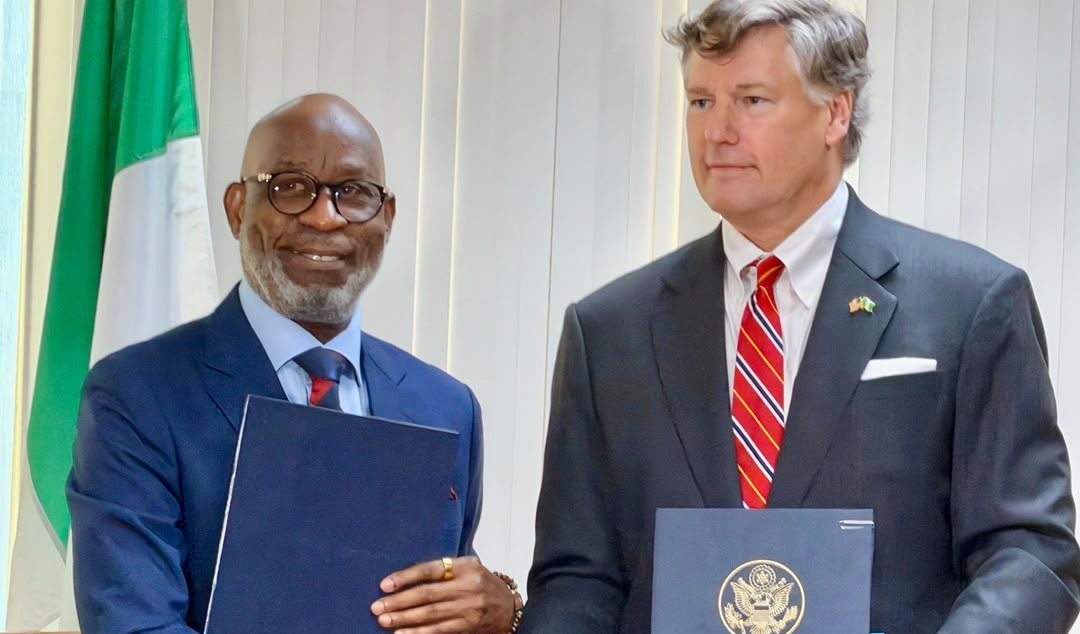
Nigeria and the United States signed a framework agreement on Wednesday aimed at attracting American investment into Nigeria’s $700bn mineral opportunity, a government estimate of the country’s untapped solid mineral resources.
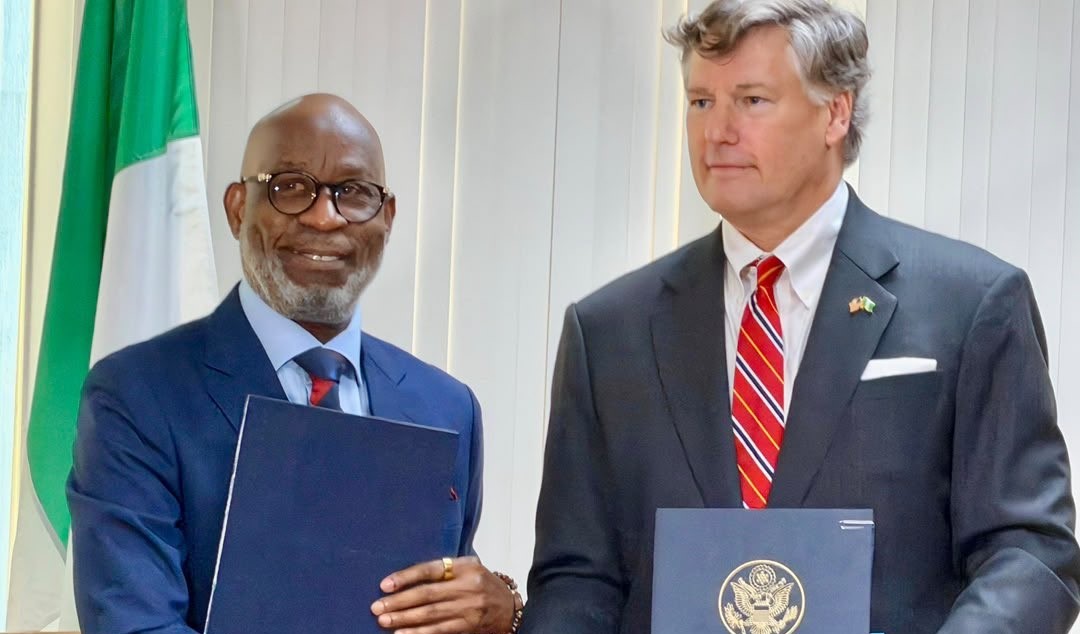
Minister of Solid Minerals Development Dele Alake and US Deputy Secretary of State Christopher Landau signed and exchanged the document at Nigeria’s Mission House in New York, on the sidelines of the 81st United Nations General Assembly.
The framework is designed to use the two governments’ relationship as a foundation for business-to-business transactions across Nigeria’s mineral value chain. It covers geological data and exploration, mineral development and processing, infrastructure, and technical capacity.
WHY THE DEAL MATTERS
The agreement lands as Nigeria tries to pull foreign capital into a mining sector long overshadowed by oil, and as Washington pushes to secure supply chains for critical minerals. The $700bn figure is the Federal Government’s estimate of potential resource value, not money received or committed.
“Some agreements manage the present, and some agreements shape the future. The framework we sign today belongs to the second kind,” Alake said at the ceremony.
He said Nigeria and the US shared the view that critical mineral supply chains must be secure, resilient and built on responsible investment. But he drew a line on Nigeria’s ambition.
“We are not here to remain a source of raw material for the values that others create,” Alake said. “Our goal is to turn potential into lasting value at home through stronger local processing, new skills, quality jobs, and new opportunities for Nigerian businesses.”
The minister said implementation would support the economic diversification objectives of President Bola Tinubu’s administration and promote industrial growth. He also cautioned that the signing was only the start.
“Now comes the harder and more important work: moving from agreement to implementation. A signature is a promise, results are the proof,” he said.
Alake said Nigeria would, in the coming months, identify viable projects, mobilise investments and establish commercial partnerships capable of delivering measurable benefits to both countries.
US PLEDGES PARTNERSHIP
Landau described Nigeria as a strategic partner and a regional power, citing its population and economic position. He said the agreement would create opportunities for greater prosperity in both countries and reaffirmed Washington’s commitment to supporting Nigeria’s economic growth.
“The signal we are sending is that the United States and Nigeria are partners,” Landau said.
He said the two countries had undertaken several initiatives under Presidents Donald Trump and Bola Tinubu over the previous one and a half years, adding that Washington wanted to build on the momentum. “I think we will like to keep building on that momentum,” he said.
The US delegation included Deputy Assistant Secretary for West African Affairs Rich Michaels; Acting Deputy Assistant Secretary for Southern Africa, Foreign Assistance and Critical Minerals Chris Kulukundis; Senior Policy Adviser to the Deputy Secretary Wyatt Toehlkeke; and Jitu Sardar.
Lagos State Governor Babajide Sanwo-Olu witnessed the signing alongside Permanent Secretary of the Ministry of Solid Minerals Development Yusuf Yabo; Director-General of the Nigerian Mining Cadastral Office Simon Nkom; Executive Secretary of the Solid Minerals Development Fund Fatima Shinkafi; and Chief Executive Officer of the Nigeria Solid Minerals Company Martin Imonitie.
Sanwo-Olu later said on X that the framework’s focus was to move beyond exporting raw materials by building a stronger local value chain through processing, exploration, better infrastructure and technical capacity. He said it would help convert Nigeria’s mineral wealth into lasting growth and support Tinubu’s Renewed Hope Agenda to diversify the economy.
THE VALUE-CAPTURE QUESTION
The deal has drawn scrutiny over what Nigeria actually gets. Chris Soribe, writing for Realnews Magazine, argued that Nigerians must not repeat the mistakes of the oil and gas industry, noting that the $700bn refers to the government’s estimate of untapped resources, not funds waiting to be transferred.
He warned that a mineral deposit worth billions on paper is not the same as billions in realised national wealth, and urged transparency in mining licences, beneficial ownership, production measurement, export traceability, royalties and community benefits.
According to Premium Times, the framework is expected to use the government-to-government relationship as a foundation for investment across the value chain. Vanguard reported that the agreement comes as Nigeria seeks more foreign investment into its largely underdeveloped mining sector.
The Guardian described the pact as a landmark framework for US-backed investment and business-to-business partnerships.
WHAT COMES NEXT
Alake said Nigeria would identify viable projects, mobilise investments and build commercial partnerships in the months ahead. Success will depend on whether the framework produces actual projects, capital and local processing capacity, as Daily Trust reported.
For now, Nigeria’s $700bn mineral opportunity remains a promise on paper. The test is whether licences, investments and processing plants follow, and whether Nigerian businesses capture a meaningful share of the value chain.
Frequently Asked Questions
What is Nigeria’s $700bn mineral opportunity?
It is the Federal Government’s estimate of the potential value of Nigeria’s untapped solid mineral resources, including lithium, gold, tin and iron ore. It is not money received or committed by the United States.
What did Nigeria and the US sign?
A framework agreement signed by Minister of Solid Minerals Development Dele Alake and US Deputy Secretary of State Christopher Landau in New York on the sidelines of the 81st UN General Assembly. It covers geological data and exploration, mineral development and processing, infrastructure and technical capacity.
When will the framework deliver results?
Alake said Nigeria would identify viable projects, mobilise investments and build commercial partnerships in the coming months. He stressed that the signing was only the beginning and that results would be the proof.
Related Articles
- Mexico vs Colombia 2026: Márquez Debut Ends in Defeat
- Spark Plug Replacement Cost: Fake Parts & Real Prices

National
NAJA Names Weststar Chairman Auto Legend For 2026
NAJA names Weststar chairman Benson Uwatse a Nigeria Auto Legend for 2026. What the December award confirms, what it leaves open, and why distributors dominate.


The Nigeria Auto Journalists Association has selected Chief Benson Uwatse, chairman of Weststar Associates Limited, as the recipient of its Nigeria Auto Legend Award. The honour is due to be presented at the 19th Nigeria Auto Industry Awards, scheduled for Thursday, December 3, 2026, at the Civic Centre, Victoria Island, Lagos. When NAJA names Weststar chairman a legend that evening, he will be the third industry figure to hold the title.
That much is confirmed by three separate Nigerian publications. The rest — what the award measures, why this recipient, and what it says about the country’s vehicle market — requires separating the announcement from the analysis built on top of it.
What NAJA Has Confirmed, And What It Has Left Open
ThisDay, Independent and New Telegraph all reported the selection, and their accounts share near-identical phrasing: the same description of Weststar’s remit, the same reference to three decades with Mercedes-Benz, the same list of past winners. That pattern is consistent with a circulated announcement rather than three independent investigations.
None of the three reports links to a standalone NAJA statement. None quotes Uwatse. The selection process, the composition of any judging panel and the criteria that separate a legend award from an ordinary industry prize are not disclosed.
Confirmed: the award has two previous recipients. Chief Michael Ade.Ojo, founder of Elizade Nigeria Limited and chairman of Toyota Nigeria Limited, took it first in 2017. Dr Cosmas Maduka, president and chief executive of Coscharis Group, followed. Uwatse is the third — meaning NAJA names Weststar chairman to a list that has so far honoured only distributors of foreign brands.
Why NAJA Names Weststar Chairman For Its Legend Award
The citation rests on longevity and brand stewardship rather than on any published metric. Weststar began operations in February 2008, assuming responsibility for Mercedes-Benz sales and after-sales work in Nigeria. Its remit spans passenger cars, commercial vehicles, trucks and buses, alongside dealer support, marketing, technical training, genuine spare parts supply, warranties and after-sales service.
Uwatse’s own association with the brand runs back more than three decades. Before chairing Weststar, he served as managing director of MB Automobile Services Limited, one of the authorised Mercedes-Benz dealers in the country. The association has said his record reflects the kind of sustained industry commitment the award exists to mark.
Beyond that, the public record is thin. The reports give no age, no education, no earlier career, no ownership stake in Weststar and no figure for vehicles sold or revenue earned under his chairmanship. Any profile that supplies those details is filling gaps, not reporting.
The Roll Call Describes A Distribution Economy, Not A Manufacturing One
Read the three names together and a structural fact appears that none of the individual reports states outright. All three honourees built their businesses on distributing foreign brands. Ade.Ojo’s Elizade grew around Toyota. Maduka’s Coscharis Motors secured franchises for BMW, MINI, Rolls-Royce and Ford. Uwatse’s Weststar holds Mercedes-Benz.
None of the citations rests on a vehicle designed or manufactured in Nigeria. NAJA’s legend list works, in effect, as a map of imported brand power in the domestic market — a record of who controls access to foreign badges rather than who builds cars locally. That is a fact about the industry’s shape. It is not a verdict on the recipients’ commercial skill, which the award is explicitly designed to honour.
New Telegraph reported that the sector continues to contend with changing market conditions, rising vehicle acquisition costs, evolving distribution models and the need to strengthen local automotive development. The award coverage does not say how any of the three honourees has addressed that last item.
The Missing Context Of Who Can Actually Buy
Weststar operates in the premium and luxury segment, a narrow slice of Nigerian demand. The macro picture around it is stark. An International Monetary Fund 2026 Article IV assessment, cited by New Telegraph, estimated that 63 per cent of Nigerians were living below the national poverty line, with about 27 million people facing food insecurity in autumn 2025.
Those figures describe the country in which a luxury vehicle distributor operates. They are background, not an indictment of the award. But they explain why an industry prize for brand-building carries weight inside the trade and little visibility outside it: the business being celebrated serves a small fraction of the population.
No market share, unit sales, employment or tax contribution figures are attached to the Uwatse citation. The award, as reported, rewards tenure and representation. It does not attempt to quantify either.
A Legacy Measured In Franchises, Not Factories
The December ceremony will be the first real test of what the honour means in practice. Two things bear watching: whether the association publishes the criteria behind the legend award, and whether a fourth recipient eventually comes from vehicle assembly rather than vehicle distribution.
For now, the confirmed record is narrow and clear. NAJA names Weststar chairman Benson Uwatse a Nigeria Auto Legend on December 3, 2026, in Lagos, alongside Michael Ade.Ojo and Cosmas Maduka. His three decades with Mercedes-Benz are documented in the trade press and not in dispute. The numbers that would let an outsider weigh that career against the industry’s wider needs are missing. Until they are published, the award stands as a professional community’s judgment on one of its own — significant inside the market, unverified outside it.
Frequently Asked Questions
Who did NAJA name as the 2026 Nigeria Auto Legend?
The Nigeria Auto Journalists Association selected Chief Benson Uwatse, chairman of Weststar Associates Limited, the authorised general distributor of Mercedes-Benz in Nigeria. The award is scheduled to be presented at the 19th Nigeria Auto Industry Awards on Thursday, December 3, 2026, at the Civic Centre, Victoria Island, Lagos.
Who were the previous winners of the Nigeria Auto Legend Award?
Chief Michael Ade.Ojo, founder of Elizade Nigeria Limited and chairman of Toyota Nigeria Limited, was the first recipient in 2017. Dr Cosmas Maduka, president and chief executive of Coscharis Group, was the second. Uwatse is the third recipient.
What does Weststar Associates do in Nigeria?
Weststar commenced operations in February 2008, taking responsibility for Mercedes-Benz sales and after-sales activities in Nigeria. Its remit covers passenger cars, commercial vehicles, trucks and buses, plus dealer support, marketing, technical training, genuine spare parts supply, warranties and after-sales service.
Has Uwatse or NAJA issued a direct public statement?
None of the three published reports reviewed links to a standalone NAJA statement or quotes Uwatse directly. The reports carry near-identical language, which is consistent with a circulated announcement. The selection criteria and judging process have not been disclosed.
 Follow AFRILATEST on Google News
FIRST TIME REACTIONS:
Be the first to leave us a comment – NAJA Names Weststar Chairman Auto Legend For 2026, down the comment section.
JOIN US ON OUR SOCIAL MEDIA:

About Rosabella Eboh
Rosabella Eboh is an author at AfriLatest. With a passion for writing and a flair for creativity, she contributes original content and unique perspectives to the platform. Rosabella focuses on human-interest stories, cultural trends, and in-depth feature reporting.
View all articles by Rosabella EbohNational
Oluremi Tinubu Hails Japan-Nigeria Partnership at Abuja Hub
Oluremi Tinubu hails the Japan-Nigeria partnership behind Abuja’s Renewed Hope Startup Hub as NITDA cites a $10.4m JICA grant and a $50m seed fund.

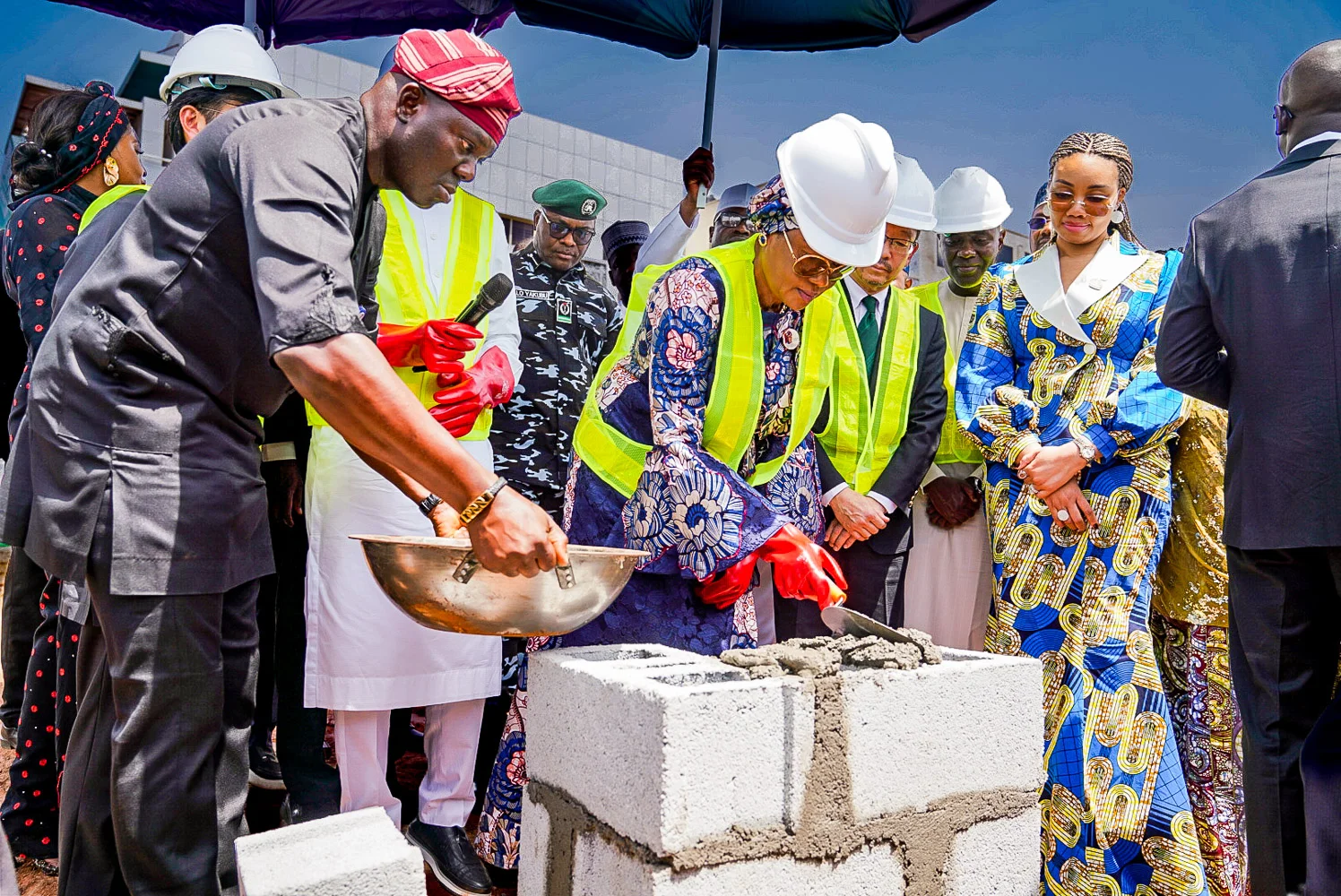
In her telling, the programme was modest: 100 constituents, computer training, a centre at the University of Lagos. Senator Oluremi Tinubu, now Nigeria’s First Lady, recalled it at the foundation-laying of the Renewed Hope Startup Hub in Wuye, Abuja, as one of the most effective empowerment programmes her constituents ever received, and credited the man who ran it, Kashifu Inuwa Abdullahi, now director-general of the National Information Technology Development Agency.
She used that memory to anchor a bigger claim, praising what she described as the Japan-Nigeria partnership behind the new hub, financed by a grant from the Japanese government through the Japan International Cooperation Agency. Speaking to young innovators, she said the facility was theirs: “You can arrive here with a sketch and leave with a working prototype that takes you into the global market space.”
The ceremony produced three different things at once. A signed grant. A building not yet built. A promise of seed money. Reporting that keeps those categories apart is the only kind that tells a Nigerian founder, or a Japanese taxpayer, anything they can act on.
Why Oluremi Tinubu’s Japan-Nigeria Partnership Story Starts in a Lagos Classroom
The First Lady’s account is unusually specific about how the collaboration began. She said Abdullahi offered computer training to 100 members of her constituency while she served in the Senate, at a centre established at the University of Lagos, and that she rated it among the most effective programmes her constituents had received.
She said the partnership continued after she became First Lady, even though, by her own account, the Renewed Hope Initiative does not receive direct government funding. Abdullahi, she said, later partnered with the initiative on ICT training for young Nigerians and on community ICT centres.
That detail matters for how her remarks should be read. She is a convenor and an advocate here, not the budget holder. The money and the implementing authority sit with NITDA and with the Federal Ministry of Budget and Economic Planning, which signed the grant papers. Her endorsement is real; it is not a disbursement.
What the $10.4m JICA Grant Commits, and What It Does Not
According to Blueprint’s report on the grant, Abdullahi announced a $10.4 million commitment from the Japanese government through JICA to expand Nigeria’s innovation hub and strengthen the startup ecosystem.
Japan’s Ambassador to Nigeria, Hideo Suzuki, supplied the one hard date in either account of the event: the grant was signed on behalf of the Federal Government by the Minister of the Federal Ministry of Budget and Economic Planning on 10 April 2025. He said the hub forms part of NITDA’s implementation of the Nigeria Startup Act.
Neither report of the ceremony states the date of the groundbreaking itself, nor a completion date, a disbursement schedule, a procurement plan, or the size of any Nigerian counterpart contribution. Those are the numbers that determine whether the Japan-Nigeria partnership is a building, a programme, or a photograph.
What is confirmed is the scope the hub is meant to cover: incubation, hardware prototyping, research and international business collaboration. NITDA says it established and equipped its own innovation facility in 2021 with fabrication equipment, so the model is not untested inside the agency.
The $50m Seed Fund Is Approved, Not Yet Accessible
Abdullahi said a proposed $50 million seed funding initiative, developed with the Nigeria Sovereign Investment Authority, had been approved and signed off. He also said the money is expected to become accessible to startups once the facility is ready.
That sequencing is the crux. Approval is not availability. A founder in Kaduna or Enugu reading the coverage will want to know the application route, the eligibility test and the first close date. None of those appeared in the reported remarks.
NITDA’s delivery record, as stated by its director-general, offers the more useful benchmark: more than 300 companies trained through digital export acceleration programmes over the past three years, more than 995 startups benefiting from Office for Nigerian Digital Innovation initiatives, roughly 7,596 jobs created, and 1,752 women supported through We Elevate. These are agency-reported figures covering past programmes, not outcomes from a hub whose foundation stone was laid this week’s reporting does not date.
Measuring the Japan-Nigeria Partnership by Completions, Not Ceremonies
The First Lady’s closing line at the ceremony sets the standard her own government should be held to. “You have shown that true friendship between nations is measured by the opportunities it creates for the next generation,” she told Nigeria’s Japanese partners.
Opportunities, not announcements. A hub that opens, a prototype that ships, a seed cheque that clears, a cohort of women who get equipment and mentorship rather than a mention in a speech. Those are the only indicators that separate delivery from diplomacy.
The broader lesson is about how this story gets covered. Coverage of Oluremi Tinubu is useful when it records what her advocacy moved: a grant signed on a specific date, an agency partnership that outlasted her Senate term, a facility with a named site in Wuye. It is less useful when a foundation-laying is reported as though the building already exists.
The Japan-Nigeria partnership now has a signature, a site and a promise of seed capital. What it does not yet have, in any public document cited here, is a completion date. Until that changes, the honest verdict on the Renewed Hope Startup Hub is that the paperwork is real and the prototype is still the young innovator’s sketch.
Frequently Asked Questions
How much is Japan giving Nigeria for the Renewed Hope Startup Hub?
NITDA director-general Kashifu Inuwa Abdullahi announced a $10.4 million commitment from the Japanese government through JICA. Japan’s Ambassador to Nigeria, Hideo Suzuki, said the grant was signed on behalf of the Federal Government by the Minister of the Federal Ministry of Budget and Economic Planning on 10 April 2025.
Can startups access the $50 million seed fund now?
No. Abdullahi said the seed funding initiative, developed with the Nigeria Sovereign Investment Authority, had been approved and signed off, but that funding is expected to become accessible to startups once the hub facility is ready. No application route, eligibility criteria or first close date was announced in the reported remarks.
Where is the Renewed Hope Startup Hub located and what will it do?
It is sited in Wuye, Abuja. According to the First Lady’s remarks, it is intended as a national centre for incubation, hardware prototyping, research and international business collaboration, aimed at helping young Nigerians turn ideas into market-ready products.
FIRST TIME REACTIONS:
Be the first to leave us a comment – Oluremi Tinubu Hails Japan-Nigeria Partnership at Abuja Hub, down the comment section.
JOIN US ON OUR SOCIAL MEDIA:
About Rosabella Eboh
Rosabella Eboh is an author at AfriLatest. With a passion for writing and a flair for creativity, she contributes original content and unique perspectives to the platform. Rosabella focuses on human-interest stories, cultural trends, and in-depth feature reporting.
View all articles by Rosabella EbohNational
Ebola Preparedness: FG Assures Nigerians It Can Contain Case
Nigeria’s Ebola preparedness came under scrutiny as the FG confirmed an imported case in Abuja, tracing 44 contacts and activating the NCDC system.

The Federal Government moved on Wednesday to reassure Nigerians that it can contain Ebola Virus Disease, after a laboratory-confirmed imported case put the country’s Ebola preparedness to its first serious test since a presidential task force was set up in June.
Femi Gbajabiamila, Chief of Staff to the President and chairman of the Presidential Task Force on Ebola Preparedness and Emerging Public Health Threats, told State House correspondents in Abuja that the infected traveller was picked up because of protocols already in place.
“The passenger with the disease showed no symptoms, which came four days after the woman got into Abuja, and it was the identification process and the protocols that were put in place that enabled the quick identification,” Gbajabiamila said, according to Punch.
He added that the episode “speaks to the country’s capacity and ability to deal with this disease as best as we can.”
Timeline Of A Case That Landed Without Symptoms
According to Punch’s account of the announcement by Coordinating Minister of Health and Social Welfare Muhammad Pate, the woman had recently returned from Uganda. Her symptoms began on 7 October, she sought care at a private hospital in Abuja on 11 October, and laboratory confirmation came on 20 October. Pate announced the confirmation on Tuesday; the task force met in emergency session the next day.
Gbajabiamila’s main evidence for readiness is volume. He said about 44,000 flights had passed in and out of Nigeria since June, and that the system had produced one detected case from them. “All hands have been on deck,” he said.
That number comes from the government, and the statements released on Wednesday carry no immigration or aviation data behind it. The more useful detail is the detection sequence. The woman was asymptomatic on arrival. Airport screening could not have flagged her. The system caught her four days later, when she presented at a clinic.
That is how Ebola tends to be found in a country with open borders: not at the gate, but in the consulting room. Pate listed private hospital operators alongside immigration, aviation, interior and subnational authorities as part of the response, which reflects where the first contact actually happened.
What Nigeria Ebola Preparedness Actually Consists Of
President Bola Tinubu set up the task force on 9 June and approved ₦10 billion for emergency preparedness, Punch reported. The measures include tougher screening at airports, QR-code health declarations for passengers arriving from high-risk countries, and isolation centres at the Lagos and Abuja airports.
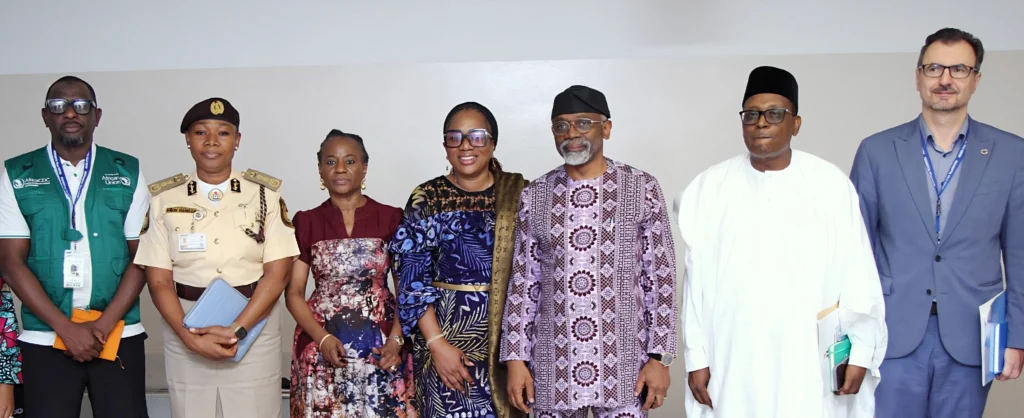
Pate said the incident management system had been activated across “the various pillars” with the World Health Organization, the Africa CDC and the Nigeria Centre for Disease Control. WHO representative Pavel Ursu and Africa CDC special regional representative Aliko Ahmed sat in Wednesday’s meeting, alongside the Comptroller-General of the Nigeria Immigration Service, Kemi Nandap, and Federal Airports Authority of Nigeria Managing Director Bunmi Kuku.
Those names are the government’s strongest argument: aviation, immigration, health and the states are inside one coordination structure, and multilateral partners are inside it rather than reviewing it from outside.
Gbajabiamila said protocols would be strengthened and enforced more rigorously. That was the only concrete adjustment to Ebola preparedness announced on Wednesday. Contact tracing is the harder test. Pate said 44 contacts of the index case are being monitored and isolated, a figure TVC News also reported.
The ₦10bn Question Hanging Over Ebola Preparedness
The assurance is not going uncontested. Federal and state governments, the National Assembly and public health institutions intensified efforts on Wednesday, and Arise Television reported that Atiku Abubakar questioned the ₦10 billion preparedness fund. The report does not set out the substance of his objections, and none of the official statements issued on Wednesday included a spending breakdown for the fund.
Pate anchored his confidence in 2014, when Nigeria contained an imported Ebola case and its health workers contributed to responses in other West African countries. “We have exceptional public health physicians who had successfully tamed this virus in 2014,” he said. That history is the government’s most credible reference point, and it is also why officials keep asking for public trust rather than simply asserting capacity.
Both men returned to misinformation. Pate asked Nigerians to avoid “baseless rumours, which can cause unnecessary panic.” The appeal has an operational purpose. Contact tracing depends on people answering calls and naming their movements.
Nigeria’s exposure runs through the same routes that produced 44,000 flights in five months. A single imported case is a manageable event. A missed contact is not.
Ebola preparedness in Nigeria will now be judged on two measurable outcomes rather than on assurances. The first is whether the 44 monitored contacts complete their observation period without a positive test. The second is whether the isolation capacity promised at Lagos and Abuja airports and the QR-code screening regime operate in practice.
Gbajabiamila framed the burden where it sits: “this is a collaborative effort between the government and the people.” For a disease that announces itself days after arrival, the gap between a government statement and a functioning surveillance system is measured in exactly that space, the days between a symptom appearing and someone reporting it.
West Africa’s benchmark remains 2014. A contained case strengthens Nigeria’s standing with the WHO and the Africa CDC and validates the ₦10 billion committed ahead of time. A second generation of infections traced to a known contact would raise harder questions about whether Ebola preparedness in Nigeria is a task force with a budget or a system that works at the clinic door.
Frequently Asked Questions
What did the Federal Government actually announce about Ebola?
After an emergency meeting of the Presidential Task Force on Ebola Preparedness at the State House in Abuja on Wednesday, Chairman and Chief of Staff Femi Gbajabiamila said the government can contain the disease. He said protocols would be strengthened and enforced more rigorously, and Health Minister Muhammad Pate said the incident management system had been activated with the WHO, Africa CDC and NCDC.
How was Nigeria’s imported Ebola case detected?
According to Punch, citing Voice of Nigeria, the woman had recently returned from Uganda. She showed no symptoms on arrival, her symptoms began on 7 October, she sought care at a private hospital in Abuja on 11 October, and laboratory confirmation came on 20 October.
How many contacts are being monitored and how much was budgeted?
Pate said 44 contacts of the index case are being monitored and isolated. President Bola Tinubu set up the task force on 9 June and approved ₦10 billion for emergency preparedness, according to Punch. Arise Television reported that Atiku Abubakar questioned that fund, though the substance of his objections was not detailed.
FIRST TIME REACTIONS:
Be the first to leave us a comment – Ebola Preparedness: FG Assures Nigerians It Can Contain Case, down the comment section.
JOIN US ON OUR SOCIAL MEDIA:

About Clare Dominic
Clare Dominic is the Editor at AfriLatest. With a background in journalism and a passion for storytelling, she oversees the editorial process to ensure content is accurate, engaging, and relevant. Clare works closely with contributors to maintain the highest standards of journalistic integrity across all news, sports, and lifestyle coverage.
View all articles by Clare Dominic-

 Startups1 month ago
What a Successful Dangote Refinery IPO Really Says
-
Savings & Investing2 weeks ago
Hidden Medicare Fees Draining Your Retirement Savings
-
Health and Fitness3 weeks ago
Curly Hair Hydration: 5 Proven Steps That Actually Work
-
Tech & Gadgets1 month ago
Apple Watch and AirPods Fall Deals: Save $120 Today
-
University Admissions1 month ago
UNILAG 2026/2027 Admission: Direct Entry & Post-UTME Guide
-
Football1 month ago
South Carolina vs Alabama: Tide Roll to 35-10 Halftime Lead
-
Trending Entertainment News4 weeks ago
Taylor Swift Joins Beatles as Only Acts With 100 Weeks at No. 1
-
World News1 month ago
Carney Calls U.S. Tariffs a Miscalculation as Canada Retaliates