
JAMB & WAEC
WAEC Results 2026: What The Grading Dispute Means
The 2026 WAEC results dispute is unresolved. Judge every preparation method by access, outcomes, cost and options, and verify claims officially.


The goal is simple: give a student or parent a defensible way to read WAEC results and act on them, without joining either the panic or the denial.
Every result season produces two competing industries. One sells preparation. The other sells shortcuts: leaked questions, upgrade agents, miracle centres. The 2026 West African Senior School Certificate Examination has made that choice sharper than usual, because the results themselves are in dispute. Any advice about WAEC results given now has to survive the fact that nobody has yet published an audit.
What The 2026 WAEC Results Controversy Actually Established (WAEC results)
WAEC released the 2026 WASSCE results on 5 August 2026. According to Premium Times, 1,959,668 candidates from 24,207 schools registered and 1,950,726 sat the examination, which ran from 24 April to 19 June. Of those, 1,834,695, or 94.05 per cent, had results fully processed and released. Another 116,031, or 5.95 per cent, were still being processed at the announcement. A total of 1,200,514 candidates, 61.54 per cent, obtained credits in at least five subjects including English Language and Mathematics.
Then the complaints started. School administrators said high-performing students received grades that did not match their records. Punch reported Sam Abdulazeez of Impact House Model Schools, Mowe, Ogun State, saying 69 of his candidates sat the UTME, more than 30 scored above 300, none fell below 200 after 22 mock-UTMEs, yet only about three or four A1 grades in Mathematics appeared in his WASSCE results. In 2024, he said, all 45 of his Mathematics candidates obtained A1.
WAEC has defended the results, stating they passed through established marking, moderation and auditing processes. Its Head of the Nigeria National Office, Amos Dangut, dismissed suggestions that technical glitches affected them. On 14 August 2026, the Initiative for School Excellence and Education Foundation, through Zuriel Law Practice, gave WAEC 14 days to preserve examination records and submit the computer-based platform to independent verification.
The honest reading is that this is unresolved. Abdulazeez’s figures are one school’s account, not an audited finding. WAEC’s assurance is a process claim, not a published audit. Neither should be treated as settled fact, and neither changes what a candidate should do next.
The Four Tests That Separate Preparation From Noise

Judge any WAEC results strategy, or any product sold around them, against four questions. Does it widen access to learning? Does it improve measurable outcomes? Is it affordable? Does it leave the student with more options, or fewer?
Leaked-answer schemes fail all four. WAEC warns candidates against fraudsters promising to upgrade results for a fee, and points to its results verification system and QR code as the authentication route, as reported by Modern Ghana. The same report, from the Ghana national office, shows the enforcement side: 861 candidates had entire results cancelled for possessing mobile phones in the hall, 7,434 had subject results cancelled for bringing foreign materials, and results from 169 schools were withheld over alleged collusion.
That is measured consequence, not a threat. Ondo State’s ban on underage and unqualified candidates registering for the 2027 WASSCE through miracle centres, announced by Commissioner for Education, Science and Technology Prof. Igbekele Ajibefun, is the same signal from the other direction: the shortcut market is real enough to regulate, per Education Monitor.
Understanding, timed past-question practice and error analysis pass the four tests because they are cheap, repeatable and portable. They also survive a disputed result. A student who actually understands the syllabus can resit, query or move on.
A Working Method For The Months After WAEC Results
First, confirm the year and series. Download the current syllabus for each subject from WAEC’s official channel and check that the version matches the examination you are sitting. Rules change, and assumptions formed in an earlier cycle do not transfer to a computer-based one.
Second, work past questions under timed conditions, closed book, at the length of the real paper. Mark strictly against the marking scheme.
Third, run error analysis on every wrong answer. Log the cause, not the topic: misread instruction, missing concept, arithmetic slip, time lost. Three weeks of this beats re-reading notes.
Fourth, train on the delivery platform, not only the content. Abdulazeez’s account is instructive even unverified: his school ran 22 mock-UTMEs on computers with strong results, but its WAEC mock failed on two consecutive attempts when systems could not connect to WAEC’s server. Interface familiarity is a legitimate preparation target under computer-based testing.
Fifth, verify before you amplify any WAEC results claim. WAEC directs candidates whose results were cancelled or withheld to the Withheld/Cancelled button and the Irregularity and Investigations page, where the reason and next step are listed.
Dates Worth Diarising
24 April to 19 June 2026: the examination window. 5 August 2026: results released. 14 August 2026: the 14-day legal ultimatum began. 30 October 2026: the stated deadline for concluding investigations into withheld results, per WAEC’s Ghana national office. Ongoing: 2027 WASSCE registration in Ondo State through the Digital National Education Management Information System.
The Action Step
Take one subject. Get its official syllabus, sit one past paper tomorrow under strict timing, and log every error by cause. Then verify every claim you have heard about WAEC results against the council’s own channel before repeating it. That is duller than a leaked paper, and far more likely to leave a student holding real options.
Frequently Asked Questions
Did WAEC admit that glitches affected the 2026 WASSCE results?
No. WAEC said the results were produced through established marking, moderation and auditing processes, and its Head of the Nigeria National Office, Amos Dangut, dismissed suggestions that technical glitches affected them. An advocacy group, the Initiative for School Excellence and Education Foundation, has demanded an independent verification of the computer-based platform through its lawyers, giving WAEC 14 days from a letter dated 14 August 2026.
How many candidates sat the 2026 WASSCE in Nigeria and how many passed?
WAEC recorded 1,959,668 registered candidates from 24,207 schools, with 1,950,726 sitting the examination between 24 April and 19 June 2026. A total of 1,200,514 candidates, or 61.54 per cent, obtained credits in at least five subjects including English Language and Mathematics. Results for 167,486 candidates, 8.59 per cent, were withheld over alleged examination malpractice.
Can WAEC results be upgraded by paying an agent?
No. WAEC cautions candidates, parents and stakeholders against fraudsters who promise to upgrade results for a fee, and states that its results are secured and can be authenticated through its results verification system and QR code. The enforcement record supports the warning: WAEC’s Ghana national office cancelled the entire results of 861 candidates for possessing mobile phones in the examination hall.
 Follow AFRILATEST on Google News
FIRST TIME REACTIONS:
Be the first to leave us a comment – WAEC Results 2026: What The Grading Dispute Means, down the comment section.
JOIN US ON OUR SOCIAL MEDIA:

About Rosabella Eboh
Rosabella Eboh is an author at AfriLatest. With a passion for writing and a flair for creativity, she contributes original content and unique perspectives to the platform. Rosabella focuses on human-interest stories, cultural trends, and in-depth feature reporting.
View all articles by Rosabella Eboh



JAMB & WAEC
JAMB Preparation: What 50,370 Resolved Complaints Mean
Arewa Think Tank praised JAMB for resolving 50,370 complaints. What that means for JAMB preparation, plus active recall, timed practice and error analysis tips.

The Arewa Think Tank’s commendation of the Joint Admissions and Matriculation Board, reported by Leadership, rests on one figure: 50,370 complaints resolved out of 52,517 received during the registrar’s first three months in office. The number deserves attention. But a candidate with eight weeks left before the exam needs a narrower question answered. Does any of this improve JAMB preparation — access to the test, the score on the paper, the cost of getting there, or the choices that follow?
The group’s Convener, Muhammad Alhaji Yakubu, framed the result as proof that public institutions can become responsive and accountable when leadership focuses on service delivery. He also credited the registrar, Professor Segun Aina, with clearing more than 5,000 outstanding complaints within his first five days, and welcomed a NIN alignment initiative that helped candidates whose admission records were blocked by identity mismatches.
What the 50,370 Resolved Complaints Actually Prove
Complaint resolution is an access win, and it is measurable in a way most education announcements are not. A candidate whose National Identification Number did not match an admission record was stopped by logistics, not by chemistry. Clearing that queue returns a real option to a real person, often after months of stalled admission.
It also proves nothing about academic readiness. A board that answers every helpdesk ticket by Friday has not thereby taught anyone to solve a quadratic equation. Administrative efficiency and learning outcomes are separate ledgers, and merging them flatters both.
The distinction matters because the same statement mixes measured outputs with promises. The complaint figure is a reported output, relayed by an advocacy group from the board’s own service channels; it has not been published as an audited statistic, which makes it credible but not independently verified. The proposed 2027 UTME reforms — a Blueprint report of the same statement records an assessment framework built around critical thinking, practical competencies and problem-solving rather than memorisation — are promises. No syllabus revision, sample item set or implementation timetable appears in either statement.
Active Recall Beats Rereading In JAMB Preparation
For JAMB preparation, one method transfers across every subject and survives every reform cycle: retrieval practice. Reading a chapter again feels productive because the material looks familiar. That familiarity is recognition, not recall, and the examination tests the second one.
The mechanics are unglamorous. Convert each syllabus topic into five or six questions. Close the textbook. Write the answers from memory. Then open the book and mark yourself honestly. Re-attempt the questions you failed two days later, then again a week later. The effort of dragging an answer out of memory is the point; the discomfort is the mechanism.
A working notebook of 300 to 400 self-written questions, each traced to a syllabus line, will do more for a candidate than any number of motivational posts.
How Timed Practice and Error Analysis Change Results
Untimed practice builds knowledge. Timed practice builds the composure to use it. The UTME is computer-based, so at least half of all practice should happen on a screen, using the same calculator and rough-sheet habits the centre will permit.
Error analysis is the step candidates skip, and it is where serious JAMB preparation separates itself from busy work. Keep a log with four columns: topic, question type, what went wrong, and the correction. Sort every mistake into one of four buckets — genuine knowledge gap, misread question, ran out of time, lucky or unlucky guess. The buckets point to different fixes. Knowledge gaps need re-study. Misreads need a slower first pass on the question stem. Time pressure needs section-level pacing drills. Guessing needs a rule about when to abandon a question.
Two full papers a week, marked and logged the same day, beat five papers a week marked and forgotten. The log, not the score, is the asset.
Check the Current Syllabus Before Trusting Reform Talk

The syllabus is the contract between the board and the candidate, and it is published. Candidates should download the current subject syllabuses and the current cycle’s registration guidance directly from JAMB’s official website rather than from group chats, and confirm the applicable examination year on every document they use. Subject combinations, centre requirements and registration windows change; screenshots do not update. Registration fees should be confirmed on the same portal, not taken secondhand.
There is a second reason to verify. Yakubu himself warned that candidates from rural communities and disadvantaged backgrounds must not be excluded from the board’s digital transformation, and called for sustained collaboration with tertiary institutions, CBT centre operators and security agencies. That warning carries a practical consequence: sit at least one mock at an actual CBT centre before the real examination, if one is reachable, and walk the route once.
A Four-Week JAMB Preparation Plan That Costs Almost Nothing
Week one is the audit. Print the syllabus for each subject, tick every topic as known, half-known or unknown, then build the question notebook from the unknown and half-known items.
Week two is recall blocks. Forty minutes of study followed by twenty minutes of closed-book writing, twice a day, alternating subjects so no topic sits idle for a week.
Week three is timed papers. Two full CBT mocks, sat at the same hour of the morning as the real examination, each followed by a ninety-minute error log session the same day.
Week four is repair. Re-test only the items in the error log, revisit the syllabus ticks, and protect sleep. Late-night cramming in the final week trades a marginal memory gain for a large attention loss.
Affordable JAMB preparation requires a syllabus, a notebook, a timer and one honest error log. Past questions, school libraries and peer study groups cover the rest.
The point of holding JAMB preparation to that standard is not to diminish the board’s helpdesk performance. It is to keep the scoreboard honest. Access, cost, outcomes and practical options are the four measures that matter, and only one of them moved in the Arewa Think Tank statement — the first. The other three move in a candidate’s notebook, one recalled answer at a time. Print the syllabus today, write ten questions from the first topic, and close the book before you answer them.
Frequently Asked Questions
How many JAMB complaints were resolved, according to the Arewa Think Tank?
The group said 50,370 of 52,517 complaints received through the board’s customer service channels were resolved in the registrar’s first three months, with more than 5,000 outstanding complaints cleared in the first five days. The figure was relayed by the group from the board’s service channels and has not been published as an independently audited statistic.
Are the proposed 2027 UTME reforms already in force?
No. The statements describe proposed reforms, including an assessment framework built around critical thinking and practical competencies rather than memorisation. No revised syllabus, sample item set or implementation timetable appears in the published statements, so candidates should confirm the applicable year’s syllabus and registration guidance on JAMB’s official website.
What is the most effective way to revise for the UTME?
Turn each syllabus topic into questions, answer them closed-book, then mark honestly and re-attempt the failures two days and one week later. Pair that with weekly timed computer-based mocks and an error log that sorts every mistake into a knowledge gap, a misread, a timing failure or a guess, since each points to a different fix.
FIRST TIME REACTIONS:
Be the first to leave us a comment – JAMB Preparation: What 50,370 Resolved Complaints Mean, down the comment section.
JOIN US ON OUR SOCIAL MEDIA:
About Rosabella Eboh
Rosabella Eboh is an author at AfriLatest. With a passion for writing and a flair for creativity, she contributes original content and unique perspectives to the platform. Rosabella focuses on human-interest stories, cultural trends, and in-depth feature reporting.
View all articles by Rosabella EbohJAMB & WAEC
JAMB O’Level Result Upload: What Home Verification Changes
JAMB O’Level result upload now runs from home for 2026 UTME candidates. What WAEC verification fixes, what it doesn’t, and how to prepare.
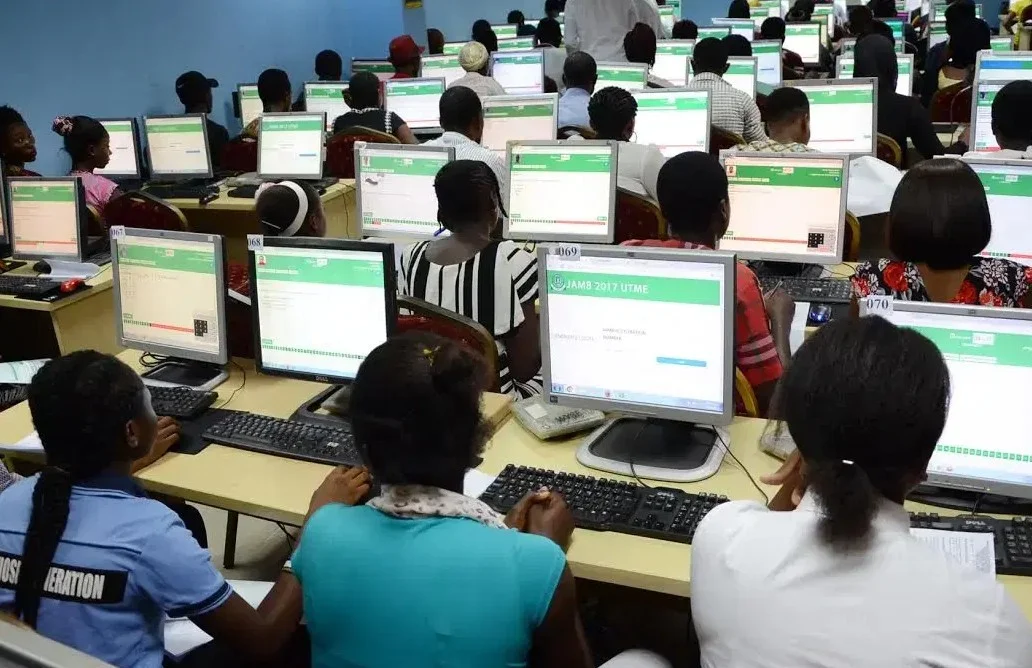
The JAMB O’Level result upload process for the 2026 Unified Tertiary Matriculation Examination no longer requires a trip to an accredited Computer-Based Test centre. Candidates can verify and upload West African Examinations Council results from home, and the Board checks those grades against the issuing examination body’s records before they land on a candidate’s profile.
The change is real, and it is narrow. It removes a queue, not a syllabus. The useful question is not whether home upload sounds modern. It is whether the shift improves learning access, outcomes, affordability or a candidate’s practical options — and on each of those four tests, the answer arrives with conditions attached.
What The JAMB O’Level Result Upload Actually Changes

The service was announced in a statement by the Board’s Acting Director, Public Affairs and Protocol, Dr Fabian Benjamin. Vanguard reported the Board’s framing: services made easier, faster, safer and more convenient, with electronic verification replacing a manual process that produced misplaced or mixed-up paper certificates and wrongly keyed subjects and grades.
The procedure is documented step by step. A candidate visits buyresultsverificationcode.ng, supplies a National Identification Number, selects the number of sittings and the examination body, adds an email address and GSM number, and pays through the gateway. Examination number, series and year follow. A Verification Code is issued. The candidate then sends “VERIFY” plus that code to 55019 or 66019.
Candidates with two sittings take a second route. Punch lays out the sequence: log into the e-Facility dashboard, select “2026 UTME O’Level Upload,” enter the Verification Code, choose between five and nine subjects with no subject selected twice, then click “Apply the O’Level Results.”
One limit deserves its own sentence. The service initially covers WAEC. Neither the Board’s statement nor the reporting confirms NECO or NABTEB. Candidates holding those results should treat coverage as unconfirmed until JAMB says otherwise, rather than assume a portal that accepted a friend’s WAEC slip will accept theirs.
Affordability, Cut-Offs And The Part The Portal Cannot Decide
On affordability, JAMB’s case is time and transport. Pulse reports the Board’s expectation that the system saves candidates transport costs and hours previously spent at crowded centres. That is plausible, and it is still conditional. The process requires a payment card or bank transfer, a phone that receives SMS, a working email address and a NIN. For a candidate in a city with a smartphone, those are trivial. For a candidate borrowing a relative’s line in a rural Local Government Area, they are the new bottleneck. Access has improved; it has not been equalised.
On outcomes, the arithmetic is unchanged. Admission turns on UTME score, O’Level grades, subject combination and institutional screening. A verified upload raises none of them. Cut-off marks are set by individual universities, polytechnics and colleges of education, department by department, and they move from year to year. Candidates should read the current brochure for their target institution instead of trusting a figure circulating in a WhatsApp group from last season.
The statements also leave two practical gaps. They do not describe what a candidate does when verification returns no record, or when the name on the examination body’s file does not match the NIN supplied — precisely the kind of mismatch an automated check is meant to catch. Nor do they state a completion deadline for the 2026 upload. Confirm both through JAMB’s official channels before payment day, not after.
Change Of Programme Online, And The Sentence JAMB Repeats
The same logic now covers course and institution changes. The Nigeria Education News reported the November announcement: candidates log into the e-Facility portal, open Corrections and Uploads, select Change of Programme/Institution, generate an invoice, pay, choose the new course or institution, and authenticate with a One-Time Password sent to the registered email.
JAMB attaches a warning to that convenience, and it is the most important line in the rollout: changing an institution or course does not guarantee admission. The candidate must still meet the UTME subject combination, O’Level requirements and screening conditions of the new choice. A portal that makes a change easier also makes a costly mistake easier. Print the confirmation slip. Check CAPS.
Active Recall, Timed Practice And Error Analysis For A Portal-Based Season
Saving an afternoon at a CBT centre does not save a term of study. Three methods carry the weight.
Active recall means closing the book, taking a blank sheet and writing everything remembered about a topic, then opening the text to find the gaps. Re-reading notes feels productive and is not. Retrieval is.
Timed practice means full papers under exam conditions: phone away, one sitting, strict clock. The UTME is computer-based and time-bound, and practice that ignores the clock trains the wrong skill.
Error analysis means a written log for every wrong answer with a cause attached — content gap, misread question, or time pressure. Re-test only the misses after 48 hours. A candidate who dissects 200 errors learns more than one who skims 2,000 correct answers.
Rules check before any of it. The syllabus is the contract. Confirm the current JAMB syllabus for each of the four subjects and the official brochure for the year before assuming a topic has been dropped or added.
The practical-options test is the one candidates can act on immediately. A saved trip is worth something only if it is spent on something: a library seat, a mock paper, a second sitting’s revision. The Board’s digital push is a logistics story. The admission story is still written in scores and grades.
Is The Home Verification Service The Right Fit
The JAMB O’Level result upload fits a candidate who holds a NIN, a phone line that receives SMS, a payment method and WAEC results — and who understands that the service removes a journey, not a requirement. It fits a school leaver far from an accredited centre who would otherwise pay a stranger to carry a certificate into a city. It fits less well the candidate holding NECO results, or the one who reads “no more CBT centre visits” as “no more work.”
The measured facts are procedural: the steps exist, they are documented, and four independent outlets carried the same sequence. The promise is that queues shrink and fraudulent submissions fall. The 2026 admission cycle will produce the evidence either way. Until then, the defensible reading is that JAMB has cut the cost of one administrative step and left the academic one exactly where it was.
Frequently Asked Questions
Can I upload my O’Level result on the JAMB portal without visiting a CBT centre?
Yes. For the 2026 UTME, JAMB introduced a system that lets candidates verify and upload O’Level results from home. Verification starts at buyresultsverificationcode.ng, where a candidate supplies a NIN, the number of sittings, the examination body, an email address and a GSM number, then pays and enters examination number, series and year. A Verification Code is issued, and the candidate sends “VERIFY” plus the code to 55019 or 66019.
Does the new JAMB system cover NECO and NABTEB results?
The announcements state that the service initially covers results issued by the West African Examinations Council. NECO and NABTEB coverage is not confirmed in the Board’s statement as reported. Candidates holding those results should confirm coverage through JAMB’s official channels before paying.
Does changing my course or institution on the JAMB portal guarantee admission?
No. JAMB states plainly that changing an institution or course does not guarantee admission. The candidate must still satisfy the UTME subject combination, O’Level qualifications and screening conditions of the new institution or programme, and should print the confirmation slip and check the CAPS profile afterwards.
FIRST TIME REACTIONS:
Be the first to leave us a comment – JAMB O’Level Result Upload: What Home Verification Changes, down the comment section.
JOIN US ON OUR SOCIAL MEDIA:
About Rosabella Eboh
Rosabella Eboh is an author at AfriLatest. With a passion for writing and a flair for creativity, she contributes original content and unique perspectives to the platform. Rosabella focuses on human-interest stories, cultural trends, and in-depth feature reporting.
View all articles by Rosabella EbohJAMB & WAEC
JAMB 2026: Verify Dates, Deadlines Before You Act
JAMB 2026 guidance built on verified notices: the mop-up date, admission deadline, disability refunds, and what to confirm before you act.

The useful question about JAMB 2026 is not whether the calendar looks busy. It is whether each announcement widens access to learning, improves outcomes, lowers what a family must pay, or leaves a candidate with more practical options than they had before. A press statement that fails all four tests is not guidance. It is noise.
The JAMB 2026 cycle has already produced four separate decisions: a mop-up examination date, a disability support package, an admission acceptance deadline, and a change to how O’Level results reach the board. Each answers a different question. Each carries a date a candidate can get wrong, and the published record shows that even the year label is not always stable.
Why The JAMB 2026 Record Needs A Year Check First
The disability support package is the clearest example. Punch reported the refunds and support provisions ahead of the Unified Tertiary Matriculation Examination without fixing a cycle in the headline. Peoples Gazette and Nigeria Info ran the same provisions under a 2027 UTME headline.
The provisions match across the reports: a refund of application document fees for candidates with disabilities who hold the required O’Level qualifications, audiobooks of prescribed texts for blind candidates, and covered transport and accommodation for blind candidates and their guides. Only the year moves.
That discrepancy is not academic. A candidate who reads the 2027 version and assumes the package begins in a later cycle may skip the single requirement that makes it work. The board’s wording, as quoted, is explicit: for the board to make necessary arrangements, a candidate must indicate disability status during registration.
Where reports disagree on the year, the board’s own channels outrank every aggregation. Confirm against the board’s official portal before acting on any JAMB 2026 notice.
What The 13 June Mop-Up Exam Can And Cannot Fix
Premium Times reports the mop-up for Saturday, 13 June 2026, following a main UTME held between 16 and 23 April 2026. Notification slips are printable from 6 June. Spokesperson Fabian Benjamin’s statement says the exercise covers candidates who were biometrically verified during the main examination but could not sit it for one reason or another, and warns that no candidate will sit the 2026 UTME after this exercise.
Read the JAMB 2026 mop-up as an access remedy, and a narrow one. It adds no syllabus content, no seats, and no movement on a cut-off point. It restores an attempt to candidates who already cleared verification.
The claim to watch is the board’s own: all affected candidates had been listed. That is a statement of intent, not evidence of contact. With more than two million candidates in the cycle, the figure that matters is how many listed candidates print a slip showing the correct centre. A candidate’s only reliable check is the slip itself, and it opens on 6 June.
Disability Refunds Test Affordability, Not Goodwill
The refund and the transport support are affordability measures, the kind that decide whether a qualified student turns up at all. Two constraints sit inside them. The refund is paid at the examination centre and, in the board’s words, only there. A candidate who cannot reach a centre collects nothing. And the admission consideration applies to candidates with disabilities who reach the minimum acceptable UTME score, so the support removes cost barriers without lowering the academic bar.
None of the reports reviewed gives a beneficiary count. A published figure for refunds actually paid at centres would be evidence. The announcement alone is not.
The 30 September Deadline That Decides Practical Options

Separately, BBC Pidgin reported that the board extended its admission acceptance deadline from 31 August to Wednesday, 30 September 2026. The window covers offers made between 2021 and 2026. Offers left untouched when the deadline passes flip automatically to a not-admitted status.
This is the cheapest decision in the JAMB 2026 cycle. It needs no examination, no fee, no travel, only an action taken in time. It is also the one most often lost, because an old offer from an earlier year feels inactive.
The same report describes a change to O’Level result handling: candidates verify and upload results from home instead of travelling to a CBT centre. The board’s stated aim is fewer manual entry errors and fewer unverified or fake results. That is an outcomes claim, and it can only be tested later, through admission records.
A Verification Routine For JAMB 2026 Candidates
Fix the year and the document first. Note the year printed inside the notice, not the year in the headline that led you to it.
Match the date to your own status. If you were verified but could not sit the main examination, the slip window opens 6 June and the mop-up is 13 June. If you hold an unaccepted offer from any year back to 2021, act before 30 September.
Confirm your disability declaration was made at registration. On the board’s wording, the arrangements depend on it, and it cannot be added after the fact.
Test the promise against your own record. The board says affected candidates were listed; the slip proves it.
Note what the reviewed reports do not contain. There is no 2026 syllabus document, no fee schedule, and no cut-off announcement in this material. The Premium Times report notes that cut-off points are determined by universities. Anyone presenting a 2026 cut-off as settled board policy without an official policy meeting notice should be treated with caution.
Start With One Date
The discipline that makes JAMB 2026 usable is simple: take one date at a time, confirm it on the board’s own channel, and act before the window closes. Begin with the nearest deadline that applies to you, whether that is the 6 June slip printing for listed mop-up candidates, the 13 June examination itself, or the 30 September offer deadline. Then read the year on the notice a second time. Most candidates who lose opportunities this cycle will not be the ones who scored low. They will be the ones who acted on a headline instead of a document.
Start with the slip. Print it, check the centre on it, and check the year on it. Everything else follows from that.
Frequently Asked Questions
When is the JAMB 2026 mop-up examination?
Saturday, 13 June 2026. It follows a main UTME held between 16 and 23 April 2026, and examination notification slips are printable from 6 June. The board states that no candidate will sit the 2026 UTME after this mop-up.
Is the disability fee refund for the 2026 or 2027 UTME?
Published reports conflict. Punch described the provisions ahead of the UTME without fixing a cycle, while Peoples Gazette and Nigeria Info ran them under a 2027 UTME headline. The provisions themselves are identical in all three. Candidates should confirm the applicable year on the board’s official channels before acting.
What happens if I do not accept my admission offer by 30 September 2026?
According to the BBC Pidgin report of the board’s statement, offers made between 2021 and 2026 that stay unaccepted or unrejected when the deadline passes automatically change to a not-admitted status on the board’s records.
Do the reviewed reports contain a 2026 cut-off point?
No. The reviewed material contains no cut-off announcement for the cycle, and the Premium Times report notes that cut-off points are determined by universities. Confirm any cut-off through official policy meeting notices rather than third-party summaries.
FIRST TIME REACTIONS:
Be the first to leave us a comment – JAMB 2026: Verify Dates, Deadlines Before You Act, down the comment section.
JOIN US ON OUR SOCIAL MEDIA:
About Rosabella Eboh
Rosabella Eboh is an author at AfriLatest. With a passion for writing and a flair for creativity, she contributes original content and unique perspectives to the platform. Rosabella focuses on human-interest stories, cultural trends, and in-depth feature reporting.
View all articles by Rosabella Eboh-

 Car Reviews3 weeks ago
1955 Chevy Bel Air Restomod: What SEMA Really Proves
-
Savings & Investing4 weeks ago
Hidden Medicare Fees Draining Your Retirement Savings
-
World News4 weeks ago
Sheinbaum No Proof Maduro: Mexico’s Test of US Evidence
-
Movies & TV4 weeks ago
Wizkid Starboy Desire Ft Banky W Shaydee: Fact Or Fan Fiction?
-
Trend politics4 weeks ago
How 24-Hour Online Scrutiny Is Running Out Leaders
-
Health and Fitness4 weeks ago
Premature Ejaculation Treatment: Exercise vs Dapoxetine