Movies & TV
Living the Dream Netflix Trailer Confirms 18 December Drop
The Living the Dream Netflix trailer dates all eight episodes for 18 December worldwide, and shows why a commission ages differently from a licence.

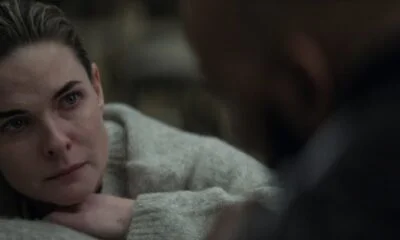
The Living the Dream Netflix trailer is out, and it settles the question fans were actually asking. Netflix has dated George Gendi’s adult animated workplace sitcom for Friday 18 December, worldwide, with all eight 22-minute episodes arriving at once. That is a commissioning decision, not a scheduling accident, and it carries more weight than any single joke in the trailer.
The reason is structural. A large share of what viewers casually call a Netflix show is licensed in, territory by territory, on contracts with expiry dates. This one is not. The paperwork tells you what the marketing cannot.
What The Living the Dream Netflix Trailer Actually Confirms

The premise, per Netflix’s own synopsis: Des and Ray are best friends in London who assumed they would have made it by now. They have not. They do social media for barely any money at Ecofood, a company that frames itself around saving the planet. Awkward office romance, HR blunders, directives from the L.A. office and Ray’s father’s open disappointment follow.
The trailer, broken down by Collider, opens on a bank balance too small to cover the next meal and a shared scooter commute. At work there are unskippable compliance quizzes and lab-grown insect burgers on the menu. Des fixates on Ashley, the HR employee who shares his awkwardness. Ray tries not to think about his dad.
No spoilers here, because there is nothing to spoil. A trailer sells tone, and this tone is broad, loud and specific about London office life.
The risk is equally visible. Two underachievers doing social media for a greenwashed food company is a premise that generates sketches faster than it generates stories. Eight episodes will live or die on whether the writers’ room found a spine rather than eight variations on one joke. Gendi’s record is the counterargument: Apple & Onion ran 76 episodes across two seasons and picked up BAFTA and Annie nominations, which suggests he knows how to sustain a double act.
Why A Netflix Commission And A Licensed Title Age Differently

The contrast case is already on the calendar. Deadline reported that the four-part Gilmore Girls revival which launched on Netflix on Christmas Day 2016 has its final day on the service on 24 December, and appears on Hulu the following day. Netflix declined to renew the ten-year licence. The original seven seasons had already departed on 30 June, moving to Prime Video the next day while also sitting on Hulu.
That is how licensing works: a clock, a renewal decision, a handover. The same Deadline report notes the series generated 90 million hours of viewing on Hulu between 1 July and 31 October, up 455% on the previous four months. Strong viewing figures do not keep a title on a platform. Contracts do.
The Living the Dream Netflix arrangement sits on the other side of that line. Per AWN, Netflix announced the show at the Manchester Animation Festival and production began in 2024, after the project had already been developed inside Hanna-Barbera Studios Europe.
One distinction worth keeping straight: “Netflix original” is a distribution label, not an ownership claim. Hanna-Barbera Studios Europe, Warner Bros. Animation’s London studio, produces the series, and Ireland’s Boulder Media handles the animation, per Animation Magazine. Warner Bros. holds the production. Netflix holds the launch.
For Nigerian subscribers the practical consequence is straightforward. 18 December is a same-day drop with no window delay, because Netflix’s own announcement describes a worldwide premiere and no country-by-country exceptions have been published. That is the difference between a commission and an acquisition in a market where catalogue arrivals often stagger by months.
The Cast List Is The Strongest Evidence For Watching
Gendi voices Ray. Javone Prince, of PhoneShop, voices Des. Julia Davis plays Anne, Ali Shahalom is Harold, Tom Stourton is Biggsy, Ellie White is Bronya and Ambika Mod is Priya. Behind them sit Lisa Gilroy, Chris Diamantopoulos, Stavros Halkias, Kevin Eldon, Doon Mackichan, Charles Dale and David Dawson.

The writing team is Gendi with Phoebe Walsh, Ellie White, Joe Parnham and Joe Markham. Executive producers are Sam Register, Sarah Fell and Daniel Lennard, all three with Gumball history. That concentration of British comedy talent is the actual pitch, more than the insect-burger gag.
Audience reaction so far is thin and revealing. In Deadline’s comment thread the loudest response was not about the writing but about the art style, with one reader arguing that human eyes and mouths on cartoon bodies have looked wrong since Clutch Cargo and that Gumball outclasses Apple & Onion. It is a single comment, not a movement, and it points at a real stylistic split: Gendi’s designs sit closer to illustrated humans than to the rubber-limbed cartooning of his former employer.
What To Expect On 18 December
Eight episodes. Twenty-two minutes each. 2D animation. One drop, everywhere at once. Gendi has called the show “a labor of love” and thanked Netflix as partners, adding that he looks forward to introducing audiences around the world to “this loveable group of characters and to the joys of London office culture.” That statement is the only creator quote attached to the launch so far. No episode titles have been published, no age rating has been confirmed in the material available, and no second season has been announced.
The Living the Dream Netflix release is therefore a test of a specific thesis: that a British workplace sitcom about two men failing at social media can travel globally on day one without a territory-by-territory rollout. If the writing holds, the model looks vindicated. If it does not, the show still lands everywhere at once, which is the part Netflix actually controls.
Frequently Asked Questions
When does Living the Dream premiere on Netflix?
Friday 18 December, worldwide. All eight episodes, each running 22 minutes, arrive at once. Netflix has not published country-by-country exceptions to the global date.
Is Living the Dream a Netflix original?
It is launched and branded by Netflix, which picked up the project and took it into production in 2024. The series is produced by Hanna-Barbera Studios Europe, Warner Bros. Animation’s London studio, with animation by Ireland’s Boulder Media. “Netflix original” describes distribution, not ownership of the production.
Who created Living the Dream and who stars in it?
George Gendi created the series, writes and executive produces it, and voices Ray. Javone Prince voices Des. The cast includes Julia Davis, Ali Shahalom, Tom Stourton, Ellie White, Ambika Mod, Lisa Gilroy, Chris Diamantopoulos, Stavros Halkias, Kevin Eldon, Doon Mackichan, Charles Dale and David Dawson.
Is Living the Dream suitable for children?
It is positioned as adult animation, with Collider describing it as decidedly more adult than Gendi’s previous work. No formal age rating appears in the material released so far, so the classification remains unconfirmed.
 Follow AFRILATEST on Google News
FIRST TIME REACTIONS:
Be the first to leave us a comment – Living the Dream Netflix Trailer Confirms 18 December Drop, down the comment section.
JOIN US ON OUR SOCIAL MEDIA:

About Rose Green
Rose Green is an entertainment and lifestyle author at AfriLatest. With a passion for storytelling, she contributes creative and thought-provoking content, capturing the imagination of readers. Rose specializes in entertainment news, celebrity updates, and lifestyle trends, sparking meaningful conversations across diverse topics.
View all articles by Rose Green

Movies & TV
Faith Hill Supports Husband Tim McGraw in Rare Outing
Faith Hill supports husband Tim McGraw at a rare public outing, but five outlets disagree on dates, ages and attendance. Why Nigerian readers should note it.

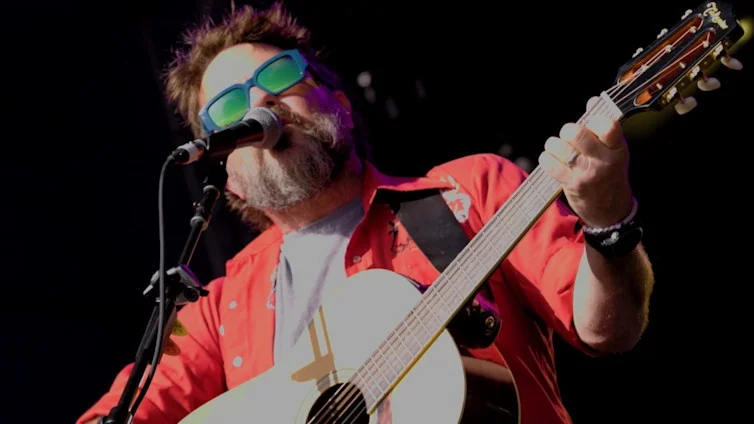
Faith Hill supports husband Tim McGraw in what the American entertainment press has uniformly labelled a rare public appearance — and for readers in Lagos, Abuja or Port Harcourt, the useful part of the story is not the gown. It is the paperwork. Five major outlets covered the same family outing this year and produced at least four incompatible sets of dates, ages and attendance details. Nigeria’s music and film exports now travel through that same international wire, and they inherit its errors.
The verified core is narrow and solid. Tim McGraw, 59, was named the Country Music Hall of Fame’s 2026 Modern Era Artist, an honour announced in March, with a formal Medallion Ceremony scheduled for October. He also took the stage at the 2026 CMA Awards at Nashville’s Bridgestone Arena, seated on a stool in a black suit and matching cowboy hat, performing his 1994 hit “Don’t Take the Girl.”
What The Faith Hill Supports Husband Tim McGraw Coverage Got Right

The marriage is documented. Hill and McGraw wed in 1996 and have three daughters. Hill, 58 or 59 depending on the outlet, deleted her public social media accounts in 2024 and has not performed publicly in years, according to Country Living. Her appearance at his side, therefore, is genuinely newsworthy rather than routine.
McGraw’s award record at the CMA Awards is also confirmed. Ahead of the ceremony he won Musical Event of the Year alongside HARDY, Eric Church and Morgan Wallen for “McArthur”, making him the most-awarded artist in that category with five wins. His previous victories in the same category were in 1997 with Hill for “It’s Your Love”, in 2007 with Tracy Lawrence and Kenny Chesney, in 2012 with Chesney, and in 2013 with Taylor Swift and Keith Urban.
His public debt to Hill is on the record too. McGraw has credited her with helping him get sober in 2008, called her his “rock” in a 2023 interview, and told the Tim Ferriss Show podcast in February that “she beat it out of me after a while.” Accepting the Hall of Fame nod, he said: “I would not be standing here today if it wasn’t for you, nor would I want to be. And I can’t wait for the day when I’m sitting there, and you’re standing here.”
The Dates, Ages And Guest List Do Not Agree
Here the record fractures. Hello! dates the induction to Saturday, March 21; Country Living places the announcement on March 20; E! Online reports an induction on October 18. All three may be describing different moments in a long honours calendar, but none of the copy says so.

The daughters’ ages clash outright. Yahoo Entertainment lists Gracie at 29, Maggie at 28 and Audrey at 24. People lists Audrey at 23. Hello! gives Gracie 28 and Maggie 27. Sibling ages cannot all be correct.
Attendance is worse than inconsistent; it is contradictory. E! Online places Maggie and Audrey on the red carpet beside their parents. Hello! reports the opposite — that the daughters missed the ceremony because of prior work commitments, with Audrey performing at Red Rock Casino in Las Vegas the same night. Both accounts are attributed to the same event. Only one can be true.
Even the wardrobe splits three ways: a shimmering black gown, a satin gown with a low V-neckline, and a burgundy blazer in the Instagram photograph McGraw posted afterwards. One outlet’s “rare joint appearance” is a separate night entirely, at the Silver Lining Lounge in New York.
Why Nigerian Readers Should Follow The Paper Trail
Nigeria’s creative economy argument has long rested on catalogue value, artist longevity and export income. The McGraw-Hill record is a thirty-year case study in exactly that: a body of work still paying out through awards categories, Hall of Fame induction and a tour of more than 30 dates. Nigerian labels and rights holders making the same bets on catalogue need the underlying facts to be right.
The second lesson is about artist welfare. McGraw’s sobriety credit is not gossip; it is a named, dated intervention by a partner, offered openly. Nigeria’s music business debates management, burnout and mental health constantly but rarely with that kind of specificity on the record.
The third is media discipline. Nigerian outlets republish international entertainment copy at speed. When five American magazines cannot agree on whether two adult daughters were in the room, the error does not stop at the Atlantic. It lands in Lagos, unmarked.
Judgement, Not Prediction
What is confirmed: a Hall of Fame induction, a CMA performance, a category record, a marriage of 30 years and a wife who has withdrawn from public life appearing at her husband’s side. What is not confirmed: when it happened, how old anyone was, and who attended. Reports that contradict each other on attendance should be treated as unresolved rather than settled by whichever headline travelled furthest.
For Nigerian readers, Faith Hill supports husband Tim McGraw is a small story with a large instruction: verified timelines are infrastructure. Nigeria’s music exports grow on the quality of the record kept about them, and a wire that cannot fix a birthday will not fix a royalty.
Frequently Asked Questions
Did Faith Hill and Tim McGraw’s daughters attend the Country Music Hall of Fame induction?
The sources contradict each other. E! Online reports that Maggie and Audrey stood on the red carpet with their parents. Hello! reports that the daughters missed the ceremony because of prior work commitments, with Audrey performing in Las Vegas the same night. Both accounts refer to the same event, so one is wrong.
How old are Tim McGraw and Faith Hill?
Tim McGraw is reported as 59 across the outlets. Faith Hill is listed as 59 by Yahoo Entertainment and as 58 by Country Living and People, so her age is not settled in the published record.
What did Tim McGraw win at the 2026 CMA Awards?
He won Musical Event of the Year with HARDY, Eric Church and Morgan Wallen for their performance of McArthur. It was his fifth win in that category, making him the most-awarded artist in it. He also performed his 1994 hit Don’t Take the Girl at the ceremony in Nashville.
FIRST TIME REACTIONS:
Be the first to leave us a comment – Faith Hill Supports Husband Tim McGraw in Rare Outing, down the comment section.
JOIN US ON OUR SOCIAL MEDIA:

About stephen Douglas
Stephen Douglas is a gaming and entertainment author at AfriLatest. With a background in social media management and community building, he covers the latest trends in the gaming industry, esports, and digital culture. Stephen creates engaging content that keeps readers connected and informed about the games and entertainment they love.
View all articles by stephen DouglasMovies & TV
Airbnb Raichand Mansion: K3G Home Opens In Mumbai
Airbnb recreates the Kabhi Khushi Kabhie Gham house as a free six-day Mumbai experience with 180 slots, and the Airbnb Raichand mansion model matters for Nollywood.

Airbnb has rebuilt the Raichand family mansion from Kabhi Khushi Kabhie Gham as a six-day bookable set in Mumbai, and the number that should interest a Lagos reader is not the chandeliers but the 180 — the total guest slots, offered free, for a house that exists only because a film said it did.
The Airbnb Raichand mansion experience, titled At Home with the Raichands, runs December 1 to 6 and marks 25 years since Karan Johar’s family drama reached cinemas in December 2001. Booking requests open on November 23 at 12 p.m. IST through a dedicated K3G page, according to Variety, which first reported the activation.
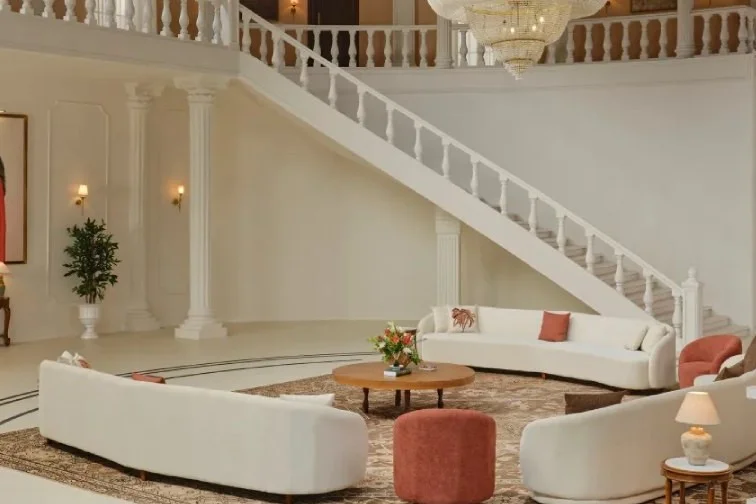
The recreation, confirmed by Telegraph India, includes the film’s grand staircase, the family study and Poo’s wardrobe. Guests get a two-hour slot, an audio tour built from memorable moments in the film, a character-inspired entry challenge, a space to write a note on love and family, and a commemorative keepsake.
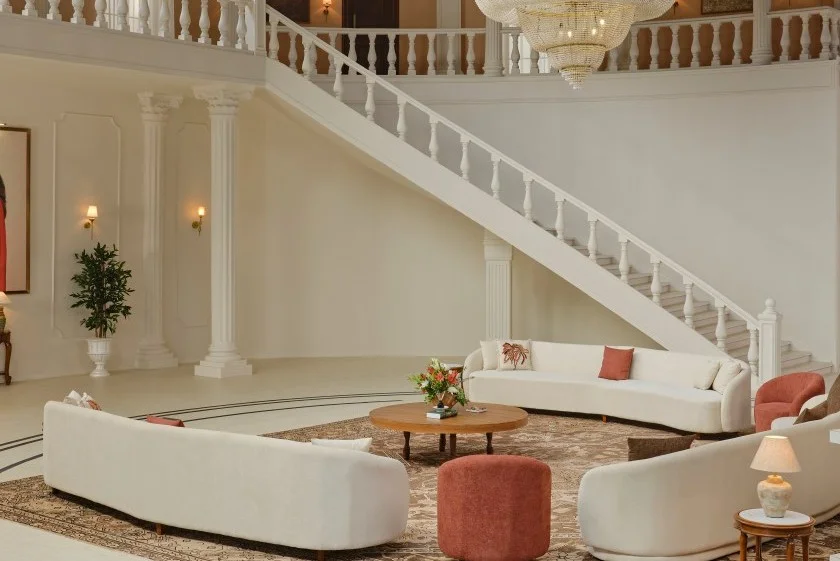
Each booking covers two guests and admission is free. Visitors arrange and pay for their own travel to Mumbai. With 180 slots over six days, the ceiling is 360 people — less than one cinema screen’s weekend. That is not a shortfall in the planning. It is the plan.
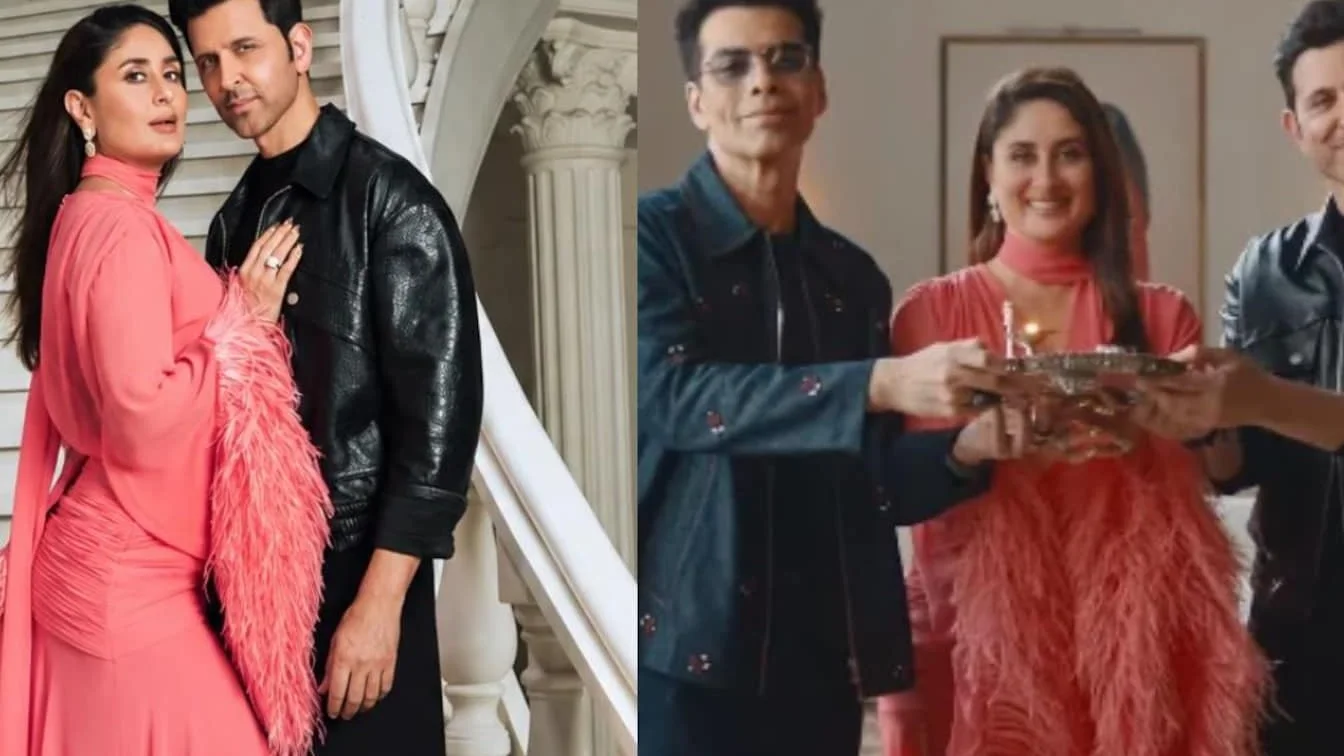
Johar is presenting the experience alongside Hrithik Roshan and Kareena Kapoor Khan, who played Rohan Raichand and Poo. None of the three will appear in person, Siasat reported. The talent lent their faces to the announcement video, not their diaries to the venue.
Inside The Airbnb Raichand Mansion Replica In Mumbai
The original film, released on December 14, 2001, carried an ensemble led by Amitabh Bachchan, Jaya Bachchan, Shah Rukh Khan, Kajol, Roshan and Kapoor Khan. Its music was composed by Jatin-Lalit, Sandesh Shandilya and Aadesh Shrivastava, and it was produced by Yash Johar under Dharma Productions. The plot turns on a wealthy family split by a son’s marriage against his father’s wishes.
What Airbnb has bought is the production design, not the plot. The staircase, the study and the wardrobe are the three objects most reproduced in fan content for a quarter of a century, and they are the three objects the build recreates. An audio tour then supplies the dialogue the set cannot speak on its own.
Kapoor Khan framed the character’s durability plainly in a statement released with the announcement. “Poo has been part of my life for 25 years, and I love that she’s still having her moment with a whole new generation,” she said, adding that Poo “never really needed anyone’s approval.” Roshan said seeing the Raichand House recreated was “the best way to celebrate the film.”
Why A Free Booking Says More Than A Paid One
Airbnb is not testing a Mumbai short-let. The company already runs an “Only on Airbnb” series that has increasingly tapped entertainment properties and fan culture to build real-world versions of fictional settings, Variety reported. This entry has no nightly rate and therefore no revenue line. It is marketing expenditure with a guest list.
The marketing engine was the reunion, not the real estate. Roshan and Kapoor Khan last shared a screen in Main Prem Ki Diwani Hoon in 2003, and their return together after 23 years — recreating the lip-gloss moment and Rohan’s shoe-tying — drove the announcement across Instagram, NDTV reported. The physical build came after the video had already travelled.
That sequencing is the transferable part. A film with a 25-year-old release date, no new instalment and no cast availability was converted into a news cycle by pairing archive footage with a finite, free, photographable set.
What Nigerian Rights Holders Could Learn From The K3G Activation
The comparison with Nollywood is structural rather than sentimental. Nigeria’s film industry holds a deep catalogue of titles with anniversary dates approaching, and a fan base that consumes those titles on streaming platforms where the only physical trace of the film is a thumbnail.
Publicly, no Nigerian rights holder has announced a set-based activation on this pattern for an anniversary title. The obstacles are legible: rights are often split between producers, distributors and streaming licensees; a physical build needs a venue and a six-day operating crew; and the return arrives as brand attention rather than ticket revenue, which is difficult to book in an industry financed project by project.
Airbnb’s version removes two of those frictions. It uses an existing marketing budget rather than a production budget, and it attaches the spend to an IP owner — Dharma Productions’ film — rather than originating the content itself. The Nigerian equivalent would require a platform with a marketing line and a rights holder willing to license the visual identity of a film separately from the film.
There is a limit to the comparison. The K3G activation rides on a diaspora and fan network that spans markets Airbnb already operates in, and Mumbai is a city the company sells constantly. Lagos and Abuja short-let markets are smaller and priced differently, so a Nigerian replica would be a brand exercise, not a booking exercise.
What To Watch
Three signals matter after November 23. First, whether 180 slots clear instantly or linger — a fast sell-out signals that scarcity, not capacity, is now the product. Second, whether Airbnb extends the run or exports the format to other film libraries, including non-English-language ones. Third, whether an African rights holder tests the same mechanics with a Nollywood anniversary title.
For a Nigerian reader, the practical position is simple: the Airbnb Raichand mansion experience is open to anyone willing to reach Mumbai at their own cost, and the booking itself costs nothing. The strategic position is that the value of this story sits in the mechanics — a finite free set, a reunion video, an existing marketing budget — and those mechanics travel far more cheaply than a mansion does.
Frequently Asked Questions
Is the Airbnb Raichand mansion experience free?
Yes. Admission is free and each booking covers two guests, but visitors must arrange and pay for their own travel to Mumbai.
When do bookings open for the K3G house in Mumbai?
Booking requests open on November 23 at 12 p.m. IST through Airbnb’s dedicated K3G page. The experience itself runs from December 1 to 6, with 180 guest spots in total.
Will Karan Johar, Hrithik Roshan or Kareena Kapoor Khan be at the Airbnb Raichand mansion?
No. All three are presenting the experience and appear in the announcement video, but none of them will be present in person at the Mumbai recreation.
FIRST TIME REACTIONS:
Be the first to leave us a comment – Airbnb Raichand Mansion: K3G Home Opens In Mumbai, down the comment section.
JOIN US ON OUR SOCIAL MEDIA:
About stephen Douglas
Stephen Douglas is a gaming and entertainment author at AfriLatest. With a background in social media management and community building, he covers the latest trends in the gaming industry, esports, and digital culture. Stephen creates engaging content that keeps readers connected and informed about the games and entertainment they love.
View all articles by stephen DouglasMovies & TV
The DSS Director General Award Story: A Reading Guide
Rights groups hail the DSS Director General over The Sun award. A reading guide to what the statements verify, and what stays unconfirmed.

The Centre for Public Integrity’s congratulatory statement on the DSS Director General landed in Abuja on a Saturday, signed by an executive director, and it ran on Premium Times under a promoted-content URL. That placement detail matters more than the praise itself.
The occasion: Oluwatosin Ajayi, Director-General of the Department of State Services, was conferred with The Sun’s Courage in Leadership Award. The awarding body is a Nigerian newspaper, which makes this an industry honour from a media house, not a finding by a regulator or a court. President Bola Tinubu appointed Ajayi; the Foundation for Democracy in Africa dates his tenure from August 2024.
What follows is a guide to the coverage, not to the man. The headline shape, rights group hails security chief, has become a genre in Nigerian press. Reading it well means knowing which sentences in these statements can be checked, and which cannot.

The Statements Behind The DSS Director General Commendations
One: The Sun Courage in Leadership Award. Why it matters: it is the peg everything else hangs on. Who it’s for: readers tracking how Nigerian newspapers use awards to shape security coverage. Verified: the conferment is asserted consistently across the CPI and FDA statements. Not verified: the award’s selection process, which none of the statements describe.
Two: The Centre for Public Integrity statement, carried by Premium Times. Why it matters: it makes the broadest claim in the set, that the Service has been steered away from traditional strong-arm perceptions toward intelligence-driven work. Who it’s for: policy readers. Read it knowing the piece sits in Premium Times’ promoted channel, a submitted statement rather than newsroom reporting. That does not make it false. It means no editor at that outlet vouched for it.
Three: HURIWA’s statement, published by The Guardian Nigeria. Why it matters: it is the only item here that names a specific citizen whose case was resolved, Lanre Arogundade, executive director of the International Press Centre, whose watchlist matter HURIWA says was settled. Who it’s for: media-freedom watchers.
Four: The Foundation for Democracy in Africa on Omoyele Sowore, reported by Pointblank News. Why it matters: it describes an institutional act aimed at a court, the DG asking the Federal High Court to consider halting the AAC presidential candidate’s prosecution until after the 2027 election. Who it’s for: election-law readers. The filing itself is not quoted anywhere in the statements, so the characterisation is the group’s.
Five: The Kaduna Democracy Day statements, carried by Vanguard. Why it matters: it supplies named case categories, convictions tied to the Owo St Francis Catholic Church attack and the Papiri schoolchildren abduction in Niger State, plus DSS school donations in Chikun Local Government. Who it’s for: readers who want community-level detail rather than rhetoric. A parallel statement from the Ifelodun Federation of Igboho Indigenes, reported by the Nigerian Tribune, ties the DG’s name to Sunday Igboho’s Iru Ekun Security Network in Oke-Ogun and to the release of Alhaja Kubura Aliqlas and her son Abdulmalik.
What HURIWA’s Hedged Language Admits
The most useful document here is also the most cautious. HURIWA writes of the reported review of old DSS watchlists dating back decades, reported compensation for people affected by wrongful detention, and reported reviews leading to releases. Three uses of reported inside a statement of commendation.
That is not a small thing. A rights organisation is endorsing reports it has not converted into documents, and it says so in its own text. The Arogundade case is the exception, because it names a person, and a named person can confirm or deny.
Separately, a statement from the Asiwaju Media Team, published by The Guardian Nigeria, carries a first-person account of conditions inside DSS custody: regular meals, toothbrushes and toothpaste, medical access, and the claim that bail is purely free. The passage is specific and human. It is also unattributed in the excerpt, with no name attached to the speaker describing his own detention. Vivid testimony without a named witness is not evidence. It is a lead.
Which Claims About The DSS Director General Survive Scrutiny
Sort the statements into three tiers and the picture sharpens.
Tier one: acts with paper trails. Court applications, releases, compensation payments. The Sowore request belongs here if the filing can be produced. HURIWA’s Arogundade reference belongs here if the resolution can be confirmed by Arogundade or the IPC.
Tier two: the award. Real as an event, but it certifies a newspaper’s judgement, not an audit.
Tier three: characterisations. Watershed moment. Gold standard. Paradigm shift. These are advocacy. They are allowed to be advocacy. They should not be reprinted as findings.
What is missing across every statement is arithmetic. No count of watchlist entries reviewed. No number of people compensated, no amounts paid. No figure for convictions secured. The CPI cites a string of landmark judicial victories without naming one. For a story about institutional reform, the absence of a single number is itself the finding.
The FDA statement does at least name instruments, the ECOWAS Supplementary Protocol on Democracy and Good Governance and the African Charter on Democracy, Elections and Governance. Those texts are checkable. Whether they apply to a domestic prosecution paused for electoral reasons is an argument, not a fact.
There is a sourcing pattern worth naming too. The endorsers span a newspaper, a rights writers’ association, two Kaduna civil society groups, a community federation in Oyo State, an Africa-focused democracy foundation and a media team. Breadth looks like consensus. It reads closer to a press-release circuit, where each statement draws on the same reports.
Top Pick
If you read one document from this cycle, read HURIWA’s. It names a citizen, it asks for human rights impact assessments, periodic detention reviews and citizen complaint channels, and it hedges its own claims with reported. That combination makes it auditable, which is more than most of the others manage.
The DSS Director General has an award, a stack of commendations and, by the account of one of his own endorsers, a court application any reporter can go and pull. That document, not the trophy, is where the story about the DSS Director General actually begins.
Frequently Asked Questions
What award did the DSS Director General receive?
The Sun’s Courage in Leadership Award. The conferment is referenced in statements from the Centre for Public Integrity and the Foundation for Democracy in Africa. None of the available statements describe how the award was decided.
Did HURIWA independently confirm the DSS reforms it praised?
No. HURIWA’s statement uses reported language for the watchlist review, the compensation payments and the releases. The one specific case it names is Lanre Arogundade of the International Press Centre.
What did the Foundation for Democracy in Africa say about Omoyele Sowore?
The group said DG Oluwatosin Ajayi asked the Federal High Court to consider halting Sowore’s prosecution until after the 2027 presidential election. The filing itself is not quoted in the statement, so the description is the group’s characterisation.
FIRST TIME REACTIONS:
Be the first to leave us a comment – The DSS Director General Award Story: A Reading Guide, down the comment section.
JOIN US ON OUR SOCIAL MEDIA:
About Rose Green
Rose Green is an entertainment and lifestyle author at AfriLatest. With a passion for storytelling, she contributes creative and thought-provoking content, capturing the imagination of readers. Rose specializes in entertainment news, celebrity updates, and lifestyle trends, sparking meaningful conversations across diverse topics.
View all articles by Rose Green-

 Car Reviews2 weeks ago
1955 Chevy Bel Air Restomod: What SEMA Really Proves
-
Savings & Investing3 weeks ago
Hidden Medicare Fees Draining Your Retirement Savings
-
Car Reviews4 weeks ago
Ford Bronco ORV Package: $18,995 Ownership Reality Check
-
JAMB & WAEC4 weeks ago
JAMB Admission Process: What Changed And What Is Still Talk
-
Movies & TV4 weeks ago
Silo Season 1 Ending Explained: What the Showrunner Said
-
Movies & TV3 weeks ago
Wizkid Starboy Desire Ft Banky W Shaydee: Fact Or Fan Fiction?