Study & Education
The Downstairs Gentry: Why Academics Defend Their Own Demotion
The downstairs gentry explains why lecturers defend universities that treat them as staff, and what that means for Nigerian campuses.


A lecturer in a Nigerian public university will defend that institution’s reputation at a conference, on radio, in an argument with a stranger — then return to a department where the decisions that shape his working life were taken in a room he was not invited into. A new opinion essay in Inside Higher Ed gives that contradiction a floor plan, borrowed from Downton Abbey. Its central figure is the downstairs gentry: the academic middle tier that carries prestige without power, and defends the house anyway.
The essay sets the Edwardian country house against the modern university. Upstairs live the Crawleys, the landed aristocrats who hold title and embody the estate’s glory. Downstairs, reached through narrow hidden staircases, works an invisible army keeping the chandeliers lit, the fires stoked and the silver polished. Translated to the campus, upstairs is central administration, senior leadership and the board of trustees, whose stated concerns are legacy, estate preservation and brand equity. Downstairs is academic labour: tenured professors, tenure-track hopefuls, clinical instructors, adjunct lecturers and support staff.
Nigerian readers will recognise the architecture even without the English furniture. The governing council and the vice-chancellor’s office occupy the upstairs of the metaphor; the lecturing corps, graduate assistants, adjuncts, technicians and cleaners occupy the downstairs. The essay concedes its parallel is imperfect, and the concession is worth repeating: many academics sit in between, privileged relative to contingent teachers and staff, yet subordinate to senior administrators, boards and donors. That in-between group is what makes the downstairs gentry worth naming.

One caveat before the argument goes further. This is an opinion essay in a views section, not a survey. It presents no original data and no sample of institutions; its evidence is analogy, anecdote and the sociology it borrows. The Downton framing should be read as an argument to be tested against what readers see on their own campuses, not as a measured finding.
Why The Downstairs Gentry Defends A House It Does Not Own
The essay’s sharpest mechanism is what it calls stratified solidarity. Tenured and tenure-track faculty are encouraged to identify upward, partly because they are positioned closer to the gentry than to the adjuncts and professional staff on whose labour the institution increasingly depends. The reward on offer is not power but proximity.
The author reaches for Pierre Bourdieu’s description of intellectuals as the dominated fraction of the dominant class: high in status and low in power at the same time, rich in the currency of prestige and poor in the currency that decides outcomes. Borrowed prestige, the essay argues, is a poor substitute for real influence in governance — and a substitute that gets harder to maintain as structures for shared governance erode.
There is a telling detail about silence. A member of an accreditation committee, the author reports, struggled to understand why faculty members never voiced criticisms of their employer when invited to speak openly and assured of full confidentiality. The essay’s answer is that the division is experienced not as domination but as belonging, and that the risk of speaking is tangible: an unfavourable evaluation, a tenure case that looks less certain, a reputation for disloyalty that thwarts mobility.

What Nigerian Campus Politics Shares With Downton Abbey
Universities speak of community and shared governance. The essay argues the distribution of power, security and voice is organised on the upstairs/downstairs principle. Department meetings include everyone in principle, but the real decisions happen in closed-door sessions where only certain voices are heard. Faculty senates are informed of decisions that were once subject to a vote.
The same pattern of uncredited maintenance shows up well outside the campus. Reporting by The Art Newspaper on the artists of New York’s Hotel Chelsea describes relatives who stayed in the building for decades to preserve work the market had ignored: Sybao Cheng-Wilson keeping her brother Ching Ho Cheng’s apartment and art after his death, Judith Childs still living among Bernard Childs’s canvases, Mary Anne Rose overseeing Herbert Gentry’s estate. Recognition, when it came, arrived late and largely through family labour. The lesson travels. The people who hold an institution’s memory together are rarely the people the institution credits.
The Postwar Moment, And Who Pays For The Roof
Downton Abbey’s plot turns on an existential threat: the post-First World War collapse of the landed-estate model, as rising taxes, changing labour markets and social democratisation forced the nobility to sell off land, lay off staff and open their halls to paying visitors. The delusion of the eternal great house was shattered.
The essay argues higher education is having its own postwar moment. The aristocratic bargain — years of servant-like grind in the doctoral trenches in exchange for a seat at the main table — is described as effectively dead. Yet leadership, like Lord Grantham refusing to sell the art collection while the roof leaks, keeps planning new campuses and adding executive positions while the academic core is starved. Ageing tenured faculty, cast as the butler Mr Carson, lament the loss of collegiality without recognising that the material conditions which produced it were deliberately dismantled.
Programme closures and staffing cuts, the essay notes, are routinely justified as necessary responses to enrolment declines and budget shortfalls even as new administrative units and capital projects proceed. The author’s reading is that these are not isolated incidents but recurring features of a governance model in which crisis legitimises centralisation. Nigerian campuses, long familiar with retrenchment and with decisions announced rather than negotiated, are not outside that pattern.
The Big Picture
The essay’s conclusion is blunt and deliberately unbecoming: we are not the gentry, we are the staff. That is a strange position to occupy — devoted to a place’s reputation at precisely the moment it has made clear how little the devotion buys.
The answer it offers is not to stop caring about the institution, but to stop confusing care for it with consent to its governance. For the downstairs gentry, in Abuja, Ibadan, Nsukka or anywhere else, that distinction is the whole argument. Loyalty that is never converted into voice does not protect the house. It pays for the repairs while somebody else decides which rooms stay open.
Frequently Asked Questions
What does the downstairs gentry mean?
It describes the academic middle tier — tenured and tenure-track staff, clinical instructors and senior support workers who hold institutional prestige but little decision-making power, and who nonetheless identify with the leadership above them rather than with the contingent staff beside them.
Is the Downton Abbey comparison based on a study?
No. It appears in an opinion essay published by Inside Higher Ed, which uses analogy, anecdote and borrowed sociology rather than survey data. It should be treated as an argument, not a measured finding.
Why does this matter to Nigerian readers?
The governance pattern the essay describes — decisions taken above the lecturing corps, crisis used to justify centralisation, loyalty rewarded with proximity rather than voice — maps onto familiar tensions between Nigerian university administrations, governing councils and academic staff.
 Follow AFRILATEST on Google News
FIRST TIME REACTIONS:
Be the first to leave us a comment – The Downstairs Gentry: Why Academics Defend Their Own Demotion, down the comment section.
JOIN US ON OUR SOCIAL MEDIA:

About Rosabella Eboh
Rosabella Eboh is an author at AfriLatest. With a passion for writing and a flair for creativity, she contributes original content and unique perspectives to the platform. Rosabella focuses on human-interest stories, cultural trends, and in-depth feature reporting.
View all articles by Rosabella Eboh

JAMB & WAEC
WAEC Opens 2027 WASSCE Registration: What Schools Must Do
WAEC opened 2027 WASSCE registration for school candidates. What schools must upload, what WAEC has not published, and how to verify fees.

The goal is simple: leave this page knowing what WAEC has actually announced about 2027 WASSCE registration, what the council has not published, and the steps a school can take this week so no candidate is lost to paperwork.
The announcement itself is short. Everything that decides whether a student sits the examination sits outside it.
What The 2027 WASSCE Registration Announcement Actually Says
According to PUNCH, WAEC opened registration for the 2027 West African Senior School Certificate Examination for School Candidates in a statement on its official account on Tuesday. The council said it is “making examination preparation smarter and more accessible,” asked schools to complete Continuous Assessment Score uploads promptly, and told them to adhere strictly to the stipulated registration timelines.
Nigeria Startup News dated the announcement to Tuesday, 17 November 2026 and reported that schools submit candidate information through the council’s offline registration platform at offline.waeconline.org.ng. The 2027 examination will run in hybrid mode.
Two items are missing: a closing date and a fee. Neither appears in the council’s quoted statement, nor in the reports that carried it.
That absence is not a minor detail. Compare it with the 2026 private-candidate cycle, where WAEC published both, with registration running from Sunday, 4 May 2026 to Thursday, 31 July 2026 at N37,000 and the examination conducted entirely as a computer-based test (PUNCH). N37,000 is the only published price point in the record, and it belongs to a different examination with a different candidature. A school budgeting 2027 on the assumption that the figure carries over is guessing, not planning.
The distinction matters because education news is judged by verified effects on learners, teachers, costs and access, not by the confidence of a press line. A registration opening is a policy statement. A published deadline and a published fee are implementation. Candidates are lost in the space between the two.
Why Hybrid Mode Is A Working Compromise, Not A Finished Plan
WAEC began moving private candidates onto computer-based testing in 2024 through a hybrid model: multiple-choice questions answered on screen, essay and practical papers handled manually. The council then said it would go fully computer-based for school candidates in the May/June 2026 WASSCE.
The 2027 examination will be hybrid.
Read that sequence slowly. The stated destination has not arrived. The operating mode for 2027 is the same half-step in use since 2024. That is not a scandal, since phased rollouts exist for sound reasons, but it does mean a candidate is preparing for two formats inside one examination, not one.
WAEC’s Head of National Office, Dr Amos Dangut, argued in October 2025 that computer-based testing “will reduce fraud, examination malpractice,” adding that across five examinations conducted on CBT the council recorded low malpractice rates and higher candidate performance. That is the council’s own assessment of its own examinations. It is a reasonable claim and it is not independent research, and schools should treat it as a stated expectation rather than a measured national outcome.
The 2026 cycle shows why the caveat is practical rather than pedantic. WAEC extended the school-candidate CB-WASSCE registration deadline to Friday, 13 March 2026, a one-day extension, after technical glitches and high demand reported since January (Guardian Nigeria). The extension followed approval by the Minister of Education, Tunji Alausa, and the council said no further extension would be granted (Asaba Metro).
A registration system that needed ministerial approval to absorb a one-day slip is a system still under load. Plan for the announcement, not for the rescue.
The Steps That Decide Whether A Candidate Sits
First, confirm the school’s status. The 2027 opening covers school candidates presented by recognised secondary schools, not private candidates registering independently. A candidate whose school is not properly recognised is standing in the wrong queue, and no amount of portal access fixes that.
Second, upload CASS early. WAEC’s only timing guidance is the word “promptly.” Continuous Assessment Scores come from teachers’ records, so heads of department should reconcile score sheets now, before end-of-term administration buries them. A late upload asks the council to hold a file open on your behalf.
Third, verify candidate details before final submission. Names, subject entries and passport data. Corrections after results cost more than corrections after registration.
Fourth, get the fee and the closing date in writing from a WAEC state office. The 2026 private-candidate notice told candidates to visit the nearest state office to confirm available examination towns before completing registration, and the same habit applies here. Do not budget on a forwarded message.
Fifth, prepare for both formats on purpose. Objective papers come on screen. Essay and practical papers stay on paper. A useful weekly routine: twenty minutes of timed on-screen multiple-choice practice, an error log recording the topic behind every wrong answer, and a re-test of only those topics after 48 hours. Active recall beats rereading, and an error log turns a score into a diagnosis.
What To Watch Before You Trust A Headline
Three published artefacts settle the question of whether 2027 WASSCE registration is fully operational: a closing date, a fee schedule, and a centre list or candidate-familiarisation portal. WAEC said it planned to give schools access to a testing portal ahead of the examinations. Until those documents appear, treat “registration is open” as the beginning of a process, not its conclusion.
One Action For This Week
The examinations officer should log into the registration platform today, confirm the school’s candidate list is intact, and write to the state WAEC office requesting the fee and the closing date for 2027 WASSCE registration in writing. That email costs nothing and takes ten minutes. Missing an unannounced deadline costs a candidate a full academic year, and no laptop, no portal and no promise of a smarter examination can give it back.
Frequently Asked Questions
Has WAEC announced a closing date for 2027 WASSCE registration?
The announcement as reported by PUNCH and Nigeria Startup News did not include a closing date. WAEC urged schools to adhere to the stipulated timelines and to upload CASS promptly, but the specific deadline was not part of the published statement. Schools should confirm it in writing with their state WAEC office rather than relying on forwarded messages.
What is the registration fee for the 2027 WASSCE for school candidates?
No fee for the 2027 school-candidate registration appears in the announcement. The only published figure in the record is N37,000, which applied to the 2026 WASSCE for Private Candidates (Second Series), a different examination. Do not assume that number carries over to 2027 school candidates.
Will the 2027 WASSCE be fully computer-based?
No. WAEC stated that the 2027 examination will be conducted in hybrid mode, the same arrangement used since 2024: multiple-choice questions answered on screen while essay and practical papers are handled manually. WAEC had earlier indicated plans for full computer-based testing for school candidates in the May/June 2026 WASSCE, but the 2027 mode remains hybrid.
FIRST TIME REACTIONS:
Be the first to leave us a comment – WAEC Opens 2027 WASSCE Registration: What Schools Must Do, down the comment section.
JOIN US ON OUR SOCIAL MEDIA:
About Rosabella Eboh
Rosabella Eboh is an author at AfriLatest. With a passion for writing and a flair for creativity, she contributes original content and unique perspectives to the platform. Rosabella focuses on human-interest stories, cultural trends, and in-depth feature reporting.
View all articles by Rosabella EbohStudy & Education
Jon Gosselin Eldest Daughters: A Media Literacy Guide
The Jon Gosselin eldest daughters claim is circulating fast. Here is a five-step check students can use to separate a dated source from a headline.

The goal is simple: leave this page able to check a celebrity-family headline before you repeat it in a classroom, a campus radio segment or a family group chat. The test case is the Jon Gosselin eldest daughters claim now moving through feeds, and whether the reporting underneath it survives a five-minute audit.
Start with what is documented. No dated interview, livestream recording or direct quotation in the reporting available to this guide shows Jon Gosselin making an admission aimed specifically at his eldest daughters, the twins Mady and Cara. That gap does not make the headline false. It makes it unverified, which is a far more useful thing to teach.
A headline is a claim. A source is a person, on a named platform, on a date, saying words you can quote.

Step One: Find The Utterance, Not The Summary
Ask one question of any celebrity quote: where did the words first appear? If the answer is ‘a source close to the family’, you are holding a summary of a claim, not the claim itself.
Contrast two records. Tennis player Gael Monfils described his mental state on a Twitch livestream on October 26, quoted directly in AOL’s report: ‘The breakup with Elina hit me really hard. I’m not doing great mentally.’ Named platform. Named date. Verbatim words. That is what a checkable heartfelt admission looks like in the wild.
The Gosselin material is different in kind. The verifiable record is a set of separate, datable events reported by named outlets, not one confessional interview.
Step Two: Build A Timeline Before You Build A Story

ET reported that Jon Gosselin and Colleen Conrad ended a seven-year relationship, that the two grew up together in Wyomissing, Pennsylvania, and that they tried couples and family therapy before deciding they were better off as friends. The same report notes Conrad had a single mastectomy followed by a DIEP Flap procedure, and that her cancer was downgraded to stage 1 after surgery.
On August 7, 2025, Collin Gosselin, one of the sextuplets, posted a TikTok message addressed to his seven siblings. AmoMama quotes the post: ‘Forced apart, pitted against each other.’ In replies beneath it, Collin described physical and emotional abuse and said he would never put his own children in front of a camera. Those are his allegations, made in his own name, on a dated platform.
The same account records that Kate Gosselin’s lawyer, Richard Puleo, has maintained she did not intentionally harm Collin, and that Kate’s 2023 statement said Collin received ‘multiple psychiatric diagnoses’. Jon Gosselin has backed his son’s account and said he received ’50 to 60′ letters from the Department of Human Services over the years about children in the family.
None of that is a statement about the eldest daughters. That is precisely the point of the exercise.
What The Jon Gosselin Eldest Daughters Claim Actually Verifies
Run the check and the headline collapses into three verifiable facts and one blank. Verifiable: the Conrad split, Collin’s August 2025 post, and Kate Gosselin’s October hospitalisation after a dog collision fractured her tibial plateau, which Beliefnet sourced from her own TikTok posts and a TikTok Live from her hospital bed.
Blank: any dated utterance from Jon about Mady and Cara.

A student who submits that as a finding, three facts and one named gap, has produced better work than one who fills the gap with a guess. Editors can check a gap. They cannot check an invention.
Put a price on the error. A school media club that repeats an unverified family claim spends credibility with the one audience it cannot replace, the students who trusted it. That cost does not come back with a correction posted three days later, and it does not show up in any budget line.
Access has shifted as well. The primary statements in this story appeared on TikTok, a Twitch stream and Instagram, all free platforms with no wire subscription behind them. For a classroom with one projector and patchy data, the constraint is no longer the price of a news licence. It is whether the lesson teaches students to read the replies, where Collin made his specific claims, and not merely to watch the video.
Outcomes are the only honest measure of that training. A trainee who can name the platform, the date and the speaker behind every claim in a draft is employable. A trainee who can only summarise a headline is not.
One more discipline the Gosselin file demands. Separate allegation from finding. Collin’s account, Kate’s 2023 statement and Puleo’s denial are all on the record. None of them is a court ruling, and none of the outlets above claims to have produced one. Write it that way and the copy survives scrutiny from every side of the family dispute.
The action step is small and repeatable. Before you share, publish or teach the next Jon Gosselin eldest daughters headline, run five checks: named speaker, named platform, dated post, original recording, and a clear label on anything still alleged. If a check fails, say so in the copy. One labelled gap costs a writer nothing. One unlabelled invention costs a newsroom its readers.
Frequently Asked Questions
Did Jon Gosselin make a verified statement about his eldest daughters, Mady and Cara?
No dated interview, livestream recording or direct quotation in the reporting reviewed for this guide shows Jon Gosselin making an admission specifically about his eldest daughters. The documented record covers his split from Colleen Conrad, his son Collin’s public posts, and Kate Gosselin’s October medical emergency.
Which sources can a student cite for the Gosselin family story?
Three usable starting points: ET for the Conrad split and her cancer treatment, AmoMama for Collin Gosselin’s August 7, 2025 TikTok post and the family statements around it, and Beliefnet for Kate Gosselin’s hospitalisation and tibial plateau fracture. Each is dated and each names who said what.
How do you date-stamp a claim that starts on TikTok?
Capture the account handle, the post date, whether the video is original or a stitch, and whether the words appear in the video itself or only in the replies. Collin Gosselin’s specific allegations sit in the reply threads, not the original post, and that distinction changes how the claim should be reported.
FIRST TIME REACTIONS:
Be the first to leave us a comment – Jon Gosselin Eldest Daughters: A Media Literacy Guide, down the comment section.
JOIN US ON OUR SOCIAL MEDIA:
About Rosabella Eboh
Rosabella Eboh is an author at AfriLatest. With a passion for writing and a flair for creativity, she contributes original content and unique perspectives to the platform. Rosabella focuses on human-interest stories, cultural trends, and in-depth feature reporting.
View all articles by Rosabella EbohStudy & Education
Helping Students Make It to Year 2: What the Evidence Shows
Three documented school cases show why helping students make it to year 2 depends on audited data, not announced claims from incentives, AI or exams.

The question of helping students make it to year 2 sounds like an administrative detail. It is not. It sits at the point where behaviour policy, education technology and high-stakes testing collide, and three documented cases from the past year show how far apart the answers remain.
At one end is a public middle school in South Tallahassee that says two new programmes are changing student conduct. At the other is a private Chicago school charging $55,000 a year that has removed traditional teachers from the classroom. In the background sits the two-decade American experiment with test-driven accountability, which decides progression for millions of students by statute. Each case claims progress. None of the three has published the kind of independent evidence that would let a parent or a ministry of education verify it.
Three Programmes, Three Theories Of Progression

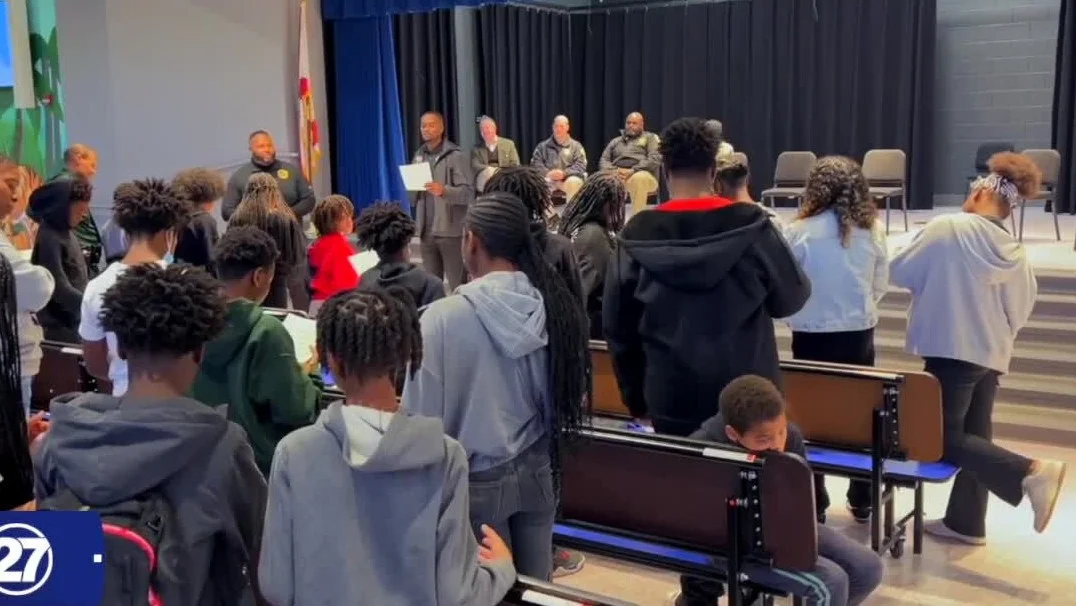
At Griffin Middle School in Northwest Tallahassee, Principal Kerri Anderson credits two initiatives introduced this school year. The first, Relax and Roar, gives students who meet behaviour and academic expectations 30 minutes of free time on Fridays. The second, SmartPass, is a digital hall pass that lets teachers track where a student is supposed to be and how long they have been out of class.
The programmes arrived against a specific backdrop. At a March 10 school board meeting, Leon County Superintendent Rocky Hanna said the district was still dealing with a troubling trend in student behaviour: “We have noticed an upper trend and aggressive behaviors by our students coming out of the pandemic that trend unfortunately has continued.”
Anderson told WTXL that the change shows up in daily routines. “They’re making it to class because they don’t want to miss Relax and Roar,” she said, adding that disciplinary referrals are “majorly down from last year.” The same report carried a limitation the school has not resolved: the station said it was still working to get the actual numbers comparing this year with last.
Alpha School’s answer is different in almost every respect. At its Chicago campus, which opened this fall for students in pre-K through eighth grade, there are no traditional teachers. Adults are called “guides,” and adaptive software handles academic instruction, which the school says lets students master core subjects in roughly two hours a day. Zane Shah, 13, an eighth grader, told CBS News that two hours of daily instruction covered what he had learned in a typical eight-hour school day.
Alpha says its students score in the top 1% on national standardised tests and that it does not screen applicants on previous grades or test scores. According to a February analysis by the University of Colorado’s National Education Policy Center cited by CBS News, only about one-third of Alpha guides have education training or degrees.
Helping Students Make It to Year 2 Requires Numbers, Not Narratives
Both schools describe gains. Neither has published externally validated results, and the gap matters most for the promotion decision that the phrase describes in most systems: a formal, consequential judgment about whether a learner advances.
Rebecca Winthrop, a senior fellow at the Brookings Institution who has visited Alpha’s campuses, told CBS News: “Parents should know that this is an experimental model. There’s no clear externally validated evidence around the results they claim.” Carol Corbett Burris of the Network for Public Education went further, describing Alpha as “less an effort to expand educational opportunity than an experiment in extracting maximum profit from schooling,” and saying a free Arizona charter built on the same TimeBack platform performed “dismally” compared with Arizona public schools.
The third case involves the machinery that governs promotion in much of the world. According to Britannica’s review of the testing debate, high-stakes achievement tests carry consequences for students, teachers and schools, including that “low scores can prevent a student from progressing to the next grade level.” The No Child Left Behind Act, signed on Jan. 8, 2002, mandated annual standardised testing in reading and math in grades 3-8 and again in grade 10. State spending on standardised tests rose from $423 million before the law to almost $1.1 billion in 2008. Barack Obama’s Race to the Top followed in 2009, offering states $4.35 billion in competitive funding tied in part to test results.
The African Evidence Gap In A Global Debate
None of the three sources cited here reports enrolment, retention or examination data from an African school system. That absence is not a footnote. It means any claim that a Friday reward, an adaptive-learning platform or a national exam gate would lift progression rates in African classrooms is a forecast, not a finding. Funding per learner, teacher supply, connectivity and the weight attached to terminal examinations vary by country, and the source material documents none of them.
What the three cases do share is a methodological habit worth naming. Each measures what is easiest to count: referrals at one school, a self-reported test percentile, a state’s testing budget. Each leaves the decisive question, whether a student actually advanced and then stayed on track, either unanswered or answered by the institution itself.

The Big Picture
The uncomfortable conclusion is that a reward system, an AI curriculum and a national examination are not variations on one idea. They are three different theories of what a school is for. The Tallahassee case says students need incentives and visibility. The Chicago case says they need pace and individualised instruction. The testing regime says the system needs a comparable number, whatever it costs in teaching time.
The evidence available so far supports a narrower point: helping students make it to year 2 is a claim that has to be audited, not announced. Until schools and systems publish referral counts, retention rates and independent test results across more than one cohort, the honest position is that all three approaches remain unproven. The cost of that uncertainty falls on the students who do not advance.
Frequently Asked Questions
What are the two new programmes at Griffin Middle School?
Relax and Roar rewards students who meet behaviour and academic expectations with 30 minutes of free time on Fridays. SmartPass is a digital hall pass that lets teachers track where students are supposed to be and how long they have been out of class. Principal Kerri Anderson credits both with reducing disciplinary referrals, though the school has not yet released the comparison numbers.
Has Alpha School’s academic model been independently verified?
No. Alpha says its students score in the top 1% on national standardised tests, but Brookings senior fellow Rebecca Winthrop told CBS News there is no clear externally validated evidence around the results the school claims. A February analysis by the University of Colorado’s National Education Policy Center found about one-third of Alpha guides have education training or degrees.
How do standardised tests affect whether a student advances a year?
According to Britannica’s review of the debate, high-stakes achievement tests carry consequences for students, teachers and schools, and low scores can prevent a student from progressing to the next grade level. The No Child Left Behind Act, signed on Jan. 8, 2002, mandated annual testing in reading and math in grades 3-8 and again in grade 10.
FIRST TIME REACTIONS:
Be the first to leave us a comment – Helping Students Make It to Year 2: What the Evidence Shows, down the comment section.
JOIN US ON OUR SOCIAL MEDIA:
About Rosabella Eboh
Rosabella Eboh is an author at AfriLatest. With a passion for writing and a flair for creativity, she contributes original content and unique perspectives to the platform. Rosabella focuses on human-interest stories, cultural trends, and in-depth feature reporting.
View all articles by Rosabella Eboh-

 Car Reviews2 weeks ago
1955 Chevy Bel Air Restomod: What SEMA Really Proves
-
Savings & Investing3 weeks ago
Hidden Medicare Fees Draining Your Retirement Savings
-
Car Reviews4 weeks ago
Ford Bronco ORV Package: $18,995 Ownership Reality Check
-
JAMB & WAEC4 weeks ago
JAMB Admission Process: What Changed And What Is Still Talk
-
Movies & TV4 weeks ago
Silo Season 1 Ending Explained: What the Showrunner Said
-
Movies & TV3 weeks ago
Wizkid Starboy Desire Ft Banky W Shaydee: Fact Or Fan Fiction?