Africa News
Stablecoins In African Trade Gain Ground, Costs Bite
Stablecoins in African trade solve dollar shortages and after-hours settlement in Nigeria and Ghana, but costs, hacks and blockchain silos slow wider use.

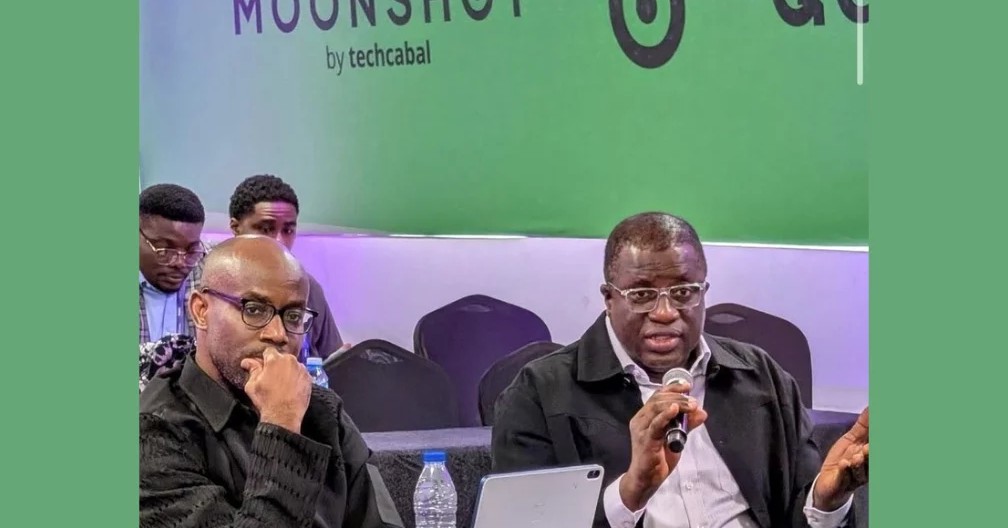
The scoreboard from Lagos read plainly enough. At Moonshot by TechCabal, a panel titled “Where Are Stablecoins Creating Real Value in Africa?” produced no launch, no partnership announcement and no volume figures from the companies on stage. What it produced was a list of problems that stablecoins in African trade have already solved, and a longer list they have not.
Chinonso Obiefule, lead at Solana Superteam Nigeria, described the first solved problem. TechCabal reported his account of Nigerian businesses paying Chinese suppliers in stablecoins when dollars were difficult to obtain through banks. “People want to access dollars, but they cannot do that because, obviously, dollars aren’t easily accessible, so the next best option is actually stablecoin,” he said.
Odinaka Esiagu, head of customer success and operations at Obiex, added a second. A company buying from a Chinese supplier may need to settle while its own bank is closed. Stablecoins move the money without waiting for the next banking day. Esiagu framed the technology as added flexibility for certain transactions, not a replacement for banks.

Where Stablecoin Payments Already Clear The Bar
The scale is contested but large. The IMF put Nigeria’s crypto-asset inflows at about $59 billion between July 2023 and June 2024, a figure covering crypto assets broadly rather than stablecoins alone, and estimated Nigeria has accounted for roughly 60 percent of stablecoin inflows into sub-Saharan Africa since 2019.
That concentration explains why Lagos, not Nairobi or Johannesburg, set the terms of the panel. The demand driver is not ideological. It is a foreign-currency queue and a banking calendar.
Costs And Trust Still Set The Price Of Admission
Availability is not adoption. Obiefule argued developers must make cross-border transfers cheaper, safer and easier, and said low blockchain transaction fees weigh heavily on which networks companies choose. “It should be cheaper to send money to somebody abroad or to get money from somebody abroad,” he said.
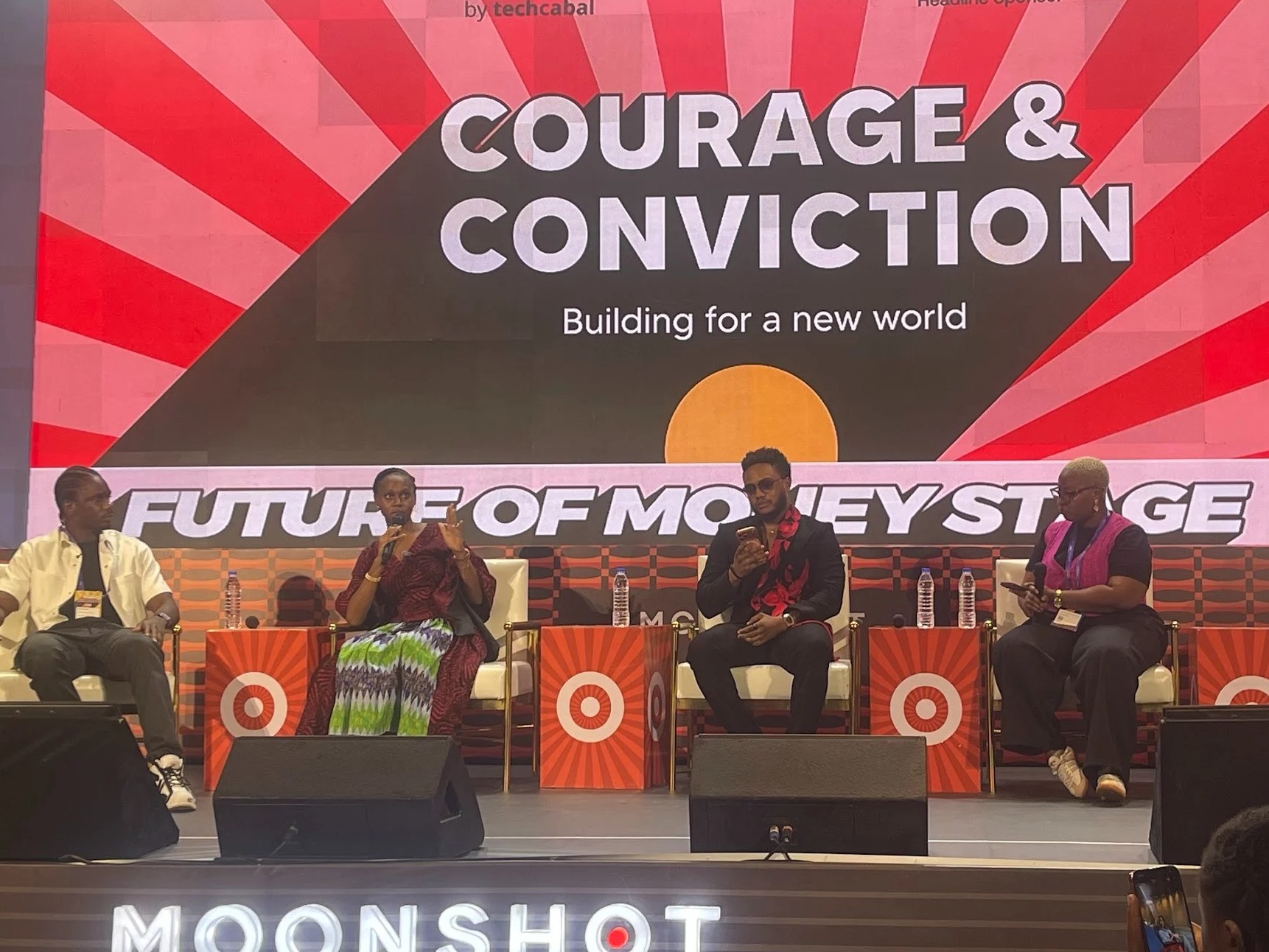
Trust is the harder constraint. Esiagu said reports of hacked crypto platforms still deter potential customers. “Some people are still scared,” she said. Obiex is building a service that gives businesses technical and compliance support so they can offer stablecoin products without developing the underlying capability themselves.
Fragmentation Is The Unfinished Play
Seun Lanlege, chief executive of Hyperbridge, identified the structural problem the panel’s title implied but did not resolve: funds on one blockchain are not automatically usable on another. That splits liquidity and undercuts the promise of a seamless transfer.
Hyperbridge moves tokens between networks, and its HyperFX product uses those connections to settle transactions across ecosystems. Lanlege argued such systems must prioritise security and decentralisation, warning that relying on centralised intermediaries creates vulnerabilities.
Ghana Shows What Rules Do To Stablecoins In African Trade
Ghana offers the clearest test of what happens when regulation arrives. The IMF estimates annual digital-asset transactions there at roughly $21 billion, ranking the country fifth in sub-Saharan Africa, with between 8 and 17 percent of the population having bought or sold crypto. Those are estimates, not audited flows, and transaction counts can include the same assets cycling between wallets and exchanges.
The legal base now exists. Parliament passed the Virtual Asset Service Providers Bill in December 2025, and Act 1154 divides oversight between the Bank of Ghana and the Securities and Exchange Commission. Crypto.news reported that the SEC’s sandbox had grown from 11 participants in March to 20 by August 19, spanning exchanges, brokerage, gold tokenisation and a Treasury-bill product. The Bank of Ghana has created a Virtual Assets Department.
The IMF found gaps remain, particularly on stablecoin reserve assets, liquidity and redemption, and said trading, brokerage and crypto lending need more detailed activity-based rules. Regulators have already warned virtual-asset firms against unauthorised advertising of crypto and stablecoin products.
What The Numbers Say About The Next Two Years
Market structure cuts against any assumption that today’s leaders hold. Tether’s USDT and Circle’s USDC control more than 85 percent of a $217 billion stablecoin market, yet Rob Hadick of Dragonfly argues the technology is roughly 5 percent developed and that challengers will take ground through payments, distribution and compliance rails, as CCN reported. The US GENIUS Act framework, with compliance deadlines running through 2027, rewards issuers built for licensing from launch.
There is a second competitor that receives less attention. Standard Bank became the first African bank to link directly into China’s Cross-Border Interbank Payment System in November 2025, allowing settlement with China in renminbi without a dollar intermediary, as Al Jazeera reported. Stablecoins are not the only answer to a dollar shortage.
An Editor’s Note On Verification
This report was commissioned as an NHL game recap. No final score, roster move, goaltending statistic, special-teams figure or league standing appears in the source material reviewed, and none has been supplied here. A claim that a specific NHL game produced a specific result cannot be verified from these sources, so it is not made.
What It Means
The standings in this market favour access over ideology. Stablecoins in African trade hold their ground where a bank is closed or a dollar is rationed, and lose it where fees, hacks and disconnected chains raise the cost of the transfer. Until reserve rules in Accra and Lagos are settled, adoption will keep outrunning supervision, and supervision will keep chasing the corridor.
Frequently Asked Questions
What is driving stablecoin use among African businesses?
Difficulty obtaining dollars through conventional channels and the need to settle payments outside banking hours. Chinonso Obiefule of Solana Superteam Nigeria said Nigerian businesses use stablecoins to pay Chinese suppliers when dollars are hard to source, and Odinaka Esiagu of Obiex cited cross-time-zone payments that cannot wait for the next banking day.
How large is Nigeria’s crypto market relative to stablecoins?
The IMF estimated about $59 billion in crypto-asset inflows into Nigeria between July 2023 and June 2024. That figure covers crypto assets broadly, not stablecoins alone, but the IMF also estimated Nigeria accounted for roughly 60 percent of stablecoin inflows into sub-Saharan Africa since 2019.
What regulatory gaps remain for stablecoins in Ghana?
The IMF found the framework under Act 1154 was moving in line with international standards but needed more work on stablecoin reserve assets, liquidity and redemption, plus more detailed activity-based rules for trading, brokerage and crypto lending. Ghana’s SEC sandbox listed 20 firms by August 19.
Does this article contain an NHL game recap?
No. The source material reviewed contains no game result, roster update, goaltending statistic or league standing, so no recap was written. Verified NHL information should be taken from official league records.
Receive alerts for stablecoins in African trade and more like it.
 Follow AFRILATEST on Google News
FIRST TIME REACTIONS:
Be the first to leave us a comment – Stablecoins In African Trade Gain Ground, Costs Bite, down the comment section.
JOIN US ON OUR SOCIAL MEDIA:

About Rosabella Eboh
Rosabella Eboh is an author at AfriLatest. With a passion for writing and a flair for creativity, she contributes original content and unique perspectives to the platform. Rosabella focuses on human-interest stories, cultural trends, and in-depth feature reporting.
View all articles by Rosabella Eboh

Nigeria News
N31.5trn OMO Maturities Test Nigeria’s Rate Cuts
N31.55trn in OMO maturities hits Nigeria’s banks in Q4 2026. FMDA data explains why the CBN’s 350bp cut left lending rates at 29-35%.

The Central Bank of Nigeria walks into the final quarter of 2026 holding two numbers it has not reconciled. Its benchmark policy rate sits at 23 percent after a 350-basis-point cut at the September Monetary Policy Committee meeting. At the same time, N31.55 trillion of its own Open Market Operations bills fall due before the year closes.
The Financial Markets Dealers Association, in its November 2026 report State of Nigeria’s Financial Markets Q3 2026, calls those OMO maturities the single largest liquidity event of the quarter. The figure sits alongside N5.43 trillion in maturing Treasury bills, N1.76 trillion in Federal Government bond coupons and N217.5 billion in corporate commercial paper obligations.
What happens next turns less on the September announcement than on one operational choice: how much of that cash the CBN rolls over, and how much it lets sit in the banking system.
The Stance Behind The OMO Maturities
The central bank’s current position is looser than it was three months ago. September’s meeting cut the Monetary Policy Rate to 23 percent and lowered the Standing Deposit Facility rate from 22 percent to 20 percent. The Standing Lending Facility sits at 23.5 percent, leaving a corridor of 3.5 percentage points.
The banking system did not tighten into that cut. Average daily liquidity was N4.40 trillion in the third quarter, down from N4.86 trillion in the preceding quarter but still a surplus. The FMDA expects that surplus to hold overnight rates near the 20 percent deposit rate through the fourth quarter. A cash shortage would push them toward 23.5 percent instead.
The Cut That Never Reached The Loan Desk
Something verifiable did happen after the easing. Almost nothing changed at the lending desk. Average maximum lending rates across several sectors stood between 29 percent and 35 percent in October, the month after the cut.
That gap is the part of the story the headline rate hides. A trader financing stock, or a small firm borrowing for equipment, does not transact at 23 percent. They transact at whatever their bank quotes, and those quotes barely moved.
Two forces hold them up. The first is sterilisation. If the CBN absorbs the maturing cash through fresh auctions, interbank liquidity shrinks and money market rates stay put. The second is the federal government’s own appetite for naira debt.
Why N31.5trn In OMO Maturities Sets The Q4 Price
Treasury bill yields already show where investors think rates are heading. The 364-day stop rate fell from a peak of 17.70 percent in July to 15.89 percent at the September 23 auction, and held that level on November 11. Its true yield of roughly 18.9 percent sits below the 20 percent SDF rate, meaning buyers accepted a thinner return for liquid paper.
The scale of the OMO maturities is what makes the rollover call consequential. Allow a large share of that N31.55 trillion to stay in circulation and demand for government securities and equities firms up. Sterilise it aggressively and the cash available to financial institutions falls, slowing any decline in money market rates.
The fiscal side is not waiting. Net domestic borrowing reached N20.32 trillion by September 30, or 110 percent of the government’s N18.4 trillion full-year plan. It then sold N3.52 trillion in bonds during October and November. That supply competes directly with the CBN’s effort to pull yields down, and it caps how far bond yields can fall even as liquidity returns.
Equities absorbed part of the overflow. The Nigerian Exchange All-Share Index gained 9.5 percent in the third quarter, taking its year-to-date return to 61.4 percent at the end of September. Market capitalisation rose 10.9 percent to N163.1 trillion. The rally is domestically funded: domestic investors accounted for 92.9 percent of equity transactions in Q3, while foreign participation slipped to 7.1 percent from 11.3 percent in the previous quarter. Pension funds, with assets of N31.8 trillion in August and N17.8 trillion in federal government securities, remain the deep pocket that could shift allocation if yields keep sliding.

Naira, Reserves And The 2027 Election Calendar
The currency has not been a passive observer. The naira appreciated 3.8 percent on the official market to N1,329.16 per dollar at the end of September. Renewed dollar demand weakened it in November, and the FMDA recorded the parallel-market premium widening to 5.4 percent in early November.
External reserves fell by $508 million between October 30 and November 18, to $54.71 billion. The report flags the January 2027 election as a point where foreign portfolio investors could raise dollar demand.
Confidence is a separate variable, and it can move faster than any auction. On 1 September 2026 a false claim that OPay was shutting down its Nigerian operations spread online, urging customers to withdraw their money. The fintech, which says it has almost 50 million customers, held a press conference the next day; chief operating officer Dotun Daniel Adekunle said transactions were running normally and management had taken no decision to close (BBC Pidgin). A payment company is not a bank, but the episode showed how quickly a rumour can move money through this system.
For households, the two price signals point in opposite directions. Dangote Petroleum Refinery cut its petrol gantry price to N1,070 per litre through consortium marketers, down N60 from the N1,130 announced on November 18 and the lowest since July (BusinessDay). Fuel costs are easing. Credit costs are not.
What The OMO Maturities Will Tell Us By December
The FMDA lists four things to watch: the rollover of OMO maturities, the direction of Treasury bill yields, foreign portfolio flows and the planned launch of the repo market. It also expects progress on a non-deliverable forwards market before year-end, with swaps and options prepared for a possible first-quarter 2027 launch.
For a manufacturer paying 30 percent on working capital, none of that is abstract. September’s decision changed the central bank’s stated price of money. Whether the OMO maturities are rolled over or released will decide what that money actually costs in the first quarter of 2027.
The report itself sets the frame: the fourth quarter will be shaped by three competing forces, the CBN’s liquidity management, the government’s borrowing appetite and the naira’s ability to withstand renewed foreign exchange demand. Two of those three sit outside the central bank’s control.
Frequently Asked Questions
How much is maturing in Nigeria’s financial markets in Q4 2026?
The FMDA puts OMO maturities at N31.55 trillion, alongside N5.43 trillion in Treasury bills, N1.76 trillion in Federal Government bond coupons and N217.5 billion in corporate commercial paper obligations.
Did the September 2026 rate cut lower borrowing costs for Nigerian businesses?
Not measurably. The Monetary Policy Rate was cut by 350 basis points to 23 percent in September, but average maximum lending rates across several sectors were still between 29 percent and 35 percent in October.
Why do OMO maturities matter for the naira and equities?
How the CBN handles the maturing bills decides how much cash stays in the banking system. A large rollover release could firm up demand for government securities and equities, while aggressive sterilisation limits cash for financial institutions. The FMDA also flags foreign portfolio dollar demand ahead of the January 2027 election as pressure on the naira.
FIRST TIME REACTIONS:
Be the first to leave us a comment – N31.5trn OMO Maturities Test Nigeria’s Rate Cuts, down the comment section.
JOIN US ON OUR SOCIAL MEDIA:
About Rosabella Eboh
Rosabella Eboh is an author at AfriLatest. With a passion for writing and a flair for creativity, she contributes original content and unique perspectives to the platform. Rosabella focuses on human-interest stories, cultural trends, and in-depth feature reporting.
View all articles by Rosabella EbohNigeria News
Mallam Aminu Kano International Airport: Drugs, Cash, Runway
Mallam Aminu Kano International Airport seized 580,000 unregistered medicines, undeclared cash and cannabis in separate raids. What the records confirm.

Nigeria Customs officers at the Mallam Aminu Kano International Airport have handed more than 580,000 unregistered medicines to NAFDAC, the food and drug regulator. For a reader in Kano, that is not a customs statistic. It is the gap between a foreign factory floor and the shelf of a chemist in Sabon Gari.
The Kano/Jigawa Area Command of the Nigeria Customs Service said the consignment was intercepted on 9 June 2026 at the SAHCO Shed of the airport. A joint examination with the National Agency for Food and Drug Administration and Control confirmed the products carried no mandatory registration or certification for importation and distribution in Nigeria.
According to Punch, the haul comprised 575,440 tablets of various medicaments, 5,415 injections, 1,075 bottles of eye drops and 243 inhaler canisters. The handover took place at the Customs House in Bompai, Kano, with Acting Area Controller Deputy Comptroller Usman Adamu signing off and NAFDAC’s Azik Kanadi, an assistant director in the Ports Inspection Directorate in Kano, receiving.
What The Handover Document Does And Does Not Establish
The confirmed facts are narrow and specific: the date of interception, the pharmacy-level breakdown of the consignment, the joint Customs-NAFDAC examination, and the transfer of custody. Those are on the record in the service’s own statement posted on its X account.
What is not on the record is equally important. Neither account names the country of origin, the manufacturer, the importer of record, or the flight the goods arrived on. No arrest was announced. NAFDAC has not said whether the items will be destroyed, returned to sender, or tested for substandard composition.
Adamu warned importers and distributors to desist, and said the command would intensify surveillance. Kanadi said drugs that have not gone through regulatory evaluation pose serious health risks. Both are commitments about future conduct, not findings about this consignment.
Why Mallam Aminu Kano International Airport Keeps Appearing In Seizure Files
Look at the enforcement record across agencies and a pattern holds. The airport is not only a passenger gateway. It is a filter, and its busiest filter lane faces Saudi Arabia.
The Guardian reported on 11 March 2026 that the same Kano/Jigawa command intercepted an outbound traveller with $106,500 and another with 134,256 Saudi Riyals, both undeclared. Adamu described that as a money-laundering offence under Nigerian law and said the exhibits and suspects were handed to the EFCC for prosecution. A separate outbound passenger was stopped on 18 February 2026 with 22.80kg of silver metal bars concealed in baggage and no export document, an act Customs said breached Section 55(f) of the NCS Act 2023.
The National Drug Law Enforcement Agency has worked the same corridor. Its statement, carried by The Nigerian Voice, records the interception of Fatimah Ahmad on 16 October during outward clearance of an Ethiopian Airlines flight to Jeddah via Addis Ababa. A search found 511.75 grams of cannabis concealed in a gallon of palm oil. Her cousin, Abubakar Yahaya, was arrested at the airport car park after she told investigators he gave her the gallon. That claim is an allegation, untested in court.
Two cautions belong here. The NDLEA release gave dates without a stated year, which leaves the timeline unverifiable against this year’s calendar. And the agency’s Kano State command separately seized 30,100 tramadol tablets on the Zaria-Kano Road on 13 October; no public document links that land haul to any airport consignment, and it should not be presented as if one does.
The structural difference is worth stating plainly. Lagos ports handle volume, mostly containerised cargo cleared through manifests. Kano handles people, and people carry. Concealment inside a palm oil gallon or a traveller’s baggage defeats manifest-based screening entirely, which is why body-carried seizures cluster at airports on the Umrah and Hajj route.
Inside The N46 Billion Runway Approval
On the infrastructure side, the record is an announcement, not a completed project. At the commissioning of the remodelled and upgraded Muhammadu Adamu Dankabo Domestic Terminal, Aviation Minister Festus Keyamo said President Bola Tinubu had approved N46 billion for the resurfacing and reconstruction of the airport’s second runway.
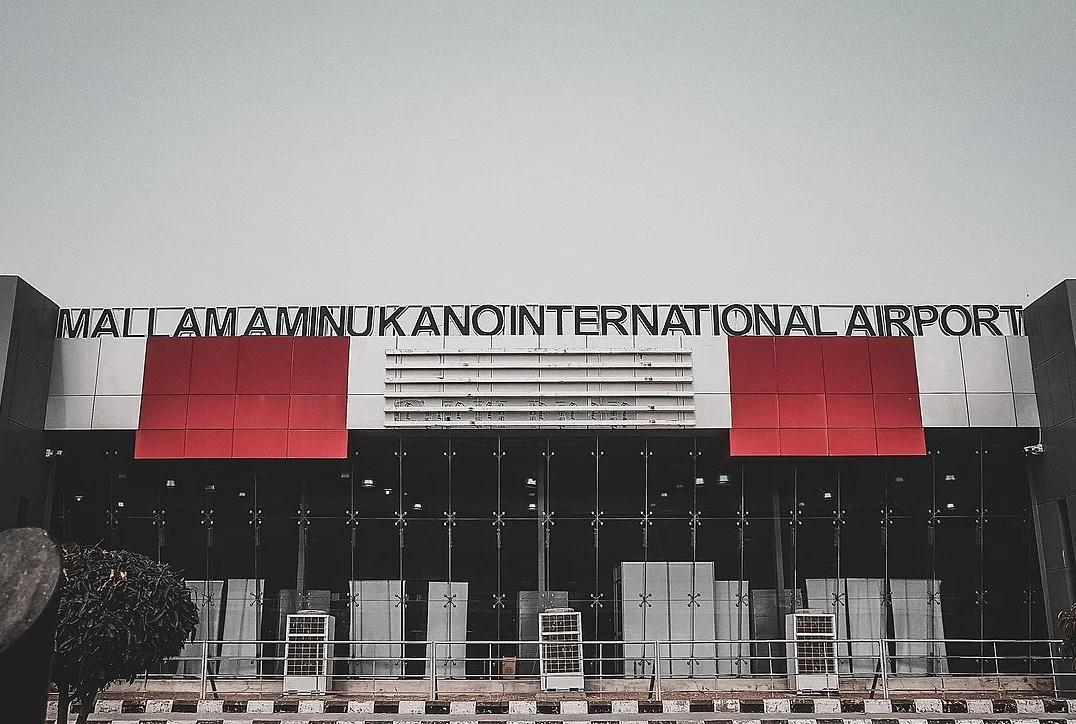
According to Channels Television, Keyamo also said upgrade work on the Hajj Terminal had begun, with contractors on site. FAAN Managing Director Olubunmi Kuku and board chairman Abdullahi Ganduje spoke at the same event. Kano’s Commissioner for Transport, Haruna Isa Dederi, represented Governor Abba Kabir Yusuf.
An approval is not a contract award, a mobilisation date, or a finished runway. The minister’s statement on the Hajj Terminal is a government claim not independently verified in any of these accounts. None of the four reports mentions new scanning or detection capacity at the airport, which is the equipment the seizures above actually test. Upgrading a terminal and resurfacing a runway make flying more comfortable. They do not, on their own, make a suitcase of tramadol easier to find.
What To Watch
Three dates matter. First, whether NAFDAC publishes the destruction or disposal record for the 580,000 items and names an importer. Second, whether the EFCC files charges in the undeclared currency case, or whether it quietly joins a file. Third, whether the N46 billion runway contract is advertised, awarded and dated, or remains a line in a speech.
The test of the Mallam Aminu Kano International Airport upgrade is not the terminal’s floor tiles or the length of the runway but the number of 2026 seizure records that cannot be produced in 2027. Until the enforcement agencies publish outcomes as reliably as they publish catches, the airport’s most documented function will remain the interception of what passes through it.
Frequently Asked Questions
How many unregistered medicines were seized at Mallam Aminu Kano International Airport?
The Nigeria Customs Service said the consignment exceeded 580,000 items: 575,440 tablets of various medicaments, 5,415 injections, 1,075 bottles of eye drops and 243 inhaler canisters. It was intercepted on 9 June 2026 at the SAHCO Shed and later handed to NAFDAC.
Were criminal charges announced in the Kano airport seizures?
No charges were announced in the pharmaceutical case. In the separate undeclared currency case, Customs said suspects and exhibits were handed to the EFCC for prosecution, but no filing has been publicly confirmed.
Has the N46 billion Kano airport runway project started?
Only the presidential approval was announced, by Aviation Minister Festus Keyamo. No contract award, mobilisation date or completion timeline was disclosed in the reports, so the project should be treated as approved, not implemented.
FIRST TIME REACTIONS:
Be the first to leave us a comment – Mallam Aminu Kano International Airport: Drugs, Cash, Runway, down the comment section.
JOIN US ON OUR SOCIAL MEDIA:
About Rosabella Eboh
Rosabella Eboh is an author at AfriLatest. With a passion for writing and a flair for creativity, she contributes original content and unique perspectives to the platform. Rosabella focuses on human-interest stories, cultural trends, and in-depth feature reporting.
View all articles by Rosabella EbohAfrica News
Maida Lifts Africa’s Digital Economy Ambition To $2trn
Aminu Maida wants Africa’s digital economy ambition set at $2trn. Nigeria’s data use rose 47% in a year — here is what is confirmed and what is not.
Africa’s digital economy should be pursued as a $2 trillion opportunity rather than a $1 trillion one, the head of Nigeria’s telecoms regulator told a Lagos technology forum — a figure offered without a deadline, a costed plan or a named source of finance.
Dr Aminu Maida, executive vice chairman and chief executive of the Nigerian Communications Commission, made the call in a keynote at the sixth African Tech Alliance Forum, AfriTECH 6.0, held at the Oriental Hotel in Lagos. He was represented by Tunji Jimoh, head of the NCC’s Lagos zonal office, according to a TechEconomy report on the address.
The organisers had themed the event “The Next $1 Trillion Opportunity: Building Africa through Technology.” Maida told them they had undersold the continent. He pointed to President Bola Ahmed Tinubu’s target of a $1 trillion Nigerian economy by 2030 and argued the continental number should sit far above one country’s goal.
“If that is the ambition of one African country, surely the ambition for an entire continent must be considerably greater,” he said. “Africa has the population, the talent, the resources and the entrepreneurial energy to pursue an opportunity worth at least twice that amount.”
That is the ambition. It is not yet a plan, and the distinction matters more than the headline number.
Where Africa’s Digital Economy Ambition Meets Nigeria’s Data Curve
The same official carried a different argument into a different room. At the Nigeria Digital Connectivity Investment Forum in Abuja, organised with Swedfund and Ookla and reported by Punch, Maida arrived with measurements rather than targets.
Nigerians consumed about 1.66 million terabytes of data in July 2026, he said, against 1.13 million terabytes in July 2025 — an increase of almost 47 per cent in twelve months.

“We can see the demand in our figures,” Maida said. Keeping pace will require sustained investment, both to expand networks and to improve the experience of people already connected.
The Lagos audience was founders and operators. The Abuja audience was investors, development finance institutions and government. The pitch shifted accordingly: in Lagos it was ambition, in Abuja it was load. A network carrying 47 per cent more traffic in a year is a network whose investment case is already being tested by users, not by forecasters.
The $240bn Figure That Appeared On Both Stages
Maida cited the GSMA’s Mobile Economy Africa 2026 report: mobile technologies and services contributed $240 billion to Africa’s economy in 2025, equal to 7.8 per cent of continental GDP, with the figure projected to reach $290 billion by 2030.
At the Abuja forum, Minister of Industry, Trade and Investment Dr Jumoke Oduwole used the same $240 billion continental figure — then separated it from Nigeria’s own. She said the telecommunications sector accounted for more than nine per cent of Nigeria’s GDP in the first quarter of 2026, and that the country had more than 25 data centres operational or under construction.
That separation is the useful part. A continental aggregate tells an investor the size of a market. It does not tell a Lagos fabricator whether data is affordable, or a Kaduna clinic whether the connection holds through a working day. Oduwole’s phrasing was explicit: “Nigeria is not approaching digital connectivity simply as a social infrastructure requirement. It is an investable economic opportunity.”
Why Coverage Alone Won’t Lift Africa’s Digital Economy
Maida’s sharpest line was an admission against the industry’s own scoreboard. Citing the same GSMA work, he said nearly one billion people across Africa remain offline.
“A person is not digitally included merely because a signal reaches their community,” he said. “Indeed, true connectivity is measured by the quality of the user’s experience, not just kilometres of cable.”
He set out four areas for sustained attention: foundational and resilient connectivity; meaningful digital inclusion; African innovation and productive technology adoption; and trust and collaboration. On the first, he called broadband essential economic infrastructure and flagged reliable electricity, infrastructure sharing, coordinated right-of-way rules and spectrum management as the constraints that decide whether fibre gets used.
Swedish Ambassador to Nigeria Anna Westerholm did not dispute the ambition but listed what remains: gaps in coverage, quality, affordability and supporting infrastructure. “Data should not be the end point,” she said. “Its real value comes when we use it to make better decisions and turn those decisions into action.”
Minister of Communications, Innovation and Digital Economy Dr Bosun Tijani, represented by Adetunji Adeyemo of the National Frequency Management Council Secretariat, said government cannot fund the build alone and called for public-private partnerships and development finance.
Sorting Confirmed Outcomes From Projections
The record from the two events separates cleanly.
Confirmed and dated: the NCC’s own consumption figures for July 2026 against July 2025; the 2025 tariff adjustment, which the commission says addressed operator financial pressure; the designation of telecom infrastructure as Critical National Information Infrastructure; and continuing engagement with state governments on Right of Way. BusinessDay’s own news index also carried the AfriTECH address under the headline that Maida had raised Africa’s digital economy ambition to $2trn, while questioning a connectivity-first strategy.
Projected: the GSMA’s $290 billion contribution estimate for 2030.
Promised, with no delivery date attached: $2 trillion. At $240 billion in 2025, the mobile economy Maida described would need to grow more than eightfold to reach that figure. No timeline, financing structure or implementing institution was announced at either forum. The tariff adjustment is confirmed as policy; its effect on service quality, which the NCC said it expects, has not been demonstrated in the material published so far.
What To Watch
The next test is not another headline number. It is whether the Abuja forum produces named financing commitments from the development institutions in the room, and whether the NCC publishes usage-gap targets to sit alongside its coverage data — the difference Maida himself drew between a signal arriving and a person being able to use it.
Watch also for whether the 47 per cent demand curve is matched by measurable improvements in experience for subscribers already connected, and whether regulators outside Nigeria adopt the $2 trillion framing or set their own, country-specific benchmarks.
Africa’s digital economy ambition is now on the record at $2 trillion. Whether it survives contact with 1.66 million terabytes, one billion offline users and a network that must be paid for is the question the next twelve months will answer.
Frequently Asked Questions
What exactly did Dr Aminu Maida propose?
At AfriTECH 6.0 in Lagos, the NCC chief executive proposed raising the forum’s theme from “The Next $1 Trillion Opportunity” to “The Next $2 Trillion Opportunity: Building Africa through Technology.” He was represented at the event by Tunji Jimoh, head of the NCC’s Lagos zonal office. No deadline, financing plan or implementing body was announced with the figure.
Is the $2 trillion figure a projection or a target?
It is a stated ambition, not a projection. The only forward-looking number backed by a named report at the events was the GSMA’s estimate in Mobile Economy Africa 2026 that mobile technologies and services would contribute $290 billion to Africa’s economy by 2030, up from $240 billion in 2025. The $2 trillion figure carries no date in the source material.
What hard Nigerian data was presented?
The NCC said Nigerians consumed about 1.66 million terabytes of data in July 2026, compared with 1.13 million terabytes in July 2025 — an increase of almost 47 per cent in twelve months. Separately, Minister of Industry, Trade and Investment Dr Jumoke Oduwole said telecommunications accounted for more than nine per cent of Nigeria’s GDP in the first quarter of 2026.
FIRST TIME REACTIONS:
Be the first to leave us a comment – Maida Lifts Africa’s Digital Economy Ambition To $2trn, down the comment section.
JOIN US ON OUR SOCIAL MEDIA:
About Rosabella Eboh
Rosabella Eboh is an author at AfriLatest. With a passion for writing and a flair for creativity, she contributes original content and unique perspectives to the platform. Rosabella focuses on human-interest stories, cultural trends, and in-depth feature reporting.
View all articles by Rosabella Eboh-

 Car Reviews2 weeks ago
1955 Chevy Bel Air Restomod: What SEMA Really Proves
-
Savings & Investing3 weeks ago
Hidden Medicare Fees Draining Your Retirement Savings
-
Car Reviews4 weeks ago
Ford Bronco ORV Package: $18,995 Ownership Reality Check
-
JAMB & WAEC4 weeks ago
JAMB Admission Process: What Changed And What Is Still Talk
-
Movies & TV4 weeks ago
Silo Season 1 Ending Explained: What the Showrunner Said
-
Movies & TV3 weeks ago
Wizkid Starboy Desire Ft Banky W Shaydee: Fact Or Fan Fiction?