World News
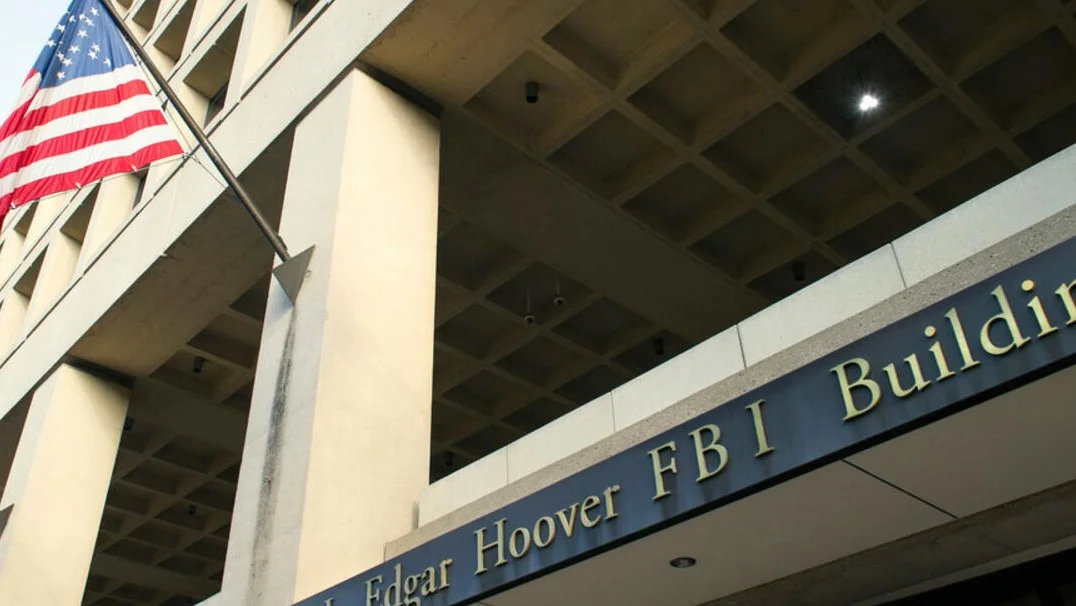
FBI Cyber Attack Hits NCIC Crime Database Again
A fresh FBI cyber attack has struck the National Crime Information Center, the second breach since September. What it means for Nigeria and the diaspora.


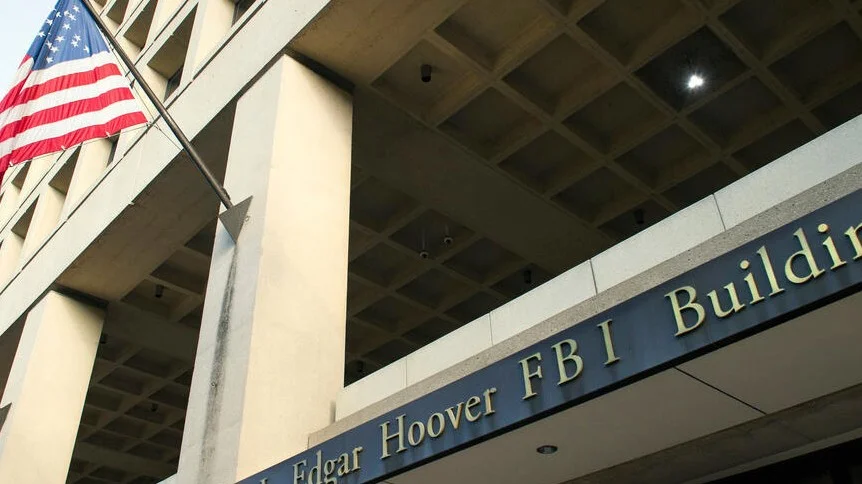
The FBI is investigating an apparent breach of the National Crime Information Center, the database that connects federal, state and local police across the United States, two people briefed on the investigation told CNN and NBC News on Friday.
It is the second intrusion into an FBI system in roughly two months. The bureau has neither confirmed nor denied it. For a Nigerian reader, the distance is shorter than it looks. NCIC feeds the criminal-history and background checks that sit inside US visa processing and diaspora travel, and the same week produced a Microsoft outage that took hundreds of millions of users offline worldwide — a reminder of how much banking, aviation and payments traffic in Nigeria runs on foreign infrastructure the country does not control.
That is the substance beneath the FBI cyber attack headlines. Not the hacking itself, but the dependency it maps.
What The FBI Cyber Attack On NCIC Actually Confirmed
Very little, on the record. CNN and NBC both attributed their reporting to two people briefed on the investigation. CNBC, citing CNN’s report, noted the FBI did not respond to a Reuters request for comment. AFP said it had contacted both the FBI and the USDA without a public response.
What is established is the target: NCIC, described by a former FBI official as one of the most critical information-sharing systems in American law enforcement. “Every day, officers across the country rely on NCIC to identify wanted fugitives, check for outstanding warrants, and access information that can directly impact officer and public safety,” the former official told CNN.
That official’s stated worry was not theft but integrity: whether hackers “could compromise the accuracy of the information that officers rely on.” A warrant deleted, a record altered, a name swapped. That is an operational risk before it is a privacy one.
Not established: who carried out the intrusion, whether data left the network, and whether it connects to a separate attack on the US Department of Agriculture reported the same week.
The USDA Breach Sitting Beside It
NBC reported, citing two former USDA officials, that employees were told on Thursday that a system used to pay farmers had been targeted, and that hackers could use the payments system as a backdoor into more sensitive material. The USDA has not commented publicly.
One former official framed the exposure around research rather than money: the department handles “a bunch of scary biologic issues,” and an adversary with access to the same material “could use our own research against us.”
Why The FBI Cyber Attack Reaches Lagos And Abuja
Nothing in the reporting ties the FBI cyber attack to Nigeria. The exposure is indirect, through what NCIC feeds. US visa applications, immigration checks and some corporate due-diligence processes draw on American criminal-justice data. A Nigerian applicant whose record is queried abroad sits downstream of systems like this one.
The structural lesson is sharper. Nigeria is digitising identity, policing and payments at speed, and much of the hosting sits with foreign providers. The integrity question the former FBI official raised applies as much in Abuja as in Washington: a compromised record does more damage in a country where a police extract or a court affidavit can decide a job, a loan or an election petition.
Hacks And Outages Are Two Different Problems
Washington spent the week blurring a distinction that matters for anyone assessing risk.
The outages were technical, not criminal, according to officials. They included a global Microsoft disruption affecting hundreds of millions of users, a nationwide halt to air travel that disrupted more than 18,000 flights, and a multi-day outage on a classified National Security Agency network that NBC’s sources said began during maintenance. Senator Mark Warner, the top Democrat on the Senate Intelligence Committee, said evidence showed the outages were not caused by cyberattacks, though he warned AI could have worsened the underlying vulnerabilities.
President Donald Trump urged the public to “relax.” The White House fired National Cyber Director Sean Cairncross this week; Trump said he was not good enough. The BBC reported the dismissal against mounting criticism of the outage response.
The timing drew attention. According to CNN, after bureau officials learned of the latest incident on Thursday, FBI Director Kash Patel appeared on Fox News to tout Operation Winter Shield — an operation completed months earlier — describing it as though still in progress and crediting his administration for system updates. “Other administrations could have made these updates, but they didn’t,” he said.
There is precedent for scepticism about transparency. After the September breach of an FBI jobs website by a group called ShinyHunters, roughly 38,000 staff records were said to have been taken. A Canadian cybersecurity researcher was arrested and faces charges related to that breach. Employees later complained they were left in the dark about whether they were affected and underwhelmed by the support offered.
What To Watch
Three markers matter. First, whether the FBI moves from silence to confirmation, and whether it discloses scope. Second, whether the USDA payments intrusion is linked to the NCIC case — the reporting says that remains unclear and no evidence yet ties them. Third, whether the ShinyHunters pattern repeats: a claim of stolen data, a slow official acknowledgement, then an arrest far from the original victims.
For Nigerian regulators, lenders and telecom operators, the test is less dramatic and more useful. The FBI cyber attack will be resolved or quietly buried in Washington. The question that travels is whether Nigeria’s own record systems are built to detect tampering, not merely theft — and whether anyone here has a working plan for the week a foreign cloud provider goes dark.
What To Watch
Frequently Asked Questions
What exactly was breached in the latest FBI cyber attack?
The target was the National Crime Information Center (NCIC), a database used by federal, state and local law enforcement to share information on warrants, criminal histories and background checks. CNN and NBC News both reported the apparent breach, citing two people briefed on the investigation. The FBI has not publicly confirmed the intrusion.
Is the FBI hack connected to the Microsoft outage and grounded flights?
No link has been established. Officials and Senator Mark Warner said evidence showed the recent outages were not caused by cyberattacks. The blackouts at Microsoft, the FAA’s air traffic system and a classified NSA network were described as technical failures, while the FBI and USDA incidents were described as hacks.
Why should Nigerians care about a US law enforcement database breach?
NCIC data feeds background and criminal-history checks used in US visa processing and some corporate due diligence, so Nigerian applicants and diaspora travellers are downstream of these systems. The wider lesson concerns data integrity: a tampered record can matter more than a stolen one, a risk that applies equally to Nigeria’s own digitising police and identity systems.
 Follow AFRILATEST on Google News
FIRST TIME REACTIONS:
Be the first to leave us a comment – FBI Cyber Attack Hits NCIC Crime Database Again, down the comment section.
JOIN US ON OUR SOCIAL MEDIA:

About Clare Dominic
Clare Dominic is the Editor at AfriLatest. With a background in journalism and a passion for storytelling, she oversees the editorial process to ensure content is accurate, engaging, and relevant. Clare works closely with contributors to maintain the highest standards of journalistic integrity across all news, sports, and lifestyle coverage.
View all articles by Clare Dominic

World News
Best Airbnbs In Paris 2026: What Airbnb Actually Confirmed
Airbnb’s 2026 release adds boutique hotels in Paris, AI planning tools and new services. What the best Airbnbs in Paris 2026 list really contains.

The most practical question about Paris in 2026 is not where to eat. It is where to sleep, and who is allowed to sell you the room. Anyone compiling a list of the best Airbnbs in Paris 2026 now has to account for a change the company itself announced: Airbnb wants to sell you a hotel, in the same app, on the same search results page.
That is not speculation. It sits in Airbnb’s own 2026 summer release, published on the company newsroom and attributed to co-founder and chief executive Brian Chesky.
What Airbnb Has Confirmed For Paris In 2026, And What It Has Not

According to Airbnb’s 2026 summer release, the company is bringing thousands of boutique and independent hotels onto the platform across 20 destinations, and Paris is named explicitly, alongside New York, London, Madrid, Rome and Singapore. The stated selection criteria are neighbourhood location, design and hospitality, with no big chains.
Confirmed alongside it: a price match guarantee. Find a lower price for the same hotel anywhere else and Airbnb returns the difference as Airbnb credit, not cash. Guests who book a featured hotel can receive up to 15% credit toward a future Airbnb home.
Paris also appears in the Experiences expansion. Airbnb is adding more than 2,500 food culture experiences and more than 3,000 landmark experiences, and it names Paris’s De Vie, described as one of the world’s best bars, for a cocktail session run through a Chef’s Table partnership. Airbnb states its experiences average 4.93 out of 5 stars.
The app upgrades are less settled. AI review highlights, which synthesise a listing’s guest reviews around location, amenities and family-friendliness, are described as live. The AI-powered comparison view for saved homes is, in Airbnb’s own words, available later this year. That is a plan, not a shipped feature.
What Airbnb has not published is any ranked list. There is no official top-25 of anything. Every such ranking is editorial curation, and the published material behind this one is thin on verified short-let inventory.

Why The Best Airbnbs In Paris 2026 List Now Includes Hotels
Time Out’s Paris team sends readers from its restaurant guide straight to a combined link for Paris’s best hotels and best Airbnbs. One link, two product categories, no distinction drawn. That editorial merging mirrors what the platform is doing commercially.
Urban List’s Eiffel Tower view guide makes the drift concrete. Its two most detailed Paris recommendations are the Hôtel Plaza Athénée, where the Eiffel Suite starts at 95 square metres, and the five-star Hotel Bowmann in the 8th arrondissement, where the Prestige Eiffel Suite carries a private terrace and the Bowmann Suite a private hot tub. Both are hotels. Neither is a hosted short-let with a kitchen.
The premium for a tower view is therefore being supplied by properties with concierge desks, star ratings and staff, which is exactly the inventory Airbnb now wants to list and price-match. The features that once separated the platform from a hotel, a kitchen and a resident host, become one option among several rather than the whole proposition.
For a traveller, the practical consequence is that search results for a Paris stay are no longer a clean comparison. A hotel room with a view and an apartment in the 11th arrondissement are different products, with different cancellation terms, different local taxes and different levels of service.
Where Nigerian Travellers Meet The Paris 2026 Booking Shift
For a Nigerian reader, most of what was announced does not apply. Grocery delivery with zero delivery fees and $10 off a $50 order is limited to more than 25 United States cities through Instacart. No naira pricing appears anywhere in the announcements. No Africa-specific service was disclosed.

Two additions do travel. Airport pickups through Welcome Pickups are available in more than 160 cities worldwide, with 20% off for Airbnb guests, and luggage storage through Bounce covers more than 15,000 locations in 175 cities with 15% off. For a diaspora traveller running a multi-city European trip, those are usable. For a single Paris booking, they are marginal.
The bigger variable remains what the neighbourhood delivers. Time Out’s Paris editors name Chez Jeanette as the best budget option, Recoin as the best bistro, Vaisseau as the best with a Michelin star, and Blanc as the best near the Eiffel Tower. A listing within walking distance of any of those does more for a trip than an AI-generated review summary.
Note also that the hotel side is running its own promotions. Condé Nast Traveler’s deals roundup tracks a fourth night free at the Ocean Club in the Bahamas for stays through December 2027, and a spending credit of up to $500 at the Four Seasons in Puerto Rico. Neither covers Paris. The deals being marketed hardest for late 2026 are Caribbean and American, not European, and no Paris hotel promotion of that scale appears in the verified material.
The verified picture for anyone hunting the best Airbnbs in Paris 2026 is narrower than the listicles suggest. Airbnb has confirmed that boutique hotels are entering its Paris inventory, that a price match guarantee and credit scheme sit alongside them, and that Paris features in its food-experience expansion. Everything beyond that, the rankings, the top-25 framing, the claim that a particular flat is the best value in the city, is editorial judgment or forecast rather than company data. Nigerian travellers should book on the confirmed terms: what the property actually is, what the cancellation policy says, and whether the discount arrives as cash or as credit. The rest is marketing.
Frequently Asked Questions
Has Airbnb published an official list of the 25 best Airbnbs in Paris for 2026?
No. Airbnb’s 2026 summer release contains no ranked list of properties in Paris or anywhere else. Rankings of the best Airbnbs in Paris 2026 come from travel publications and editors, not from Airbnb data.
Why would a hotel appear on a list of the best Airbnbs in Paris 2026?
Because Airbnb announced it is adding thousands of boutique and independent hotels across 20 destinations, with Paris named explicitly. Travel guides now treat hotels and short-lets as one booking category, so hotel suites appear alongside apartments.
What parts of the Paris 2026 Airbnb changes apply to Nigerian travellers?
Airport pickups through Welcome Pickups in more than 160 cities and luggage storage through Bounce in 175 cities are available worldwide. Grocery delivery is limited to more than 25 US cities, and no naira pricing or Africa-specific service was announced.
FIRST TIME REACTIONS:
Be the first to leave us a comment – Best Airbnbs In Paris 2026: What Airbnb Actually Confirmed, down the comment section.
JOIN US ON OUR SOCIAL MEDIA:
About Clare Dominic
Clare Dominic is the Editor at AfriLatest. With a background in journalism and a passion for storytelling, she oversees the editorial process to ensure content is accurate, engaging, and relevant. Clare works closely with contributors to maintain the highest standards of journalistic integrity across all news, sports, and lifestyle coverage.
View all articles by Clare DominicTrend politics
Quad Minerals Deal: Global Politics Needs Verification
Trump’s Quad critical minerals deal shows why global politics coverage must separate promises from enacted measures. What changed, and for whom.


US President Donald Trump says the Quad grouping has reached agreements on critical minerals, announced at a leaders’ meeting in Manila and reported by Al Jazeera on 17 November 2026.
Trump met India’s Prime Minister Narendra Modi, Australia’s Prime Minister Anthony Albanese and Japan’s Prime Minister Sanae Takaichi. “Our countries are the four corners of a free, open, stable, and prosperous Indo-Pacific,” he said ahead of the meeting. The minerals deals, he said, were meant to prevent “coercion by any single foreign supplier.” He did not name China.
That is the announcement. It is not yet a policy.
No text of the minerals agreements was published in the reporting. There are no tonnages, no delivery schedules, no financing figures, no named projects. What exists on the record is a leaders’ statement expressing “grave concerns” about “economic coercion,” including arbitrary export restrictions — again without naming a country.
Anyone reading global politics for signal rather than noise has to hold that distinction firmly. An intention to reduce dependence is not the same thing as a supply chain that has been reduced.
Why Global Politics Coverage Must Separate Promise From Measure
The measurable facts in this story sit elsewhere. China imposed restrictions on rare earth exports last year amid a trade dispute with Washington. In June the two sides agreed a deal aimed at restoring US access. China has also effectively shut off exports of key critical minerals to Japan for nearly a year, as relations between Asia’s two largest economies deteriorated.
Those are enacted measures with dates attached. They changed what buyers could obtain and what they paid. The Manila agreements, by contrast, are a framework whose content is unknown outside the room.

This is the test that should be applied to global politics reporting everywhere, including the coverage African audiences consume. A communiqué is a promise. A tariff, an export licence, a budget line or a signed contract is a measure. Only the second category tells a household or a firm what has changed.
The Ten-Month Rare Earth Claim Is A Projection, Not A Policy
Trump went further than the joint statement. “We are making rare earth at a level that we’ve never made before,” he said. “We’re going to catch them within 10 months.”
That is a forecast. The reporting supplies no baseline for US rare earth production, no capacity figure, no cost, no implementing agency. A reader cannot check the claim because the numbers behind it were not provided. When a leader sets a ten-month horizon on an industry that takes years to build, the accurate description is unverified projection.
Independent assessment is the corrective. Scott Lucas, professor of international politics at the Clinton Institute at University College Dublin, told Al Jazeera the meeting suggested the Quad has a “functioning relationship,” then added: “I’m not sure I’d call it an alliance, as I don’t think the Trump folks believe in alliances.” He noted the damage from US tariffs on India and India’s response in diversifying.
That is a qualified verdict from a named scholar, not a press release. It belongs in the story beside the quote from the podium.
The African Absence In This Global Politics Story
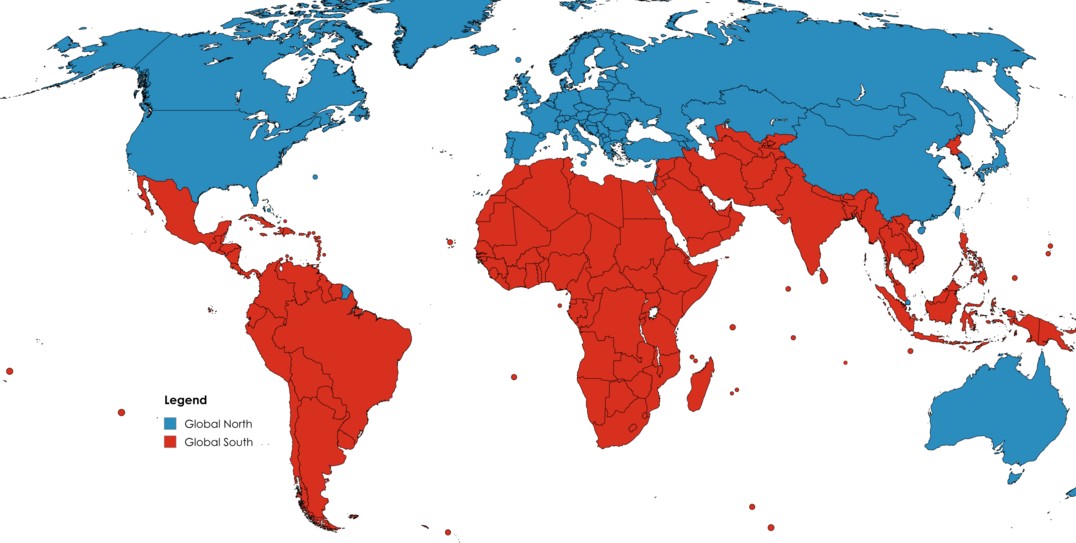
No African government, port, refinery or mine appears in the Quad statement, in Trump’s remarks, or in the reporting around them. The statement named no country at all as the target of its concern.
For African exporters, processors and manufacturers, the practical consequence of the Manila meeting is therefore nil until texts, financing and procurement rules appear. Coverage that frames the summit as a gain or a loss for the continent asserts something the documents do not support.
The better comparison is historical. In 2016, former Philippine president Rodrigo Duterte secured roughly $24 billion in pledged deals, loans and aid from China and announced an economic and military “separation” from the United States. Pledges are not disbursements, and his successor, Ferdinand Marcos Jr., reversed the posture. The Carnegie Endowment’s series on populist middle powers documents the same pattern in institutional terms: Argentina’s Javier Milei suspended entry examinations for the foreign service institute, and Hungary replaced roughly 70 percent of its foreign ministry’s professional staff with loyalists. Those are changes you can count.
Claims also travel faster than verification. Deceptive deepfakes have marred elections in Argentina and Slovakia, according to the Duluth News Tribune. A minerals deal announced at a summit will be recut, clipped and misquoted within hours.
What To Watch Next
Trump travels from the Philippines to China for the Asia-Pacific Economic Cooperation forum in Shenzhen, where he is expected to hold a trilateral meeting with Russian President Vladimir Putin and Chinese President Xi Jinping. China’s Ministry of Foreign Affairs says the talks will cover topics of “groundbreaking significance,” including “safeguarding world peace.” The next fortnight of global politics will either supply the evidence or withhold it.
Three checks will settle whether Manila produced anything real. First, publication of the minerals agreement texts with named projects and funding. Second, any change in China’s export licensing regime for rare earths. Third, whether US production figures appear against a stated baseline.
Separately, Trump said he was “looking into” a CNN report that US intelligence had determined Tehran was developing plans to use a so-called “dirty bomb.” Iran’s foreign ministry spokesperson, Esmaeil Baghei, called the claims baseless in a post on X. That, too, is a claim awaiting evidence rather than a confirmed event.
The discipline is the same in every case. Ask what changed, for whom, and on what document. Global politics coverage that cannot answer those three questions is decoration.
Frequently Asked Questions
What did the Quad actually agree to on critical minerals in Manila?
Leaders of the US, India, Australia and Japan issued a statement expressing ‘grave concerns’ about economic coercion and said agreements were reached to prevent ‘coercion by any single foreign supplier.’ No agreement text, funding figure or project list was published in the reporting.
Is Trump’s claim that the US will catch China on rare earths within 10 months verified?
No. Trump said the US would have ‘everything we need’ and would ‘catch them within 10 months,’ but the reporting supplies no production baseline, capacity figure, cost or implementing agency against which the claim can be checked.
Does the Manila meeting change anything for African governments or businesses?
Nothing in the Quad statement, Trump’s remarks or the reporting names an African government, port, refinery or mine. The practical effect is nil until agreement texts, financing and procurement rules are published.
FIRST TIME REACTIONS:
Be the first to leave us a comment – Quad Minerals Deal: Global Politics Needs Verification, down the comment section.
JOIN US ON OUR SOCIAL MEDIA:

About Rosabella Eboh
Rosabella Eboh is an author at AfriLatest. With a passion for writing and a flair for creativity, she contributes original content and unique perspectives to the platform. Rosabella focuses on human-interest stories, cultural trends, and in-depth feature reporting.
View all articles by Rosabella EbohWorld News
Azerbaijan Tourism Potential Pitched To China’s MICE Buyers
Azerbaijan tourism potential was showcased at CIMX 2026 in Beijing, with AZAL and three operators. What the B2B push means for Nigerian travel buyers.
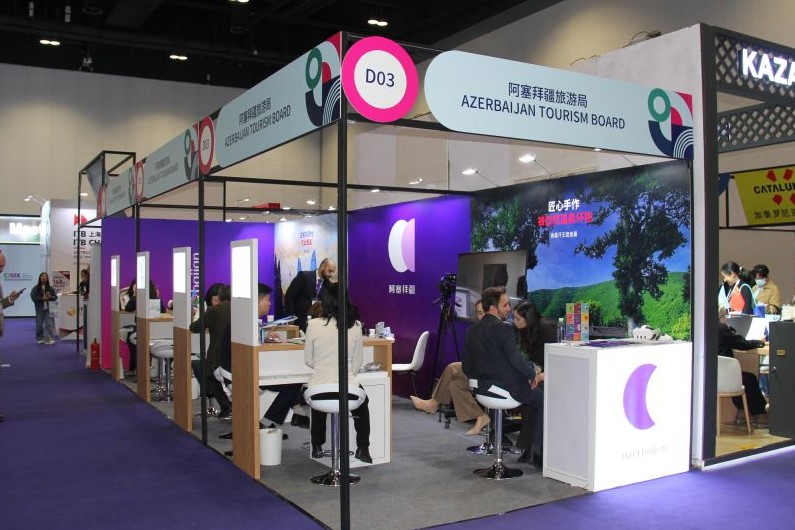
Azerbaijan tourism potential is being marketed in Beijing this week to the buyers who decide where corporate conferences, incentive trips and trade exhibitions land. The Azerbaijan Tourism Board, three tourism companies and the state carrier Azerbaijan Airlines (AZAL) are exhibiting jointly at the China International MICE Exchange, branded CIMX 2026, which opened in Beijing, according to a dispatch from AZERTAC.
MICE is the industry shorthand for meetings, incentives, conferences and exhibitions. It is the segment of travel that spends the most per head and books furthest ahead, and it is the segment Nigerian hotels, event venues and conference cities chase hardest. That is why a sales push from Baku to Beijing belongs on a Nigerian business desk.
What The Delegation Is Selling
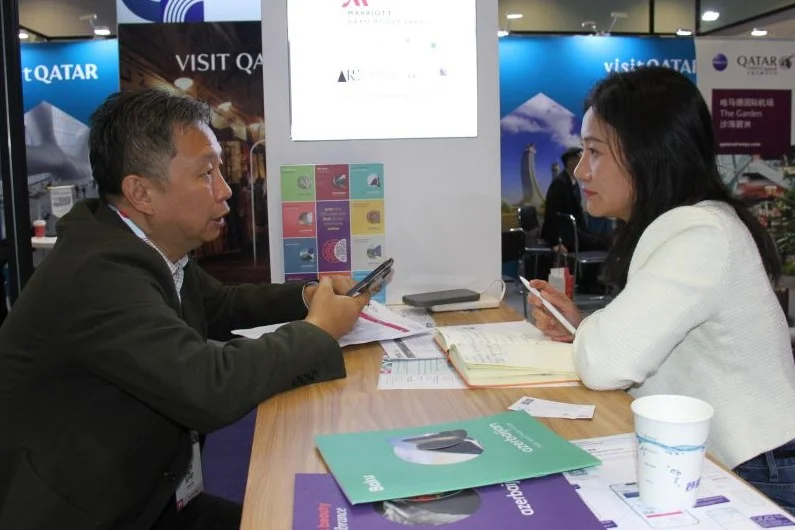
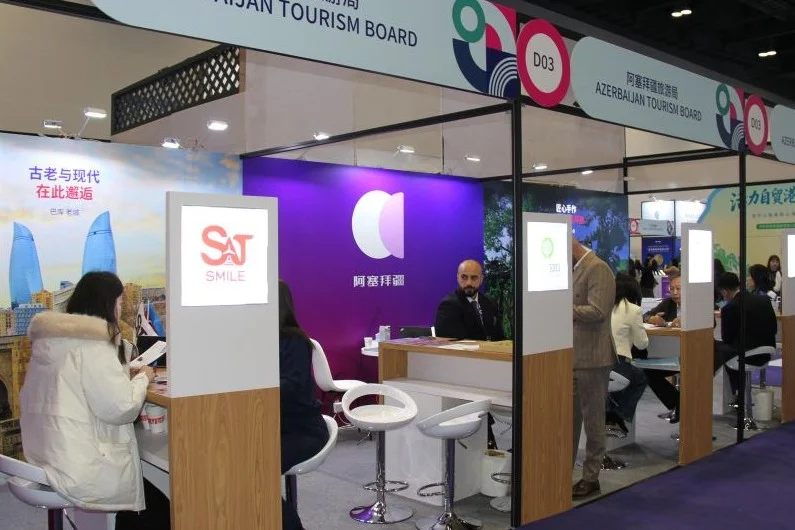
AzerNews reports that the Azerbaijani stand is presenting the country’s historical and cultural heritage, its tourism infrastructure, high-end hotels, conference and event venues, plus programmes for corporate groups and incentive travel.
The stated objectives are three: strengthen Azerbaijan’s profile as an international MICE destination, build new partnerships in the Chinese market, and open business ties between operators from the two countries. The board and its partners are holding B2B meetings with Chinese buyers, with the agenda covering new tourism products, corporate group bookings and long-term cooperation.
No contracts, passenger targets or revenue figures appear in either account.
Where Azerbaijan Tourism Potential Meets China’s MICE Buyers
The delegation’s composition carries the real argument. Three private operators, plus the tourism board, plus the national airline travel as one bloc. In destination marketing that is the difference between a brochure and a bookable product: the airline supplies seats, the operators supply itineraries, and the board supplies the credibility that lets a meeting planner commit a group of hundreds.
Azerbaijan has run this play before, and in several directions. On September 29, per AZERTAC’s report from Lima, the country presented its heritage, including the Maiden Tower and Shusha Fortress, at a World Tourism Day fair in the Miraflores district that drew embassies and cultural centres from 39 countries and which organisers said attracted more than 100,000 visitors over three days.
In August, a national pavilion appeared at the World Islamic Tourism & Trade Expo in Kuala Lumpur, one of more than 100 national pavilions, per AZERTAC’s Kuala Lumpur dispatch. There, Chargé d’Affaires Sarkhan Ismayilov used a ministers and CEOs panel to push tourism routes, UNESCO-listed heritage and winter tourism.
Beijing, Lima, Kuala Lumpur. Three continents, a few months, one message repeated by officials and operators alike.
What The Record Does Not Show
Three things are worth separating from the sales pitch.
First, the sources. AzerNews and AZERTAC are Azerbaijani outlets, and their coverage of this trip reads as promotional rather than independent. No Chinese buyer, venue operator or trade association is quoted in either piece, and no figure is given for the size of the Chinese MICE market Azerbaijan is targeting.
Second, the missing paperwork. There is no announced agreement, no memorandum, no flight-frequency plan for the Baku-Beijing route and no visa or connectivity detail. Participation is confirmed. Outcomes are not.

Third, geography. None of the three dispatches names an African market, an African buyer or an African partnership. Nigeria is not on the published itinerary in either direction. Any Nigerian opening here is a commercial opportunity to be pursued, not an invitation waiting to be received.
Why Nigeria Should Read This Closely
Nigeria and Azerbaijan are both oil-reliant economies trying to earn foreign exchange from something other than crude, and both are trying to convert state prestige into service exports. The comparison is unflattering in one specific way.
Azerbaijan’s tourism push travels with its flag carrier attached. Nigeria’s national-carrier ambitions have repeatedly stalled, which means Nigerian promoters, hotel groups and conference operators typically sell the country abroad alone rather than as a coordinated bloc. That is analysis, not a sourced fact from these dispatches, but it is the structural gap the Azerbaijani stand exposes: the airline is part of the sales team.
The Azerbaijan tourism potential on show in Beijing rests on exactly that coordination, and Nigeria has attempted it only piecemeal.
For Nigerian event planners, the practical lesson is narrower. Corporate groups shop for destinations with direct lift, hotel capacity and venue space. Operators who can supply those three things have the same claim on that budget as Baku does. What they lack is a joint stand.
There is a second Nigerian angle: diaspora and trade traffic. Nigerians transiting the Gulf and East Asia on business are the same passengers airlines fight over, and every new MICE route between Asia and the South Caucasus adds a competitor for that spend.
The Takeaway
Azerbaijan tourism potential, as presented in Beijing, is a soft-power pitch backed by hard assets: a state airline, private operators, convention venues and a heritage list. The evidence confirms the pitch happened and confirms how it was structured. It does not confirm results.
Nigerian readers should file this as a template rather than a triumph. The model, with a board, carriers and operators selling one country in one room, is replicable. Whether Baku converts Chinese corporate bookings into arrivals will be measurable within a year. Until then the exhibition circuit continues, and the next stop will matter more than this one.
Frequently Asked Questions
What is CIMX 2026 and why is Azerbaijan attending?
CIMX 2026 is the China International MICE Exchange, an exhibition in Beijing focused on meetings, incentives, conferences and exhibitions. Azerbaijan is attending through its Tourism Board, three tourism companies and Azerbaijan Airlines (AZAL) to promote itself as a MICE destination and to build partnerships in the Chinese market, according to AZERTAC and AzerNews.
Were any deals or agreements signed in Beijing?
No agreement, memorandum, flight plan or financial figure is announced in the source reports. The coverage confirms participation and B2B meetings only, so outcomes remain unknown at this stage.
How does this affect Nigerian travellers or businesses?
Indirectly. Nigeria is not named in any of the Azerbaijani dispatches, and no African buyer appears in the published programme. The relevance is competitive and structural: Azerbaijan sells its destination with its national airline attached, which is the coordination Nigerian tourism and aviation promoters have struggled to assemble.
FIRST TIME REACTIONS:
Be the first to leave us a comment – Azerbaijan Tourism Potential Pitched To China’s MICE Buyers, down the comment section.
JOIN US ON OUR SOCIAL MEDIA:
About Clare Dominic
Clare Dominic is the Editor at AfriLatest. With a background in journalism and a passion for storytelling, she oversees the editorial process to ensure content is accurate, engaging, and relevant. Clare works closely with contributors to maintain the highest standards of journalistic integrity across all news, sports, and lifestyle coverage.
View all articles by Clare Dominic-

 Car Reviews2 weeks ago
1955 Chevy Bel Air Restomod: What SEMA Really Proves
-
Savings & Investing3 weeks ago
Hidden Medicare Fees Draining Your Retirement Savings
-
Car Reviews4 weeks ago
Ford Bronco ORV Package: $18,995 Ownership Reality Check
-
JAMB & WAEC4 weeks ago
JAMB Admission Process: What Changed And What Is Still Talk
-
Movies & TV4 weeks ago
Silo Season 1 Ending Explained: What the Showrunner Said
-
Movies & TV3 weeks ago
Wizkid Starboy Desire Ft Banky W Shaydee: Fact Or Fan Fiction?