Hockey
NHL Standings At The Quarter Mark: What The Points Hide
The 2026-27 NHL standings look settled at the quarter mark. They are not. Goaltending splits, injuries and an 84-game schedule distort the table.

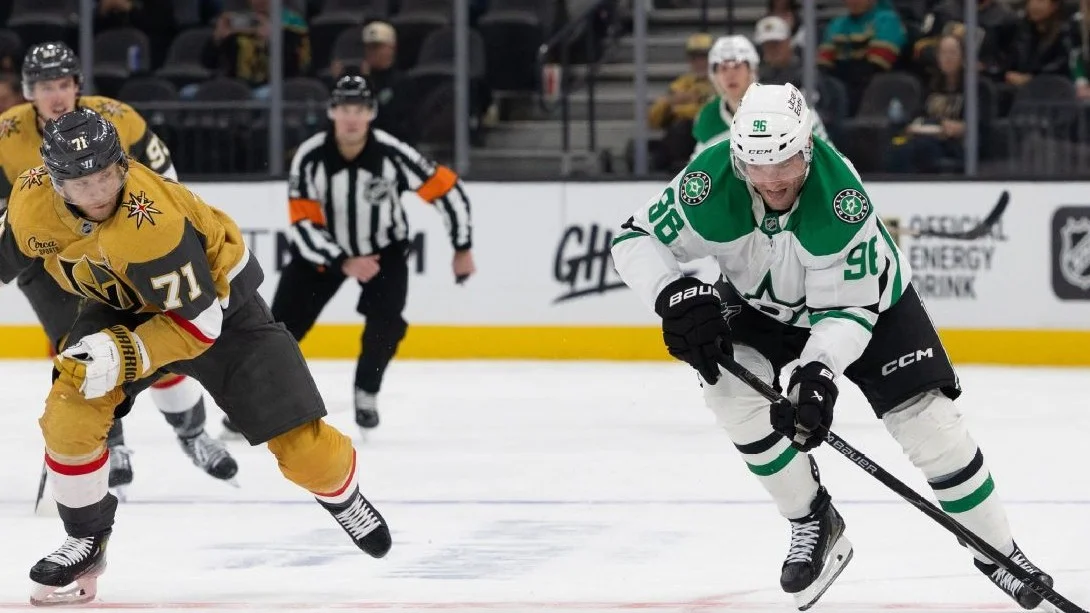
Twelve games sit on Thursday’s NHL schedule. Not one is scheduled for Friday. No final scores exist yet for any of them, which makes the most revealing number on the board something other than a score line: 10-0-1.
That is Edmonton’s road record, per ESPN’s slate breakdown — the only mark in the league without a regulation loss away from home. Tampa Bay answers with 9-1-0 at home, a start ESPN Research places level with the franchise’s best, set in 2020-21. The two meet at 7:30 p.m. ET.
The easy read is Stanley Cup Final preview. The harder, more useful read concerns what the NHL standings actually measure 20 games into an 84-game season, and where the point totals mislead.
Why The NHL Standings At The Quarter Mark Are A Partial Sample
Tampa Bay’s next game is number 21, the quarter pole. The Lightning’s own Four Check notebook records 13-5-2, 28 points and a .700 points percentage — tied for the fourth-best 20-game start in club history and the best since the 15-4-1 opening of 2020-21, a season that ended with a second straight Stanley Cup.
Those are real numbers. They are also a sample the coach himself flags as unrepresentative. “We haven’t played many teams in our division, so that’s probably going to impact how things go,” Jon Cooper said. “From a points perspective, I like where we are.”
Cooper’s caveat carries the argument. A club sitting sixth in the NHL standings on Monday morning, and leading the Atlantic Division, has built that position on a schedule that has not yet been stress-tested against the teams it must beat. Extrapolating points percentage from an unbalanced slate is arithmetic dressed up as forecasting.
The same distortion runs the other way in Toronto, where the Maple Leafs have lost seven straight and six straight at Scotiabank Arena. Waiting for them is a Los Angeles team fresh off a 3-0 win in Boston, coached by Jim Hiller — the man the Kings fired from the same job last spring. A seven-game slide reads as collapse in the table. It also reads as a schedule collision.
Goaltending Splits Are Doing More Work Than Point Totals
Ottawa sits second in the Atlantic with 30 points. Philadelphia sits sixth in the Metro with 20. A 10-point gap looks like a gap between organizations.
It is closer to a gap at one position. Linus Ullmark leads the entire league in goals-against average (1.42) and save percentage (.940). Philadelphia’s Dan Vladar and Joseph Woll have combined for a 3.29 GAA and an .887 save percentage. Same sport, effectively different sports.
Read the NHL standings purely as a quality ranking and you are partly reading a goaltending leaderboard wearing team logos. Buffalo has dropped five straight and faces a Washington side led in goals by Alex Tuch, who was with the Sabres last season and helped end the league’s longest playoff drought. Tuch scored the overtime winner 3:42 into the extra session when the clubs first met. That is a roster story. The table records it as a points story.
Context matters elsewhere. Carolina has won four straight and eight of nine, and defends a title won while losing only three games total last spring. Montreal, beaten by the Hurricanes in the Eastern Conference finals, arrives on a two-game slide. November points do not carry equal predictive weight for both.
Injuries, Absences And The 1 A.M. Lagos Test
Availability is the variable no standings column captures, and Thursday is thick with it. Colorado plays without Nathan MacKinnon and Cale Makar. Chicago’s Connor Bedard is day-to-day after a shoulder injury. Artemi Panarin has missed two games for personal reasons and his status against Toronto is unclear.

Each absence is already baked into a point total that will be read, wrongly, as a verdict on the roster.
For audiences in Nigeria and across West Africa there is a second filter. A 7 p.m. ET puck drop lands at 1 a.m. West Africa Time, and the later Colorado and Seattle games run past 4 a.m. Consumption skews toward highlights, box scores and marquee names — which is precisely how a table gets over-read. A fan who sees only Cutter Gauthier’s line sees a 22-year-old who became the first player in NHL history to record four hat tricks in a single month, and who scored three against St. Louis on Tuesday. The Ducks lost that game. The feat and the result never share a graphic.
At the bottom, Vancouver is 5-17-1 and eighth in the Pacific; Seattle is 9-8-1 and sixth. Those records describe different problems, and the table flattens both.
One sourcing note worth recording: ESPN’s introduction advertises a Stars-Golden Knights rematch after Tuesday’s overtime thriller, then provides no breakdown for it. Eleven of the twelve games carry detail. The missing one is a reminder that even the reporting around a slate is a partial sample.
What Thursday Cannot Settle
The NHL standings entering this slate are a record of who has been healthy, who has been in net and who has been on the schedule. They are not a ranking of who is best. An 84-game season exists to grind those distortions out, and the quarter pole is too early for the grinding to have done its work.
Edmonton’s 10-0-1 road mark and Tampa Bay’s 9-1-0 home mark are the two most striking lines on the board. By June, the NHL standings will have separated the flukes from the foundations. On Thursday night, they have not.
Frequently Asked Questions
Where do the Tampa Bay Lightning sit in the NHL standings right now?
Per the team’s own quarter-mark review, Tampa Bay was sixth in the NHL standings on Monday morning and leading the Atlantic Division with 28 points from a 13-5-2 record, a .700 points percentage.
Why are early-season NHL standings unreliable?
The 2026-27 season runs 84 games, and the 20-game mark is not a balanced sample. Lightning coach Jon Cooper noted his team had not played many division opponents, which he said would affect how things go. Goaltending extremes and injury absences also sit inside the point totals.
What time do Thursday NHL games start for viewers in Nigeria?
A 7 p.m. ET puck drop converts to 1 a.m. West Africa Time, and the late Colorado and Seattle games run past 4 a.m., which pushes most West African consumption toward highlights and box scores rather than full games.
 Follow AFRILATEST on Google News
FIRST TIME REACTIONS:
Be the first to leave us a comment – NHL Standings At The Quarter Mark: What The Points Hide, down the comment section.
JOIN US ON OUR SOCIAL MEDIA:

About James Williams
James Williams is the Content Director at AfriLatest. With a background in journalism and a love for storytelling, he curates compelling content and multimedia that resonates with global readers. James is dedicated to maintaining AfriLatest as a trusted source for daily news, sports updates, and entertainment trends.
View all articles by James Williams



Hockey
Raiders-Browns Flex: Why NFL Moved It to Sunday Night
The Raiders-Browns flex puts Fernando Mendoza in primetime and drops Patriots-Chargers from Sunday Night Football. What the Week 12 move really reveals.

The Raiders-Browns flex is the NFL’s first significant prime-time schedule change of the season, and it was not a reward for good football. It was a bet on a rookie quarterback.
The league announced Tuesday that Las Vegas at Cleveland moves to 8:20 p.m. ET on NBC on Nov. 29, according to ESPN. New England at Los Angeles drops to 4:05 p.m. ET on CBS, and Tennessee at Jacksonville shifts to 1 p.m. ET on FOX, confirmed in the revised Week 12 schedule.
On record alone the swap looks strange. Cleveland is 6-4. Las Vegas is 4-6. Neither is a finished product, and neither held the Sunday night window when the schedule dropped.
The Raiders-Browns Flex Is a Quarterback Decision, Not a Record Decision
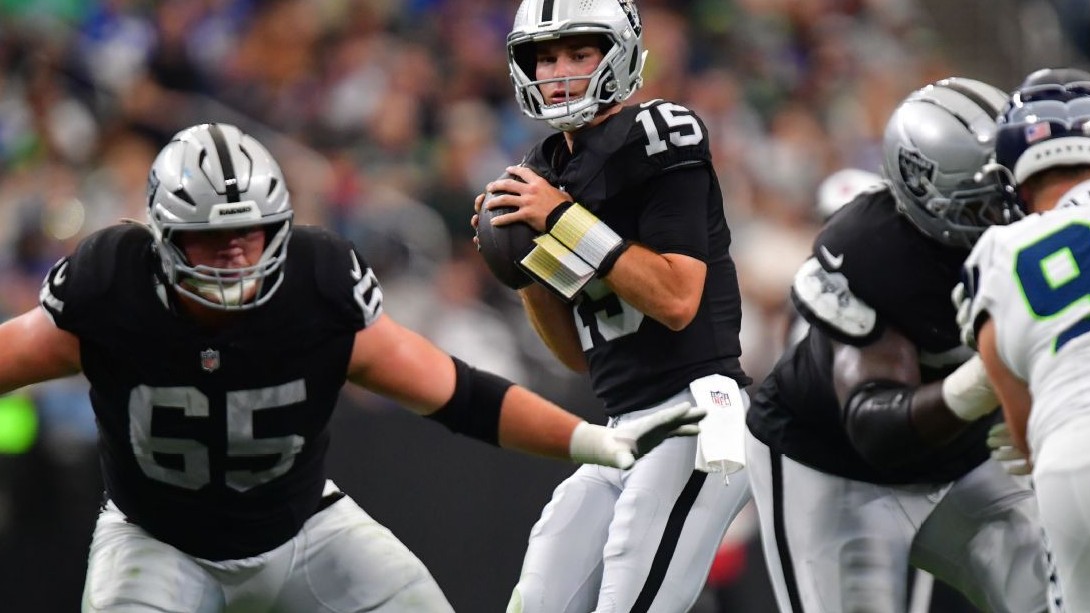
Fernando Mendoza changes the arithmetic. The No. 1 overall pick completed 17 of 29 passes for 143 yards with no turnovers and a rushing touchdown in his first career start, a 21-13 loss to Seattle in Week 10.
Las Vegas then sent Kirk Cousins to the Minnesota Vikings at the trade deadline. That single move converted a 4-6 team from a mediocre veteran product into a weekly development grade with a visible ceiling, and it is the reason the NBC Sports account framed the announcement around Mendoza’s primetime debut rather than the standings.
New England offered the reverse. Drake Maye suffered a right ankle injury in the 35-10 loss to Detroit in Munich, and multiple reports say the team fears a break that could end his season. Tommy DeVito replaced him and went 12-of-24 for 81 yards. It is also the first time the Patriots have lost consecutive games under Mike Vrabel, per USA Today. New England sits at 5-5 with three defeats in its last four.
Los Angeles is 1-8, its only win a 23-20 result over Baltimore on Monday night. A rematch of last season’s wild card round had nothing left to sell, and no broadcaster can build a two-hour pregame around an injured quarterback who is not playing.
That is the interpretive key. Flex scheduling, introduced in 2006, exists to protect the broadcast from a marquee slot whose meaning has drained away. The league may flex any week between Weeks 11 and 17. The Raiders-Browns flex is that power being used for the first time this season, and it will not be the last.
Cleveland’s Fourth-Quarter Habit Is Real but Narrow
The Browns hold the AFC’s seventh seed, the third and final wild card, and sit third in the AFC North behind the 6-3 Steelers and 7-2 Broncos. The more revealing number is this: all six wins have arrived via fourth-quarter comebacks.
Sunday’s 27-24 win over Houston required erasing a 17-0 deficit, the second-largest comeback win at home in franchise history. Deshaun Watson leads the league in fourth-quarter comeback wins. Cleveland is 4-0 at home for the first time since 1963 and carries a Week 11 bye into this game.
That profile invites romance and punishes projection. A team that trails first and wins late is operating inside a narrow margin. The same structure that produced six comeback wins produces six losses the moment one late drive stalls, and it makes the opening script the most important part of the bye week’s work.
The Raiders’ last trip to Cleveland is the cleanest comparison available. The Browns won 24-10 in Week 12 of last season, in the first start of Shedeur Sanders’ career. Sanders is now Watson’s backup, which says as much about Cleveland’s quarterback room as it does about anything the Raiders did defensively that day.
What Mendoza’s Second and Third Starts Will Tell Us
Denver comes first. Mendoza starts at the Broncos in Week 11, and a win would send Las Vegas to Cleveland at 5-6 — one game back, not two, and a live problem in the wild-card race rather than a warm body in a showcase.
His primetime debut is conditional, and that is the risk the league has accepted. Any injury in Denver removes the entire premise. The schedule cannot be flexed twice, and the Raiders-Browns flex would then be a 4-7 team against a rested favourite.
Cleveland’s side of the ledger carries its own uncertainty. Rest does not repair a slow-starting offense. The first Sunday night game in Cleveland since 2019 will raise the temperature on the opening script, not lower it, and the Browns have had only one other primetime appearance all season.
The Manager’s Takeaway From the Raiders-Browns Flex
For Cleveland, the task is proving the comeback pattern is a skill rather than a tax. Winning from 17-0 down is a compliment to a locker room. Needing to do it six times in ten weeks is a warning about the first 45 minutes, and a rookie quarterback with nothing to lose is exactly the opponent that punishes slow starts.
For Las Vegas, the task is proving Mendoza’s floor holds when the opponent has had a bye week to prepare for him and the conference is watching. A clean, turnover-free night validates the trade. A loud one sets the development clock back.
International audiences get a mixed result. An 8:20 p.m. ET kickoff lands at 2:20 a.m. Monday in Lagos and across West Africa, while the demoted Patriots-Chargers game at 4:05 p.m. ET becomes a 10:05 p.m. Sunday start. The friendlier viewing slot will now carry the backup quarterback.
That is the argument behind the Raiders-Browns flex in one line: the league looked at 6-4 and 4-6, ignored both, and bought the quarterback. Primetime is a development showcase now, not a reward for standings.
Frequently Asked Questions
Why did the NFL flex Raiders-Browns to Sunday Night Football in Week 12?
The original Patriots-Chargers game lost its value. Los Angeles is 1-8, and New England is 5-5 with quarterback Drake Maye feared to have a season-ending ankle injury. The Raiders, meanwhile, have handed the offense to No. 1 overall pick Fernando Mendoza after trading Kirk Cousins to Minnesota at the deadline.
What time does Raiders-Browns kick off, and when is it in Nigeria?
Kickoff is 8:20 p.m. ET on Sunday, Nov. 29 on NBC. That converts to 2:20 a.m. Monday in Lagos and the rest of West Africa. The demoted Patriots-Chargers game at 4:05 p.m. ET becomes a 10:05 p.m. Sunday start for the same audience.
Was Patriots-Chargers cancelled by the flex?
No. New England at Los Angeles was moved, not removed. It now kicks off at 4:05 p.m. ET on CBS, and Tennessee at Jacksonville slid to 1 p.m. ET on FOX to accommodate the reshuffle.
FIRST TIME REACTIONS:
Be the first to leave us a comment – Raiders-Browns Flex: Why NFL Moved It to Sunday Night, down the comment section.
JOIN US ON OUR SOCIAL MEDIA:
About James Williams
James Williams is the Content Director at AfriLatest. With a background in journalism and a love for storytelling, he curates compelling content and multimedia that resonates with global readers. James is dedicated to maintaining AfriLatest as a trusted source for daily news, sports updates, and entertainment trends.
View all articles by James WilliamsHockey
NHL’s Hot for Hockey Campaign: Who Won This Trade?
The NHL traded brand control for romance-novel reach with its Hot for Hockey campaign. Consent, ratings, cap cost and who actually won the trade.

There was no roster player changing hands, no salary retained, no conditional draft pick. The NHL’s transaction this week was reputational, and it cleared on Tuesday, the opening night of the 2026-27 season.
The league launched Hot for Hockey, a season-long audio series that hands real NHL news to romance novelists and asks them to retell it in the genre’s register. Seven installments covering six players — Connor McDavid, Trevor Zegras, Sebastian Aho, Jack Eichel, Kyle Connor and Mika Zibanejad — are live on Spotify. Each runs 30 to 90 seconds. None describes a romance between players. The production leans on soft piano and language lifted from book-jacket copy.
According to Front Office Sports, a league spokesperson said the featured players approved the use of their names and likenesses. The Eichel entry, titled Jack of Hearts, opens: “Since joining the Golden Knights, Jack Eichel has given Vegas a lot to love.” It cites the 2023 Stanley Cup and ends with a wagering-flavored flourish — “the odds are always in your favor.”

The league got attention. It gave up something leagues normally guard: control over how its players are narrated.
Why The Hot for Hockey Campaign Is A Reputational Trade
The consent question is the load-bearing wall, and it is not fully standing. The collective bargaining agreement requires the league to obtain player consent before using names and likenesses in promotional initiatives. The league says it did. The NHL Players‘ Association, the body that negotiates and polices that clause, declined a request from Front Office Sports to confirm it or comment on the campaign.
A league spokesperson framed the effort as “a small way to give a playful nod to something that’s clearly going on in the cultural zeitgeist — among many different marketing activations,” adding that the league was “very proud to partner with real hockey authors, illustrators, and voice actors.” Small is doing a lot of work in that sentence for a season-long commitment announced on opening night.
The NHLPA silence matters more than it looks. The union has an institutional interest in being the only credible voice on consent, and it chose not to spend that authority on Thursday. Representatives for McDavid, Aho, Connor and Zibanejad did not respond to requests for comment. Representatives for Eichel and Zegras declined.
Privacy risk is not hypothetical here. A 2023 Seattle Kraken push toward hockey romance readers ended with the wife of center Alex Wennberg accusing fans of sexual harassment. The genre’s fandom is passionate and, on social platforms, boundary-blind. The league’s own replies made that visible within 24 hours: “I’m sorry who the hell asked for this,” read one post with more than 200,000 views. Confusion and safety concern dominated the two reactions.
Cap Implications: What The League Actually Spent
In a hard-cap league, the currency is attention. The NHL spent brand dignity, which is renewable, and part of its players’ privacy, which is not.
The accounting problem is disclosure. Spotify does not publish audiobook listenership, so the series’ reach cannot be independently verified. The one public number attached to Hot for Hockey is a 2.4-star average rating on the platform. That is not a marketing triumph in any measurement system.
Commissioner Gary Bettman, speaking in Philadelphia on Wednesday after a Flyers-Penguins game, defended the play. “The data is overwhelming in terms of new fans that we acquired last year who were first introduced to hockey either through Off Campus or Heated Rivalry,” he said. “Since it seems to be a cultural phenomenon, we figured why not get on board.”
That is an internal claim, not a published one. No conversion figure, retention figure or first-game attendance figure has been released. The trade has a disclosed cost and an undisclosed return, which is the definition of a bad trade in any sport.
The addressable audience is the other tell. Hot for Hockey is English-language audio on Spotify, aimed at a readership concentrated in the United States, Canada and the United Kingdom. For a market like Nigeria — outside the NHL’s broadcast footprint, with no domestic rights deal and no ice-hockey infrastructure of scale — the campaign is effectively invisible. The league has spent two seasons talking about global growth. This activation is a domestic content play wearing a global headline.
Who Won The Trade: Grades For The NHL, Players And The Union
NHL league office: C-minus. The campaign earned more coverage in 48 hours than most league initiatives manage in a month, and Bettman’s willingness to take questions on it suggests the league expected the backlash. But the league staked its credibility on a metric it does not publish, and it allowed a union silence to become part of the story.
Featured players: B-minus. McDavid, Zegras, Aho, Eichel, Connor and Zibanejad collected a playful brand extension with no performance risk. The downside is asymmetric, though. Every one of them absorbed a safety conversation he did not start.
NHLPA: D. A union that will not confirm the consent it exists to enforce has handed the other side the narrative.
The romance authors, illustrators and voice actors: A. They were paid to do the work they already do, for a client with a bigger microphone. That is the cleanest win in the deal.
So who won? Not the league, which traded a controlled message for an uncontrolled one. Not the players, who loaned their names to a genre they cannot police. The winners are the writers and the platform. If Hot for Hockey returns for a second season, the consent should be confirmed by the union rather than only by the employer, and the audience data should be published. Until then, the league is asking fans to take the odds on faith.
Frequently Asked Questions
Did NHL players actually agree to appear in the Hot for Hockey campaign?
A league spokesperson told Front Office Sports that the featured players approved the use of their names and likenesses. The NHL Players’ Association declined to confirm that or comment on the campaign, and the collective bargaining agreement requires the league to obtain player consent before promotional use. Consent is therefore asserted by the employer, not confirmed by the union.
How is the Hot for Hockey campaign performing?
The only publicly visible metric is a 2.4-star average rating on Spotify, where the seven installments are hosted. Spotify does not disclose audiobook listenership, and the NHL has not published conversion, retention or attendance data behind Commissioner Gary Bettman’s claim that the league’s data is overwhelming.
What happened with the Seattle Kraken and hockey romance readers in 2023?
A 2023 Kraken attempt to court hockey romance readers resulted in the wife of center Alex Wennberg accusing fans of sexual harassment. That precedent is the reason privacy and safety concerns dominated the reaction to the NHL’s Hot for Hockey launch.
Receive alerts for Hot for Hockey and more like it.
FIRST TIME REACTIONS:
Be the first to leave us a comment – NHL’s Hot for Hockey Campaign: Who Won This Trade?, down the comment section.
JOIN US ON OUR SOCIAL MEDIA:
About James Williams
James Williams is the Content Director at AfriLatest. With a background in journalism and a love for storytelling, he curates compelling content and multimedia that resonates with global readers. James is dedicated to maintaining AfriLatest as a trusted source for daily news, sports updates, and entertainment trends.
View all articles by James WilliamsHockey
NHL breakout predictions: 5 players to watch in 2026-27
NHL breakout predictions for 2026-27: Macklin Celebrini, Matthew Schaefer, Lane Hutson and more. Check stats, standings and injury status.

The playoff line in the NHL is unforgiving. Every season, a handful of young players cross it and drag their teams with them. Identifying those players before the puck drops is the core of NHL breakout predictions. The 2026-27 season is no different, with a new wave of talent ready to shift standings and fantasy leagues alike.
Official records from the 2025-26 season and offseason transactions provide the evidence. No guesswork. Just numbers, roles, and opportunity.
Macklin Celebrini Already Arrived
Calling Macklin Celebrini a breakout candidate feels late. The San Jose Sharks center posted 4.3 ADP in fantasy drafts, per Daily Faceoff, and ranked fourth overall in consensus rankings. He is the only forward among the top 17 point scorers last season outside the age-24 to age-32 window, according to Daily Faceoff’s 2030 projection. That is not a breakout prediction. That is a confirmation.
The real breakout is what comes next: a full season of elite production without the sophomore adjustment. Celebrini’s ADP suggests the market expects another leap. The standings will tell if San Jose can support it.
Matthew Schaefer Is The Defensive Headliner
Matthew Schaefer did something rare for an 18-year-old defenseman: he scored 23 goals and drove play in both directions for the New York Islanders. Daily Faceoff ranked him second overall in its 2030 projection, behind only Connor McDavid. That is not hype. That is a statistical profile that forced a rewrite.
Schaefer’s rookie season was one of the greatest ever by a teenage defenseman. His ADP sits at 31.6, and his DFO rank is 39. The market is still catching up. If the Islanders improve even marginally, Schaefer’s breakout is already here. The question is how high he climbs in the standings.
Lane Hutson And The Montreal Core
Lane Hutson finished fourth in points by a defenseman last season with 78 and led the Montreal Canadiens to a surprise Final Four appearance. Daily Faceoff’s Matt predicted Hutson will finish as the No. 1 fantasy defenseman in 2026-27. That is a bold call, but the underlying numbers support it.
Hutson’s ADP is 20.5, while his DFO rank is 29. The market is drafting him earlier than the consensus, which means the breakout is already priced in. The real value is in his teammate Juraj Slafkovsky, who set career highs with 30 goals, 73 points and 105 hits last season. Slafkovsky was the only NHL player with at least 30 goals, 100 hits and 60 blocks. His ADP is 52.6, and his DFO rank is 59. The breakout is not fully priced.
Clayton Keller’s Power-Play Surge
Clayton Keller already reached 88 points last season, but his finish suggests another level. He produced 38 points over his final 27 games while Utah’s power play surged from one of the NHL’s worst to one of its best. Daily Faceoff’s Brock flagged Keller as a breakout candidate with legitimate 100-point upside.
Keller’s ADP is 44.0, and his DFO rank is 38. The value is positive, meaning the market is sleeping on him. If Utah’s power play holds, Keller could be a top-20 forward by season’s end. That would shift the Western Conference playoff race.
Goaltending Breakouts: Swayman And Wallstedt
Jeremy Swayman finished third in GSAx (+26.5) last season, earned a Vezina finalist nod, and won Olympic Gold in a backup role. Daily Faceoff’s Nick predicted Swayman will win the Vezina Trophy in 2026-27. His ADP is 61.3, while his DFO rank is 40. That is a massive value gap.
Jesper Wallstedt took control of the Minnesota Wild crease in the postseason, starting 10 of 11 games and stealing the net from Filip Gustavsson. He stopped 13.3 GSAx in 35 appearances, eighth in the league on a per-game basis. His ADP is 59.1, and his DFO rank is 56. He is a breakout waiting for a full starter’s workload.
Standings Implications
The NHL breakout predictions above are not just fantasy fodder. They determine who makes the playoffs. If Celebrini lifts San Jose, the Pacific Division gets tighter. If Schaefer anchors the Islanders, the Metropolitan race shifts. If Hutson and Slafkovsky carry Montreal, the Atlantic becomes a four-team fight.
Injury status matters. Jack Hughes has missed at least 20 games in four of the past five seasons, which is why Daily Faceoff’s Matt flagged him as an ADP avoid at 18.4. Nick Suzuki’s 101-point season came with a 15.9% on-ice shooting percentage, a number that screams regression. Those are the risks that break playoff hopes.
Who Makes It
The breakout candidates with the clearest paths are Celebrini, Schaefer, Keller, and Swayman. Each has a defined role, a track record of production, and a market that has not fully adjusted. The ones with injury or regression risk—Hughes, Suzuki, and Leo Carlsson—are the ones to avoid in drafts and in playoff predictions.
For Nigerian fans watching on streaming platforms, the NHL’s global reach means these breakouts will be visible. The standings will shift. The playoff line will move. And the next wave will arrive.
Check official records for current season stats, fixtures, and injury reports before locking in any prediction. The NHL breakout predictions game is won by those who verify first.
Frequently Asked Questions
Who are the top NHL breakout predictions for 2026-27?
Macklin Celebrini, Matthew Schaefer, Lane Hutson, Clayton Keller, and Jeremy Swayman are among the top breakout candidates based on 2025-26 stats and offseason analysis.
Which breakout candidate has the best fantasy value?
Jeremy Swayman has the largest gap between ADP (61.3) and DFO rank (40), making him a strong value pick in fantasy drafts.
Are there injury risks among breakout candidates?
Yes, Jack Hughes has missed at least 20 games in four of the past five seasons, and Nick Suzuki’s shooting percentage suggests regression, making them riskier picks.
Receive alerts for NHL breakout predictions and more like it.
FIRST TIME REACTIONS:
Be the first to leave us a comment – NHL breakout predictions: 5 players to watch in 2026-27, down the comment section.
JOIN US ON OUR SOCIAL MEDIA:

            About Paul Nwogo
            Paul Nwogo is an engineer, published author, and the Head Manager at AfriLatest. He has written numerous books available on Amazon covering a diverse range of topics, including health, personal finance, relationships, work ethics, and scam survival. With his technical background and passion for writing, Paul now oversees the editorial direction of AfriLatest, delivering practical, accurate, and engaging content on trending news, music, and global lifestyle topics.
            View all articles by Paul Nwogo

-
 Car Reviews2 weeks ago
1955 Chevy Bel Air Restomod: What SEMA Really Proves
-
Savings & Investing3 weeks ago
Hidden Medicare Fees Draining Your Retirement Savings
-
Car Reviews4 weeks ago
Ford Bronco ORV Package: $18,995 Ownership Reality Check
-
JAMB & WAEC4 weeks ago
JAMB Admission Process: What Changed And What Is Still Talk
-
Movies & TV4 weeks ago
Silo Season 1 Ending Explained: What the Showrunner Said
-
Movies & TV3 weeks ago
Wizkid Starboy Desire Ft Banky W Shaydee: Fact Or Fan Fiction?