Nigerian Business
Moniepoint POS Network: How to Buy Dangote Shares
Learn how the Moniepoint POS network lets you buy Dangote Refinery shares with as little as N5,250. Step-by-step guide, fees, and risks.

You can now walk into a neighbourhood POS stand and walk out a shareholder. The Moniepoint POS network is being used to sell Dangote Petroleum Refinery shares at N525 each, with a minimum of 10 shares — that is N5,250. No broker. No investment app. No confusing financial language.
This guide shows you exactly how to use the Moniepoint POS network to buy Dangote shares, what it costs, and the mistakes to avoid.
**Why this matters**

Nigeria has 5.9 million active POS terminals. The Central Bank of Nigeria says POS terminals were used 15.66 billion times in 2025 — behind only internet payments. Nigerians are almost twice as likely to use a POS as they are to use an app.
Moniepoint has over one million active terminals and says its network covers all 774 local government areas. That physical reach is why the Dangote offer is being distributed this way. The IPO is targeting N2.15 trillion ($1.62 billion) and 10 million retail investors. Nigeria currently has about 2.7 million retail investors.
According to TechCabal, Moniepoint sees the IPO as a proof of concept for what its POS network could become: a physical distribution layer for financial products that have traditionally lived inside banks, brokerages, and investment apps.
Step-by-step: How to buy Dangote shares through the Moniepoint POS network
Step 1: Find a participating Moniepoint agent.
Not every agent may be live at first. Rollout begins with selected agents and will eventually cover the wider network.
Step 2: Ask for the Dangote IPO option.
Tell the agent you want to subscribe for Dangote Refinery shares. The agent selects the investment option on the terminal.
Step 3: Provide your details.
If you do not have a Moniepoint account, you will need to provide your Bank Verification Number (BVN). The terminal handles the registration and subscription process.
Step 4: Choose how many shares.
The price is N525 per share. Minimum is 10 shares (N5,250). Maximum is 500 shares per transaction. The POS channel is capped at N100,000 per person.
Step 5: Pay.
You can pay with cash or from your account. The agent processes the transaction on the terminal. You will get a receipt.
Step 6: Keep your receipt.
That receipt is your proof of subscription. The offer opened on September 14 and is scheduled to close on October 13, 2026.
What it costs
Moniepoint is charging N0 for processing the IPO. But agents still charge their usual commission. In one test, a N5,250 subscription attracted a N100 agent fee — about 1.0% of the transaction.
Dangote has earmarked an estimated N41.49 billion ($31.23 million) for offer expenses, covering issuing houses and professional parties. Fintechs will get a slice, but that does not come out of your pocket as an extra charge.
So a N5,250 purchase could cost you N5,350 in cash. A N10,000 budget buys 19 shares (N9,975), plus a N100 fee — total N10,075.
Mistakes to avoid
Mistake 1: Assuming the agent is a broker.
The agent is a distribution channel, not an investment adviser. They cannot tell you whether the shares are a good buy. If you do not understand what you are buying, ask questions before you pay.
Mistake 2: Using cash you need for something else.
The people this channel targets are often daily earners. Do not invest rent money or school fees. The minimum is small for a reason.
Mistake 3: Ignoring the N100,000 cap.
The cap is deliberate. Moniepoint says it does not want the channel to become an easy route for moving or laundering large amounts of money. If you want to invest more, use another channel.
Mistake 4: Thinking you are guaranteed profit.
An IPO subscription is not a fixed deposit. Share prices can fall. Dangote Refinery began commercial operations in 2024 and is Africa’s largest single-train refinery, but that does not guarantee your shares will rise after listing.
Mistake 5: Not checking your details.
Your BVN and subscription details must be correct. Wrong details can delay or void your allotment.
What happens after you subscribe
Your money leaves your account. You are now a subscriber, not yet a confirmed shareholder. Allotment happens after the offer closes. If the offer is oversubscribed, you may not get the full number of shares you applied for.
For Mrs Oyin Alade in Ojota, the experience was startling. She told BusinessDay that she had always associated shares with stockbrokers, banks, wealthy people and financial experts. She bought 10 shares for N5,250 through an agent she already trusted.
In Sapele, Delta State, a 400-level student had a similar experience. He walked in for a routine transaction and left a shareholder.
Is this the future of investing?
Moniepoint says the POS channel is growing faster than mobile for this offer. Daniel Ojinaka, Product Lead at TeamApt, told TechCabal that if the company does everything right, POS could surpass mobile.
But this is still an experiment. A POS transaction is not necessarily a unique person. Moniepoint’s network is only part of Nigeria’s total POS infrastructure. The reach numbers being discussed are scenarios, not forecasts.
What is clear is that the Moniepoint POS network is testing whether the same terminal that moves money can also help people own assets. For years, the capital market asked Nigerians to come to it. This time, the opportunity is being taken to where Nigerians already are — the roadside kiosk, the neighbourhood shop, the POS terminal around the corner.
Your first step today
Walk to your nearest Moniepoint agent. Ask if they are offering Dangote Refinery shares. If they are, confirm the price, the minimum, and the agent fee before you pay. Start with the minimum N5,250 if it is your first time. Keep your receipt. And remember: buying shares is not the same as saving in a bank.
Frequently Asked Questions
How much do I need to buy Dangote shares through Moniepoint POS?
The minimum is 10 shares at N525 each, which is N5,250. Agents may charge their usual commission, such as N100, bringing the cash needed to about N5,350.
Do I need a Moniepoint account to subscribe?
No. If you do not have a Moniepoint account, you can provide your Bank Verification Number (BVN) at the agent location to complete the subscription.
Is there a limit on how much I can invest through the POS channel?
Yes. The POS channel is capped at N100,000 per person, and a maximum of 500 shares per transaction. Moniepoint says the cap is partly a safety measure against money laundering.
Related Articles
- From Scholarships to Skills: Global Push to Train Youth
- Ikere Chamber’s NACCIMA Admission Validates Vision
- iPhone 18 Pro Max Review: Price, Specs, Verdict
- Court Strikes Out Oyefusi’s Suit Against Rhodes-Vivour, ADC
- Mexico vs Colombia: Márquez Debut Ends in Friendly

Nigerian Business
Dangote Refinery IPO Extended: 4.1 Billion Shares Up for Grabs
Dangote Refinery IPO extended to Oct 27 as subscriptions hit 4x the $1.6bn target. Here’s what the ₦525/share offer means for Nigerian investors.
Dangote Petroleum Refinery and Petrochemicals has extended its $1.6 billion initial public offering (IPO) by two weeks, pushing the closing date from October 13 to October 27. The Dangote Refinery IPO, already the biggest in Africa’s history, has pulled in subscriptions more than three or four times the original target, according to the company. The extension, approved by Nigeria’s Securities and Exchange Commission, is aimed at letting more African investors buy in.
The offer opened on September 14 and was originally scheduled to close on October 13. It puts 4.1 billion shares on the table at ₦525 each, with a minimum subscription of 10 shares, or ₦5,250. That values the refinery at about $47 billion. A green shoe option allows an extra 30 percent of the shares to be sold if the offer is oversubscribed, potentially raising the total to about $2.1 billion.
Dangote said the decision to extend was not about the money. “We are going to extend the date because we want a lot of our African brothers and sisters to participate,” he told journalists during a tour of the facility on Monday. “It is not about the amount, it is about the number of people that we want to participate.”
The company said it is working with the Nairobi Stock Exchange to open a route for East African investors through global depositary receipts. Up to $300.4 million of the offer, close to a fifth of the total, has been set aside for East African investors, according to Kenyan media. Kenya’s Capital Markets Authority has already cleared its residents to invest.
“Following our discussions with the Nairobi Stock Exchange, we have identified what we believe is the best way to facilitate participation,” Dangote said. “We are now trying to replicate that arrangement with other African exchanges.”
What The Extension Means For Investors
The extra two weeks gives retail investors more time to complete account opening, identity verification, and other regulatory checks. Several trading platforms, including Bamboo and Cowrywise, crashed on the first day of the offer as subscription traffic overwhelmed their systems. That suggests demand is coming from a much wider pool than the typical Nigerian stock market investor.
Only about 5 percent of Nigerian adults invest in the stock market. The refinery is targeting as many as 10 million retail investors, a figure that would transform the Nigerian Exchange’s retail base if achieved. The Aliko Dangote Foundation is also giving away shares worth about ₦40 billion, or $30 million, to tertiary students and vulnerable women. Students who buy 10 shares receive 10 more free.
David Bird, chief executive of the refinery, said the extension “will give more investors across Africa the opportunity to participate in the Offer.”
Under the revised timetable, results will be collated by November 3 and the basis of allotment sent to the SEC by November 10. Trading is expected to begin about 15 business days after shares are allotted.
Why The Refinery Needs The Money
The IPO proceeds will fund a $14.3 billion expansion that would double the refinery’s capacity to 1.4 million barrels a day by 2029. The plant, which cost about $20 billion and began operating in 2024, was designed to process 650,000 barrels a day and now runs at about 700,000 barrels a day. If the expansion goes ahead, it would be the world’s largest refinery, surpassing India’s Jamnagar.
“We are targeting for three years, and probably we may be even doing faster,” said Devakumar Edwin, a group vice president at Dangote Industries.
Dangote is also planning a separate 700,000-barrel-a-day refinery in Kenya, which would bring his total refining capacity to 2.1 million barrels a day. He has already broken ground on a new facility on Kenya’s Lamu island, promising tens of thousands of jobs. But the project faces a lawsuit from the local community over land rights, and Greenpeace has raised objections over the refinery’s environmental impact.
Who Wins And Who Loses
For Nigerian retail investors, the extension is a rare second chance to buy into a company that most would never access at this stage. The ₦525 price and 10-share minimum keep the entry ticket low. The free-share programme for students and women lowers it further.
For the Nigerian Exchange, a successful listing of this size would dwarf MTN Nigeria’s $876 million listing in 2019. Akin Dawodu, Citi’s head of banking for sub-Saharan Africa, said the deal could draw investors back to African bourses. “The size of the stock exchanges across Africa, Johannesburg excepted, is very small relative to the capital available,” he told Reuters. “We have to find a way to unlock that.”
For existing shareholders, the picture is more complicated. Dangote and his affiliates own about 80.7 percent of the company. State oil company NNPC holds 6.8 percent, and Greenview International holds 6.5 percent. The IPO represents about 3.4 percent of the company. If the green shoe is used, that stake gets diluted further, but the new capital funds growth that could lift the value of what they hold.
The risks are real. The refinery’s expansion depends on global crude markets, Nigerian regulatory stability, and the company’s ability to execute a project of unprecedented scale. The Kenya project faces legal and environmental challenges that could delay or derail it. And a stock market listing brings quarterly scrutiny that a private company does not face.
What To Watch
Watch the final subscription figures when they are released. The company has not published exact numbers, only saying demand is three to four times the target. If the green shoe is triggered, the final raise could hit $2.1 billion, making it one of the largest listings anywhere in the world this year.
Watch whether other African exchanges follow Nairobi’s lead. If the depositary receipt model works in Kenya, it could become a template for how African companies raise capital across borders, a shift that would matter for every founder and CFO on the continent.
And watch the share price when trading begins, expected about 15 business days after allotment. A strong debut would pull in the retail investors the refinery says it wants. A weak one would leave them holding paper and wondering why they bothered.
Frequently Asked Questions (Dangote Refinery IPO)
When does the Dangote Refinery IPO close?
The Dangote Refinery IPO now closes on October 27, 2026, after the Securities and Exchange Commission approved a two-week extension from the original October 13 date.
How much does it cost to buy Dangote Refinery shares?
Shares are priced at ₦525 each, with a minimum subscription of 10 shares, which costs ₦5,250. The offer includes 4.1 billion shares and a green shoe option for an additional 30 percent if oversubscribed.
Can non-Nigerians invest in the Dangote Refinery IPO?
Yes. The extension is specifically aimed at allowing more African investors to participate. Kenya’s Capital Markets Authority has approved a route through global depositary receipts on the Nairobi Securities Exchange, with up to $300.4 million set aside for East African investors.
Related Articles
- 113 Million Nigerians Deprived of Health: What You Can Do
- Herbal Remedies: Aishat Alagbo’s Safe Use Guide
- 29MB AI Model Runs on a $10 Chip: Here’s How
- Health Workers to Sue 20 Varsities Over Unpaid Allowance
- Taylor Swift Joins Beatles as Only Acts With 100 Weeks at No. 1
Receive alerts for Dangote Refinery IPO and more like it.
 Follow AFRILATEST on Google News
FIRST TIME REACTIONS:
Be the first to leave us a comment – Dangote Refinery IPO Extended: 4.1 Billion Shares Up for Grabs, down the comment section.
JOIN US ON OUR SOCIAL MEDIA:
Nigerian Business
Nigeria’s Economy Grows Over 4% in 2026: What It Means for You
Nigeria’s economy grows over 4% in 2026, says Tinubu. NBS data shows 4.43% Q2 GDP growth. Here’s what it means for businesses and households.
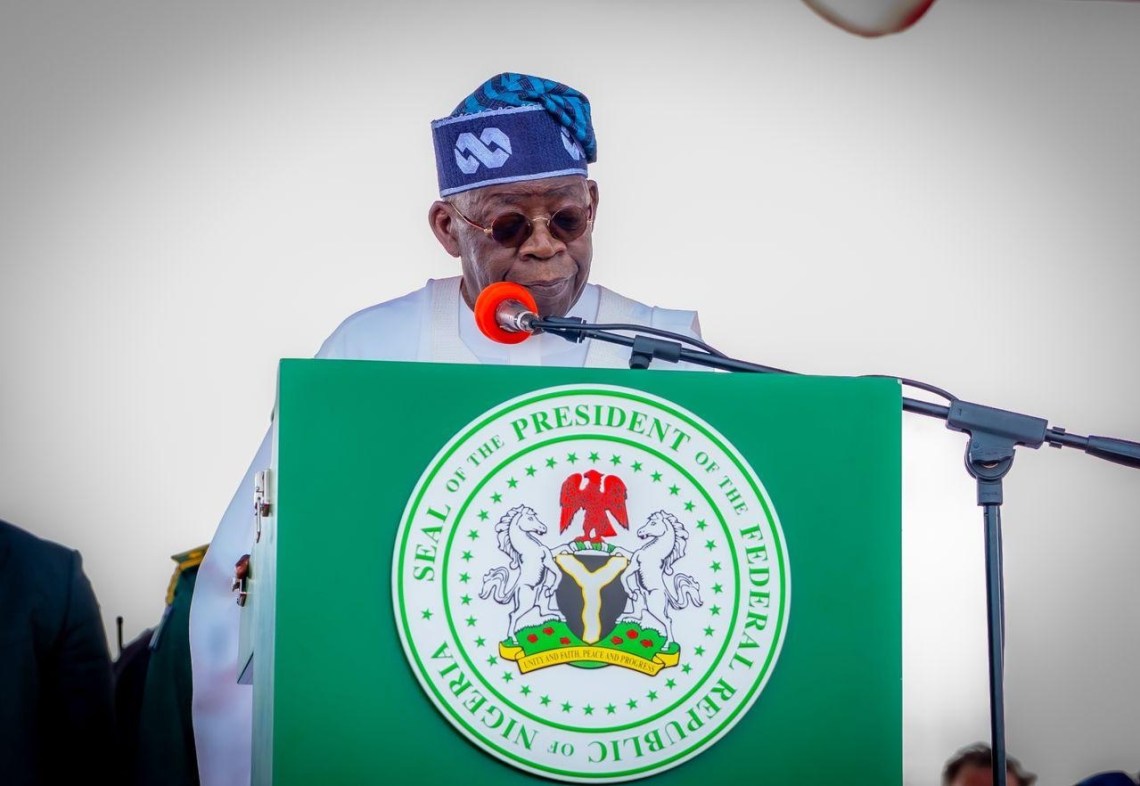
President Bola Tinubu says Nigeria’s economy grows over 4% in 2026, a claim backed by National Bureau of Statistics data showing real GDP expanded 4.43% year-on-year in the second quarter. For a small business owner in Aba or a fintech founder in Yaba, that headline number matters less than what sits behind it: agriculture grew faster, services stayed dominant, and the oil sector finally pulled its weight. But the same data warns that growth is not yet translating into jobs or lower prices at the market.
Speaking in his Independence Day address on Thursday, Tinubu framed the numbers as proof that his administration’s reforms — petrol subsidy removal, exchange-rate liberalisation, tighter monetary policy — are working. “Our economy has grown by over 4 per cent this year. Both oil and non-oil sectors have contributed to the renewed period of stable growth,” he said. He also pointed to falling inflation, rebuilt foreign reserves, a stabilised naira, and record non-oil export revenue exceeding $6 billion in 2025.
But the story is more nuanced than a single speech. The NBS reported Q2 2026 growth of 4.43%, up from 3.89% in Q1 and 4.23% in Q2 2025. First-half growth averaged 4.16%, the strongest second-quarter expansion in five years. The non-oil sector, which accounts for 95.84% of real GDP, grew 4.31%. Services — the largest contributor at 56.62% of output — expanded 4.60%. Agriculture, which contributes 26.15%, grew 4.39%, a sharp jump from 2.82% a year earlier. The oil sector grew 7.31%, though it remains just 4.16% of GDP, with average daily production rising to 1.72 million barrels per day.
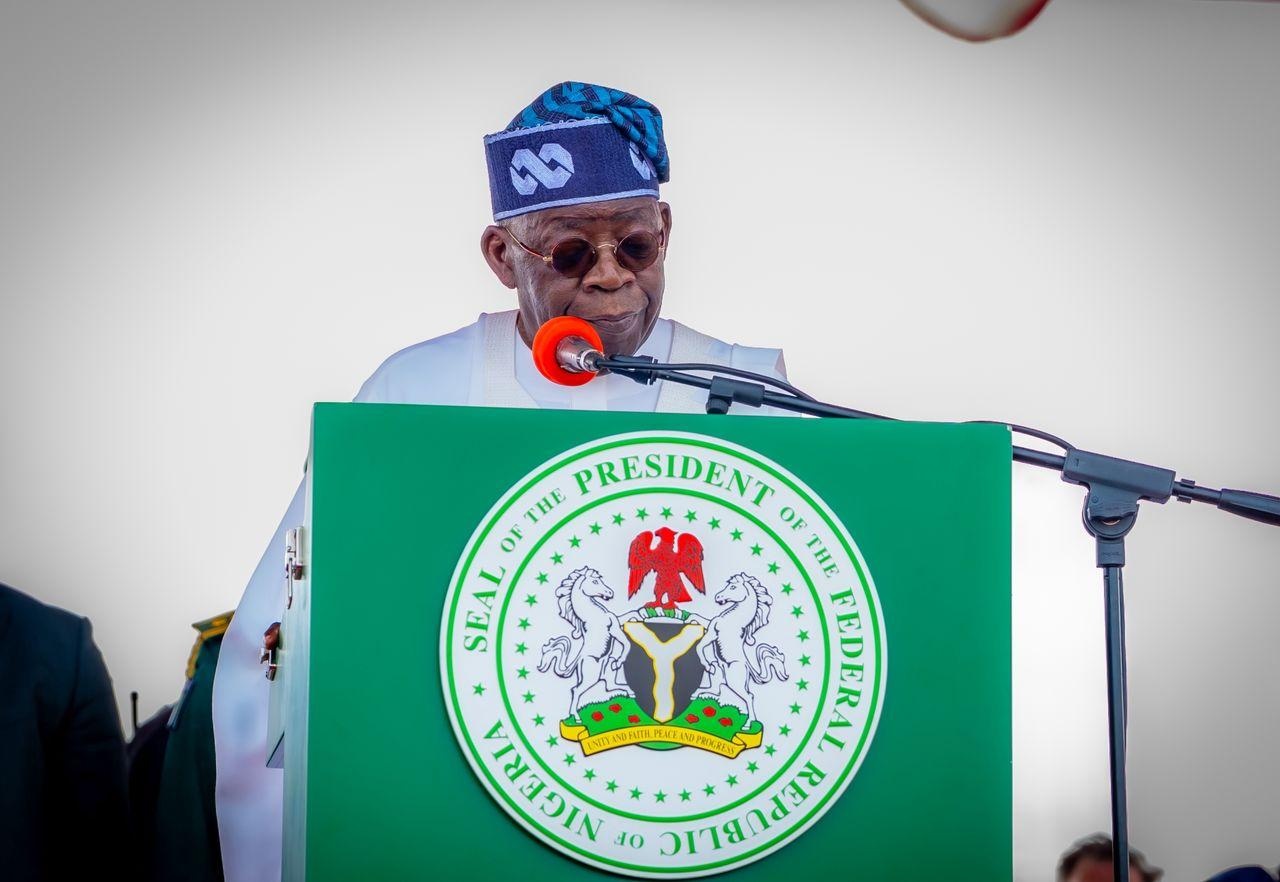
Premium Times reported the president’s claims alongside the NBS data. The figures extend a gradual recovery: 3.38% growth in 2024, 3.87% in 2025, and now 4.43% in Q2 2026.
What the growth means for Nigerian businesses
For companies, the composition of growth matters. Agriculture’s acceleration suggests better input access and perhaps early gains from mechanised irrigation and dry-season farming that Tinubu promised to expand. Services growth — driven by information and communication, real estate, trade, and financial services — signals that demand for digital and financial products is holding up even as household budgets stay tight.
Manufacturing and construction also contributed, though the NTU-SBF Centre for African Studies notes that manufacturing remains below a tenth of output, far from the Nigeria Industrial Policy target of a quarter by 2035. The report warns that infrastructure gaps, especially in electricity where over 86 million Nigerians lack access, continue to constrain productivity.
The president’s promise to use gas to power new industries and support factories in industrial centres is aimed squarely at that gap. He also pledged to expand digital connectivity, invest in skills employers need, and provide infrastructure and finance for businesses to grow.
Access to credit is a key pillar. Tinubu highlighted CREDICORP, the consumer credit corporation, which allows working Nigerians to acquire vehicles, solar systems, and digital devices without years of saving. For small businesses, that could mean easier asset financing. But the bigger question is whether credit reaches the informal sector, where most Nigerian enterprises operate.
The risks behind the headline number
Analysts are cautious. The Nigeria Employers’ Consultative Association described the Q2 growth as a positive signal but warned the recovery remains fragile because businesses still face difficult operating conditions. The NTU report is blunter: rising growth from 1% in 2021 to 4% in 2025 and 4.4% in Q2 2026 “is not creating enough new jobs nor increasing incomes.” Poverty headcount rose to 61% in 2025 from 40% in 2019, according to World Bank data cited in the report.
In dollar terms, the economy has shrunk. Nominal GDP was $668 billion in 2019 but only $291 billion in 2025 at an exchange rate of about N1,500/$. The naira’s devaluation has wiped out much of the nominal gain. Debt service will consume $11.6 billion in 2026, about half of projected revenue, and the budget deficit is expected to exceed the 3% of GDP legal cap.
Tinubu acknowledged the hardship. “Some Nigerian families still struggle today for the next meal, the next school fee, the next medical bill,” he said. He attributed it to decades of low productivity and weak institutions, arguing, “We cannot erase in four years what accumulated over generations.”
The Sun reported his defence of the reforms, including his warning against reversing them. “Our reforms did not create the weaknesses in our economy. They confronted them,” he said.
What to watch
The government’s next phase, which Tinubu calls the “age of prosperity,” hinges on several moving parts. First, whether the CBN can keep inflation falling while the 2027 election cycle pressures spending. Second, whether non-oil exports can build on the $6 billion record. Third, whether the Dangote refinery — now exporting over 500,000 barrels per day of petroleum products — can anchor industrial revival and attract similar private-sector bets.
For founders and small business owners, the lesson is that macroeconomic stability is necessary but not sufficient. Growth of 4% is better than 1%, but it needs to hit 7% by 2030 to create the jobs Nigeria’s young population needs. The opportunities are in agriculture value chains, digital services, and anything that lowers production costs. The risk is assuming that headline GDP growth automatically shows up in your customers’ wallets. It doesn’t — not yet.
Frequently Asked Questions
What is Nigeria’s GDP growth rate in 2026?
Nigeria’s real GDP grew 4.43% year-on-year in Q2 2026, up from 3.89% in Q1 and 4.23% in Q2 2025, according to the National Bureau of Statistics. First-half growth averaged 4.16%.
Which sectors drove Nigeria’s economic growth in 2026?
The non-oil sector accounted for 95.84% of real GDP and grew 4.31%. Services grew 4.60%, agriculture 4.39%, and the oil sector 7.31%. Key activities included agriculture, information and communication, real estate, trade, financial services, manufacturing, and construction.
What does Nigeria’s 4% GDP growth mean for small businesses?
It signals a more stable macroeconomic environment, but analysts caution that growth is not yet creating enough jobs or raising incomes. Opportunities exist in agriculture value chains, digital services, and cost-reduction sectors. Access to credit through CREDICORP and other interventions may help, but the recovery remains fragile.
Related Articles
- 5 Open-Source Android Apps to Unlock Your Device
- OPay Shutdown Rumour: What Customers Should Do
- NGX Market Cap Drops to N163.10 Trillion as Banking Stocks Drag
- APM Terminals Expands Scholarship Scheme: 2026 Guide
- Dangote IPO Cross-Border Push Tests African Markets
Nigerian Business
Aliko Dangote Foundation Student Share Grant: 10 Free Shares
Aliko Dangote Foundation Student Share Grant gives Nigerian students 10 free DPRP shares after buying 10. Learn eligibility, how to apply, and risks.
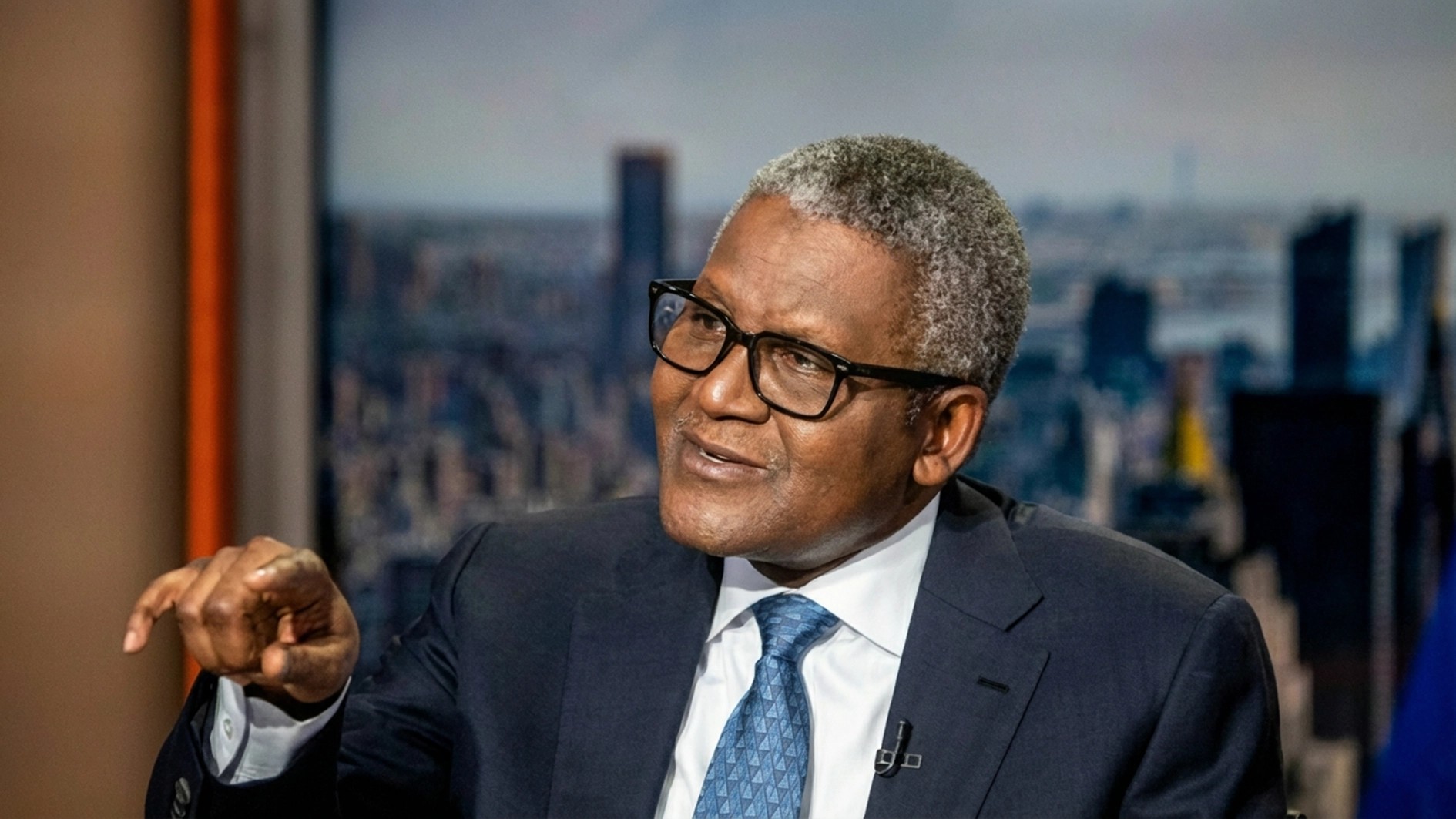
The Aliko Dangote Foundation Student Share Grant is offering Nigerian students a rare entry into the capital market: buy 10 shares in Dangote Petroleum Refinery and Petrochemicals FZE (DPRP), and the foundation will buy you 10 mpore at no cost. The initiative, launched this week, targets students aged 18 and above in public and private tertiary institutions across Nigeria.
It is part of the ongoing Initial Public Offering (IPO) of DPRP, the company behind the $20 billion refinery project. The grant is designed to deepen financial literacy and create a generation of young investors, according to the foundation.
Who Qualifies and How It Works
To participate, a student must first complete a verification process on the foundation’s platform, ipo.alikodangotefoundation.org. After verification, the student subscribes for a minimum of 10 DPRP shares in their own name. Once that subscription is confirmed, the foundation funds an additional 10 shares in the same student’s name.
The shares cannot be bought for another person, another Dangote company, or any other company. The foundation stressed that the programme is voluntary and is not investment advice. Students are urged to read the IPO documentation carefully before committing money.
Aliko Dangote, Chairman of the foundation, said the goal is to help young Nigerians develop an investment mindset early. “Supporting young people goes beyond providing access to education. It must also involve equipping them with the knowledge and opportunities to participate in economic growth and wealth creation,” he said.
Zouera Youssoufou, CEO of the Aliko Dangote Foundation, added that the initiative bridges the gap between financial education and practical experience. “Financial literacy becomes more impactful when people can apply what they learn,” she said.
Why Dangote Is Doing This
The Student Share Grant Initiative is not just charity. It is a strategic move to broaden the shareholder base of DPRP ahead of its listing. By bringing in thousands of young Nigerians, Dangote creates a new generation of retail investors wit h a stake in his flagship project.
The refinery, with a processing capacity of 700,000 barrels per day, is expected to be completed by 2030. It is also the centre of a separate controversy in Kenya, where Dangote blamed local marketers and international oil companies for protests over land earmarked for a similar refinery in Lamu. He dismissed the protests as “games played by local marketers and international players.”
For Nigerian students, the grant is a low-risk introduction to the stock market. But it is not free money. The student must first buy 10 shares, which means committing real naira to a company that is still under construction and not yet listed.
The Risks Students Must Weigh
DPRP is not yet a publicly traded company. The IPO is a pre-listing offer, meaning the shares will not be liquid immediately. Students may have to wait years before they can sell. The refinery’s completion date of 2030 is also not guaranteed.
Moreover, the foundation’s grant covers only the application for 10 additional shares. It does not cover any future calls for capital, nor does it protect the student from losses if the company underperforms. The foundation made clear that participation is voluntary and not a recommendation to buy.
Financial analysts often warn that IPO investments carry risks, espe cially for first-time investors. Students should treat this as a learning opportunity, not a guaranteed return.
What It Means for the Market
The initiative could deepen retail participation in Nigeria’s capital market, which has historically been dominated by institutional investors. If successful, it may inspire other foundations and companies to create similar programmes.
For Dangote, it is also a public relations win. The refinery has faced delays and political opposition, and bringing students on board as shareholders could build a constituency of support.
But the grant also raises questions about financial literacy. Critics may argue that encouraging students to buy shares in a single, unlisted company is not diversification. The foundation, however, insists the programme is about education, not speculation.
How to Apply
Eligible students should visit ipo.alikodangotefoundation.org to complete verification. After that, they will be directed to the subscription channel where they can apply for a minimum of 10 DPRP shares in their own name. Once the subscription is confirmed, the foundation will fund an additional 10 shares.
The foundation has not disclosed the total number of shares available under the grant or the deadline for applications. Students are advised to act quickly and read all documents carefully.
What to Watch
Watch for the IPO timetable and the final allotmen.t date. Also watch whether the foundation extends the grant to more students or increases the number of free shares. And watch how DPRP performs after listing, if it lists at all. For now, the Aliko Dangote Foundation Student Share Grant is a rare chance for young nigerians to own a piece of Africa’s largest refinery project — but it is not without risk.
Frequently Asked Questions
Who is eligible for the Aliko Dangote Foundation Student Share Grant?
Students aged 18 years and above enrolled in recognised public and private tertiary institutions across Nigeria are eligible.
How many free shares do students get?
After subscribing for a minimum of 10 DPRP shares, the foundation funds an additional 10 shares at no cost.
Is the grant investment advice?
No. The foundation stressed that participation is voluntary and should not be interpreted as investment advice or a recommendation to acquire DPRP shares.
Related Articles
- Tinubu: Tough Reforms Necessary to Rescue Nigeria’s Economy
- Trump $500 ACA Refund Checks: What You Need to Know
- JAMB Nov 30 Deadline: Don’t Lose Your 2021–2025 Admission
- iPhone Duo Release Timeline vs iPhone 18 Pro
- Huion Note E Review: Android Tablet for Note-Taking
-

 Startups3 weeks ago
What a Successful Dangote Refinery IPO Really Says
-
Trending Entertainment News7 days ago
Taylor Swift Joins Beatles as Only Acts With 100 Weeks at No. 1
-
World News3 weeks ago
Carney Calls U.S. Tariffs a Miscalculation as Canada Retaliates
-
Football3 weeks ago
Mexico vs Colombia 2026: Márquez Debut Ends in Defeat
-
Fintech3 weeks ago
OPay No Dey Comot Nigeria: How to Verify Fintech News
-
Fintech3 weeks ago
OPay Investing in People to Build a Better Nigeria
-
Spare Parts3 weeks ago
Spark Plug Replacement Cost: Fake Parts & Real Prices
-
Black Celebrities3 weeks ago
Brandi Carlile: Rock Star in Her Prime, On Tour Now