Football
Melo Calls Out Humphrey: Baltimore Remark Timeline And Fallout
Melo calls out Humphrey over his ‘best at making criminals’ Baltimore line, as the mayor demands more than an apology and the Ravens bench him.


Baltimore Ravens cornerback Marlon Humphrey will miss Sunday’s game against the Carolina Panthers after saying on his own podcast that Baltimore is “best at making criminals” — a remark that drew a direct public challenge on Friday from Basketball Hall of Famer Carmelo Anthony, who moved to West Baltimore at the age of eight.
The useful part of this story is not the football. It is the sequence. A player spoke on Wednesday, apologized the same day, was sent home from the team facility on Thursday, and was answered by a Hall of Famer and a mayor by Friday. Every link in that chain is dated and attributable, which makes it a working case study in how fast a casual line about a community becomes a team problem, a political problem and a commercial one. Nigerians in the diaspora know the underlying dynamic — a place and a people reduced to a single headline, usually by someone holding a microphone and an audience.
From Podcast Line To One-Game Ban: The Confirmed Timeline
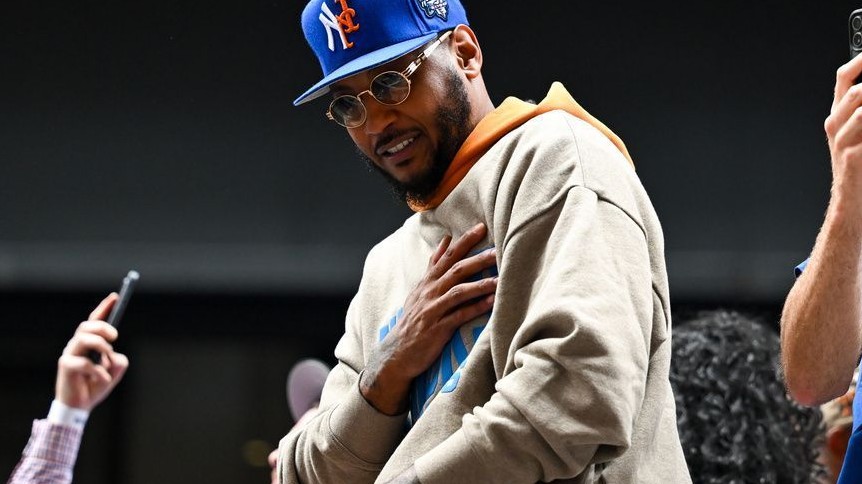
Humphrey made the remark on an episode of “The Marlon Humphrey Show” released on Wednesday. Asked what Baltimore is best at making, he named “The Star-Spangled Banner” and National Bohemian beer, then answered: “They’re best at making criminals.” According to ESPN, he also joked that the line would be cut in editing. It was not. The episode has since been deleted from his YouTube page.
After Wednesday’s practice, Humphrey apologised to reporters. “I do know the effect that words have,” he said. “I’d just like to apologize for those comments.” He stressed his ties to the city: “I’ve been here my whole career. I’ve spent lots of offseasons here, welcomed a son here. I’m an investor in the city, investor in various parts of the state.”
The team’s response came on Thursday. Coach Jesse Minter said Humphrey had been sent home from the facility and would be inactive for one game only, a decision Minter attributed to himself and “the leadership of the organization.” “He’s very remorseful,” Minter said. “I think he understands that words mean a lot, especially to people in this city.”
Humphrey, a four-time Pro Bowl selection, is in his 10th season with Baltimore — the only franchise he has played for. He has recorded 40 tackles and nine passes defended in 10 games this season.
Why Melo Calls Out Humphrey Over A City That Raised Him
Anthony’s rebuttal ran to a long Instagram post on Friday. Reports differ on its format — USA Today describes a six-page Instagram gallery, while the New York Post calls it an Instagram Story — but the quoted text is consistent across ESPN, The Banner and USA Today. That agreement matters, because the primary document is a social media post rather than a press conference or a filed statement.
The Banner quoted him writing: “You don’t get to rep Baltimore on Sundays and talk about it like an outsider on Wednesday.” The post rejects the apology as an endpoint rather than a first step. “I’ve been sitting with this one for a couple of days, because Baltimore isn’t a talking point to me. It’s my blood,” Anthony wrote. “I lost friends to the streets, and I watched people I loved get swallowed by a system that was built to swallow them.”
He then addressed Humphrey by name. “Marlon, I see the apology. I’ll take it, man to man. But Baltimore has been apologized to its whole life. Apologies don’t build anything. Presence does.” He ended: “Baltimore doesn’t make criminals. Baltimore makes the ones who make it out. And the ones who come back.”
Anthony, a 10-time All-Star across 19 NBA seasons who attended Towson Catholic before a Hall of Fame career, remains involved in the city through programming including the Sanctuary Collective. In the same post he named boxer Gervonta “Tank” Davis as another product of Baltimore, according to USA Today.
This is the context in which Melo calls out Humphrey: not a free-speech argument, but a claim about who is entitled to carry a city’s name. Anthony accepted the apology and still disputed the framing. Those are two separate acts, and most of the reaction to this story has collapsed them into one.
What Mayor Brandon Scott Wants That An Apology Cannot Deliver
Baltimore Mayor Brandon Scott said on Wednesday that a “verbal apology is not enough,” describing the remark as especially damaging in “a city full of young Black boys who look to the Ravens as a beacon of light in their lives.” He invited Humphrey to sit down with him and residents “who have re-entered into our community and are now preventing others from making the mistakes they made.”
On Thursday, Scott indicated he had been in touch with the cornerback. He did not disclose what was discussed or whether a meeting had been agreed. Anthony backed the invitation and offered to attend: “The Mayor opened a door. Walk through it. And when you do, call me. I’ll meet you there.”
Reaction inside the locker room was not silence. Veteran defensive tackle Calais Campbell told reporters: “I think he was trying to say it in a joking manner. But it’s not a joking matter. That’s not cool. I think he knows that.”
What falls under confirmed fact and what does not is worth separating. Confirmed: the podcast line, the apology, the deleted episode, the one-game deactivation, the mayor’s statement and Anthony’s post. Not confirmed: whether Humphrey has accepted the mayor’s invitation, whether the Ravens will attach anything to the ban beyond Sunday, and whether the club has spoken to the community figures Scott named.
What To Watch
Minter said Humphrey is expected to rejoin the team on Monday in Owings Mills, which frames the deactivation as a one-game measure rather than a change of policy. Whether the meeting Scott proposed actually happens — and whether Anthony is in the room — is the only test that separates this from the apologies Anthony argued the city has heard all its life.
For Nigerian followers of the league, and for diaspora communities that live with compressed descriptions of where they come from, the point of tracking how Melo calls out Humphrey is not the feud. It is whether a documented backlash produces something durable after the news cycle moves on.
Frequently Asked Questions
What did Marlon Humphrey actually say about Baltimore?
On an episode of his podcast released on Wednesday, asked what Baltimore is best at making, Humphrey named ‘The Star-Spangled Banner’ and National Bohemian beer before saying the city is ‘best at making criminals.’ He also joked the line would be cut in editing. The episode has since been deleted from his YouTube page.
Did the Ravens suspend Marlon Humphrey?
The Ravens sent him home from the team facility on Thursday and made him inactive for one game, Sunday’s fixture against the Carolina Panthers. Coach Jesse Minter said the decision was his and the organisation’s leadership, that the measure covers one game only, and that Humphrey was expected back on Monday.
What did Carmelo Anthony say in response?
Anthony, who moved to West Baltimore at age eight, said he accepted Humphrey’s apology ‘man to man’ but argued that ‘apologies don’t build anything. Presence does.’ He urged Humphrey to accept Mayor Brandon Scott’s invitation to meet Baltimore residents and offered to attend the meeting himself.
 Follow AFRILATEST on Google News
FIRST TIME REACTIONS:
Be the first to leave us a comment – Melo Calls Out Humphrey: Baltimore Remark Timeline And Fallout, down the comment section.
JOIN US ON OUR SOCIAL MEDIA:

About Clare Dominic
Clare Dominic is the Editor at AfriLatest. With a background in journalism and a passion for storytelling, she oversees the editorial process to ensure content is accurate, engaging, and relevant. Clare works closely with contributors to maintain the highest standards of journalistic integrity across all news, sports, and lifestyle coverage.
View all articles by Clare Dominic


Football
Manchester United Training Footage Pulled But Still Spreading
A drone operator has deleted Manchester United training footage and apologised, but reposts have passed eight million views — and the legal gap remains.

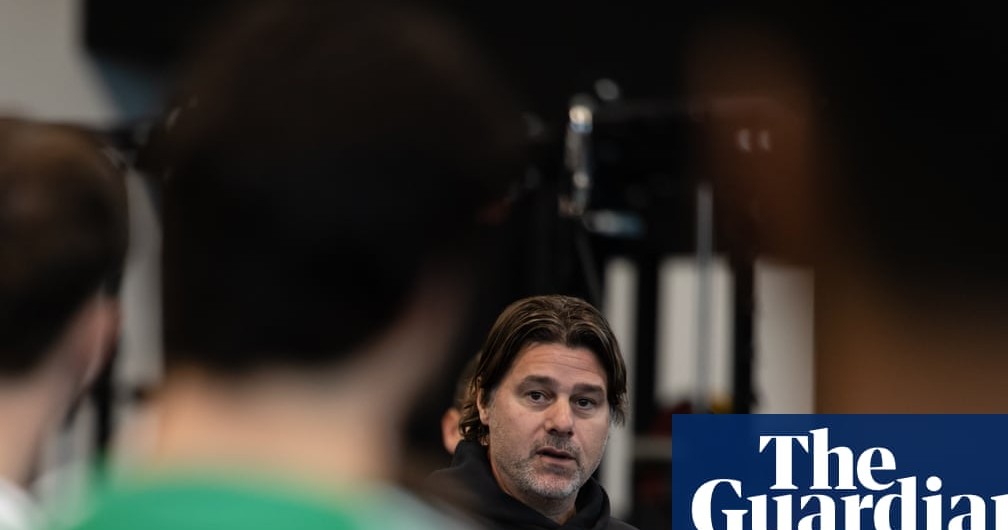
A drone operator has deleted the Manchester United training footage he shot at Carrington and apologised for what he called a total error of judgment. The twelve minutes he captured are still circulating anyway. That gap between a withdrawn upload and an unstoppable one is the story that matters, and it reaches beyond Manchester to every Nigerian who flies a drone for work and every fan here who treats Sunday’s trip to Anfield as a national event.
What Happened At Carrington
According to the Guardian, the video was posted on Thursday under the username CC OVERVIEW and taken down on Friday after the operator issued a statement accepting that the flight was legal under drone regulations while conceding that filming the session was unethical.
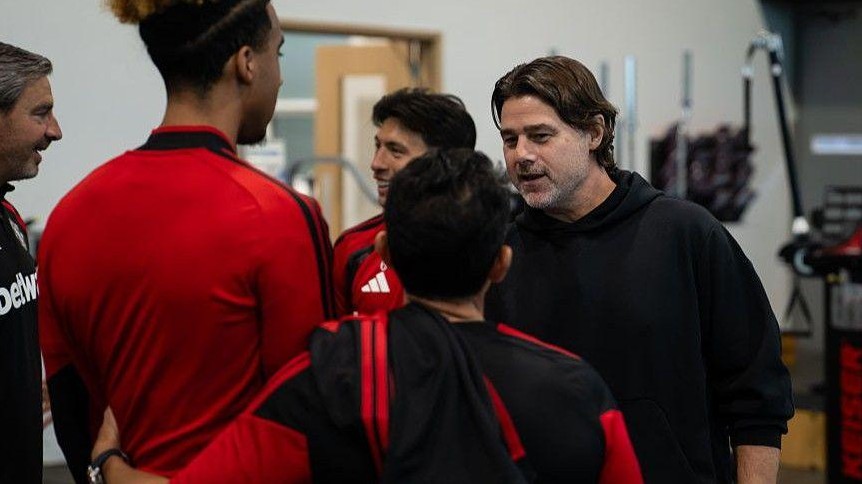
The apology was detailed. He said his aim was to picture Mauricio Pochettino in United’s training kit for supporters to see for the first time, that he wrongly presumed only harmless warm-up work would be visible, and that he wrongly assumed the session would be open to media outlets. He apologised to the club, the new head coach and the players, and said he hoped his actions do not affect the outcome of any match. He also stated that Liverpool, Sunday’s opponents, and no other club were involved in his decision to fly.
BBC Sport reported that United declined to comment. The club did not need to. Its position is already painted on signs around the training ground.
The Contradiction The Apology Leaves Standing
Sky Sports reports that Carrington is ringed with No Drones signs warning that use of the devices is strictly prohibited and that anyone caught will be reported for prosecution and subject to civil action. The operator insists his flight broke no aviation rule. Both claims can be true at once, and that is the awkward finding nobody at Old Trafford wants to explain.
A club’s authority over its own fence line does not extend into the airspace above it. Sky Sports quoted drone expert Jon Hurndall saying all the signage in the world will not stop an operator, that the only structural fix is reducing the open category airspace, and that a pilot must keep the aircraft in sight, roughly 500 metres away, which pushes clubs toward buying land or hardening security instead of relying on warnings.
Privacy law is the second lever, and a softer one. BBC Sport cited Civil Aviation Authority guidance stating that using a drone where people can expect privacy, such as inside their home or garden, is likely to break data protection law. A training pitch is not a garden, and no regulator has ruled on where the line sits. United have not tested it in public.
Why The Manchester United Training Footage Cannot Be Recalled
The most consequential figure in this affair is not twelve. It is eight million, the reported views accumulated by reposts on X after the original upload was deleted.
Sky Sports reported that the video has been shared widely, with reposts on X alone drawing over eight million views and several other YouTube channels reuploading it for hundreds of thousands more. The ESPN account describes what is on it: Pochettino supervising three groups, his assistant Jesus Perez moving between them, Bruno Fernandes in a rondo, Harry Maguire, Kobbie Mainoo, Amad Diallo, Matheus Cunha and Bryan Mbeumo clearly visible, and audio in which the pilot says let’s get closer before zooming in on the coach.
BBC Sport reported that ten outfield players worked with Pochettino, that Ayden Heaven and Andrey Santos have had limited involvement this season, and that neither Joshua Zirkzee nor Harry Amass had started a Premier League game this season. United later confirmed Patrick Dorgu was among those involved. For a coach preparing for Liverpool at Anfield on Sunday with his side 18th in the table after one win in ten league games, that is a window into a closed room, not a public one.
The honest reading is that a voluntary takedown is reputational repair, not a remedy. Nothing in the British framework lets a club force a pilot out of the sky before he films, and nothing after the fact puts a video back in the bottle once reposts carry it.
What This Means For Nigeria
Nigeria’s drone operators — survey pilots, event videographers, security contractors, journalists — work under the same structural tension the Carrington flight exposed. Regulators certify the aircraft and police the airspace. They do not police the subject being filmed. The gap between those two jobs is where this case lives, and it is not a British peculiarity. Any country that licenses machines rather than subjects will struggle to stop a legal flight over a private session.
For Nigerian clubs and for leagues that treat tactical work as confidential, the practical lesson is about closed sessions. A club relying on notices and warnings has now watched that approach fail in public, at a Premier League training ground, in front of eight million viewers. Protection has to be physical or spatial, not legal.
There is a betting and broadcast dimension too, though the operator himself raised it only as a hope rather than a fact: he said he trusted his actions would not affect the outcome of any match. Around Anfield on Sunday, with United in the relegation places and Liverpool fourth, that is a claim no one can verify.
Next To Watch
Watch whether United change anything at Carrington, whether through screening, a lease on adjoining land or a formal complaint. Watch whether the Civil Aviation Authority moves to restrict airspace over training grounds, a step its own guidance does not currently take. And watch whether the operator, who says he spent four years building a channel and wants to rebuild a damaged reputation, faces any sanction at all. The Manchester United training footage no longer sits on one channel, but it has not disappeared, and that gap will be closed by regulators or by nobody.
Frequently Asked Questions
Did the drone operator break the law by filming Manchester United training?
The operator says the flight was legal under drone regulations and described the filming as unethical rather than illegal. Manchester United have declined to comment and no regulator has ruled on the matter. BBC Sport cited Civil Aviation Authority guidance warning that flying where people can expect privacy is likely to breach data protection law, but a training ground is not explicitly covered by that wording.
Is the Manchester United training footage still available online?
The original twelve-minute upload under the username CC OVERVIEW was removed from YouTube on Friday. Sky Sports reported that reposts on X drew over eight million views and that several other YouTube channels reuploaded the video, so copies remain widely accessible.
Why does this story matter to readers outside the UK?
It shows that a legal drone flight can still expose a private organisation’s secrets, and that a club’s warnings have no force in the airspace above its fence line. That same gap between aviation rules and privacy rules applies to operators in Nigeria and elsewhere who film events, construction sites and private property.
FIRST TIME REACTIONS:
Be the first to leave us a comment – Manchester United Training Footage Pulled But Still Spreading, down the comment section.
JOIN US ON OUR SOCIAL MEDIA:

About James Williams
James Williams is the Content Director at AfriLatest. With a background in journalism and a love for storytelling, he curates compelling content and multimedia that resonates with global readers. James is dedicated to maintaining AfriLatest as a trusted source for daily news, sports updates, and entertainment trends.
View all articles by James WilliamsFootball
Mykhailo Mudryk Blames Ukraine Set-Up For Doping Ban
Mykhailo Mudryk blames Ukraine’s national team for his meldonium ban. What is confirmed, what is alleged, and why Nigerian sport should take note.

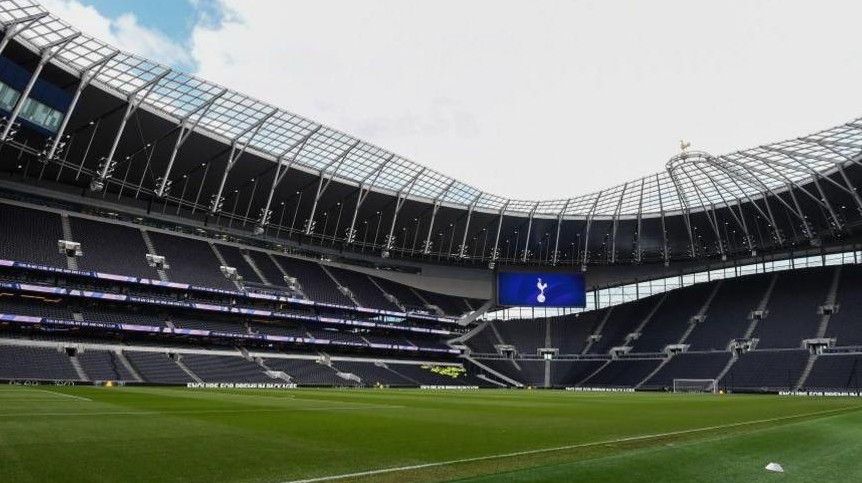
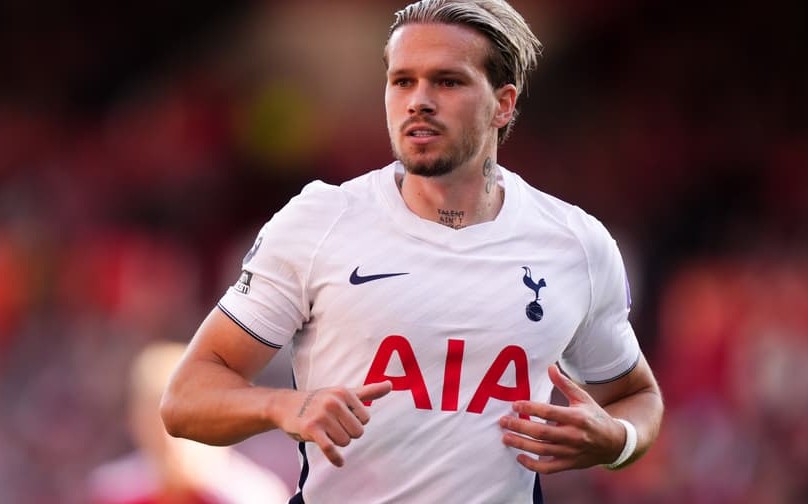
Mykhailo Mudryk is 25, on a season-long loan at Tottenham Hotspur from Chelsea, and back in professional football after a doping ban that erased the better part of two years from his career. The reason his case matters in Lagos and Abuja, not only in London, sits in the detail at the centre of his first full public account: the meldonium that triggered the ban, he says, reached him through a small cup of pills handed out by a nutritionist inside a Ukraine national team camp. That is a chain of custody African athletes and administrators have every reason to inspect closely.
Speaking on the Ukrainian YouTube channel Guest of Gordon, in a two-hour interview with journalist Dmitry Gordon, he was asked who he blamed for his absence. “The environment, the situation in the Ukrainian national team,” he said, according to BBC Sport. “It should never have existed. I probably haven’t said it publicly yet, but I’m saying it now.” Pressed on whether he blamed the national team directly, he answered: “Yes, exactly.”
Why The Mykhailo Mudryk Doping Case Travels To Nigeria
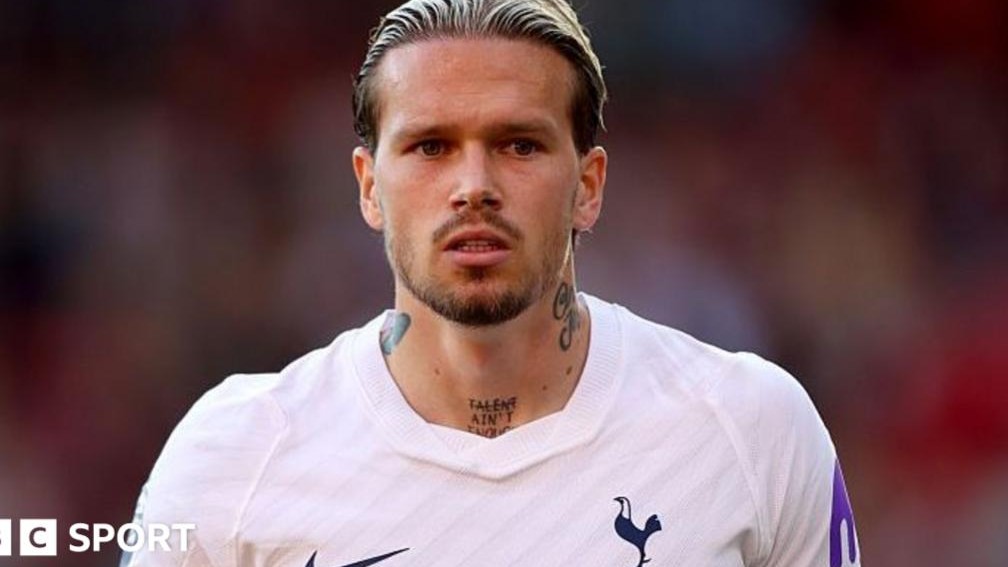
The mechanics of the allegation are the part that crosses borders. Asked how the substance entered his system, he told Gordon that Ukraine’s setup had “absolutely no security system”, unlike clubs where staff monitor hotel floors and team movements. He then described the routine, as reported by the Evening Standard: “In the Ukrainian national team we have a nutritionist who hands us pills every couple of days before games. He brings us a little cup. Everyone has to take the pills that are in that cup.”
The Premier League is Nigeria’s most followed football product, and Chelsea and Tottenham carry two of the largest supporter bases in the country. That alone puts the case in front of Nigerian readers. The harder question sits closer to home. Team-supplied supplements handed to athletes with no documentation, no batch records and no paper trail is a governance failure that has damaged Nigerian athletes at international level before, and it is the failure most likely to turn a routine national camp into a multi-year ban.
The legal counterweight is unforgiving, and it cuts against the player. Sports Illustrated, analysing the case, cites anti-doping rules stating that “it is each player’s personal duty to ensure that no prohibited substance enters their body” and that intent, fault or negligence need not be demonstrated to establish a violation (Sports Illustrated). His own conclusion accepts that reading: “I just would like, for the future, everyone to understand that you can only rely on yourself.”
What The Timeline Confirms, And What Stays Contested
The verified sequence is this. A low concentration of meldonium was found in an out-of-competition sample the Standard dates to October 2024; Mudryk says he learned of the adverse finding in December 2024. BBC Sport records his suspension as running from November 2024 until July 2026. The Football Association initially imposed a four-year ban. He appealed to the Court of Arbitration for Sport, and returned after accepting he had breached anti-doping rules and agreeing to a suspension equivalent to the time he had already served. Sports Illustrated reports the terms were reduced in July following a change in anti-doping regulations specific to meldonium, under an agreement involving the FA and the World Anti-Doping Agency.
One inconsistency deserves flagging rather than smoothing over. BBC Sport’s published suspension window extends to July 2026, yet the same report places his return in the summer of 2025, including a Chelsea pre-season tour of Asia before his deadline-day loan move. The precise legal end date of the sanction should be treated as unresolved until a full written decision is published. His blame claim is likewise allegation, not finding. The Ukrainian Association of Football has been contacted for comment, and a UAF spokesperson said last year that the association was “in close contact with Mudryk’s lawyers” but had not been contacted by the FA about the case.
From Shakhtar To Chelsea, Then A Loan Rebuild At Tottenham
For Mykhailo Mudryk, the career before the ban ran fast. He broke through at Shakhtar Donetsk, drew a bidding fight between Arsenal and Chelsea, and joined Chelsea in January 2023 for an initial £62m that could rise to £89m, per the Standard. Sports Illustrated puts the ceiling closer to €100m. His route back ran through a new manager’s blunt assessment: Xabi Alonso told him to go and play, then return. He signed for Tottenham on deadline day to reunite with Roberto De Zerbi, his former Shakhtar coach. “We met and he says: ‘Are you happy? Come on, we’ve still got a lot of work to do together,’” Mudryk recalled.
The restart has been stop-start. He has made one appearance for Spurs, then picked up an ankle injury in training that De Zerbi called “stupid”, and is expected to be available for the home fixture against Ipswich.
The Cost, The Isolation, And The Federation’s Silence
Mudryk says UAF president Andriy Shevchenko offered little support, blames the association for leaks during the case, and argues its handling delayed his return. “I’ll be honest, it pretended to help,” he said. “But in reality, there was no help.” He says he paid legal fees in the millions of pounds, plus personal trainers, massage therapists, coaching and pitch hire, while Chelsea continued to pay his salary but he could not access club services.
His account of the mental toll is the least disputed part of the interview. “It was a bolt from the blue. I couldn’t believe it was true,” he said. “It was like falling off a skyscraper. In a dream you would hit the ground. In life, I just kept on falling.” He said he cried and drank alcohol after the initial suspension, but never doubted he would return to top-level football.
The legacy question is not whether he was naive. Under strict liability he was, and he has accepted the breach. The question is whether a federation that hands a player an unlabelled cup accepts any share of the consequence when the sample comes back positive. For Nigerian athletes walking into camps run by their own federations, that is the part of the Mykhailo Mudryk case worth keeping: the ban lands on the player alone, and the paperwork that could clear him usually does not exist.
Frequently Asked Questions
What exactly was Mykhailo Mudryk banned for?
A low concentration of meldonium, a banned substance that is understood to improve endurance and recovery, was found in an out-of-competition sample. The Evening Standard dates the sample to October 2024, and Mudryk says he was told of the adverse finding in December 2024.
Has the Ukrainian Association of Football responded to his allegations?
Not publicly on the record in the reporting available. BBC Sport says it contacted the UAF for comment. Last year a UAF spokesperson said the association was in close contact with Mudryk’s lawyers but had not been contacted by the Football Association about the case. His claims remain allegations, not established findings.
Why is this story relevant to Nigerian readers?
The Premier League is Nigeria’s most-watched football league and Chelsea and Tottenham have large Nigerian supporter bases. Beyond fandom, the case turns on team-supplied supplements given to athletes without documentation, a governance risk that has produced long bans for Nigerian athletes competing internationally.
FIRST TIME REACTIONS:
Be the first to leave us a comment – Mykhailo Mudryk Blames Ukraine Set-Up For Doping Ban, down the comment section.
JOIN US ON OUR SOCIAL MEDIA:
About Clare Dominic
Clare Dominic is the Editor at AfriLatest. With a background in journalism and a passion for storytelling, she oversees the editorial process to ensure content is accurate, engaging, and relevant. Clare works closely with contributors to maintain the highest standards of journalistic integrity across all news, sports, and lifestyle coverage.
View all articles by Clare DominicFootball
Mexico vs Jamaica: How Márquez Won His First Game
Mexico vs Jamaica ended 3-3 on aggregate and gave Rafael Márquez his first win via away goals. Inside the tie that saved El Tri’s title defence.

Rafael Márquez is six matches into his tenure as head coach of Mexico’s men’s national team, and his record stands at one win, three defeats and two draws. That single win, a 1-0 second-leg victory over Jamaica at Estadio BBVA in Monterrey, was enough to put El Tri into the Concacaf Nations League semifinals, where the United States awaits in late March. The Mexico vs Jamaica quarterfinal finished 3-3 on aggregate. Mexico advanced on the away-goals tiebreaker. The defending champion survived the series, but the numbers around that survival describe a squad in transition rather than a coach who has fixed it.
What The Mexico Vs Jamaica Series Actually Decided
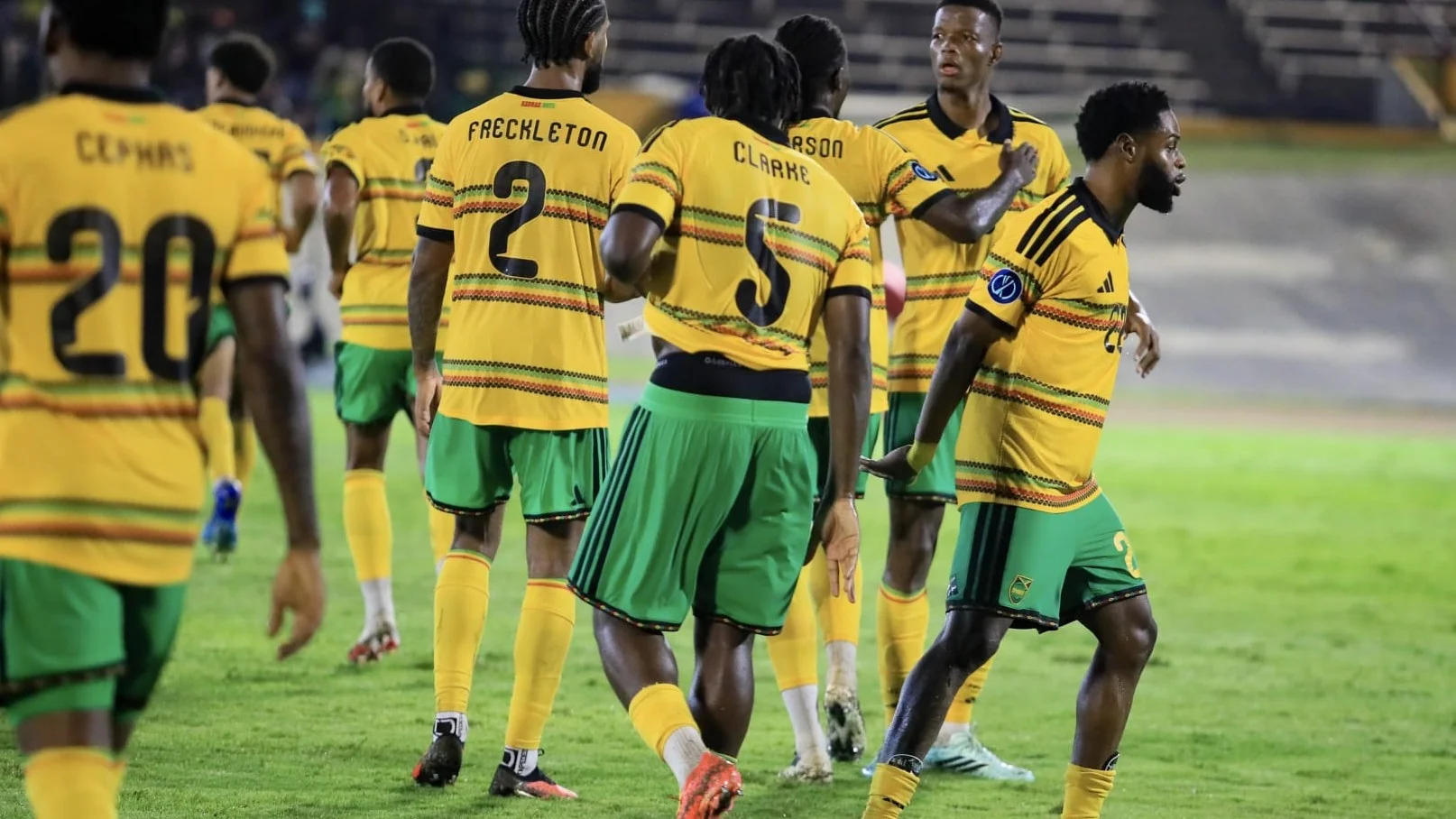
Jamaica won the first leg 3-2 in Kingston on Saturday, and the manner of it was the story. Jesús Gallardo turned a Ronaldo Webster corner into his own net for the opener. Renaldo Cephas drove in from the left flank for a second. Richard King converted a penalty. Mexico were three goals down before Gilberto Mora and Julián Quiñones, from the spot, pulled two back.
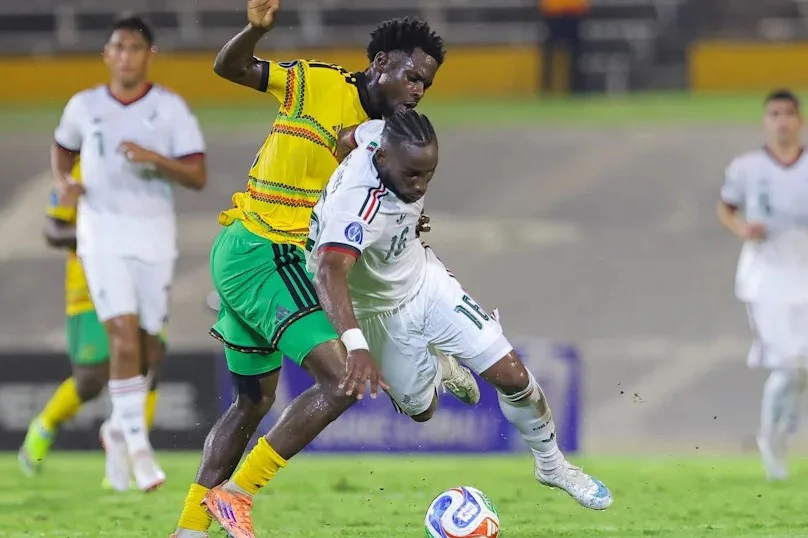
The record is not perfectly consistent on the details. Concacaf’s official match report logs the own goal in the 27th minute; ESPN’s account places it in the 28th. That discrepancy is trivial. The aggregate consequence was not.
Those two away goals decided the tie. Mexico won the return through Jesús “Tecatito” Corona in the 35th minute, and a 3-3 aggregate with two away goals to nil sent them through. Under the away-goals rule, Mexico would also have advanced with a 2-1 win. A 3-2 win would have forced extra time and possibly penalties. A 4-3 win would have eliminated them.
Bolavip’s pre-match scenario breakdown set out all four outcomes before kickoff, and it is worth stating plainly what it means: Mexico did not win this series on superiority. They won it on a technicality written into the competition regulations.
The margins were narrow in personnel too. Corona, 33, was returning to the national team after a four-year absence and scored his first international goal since September 2021, against Panama in qualifying for the 2022 World Cup. Márquez made five changes to the XI that lost in Kingston: Rodrigo Huescas, Mateo Chávez, Jesús Orozco, Álvaro Fidalgo and Corona came in; Luis Romo, Santiago Giménez, Gallardo, César Montes and Johan Vásquez went out. Goalkeeper Raúl Rangel kept a clean sheet behind a back four of Chávez, Orozco, Israel Reyes and Huescas.
From Aguirre’s Assistant To A Winless Start

Márquez’s rise is short and documented. The former Barcelona defender spent two years as Javier Aguirre’s assistant, a spell that ended with Mexico’s Round of 16 exit against England at the 2026 World Cup. He was promoted after that tournament. His first five matches produced no wins, three losses and two draws, a run ESPN, citing reporting from The Associated Press, described as one of the worst managerial starts in the history of the Mexican national team.
The Kingston defeat made the structural problem visible. Nine of the eleven Mexican starters who lost to England started again in Jamaica. Márquez acknowledged the continuity without framing it as an excuse: “It’s almost the same defensive line that played in the World Cup and they were extraordinary back then,” he said. “While the contexts are obviously different, I believe we must demand more of ourselves to ensure we don’t repeat these kinds of errors.”
Jamaica, ranked No. 66 in the world and without a World Cup appearance since France 1998, scored three times against that line. That is a confirmed result, not an interpretation, and it sits awkwardly beside the ranking gap. The claim that Jamaica were the better side across 180 minutes is analysis, not fact; the claim that Mexico conceded three goals to a side 66th in the world is fact.
The Generation Question Márquez Has Not Answered
Mora, a teenager, scored in Kingston and started the second leg alongside Érik Lira and Álvaro Fidalgo in midfield. That is the one clear signal of a generational shift in Márquez’s selections. Whether it becomes a policy, a deliberate phasing out of the World Cup core, remains unconfirmed. Nothing Márquez has said publicly commits him to it, and the five changes in Monterrey were reactive, forced by a defeat rather than planned rotation. Reading them as a rebuild is a forecast, not a report.
What is confirmed is the safety net. The quarterfinal win secures Mexico direct entry to the 2027 Concacaf Gold Cup. Under Concacaf’s qualification format, the four quarterfinal winners receive berths and the four losing teams drop into the Gold Cup Prelims. Jamaica, having lost the series, go to the prelims. The downside of elimination for Mexico was therefore limited, a point largely absent from the coverage of Márquez’s winless run.
Legacy And The March Test
Mexico face the United States at SoFi Stadium in Inglewood, California, in the semifinals, with the Finals scheduled for March 25-28. Panama meet Canada in the other semifinal. “If we want to keep defending our title, we have to face everyone and now, in these semifinals, it’s our turn to take on the United States, so we’ll prepare well,” Márquez said. “We have plenty of time ahead, and as the match approaches, we’ll start getting ready for it. It’s a great opportunity.”
That time is the test. The Mexico vs Jamaica series gave Márquez his first win and kept the title defence alive, but it did so on an away-goals rule after conceding three goals in Kingston to a side ranked 66th. A coach’s legacy is not built on a tiebreaker. It is built on what happens next, and the United States in March is the first fixture that will genuinely measure whether Márquez’s Mexico has changed or merely survived.
Frequently Asked Questions
How did Mexico advance past Jamaica in the Nations League quarterfinal?
The series ended 3-3 on aggregate after Jamaica won the first leg 3-2 in Kingston and Mexico won the second leg 1-0 in Monterrey. Mexico advanced on the away-goals tiebreaker, having scored two away goals to Jamaica’s none.
Was this Rafael Márquez’s first win as Mexico head coach?
Yes. Márquez was 0-3-2 across his first five matches before the 1-0 win over Jamaica. He was promoted after serving two years as Javier Aguirre’s assistant, a spell that ended with a Round of 16 exit to England at the 2026 World Cup.
What did Mexico lose by winning the quarterfinal?
Nothing in qualification terms. The four quarterfinal winners get direct berths in the 2027 Concacaf Gold Cup, while the four losing teams drop into the Gold Cup Prelims. Jamaica now go to the prelims.
FIRST TIME REACTIONS:
Be the first to leave us a comment – Mexico vs Jamaica: How Márquez Won His First Game, down the comment section.
JOIN US ON OUR SOCIAL MEDIA:
About James Williams
James Williams is the Content Director at AfriLatest. With a background in journalism and a love for storytelling, he curates compelling content and multimedia that resonates with global readers. James is dedicated to maintaining AfriLatest as a trusted source for daily news, sports updates, and entertainment trends.
View all articles by James Williams-

 Car Reviews2 weeks ago
1955 Chevy Bel Air Restomod: What SEMA Really Proves
-
Savings & Investing4 weeks ago
Hidden Medicare Fees Draining Your Retirement Savings
-
JAMB & WAEC4 weeks ago
JAMB Admission Process: What Changed And What Is Still Talk
-
World News4 weeks ago
Sheinbaum No Proof Maduro: Mexico’s Test of US Evidence
-
Movies & TV4 weeks ago
Wizkid Starboy Desire Ft Banky W Shaydee: Fact Or Fan Fiction?
-
Trend politics4 weeks ago
How 24-Hour Online Scrutiny Is Running Out Leaders