Car Reviews
Hyundai Elantra Parts: Maintenance Tips for N Models
Learn how to maintain Hyundai Elantra parts like brakes, forged wheels, and Alcantara trim. Avoid costly failures with our expert tips.

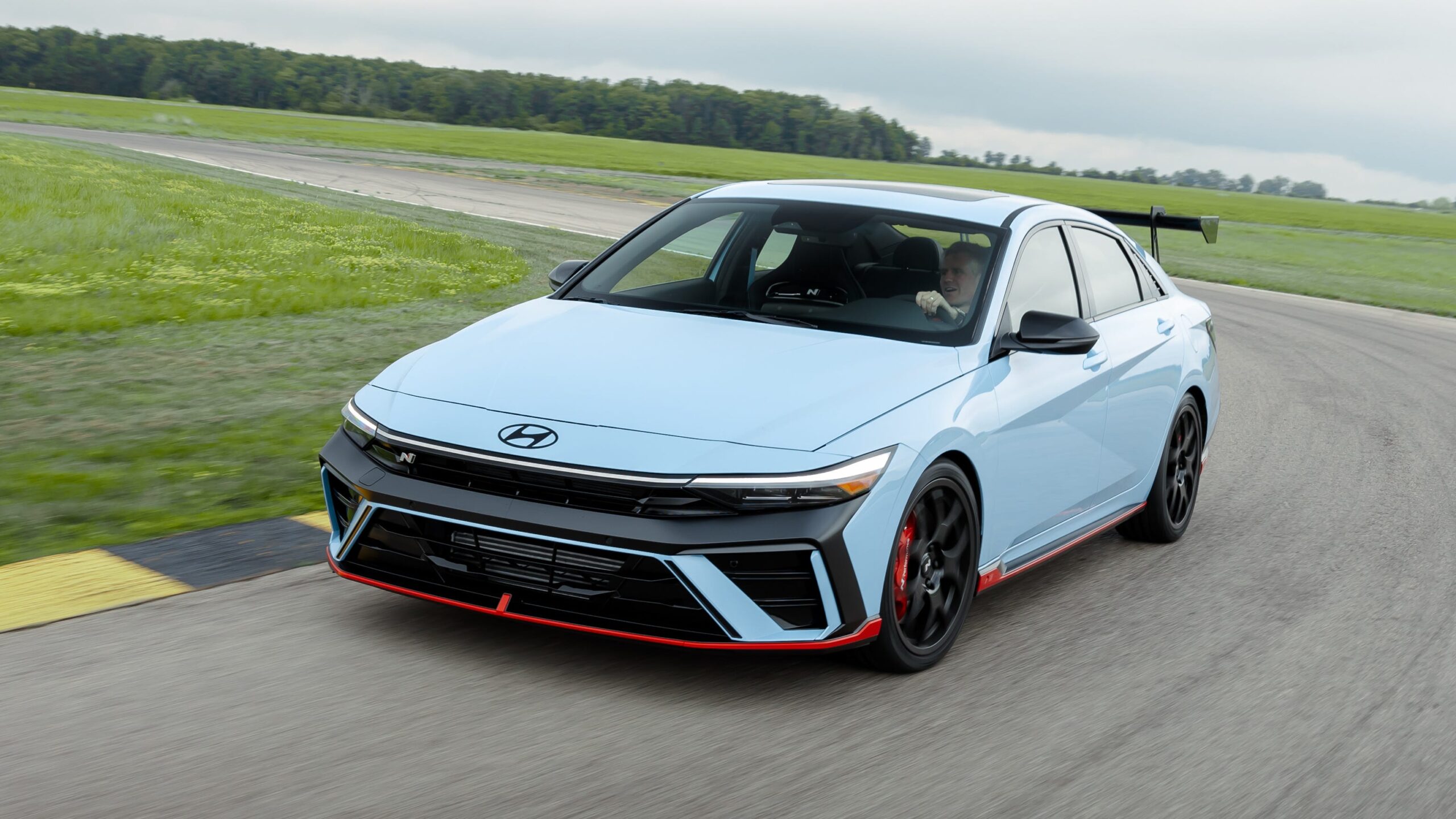
The front brakes on the Hyundai Elantra N TCR are a common failure point if you ignore them. The standard Elantra N comes with a single-piece rotor and single-piston floating caliper, but the TCR Edition upgrades to a two-piece rotor and monobloc four-piston caliper setup. That’s a serious bit of kit, but it also means more expensive Hyundai Elantra parts to replace when they wear out. If you own an Elantra N or are considering one, knowing how to maintain these components will save you from a four-figure repair bill down the line.
Why Hyundai Elantra Parts Like Brakes and Wheels Fail Early
Performance brakes and forged wheels are designed for track duty, but they still wear. The two-piece rotors on the TCR Edition are lighter and stiffer, but they can warp if you don’t bed them in properly or if you ride the brakes hard when they’re cold. The monobloc calipers are machined from a single piece of aluminum, which makes them stiffer than the standard floating calipers, but they’re also more sensitive to dirty brake fluid. If you skip fluid changes, the calipers can seize.
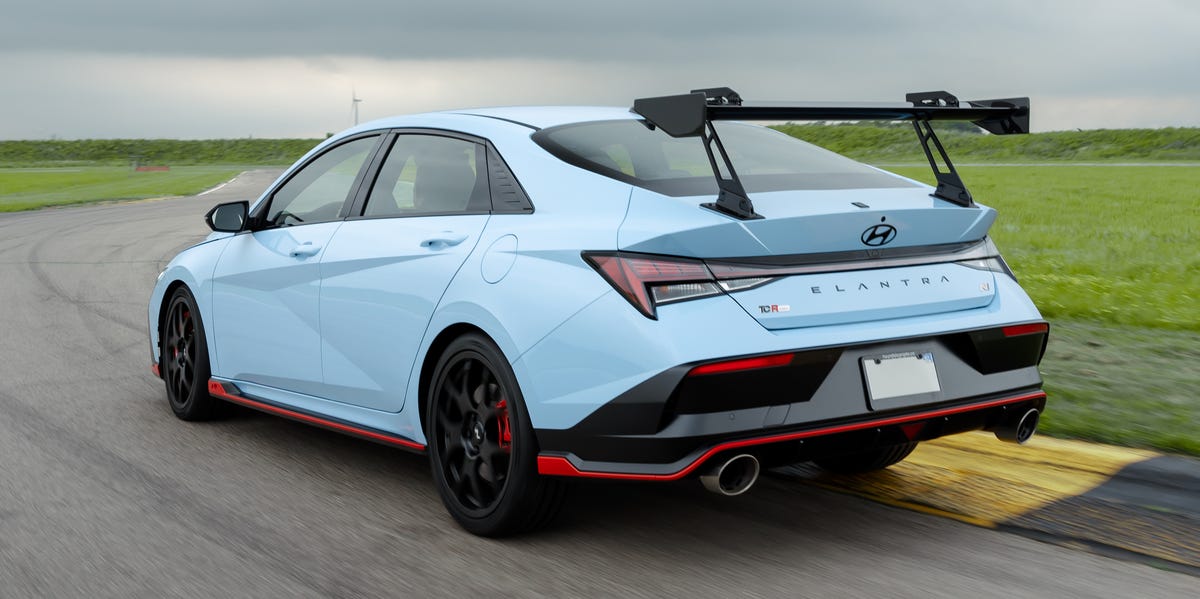
The 19-inch forged wheels on the TCR are another weak spot if you’re not careful. They’re lighter and stiffer than the standard cast wheels, but forged aluminum can crack if you hit a pothole hard enough. And because they’re designed to clear the larger brakes, they have less clearance for debris. In Nigerian roads, that’s a real risk.
Hyundai’s N Performance Parts catalog now includes these forged wheels as a standalone upgrade, along with carbon fiber mirror caps and a rear wing. According to Autoblog, these parts are available at select U.S. dealers, but if you’re sourcing them in Nigeria, you’ll need to verify fitment carefully. The wheels are wrapped in 245/35 R19 tires, which is close to stock size, but the offset might differ.
Warning Signs Your Elantra N Parts Need Attention
You’ll hear brake squeal first. That’s the wear indicator on the pads. If you ignore it, you’ll grind the rotors, and two-piece rotors aren’t cheap to replace. On the TCR, the front rotors are a two-piece design, which means you can replace just the friction ring, but most workshops will try to sell you the whole assembly. Know the difference.
For the wheels, watch for vibration at speed. Forged wheels can bend rather than crack, and a bent wheel will cause a shimmy through the steering wheel. If you feel that, get the wheel checked for trueness before you buy new tires.
The Alcantara steering wheel and shift knob are also wear items. They’ll mat down and get shiny over time. Hyundai sells replacement Alcantara-covered parts, including the steering wheel, e-brake handle, and center armrest. If you catch the wear early, you can clean it with a soft brush and mild soap. If you wait too long, the material will pill and you’ll need to replace it.
Maintenance Steps for Hyundai Elantra Parts
Brake fluid flush every 30,000 km or two years. Use DOT 4 fluid. The monobloc calipers have small passages, and old fluid will cause them to drag.
Inspect the rotors at every pad change. Measure thickness with a micrometer. The minimum thickness is stamped on the rotor hat. If you’re below spec, replace them. For the TCR’s two-piece rotors, you can often just replace the friction ring, which saves money.
Clean the wheels regularly. Brake dust from performance pads is corrosive. Use a pH-neutral wheel cleaner and a soft brush. Don’t use acid-based cleaners on forged aluminum.
Check wheel torque after every rotation. Forged wheels can loosen if not torqued properly. Use a torque wrench and tighten to the spec in your owner’s manual.
For the Alcantara, clean it every three months. Use a dedicated Alcantara cleaner and a microfiber towel. Don’t soak it. If it’s already shiny, you can try a steamer, but be gentle.
Cost of Hyundai Elantra Parts in Nigeria
Prices vary, but here’s what you can expect. A set of front brake pads for the Elantra N TCR will run you between ₦120,000 and ₦200,000 depending on brand. The two-piece rotors are ₦350,000 to ₦500,000 per pair. Monobloc calipers are expensive—₦600,000 to ₦900,000 each if you can find them. Forged wheels are ₦800,000 to ₦1.2 million for a set of four, if you’re buying from a dealer. Aftermarket options are cheaper but verify they’re actually forged, not cast.
Alcantara steering wheel replacement is around ₦250,000 to ₦400,000. The carbon fiber rear wing is ₦500,000 to ₦800,000. These are dealer prices; you might find used parts cheaper, but inspect them carefully.
According to Car and Driver, the TCR Edition starts at $40,495 in the U.S., which is $4,150 more than the standard Elantra N. That premium buys you the upgraded brakes, forged wheels, and Alcantara bits. If you’re buying those parts separately, you’ll spend more than that, so the package is a good deal if you want the performance.
Simple Habit That Saves Money
Check your brake fluid level and color every month. If it’s dark, get it flushed. That one habit will prevent caliper seizure and rotor warping. It takes five minutes and costs nothing. For more details on the TCR Edition and its parts, see Road & Track. And for the full pricing breakdown, MotorTrend has you covered.
Maintaining your Hyundai Elantra parts doesn’t have to be complicated. Stick to the service intervals, use quality fluids, and inspect regularly. Your wallet will thank you.
Frequently Asked Questions
How often should I replace the brake fluid in my Hyundai Elantra N?
Every 30,000 km or two years, whichever comes first. Use DOT 4 fluid. Old fluid can cause the monobloc calipers to seize.
Are the forged wheels on the Elantra N TCR worth the money?
Yes, if you track the car or want to reduce unsprung mass. They’re lighter and stiffer than cast wheels, but they can crack on bad roads. Inspect them regularly.
Can I buy N Performance Parts in Nigeria?
Hyundai N Performance Parts are sold at select U.S. dealers, but you can source them through importers. Verify fitment and authenticity before buying.
Related Articles
- GTBank vs Access Bank: Service Disruptions and Lending Rates
- Brandi Carlile: Rock Star in Her Prime, On Tour Now
- WAEC 2026 Timetable: Your Exam Strategy Guide
- Carney Calls U.S. Tariffs a Miscalculation as Canada Retaliates
- Retired US Navy Admiral Robert Harward Sparks Controversy

Car Reviews
Machina’s RoboCraftsman: Car Customization Without Retooling
Machina’s RoboCraftsman promises cheaper car customization. A review of the Lassen Tacoma prototype, and what ownership realities remain unanswered.
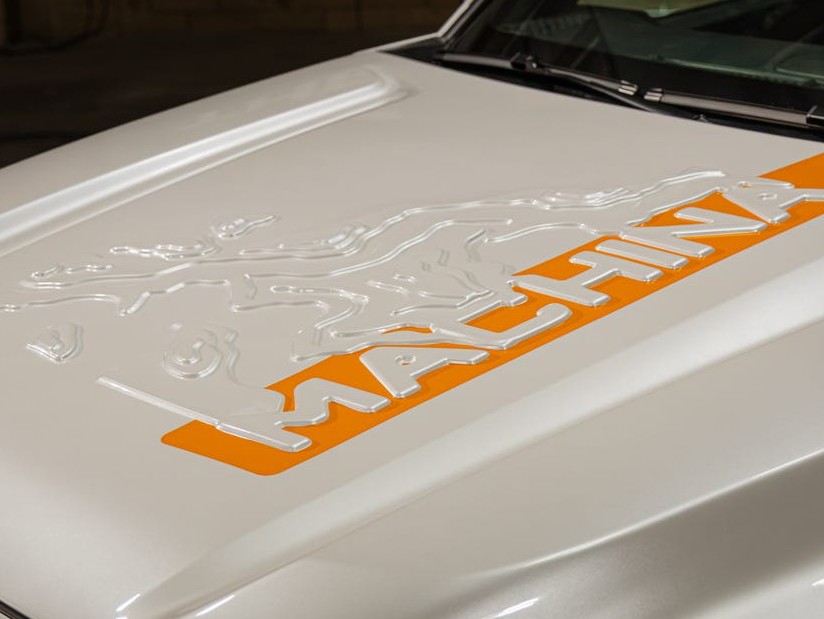
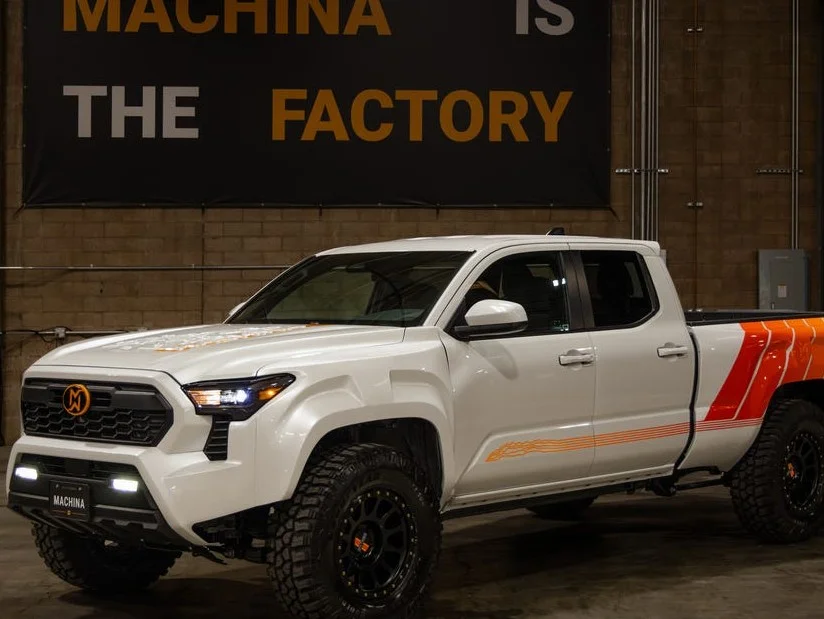
The Lassen is not a car anyone can buy. It is a show truck built on a Toyota Tacoma, wearing a bespoke hood, tailgate and fenders, and it exists to prove one commercial claim: that car customization no longer has to wait on a six-month factory retooling cycle.
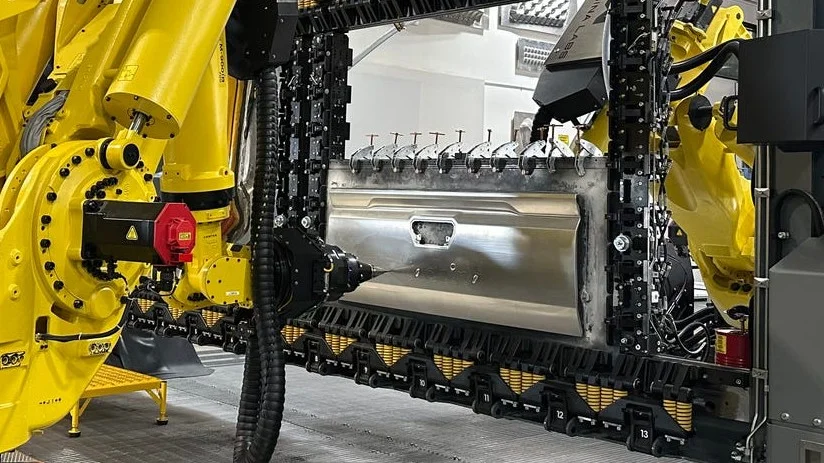
The builder is Machina Labs, a California company founded in 2019 that spent its early years serving aerospace and defence clients. Its hardware is the RoboCraftsman platform — two large robotic arms that fold into a pair of shipping containers. Machina pitches the setup as a factory in a box.
The arms run on software. Switching from one panel design to another is a file upload, not a plant rebuild. According to Car and Driver, the Lassen went from sketches to finished panels in two and a half weeks. The same changes through conventional tooling typically take four to six months.
What RoboCraftsman Actually Does To Metal
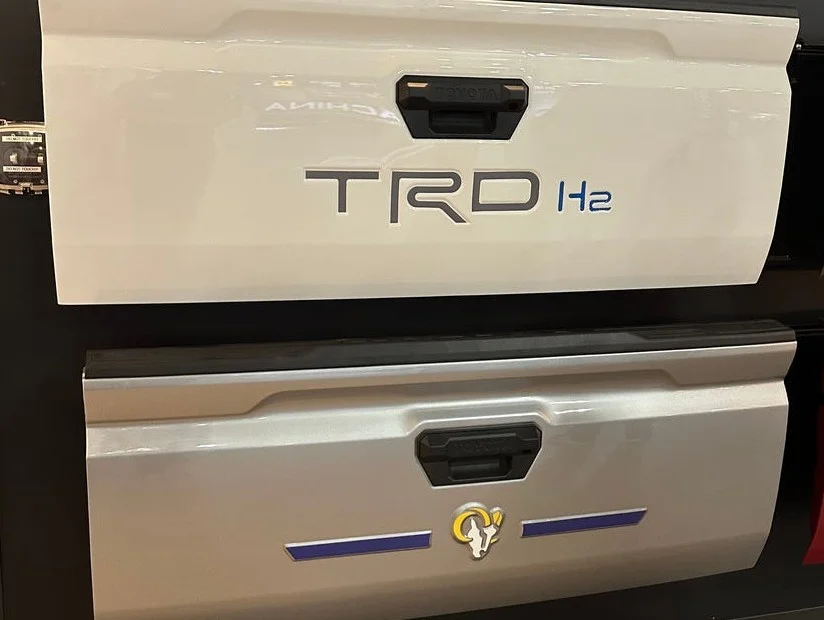
The platform works two ways. The first is re-striking: pressing a fresh design into a panel that has already been stamped, at minutes per piece. The Lassen’s tailgate carries an embossed Machina script, and its hood carries a topographical map of Mount Lassen. Machina also displayed tailgates carrying a retro Toyota graphic and a Los Angeles Rams logo, which shows how fast the design file can be swapped.
The second is full forming, where a panel is built up from flat sheet in aluminium or steel. That runs slower than re-striking, but a finished panel is done within hours. The Lassen’s bulging fenders were made this way. After forming, the system scans the part, trims it, finishes it and heat treats it.
Design credit for the Lassen’s panels goes to Callum, the studio founded by Ian Callum. Machina’s automotive division is named Machina Rebellis. Toyota already holds an investment through its venture arm, Woven Capital, after seeing an earlier Ford F-150 Lightning-based prototype called the Anvil.
Why Robotic Panel Forming Changes Car Customization Economics
Personalization has been priced for the top of the market for a decade. One-off and limited-run supercars, hand-built to a wealthy buyer’s exact specification, cost accordingly. Tooling is the reason. Retooling a plant to produce a few hundred distinct body panels is not commercially viable.
Machina’s stated sweet spot is production runs in the hundreds and thousands. That covers special editions for large OEMs, body kits built with aftermarket companies, and pre-production panels for development mules — a stage the source describes as typically expensive and slow. Machina also envisages shipping RoboCraftsman units directly to OEM manufacturing sites.
That OEM appetite is real. Seven manufacturers are scheduled to showcase vehicles and customization programmes at the 2026 SEMA Show in Las Vegas, SEMA confirms, which tells you personalization is now a sales channel rather than a niche. Cheaper car customization is a credible pitch on the manufacturing side. The commercial question is what happens after the panel leaves the box.
OEM, Aftermarket And Counterfeit Parts In A Cheaper Market
Three categories matter here. OEM parts are made by or for the vehicle manufacturer to its specification and sold under its part number. Aftermarket parts come from independent producers working to their own specification, with quality ranging from better than OEM to considerably worse. Counterfeit parts are aftermarket items passed off as OEM, usually with no material traceability and no recourse.
A process that makes short-run body panels cheap expands the aftermarket tier of car customization. It does not, on its own, protect buyers in the counterfeit tier. When the value of a custom panel sits in a design file rather than a stamping die, the line between a licensed panel and a copy becomes harder to police and easier to fake.
The source material does not address counterfeit risk, warranty terms, or how Machina would license designs to aftermarket firms. Those remain open.
The Ownership Realities The Lassen Cannot Answer
Reliability is undocumented. The source records no durability testing, no cycle counts, no field data. On the Lassen, the panels are non-structural cosmetic parts; no changes to suspension, drivetrain or crash structure appear in the reporting. Road suitability is therefore unchanged from a standard Tacoma, because nothing mechanical changed.
Maintenance and parts availability are unanswered too. A cheaper car customization chain still leaves the buyer asking what a replacement fender costs in five years, and whether the forming data survives that long. A panel produced in a run of 500 is, by definition, a low-volume part.
Resale value cuts both ways. A distinctive panel lifts appeal for one buyer and shrinks the pool of buyers for everyone else. No resale data exists for any Machina-formed panel.
Naira pricing does not exist. Machina has published no price for RoboCraftsman units, and the Lassen is a show vehicle rather than a product. Any naira figure quoted today would be invented.
Should You Buy It
No — and not because of a flaw. The Lassen is not for sale, RoboCraftsman is industrial equipment aimed at OEMs and aftermarket firms, and no Nigerian retail channel appears in the source material.
What a Nigerian buyer should take from it is narrower. Cosmetic body repair is a routine cost in a market where most vehicles arrive used, not an insurance event. Faster short-run panel production would eventually push car customization down-market: more body kits, more limited editions, more choice, shorter waits for a replacement panel. Whether that arrives as genuine OEM-grade stock or as a thicker layer of convincing fakes depends on enforcement and on licensing, not on robotics.
Machina’s technology solves a manufacturing problem. It does not solve the ownership problem. Car customization gets quicker and cheaper inside the factory; outside it, buyers still wait on parts, pricing and warranty. Watch for a named production partner, published RoboCraftsman pricing and clear terms before treating the Lassen as anything more than a demonstration of what the tooling can do.
Frequently Asked Questions
Can I buy the Machina Lassen truck?
No. The Lassen is a show vehicle built on a Toyota Tacoma to demonstrate Machina’s RoboCraftsman manufacturing process. It was displayed at the Los Angeles auto show and Machina has not announced it as a production product or published a price.
How long does RoboCraftsman take to make a custom panel?
It depends on the method. Re-striking a design into an already-stamped panel takes minutes per piece. Fully forming a new panel from flat aluminium or steel is slower, but the company says a finished panel can be completed within hours. Machina produced the Lassen’s panels from sketches in two and a half weeks, against a typical four to six months using conventional tooling.
Is Machina a car company?
No. Machina Labs was founded in 2019 and built its business serving aerospace and defence clients with robotic metal forming equipment. It has launched an automotive division called Machina Rebellis to sell the RoboCraftsman platform to carmakers and aftermarket firms. Toyota is an investor through Woven Capital.
 Follow AFRILATEST on Google News
FIRST TIME REACTIONS:
Be the first to leave us a comment – Machina’s RoboCraftsman: Car Customization Without Retooling, down the comment section.
JOIN US ON OUR SOCIAL MEDIA:

About Paul Nwogo
Paul Nwogo is an engineer, published author, and the Head Manager at AfriLatest. He has written numerous books available on Amazon covering a diverse range of topics, including health, personal finance, relationships, work ethics, and scam survival. With his technical background and passion for writing, Paul now oversees the editorial direction of AfriLatest, delivering practical, accurate, and engaging content on trending news, music, and global lifestyle topics.
View all articles by Paul NwogoCar Reviews
Britain’s Best Driver’s Car And The Parts Bill Behind It
Britain’s best driver’s car is the Alpine A110. Here is what it, the 911 and MX-5 really demand in parts, oil spec and upkeep in Nigeria.

Autocar’s ranking of the best sports cars on sale places the Alpine A110 at the top of the pile, and the verdict rests on feel rather than horsepower. The magazine’s deputy road test editor, Richard Lane, calls it “quick, agile, effusive and ultimately enormous, accessible fun.” On that evidence, the case for naming it Britain’s best driver’s car is settled.
A British road test is one thing. Keeping the same car alive in Lagos, Abuja or Port Harcourt is another. The gap between those two realities is where Nigerian buyers get hurt, and it has almost nothing to do with lap times.
Why The Winning Car Is A Parts Problem First

The A110’s hardware explains both its appeal and its upkeep. According to Autocar, it uses a lightweight aluminium body, a mid-mounted engine and double-wishbone suspension — a layout the magazine notes is mostly reserved for the most powerful supercars. The range arrived in 2017 with 248bhp, grew an A110 S with 288bhp, larger brakes and firmer suspension, passed through special editions such as the Légende GT, and now tops out at the A110 R Ultime. A replacement generation is due in 2027.
Every one of those details becomes an ordering problem in a market with no factory behind it. Aluminium panels cost more to repair than steel and demand a workshop that knows how to work them. A mid-mounted turbocharged engine sits where a boot would normally go, so routine access is slower and labour hours climb. Autocar’s advice to British readers — buy one before the 2027 replacement lands — reads very differently once it is translated into naira.
No verified naira parts pricing for the A110 exists in the public domain, and this publication will not invent one. What can be stated is the rule that protects a buyer: insist on a written quote with a part number for every component, and walk away from any invoice that lists a part without one.
OEM, Aftermarket And Counterfeit On Britain’s Best Driver’s Car
An OEM part is built to the manufacturer’s specification, either by the car maker itself or by the tier-one supplier that builds it for the production line. It carries a part number traceable to the model year. For fluids, the OEM route means the oil or coolant that meets the exact specification printed in the handbook.

Aftermarket parts come from independent manufacturers. They are legitimate, usually cheaper, and can meet or exceed the original specification — but only when the buyer reads the specification rather than the marketing on the bottle. A reputable aftermarket filter with the correct part number is not the same object as one that merely fits the thread.
Counterfeit parts are the third category, and the one that ends engines. They mimic OEM packaging, carry copied numbers and offer no traceability. Counterfeit oil is the most damaging example, because the failure surfaces thousands of kilometres later as sludge, worn bearings or a failed turbocharger — long after the seller has moved on.
Which brings the argument to the fluid itself. The best engine oil for Nigerian roads is not settled by ambient temperature, by what a mechanic has always used, or by what a group chat recommends. It is settled by the viscosity grade and specification printed in the owner’s manual for that model year. Manufacturer viscosity and specification requirements govern. Climate alone does not justify ignoring the manual.
Heat changes how oil behaves — that is physics, not folklore — but the answer is the correct specification, disciplined drain intervals and honest cooling system maintenance. Deviating to a random thicker grade moves the engine away from the conditions its designers validated, and no Lagos afternoon justifies that trade.
What The 911 And The MX-5 Offer Instead
The Porsche 911 is the alternative for a buyer who wants one car to cover everything. Autocar describes it as the most versatile sports car on the planet. It runs a 3.0-litre turbocharged flat-six in Carrera, Carrera T, Carrera S and Carrera GTS forms, with a hybrid GTS now in the range, and it comes as a coupé, a cloth-top Cabriolet and a folding fixed-head Targa, with rear- or four-wheel drive, an eight-speed PDK or a seven-speed manual. Turbo, Turbo S, GT3 and GT3 RS sit above.
The Mazda MX-5 is the third option and the one Autocar tags best for affordability. The fourth-generation car is shorter, lighter and more spacious than its predecessors. It gained 23bhp in a 2018 facelift to its 2.0-litre engine along with an adjustable steering column, then took a new limited-slip differential, retuned steering, more lenient stability control and interior updates in 2024. The 1.5-litre 130bhp version remains on sale.

The electric shift has not reached this corner of the market yet. Autocar notes that sports cars still hold to petrol power while other classes electrify, and Top Gear’s rundown of its top 20 electric cars is dominated by family transport — the Kia PV5, Skoda Enyaq, Volvo EX90, Porsche Macan — rather than mid-engined two-seaters. For a Nigerian buyer, that means the petrol parts chain remains the one that matters.
Best Value Comes Down To Consumables
Value in this class is not the sticker price. It is the cost of the parts actually bought — filters, pads, tyres, fluids — multiplied by how easily they can be sourced and how hard they are to fit. The MX-5 wins that arithmetic among the three: it is the affordability pick of Autocar’s group, and its service items sit at the simpler end of the sports car spectrum.
The 911 wins on breadth, because a long-running model line in dozens of variants gives independent workshops more experience and importers more reason to keep consumables on the shelf. The A110 wins on the thing Autocar rewards — the drive — and struggles on the thing Nigeria punishes hardest, which is running a low-volume aluminium sports car far from its supply chain.
Resale follows the same logic. A documented service history, correct specification fluids and traceable part numbers protect value far more than a polish and a fresh set of mats. An engine opened up by the wrong oil is a discount nobody recovers.
None of this overturns the verdict on Britain’s best driver’s car. The A110 still earns its place. The buyer who keeps it running in Nigeria simply has to treat parts and oil specification as part of the driving experience, not an afterthought — and treat the manual, not the climate, as the final authority on the best engine oil for Nigerian roads.
Frequently Asked Questions
Which car does Autocar rate as the best sports car on sale?
Autocar places the Alpine A110 at the top of its best sports cars ranking, praising its handling, its lightweight aluminium body, mid-mounted engine and double-wishbone suspension. The range starts from the 2017 car with 248bhp and runs up to the A110 R Ultime, with a replacement generation due in 2027.
Should Nigerian drivers use a thicker engine oil because of the heat?
No. The viscosity grade and specification printed in the owner’s manual for that model year govern. Heat affects how oil behaves, but the correct response is the specified fluid plus disciplined drain intervals and cooling system maintenance, not a random change to a heavier grade.
How do I tell an OEM part from a counterfeit one?
An OEM part is built to the manufacturer’s specification by the car maker or its tier-one supplier and carries a part number traceable to the model year. Counterfeit parts copy packaging and numbers but offer no traceability. Demand a written quote with a part number for every component and refuse anything that cannot produce one.
FIRST TIME REACTIONS:
Be the first to leave us a comment – Britain’s Best Driver’s Car And The Parts Bill Behind It, down the comment section.
JOIN US ON OUR SOCIAL MEDIA:
About Paul Nwogo
Paul Nwogo is an engineer, published author, and the Head Manager at AfriLatest. He has written numerous books available on Amazon covering a diverse range of topics, including health, personal finance, relationships, work ethics, and scam survival. With his technical background and passion for writing, Paul now oversees the editorial direction of AfriLatest, delivering practical, accurate, and engaging content on trending news, music, and global lifestyle topics.
View all articles by Paul NwogoCar Reviews
1955 Chevy Bel Air Restomod: What SEMA Really Proves
The 1955 Chevy Bel Air restomod at SEMA packs 741 hp and a dozen specialist suppliers. Here is what is confirmed, what is not, and why it matters.
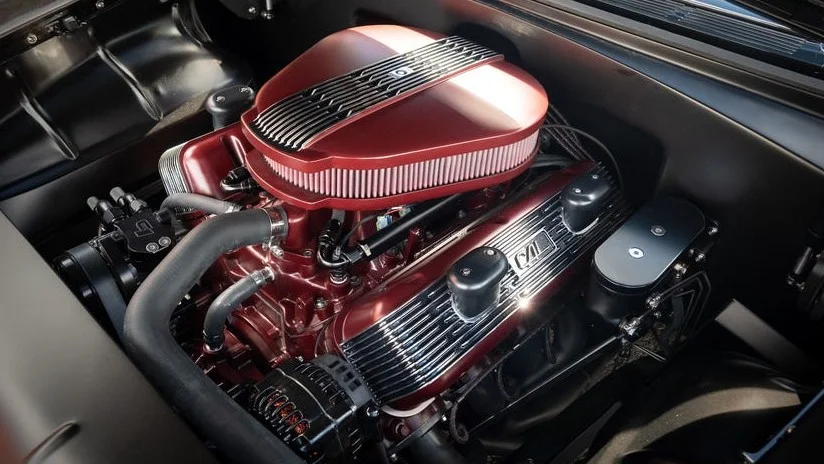
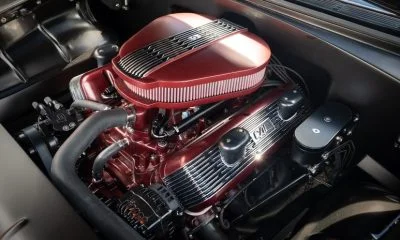
The 1955 Chevy Bel Air restomod unveiled in BluePrint Engines’ display booth at the 2026 SEMA show in Las Vegas carries a 598-cubic-inch V-8 rated at 741 horsepower and 703 pound-feet of torque, according to Car and Driver. Those figures are the easy part of the story. The harder and more useful part is the list of companies it took to make them usable.
Two published accounts of the build — Car and Driver’s show report and Hot Rod‘s preview of CAL Auto Creations’ SEMA projects — together name roughly a dozen firms behind the car. BluePrint Engines supplied the powerplant. Art Morrison supplied the frame. RideTech supplied the coil-overs, Baer the six-piston brakes, Bowler the automatic transmission, SpinTech the mufflers. Advanced Plating handled the nickel finishes. Leading Edge Machine and Design cut the one-off wheels. Santana Interior Design stitched the cabin. Dakota Digital and Vintage Air supplied instruments and climate control. CAL built the body and sprayed the paint in-house.
No single shop on that list could have produced this car alone. That is the substance behind the headline.
What This 1955 Chevy Bel Air Restomod Actually Changed
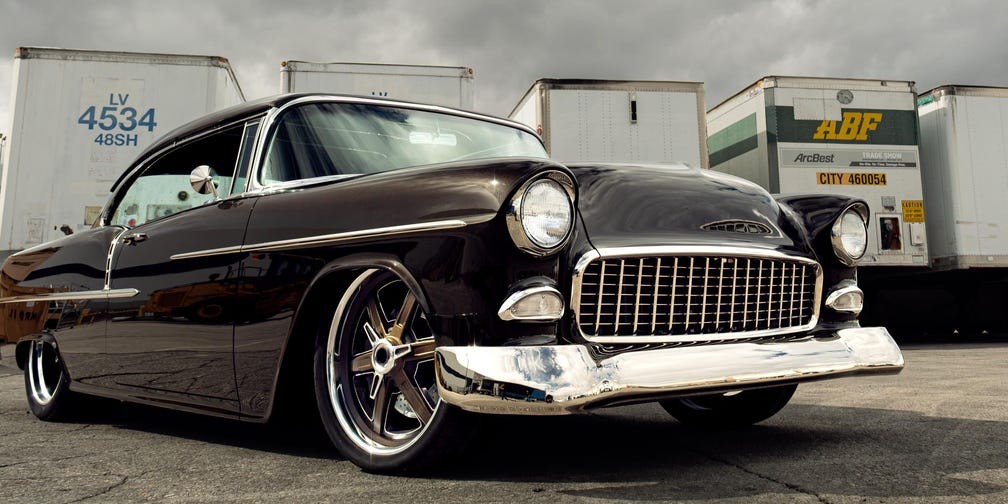
The engineering claim sits in the chassis, not the paint. CAL reworked an Art Morrison frame so the rear rails turn upward, dropping the ride height, while the centre crossmembers were raised to keep components above the scrub line. Car and Driver’s report describes the result as drivable even on pockmarked roads. Hot Rod describes a street-sweeping stance that still leaves enough suspension travel that the car, in its phrasing, “doesn’t ride like a rikshaw.”
That distinction separates engineering from cosmetics. A classic can be dropped cheaply by cutting springs and ruining the geometry. Building one that sits low and still absorbs bad surfaces requires fabricated parts and deliberate suspension design. The visible work — reshaped quarter panels, revised taillight bezels, a new grille surround, dark paint mixed specifically for this build, staggered one-off wheels colour-matched to the body — is the part a photograph can carry. The invisible work decides whether the car survives a speed bump.
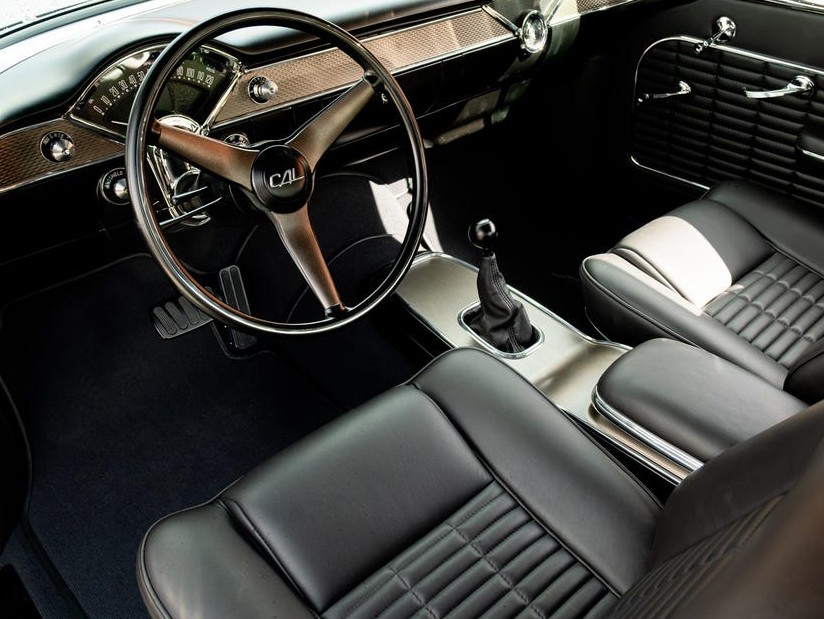
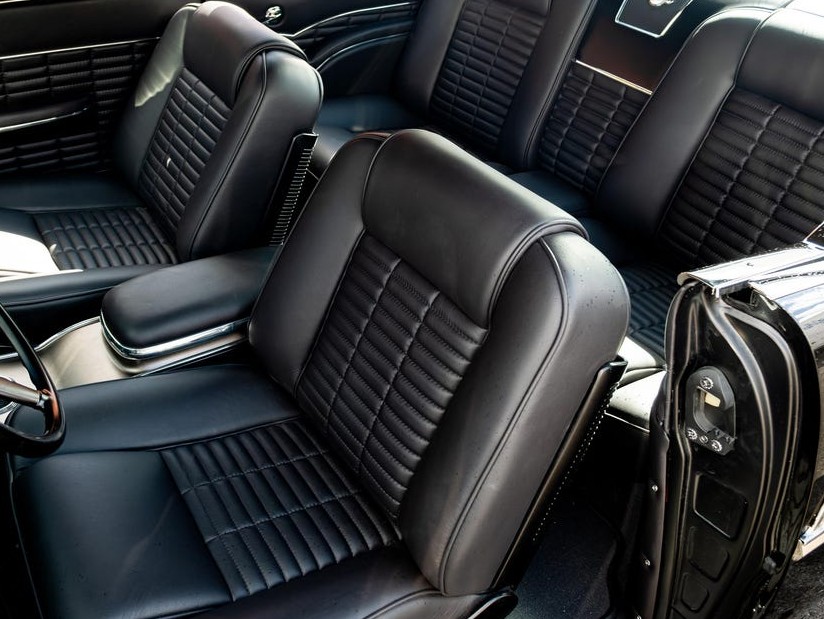
Inside, CAL and Santana Interior Design kept a period look while fitting a billet-machined centre console with cupholders beneath a sliding armrest, Dakota Digital instrumentation and Vintage Air climate control. Classic appearance, modern function.
Confirmed Specifications, And What Has Not Been Said
Verified across the published accounts: the engine’s displacement and output, a Bowler automatic transmission, a nine-inch rear end, Baer six-piston brakes, the modified Art Morrison frame, RideTech coil-overs, and the supplier list above. Hot Rod identifies the transmission specifically as a 4L80E; Car and Driver describes it only as a Bowler automatic. The two are consistent — one is simply more precise.
Not stated anywhere in the source material: the cost of the build, whether a customer commissioned the car or CAL built it as a showpiece, whether the engine is a catalogue item the public can order, the finished weight, or any measured performance figure. No dyno sheet, no quarter-mile time and no independent road test appears in either account. The horsepower number should be read as the engine builder’s rating, not as a measured result from the completed car.
The silence on price is the most consequential gap. It is what separates a show car from a purchase decision.
Why A Rendered Bel Air Tells A Related Story
The same nameplate lives a second life as digital art. autoevolution published renders by Emmanuel Brito of a 1956 Bel Air dropped on oversized wheels, finished in khaki with gunmetal details and a crimson interior. Commenters objected to the wheel design and to new door trim they judged out of place.
Those arguments cost nothing to settle. Nothing has to fit. That is why the renders belong in this story: they show the demand, while the metal car in Las Vegas shows the capability. The two are not rivals. They are opposite ends of the same pipeline, and the distance between a render and a running car is measured in suppliers.
That distance is the useful lesson for readers outside the market where SEMA happens. In most African markets, a build of this kind is constrained less by taste than by the absence of a domestic specialty supply chain — no local crate-engine builder, no chassis fabricator, no plating shop with the right process, and imported parts exposed to freight, duty and currency risk. Where the specialist network is thin, work migrates to generalist workshops and the timeline stretches accordingly.
The cost of that stack is not hypothetical. A Fountain Valley body shop owner told the Orange County Register in 2010 that about $150,000 had gone into restoring a 1955 Bel Air before a crash pushed it into his building. That figure was specialist labour and parts, not a sticker price.
The Bigger Picture
SEMA builds are usually read as entertainment. They are better read as an industrial census.
The 1955 Chevy Bel Air restomod is a demonstration that a particular economy — American, with Hot Rod placing CAL Auto Creations in Nebraska — can take a seventy-year-old design and re-engineer it to modern standards using off-the-shelf and made-to-order parts from a dozen independent firms. That capacity is the story, and it is not evenly distributed.
Confirmed: the parts exist, the suppliers exist, and the car runs and drives. Unconfirmed: what it cost, who owns it, and what it will do when someone finally puts a timing device on it. Readers should hold those two categories apart — the craft is documented, the performance is promised.
Frequently Asked Questions
What engine is in the 1955 Chevy Bel Air restomod at SEMA?
A BluePrint Engines 598-cubic-inch V-8 rated at 741 horsepower and 703 pound-feet of torque, paired with a Bowler automatic transmission and a nine-inch rear end, according to Car and Driver and Hot Rod.
How much does this Bel Air restomod cost?
Neither published account states a price. The cost of the build, and whether it was a customer commission or a showpiece, has not been disclosed by CAL Auto Creations or BluePrint Engines in the source material.
Is the low ride height achieved by cutting springs?
No. The reports describe a reworked Art Morrison frame with rear rails turned upward and raised centre crossmembers that keep components above the scrub line, combined with RideTech coil-overs that preserve suspension travel.
FIRST TIME REACTIONS:
Be the first to leave us a comment – 1955 Chevy Bel Air Restomod: What SEMA Really Proves, down the comment section.
JOIN US ON OUR SOCIAL MEDIA:
About Paul Nwogo
Paul Nwogo is an engineer, published author, and the Head Manager at AfriLatest. He has written numerous books available on Amazon covering a diverse range of topics, including health, personal finance, relationships, work ethics, and scam survival. With his technical background and passion for writing, Paul now oversees the editorial direction of AfriLatest, delivering practical, accurate, and engaging content on trending news, music, and global lifestyle topics.
View all articles by Paul Nwogo-

 Car Reviews3 weeks ago
1955 Chevy Bel Air Restomod: What SEMA Really Proves
-
Savings & Investing4 weeks ago
Hidden Medicare Fees Draining Your Retirement Savings
-
World News4 weeks ago
Sheinbaum No Proof Maduro: Mexico’s Test of US Evidence
-
Movies & TV4 weeks ago
Wizkid Starboy Desire Ft Banky W Shaydee: Fact Or Fan Fiction?
-
Trend politics4 weeks ago
How 24-Hour Online Scrutiny Is Running Out Leaders
-
Health and Fitness4 weeks ago
Premature Ejaculation Treatment: Exercise vs Dapoxetine