Business & Economy
Nigeria Startup Funding Lead: Capital Is Not Revenue
Nigeria startup funding leads Africa again, but the $635m headline measures capital raised, not revenue. Spectrum, power and skills decide what sticks.

Tech Outlook 2027, a technology foresight platform led by the National Information Technology Development Agency and delivered through SATH Foundation Africa, met in Lagos on Tuesday, October 20, with an agenda that had little to do with term sheets. Its subject was whether Nigeria can convert access to technology into domestic capability: data centres, connectivity, computing, skills. That question sits directly beneath the headline that Nigeria startup funding has reclaimed Africa’s lead, with press reports putting raised capital at $635 million.
The distinction matters more than the ranking. Capital raised is a flow of investor money into a company. Revenue is money a customer hands over for something they need. The two figures move on different clocks, and only one of them survives a downturn.
A Platform Built Around Constraints

Tech Outlook 2027 is not an accelerator and writes no cheques. It is a policy and foresight exercise, designed to help Nigeria anticipate emerging technology trends and translate them into strategic decisions. Its public output at the Lagos session was a list of constraints rather than a list of winners.
Ushaseer Tembe, lead for Technology and AI, spoke on behalf of Iyinoluwa Aboyeji. He argued that Nigeria has shown it can adapt existing technologies to local needs, but that the next phase requires stronger infrastructure and local talent to sustain AI businesses. He named data centres, connectivity, computing infrastructure, cloud platforms, models and applications as the layers Nigeria must assess to decide where it can build independence, and where economic value can be captured domestically.
The uncomfortable part is what that implies for the Nigeria startup funding headline. Money raised by a Lagos fintech or a Yaba software shop is not evidence that a product is priced correctly, that customers renew, or that the business covers its own power bill. On a continent where network operators are squeezed, those are not abstract questions.
What Nigeria Startup Funding Cannot Buy
The clearest evidence comes from the GSMA’s report on spectrum policy in Africa. African operators hold an average of 570 MHz of mobile spectrum below 7 GHz, about 24 percent less than the global average of 750 MHz, while paying more for it relative to revenue: 0.82 percent of revenue per 100 MHz against 0.66 percent elsewhere.
Average revenue per user across Africa fell by about 49 percent in real terms between 2015 and 2025, according to the GSMA report as covered by BusinessDay. Operators must carry roughly 160 percent more mobile data traffic between 2025 and 2030 while earning less per gigabyte.
For a startup, this is the ground floor. Average mobile download speeds in Africa stood at just over 27 Mbps in 2025, against 98 Mbps in the rest of the world. Users consumed about 3 GB per connection monthly, against 14 GB elsewhere. Only 28 percent of Africa’s population used mobile internet on their own devices in 2025, even though mobile broadband coverage reached 92 percent of the population.
That last number is the one founders should tape to the wall. About 64 percent of the continent’s population lives inside coverage and does not use mobile internet, because devices, data, electricity and digital skills remain out of reach. A product with polished onboarding and no paying user at the bottom of the pyramid is a demo, not a business.
The Burn Rate Nobody Funds
Labour is usually a startup’s largest line item, and the labour market is being squeezed from both ends. In Kwara, the state branch of the Nigerian Medical Association says doctors are losing between N30,000 and N50,000 from their monthly pay to unexplained deductions. Suleiman Rotimi, the NMA state chairman, disclosed the cuts at a news conference in Ilorin marking the 2026 Physicians’ Week, themed “Securing the Future of Medicine in Nigeria.”
Rotimi put Nigeria’s doctor-to-patient ratio at roughly 1 to 9,000 and warned that sub-standard wages, excessive cuts and manpower deficits are driving burnout and emigration, with conditions worse in rural Kwara. The state government’s response is not recorded in the BusinessDay report.
This is not a startup story on its face. It is one underneath. Skilled professionals whose net pay is unpredictable do not form the stable middle class that buys subscriptions, holds savings products, or stays with a fintech app through a bad month. Engineers watching public-sector pay erode price their own risk higher. Companies that cannot hire reliably cannot hold a delivery promise, and churn climbs quietly while the funding announcement stays loud.
Adoption Is Not Absorption
The Lagos session returned repeatedly to the gap between buying software and changing how work is done. Tembe said organisations need to “adopt AI at a native level,” arguing they should measure whether embedding the technology improves processes or increases revenue, not how many pilots they ran.
Itoro Emembolu, a faculty member at Lagos Business School, said the central challenge is not access to technology or talent but the ability of organisations to absorb and use technology effectively. She named leadership, communication and resistance to organisational change as the barriers, and called for investment in change management.
Read that against a Nigeria startup funding announcement and the arithmetic gets uncomfortable. Capital buys pilots. Absorption buys revenue. The first is available at a press conference. The second takes quarters.
What To Measure Instead
The GSMA offers a usable scorecard for reform: track new spectrum allocations, capital expenditure, infrastructure deployment, network speeds and service availability, and monitor internet adoption separately because coverage does not make devices and data affordable. The same discipline applies to Nigeria startup funding.
Ask what share of raised capital converted into paid contracts and renewals. Ask what the business spends each month on electricity and bandwidth. Ask how many customers stayed past the first billing cycle. None of these appear in a funding total, and all of them decide whether the company is still trading in three years.
The projected rewards from reform are real but conditional. The GSMA estimates that spectrum changes could add more than $120 billion in cumulative economic output across Africa between 2026 and 2035, bring an additional 50 million people within 4G coverage and 170 million within 5G, and lift average download speeds by 30 to 50 percent. The report labels these projected outcomes, not guaranteed gains. They hold only if lower costs turn into network investment rather than into margin.
Data governance carries the same weight. Professor Manasoghe, who led discussions on security, privacy and trust, pointed to fragmented databases, unnecessary collection of personal information and weak transparency around breaches as threats to public confidence in digital services, raising questions about compliance with the Nigeria Data Protection Act’s data minimisation principle. Firms that build on shaky identity systems inherit the cost of that shakiness.
Therein lies the test for Nigeria startup funding. The country has reclaimed the continental lead in capital raised. Whether that becomes revenue depends on spectrum, electricity, data governance and the willingness of executives to change how their companies actually work. Tech Outlook 2027’s contribution is to make that dependency explicit, and to move the argument from how much was raised to what it bought.
Frequently Asked Questions
Does Nigeria’s startup funding lead mean startups are profitable?
No. Funding raised is investment capital entering a company. Revenue is money earned from customers. The source material provides no revenue figures for Nigerian startups, so the funding lead says nothing on its own about profitability, renewals or cash flow.
Why does mobile spectrum policy matter to Nigerian startups?
Most Nigerian digital products reach customers through mobile networks. The GSMA reports African operators hold about 570 MHz of spectrum below 7 GHz versus a global average of 750 MHz, and face roughly 160 percent data traffic growth between 2025 and 2030, which affects speed, coverage and the cost of serving users.
What happened to doctors’ pay in Kwara?
Suleiman Rotimi, chairman of the NMA’s Kwara State branch, disclosed unexplained monthly deductions of between N30,000 and N50,000 from doctors’ salaries during a news conference in Ilorin for the 2026 Physicians’ Week. He called for the deductions to be reversed. The state government’s response is not recorded in the source report.
What should investors track instead of funding totals?
Paid contracts, customer renewal rates, monthly spend on electricity and bandwidth, and whether raised capital produced revenue. The GSMA recommends tracking spectrum allocations, capital expenditure, network speeds and service availability, and measuring internet adoption separately from coverage.
Receive alerts for Nigeria startup funding and more like it.
 Follow AFRILATEST on Google News
FIRST TIME REACTIONS:
Be the first to leave us a comment – Nigeria Startup Funding Lead: Capital Is Not Revenue, down the comment section.
JOIN US ON OUR SOCIAL MEDIA:

            About Paul Nwogo
            Paul Nwogo is an engineer, published author, and the Head Manager at AfriLatest. He has written numerous books available on Amazon covering a diverse range of topics, including health, personal finance, relationships, work ethics, and scam survival. With his technical background and passion for writing, Paul now oversees the editorial direction of AfriLatest, delivering practical, accurate, and engaging content on trending news, music, and global lifestyle topics.
            View all articles by Paul Nwogo


Business & Economy
Ukraine US Policy: Why Kyiv Businesses Expect No Drastic Shift
Ukrainian business leaders expect no drastic change in Ukraine US policy after midterms. Evidence from delayed aid, sanctions waivers, and energy flows.

Ukrainian officials and business leaders do not expect a drastic change in Ukraine US policy after the November midterms, even if Democrats win the House of Representatives. That expectation is not resignation. It is a reading of how Washington actually works: Congress can pass laws, but the president controls diplomacy, sanctions waivers, and the pace of military deliveries.
The Kyiv Independent reports that Democrats are widely expected to win a House majority, while the Senate remains a steeper climb. Yet foreign policy experts told the outlet that President Donald Trump would keep firm control over his country’s foreign policy regardless of the legislative outcome.
James M. Lindsay, a U.S. foreign policy expert at the Council on Foreign Relations, told the Kyiv Independent that ‘some presidential powers, such as when to negotiate, whom to negotiate with, and what to negotiate over, are beyond Congress’s power to direct, restrain, or regulate.’ That is the first business fact of this election: the board of directors can change, but the chief executive still signs the contracts.

For Ukrainian businesses, the practical question is not who controls Congress. It is whether fuel, freight, insurance, and electricity costs will move. Those costs are tied to sanctions enforcement, refinery strikes, and air-defense coverage—not to floor votes.
The evidence for that claim is already on the record. In August, the U.S. Senate passed the Lindsey Graham Act with 86 votes, a bipartisan majority for tougher Russia sanctions. Trump signed it into law in September. By October 16, the president had issued a broad waiver of those sanctions, days after his Treasury lifted restrictions on Russian diesel purchases. A law passed. A promise was made. The measurable result was a waiver.
A similar gap appears in military assistance. Earlier this year, the Pentagon delayed $400 million in military assistance under the Ukraine Security Assistance Initiative for months, even though Congress had authorized it. Authorized money is not delivered money. That distinction matters for Ukrainian factories that need air defense to keep the grid stable, and for hauliers who need fuel prices to stay predictable.
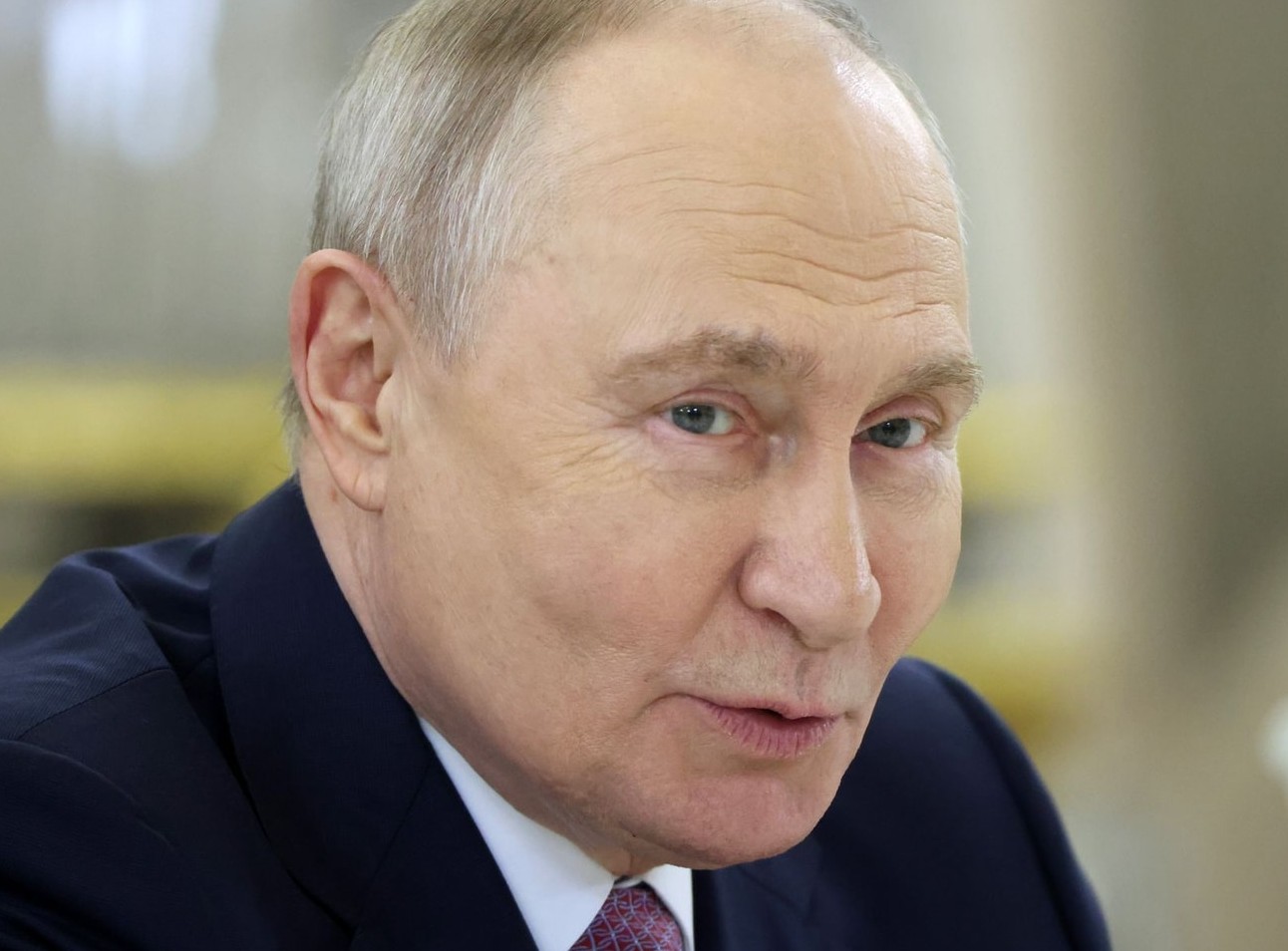
Oleh Shamshur, Ukraine’s former ambassador to the United States from 2005 to 2010, told RBC-Ukraine that ‘there will be no dramatic changes’ in U.S. foreign policy after the midterms. Shamshur said Trump operates according to his concept of an ‘imperial presidency’ and believes he has the right to decide whether or not to use money Congress allocates. ‘We should prepare for the fact that we are unlikely to see any meaningful changes before January 2029,’ he said.
The Business Cost Of Ukraine US Policy Uncertainty
The business cost shows up in three channels. First, diesel. Trump allowed Russian diesel into the U.S. and eased sanctions on Russia, running counter to the West’s long-standing strategy for ending the war. Kyiv is simultaneously pressed to end its strikes against Russian refineries. That is a regulatory mismatch with direct consequences for fuel importers and farmers who buy diesel at the pump.
Second, air defense. Disruptions in Patriot air defense shipments and intelligence support raise the risk of damage to power infrastructure. For manufacturers, that risk translates into backup generator costs, insurance premiums, and idle capacity. The source material does not quantify those costs. It does confirm the disruptions.
Third, aid predictability. The $400 million USAI delay shows that a congressional authorization is not a cash flow. Ukrainian businesses that supply the military or rebuild energy infrastructure cannot plan around appropriations alone. They need delivery schedules.
Nigerian importers and manufacturers know this sequence. A policy signal in Washington or Brussels can move fuel and freight costs in Lagos before any law changes. For Ukraine, the signal is that U.S. sanctions on Russian energy can be waived by the executive even after Congress passes a sanctions bill. That is not a partisan claim. It is the documented sequence of the Graham Act.
The France 24 panel described the Republican defeat as an ‘absolute and complete repudiation’ of the president. The business read is narrower: a repudiation at the ballot box does not automatically become a change in Ukraine US policy. Congress can hold hearings and subpoena officials. It cannot compel a president to negotiate differently with Moscow.
What To Watch In Ukraine US Policy
Watch three signals, none of which depend on who becomes Speaker. First, whether the Graham Act waiver is extended or narrowed. Second, whether USAI deliveries accelerate or remain delayed. Third, whether France’s far right gains ground. Shamshur warned that if Marine Le Pen wins the French presidency, she has pledged to end financial aid to Kyiv and block support at the EU level. That would compound the uncertainty for Ukrainian exporters who already price in U.S. policy risk.

The operating assumption for Ukrainian businesses should be continuity of uncertainty, not a dramatic shift. The midterms may change the tone of hearings in Washington. They are unlikely to change the pace of diesel waivers, Patriot shipments, or presidential diplomacy. For companies exposed to fuel, freight, and electricity, that is the number to watch.
Frequently Asked Questions
Why do Ukrainian businesses expect no drastic change in Ukraine US policy after the midterms?
Because the U.S. president controls diplomacy, sanctions waivers, and military delivery schedules. Even if Democrats win the House, experts told the Kyiv Independent that Trump would keep firm control over foreign policy. Congress can pass laws but cannot compel a president to negotiate differently.
What evidence shows that a law passed by Congress does not guarantee results?
The Lindsey Graham Act passed the Senate with 86 votes and was signed in September. By October 16, Trump had issued a broad waiver of those sanctions, days after Treasury lifted restrictions on Russian diesel. Separately, the Pentagon delayed $400 million in USAI assistance for months despite authorization.
What should businesses watch next in Ukraine US policy?
Watch whether the Graham Act waiver is extended, whether USAI deliveries accelerate, and whether France’s Marine Le Pen gains power. Shamshur warned that Le Pen has pledged to end financial aid to Kyiv and block EU-level support, which would compound uncertainty for Ukrainian exporters.
FIRST TIME REACTIONS:
Be the first to leave us a comment – Ukraine US Policy: Why Kyiv Businesses Expect No Drastic Shift, down the comment section.
JOIN US ON OUR SOCIAL MEDIA:

About Paul Nwogo
Paul Nwogo is an engineer, published author, and the Head Manager at AfriLatest. He has written numerous books available on Amazon covering a diverse range of topics, including health, personal finance, relationships, work ethics, and scam survival. With his technical background and passion for writing, Paul now oversees the editorial direction of AfriLatest, delivering practical, accurate, and engaging content on trending news, music, and global lifestyle topics.
View all articles by Paul NwogoStock Market
NGX Group Chairman Backs African Markets Integration
NGX Group chairman Umaru Kwairanga is testing African markets integration through the Dangote Refinery IPO. What is confirmed, and what is still ambition.

Alhaji (Dr.) Umaru Kwairanga’s case for African markets integration rests on an unlikely set of instruments: a refinery share sale, a paperless subscription portal and a WhatsApp channel. He is chairman of Nigerian Exchange Group, the parent of the Lagos bourse, and over the past year he has turned that position into a platform for arguing that African exchanges should connect to one another rather than wait for a single continental regulator to appear.
The flagship test is the Dangote Petroleum Refinery and Petrochemicals offer. According to Nigeria Housing Market, the ₦2.15 trillion ($1.6 billion) initial public offering opened on 14 September 2026, offering 4.1 billion ordinary shares at ₦525 each, and Nigeria’s Securities and Exchange Commission approved an extension of the closing date from 13 October to 27 October. An over-allotment option could lift potential proceeds to about $2.1 billion.
Who Umaru Kwairanga Is And Where He Learned The Argument

Kwairanga did not arrive at this position from a think tank. Speaking at the 3rd Business Journal Fintech and Financial Inclusion Roundtable in Lagos, he recalled working in a bank as a young graduate more than three decades ago, when customers came to branches for almost everything and the offices were lined with shelves of files holding KYC documents, loan applications, tellers and bank drafts. A Proshare account of the roundtable records his description of the change since: an app download, an uploaded identity document, an account opened in minutes, a same-day loan, transfers of millions from home, and insurance and stock purchases on a handset.
That history is the backbone of his argument. If fintech widened everyday access to payments and credit, he contends it can now be pointed at a deeper savings and investment culture, converting financial inclusion into participation in capital markets.
His institutional record on that front is concrete enough to check. NGX Invest, the group’s electronic public-offering platform, handled subscriptions during Nigeria’s bank recapitalisation exercise, replacing paper forms with digital ones. The platform now supports subscriptions through more than 180 distribution channels, including stockbrokers, banks and fintech companies, with WhatsApp added as a further access route. Kwairanga credited the Securities and Exchange Commission, the Central Bank of Nigeria and NAICOM, alongside private operators, for the progress made.
Why African Markets Integration Now Runs Through A Refinery IPO
The chairman took the same pitch outside Nigeria. At an investor engagement in Gaborone, Botswana, held during the refinery offer roadshow, both Dangote Industries and the Botswana Stock Exchange endorsed NGX Group’s cross-border effort, according to an NGX statement reported by The Gazette. Murat Erden, group chief financial officer of Dangote Industries, credited Kwairanga and NGX Group managing director Temi Popoola with advancing the initiative, and said the collaboration began with a Lagos engagement in April.

Aobakwe Aupa Monyatsi, chief executive of the Botswana Stock Exchange, said cooperation among African exchanges could broaden investor participation and draw more markets into collaborative efforts. At an earlier stop in Nairobi, Aliko Dangote, president of Dangote Industries, argued that stronger ties between exchanges would let businesses raise capital in several markets instead of relying only on domestic investors, citing a planned refinery at Mokowe-Lamu in Kenya as an example of a company that could explore listings across the continent.
The roadshow is scheduled to continue at the Egyptian Exchange and the Ethiopian Securities Exchange. Kwairanga has framed the campaign in plain terms: “Our vision is to build stronger connections among African capital markets, making it easier for businesses to access capital and for investors to participate in opportunities across the continent,” he said, adding that the refinery collaboration shows what exchanges can achieve when they work toward a shared objective.
What Is Confirmed, And What Is Still Ambition
The verified record is narrower than the rhetoric. It confirms that the engagements took place, that the offer’s terms are as stated, that the deadline moved with regulatory approval, and that distribution infrastructure exists across 180-plus channels. It does not confirm subscription volumes from Botswana, Kenya, Egypt or Ethiopia, because none have been disclosed.
Access also remains conditional. Participation from other African countries depends on regulatory arrangements in each jurisdiction, and differences in investor eligibility, account-opening procedures and settlement systems still sit between a willing investor and a completed purchase. Kenya, for instance, has involved depositary receipt arrangements rather than direct subscription. Taking an offer to several countries does not by itself create an integrated market.
A sourcing caveat matters here too. Proshare states that its report was reconstructed from the official programme and talking points supplied by the NGX Group chairman, and that it is not a verbatim transcript of the remarks delivered. The direct quotations above come from the NGX statement on the Botswana engagement, not from a live recording. Readers should treat the roundtable account as attributed summary rather than stenography.
The structural gap is the real story. Most African exchanges operate inside separate regulatory and trading systems, and the African Continental Free Trade Area provides a framework for trade cooperation but not for securities settlement. African markets integration, in practice, is being assembled transaction by transaction — a portal here, a WhatsApp channel there, a roadshow in three capitals — and its durability will be judged on whether the arrangements built for this refinery can be reused for the next issuer.
That is the test Kwairanga has effectively set for himself. If Botswana, Egypt and Ethiopia investors actually subscribe, and if the mechanics survive scrutiny, the case for African markets integration gains evidence rather than assertion. If the roadshow produces endorsements but thin cross-border participation, the chairman’s vision will remain, for now, a well-attended itinerary.
Frequently Asked Questions
Who is Umaru Kwairanga?
Alhaji (Dr.) Umaru Kwairanga is the chairman of Nigerian Exchange Group. He has used the role to argue that African exchanges should build direct links between their markets, and he has overseen the group’s digital push through the NGX Invest subscription platform.
What does the Dangote Refinery IPO have to do with African markets integration?
NGX Group has taken the offer to investors in Kenya, Botswana, Egypt and Ethiopia. The exercise tests whether investors in one African country can realistically buy shares in a company listed in another, given separate regulatory, eligibility and settlement systems.
Has cross-border participation in the Dangote Refinery IPO been confirmed?
No subscription volumes from other African markets have been disclosed. NGX statements confirm the roadshow engagements and the offer terms, and note that access in each country depends on local regulatory arrangements.
FIRST TIME REACTIONS:
Be the first to leave us a comment – NGX Group Chairman Backs African Markets Integration, down the comment section.
JOIN US ON OUR SOCIAL MEDIA:
About Paul Nwogo
Paul Nwogo is an engineer, published author, and the Head Manager at AfriLatest. He has written numerous books available on Amazon covering a diverse range of topics, including health, personal finance, relationships, work ethics, and scam survival. With his technical background and passion for writing, Paul now oversees the editorial direction of AfriLatest, delivering practical, accurate, and engaging content on trending news, music, and global lifestyle topics.
View all articles by Paul NwogoBusiness & Economy
2027 Medicare Changes: Costs, Caps and Deadlines
2027 Medicare changes: Part D cap rises to $2,400, deductibles to $700, Part B premiums projected higher, and a 3.6% COLA. What is confirmed, what is forecast.

Medicare beneficiaries in the United States will face a higher Part D out-of-pocket ceiling and a larger maximum deductible in 2027, set against a 3.6% Social Security cost-of-living adjustment that the Social Security Administration announced earlier this month.
The first confirmed 2027 Medicare changes are already visible in federal tables. The Centers for Medicare & Medicaid Services has published a Part D annual out-of-pocket spending limit of $2,400, up from $2,100 in 2026, and a maximum permitted deductible of $700, up from $615.
Both figures are national limits rather than prices. Individual plans may set lower deductibles, and some set none at all. The cap also excludes monthly premiums and does not cover every medical expense.

The 2027 Medicare changes that are already confirmed
The cost-of-living adjustment is the second confirmed number. Benefits rise 3.6% in January, the largest adjustment since 2023 and above the 2.8% awarded this year, according to the Social Security Administration.
For the average retired worker receiving $2,095 a month, that translates to roughly $2,170 — an increase of about $75 a month, or $900 a year. Beneficiaries will be able to see their new monthly payment in their My Social Security account in early December.
The mechanism explains the persistent squeeze. The COLA is calculated from third-quarter inflation data, comparing July, August and September with the same months a year earlier. The January raise therefore reflects last summer’s prices, not the prices beneficiaries will pay during 2027.
The Bureau of Labor Statistics reported consumer prices up 3.7% over the past 12 months, including a 34% jump in gasoline prices — a gap that shows the adjustment trailing rather than anticipating inflation.

Part D protections beyond the cap remain in place for 2027. Cost-sharing for covered insulin products is generally limited to $35 for a month’s supply, and recommended adult vaccines covered under Part D carry no cost-sharing. The Medicare Prescription Payment Plan allows eligible out-of-pocket drug costs to be spread across monthly instalments instead of being settled at the pharmacy counter. It does not reduce the total owed.
Premiums: projections, forecasts and one independent analysis
Part B is the largest open variable. Medicare has not announced the 2027 Part B premium. The latest trustees’ report projects a rise from $202.90 to $209.50 — a forecast, not a decision, and one that should be treated as indicative until the agency publishes the final figure. Because most beneficiaries pay Part B directly from their Social Security check, that projection would trim the average retiree’s net gain to about $68 a month.
On Medicare Advantage, CMS projects the national average monthly premium will fall from $14.37 in 2026 to $12 in 2027, and that average stand-alone Part D premiums will rise by less than a dollar, from $35.09 to about $36. These are national averages, not guarantees. Premiums, provider networks, formularies and copayments differ sharply by location and by plan.
A separate KFF analysis introduces a third category: independent estimate. It found that roughly 4 million beneficiaries who currently pay no monthly premium for prescription drug coverage could face charges of up to $50 a month in 2027, whether they keep their existing plans or switch.
That distinction matters. The $2,400 cap and the $700 deductible are settled policy published by CMS. The Part B figure is a trustees’ projection. The KFF finding is an analysis of plan behavior, not a rule. Beneficiaries comparing options through Medicare’s plan finder are weighing all three at once.
Reaction on the ground and the wider comparison

In Central Florida, the practical consequences were being worked through at a free counselling event at the Astatula Community Center on 26 October, run under Florida’s SHINE programme — Serving Health Insurance Needs of Elders — through the state Department of Elder Affairs.
Natalie Champagne, who has received Medicare and Medicaid benefits for about three years and has fought cancer, described the gap between having coverage and being able to use it. After breaking her wrist, she said: “It took about three weeks before I could even find a doctor that accepted my insurance that would do surgery.”
Michael Owens, a beneficiary for more than a decade, put the learning curve plainly: “There’s a lot you gotta learn and understand.”
The comparison for African readers is structural, not rhetorical. The American argument concerns the size of an annual adjustment to a federally administered benefit and how much of it survives the premium deduction. Nigeria’s gap sits earlier in the chain: the National Health Insurance Authority Act of 2022 made health insurance mandatory in principle, but enrolment remains far below stated targets and direct household payments still fund a large share of health spending.
There is, however, a transferable design lesson in Part D. A hard annual out-of-pocket ceiling converts an open-ended drug bill into a known maximum, and a payment plan converts a lump sum into predictable instalments. Neither lowers the total. Both make the total forecastable — the missing feature in systems where patients pay cash at the point of care.
What to watch
Three dates govern the 2027 Medicare changes. Open enrolment runs from 15 October to 7 December 2026, and selections generally take effect on 1 January 2027. Beneficiaries who keep their current coverage should still read their Annual Notice of Change, which sets out shifts in costs, coverage and participating providers.
The unconfirmed piece is the standard Part B premium, which will determine whether the headline 3.6% raise actually reaches a bank account. The confirmed pieces — the $2,400 Part D cap, the $700 maximum deductible and the COLA — are already fixed. Full official cost explanations are published through the Social Security Administration and Medicare.gov.
Frequently Asked Questions
How much is the Social Security cost-of-living adjustment for 2027?
The Social Security Administration announced a 3.6% increase for 2027, the largest since 2023 and above the 2.8% awarded this year. For the average retired worker receiving $2,095 a month, that raises the payment to about $2,170, an increase of roughly $75 a month.
What are the Medicare Part D limits for 2027?
According to the Centers for Medicare & Medicaid Services, the annual out-of-pocket spending limit for covered Part D drugs rises from $2,100 in 2026 to $2,400 in 2027, and the maximum permitted deductible rises from $615 to $700. These are national limits, not plan prices, and the cap excludes monthly premiums.
Has the 2027 Medicare Part B premium been announced?
No. Medicare has not announced the 2027 Part B premium. The latest trustees’ report projects a rise from $202.90 to $209.50, but that is a projection rather than a final determination. Most beneficiaries pay Part B directly from their Social Security payment.
Receive alerts for 2027 Medicare changes and more like it.
FIRST TIME REACTIONS:
Be the first to leave us a comment – 2027 Medicare Changes: Costs, Caps and Deadlines, down the comment section.
JOIN US ON OUR SOCIAL MEDIA:
About Paul Nwogo
Paul Nwogo is an engineer, published author, and the Head Manager at AfriLatest. He has written numerous books available on Amazon covering a diverse range of topics, including health, personal finance, relationships, work ethics, and scam survival. With his technical background and passion for writing, Paul now oversees the editorial direction of AfriLatest, delivering practical, accurate, and engaging content on trending news, music, and global lifestyle topics.
View all articles by Paul Nwogo-
 Startups1 month ago
What a Successful Dangote Refinery IPO Really Says
-
Car Reviews4 days ago
1955 Chevy Bel Air Restomod: What SEMA Really Proves
-
Health and Fitness4 weeks ago
Curly Hair Hydration: 5 Proven Steps That Actually Work
-
Savings & Investing2 weeks ago
Hidden Medicare Fees Draining Your Retirement Savings
-
Tech & Gadgets1 month ago
Apple Watch and AirPods Fall Deals: Save $120 Today
-
University Admissions1 month ago
UNILAG 2026/2027 Admission: Direct Entry & Post-UTME Guide
-
Football1 month ago
South Carolina vs Alabama: Tide Roll to 35-10 Halftime Lead
-
Health and Fitness3 weeks ago
9 Best Hair Thickening Shampoos for Men in 2026