Business & Economy
LCCI Urges Faster Reforms to Cut Business Costs in Nigeria
LCCI urges faster reforms to boost business prosperity, citing high energy, transport, and tax costs. It wants lower production costs and jobs.


The Lagos Chamber of Commerce and Industry (LCCI) has told President Bola Tinubu’s administration to move Nigeria’s economy beyond stabilisation into an era of shared and widespread prosperity. The chamber’s president, Leye Kupolokun, said the private sector shares the President’s stated objective of delivering jobs, enterprise, industrial growth and lower living costs.
But LCCI warns that the transition from reform to prosperity must be measured by whether Nigerian businesses can invest, produce, employ, compete and expand — and whether households actually feel an improvement in purchasing power. The message is blunt: macroeconomic numbers alone will not convince the business community.
What The Chamber Wants
LCCI urges faster reforms to reduce the cost of doing business, expand productive capacity and create an environment where investment decisions can be made with greater confidence. It says prosperity depends on lowering the cost of producing and moving goods.
According to the chamber, the cost structure remains elevated by energy costs, transportation, multiple taxation, infrastructure gaps, financing costs, regulatory charges, insecurity and logistics inefficiencies. These burdens fall on manufacturers, farmers, logistics operators, retailers and millions of small and medium enterprises.
“The next phase of government policy should place enterprise competitiveness at the centre of economic management,” LCCI stated. The chamber wants sustained moderation in the prices of food, transport, energy and essential goods — not just a deceleration in the inflation rate from its peak. It also wants GDP growth to generate productive employment and expand household incomes.
On foreign exchange, LCCI argues that stability must mean businesses can access FX predictably and at costs that allow them to remain competitive. “The ultimate test of the reforms will be whether businesses can produce more at lower cost and households can afford more with their incomes,” the chamber said.
Manufacturing Revenue Is Rising
The pressure for faster reforms comes as manufacturing is contributing more to government revenue. At the chamber’s quarterly state of the nation’s economy news conference in Lagos, Kupolokun said the sector contributed N1.17 trillion in value added tax (VAT), a 45.61 per cent increase from N803.53 billion in 2024.
Company income tax from the sector rose to N881.29 billion, up 32.83 per cent from N663.46 billion the previous year. “This strong year-on-year growth reinforces the sector’s expanding role in generating government revenue and in Nigeria’s industrial development,” he said.
Following those results, LCCI called on the government to invest more in productive infrastructure and economic policies that drive growth through job creation, lower production costs and fiscal interventions.
On the global front, Kupo lokun noted that the global economy remains unsettled, shaped by geopolitical tensions, supply chain disruptions and monetary tightening in advanced economies. He said these trends have sustained inflationary pressures while exposing emerging markets, including Nigeria, to capital outflows and currency volatility.
Nigeria has benefited from high crude oil prices, but LCCI warned against mismanaging the windfall. It urged the government to channel oil revenues into the Sovereign Wealth Fund, critical infrastructure and diversfication initiatives to reduce import dependence.
Monetary Policy And The Naira
The chamber commended the Central Bank of Nigeria’s Monetary Policy Committee for reducing the monetary policy rate by 50 basis points to 26.5 per cent at its February meeting. It described the move as a cautious but important shift, reflecting growing confidence amid improvements in inflation and external sector performance.
Kupolokun also highlighted improvements in the foreign exchange market, noting that the naira had shown relative stability and appreciated to about N1,350.79 to the dollar in the official market. He said the performance reflects improved liquidity, investor confidence and the impact of ongoing reforms, but called for stronger policy coordination, increased FX inf lows and fiscal discipline to sustain stability.
Fiscal Operations And Oil
On fiscal operations, LCCI raised concerns over weak capital budget implementation. It cited the rollover of N7.71 trillion in unexecuted 2025 capital projects. Delays in fund releases, bureaucratic bottlenecks and inefficiencies continue to undermine project delivery and strain contractors, the chamber said. It urged the government to develop a more effective framework for capital budget releases.
In oil and gas, LCCI welcomed reform efforts aimed at boosting crude oil production and improving regulatory processes. It called for a fully digital regulatory ecosystem to enhance transparency, accelerate approvals and restore investor confidence. High global oil prices present an opportunity for Nigeria to strengthen its position as a major supplier, provided local production and refining capacities are improved.
Import Duties And Port Delays
The chamber expressed concern over high import duties on paper, printing materials and related inputs, noting that the policy has increased production costs across several value chains. “The situation is worsened by port delays, multiple regulatory checks and inconsistent tariff classifications,” Kupolokun said.
LCCI called for a review of import duties, integration of regulatory agencies into the National Single Window and measures to reduce cargo clearance timelines. “A balanced policy mix of moderate tariffs, support for local production and stable macroeconomic conditions would enhance industrial growth and reduce business costs,” he said.
What It Means For Nigerian Businesses
For a small manufacturer in Aba or a logistics operator in Lagos, the LCCI’s demnds translate into specific cost lines: electricity, diesel, transport, taxes and port charges. If the government acts on the chamber’s recommendations, businesses could see lower energy costs, better access to long-term financing and faster cargo clearance. If it does not, the revenue gains from manufacturing may not translate into jobs or cheaper goods.
The chamber’s recommendations echo calls from other business groups. The Lasbela Chamber of Commerce and Industry in Pakistan has similarly urged its government to introduce comprehensive reforms in taxation, energy, trade and investment policies to stimulate industrial growth and attract investment.
LCCI reiterated its commitment to continued engagement with government and stakeholders to promote policies that support a thriving business environment. The chamber’s message is clear: stabilisation is not prosperity. The next phase must deliver cheaper production, more jobs and real income gains for households.
What To Watch
Watch for the government’s next policy moves on industrial energy costs, gas-to-industry projects, long-term financing for manufacturers and the National Single Window. Also watch capital budget releases — the N7.71 trillion rollover is a test of whether infrastructure spending can actually reach contractors. And keep an eye on the naira’s stability around N1,350.79 to the dollar, as FX predictability remains central to business planning.
Frequently Asked Questions
What is LCCI asking the Nigerian government to do?
LCCI wants faster reforms to reduce the cost of doing business, lower industriial energy costs, improve electricity reliability, accelerate gas-to-industry projects, expand affordable long-term financing for manufacturers, improve SME access to working capital, reduce regulatory costs, strengthen local supply chains and promote exports of Nigerian-made products.
How much did manufacturing contribute to VAT and company income tax?
LCCI said the manufacturing sector contributed N1.17 trillion in value added tax, a 45.61 per cent increase from N803.53 billion in 2024. Company income tax from the sector rose to N881.29 billion, up 32.83 per cent from N663.46 billion the previous year.
What did LCCI say about the naira and monetary policy?
LCCI commended the Central Bank of Nigeria for reducing the monetary policy rate by 50 basis points to 26.5 per cent. It noted the naira had appreciated to about N1,350.79 to the dollar in the official market, reflecting improved liquidity and investor confidence, but called for stronger policy coordination and fiscal discipline.
Related Articles
- Best iPhone 18 Pro Cases: 5 Picks Under $30 Tested
- Nigeria’s Economy Grows Over 4% in 2026: What It Means for You
- Shot on iPhone Duo Campaign: What Apple Isn’t Telling You
- Trump $500 Check Hits Mailboxes: Who Qualifies
- Honda Labour Dispute: What Nigerian Car Owners Must Know
 Follow AFRILATEST on Google News
FIRST TIME REACTIONS:
Be the first to leave us a comment – LCCI Urges Faster Reforms to Cut Business Costs in Nigeria, down the comment section.
JOIN US ON OUR SOCIAL MEDIA:



Business & Economy
Jensen Huang Scandal: Nvidia’s $250bn Governance Test
The Jensen Huang scandal took about $250bn off Nvidia’s value in a day. What the filings, export rules and Megaspeed’s $4bn chip buying actually show.

Nvidia lost roughly $250 billion of market value on Monday, the first trading session after the company disclosed an investigation into chief executive Jensen Huang’s affair with a businesswoman U.S. intelligence has assessed as a Chinese operative. The Jensen Huang scandal is now a governance event priced in dollars, and the dollars are specific.
According to Forbes, Nvidia shares were down 5.5% at 1:30 p.m. EST after falling as much as 7% premarket, cutting market capitalisation from $4.5 trillion at Friday’s close to $4.24 trillion. Huang’s personal net worth fell $7.4 billion to $154.7 billion inside the first half hour of trading, moving him from No. 8 to No. 10 in the Forbes billionaire ranking, below Berkshire Hathaway’s Warren Buffett and Oracle’s Larry Ellison. He briefly lost top-ten standing altogether when the stock opened more than 7% lower, a $10.3 billion swing. Nvidia was the only Magnificent Seven stock down premarket.
The second number is $4 billion. That is the estimated value of Nvidia chips bought in Asia by Megaspeed International, a Singapore-based company where Alice Huang served as a director from March to November 2023, according to CNN. One figure is a mark-to-market reaction. The other is a documented flow of restricted hardware through a single intermediary. That distinction matters more than the affair.

What The Jensen Huang Scandal Cost Shareholders
The board’s response came on Sunday: a committee of independent directors plus outside counsel, tasked with reviewing all available information. The same statement said directors had “no reason to believe that either national security or NVIDIA secrets were compromised.” Read that carefully. “No reason to believe” is an absence of evidence, not a finding of innocence, and Nvidia published it before the investigation had produced anything.
Huang admitted the affair in a statement carried on Nvidia’s own newsroom and said he supported the probe. PC Gamer called the venue unusual for a company of this size, and the outlet is right: Nvidia is a $4.5 trillion business whose products sit inside government data centres. Its CEO’s private life became a disclosure event because it intersected with export-controlled hardware.
Nvidia’s earlier line, given to The New York Times before the story broke, was that Jensen Huang’s interactions with Ms. Huang were “not unusual or unexpected,” because meeting customers is part of the job. That defence holds only if Alice Huang was an ordinary customer.
Why Megaspeed Sits At The Centre Of The Chip Trade

CNN reported that U.S. Customs and Border Protection travel records identify Alice Huang as a 43-year-old Chinese citizen named Huang Le. Chinese social media and career databases show a journalist at state television who moved into finance, with four years in media and eight in securities, including stints at HSBC and Citic Securities.
Megaspeed is the part worth following. Corporate records in Singapore show the company was incorporated in 2015 as 7Road International, a Chinese video game developer. After the name change it became one of the largest buyers of Nvidia chips in Asia, with more than $4 billion in purchases by some analyst estimates, and records indicate it took funding from Alibaba.
None of that is illegal on its face. Buying GPUs is not a crime. But the Jensen Huang scandal is, at bottom, a supply-chain story, and supply chains are auditable in a way that private relationships are not.
The rules have moved repeatedly. PC Gamer traced the arc: the U.S. blocked ASML’s chipmaking machines, then wrote thresholds using weighted teraflops and adjusted peak performance in 2023, then watched Nvidia and AMD build China-only parts such as the RTX 4090D, RTX 5090 D and H20 to stay under the line. Blackwell, Nvidia’s newest architecture, remains restricted. Gina Raimondo, then commerce secretary, warned that if a chip were redesigned around a cut line that enabled AI, she would control it the very next day.
Trump, The FBI And The Rules That Decide Who Gets A GPU
The political layer is now live. The BBC reported Trump told reporters the FBI is looking into the affair, after saying he had asked Huang directly: “Did you have any idea she was a spy? He said ‘I had no idea she was a spy’ and I really believe him.” The FBI declined to comment.
Beijing rejected the allegations through its foreign ministry, calling them “entirely groundless, speculative and intended to smear and malign China.” Per the BBC, Secretary of State Marco Rubio sent a memo to senior Washington officials in spring warning that Huang was in a close relationship with a Chinese spy, and U.S. intelligence briefed Trump about a year ago without action being taken.

Here is the contradiction worth holding onto: the same administration that eased export controls on pared-back chips like the H20 and MI308, per PC Gamer, is now running a counterintelligence inquiry into the CEO whose company makes them. Policy toward Nvidia is being set by two hands at once.
What Buyers In Nigeria And Across Africa Should Take From It
African developers and cloud providers do not get a vote in this. Access to AI compute in Lagos or Nairobi is shaped by U.S. licensing decisions and by which intermediaries are cleared to move hardware across borders, not by local demand. When a $4 billion buyer in Singapore turns into a counterintelligence question, scrutiny moves upstream, to end-use checks, customer files and the paperwork that sits between a chip and the person renting it.
To be precise about what the record shows: none of the four reports cited here documents new restrictions on Nigerian or African buyers, and Nvidia has not announced any change to sales channels. What the Jensen Huang scandal has not done is change a single published export rule. The evidence of direct harm to African customers is absent. The evidence of structural exposure is not, because a market that rents compute instead of owning it inherits every compliance shock at the top of the chain.
Who Wins
Apple does, narrowly. Nvidia ended Monday at $4.24 trillion, further behind a company it has been trading the title of most valuable public company with. The rest of the Magnificent Seven avoided the drawdown entirely. Trump keeps a tech adviser he says he believes. Huang keeps his job but not his rank.
The losers are measurable. Roughly $250 billion in market value, a 5.5% single-session fall, and a board investigation that published a conclusion before publishing a finding. The Jensen Huang scandal will be remembered as the moment a chip company’s customer relationships stopped being a sales matter and became a national security file, and the market repriced that in half an hour.
Frequently Asked Questions
How much market value did Nvidia lose after the Jensen Huang scandal broke?
About $250 billion, according to the BBC. Forbes put the shares down 5.5% at 1:30 p.m. EST on Monday, cutting market capitalisation from $4.5 trillion at Friday’s close to $4.24 trillion.
What is Megaspeed International and why does it matter?
Megaspeed is a Singapore-registered company, originally incorporated in 2015 as Chinese video game developer 7Road International. CNN reported it became one of the largest buyers of Nvidia chips in Asia, with more than $4 billion in purchases by some analyst estimates, and that Alice Huang was a director from March to November 2023.
Has Nvidia admitted any security breach?
No. Nvidia’s board said it had no reason to believe that national security or Nvidia secrets were compromised, and commissioned a committee of independent directors and outside counsel to investigate. That is a statement of belief, not a completed finding.
FIRST TIME REACTIONS:
Be the first to leave us a comment – Jensen Huang Scandal: Nvidia’s $250bn Governance Test, down the comment section.
JOIN US ON OUR SOCIAL MEDIA:

About Paul Nwogo
Paul Nwogo is an engineer, published author, and the Head Manager at AfriLatest. He has written numerous books available on Amazon covering a diverse range of topics, including health, personal finance, relationships, work ethics, and scam survival. With his technical background and passion for writing, Paul now oversees the editorial direction of AfriLatest, delivering practical, accurate, and engaging content on trending news, music, and global lifestyle topics.
View all articles by Paul NwogoBusiness & Economy
Ukraine US Policy: Why Kyiv Businesses Expect No Drastic Shift
Ukrainian business leaders expect no drastic change in Ukraine US policy after midterms. Evidence from delayed aid, sanctions waivers, and energy flows.

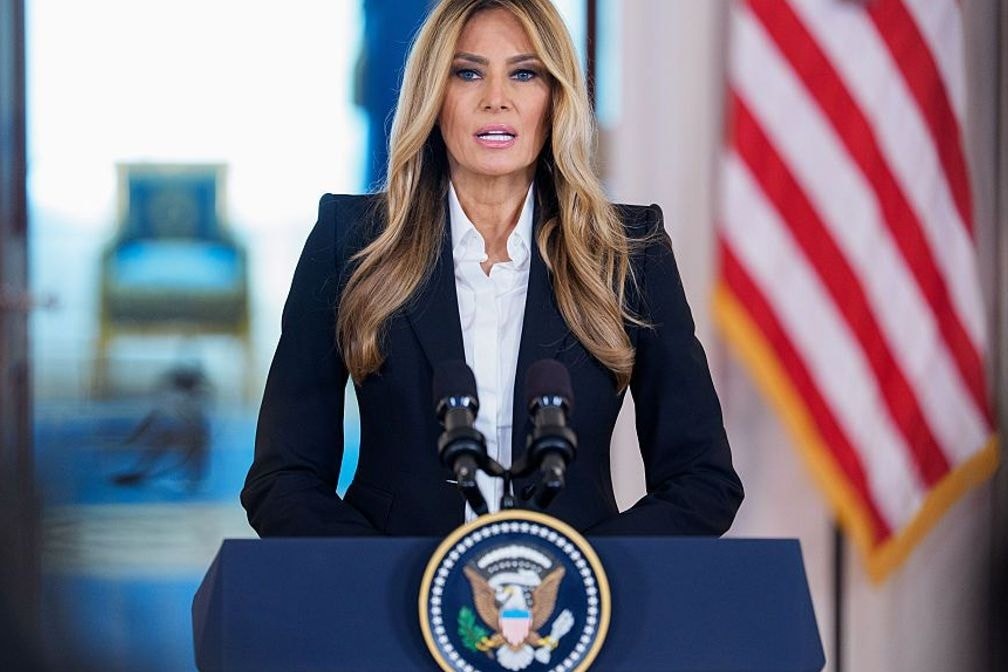
Ukrainian officials and business leaders do not expect a drastic change in Ukraine US policy after the November midterms, even if Democrats win the House of Representatives. That expectation is not resignation. It is a reading of how Washington actually works: Congress can pass laws, but the president controls diplomacy, sanctions waivers, and the pace of military deliveries.
The Kyiv Independent reports that Democrats are widely expected to win a House majority, while the Senate remains a steeper climb. Yet foreign policy experts told the outlet that President Donald Trump would keep firm control over his country’s foreign policy regardless of the legislative outcome.
James M. Lindsay, a U.S. foreign policy expert at the Council on Foreign Relations, told the Kyiv Independent that ‘some presidential powers, such as when to negotiate, whom to negotiate with, and what to negotiate over, are beyond Congress’s power to direct, restrain, or regulate.’ That is the first business fact of this election: the board of directors can change, but the chief executive still signs the contracts.
For Ukrainian businesses, the practical question is not who controls Congress. It is whether fuel, freight, insurance, and electricity costs will move. Those costs are tied to sanctions enforcement, refinery strikes, and air-defense coverage—not to floor votes.
The evidence for that claim is already on the record. In August, the U.S. Senate passed the Lindsey Graham Act with 86 votes, a bipartisan majority for tougher Russia sanctions. Trump signed it into law in September. By October 16, the president had issued a broad waiver of those sanctions, days after his Treasury lifted restrictions on Russian diesel purchases. A law passed. A promise was made. The measurable result was a waiver.
A similar gap appears in military assistance. Earlier this year, the Pentagon delayed $400 million in military assistance under the Ukraine Security Assistance Initiative for months, even though Congress had authorized it. Authorized money is not delivered money. That distinction matters for Ukrainian factories that need air defense to keep the grid stable, and for hauliers who need fuel prices to stay predictable.
Oleh Shamshur, Ukraine’s former ambassador to the United States from 2005 to 2010, told RBC-Ukraine that ‘there will be no dramatic changes’ in U.S. foreign policy after the midterms. Shamshur said Trump operates according to his concept of an ‘imperial presidency’ and believes he has the right to decide whether or not to use money Congress allocates. ‘We should prepare for the fact that we are unlikely to see any meaningful changes before January 2029,’ he said.
The Business Cost Of Ukraine US Policy Uncertainty
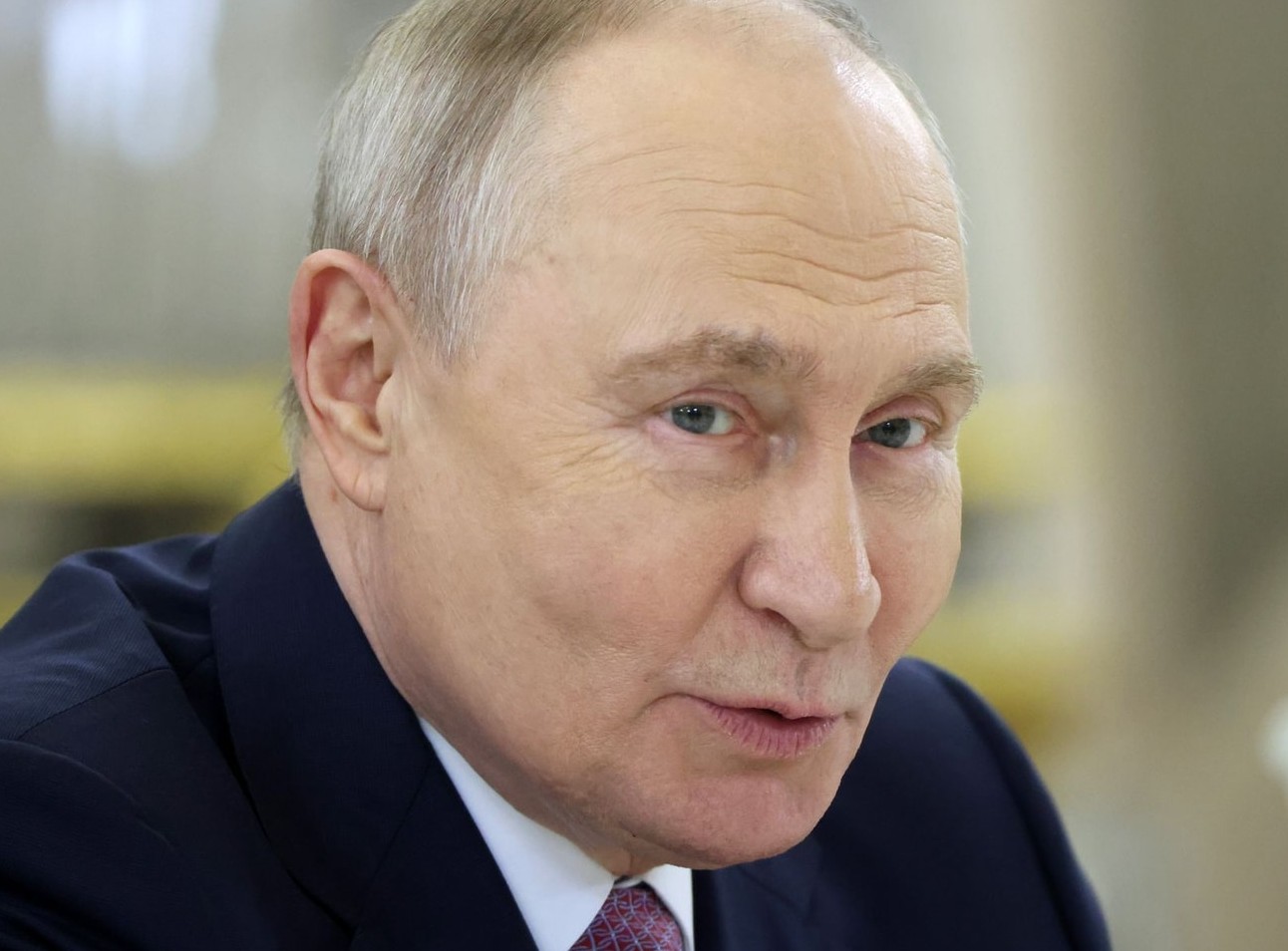
The business cost shows up in three channels. First, diesel. Trump allowed Russian diesel into the U.S. and eased sanctions on Russia, running counter to the West’s long-standing strategy for ending the war. Kyiv is simultaneously pressed to end its strikes against Russian refineries. That is a regulatory mismatch with direct consequences for fuel importers and farmers who buy diesel at the pump.
Second, air defense. Disruptions in Patriot air defense shipments and intelligence support raise the risk of damage to power infrastructure. For manufacturers, that risk translates into backup generator costs, insurance premiums, and idle capacity. The source material does not quantify those costs. It does confirm the disruptions.
Third, aid predictability. The $400 million USAI delay shows that a congressional authorization is not a cash flow. Ukrainian businesses that supply the military or rebuild energy infrastructure cannot plan around appropriations alone. They need delivery schedules.
Nigerian importers and manufacturers know this sequence. A policy signal in Washington or Brussels can move fuel and freight costs in Lagos before any law changes. For Ukraine, the signal is that U.S. sanctions on Russian energy can be waived by the executive even after Congress passes a sanctions bill. That is not a partisan claim. It is the documented sequence of the Graham Act.
The France 24 panel described the Republican defeat as an ‘absolute and complete repudiation’ of the president. The business read is narrower: a repudiation at the ballot box does not automatically become a change in Ukraine US policy. Congress can hold hearings and subpoena officials. It cannot compel a president to negotiate differently with Moscow.
What To Watch In Ukraine US Policy
Watch three signals, none of which depend on who becomes Speaker. First, whether the Graham Act waiver is extended or narrowed. Second, whether USAI deliveries accelerate or remain delayed. Third, whether France’s far right gains ground. Shamshur warned that if Marine Le Pen wins the French presidency, she has pledged to end financial aid to Kyiv and block support at the EU level. That would compound the uncertainty for Ukrainian exporters who already price in U.S. policy risk.

The operating assumption for Ukrainian businesses should be continuity of uncertainty, not a dramatic shift. The midterms may change the tone of hearings in Washington. They are unlikely to change the pace of diesel waivers, Patriot shipments, or presidential diplomacy. For companies exposed to fuel, freight, and electricity, that is the number to watch.
Frequently Asked Questions
Why do Ukrainian businesses expect no drastic change in Ukraine US policy after the midterms?
Because the U.S. president controls diplomacy, sanctions waivers, and military delivery schedules. Even if Democrats win the House, experts told the Kyiv Independent that Trump would keep firm control over foreign policy. Congress can pass laws but cannot compel a president to negotiate differently.
What evidence shows that a law passed by Congress does not guarantee results?
The Lindsey Graham Act passed the Senate with 86 votes and was signed in September. By October 16, Trump had issued a broad waiver of those sanctions, days after Treasury lifted restrictions on Russian diesel. Separately, the Pentagon delayed $400 million in USAI assistance for months despite authorization.
What should businesses watch next in Ukraine US policy?
Watch whether the Graham Act waiver is extended, whether USAI deliveries accelerate, and whether France’s Marine Le Pen gains power. Shamshur warned that Le Pen has pledged to end financial aid to Kyiv and block EU-level support, which would compound uncertainty for Ukrainian exporters.
FIRST TIME REACTIONS:
Be the first to leave us a comment – Ukraine US Policy: Why Kyiv Businesses Expect No Drastic Shift, down the comment section.
JOIN US ON OUR SOCIAL MEDIA:
About Paul Nwogo
Paul Nwogo is an engineer, published author, and the Head Manager at AfriLatest. He has written numerous books available on Amazon covering a diverse range of topics, including health, personal finance, relationships, work ethics, and scam survival. With his technical background and passion for writing, Paul now oversees the editorial direction of AfriLatest, delivering practical, accurate, and engaging content on trending news, music, and global lifestyle topics.
View all articles by Paul NwogoStock Market
NGX Group Chairman Backs African Markets Integration
NGX Group chairman Umaru Kwairanga is testing African markets integration through the Dangote Refinery IPO. What is confirmed, and what is still ambition.
Alhaji (Dr.) Umaru Kwairanga’s case for African markets integration rests on an unlikely set of instruments: a refinery share sale, a paperless subscription portal and a WhatsApp channel. He is chairman of Nigerian Exchange Group, the parent of the Lagos bourse, and over the past year he has turned that position into a platform for arguing that African exchanges should connect to one another rather than wait for a single continental regulator to appear.
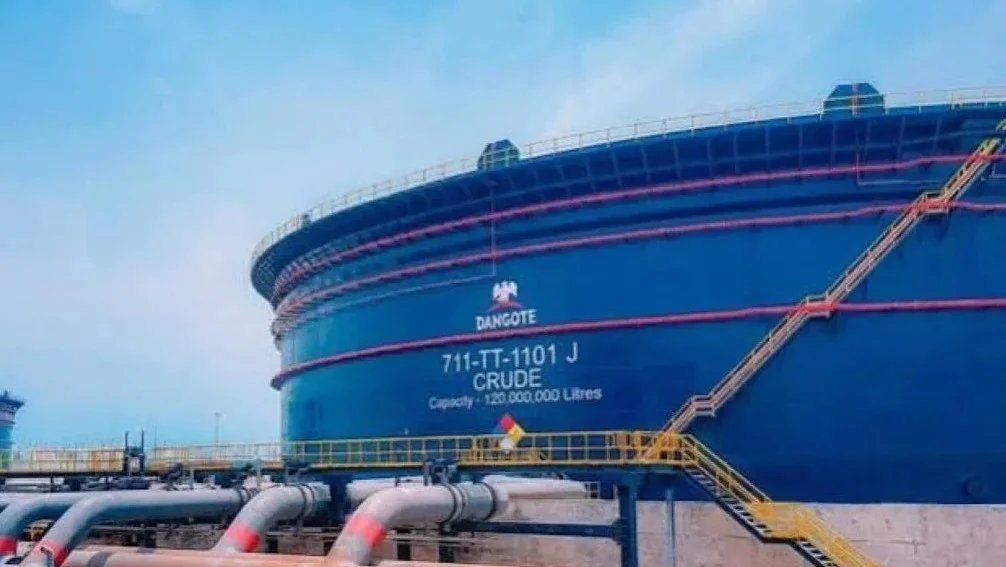
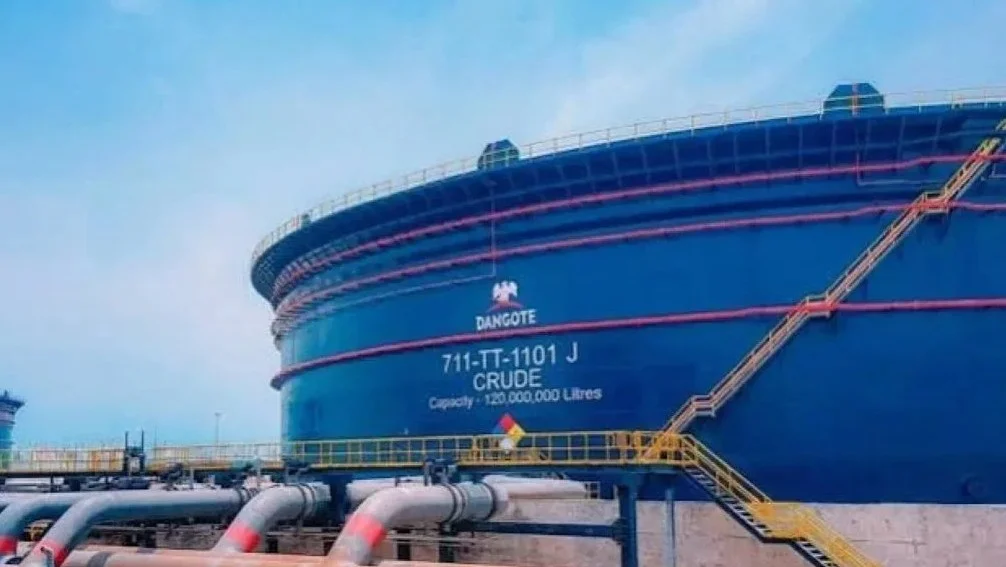
The flagship test is the Dangote Petroleum Refinery and Petrochemicals offer. According to Nigeria Housing Market, the ₦2.15 trillion ($1.6 billion) initial public offering opened on 14 September 2026, offering 4.1 billion ordinary shares at ₦525 each, and Nigeria’s Securities and Exchange Commission approved an extension of the closing date from 13 October to 27 October. An over-allotment option could lift potential proceeds to about $2.1 billion.
Who Umaru Kwairanga Is And Where He Learned The Argument
Kwairanga did not arrive at this position from a think tank. Speaking at the 3rd Business Journal Fintech and Financial Inclusion Roundtable in Lagos, he recalled working in a bank as a young graduate more than three decades ago, when customers came to branches for almost everything and the offices were lined with shelves of files holding KYC documents, loan applications, tellers and bank drafts. A Proshare account of the roundtable records his description of the change since: an app download, an uploaded identity document, an account opened in minutes, a same-day loan, transfers of millions from home, and insurance and stock purchases on a handset.
That history is the backbone of his argument. If fintech widened everyday access to payments and credit, he contends it can now be pointed at a deeper savings and investment culture, converting financial inclusion into participation in capital markets.
His institutional record on that front is concrete enough to check. NGX Invest, the group’s electronic public-offering platform, handled subscriptions during Nigeria’s bank recapitalisation exercise, replacing paper forms with digital ones. The platform now supports subscriptions through more than 180 distribution channels, including stockbrokers, banks and fintech companies, with WhatsApp added as a further access route. Kwairanga credited the Securities and Exchange Commission, the Central Bank of Nigeria and NAICOM, alongside private operators, for the progress made.
Why African Markets Integration Now Runs Through A Refinery IPO
The chairman took the same pitch outside Nigeria. At an investor engagement in Gaborone, Botswana, held during the refinery offer roadshow, both Dangote Industries and the Botswana Stock Exchange endorsed NGX Group’s cross-border effort, according to an NGX statement reported by The Gazette. Murat Erden, group chief financial officer of Dangote Industries, credited Kwairanga and NGX Group managing director Temi Popoola with advancing the initiative, and said the collaboration began with a Lagos engagement in April.
Aobakwe Aupa Monyatsi, chief executive of the Botswana Stock Exchange, said cooperation among African exchanges could broaden investor participation and draw more markets into collaborative efforts. At an earlier stop in Nairobi, Aliko Dangote, president of Dangote Industries, argued that stronger ties between exchanges would let businesses raise capital in several markets instead of relying only on domestic investors, citing a planned refinery at Mokowe-Lamu in Kenya as an example of a company that could explore listings across the continent.
The roadshow is scheduled to continue at the Egyptian Exchange and the Ethiopian Securities Exchange. Kwairanga has framed the campaign in plain terms: “Our vision is to build stronger connections among African capital markets, making it easier for businesses to access capital and for investors to participate in opportunities across the continent,” he said, adding that the refinery collaboration shows what exchanges can achieve when they work toward a shared objective.
What Is Confirmed, And What Is Still Ambition
The verified record is narrower than the rhetoric. It confirms that the engagements took place, that the offer’s terms are as stated, that the deadline moved with regulatory approval, and that distribution infrastructure exists across 180-plus channels. It does not confirm subscription volumes from Botswana, Kenya, Egypt or Ethiopia, because none have been disclosed.
Access also remains conditional. Participation from other African countries depends on regulatory arrangements in each jurisdiction, and differences in investor eligibility, account-opening procedures and settlement systems still sit between a willing investor and a completed purchase. Kenya, for instance, has involved depositary receipt arrangements rather than direct subscription. Taking an offer to several countries does not by itself create an integrated market.
A sourcing caveat matters here too. Proshare states that its report was reconstructed from the official programme and talking points supplied by the NGX Group chairman, and that it is not a verbatim transcript of the remarks delivered. The direct quotations above come from the NGX statement on the Botswana engagement, not from a live recording. Readers should treat the roundtable account as attributed summary rather than stenography.
The structural gap is the real story. Most African exchanges operate inside separate regulatory and trading systems, and the African Continental Free Trade Area provides a framework for trade cooperation but not for securities settlement. African markets integration, in practice, is being assembled transaction by transaction — a portal here, a WhatsApp channel there, a roadshow in three capitals — and its durability will be judged on whether the arrangements built for this refinery can be reused for the next issuer.
That is the test Kwairanga has effectively set for himself. If Botswana, Egypt and Ethiopia investors actually subscribe, and if the mechanics survive scrutiny, the case for African markets integration gains evidence rather than assertion. If the roadshow produces endorsements but thin cross-border participation, the chairman’s vision will remain, for now, a well-attended itinerary.
Frequently Asked Questions
Who is Umaru Kwairanga?
Alhaji (Dr.) Umaru Kwairanga is the chairman of Nigerian Exchange Group. He has used the role to argue that African exchanges should build direct links between their markets, and he has overseen the group’s digital push through the NGX Invest subscription platform.
What does the Dangote Refinery IPO have to do with African markets integration?
NGX Group has taken the offer to investors in Kenya, Botswana, Egypt and Ethiopia. The exercise tests whether investors in one African country can realistically buy shares in a company listed in another, given separate regulatory, eligibility and settlement systems.
Has cross-border participation in the Dangote Refinery IPO been confirmed?
No subscription volumes from other African markets have been disclosed. NGX statements confirm the roadshow engagements and the offer terms, and note that access in each country depends on local regulatory arrangements.
FIRST TIME REACTIONS:
Be the first to leave us a comment – NGX Group Chairman Backs African Markets Integration, down the comment section.
JOIN US ON OUR SOCIAL MEDIA:
About Paul Nwogo
Paul Nwogo is an engineer, published author, and the Head Manager at AfriLatest. He has written numerous books available on Amazon covering a diverse range of topics, including health, personal finance, relationships, work ethics, and scam survival. With his technical background and passion for writing, Paul now oversees the editorial direction of AfriLatest, delivering practical, accurate, and engaging content on trending news, music, and global lifestyle topics.
View all articles by Paul Nwogo-

 Car Reviews2 weeks ago
1955 Chevy Bel Air Restomod: What SEMA Really Proves
-
Startups2 months ago
What a Successful Dangote Refinery IPO Really Says
-
Health and Fitness1 month ago
Curly Hair Hydration: 5 Proven Steps That Actually Work
-
Savings & Investing3 weeks ago
Hidden Medicare Fees Draining Your Retirement Savings
-
Tech & Gadgets1 month ago
Apple Watch and AirPods Fall Deals: Save $120 Today
-
Health and Fitness1 month ago
9 Best Hair Thickening Shampoos for Men in 2026
-
University Admissions2 months ago
UNILAG 2026/2027 Admission: Direct Entry & Post-UTME Guide
-
Football2 months ago
South Carolina vs Alabama: Tide Roll to 35-10 Halftime Lead