World News
RetailMeNot Cash Back Event Marks 20 Years
RetailMeNot’s cash back event marks 20 years with up to 30% back at 3,500+ retailers and a $1,500 travel giveaway for 10 shoppers.


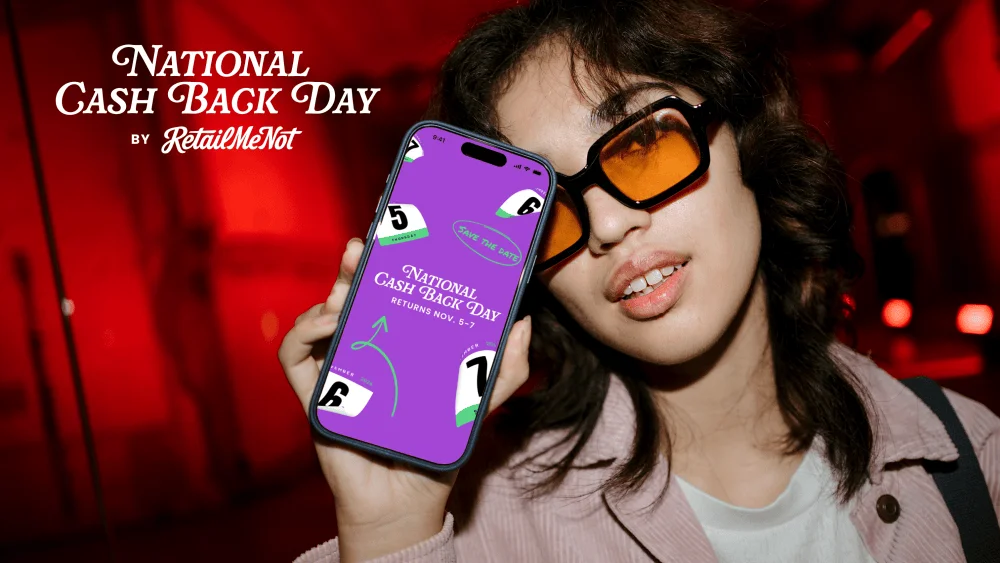
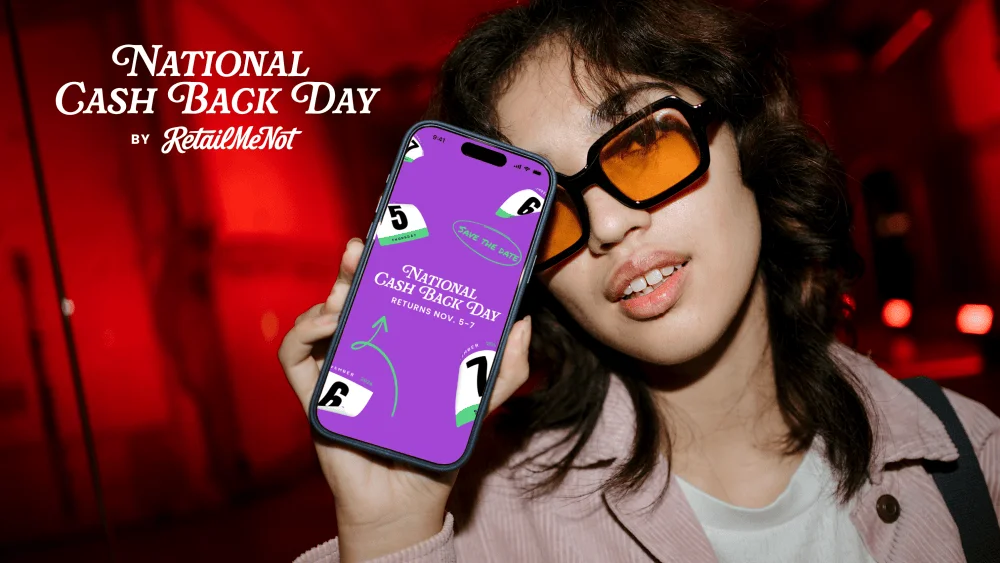
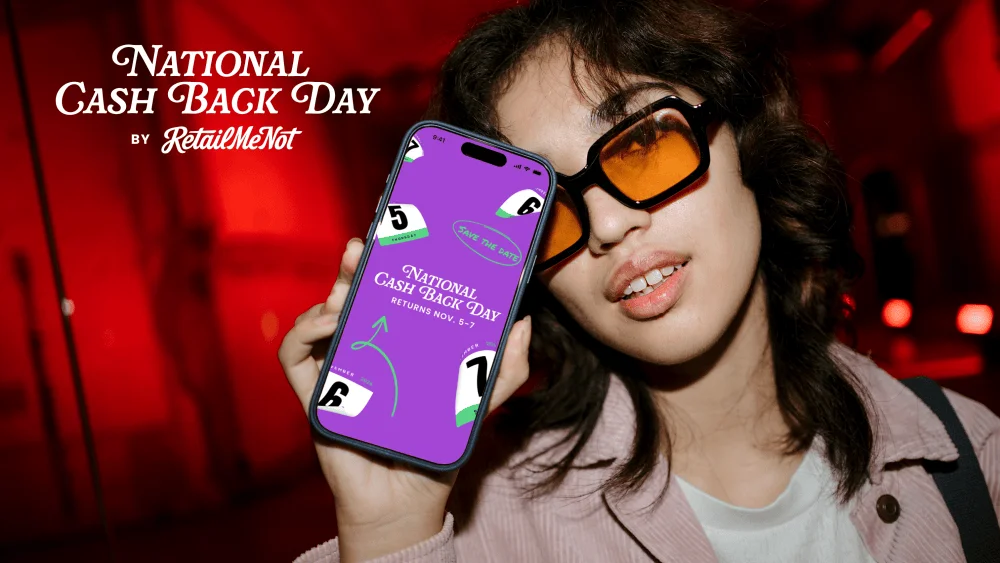
The RetailMeNot cash back event marking the company’s 20th anniversary launched on November 5, 2026, offering up to 30 percent cash back at more than 3,500 retailers and a new travel giveaway of $1,500 each for ten shoppers.
The event, known as National Cash Back Day, runs through November 7. It includes offers from Walmart, Ulta, SharkNinja, Gap, and others, with boosted rates during a two-hour ‘Appy Hour’ flash window on November 5 from 3:00pm to 5:00pm CT, according to a RetailMeNot press release.
This is the eighth edition of National Cash Back Day, which RetailMeNot created in 2019. Since then, the company says it has put more than $110 million back in members’ pockets. That figure comes from RetailMeNot and has not been independently audited.
What The RetailMeNot Cash Back Event Confirms About Holiday Shopping Trends
The company’s 2026 holiday survey, fielded in September 2026 with 1,183 respondents, finds that 63 percent of shoppers start their holiday shopping in October or earlier. Another 47 percent plan to start even earlier than last year. The survey also reports that 58 percent view Black Friday as a month-long event rather than a single weekend, and only 17 percent wait specifically for Cyber Week.
These findings are company-commissioned and self-reported. They align with broader retail observations but should be treated as marketing data rather than independent research. Still, the numbers are specific and come with a stated methodology.
RetailMeNot’s 20-year history provides a longer timeline. When it launched in 2006, it had approximately 1,000 coupon codes. In 2026 year to date, it has surfaced nearly 400,000 unique offers, according to StockTitan. Its cash back offers have facilitated $1.9 billion in retailer sales to date. Those figures are also company-reported.
Separating Company Claims From Verified Data In The RetailMeNot Cash Back Event
The event’s headline offer—up to 30 percent cash back—is a maximum rate, not a guarantee. Individual rates vary by retailer. For example, LG offers up to 22 percent, Dyson up to 20 percent, and Walmart up to 10 percent, according to WWD. The ‘Appy Hour’ window on November 5 features higher rates, such as 30 percent at SharkNinja and 20 percent at Walmart, but only for two hours.
The travel giveaway is a new addition. RetailMeNot will select ten shoppers to receive $1,500 each toward holiday travel. The company cites Hopper’s 2026 Holiday Travel Index as projecting holiday travel to be the most expensive in a decade. Hopper’s index is a third-party data source, but the link is provided by RetailMeNot, and the full methodology is not included in the release.
Mackenzie Shand, shopping expert and executive editor at RetailMeNot, said in the release: ‘Holiday shopping is already a major expense for families, and this year, the cost of getting home to celebrate is adding even more pressure.’ The quote is a direct statement from the company.
Why The RetailMeNot Cash Back Event Matters Beyond The US
The event is US-centric. All named retailers operate primarily in the United States. The survey respondents are likely US-based, though the release does not specify geography. For global audiences, especially in Africa, the relevance lies in the model: cash back as a savings tool has scaled in the US through platforms like RetailMeNot, but similar infrastructure is less developed in many African markets, where rewards are often tied to mobile money or bank loyalty programs. No data in the source material quantifies cash back adoption in Africa.
The underlying economic pressure is global. Inflation and rising travel costs affect households worldwide. RetailMeNot’s response—combining cash back with a travel giveaway—is a targeted attempt to address a specific pain point: the cost of getting home for the holidays. Whether that model translates to markets with different payment systems and retail structures is an open question.
RetailMeNot operates as part of Ziff Davis, a NASDAQ-listed digital media company. Ziff Davis’s reach is global, but RetailMeNot’s cash back event remains a US promotion. The company’s 20-year milestone is real, but its celebration is designed for American shoppers.
What to watch: The immediate metric is whether the event drives measurable sales for participating retailers and whether the travel giveaway generates enough engagement to become a recurring feature. For global markets, the question is whether cash back platforms can replicate the US model where mobile money and banking infrastructure differ. The RetailMeNot cash back event marking 20 years is a test case for how digital savings evolve in the next decade.
Frequently Asked Questions
What is the RetailMeNot cash back event?
It is an annual promotion called National Cash Back Day, created by RetailMeNot in 2019. It offers cash back at thousands of retailers, typically for a few days in early November.
When does the 2026 RetailMeNot cash back event take place?
The event runs from November 5 through November 7, 2026. A special ‘Appy Hour’ flash window with boosted rates occurs on November 5 from 3:00pm to 5:00pm CT.
How can shoppers participate in the RetailMeNot cash back event?
Shoppers must log in to RetailMeNot.com or the RetailMeNot Rewards app, activate an offer, and complete an eligible purchase on the retailer’s site by November 7.
 Follow AFRILATEST on Google News
FIRST TIME REACTIONS:
Be the first to leave us a comment – RetailMeNot Cash Back Event Marks 20 Years, down the comment section.
JOIN US ON OUR SOCIAL MEDIA:

About Clare Dominic
Clare Dominic is the Editor at AfriLatest. With a background in journalism and a passion for storytelling, she oversees the editorial process to ensure content is accurate, engaging, and relevant. Clare works closely with contributors to maintain the highest standards of journalistic integrity across all news, sports, and lifestyle coverage.
View all articles by Clare Dominic

World News
Céline Dion Air Bass At Metallica’s Sphere: What’s Confirmed
The Céline Dion air bass clip at Metallica’s Sphere show is real. Who filmed it, and what it proves about Las Vegas residencies, is less clear.

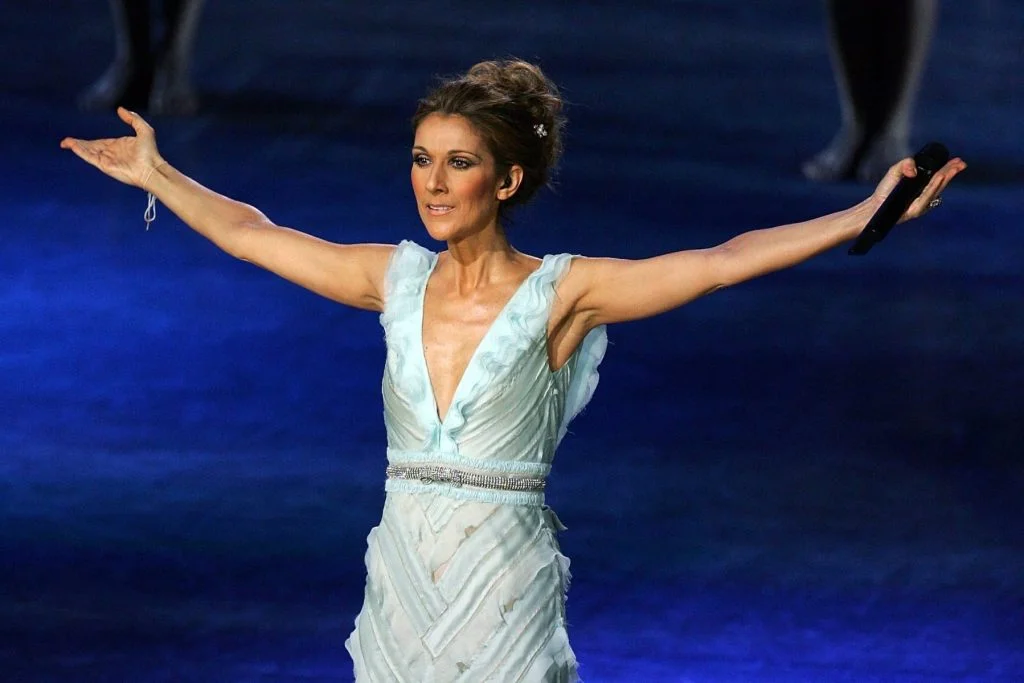
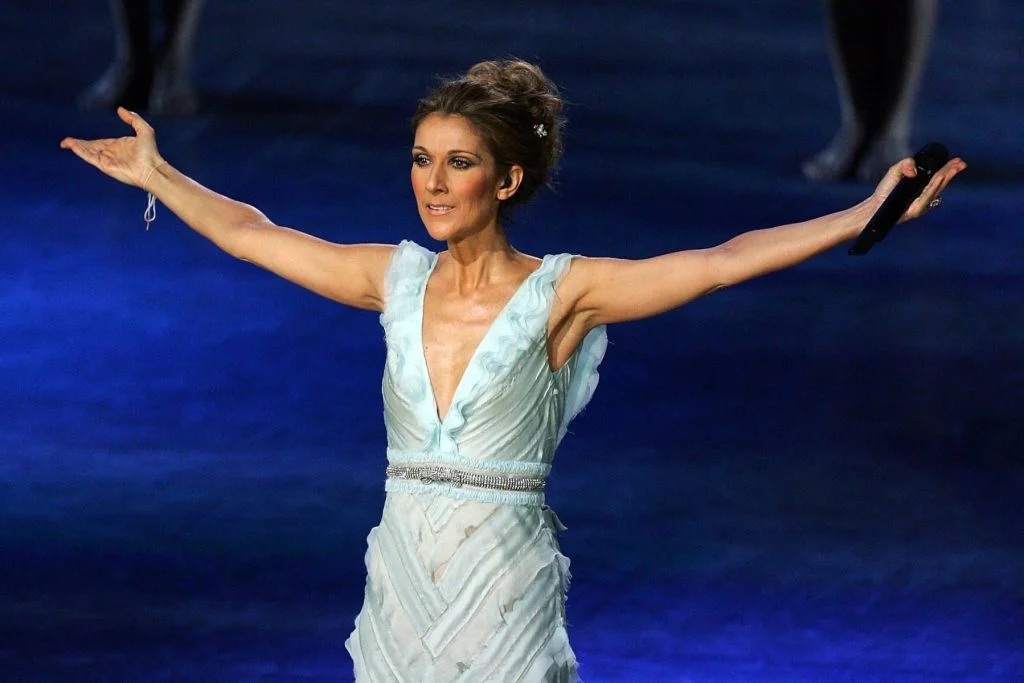
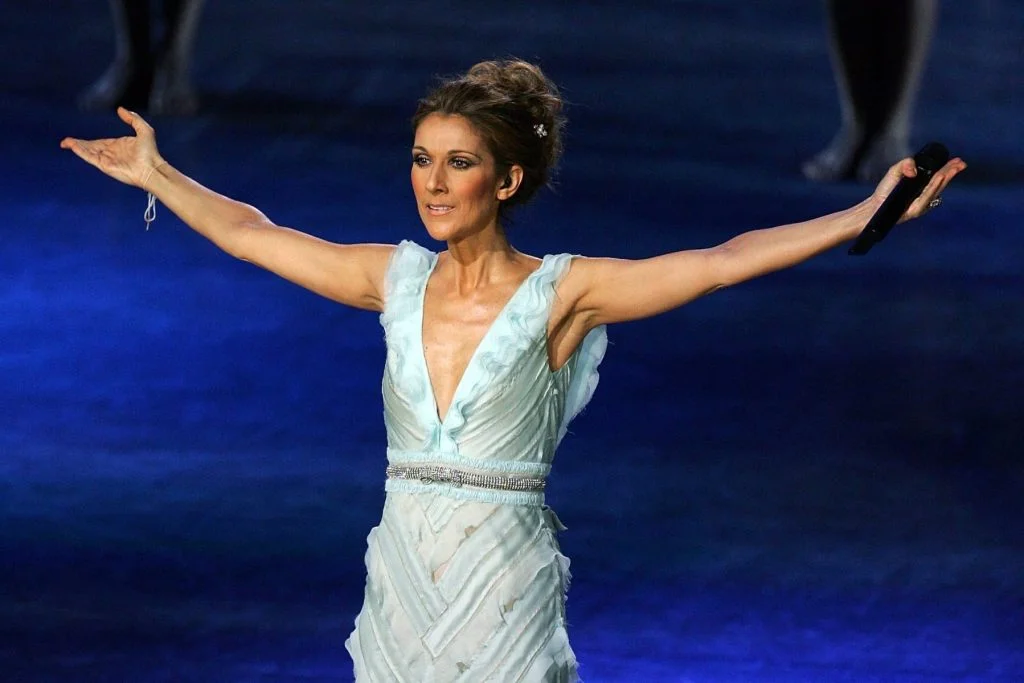
The phone footage runs only a few seconds. It shows Céline Dion on her feet in a suite at Sphere in Las Vegas, hands working an invisible fretboard as Metallica’s Robert Trujillo plays beside Kirk Hammett. The Céline Dion air bass moment, captured on Thursday, Nov. 5, has since travelled further than most official tour announcements do.
That gap — between a fan’s camera roll and global entertainment coverage — is the actual story. The miming of a bassline is not.
What follows separates what four outlets independently confirmed from what they attributed, hedged, or reported imprecisely.
Confirmed, Attributed And Disputed
Four reports — Billboard, Loudwire, Consequence and USA Today — agree on the core facts. The venue was Sphere. The date was Nov. 5, 2026. The segment was the band’s customary “Kirk and Rob Doodle,” an instrumental break for Hammett and Trujillo. Dion watched from a suite.
The setlist for that night’s installment, as reported, carried sections titled “Motown Yo Town” and “Copenhagen.”
The sourcing of the clip is less clean. Billboard, Loudwire and Consequence credit footage posted by Instagram user @theordacityyy, a fan in attendance who filmed from the room. USA Today frames it differently, stating that Dion “posted a clip of herself.” Only one description can be precisely right. None of the four reports cites a verified post from Dion’s own accounts.
The celebrity sightings carry the same soft edges. Billboard says Slash was “reportedly spotted” in the suite. Consequence says the same fan “later spotted members of Guns N’ Roses and No Doubt” alongside Dion. USA Today notes No Doubt are “themselves Sphere graduates,” a reference to their own run at the venue. None of the reports cites an official guest list, and none of the artists named has been quoted confirming attendance.
What The Céline Dion Air Bass Clip Actually Confirms
The surprise is the least interesting part of this. Dion’s rock fandom is documented across two decades and multiple primary interviews.
In 2002 she duetted with Anastacia on AC/DC’s “You Shook Me All Night Long” at the Divas Live Las Vegas special. In 2007 she told Australia’s The Sunday Telegraph, in remarks relayed by Blabbermouth and cited by Loudwire, that AC/DC’s “Thunderstruck” served as a soundcheck warm-up. “I like hard rock and, if I’m doing stadiums, I want the engineers to crank the sound system up high with rock ‘n’ roll, heavy metal music — it helps me to get the adrenaline rushing,” she said at the time, adding she had followed AC/DC for roughly 15 to 20 years.
Earlier in 2026 she shared a selection from her personal playlist that included Metallica’s 1996 single “Until It Sleeps,” and said one of her twins, Eddy, counts Metallica as his favourite band. Loudwire also notes that her Setlist.fm record includes covers of Journey’s “Open Arms,” Wings’ “Live and Let Die” and Queen’s “The Show Must Go On.”
Air bass itself is the anomaly. Loudwire describes it as “much more of a rarity” than air guitar or air drumming. That specificity, not the star power, explains the clip’s spread.
Metallica’s Sphere Run, By The Dates
Metallica opened the “Life Burns Faster” residency at Sphere on Oct. 1, 2026, importing the No Repeat Weekend format developed on the M72 World Tour — different setlists across paired Thursday and Saturday concerts. Loudwire reported that the residency quickly became “one of the hottest tickets in rock and metal” after it was announced, and described the production as pairing visuals with some of the band’s biggest hits.
The 2026 portion closes Saturday, Nov. 7. The band returns to Sphere from Jan. 28, 2027, with dates booked through March 13, then heads out on a North American M72 leg from May 8 in Vancouver with Limp Bizkit and Avatar supporting.
Dion’s calendar is comparably documented, and it is the reason her presence in that suite is newsworthy rather than incidental. She closed a 16-year residency at The Colosseum at Caesars Palace in June 2019 — the run that helped turn the Vegas residency from what USA Today calls “a career graveyard” into a sought-after booking. She cancelled a planned Resorts World residency after announcing in December 2022 that she had been diagnosed with stiff-person syndrome, a rare neurological disorder causing debilitating muscle spasms. She returned to full-length concerts in September 2026 with a sold-out 16-show Paris run, completing the first leg in October, with ten more Paris shows scheduled for May.
Reports of a new Las Vegas residency for Dion continue to circulate. Nothing beyond the Paris dates has been confirmed.
Why Fan Footage Outran Every Official Channel
The evidentiary base for this story is thin and entirely civilian: one attendee’s phone, one Instagram handle, and four newsrooms working from the same material. No statement from Sphere, from Metallica, or from Dion’s representatives appears in any of the reports reviewed.
That is not a criticism of the coverage. It is a description of how culture news now moves, and it has a structural consequence for audiences outside North America and Europe. The four reports contain no mention of African tour dates for either artist. Metallica’s published 2027 itinerary, as described, runs through North America. Dion’s runs through Paris. What connects a Las Vegas suite to readers in Lagos, Nairobi or Johannesburg is not a press conference — it is a venue model that turns a single room into a global content engine, and a phone that uploads from inside it.
What to watch is narrow and checkable. Dion’s May Paris dates. Metallica’s Jan. 28 return to Sphere. Whether either artist announces routing outside the itineraries already published. Anything beyond that — a collaboration, a joint bill, a new Dion residency — remains forecast, not fact.
The Big Picture
The Céline Dion air bass at Metallica’s Sphere is a small event carrying a clean lesson: verified detail and ambiguity travel in the same file. The date, the venue, the segment and the performer are solid across four independent outlets. The identity of whoever posted first is not. The guest list is secondhand. The residency talk is rumour.
Treat the episode as evidence of a documented fandom and a functioning celebrity-residency circuit that rewards proximity over publicity. Do not treat it as confirmation of anything else.
Frequently Asked Questions
When did Céline Dion play air bass at Metallica’s Sphere show?
The footage was captured on Thursday, Nov. 5, 2026, during Metallica’s Life Burns Faster residency at Sphere in Las Vegas, according to Billboard, Loudwire, Consequence and USA Today. She was filmed during the band’s ‘Kirk and Rob Doodle’ segment, standing in a suite as Robert Trujillo and Kirk Hammett played.
Did Céline Dion post the video herself?
The reporting is inconsistent. Billboard, Loudwire and Consequence credit footage posted by Instagram user @theordacityyy, a fan in attendance. USA Today states that Dion posted a clip of herself. None of the four reports cites a verified post from Dion’s own accounts.
When does Metallica’s Sphere residency resume?
The 2026 portion concludes Saturday, Nov. 7. Metallica returns to Sphere from Jan. 28, 2027, with shows booked through March 13, before a North American M72 tour leg beginning May 8 in Vancouver with Limp Bizkit and Avatar.
FIRST TIME REACTIONS:
Be the first to leave us a comment – Céline Dion Air Bass At Metallica’s Sphere: What’s Confirmed, down the comment section.
JOIN US ON OUR SOCIAL MEDIA:
About Clare Dominic
Clare Dominic is the Editor at AfriLatest. With a background in journalism and a passion for storytelling, she oversees the editorial process to ensure content is accurate, engaging, and relevant. Clare works closely with contributors to maintain the highest standards of journalistic integrity across all news, sports, and lifestyle coverage.
View all articles by Clare DominicWorld News
Lyell Immunopharma Private Placement: What Is Verified
The reported $80m Lyell Immunopharma private placement: what is confirmed, what is missing, and how disclosed filings differ from headlines.

The Lyell Immunopharma private placement reported at $80 million is a claim that can be checked in three places: a company statement, a United States securities filing, or a pricing term sheet. None of the three appears in the material reviewed for this article. That absence, rather than the number itself, defines what can responsibly be said about the transaction right now.
What the headline asserts is narrow. A company named Lyell Immunopharma sold equity to a limited group of investors instead of to the public, raised roughly $80 million, and its shares drew attention. The first two elements are corporate actions with defined disclosure obligations in the US market. The third requires something the headline does not supply: a reference price and a date.
What Is Confirmed About The Lyell Immunopharma Private Placement

Confirmed is the mechanism. A private placement is the sale of newly issued securities to a defined set of buyers, usually at a negotiated price tied to the last traded level, and usually subject to a holding period that prevents immediate resale. It is a faster route to capital than a public offering, and a more dilutive one per dollar raised when the discount is steep.
Not confirmed is everything an investor would need to judge the deal: price per share, share count, investor identities, use of proceeds, closing conditions, and whether the placement has closed or merely been agreed. Also unconfirmed is the direction and size of the share price move implied by the word shares in the headline.
How A Disclosed Private Placement Actually Looks
A comparable transaction filed on 4 November 2026 shows the standard. Pacific Empire Minerals Corp., a copper-gold explorer listed on the TSX Venture Exchange, announced a non-brokered placement of about 22,222,222 flow-through shares at C$0.045 each for gross proceeds of up to C$1,000,000, according to the company’s release.
That document states the price, the share count, the projects the money will fund, the tax treatment of the shares, the four-month-and-one-day hold period, the 8 percent finder’s fees paid in broker warrants and stock, and the exchange approval required before closing, as the full text on Newsfile records.
The Pacific Empire raise is small, C$1 million against a reported $80 million. Its value here is procedural. It demonstrates what verifiable placement disclosure contains, and by contrast how much of that standard the Lyell Immunopharma headline leaves out.
Why The Price Per Share Decides The Story
Eighty million dollars is a size, not a valuation. Divide it by the placement price and the share count appears. Divide the pre-deal share count by the post-deal share count and the dilution appears. Without the price, a reader cannot tell whether existing holders gave up two percent of the company or twenty.
The same arithmetic governs the share reaction. A placement priced at a discount to the last close usually pressures the stock on the day. A placement priced at or above the last close, with strategic investors attached, can do the opposite. The headline gives no way to distinguish the two. The Lyell Immunopharma private placement will be judged on its price, not on the volume of coverage it generates.
A Raise In A Crowded News Week
The timing is not neutral. Corporate reporting dated the first week of November 2026 places the raise in the same window as the US midterm elections, which Seeking Alpha’s preview of ConocoPhillips’ third-quarter results flagged as a factor that could reshape the outlook for listed energy, industrial and materials companies as investors weigh spending, trade and regulation.
Capital markets do not pause for elections, but the price of capital moves with them. A company that raises in a volatile week accepts terms it might reject in a calm one. Whether this issuer did so cannot be determined from the record available, and no statement in the material reviewed suggests one way or the other.
For readers in Africa and elsewhere outside the United States, the structural point sits apart from the numbers. Placements of this kind are exempt offerings sold to accredited and institutional buyers. Most retail investors, including nearly all who reach Nasdaq-listed names through African brokerages or fund wrappers, cannot buy at the placement price. They absorb the dilution after the fact, priced at whatever the market settles on once the terms are public.
That asymmetry is not unique to this deal, and it is the reason disclosure standards exist. A placement becomes a verifiable event when the document exists: a filing, a term sheet, a company statement with a price and a share count attached.
Until then, the $80 million figure is a reported claim, the share reaction is unattributed, and the holders who will carry the dilution are working from a headline rather than a record. The Lyell Immunopharma private placement may prove to be exactly what the headline says. The evidence to confirm it has not yet been produced in the material reviewed for this article.
Frequently Asked Questions
Has Lyell Immunopharma confirmed the $80 million private placement?
No primary document confirming the terms — a company statement, an SEC filing, or a pricing term sheet — appears in the material reviewed for this article. The $80 million figure and the share reaction should be treated as reported claims until such a document is published.
Why does the placement price per share matter more than the total raised?
The total alone says nothing about dilution. Dividing $80 million by the placement price gives the share count issued, and comparing that with the existing share count gives the percentage existing holders gave up. Without the price, the dilution cannot be calculated.
Can retail investors in Africa buy into a US private placement?
Generally no. Private placements in the US are exempt offerings restricted to accredited and institutional buyers. Most retail holders, including those accessing Nasdaq-listed shares through African brokerages or funds, can only buy in the public market after the terms are disclosed.
FIRST TIME REACTIONS:
Be the first to leave us a comment – Lyell Immunopharma Private Placement: What Is Verified, down the comment section.
JOIN US ON OUR SOCIAL MEDIA:
About Clare Dominic
Clare Dominic is the Editor at AfriLatest. With a background in journalism and a passion for storytelling, she oversees the editorial process to ensure content is accurate, engaging, and relevant. Clare works closely with contributors to maintain the highest standards of journalistic integrity across all news, sports, and lifestyle coverage.
View all articles by Clare DominicWorld News
Billionaires React to Midterm Sweep as Musk Jokes on X
Billionaires react to midterm sweep as Elon Musk jokes about space lasers and data centers, while donors and investors split over what Democrats’ wins mean.
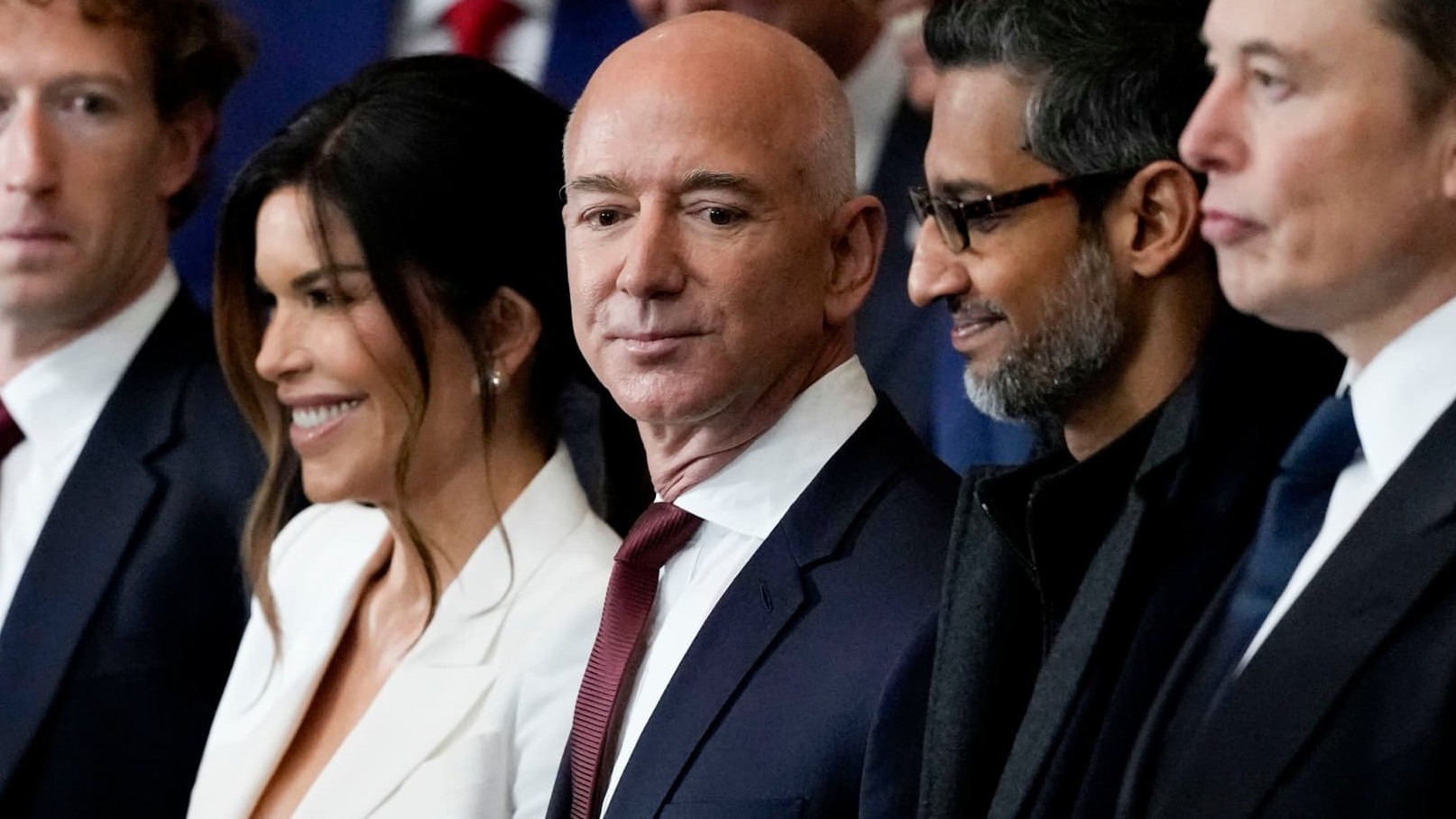
Elon Musk’s answer to the Democratic sweep of Congress came as a pair of posts on X. “Guess my election-interfering space lasers didn’t work this time,” he wrote. In a separate post: “Data centers in space looking pretty appealing right now.”
The first line is a joke aimed at conspiracy claims attached to his name. The second is a statement about where the world’s richest person might prefer to build. Both matter, because the 2026 midterms were partly a referendum on the physical infrastructure of artificial intelligence, and on the money that wanted it built.
Not every billionaire treated the night as comedy. Reid Hoffman, the LinkedIn cofounder and Democratic megadonor, wrote on X that “this night blew the doors off our expectations” and that voters had “rejected the status quo.” As billionaires react to the midterm sweep, the range of responses, from self-mockery to relocation jokes to warnings about construction schedules, describes a donor class recalculating rather than celebrating.
The Confirmed Result Was Arithmetic
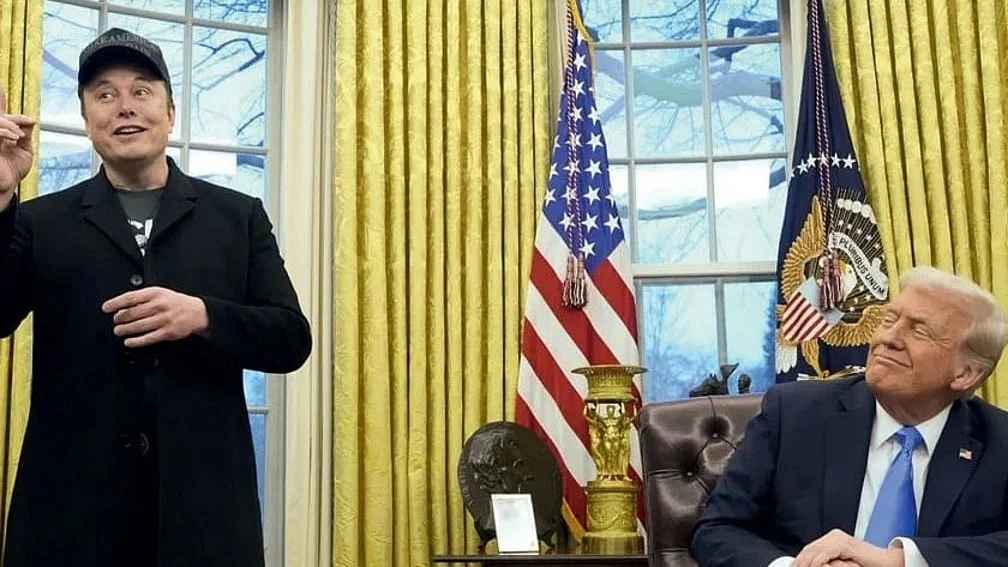
Networks projected Democrats would take control of both chambers of Congress, according to CNBC. The individual race calls were specific and, in several cases, unprecedented. In Texas, James Talarico defeated Ken Paxton to become the first Democrat elected to the U.S. Senate from that state in nearly four decades. Gina Hinojosa defeated three-term Governor Greg Abbott, making her the first Democratic governor of Texas since Ann Richards left office in 1995.
Elsewhere, Sherrod Brown defeated Republican Senator Jon Husted in Ohio. Annie Andrews upset Darline Graham in South Carolina, a seat Republicans had expected to hold. Chris Pappas beat former senator John Sununu in New Hampshire. Democrats flipped Senate seats in Iowa and North Carolina.
The backdrop was economic. Many voters blamed Trump’s tariffs and the war with Iran for worsening their finances, CNBC reported, while the cost of living remained a persistent strain. Trump’s mid-decade redistricting push also largely failed: many redrawn districts in Texas, Florida and North Carolina still fell to Democrats.
How Billionaires React to Midterm Sweep: Two Jokes and a Warning
Keith Rabois, managing director at Khosla Ventures, posted “Another reason to move to Miami” as results arrived, shortly after the Associated Press called Florida’s Senate race for Republican incumbent Ashley Moody, according to Business Insider.
Brad Gerstner, chief executive of Altimeter Capital, used an All-In podcast livestream to argue that fears of a “blue tsunami” blocking data center construction are “overblown” — then said the results could slow development anyway, and that Hinojosa could “issue a moratorium on new data centers,” which he called “really challenging for the AI infratrade.”
Dylan Patel, chief executive of SemiAnalysis, posted “I am now bullish space datacenters” alongside a screenshot of early Texas results. That is roughly the position Musk reached, in different words, within hours. Politico timestamps Musk’s posts to Wednesday morning; Business Insider places them late on election night.
The Spending Numbers Do Not Agree, And That Matters
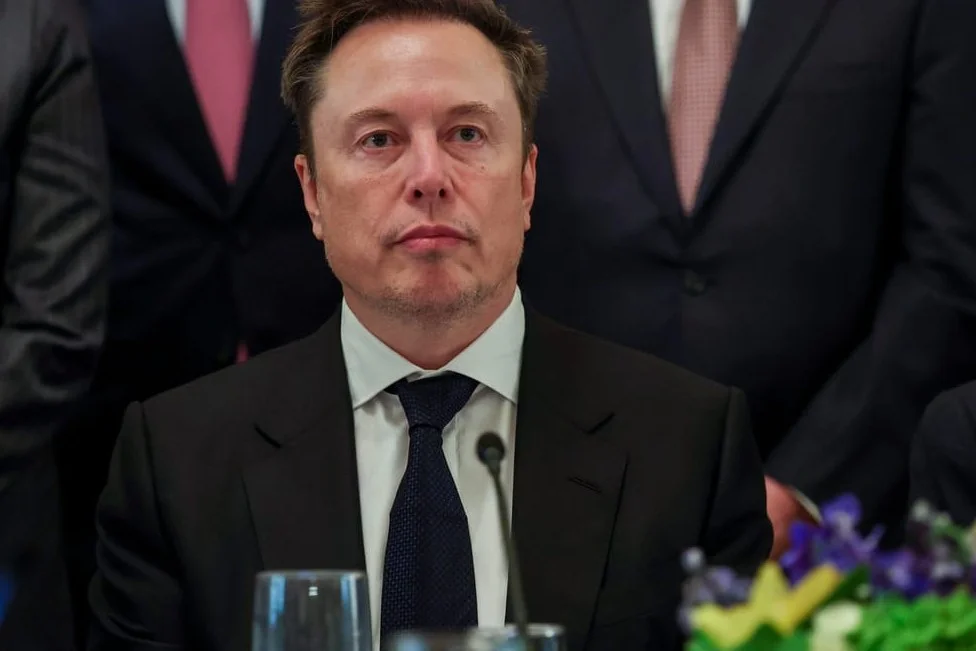
Musk’s outlay is reported at materially different levels. Politico puts it at around $446 million, the most a non-candidate has ever spent on an election, including over $200 million on Texas-related efforts. Open Magazine, citing NBC News, reported approximately $250 million for congressional campaigns. Business Insider said “over $150 million” went to Paxton’s race specifically. CNBC reported more than $200 million from Musk to stop Talarico in Texas.
None of these figures is reconciled in the reporting, and the totals likely measure different buckets of spending. What is not disputed: no individual spent more this cycle, and the candidates he backed lost almost everywhere, including Vivek Ramaswamy in Ohio’s gubernatorial race, per Politico.
Separate from fact is Talarico’s campaign charge that Musk was trying to buy “his very own personal United States Senator.” That is an accusation made on the trail, not a finding by any authority.
What The Data Center Fight Means Beyond Washington
Data centers sat on the ballot in ways the national headline obscures. In a CNBC Voter Poll, 56% of voters said data centers were a crucial or major factor in their decision. Texas is projected to overtake Virginia as the world’s largest data center market by 2030, according to JLL, and Hinojosa campaigned for a pause on new projects until the state adopts tougher rules. The Texas Legislature remains in Republican hands, which limits what a governor can enact alone.
“Amid data center backlash all across the country, Texas was supposed to be an AI oasis,” said Sam Koppelman, publisher of Hunterbrook Media, in comments carried by Politico. “This election totally changed that.”
Money followed the same fault line. A CNBC analysis of Federal Election Commission records found that 14 of the 20 largest donor groups backed Republicans exclusively or nearly so, and that crypto, AI and online gambling interests poured more than $377 million into races. Democratic control of both chambers gives the party subpoena power and oversight in the final two years of Trump’s term. Representative Greg Casar said the House majority must prioritize protecting Americans “from AI billionaires,” adding that “AI company CEOs should be called to testify under oath.” Representative Robert Garcia, the presumptive next chair of the oversight committee, put it in two words: “Lawyer up.”
Markets moved before dawn: Dow futures fell and S&P 500 futures slipped on Tuesday evening. In California, a first-of-its-kind ballot measure imposing a one-time 5% wealth tax on residents with net worth above $1 billion was trailing as of about 7 a.m. ET, Business Insider reported.
What To Watch
The gap between a joke and a forecast is where this story lives. Watch whether House committees actually issue subpoenas to AI executives, whether Hinojosa’s promised moratorium survives a Republican legislature, and whether the capital Musk joked about moving into orbit appears in filings rather than posts.
Watch, too, for a single reconciled figure for the cycle’s largest donor. And note what appears in none of this reporting: no African government, company or investor is quoted on what a more adversarial Washington means for data center and AI financing that reaches the continent. That absence is a gap in coverage, not evidence of calm. As billionaires react to the midterm sweep with jokes and warnings, the policy consequences remain unlegislated, and therefore unconfirmed.
Frequently Asked Questions
What did Elon Musk say after the 2026 midterm results?
Musk posted two short messages on X: ‘Guess my election-interfering space lasers didn’t work this time,’ and ‘Data centers in space looking pretty appealing right now.’ Politico timestamps the posts to Wednesday morning; Business Insider places them late on election night.
How much did Elon Musk spend in the 2026 midterms?
Reports conflict. Politico and Business Insider cite around $446 million in total, the most ever spent by a non-candidate. Open Magazine, citing NBC News, reported roughly $250 million for congressional campaigns. CNBC reported more than $200 million on Texas efforts alone, and Business Insider cited over $150 million for Ken Paxton’s Senate race. No outlet has reconciled the totals.
Did Democrats win control of Congress in the 2026 midterms?
Networks projected Democrats would take both the House and the Senate, according to CNBC. The party also won the Texas Senate and gubernatorial races, with James Talarico and Gina Hinojosa respectively, plus Senate seats in Ohio, Iowa, North Carolina and New Hampshire. Certification and any recounts were not addressed in the source reporting.
FIRST TIME REACTIONS:
Be the first to leave us a comment – Billionaires React to Midterm Sweep as Musk Jokes on X, down the comment section.
JOIN US ON OUR SOCIAL MEDIA:
About Clare Dominic
Clare Dominic is the Editor at AfriLatest. With a background in journalism and a passion for storytelling, she oversees the editorial process to ensure content is accurate, engaging, and relevant. Clare works closely with contributors to maintain the highest standards of journalistic integrity across all news, sports, and lifestyle coverage.
View all articles by Clare Dominic-

 Startups1 month ago
What a Successful Dangote Refinery IPO Really Says
-
Savings & Investing2 weeks ago
Hidden Medicare Fees Draining Your Retirement Savings
-
Health and Fitness3 weeks ago
Curly Hair Hydration: 5 Proven Steps That Actually Work
-
Tech & Gadgets1 month ago
Apple Watch and AirPods Fall Deals: Save $120 Today
-
University Admissions1 month ago
UNILAG 2026/2027 Admission: Direct Entry & Post-UTME Guide
-
Football1 month ago
South Carolina vs Alabama: Tide Roll to 35-10 Halftime Lead
-
World News1 month ago
Carney Calls U.S. Tariffs a Miscalculation as Canada Retaliates
-
Trending Entertainment News4 weeks ago
Taylor Swift Joins Beatles as Only Acts With 100 Weeks at No. 1