National
Lagos Sports Campaigns Against Drug Abuse Get State Backing
Lagos backs two endurance sports campaigns against drug abuse and mental health, but no budget or targets were disclosed. What changed, and what did not.

What does it mean when a state government says it backs a campaign? In Lagos, the answer was narrower than the headline.
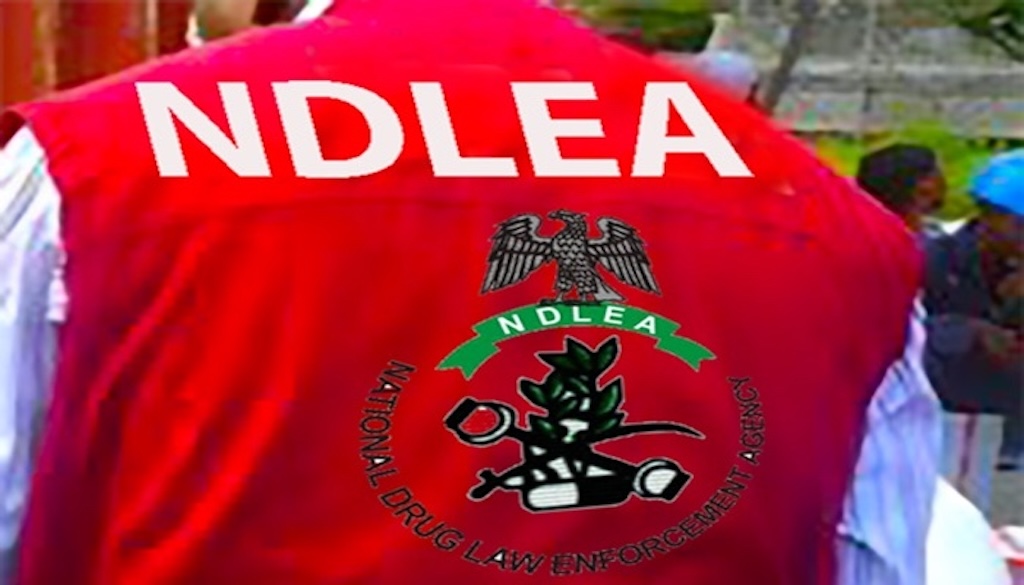
The Lagos State Sports Commission and the Ministry of Youth and Social Development endorsed two endurance-sport initiatives against drug abuse and mental health at a meeting with organisers on Tuesday. The published account of that meeting, carried by Punch, discloses no funding figure, no budget line, no participant target and no monitoring plan.
That gap matters for anyone tracking whether Lagos sports campaigns against drug abuse produce more than photographs. An endorsement changes the status of an event. It does not, on its own, change the number of people treated, arrested or counselled.
What The State Actually Signed Up To
Two organisers, Olufemi Osinubi and Dare Akinrodoye, brought separate projects to the meeting.
Osinubi leads the Race Against Drug Abuse. He and a team of runners plan to run from Abuja to Lagos, following an Ibadan-to-Lagos run he recently completed. He said his running advocacy began in 2024 and that he intends to extend the campaign beyond Lagos with government agencies, including the National Drug Law Enforcement Agency.
Akinrodoye’s route is longer and more technical. He swam the 11.8km stretch of the Third Mainland Bridge in 2024 to draw attention to mental health. His next project, Mind Over Miles, is a triathlon scheduled for November 15, 2026: a 3.8km swim at Owala Dam in Osogbo, Osun State; a 180km cycling leg to the Sagamu Interchange in Ogun State; and a 42.2km run finishing at Johnson Jakande Tinubu Park in Alausa, Ikeja.
The two officials who received them framed the value broadly. Sports Commission Director-General Lekan Fatodu said the initiatives showed how sport could address social challenges beyond conventional competition, and that there are many ways to communicate with society through sports. Youth and Social Development Commissioner Mobolaji Ogunlende said the state already runs anti-drug advocacy and that mental health awareness needs amplification so that young people suffering “know that the government is listening”.
Both statements commit association. Neither commits resources.
The Measurable Half Of Lagos Drug Policy
The evidence that Lagos’s drug problem is scaling up is not rhetorical. In the same reporting cycle, the NDLEA announced that its Special Operations Unit recovered 2,326 kilogrammes of “Loud”, a potent imported cannabis strain, from a mansion at 36 African Lane, Lekki Phase 1. Spokesperson Femi Babafemi said the Friday raid uncovered 4,000 parcels valued at more than N5.8 billion, along with two Mercedes-Benz buses and designer packaging sachets, according to Premium Times.
In Ijora Badia, operatives raided two facilities allegedly producing “skuchies”, arrested two suspects, Bose Jamiu and Gbenga Gege, and recovered 270 litres of the substance plus 106 grammes of Tramadol 225mg. Seizures were also reported in Anambra, Kwara, Nasarawa and Kogi, including 766 kilogrammes of skunk pulled from a commuter bus on the Okene-Lokoja highway.
These are outcomes with names attached: addresses, weights, naira values, suspects in custody. They can be checked. The sports endorsement cannot, yet.
Sensitisation, meanwhile, is already the state’s most visible anti-drug activity. At Lagos State University in Ojo, First Lady Ibijoke Sanwo-Olu flagged off a campaign for the 2025 International Day Against Drug Abuse and Illicit Trafficking, themed “The Evidence is Clear, Invest in Prevention”. Vice Chancellor Professor Ibiyemi Tunji-Bello told the gathering that more than 14.3 million young Nigerians aged 15 to 20 have reportedly used drugs, a figure quoted at the event without attribution in the report.
NDLEA’s Lagos headquarters annex staged its own walk through Ikoyi and Victoria Island in the rain, with about 250 participants from the agency, the police, EFCC, NSCDC, the DSS and private firms, led by Mrs Archie-Abia Ibanabo Ogboba, Director of Seaport Operations.
That is the template: visibility, partnership, message discipline. It is not nothing. It is also not capacity.
Why Community Groups Are Still Crowdfunding
The Abete Community Youths in Mile 2 Estate, Amuwo-Odofin, run a medical outreach now in its second year that is explicitly tied to discouraging drug abuse and cultism. President Adepoju Samuel said the initiative began in 2025 and covers Zones A, B, D, E and F plus the extension area. Media head Damilare Ayeni said planned seminars on drug abuse and alcoholism depend on support from individuals and corporate partners.
Samuel identified funding as the main obstacle, saying the group relies largely on crowdfunding, contributions from members abroad and assistance from public officeholders, the Guardian reported.
The contrast is the story. A state government can convene a meeting and endorse a national run in an afternoon. A community group in Amuwo-Odofin still has to raise money to hold a seminar.
What An Outcome Would Look Like
Four tests separate the announcement from a result. First, does the Abuja-to-Lagos run take place, and with how many runners? Second, does any money change hands, and is it recorded in the state’s published budget rather than described only as “support”? Third, does the NDLEA collaboration Osinubi described produce documented referrals into treatment, not just joint press appearances? Fourth, does the November 15, 2026 triathlon fund screening or counselling, or only entry fees and logistics?
Ogunlende said the government does not “just discover and leave behind” but nurtures relationships. That is the claim to hold the state to.
Until those answers exist, the honest reading is this: Lagos sports campaigns against drug abuse have gained a government stamp, not a government budget. Enforcement produced kilos, naira values and arrests in the same week that advocacy produced a handshake and a plan. Both matter. Only one is currently verifiable.
Frequently Asked Questions
What exactly did Lagos State agree to do for the sports campaigns?
The Lagos State Sports Commission and the Ministry of Youth and Social Development endorsed the Race Against Drug Abuse run and the Mind Over Miles triathlon at a meeting with organisers on Tuesday. The published account named the two agencies and quoted their heads, but disclosed no funding amount, budget line, participant target or monitoring plan.
When is the Mind Over Miles triathlon and where does it go?
It is scheduled for November 15, 2026. It begins with a 3.8km swim at Owala Dam in Osogbo, Osun State, continues with a 180km cycle to the Sagamu Interchange in Ogun State, and ends with a 42.2km run to Johnson Jakande Tinubu Park in Alausa, Ikeja, Lagos.
How large is the drug problem the campaigns are responding to?
The NDLEA reported recovering 2,326 kilogrammes of the cannabis strain known as Loud, in 4,000 parcels valued at more than N5.8 billion, from a mansion in Lekki Phase 1, and separately seized 270 litres of skuchies plus Tramadol in Ijora Badia. At a LASU event, the Vice Chancellor cited a figure of more than 14.3 million young Nigerians aged 15 to 20 who have reportedly used drugs, though the report did not name the source of that figure.
Related Articles
- Shanghai Fashion Week: A Fifth Fashion Capital Rises
- NHL breakout predictions: 5 players to watch in 2026-27
- The Hunting Wives Season 2 Trailer Date: What We Know
- Curfew-to-Begin in France: What the Partial Curfews Mean
- Taika Waititi Star Wars Movie On Ice: Fans React
 Follow AFRILATEST on Google News
FIRST TIME REACTIONS:
Be the first to leave us a comment – Lagos Sports Campaigns Against Drug Abuse Get State Backing, down the comment section.
JOIN US ON OUR SOCIAL MEDIA:

National
NYSC Health Facilities: 7 Essential Facts After Corps Member Death
NYSC health facilities under scrutiny after Etimbuk Daniel’s death. Senate orders probe. Learn 7 essential facts and how to protect yourself at camp.

A headache. That is what Etimbuk Daniel, the immediate past Students’ Union Government president of Akwa Ibom State University, complained about at the NYSC orientation camp in Enugu State. He was given medication. His condition worsened. He asked to be taken to a hospital. Approval came too late. He died before he could be transported.
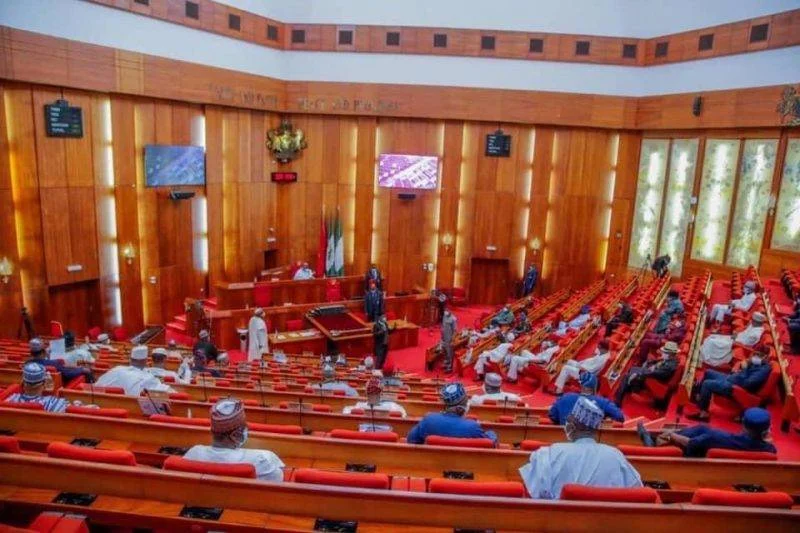
That sequence of events, reported by multiple Nigerian news outlets, has now triggered a Senate investigation into the state of NYSC health facilities nationwide. The probe will examine not just what happened to Daniel, but whether the clinics, personnel, and emergency referral systems at orientation camps across the country are fit to protect the thousands of graduates who pass through them every year.
What The Senate Probe Will Actually Examine
The Senate resolution, adopted on Thursday, October 15, 2026, followed a motion of urgent public importance sponsored by Senator Aniekan Bassey, representing Akwa Ibom North-East. Bassey described Daniel as “a vibrant, patriotic young Nigerian and a shining light of his community who had only set out to serve the country.”
The investigation will be conducted by the Senate Committees on Police Affairs, Judiciary, Human Rights and Legal Matters, Ethics, Code of Conduct and Public Petitions, Youth Development, and Health. They will work with the Nigeria Police Force and the Department of State Services.
According to Punch, the probe is expected to establish the circumstances surrounding Daniel’s death and determine whether any lapses occurred in the provision of medical care at the camp.
But the scope is wider than one death. The Senate is also examining the quality of NYSC health facilities nationwide, the availability of qualified medical personnel, and the effectiveness of emergency referral protocols. Senator Bassey warned that the incident “is not isolated, but highlights a recurring pattern of systemic negligence, poor medical infrastructure, and absence of qualified emergency personnel and rapid referral protocols across NYSC camps.”
What We Know About Daniel’s Final Hours
Daniel reportedly complained of a headache at the camp clinic. He was given medication. According to the National Association of Nigerian Students (NANS) president, Akinteye Babatunde Afeez, Daniel’s condition deteriorated after taking the medication. He then requested to be taken to a hospital.
Afeez alleged that approval for the transfer came too late. Daniel died before he could receive further medical attention. The NANS president also claimed that a doctor later identified the drugs administered to Daniel as fake.
Those are allegations, not established facts. The Senate investigation is meant to determine what actually happened. But the possibility that a corps member received counterfeit medication at a government-run camp clinic is serious enough to warrant the scrutiny now underway.
Why This Matters For Every Corps Member
Orientation camps are high-density environments. Thousands of young Nigerians live in close quarters, undergo military-style drills, physical activities, and other camp programmes before deployment to their places of primary assignment. The physical demands alone can trigger medical emergencies in people with underlying conditions.
When a camp clinic lacks qualified personnel, functional equipment, or a clear referral pathway to a hospital, a manageable problem can become fatal. That is the core concern raised by senators during the debate.
Senator Abdul Ningi, representing Bauchi Central, urged the committees to make concrete recommendations and identify measures to prevent similar incidents in the future. The Senate subsequently observed a minute of silence in honour of Daniel.
What The Investigation Could Change
According to Channels Television, the probe will examine whether NYSC orientation camps nationwide have adequate numbers of qualified medical personnel, functional clinics, and effective emergency referral systems. The findings could inform recommendations on improving medical infrastructure, staffing, emergency response, and hospital referral procedures.
That is the practical value of this investigation. It is not just about accountability for one death. It is about whether the system that is supposed to protect corps members is actually working.
As SaharaReporters noted, the Senate warned that the circumstances surrounding the incident raised serious questions about the preparedness of NYSC medical facilities to handle emergencies and the availability of qualified healthcare personnel.
What You Can Do If You Are Heading To Camp
You cannot control the quality of the clinic at your orientation camp. But you can prepare.
Carry your own basic medications. If you have a known condition, bring enough of your prescription drugs to last the entire camp period. Do not assume the camp clinic will have what you need.
Know your body. If you feel unwell, say so immediately. Do not wait for symptoms to become severe. Daniel complained of a headache. That seemed minor. It was not.
Have a contact. Give a family member or friend the name and location of your camp. If something goes wrong, someone outside the camp should know where you are and who to call.
Ask questions. If you are given medication at the camp clinic, ask what it is. Ask who prescribed it. Ask if there is a doctor on site. You have the right to know what is going into your body.
What The Senate Probe Means For NYSC Health Facilities Going Forward
The investigation is expected to provide a basis for assessing existing healthcare arrangements at orientation camps and identifying measures to strengthen the protection of corps members throughout their service year. According to ThisDay, the Senate directed its relevant committees to investigate the incident and recommend measures to prevent similar tragedies.
Deputy Senate President Barau Jibrin, who presided over the session, commended Bassey for bringing the matter before the chamber and urged the relevant committees to conduct a thorough investigation.
Whether that investigation leads to real changes in NYSC health facilities, or becomes another report that gathers dust, depends on follow-through. The Senate has the power to summon agency heads, demand records, and recommend sanctions. What it does with that power is the question.
For now, Daniel’s family, his former colleagues at Akwa Ibom State University, and the people of Akwa Ibom State are left with grief and unanswered questions. The Senate observed a minute of silence in his honour. A minute is not justice. But it is a start.
The real test will come when the committees release their findings. If the probe results in better staffing, functional equipment, and clear referral protocols at every orientation camp, then Daniel’s death will have forced a change that protects the next corps member who walks into a camp clinic with a headache. If it does not, the silence will be the only thing that lasts.
Frequently Asked Questions
What exactly is the Senate investigating about NYSC camps?
The Senate is investigating the circumstances surrounding Etimbuk Daniel’s death at the Enugu orientation camp, as well as the state of medical facilities, emergency response services, and referral protocols at NYSC camps nationwide. The probe will be conducted by several Senate committees in collaboration with the Nigeria Police Force and the Department of State Services.
What should I do if I feel unwell at NYSC camp?
Report your symptoms immediately. Do not wait. If you are given medication, ask what it is and who prescribed it. If your condition does not improve, insist on being taken to a hospital. Have a family member or friend who knows your camp location and can advocate for you if needed.
Can I bring my own medications to NYSC orientation camp?
Yes. If you have a known medical condition or take prescription drugs, bring enough to last the entire camp period. Do not assume the camp clinic will have the specific medication you need. Carry your prescription and keep it with you.
Related Articles
- Ukrainian drones hit Russian data centers: Yandex outages
- Kojima on Joker 2: Why the Divisive Flop Will Age Well
- GBU-43/B MOAB: Why This 21,600-lb Bomb Won’t Crack Iran
- Tems: Writing Music Helps Me Heal, Release Pain
- Big Walk Dev Explains Lack of Xbox: A Masterstroke or Missed Opportunity?
FIRST TIME REACTIONS:
Be the first to leave us a comment – NYSC Health Facilities: 7 Essential Facts After Corps Member Death, down the comment section.
JOIN US ON OUR SOCIAL MEDIA:
National
Fully Funded Scholarships for Nigerian Students 2027: Apply Now
Discover fully funded scholarships for Nigerian students 2027, including PTDF, Australia RTP, and more. Learn how to spot genuine awards and apply successfully.
Nigerian students face a stark choice: chase expensive degrees abroad with little fundiing, or stay home as global opportunities expand. In 2027, that calculus is shifting. Governments from Australia to China are opening fully funded scholarships for Nigerian students 2027, covering tuition, living costs, and travel. The catch? Competition is fierce, and scams are rising.
Why This Year Matters
The global scholarship landscape for Nigerian students is widening. The Petroleum Technology Development Fund (PTDF) has opened applications for its 2026 Overseas MSc and PhD Scholarships, offering fully funded postgraduate study in the United Kingdom, Germany, France, and Malaysia. Meanwhile, Australia’s Research Training Programme (RTP) is accepting applications for 2026, with some universities closing between July and October 2026 for early 2027 admission.
According to BBC Pidgin, PTDF’s scheme provides return flight tickets, full tu,ition, health insurance, and allowances for accommodation and living expenses. The fund says the programme aims to build indigenous capacity for Nigeria’s oil and gas sector. For PhD candidates, a split-site arrangement allows research between the College of Petroleum and Energy Studies, Kaduna, and UK universities like Robert Gordon, Strathclyde, and Portsmouth.
Australia’s RTP, reported by Punch, offers a full-time stipend of AUD 34,315 per year for 2026, covering tuition and research costs. It is open to Master’s by Research and PhD students, with no central portal—applicants must apply directly to participating universities.
These are not isolated cases. The Shanghai Government Scholarship supports undergraduate, master’s, and doctoral studies at universities like Fudan and Shanghai Jiao Tong, with monthly stipends of CNY 2,500 to CNY 3,500. European options include Erasmus+, DAAD, and Swiss Government Excellence Scholarships, as detailed by Study International.
What separates genuine awards from misleading ones? The details.
How to Spot a Genuine Scholarship
Global South Opportunities warns that thousands of scholarship announcements circulate online, but funding packages vary. A fully funded scholarship may cover tuition, stipend, accommodation, travel, insurance, and research costs—or only some. Nigerian applicants must read the official funding conditions, not just the headline.
First, check the official provider. A genuine programme should have an identifiable university, government agency, or foundation. Second, examine the funding package in detail. Third, confirm Nigerian eligibility—not every inter national scholarship is open to Nigerians. Fourth, check the degree level. Some scholarships target only PhD researchers.
Scams are a real threat. Warning signs include guaranteed selection, pressure to pay, unofficial application channels, and requests for unnecessary financial information. The safest approach is to verify through the official provider.
Key Deadlines and Preparation
Timing is critical. PTDF’s 2026 cycle is open, with interviews after initial screening. Australia’s RTP deadlines vary by university, with some closing between July and October 2026. The University of Wyoming’s funded M.S. in soil biogeochemistry has a priority deadline of October 30, 2026, for a summer 2027 start. Shanghai Government Scholarship applications generally run from February to April.
Students planning for 2027 should begin preparing in 2026. Required documents include academic transcripts, degree certificates, CV, personal statement, research proposal, references, and proof of English proficiency. A scholarship tracker can help manage multiple deadlines.
For PTDF, MSc applicants need a minimum of Second Class Upper, NYSC completion, five O’Level credits including English and Mathematics, a 500-word statement of purpose, and a verified National Identity Number. PhD applicants need a research proposal of up to five pages relevant to oil and gas.
What Comes Next
The expansion of fully funded scholarships for Nigerian students 2027 reflects a global race for talent. Countries like China, Germany, and Australia are using scholarships to attract skilled researchers. For Nigeria, this means opportunities—but also a brain drain risk if graduates do not return.
PTDF says its programme is a strategic investment in Nigeria’s future workforce, aiming to reduce dependence on foreign expertise. Yet the agency disqualifies applicants previously sponsored for the same or lower category. M,ultiple applications or falsified documents lead to automatic disqualification.
As history judges, the side that wins is not the one with the most scholarships, but the one that prepares early, verifies thoroughly, and applies strategically. Nigerian students who start now will shape whether 2027 becomes a year of opportunity or missed chances.
Frequently Asked Questions
What are the fully funded scholarships for Nigerian students 2027?
Key options include PTDF Overseas Scholarship (UK, Germany, France, Malaysia), Australia’s Research Training Programme (RTP), Shanghai Government Scholarship, Erasmus+, DAAD, and Swiss Government Excellence Scholarships.
How can I avoid scholarship scams?
Verify the official provider, check the funding package details, confirm Nigerian eligibility, and never pay to secure an award. Warning signs include guaranteed selection and unofficial application channels.
When should Nigerian students start applying for 2027 scholarships?
Begin in 2026. Many deadlines fall between July and October 2026 for 2027 admission. Prepare transcripts, CV, personal statement, research proposal, and English proficiency proof early.
Related Articles
- Tinubu: Tough Reforms Necessary to Rescue Nigeria’s Economy
- Trump $500 ACA Refund Checks: What You Need to Know
- JAMB Nov 30 Deadline: Don’t Lose Your 2021–2025 Admission
- iPhone Duo Release Timeline vs iPhone 18 Pro
- Huion Note E Review: Android Tablet for Note-Taking
National
Nigeria’s $700bn Mineral Opportunity: US Framework Signed
Nigeria and the US signed a framework to unlock Nigeria’s $700bn mineral opportunity, targeting investment, local processing and critical minerals.
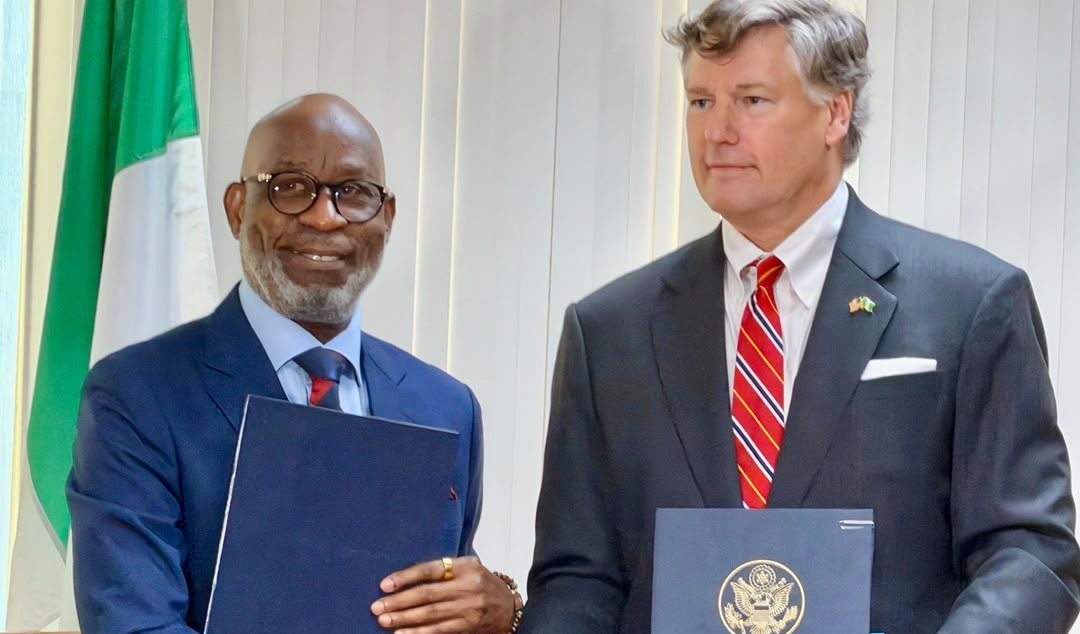
Nigeria and the United States signed a framework agreement on Wednesday aimed at attracting American investment into Nigeria’s $700bn mineral opportunity, a government estimate of the country’s untapped solid mineral resources.
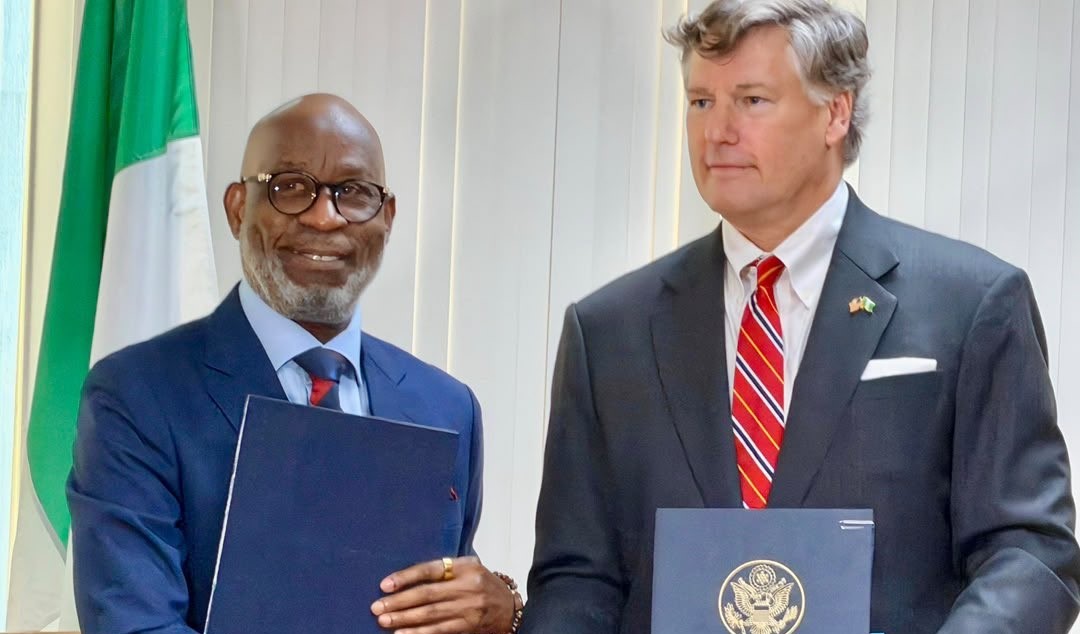
Minister of Solid Minerals Development Dele Alake and US Deputy Secretary of State Christopher Landau signed and exchanged the document at Nigeria’s Mission House in New York, on the sidelines of the 81st United Nations General Assembly.
The framework is designed to use the two governments’ relationship as a foundation for business-to-business transactions across Nigeria’s mineral value chain. It covers geological data and exploration, mineral development and processing, infrastructure, and technical capacity.
WHY THE DEAL MATTERS
The agreement lands as Nigeria tries to pull foreign capital into a mining sector long overshadowed by oil, and as Washington pushes to secure supply chains for critical minerals. The $700bn figure is the Federal Government’s estimate of potential resource value, not money received or committed.
“Some agreements manage the present, and some agreements shape the future. The framework we sign today belongs to the second kind,” Alake said at the ceremony.
He said Nigeria and the US shared the view that critical mineral supply chains must be secure, resilient and built on responsible investment. But he drew a line on Nigeria’s ambition.
“We are not here to remain a source of raw material for the values that others create,” Alake said. “Our goal is to turn potential into lasting value at home through stronger local processing, new skills, quality jobs, and new opportunities for Nigerian businesses.”
The minister said implementation would support the economic diversification objectives of President Bola Tinubu’s administration and promote industrial growth. He also cautioned that the signing was only the start.
“Now comes the harder and more important work: moving from agreement to implementation. A signature is a promise, results are the proof,” he said.
Alake said Nigeria would, in the coming months, identify viable projects, mobilise investments and establish commercial partnerships capable of delivering measurable benefits to both countries.
US PLEDGES PARTNERSHIP
Landau described Nigeria as a strategic partner and a regional power, citing its population and economic position. He said the agreement would create opportunities for greater prosperity in both countries and reaffirmed Washington’s commitment to supporting Nigeria’s economic growth.
“The signal we are sending is that the United States and Nigeria are partners,” Landau said.
He said the two countries had undertaken several initiatives under Presidents Donald Trump and Bola Tinubu over the previous one and a half years, adding that Washington wanted to build on the momentum. “I think we will like to keep building on that momentum,” he said.
The US delegation included Deputy Assistant Secretary for West African Affairs Rich Michaels; Acting Deputy Assistant Secretary for Southern Africa, Foreign Assistance and Critical Minerals Chris Kulukundis; Senior Policy Adviser to the Deputy Secretary Wyatt Toehlkeke; and Jitu Sardar.
Lagos State Governor Babajide Sanwo-Olu witnessed the signing alongside Permanent Secretary of the Ministry of Solid Minerals Development Yusuf Yabo; Director-General of the Nigerian Mining Cadastral Office Simon Nkom; Executive Secretary of the Solid Minerals Development Fund Fatima Shinkafi; and Chief Executive Officer of the Nigeria Solid Minerals Company Martin Imonitie.
Sanwo-Olu later said on X that the framework’s focus was to move beyond exporting raw materials by building a stronger local value chain through processing, exploration, better infrastructure and technical capacity. He said it would help convert Nigeria’s mineral wealth into lasting growth and support Tinubu’s Renewed Hope Agenda to diversify the economy.
THE VALUE-CAPTURE QUESTION
The deal has drawn scrutiny over what Nigeria actually gets. Chris Soribe, writing for Realnews Magazine, argued that Nigerians must not repeat the mistakes of the oil and gas industry, noting that the $700bn refers to the government’s estimate of untapped resources, not funds waiting to be transferred.
He warned that a mineral deposit worth billions on paper is not the same as billions in realised national wealth, and urged transparency in mining licences, beneficial ownership, production measurement, export traceability, royalties and community benefits.
According to Premium Times, the framework is expected to use the government-to-government relationship as a foundation for investment across the value chain. Vanguard reported that the agreement comes as Nigeria seeks more foreign investment into its largely underdeveloped mining sector.
The Guardian described the pact as a landmark framework for US-backed investment and business-to-business partnerships.
WHAT COMES NEXT
Alake said Nigeria would identify viable projects, mobilise investments and build commercial partnerships in the months ahead. Success will depend on whether the framework produces actual projects, capital and local processing capacity, as Daily Trust reported.
For now, Nigeria’s $700bn mineral opportunity remains a promise on paper. The test is whether licences, investments and processing plants follow, and whether Nigerian businesses capture a meaningful share of the value chain.
Frequently Asked Questions
What is Nigeria’s $700bn mineral opportunity?
It is the Federal Government’s estimate of the potential value of Nigeria’s untapped solid mineral resources, including lithium, gold, tin and iron ore. It is not money received or committed by the United States.
What did Nigeria and the US sign?
A framework agreement signed by Minister of Solid Minerals Development Dele Alake and US Deputy Secretary of State Christopher Landau in New York on the sidelines of the 81st UN General Assembly. It covers geological data and exploration, mineral development and processing, infrastructure and technical capacity.
When will the framework deliver results?
Alake said Nigeria would identify viable projects, mobilise investments and build commercial partnerships in the coming months. He stressed that the signing was only the beginning and that results would be the proof.
Related Articles
- Mexico vs Colombia 2026: Márquez Debut Ends in Defeat
- Spark Plug Replacement Cost: Fake Parts & Real Prices
-

 Startups3 weeks ago
What a Successful Dangote Refinery IPO Really Says
-
Trending Entertainment News1 week ago
Taylor Swift Joins Beatles as Only Acts With 100 Weeks at No. 1
-
World News4 weeks ago
Carney Calls U.S. Tariffs a Miscalculation as Canada Retaliates
-
Football3 weeks ago
Mexico vs Colombia 2026: Márquez Debut Ends in Defeat
-
Fintech4 weeks ago
OPay No Dey Comot Nigeria: How to Verify Fintech News
-
Fintech4 weeks ago
OPay Investing in People to Build a Better Nigeria
-
Nigerian Business3 weeks ago
Moniepoint POS Network: How to Buy Dangote Shares
-
Tech & Gadgets2 weeks ago
Apple Watch and AirPods Fall Deals: Save $120 Today