World News
US Intelligence Sharing With Ukraine Resumes, Zelensky Says
Zelensky says US intelligence sharing with Ukraine works again after a three-day gap. Rubio denies any pause. What is confirmed, what is disputed.

Ukraine’s president said on Tuesday that US intelligence sharing with Ukraine was functioning again, after what he described as a three-day gap in warnings about incoming Russian ballistic missiles. Speaking in Oslo after talks with Donald Trump’s envoy Steve Witkoff, Volodymyr Zelenskyy said: “Now it works. It’s great.”
The remark, reported by The Guardian, appears to close the sharpest public rupture between Washington and Kyiv since Russia’s full-scale invasion in 2022. It does not settle what actually happened, who ordered it, or on what terms it ended.
A Pause Denied And A Pause Described
On Monday, US Secretary of State Marco Rubio told reporters during a visit to Uzbekistan: “There has been no pause.” He said Zelenskyy should focus on “bringing an end to this war.”
A day earlier, Zelenskyy told NBC’s Meet the Press that the flow of warnings had been “blocked for some period of time” and then “deblocked by the American side”. He said only the United States holds the intelligence needed to warn Ukraine when Russia launches ballistic missiles, and that Ukraine went without it “during ballistic attacks during three days”.
The two accounts cannot both be complete. Neither government has published an order, a notification or a technical log showing a suspension or a restoration. Treasury Secretary Scott Bessent, asked about the episode on the same programme, called Zelenskyy’s suggestion that Washington engineered a slowdown “very reckless” and said nobody in the administration did it, but according to Euronews he offered no alternative explanation. Elon Musk said any disruption to Starshield, the military-grade version of Starlink, would be the US government’s responsibility.
What is confirmed is narrower than either political claim. Ukraine says it lost early warning for several days. Washington denies ordering any cut. Unconfirmed is the mechanism, the authority behind it, and whether the restoration came with new conditions attached.
Ballistic Warning As A Single Point Of Failure
Ukraine relies on US intelligence, delivered through Starshield, to detect the fast-moving ballistic missiles Russia fires at its cities. Patriot interceptors are the only effective weapon against those missiles, and the Pentagon has blocked delivery of Patriots paid for by other countries, leaving Kyiv more exposed to air attack.
Rubio said interceptors were in short supply and needed elsewhere, including for US defence. “There has not been some deliberate political directive to go out and harm Ukraine,” he said.
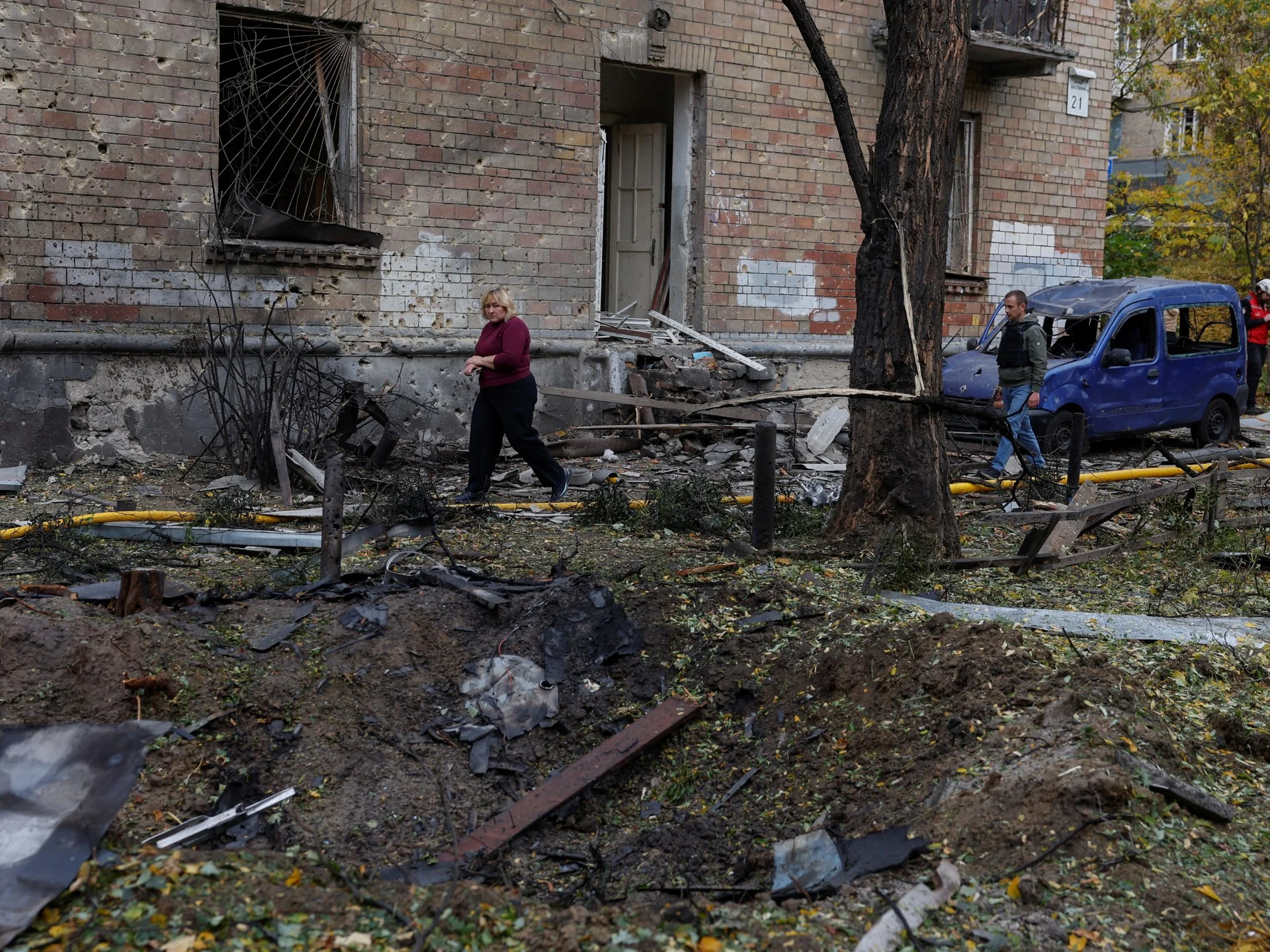
The human cost is documented in fragments. Overnight into Monday, a Russian missile attack killed a woman and wounded several people in Kyiv, Mayor Vitali Klitschko said. The State Emergency Service reported damage to a metro station, a medical facility, an educational institution and a non-residential building.
On Tuesday, BBC News reported that Ukrainian officials counted at least 10 dead: four in Kyiv and the surrounding region, four in the eastern Donetsk region and two in the central city of Dnipro. The Guardian put the Tuesday toll at least nine, including three people killed when a drone struck two vehicles on the Kyiv-Odesa highway. One of those killed was the driver of a shuttle bus travelling from the capital to a military cemetery.
Differing casualty counts from the same day are routine in an active war. Both figures originate with Ukrainian authorities, not independent monitors.
What The Oslo Meeting Produced
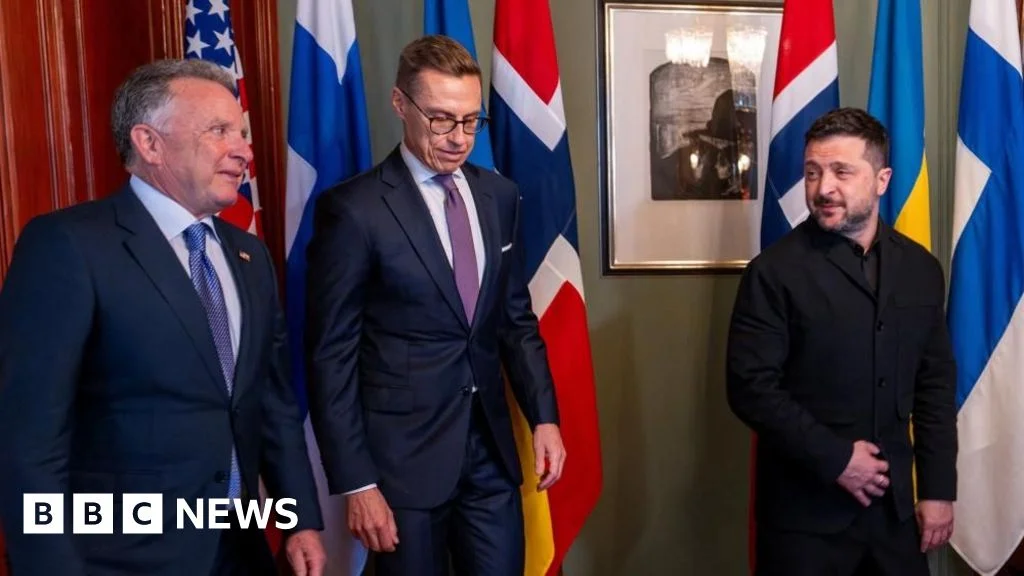
The Tuesday talks brought together Witkoff, Trump’s son-in-law and envoy Jared Kushner by video link, Norwegian Prime Minister Jonas Gahr Store, Finnish President Alexander Stubb, and EU and British security officials. Witkoff did not appear at the joint press conference.
Stubb said “genuine progress” was made on proposals to achieve peace, gave no details and warned patience would be needed. A US official described the talks as “very productive and constructive”, citing “strong alignment at the working level” among the US, Ukraine and Europe on next steps. Witkoff was due in St Petersburg on Wednesday to present the proposals to Vladimir Putin, who has not commented publicly. Foreign Minister Sergei Lavrov said the Kremlin would listen while ruling out “any political concessions”.
EU foreign policy chief Kaja Kallas questioned whether US negotiators had been honest brokers, noting Witkoff has held numerous meetings with Putin in Moscow and visited Kyiv once. German Chancellor Friedrich Merz spoke of “mixed pictures and messages” from Washington. Vice-President JD Vance said Kyiv was “certainly a partner in some ways” but that “we don’t have a formal alliance as far as I know with Ukraine”.
Trump has temporarily waived sanctions on Russian diesel to push down global fuel prices before the November 3 midterm elections, and has accused Ukraine of deliberately striking Russian refineries to damage his party. He said he asked Putin to release Stephen Hubbard, an American held by Russian forces. Zelenskyy said he offered to halt long-range strikes on refineries if the US supplies Patriot interceptors, and rejected a floated Trump-Putin-Xi summit: “There can be nothing about Ukraine without Ukraine.”
Why The Dispute Travels Beyond Europe
For governments outside the transatlantic bloc, the episode is a case study in the terms of a security relationship that is not a treaty. Ukraine’s early warning runs through a US-controlled satellite pipeline and a US administration that publicly describes its partner’s interests as sometimes divergent. The interruption, whatever its cause, was resolved without any published document explaining the rules.
There is also a fuel dimension. Trump’s diesel waiver was explicitly aimed at lowering global fuel prices, which feed directly into import bills for net fuel-importing economies, including across Africa. The source material does not quantify that effect, and no estimate should be assumed.
What remains missing is equally notable: no Kremlin readout, no Pentagon explanation of the Patriot block, and no independent verification of the reported Starshield speed restrictions beyond Ukrainian military reports and a bipartisan group of US senators calling for an investigation.
Prospects For Peace
The immediate test sits in St Petersburg on Wednesday, when Witkoff presents proposals that Kyiv and European capitals say Russia must now answer. Moscow has signalled it will talk and has ruled out concessions, a combination that has stalled every previous round.
The dispute over US intelligence sharing with Ukraine matters beyond the missile warnings themselves. It shows that the practical terms of American support can shift faster than any announced policy, and that a partner with no formal alliance has little leverage over the pipeline it depends on. Zelenskyy’s own framing, that Ukraine is “not losing this war, but we are losing people”, sets the stakes for whichever meeting comes next.
Frequently Asked Questions
Did the US actually pause intelligence sharing with Ukraine?
The two governments give different accounts. Volodymyr Zelenskyy said warnings were blocked for three days and then restored, while Secretary of State Marco Rubio said on 19 October 2026 that “there has been no pause”. Neither side has published a document confirming or denying an order, so the underlying disruption is acknowledged by Kyiv but the official characterisation is disputed.
What intelligence does the US provide to Ukraine?
According to the reporting, Ukraine relies on US intelligence delivered through Starshield, the military-grade version of Starlink, to detect the fast-moving ballistic missiles Russia fires at Ukrainian cities. Zelenskyy has said only the United States holds this specific early-warning capability.
What happened at the Oslo meeting on 20 October 2026?
Zelenskyy met US envoy Steve Witkoff, with Jared Kushner joining by video, alongside Norwegian Prime Minister Jonas Gahr Store, Finnish President Alexander Stubb, and EU and British security officials. Stubb reported “genuine progress” on peace proposals without giving details. Witkoff was then due to take the proposals to Vladimir Putin in St Petersburg.
Related Articles
- Shanghai Fashion Week: A Fifth Fashion Capital Rises
- NHL breakout predictions: 5 players to watch in 2026-27
- The Hunting Wives Season 2 Trailer Date: What We Know
- Curfew-to-Begin in France: What the Partial Curfews Mean
- Taika Waititi Star Wars Movie On Ice: Fans React
 Follow AFRILATEST on Google News
FIRST TIME REACTIONS:
Be the first to leave us a comment – US Intelligence Sharing With Ukraine Resumes, Zelensky Says, down the comment section.
JOIN US ON OUR SOCIAL MEDIA:


World News
Kate Middleton’s Lover’s Knot Tiara at Oman State Banquet
Kate Middleton wore the Lover’s Knot tiara with a yellow Elie Saab gown at the Oman state banquet, the first Omani state visit to Britain since 1982.

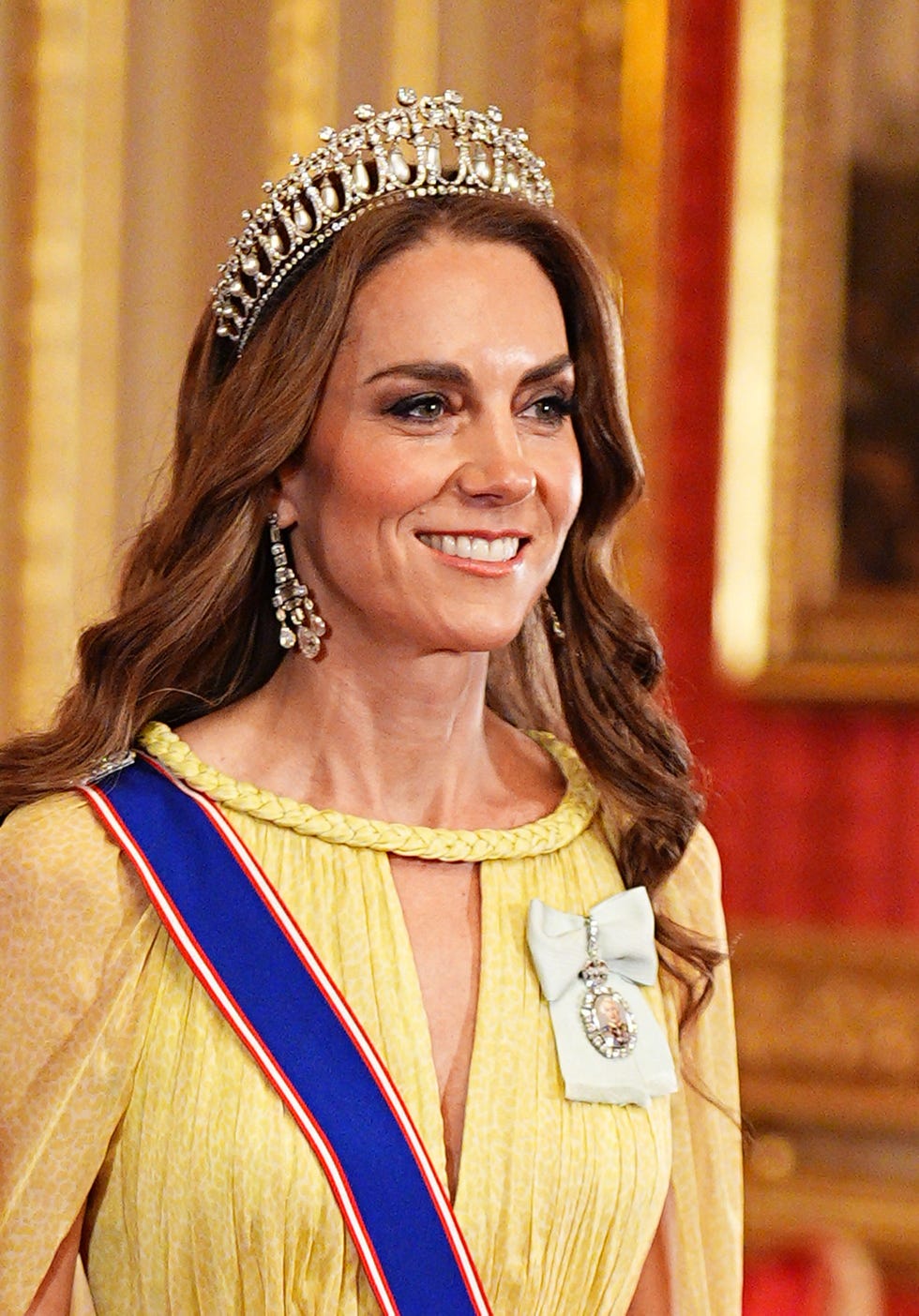
Kate Middleton wore Queen Mary’s Lover’s Knot tiara to the Oman state banquet at Windsor Castle on Oct. 20, 2026, pairing it with a lemon-yellow Elie Saab gown from the label’s Spring/Summer 2025 ready-to-wear collection.
The dinner closed the first night of a three-day state visit by Sultan Haitham bin Tarik of Oman. It is the first visit by an Omani head of state to the United Kingdom since Queen Elizabeth II hosted Sultan Qaboos bin Said in March 1982, Town & Country reports.
That 44-year gap is the fact that gives the evening its weight. Everything else — the headpiece, the cape gown, the 480 forks — is protocol built on top of it.
A State Visit Measured In Cutlery And Protocol
State visits are coordinated between the Foreign, Commonwealth and Development Office and the Royal Household, and their stated purpose is strengthening ties between countries. The banquet is the ceremonial layer of that work, and the Palace releases the detail on the record.
St. George’s Hall held 160 guests at a 50-metre table laid with 480 knives, 480 forks and 160 spoons, according to PEOPLE. Buckingham Palace is the traditional venue but is undergoing renovation, which is why recent visits have been staged at Windsor.
The menu carried the symbolism. Following Omani tradition, an Omani Kahwa — Arabic coffee lightly spiced with cardamom and rose water — was prepared in the royal kitchens and served at the start of the evening. Three teas closed the meal: an Earl Grey iced tea, a mint iced tea in rose water, and a warm cardamom-spiced tea. Alcohol was served, but the Sultan did not drink it for the toast. The salt dishes carried a new touch this year: a light imprint of the King’s royal cypher.
At the table, the Sultan sat between King Charles and the Princess of Wales. Prince William was seated opposite, between Crown Prince Sayyid Theyazin bin Haitham Al Said and Dina Macki, an Omani chef and cookery blogger. A dragon candelabra commissioned in 1833 by King William IV formed the centrepiece, its base ringed with pomegranates picked from a tree Prince Philip planted on the castle’s East Terrace about 50 years ago. “It fruited heavily this year because of the warm summer,” a royal aide said.
Earlier in the day, Kate wore an emerald-green Alexander McQueen coatdress over a lacy black blouse for the ceremonial welcome on the East Terrace and the carriage procession — green being one of the colours on Oman’s flag, a nod the Palace did not need to explain.
Charles, in his banquet speech, said: “It is always a treasured moment to receive such dear and old friends on a special visit such as this.” He then switched to Arabic: “Welcome to a visitor of whom one never tires.”
Why the Lover’s Knot Tiara Keeps Returning To State Banquets
The piece Kate chose is a replica. Queen Mary commissioned it from the House of Garrard, modelled on a tiara owned by her grandmother, Princess Augusta, Duchess of Cambridge. According to the Court Jeweller, Mary “sacrificed a tiara from her own jewelry collection, the Ladies of England tiara, to make it,” using pearls and diamonds her family already owned. The original Cambridge Lover’s Knot is believed to sit in an unidentified private collection.
Mary left the piece to her granddaughter, Queen Elizabeth II, who wore it and then lent it to Princess Diana in 1981. It was one of only two tiaras Diana was ever photographed wearing — the other being the Spencer tiara, now held by her brother Charles Spencer. After the 1996 divorce, the Lover’s Knot tiara returned to the Queen. Kate debuted it in 2015 and has worn it repeatedly since, including the French state banquet with a red Givenchy gown, a Dutch royal visit in icy blue Alexander McQueen, and the Nigerian state banquet in March 2025 with a green Andrew Gn dress — the same evening that brought President Bola Tinubu and first lady Oluremi Tinubu to Windsor.
“Kate is wearing what I like to call her ‘old faithful,’” royal commentator Amanda Matta told Fox News Digital. “Paired with a new beautiful gown for the formal occasion, a repeat tiara keeps the entire look from overshadowing the visiting Sultan of Oman and the true hosts of the evening: King Charles and Queen Camilla.”
That is the working logic of royal dressing at a state banquet: the guest is the subject, the host is the host, and the Lover’s Knot tiara is a fixed variable that keeps the frame stable. Kate has worn five different tiaras since her 2011 wedding. Queen Camilla chose the Girls of Great Britain and Ireland tiara, which she first wore in 2023. Princess Anne wore the Meander tiara; the Duchess of Gloucester the Honeysuckle.
Where The Record Gets Fuzzy
Precision matters here, and the sourcing does not fully agree. Harper’s Bazaar dates the Garrard commission to 1913; Town & Country dates it to 1914. Both agree on the maker, the Queen Mary provenance and the sacrificed Ladies of England tiara. The defensible position is that the year is contested in the secondary record and would need the Royal Collection’s own files to settle.
The name of the visiting head of state also varies between outlets — “Haitham bin Tariq al Said” in one account, “Haitham bin Tarik” in others. That is transliteration, not a disagreement about who travelled.
Confirmed: the Sultan arrived for three days; the state banquet fell on the first night; the visit is the first of its kind in more than four decades; Charles visited Oman four times as Prince of Wales, most recently in January 2020 to offer condolences after Sultan Qaboos’s death, and received Sultan Haitham for tea and a private meeting at Windsor last July.
The Reaction And What Comes Next
For Kate, the evening is another step in a phased return. She announced in September 2024 that she had completed chemotherapy and said in January 2025 that she was in remission. She attended three state banquets in 2025 alone.
“It is a huge amount of pressure for Kate to always deliver this fashion moment at these big state events, but it’s all part of the package,” Bethan Holt, fashion director at The Telegraph, told PEOPLE.
What to watch: whether the Lover’s Knot tiara reappears at the next inbound state visit, which will again be staged at Windsor while Buckingham Palace is renovated; whether follow-on agreements emerge from the Oman talks, since the banquet is the photograph and the meetings are the substance; and whether Kate’s schedule holds at its current tempo through the next diplomatic season. The tiara will take the headlines. The three-day programme is the part that will still matter in 2032.
Frequently Asked Questions
Which tiara did Kate Middleton wear to the Oman state banquet?
She wore Queen Mary’s Lover’s Knot tiara, the headpiece she has favoured since first wearing it in 2015. It was made by the House of Garrard for Queen Mary as a replica of an earlier Cambridge Lover’s Knot tiara and was later lent to Princess Diana in 1981.
Why was the Oman state visit significant?
It was the first state visit by an Omani head of state to the United Kingdom since Queen Elizabeth II hosted Sultan Qaboos bin Said in March 1982. The banquet was held at St. George’s Hall in Windsor Castle because Buckingham Palace is undergoing renovation.
Is the date the tiara was made confirmed?
No. Harper’s Bazaar reports the Garrard commission dates to 1913, while Town & Country reports 1914. The maker, the Queen Mary provenance and the use of stones from the Ladies of England tiara are consistent across sources.
Related Articles
- Anthropic AI Safety Bill: 50 Deaths, $1B, One Gatekeeper
- Shanghai Fashion Week: A Fifth Fashion Capital Rises
- NHL breakout predictions: 5 players to watch in 2026-27
- The Hunting Wives Season 2 Trailer Date: What We Know
- Curfew-to-Begin in France: What the Partial Curfews Mean
FIRST TIME REACTIONS:
Be the first to leave us a comment – Kate Middleton’s Lover’s Knot Tiara at Oman State Banquet, down the comment section.
JOIN US ON OUR SOCIAL MEDIA:
World News
Curfew-to-Begin in France: What the Partial Curfews Mean
Curfew-to-begin in France: PM Lecornu orders partial curfews after riots. Here’s what’s confirmed, what’s not, and how to track updates.

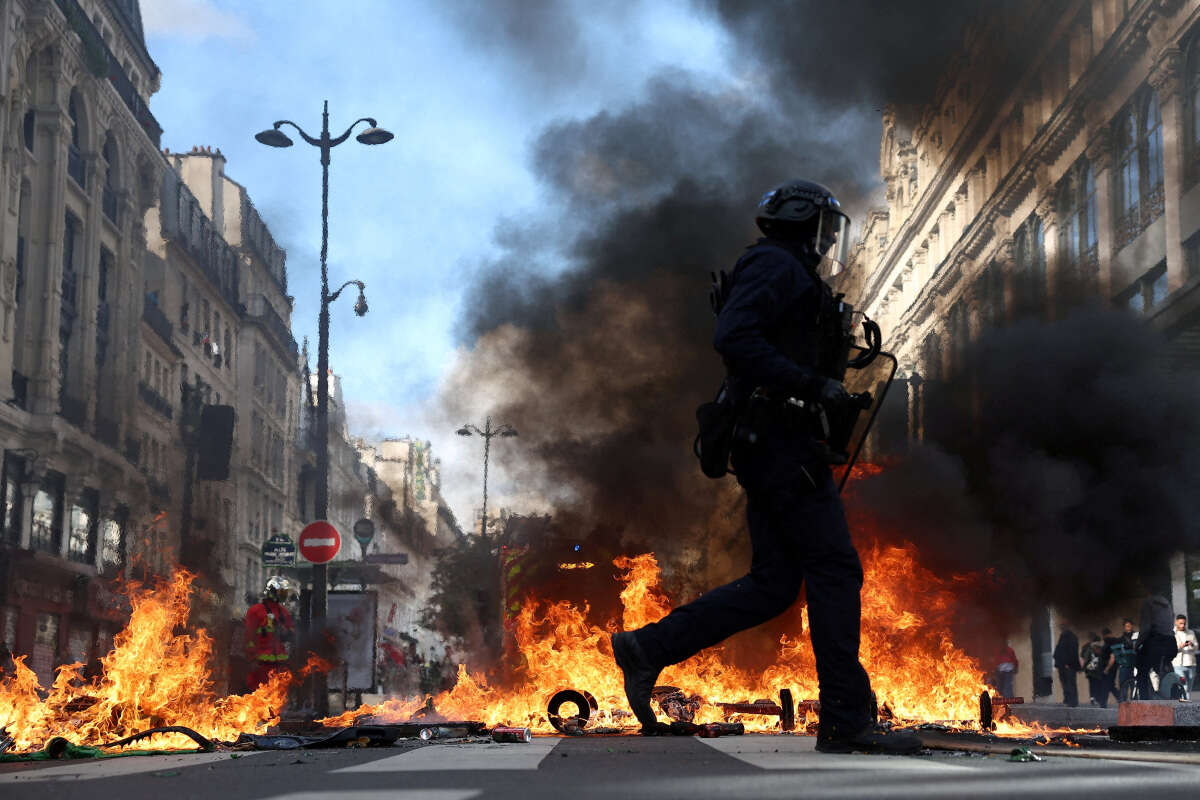
Curfew-to-begin is the phrase French officials are using as they order partial nighttime restrictions after weekend riots. Here’s what’s actually confirmed, what’s still unclear, and how to keep track if you’re in France or following the story.
What the Curfew Order Actually Says
French Prime Minister Sébastien Lecornu said Monday he has instructed prefects — the government’s regional representatives — to impose “very limited” and “localized” curfews to prevent more rioting and looting. That’s the curfew-to-begin instruction in plain terms.
He did not name the cities. He did not specify hours. He said details would be provided later Monday, according to the Associated Press report.
Lecornu ruled out a full curfew on entire cities such as Paris. He said a state of emergency could be declared if needed, but partial curfews seemed “more appropriate” at this stage.
One city has already moved: Marseille’s prefect banned public gatherings from noon to 8 p.m. Monday, effective immediately, enforced by law enforcement. That’s a gathering ban, not a nighttime curfew, but it shows how local orders are being rolled out piece by piece.
Why the Curfew Is Happening
The trigger was weekend violence that followed protests against the cost of living and poor school conditions. Interior Minister Laurent Nuñez conceded police “lost control” in some major cities, including Paris, Marseille and Lyon.
Nuñez said intelligence suggested 200,000 demonstrators. More than 500,000 showed up. He acknowledged “a lack of anticipation” and said police numbers were sometimes inadequate. He offered his resignation; President Emmanuel Macron refused it and instead tasked him with ensuring transparency about planning and intelligence failures and implementing new operational methods.
The damage is significant. Authorities estimate at least 3,000 businesses were damaged or looted. The French Federation of Commerce and Distribution put the damage at “several hundred million euros.” Nearly 2,400 people were arrested, and almost 1,000 police and gendarmes were injured. A 19th-century city hall in Limoges burned, its roof collapsing.
How to Track the Curfew-to-Begin Details
If you’re in France or following this closely, don’t wait for a national announcement. The orders come from prefects, so check your local prefecture’s website and social accounts. That’s where hours, boundaries and exemptions will appear first.
Marseille’s order came from the Bouches-du-Rhône district in the Provence region. Other departments will issue their own. The national government has not published a consolidated list.
For English-language coverage, the Guardian’s report and the Israel Hayom account both track the political fallout. Local French outlets like Le Parisien and LCI are carrying shop-owner interviews and damage estimates.
What’s Confirmed vs. What’s Not
Confirmed: Lecornu instructed prefects to impose partial, localized curfews. Marseille has a gathering ban from noon to 8 p.m. Monday. Macron refused Nuñez’s resignation and demanded a security review. At least 3,000 businesses were damaged or looted.
Not confirmed: Which cities will have curfews. What hours they’ll run. How long they’ll last. Whether a state of emergency will be declared. Features of the curfew orders beyond Marseille’s gathering ban weren’t fully confirmed at the time of writing.
That gap matters. If you’re a resident, don’t assume your city is exempt because it wasn’t named in the first round of reporting.
How This Compares to Other Curfew Rollouts
France’s partial approach contrasts with the blanket citywide curfews used in Vienna, Georgia, after an October 4 mass shooting. Vienna issued a 72-hour citywide curfew starting at 10 p.m. Sunday through Thursday and midnight on Friday and Saturday, with exemptions for work, medical care, emergencies and certain religious services, according to 41NBC.
Winston-Salem tried a youth curfew for under-18s from 10 p.m. to 6 a.m., then let it lapse. A week after it ended, downtown business owners told ABC45 that normalcy had returned, while community groups pushed for recreation centers and safe spaces instead.
The lesson from both: curfews are blunt tools. They can calm a flashpoint, but they don’t fix the underlying complaint. In France, the underlying complaint is the cost of living, and the protests are expected to continue.
Who Should Use This Information
If you live in or are traveling to a French city, use this as a prompt to check your local prefecture daily. Don’t rely on national headlines for hours or boundaries.
If you run a business in an affected area, the practical move is to document damage now, contact your insurer, and watch for the government’s compensation procedures. Commerce Minister Serge Papin convened an emergency meeting with retailers, banks and insurers Monday morning. The FCD is pushing for faster compensation, similar to natural-disaster procedures.
If you’re just following the story, treat the curfew-to-begin announcement as a starting point, not a final answer. The details will come from prefects, city by city, and they will change.
Frequently Asked Questions
Has a curfew officially begun in France?
Partial, localized curfews have been ordered by Prime Minister Sébastien Lecornu, but the specific cities and hours were not named at the time of the announcement. Marseille’s prefect issued a gathering ban from noon to 8 p.m. Monday, which is a related but separate measure.
Which cities will have curfews?
That hasn’t been confirmed. Lecornu said details would be provided later Monday. Prefects in each region will set the boundaries. Check your local prefecture’s website for the order covering your area.
Is a state of emergency being declared?
Not yet. Lecornu said a state of emergency could be declared if deemed necessary, but partial curfews seemed more appropriate at this stage. President Macron stopped short of drastic measures in his Sunday address.
Related Articles
- Taika Waititi Star Wars Movie On Ice: Fans React
- Bills vs Raiders: Why Buffalo’s Ground Game Wins
- US-Nigeria Health Deal: What It Means for Your Care
- Nigeria’s Health Partnership With the US: 5 Key Facts
- Becky G World Mental Health Day: 5 Powerful Lessons
FIRST TIME REACTIONS:
Be the first to leave us a comment – Curfew-to-Begin in France: What the Partial Curfews Mean, down the comment section.
JOIN US ON OUR SOCIAL MEDIA:
World News
Pope Leo XIV Lung Cancer: What His Diagnosis Teaches Us
Pope Leo XIV lung cancer diagnosis confirmed after surgery. Learn the early signs, screening steps, and treatment options you can act on today.

You want to understand what a lung cancer diagnosis means for you or someone you love. The news that Pope Leo XIV lung cancer was confirmed after surgery gives us a real-world example of how early detection and quick action can change the story.
On Tuesday, the Vatican announced that the 71-year-old pontiff underwent surgery at Gemelli Hospital in Rome to remove the lower lobe of his right lung. Tissue tests confirmed lung adenocarcinoma, the most common form of lung cancer. The surgery lasted about 90 minutes, was successful, and the pope awoke normally. He is now recovering.
This is not just a Vatican story. It is a health story with lessons you can use today. Here is how to protect your own lungs, spot warning signs early, and understand what happens when a nodule is found.
Know The Early Signs Of Lung Cancer
Lung adenocarcinoma often starts in the outer parts of the lung and grows more slowly than other lung cancers. That means it can be caught earlier. According to the Lung Cancer Foundation of America, it makes up about 40% of all lung cancers in the United States.
Symptoms can be easy to dismiss. Watch for fatigue that does not go away, shortness of breath during normal activities, and pain in your upper back or chest. These are not always cancer, but they are worth a doctor’s visit.
The pope had no known health problems and lives an active life. He plays tennis, swims, and rides horses. Even so, a nodule was found. That is why screening matters more than how you feel.
Step 1: Know Your Risk And Ask About Screening
A lung nodule is usually less than half an inch and is found on a CT scan. Fewer than 5% turn out to be cancer, according to the American Thoracic Society. But when they are cancerous, they often signal early-stage disease.
The pope’s doctors found his nodule during preoperative tests. You may not have that advantage. If you are over 50, have a history of smoking, or have a family history of cancer, talk to your doctor about low-dose CT screening.
The pope never smoked, but his mother died of cancer in 1990 and his older brother Louis is currently being treated for multiple myeloma, a blood cancer. Family history is a real risk factor. Do not ignore it.
Step 2: Understand What Surgery Involves
The pope had a video-assisted technique to remove the lower lobe of his right lung. The goal was a radical resection, meaning the surgeons aimed to remove all visible cancer. The operation took about 90 minutes, though he was in the operating room for roughly three hours.
If you or a loved one faces similar surgery, know this: the typical recommendation is to avoid air travel for about three weeks. The pope was scheduled for a South American trip from Nov. 6 to 17. It is unclear if he will make it. Recovery takes time. Plan for rest.
Step 3: Ask The Right Questions After Diagnosis
After surgery, doctors need more information. Dr. David Jones, chief of thoracic surgery at Memorial Sloan Kettering Cancer Center, told CBS News that the key questions are: Were lymph nodes involved? What does the molecular pathology show? These answers guide whether you need chemotherapy, immunotherapy, radiation, or just monitoring.
The Vatican has not disclosed the stage of the pope’s cancer or whether it has spread. That is common. But for your own care, push for those details. They determine your next steps.
Step 4: Use Lifestyle As Support, Not A Cure
The pope’s active lifestyle likely helped him going into surgery. He works out weekly and stays physically active. That is good practice for anyone facing cancer treatment.
But do not believe that exercise or diet alone can cure lung cancer. They support recovery. They do not replace surgery, chemotherapy, or radiation. Research on lifestyle and cancer outcomes is still ongoing. Stick to proven treatments first.
Mistakes To Avoid
Do not wait for symptoms to get severe. Early lung cancer often has no symptoms. Do not assume a nodule is harmless just because you feel fine. Do not skip follow-up scans if your doctor recommends them.
Also, do not rely on herbal remedies to treat cancer. Some may help with side effects, but they are not a substitute for medical care. Always tell your doctor what you are taking.
What Comes Next
The pope has cleared his public schedule until at least October 20. The Vatican has not announced further treatments. His brother Louis is in a clinical trial for multiple myeloma. The family is leaning on prayer and medical care together.
For you, the first step is simple. If you have risk factors, call your doctor this week and ask about lung cancer screening. If you have a persistent cough, chest pain, or shortness of breath, get it checked. Early detection is not a guarantee, but it is the best tool we have.
The pope’s story shows that even with excellent health, cancer can appear. The response is what matters: act quickly, ask questions, and follow evidence-based care.
Frequently Asked Questions (Pope Leo XIV lung cancer)
What is lung adenocarcinoma?
It is the most common type of lung cancer, forming in glandular cells on the outer parts of the lung. It makes up about 40% of all lung cancers in the United States and often grows more slowly, so it can be caught earlier.
What are the symptoms of lung cancer?
Symptoms can include fatigue, shortness of breath, and upper back or chest pain. Many early cases have no symptoms, which is why screening is important for people with risk factors.
Can lung cancer be cured?
When found at an early stage and removed completely, prognosis can be excellent. Treatment may include surgery, chemotherapy, immunotherapy, and radiation. Always consult your doctor for your specific case.
Related Articles
- Samsung Galaxy Glasses Leak: 41g, 9-Hour Battery, No Price Yet
- Narnia Trailer: Greta Gerwig’s Netflix Epic First Look
- Dangote Refinery IPO Extended: 4.1 Billion Shares Up for Grabs
- JAMB Warns Candidates Against Accepting Admissions Outside CAPS
- OPay Files for $500M NYSE IPO: What Nigerian Investors Should Do
Receive alerts for Pope Leo XIV lung cancer and more like it.
FIRST TIME REACTIONS:
Be the first to leave us a comment – Pope Leo XIV Lung Cancer: What His Diagnosis Teaches Us, down the comment section.
JOIN US ON OUR SOCIAL MEDIA:
-

 Startups3 weeks ago
What a Successful Dangote Refinery IPO Really Says
-
Trending Entertainment News1 week ago
Taylor Swift Joins Beatles as Only Acts With 100 Weeks at No. 1
-
World News4 weeks ago
Carney Calls U.S. Tariffs a Miscalculation as Canada Retaliates
-
Football3 weeks ago
Mexico vs Colombia 2026: Márquez Debut Ends in Defeat
-
Fintech4 weeks ago
OPay No Dey Comot Nigeria: How to Verify Fintech News
-
Fintech4 weeks ago
OPay Investing in People to Build a Better Nigeria
-
Nigerian Business3 weeks ago
Moniepoint POS Network: How to Buy Dangote Shares
-
Tech & Gadgets2 weeks ago
Apple Watch and AirPods Fall Deals: Save $120 Today