Sports
Kaima Taira: Blue Jays’ $80M Bet On A Japanese Righty
Kaima Taira joins the Blue Jays on a five-year, $80 million deal. What the posting fee, the opt-out and the lockout deadline mean beyond Toronto.


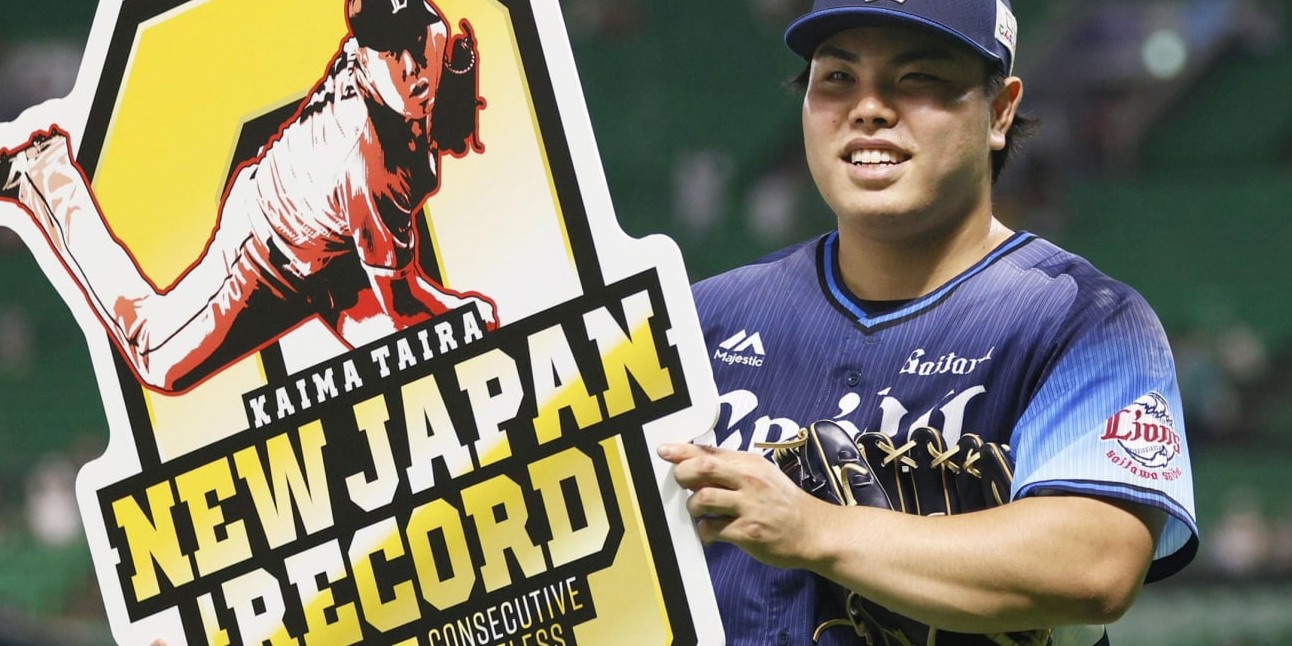
Kaima Taira, a 27-year-old right-hander who spent eight seasons with the Seibu Lions of Japan’s Pacific League, has agreed to a five-year, $80 million contract with the Toronto Blue Jays, according to Sportsnet, ESPN and MLB.com. All three outlets attributed the agreement to unnamed sources. The club has not announced it.
The number you should hold onto is not the $80 million. It is $13,875,000 — the posting fee Toronto owes Seibu under MLB’s standing agreement with Nippon Professional Baseball, as reported by ESPN. That is a disclosed, calculable price paid to the club that developed the player.
Nigeria sends athletes abroad every year. This article makes no claim about what those transfers earn, because no verified figures for them appear in the sourcing used here. The contrast in mechanism, however, is documented and needs no estimating: one system publishes what the exporting club receives, and that publication is what makes the player’s price checkable by anyone.
What The Kaima Taira Deal Actually Commits Toronto To
The headline terms are straightforward. Five years, $80 million, with a player opt-out after the 2029 season — the third year of the contract. ESPN reports a $5 million signing bonus. Sportsnet reports that Taira, like Dylan Cease and the Mets’ Tarik Skubal, is represented by agent Scott Boras.
He turned 27 earlier this month, which puts the deal squarely in his prime seasons. CBS Sports ranked him the No. 19 free agent of the class and reported that Seibu announced on Oct. 30 that he would be posted.
The Blue Jays have been here before in the Pacific Rim. Last off-season they signed Cody Ponce out of Korea and Kazuma Okamoto out of Japan, and the winter before that they pursued Roki Sasaki, per Sportsnet. The same report notes Toronto missed on Tarik Skubal, Trevor Rogers and Freddy Peralta before settling on Taira, and that the club still wants offence after finishing last in MLB in runs scored and home runs in 2026. Seiya Suzuki, Brandon Lowe and Randy Arozarena are named as targets who would each cost two draft picks.
The Numbers Behind Kaima Taira, And Where Sources Diverge
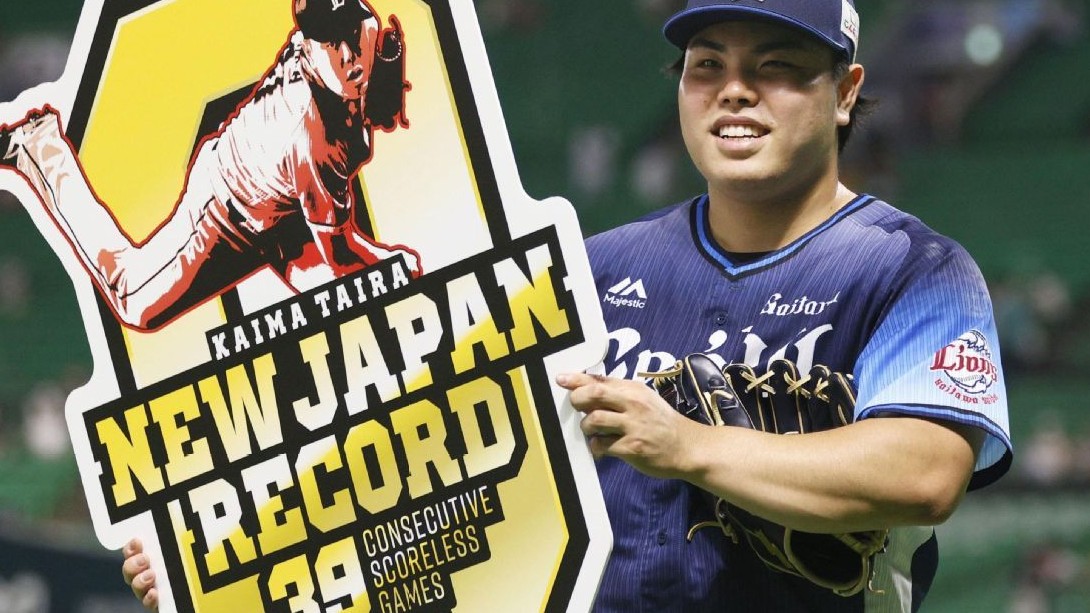
Last season with Seibu, Taira went 12-5 with a 1.36 ERA, 141 strikeouts and 45 walks across 146 innings, per Sportsnet. In 2025 he worked strictly as a reliever and recorded 31 saves, per ESPN.
Career aggregates are less settled, and the discrepancy is worth stating plainly rather than smoothing over. ESPN gives Taira a 37-24 record over eight NPB seasons with a 1.78 ERA and 620 strikeouts in 592 innings. CBS Sports gives 1.85 ERA with 676 strikeouts in 633 2/3 innings. Both outlets count the same eight seasons. Readers should treat NPB career totals as reported figures, not as a settled record.
His listed weight divides the same way: 209 pounds at Sportsnet and ESPN, 220 pounds at MLB.com. All three agree on 5-foot-8.
The physical profile is where the deal is argued. MLB.com, citing David Adler’s breakdown, puts Taira’s release at 6.8 feet in front of the rubber against an MLB average of 6.5, and his fastball release point at 4.94 feet off the ground — tied with Chris Sale for the second-lowest in the league last season, behind only Joe Ryan. His new teammate Trey Yesavage, at 7.06 feet, had the highest release point among qualified starters.
The arsenal is eight pitches deep: four-seamer, sinker, changeup, splitter, cutter, slider, sweeper and curveball. The fastball sits 94-97 mph and has touched 100, per ESPN.
Workload, The Lockout, And The Part Nigeria Should Read Closely
The risk is not disguised. NPB starters pitch roughly once a week, and MLB.com reports Taira has never surpassed 150 innings in a season while clearing 60 innings only twice, per ESPN. CBS Sports concluded that in the long run he might be a reliever, perhaps a multi-inning setup man.
Then there is the calendar. An MLB lockout is expected to begin on Dec. 1, and once it does, communication between teams and players is barred. Sportsnet reports Toronto will get all of seven days to coordinate with its new pitcher before that door shuts, and that many in the industry expect a compressed post-lockout ramp-up into spring training.
Strip away the baseball and the structure is legible to any country that sells talent abroad. The buying club pays a fixed, published fee to the developing club. The player gets a defined window — here, an opt-out after year three — to re-enter the market if he outperforms the deal. The workload is monitored and priced, not assumed. Nothing about that arrangement is sentimental, which is precisely why it holds up.
Toronto’s 2025 pennant and its 2026 slide to 83 losses and last place in the American League East explain the appetite for upside over safe innings. The Blue Jays are buying an experiment, and they have written down what the experiment costs.
Kaima Taira will most likely be introduced as a starting pitcher. Whether he holds that role depends on adjustments nobody can yet verify — a different baseball, a tighter schedule, a seven-day window before the sport’s doors lock. The verified facts are the $80 million, the $13,875,000 posting fee, the opt-out after 2029 and the 1.36 ERA. The rest is forecast, and it should be labelled as such.
Frequently Asked Questions
How much did the Blue Jays pay to sign Kaima Taira?
Toronto agreed to a five-year, $80 million contract with a player opt-out after the 2029 season, per Sportsnet, ESPN and MLB.com. ESPN reports a $5 million signing bonus and a separate $13,875,000 posting fee owed to the Seibu Lions under MLB’s agreement with Nippon Professional Baseball. The club has not announced the deal.
Why does the posting fee matter more than the salary?
Because it is a published, calculable payment to the club that developed the player. Under the MLB-NPB posting agreement, the exporting club is compensated at a figure anyone can check, which is what separates this from transfer arrangements where the developing club’s share is not disclosed.
What records did Kaima Taira post before joining the Blue Jays?
He went 12-5 with a 1.36 ERA, 141 strikeouts and 45 walks in 146 innings last season, per Sportsnet, after recording 31 saves as a reliever in 2025, per ESPN. Career NPB figures differ by outlet: ESPN reports a 1.78 ERA with 620 strikeouts in 592 innings over eight seasons, while CBS Sports reports 1.85 ERA with 676 strikeouts in 633 2/3 innings.
Receive alerts for Kaima Taira and more like it.
 Follow AFRILATEST on Google News
FIRST TIME REACTIONS:
Be the first to leave us a comment – Kaima Taira: Blue Jays’ $80M Bet On A Japanese Righty, down the comment section.
JOIN US ON OUR SOCIAL MEDIA:

About James Williams
James Williams is the Content Director at AfriLatest. With a background in journalism and a love for storytelling, he curates compelling content and multimedia that resonates with global readers. James is dedicated to maintaining AfriLatest as a trusted source for daily news, sports updates, and entertainment trends.
View all articles by James Williams

Football
Szoboszlai Free-Kick Debate: What The Laws Actually Say
The Szoboszlai free-kick in Liverpool’s 4-0 win over Manchester United is disputed. What IFAB law says, and why African referees inherit it.

The Szoboszlai free-kick that put Liverpool ahead inside eight minutes against Manchester United is the most disputed set piece of the Premier League weekend, and the argument is not about technique. It is about a one-metre rule most supporters have never read.
Mauricio Pochettino, beaten 4-0 on his first night as United manager, says the goal should never have stood. Liverpool have said nothing on the record. The written law, the broadcast footage and the two managers’ own words can all be checked separately, and they do not point the same way.
Why The Szoboszlai Free-Kick Became A Legal Test Case
Leny Yoro was sent off inside eight minutes for denying a goalscoring opportunity. Dominik Szoboszlai struck the resulting free-kick past Senne Lammens. Florian Wirtz and Rio Ngumoha scored either side of the interval, and substitute Victor Munoz completed the 4-0 scoreline, as recorded in Livescore’s match ratings.
Pochettino’s objection was never really about the red card. He argued the goal itself was illegal. “No one talks about that the goal wasn’t legal, it should be disallowed because (Bradley) Barcola was touching our wall,” he said, as reported by Sky Sports.
He added: “Maybe in the last two years, they’ve changed the rule because I’ve been in America, but last season when (Eberechi) Eze scored for Palace (at Chelsea) you can see [it was disallowed]. But VAR didn’t check [Dominik Szoboszlai’s goal]; that must be disallowed.”
What The IFAB Wall Law Actually Says
The rule is short. “If, when a free-kick is taken, an attacking team player is less than 1m (1yd) from a ‘wall’ formed by three or more defending team players, an indirect free-kick is awarded.”
Sky Sports’ review concluded that Barcola was clearly inside that limit when the ball was struck, and that the Szoboszlai free-kick should therefore have been ruled out under the Laws of the Game. That is a finding on the footage, not a referee’s ruling.
The same review identifies the complication Pochettino’s argument skips. In the Eze precedent, Marc Guehi shoved Moises Caicedo to open a gap in the Chelsea wall. At Anfield, Bruno Fernandes appears to push Barcola towards the United wall. The Laws of the Game offer no stated answer for an attacker pushed into that space by an opponent.
Timing matters too. Fernandes’ push came before Szoboszlai struck the ball, so the ball was not in play and the contact was not a foul by the United captain. Had the referee seen it, he could have delayed the set piece and restarted from the original position.
VAR checks every goal and would have needed a clear and obvious error to intervene. Referees’ chief Howard Webb did not analyse the incident on Match Officials Mic’d Up, and Sky Sports News said it asked Pro Ref for comment. No published response appears in the material available.
Two Szoboszlai Incidents, One Unresolved Question
A separate Szoboszlai incident at Anfield against Manchester City is being folded into the same argument, and it should not be. In the final seconds, with Alisson caught upfield, Rayan Cherki rolled the ball towards the Liverpool goal. Erling Haaland gave chase, was pulled back by Szoboszlai, and pulled Szoboszlai back in turn.
The ball crossed the line. Referee Craig Pawson, after a VAR review, awarded a free-kick for the first offence and sent Szoboszlai off for denying an obvious goalscoring opportunity. The Guardian reports the reasoning: Szoboszlai would have cleared the ball had Haaland not fouled him, so it could not be a goal, and Haaland would have scored had Szoboszlai not fouled him, so the earlier offence stands. Fouls do not cancel out.
Pep Guardiola, whose side benefited, called for common sense: “We won the game [but] now Dominik Szoboszlai cannot play … Give a goal, 3-1, Szoboszlai can play and we are happy.” Haaland was blunter: “Just give the goal, don’t give a red card. Simple as that.”
Arne Slot, quoted by the Guardian, accepted the letter of the law: “I can live with the fact, although I don’t like it, that the referee follows the rulebook.”
Why African Referees And Leagues Inherit The Same Grey Area
For Nigerian and African audiences the relevance is structural, not sentimental. Law 13 does not change at the border. The same one-metre wall restriction governs CAF club competitions, continental qualifiers and domestic leagues across the continent, and the same unwritten question arrives with it: what happens when a defender pushes an attacker into the wall?
African match officials also inherit the review culture. The Szoboszlai free-kick was checked and not overturned. Pochettino’s complaint is that VAR declined to intervene on a rule he says is clear. That is a governance question about when technology acts on a set piece, and it travels with the law.
Two African internationals were on the pitch for the United fixture. Bryan Mbeumo of Cameroon was withdrawn after 22 minutes as Pochettino sacrificed an attacker for a defender. Noussair Mazraoui of Morocco came on after 65 minutes, and Liverpool scored their fourth two minutes later. Neither had any say in the set-piece ruling that framed their night.
One limit on the record: the source material contains no comment from CAF, the Nigeria Football Federation or any domestic league on the Barcola incident, and no confirmation that United lodged a formal protest.
There is also a fitness footnote that complicates the wider picture. Sports Illustrated, citing The Athletic’s James Pearce, reported a hamstring injury that kept Szoboszlai out of the squad entirely for the Manchester City fixture.
A Decision That Will Not Settle
The Szoboszlai free-kick will be remembered as a goal because it was given, and as a controversy because the law that might have cancelled it has an unanswered edge. Pochettino’s reading is defensible on the text of Law 13. The referee’s non-intervention is defensible on the VAR protocol. Both can be true at once, which is exactly why this one has not closed.
Frequently Asked Questions
Was Szoboszlai’s free-kick against Manchester United legal?
Sky Sports’ review found Bradley Barcola was clearly within one metre of the United wall when the ball was struck, which under IFAB Law 13 should have produced an indirect free-kick to United rather than a goal. However, the same review notes Bruno Fernandes appears to have pushed Barcola towards the wall, and the Laws of the Game do not state how that case should be handled.
Did VAR check the Szoboszlai free-kick?
VAR checks every goal. Pochettino’s complaint is that it did not intervene. For a review to be recommended, the VAR would have to identify a clear and obvious error, which is a different test from whether the law was technically breached.
Why does this decision matter to African football?
IFAB Law 13 applies unchanged in CAF competitions and domestic African leagues, so the same one-metre wall restriction and the same unanswered question about a pushed attacker apply there. The source material contains no comment from CAF, the NFF or any African league on the incident.
FIRST TIME REACTIONS:
Be the first to leave us a comment – Szoboszlai Free-Kick Debate: What The Laws Actually Say, down the comment section.
JOIN US ON OUR SOCIAL MEDIA:
About James Williams
James Williams is the Content Director at AfriLatest. With a background in journalism and a love for storytelling, he curates compelling content and multimedia that resonates with global readers. James is dedicated to maintaining AfriLatest as a trusted source for daily news, sports updates, and entertainment trends.
View all articles by James WilliamsBasketball
Trail Blazers vs Spurs: What The 116-111 Box Score Hides
Trail Blazers vs Spurs ended 116-111 in NBA Cup play. A stat-line conflict and missing cap data mean the trade-grade talk is guesswork.

There is no trade in this story, and that is the first thing worth saying.
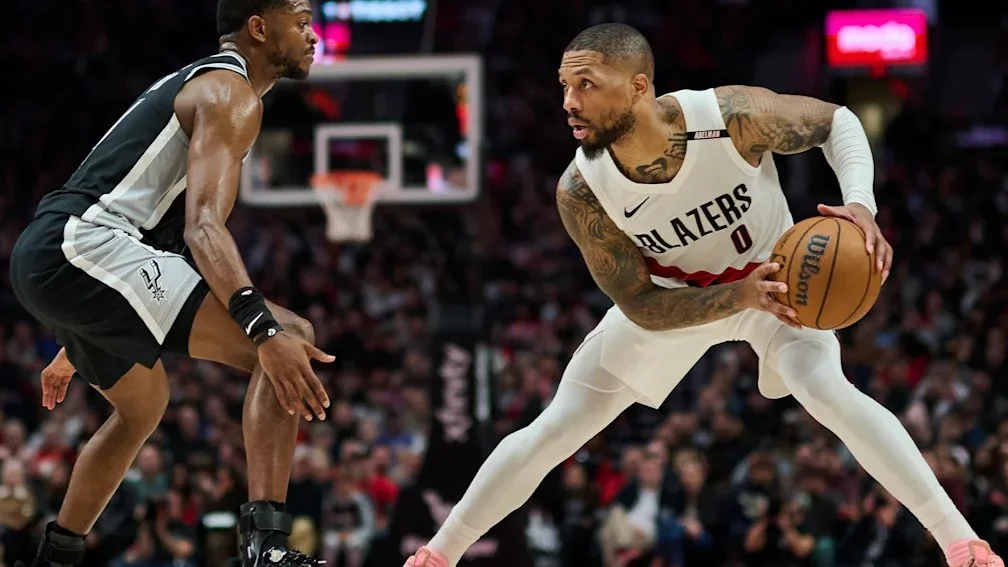
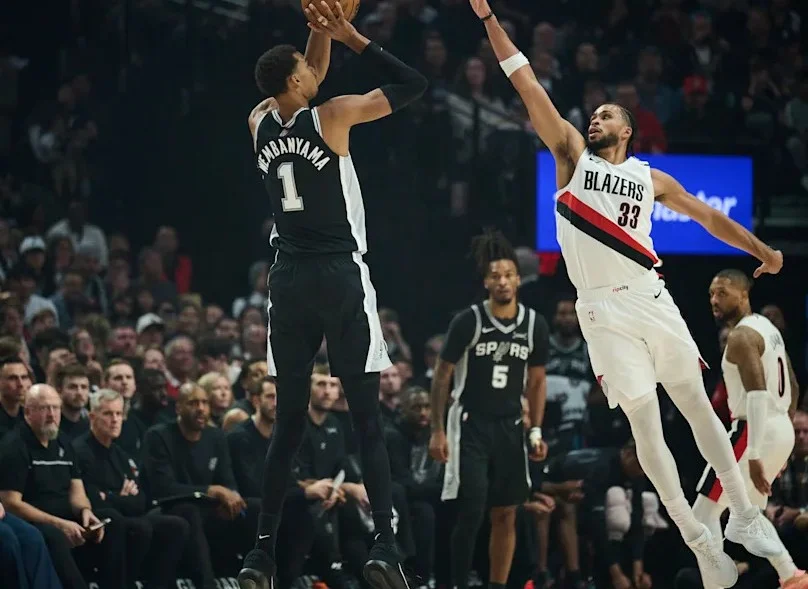
The Trail Blazers vs Spurs meeting at Moda Center ended 116-111 in Emirates NBA Cup group play, Portland’s first home game since Nov. 11. Deni Avdija led Portland with 33 points, 12 rebounds and seven assists on 11-of-21 shooting and 5-of-8 from three, according to Sports Illustrated. Damian Lillard added 29 points. Victor Wembanyama finished with 44 points and 17 rebounds by the same account.
None of the three published reports of this game contains a transaction. No trade, no waiver claim, no signing, no injury designation beyond Donovan Clingan’s foul trouble. Attaching a trade grade to a regular-season result would be invention, and this column does not invent.
Why The Trail Blazers vs Spurs Scoreline Resists The Obvious Read
The shooting numbers are the place to start, because they contradict the result. Portland shot 39.4 percent from the field and 38 percent from three. San Antonio shot 43.3 percent and 27.8 percent. Portland made 23 of 31 free throws, San Antonio 23 of 29. The team that shot worse from the floor won by five.
That gap lives in possessions, not in makes. Blazers Edge logged 28 assists on 37 made baskets for Portland, a ratio that describes the method: the ball moved before San Antonio’s defense could set, which is the practical answer to a rim protector of Wembanyama’s size. Portland walked the ball up roughly five times per half, by that account.
The offensive glass cut against the popular explanation. San Antonio collected 14 offensive rebounds for 18 second-chance points. Portland matched the count with 14 but converted only 11. On the category the Spurs are supposed to own, the game was close to even. The Trail Blazers vs Spurs result therefore cannot be explained by rebounding in either direction.
The decisive stretch was narrower than the narrative: a 12-2 Portland run to open the fourth quarter, including Sidy Cissoko’s dunk over an extended Wembanyama hand and a Lillard three with Wembanyama switched onto him.
Where The Verified Statistics Stop
The two primary reports of this game disagree on the headline defensive line. Sports Illustrated credits Wembanyama with 17 rebounds and three blocks. Blazers Edge credits 16 rebounds and two blocks. Both agree on 44 points and 17-of-30 shooting.
Two credentialed outlets, two different stat lines, one game. Until the official box score is reconciled, any per-game average built on either figure carries a small but real error bar. The honest treatment is to report the conflict, not to select the friendlier number and move on. Readers following the Trail Blazers vs Spurs game from Lagos, Nairobi or Accra on a delayed box score have no second source to check against, which makes the discrepancy more consequential, not less.
The framing deserves the same scrutiny. A Yahoo preview described the Spurs as legitimate championship contenders after reaching the NBA Finals last season, citing a 14-3 record and a perfect 7-0 road mark before tip-off. Those records are verifiable. The MVP framing is softer: the same preview lists Wembanyama at 29.9 points, 12.3 rebounds and 3.9 blocks per game, which supports an argument without settling one.
The Roster Evidence, And The Cap Question Nobody Can Answer
Roster construction is where a trade desk would normally begin, and it is where the source material runs out. Yahoo confirms De’Aaron Fox and Stephon Castle alongside Wembanyama. Castle posted 20 points, six rebounds and nine assists in this game; Devin Vassell added 18 on 6-of-16 shooting. Portland’s season context lists Avdija at 23.9 points, 6.4 rebounds and 6.0 assists per game.
No salary figure, no cap sheet, no trade exception, no draft-pick obligation appears in any of the three reports. Cap implications for either franchise: unavailable. Trade probability: unavailable. A writer who assigns a number to either is guessing, and the guess would be indistinguishable from reporting once it is published.
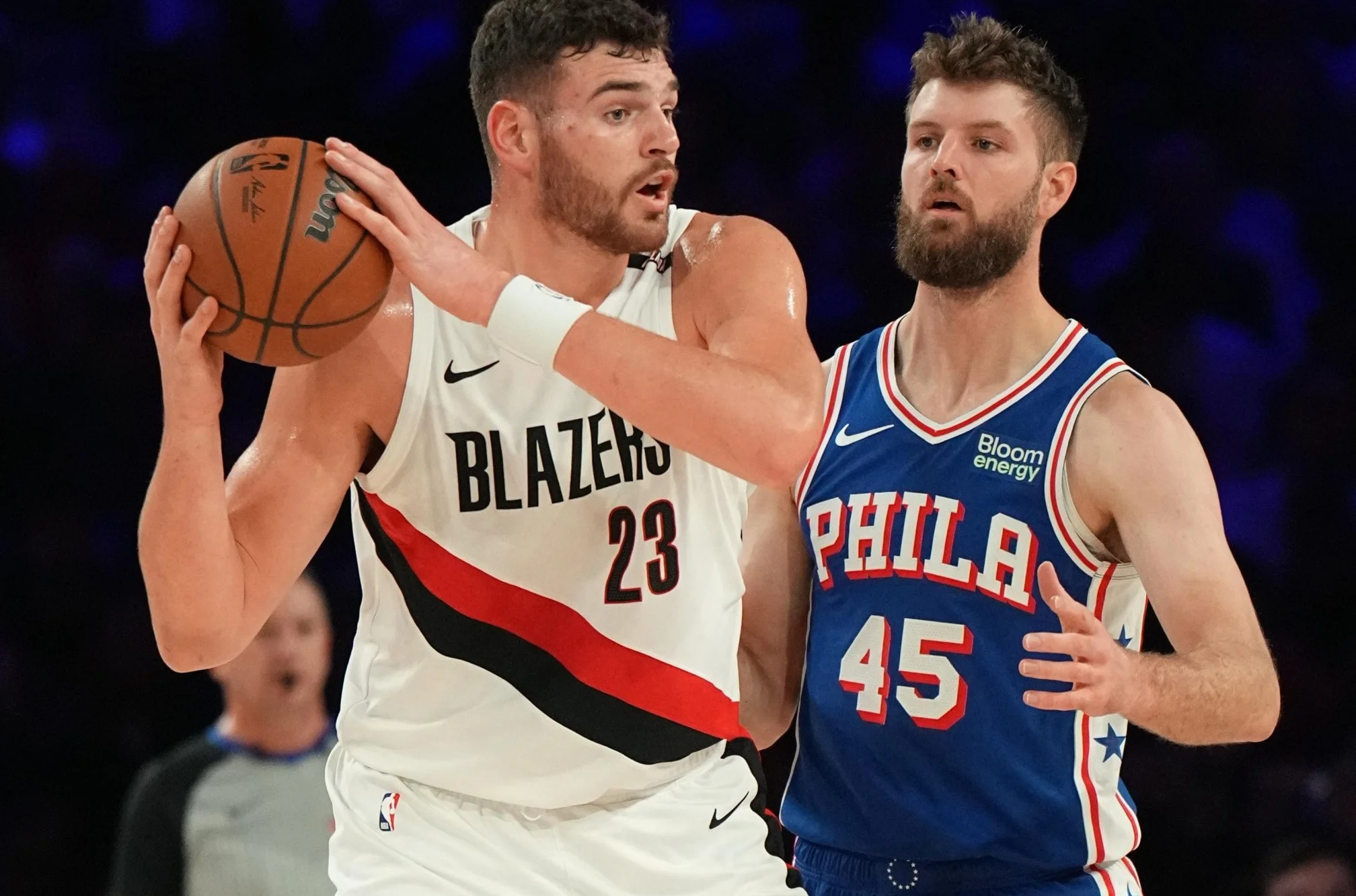
Execution, though, can be graded. Portland’s after-timeout plays were clean and varied, and the staff rebuilt lineups around Clingan’s foul trouble before he disqualified in 21 minutes. The blemish was a blown inbounds play with 29 seconds remaining. That is a performance grade, not a transaction grade, and the two should never be filed together.
Who Won The Trail Blazers vs Spurs Game
Portland won, and earned it. The Blazers were the aggressor for 48 minutes against a team that had not lost on the road, and they did it while shooting below 40 percent.
But the repeatable trait belonged to San Antonio. Fourteen offensive rebounds and 18 second-chance points travel between arenas. A 39.4 percent shooting night does not, and neither does a tempo that requires maximum effort on every possession. Portland visibly faded at the end of periods sustaining it.
So the verdict splits. Portland took the game and the group-stage result. San Antonio’s process held up better on a night it shot 27.8 percent from deep. Anyone converting this single result into a series projection is working with one game, one stat-line conflict, zero contract data and a one-line reference to last season’s first-round elimination of Portland by these same Spurs.
The Trail Blazers vs Spurs box score says Portland 116, San Antonio 111. Everything past that sentence needs a qualifier. The qualifiers are the story.
Frequently Asked Questions
Did the Trail Blazers vs Spurs game involve a trade?
No. None of the three published reports of the game contains a trade, waiver claim or signing. The only roster-relevant note is Donovan Clingan fouling out in 21 minutes.
What was the final score of the Trail Blazers vs Spurs game?
Portland beat San Antonio 116-111 at Moda Center in Emirates NBA Cup group play. Deni Avdija scored 33 for Portland; Victor Wembanyama scored 44 for San Antonio.
Why do the reports disagree on Wembanyama’s stats?
Sports Illustrated lists 17 rebounds and three blocks; Blazers Edge lists 16 rebounds and two blocks. Both agree on 44 points and 17-of-30 shooting. The discrepancy should be treated as unresolved until the official box score is reconciled.
FIRST TIME REACTIONS:
Be the first to leave us a comment – Trail Blazers vs Spurs: What The 116-111 Box Score Hides, down the comment section.
JOIN US ON OUR SOCIAL MEDIA:
About James Williams
James Williams is the Content Director at AfriLatest. With a background in journalism and a love for storytelling, he curates compelling content and multimedia that resonates with global readers. James is dedicated to maintaining AfriLatest as a trusted source for daily news, sports updates, and entertainment trends.
View all articles by James WilliamsFootball
49ers Release Aiyuk: The Real Cost Of A $120m Deal
The 49ers release Aiyuk after a two-year standoff. What the $120m deal, $31.64m dead money and a possible Commanders move mean for NFL fans.


The San Francisco 49ers released wide receiver Brandon Aiyuk on Monday, closing a relationship that had been publicly finished since January. He is on waivers now. Rival clubs have until 4 p.m. ET on Tuesday to claim him, according to Yahoo Sports. If he clears, he becomes an unrestricted free agent able to sign anywhere.
For you— the diaspora households in Houston and Maryland, the Lagos followers of the league on cable, and the fans who price weekend markets on quarterbacks and receivers — the 49ers release Aiyuk matters for reasons that have nothing to do with a depth chart. It is the clearest recent case of how quickly guaranteed money in the NFL stops being guaranteed.
Aiyuk signed a four-year, $120 million extension with $76 million in guarantees on Aug. 29, 2024, per ESPN. Seven games later, on Oct. 20, 2024, he tore the ACL, MCL and meniscus in his right knee against the Kansas City Chiefs. He has not played an NFL snap since.
What The 49ers Release Aiyuk Says About Guaranteed Money
The guarantees did not survive the rehabilitation. Reports in 2025 said San Francisco voided the roughly $27 million in guarantees his contract carried for 2026 after he missed multiple in-house rehab sessions. His $24.935 million roster bonus for that season had already become guaranteed on April 1, 2025 — a deadline that effectively locked him to the roster months before the relationship collapsed.
Coach Kyle Shanahan, speaking in November 2025, said he had never encountered a voided player contract in more than two decades of coaching. “It’s something I’ve never seen in 22 years of coaching,” he said, according to ESPN. “It’s unfortunate and it’s confusing.”
The accounting is now public. ESPN reported the 49ers will carry $31.64 million in dead money, split as $12.35 million against 2026 and $19.29 million against 2027. The club picks up a salary cap credit of nearly $5 million in March and is pursuing about $13 million in bonus money it previously paid him.
The Verified Timeline, From Left Squad To The Transaction Wire
The 49ers release Aiyuk was set in motion long before Monday. The documented sequence:
Dec. 13, 2025: San Francisco placed Aiyuk on the reserve/left squad list, ending his season and any prospect of him playing for the team again.
Jan. 21, at his end-of-season news conference: general manager John Lynch acknowledged the split. “I think it’s safe to say he’s played his last snap with the 49ers,” he said.
June 3: the Santa Clara County District Attorney’s Office issued an arrest warrant alleging misdemeanor exhibition of speed, tied to a December 2025 YouTube video in which Aiyuk appeared to film himself driving over 100 mph near Levi’s Stadium. Within days he posted Instagram videos calling the 49ers “dumb” and “stupid” for paying him.
Late October: Aiyuk hired agent Drew Rosenhaus. He reported to the facility Nov. 6, was reinstated by the NFL on Nov. 9, and the 49ers were granted a two-week roster exemption.
Monday: the exemption expired. Because the trade deadline had passed, San Francisco had two options — release him or keep him. The release was recorded on the league transaction wire, NFL.com confirmed.
Where Aiyuk Goes Next, And Why Washington Leads
Waiver priority, not sentiment, decides the first step. A claim would place him on the claiming team’s roster and its salary cap. NFL Network’s Ian Rapoport reported that a place on the Washington Commanders’ practice squad is the likeliest next move should Aiyuk clear.
The football logic is simple. Washington lost receiver Terry McLaurin to a torn ACL for the season. Commanders quarterback Jayden Daniels is a close friend of Aiyuk’s from Arizona State, and Aiyuk spent part of the summer posting photographs of himself in a Commanders hat. Rosenhaus has said repeatedly that several teams are interested. “We are looking forward to finding his next team,” he told ESPN, per Fox News, which also noted the release came a day after the 49ers beat the Minnesota Vikings in Mexico City — a reminder that the league’s calendar now runs through markets far from California.
None of the next step is settled. Outlets differed slightly on the claim deadline — Yahoo Sports put it at 4 p.m. ET Tuesday, ESPN described a 24-hour window — and no claim had been confirmed at the time of publication.
What The Contract Fine Print Means For Nigerian Families
The comparison Nigerian audiences know best is European football, where a long-term deal signed by a Nigerian international is ordinarily treated as money owed unless both sides agree to part. The NFL operates on different logic. Guarantees can be voided for missed rehabilitation, previously paid bonus money can be pursued for repayment, and a player who stays away can be moved to a list that ends his season without ending the club’s accounting.
Aiyuk is 28. He has 294 catches for 4,305 yards and 25 touchdowns in 69 regular-season games, a 14.6-yard average, and second-team All-Pro honours in 2023. Those numbers are why teams will call. The reason many will hesitate is equally documented: he has not played since Week 7 of the 2024 season, and he no-showed his way out of San Francisco.
That is the detail worth carrying back to Lagos, Nairobi or Accra. A headline number is not a payment schedule, and a “guaranteed” figure is only as firm as the clauses attached to it.
The 49ers release Aiyuk is, on paper, one line on a transaction wire. What happens in the next 24 hours — a claim, a practice squad place in Washington, or silence — will decide whether a receiver with a 14.6-yard career average gets a second act, and whether the largest contract of his career ends up remembered for its clauses rather than its catches.
Frequently Asked Questions
Has Brandon Aiyuk actually been released by the 49ers?
Yes. The release was recorded on the NFL’s transaction wire on Monday, per NFL.com, and was first reported by ESPN. Because the move came after the trade deadline, Aiyuk went to waivers rather than becoming an immediate free agent.
What happens if no team claims Aiyuk on waivers?
He becomes an unrestricted free agent and can sign with any club. NFL Network’s Ian Rapoport reported that a spot on the Washington Commanders’ practice squad is the likeliest next step, though nothing had been confirmed.
Why does the Aiyuk case matter outside the United States?
It shows how conditional NFL guarantees are. Reports said San Francisco voided roughly $27 million in 2026 guarantees, and the club is pursuing about $13 million in previously paid bonus money — a structure that differs sharply from the long-term contracts Nigerian footballers sign in Europe.
FIRST TIME REACTIONS:
Be the first to leave us a comment – 49ers Release Aiyuk: The Real Cost Of A $120m Deal, down the comment section.
JOIN US ON OUR SOCIAL MEDIA:

About Clare Dominic
Clare Dominic is the Editor at AfriLatest. With a background in journalism and a passion for storytelling, she oversees the editorial process to ensure content is accurate, engaging, and relevant. Clare works closely with contributors to maintain the highest standards of journalistic integrity across all news, sports, and lifestyle coverage.
View all articles by Clare Dominic-

 Car Reviews3 weeks ago
1955 Chevy Bel Air Restomod: What SEMA Really Proves
-
Savings & Investing4 weeks ago
Hidden Medicare Fees Draining Your Retirement Savings
-
Movies & TV4 weeks ago
Wizkid Starboy Desire Ft Banky W Shaydee: Fact Or Fan Fiction?
-
World News4 weeks ago
Sheinbaum No Proof Maduro: Mexico’s Test of US Evidence
-
Trend politics4 weeks ago
How 24-Hour Online Scrutiny Is Running Out Leaders
-
Health and Fitness4 weeks ago
Premature Ejaculation Treatment: Exercise vs Dapoxetine