Football
GWFA To Train Walking Football Referees In Lagos
The GWFA holds a one-day workshop on 21 November at Eagle Club, Surulere, to train walking football referees in Lagos as the league enters Season 4.


The Global Walking Football Alliance will hold a one-day referee training workshop on Saturday, 21 November at the Eagle Club in Surulere, Lagos, led by international referee and GWFA instructor Ricky Weir. The programme runs from classroom theory through live match observation to individual practical assessment, with certificates issued to candidates who pass.
The news is easy to file as a development story. It is better read as a safety story. Walking football referees are the mechanism that keeps the format’s central promise intact as the sport spreads beyond its four-team Lagos origin, and officiating standards decide whether results can be trusted across an expanding map.
Why Walking Football Referees Matter More Than The Scoreline
Nigeria’s football conversation is organised around elite performance: NPFL squads, Super Eagles selection, and the load management of professional players. Injury, in that frame, is treated as the price of intensity — something managed through rotation, medical departments and return-to-play protocols built for athletes operating near maximum output.
Walking football inverts the starting condition. Its appeal rests on reduced physical load, which means the risk profile that justifies heavy medical infrastructure in the professional game does not transfer unchanged. What does transfer, intact, is the referee. The format’s protections exist on paper until an official applies them on the pitch, the same way, every week.
That is the argument the GWFA workshop makes without stating it. A sport that presents itself as lower-risk must be able to demonstrate consistent enforcement of its own rules. Otherwise the claim outruns the evidence.
Here the organisers’ briefing is silent. No injury surveillance data for the Lagos Walking Football League appears in the announcements carried by Premium Times or The Guardian Nigeria. No participant screening protocol is described. No incident figures are published. That absence matters, because without recorded outcomes, statements about the format’s safety rest on the design of the game rather than on observed results.
Certification does not close that gap by itself. It is, however, a precondition for closing it. An official examined on the Laws of the Game and marked in a live match produces a more consistent record — one from which injury patterns and rule failures could eventually be read — than an untrained volunteer working from instinct.
A One-Day Curriculum That Reads Like A Match Timeline
The schedule is compressed and unusually specific. Trainees open in the classroom on pre-match preparation and the Laws of the Game. They then observe four league matches, each handled by an international match official, with a question-and-answer session after every fixture so that decisions can be tested against the rulebook rather than against opinion.
After a lunch break, the group returns for a second classroom block on post-match review of the Laws of the Game, followed by a theory examination. The day closes with individual practical assessments, where each trainee officiates and is marked, before results are announced and certificates presented.
The sequence — observe, question, examine, perform — follows the cycle used in referee development at higher levels of the game. The difference is compression. One day cannot manufacture match experience, and the organisers have not disclosed how many candidates will attend, what the pass threshold is, or whether GWFA certification carries recognition beyond the alliance itself.
Weir is the quality anchor. An instructor who has officiated internationally will supervise both the written paper and the practical marking, which gives the certificates a defensible basis rather than a ceremonial one.
What Certification Means For The Lagos Walking Football League Table
The league has grown from four founding teams into Season 4, with men’s, women’s and corporate entries now competing. The Eagle Club pitch in Surulere has become the hub of the sport in Nigeria. Beyond Lagos, walking football — known locally as Waka Football — has reached Abuja, Kano and Plateau State, the fourth state to adopt it.
Expansion changes the officiating problem. Four teams in one city can be covered by a handful of willing volunteers. Three or four states, separate divisions and corporate competitions cannot. Every new centre multiplies the number of matches requiring a qualified official, and inconsistency between centres produces standings that cannot honestly be compared across regions.
That is the practical meaning of Saturday’s session. A league table is only a credible document if the same laws yield the same decisions in Surulere as in Jos. Until referee supply matches team growth, the Lagos Walking Football League table records who scored more, not necessarily who played better — and it cannot yet tell organisers whether the format’s lower-load premise is holding up in practice.
The GWFA has not announced a second workshop, a regional licensing structure, or any plan to place assessed officials in Abuja, Kano or Plateau. That is an absence of information, not a refusal, and should be read as such. On current evidence, the certification pipeline runs through one pitch in Surulere.
What Saturday should produce is a small, examined cohort of walking football referees who can apply the Laws of the Game under observation. That is a modest output for a sport spreading across four states. It is also the first measurable step toward a competition whose results, and whose safety claims, can be audited rather than assumed.
Frequently Asked Questions
When and where is the GWFA referee training workshop in Lagos?
It is scheduled for Saturday, 21 November at the Eagle Club in Surulere, Lagos. The one-day programme is led by international referee and GWFA instructor Ricky Weir.
What does the workshop involve for trainee walking football referees?
Candidates attend classroom sessions on pre-match preparation and post-match review of the Laws of the Game, observe four league matches officiated by international match officials with a question-and-answer session after each, sit a theory examination, and complete an individual practical assessment before certificates are presented to those who pass.
How far has walking football, or Waka Football, spread in Nigeria?
It began in Lagos with four teams and has reached Season 4 of the Lagos Walking Football League, with men’s, women’s and corporate participation. It has also spread to Abuja, Kano and Plateau State, which organisers identify as the fourth state to adopt the sport.
Receive alerts for walking football referees and more like it.
 Follow AFRILATEST on Google News
FIRST TIME REACTIONS:
Be the first to leave us a comment – GWFA To Train Walking Football Referees In Lagos, down the comment section.
JOIN US ON OUR SOCIAL MEDIA:

About James Williams
James Williams is the Content Director at AfriLatest. With a background in journalism and a love for storytelling, he curates compelling content and multimedia that resonates with global readers. James is dedicated to maintaining AfriLatest as a trusted source for daily news, sports updates, and entertainment trends.
View all articles by James Williams

Football
Szoboszlai Free-Kick Debate: What The Laws Actually Say
The Szoboszlai free-kick in Liverpool’s 4-0 win over Manchester United is disputed. What IFAB law says, and why African referees inherit it.

The Szoboszlai free-kick that put Liverpool ahead inside eight minutes against Manchester United is the most disputed set piece of the Premier League weekend, and the argument is not about technique. It is about a one-metre rule most supporters have never read.
Mauricio Pochettino, beaten 4-0 on his first night as United manager, says the goal should never have stood. Liverpool have said nothing on the record. The written law, the broadcast footage and the two managers’ own words can all be checked separately, and they do not point the same way.
Why The Szoboszlai Free-Kick Became A Legal Test Case
Leny Yoro was sent off inside eight minutes for denying a goalscoring opportunity. Dominik Szoboszlai struck the resulting free-kick past Senne Lammens. Florian Wirtz and Rio Ngumoha scored either side of the interval, and substitute Victor Munoz completed the 4-0 scoreline, as recorded in Livescore’s match ratings.
Pochettino’s objection was never really about the red card. He argued the goal itself was illegal. “No one talks about that the goal wasn’t legal, it should be disallowed because (Bradley) Barcola was touching our wall,” he said, as reported by Sky Sports.
He added: “Maybe in the last two years, they’ve changed the rule because I’ve been in America, but last season when (Eberechi) Eze scored for Palace (at Chelsea) you can see [it was disallowed]. But VAR didn’t check [Dominik Szoboszlai’s goal]; that must be disallowed.”
What The IFAB Wall Law Actually Says
The rule is short. “If, when a free-kick is taken, an attacking team player is less than 1m (1yd) from a ‘wall’ formed by three or more defending team players, an indirect free-kick is awarded.”
Sky Sports’ review concluded that Barcola was clearly inside that limit when the ball was struck, and that the Szoboszlai free-kick should therefore have been ruled out under the Laws of the Game. That is a finding on the footage, not a referee’s ruling.
The same review identifies the complication Pochettino’s argument skips. In the Eze precedent, Marc Guehi shoved Moises Caicedo to open a gap in the Chelsea wall. At Anfield, Bruno Fernandes appears to push Barcola towards the United wall. The Laws of the Game offer no stated answer for an attacker pushed into that space by an opponent.
Timing matters too. Fernandes’ push came before Szoboszlai struck the ball, so the ball was not in play and the contact was not a foul by the United captain. Had the referee seen it, he could have delayed the set piece and restarted from the original position.
VAR checks every goal and would have needed a clear and obvious error to intervene. Referees’ chief Howard Webb did not analyse the incident on Match Officials Mic’d Up, and Sky Sports News said it asked Pro Ref for comment. No published response appears in the material available.
Two Szoboszlai Incidents, One Unresolved Question
A separate Szoboszlai incident at Anfield against Manchester City is being folded into the same argument, and it should not be. In the final seconds, with Alisson caught upfield, Rayan Cherki rolled the ball towards the Liverpool goal. Erling Haaland gave chase, was pulled back by Szoboszlai, and pulled Szoboszlai back in turn.
The ball crossed the line. Referee Craig Pawson, after a VAR review, awarded a free-kick for the first offence and sent Szoboszlai off for denying an obvious goalscoring opportunity. The Guardian reports the reasoning: Szoboszlai would have cleared the ball had Haaland not fouled him, so it could not be a goal, and Haaland would have scored had Szoboszlai not fouled him, so the earlier offence stands. Fouls do not cancel out.
Pep Guardiola, whose side benefited, called for common sense: “We won the game [but] now Dominik Szoboszlai cannot play … Give a goal, 3-1, Szoboszlai can play and we are happy.” Haaland was blunter: “Just give the goal, don’t give a red card. Simple as that.”
Arne Slot, quoted by the Guardian, accepted the letter of the law: “I can live with the fact, although I don’t like it, that the referee follows the rulebook.”
Why African Referees And Leagues Inherit The Same Grey Area
For Nigerian and African audiences the relevance is structural, not sentimental. Law 13 does not change at the border. The same one-metre wall restriction governs CAF club competitions, continental qualifiers and domestic leagues across the continent, and the same unwritten question arrives with it: what happens when a defender pushes an attacker into the wall?
African match officials also inherit the review culture. The Szoboszlai free-kick was checked and not overturned. Pochettino’s complaint is that VAR declined to intervene on a rule he says is clear. That is a governance question about when technology acts on a set piece, and it travels with the law.
Two African internationals were on the pitch for the United fixture. Bryan Mbeumo of Cameroon was withdrawn after 22 minutes as Pochettino sacrificed an attacker for a defender. Noussair Mazraoui of Morocco came on after 65 minutes, and Liverpool scored their fourth two minutes later. Neither had any say in the set-piece ruling that framed their night.
One limit on the record: the source material contains no comment from CAF, the Nigeria Football Federation or any domestic league on the Barcola incident, and no confirmation that United lodged a formal protest.
There is also a fitness footnote that complicates the wider picture. Sports Illustrated, citing The Athletic’s James Pearce, reported a hamstring injury that kept Szoboszlai out of the squad entirely for the Manchester City fixture.
A Decision That Will Not Settle
The Szoboszlai free-kick will be remembered as a goal because it was given, and as a controversy because the law that might have cancelled it has an unanswered edge. Pochettino’s reading is defensible on the text of Law 13. The referee’s non-intervention is defensible on the VAR protocol. Both can be true at once, which is exactly why this one has not closed.
Frequently Asked Questions
Was Szoboszlai’s free-kick against Manchester United legal?
Sky Sports’ review found Bradley Barcola was clearly within one metre of the United wall when the ball was struck, which under IFAB Law 13 should have produced an indirect free-kick to United rather than a goal. However, the same review notes Bruno Fernandes appears to have pushed Barcola towards the wall, and the Laws of the Game do not state how that case should be handled.
Did VAR check the Szoboszlai free-kick?
VAR checks every goal. Pochettino’s complaint is that it did not intervene. For a review to be recommended, the VAR would have to identify a clear and obvious error, which is a different test from whether the law was technically breached.
Why does this decision matter to African football?
IFAB Law 13 applies unchanged in CAF competitions and domestic African leagues, so the same one-metre wall restriction and the same unanswered question about a pushed attacker apply there. The source material contains no comment from CAF, the NFF or any African league on the incident.
FIRST TIME REACTIONS:
Be the first to leave us a comment – Szoboszlai Free-Kick Debate: What The Laws Actually Say, down the comment section.
JOIN US ON OUR SOCIAL MEDIA:
About James Williams
James Williams is the Content Director at AfriLatest. With a background in journalism and a love for storytelling, he curates compelling content and multimedia that resonates with global readers. James is dedicated to maintaining AfriLatest as a trusted source for daily news, sports updates, and entertainment trends.
View all articles by James WilliamsFootball
49ers Release Aiyuk: The Real Cost Of A $120m Deal
The 49ers release Aiyuk after a two-year standoff. What the $120m deal, $31.64m dead money and a possible Commanders move mean for NFL fans.


The San Francisco 49ers released wide receiver Brandon Aiyuk on Monday, closing a relationship that had been publicly finished since January. He is on waivers now. Rival clubs have until 4 p.m. ET on Tuesday to claim him, according to Yahoo Sports. If he clears, he becomes an unrestricted free agent able to sign anywhere.
For you— the diaspora households in Houston and Maryland, the Lagos followers of the league on cable, and the fans who price weekend markets on quarterbacks and receivers — the 49ers release Aiyuk matters for reasons that have nothing to do with a depth chart. It is the clearest recent case of how quickly guaranteed money in the NFL stops being guaranteed.
Aiyuk signed a four-year, $120 million extension with $76 million in guarantees on Aug. 29, 2024, per ESPN. Seven games later, on Oct. 20, 2024, he tore the ACL, MCL and meniscus in his right knee against the Kansas City Chiefs. He has not played an NFL snap since.
What The 49ers Release Aiyuk Says About Guaranteed Money
The guarantees did not survive the rehabilitation. Reports in 2025 said San Francisco voided the roughly $27 million in guarantees his contract carried for 2026 after he missed multiple in-house rehab sessions. His $24.935 million roster bonus for that season had already become guaranteed on April 1, 2025 — a deadline that effectively locked him to the roster months before the relationship collapsed.
Coach Kyle Shanahan, speaking in November 2025, said he had never encountered a voided player contract in more than two decades of coaching. “It’s something I’ve never seen in 22 years of coaching,” he said, according to ESPN. “It’s unfortunate and it’s confusing.”
The accounting is now public. ESPN reported the 49ers will carry $31.64 million in dead money, split as $12.35 million against 2026 and $19.29 million against 2027. The club picks up a salary cap credit of nearly $5 million in March and is pursuing about $13 million in bonus money it previously paid him.
The Verified Timeline, From Left Squad To The Transaction Wire
The 49ers release Aiyuk was set in motion long before Monday. The documented sequence:
Dec. 13, 2025: San Francisco placed Aiyuk on the reserve/left squad list, ending his season and any prospect of him playing for the team again.
Jan. 21, at his end-of-season news conference: general manager John Lynch acknowledged the split. “I think it’s safe to say he’s played his last snap with the 49ers,” he said.
June 3: the Santa Clara County District Attorney’s Office issued an arrest warrant alleging misdemeanor exhibition of speed, tied to a December 2025 YouTube video in which Aiyuk appeared to film himself driving over 100 mph near Levi’s Stadium. Within days he posted Instagram videos calling the 49ers “dumb” and “stupid” for paying him.
Late October: Aiyuk hired agent Drew Rosenhaus. He reported to the facility Nov. 6, was reinstated by the NFL on Nov. 9, and the 49ers were granted a two-week roster exemption.
Monday: the exemption expired. Because the trade deadline had passed, San Francisco had two options — release him or keep him. The release was recorded on the league transaction wire, NFL.com confirmed.
Where Aiyuk Goes Next, And Why Washington Leads
Waiver priority, not sentiment, decides the first step. A claim would place him on the claiming team’s roster and its salary cap. NFL Network’s Ian Rapoport reported that a place on the Washington Commanders’ practice squad is the likeliest next move should Aiyuk clear.
The football logic is simple. Washington lost receiver Terry McLaurin to a torn ACL for the season. Commanders quarterback Jayden Daniels is a close friend of Aiyuk’s from Arizona State, and Aiyuk spent part of the summer posting photographs of himself in a Commanders hat. Rosenhaus has said repeatedly that several teams are interested. “We are looking forward to finding his next team,” he told ESPN, per Fox News, which also noted the release came a day after the 49ers beat the Minnesota Vikings in Mexico City — a reminder that the league’s calendar now runs through markets far from California.
None of the next step is settled. Outlets differed slightly on the claim deadline — Yahoo Sports put it at 4 p.m. ET Tuesday, ESPN described a 24-hour window — and no claim had been confirmed at the time of publication.
What The Contract Fine Print Means For Nigerian Families
The comparison Nigerian audiences know best is European football, where a long-term deal signed by a Nigerian international is ordinarily treated as money owed unless both sides agree to part. The NFL operates on different logic. Guarantees can be voided for missed rehabilitation, previously paid bonus money can be pursued for repayment, and a player who stays away can be moved to a list that ends his season without ending the club’s accounting.
Aiyuk is 28. He has 294 catches for 4,305 yards and 25 touchdowns in 69 regular-season games, a 14.6-yard average, and second-team All-Pro honours in 2023. Those numbers are why teams will call. The reason many will hesitate is equally documented: he has not played since Week 7 of the 2024 season, and he no-showed his way out of San Francisco.
That is the detail worth carrying back to Lagos, Nairobi or Accra. A headline number is not a payment schedule, and a “guaranteed” figure is only as firm as the clauses attached to it.
The 49ers release Aiyuk is, on paper, one line on a transaction wire. What happens in the next 24 hours — a claim, a practice squad place in Washington, or silence — will decide whether a receiver with a 14.6-yard career average gets a second act, and whether the largest contract of his career ends up remembered for its clauses rather than its catches.
Frequently Asked Questions
Has Brandon Aiyuk actually been released by the 49ers?
Yes. The release was recorded on the NFL’s transaction wire on Monday, per NFL.com, and was first reported by ESPN. Because the move came after the trade deadline, Aiyuk went to waivers rather than becoming an immediate free agent.
What happens if no team claims Aiyuk on waivers?
He becomes an unrestricted free agent and can sign with any club. NFL Network’s Ian Rapoport reported that a spot on the Washington Commanders’ practice squad is the likeliest next step, though nothing had been confirmed.
Why does the Aiyuk case matter outside the United States?
It shows how conditional NFL guarantees are. Reports said San Francisco voided roughly $27 million in 2026 guarantees, and the club is pursuing about $13 million in previously paid bonus money — a structure that differs sharply from the long-term contracts Nigerian footballers sign in Europe.
FIRST TIME REACTIONS:
Be the first to leave us a comment – 49ers Release Aiyuk: The Real Cost Of A $120m Deal, down the comment section.
JOIN US ON OUR SOCIAL MEDIA:

About Clare Dominic
Clare Dominic is the Editor at AfriLatest. With a background in journalism and a passion for storytelling, she oversees the editorial process to ensure content is accurate, engaging, and relevant. Clare works closely with contributors to maintain the highest standards of journalistic integrity across all news, sports, and lifestyle coverage.
View all articles by Clare DominicFootball
Galatasaray vs Aston Villa: Osimhen Out, Pitch Under Repair
Galatasaray vs Aston Villa kicks off at 6:45pm Nigerian time with Victor Osimhen injured and the Rams Park pitch under emergency repair.
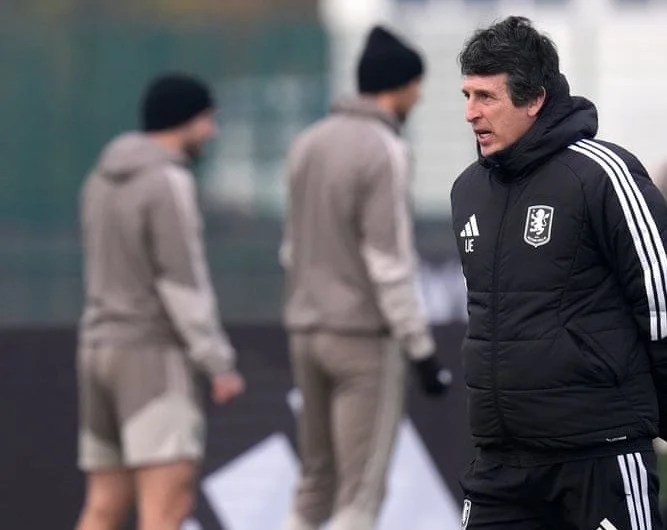
Galatasaray vs Aston Villa is the first competitive meeting in the history of the two clubs, and it will be played on a pitch that was still under emergency repair days before kick-off. For Nigerian readers, the more immediate fact sits in the team sheet: Victor Osimhen will not play. Galatasaray’s Super Eagles striker is out with a knee injury.
Kick-off at Rams Park is 5:45pm GMT on Tuesday, 24 November. That is 6:45pm in Lagos, Abuja and Port Harcourt, since Nigeria runs one hour ahead of GMT.
The Confirmed Timeline Behind Galatasaray vs Aston Villa
The pitch problem is documented rather than rumoured. Galatasaray moved Saturday’s home Super Lig fixture against Samsunspor away from Rams Park after starting emergency repairs to the hybrid surface this month, according to The Guardian. The match was staged at Basaksehir Fatih Terim stadium, a significantly smaller ground named after the former Turkey manager.
UEFA then barred Aston Villa from training at Rams Park on the eve of the game, so the surface could recover. Villa trained at Bodymoor Heath in Warwickshire on Monday before flying to Istanbul. Ian Maatsen, the Villa defender, said the squad knew the pitch was in a “bad condition”.
Okan Buruk, the Galatasaray manager, did not dispute that. “We are not expecting a perfect pitch, but we are at least expecting a pitch that will be playable and will not get any worse or deteriorate during the game,” he said. Sand remains present on the surface.
Unai Emery declined to change his preparation. “How the pitch is going to be tomorrow is important, but it’s not an excuse because it’s [the same] for both teams,” the Villa manager said. He added that Villa would not play if the surface had been judged a risk of injury to players.
What Osimhen’s Absence Means For Nigerian Fans
Galatasaray’s two major attacking threats are both missing. Osimhen is out with a knee injury and Rafael Leão is also unavailable, as reported by The Telegraph. Neither the club nor the match previews reviewed gave a return date for Osimhen.
The attacking load shifts to Aleksey Batrakov, who has scored in each of his last three Champions League matches, and Yunus Akgun, who scored in Saturday’s 2-1 win over Samsunspor alongside Lucas Torreira. Davinson Sánchez, the former Tottenham defender, is expected to return.
For Nigerian football the significance outlasts 90 minutes. Osimhen is the reference point of the Super Eagles attack, and a knee problem at club level becomes a national-team question by default. His absence also thins the African presence in a competition where Nigerian viewers historically follow players more closely than clubs.
Villa’s Form and the Numbers That Frame the Tie
Villa have nine points from 12 in the league phase — wins over Club Brugge, Fenerbahce and Viking, plus a defeat at Barcelona — and sit inside the top eight at the halfway stage. Paris Saint-Germain and Borussia Dortmund follow this fixture, so a result in Istanbul shapes the margin for error.
The domestic picture is less settled. Villa were knocked out of the League Cup by Bournemouth, drew at home with Fulham, surrendered two-goal leads at Old Trafford and were held by Sunderland at the weekend. Matty Cash is out with a concussion sustained on international duty with Poland; Victor Lindelof is available again after illness.
Turkish opposition has been kind and unkind in equal measure. Villa put six past Galatasaray’s city rivals Fenerbahce at Villa Park, but the Telegraph noted that away trips to Turkey are a different proposition, as Liverpool discovered in the previous round.
Galatasaray have won two of four in Europe, losing to Barcelona and Sporting Lisbon, and lead the Turkish Super Lig by three points.
Claims, Appeals and What Remains Unproven
Buruk was sent off after full-time against Samsunspor, collecting a second yellow card for failing to shake hands with referee Ali Sansalan. The touchline ban does not apply to the Champions League, so he will be in the dugout. Galatasaray have appealed the dismissal to the Turkish Football Federation.
Buruk’s account is his own. “You can shake hands if you want, or not,” he said. “The referee made a mistake. I expect that mistake to be reversed.” That is a claim by an interested party, not an established finding.
The pitch falls into the same category. That repairs took place, that sand is visible, that no pre-match training session was permitted and that UEFA cleared the ground to host are confirmed. That the surface will hold for 90 minutes is a forecast — including Buruk’s forecast.
How To Watch Galatasaray vs Aston Villa From Africa
Published listings place the match free-to-air on TRT1 in Turkey and on Virgin Media Play in the Republic of Ireland. Paid coverage is on TNT Sports 2 in the UK, Paramount+ in the US, DAZN in Canada and Stan Sport in Australia, per TechRadar.
None of the listings reviewed named a Nigerian rights holder. Nigerian viewers should confirm local coverage before kick-off rather than assume the fixture is on a domestic platform.
The Bigger Picture
A Champions League night in Istanbul exposes two different dependencies. Galatasaray built their attack around imported forwards and lose both to injury at once, leaning instead on Batrakov’s scoring run and Akgun’s domestic form. Nigeria, meanwhile, carries a national-team stake in the fitness of one man playing abroad while his club decides its European season.
The pitch adds a third layer. The competition schedule is dense enough that emergency repairs and a smaller alternative stadium become a legitimate pre-match storyline rather than a scandal. UEFA’s decision to block training, Emery’s refusal to treat the surface as an excuse and Buruk’s appeal against his own dismissal are all on the record and all checkable.
What remains genuinely open is the scoreline, and whether Galatasaray vs Aston Villa becomes the night Villa’s top-eight position hardened or the night it began to slip.
Frequently Asked Questions
What time does Galatasaray vs Aston Villa kick off in Nigeria?
The match kicks off at 5:45pm GMT on Tuesday, 24 November, which is 6:45pm West Africa Time in Lagos, Abuja and Port Harcourt.
Is Victor Osimhen playing for Galatasaray against Aston Villa?
No. Osimhen is sidelined with a knee injury, and Rafael Leao is also unavailable. Neither the club nor the previews reviewed gave a return date for Osimhen.
Why was the Galatasaray vs Aston Villa pitch an issue?
Galatasaray started emergency repairs to the hybrid surface at Rams Park this month, moved their weekend league game to Basaksehir Fatih Terim stadium, and UEFA blocked Villa from training at the venue the day before the match. Sand remains visible on the pitch.
FIRST TIME REACTIONS:
Be the first to leave us a comment – Galatasaray vs Aston Villa: Osimhen Out, Pitch Under Repair, down the comment section.
JOIN US ON OUR SOCIAL MEDIA:
About James Williams
James Williams is the Content Director at AfriLatest. With a background in journalism and a love for storytelling, he curates compelling content and multimedia that resonates with global readers. James is dedicated to maintaining AfriLatest as a trusted source for daily news, sports updates, and entertainment trends.
View all articles by James Williams-

 Car Reviews3 weeks ago
1955 Chevy Bel Air Restomod: What SEMA Really Proves
-
Savings & Investing4 weeks ago
Hidden Medicare Fees Draining Your Retirement Savings
-
Movies & TV4 weeks ago
Wizkid Starboy Desire Ft Banky W Shaydee: Fact Or Fan Fiction?
-
World News4 weeks ago
Sheinbaum No Proof Maduro: Mexico’s Test of US Evidence
-
Trend politics4 weeks ago
How 24-Hour Online Scrutiny Is Running Out Leaders
-
Health and Fitness4 weeks ago
Premature Ejaculation Treatment: Exercise vs Dapoxetine