Sports
Opening Night NBA Games: Reading the Data Before Tipoff
Three NBA games open 2026-27 on NBC. No final score exists yet, so read the rotations, shot quality and defensive data that actually predict outcomes.

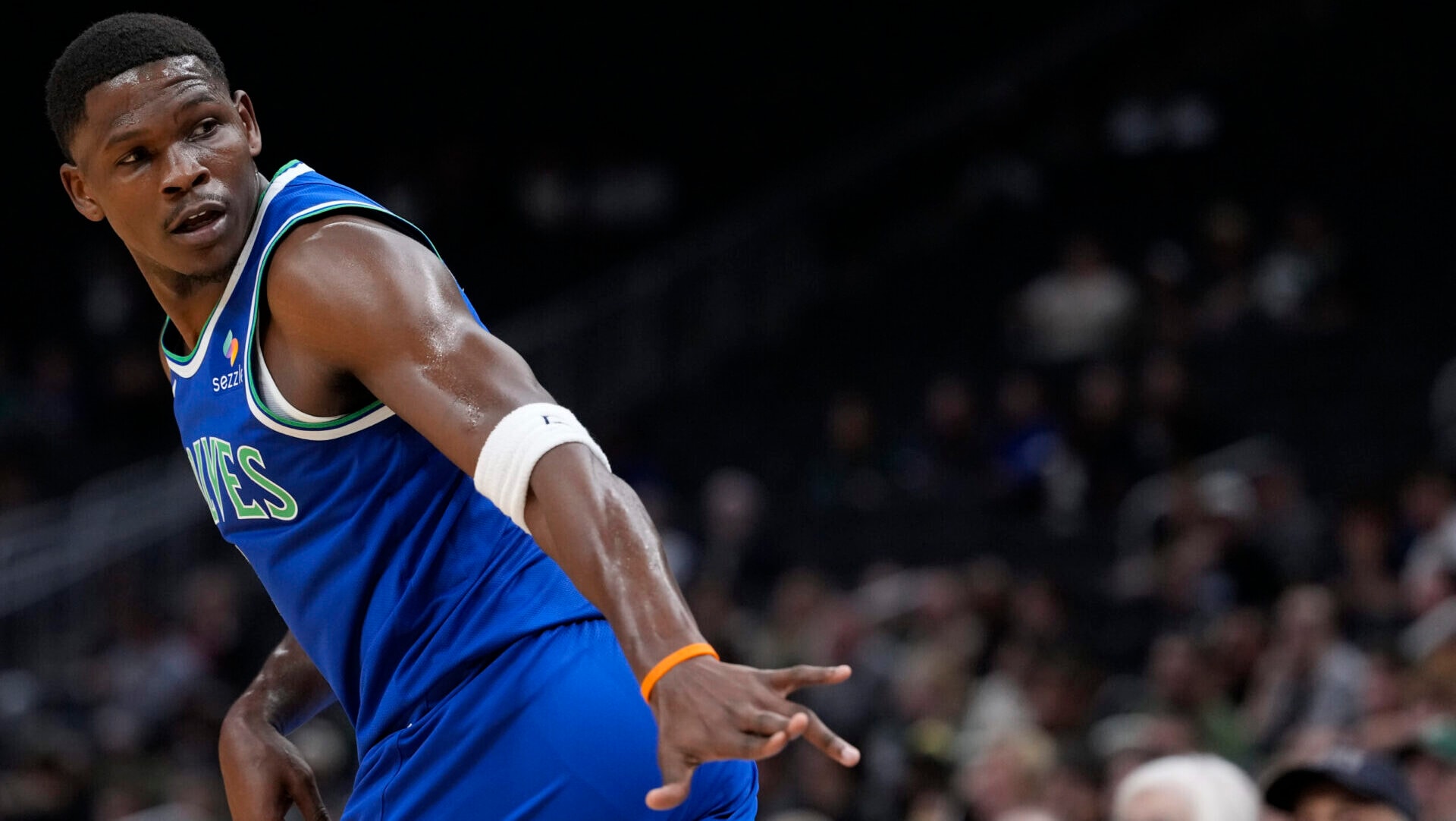
There is no final score to report from the 2026-27 opening tripleheader, because the three NBA games on NBC and Peacock had not tipped when this analysis was filed. That is the accurate starting point, not a dodge. Boston visits Detroit at 3 p.m. ET, Philadelphia visits New York at 7 p.m. ET after the Knicks’ 6:30 ring and banner ceremony, and Oklahoma City closes the night in San Antonio at 9:30 p.m. ET.
Opening week runs 41 matchups across six days, nine of them on the national stage. That volume produces plenty of NBA games and very little signal. Opening night is the worst statistical sample on the calendar and the sharpest diagnostic window of the year: rotations are unsettled, legs are fresh, and one hot bench shooter can flip a result. The useful question is not who wins these NBA games. It is which structural habits survived the summer. Three NBA games, three separate questions about whether a system or a roster is doing the work.
Detroit’s Defense Is The One Proven Number
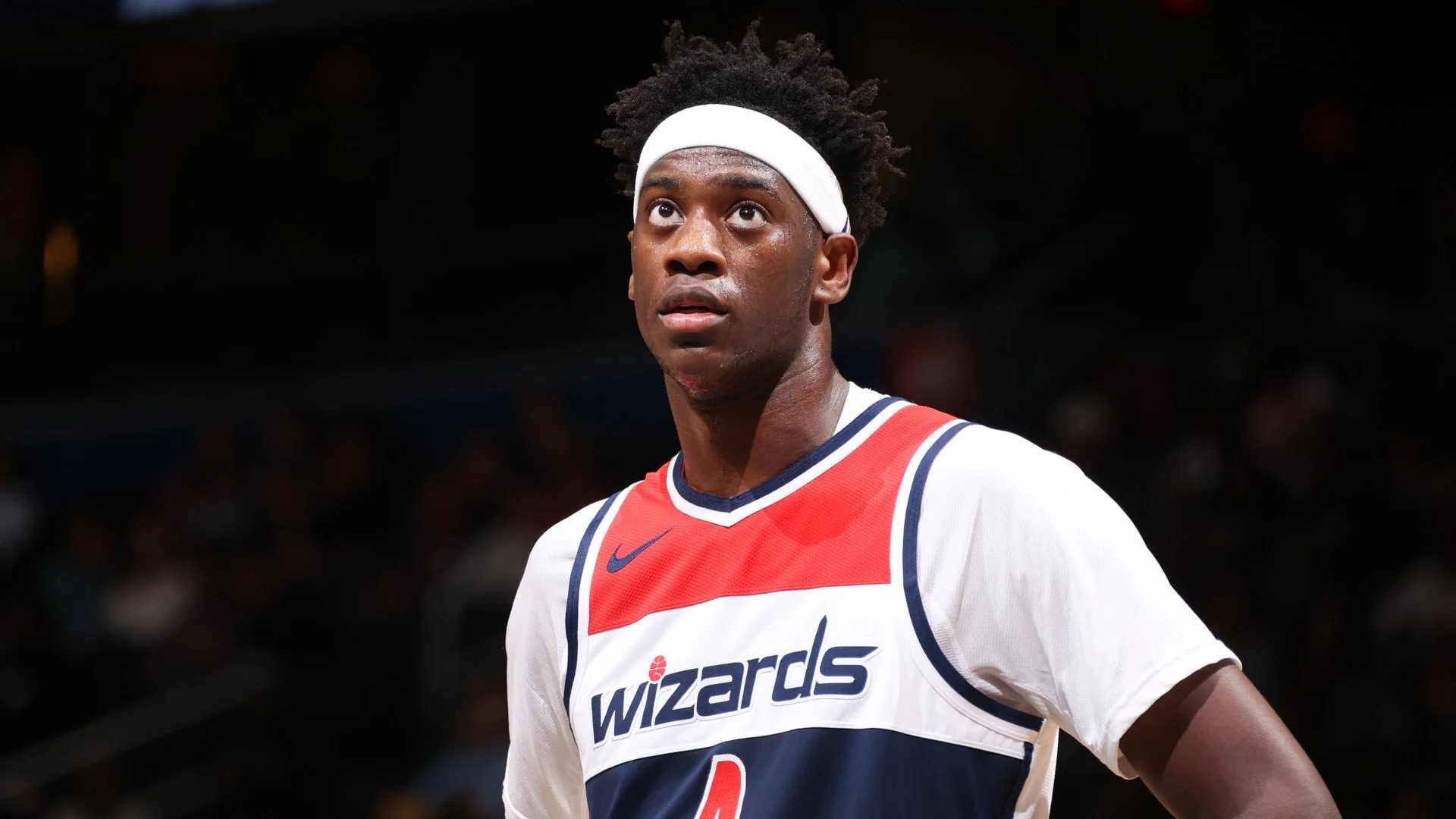
Three seasons ago the Pistons won 14 games and finished last in the East. Two seasons later they went 44-38 and ended a six-year playoff drought. Last season they took the East’s No. 1 seed with 60 wins, their first 60-win campaign in 20 years, and led the conference for 156 consecutive days behind the NBA’s second-best defensive rating. Cade Cunningham and Jalen Duren both made All-Star teams.
Then Cleveland happened. Detroit led the Eastern Conference semifinals 2-0, dropped four of the next five, and closed with a 125-94 home loss in Game 7. Cunningham did not soften it. “We were right there, but we fell short,” he said. “So that chip, that sting is going to sit for a while.”
The offseason rewired the supporting cast: John Collins, Isaiah Joe and Taurean Prince in; Isaiah Stewart, Tobias Harris and Caris LeVert out. Every one of these NBA games in October will be judged against a single question in Detroit, and it is not about shot-making. It is whether the second-best defensive rating travels without Stewart’s interior minutes. J.B. Bickerstaff was blunt about the identity. “That’s who we are,” the Pistons coach said. “That won’t change year to year. It doesn’t change person to person … it’s something that we can’t relent on.”
Boston’s Balance Meets A New Hierarchy
The Celtics traded Jaylen Brown to Philadelphia and handed Year 10 to Jayson Tatum with Paul George alongside him. The roster is new. The system is not. Boston is the only team to rank in the top five in both offensive and defensive rating in each of the past three seasons, a stretch that included the 2024 championship.
Preseason pointed the same way: 126 points per game, best in the league, and 107.3 allowed, third. Treat those numbers as directional, not predictive. October exhibitions are played against mixed lineups and half-effort closeouts. What survives the caveat is the shape. Boston generates efficient shots at volume and does not trade stops to get them. Joe Mazzulla framed the uncertainty as fuel. “There’s risk to the unknown, but there’s also opportunity to the unknown,” he said at Media Day.
Tatum’s individual profile is the swing variable. He averaged 21.8 points last season and shot 33% from three. With Brown gone, the volume rises. Against Detroit specifically, the sample is unusually stable: 25.0 points, 46.2% from the field and 40.1% from three across 22 regular-season meetings, with nine straight games of 25 or more. Twenty-two games is a real denominator. Preseason is not. The next few NBA games will show whether Mazzulla’s balance holds when the offense is built around one wing instead of two.
Continuity Against Arithmetic In New York
The Knicks ended a 53-year drought 129 days ago and return nearly their entire rotation, with Andre Drummond replacing Mitchell Robinson, who landed in Boston. New York is chasing a repeat nobody has managed since the 2017-18 Warriors, and its continuity has a measurable shape. The Knicks were the only team to improve its offensive efficiency from the regular season (118.7) to the playoffs (119.9), and the 11-0 run into the Finals featured 122.9 points per game, the highest-scoring 11-game stretch in a single postseason since the 1985 Lakers.
Philadelphia answers with arithmetic: LeBron James, Jaylen Brown, Tyrese Maxey, Joel Embiid and VJ Edgecombe, 36 combined All-Star selections, and a title drought dating to 1983. James framed the cost at Media Day. “If you sacrifice one or two more shots, that gives you one or two more bursts of energy in the 4th quarter,” he said.
Thirty-six All-Star selections is a paper number. The testable one is James at 7.2 assists per game, and whether that playmaking survives a possession diet that must also feed Maxey and Embiid. These NBA games in October will not settle it. The fourth-quarter touch chart will start to.
The Data That Outlives These NBA Games
The league is pushing deeper into process measurement this season. NBA Inside the Game powered by AWS adds Handle Score, which grades the style and effectiveness of every dribble, plus a zone defense model tracking how often and how successfully teams use it. NBA Blueprint generates pregame and postgame reports for every game, and Game Pulse builds a live shot chart with quarter-by-quarter player splits inside the app. Full details are published by NBA.com.
That layer matters more than any opening-night box score. Oklahoma City at San Antonio is the cleanest test on the slate, a Western Conference finals rematch between teams that did not rebuild their cores. When the same rosters meet repeatedly, zone usage rates and shot location become comparable data rather than noise. A single result from these NBA games proves nothing. A repeated pattern of where shots come from and who is closing out on them does.
What It Means For The Standings
One of 82 decides nothing. The standings are built from reference points, though, and Detroit hosting a top-five two-way team is the first real one. New York’s edge is continuity and a rotation that already knows its late-game shape. Boston’s is a system that has not dropped out of the top five on either end for three straight seasons. Philadelphia’s is talent that has not yet been asked to share a ball under pressure.
The schedule and broadcast details are confirmed by Yahoo Sports, and the season’s framing comes from the league’s own opening-day briefing. What is not confirmed is how any of it looks at game speed with a defender in the gap.
The Knicks are 0-0, and Jalen Brunson wants it that way. “It’s a new journey, it’s a different journey,” he said. “The approach has to be the same, if not better.” That is the correct read on these NBA games too. The scoreboard will update by midnight. The habits underneath it are what the next 81 games will confirm or expose, and the standings will not be decided by these NBA games so much as shaped by what they reveal about the ones that follow.
Frequently Asked Questions
What time do the opening night NBA games start?
Boston at Detroit tips at 3 p.m. ET, Philadelphia at New York starts at 7 p.m. ET after the Knicks’ 6:30 p.m. ring and banner ceremony, and Oklahoma City at San Antonio closes the slate at 9:30 p.m. ET. All three air on NBC and Peacock.
Why is there no final score in this recap?
The three games had not tipped off when this analysis was filed. Rather than invent results, the piece examines the confirmed structural evidence: Detroit’s second-best defensive rating, Boston’s three-year top-five ranking on both ends, and New York’s playoff offensive efficiency jump.
What should fans watch beyond the points total?
Watch Detroit’s defense without Isaiah Stewart’s interior minutes, Boston’s shot quality with Jayson Tatum carrying a larger load, and how Philadelphia distributes possessions between LeBron James, Tyrese Maxey and Joel Embiid in the fourth quarter.
Receive alerts for NBA games and more like it.
 Follow AFRILATEST on Google News
FIRST TIME REACTIONS:
Be the first to leave us a comment – Opening Night NBA Games: Reading the Data Before Tipoff, down the comment section.
JOIN US ON OUR SOCIAL MEDIA:

            About James Williams
            James Williams is the Content Director at AfriLatest. With a background in journalism and a love for storytelling, he curates compelling content and multimedia that resonates with global readers. James is dedicated to maintaining AfriLatest as a trusted source for daily news, sports updates, and entertainment trends.
            View all articles by James Williams

Sports
Marchenko Redirects Puck Past Greaves: Fact Checked
Kirill Marchenko redirects puck past Greaves? That goal was Alex Bump’s. A fact check, then a preview of Blue Jackets vs Hurricanes at Nationwide Arena.


The Columbus Blue Jackets host the first-place Carolina Hurricanes at Nationwide Arena on Tuesday, carrying a season-best nine-game point streak into the opener of a three-game homestand.
The phrase Marchenko redirects puck past Greaves circulated after Saturday’s 2-1 shootout win over the Philadelphia Flyers. It gets two facts backwards: Marchenko did not redirect a puck, and Jet Greaves was not the goaltender who was beaten.
Columbus is 15-2-4 in 21 games since Rick Bowness replaced Dean Evason as coach on Jan. 12. Carolina arrives first in the standings. Columbus arrives with the tighter recent record and six points from four games in a week.

The Two First-Period Goals That Got Merged
Kirill Marchenko opened the scoring at 4:21, taking a pass from Adam Fantilli and beating Dan Vladar, who was down in the crease and trying to recover. Damon Severson picked up the second assist. The goal was Marchenko’s 25th of the season and the 100th of his NHL career, reached in his 276th game, second-fastest in Blue Jackets history behind Rick Nash (237 games). He is the first Columbus player with consecutive 25-goal seasons since Artemi Panarin from 2017-19, per the NHL.com recap.
The redirect past Greaves came 6:03 later and belonged to Philadelphia. Rookie Alex Bump tipped Emil Andrae’s shot from the blue line off the goal post and under the crossbar at 10:24. Officials reviewed the play and confirmed the puck crossed the line. Christian Dvorak had the second assist, and Bump had his second goal in his fifth NHL game.
Both goals came in the first period. Both involved traffic and a scrambling goaltender. The shorthand collapsed the two into one sentence and attached the Flyers’ goal to the Blue Jackets’ winger.
Why Marchenko Redirects Puck Past Greaves Describes The Flyers’ Goal
The distinction is not pedantic. Marchenko finished Saturday with one goal and the shootout decider, which does not count toward his season total. Greaves made 18 saves and is 9-0-2 in his last 11 starts. Attributing Bump’s redirect to Marchenko moves a goal from a fourth-line rookie to a first-line scorer, and it moves a goal against Greaves to a goal against Vladar, who stopped 27 shots.
The season totals show why the confusion travels. Marchenko has 10 points (five goals, five assists) in his last seven games after being held pointless against Florida on Thursday, which ended a six-game point streak. He is tied for the NHL lead with six shootout goals on seven attempts, an 85.7 percent conversion rate, according to 1st Ohio Battery. The 100th goal made him the ninth Blue Jacket to reach the mark.
Goaltending And Special Teams Frame The Carolina Matchup
Philadelphia entered Saturday last in the NHL on the power play at 15.5 percent and finished 0-for-4 with five shots on goal. The four-minute advantage that bridged the second and third periods produced four shots. Bowness credited the kill first: “The PKers won the game for us, really. They did. Especially that four minutes.”
Discipline is the swing factor against a first-place team. Columbus has had one or zero power plays in 14 of its previous 65 games, a pattern Bowness has complained about publicly. Handing Carolina a four-minute advantage would test a penalty kill that just passed its hardest exam of the month.
No injury or availability information for either club was included in the source material, so no lineup projection is offered here. Philadelphia’s Denver Barkey left Saturday’s game after a Marchenko hit that officials reduced from a major to a minor for boarding.
The two published accounts of Saturday’s game also disagree on one detail: whether either team recorded a shot in overtime. One recap states neither club had a shot on goal in the extra period; the second states Philadelphia had one and Greaves saved it. Both agree the best overtime chance, Matvei Michkov alone in front, never became a shot because Fantilli’s backcheck knocked the puck away with 26 seconds left.
A Prediction For Tuesday, And What It Hinges On
Columbus has gone beyond regulation in four of its last five games, and the streak is built on goaltending and penalty killing rather than offense. The projection here is a one-goal game that stays tied into the third period, decided by whether the Blue Jackets keep their penalty count low and whether Greaves extends a run that has produced nine wins and two overtime losses in 11 starts. Carolina’s standing favors the visitors in a wide-open game; a tight, low-event game favors the home side.
What the record will not support is the shorthand. Anyone repeating Marchenko redirects puck past Greaves after Tuesday will be describing a different goal, by a different player, against a different goaltender, on a different night.
Frequently Asked Questions
Did Kirill Marchenko redirect a puck past Jet Greaves?
No. Marchenko scored at 4:21 of the first period against Philadelphia by beating Dan Vladar, who was down in the crease trying to recover. The redirect past Greaves was scored by Flyers rookie Alex Bump at 10:24 off a shot from Emil Andrae.
What milestone did Marchenko reach against the Flyers?
His first-period goal was the 100th of his NHL career, scored in his 276th game. That is the second-fastest pace to 100 goals in Blue Jackets history behind Rick Nash, who reached it in 237 games. It was also his 25th goal of the season.
Who do the Blue Jackets play next?
Columbus opens a three-game homestand at Nationwide Arena on Tuesday against the first-place Carolina Hurricanes, coming off a season-best nine-game point streak and a 15-2-4 record in 21 games under Rick Bowness.
Receive alerts for Marchenko redirects puck past Greaves and more like it.
FIRST TIME REACTIONS:
Be the first to leave us a comment – Marchenko Redirects Puck Past Greaves: Fact Check, down the comment section.
JOIN US ON OUR SOCIAL MEDIA:
            About Paul Nwogo
            Paul Nwogo is an engineer, published author, and the Head Manager at AfriLatest. He has written numerous books available on Amazon covering a diverse range of topics, including health, personal finance, relationships, work ethics, and scam survival. With his technical background and passion for writing, Paul now oversees the editorial direction of AfriLatest, delivering practical, accurate, and engaging content on trending news, music, and global lifestyle topics.
            View all articles by Paul Nwogo

Sports
Allen Bailey, Former Chiefs Lineman, Dies at 37
Allen Bailey, former Chiefs defensive end, was found dead at 37 in his Florida home. His family cites natural causes; no official cause has been released.

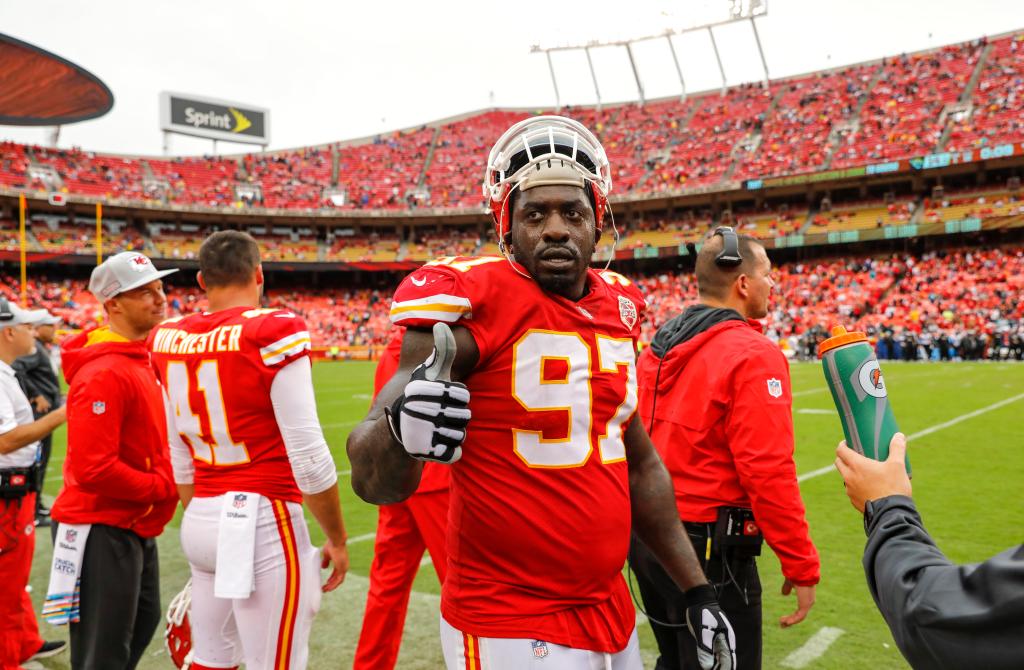
Allen Bailey, a former Kansas City Chiefs defensive end who played 133 regular-season games across ten NFL seasons, was found dead in his Florida home on Tuesday. He was 37.
His wife, Lauren Bailey, found him, according to his brother, Alford Bailey Jr., who spoke to TMZ. The family believes he died of natural causes. As of Wednesday afternoon, no official cause of death had been released, ESPN reported.
That gap, between what a family believes and what a medical examiner certifies, is the line across which every account of Allen Bailey’s death should be read this week. Most were not written that way.
What Is Confirmed About Allen Bailey’s Death, And What Is Not
Confirmed: he died. He was found by his wife in their Florida home on Tuesday. He was 37. He played ten seasons in the NFL. The Chiefs acknowledged the death publicly on Wednesday, when head coach Andy Reid opened his weekly press conference with it.
Not confirmed: the cause. Natural causes is a family belief, relayed through one outlet and repeated since by larger ones. It is not a coroner’s finding, and no death certificate has been described in any of the reporting.
The wording of headlines is a second gap. One national outlet announced the death of a Kansas City Chiefs star. The record shows a durable, productive starter with 70 career starts, 22 sacks and 248 combined tackles. It does not show a Pro Bowl selection. A reader in Lagos or Nairobi scanning a push alert would not learn that difference from the headline, and it is the part of an obituary that a player’s record actually depends on.
The Numbers He Left Behind
Kansas City drafted him in the third round in 2011 out of the University of Miami, and he stayed eight seasons. He finished with 40 tackles for loss, seven fumble recoveries and four forced fumbles to go with those 22 sacks.
His best year came in 2018: a career-high six sacks, ten quarterback hits and four fumble recoveries, one returned for a touchdown. Midway through the 2014 season he signed a four-year, $25 million extension. He spent his last two seasons in Atlanta, appearing in 31 games before the Falcons released him in 2021 while reshaping the roster and cutting salary-cap costs.
He was born on Sapelo Island, off the Georgia coast, described in the reporting around his career as reachable only by boat. He did not play organized football until the seventh grade, learning the game in pickup games with family before McIntosh County Academy and then Miami, where he was nicknamed The Hulk as a freshman.
How His Coaches And Teammates Remembered Him
Reid coached him from 2013 to 2018 and raised the death before taking questions.
“Our hearts go out to his family, and our prayers are with them,” Reid said. “Way too young, obviously. He was one of my favorite players, a great kid. I’m just sorry to see that happened to him.”
Reid described the player as much as the person: “Talk about giving you an honest down, he gave you an honest down every snap.”
Patrick Mahomes, a teammate for two seasons, told the story he says he repeats annually, of walking into the locker room after the 2017 draft and seeing Allen Bailey first.
“I’m like, ‘This isn’t the Big 12 anymore.’ It was surreal to see him,” Mahomes said. “A great teammate. He’s one of those glue guys on the team. He makes plays. He’s not necessarily a superstar, but the guy that kind of makes everything go.”
Within hours, Chris Jones, Dwayne Bowe, Mitch Morse and Mitchell Schwartz had posted. Bowe wrote that Bailey was “one of the Best teammate I’ve had a chance to be around.” Colin McCarthy, a college teammate, wrote: “Lost a fellow brother today.” Derrick Johnson, quoted on the team’s website, called him “kind of a gentle giant.” Jeff Allen wrote: “Lost a teammate, a friend, a brother.”
The Foundation And The Island That Shaped Him
He founded the Allen Bailey Foundation in 2016, a nonprofit built around academic and athletic development for young athletes, with work concentrated in Georgia. It launched McIntosh County’s first free youth football camp and runs turkey drives, toy drives and backpack giveaways, according to reporting compiled on his career.
That is the part of the record least likely to appear in a push alert, and the part his former coach kept returning to. “It’s terrible, especially with all the good he did,” Reid said. “He’s got a family and that’s a sad deal. I know his father passed away young, too.”
Context that belongs in the same file: his death comes months after former Chiefs teammate Jordan Devey died at 38, a death reported as a suicide by a family-linked fundraiser. Two other former Chiefs, Frank Pitts and Bobby Hunt, died this year in their 80s, the team’s coverage noted.
What To Watch After Allen Bailey’s Death
The medical examiner’s finding is the next verifiable document, and until it exists, natural causes should carry its attribution every time it is printed. Funeral arrangements, and any formal statement from the family, would follow. The foundation’s status is also unresolved in the public record.
What does not need to wait is the arithmetic. A 37-year-old man who started 70 NFL games, made 22 sacks and went home to run a free football camp for children in his own county deserves a record written to the number, not to the adjective. That is the standard Allen Bailey’s career actually set.
Frequently Asked Questions
How did Allen Bailey die?
No official cause of death had been released as of Wednesday afternoon. His brother, Alford Bailey Jr., told TMZ that the family believes he died of natural causes. That is a family belief, not a coroner’s finding.
How many NFL games did Allen Bailey play?
He appeared in 133 regular-season games over ten seasons, eight with Kansas City and two with Atlanta, recording 70 starts, 22 sacks, 248 combined tackles, 40 tackles for loss, seven fumble recoveries and four forced fumbles.
Where was Allen Bailey from?
He was born on Sapelo Island, Georgia, an island off the coast described in reporting around his career as accessible only by boat. He attended McIntosh County Academy before playing at the University of Miami.
FIRST TIME REACTIONS:
Be the first to leave us a comment – Allen Bailey, Former Chiefs Lineman, Dies at 37, down the comment section.
JOIN US ON OUR SOCIAL MEDIA:

            About James Williams
            James Williams is the Content Director at AfriLatest. With a background in journalism and a love for storytelling, he curates compelling content and multimedia that resonates with global readers. James is dedicated to maintaining AfriLatest as a trusted source for daily news, sports updates, and entertainment trends.
View all articles by James WilliamsSports
Fred Lorenzen CTE: Brain Health Study Habits That Work
Fred Lorenzen’s stage 3 CTE diagnosis shows why brain health study habits must start with the sample, not the headline number.
Most brain health study habits fail at the same point, and it is not concentration. It is the moment a statistic leaves its sample.
A candidate revising comprehension for a national exam reads that 93.2 per cent of former NFL players whose brains were examined had CTE, copies the figure into an answer, and loses the mark. The number is accurate. The sentence built around it is not, because it drops the word donated.
The same slip shaped coverage of Fred Lorenzen this week. His family released the results of his post-mortem brain tissue analysis, and the finding is narrow, specific and verified. Much of the reaction treated it as a verdict on an entire sport.
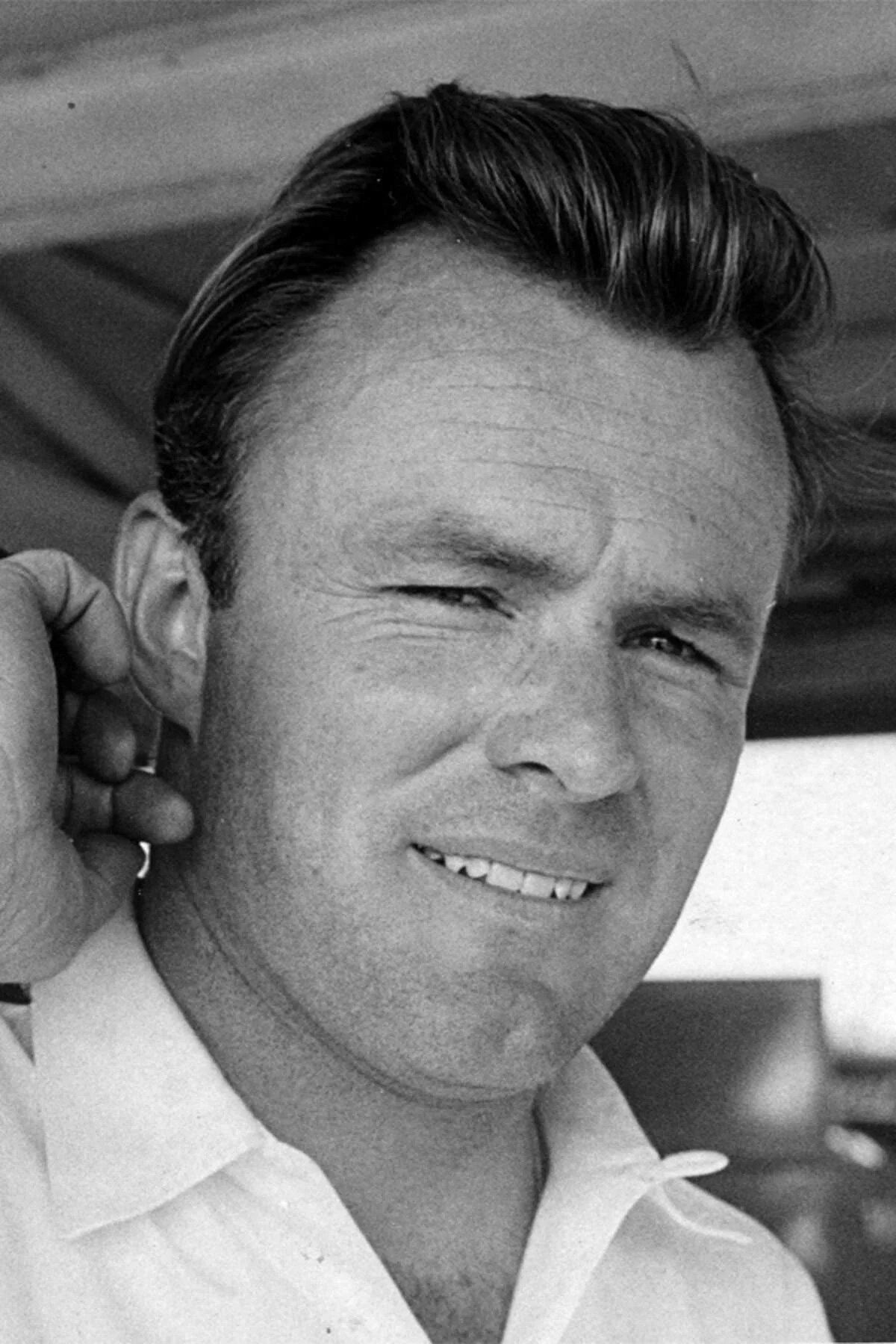
What The Lorenzen Analysis Actually Found
Researchers at the Boston University CTE Center diagnosed Lorenzen with stage 3 chronic traumatic encephalopathy, the second-most severe of four stages, according to the Charlotte Observer. He died on December 18, 2024, at 89, after living with dementia for about two decades. He is the first known NASCAR driver with a CTE diagnosis, the Concussion and CTE Foundation said, and he pledged his brain for research in 2016.
Two further items are equally verified. His children, Chris Lorenzen and Amanda Lorenzen Gardstrom, gave $1 million to the foundation to create the Fred Lorenzen Memorial HelpLine for drivers and families seeking care. And after the family opened talks with NASCAR leadership in January, NASCAR declined to join the initiative.
“We had hoped NASCAR would join us in this effort, and while we’re disappointed that hasn’t happened, we remain hopeful there will be opportunities to work together to support the drivers who helped build the sport,” Chris Lorenzen said in the statement carried by Jayski.
The gap between a documented diagnosis and an adopted policy is the part students should be trained to see. A confirmed result is not a programme. A pledge is not a service. Of the four verified items, only the HelpLine is an intervention that exists, and it exists because a family paid for it.
Two Numbers That Only Look Contradictory
Two figures circulated this week and appear to disagree.
A study published in the British Medical Journal in August examined 338 brains of NFL players who died between 2008 and 2021. Of those, 315, or 93.2 per cent, had CTE. A separate study released in August and led by Boston University and Harvard Medical School researchers found that roughly one in four former NFL players who died between 2016 and 2021 had CTE, USA TODAY Sports reported.
Both are attributable. Both describe different denominators. The first is a rate among donated brains. A donated brain is not a random brain, and a rate built on donation is not a rate for a population. The second is a rate across a defined set of deaths. Neither figure is a rate for players who are still alive. Read as one number, they mislead. Read as two, they teach.
Motorsport has nothing comparable. The evidence base for CTE in racing is thinner than in football, and no equivalent study of drivers exists in the material published this week. The Lorenzen result lands less than a month after the family of Darrell Waltrip said he would step away from public life following a diagnosis of frontotemporal degeneration that could be complicated by possible CTE. Chris Lorenzen said the news did not surprise him, and asked whether injured drivers can be reached earlier: “Because our dad didn’t have any help.
Brain Health Study Habits That Fix This
The repair is a three-pass read, and it takes about four minutes per news story.
Pass one: what was measured? Write it as a phrase. Brain tissue, examined after death.
Pass two: who was in the sample? Donated brains, all recorded deaths, or living players. These are three different populations and they support three different sentences.
Pass three: what claim does the number carry? A claim about donors, a claim about a defined group, or a claim about everyone. Nearly every error happens when pass three jumps past pass two.
Run it on Lorenzen. Pass one: post-mortem tissue, stage 3 of 4. Pass two: one driver. Pass three: the finding supports a claim about that driver and strengthens the case for research in his sport. It cannot tell you the CTE rate among racing drivers, because nobody has measured that.
Then close the page and say the three passes aloud from memory. That is active recall, and it is the step students skip. Highlighting a passage feels like learning because the page looks familiar. Recall exposes the gap in seconds, before an examiner does.
Add a timer. Give yourself 90 seconds to state the denominator of a statistic in a comprehension passage. Speed matters because the original error is made under pressure, and a slow correction does not transfer to exam conditions.
Then keep an error log with three columns: dropped qualifier, wrong denominator, causal leap. When a practice answer goes wrong, write the actual mistake into one column. The log converts a vague sense of weakness into a list a teacher can act on.
What The Error Costs
In Nigeria and elsewhere in Africa, the price of a confident wrong answer is not abstract. A candidate who repeats a school-leaving or entrance examination pays another registration fee, arranges transport, and loses a year that could have gone to a polytechnic, a university or a job. Where household money is tight, the second attempt competes with food, data and the school fees of siblings.
Data costs shape method too. Where a bundle is rationed, every past paper has to earn its place, so one passage read properly beats ten skimmed.
Educators carry a share of the responsibility. A marker who ticks a correct figure written beside a wrong claim teaches the wrong lesson. Checking the qualifier — donated, one driver, after death — costs a teacher nothing and changes what a class accepts as evidence.
Try It Today
Take one story about a brain study, including the Lorenzen case, and run the three passes on paper: what was measured, who was in the sample, what the number can support. Shut the page. Write the sentence from memory. Compare it to the original.
Do it once today and once tomorrow. The brain health study habits worth keeping are the ones that survive a second day.
Frequently Asked Questions
What did the Fred Lorenzen brain study find?
Researchers at the Boston University CTE Center diagnosed Lorenzen with stage 3 chronic traumatic encephalopathy, the second-most severe of four stages, after a post-mortem examination of his brain tissue. He died on December 18, 2024, at 89, after living with dementia for about 20 years. He is the first known NASCAR driver with a CTE diagnosis, according to the Concussion and CTE Foundation.
Why do the NFL CTE figures of 93.2 per cent and one in four disagree?
They describe different denominators. The 93.2 per cent figure comes from 315 of 338 donated brains in a British Medical Journal study of players who died between 2008 and 2021. The one-in-four figure comes from a Boston University and Harvard Medical School study of former players who died between 2016 and 2021. A rate built on donated brains is not a rate for all players, and neither figure describes living players.
What can students learn from how this story was reported?
Check the sample before repeating a number. State what was measured, who was in the sample, and what claim the figure can support. A post-mortem diagnosis of one driver does not establish a CTE rate for all racing drivers, and a donation that creates a help line is not the same as a sport-wide policy.
{“@context”: “https://schema.org”, “@type”: “FAQPage”, “mainEntity”: [{“@type”: “Question”, “name”: “What did the Fred Lorenzen brain study find?”, “acceptedAnswer”: {“@type”: “Answer”, “text”: “Researchers at the Boston University CTE Center diagnosed Lorenzen with stage 3 chronic traumatic encephalopathy, the second-most severe of four stages, after a post-mortem examination of his brain tissue. He died on December 18, 2024, at 89, after living with dementia for about 20 years. He is the first known NASCAR driver with a CTE diagnosis, according to the Concussion and CTE Foundation.”}}, {“@type”: “Question”, “name”: “Why do the NFL CTE figures of 93.2 per cent and one in four disagree?”, “acceptedAnswer”: {“@type”: “Answer”, “text”: “They describe different denominators. The 93.2 per cent figure comes from 315 of 338 donated brains in a British Medical Journal study of players who died between 2008 and 2021. The one-in-four figure comes from a Boston University and Harvard Medical School study of former players who died between 2016 and 2021. A rate built on donated brains is not a rate for all players, and neither figure describes living players.”}}, {“@type”: “Question”, “name”: “What can students learn from how this story was reported?”, “acceptedAnswer”: {“@type”: “Answer”, “text”: “Check the sample before repeating a number. State what was measured, who was in the sample, and what claim the figure can support. A post-mortem diagnosis of one driver does not establish a CTE rate for all racing drivers, and a donation that creates a help line is not the same as a sport-wide policy.”}}]}
Receive alerts for brain health study habits and more like it.
FIRST TIME REACTIONS:
Be the first to leave us a comment – Fred Lorenzen CTE: Brain Health Study Habits That Work, down the comment section.
JOIN US ON OUR SOCIAL MEDIA:
About James Williams
James Williams is the Content Director at AfriLatest. With a background in journalism and a love for storytelling, he curates compelling content and multimedia that resonates with global readers. James is dedicated to maintaining AfriLatest as a trusted source for daily news, sports updates, and entertainment trends.
View all articles by James Williams
-
 Startups3 weeks ago
What a Successful Dangote Refinery IPO Really Says
-
Trending Entertainment News1 week ago
Taylor Swift Joins Beatles as Only Acts With 100 Weeks at No. 1
-
World News4 weeks ago
Carney Calls U.S. Tariffs a Miscalculation as Canada Retaliates
-
Football4 weeks ago
Mexico vs Colombia 2026: Márquez Debut Ends in Defeat
-
Fintech4 weeks ago
OPay No Dey Comot Nigeria: How to Verify Fintech News
-
Fintech4 weeks ago
OPay Investing in People to Build a Better Nigeria
-
Tech & Gadgets2 weeks ago
Apple Watch and AirPods Fall Deals: Save $120 Today
-
Nigerian Business3 weeks ago
Moniepoint POS Network: How to Buy Dangote Shares