Football
Mexico vs Colombia: Márquez Debut Ends in Friendly
Mexico vs Colombia in Baltimore marked Rafa Márquez’s debut as El Tri manager. Read the match report, key moments, and what’s next for both teams.

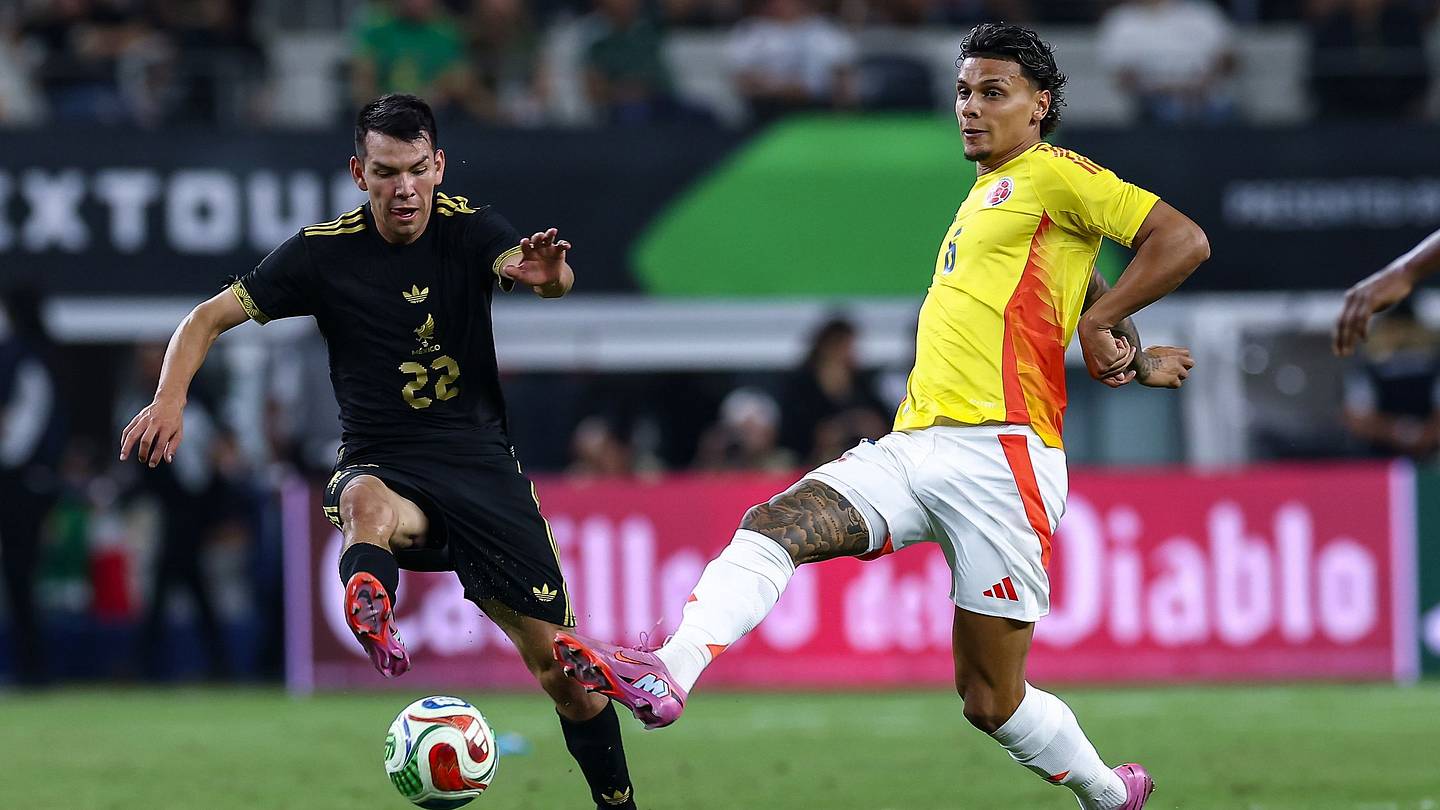
BALTIMORE LATEST — Luis Suárez scored in the ninth minute and Colombia led Mexico 1-0 in an international friendly at M&T Bank Stadium on Saturday night, spoiling Rafa Márquez’s debut as El Tri manager.
Suárez headed home a cross from Richard Ríos to give Los Cafeteros an early advantage. The match, played in steady rain, drew a reported crowd of more than 60,000 tickets sold, though empty seats were visible in the upper levels of the stadium.
Márquez, who captained Mexico in five World Cups as a player, took charge of the senior national team for the first time. The match marked the start of a new cycle for El Tri after their round-of-16 exit at the 2026 World Cup on home soil, where they fell 3-2 to England.
Mexico entered the match ranked 10th in the FIFA rankings. Colombia arrived after a penalty-shootout loss to Switzerland in the World Cup quarterfinals.
Why the Mexico vs Colombia friendly matters
For Mexico, the match was the first step in a planned transition. A succession plan put in place two years ago elevated Márquez to the top job after Javier Aguirre’s tenure ended. Aguirre is understood to be in advanced discussions to take charge at Valencia in La Liga, according to reports.
Márquez’s appointment carries significant expectations. Mexico had a strong World Cup showing, winning four of five matches before losing to England in a match where they were arguably the better side. The new manager must build on that momentum while integrating younger players.
For Colombia, the match offered a chance to regroup. Nestor Lorenzo remains at the helm despite an underwhelming WorldCup elimination. His side has quality across the pitch and a defined style, but is navigating a transition of its own. Lorenzo confirmed the iconic number 10 shirt will not be retired following James Rodriguez’s international retirement.
Colombia was without Bayern Munich star Luis Diaz, who was left off the roster for this window for rest and recovery. Despite his absence, Colombia controlled the early stage.
How the Mexico vs Colombia match unfolded (Mexico vs Colombia)
Mexico lined up with Raúl Rangel in goal and a back four of Jorge Sánchez, Johan Vásquez, Israel Reyes, and Jesús Gallardo. Erik Lira, Gilberto Mora, and Luis Chavez started in midfield, with Armando González, Hirving Lozano, and Roberto Alvarado leading the attack. Mora, a highly rated young midfielder, wore the No. 10 shirt.
Colombia started Álvaro Montero in goal, with Daniel Muñoz, Jhon Lucumí, Dávinson Sánchez, and Álvaro Angulo across the back. Castaño, Richard Ríos, and Gustavo Puerta formed the midfield, while Luis Suárez, Carlos Andrés Gómez, and Jhon Arias started up front.
Mexico was missing several key players due to injuries, includng Julián Quiñones, César Montes, and Raúl Jiménez.
Heavy rain fell in Baltimore throughout the day & continued drizzling at kickoff. The conditions affected the playing surface and contributed to the sparse attendance in some sections.
Recent history favored Colombia. Los Cafeteros had won their last four meetings against Mexico, including a 4-0 victory in October 2025. Colombia had also won six of their last eight friendlies with six clean sheets.
What’s next for Mexico and Colombia
Saturday’s match was the first-ever Mex Tour stop in Baltimore during the tour’s 23-year history.
Mexico has three more matches scheduled during the extended international break. El Tri will face Peru on Sept. 29 at Sports Illustrated Stadium in Harrison, New Jersey, then play the United States on Oct. 3 at State Farm Stadium in Glendale, Arizona. They close the window against Chile on Oct. 6 at the Los Angeles Memorial Coliseum.
The busy schedule gives Márquez significant time to implement his preferred style and evaluate players ahead of future competitions.
Colombia will play two more games during the fall international window. Lorenzo’s side faces Paraguay on Oct. 2 before wrapping up the camp against Peru on Oct. 6.
The Mexico vs Colombia result will be scrutinized as both teams begin building toward the next World Cup cycle. For Márquez, the priority is establishing an identity and integrating new faces while maintaining the positive momentum from the summer. For Lorenzo, the focus is on retooling a squad that reached the World Cup quarterfinals but fell short of its ultimate goal.
Mexico has never won the World Cup. Their best-ever finish remains two appearances in the quarterfinals. Colombia reached the quarterfinals in 2026, their best result since 2014.
The next few months will reveal whether Márquez can translate his legendary playing career into managerial success at the senior level. His only previous managerial experience came with Barça Atlètic in 2023-24.
For Colombia, the challenge is maintaining their recent dominance over Mexico while integrating new players into Lorenzo’s system. The absence of Diaz for this window provided an opportunity for others to step forward.
Both teams return to action next week, with Mexico hosting Peru and Colombia facing Paraguay. The Mexico vs Colombia rivalry will renew in future windows, but Saturday’s match set the tone for what comes next.
Frequently Asked Questions (Mexico vs Colombia)
What was the result of Mexico vs Colombia?
Colombia led 1-0 after Luis Suárez scored in the ninth minute. The match was played at M&T Bank Stadium in Baltimore on Sept. 26, 2026.
Who is Mexico’s new manager?
Rafa Márquez made his debut as Mexico manager in the match against Colombia. He captained Mexico in five World Cups as a player and previously managed Barça Atlètic.
Why was Luis Diaz not playing for Colombia?
Luis Diaz was left off Colombia’s roster for this international window for rest and recovery, according to the source material.
Latest Articles
- Spark Plug Replacement Cost: Fake Parts & Real Prices
- OPay Investing in People to Build a Better Nigeria
- Hyundai Elantra Parts: Maintenance Tips for N Models
- OPay No Dey Comot Nigeria: How to Verify Fintech News
- GTBank vs Access Bank: Service Disruptions and Lending Rates


Football
Rayan Cherki Equaliser Denies Napoli Win At Man City
A Rayan Cherki equaliser saved Manchester City in a 2-2 draw with Napoli, but reports of a financial-rules ruling matter for Nigerian fans.


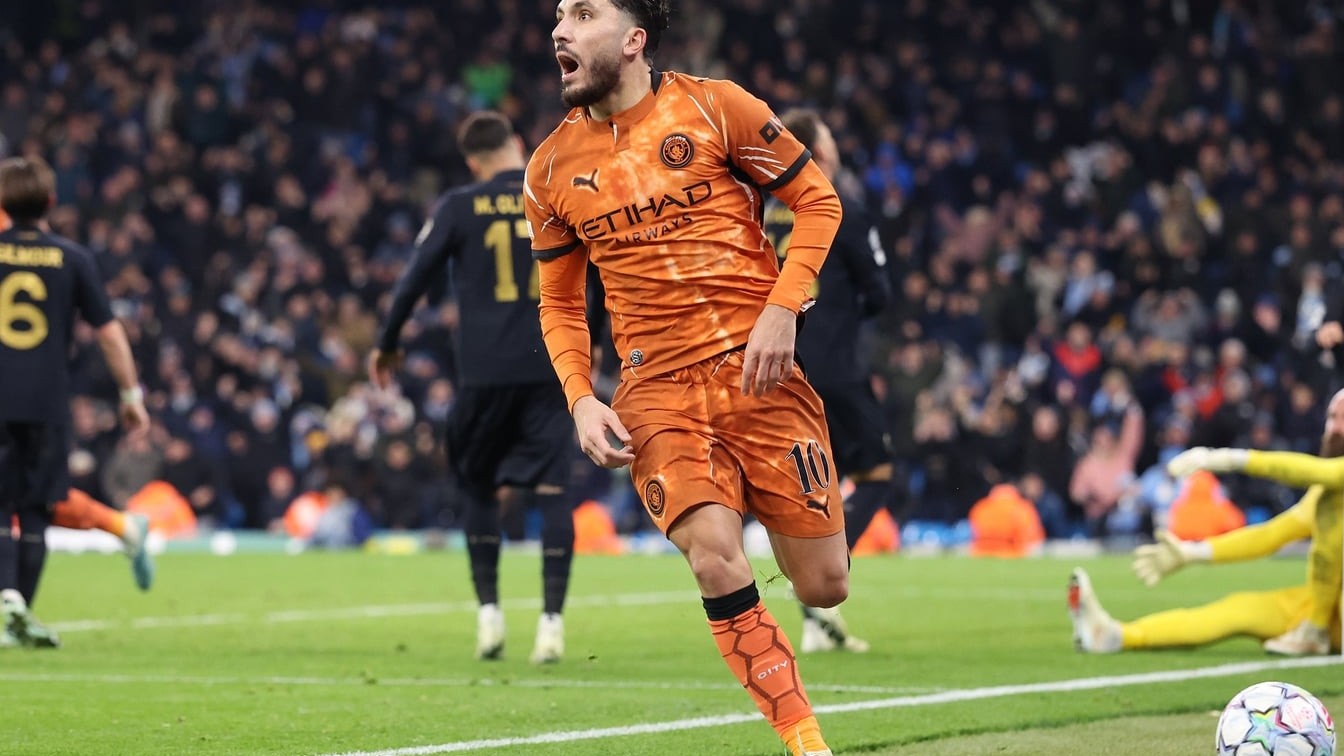
Manchester City drew 2-2 with Napoli in the Champions League on Tuesday, rescued by a Rayan Cherki equaliser four minutes from time after the visitors had led twice at the Etihad. For readers in Lagos or Abuja the scoreline is not the main story. The same body of match reporting links City’s worst run in years to a financial-rules ruling that could yet cost the club points, or its Premier League status, in a competition Nigerians watch, argue about and bet on every weekend.
Start with what is confirmed. Napoli scored first through Rasmus Hojlund after 55 minutes, the former Manchester United forward taking Billy Gilmour’s reverse pass and turning inside Marc Guehi before drilling low across Gianluigi Donnarumma, according to RTÉ’s match report. Ayyoub Bouaddi equalised in the 67th minute from Jeremy Doku’s cutback, his first senior goal. Noa Lang volleyed Napoli back in front after 76 minutes from Leonardo Spinazzola’s cross. Cherki then worked space inside a crowded area and beat Vanja Milinkovic-Savic from a narrow angle.
On the exact timing, the reports diverge slightly. RTÉ, Yahoo Sports and the PA copy carried by the Herts Advertiser all place the Rayan Cherki equaliser four minutes from time. The Guardian’s account says five minutes from time. Both describe the same late strike; the difference only matters if you are quoting a minute as fact.
One further dispute is documented rather than alleged. City protested when referee Istvan Kovacs ended the match as they were building an attack in stoppage time, arguing the allotted two minutes had not elapsed. RTÉ reported that the referee’s watch was out of sync with the stadium scoreboard. That is a timing argument, not a result argument. The draw stands.
Why The Rayan Cherki Equaliser Only Hid City’s Problems
City have now won once in their last seven matches in all competitions, per RTÉ. Yahoo Sports narrows it further: once from open play in seven. City have failed to keep a clean sheet in 10 games. They sit sixth in the Champions League league phase with 10 points from five matches and could slip outside the top eight depending on Wednesday’s results. Napoli, 27th, remain outside the play-off places with three games left; only the top 24 advance.
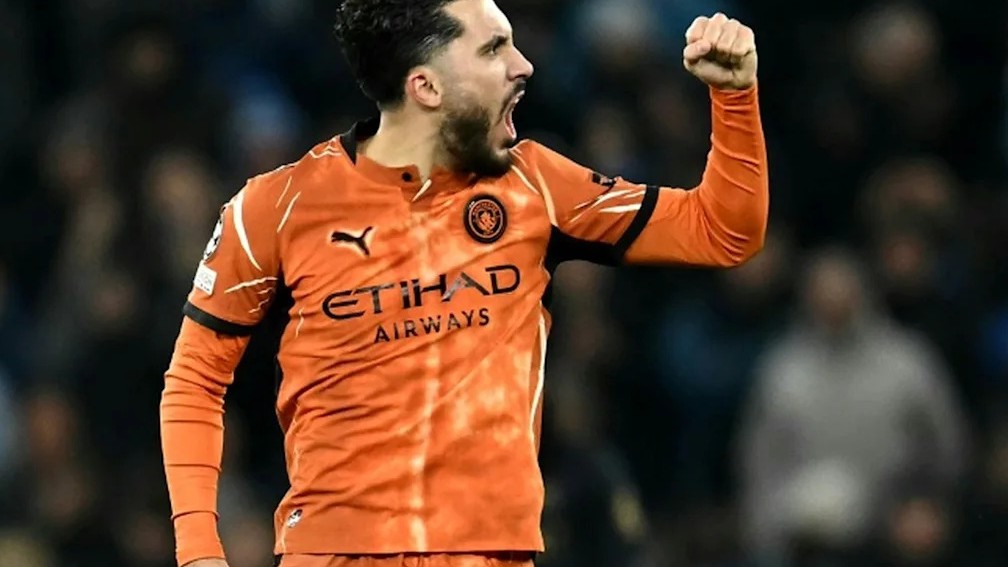
Enzo Maresca made five changes and fielded his trio of expensive midfield signings in Elliot Anderson, Enzo Fernandez and Bouaddi. City controlled possession and created little until Doku and Iliman Ndiaye came off the bench. Anderson forced an early save from Milinkovic-Savic; Hojlund dragged wide at the other end; Donnarumma saved Sam Beukema’s header on the stroke of half-time. A new orange kit was unveiled for the occasion and, by consensus of the reports, changed nothing.
What The Financial-Rules Reporting Actually Says
This is where sourcing has to be handled with care. Yahoo Sports reported that City “have been found guilty for widespread breaches of Premier League financial rules” and face “a severe points deduction, or even relegation from the Premier League, unless they can overturn the ruling on appeal”. Yahoo adds that City won 10 of their first 11 games under Maresca before the run collapsed, and that the club have not failed to win four consecutive home games since 2008, before the Abu Dhabi-backed takeover.
The Guardian, RTÉ and the PA report all discuss the slump without mentioning that ruling. That does not make the claim false. It makes it single-sourced within this set of reports, and Nigerian readers should treat it as reported-but-uncorroborated here until the club, the Premier League or the appeal process puts written reasons on the record. Points deductions are announced, not inferred. Relegation is a possible consequence, not a current standing.
Nigerian interest in this fixture is structural rather than national-team based. None of the four match reports cited here mentions a Nigerian international on either side. What is at stake is a table that shapes weekend viewing, fantasy leagues and betting markets across the country, and a regulatory question about how leagues police their biggest clubs. A mid-season points deduction in England moves every position below it, including the ones Nigerian supporters argue over in group chats from Surulere to Wuse.
Kevin De Bruyne And The Crowd That Came For The Past
Kevin De Bruyne returned in a Napoli shirt and drew the loudest reaction of a sparsely populated first half, per Yahoo Sports. The Guardian described the buildup as largely a homage to him. Yahoo notes his 10-year City spell ended 18 months ago; the Guardian recalls a previous return 14 months earlier that ended in a 2-0 City defeat. He was withdrawn in the 75th minute to a warm ovation, and Napoli scored again almost immediately through Lang. The appreciation ritual was the most animated the Etihad got before the goals arrived.
What to watch is narrow and testable. City’s next league and European fixtures will show whether the midfield rebuild around Anderson, Fernandez and Bouaddi holds when the tempo rises. Wednesday’s results will fix City’s position in the league phase. Napoli have three games to chase a top-24 place. And the financial case needs a document, a date and a named decision-maker before anyone treats a deduction as scheduled.
Until then, another Rayan Cherki equaliser buys City time rather than answers. For Nigerian followers of the English game, the more consequential number is not the score at the Etihad but the points, if any, that an appeal panel eventually removes.
Frequently Asked Questions
What was the final score between Manchester City and Napoli?
It finished 2-2 at the Etihad Stadium in the Champions League league phase. Rasmus Hojlund and Noa Lang scored for Napoli; Ayyoub Bouaddi and Rayan Cherki scored for Manchester City.
When did Rayan Cherki score his equaliser?
RTÉ, Yahoo Sports and the PA report place the goal four minutes from time. The Guardian’s report says five minutes from time. All four describe the same late strike.
Has Manchester City been found guilty of Premier League financial breaches?
Yahoo Sports reported that the club has been found guilty and faces a possible points deduction or relegation unless it overturns the ruling on appeal. The Guardian, RTÉ and PA reports of the Napoli match do not mention the ruling, so it should be treated as reported but not corroborated within this set of sources.
Receive alerts for Rayan Cherki equaliser and more like it.
 Follow AFRILATEST on Google News
FIRST TIME REACTIONS:
Be the first to leave us a comment – Rayan Cherki Equaliser Denies Napoli Win At Man City, down the comment section.
JOIN US ON OUR SOCIAL MEDIA:

About James Williams
James Williams is the Content Director at AfriLatest. With a background in journalism and a love for storytelling, he curates compelling content and multimedia that resonates with global readers. James is dedicated to maintaining AfriLatest as a trusted source for daily news, sports updates, and entertainment trends.
View all articles by James WilliamsFootball
GWFA To Train Walking Football Referees In Lagos
The GWFA holds a one-day workshop on 21 November at Eagle Club, Surulere, to train walking football referees in Lagos as the league enters Season 4.

The Global Walking Football Alliance will hold a one-day referee training workshop on Saturday, 21 November at the Eagle Club in Surulere, Lagos, led by international referee and GWFA instructor Ricky Weir. The programme runs from classroom theory through live match observation to individual practical assessment, with certificates issued to candidates who pass.
The news is easy to file as a development story. It is better read as a safety story. Walking football referees are the mechanism that keeps the format’s central promise intact as the sport spreads beyond its four-team Lagos origin, and officiating standards decide whether results can be trusted across an expanding map.
Why Walking Football Referees Matter More Than The Scoreline
Nigeria’s football conversation is organised around elite performance: NPFL squads, Super Eagles selection, and the load management of professional players. Injury, in that frame, is treated as the price of intensity — something managed through rotation, medical departments and return-to-play protocols built for athletes operating near maximum output.
Walking football inverts the starting condition. Its appeal rests on reduced physical load, which means the risk profile that justifies heavy medical infrastructure in the professional game does not transfer unchanged. What does transfer, intact, is the referee. The format’s protections exist on paper until an official applies them on the pitch, the same way, every week.
That is the argument the GWFA workshop makes without stating it. A sport that presents itself as lower-risk must be able to demonstrate consistent enforcement of its own rules. Otherwise the claim outruns the evidence.
Here the organisers’ briefing is silent. No injury surveillance data for the Lagos Walking Football League appears in the announcements carried by Premium Times or The Guardian Nigeria. No participant screening protocol is described. No incident figures are published. That absence matters, because without recorded outcomes, statements about the format’s safety rest on the design of the game rather than on observed results.
Certification does not close that gap by itself. It is, however, a precondition for closing it. An official examined on the Laws of the Game and marked in a live match produces a more consistent record — one from which injury patterns and rule failures could eventually be read — than an untrained volunteer working from instinct.
A One-Day Curriculum That Reads Like A Match Timeline
The schedule is compressed and unusually specific. Trainees open in the classroom on pre-match preparation and the Laws of the Game. They then observe four league matches, each handled by an international match official, with a question-and-answer session after every fixture so that decisions can be tested against the rulebook rather than against opinion.
After a lunch break, the group returns for a second classroom block on post-match review of the Laws of the Game, followed by a theory examination. The day closes with individual practical assessments, where each trainee officiates and is marked, before results are announced and certificates presented.
The sequence — observe, question, examine, perform — follows the cycle used in referee development at higher levels of the game. The difference is compression. One day cannot manufacture match experience, and the organisers have not disclosed how many candidates will attend, what the pass threshold is, or whether GWFA certification carries recognition beyond the alliance itself.
Weir is the quality anchor. An instructor who has officiated internationally will supervise both the written paper and the practical marking, which gives the certificates a defensible basis rather than a ceremonial one.
What Certification Means For The Lagos Walking Football League Table
The league has grown from four founding teams into Season 4, with men’s, women’s and corporate entries now competing. The Eagle Club pitch in Surulere has become the hub of the sport in Nigeria. Beyond Lagos, walking football — known locally as Waka Football — has reached Abuja, Kano and Plateau State, the fourth state to adopt it.

Expansion changes the officiating problem. Four teams in one city can be covered by a handful of willing volunteers. Three or four states, separate divisions and corporate competitions cannot. Every new centre multiplies the number of matches requiring a qualified official, and inconsistency between centres produces standings that cannot honestly be compared across regions.
That is the practical meaning of Saturday’s session. A league table is only a credible document if the same laws yield the same decisions in Surulere as in Jos. Until referee supply matches team growth, the Lagos Walking Football League table records who scored more, not necessarily who played better — and it cannot yet tell organisers whether the format’s lower-load premise is holding up in practice.
The GWFA has not announced a second workshop, a regional licensing structure, or any plan to place assessed officials in Abuja, Kano or Plateau. That is an absence of information, not a refusal, and should be read as such. On current evidence, the certification pipeline runs through one pitch in Surulere.
What Saturday should produce is a small, examined cohort of walking football referees who can apply the Laws of the Game under observation. That is a modest output for a sport spreading across four states. It is also the first measurable step toward a competition whose results, and whose safety claims, can be audited rather than assumed.
Frequently Asked Questions
When and where is the GWFA referee training workshop in Lagos?
It is scheduled for Saturday, 21 November at the Eagle Club in Surulere, Lagos. The one-day programme is led by international referee and GWFA instructor Ricky Weir.
What does the workshop involve for trainee walking football referees?
Candidates attend classroom sessions on pre-match preparation and post-match review of the Laws of the Game, observe four league matches officiated by international match officials with a question-and-answer session after each, sit a theory examination, and complete an individual practical assessment before certificates are presented to those who pass.
How far has walking football, or Waka Football, spread in Nigeria?
It began in Lagos with four teams and has reached Season 4 of the Lagos Walking Football League, with men’s, women’s and corporate participation. It has also spread to Abuja, Kano and Plateau State, which organisers identify as the fourth state to adopt the sport.
Receive alerts for walking football referees and more like it.
FIRST TIME REACTIONS:
Be the first to leave us a comment – GWFA To Train Walking Football Referees In Lagos, down the comment section.
JOIN US ON OUR SOCIAL MEDIA:
About James Williams
James Williams is the Content Director at AfriLatest. With a background in journalism and a love for storytelling, he curates compelling content and multimedia that resonates with global readers. James is dedicated to maintaining AfriLatest as a trusted source for daily news, sports updates, and entertainment trends.
View all articles by James WilliamsFootball
Szoboszlai Free-Kick Debate: What The Laws Actually Say
The Szoboszlai free-kick in Liverpool’s 4-0 win over Manchester United is disputed. What IFAB law says, and why African referees inherit it.

The Szoboszlai free-kick that put Liverpool ahead inside eight minutes against Manchester United is the most disputed set piece of the Premier League weekend, and the argument is not about technique. It is about a one-metre rule most supporters have never read.
Mauricio Pochettino, beaten 4-0 on his first night as United manager, says the goal should never have stood. Liverpool have said nothing on the record. The written law, the broadcast footage and the two managers’ own words can all be checked separately, and they do not point the same way.
Why The Szoboszlai Free-Kick Became A Legal Test Case
Leny Yoro was sent off inside eight minutes for denying a goalscoring opportunity. Dominik Szoboszlai struck the resulting free-kick past Senne Lammens. Florian Wirtz and Rio Ngumoha scored either side of the interval, and substitute Victor Munoz completed the 4-0 scoreline, as recorded in Livescore’s match ratings.
Pochettino’s objection was never really about the red card. He argued the goal itself was illegal. “No one talks about that the goal wasn’t legal, it should be disallowed because (Bradley) Barcola was touching our wall,” he said, as reported by Sky Sports.
He added: “Maybe in the last two years, they’ve changed the rule because I’ve been in America, but last season when (Eberechi) Eze scored for Palace (at Chelsea) you can see [it was disallowed]. But VAR didn’t check [Dominik Szoboszlai’s goal]; that must be disallowed.”
What The IFAB Wall Law Actually Says
The rule is short. “If, when a free-kick is taken, an attacking team player is less than 1m (1yd) from a ‘wall’ formed by three or more defending team players, an indirect free-kick is awarded.”
Sky Sports’ review concluded that Barcola was clearly inside that limit when the ball was struck, and that the Szoboszlai free-kick should therefore have been ruled out under the Laws of the Game. That is a finding on the footage, not a referee’s ruling.
The same review identifies the complication Pochettino’s argument skips. In the Eze precedent, Marc Guehi shoved Moises Caicedo to open a gap in the Chelsea wall. At Anfield, Bruno Fernandes appears to push Barcola towards the United wall. The Laws of the Game offer no stated answer for an attacker pushed into that space by an opponent.
Timing matters too. Fernandes’ push came before Szoboszlai struck the ball, so the ball was not in play and the contact was not a foul by the United captain. Had the referee seen it, he could have delayed the set piece and restarted from the original position.
VAR checks every goal and would have needed a clear and obvious error to intervene. Referees’ chief Howard Webb did not analyse the incident on Match Officials Mic’d Up, and Sky Sports News said it asked Pro Ref for comment. No published response appears in the material available.
Two Szoboszlai Incidents, One Unresolved Question
A separate Szoboszlai incident at Anfield against Manchester City is being folded into the same argument, and it should not be. In the final seconds, with Alisson caught upfield, Rayan Cherki rolled the ball towards the Liverpool goal. Erling Haaland gave chase, was pulled back by Szoboszlai, and pulled Szoboszlai back in turn.
The ball crossed the line. Referee Craig Pawson, after a VAR review, awarded a free-kick for the first offence and sent Szoboszlai off for denying an obvious goalscoring opportunity. The Guardian reports the reasoning: Szoboszlai would have cleared the ball had Haaland not fouled him, so it could not be a goal, and Haaland would have scored had Szoboszlai not fouled him, so the earlier offence stands. Fouls do not cancel out.
Pep Guardiola, whose side benefited, called for common sense: “We won the game [but] now Dominik Szoboszlai cannot play … Give a goal, 3-1, Szoboszlai can play and we are happy.” Haaland was blunter: “Just give the goal, don’t give a red card. Simple as that.”
Arne Slot, quoted by the Guardian, accepted the letter of the law: “I can live with the fact, although I don’t like it, that the referee follows the rulebook.”
Why African Referees And Leagues Inherit The Same Grey Area
For Nigerian and African audiences the relevance is structural, not sentimental. Law 13 does not change at the border. The same one-metre wall restriction governs CAF club competitions, continental qualifiers and domestic leagues across the continent, and the same unwritten question arrives with it: what happens when a defender pushes an attacker into the wall?
African match officials also inherit the review culture. The Szoboszlai free-kick was checked and not overturned. Pochettino’s complaint is that VAR declined to intervene on a rule he says is clear. That is a governance question about when technology acts on a set piece, and it travels with the law.
Two African internationals were on the pitch for the United fixture. Bryan Mbeumo of Cameroon was withdrawn after 22 minutes as Pochettino sacrificed an attacker for a defender. Noussair Mazraoui of Morocco came on after 65 minutes, and Liverpool scored their fourth two minutes later. Neither had any say in the set-piece ruling that framed their night.
One limit on the record: the source material contains no comment from CAF, the Nigeria Football Federation or any domestic league on the Barcola incident, and no confirmation that United lodged a formal protest.
There is also a fitness footnote that complicates the wider picture. Sports Illustrated, citing The Athletic’s James Pearce, reported a hamstring injury that kept Szoboszlai out of the squad entirely for the Manchester City fixture.
A Decision That Will Not Settle
The Szoboszlai free-kick will be remembered as a goal because it was given, and as a controversy because the law that might have cancelled it has an unanswered edge. Pochettino’s reading is defensible on the text of Law 13. The referee’s non-intervention is defensible on the VAR protocol. Both can be true at once, which is exactly why this one has not closed.
Frequently Asked Questions
Was Szoboszlai’s free-kick against Manchester United legal?
Sky Sports’ review found Bradley Barcola was clearly within one metre of the United wall when the ball was struck, which under IFAB Law 13 should have produced an indirect free-kick to United rather than a goal. However, the same review notes Bruno Fernandes appears to have pushed Barcola towards the wall, and the Laws of the Game do not state how that case should be handled.
Did VAR check the Szoboszlai free-kick?
VAR checks every goal. Pochettino’s complaint is that it did not intervene. For a review to be recommended, the VAR would have to identify a clear and obvious error, which is a different test from whether the law was technically breached.
Why does this decision matter to African football?
IFAB Law 13 applies unchanged in CAF competitions and domestic African leagues, so the same one-metre wall restriction and the same unanswered question about a pushed attacker apply there. The source material contains no comment from CAF, the NFF or any African league on the incident.
FIRST TIME REACTIONS:
Be the first to leave us a comment – Szoboszlai Free-Kick Debate: What The Laws Actually Say, down the comment section.
JOIN US ON OUR SOCIAL MEDIA:
About James Williams
James Williams is the Content Director at AfriLatest. With a background in journalism and a love for storytelling, he curates compelling content and multimedia that resonates with global readers. James is dedicated to maintaining AfriLatest as a trusted source for daily news, sports updates, and entertainment trends.
View all articles by James Williams-

 Car Reviews3 weeks ago
1955 Chevy Bel Air Restomod: What SEMA Really Proves
-
Health and Fitness4 weeks ago
Medicare 2027 Changes: Costs, Drug Prices and What to Do
-
Celebrities4 weeks ago
Celebrity Traitors Final Predictions: Ex-Players On Tactics
-
Celebrities3 weeks ago
Hailey Bieber PMDD Diagnosis Followed Son Jack’s Birth
-
World News3 weeks ago
Céline Dion Air Bass At Metallica’s Sphere: What’s Confirmed
-
Health and Fitness4 weeks ago
Dylan Dreyer Hair Part Change: What’s Real And What’s Hype