JAMB & WAEC
JAMB 2026: Your Admission Guide & Prep Tips
Master the JAMB 2026 syllabus with our guide. Learn requirements, scores, prep tips, and timeline from top scorers to secure admission.


You want admission into a Nigerian university in 2026. The JAMB 2026 syllabus is your roadmap. Ignore it, and you waste months reading the wrong topics. Master it, and you walk into the exam hall knowing exactly what to expect.
This guide breaks down the requirements, target marks, proven tips, and timeline from students who scored above 340 in the 2026 UTME. No fluff. Just doable steps.
What the JAMB 2026 Syllabus Covers and Why It Matters

The JAMB 2026 syllabus lists every topic examiners can test in each subject. It is not a suggestion. It is the boundary of the exam.
Odunowo Daniel, who scored 320 in the 2026 UTME, said mastering the syllabus and using textbooks extensively was key. He did not guess. He covered what JAMB published.
Folajimi Samuel Oluwaferanmi, who scored 306, added that studying the JAMB 2026 syllabus and practising past questions daily helped him understand the examination pattern.
Use the syllabus to audit your knowledge. Tick topics you know. Mark topics you avoid. Those gaps are where you lose marks.
Minimum Requirements and Target Marks for Admission
There is no single cut-off for all courses. But the 2026 top scorers show what is possible. Daniella Owoeye scored 372, the highest in the 2026 UTME. Adeoti Ayobami Daniel scored 359. Olaniyi Oluwajoba scored 349.
For competitive courses like Medicine, Law, and Engineering, aim for 300 and above. For less competitive courses, 250 may be enough. But your JAMB score is only part of admission. Post-UTME and O’Level grades matter too.
Adeoti’s mock score was 308. He improved to 359 in the main exam. That jump came from fixing weak areas. He moved English from 57 to 75, Mathematics from 79 to 98, Chemistry from 82 to 90, and Physics from 90 to 96.
Your target should be improvement, not perfection. Set a realistic goal for each subject based on your mock.
How to Study the JAMB 2026 Syllabus Effectively
Start with a mock exam. Identify your weakest subjects. Then build a study plan around the syllabus topics you struggle with.
Olaniyi Oluwajoba said the difference was not hours but strategy. He balanced school lessons with self-study and revised difficult topics consistently.
Use CBT applications. Daniel trained himself to answer 180 questions in one hour instead of two. That speed came from repeated practice. MySchool CBT, Test Driller, and Prep 50 UTME textbook were tools used by top scorers.
Adabonyan Ayokunle Oluwasogo, who scored 344, spent five months on YouTube tutorials and private tutoring. Chemistry alone took three months to finish 225 episodes. Physics took two weeks. He also took weekly timed mock tests.
Olaonipekun Zion Olayiwola, who scored 312, did not cram. He used summaries, self-testing, memory recall, and timed practice questions.
Class54, a Nigerian EdTech platform, now offers AI-powered explanations for Mathematics and Physics questions. The tool explains how answers are derived, not just the final answer. It also provides offline access to over 25 years of past JAMB and WAEC questions. According to Vanguard, the platform has helped over 300,000 students.
Timeline for JAMB 2026 Preparation
Registration for the 2026 UTME is expected to commence soon. Do not wait for registration to start studying. The syllabus is already available.
Here is a simple timeline:
– Now to 3 months before exam: Cover all syllabus topics. Use textbooks, YouTube, and offline apps.
– 2 months before: Start weekly timed mock tests. Focus on speed and accuracy.
– 1 month before: Review past questions daily. Target your weakest topics.
– 2 weeks before: Reduce new topics. Revise summaries and formulas.
– Exam week: Sleep well. Stay confident. Avoid new material.
Daniella Owoeye, the 2026 top scorer, said her biggest factor was a mindset shift. She believed big schools do not define success. She used AI to summarise notes and joined WhatsApp groups to study.
Omotosho Deborah Ayomikun, who scored 324, refused to settle for average after her mock. She kept pushing. David Oyebode, who scored 314, avoided smartphone distractions and reviewed past questions consistently.
Common Mistakes to Avoid
Do not study without the JAMB 2026 syllabus. You will waste time on topics that never appear.
Do not ignore English. Adeoti’s turnaround started with English. Many students fail because they neglect Use of English.
Do not cram. Zion said he passed by reading with a system, not cramming.
Do not skip CBT practice. The exam is computer-based. You need speed and familiarity with the interface.
Do not study only at night if you are a daytime learner. Osunro Ifeoluwa, who scored 343, maximised her daytime because she does not work well at night.
Your First Step Today
Download the JAMB 2026 syllabus for your four subjects. Print it or save it on your phone. Then take a mock exam to find your weakest topics. Start there.
You do not need to be a genius. You need consistency, the right tools, and a plan built on the JAMB 2026 syllabus. The top scorers of 2026 were once where you are now. They started with one step. Take yours today.
Frequently Asked Questions
What is the JAMB 2026 syllabus?
The JAMB 2026 syllabus is the official list of topics examiners can test in each UTME subject. It defines the scope of the exam and should guide all your study.
What score do I need for admission in 2026?
There is no single cut-off. Competitive courses often require 300 and above. Less competitive courses may accept 250. Your JAMB score works with Post-UTME and O’Level grades.
How long should I study for JAMB 2026?
Top scorers studied for months, not weeks. Adabonyan spent five months. Start now, cover the syllabus, and take weekly timed mock tests.
Related Articles
- Mexico vs Colombia 2026: Márquez Debut Ends in Defeat
- Spark Plug Replacement Cost: Fake Parts & Real Prices
- OPay Investing in People to Build a Better Nigeria
- Hyundai Elantra Parts: Maintenance Tips for N Models
- OPay No Dey Comot Nigeria: How to Verify Fintech News

JAMB & WAEC
WAEC Results 2026: What The Grading Dispute Means
The 2026 WAEC results dispute is unresolved. Judge every preparation method by access, outcomes, cost and options, and verify claims officially.


The goal is simple: give a student or parent a defensible way to read WAEC results and act on them, without joining either the panic or the denial.
Every result season produces two competing industries. One sells preparation. The other sells shortcuts: leaked questions, upgrade agents, miracle centres. The 2026 West African Senior School Certificate Examination has made that choice sharper than usual, because the results themselves are in dispute. Any advice about WAEC results given now has to survive the fact that nobody has yet published an audit.
What The 2026 WAEC Results Controversy Actually Established (WAEC results)
WAEC released the 2026 WASSCE results on 5 August 2026. According to Premium Times, 1,959,668 candidates from 24,207 schools registered and 1,950,726 sat the examination, which ran from 24 April to 19 June. Of those, 1,834,695, or 94.05 per cent, had results fully processed and released. Another 116,031, or 5.95 per cent, were still being processed at the announcement. A total of 1,200,514 candidates, 61.54 per cent, obtained credits in at least five subjects including English Language and Mathematics.
Then the complaints started. School administrators said high-performing students received grades that did not match their records. Punch reported Sam Abdulazeez of Impact House Model Schools, Mowe, Ogun State, saying 69 of his candidates sat the UTME, more than 30 scored above 300, none fell below 200 after 22 mock-UTMEs, yet only about three or four A1 grades in Mathematics appeared in his WASSCE results. In 2024, he said, all 45 of his Mathematics candidates obtained A1.
WAEC has defended the results, stating they passed through established marking, moderation and auditing processes. Its Head of the Nigeria National Office, Amos Dangut, dismissed suggestions that technical glitches affected them. On 14 August 2026, the Initiative for School Excellence and Education Foundation, through Zuriel Law Practice, gave WAEC 14 days to preserve examination records and submit the computer-based platform to independent verification.
The honest reading is that this is unresolved. Abdulazeez’s figures are one school’s account, not an audited finding. WAEC’s assurance is a process claim, not a published audit. Neither should be treated as settled fact, and neither changes what a candidate should do next.
The Four Tests That Separate Preparation From Noise

Judge any WAEC results strategy, or any product sold around them, against four questions. Does it widen access to learning? Does it improve measurable outcomes? Is it affordable? Does it leave the student with more options, or fewer?
Leaked-answer schemes fail all four. WAEC warns candidates against fraudsters promising to upgrade results for a fee, and points to its results verification system and QR code as the authentication route, as reported by Modern Ghana. The same report, from the Ghana national office, shows the enforcement side: 861 candidates had entire results cancelled for possessing mobile phones in the hall, 7,434 had subject results cancelled for bringing foreign materials, and results from 169 schools were withheld over alleged collusion.
That is measured consequence, not a threat. Ondo State’s ban on underage and unqualified candidates registering for the 2027 WASSCE through miracle centres, announced by Commissioner for Education, Science and Technology Prof. Igbekele Ajibefun, is the same signal from the other direction: the shortcut market is real enough to regulate, per Education Monitor.
Understanding, timed past-question practice and error analysis pass the four tests because they are cheap, repeatable and portable. They also survive a disputed result. A student who actually understands the syllabus can resit, query or move on.
A Working Method For The Months After WAEC Results
First, confirm the year and series. Download the current syllabus for each subject from WAEC’s official channel and check that the version matches the examination you are sitting. Rules change, and assumptions formed in an earlier cycle do not transfer to a computer-based one.
Second, work past questions under timed conditions, closed book, at the length of the real paper. Mark strictly against the marking scheme.
Third, run error analysis on every wrong answer. Log the cause, not the topic: misread instruction, missing concept, arithmetic slip, time lost. Three weeks of this beats re-reading notes.
Fourth, train on the delivery platform, not only the content. Abdulazeez’s account is instructive even unverified: his school ran 22 mock-UTMEs on computers with strong results, but its WAEC mock failed on two consecutive attempts when systems could not connect to WAEC’s server. Interface familiarity is a legitimate preparation target under computer-based testing.
Fifth, verify before you amplify any WAEC results claim. WAEC directs candidates whose results were cancelled or withheld to the Withheld/Cancelled button and the Irregularity and Investigations page, where the reason and next step are listed.
Dates Worth Diarising
24 April to 19 June 2026: the examination window. 5 August 2026: results released. 14 August 2026: the 14-day legal ultimatum began. 30 October 2026: the stated deadline for concluding investigations into withheld results, per WAEC’s Ghana national office. Ongoing: 2027 WASSCE registration in Ondo State through the Digital National Education Management Information System.
The Action Step
Take one subject. Get its official syllabus, sit one past paper tomorrow under strict timing, and log every error by cause. Then verify every claim you have heard about WAEC results against the council’s own channel before repeating it. That is duller than a leaked paper, and far more likely to leave a student holding real options.
Frequently Asked Questions
Did WAEC admit that glitches affected the 2026 WASSCE results?
No. WAEC said the results were produced through established marking, moderation and auditing processes, and its Head of the Nigeria National Office, Amos Dangut, dismissed suggestions that technical glitches affected them. An advocacy group, the Initiative for School Excellence and Education Foundation, has demanded an independent verification of the computer-based platform through its lawyers, giving WAEC 14 days from a letter dated 14 August 2026.
How many candidates sat the 2026 WASSCE in Nigeria and how many passed?
WAEC recorded 1,959,668 registered candidates from 24,207 schools, with 1,950,726 sitting the examination between 24 April and 19 June 2026. A total of 1,200,514 candidates, or 61.54 per cent, obtained credits in at least five subjects including English Language and Mathematics. Results for 167,486 candidates, 8.59 per cent, were withheld over alleged examination malpractice.
Can WAEC results be upgraded by paying an agent?
No. WAEC cautions candidates, parents and stakeholders against fraudsters who promise to upgrade results for a fee, and states that its results are secured and can be authenticated through its results verification system and QR code. The enforcement record supports the warning: WAEC’s Ghana national office cancelled the entire results of 861 candidates for possessing mobile phones in the examination hall.
 Follow AFRILATEST on Google News
FIRST TIME REACTIONS:
Be the first to leave us a comment – WAEC Results 2026: What The Grading Dispute Means, down the comment section.
JOIN US ON OUR SOCIAL MEDIA:

About Rosabella Eboh
Rosabella Eboh is an author at AfriLatest. With a passion for writing and a flair for creativity, she contributes original content and unique perspectives to the platform. Rosabella focuses on human-interest stories, cultural trends, and in-depth feature reporting.
View all articles by Rosabella EbohJAMB & WAEC
JAMB Preparation: What 50,370 Resolved Complaints Mean
Arewa Think Tank praised JAMB for resolving 50,370 complaints. What that means for JAMB preparation, plus active recall, timed practice and error analysis tips.

The Arewa Think Tank’s commendation of the Joint Admissions and Matriculation Board, reported by Leadership, rests on one figure: 50,370 complaints resolved out of 52,517 received during the registrar’s first three months in office. The number deserves attention. But a candidate with eight weeks left before the exam needs a narrower question answered. Does any of this improve JAMB preparation — access to the test, the score on the paper, the cost of getting there, or the choices that follow?
The group’s Convener, Muhammad Alhaji Yakubu, framed the result as proof that public institutions can become responsive and accountable when leadership focuses on service delivery. He also credited the registrar, Professor Segun Aina, with clearing more than 5,000 outstanding complaints within his first five days, and welcomed a NIN alignment initiative that helped candidates whose admission records were blocked by identity mismatches.
What the 50,370 Resolved Complaints Actually Prove
Complaint resolution is an access win, and it is measurable in a way most education announcements are not. A candidate whose National Identification Number did not match an admission record was stopped by logistics, not by chemistry. Clearing that queue returns a real option to a real person, often after months of stalled admission.
It also proves nothing about academic readiness. A board that answers every helpdesk ticket by Friday has not thereby taught anyone to solve a quadratic equation. Administrative efficiency and learning outcomes are separate ledgers, and merging them flatters both.
The distinction matters because the same statement mixes measured outputs with promises. The complaint figure is a reported output, relayed by an advocacy group from the board’s own service channels; it has not been published as an audited statistic, which makes it credible but not independently verified. The proposed 2027 UTME reforms — a Blueprint report of the same statement records an assessment framework built around critical thinking, practical competencies and problem-solving rather than memorisation — are promises. No syllabus revision, sample item set or implementation timetable appears in either statement.
Active Recall Beats Rereading In JAMB Preparation
For JAMB preparation, one method transfers across every subject and survives every reform cycle: retrieval practice. Reading a chapter again feels productive because the material looks familiar. That familiarity is recognition, not recall, and the examination tests the second one.
The mechanics are unglamorous. Convert each syllabus topic into five or six questions. Close the textbook. Write the answers from memory. Then open the book and mark yourself honestly. Re-attempt the questions you failed two days later, then again a week later. The effort of dragging an answer out of memory is the point; the discomfort is the mechanism.
A working notebook of 300 to 400 self-written questions, each traced to a syllabus line, will do more for a candidate than any number of motivational posts.
How Timed Practice and Error Analysis Change Results
Untimed practice builds knowledge. Timed practice builds the composure to use it. The UTME is computer-based, so at least half of all practice should happen on a screen, using the same calculator and rough-sheet habits the centre will permit.
Error analysis is the step candidates skip, and it is where serious JAMB preparation separates itself from busy work. Keep a log with four columns: topic, question type, what went wrong, and the correction. Sort every mistake into one of four buckets — genuine knowledge gap, misread question, ran out of time, lucky or unlucky guess. The buckets point to different fixes. Knowledge gaps need re-study. Misreads need a slower first pass on the question stem. Time pressure needs section-level pacing drills. Guessing needs a rule about when to abandon a question.
Two full papers a week, marked and logged the same day, beat five papers a week marked and forgotten. The log, not the score, is the asset.
Check the Current Syllabus Before Trusting Reform Talk

The syllabus is the contract between the board and the candidate, and it is published. Candidates should download the current subject syllabuses and the current cycle’s registration guidance directly from JAMB’s official website rather than from group chats, and confirm the applicable examination year on every document they use. Subject combinations, centre requirements and registration windows change; screenshots do not update. Registration fees should be confirmed on the same portal, not taken secondhand.
There is a second reason to verify. Yakubu himself warned that candidates from rural communities and disadvantaged backgrounds must not be excluded from the board’s digital transformation, and called for sustained collaboration with tertiary institutions, CBT centre operators and security agencies. That warning carries a practical consequence: sit at least one mock at an actual CBT centre before the real examination, if one is reachable, and walk the route once.
A Four-Week JAMB Preparation Plan That Costs Almost Nothing
Week one is the audit. Print the syllabus for each subject, tick every topic as known, half-known or unknown, then build the question notebook from the unknown and half-known items.
Week two is recall blocks. Forty minutes of study followed by twenty minutes of closed-book writing, twice a day, alternating subjects so no topic sits idle for a week.
Week three is timed papers. Two full CBT mocks, sat at the same hour of the morning as the real examination, each followed by a ninety-minute error log session the same day.
Week four is repair. Re-test only the items in the error log, revisit the syllabus ticks, and protect sleep. Late-night cramming in the final week trades a marginal memory gain for a large attention loss.
Affordable JAMB preparation requires a syllabus, a notebook, a timer and one honest error log. Past questions, school libraries and peer study groups cover the rest.
The point of holding JAMB preparation to that standard is not to diminish the board’s helpdesk performance. It is to keep the scoreboard honest. Access, cost, outcomes and practical options are the four measures that matter, and only one of them moved in the Arewa Think Tank statement — the first. The other three move in a candidate’s notebook, one recalled answer at a time. Print the syllabus today, write ten questions from the first topic, and close the book before you answer them.
Frequently Asked Questions
How many JAMB complaints were resolved, according to the Arewa Think Tank?
The group said 50,370 of 52,517 complaints received through the board’s customer service channels were resolved in the registrar’s first three months, with more than 5,000 outstanding complaints cleared in the first five days. The figure was relayed by the group from the board’s service channels and has not been published as an independently audited statistic.
Are the proposed 2027 UTME reforms already in force?
No. The statements describe proposed reforms, including an assessment framework built around critical thinking and practical competencies rather than memorisation. No revised syllabus, sample item set or implementation timetable appears in the published statements, so candidates should confirm the applicable year’s syllabus and registration guidance on JAMB’s official website.
What is the most effective way to revise for the UTME?
Turn each syllabus topic into questions, answer them closed-book, then mark honestly and re-attempt the failures two days and one week later. Pair that with weekly timed computer-based mocks and an error log that sorts every mistake into a knowledge gap, a misread, a timing failure or a guess, since each points to a different fix.
FIRST TIME REACTIONS:
Be the first to leave us a comment – JAMB Preparation: What 50,370 Resolved Complaints Mean, down the comment section.
JOIN US ON OUR SOCIAL MEDIA:
About Rosabella Eboh
Rosabella Eboh is an author at AfriLatest. With a passion for writing and a flair for creativity, she contributes original content and unique perspectives to the platform. Rosabella focuses on human-interest stories, cultural trends, and in-depth feature reporting.
View all articles by Rosabella EbohJAMB & WAEC
JAMB O’Level Result Upload: What Home Verification Changes
JAMB O’Level result upload now runs from home for 2026 UTME candidates. What WAEC verification fixes, what it doesn’t, and how to prepare.
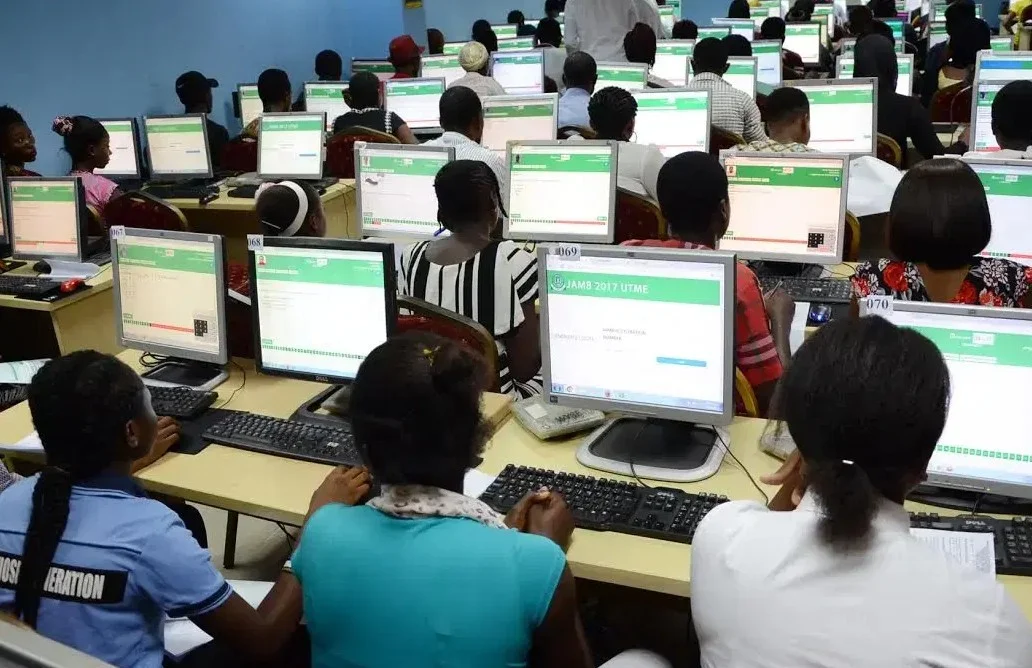
The JAMB O’Level result upload process for the 2026 Unified Tertiary Matriculation Examination no longer requires a trip to an accredited Computer-Based Test centre. Candidates can verify and upload West African Examinations Council results from home, and the Board checks those grades against the issuing examination body’s records before they land on a candidate’s profile.
The change is real, and it is narrow. It removes a queue, not a syllabus. The useful question is not whether home upload sounds modern. It is whether the shift improves learning access, outcomes, affordability or a candidate’s practical options — and on each of those four tests, the answer arrives with conditions attached.
What The JAMB O’Level Result Upload Actually Changes

The service was announced in a statement by the Board’s Acting Director, Public Affairs and Protocol, Dr Fabian Benjamin. Vanguard reported the Board’s framing: services made easier, faster, safer and more convenient, with electronic verification replacing a manual process that produced misplaced or mixed-up paper certificates and wrongly keyed subjects and grades.
The procedure is documented step by step. A candidate visits buyresultsverificationcode.ng, supplies a National Identification Number, selects the number of sittings and the examination body, adds an email address and GSM number, and pays through the gateway. Examination number, series and year follow. A Verification Code is issued. The candidate then sends “VERIFY” plus that code to 55019 or 66019.
Candidates with two sittings take a second route. Punch lays out the sequence: log into the e-Facility dashboard, select “2026 UTME O’Level Upload,” enter the Verification Code, choose between five and nine subjects with no subject selected twice, then click “Apply the O’Level Results.”
One limit deserves its own sentence. The service initially covers WAEC. Neither the Board’s statement nor the reporting confirms NECO or NABTEB. Candidates holding those results should treat coverage as unconfirmed until JAMB says otherwise, rather than assume a portal that accepted a friend’s WAEC slip will accept theirs.
Affordability, Cut-Offs And The Part The Portal Cannot Decide
On affordability, JAMB’s case is time and transport. Pulse reports the Board’s expectation that the system saves candidates transport costs and hours previously spent at crowded centres. That is plausible, and it is still conditional. The process requires a payment card or bank transfer, a phone that receives SMS, a working email address and a NIN. For a candidate in a city with a smartphone, those are trivial. For a candidate borrowing a relative’s line in a rural Local Government Area, they are the new bottleneck. Access has improved; it has not been equalised.
On outcomes, the arithmetic is unchanged. Admission turns on UTME score, O’Level grades, subject combination and institutional screening. A verified upload raises none of them. Cut-off marks are set by individual universities, polytechnics and colleges of education, department by department, and they move from year to year. Candidates should read the current brochure for their target institution instead of trusting a figure circulating in a WhatsApp group from last season.
The statements also leave two practical gaps. They do not describe what a candidate does when verification returns no record, or when the name on the examination body’s file does not match the NIN supplied — precisely the kind of mismatch an automated check is meant to catch. Nor do they state a completion deadline for the 2026 upload. Confirm both through JAMB’s official channels before payment day, not after.
Change Of Programme Online, And The Sentence JAMB Repeats
The same logic now covers course and institution changes. The Nigeria Education News reported the November announcement: candidates log into the e-Facility portal, open Corrections and Uploads, select Change of Programme/Institution, generate an invoice, pay, choose the new course or institution, and authenticate with a One-Time Password sent to the registered email.
JAMB attaches a warning to that convenience, and it is the most important line in the rollout: changing an institution or course does not guarantee admission. The candidate must still meet the UTME subject combination, O’Level requirements and screening conditions of the new choice. A portal that makes a change easier also makes a costly mistake easier. Print the confirmation slip. Check CAPS.
Active Recall, Timed Practice And Error Analysis For A Portal-Based Season
Saving an afternoon at a CBT centre does not save a term of study. Three methods carry the weight.
Active recall means closing the book, taking a blank sheet and writing everything remembered about a topic, then opening the text to find the gaps. Re-reading notes feels productive and is not. Retrieval is.
Timed practice means full papers under exam conditions: phone away, one sitting, strict clock. The UTME is computer-based and time-bound, and practice that ignores the clock trains the wrong skill.
Error analysis means a written log for every wrong answer with a cause attached — content gap, misread question, or time pressure. Re-test only the misses after 48 hours. A candidate who dissects 200 errors learns more than one who skims 2,000 correct answers.
Rules check before any of it. The syllabus is the contract. Confirm the current JAMB syllabus for each of the four subjects and the official brochure for the year before assuming a topic has been dropped or added.
The practical-options test is the one candidates can act on immediately. A saved trip is worth something only if it is spent on something: a library seat, a mock paper, a second sitting’s revision. The Board’s digital push is a logistics story. The admission story is still written in scores and grades.
Is The Home Verification Service The Right Fit
The JAMB O’Level result upload fits a candidate who holds a NIN, a phone line that receives SMS, a payment method and WAEC results — and who understands that the service removes a journey, not a requirement. It fits a school leaver far from an accredited centre who would otherwise pay a stranger to carry a certificate into a city. It fits less well the candidate holding NECO results, or the one who reads “no more CBT centre visits” as “no more work.”
The measured facts are procedural: the steps exist, they are documented, and four independent outlets carried the same sequence. The promise is that queues shrink and fraudulent submissions fall. The 2026 admission cycle will produce the evidence either way. Until then, the defensible reading is that JAMB has cut the cost of one administrative step and left the academic one exactly where it was.
Frequently Asked Questions
Can I upload my O’Level result on the JAMB portal without visiting a CBT centre?
Yes. For the 2026 UTME, JAMB introduced a system that lets candidates verify and upload O’Level results from home. Verification starts at buyresultsverificationcode.ng, where a candidate supplies a NIN, the number of sittings, the examination body, an email address and a GSM number, then pays and enters examination number, series and year. A Verification Code is issued, and the candidate sends “VERIFY” plus the code to 55019 or 66019.
Does the new JAMB system cover NECO and NABTEB results?
The announcements state that the service initially covers results issued by the West African Examinations Council. NECO and NABTEB coverage is not confirmed in the Board’s statement as reported. Candidates holding those results should confirm coverage through JAMB’s official channels before paying.
Does changing my course or institution on the JAMB portal guarantee admission?
No. JAMB states plainly that changing an institution or course does not guarantee admission. The candidate must still satisfy the UTME subject combination, O’Level qualifications and screening conditions of the new institution or programme, and should print the confirmation slip and check the CAPS profile afterwards.
FIRST TIME REACTIONS:
Be the first to leave us a comment – JAMB O’Level Result Upload: What Home Verification Changes, down the comment section.
JOIN US ON OUR SOCIAL MEDIA:
About Rosabella Eboh
Rosabella Eboh is an author at AfriLatest. With a passion for writing and a flair for creativity, she contributes original content and unique perspectives to the platform. Rosabella focuses on human-interest stories, cultural trends, and in-depth feature reporting.
View all articles by Rosabella Eboh-

 Car Reviews3 weeks ago
1955 Chevy Bel Air Restomod: What SEMA Really Proves
-
Celebrities4 weeks ago
Celebrity Traitors Final Predictions: Ex-Players On Tactics
-
Celebrities3 weeks ago
Hailey Bieber PMDD Diagnosis Followed Son Jack’s Birth
-
Nigeria News3 weeks ago
NAJA Names Weststar Chairman Auto Legend For 2026
-
World News3 weeks ago
Céline Dion Air Bass At Metallica’s Sphere: What’s Confirmed
-
Health and Fitness4 weeks ago
Dylan Dreyer Hair Part Change: What’s Real And What’s Hype