Business & Finance
HIV Funding Cuts: What the $4.3bn Gap Really Costs
UNAIDS says HIV funding cuts left a $4.3bn annual gap in 2025. Nigeria relies on donors for 98% of its HIV resources. What that means for patients.

UNAIDS put a number on the table on 24 November 2026: US$4.3 billion a year. That is the annual gap left by HIV funding cuts between what low- and middle-income countries have and what they need to stay on track to end AIDS as a public health threat by 2030.
The parties to this transaction are the United States government, the Global Fund to Fight AIDS, Tuberculosis and Malaria, a long list of finance and health ministries, and thousands of community organisations that carry the last mile of testing, prevention and adherence support. The document is the agency’s new report, Ending AIDS Starts with Access, published to mark UNAIDS’ 30th year.
The money has already moved. According to UNAIDS, resources available in low- and middle-income countries fell by more than US$1 billion in 2025. Reporting on the same release, IOL notes that international HIV financing dropped 18% over the past year, that US contributions fell 26% between 2024 and 2025, and that Global Fund disbursements were down 13%.
Read as a funding story, that is a steep down round for a 25-year-old enterprise serving 40 million people.
Why HIV Funding Cuts Hit Nigeria Harder Than Most
Nigeria is the clearest test case. THISDAYLIVE reports that external resources account for approximately 98% of the country’s HIV funding, and the UNAIDS report puts donor money at 98% of all reported prevention spending as well. Mozambique sits at 94%, Uganda at 80%. Western and Central Africa as a whole depend on external funding for roughly 90% of HIV treatment.
The distinction between funding raised and revenue is not academic here. A grant is a financing event. Revenue is what recurs after the funder leaves. Nigeria’s HIV response has almost no revenue line of its own; nearly the entire prevention budget is somebody else’s appropriation. When that appropriation is cut, there is no demand curve to fall back on, no pricing power, no paying customer base.
This is the error that flatters startup reporting everywhere: money raised is treated as money earned. For a household in Kano or Kisumu, the number that matters is not the global US$4.3 billion gap. It is whether the clinic opens, whether the outreach worker still has a job, and whether the test is free.
The Burn Rate Behind The Prevention Collapse
The HIV funding cuts show up first in the operating metrics, and those metrics are deteriorating.
Access to oral PrEP fell by roughly 446,000 people in 2025 across reporting countries. Among sex workers it dropped 59%, among people who inject drugs 58%, among transgender people 23% and among gay men and other men who have sex with men 17%. UNAIDS estimates more than 20 million people will need PrEP by 2030; 2.6 million had access in 2025.
Condom distribution fell from 3 billion to 2.7 billion between 2024 and 2025. Voluntary medical male circumcision procedures dropped 53% across priority countries.
Community organisations absorbed the shock without reserves. A study cited in the report found more than three-quarters of surveyed civil society organisations reported service disruptions, and more than 80% were operating at less than half capacity by the end of 2025.
That is what a burn rate looks like in a sector with no balance sheet. Rent, salaries and fuel get cut first, and the staff who leave take their relationships with them. “Community organizations are not an optional extra,” said Winnie Byanyima, UNAIDS Executive Director. They are often the only trusted bridge between health systems and the people most at risk of HIV.
Funding Raised Is Not Revenue In The 2030 Arithmetic
The fiscal position of recipient countries explains why replacement money is not arriving. UNAIDS reports that in many highly affected countries, debt-servicing obligations now exceed government health spending by two- or even three-fold. Data from 55 countries shows domestic HIV spending did rise in response to the crisis, but not fast enough or large enough to cover the withdrawal.
The damage is also lagged, which makes the headline health statistics read better than the underlying business. UNAIDS says its current estimates do not yet capture the full effect of the 2025 disruptions, because falling out of care and losing prevention access takes time to register as infection and death.
The official numbers: about 570,000 AIDS-related deaths in 2025, roughly 1,600 a day, down from 600,000 in 2024 and 1.3 million in 2010. New infections were 1.2 million in 2025, against 3.5 million at the 1994 peak. Those are real gains. They are also trailing indicators.
Leading indicators point the other way. An estimated 3.4 million people were living with advanced HIV disease in 2025, about 8% of all people living with HIV, and a review found one in eight died within a year of presenting, most within three months. CD4 testing fell 35% between 2024 and 2025 across six countries; viral load testing fell between 16% and 68%.
“The world is sleepwalking into a preventable crisis,” Byanyima said. “We know what happens when HIV prevention collapses. People become infected, treatment needs rise, costs soar and lives are lost.”
Who Wins
UNAIDS maintains the 2030 target is still reachable, and puts the prize at 3.2 million new infections prevented and 1.3 million AIDS-related deaths averted by the end of the decade. That is the only defensible return on investment in this story, and it depends on a shift the report repeats: domestic financing treated as a permanent budget line, services folded into national health systems, and community organisations funded as delivery infrastructure rather than discretionary projects.
The winners of the next phase will be the countries that convert donor dependence into budget lines before the donors finish leaving. The losers will be those that wait for the death toll to prove the case. HIV funding cuts have already been booked. The open question is which health systems remain standing once the service disruptions finish working through the data.
Frequently Asked Questions
How big is the HIV funding gap UNAIDS reported?
UNAIDS puts the annual gap at US$4.3 billion between resources available in low- and middle-income countries and what is needed to stay on track to end AIDS as a public health threat by 2030. Resources available in those countries fell by more than US$1 billion in 2025.
Why is Nigeria more exposed than other countries?
External resources account for approximately 98% of Nigeria’s HIV funding and 98% of reported prevention spending, according to the UNAIDS report. That leaves almost no domestic revenue line to absorb a donor withdrawal, unlike countries with larger domestic financing.
Is the 2030 target still achievable after the cuts?
UNAIDS says yes, if governments strengthen domestic financing, protect community services and remove access barriers. It estimates hitting the target would prevent 3.2 million new HIV infections and avert 1.3 million AIDS-related deaths by the end of the decade.
 Follow AFRILATEST on Google News
FIRST TIME REACTIONS:
Be the first to leave us a comment – HIV Funding Cuts: What the $4.3bn Gap Really Costs, down the comment section.
JOIN US ON OUR SOCIAL MEDIA:

About Paul Nwogo
Paul Nwogo is an engineer, published author, and the Head Manager at AfriLatest. He has written numerous books available on Amazon covering a diverse range of topics, including health, personal finance, relationships, work ethics, and scam survival. With his technical background and passion for writing, Paul now oversees the editorial direction of AfriLatest, delivering practical, accurate, and engaging content on trending news, music, and global lifestyle topics.
View all articles by Paul Nwogo


Nigerian Business
Dangote Petroleum Price Reduction Nigeria: Gate vs Pump
Dangote petroleum price reduction Nigeria explained: refinery gate prices fell to N1,070 but pumps still sell at N1,289 to N1,450. Why the gap persists.

IPMAN says petrol can sell below N800 a litre. The published record shows refinery gate prices near N1,070 and pumps between N1,289 and N1,450.
Abubakar Maigandi Shettima, national president of the Independent Petroleum Marketers Association of Nigeria, told a Monday meeting in Abuja that his members are ready to reduce the price to “even below N800, not even N900” a litre now that the Dangote refinery sells to them directly. What the Dangote petroleum price reduction Nigeria has booked so far is real, but it is smaller than that headline figure and it is measured at the refinery gate, not at the forecourt.
The distinction matters. IPMAN members control roughly 70 per cent of the country’s retail filling stations, according to BusinessDay. A price they quote is a retail intention. A price Dangote quotes is wholesale. Between the two sits everything that decides what a driver actually pays.
What The Direct Lifting Deal Actually Changed
Until the new arrangement, independent marketers bought through third-party private depots. Direct lifting from the refinery removes one markup layer between the tank and the pump. Shettima called it “a plus” and said the association is pushing for full deregulation so members can also import on their own licences.
His N800 line is conditional, not a commitment with a date. “Reducing the price depends on the way we buy the product from the private depot owners and Dangote refinery,” he said. No volume commitment, no timetable for the sub-N800 target, and no enforcement mechanism was published.
Why The Dangote Petroleum Price Reduction Nigeria Booked Has Not Reached Every Pump
ICIR reported the refinery cut its petrol gantry price by N60 to N1,070 per litre on Friday, November 20, from N1,130 two days earlier. On November 16 it had cut N51, from N1,210 to N1,159. The same outlet records gantry prices above N1,200 for months, touching N1,300 on November 3.
Retail did not track those moves naira for naira. NNPC’s Lagos pump price was reported at N1,289, down N61 from N1,350. NNPC Abuja was N1,325, while independent marketers in the capital charged N1,380 to N1,420. Punch put petrol at “between N1,370 and N1,450, depending on the location.”
On the best-documented Lagos pair, N1,070 at the gate against N1,289 at the pump, the wedge is N219 a litre. Source reports attribute that spread to transportation, distribution expenses, depot arrangements and individual marketers’ margins. None of the material reviewed here breaks out the tax and levy component, and no source isolates how much of the gap is statutory charge rather than logistics. That gap, not the gate price, is what a driver pays for.
The published figures also disagree with each other. Business Insider Africa reported Dangote’s ex-depot price at N1,075 with MRS at N1,074. Punch’s depot survey for Lagos put depot prices at N1,325 to N1,332. The reports appear to cover different dates, but a consumer budgeting around any single number is working with an estimate, not a quote.
What N61 A Litre Is Worth To A Driver Or A Shop
The arithmetic is modest. Fifty litres at N1,350 costs N67,500; at N1,289 it costs N64,450. The saving is N3,050 per fill, per MSME Africa. For a bus on a daily Lagos route, or a distributor running two vehicles, that is a genuine line item. It arrives only when the station has repriced, and a station holding stock bought at N1,350 has no immediate reason to.
Heineken Lokpobiri, minister of petroleum resources (oil), made that point directly: “Temporary gains realised from inventories acquired at higher prices should not become the basis for sustaining elevated pump prices after replacement costs have declined.” The same inventory logic explains why cuts lag crude moves on the way down and land faster on the way up. Lokpobiri put inflation at 15.9 per cent, down from 34 per cent in 2024, and warned that holding energy costs high where fundamentals have improved “risks undermining these gains.”
The Import Math Behind The N800 Question
MSME Africa reported the landing cost of imported petrol at about N1,063 per litre. Dangote’s gantry price on November 20 was N1,070. That N7 gap is thin headroom for a refinery that ICIR says supplies 87.5 per cent of national petrol demand, and it explains why IPMAN keeps asking for import licences. “If we request licenses for importation, independent marketers should be allowed to import by themselves,” Shettima said.
Crude benchmarks in the record do not agree either. Punch cited Brent at $99.77 and West Texas Intermediate at $91.17, with Murban up to $114.20. Business Insider Africa reported a one-day jump of more than 7 per cent after President Donald Trump ended the Iran ceasefire on July 8, 2026, taking crude from about $72 to near $80 a barrel. ICIR says the refinery prices on an EBOB-linked structure. A formula tied to import parity transmits a Middle East escalation into the gate price within days, which means a cut of N60 can be reversed by events nobody in Abuja controls.
What To Watch
Three numbers. Whether any IPMAN-member station posts a Lagos or Abuja pump price under N1,200, and by what date. Whether import landing cost stays below Dangote’s gantry price, which would make the N800 target arithmetically harder rather than easier. And whether the Nigerian Midstream and Downstream Petroleum Regulatory Authority turns its promised surveillance into published depot-to-pump data that a consumer can check before driving. Its chief executive, Rabiu Umar, spoke of interrogating “operational bottlenecks” and aligning on the National Strategic Stock.
Until that data exists, the Dangote petroleum price reduction Nigeria’s motorists keep hearing about is a wholesale event with a retail promise attached. The refinery has cut, repeatedly and in documented steps. The evidence that those cuts reach a filling station forecourt in full, and on schedule, is not yet in the public record.
Frequently Asked Questions
Is Dangote petrol actually selling for N800 per litre at filling stations?
No figure in the published record shows N800 at a pump. The N800 line came from IPMAN president Abubakar Maigandi Shettima as a conditional target, dependent on buying price and marketers’ margins. Reported retail prices range from N1,289 at NNPC Lagos to N1,450 in some locations.
Why is there a gap between Dangote’s refinery price and the pump price?
The gantry or ex-depot price is wholesale. Transportation, distribution expenses, depot arrangements and individual marketers’ margins are added before a station sells. The source material does not break out the tax and levy portion of the gap.
Does the Dangote petroleum price reduction Nigeria has seen mean cheaper transport and food?
Not automatically. A N61 per litre cut saves about N3,050 on a 50-litre purchase, and only once a station has repriced. Stations holding stock bought at higher prices have little incentive to pass the cut on immediately.
FIRST TIME REACTIONS:
Be the first to leave us a comment – Dangote Petroleum Price Reduction Nigeria: Gate vs Pump, down the comment section.
JOIN US ON OUR SOCIAL MEDIA:
About Paul Nwogo
Paul Nwogo is an engineer, published author, and the Head Manager at AfriLatest. He has written numerous books available on Amazon covering a diverse range of topics, including health, personal finance, relationships, work ethics, and scam survival. With his technical background and passion for writing, Paul now oversees the editorial direction of AfriLatest, delivering practical, accurate, and engaging content on trending news, music, and global lifestyle topics.
View all articles by Paul NwogoBusiness & Finance
Singapore Airlines Business Class: What $12,500 Buys
Singapore Airlines business class sells for $5,000 to $12,500 on the Newark nonstop. Awards aside, here is what the fare buys, and what it does not.

Singapore Airlines business class on the Newark-to-Singapore nonstop sold for between $5,000 and $12,500 in December, on a route the carrier flies with no economy cabin at all. The airline took the top spot in the 2026 World Airline Awards, and the trip reports that followed were, almost without exception, about the seat. The fare bill is the more revealing document.
Business Insider flew the 9,530-mile Newark Liberty International to Changi route, the world’s second-longest by distance, a few miles short of the airline’s own New York-JFK service. Wind, routing and weather can make Newark the longer flight by clock time. The reported airborne time was more than 19 hours.
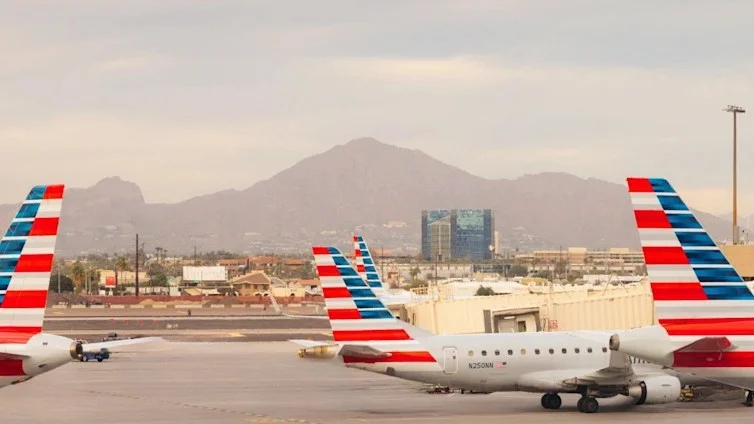
The aircraft was an Airbus A350-900ULR with two cabins: business class and premium economy. That configuration is the business model, not a design flourish. Nineteen hours nonstop means carrying fuel, and fuel displaces paying seats. Strip out economy and each remaining seat has to carry more of the trip’s cost. The published fare range is what that arithmetic looks like at retail.
Why The Missing Economy Cabin Sets The Price
Singapore’s own executives frame the constraint as a comfort problem. “No matter how good the service or food is, we heard from our customers that comfort is really the most important thing,” Ong Wah Li, vice president of product experience, told Travel & Leisure. The airline also conceded a reversal on its outgoing product: “We had the widest business-class seat, perhaps too wide,” Ong said. The replacement, developed with seating specialist Recaro and BMW Designworks in Schwäbisch Hall, Germany, is narrower, adds lumbar and leg support, and introduces a sliding privacy door — the carrier’s first in business class.
Seats stay in service for a decade or more, which makes cabin design a capital commitment rather than a refresh cycle. Work on the new first-class suite began in 2018, ran through roughly 30 design iterations, and ended with London firm PriestmanGoode; the suites are manufactured by Collins Aerospace in Winston-Salem, North Carolina. Both products are slated for the ultra-long-range A350 fleet and, for first class, the incoming Boeing 777-9s.
Regulation sits underneath all of it. Every new seat, and every minor change to an existing one, must clear crash-safety requirements. Recaro opened its own crash-test facility in 2021, and during a behind-the-scenes visit a mannequin strapped into a business suite was accelerated down a track and stopped abruptly, with seat and dummy emerging intact. That test is the reason a sliding door can exist at 40,000 feet.
What The Singapore Airlines Business Class Fare Actually Buys

Documented, the seat delivers. Business Insider described a lie-flat bed, a private enclosure and restaurant-standard meals, and reported not watching a single film across the 19 hours. Travel creator Adam Lovick, flying the JFK-Singapore SQ24 service, put it plainly to NDTV: “This flight is a breeze in business. Felt like a sick kid home from school. Movies, food, naps, and no WiFi.” He added: “The real challenge is adjusting to the time change when you get home.”
The Wi-Fi line is not a joke. On a 19-hour sector with no economy cabin behind the curtain, connectivity separates a working day from a lost one. Its absence sits awkwardly beside an award for the world’s best airline. Premium pricing is easier to defend when the product is complete.
An Award Measures One Flight, Not A Fleet
Upgraded Points rates Air France’s A350-900 suite and Virgin Atlantic’s A350-1000 Upper Class above most transatlantic rivals, and flags British Airways Club World for $800 to $1,000 or more per person in taxes and fees on award bookings. Lufthansa’s older 2-2-2 layout draws a pass. Singapore scores well there too — on the 777-300ER fifth-freedom JFK-Frankfurt route, where the seat converts to a bed manually and the crew does it for you.
Consistency is the point. A ranking built on one flight says little about what a passenger receives when the aircraft is swapped or the cabin is three years old. Singapore’s own record shows movement: one account in the source material places it second in Skytrax’s 2025 ranking, before the 2026 first place.
Two caveats on the reviews themselves. Business Insider paid a discounted media rate for a ticket that retails at $5,000 to $12,500, so the experience described is not the one most paying passengers buy at list price. And none of the material reviewed for this article includes an African carrier in any ranking or comparison. The premium-density model described here rests on aircraft range, traffic rights and airport slots that the sources do not examine for West African operators. A Lagos-origin traveller reaches this cabin through a connection, on a dollar fare, and pays the same published price.
What To Watch

Three things. First, whether the new business suite reaches the A350-900ULR fleet on schedule, and whether 777-9 delivery delays push it back. Second, whether connectivity improves on the ultra-long sectors, where the gap between the marketing and the delivered product is thinnest. Third, whether premium density survives a fuel-price move — the model has no economy cabin to absorb it.
For now, the Singapore Airlines business class fare buys a documented product at a documented price, on an aircraft built specifically to make the route possible. The award is a separate claim, voted on by people who fly the cabin once. The seat is documented. The connectivity, on at least one passenger’s account, is not.
Frequently Asked Questions
How much does Singapore Airlines business class cost on the Newark to Singapore route?
Business Insider reported that business-class tickets from Newark to Singapore ranged from $5,000 to $12,500 in December. The publication paid a discounted media rate, so that figure reflects the retail range rather than what the reviewer was charged.
Why does the Newark to Singapore flight have no economy cabin?
The route is flown by an Airbus A350-900ULR configured with only business class and premium economy. A nonstop of more than 19 hours requires carrying large amounts of fuel, and fuel displaces seats, so the airline sells fewer seats at higher fares instead of filling the back of the aircraft.
Is Singapore Airlines ranked first by Skytrax?
Business Insider refers to Singapore Airlines’ 2026 designation as the world’s best airline by Skytrax. A separate account in the same source material places the carrier second in Skytrax’s 2025 ranking, which shows how much the annual position can move.
FIRST TIME REACTIONS:
Be the first to leave us a comment – Singapore Airlines Business Class: What $12,500 Buys, down the comment section.
JOIN US ON OUR SOCIAL MEDIA:
About Paul Nwogo
Paul Nwogo is an engineer, published author, and the Head Manager at AfriLatest. He has written numerous books available on Amazon covering a diverse range of topics, including health, personal finance, relationships, work ethics, and scam survival. With his technical background and passion for writing, Paul now oversees the editorial direction of AfriLatest, delivering practical, accurate, and engaging content on trending news, music, and global lifestyle topics.
View all articles by Paul NwogoNigerian Business
Dangote Refinery Petrol Price: What the IPO Never Says
The Dangote refinery petrol price claim deserves scrutiny: the N5.85tn IPO prices shares, not fuel. Here is what the filings and coverage leave out.
The money is settled. The fuel question is not.
Dangote Petroleum Refinery’s public offer drew applications worth about N5.85tn, roughly $4.3bn, against a target of $1.6bn to $2.1bn, according to BusinessDay. Reuters reported the offer was increased by up to 30 per cent to about $2.1bn, with allotment of up to 5.33 billion shares including an overallotment option.
That is a capital-markets story. Ordinary Nigerians are being sold a different one: that the Dangote refinery petrol price is, or will soon be, the reason their transport fare and generator budget fall. The two claims are not the same, and the coverage cited here does not connect them.
What The Dangote Refinery Petrol Price Debate Actually Measures
At N525 per share, the refinery is valued at about N65.2tn, or $47.8bn, per Punch. One per cent of the company is worth roughly N652bn. Reuters puts the naira at N1,342.60 to the dollar.
Those numbers price future cash flows from a 650,000-barrel-per-day plant in the Lekki Free Trade Zone. They do not price a litre at a filling station. A shareholder buying at N525 is buying a claim on refining margins, export earnings and dividends. A driver buying petrol is paying for crude, freight, depot handling, haulage, levies and a retailer’s markup, each converted at the same exchange rate.
The refinery gate price and the pump price are separated by that chain. Nothing in the offer documents summarised in these reports discloses a gate price for petrol, and nothing discloses a pump price. Any claim that the Dangote refinery petrol price has been fixed at a specific figure cannot be tested against this material, because the figure is not there.
Where Refinery Gate Prices Stop And Retail Prices Begin
A refinery sells at its gate, in bulk, to marketers. Between that gate and a station forecourt sit depot charges, bridging costs for moving product inland, statutory levies and the margin the dealer needs to stay open. Each layer is priced in naira that somebody must buy with dollars. When the exchange rate moves, the pump price moves even if the refinery’s own efficiency improves.
This is why a refinery running at full rate can coexist with expensive fuel. Processing more crude lowers the cost of conversion. It does not cancel the crude bill, the haulage bill or the tax bill.
Small businesses feel this in the least glamorous places. A laundry in Surulere buying diesel, a cold-room operator in Kano, a bus operator on the Lagos-Ibadan corridor. Their cost line is the pump, not the share price. The IPO prospectus, as reported, has nothing to say to them.
Who Got Shares, And Who Got Nothing
The allocation table is where the practical trade-offs are visible. Retail investors are expected to receive all the shares they applied for, and domestic pension funds allocations close to what they requested, per Reuters. Foreign institutions bear most of the scaling back. “The guys that won’t get all their allotment are the offshore guys,” one lead adviser said.
South Africa’s Public Investment Corporation, which manages almost $220bn, sought about $500m of shares. Pan-African Refinery Investment SPV committed up to $400m, about 19 per cent of the enlarged offer. Nearly four million unique subscriptions came from investors in 120 countries, including every African country.
Aliko Dangote holds about 87.3 per cent now. That falls to roughly 84.4 per cent after the base offer and 83.6 per cent with the full over-allotment exercised; Reuters puts his post-IPO holding near 83.5 per cent, with NNPC Ltd down to about 6.5 per cent. A secondary sale of his personal stock, under discussion with the Securities and Exchange Commission, would cut it further. I don’t mind to be diluted as much as possible because I want people to actually be part of this good journey,” Dangote told ARISE News on 14 September.
The refinery had already raised about $2.5bn through two private placements covering 7.2 billion shares before the public offer. A Dangote spokesman declined to comment on the proposed secondary sale. The SEC postponed publishing allotments, due 17 November, to consider the transaction.
The Kenya Bill That Consumers Will Eventually Pay
Kenya plans tax exemptions for a proposed $16bn Dangote refinery at Lamu designed to process 700,000 barrels daily. Treasury Secretary John Mbadi told Citizen TV that capital goods would qualify for relief on value-added tax, excise duty and railway development levies, with taxes already paid on imported equipment refundable on claim.
Kenya’s tax expenditure stood at 262.6 billion shillings, about $2.02bn, or 1.5 per cent of GDP, last year, per ARISE. Exemptions are a cost carried by other taxpayers. That is the trade-off behind every refinery-for-fuel-price bargain, and it rarely appears in the price at the pump.
What To Watch Next
The allotment list is the first real test. A published list, a listing date and a disclosed gate price would let consumers and analysts measure something other than sentiment.
Dangote Cement hit the Exchange’s 10 per cent daily loss limit on 5 November and again on 17 November, a reminder that enthusiasm for the group’s paper can reverse quickly. The refinery’s valuation will not shield a transport operator from a fuel increase, and cheaper fuel will not rescue a shareholder from a bad entry price.
The forecast is narrow: expect strong subscription data, a pro-rata squeeze on offshore funds, and continued silence on retail pricing. Until the refinery publishes gate prices alongside its share allotments, the Dangote refinery petrol price remains a promise with no denominator, and the people who need the number most are the ones least able to read it in a prospectus.
Frequently Asked Questions
Will the Dangote refinery lower petrol prices at the pump?
The source material does not contain a gate price or a pump price, so no figure can be verified. Refining margin is one input among crude cost, freight, depot fees, haulage, levies and dealer margin. A refinery can cut conversion costs without cancelling the other layers, especially when the naira-dollar rate moves.
Why is Dangote selling part of his personal stake?
To meet institutional demand the IPO could not fully satisfy. Applications worth about N5.85tn came in against a target of $1.6bn to $2.1bn. The sale is under discussion with the Securities and Exchange Commission, which postponed the allotment list due on 17 November.
How much of the refinery will Dangote and NNPC own after listing?
Dangote’s 87.3 per cent falls to about 84.4 per cent after the base offer and 83.6 per cent with the full over-allotment, before any personal secondary sale. Reuters puts his post-IPO stake near 83.5 per cent and NNPC Ltd’s at about 6.5 per cent.
Receive alerts for Dangote refinery petrol price and more like it.
FIRST TIME REACTIONS:
Be the first to leave us a comment – Dangote Refinery Petrol Price: What the IPO Never Says, down the comment section.
JOIN US ON OUR SOCIAL MEDIA:
About Paul Nwogo
Paul Nwogo is an engineer, published author, and the Head Manager at AfriLatest. He has written numerous books available on Amazon covering a diverse range of topics, including health, personal finance, relationships, work ethics, and scam survival. With his technical background and passion for writing, Paul now oversees the editorial direction of AfriLatest, delivering practical, accurate, and engaging content on trending news, music, and global lifestyle topics.
View all articles by Paul Nwogo-

 Car Reviews3 weeks ago
1955 Chevy Bel Air Restomod: What SEMA Really Proves
-
Savings & Investing4 weeks ago
Hidden Medicare Fees Draining Your Retirement Savings
-
World News4 weeks ago
Sheinbaum No Proof Maduro: Mexico’s Test of US Evidence
-
Movies & TV4 weeks ago
Wizkid Starboy Desire Ft Banky W Shaydee: Fact Or Fan Fiction?
-
Trend politics4 weeks ago
How 24-Hour Online Scrutiny Is Running Out Leaders
-
Health and Fitness4 weeks ago
Premature Ejaculation Treatment: Exercise vs Dapoxetine