
World News
Pearl Jam Decry Cold Cruelty Of Seattle ICE Detainment
Pearl Jam decry the ‘cold cruelty’ of an ICE detainment in Seattle as a father and daughter are pulled off a jet bridge, and Nigerian travellers take note.

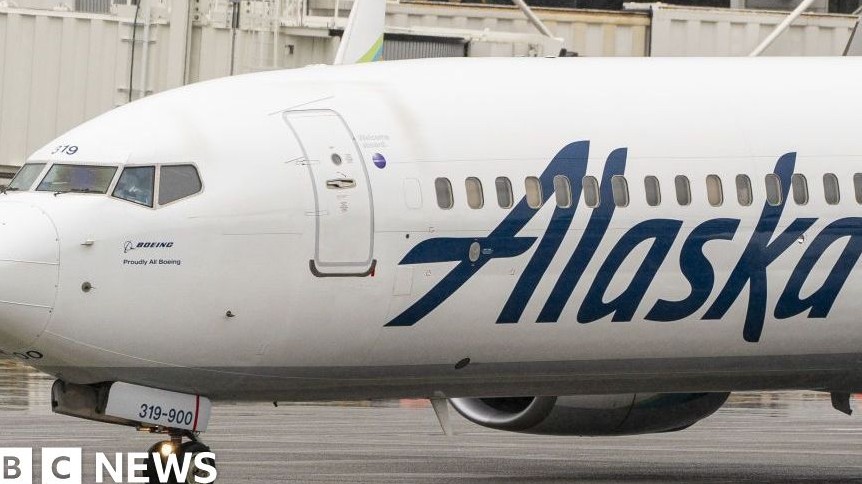
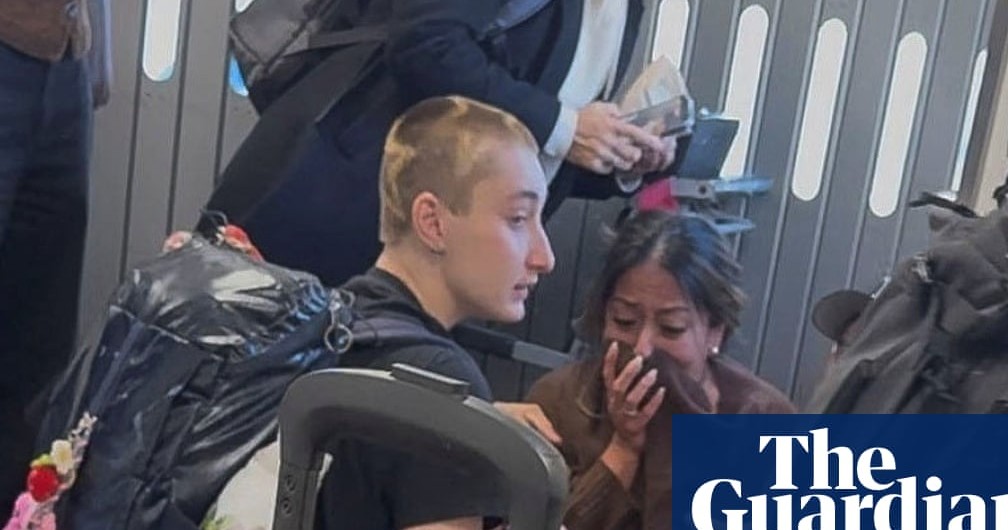
Pearl Jam have called the masked arrest of a father and daughter on a Seattle airport jet bridge the product of a system ‘driven by cold cruelty’, turning a viral confrontation into a national argument about how far US immigration enforcement can reach. The band’s statement, posted on X on Monday, lands on ground Nigerian travellers know well. This ICE detainment happened at a departure gate, in front of other passengers, on a flight the airline says it was never warned about. For a Nigerian diaspora that flies to the United States on visitor, student and family visas, that detail is the story.
What Pearl Jam Said About The Seattle ICE Detainment
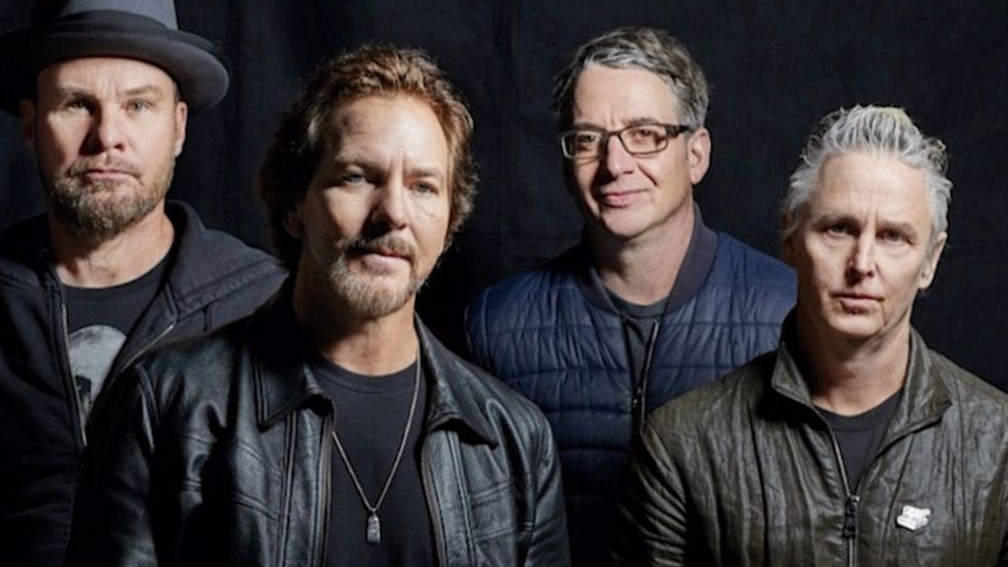
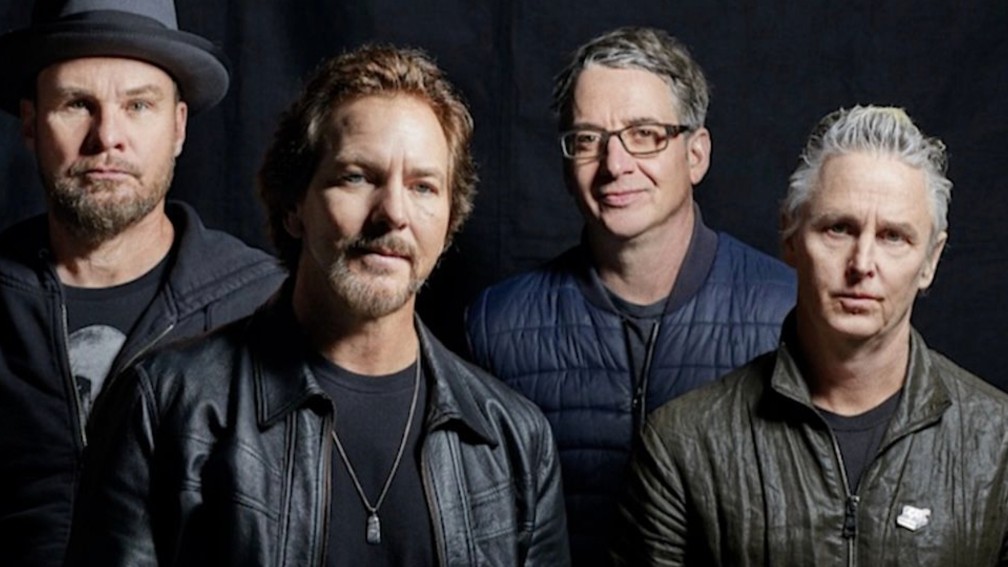
The Seattle grunge band described the incident as ‘heartbreaking and infuriating’, saying that watching ‘a family torn apart and dragged off a jetway right here in our own airport by masked individuals is unconscionable’. They said they stood ‘firmly against this kind of inhumane treatment’. According to Fox News, the band tied the arrest to the November 2026 midterm elections, arguing the result showed Americans ‘aren’t powerless or screaming into a void’ and that voters had looked at ‘the systematic abuse’ and said ‘no more’.
Pearl Jam are not newcomers to political statements. Fox notes the band criticised the 2022 Dobbs decision that overturned Roe v. Wade, and that Eddie Vedder and Jeff Ament spoke with Doug Emhoff on Pearl Jam Radio before the 2024 election. Consequence reports the group is searching for a drummer and last released Dark Matter in 2024.
None of that makes the band’s account of the arrest evidence. It is a political statement by a musical act from the city where the arrest happened. The evidentiary record sits elsewhere, and it is contested.
A Verified Timeline Of The ICE Detainment In Seattle
Saturday, 21 November: ICE officers in unmarked jackets and khaki trousers detained Ricardo Larrondo Mendoza and his daughter Sofia Hernandez Mejia, both Mexican nationals, as they boarded an Alaska Airlines flight to Los Angeles at Seattle-Tacoma International Airport. The flight was delayed.
The facts in dispute are central. ICE says Mendoza overstayed his visa and that Mejia ‘hurled hot coffee on the officers’, and says she will be charged with assaulting a federal officer. Their lawyer, Olia Catala, told the Associated Press the pair had lived in the US since 2015 and were seeking asylum, were travelling to a family baptism, and had no criminal record. She said Mejia, in her mid-20s, had married a US citizen and filed paperwork to adjust her status, and told KUOW they were legally in the country. Eyewitness John Gaedeke told Reuters he thought the agents were passengers, that they ‘didn’t have any identification’, and that he did not see anyone throw coffee, saying the cup went flying when the man was tackled. Both were held at the Northwest ICE Processing Center in Tacoma.
Sunday, 22 November: protesters marched through the airport with bullhorns and signs reading ‘ICE out of Washington’ and ‘Abolish ICE’. Washington Governor Bob Ferguson said ‘ICE is completely out of control’ and called the agency ‘beyond reform’; Seattle mayor Katie Wilson called the tactics ‘unacceptable and un-American’. Alaska Airlines said it received no ‘appropriate notice’ of the enforcement action. The Port of Seattle, which runs the airport, said it was ‘outraged’ and that such actions occur without its participation or knowledge, even as its own website states that federal agents have access to airport property and port officials cannot interfere. Katie Garrow of MLK Labor said four of the six crew on the flight chose not to fly.
Members of Congress weighed in. Rep. Pramila Jayapal called the arrest ‘totally unacceptable’; Rep. Adam Smith said ICE was operating ‘as a paramilitary force’. The BBC reported that ICE agents killed Renee Good and Alex Pretti in Minneapolis earlier this year, and that deportations have risen sharply under President Donald Trump, who said after the midterms that his crackdown was ‘too tough’.
Why The ICE Detainment Matters To Nigerian Travellers
Nothing in the record suggests either detainee was Nigerian. The relevance is structural. This ICE detainment happened with no notice to the carrier or the terminal operator; identification was reportedly not displayed; and the legal status of the two people was being argued in real time at the gate. Nigerian passport holders on B1/B2 visitor visas, F-1 student visas or family petitions can occupy the same contested space. A pending application is not a shield on a jet bridge.
The consular dimension is just as concrete. Foreign missions depend on timely notification when a national is detained, and the Seattle case shows the gap between what a family’s lawyer can establish afterwards and what happens in the first hours. Detainees were moved to a processing centre in Tacoma before a legal account was assembled.
Then there is the jurisdictional question. The Port of Seattle says it has ‘continually asked’ for protocols and that federal agents have access regardless. Nigerian aviation and immigration authorities will recognise the template: an armed agency operating inside a civilian terminal whose operator carries the reputational and operational cost but holds no legal authority to stop it. Under the Guardian’s reporting, the airport learned of the arrest the way passengers did.
Finally, policy. If Washington narrows the rules of engagement, requiring advance notice to carriers, visible identification and limits on jet-bridge arrests, Nigerian travellers benefit directly. If it does not, an airport detention on the way to a family event becomes part of routine travel planning. That outcome is a forecast, not a fact; no rule change has been announced.
What The Seattle ICE Detainment Leaves Behind
What this ICE detainment has produced so far is not a change in policy but a record: a documented timeline, two competing accounts of the same ninety seconds, and an airport authority admitting it cannot control what happens on its own property. For Nigeria, the lesson is unglamorous and practical. Consular muscle, documented status and a clear understanding of what a visa does and does not protect matter more than any statement from a rock band. The bigger picture is that immigration enforcement in the United States has moved from the courthouse to the departure gate, and the world’s travellers, Nigerians included, are now expected to absorb the difference.
Frequently Asked Questions
What exactly did Pearl Jam say about the Seattle arrests?
In a post on X on Monday, the band said it was ‘heartbreaking and infuriating to watch the human toll of a system driven by cold cruelty’, described the jetway arrest of a family by masked individuals as ‘unconscionable’, and said it stood against ‘this kind of inhumane treatment’. The band also linked the incident to the November 2026 midterm elections.
Were the two detained people in the US legally?
That is disputed. ICE says both Mexican nationals overstayed their visas and were in the country illegally. Their lawyer, Olia Catala, says they have lived in the US since 2015, are seeking asylum, have no criminal record, and that the daughter married a US citizen and filed to adjust her status. No court ruling on their status has been reported.
Does this affect Nigerian travellers directly?
Neither detainee was Nigerian. The relevance is procedural: the arrest happened with no advance notice to the airline or airport operator, involved agents an eyewitness says showed no identification, and involved a status dispute argued at the gate. Nigerian visitors, students and family-visa holders in the US face the same enforcement environment.
 Follow AFRILATEST on Google News
FIRST TIME REACTIONS:
Be the first to leave us a comment – Pearl Jam Decry Cold Cruelty Of Seattle ICE Detainment, down the comment section.
JOIN US ON OUR SOCIAL MEDIA:

About Clare Dominic
Clare Dominic is the Editor at AfriLatest. With a background in journalism and a passion for storytelling, she oversees the editorial process to ensure content is accurate, engaging, and relevant. Clare works closely with contributors to maintain the highest standards of journalistic integrity across all news, sports, and lifestyle coverage.
View all articles by Clare Dominic

World News
Heartland Jessica Chastain Interviews: What They Reveal
The Heartland Jessica Chastain interviews confirm a Netflix mystery, a mixed critical record, and a lesson for Nigerian film and entertainment desks.

Jessica Chastain, an Academy Award winner, currently leads Heartland, a Netflix missing-person thriller written and directed by Shana Feste. For you the value in this story is not the plot. It is the machinery around it: a New York junket where the streamer paid for reporters’ travel, a fixed release date of Friday 13 November 2026, and a critical split that shows exactly where confirmed fact ends and studio positioning begins. The Heartland Jessica Chastain interviews, given around a Metrograph screening on Thursday 5 November 2026, are the primary record of what the star and her director actually said.
What The Heartland Jessica Chastain Interviews Actually Confirmed
Confirmed: Chastain plays Misty Jones, a former country superstar nicknamed the Queen of Mean who returns to Nashville after roughly twenty years to look into the disappearance of her niece, Charlie Heart, a rising singer played by the country artist Carter Faith. Confirmed: the cast includes Garrett Hedlund as record executive Roy Combs, Paul Sparks as Misty’s brother Donny, Ross Lynch as Jace, Norbert Leo Butz as Detective White and John Hawkes as Misty’s ex, Clark.

Confirmed too: the film is a Netflix release, not a cinema rollout. That single distribution decision determines whether a Nigerian viewer can see it at all, and on what screen.
Chastain gave her reasons on the record. “Well, what drew me first off was Shana Feste, the director. I just really like her a lot, and she wrote and directed this. I was very excited to turn that first page,” she told WWAY. On the script she was blunter: “The script. The script. I mean, it’s very rare to get a part like Misty Jones.”
One disclosure matters. WWAY reported that Netflix covered the cost of its travel and accommodation for the screening and interviews. That is a sponsored press trip, stated plainly in the copy. Nigerian entertainment desks that accept similar trips should audit whether they say the same.
From Tammy Wynette To Misty Jones
Chastain’s route to Heartland runs through another country singer. She played Tammy Wynette in the series George & Tammy, shot in and around Wilmington, North Carolina, and she won her Oscar for The Eyes of Tammy Faye.

The preparation was unusually long. Chastain said she was first approached about playing Wynette in 2011, when the project was planned as a film, and she studied the role for years before the series was made. That research carried over. “I didn’t really need to imagine what the superstardom was because I had just played that kind of fame with Tammy Wynette,” she said.
She has also said she had joked she never wanted to sing on camera again. The script changed her mind. The distinction she draws is that Wynette embraced the spotlight while Misty fled it. “Misty Jones is the exact opposite, and maybe that’s more connected to me,” she said.
Feste’s account of the origin is equally specific. She studied film noir at the American Film Institute and wanted the hard-boiled detective role played by a woman. “So I was like, ‘This role is amazing. I never get to see this role played by women,’” she told WWAY. She wanted to return to the Nashville setting of her 2010 film Country Strong, and she cast working country performers, Carter Faith among them, to buy credibility.
Reviews Split The Record From The Pitch
The Heartland Jessica Chastain interviews sell craftsmanship. The reviews test it.
The Playlist graded the film D+, calling the premise workable but the execution “one exasperating contrivance after another.” It singles out the indifference of law enforcement as the script’s “most glaring logical failure,” and argues the film withholds obvious information and then treats the payoff as a shock.
Variety was warmer on the star and colder on the structure: “diverting straight-to-Netflix fare, sparkly and disposable as a rhinestone,” with Chastain’s “surprisingly brash, beery performance” doing the heavy lifting. Variety states plainly that the film is not “an effective thriller” at nearly any point.

Both reviews identify the same late twist, that Charlie is Misty’s biological daughter rather than simply her niece. Treat that as confirmed plot, not rumour. What remains opinion is whether the film works, and what remains forecast is whether it changes Chastain’s standing.
Where Nigeria Sits In The Heartland Story
The record must be honest here. The source material contains no Nigerian location, no Nigerian cast member, no Nigerian financing and no Nigerian release plan beyond the global Netflix date. Chastain’s documented filmography, as described in these interviews, has no Nigeria chapter. Anyone claiming a direct Nigerian angle is inventing one.
The indirect angles are real. First, distribution: a star vehicle that skips cinemas reaches Nigerian subscribers through a platform, which means Nigerian viewing is settled by licensing, not by box office. Second, craft crossover: Carter Faith moved from a working music career into acting, a path Nigerian musicians have walked repeatedly, and her stated advantage, that she was glad to have “the country music experience to bring with me,” is an argument for casting from the real scene rather than around it.
Third, and most useful, the press economics. A global streamer flew reporters to New York, seated them with an Oscar winner, and one outlet disclosed the arrangement while the other coverage reviewed for this piece did not mention it at all.
Legacy, Not Verdict
Chastain’s future is the open question. A D+ from one trade outlet and a shrug from another do not end a career built on The Eyes of Tammy Faye, but they mark the point where creative control and quality start to diverge.
That is the durable read of the Heartland Jessica Chastain interviews: a star with unusual access to her own material, a director with a clear genre thesis, and a distributor that put both in front of a global audience on 13 November 2026 without selling a single cinema ticket. Nigerian filmmakers watching that model should note what it rewards. Names, not screens.
Frequently Asked Questions
When did Heartland starring Jessica Chastain come out?
It premiered on Netflix on Friday 13 November 2026. A special screening and press interviews were held at the Metrograph theatre in New York on Thursday 5 November 2026.
What is Heartland about?
Chastain plays Misty Jones, a former country music superstar known as the Queen of Mean, who returns to Nashville after about twenty years to investigate the disappearance of her niece, Charlie Heart, a rising singer played by country artist Carter Faith. Both published reviews note a late twist revealing Charlie is actually Misty’s biological daughter.
Is there a Nigerian connection to Heartland?
None that is documented. The available interviews and reviews name no Nigerian location, cast member, financier or release plan beyond the global Netflix date. The relevant Nigerian angle is distribution and press ethics, not production.
How was the film received by critics?
Mixed to negative. The Playlist gave it a D+ and called it contrived. Variety described it as diverting straight-to-Netflix fare and said it is not an effective thriller, while praising Chastain’s performance.
FIRST TIME REACTIONS:
Be the first to leave us a comment – Heartland Jessica Chastain Interviews: What They Reveal, down the comment section.
JOIN US ON OUR SOCIAL MEDIA:
About Clare Dominic
Clare Dominic is the Editor at AfriLatest. With a background in journalism and a passion for storytelling, she oversees the editorial process to ensure content is accurate, engaging, and relevant. Clare works closely with contributors to maintain the highest standards of journalistic integrity across all news, sports, and lifestyle coverage.
View all articles by Clare DominicWorld News
British Airways 787 Emergency and the Lagos Route Risk
A British Airways 787-10 declared an emergency over the Atlantic days after an Athens diversion. Why the Lagos and Nairobi routes make it matter.
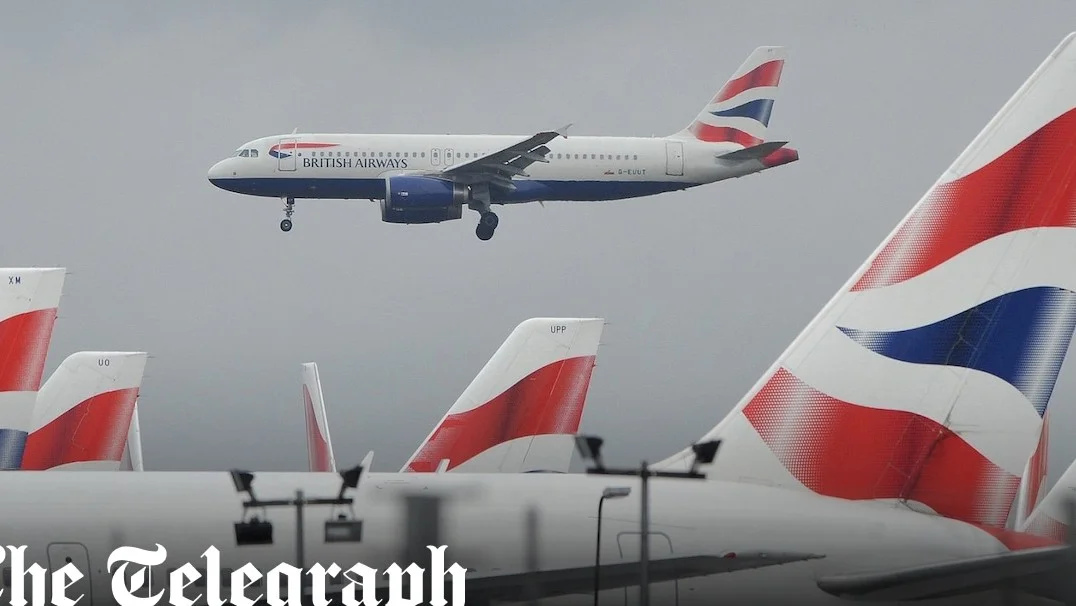
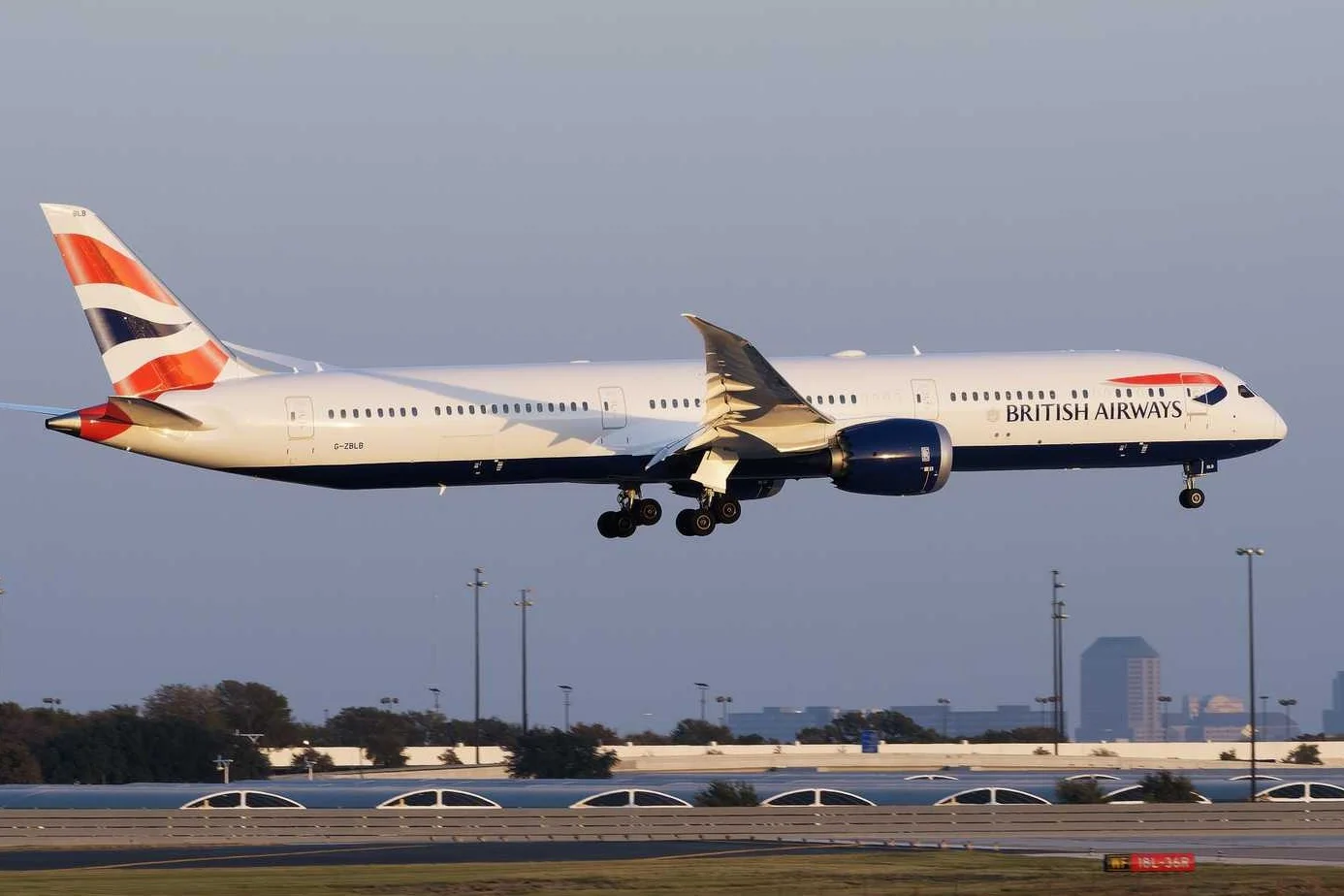
A British Airways Boeing 787-10 declared a general emergency over the North Atlantic on Tuesday night, roughly four hours into a Heathrow-to-Boston service, after one of its two Rolls-Royce Trent 1000 engines began losing oil. The jet landed safely. What lifts the event above a routine log entry for African readers is the airframe and the network it flies: registration G-ZBLC is the same Dreamliner that shut down an engine and diverted to Athens ten days earlier, and British Airways sends its 787-10s to Lagos and Nairobi.
The Lagos link is not theoretical. According to Simple Flying, the carrier’s 787-10s seat up to 256 passengers across four cabins and operate long-haul routes to Boston, Newark, Seattle, Nairobi, Lagos and Dubai. The same report notes that another of the airline’s 787-10s ran off a taxiway at Heathrow this month, its nose landing gear sinking into the grass verge, while preparing a flight to Lagos.
Why British Airways’ Two-Week Emergency Run Matters On The Lagos Route
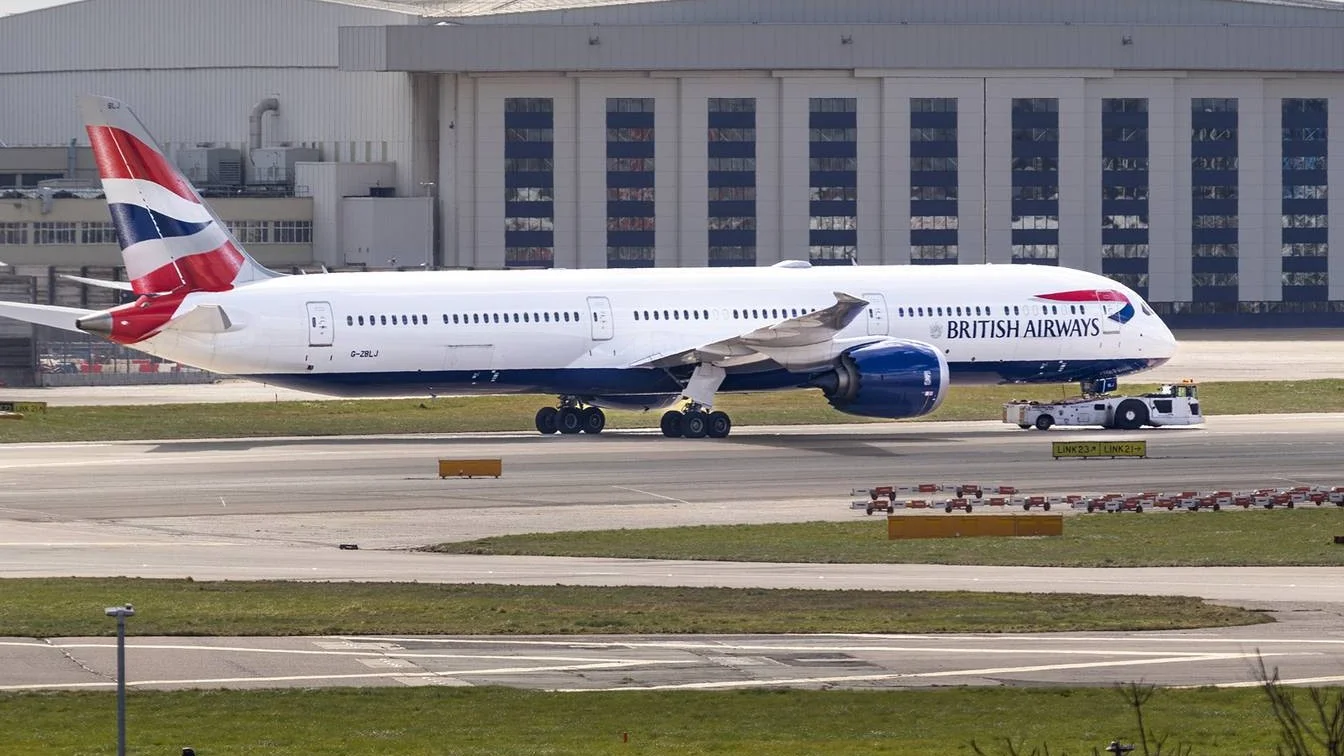
The earlier event is documented. On November 14, G-ZBLC was operating BA105 from Heathrow to Dubai when the crew shut down the right-hand engine about three hours in and diverted to Athens. The Aviation Herald reported that a passenger on that flight said the pilots announced an oil leak as the cause; the airline has not confirmed that detail. The jet then sat on the ground in Athens for six days, was repositioned to Heathrow on November 20, stayed in London four more days, and returned to service on Tuesday with the Boston flight.
On Tuesday’s crossing the crew squawked 7700, the international code for a general emergency, and told Gander air traffic control in Canada that the aircraft was losing oil at high power and that the leak stopped worsening once thrust came down. They descended to 28,000 feet and kept the engines at lower power for the rest of the flight. ACARS messages reported by AIRLIVE show the airline’s maintenance team recommended a diversion to Keflavik in Iceland; the crew judged the engine stable and continued to Boston, landing about an hour late.
Two details deserve separating from the narrative. Simple Flying puts touchdown at 10:55 p.m. EST and the cruise altitude at about 33,000 feet; AIRLIVE puts the landing at 11:00 p.m. and the altitude at 38,000 feet. Neither discrepancy changes the safety outcome, but early accounts of the same event rarely match. Whether authorities open an investigation is not yet known.
The engine type carries its own history. Trent 1000s have faced sustained industry scrutiny over durability and maintenance, and the source material does not establish whether the two oil-loss events on G-ZBLC are mechanically linked.
The North Sea Jamming Signal That Reaches Every European Routing
On November 9, something else in British-controlled airspace went wrong at scale. The Telegraph reported that 140 flights, including departures from Edinburgh, Manchester and Heathrow, were affected by suspected GPS jamming. A Ryanair service from Edinburgh to Rome, an easyJet flight from Manchester to Hurghada in Egypt and a British Airways flight from London to Stockholm were among them.
Hexbird, an aviation intelligence group, tracked the likely source to a radio transmitter over the North Sea about 190 miles off the English coast. At the time, three sanctioned Russian cargo ships, Lady R, Lady D and Maia-1, previously suspected of ferrying weapons between Russia and North Korea, were heading south under escort from a Russian warship. Hexbird’s conclusion is deliberately narrow: its analysis “neither identifies the convoy as the source – nor rules it out.”
James Droxford, a former naval intelligence officer, said a Russian warship escorting the convoy was “almost certainly the origin of the GPS jamming, not the merchant vessels.” Dr Thomas Withington, an electronic warfare specialist, called it “the first time we’ve seen anything this far west” and said he did not expect it to be the last. The interference lasted about 20 minutes with no operational effect, roughly 40 affected aircraft were in or near UK-controlled airspace, and Dutch air traffic control said seven flights reporting GPS loss were guided into Schiphol.
The British government declined to discuss intelligence matters. A spokesman said pilots are trained for GPS interference and commercial aircraft carry backup navigation, and pointed to 155 million pounds for critical infrastructure resilience, including a GPS interference monitoring programme.
What Nigerian Travellers Can Verify, And What Stays Unconfirmed
The confirmed core is narrow. Two emergencies on one airframe within ten days, both ending in safe landings. A jamming episode traced to a transmitter over the North Sea. A gate team at Heathrow stopping a fabricated, AI-generated upgrade pass on November 20 before flight BA285 to San Francisco pushed back on schedule.
The rest is attribution. Russian responsibility for the jamming is described by analysts as suspected and likely, not established, and Hexbird expressly declines to name the convoy. The oil leak as the cause of the Athens diversion rests on a passenger’s account. A mechanical link between the two oil events is unknown. No Nigerian or African aviation regulator appears in any of the source reporting, and none had commented as of publication.
The structural point for Africa is Heathrow itself. NBC News reports the airport handled 84.5 million passengers last year, seventh busiest globally on Airports Council International data, and that a substation fire in March caused a predawn outage affecting more than 1,300 flights and 200,000 passengers, later blamed by the National Energy System Operator on a moisture fault. The same outlet reported a 777 on a London-Chicago service descending 28,000 feet in seven minutes after a “technical issue” and turning back to Heathrow, without giving a date. NATS had two technical failures in two weeks, which Transport Secretary Heidi Alexander called “deeply frustrating.”
For a Lagos or Nairobi passenger, the exposure is stacked: one dominant European hub, one foreign carrier’s fleet-rotation decisions, and airspace where electronic interference is now a live category of risk. The decision to press on to Boston rather than divert to Iceland was a judgement taken by a crew on the day, not a policy over which African regulators had any visible say.
The Bigger Picture
Nothing in the record suggests the airline is unsafe. Its statement on a separate diversion said the aircraft landed safely, customers disembarked normally and teams worked to restore travel plans. What the record does show is how thin public evidence becomes when an incident happens far from African soil, and how much verification falls to specialist trackers rather than the regulators whose citizens are in the cabin. British Airways will publish nothing further unless an investigation opens. Until then, the verifiable facts are the ones above, and the rest is a claim.
Frequently Asked Questions
Was the British Airways flight to Boston in serious danger?
The crew declared a general emergency (squawk 7700) after an engine oil leak, descended to 28,000 feet and reduced thrust so the leak stopped worsening, then landed safely in Boston about an hour late. Commercial aircraft carry backup navigation systems and pilots train for such events. Whether an investigation will be opened is not yet public.
Does British Airways fly the 787-10 to Nigeria?
Yes. Reporting on the fleet lists Lagos and Nairobi among the long-haul destinations served by the airline’s 787-10s, alongside Boston, Newark, Seattle and Dubai. The type seats up to 256 passengers across four cabins, and the carrier operates 44 Dreamliners in total across all three variants.
Was Russia responsible for the GPS jamming near the UK?
It is suspected but not established. Analysts say a Russian warship escorting three sanctioned cargo ships was almost certainly the origin, and Hexbird’s analysis neither identifies the convoy as the source nor rules it out. The British government declined to comment on intelligence matters.
FIRST TIME REACTIONS:
Be the first to leave us a comment – British Airways 787 Emergency and the Lagos Route Risk, down the comment section.
JOIN US ON OUR SOCIAL MEDIA:
About Clare Dominic
Clare Dominic is the Editor at AfriLatest. With a background in journalism and a passion for storytelling, she oversees the editorial process to ensure content is accurate, engaging, and relevant. Clare works closely with contributors to maintain the highest standards of journalistic integrity across all news, sports, and lifestyle coverage.
View all articles by Clare DominicWorld News
U.S. Air Force Pushes Into Orbit And Drones: Nigeria’s Stake
The U.S. Air Force is moving into orbit and cheap uncrewed mass. Hormuz tolls, drone prices and fuel costs tie it directly to Nigeria.

The United States has confirmed for the first time that it has an offensive weapon in orbit, a disclosure that measures how far the U.S. Air Force and its space-faring sibling have travelled from the service that was once the Pentagon’s newest branch.
The Nigerian stake is practical, not theoretical. The same defence apparatus writing doctrine for orbital conflict also sets the terms for armed drone exports, and the Iran war that preceded this admission has already lifted fuel prices worldwide — a cost that reaches Nigerian pump prices, haulage rates and food bills.
What Washington Confirmed, And What It Did Not
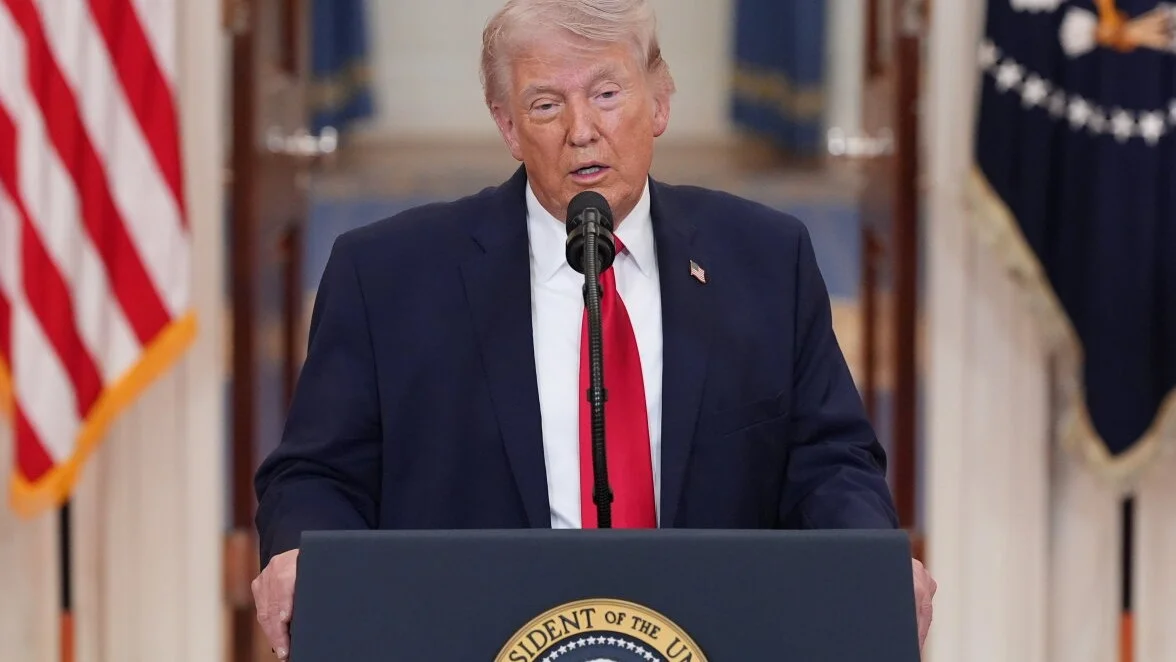
US Secretary of the Air Force Troy Meink said the “on orbit” weapon was necessary to safeguard US forces against hostile enemy action. Speaking at the Air, Space and Cyber Conference on Monday, Meink said Washington was ready for “evolving threats” but did not elaborate on the weapon’s capabilities or when it was put into orbit, the BBC reported.
A US Space Force spokesperson described the wider mission in language broad enough to cover almost any system: “Space control encapsulates the mission areas required to contest and control the space domain — employing kinetic and non-kinetic means to affect adversary capabilities through disruption, degradation and even destruction, if necessary.”
China’s foreign ministry warned against an arms race in space. “We urge the US side to stop expanding its military capabilities and preparing for war in outer space,” a spokesman said, according to AFP.
Independent assessment of the hardware remains thin. Dr Bleddyn Bowen of the Royal United Services Institute told the BBC that “precious little” is publicly known, and that the system could be electronic warfare or radio jamming, or a kinetic kill vehicle meant to ram a satellite — the latter less likely because of the debris it would create. That is the line between confirmed fact and informed guess, and it should be held firmly.
The legal backdrop is older than the technology. A 1967 treaty banned weapons of mass destruction in orbit; the US, Russia and China have since explored capabilities outside that treaty, including satellite targeting. In early February it emerged that two Russian satellites had likely intercepted the communications of at least a dozen European satellites since 2022.
Why The U.S. Air Force Orbit Shift Matters In Abuja
The Space Force is the first new branch of the US military in more than 70 years, launched in 2019 — which means the U.S. Air Force carried the “newest service” title for seven decades. Washington is now rebuilding institutions around domains rather than around history, and the same logic is being applied to the Gulf.
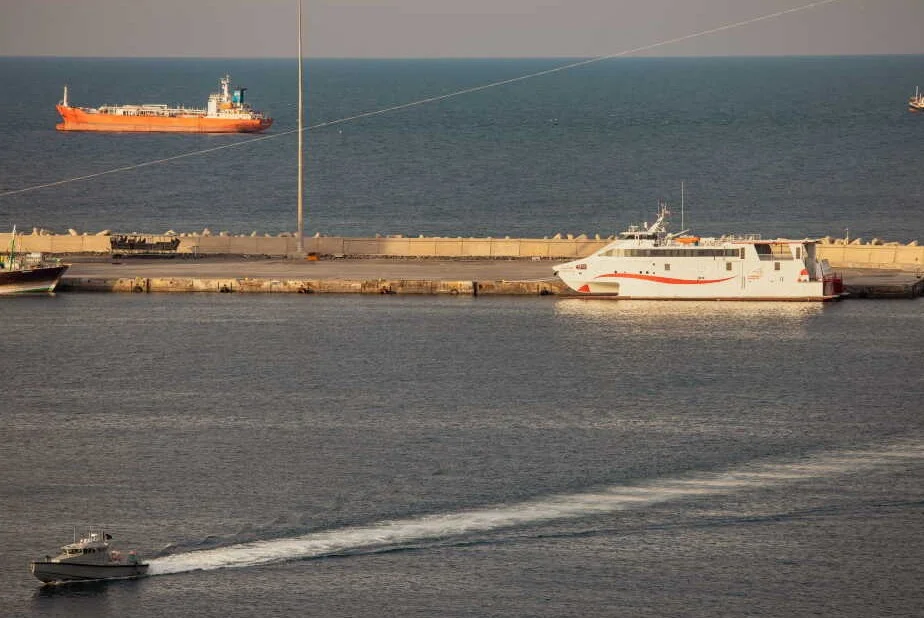
That is where Nigerian exposure begins. NPR reported that Iran retains control of the Strait of Hormuz under the ceasefire brokered by Pakistan, having charged tolls of up to $2 million on some tankers, refused most and allowed only “friendly” shipping through. About 2,000 vessels were waiting to transit, and the closure has pushed gas prices higher across the world.
The picture is contested at the edges. Iranian state media said the strait was being closed again in response to Israeli attacks on Lebanon; the White House called the reports false and pointed to an uptick in traffic on Wednesday. Both claims sit in the public record. Neither is independently settled.
Nigeria sits on both sides of the oil ledger. Higher crude benchmarks lift export receipts and federation revenue, while petrol prices, still substantially tied to imported refined product, absorb the same shock at the pump. Add freight and diesel, and a waterway in the Gulf becomes a household question in Kano and Port Harcourt.
What The U.S. Air Force Now Wants From Uncrewed Airpower
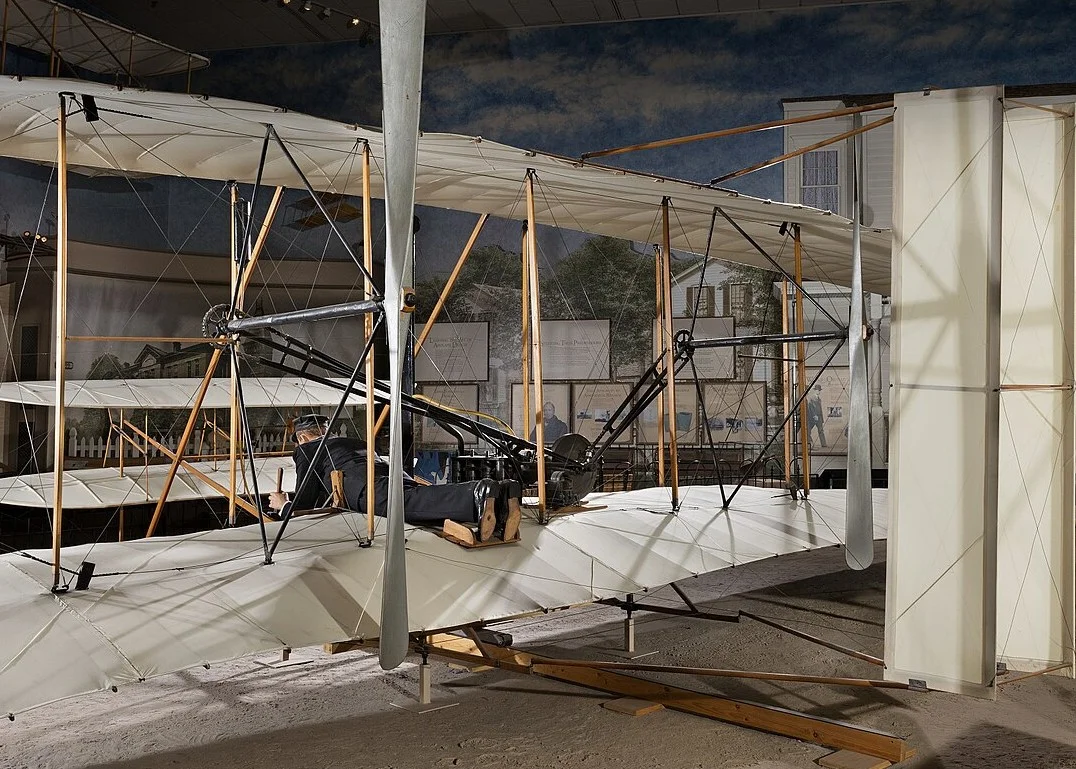
The larger shift may be in the air rather than above it. The U.S. Air Force is reworking requirements for its next generation of uncrewed systems, according to an official service release, with emphasis on flexibility, affordability and rapid production scaling through a partnership with the Defense Innovation Unit. The work will inform the future of the MQ-9 Reaper fleet.
Lt. Gen. Chris Niemi framed the rationale plainly: “Future conflicts will demand greater mass, faster adaptation and the ability to absorb operational losses while continuing to generate combat effects.”
That is a doctrine of attrition and cost, not of showcase platforms. For air forces running long counter-insurgency campaigns on fixed budgets, the arithmetic of cost per flight hour is the entire argument. Whether Nigeria’s own procurement follows that logic is a policy choice still to be made, not a forecast.
A Promotion Fix That Reveals A Manning Problem
The third signal is administrative and easy to miss. Chief Master Sgt. of the Air Force David R. Wolfe said 59 Senior Master Sergeants selected for Chief Master Sergeant declined promotion over four years — allocations that previously went unfilled for the cycle. A memorandum signed on 13 October by Richard L. Anderson, Assistant Secretary of the Air Force for Manpower and Reserve Affairs, authorised a Supplemental Order of Merit Listing so a declined allocation can pass to the next qualified airman on the board’s order of merit.
The service is explicit that placement on that list “does not constitute selection for promotion and creates no entitlement to promotion”. The authority covers the 26E9 cycle only and expires with it or with a rewrite of the promotions instruction. In the 25E9 cycle, 640 of 2,445 eligible Senior Master Sergeants were selected — a 26.18 percent rate, per the Air Force release.
What To Watch
Watch the Hormuz tolls first, because a passage fee that survives a ceasefire becomes a standing tax on every barrel leaving the Gulf. Watch whether Washington publishes anything verifiable about the orbital weapon beyond a mission statement broad enough to mean anything at all. And watch the U.S. Air Force’s uncrewed requirements, because the price, production model and export posture it settles on will shape what smaller air forces — Nigeria’s included — are offered, and can afford, in the next decade.
Frequently Asked Questions
Did the US confirm it has a weapon in space?
Yes. Secretary of the Air Force Troy Meink said an “on orbit” weapon was deployed to safeguard US forces, but officials did not disclose its capabilities or the date it reached orbit. A Space Force spokesperson described space control as using kinetic and non-kinetic means for disruption, degradation or destruction if necessary.
Why does the Strait of Hormuz matter to Nigerian fuel prices?
NPR reported that Iran retains control of the strait under the ceasefire, has charged tolls of up to $2 million on some tankers and has refused most shipping. The closure has raised gas prices worldwide. Nigeria sells crude but still prices much of its petrol off imported refined product, so higher benchmarks cut both ways for government revenue and for consumers.
What is the U.S. Air Force changing about uncrewed aircraft?
It is rewriting requirements for future uncrewed systems around flexibility, affordability and rapid production scaling, working with the Defense Innovation Unit. The findings will inform the future of the MQ-9 Reaper fleet, with Lt. Gen. Chris Niemi arguing future conflicts will demand greater mass and tolerance for operational losses.
FIRST TIME REACTIONS:
Be the first to leave us a comment – U.S. Air Force Pushes Into Orbit And Drones: Nigeria’s Stake, down the comment section.
JOIN US ON OUR SOCIAL MEDIA:
About Clare Dominic
Clare Dominic is the Editor at AfriLatest. With a background in journalism and a passion for storytelling, she oversees the editorial process to ensure content is accurate, engaging, and relevant. Clare works closely with contributors to maintain the highest standards of journalistic integrity across all news, sports, and lifestyle coverage.
View all articles by Clare Dominic-

 Car Reviews3 weeks ago
1955 Chevy Bel Air Restomod: What SEMA Really Proves
-
AI & Technology4 weeks ago
AI Scam Protection in 2026: What Actually Works
-
Health and Fitness4 weeks ago
Medicare 2027 Changes: Costs, Drug Prices and What to Do
-
Celebrities4 weeks ago
Celebrity Traitors Final Predictions: Ex-Players On Tactics
-
Celebrities3 weeks ago
Hailey Bieber PMDD Diagnosis Followed Son Jack’s Birth
-
Business & Finance4 weeks ago
2027 Medicare Changes: Costs, Caps and Deadlines