World News
Solar Power: Oxford’s Cell vs Australia’s Broken Grid
Oxford’s bismuth sulfide study cuts charge loss 75%, but South Australia’s solar power export ban shows what really limits African grids.


The most consequential solar power story this month is not a factory, a megaproject or a tariff ruling. It is a measurement, published in a physics journal, of how long an electrical charge survives inside a piece of bismuth sulfide.
Confirmed: a University of Oxford-led team reported in Nature on 28 October 2026 that bismuth sulfide’s unusual electronic structure reduces the rate at which electrical charges are lost by about 75% at room temperature, compared with conventional semiconductors that absorb light equally well. Confirmed separately: roughly 10,000 homes and businesses on South Australia’s Eyre Peninsula cannot export electricity from rooftop panels to the grid after storm damage forced the isolated network onto diesel generators, as reported by Yahoo News.
One is a materials-science result. The other is an infrastructure failure. Read together, they mark the two frontiers of solar power in 2026: the cell, and the wires that carry what the cell makes. For African utilities and regulators, the second frontier will decide outcomes long before the first does.

What The Oxford Solar Power Research Confirms, And What It Does Not
The study, whose corresponding author is Professor Laura Herz of Oxford’s Department of Physics, fired extremely short laser pulses at thin bismuth sulfide films and tracked charge decay using ultrafast terahertz spectroscopy, from room temperature to just above absolute zero. The published account describes a material with two closely spaced routes for electrons between energy levels.
One route absorbs light strongly. The other sits slightly lower in energy and lets charges vanish far more slowly. Because the two are close together, charges spend much of their time in the lower route, which functions as a temporary storage reservoir. Electronic structure calculations by Professor Marina Filip’s group produced that explanation.
Cooling the material strengthened the case. In most semiconductors, charges disappear faster as temperature drops. In bismuth sulfide, more charges settled into the reservoir and survived longer, a reversal that matched the team’s model of what physicists call a pseudo-direct semiconductor. Herz’s conclusion: “this trade-off is not inevitable.”
The limits matter as much as the result. The paper demonstrates a physical mechanism, not the performance of a finished cell. No efficiency figure for a manufacturable panel appears, and no timeline is offered. Any headline claiming a 75% jump in panel output misreads the work: the figure describes a reduced rate of charge loss inside the material, not conversion efficiency. Herz said the mechanism gives researchers “a roadmap for discovering and potentially engineering other materials” with similar properties. That is a statement about research direction, not a product claim. Longer-lived charges could also give chemical reactions more time to produce fuels using sunlight, the authors suggest, which remains a hypothesis under test.
South Australia’s Solar Power Export Ban Exposes The Grid Side
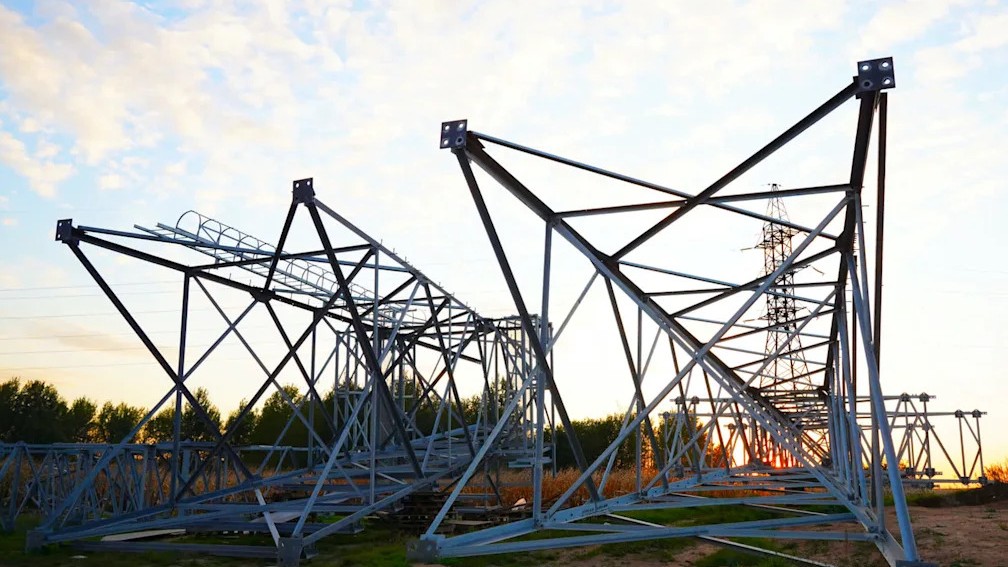
On the Eyre Peninsula, the constraint is physical and immediate. Transmission towers installed in 2023 as part of a $300 million connection fell in a storm, and the southern peninsula remains isolated from the main grid. The towers had been built to the AS7000 standard, introduced after storms caused South Australia’s statewide blackout in 2016.
Premier Peter Malinauskas said the investigation would weigh two possibilities. “Either this was a genuine ‘one-in-2,000-year weather event’ here that understandably nothing can withstand, or, two, something went wrong in terms of the specifications of that infrastructure,” he said. That is an open question, not a finding. The age of the towers is why the failure is being investigated at all.
The documented consequences are specific. The 62-megawatt Cathedral Rocks wind farm is offline. Backup comes from two diesel generators at Port Lincoln, one held on standby, and starting a generator took as long as six hours. Annual maintenance for those rarely used units totals $9 million. The isolated area has no large battery configured to help it use local renewable energy while disconnected from the main grid.
Renewable energy advocates on the peninsula argue community batteries would lower backup power costs and improve reliability compared with diesel. That is an argument in a live debate, not a settled result. Transmission infrastructure also failed in Broken Hill, New South Wales, where the community could not tap its wind and large-scale solar resources because its diesel generators were poorly maintained and its battery could not support a standalone microgrid.
Why Curtailment Forecasts Reshape African Solar Power Planning
The third data point is modelling rather than an event. A study by MIT and Georgia Tech published in Joule projects that at 80% wind and solar supply, renewables would produce about 10% more power than the United States grid can use or store, with surplus clustering in spring and autumn and lasting several hours at a time, according to Oilprice.com. Battery storage holds roughly four hours of energy, and longer-duration options remain in research and development.
Jessika Trancik, a professor at MIT’s Institute for Data Systems and Society and a senior author, said the work was intended to help “technology developers and other stakeholders plan for future infrastructure needs and start innovating toward these technologies now.” Utilities already pay generators to stop producing when renewables threaten to overload the grid, a practice that raises consumer bills.
That is a surplus problem, and it is not Africa’s problem yet. Most African markets, Nigeria included, are still fighting for generation and access rather than hunting for somewhere to dump excess electrons. The source material for this article contains no verified Africa-specific curtailment figures, and none should be inferred from it.
The structural warning still applies, and it is sharper than any efficiency headline. South Australia is a wealthy grid with towers built in 2023, and it was pushed onto diesel anyway. Distributed solar power grows faster than the paperwork that governs it. Export limits, inverter standards and community storage are usually treated as afterthoughts in African procurement. They decide outcomes.
Three testable questions follow for Nigerian and African regulators. What export and interconnection rules exist for rooftop and captive solar power before adoption scales? Are the standards written for local wind, heat and flood loads, or imported wholesale from temperate markets? Is storage being procured in the same tranche as generation, or deferred to a later budget cycle?
The Big Picture
Oxford’s bismuth sulfide work is a genuine, peer-reviewed advance in understanding how semiconductors can behave, and it may eventually raise the ceiling on solar power. It will not decide the next five years. The Eyre Peninsula will. Efficiency gains compound slowly across a decade of engineering; grid rules and standards fail fast, in a single storm, on a single night. The lesson for Nigeria and the wider continent is not to wait for better cells before fixing the terms on which solar power is allowed to connect, export and be backed up.
Frequently Asked Questions
Does the Oxford study mean solar panels will soon be 75% more efficient?
No. The 75% figure refers to the estimated reduction in the rate at which electrical charges are lost inside bismuth sulfide at room temperature, compared with conventional semiconductors that absorb light equally well. The study demonstrates the underlying physical mechanism rather than the performance of a finished solar cell, and no panel efficiency figure is given.
Why can’t the South Australian households export their rooftop electricity?
Storm damage brought down transmission towers, leaving the southern Eyre Peninsula isolated from the main grid and dependent on diesel generators at Port Lincoln. Exporting rooftop generation is prohibited while the network runs on that backup supply, to protect the generators. Households can still store solar electricity in small batteries or use it on site.
What does the MIT and Georgia Tech study say about wasted renewable power?
The model projects that when wind and solar supply 80% of United States electricity, renewables would generate about 10% more power than the grid can use or store. Surplus periods are expected to cluster in spring and autumn and typically last several hours, which the researchers say gives industry a predictable window to design around.
 Follow AFRILATEST on Google News
Receive alerts for solar power and more like it.
FIRST TIME REACTIONS:
Be the first to leave us a comment – Solar Power: Oxford’s Cell vs Australia’s Broken Grid, down the comment section.
JOIN US ON OUR SOCIAL MEDIA:

About Clare Dominic
Clare Dominic is the Editor at AfriLatest. With a background in journalism and a passion for storytelling, she oversees the editorial process to ensure content is accurate, engaging, and relevant. Clare works closely with contributors to maintain the highest standards of journalistic integrity across all news, sports, and lifestyle coverage.
View all articles by Clare Dominic

World News
Austria Air Defense Upgrade Adds Robot Reloaders for Skyranger
Austria air defense gets a €2.5bn medium-range boost, 36 Skyranger 30 turrets and a robot reloader. What it means for African buyers.

Austria’s 2027 defense budget will hit 5.15 billion euros, a national record, and Vienna has named ground-based air defense and drone defense as two of its spending priorities. The number is small by European standards. The sequencing inside it is the part Nigerian and African procurement planners should read closely, because it puts cheap gun-based drone killers, protected reloading and local industrial partners ahead of flagship missile batteries.
Defense Minister Klaudia Tanner told the National Council’s budget committee on Friday that the figure rises again to 5.18 billion euros in 2028, and restated the government’s target of reaching two percent of GDP by 2032. Since she took office, she said, the budget has more than doubled from roughly 2.5 billion euros. “It’s the largest defense budget we’ve ever had,” she told the committee, according to Militär Aktuell.
Why This Austria Air Defense Upgrade Matters Beyond Vienna

Austria is not a NATO member. Its neutrality is written into the constitution, and foreign military transits by land or air need prior approval. That legal position is familiar to African capitals that guard their non-alignment. It has not stopped Vienna from building a layered air defense, and it did not stop Austrian Eurofighter Typhoons from scrambling on May 10 and May 11, 2026, in what the air force called a priority A intercept — its highest urgency category — after United States Air Force PC-12 type aircraft approached without matching clearance paperwork, Defense News reported.
The Austrian military said no aircraft illegally violated its airspace, that a permit was filed for May 10 but not used, and that the aircraft turned back before crossing the border. US European Command attributed the second flight to an administrative error in the clearance paperwork that was corrected. The episode is confirmed in outline, disputed in detail, and useful for exactly that reason: a neutral state discovered that sovereignty over airspace is enforced by aircraft on alert, not by declarations.
The second transferable lesson is cost per engagement. Rheinmetall’s approach to small and medium drones is a 35-millimetre cannon firing programmable Ahead ammunition that releases a cloud of tungsten projectiles in front of the target, rather than an expensive guided missile for every quadcopter. “We’re essentially creating a cloud of steel right in front of the target,” Oliver Dürr, chief executive of Rheinmetall Air Defense, said during a briefing in Zurich covered by Militär Aktuell.
For African air forces working with constrained ammunition budgets, that economics argument carries more weight than any brochure specification. A guided missile that costs more than the drone it destroys is not a sustainable defense of a base, a refinery or a city.
What Austria Has Signed, And What It Has Not

The confirmed hardware is narrower than the headlines suggest. Austria has ordered 36 Skyranger 30 turrets for mounting on Pandur Evolution vehicles, with first deliveries scheduled for 2027 into new anti-aircraft batteries. Rheinmetall is separately modernising 28 Austrian anti-aircraft guns with the Skymaster fire control system, modern radars and electro-optical sensors, with deliveries due from the fourth quarter of 2026. The modernised guns and the Skyranger 30 share much of the same control software, so targets can be passed between them and crews trained once.
The Skyranger 30 itself carries a Swiss 30mm Oerlikon KCE cannon firing 1,200 rounds per minute, an ammunition load of 252 rounds, an S-band AMMR radar with five antennas for 360-degree coverage, and an optional launcher for two Stinger or Mistral missiles. Denmark, Hungary and the Netherlands have also ordered the module, each on its own national platform.
Now the robotic reloader. Rheinmetall is developing a dedicated vehicle that uses a manipulator to pull an empty magazine, insert a full one and return for the next, so crews stay inside armour instead of handling 400-kilogram magazines in the open, Militarnyi reported. Austrian firms Empl and Palfinger, specialists in transport vehicles and lifting equipment, are partners alongside the Austrian Armed Forces. Rheinmetall expects a reload to take a few minutes.
That project is in development. No series production order has been placed. A trailer concept carrying up to 12 magazines, against six on the reloading vehicle, would push the system to roughly 4,500 additional rounds, and adaptation to the Skyranger 35 is planned rather than achieved. Those distinctions matter: announced development is not fielded capability.
The Missile Math Europe Cannot Escape
The Austrian package also shows the ceiling on what European missile production can support. Colonel Markus Reisner of the Austrian Armed Forces’ General Staff told German broadcaster n-tv that Europe produces only about 100 to 150 SAMP/T interceptor missiles a year, against roughly 650 Patriot interceptors annually, and that European output has not risen since Russia’s full-scale invasion of Ukraine, as Militarnyi detailed. MBDA said in March it would raise Aster interceptor production by 40 percent.
The medium-range piece of the Austria air defense plan is the biggest single line item and the least settled. Tanner said the ministry hopes to sign the contract before the end of this year: two sites, one battery each, about 2.5 billion euros including training and logistics. Drone defense has roughly 100 million euros budgeted for 2027 and the same for 2028.

Elsewhere the money is committed. Twelve Leonardo M-346 advanced jet trainers are confirmed in a package worth about 1.5 billion euros, with first instalments starting in 2027. Five Eurofighters are currently operational while the fleet is modernised, with 160 million euros earmarked in 2027 and 100 million in 2028, and the type expected to serve at least until 2035. A second jet trainer squadron was dropped in favour of drones and drone defense. Recruitment is the weak link: more than 300 positions stand vacant in the relevant cyber directorate.
What To Watch
Four dates and decisions frame the next phase of the Austria air defense build-out. First, whether the roughly 2.5 billion euro medium-range ground-based contract is signed before the end of this year, as Tanner intends — until then it is a plan, not a purchase. Second, the first Skyranger 30 deliveries in 2027 and the live-fire trials at Rheinmetall’s Ochsenboden range that precede them. Third, whether the automated reloading vehicle moves from concept to a production order, and whether Empl and Palfinger stay on it. Fourth, the unresolved reform of basic military service, which Tanner supports but which remains under political negotiation.
For African readers, the value is in watching a mid-sized, non-aligned state buy air defense in the right order: modernise the guns, add programmable ammunition, protect the crews who reload, tie the sensors and effectors into one picture, and only then chase the missile battery. That sequence is affordable far below 2.5 billion euros. The missile tier is where budgets break.
Frequently Asked Questions
How much is Austria spending on defense in 2027?
Defense Minister Klaudia Tanner told the National Council’s budget committee that the 2027 budget is 5.15 billion euros, rising to 5.18 billion euros in 2028. She said the budget has more than doubled since she took office, from around 2.5 billion euros, and restated the goal of two percent of GDP by 2032.
Has Austria already signed the medium-range air defense contract?
No. Tanner said the ministry hopes to sign the contract before the end of this year. The plan covers two sites with one battery each, costing roughly 2.5 billion euros including training and logistics. Until signature it remains an announced intention, not an implemented purchase.
Why is the Skyranger reloading vehicle significant for African buyers?
Because it addresses crew survival and sustainment rather than headline range. Each Skyranger magazine holds 252 rounds and weighs about 400 kilograms. A robotic reloader lets crews stay inside protected vehicles and shortens turnaround, which matters more to budget-constrained forces than a larger missile inventory they cannot afford to fire.
FIRST TIME REACTIONS:
Be the first to leave us a comment – Austria Air Defense Upgrade Adds Robot Reloaders for Skyranger, down the comment section.
JOIN US ON OUR SOCIAL MEDIA:
About Clare Dominic
Clare Dominic is the Editor at AfriLatest. With a background in journalism and a passion for storytelling, she oversees the editorial process to ensure content is accurate, engaging, and relevant. Clare works closely with contributors to maintain the highest standards of journalistic integrity across all news, sports, and lifestyle coverage.
View all articles by Clare DominicWorld News
Heartland Jessica Chastain Interviews: What They Reveal
The Heartland Jessica Chastain interviews confirm a Netflix mystery, a mixed critical record, and a lesson for Nigerian film and entertainment desks.

Jessica Chastain, an Academy Award winner, currently leads Heartland, a Netflix missing-person thriller written and directed by Shana Feste. For you the value in this story is not the plot. It is the machinery around it: a New York junket where the streamer paid for reporters’ travel, a fixed release date of Friday 13 November 2026, and a critical split that shows exactly where confirmed fact ends and studio positioning begins. The Heartland Jessica Chastain interviews, given around a Metrograph screening on Thursday 5 November 2026, are the primary record of what the star and her director actually said.
What The Heartland Jessica Chastain Interviews Actually Confirmed
Confirmed: Chastain plays Misty Jones, a former country superstar nicknamed the Queen of Mean who returns to Nashville after roughly twenty years to look into the disappearance of her niece, Charlie Heart, a rising singer played by the country artist Carter Faith. Confirmed: the cast includes Garrett Hedlund as record executive Roy Combs, Paul Sparks as Misty’s brother Donny, Ross Lynch as Jace, Norbert Leo Butz as Detective White and John Hawkes as Misty’s ex, Clark.

Confirmed too: the film is a Netflix release, not a cinema rollout. That single distribution decision determines whether a Nigerian viewer can see it at all, and on what screen.
Chastain gave her reasons on the record. “Well, what drew me first off was Shana Feste, the director. I just really like her a lot, and she wrote and directed this. I was very excited to turn that first page,” she told WWAY. On the script she was blunter: “The script. The script. I mean, it’s very rare to get a part like Misty Jones.”
One disclosure matters. WWAY reported that Netflix covered the cost of its travel and accommodation for the screening and interviews. That is a sponsored press trip, stated plainly in the copy. Nigerian entertainment desks that accept similar trips should audit whether they say the same.
From Tammy Wynette To Misty Jones
Chastain’s route to Heartland runs through another country singer. She played Tammy Wynette in the series George & Tammy, shot in and around Wilmington, North Carolina, and she won her Oscar for The Eyes of Tammy Faye.

The preparation was unusually long. Chastain said she was first approached about playing Wynette in 2011, when the project was planned as a film, and she studied the role for years before the series was made. That research carried over. “I didn’t really need to imagine what the superstardom was because I had just played that kind of fame with Tammy Wynette,” she said.
She has also said she had joked she never wanted to sing on camera again. The script changed her mind. The distinction she draws is that Wynette embraced the spotlight while Misty fled it. “Misty Jones is the exact opposite, and maybe that’s more connected to me,” she said.
Feste’s account of the origin is equally specific. She studied film noir at the American Film Institute and wanted the hard-boiled detective role played by a woman. “So I was like, ‘This role is amazing. I never get to see this role played by women,’” she told WWAY. She wanted to return to the Nashville setting of her 2010 film Country Strong, and she cast working country performers, Carter Faith among them, to buy credibility.
Reviews Split The Record From The Pitch
The Heartland Jessica Chastain interviews sell craftsmanship. The reviews test it.
The Playlist graded the film D+, calling the premise workable but the execution “one exasperating contrivance after another.” It singles out the indifference of law enforcement as the script’s “most glaring logical failure,” and argues the film withholds obvious information and then treats the payoff as a shock.
Variety was warmer on the star and colder on the structure: “diverting straight-to-Netflix fare, sparkly and disposable as a rhinestone,” with Chastain’s “surprisingly brash, beery performance” doing the heavy lifting. Variety states plainly that the film is not “an effective thriller” at nearly any point.

Both reviews identify the same late twist, that Charlie is Misty’s biological daughter rather than simply her niece. Treat that as confirmed plot, not rumour. What remains opinion is whether the film works, and what remains forecast is whether it changes Chastain’s standing.
Where Nigeria Sits In The Heartland Story
The record must be honest here. The source material contains no Nigerian location, no Nigerian cast member, no Nigerian financing and no Nigerian release plan beyond the global Netflix date. Chastain’s documented filmography, as described in these interviews, has no Nigeria chapter. Anyone claiming a direct Nigerian angle is inventing one.
The indirect angles are real. First, distribution: a star vehicle that skips cinemas reaches Nigerian subscribers through a platform, which means Nigerian viewing is settled by licensing, not by box office. Second, craft crossover: Carter Faith moved from a working music career into acting, a path Nigerian musicians have walked repeatedly, and her stated advantage, that she was glad to have “the country music experience to bring with me,” is an argument for casting from the real scene rather than around it.
Third, and most useful, the press economics. A global streamer flew reporters to New York, seated them with an Oscar winner, and one outlet disclosed the arrangement while the other coverage reviewed for this piece did not mention it at all.
Legacy, Not Verdict
Chastain’s future is the open question. A D+ from one trade outlet and a shrug from another do not end a career built on The Eyes of Tammy Faye, but they mark the point where creative control and quality start to diverge.
That is the durable read of the Heartland Jessica Chastain interviews: a star with unusual access to her own material, a director with a clear genre thesis, and a distributor that put both in front of a global audience on 13 November 2026 without selling a single cinema ticket. Nigerian filmmakers watching that model should note what it rewards. Names, not screens.
Frequently Asked Questions
When did Heartland starring Jessica Chastain come out?
It premiered on Netflix on Friday 13 November 2026. A special screening and press interviews were held at the Metrograph theatre in New York on Thursday 5 November 2026.
What is Heartland about?
Chastain plays Misty Jones, a former country music superstar known as the Queen of Mean, who returns to Nashville after about twenty years to investigate the disappearance of her niece, Charlie Heart, a rising singer played by country artist Carter Faith. Both published reviews note a late twist revealing Charlie is actually Misty’s biological daughter.
Is there a Nigerian connection to Heartland?
None that is documented. The available interviews and reviews name no Nigerian location, cast member, financier or release plan beyond the global Netflix date. The relevant Nigerian angle is distribution and press ethics, not production.
How was the film received by critics?
Mixed to negative. The Playlist gave it a D+ and called it contrived. Variety described it as diverting straight-to-Netflix fare and said it is not an effective thriller, while praising Chastain’s performance.
FIRST TIME REACTIONS:
Be the first to leave us a comment – Heartland Jessica Chastain Interviews: What They Reveal, down the comment section.
JOIN US ON OUR SOCIAL MEDIA:
About Clare Dominic
Clare Dominic is the Editor at AfriLatest. With a background in journalism and a passion for storytelling, she oversees the editorial process to ensure content is accurate, engaging, and relevant. Clare works closely with contributors to maintain the highest standards of journalistic integrity across all news, sports, and lifestyle coverage.
View all articles by Clare DominicWorld News
Pearl Jam Decry Cold Cruelty Of Seattle ICE Detainment
Pearl Jam decry the ‘cold cruelty’ of an ICE detainment in Seattle as a father and daughter are pulled off a jet bridge, and Nigerian travellers take note.

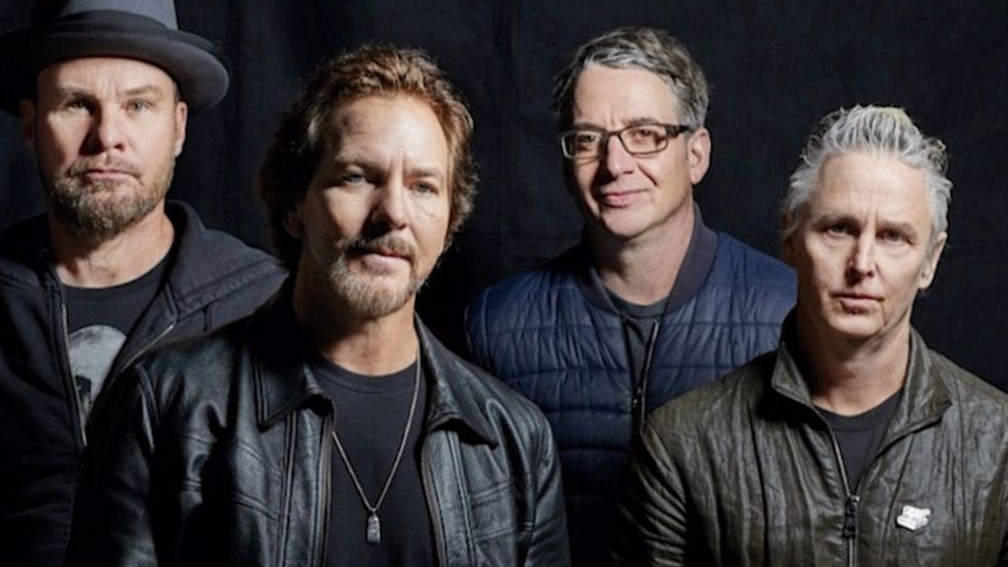
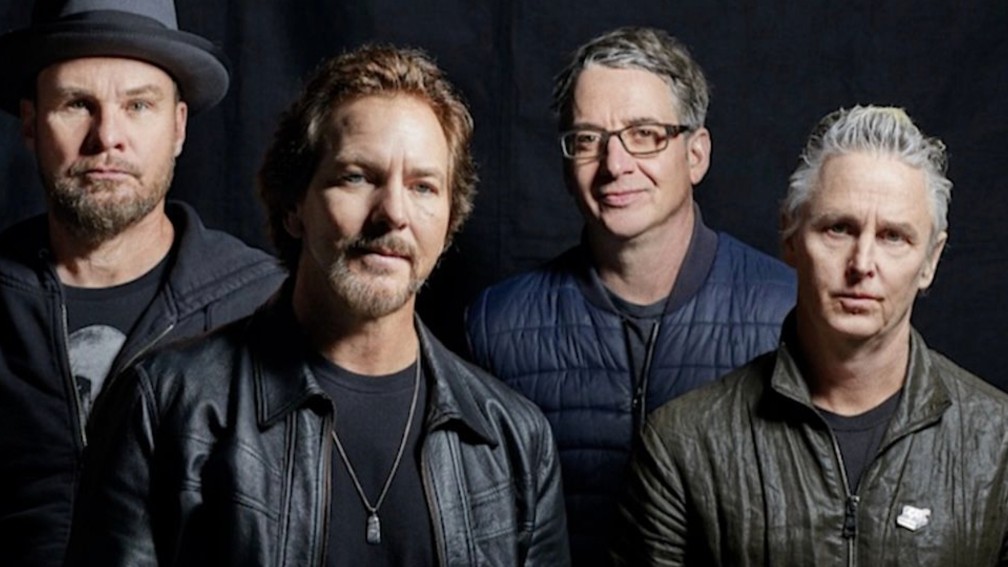
Pearl Jam have called the masked arrest of a father and daughter on a Seattle airport jet bridge the product of a system ‘driven by cold cruelty’, turning a viral confrontation into a national argument about how far US immigration enforcement can reach. The band’s statement, posted on X on Monday, lands on ground Nigerian travellers know well. This ICE detainment happened at a departure gate, in front of other passengers, on a flight the airline says it was never warned about. For a Nigerian diaspora that flies to the United States on visitor, student and family visas, that detail is the story.
What Pearl Jam Said About The Seattle ICE Detainment
The Seattle grunge band described the incident as ‘heartbreaking and infuriating’, saying that watching ‘a family torn apart and dragged off a jetway right here in our own airport by masked individuals is unconscionable’. They said they stood ‘firmly against this kind of inhumane treatment’. According to Fox News, the band tied the arrest to the November 2026 midterm elections, arguing the result showed Americans ‘aren’t powerless or screaming into a void’ and that voters had looked at ‘the systematic abuse’ and said ‘no more’.

Pearl Jam are not newcomers to political statements. Fox notes the band criticised the 2022 Dobbs decision that overturned Roe v. Wade, and that Eddie Vedder and Jeff Ament spoke with Doug Emhoff on Pearl Jam Radio before the 2024 election. Consequence reports the group is searching for a drummer and last released Dark Matter in 2024.
None of that makes the band’s account of the arrest evidence. It is a political statement by a musical act from the city where the arrest happened. The evidentiary record sits elsewhere, and it is contested.
A Verified Timeline Of The ICE Detainment In Seattle
Saturday, 21 November: ICE officers in unmarked jackets and khaki trousers detained Ricardo Larrondo Mendoza and his daughter Sofia Hernandez Mejia, both Mexican nationals, as they boarded an Alaska Airlines flight to Los Angeles at Seattle-Tacoma International Airport. The flight was delayed.
The facts in dispute are central. ICE says Mendoza overstayed his visa and that Mejia ‘hurled hot coffee on the officers’, and says she will be charged with assaulting a federal officer. Their lawyer, Olia Catala, told the Associated Press the pair had lived in the US since 2015 and were seeking asylum, were travelling to a family baptism, and had no criminal record. She said Mejia, in her mid-20s, had married a US citizen and filed paperwork to adjust her status, and told KUOW they were legally in the country. Eyewitness John Gaedeke told Reuters he thought the agents were passengers, that they ‘didn’t have any identification’, and that he did not see anyone throw coffee, saying the cup went flying when the man was tackled. Both were held at the Northwest ICE Processing Center in Tacoma.
Sunday, 22 November: protesters marched through the airport with bullhorns and signs reading ‘ICE out of Washington’ and ‘Abolish ICE’. Washington Governor Bob Ferguson said ‘ICE is completely out of control’ and called the agency ‘beyond reform’; Seattle mayor Katie Wilson called the tactics ‘unacceptable and un-American’. Alaska Airlines said it received no ‘appropriate notice’ of the enforcement action. The Port of Seattle, which runs the airport, said it was ‘outraged’ and that such actions occur without its participation or knowledge, even as its own website states that federal agents have access to airport property and port officials cannot interfere. Katie Garrow of MLK Labor said four of the six crew on the flight chose not to fly.
Members of Congress weighed in. Rep. Pramila Jayapal called the arrest ‘totally unacceptable’; Rep. Adam Smith said ICE was operating ‘as a paramilitary force’. The BBC reported that ICE agents killed Renee Good and Alex Pretti in Minneapolis earlier this year, and that deportations have risen sharply under President Donald Trump, who said after the midterms that his crackdown was ‘too tough’.
Why The ICE Detainment Matters To Nigerian Travellers
Nothing in the record suggests either detainee was Nigerian. The relevance is structural. This ICE detainment happened with no notice to the carrier or the terminal operator; identification was reportedly not displayed; and the legal status of the two people was being argued in real time at the gate. Nigerian passport holders on B1/B2 visitor visas, F-1 student visas or family petitions can occupy the same contested space. A pending application is not a shield on a jet bridge.
The consular dimension is just as concrete. Foreign missions depend on timely notification when a national is detained, and the Seattle case shows the gap between what a family’s lawyer can establish afterwards and what happens in the first hours. Detainees were moved to a processing centre in Tacoma before a legal account was assembled.
Then there is the jurisdictional question. The Port of Seattle says it has ‘continually asked’ for protocols and that federal agents have access regardless. Nigerian aviation and immigration authorities will recognise the template: an armed agency operating inside a civilian terminal whose operator carries the reputational and operational cost but holds no legal authority to stop it. Under the Guardian’s reporting, the airport learned of the arrest the way passengers did.
Finally, policy. If Washington narrows the rules of engagement, requiring advance notice to carriers, visible identification and limits on jet-bridge arrests, Nigerian travellers benefit directly. If it does not, an airport detention on the way to a family event becomes part of routine travel planning. That outcome is a forecast, not a fact; no rule change has been announced.
What The Seattle ICE Detainment Leaves Behind
What this ICE detainment has produced so far is not a change in policy but a record: a documented timeline, two competing accounts of the same ninety seconds, and an airport authority admitting it cannot control what happens on its own property. For Nigeria, the lesson is unglamorous and practical. Consular muscle, documented status and a clear understanding of what a visa does and does not protect matter more than any statement from a rock band. The bigger picture is that immigration enforcement in the United States has moved from the courthouse to the departure gate, and the world’s travellers, Nigerians included, are now expected to absorb the difference.
Frequently Asked Questions
What exactly did Pearl Jam say about the Seattle arrests?
In a post on X on Monday, the band said it was ‘heartbreaking and infuriating to watch the human toll of a system driven by cold cruelty’, described the jetway arrest of a family by masked individuals as ‘unconscionable’, and said it stood against ‘this kind of inhumane treatment’. The band also linked the incident to the November 2026 midterm elections.
Were the two detained people in the US legally?
That is disputed. ICE says both Mexican nationals overstayed their visas and were in the country illegally. Their lawyer, Olia Catala, says they have lived in the US since 2015, are seeking asylum, have no criminal record, and that the daughter married a US citizen and filed to adjust her status. No court ruling on their status has been reported.
Does this affect Nigerian travellers directly?
Neither detainee was Nigerian. The relevance is procedural: the arrest happened with no advance notice to the airline or airport operator, involved agents an eyewitness says showed no identification, and involved a status dispute argued at the gate. Nigerian visitors, students and family-visa holders in the US face the same enforcement environment.
FIRST TIME REACTIONS:
Be the first to leave us a comment – Pearl Jam Decry Cold Cruelty Of Seattle ICE Detainment, down the comment section.
JOIN US ON OUR SOCIAL MEDIA:
About Clare Dominic
Clare Dominic is the Editor at AfriLatest. With a background in journalism and a passion for storytelling, she oversees the editorial process to ensure content is accurate, engaging, and relevant. Clare works closely with contributors to maintain the highest standards of journalistic integrity across all news, sports, and lifestyle coverage.
View all articles by Clare Dominic-

 Car Reviews3 weeks ago
1955 Chevy Bel Air Restomod: What SEMA Really Proves
-
Celebrities3 weeks ago
Hailey Bieber PMDD Diagnosis Followed Son Jack’s Birth
-
World News3 weeks ago
Céline Dion Air Bass At Metallica’s Sphere: What’s Confirmed
-
Nigeria News3 weeks ago
NAJA Names Weststar Chairman Auto Legend For 2026
-
Africa News4 weeks ago
Stablecoins In African Trade Gain Ground, Costs Bite
-
AI & Technology3 weeks ago
AI Data Centres Face Backlash: The 2026 Vote Count