Health and Fitness
Fitbit Edge: 7-Day Battery Fitness Tracker for Nigeria
Fitbit Edge fitness tracker offers 7-day battery, ECG, GPS, and AI coaching for $179.99. Here’s what Nigerian buyers need to know.


The Fitbit Edge fitness tracker is Google’s newest wearable, and it solves one problem Nigerian users know too well: charging every night. It launched on October 12, 2026, with pre-orders open now and retail availability starting October 27. At $179.99, it sits between the screenless Fitbit Air and the more advanced Pixel Watch 5.
If you have ever bought a cheap fitness band that died after three months, or a smartwatch that needed charging before you finished your morning run, the Fitbit Edge is worth understanding. It is not a medical device, and it will not replace your doctor. But it packs features that can genuinely help you build healthier habits.
What The Fitbit Edge Actually Does
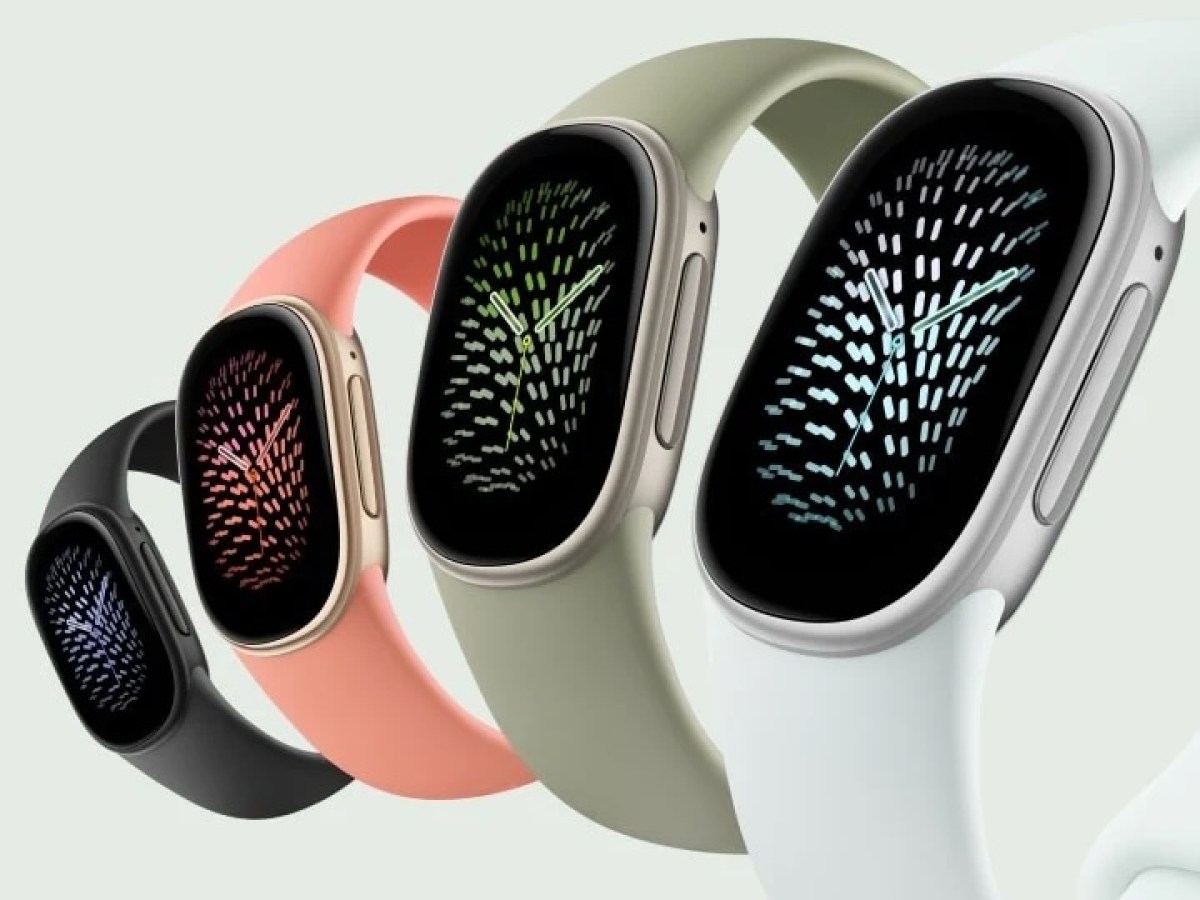
The Fitbit Edge fitness tracker tracks your heart rate continuously, monitors your sleep stages, and measures blood oxygen with red and infrared sensors. It also has an ECG app for heart rhythm readings, though that feature is only available in select countries and is not intended for people under 22.
Battery life is the headline. Google claims up to seven days on a single charge. With the always-on display enabled, that drops to about two days. A five-minute magnetic top-up gives you a full day of use. That matters in Nigeria, where power supply can be unpredictable. You charge it once, and you are covered for the week.
The device weighs just 17.7 grams without the band and is 11.5mm thin. Google says the case is 45% lighter than the Apple Watch Series 12. It has a 1.34-inch AMOLED display that is 46% larger than previous Fitbit trackers, and it stays readable in direct sunlight.
It is water-resistant up to 50 meters and carries an IP68 rating. You can swim with it, shower with it, and wear it in the rain without worry.
Health Features That Go Beyond Step Counting
The Fitbit Edge fitness tracker includes Health Guardian, a feature carried over from the Pixel Watch line. It flags changes in your vitals and tracks trends in insulin resistance, a biomarker linked to prediabetes and Type 2 diabetes. Google is clear that this is for general wellness only. It does not diagnose, treat, or cure any condition, and it should not be used to adjust medications.
There is also an altimeter for tracking floors climbed, a skin temperature sensor, and a new GPS chipset that Google says is 40% more accurate during outdoor workouts. The device supports more than 50 manually initiated exercise modes and can automatically identify up to 100 workout types, including household chores and pushing a stroller.
The Google Health Coach, powered by Gemini, offers personalized fitness and sleep guidance. But you need a Google Health Premium subscription to use it, which costs $10 per month or $100 annually. Your purchase includes a three-month free trial.
The Fitbit Edge does not have a speaker or microphone, so it is not a full smartwatch. It also lacks NFC contactless payments, which the older Fitbit Charge 6 had. If you want to pay for things with your wrist, this is not the device for you.
One feature stands out for long-term value: the Fitbit Edge is Google’s first repairable fitness tracker. It has a modular internal design and a replaceable battery. That means you can extend its life instead of throwing it away when the battery degrades.
How Much It Costs And Where To Buy
The standard Fitbit Edge retails for $179.99. The Stephen Curry Special Edition costs $219.99 and comes with a custom basketball watch face and a rye-colored band. It is available in select countries.
In Australia, the Edge is priced at AUD $269. For Nigerian buyers, you will likely need to order through the Google Store or a retail partner that ships internationally. Import duties and shipping costs will add to the final price. Check current exchange rates before you commit.
The device works with Android 11 or higher and iOS 16.4 or higher. You will need a Google Account, the Google Health app, and an internet connection.
Google is discontinuing the Charge line entirely. The Fitbit Charge 6, launched in 2023, was the last in that series. Google says it will now focus on the Edge, the Pixel Watch, and the Fitbit Air.
Who Should Consider The Fitbit Edge
If you are training for a race, managing a busy schedule, or trying to build sustainable wellness habits, the Fitbit Edge fitness tracker offers a middle ground. It is lighter and more affordable than a full smartwatch, but it has a screen and GPS, unlike the screenless Fitbit Air.
If you have a heart condition, are pregnant, or are managing diabetes, do not rely on this device for medical decisions. The insulin resistance and blood pressure trend features are not prescreeners for diabetes or hypertension. They do not provide real-time clinical readings. Always consult a healthcare professional for medical questions.
If you want contactless payments, a speaker, or a microphone, look at the Pixel Watch 5 instead. If you want the simplest possible tracker with no screen, the Fitbit Air is cheaper and lighter.
The Fitbit Edge sits in the middle, and for many people, that is exactly the right spot.
How To Fit It Into Your Nigerian Routine
Start by wearing it for a week without changing anything. Let it learn your baseline. Check your sleep stages each morning. If you are consistently getting less than six hours, that is your first target.
Use the automatic workout detection during your normal activities. If you walk to the market, climb stairs, or do housework, the Edge will log it. You do not need to manually start a workout for every movement.
Set a daily step goal that is realistic. If you currently walk 3,000 steps, aim for 5,000. Do not jump to 10,000 overnight. The device is a tool, not a judge.
Charge it every Sunday night. With seven-day battery life, a weekly charging routine is easy to remember. Keep the magnetic charger near your bedside or wherever you charge your phone.
If you buy the Fitbit Edge fitness tracker, use the three-month Google Health Premium trial. Test the AI coach and sleep insights. If they help you, consider the $100 annual plan. If not, cancel before the trial ends.
Above all, remember that no wearable can replace consistent movement, good food, and adequate rest. The Fitbit Edge can show you the data. You still have to do the work.
For more details, check the official Google blog announcement and GSMArena’s specifications breakdown. Quartz also reported on the retirement of the Charge line.
Frequently Asked Questions
How long does the Fitbit Edge battery last?
Google claims up to seven days on a single charge. With the always-on display enabled, battery life drops to about two days. A five-minute magnetic charge gives you a full day of use.
Can the Fitbit Edge replace a doctor or medical device?
No. Google states the Fitbit Edge is not intended for medical purposes. Features like insulin resistance trends and blood pressure tracking are for general wellness only and should not be used to diagnose, treat, or adjust medications.
How much does the Fitbit Edge cost?
The standard Fitbit Edge retails for $179.99. The Stephen Curry Special Edition costs $219.99. In Australia, it is priced at AUD $269. Nigerian buyers should check import duties and shipping costs.
Related Articles
- Herbal Remedies: Aishat Alagbo’s Safe Use Guide
- 29MB AI Model Runs on a $10 Chip: Here’s How
- Health Workers to Sue 20 Varsities Over Unpaid Allowance
- Taylor Swift Joins Beatles as Only Acts With 100 Weeks at No. 1
- Saints vs Vikings: Why the Data Says Take New Orleans
 Follow AFRILATEST on Google News
FIRST TIME REACTIONS:
Be the first to leave us a comment – Fitbit Edge: 7-Day Battery Fitness Tracker for Nigeria, down the comment section.
JOIN US ON OUR SOCIAL MEDIA:

Health and Fitness
Health Workers Welfare: How To Track Nigeria’s Promises
Nigeria’s health workers welfare promises need scrutiny. Here is how to track pay arrears, staffing data and what the evidence actually shows.

If you walk into a Nigerian general hospital this month, what you want is not complicated. You want a clinician who is present, a machine that works, and a payroll that has already paid the person treating you. Everything in the current wave of announcements about health workers welfare in Nigeria is supposed to serve that single outcome.
Whether it will is a different question, and it is the one worth asking.
What The Health Workers Welfare Announcements Actually Say
In Abuja, Vice President Kashim Shettima launched the Community Health Programme Continental Acceleration Plan 2026–2030 at the Continental High-Level Forum on a Fit-for-Purpose Health Workforce. According to VON, he described a future “where workers are guaranteed legal recognition, certification, dependable salaries, supervision and careers,” and warned that “the nation cannot afford the luxury of taking its community health workers for granted.”
The plan lists governance, primary care integration, workforce development, digital systems, service delivery, financing, supplies and accountability as its drivers. That is a policy framework. It is not a payslip.
In a separate negotiation, the Federal Government averted a planned indefinite strike by the National Association of Resident Doctors after talks at the Presidential Villa chaired by Chief of Staff Femi Gbajabiamila. The Guardian reported that both sides agreed one-week timelines for salary and promotion arrears, the call-duty allowance dispute at LUTH, and the professional allowance template. House officers are now to be paid before the 10th of each month. Outstanding demands included CONMESS arrears, an adjustment raised from 25 to 35 per cent, and 19 months of accumulated professional allowance arrears.
Note what is fixed and what is not. A timeline is a promise about process. An amount is a commitment about money.
The armed forces, in a separate announcement, received the second kind. Military pay rose 30 to 80 per cent across ranks, effective September 1, covering roughly 250,000 personnel and lifting the annual wage bill from N660 billion to N924 billion, per the same Guardian report. Health workers received a one-week implementation window and a strategy document. Both are real. They are not the same currency.

Why The Shortage Numbers Matter More Than The Speeches
At Nigeria’s first official World Brain Day, Chika Okwuolisa of Brain and Spine Foundation Africa cited 169 neurosurgeons serving more than 230 million Nigerians, Vanguard reported. That works out to roughly one neurosurgeon for every 1.36 million people. She also pointed to hospitals without CT scanners and patients turned away because no trained specialist was on duty. The Permanent Secretary, Daju Kachollom, announced a Brain Health Desk under the National Mental Health Programme and the start of work on a National Brain Health Agenda.
This is where credible reporting and credible evidence part company, and readers should notice it.
Strong, checkable facts in these reports: the union’s own arrears figures, the negotiated timelines, and the assault count. The NARD president said 31 doctors and more than 20 other health workers were attacked in ten months. Strong structural facts: a specialist ratio no serious health system would defend, and the recruitment of more than 30,000 health professionals into federal facilities over two and a half years, as President Tinubu stated through Health Minister Ali Pate at the West African College of Physicians jubilee in Abuja, per Punch.
Weaker, still-preliminary claims: that a Brain Health Desk, a national agenda, or a continental acceleration plan will change retention. None of the reports attaches a costed budget line, a staffing target, or a start date to those structures. That does not make them useless. It makes them unproven, and unproven is the correct word until a number appears.
Why Pay Alone Rarely Stops The Japa Wave
Tinubu pledged to “stem the trend of Japa so that we have the people coming back to serve in our region,” pointing to doubled medical education quotas and strengthened specialist institutions. Recruitment is measurable. Retention is not, and the reports offer no retention figure at all.

The reasons health workers leave, as experts quoted in these reports describe them, are not salary alone: poor working conditions, limited training opportunities, career progression, and personal safety. The safety point is now on the legislative table, with a push to classify assaults on health workers as aggravated offences. That is a proposal. It is not yet law.
How To Track Health Workers Welfare Promises Step By Step
Step one: look for the circular, not the communiqué. A deal becomes real when a payment instruction with an amount and a date reaches payroll. The Villa meeting included IPPIS and Cash Management officials for exactly this reason.
Step two: follow the money into the 2027 budget. The Collective Bargaining Agreement computations are meant to be concluded for inclusion there. Check whether a figure appears, and whether the 25 to 35 per cent adjustment is reflected in it.
Step three: count people, not pledges. Ask for the number of specialists on staff, the number of house officers paid, and the date salaries actually land. The 169 specialist figure and the 30,000 recruitment figure are the kind of numbers that can be re-checked a year from now.
Step four: track assault reports facility by facility. The Ministry’s announced directives on hospital security and public awareness campaigns can be verified locally, by asking whether your hospital has changed anything since.
Mistakes To Avoid When Reading Welfare Headlines
Do not treat a launch as a payment. Do not treat recruitment as retention. Do not assume money resolves equipment shortages, because a well-paid neurosurgeon without a CT scanner still cannot treat a stroke. And do not read a single advocacy figure as an audited national register. Treat it as a signal worth verifying, which is a job the ministry should be doing alongside the public.
The Result You Should Expect
A functioning ward, not a signed agreement. The realistic test of the current push on health workers welfare is whether the one-week timelines hold through the next payroll cycle, whether the assault legislation moves from proposal to statute, and whether the brain health structures acquire budgets. Research on what retains health workers is still ongoing, and Nigeria is running the experiment in public, with real patients inside it.
Your First Step Today
If you work in the health system, ask your facility’s administration for the last three pay dates and the current call-duty allowance status, in writing. If you are a patient or a relative, ask the ward how many specialists are rostered this week. Neither question requires a policy document. Both produce a fact. And facts about health workers welfare, unlike communiqués, can be checked.
Frequently Asked Questions
Did the Nigerian government actually increase health workers’ pay?
What the reports establish is a set of agreed timelines, not a new pay scale. Resident doctors secured one-week implementation windows for salary and promotion arrears, resolution of the LUTH call-duty allowance dispute, and a professional allowance template, plus a guarantee that house officers are paid before the 10th of each month. The 25 to 35 per cent adjustment and the CONMESS arrears were still being worked out, with Collective Bargaining Agreement computations headed for the 2027 budget.
How serious is Nigeria’s brain specialist shortage?
Brain and Spine Foundation Africa cited 169 neurosurgeons for more than 230 million Nigerians, which is roughly one specialist for every 1.36 million people. The same event highlighted hospitals without basic diagnostic equipment such as CT scanners. The government responded by announcing a Brain Health Desk and a National Brain Health Agenda, but neither had a published budget, staffing target or start date in the reporting.
Will better pay alone stop Nigerian doctors from emigrating?
Nothing in the available reporting supports that conclusion. Experts quoted in the coverage point to working conditions, limited training opportunities, career progression and personal safety alongside pay. The government has also cited the recruitment of over 30,000 health professionals in two and a half years, but has not published a retention figure, so the effect on the japa wave remains unmeasured.
FIRST TIME REACTIONS:
Be the first to leave us a comment – Health Workers Welfare: How To Track Nigeria’s Promises, down the comment section.
JOIN US ON OUR SOCIAL MEDIA:

About Paul Nwogo
Paul Nwogo is an engineer, published author, and the Head Manager at AfriLatest. He has written numerous books available on Amazon covering a diverse range of topics, including health, personal finance, relationships, work ethics, and scam survival. With his technical background and passion for writing, Paul now oversees the editorial direction of AfriLatest, delivering practical, accurate, and engaging content on trending news, music, and global lifestyle topics.
View all articles by Paul NwogoHealth and Fitness
Hidden Medicare Fees: What Really Drains Retirement Savings
A review of the hidden Medicare fees argument: what adviser data and lost-account figures actually show about retirement costs, and which tools help.


The hidden Medicare fees argument arrives as a financial adviser’s checklist rather than a researched exposé, and its core instruction is blunt: ring-fence at least 10% of retirement savings for the costs Medicare was never built to cover. Judged by what it demonstrably does, it works as a budgeting prompt and fails as an investigation. No publisher, author, ISBN or review copy accompanied the source material supplied for this title, so this assessment tests the argument as it appears in the adviser column that carries it.
That distinction matters. Readers who buy expecting a forensic audit of hidden Medicare fees will instead get a household worksheet. Readers who want the worksheet will find a competent one.
What The Hidden Medicare Fees Argument Gets Right
The strongest section is the one that refuses the obvious target. The column concedes that health costs not covered by Medicare are not the biggest surprise for retirees; the shock comes from three unglamorous items — long-term care for a dependent parent, home modification, and transport once driving stops.
Private-pay home health and companion care is the clearest example, because the trap is structural rather than behavioural. Most providers do not accept Medicaid, and many require a four-hour daily minimum, so a single afternoon of help is billed as half a day. For adult children living abroad — a common arrangement in Nigerian and Kenyan diaspora families — that cost lands without warning and without a local person to negotiate it down.
The numbers attached to physical adaptations are equally concrete. Home modifications run from about $1,500 to more than $30,000 depending on severity, with ramp installation averaging $1,110 according to Retirement Living. Supply-side pressure is documented too: the American Health Care Association’s 2024 Access to Care Report found 57% of nursing homes carrying a waiting list. With roughly 11,200 Baby Boomers retiring daily in the United States, that queue does not shorten.
The prescription is sensible and cheap to follow: book a home safety assessment with an occupational therapist early, build a prioritised modification list against health, mobility and budget, and consider taking in a roommate for income and company.
Where Hidden Medicare Fees Fit And Where They Do Not

Here the title does the argument a disservice. The hidden Medicare fees framing implies a villain — billing games, premium leakage, claim denials — and then delivers a different finding: the drain is unbudgeted care labour and housing. That is a more honest discovery and a less sellable one. Anyone who treats hidden Medicare fees as the whole cost base will under-budget by the largest line item.
The 10% set-aside is presented without derivation. No actuarial table, no distribution of outcomes, no sensitivity analysis is offered. It is a heuristic dressed as a rule, and readers should treat it as a starting bid rather than a target.
The prices are American private-pay prices and do not travel. What transfers to an African reader is the checklist logic, not the dollars. The structural risk differs as well: in much of Africa the retirement problem is thin formal coverage and fragmented informal savings rather than a forgotten employer plan, so a worksheet built around a 401(k)-style account solves a problem many readers do not have. Where account loss is the issue, the scale is documented: an estimated 31.9 million US retirement accounts holding $2.1 trillion sat unclaimed as of July 2025, a 30% rise on 2023, per Capitalize’s data.
The most useful corrective comes from an unrelated case. A federal overtime dispute involving the Secret Service took ten years from first complaint to a tentative settlement, survived a 2018 appeal, and included a court finding that the agency had improperly destroyed pay records. The lesson generalises: proving an entitlement was miscalculated is the easy half; recovery is the hard half. A retiree disputing a care claim should budget years, not weeks.
The AI Layer And The Verification Gap
The source pages push an AI feature — personalised answers built on 27+ years of trusted expertise — as the front door to this material. No accuracy benchmark, test set or statement of what the model can access was published alongside it, so the capability is claimed rather than demonstrated. Whether it answers a question such as whether a given assisted-living contract is reimbursable is unknown until someone tests it.
Contrast that with a locator service, which has a checkable output. Searching plan records for an old account either returns an account or does not, and the multi-trillion-dollar lost-account estimate is itself the byproduct of that kind of search. The original adviser column offers verifiable, if unglamorous, instructions: update contact details with former employers, review statements annually, consolidate old plans into a single IRA, and check state unclaimed property departments.

For readers evaluating hidden Medicare fees tools, the test is simple. Ask what data source the tool reads, ask for a false-positive rate, and ask what happens when it is wrong. A checklist can be audited against your own paperwork. A chatbot cannot.
Who Should Use It And Who Should Not
Use it if you are within ten years of retirement, have a parent whose care may fall to you, and have never priced a stair lift or a four-hour care minimum. The 10% prompt and the occupational-therapy assessment are worth more than the cost of most retirement books, and the checklist takes an afternoon.
Do not use it as a Medicare explainer, a fee audit, or a guide to African pension systems. It is none of those, and the hidden Medicare fees framing will mislead anyone expecting a billing investigation. Verify every figure against a local provider quote before planning around it.
Reading about the new Part D caps and drug prices is one thing. Calculating how it affects your specific prescriptions is another.
The Medicare Cost Reduction Workbook for Seniors (2027 Edition) provides the step-by-step worksheets, drug audit checklists, and action calendars needed to navigate these exact changes without overpaying.
Price: $12.99 (Paperback) / $9.99 (Kindle)
Where to buy: [Get your copy on Amazon here|AMAZON BOOK_DIRECT LINK]
Frequently Asked Questions
Does the book explain which Medicare fees are hidden?
Not really. The source material concedes that costs not covered by Medicare are not the biggest surprise for retirees, and redirects to long-term care, home modification and transport. The title promises a fee investigation and delivers a budgeting checklist.
How much should be set aside for unexpected retirement costs?
The adviser column recommends at least 10% of retirement savings, but offers no actuarial basis or sensitivity analysis for that figure. Treat it as a starting heuristic and test it against local provider quotes.
Are the dollar figures useful outside the United States?
The costs are US private-pay prices. Home modifications of $1,500 to over $30,000 and a four-hour daily care minimum reflect that market. The checklist logic transfers; the amounts do not, and should be replaced with local quotes.
Receive alerts for hidden Medicare fees and more like it.
FIRST TIME REACTIONS:
Be the first to leave us a comment – Hidden Medicare Fees: What Really Drains Retirement Savings, down the comment section.
JOIN US ON OUR SOCIAL MEDIA:

About Clare Dominic
Clare Dominic is the Editor at AfriLatest. With a background in journalism and a passion for storytelling, she oversees the editorial process to ensure content is accurate, engaging, and relevant. Clare works closely with contributors to maintain the highest standards of journalistic integrity across all news, sports, and lifestyle coverage.
View all articles by Clare DominicHealth and Fitness
Dylan Dreyer Hair Part Change: What’s Real And What’s Hype
The Dylan Dreyer hair part change is styling, not treatment. A practical guide to separating hair claims from evidence and protecting your hairline.
You want a change you can make this morning, for free, that visibly shifts how you look — and you want to know which hair claims survive contact with evidence. That is the useful way to read the Dylan Dreyer hair part change, which the entertainment press covered this week as a curiosity.
On Oct. 28, during the 3rd Hour of TODAY, Craig Melvin opened the segment by asking the studio to “take a moment and acknowledge Dylan Dreyer’s new haircut,” according to TODAY. Dreyer, 45, laughed and corrected him: “Guys, I parted my hair in the middle.”
She had not cut anything. Her chin-length bob, worn with a deep side part since she joined NBC as a weekend meteorologist in 2012, had simply moved “over two inches,” she said. Melvin reported that crew members had already praised it. Al Roker, who is bald, quipped, “I can’t do a part.” Dreyer compared the switch to Clark Kent’s glasses: put them on, she said, and “you’re a whole new person.”

NBC’s Savannah Sellers later pointed out that Dreyer had done it before. A middle part appears in an Ireland broadcast from Oct. 16 and in an August Instagram post, PEOPLE reported.
What The Dylan Dreyer Hair Part Change Actually Demonstrates
It demonstrates framing. A part decides where hair falls around the face. It changes the outline of your face; it does not change the density of your hair. Nothing in the coverage claimed otherwise — no product, no treatment, no growth timeline. That restraint is the standard every hair claim should be held to.
The evidence base is thinner than the internet implies. No credible research shows that a middle part causes hair loss, or that a side part prevents it. Where dermatology does take a clear position is on tension and chemicals. Guidance from the NHS and the American Academy of Dermatology treats constant, tight pulling at the hairline as a recognised and avoidable cause of traction alopecia — the slow thinning of hair at the temples and edges.
That distinction matters in Nigeria and across Africa, where braiding, weaving, cornrows and relaxing are routine rather than occasional. The risk sits in how tight a style is and how long it stays in. Not in whether the hair is parted left, right or centre. A middle part held down with a tight band and heavy gel is a different proposition from one that sits loosely.

How To Make A Hair Part Change Without Damaging Your Hairline
First, separate the cosmetic from the medical. Moving your part is styling. It is not a treatment for thinning, dandruff or breakage, and no salon should sell it to you as one.
Second, check tension before you check the mirror. Run a finger along your hairline. If the scalp puckers, or you feel pulling at the temples and behind the ears, the style is too tight — regardless of where the part sits.
Third, rotate. Give the hairline a rest between tight styles. The same spot should not carry the same load every week.
Fourth, watch the chemicals more than the comb. Relaxers and frequent high-heat styling are the parts of a routine most often linked to hair damage; the direction of your parting is not.
Fifth, spend nothing. Moving a part costs zero naira and zero dollars. If someone is selling a serum with “middle part” in the marketing, ask which study it comes from. “Research is still ongoing” is not an answer to that question.
Mistakes To Avoid When You Copy A Celebrity Hairstyle

Treating a compliment as evidence. Studio crews react to novelty, not to scalp health.
Confusing an anecdote with a study. One person’s good hair day tells you nothing reliable about yours.
Copying the exact part without checking your own hairline. Face shape and hairline density are personal. The geometry that flatters a television anchor may not flatter you, and that is fine.
Ignoring early thinning at the edges. This is the one mistake with real consequences. Thinning at the temples is easier to manage when it is caught early, and a dermatologist is the right person to assess it, not a cosmetics counter.
What You Get At The End
A free change, a better mirror habit, and a rule you can reuse for the rest of your life: cosmetics change how hair looks; tension, chemicals and medical conditions change whether it stays.
First step to take today. Stand in front of a mirror and move your part two inches, the way Dreyer did. Then look at your hairline instead of your face. If the edges look thin or the style pulls, book a dermatology appointment rather than a product. The Dylan Dreyer hair part change is a light story with a serious lesson underneath it — the cheapest change is usually the safest one, and the only claim worth trusting is the one with evidence behind it.
Frequently Asked Questions
Did Dylan Dreyer actually cut her hair on Oct. 28?
No. Craig Melvin assumed she had a new haircut, but Dreyer explained on air that she had simply parted her chin-length bob in the middle, moving it about two inches from her usual side part. She has worn a middle part before, including during a TODAY broadcast from Ireland on Oct. 16.
Can the position of your hair part cause hair loss?
There is no credible evidence that a middle or side part causes hair loss. The documented concern in dermatology is traction alopecia, which comes from constant tight pulling on the hairline — for example from very tight braids, weaves or bands held in place for long periods. Tension and chemical treatments are the variables to watch, not the direction of the part.
Should I see a doctor about thinning at my temples?
Yes, if you notice thinning or a receding hairline at the temples or edges, especially after years of tight styling. A dermatologist can assess whether it is traction alopecia or another cause, and early assessment gives you more options. Avoid self-treating with unproven products sold on social media.
FIRST TIME REACTIONS:
Be the first to leave us a comment – Dylan Dreyer Hair Part Change: What’s Real And What’s Hype, down the comment section.
JOIN US ON OUR SOCIAL MEDIA:
About Paul Nwogo
Paul Nwogo is an engineer, published author, and the Head Manager at AfriLatest. He has written numerous books available on Amazon covering a diverse range of topics, including health, personal finance, relationships, work ethics, and scam survival. With his technical background and passion for writing, Paul now oversees the editorial direction of AfriLatest, delivering practical, accurate, and engaging content on trending news, music, and global lifestyle topics.
View all articles by Paul Nwogo-

 Startups1 month ago
What a Successful Dangote Refinery IPO Really Says
-
Savings & Investing6 days ago
Hidden Medicare Fees Draining Your Retirement Savings
-
Health and Fitness3 weeks ago
Curly Hair Hydration: 5 Proven Steps That Actually Work
-
Tech & Gadgets4 weeks ago
Apple Watch and AirPods Fall Deals: Save $120 Today
-
University Admissions1 month ago
UNILAG 2026/2027 Admission: Direct Entry & Post-UTME Guide
-
Football1 month ago
South Carolina vs Alabama: Tide Roll to 35-10 Halftime Lead
-
Trending Entertainment News3 weeks ago
Taylor Swift Joins Beatles as Only Acts With 100 Weeks at No. 1
-
World News1 month ago
Carney Calls U.S. Tariffs a Miscalculation as Canada Retaliates