
Health and Fitness
Malnutrition Cases Surge 18% in Northeast Nigeria: ICRC Alarm
Malnutrition cases surge 18% at ICRC-supported health facilities in northeast Nigeria. Learn what’s driving it and how to protect your family.

Malnutrition admissions at health facilities supported by the International Committee of the Red Cross (ICRC) in northeast Nigeria jumped by 18 percent in the first nine months of 2026. Six health centres and four hospitals recorded nearly 20,000 cases between January and September, up from roughly 17,000 in the same period last year. The figures, released in an ICRC statement on October 15, 2026, confirm what many mothers in the region already know: food is harder to find, and children are paying the price.
The sharpest rise happened in Mubi, Adamawa State, where malnutrition cases surge by nearly 24 percent. Admissions there climbed from about 4,600 in the first nine months of 2025 to approximately 5,700 in 2026. Young children, pregnant women and breastfeeding mothers are the worst affected. Their bodies need more nutrients at exactly the moment those nutrients are hardest to come by.
What Is Driving The Numbers Up
Three forces are working together. First, prolonged armed conflict has disrupted farming and market access across the northeast. Second, climate-related shocks have damaged crops and reduced yields. Third, economic hardship has cut household purchasing power, so families that once bought food now cannot afford it.
The conflict also limits how far farmers can safely travel. Saminu Samiyu Ijaduwa, a farmer, told the ICRC that explosive devices had forced him to farm only a small plot near his home. “Due to the conflict, going one kilometre out of town to farm could be highly risky,” he said. “You might not return!” That single constraint ripples through entire communities. Less land cultivated means less food harvested, higher prices at the market, and smaller portions at home.
At the Mubi Stabilization Centre, mothers bring their children for nutritional assessments and supplementary food. Zulaihatu Mohammed arrived with her six-month-old twin, Huseina. “When I gave birth to them, this one was tiny,” she said. The child had been unwell since birth. Her story is not unusual.
What The ICRC And Nigerian Red Cross Are Doing
Working with the Nigerian Red Cross Society, the ICRC supports 15 primary healthcare centres and four hospitals. It also assists more than 200 communities with malnutrition treatment and food-security initiatives.
The interventions go beyond emergency feeding. Farmers receive crop varieties suited to drought and flooding. Communities are encouraged to diversify what they plant. Mothers are trained to prepare nutritious meals from ingredients already available in their markets and farms.
One of the most practical tools is Tom Brown, a locally prepared nutritional blend made from sorghum, millet, soybeans, groundnuts and moringa. It is not a imported product or a expensive supplement. It is food that families can make themselves, using grains and legumes sold in almost every northern market. According to the ICRC, this intervention has helped more than 13,000 young children recover from moderate acute malnutrition. The training component matters as much as the food itself, because mothers can continue preparing the mixture at home long after the programme ends.
Why These Five Ingredients Matter
Sorghum and millet provide energy and are naturally drought-tolerant, which matters in a region where rainfall is unpredictable. Soybeans and groundnuts supply protein and healthy fats, the building blocks a growing child needs. Moringa leaves add vitamins and minerals, including vitamin A and iron, at almost no cost because the tree grows widely across northern Nigeria.
When these ingredients are combined correctly and cooked into a smooth blend, they create a nutrient-dense porridge that a young child can eat several times a day. It is not a replacement for breast milk in infants under six months. But for children over six months, and for pregnant and breastfeeding mothers, it is a realistic way to add protein, energy and micronutrients to the daily diet.
How To Prepare Tom Brown At Home
You do not need special equipment. Toast equal parts sorghum, millet, soybeans and groundnuts separately in a dry pan until fragrant. Allow them to cool, then mill them together into a fine flour. Add dried moringa leaf powder at the end, roughly one handful for every four cups of flour. Store the blend in a clean, dry container.
To cook, mix a few tablespoons of the flour with a little cold water to form a paste. Stir the paste into boiling water and cook for five to ten minutes until it thickens. Let it cool before feeding a child. You can add a small amount of palm oil or groundnut oil for extra energy. For babies just starting solids, keep the porridge thin. For older children, make it thicker.
Who Should Be Careful
Tom Brown is a food, not a medicine. A child with severe acute malnutrition, visible wasting, swelling of the feet or face, or refusal to eat needs urgent care at a health facility. Do not try to treat severe malnutrition at home. The same applies to pregnant women who are losing weight or feeling weak. They should be assessed by a health worker.
Some children may be allergic to groundnuts or soybeans. Introduce the blend gradually and watch for rashes, vomiting or difficulty breathing. If any of these occur, stop and seek medical help.
What The Wider Picture Shows
The ICRC figures arrive against a worsening national outlook. United Nations analysis cited by the organisation estimates that more than 34 million people in Nigeria will face insufficient food access in 2026, the highest figure in six years. The same analysis lists Nigeria among the world’s hunger hotspots of highest concern, alongside Sudan, Yemen, Somalia and Gaza. Roughly 15 years of conflict in the northeast, combined with economic pressures and climate disruptions, have created conditions that no single programme can reverse quickly.
That is why the ICRC says its work aims not only to treat malnutrition but to strengthen community resilience. Treating a child today matters. Helping a family grow and prepare nutritious food tomorrow matters just as much.
Adding Tom Brown To A Nigerian Meal Plan
If you live in a region where these ingredients are affordable, consider making a batch of Tom Brown once a week. Serve it as breakfast or as an evening supplement for young children and nursing mothers. Pair it with whatever protein and vegetables your household can access that day. The goal is not perfection. The goal is one more nutrient-dense meal in a week that may not have many.
For families in northeast Nigeria, the next few months will test that goal. The malnutrition cases surge is not a distant statistic. It is a six-month-old twin in Mubi, a farmer confined to a small plot, and a mother learning to cook with what she has. If you are in a position to help, support organisations working on the ground. If you are feeding a child, start with what is in your kitchen.
Frequently Asked Questions
What is Tom Brown and how is it used for malnutrition?
Tom Brown is a locally prepared nutritional blend made from sorghum, millet, soybeans, groundnuts and moringa. It is cooked into a porridge and given to young children and mothers to add protein, energy and micronutrients. According to the ICRC, it has helped more than 13,000 young children recover from moderate acute malnutrition.
How much did malnutrition cases rise in northeast Nigeria in 2026?
Admissions at ICRC-supported health facilities rose by 18 percent in the first nine months of 2026, from about 17,000 cases in 2025 to nearly 20,000. In Mubi, Adamawa State, the increase was nearly 24 percent.
Can I treat severe malnutrition at home with Tom Brown?
No. Tom Brown is a food, not a treatment for severe acute malnutrition. A child with visible wasting, swelling of the feet or face, or refusal to eat needs urgent care at a health facility. Severe malnutrition requires professional medical treatment.
Related Articles
- Big Walk Dev Explains Lack of Xbox: A Masterstroke or Missed Opportunity?
- Amazon Bee AI Devices: Frontier vs Eclipse Compared
- Billy Joel Health Update: Hydrocephalus Tests Before Tour
- Grian Chatten Solo Album: Will It Be Festival-Ready?
- Pro Dota 2 Player Claims He Had to Play a Match to Prove Identity
 Follow AFRILATEST on Google News
FIRST TIME REACTIONS:
Be the first to leave us a comment – Malnutrition Cases Surge 18% in Northeast Nigeria: ICRC Alarm, down the comment section.
JOIN US ON OUR SOCIAL MEDIA:

Health and Fitness
Nigeria-US Health Deal: What Is Verified And What Is Not
The Nigeria-US health deal is partly documented and partly withheld. Here is how to separate verified terms from political claims.

You want a straight answer to one question: does the Nigeria-US health deal change anything about your medical records, your medicines, or the clinic you attend? Part of the answer is documented and checkable. Part of it cannot be verified at all, because the relevant paperwork has not been released.
That gap is the story. A signed agreement is strong evidence of what two governments committed to in writing. A minister’s speech is weaker evidence of what will happen. A campaign statement is a claim, not a finding. Reading all three as though they carry the same weight is how health rumours become health scares.
Here is how to work through the documents yourself.
What The Nigeria-US Health Deal Actually Commits, In Order
Step one: start at the signature page, not the press release. The five-year Memorandum of Understanding and a separate Specimen Sharing Agreement were signed in Abuja on 19 December 2025 by US Ambassador Richard Mills and Nigeria’s Coordinating Minister of Health, Muhammad Pate. The specimen agreement entered into force on 18 January 2026. Both dates are documented. Anything you read that does not square with them deserves suspicion.
A Premium Times review of the signed text sets out the operative clauses clause by clause, and it is the place to start rather than a summary of a summary.
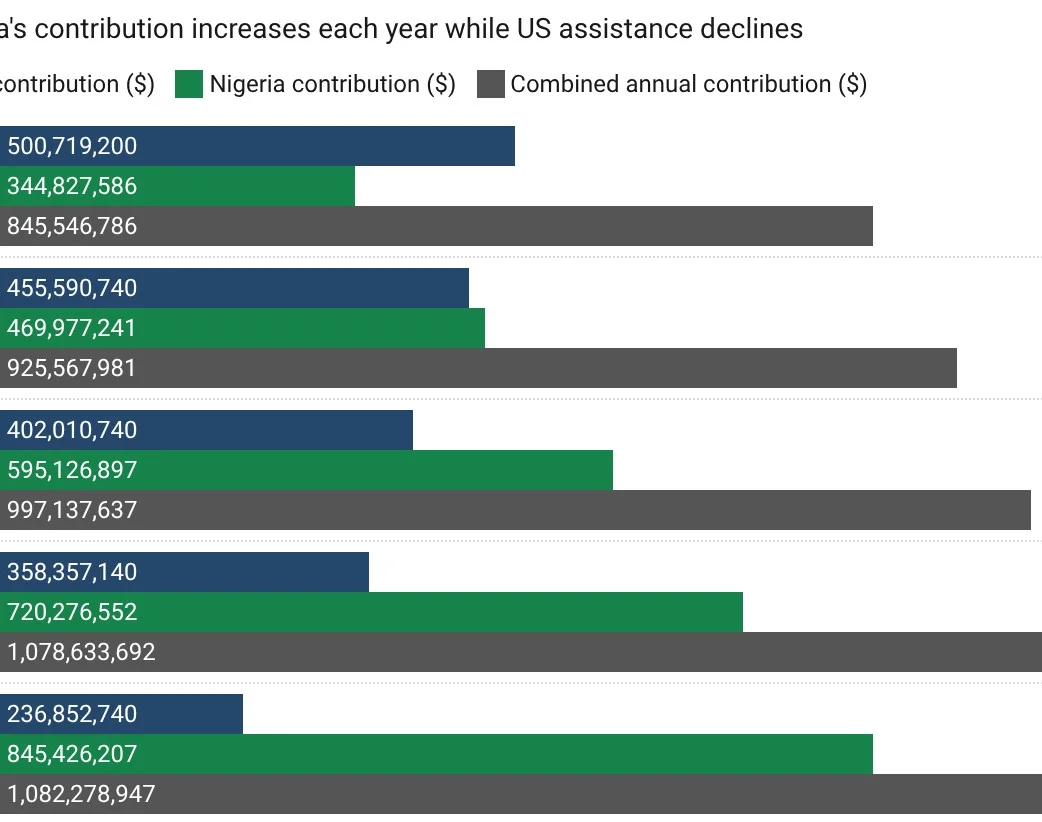
Step two: read the money in both directions. The United States plans to provide about $2.08 billion in health assistance between 2026 and 2030. Nigeria is expected to add roughly $3 billion in domestic health financing over the same period. The schedule shows the shape of the trade: in 2026, US support is about $501 million against Nigeria’s $345 million. By 2030, US support falls to about $237 million while Nigeria’s contribution rises to about $845 million.
Step three: check what counts as Nigeria’s contribution. Under the Nigeria-US health deal, qualifying spending must come from government-raised funds, loans included. Donor and multilateral grants do not count. A worked example in the text shows the link between the two: if Nigeria raises health spending by $720.3 million instead of the planned $845.4 million in 2030, US assistance could drop by $100 million. That is a conditional clause, not a penalty, and it belongs in any honest discussion of the deal’s risks.

Step four: understand what specimen sharing means in plain language. Nigeria must begin sharing requested biological specimens, samples and genetic sequencing data on emerging infectious diseases within five days of a US request. Washington may pass those materials to American non-governmental entities developing diagnostics and medical countermeasures, with written notice to Nigeria. Nigeria gets priority access to products developed primarily from its specimens, but the text adds “subject to available funds and applicable laws.” That qualifier is doing a lot of work, and readers should not skip it.
Step five: read the termination clause. If Nigeria withdraws, the US government may continue using specimens and data already transferred. That is unusual enough to warrant scrutiny, and Article Five states it plainly.
What Is Missing From The Public Record
Appendix five of the MoU, which should contain the data-sharing arrangement between the two governments, carries only the words “See attachment” and the marking “NOT FOR PUBLIC RELEASE.” This matters. Without it, nobody outside government can say precisely which categories of Nigerian health information are exchanged.
The published specimen agreement covers biological samples and sequencing data on epidemic-prone diseases. That is not the same thing as your hospital file. Anyone asserting that individual patient records are being handed over, or asserting the opposite, is going beyond the available evidence. The honest position is that the question stays open until the annex is published.
Where The Evidence Is Strong, Weak, And Simply Absent
Strong evidence covers the signed text, the entry-into-force date, the funding schedule, the electronic health records target of 20 per cent of facilities in 2026 rising to 100 per cent by 2030, and the plan to move 25,696 US-supported frontline health worker positions onto Nigeria’s payroll by 2030.

Genuinely contested is the provision allocating about 10 per cent of US funding, estimated at $208 million, to faith-based providers. The US Embassy spokesperson Nicole Holler told Premium Times the arrangement covers roughly 900 faith-based clinics and hospitals serving more than 30 per cent of the population. Pate maintains it favours no religion. Both statements are on record. The underlying selection criteria are not public.
Absent is any evidence that the agreement will, by itself, repair staffing shortfalls or drug supply. Pate has argued the spending commitment stays in Nigeria and will be measured by actual expenditure rather than budget announcements. That is a reasonable standard, and it is also the standard by which the deal should be judged.
Mistakes To Avoid When Reading The Deal
First, do not import Ghana’s rejected terms onto Nigeria’s signed text. President John Mahama said his cabinet refused the compact because it demanded pathogen profiles and medical records, required a financial contribution, and stripped Ghana’s Food and Drugs Administration of the right to inspect imported medicines. He called the terms “humiliating.” Health Policy Watch reported that Zimbabwe and Namibia also declined. That is a verified public statement about Ghana’s negotiation. It is not proof that Nigeria accepted identical language.
Second, do not treat a demand for transparency as a finding of wrongdoing. Atiku Abubakar has called for full publication of the MoU, its annexes and the specimen-sharing arrangements. That is a legitimate request. His citation of estimates putting Nigeria’s maternal deaths at 75,000 in 2023, the highest total globally, is context for the funding debate, not a verdict on the agreement.
Third, do not conflate the health and mining agreements. The $700 billion figure attached to the minerals framework is the government’s estimate of Nigeria’s resource value, not American investment, as Atiku’s adviser Paul Ibe noted.
Fourth, do not assume announced money has moved. Health Policy Watch reported that the 35 bilateral health MOUs were not ready for implementation at the 1 October deadline, with countries still submitting budget documentation.
Your First Step Today
Open the documents before you repeat a claim about them. Ask your representative whether Appendix five has been released. And keep your clinic appointments: nothing in the published Nigeria-US health deal says your personal medical file is being transferred, and nothing in it promises a quick fix for a struggling system either. Both halves of that sentence deserve the same calm treatment.
Frequently Asked Questions
Does the Nigeria-US health deal give America access to my personal medical records?
The published specimen-sharing agreement covers biological specimens, samples and genetic sequencing data on emerging infectious diseases. The separate data-sharing arrangement referenced in Appendix five has not been released, so the precise categories of health information exchanged cannot be independently confirmed. Claims in either direction go beyond the public evidence.
How much money is actually involved?
The United States plans to provide about $2.08 billion in health assistance between 2026 and 2030. Nigeria is expected to contribute roughly $3 billion in additional domestic health financing. Nigeria’s share must come from government-raised funds, including loans, and donor grants do not count toward it.
Why did Ghana refuse a similar agreement?
President John Mahama said his cabinet rejected the compact because it demanded pathogen profiles and medical records, required a financial contribution, and removed Ghana’s Food and Drugs Administration’s right to inspect imported medicines. Zimbabwe and Namibia also declined, according to Health Policy Watch.
FIRST TIME REACTIONS:
Be the first to leave us a comment – Nigeria-US Health Deal: What Is Verified And What Is Not, down the comment section.
JOIN US ON OUR SOCIAL MEDIA:

About Paul Nwogo
Paul Nwogo is an engineer, published author, and the Head Manager at AfriLatest. He has written numerous books available on Amazon covering a diverse range of topics, including health, personal finance, relationships, work ethics, and scam survival. With his technical background and passion for writing, Paul now oversees the editorial direction of AfriLatest, delivering practical, accurate, and engaging content on trending news, music, and global lifestyle topics.
View all articles by Paul NwogoHealth and Fitness
Best Workout Routine for Beginners: What Evidence Supports
The best workout routine for beginners uses four basic moves, slow cardio and real recovery. Here is what exercise research actually supports.

The goal is small and testable: stand up from a chair without pushing off with your hands. Carry shopping up one flight of stairs without stopping. Finish a week without an unexplained ache in your lower back. That outcome does not require a gym membership, a trainer, or a tub of powder, and the research behind it is more settled than the fitness industry usually admits.
What credible exercise science actually establishes is narrower than the marketing. There is no single best workout routine for beginners in the sense of one magic sequence that outperforms everything else. What the evidence does support is a small group of movement patterns, done at a manageable pace, with recovery built into the week. That is the whole architecture.
The cost barrier matters here. In Lagos, Nairobi or Accra, a gym contract is a real household expense, and it is often paid for a facility used twice. Trainer Sasha, founder of Stronger with Sasha, told Women’s Health UK that loading your bones does not have to start in a gym. Two small bottles of water and a kitchen chair will do for the first month. Anyone telling you otherwise is selling something.

The Best Workout Routine For Beginners Starts With Four Moves
Sasha, who works with women through menopause and perimenopause, argues that a beginner needs only four exercises. Each one represents a fundamental movement pattern that most gym machines are just expensive versions of: hinge, squat, push and pull. They are compound movements, meaning they work several muscle groups at once, which is why a short session is not a wasted session.
Step One: The Squat. Stand with feet slightly wider than your hips, toes turned out a little. Imagine lowering yourself into a chair. Keep your chest up, let your torso lean forward as needed, and stop when your hips drop just below your knees. Do not let your knees roll inward. Push through the floor to stand. Sasha describes this as the move that keeps you getting off a sofa for life.
Step Two: The Incline Push-Up. Put your hands shoulder-width apart on a kitchen counter or a stable step, shoulders stacked over wrists, body straight. Brace your abs, squeeze your glutes, bend the elbows backwards and lower your chest until your shoulders are level with your elbows. Push back up. If that is too hard, start against a wall. As you get stronger, move to a lower surface and eventually the floor.
Step Three: The Hinge. Stand with feet hip-width apart holding a dumbbell or water bottle in each hand. Tighten your shoulder blades, keep your back flat, and push your hips backwards as though closing a drawer with your bottom. Lower until you feel a firm stretch in the hamstrings, pause, then drive through your heels and squeeze your glutes at the top without arching your back. This is the pattern that protects your back every time you pick something up.

Step Four: The Single-Arm Row. Place one hand and the same-side knee on a bench or sturdy chair, hold a weight in the opposite hand, and pull it towards your waist with your elbow tucked to your side. Pause, then lower with control. Sasha says this builds strength across the whole back and improves posture.
How Much Cardio Fits Around The Weights
The University of Miami reports guidance from its own fitness staff that is unusually specific. Porshia Pryor, assistant director of fitness and personal training at the university’s wellness centre, recommends beginners start with light-to-moderate cardio for 20 to 30 minutes, three to five days a week. After two or three weeks of building that baseline, duration can rise or intervals can be introduced, working towards 30 to 45 minutes. Moderate intensity has a simple test: you can still hold a conversation.
Resistance work goes in two to three days a week, with 24 to 48 hours between sessions that hit the same muscles. A five- to 10-minute warm-up comes first and a five- to 10-minute cool-down with stretching comes last, according to Arlette Perry, director of the Laboratory of Clinical and Applied Physiology at the University of Miami.
Progression is where beginners either advance or stall. Michele Smallidge of the University of New Haven, quoted in U.S. News, explains the rule plainly: if you can curl two 10-pound dumbbells for 10 reps, work up to 12, then 15. Once 15 reps feel easy at that weight, add weight. Reps or load, not both at once.
The Mistakes That Sink The First Month
Perry names the most common error without hesitation: overdoing the programme early, when the body is unaccustomed to training. The warning signs she lists are bruising, pain, fatigue and swelling after exercise, plus an elevated resting heart rate. Slow recovery is itself a signal that the session was too hard.

A second mistake is skipping the boring parts, the warm-up and the cool-down, because they do not feel like training. A third is expecting a two-week transformation. Perry’s framing is blunt and worth keeping: if it took 10 or 20 years to get out of shape, it will take longer than one or two weeks to get back.
There is also a commercial trap. Subscription training apps, which Bike Radar notes typically cost around £15 to £20 a month, are useful tools for people who already train. They are not a prerequisite for a first squat.
What The Research Does And Does Not Prove
The strong evidence sits in a few places. Resistance training builds and maintains muscle mass, which supports bone and joint health into older age, and it counters the balance problems that come from long hours sitting. A meta-analysis published in Frontiers in Physiology in June 2019, referenced by U.S. News, found regular resistance training can be as effective as aerobic exercise for adults aged 65 and older in warding off conditions including mobility disability, cardiovascular disease, Type 2 diabetes and cancer.
Weaker evidence deserves a label. A February 2021 study in the FASEB Journal suggests resistance exercise may regulate fat cell metabolism at a molecular level. That is a laboratory finding about mechanism, not proof that lifting weights melts fat, and it should be read that way.
What no study establishes is a single perfect programme. The variables that matter are fitness level, intensity, exercise type and recovery time, and those differ by person.
The First Step Today
Before buying anything, do one set of squats to a chair, using the counter for balance if needed. Ten repetitions, slow, chest up. That single set is the beginning of the best workout routine for beginners, and it costs nothing. Add the incline push-up tomorrow, the hinge the day after, and give yourself 48 hours before repeating the same muscles. Consistency over eight weeks will do more than any plan you could pay for.
Frequently Asked Questions
How many days a week should a complete beginner train?
Guidance from University of Miami fitness staff suggests light-to-moderate cardio for 20 to 30 minutes on three to five days a week, plus resistance training two to three days a week with 24 to 48 hours between sessions that work the same muscles. Start at the lower end and build after two or three weeks.
Do I need a gym or equipment to start?
No. Trainer Sasha told Women’s Health UK that bone loading does not have to start in a gym, and that two small bottles of water plus a chair are enough for the four basic moves: squat, incline push-up, hinge and single-arm row.
How do I know if I am overdoing it?
Arlette Perry of the University of Miami lists bruising, pain, fatigue and swelling after exercise, along with an elevated resting heart rate, as signals that a session was too hard. Slow recovery time is itself a warning to cut back.
Receive alerts for best workout routine for beginners and more like it.
FIRST TIME REACTIONS:
Be the first to leave us a comment – Best Workout Routine for Beginners: What Evidence Supports, down the comment section.
JOIN US ON OUR SOCIAL MEDIA:
About Paul Nwogo
Paul Nwogo is an engineer, published author, and the Head Manager at AfriLatest. He has written numerous books available on Amazon covering a diverse range of topics, including health, personal finance, relationships, work ethics, and scam survival. With his technical background and passion for writing, Paul now oversees the editorial direction of AfriLatest, delivering practical, accurate, and engaging content on trending news, music, and global lifestyle topics.
View all articles by Paul NwogoHealth and Fitness
Vitamin D Deficiency Symptoms: A Practical Guide To Spotting Them
Vitamin D deficiency symptoms are easy to miss. Here is what the research supports, what it does not, and the steps that actually settle the question.

The tiredness you have carried for months may have a name. It may also have three different names. This guide is about turning a vague suspicion about vitamin D into a decision you can act on — what to look for, what test settles it, and which claims about vitamin D deficiency symptoms are actually supported by research and which are still being argued over in journals.
Why Vitamin D Deficiency Symptoms Get Missed In Lagos And London
Vitamin D deficiency does not announce itself. Dr Suma Uday, a paediatric endocrinologist quoted by the BBC, calls it “the silent disease,” and warns that it is “basically silently eating away at the bones, leaving them softened and prone to breaks.” In infants and children the result can be rickets. In adults it is osteomalacia — the same weakening of bone under a different name.

That matters because the visible clues are ordinary. The BBC’s reporting lists fatigue and joint and bone pain among the symptoms in young people and adults, and notes they are easy to miss or misdiagnose.
A separate clinical review on Healthline draws on peer-reviewed work linking low vitamin D status to fatigue, low mood, hair shedding, low back pain, poorer wound healing and disrupted sleep in children. Those associations are real in the literature. They are also mostly observational — which is a different thing from proof.
Step One: Separate The Strong Evidence From The Preliminary
Bone health is the settled ground. Abi Bournot, a research fellow at the University of Surrey, told Medical News Today that vitamin D’s role in bone health is well-established, while newer research points to muscle function, cardiovascular disease, cancer and immune function.
The immune link got stronger this year. Researchers analysing UK Biobank data from 36,258 participants aged 40 to 69 found that people with severe deficiency — below 15 nmol/L — had a 33 per cent higher rate of hospitalisation for respiratory tract infections such as bronchitis and pneumonia than people at 75 nmol/L or above. Every 10 nmol/L rise in vitamin D was associated with a 4 per cent lower hospitalisation rate, according to the University of Reading.
Read the fine print. Fady Youssef, a pulmonologist at MemorialCare Long Beach Medical Center, told MNT plainly: “This study shows an association, not cause and effect.” Bournot said randomised controlled trials are still needed to see whether supplements reduce hospital admissions. That is the honest state of play — a risk factor worth correcting, not a preventative cure.
The list of commonly cited vitamin D deficiency symptoms is longer than the evidence supporting each individual item on it.
Step Two: Work Out Whether You Are In A High-Risk Group
Risk is not evenly spread. The BBC reports that people with darker skin need exposure to stronger light to produce the same amount of vitamin D as lighter skin. Covering parts of the body and wearing sunscreen reduce production too, despite their protective value.
Bournot’s list of higher-risk groups includes limited sun exposure, darker skin and certain ethnicities, older adults, people with chronic conditions and those with malabsorption disorders.
For readers across Africa, that first point carries weight. A country with abundant sunshine can still produce deficiency in people who spend the working day indoors, who cover up for cultural or religious reasons, or whose skin needs longer exposure than a lunch break allows. These sources do not contain nationally representative Nigerian prevalence figures, and the UK’s National Diet and Nutrition Survey — which found nearly a quarter of 11- to 18-year-olds deficient — is a UK dataset. Do not borrow another country’s number for your own body.
Checked against those risk factors, vitamin D deficiency symptoms stop being a diagnosis and start being a reason to test.
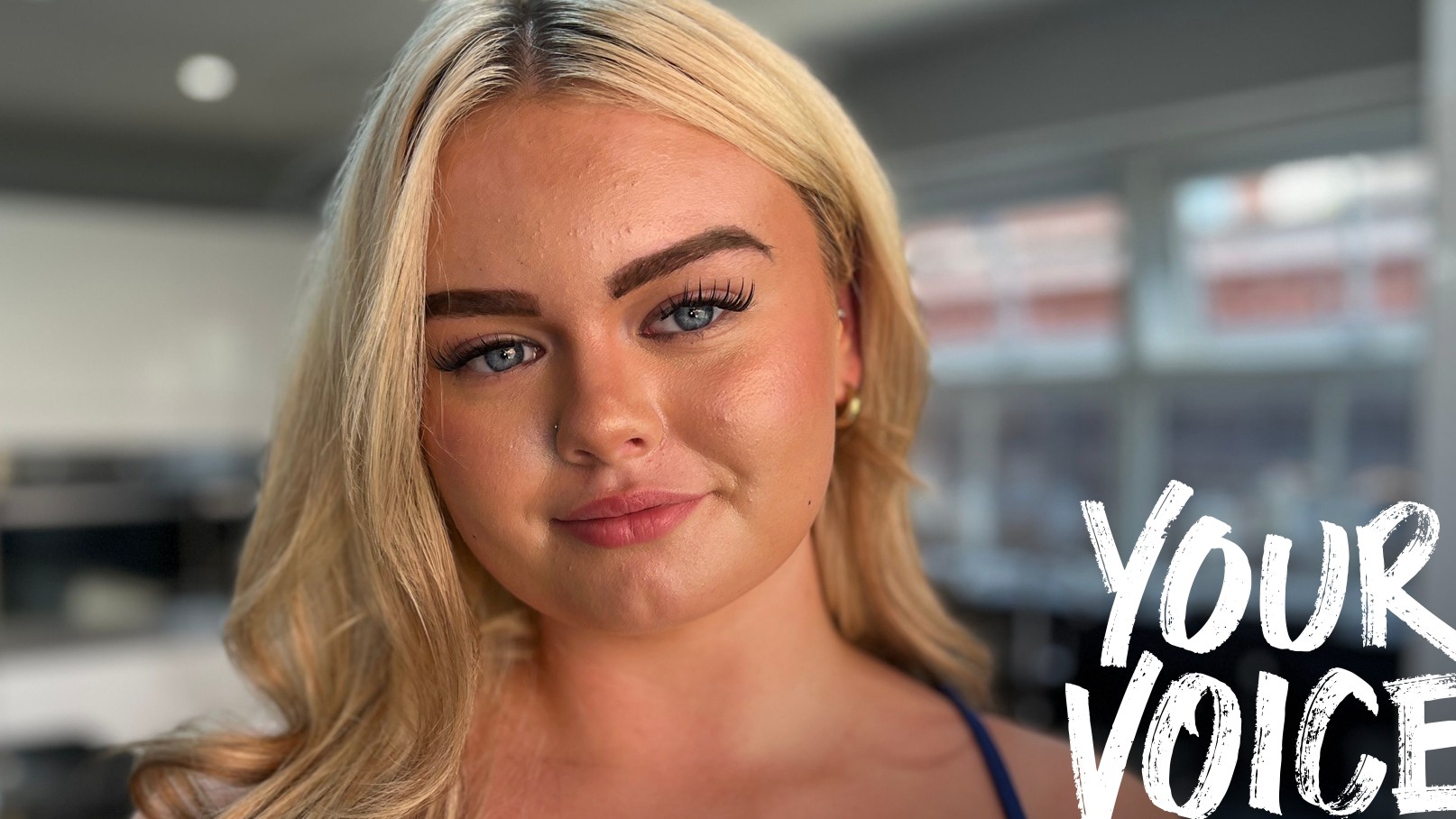
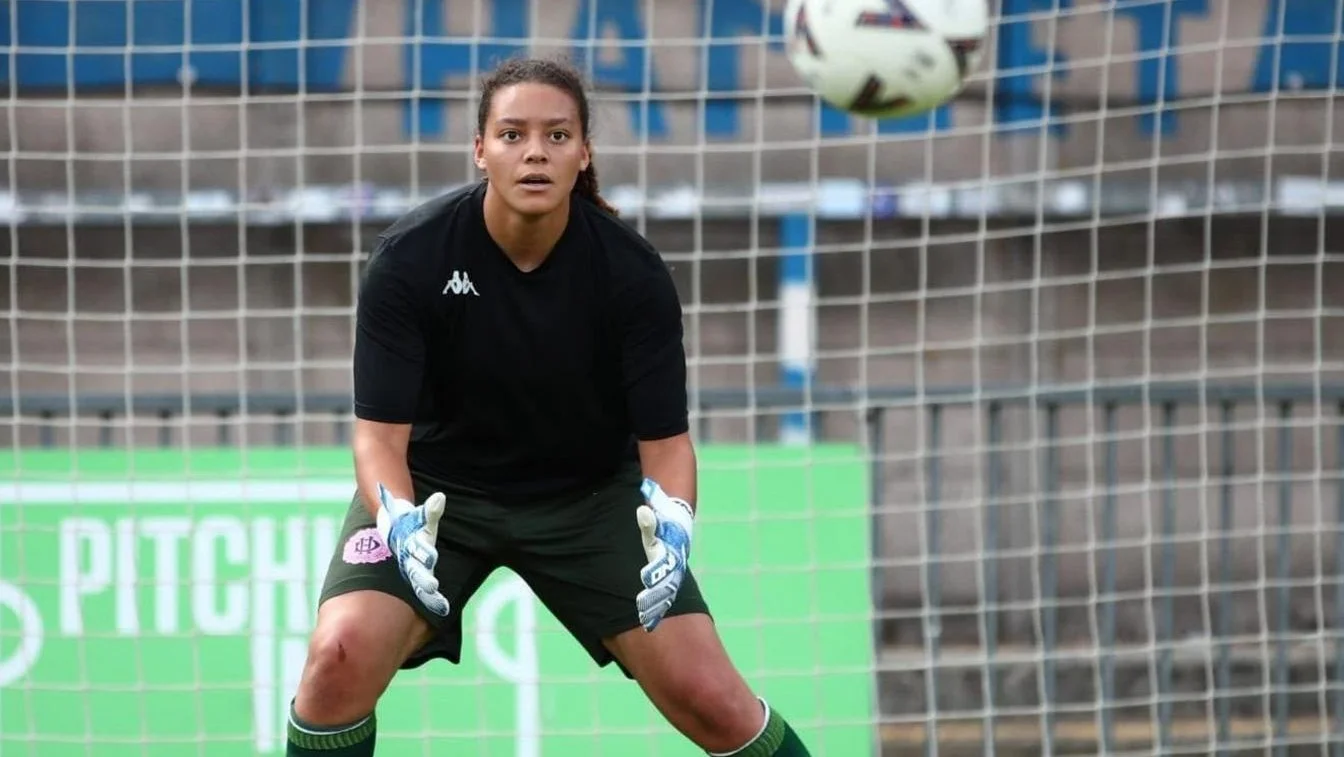
Saskia Reeves-Priestley, a 23-year-old teacher and four-times-a-week goalkeeper, collapsed at work with dizziness, nausea and heart palpitations. Her blood test later showed vitamin D that was, in her words, “next to nothing.” Amaka Osu, a 21-year-old student, started shaking while cooking dinner and was taken to A&E. She had assumed her tiredness was just university life.
Step Three: Ask For The Test Instead Of Guessing
Symptoms alone cannot confirm deficiency. There is a blood test, and it is the only way to know your level. In the UK, doctors do not routinely screen, but will offer a supplement to patients who raise a concern. Many people in Nigeria will instead face a private laboratory bill, which is the real bottleneck — and the reason self-diagnosis is so common.
A test also protects you from the opposite error: taking high-dose supplements for years to treat fatigue that has an entirely different cause.
Step Four: Correct It With Food, Sun And A Sensible Supplement
Oily fish and meat carry vitamin D, and fortified foods help where they are available. Most of the body’s supply comes from sunlight on skin. Where food and sun fall short, supplements do the work — but the dose and duration should be set with a clinician, not guessed from a forwarded message.
Mistakes That Keep People Deficient
Treating a supplement as a diagnosis. If you never test, you never learn whether you were deficient in the first place.
Taking megadoses. More is not better, and the review literature does not support unsupervised high-dose regimens.
Assuming sunshine equals sufficiency. Exposure time, skin tone, clothing and season all change the maths.
Expecting supplements to fix everything. Monique Richard, a registered dietitian, told MNT: “The takeaway isn’t that vitamin D prevents infections — it’s that deficiency is a risk factor we can identify and address.”
What You Get When You Get It Right
Correcting a genuine deficiency addresses the bone story first — softened bones, fractures and, in children, rickets. Fatigue and bone pain may improve. Whether mood, hair and respiratory infections improve is still being tested. That is a narrower promise than the internet makes, and a more useful one.
Some clinicians want the deficiency threshold itself raised. Dr Uday is part of ACT NOW Vitamin D, a group calling for a higher cut-off so more people are caught and treated earlier. Professor Martin Hewison of the University of Birmingham argues for wider mandatory fortification, as Canada and Sweden have. Neither change has happened in the UK. Until it does, the responsibility sits with you and your doctor.
Your First Step Today
If you recognise yourself in the high-risk groups — dark skin plus indoor work, covered skin, older age, chronic illness — book the blood test before you buy anything. Then take the result to a clinician and ask what dose, for how long. That single step turns vitamin D deficiency symptoms from a worry you carry around into a number you can act on.
Frequently Asked Questions
Can I diagnose vitamin D deficiency from symptoms alone?
No. Fatigue and joint or bone pain are listed among the symptoms, but they overlap with many other conditions. A blood test is the only way to know your level, and it also prevents you from treating the wrong problem with supplements.
Why can people in sunny African countries still be deficient?
The BBC reports that darker skin needs exposure to stronger light to make the same amount of vitamin D as lighter skin, and that covering the body or wearing sunscreen reduces production. Indoor work and long hours out of the sun narrow the window further. The sources cited do not contain nationally representative Nigerian prevalence data.
Do vitamin D supplements prevent respiratory infections?
The evidence does not go that far yet. A UK Biobank analysis found severe deficiency was associated with a 33 per cent higher hospitalisation rate for respiratory infections, but the researchers described this as an association. Randomised controlled trials are still needed to test whether supplements reduce admissions.
FIRST TIME REACTIONS:
Be the first to leave us a comment – Vitamin D Deficiency Symptoms: A Practical Guide To Spotting Them, down the comment section.
JOIN US ON OUR SOCIAL MEDIA:
About Paul Nwogo
Paul Nwogo is an engineer, published author, and the Head Manager at AfriLatest. He has written numerous books available on Amazon covering a diverse range of topics, including health, personal finance, relationships, work ethics, and scam survival. With his technical background and passion for writing, Paul now oversees the editorial direction of AfriLatest, delivering practical, accurate, and engaging content on trending news, music, and global lifestyle topics.
View all articles by Paul Nwogo-

 Car Reviews3 weeks ago
1955 Chevy Bel Air Restomod: What SEMA Really Proves
-
Celebrities4 weeks ago
Celebrity Traitors Final Predictions: Ex-Players On Tactics
-
Celebrities3 weeks ago
Hailey Bieber PMDD Diagnosis Followed Son Jack’s Birth
-
Nigeria News3 weeks ago
NAJA Names Weststar Chairman Auto Legend For 2026
-
World News3 weeks ago
Céline Dion Air Bass At Metallica’s Sphere: What’s Confirmed
-
Health and Fitness4 weeks ago
Dylan Dreyer Hair Part Change: What’s Real And What’s Hype