Ai News
Amazon Bee AI Devices: Frontier vs Eclipse Compared
Amazon Bee AI devices listen and record. Compare the $75 Frontier wristband and $100 Eclipse phone attachment, plus privacy and pricing.

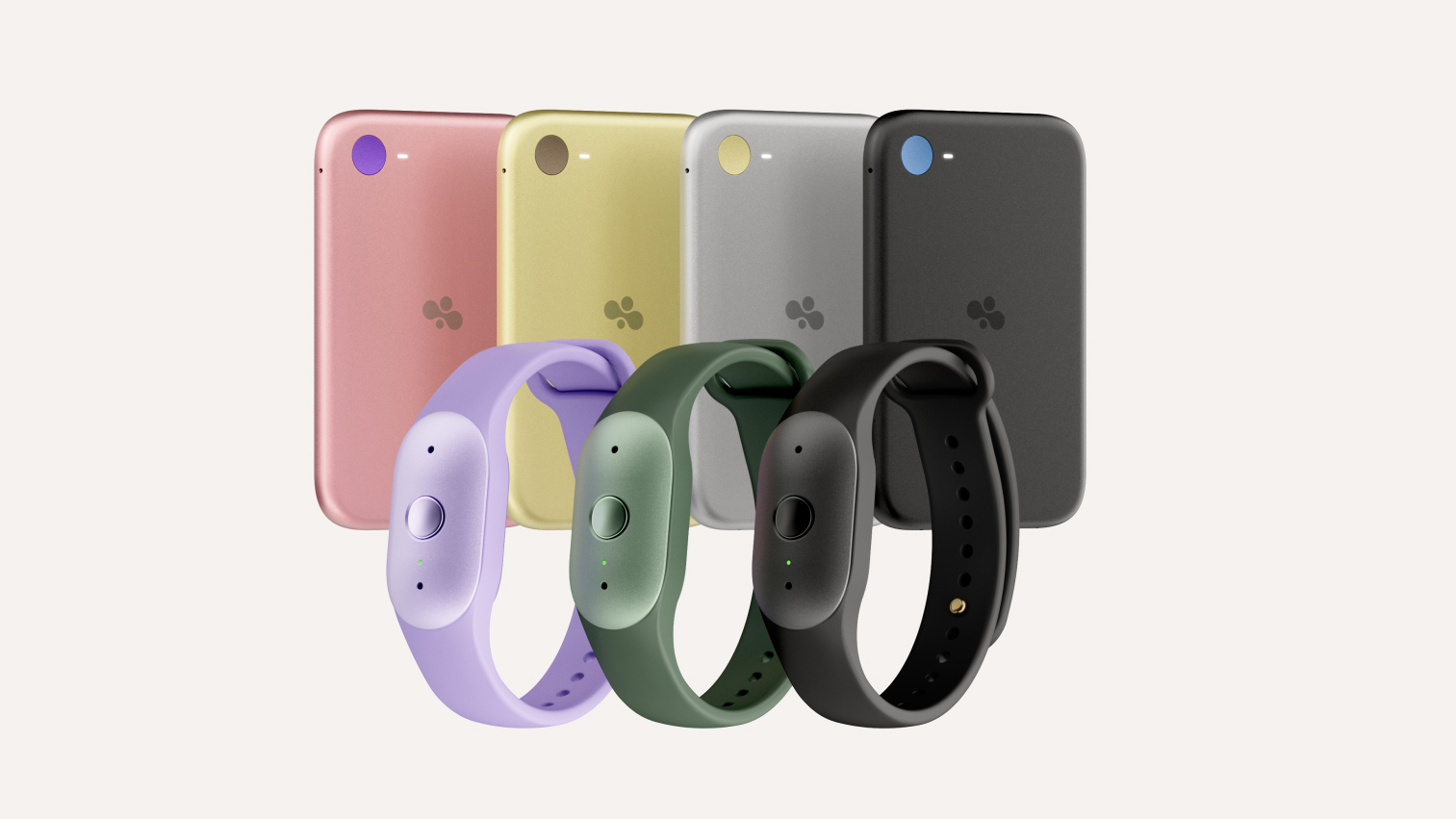
Amazon Bee AI devices come in two shapes: a $75 wristband called the Frontier and a $100 phone attachment called the Eclipse. Both listen, record, and turn conversations into summaries, to-dos, and reminders. The question is which one fits your day, and whether either belongs on your body.
Amazon announced the pair on Thursday under its Bee lineup, the AI wearable company it acquired in July 2025. The Frontier is an upgraded version of the earlier Bee Pioneer wristband, which sold for $50. The Eclipse is new and not yet available. Here is how they actually compare.
What The Frontier Does

The Frontier is made of ultrasoft silicone and comes in lavender, sage, and onyx. You wear it on your wrist or clip it to your clothes. It has dual microphones with upgraded noise filtering, so Amazon claims it can pick up what matters in a crowded restaurant or open office.
Battery life is up to seven days on a full charge, and it uses USB-C. Recording starts when you press a button, and a light comes on to show it is active. You can also set it to stop automatically after a period of silence.
This is the device for in-person conversations. Coffee shop chats, lectures, care plans, brainstorming sessions. Amazon says users can build templates for specific settings like these. You review the output in the Bee mobile or desktop app.
What The Eclipse Does
The Eclipse is the size of a credit card and snaps magnetically to the back of your phone. It comes in silver, midnight, honey, and blush. Battery life is three weeks or more, according to Amazon.
Recording works the same way: press a button, watch the LED light. The difference is what it captures. Because it lives on your phone, the Eclipse is built to record your phone calls and give you transcripts and summaries of those calls. Amazon says you will be prompted to get permission from callers, but the prompt is not mandatory. The recording still happens.
That last detail matters more than the spec sheet suggests. If you are on a work call in a two-party consent state, the other person’s consent is not just polite. It is the law.
Price And Subscription
The Frontier costs $75. The Eclipse costs $100. Both connect to two service tiers. The free tier gives you conversation summaries and recaps for up to 14 days of memory. Bee Pro costs $12 per month and adds a personal chat assistant, unlimited memory, integrations with Amazon, Alexa Plus, and third-party apps, plus suggested to-do lists.
That subscription is where the real product lives. Without Pro, you get summaries and a short memory window. With it, Bee drafts emails, creates calendar invites, and surfaces shopping recommendations.
App Integrations And Alexa Plus
Both devices link to Gmail, Microsoft Outlook, and Google Calendar. Amazon says Bee can draft follow-up emails and create calendar invites based on what was discussed. You can also connect Apple HealthKit to build what Amazon calls a more complete picture of your wellness.
The Alexa Plus connection is the most practical feature for most buyers. Instead of opening an app, you ask Alexa to read your meeting summary, check your to-dos, or pull up a memory. Amazon also ties Bee to Amazon.com. If a friend recommends a book, Bee hears it, finds the listing, and shows it on the Amazon home page or in the Bee app.
Privacy: What Amazon Says And What It Does Not Solve
Amazon says Bee Private Compute processes conversations in a secure, isolated environment where no one, including Amazon, can access your data. Audio is deleted after it is processed. Transcripts are encrypted and not accessible unless you share them. You can delete transcripts and summaries whenever you want.
That is a stronger position than most always-on gadgets offer. But it does not answer the bystander problem. As tech tester Jon Rettinger told CNET, the people around you never agreed to any of it, and a little light on your wrist is not much of a warning. He noted that California requires everyone’s consent to record a private conversation, and guessed most buyers have no clue. Twelve US states have all-party consent laws.
Mozilla Foundation communications director Lauren Hendry Parsons told TechRadar that even with perfect data handling, the risk is transferred to the consumer instead of held by the tech company. That is the honest trade. Amazon protects your data from Amazon. It does not protect the person sitting across from you.
How They Compare To The Competition
The AI wearable market is crowded. Meta has smart glasses with a built-in camera and a palm-sized pendant called the Muse Charm. Plaud makes a card-shaped note-taker and the NotePin S. Friend sells an AI necklace. Vibe has a clip-on workplace device called Dot.
The Bee difference is Amazon’s ecosystem. No competitor can route a spoken book recommendation straight to a shopping page, or read your notes through a voice assistant you already own. If you live in Alexa, Bee is the tighter loop. If you do not, the advantage shrinks fast.
Which One Should You Buy
Buy the Frontier if your priority is in-person conversation. It is cheaper, it goes on your body, and its noise filtering is built for rooms with background chatter. Seven days of battery is enough for a work week without thinking about a charger.
Buy the Eclipse if your priority is phone calls. Three weeks of battery and a phone-mounted design make it the better fit for sales calls, client check-ins, and interviews. It is $25 more, and it is not available yet, so you will wait.
Skip both if you cannot answer one question honestly: will you tell every person you record? If the answer is no, the $12 monthly subscription buys you transcripts you should not have. The hardware is competent. The etiquette is on you.
Frequently Asked Questions
How much do the Amazon Bee AI devices cost?
The Bee Frontier costs $75 and the Bee Eclipse costs $100. Bee Pro, which adds unlimited memory, Alexa Plus integration, and suggested to-dos, costs $12 per month. The free tier includes conversation summaries and 14 days of memory.
What is the difference between the Bee Frontier and Bee Eclipse?
The Frontier is a silicone wristband you wear or clip to clothing, with seven days of battery and dual microphones for in-person conversations. The Eclipse is a credit card-sized device that magnetically attaches to your phone, lasts three weeks or more, and is built to record phone calls.
Do Amazon Bee devices store my audio recordings?
Amazon says no audio is ever stored. Recordings are processed in a secure environment and deleted after being turned into summaries. Transcripts are encrypted and not accessible unless you choose to share them, and you can delete them anytime in the app.
Related Articles
- Silver Rail Elementary: Verify Breaking News Fast
- Curly Hair Hydration: 5 Proven Steps That Actually Work
- Celebrity Traitors UK Season 2 Not on US Streaming
- Nigeria US Health Compact: 5 Steps to Demand Transparency
- OPay Earns More From Lending Than Payments: What It Means for You
 Follow AFRILATEST on Google News
FIRST TIME REACTIONS:
Be the first to leave us a comment – Amazon Bee AI Devices: Frontier vs Eclipse Compared, down the comment section.
JOIN US ON OUR SOCIAL MEDIA:

Ai News
Rare Impact Fund Raises $3M for Youth Mental Health
Selena Gomez’s Rare Impact Fund raised nearly $3M for youth mental health at its 4th annual benefit, honoring Martin Short’s late daughter.

The Rare Impact Fund is the philanthropic engine behind Selena Gomez’s mental health advocacy, and its fourth annual benefit raised nearly $3 million for youth mental health initiatives. The event took place Wednesday night, Oct. 14, at the Hollywood Palladium in Los Angeles.
Gomez launched the Rare Impact Fund alongside her beauty brand Rare Beauty in 2020. Since then, the fund has raised more than $30 million and supports nonprofit partners expanding access to youth mental health services and education worldwide.
What the Rare Impact Fund Actually Does

The fund operates as a grantmaking vehicle. It does not sell products directly to consumers. Instead, it channels money from Rare Beauty sales, corporate partners, and events like this benefit into nonprofit organizations.
Wednesday’s benefit used paddle raises and a live auction to generate roughly $3 million. That money goes toward the fund’s mission: expanding mental health support and breaking the stigma that stops young people from seeking help.
Gomez told Billboard on the red carpet that the fund predates Rare Beauty’s first product sale. “We created this fund before we even sold a single product, so this has always been our mission,” she said. “I honestly get more excited about this than most events I’m invited to.”
How the Benefit Worked
If you want to understand how celebrity-driven mental health fundraising operates, this event is a clear case study. It combined three elements: live performances, a paddle raise, and an auction.
Bella Kay and Leon Bridges performed. Kay told Billboard that supporting a cause she believes in made participating purposeful. “It means everything to be here,” she said. “I feel like there’s nothing more important than giving back to the community.”
Bridges echoed that sentiment. “Mental health is universal, and I think it’s awesome to be able to give back,” he said. “Even for myself, starting a foundation in my own community, paying it forward is important.”
The event also introduced the inaugural Katherine Short Legacy Award. It honors Katherine Short, a clinical social worker who died by suicide in February at age 42. The award recognizes individuals committed to mental health and community service.
Martin Short, Gomez’s Only Murders in the Building co-star, joined her onstage to present the award to La Familia Counseling Center, a Sacramento nonprofit with more than five decades of community service.
Short spoke about his family’s grief and emphasized treating mental illness as a disease. He highlighted the fund’s focus on expanding access to mental health support while breaking negative stigma.
Pros and Cons of Celebrity-Led Mental Health Funds
Pros: These events raise significant money quickly. The Rare Impact Fund has deployed over $30 million since 2020. They also use celebrity platforms to normalize mental health conversations. Gomez has been candid about her own journey, which reduces stigma for young fans.
Cons: Celebrity funds can face scrutiny over where money actually goes. The Rare Impact Fund addresses this by naming specific nonprofit partners like La Familia Counseling Center. However, the fund’s public reporting is less detailed than some standalone mental health charities.
Another limitation: these events are not scalable. A gala in Los Angeles raises millions, but it does not directly provide therapy to a teenager in Lagos or Nairobi. The fund’s impact depends entirely on its nonprofit partners on the ground.
How It Compares to Other Mental Health Initiatives
Jewel’s #NotAloneChallenge offers a different model. Over five years, it has raised more than $3 million for the Inspiring Children Foundation. Jewel’s approach focuses on free, accessible tools and resources rather than large galas. She told PEOPLE that her goal is making mental health support practical. “Talk therapy doesn’t work for everybody,” she said. “If one isn’t working for you, please don’t take that personal and think that you’re broken.”
Michael J. Fox’s foundation represents a third model. It has raised more than $3 billion for Parkinson’s disease research and aims to raise $2.5 billion more. That is research funding, not direct service provision.
The Rare Impact Fund sits between these approaches. It funds service access and education, not medical research. It uses celebrity events, not direct-to-consumer tools.
What This Means for You
If you are a young person struggling with mental health, the Rare Impact Fund itself is not a direct service. You cannot apply for a grant or get therapy through the fund. Instead, the fund supports organizations that provide those services.
If you want to support youth mental health, you have options. You can donate to the Rare Impact Fund through Rare Beauty’s website. You can also donate directly to La Familia Counseling Center or similar local nonprofits. Direct donations often have lower overhead than celebrity galas.
If you are in crisis, call or text 988 or chat at 988lifeline.org. That resource is available 24/7 in the United States.
Who Should Pay Attention
This event matters if you follow celebrity philanthropy, mental health advocacy, or nonprofit fundraising models. It also matters if you are deciding where to donate your own money.
The Rare Impact Fund is a legitimate grantmaking organization with a track record. It has raised over $30 million and named specific partners. It is not a vague celebrity vanity project.
But it is not a direct service provider. If you need help today, the fund will not answer. Call 988 instead.
If you want to support youth mental health with your wallet, consider giving directly to local organizations. They often stretch dollars further than large galas. If you want to support the Rare Impact Fund specifically, buy Rare Beauty products or donate through the fund’s official channels.
The bottom line: the Rare Impact Fund raised nearly $3 million in one night. That money will support youth mental health services. But the fund’s real value is its consistency since 2020 and its willingness to name where the money goes.
Frequently Asked Questions
What is the Rare Impact Fund?
The Rare Impact Fund is a philanthropic initiative launched by Selena Gomez alongside Rare Beauty in 2020. It supports nonprofit partners working to expand access to youth mental health services and education worldwide. Since its launch, it has raised more than $30 million.
How much did the 2026 Rare Impact Fund benefit raise?
The fourth annual benefit, held Oct. 14 at the Hollywood Palladium in Los Angeles, raised nearly $3 million through paddle raises and a live auction.
What is the Katherine Short Legacy Award?
The Katherine Short Legacy Award is a new honor introduced at the 2026 Rare Impact Fund benefit. It memorializes Katherine Short, a clinical social worker who died by suicide in February at age 42. The award recognizes individuals committed to mental health and community service. Its first recipient was La Familia Counseling Center, a Sacramento nonprofit.
Related Articles
- Curly Hair Hydration: 5 Proven Steps That Actually Work
- Celebrity Traitors UK Season 2 Not on US Streaming
- Nigeria US Health Compact: 5 Steps to Demand Transparency
- OPay Earns More From Lending Than Payments: What It Means for You
- Deli Meat Health Risks: How to Limit It to Once a Week
Receive alerts for Rare Impact Fund and more like it.
FIRST TIME REACTIONS:
Be the first to leave us a comment – Rare Impact Fund Raises $3M for Youth Mental Health, down the comment section.
JOIN US ON OUR SOCIAL MEDIA:
Ai News
AI in Africa: 5 Takeaways From the 11th Nigeria Innovation Summit
The 11th Nigeria Innovation Summit showed how AI in Africa is moving from talk to action. Here are 5 practical takeaways and award winners.

You want to know what actually happened at the 11th Nigeria Innovation Summit, what it means for anyone building or buying AI tools in Africa, and what to do next. Here is the practical version.
The 11th Nigeria Innovation Summit (NIS 11.0) held on October 6, 2026, at the MUSON Centre, Lagos, under the theme “Innovating in the Age of AI.” It brought together policymakers, engineers, founders, investors, researchers and international organisations for a full day of panels, product demos, fireside chats and awards. This was not a talking shop. It produced a report, named award winners, and set a follow-up tour at the University of Lagos.
Below are five takeaways you can act on, plus the exact steps to attend or replicate the experience next year.
What You Get Out Of This Guide
By the end, you will know the summit’s main themes, the people shaping AI policy in Nigeria, the award-winning projects worth watching, and how to register for the next edition. You will also understand what the naira’s exchange rate means if you are paying for AI tools or cloud services in dollars.
Step 1: Understand The Five Conversations That Mattered
The summit ran panel sessions on specific, practical problems rather than generic AI hype. According to TechEconomy, the key discussions were:
From Silos to Ecosystems: Building Collaborative Innovation Models for Africa
Building Africa’s Digital Future: Why We Must Own the Technology We Depend On
Driving Nigeria’s Energy Future Through Indigenous Innovation and Advanced Manufacturing
Closing the Intellectual Property Gap in Nigeria’s AI Innovation Strategy
AI for Africa: Transforming Education, Agriculture and Healthcare at Scale
Building Trusted AI for Africa: Policy, Regulation, Data Governance and Investment for the Future
If you are building anything in AI in Nigeria, the intellectual property session and the data governance session are the two you should read up on. Those are the areas where policy is still forming and where early movers can shape the rules.
Step 2: Note Who Was In The Room
The Lagos State Governor, Mr. Babajide Sanwo-Olu, was Special Guest of Honour, represented by Engr. Ganiyu Oseni, his special adviser on Technology, Broadband and Innovation. Sanwo-Olu pushed for responsible AI adoption, local innovation, youth empowerment and collaboration.
Other speakers included Prof. Chika Yinka-Banjo of AI UNIPOD at the University of Lagos, Jara Pascual of Collabwith, Abubakar Mudi of NNPC RTI, Ngozi Aderibigbe of Gray & Silicon Legal Advisors, Karin Källander of UNICEF, and Dr Goodluck Nnorom. The mix matters: this was not just tech founders. Lawyers, energy executives, UN agencies and academics were all present.
Tony Ajah, Programme Director of the Nigeria Innovation Summit, framed it bluntly: “AI is not just a tool; it’s a seed. And those who recognize it early, plant it wisely, and harness its surplus will rise.”
Step 3: Watch The Award Winners
The 2026 Nigeria Innovation Awards closed the summit. The recipients show where practical AI and tech work is actually happening in Nigeria:
Sydani Group won for applying technology to improve children’s healthcare.
Lagos Food Bank Initiative won for food security and social impact.
Keloks Technologies Ltd won for intelligent wastewater treatment and resource recovery.
8 won for advancing Africa’s digital economy.
SAOT (Sustainable Agriculture Optimization Tool) won for AI-powered agricultural innovation.
Stellaheart of Passion Foundation won for advancing inclusive innovation and digital empowerment for women with disabilities.
NNPC Limited RTI won for driving energy innovation through technology and research.
Ademola Osindero won for developing globally competitive technology solutions from Africa.
Engr. Alex Omaghomi won for engineering excellence and industrial innovation.
Baobab Nigeria won for advancing financial inclusion and access to finance for Nigerian MSMEs.
If you are looking for partners, funders or case studies, this list is your starting point. SAOT in particular is worth studying if you work in agriculture.
Step 4: Get The Nigeria Innovation Report
The summit unveiled the inaugural Nigeria Innovation Report. It is described as a knowledge resource designed to deepen understanding of Nigeria’s innovation ecosystem, document progress and support evidence-based conversations.
This is the first edition. If you are writing a business plan, pitching an investor or applying for grant funding, citing a local report beats citing a foreign one. Ask InnovationHub Africa, the organiser, how to access it.
Step 5: Register For The Next Edition And The Innovation Tour
Attendance at the summit is free, but registration is required for physical participation. The event is hybrid, so you can join virtually from anywhere.
After the main event, delegates went on an Innovation Tour to AI UNIPOD at the University of Lagos on Thursday, October 8, 2026. The tour let participants meet researchers and see emerging tech in practice.
To prepare for NIS 12.0: follow InnovationHub Africa, watch the Nigeria Communications Week announcement page, and register early. Seats for the Innovation Tour are limited to selected delegates.
A Practical Note On Costs
If you are budgeting for AI tools, cloud credits or conference travel in dollars, the exchange rate matters. As of October 14, 2026, the dollar traded at ₦1,375 in the parallel market, while the official NFEM benchmark was about ₦1,332.47, according to TechEconomy. That is a gap of roughly ₦42.53 per dollar. Confirm rates before you transact.
What To Do Next
Pick one theme from the 11th Nigeria Innovation Summit that touches your work, whether that is AI in agriculture, healthcare, energy or IP policy. Find one award winner in that space, read what they built, and reach out. The summit’s own closing message was to move beyond conversations and translate ideas into measurable impact.
Start there. Then register for the next edition and bring something to show, not just something to say.
Frequently Asked Questions (11th Nigeria Innovation Summit)
When and where did the 11th Nigeria Innovation Summit take place?
It held on October 6, 2026, at the MUSON Centre, Lagos, with hybrid participation. An Innovation Tour followed on October 8, 2026, at AI UNIPOD, University of Lagos.
Is the Nigeria Innovation Summit free to attend?
Yes. Attendance is free, but registration is required for physical participation. Virtual participation is also available.
Who won at the 2026 Nigeria Innovation Awards?
Winners included Sydani Group, Lagos Food Bank Initiative, Keloks Technologies Ltd, 8, SAOT, Stellaheart of Passion Foundation, NNPC Limited RTI, Ademola Osindero, Engr. Alex Omaghomi, and Baobab Nigeria.
Related Articles
- Samsung Galaxy Glasses Leak: 41g, 9-Hour Battery, No Price Yet
- Narnia Trailer: Greta Gerwig’s Netflix Epic First Look
- Dangote Refinery IPO Extended: 4.1 Billion Shares Up for Grabs
- JAMB Warns Candidates Against Accepting Admissions Outside CAPS
- OPay Files for $500M NYSE IPO: What Nigerian Investors Should Do
FIRST TIME REACTIONS:
Be the first to leave us a comment – AI in Africa: 5 Takeaways From the 11th Nigeria Innovation Summit, down the comment section.
JOIN US ON OUR SOCIAL MEDIA:
Ai News
Microsoft Africa Development Centre: Nairobi Shutdown Explained
Microsoft Africa Development Centre in Nairobi winds down, putting 400 jobs at risk. Here’s what happened and what Kenyan engineers should do now.


Microsoft is winding down its Africa Development Centre in Nairobi, Kenya, putting nearly 400 jobs at risk. That is the short version. The longer version is what it means for anyone who took the 2019 promise seriously: that you could build global products from Africa without leaving home.
What The Microsoft Africa Development Centre Was Supposed To Be
Microsoft launched the Microsoft Africa Development Centre in Nairobi and Lagos in 2019. It pledged more than $100 million to develop African tech talent. The pitch was direct: recruit local engineers to work on products for global markets, not just run sales and customer support from a regional office.

By 2022, the Nairobi center employed more than 450 engineers. That met Microsoft’s original hiring target ahead of schedule. The company recruited experienced workers from banks, telecom companies, and local tech firms. For a while, it looked like the model worked.
What Is Happening Now
Microsoft employees in Nairobi were called to a meeting on Monday. They were told to meet their managers by October 16 to discuss exit options, including severance terms. Two employees spoke to TechCabal about the meeting. The company has not disclosed how many employees will leave.
Microsoft said the proposed changes are part of its global restructuring. It insists it remains committed to Kenya and will continue employing people in the country. William Kabogo, Kenya’s ICT minister, met a Microsoft delegation on Monday. He said the company briefed him on its evolving operations. The two sides agreed to develop an action plan, though it remains unclear whether that could change the outcome.
The Cracks Were Visible Earlier
This did not start this week. In March 2023, Microsoft cut jobs at the Nairobi center when it laid off 10,000 employees globally. In 2024, it shut down its Nigerian engineering centre in Lagos. At the time, Microsoft said the changes in Nigeria would not affect its Kenyan operations.
Now Nairobi faces a possible wind-down. In July, the company cut roughly 2.1% of its global workforce, following about 15,000 job cuts in 2025. The pattern is consistent: global restructuring decisions land hard on African engineering hubs.
Why This Is Different From A Normal Layoff
A normal layoff removes people. This removes a capability. Microsoft spent seven years building an engineering team in Kenya that could develop products for global markets. If the centre closes, that specific capability leaves with the people.
The talent does not disappear immediately. Experienced engineers from banks, telecoms, and local tech firms are now available for poaching in the local market. That is an opportunity for Kenyan startups, banks, and telcos that have struggled to hire senior engineers. It is also a risk. If those engineers leave Kenya for remote roles with foreign companies, or relocate entirely, the country loses the compounding effect of seven years of training.
What Kenyan Engineers Should Do Now
First, read your exit terms carefully. The October 16 manager meetings are about severance. Do not sign anything on the day. Ask for the calculation in writing, including notice period, accrued leave, and any performance share plan vesting. Microsoft’s global packages vary by tenure and role, and the company has not published Kenya-specific terms.
Second, update your profile this week, not next month. The local market knows what is happening. Companies that want senior engineers will move fast. If you worked on global products from Nairobi, that experience is your strongest asset. Put the product names, the scale, and the stack in plain language.
Third, consider the remote market. The original Microsoft pitch was that you could build for the world from Africa. That pitch is now being tested by companies that are not Microsoft. Remote-first employers in Europe and North America still hire Kenyan engineers. The difference is that the stability is lower and the benefits are thinner.
Fourth, if you are junior, do not wait for a formal program. The structured graduate pipeline that Microsoft built is exactly what is being cut. Look at Paga, which is expanding into crypto, stablecoins, and AI under a new group structure, or at the fintech and healthtech companies raising money across the continent. The funding tracker this week alone shows Egypt-based Sahl raising $6 million and Uganda’s Zuri getting investment from Renew Capital.
The Wider Pattern
Microsoft is not the only company shrinking its African footprint. Meta is reducing its Lagos office space after global layoffs affected its Nigerian workforce. BlackRock’s iShares is closing a $400 million frontier ETF that invests in Nigeria and Kenya. Kimberly Clark, Diageo, Bayer, and Sanofi have all exited Nigeria on macroeconomic grounds.
That does not mean African tech is collapsing. It means the era of large foreign tech companies building expensive engineering hubs in Africa on philanthropic-sounding promises is cooling. The companies that stay are the ones with a direct commercial reason to be here.
Who Should Pay Attention
If you are a Kenyan engineer at Microsoft, this week is about your exit terms. Get them reviewed. If you are a Kenyan startup founder, this is a rare hiring window. Senior engineers who understand global product standards are about to be available, and they will not stay available for long.
If you are a junior engineer or a student, the lesson is harder. Do not build your career plan around a single company’s Africa promise. Build around skills that travel: backend systems, data, payments, security. The Microsoft Africa Development Centre was a good idea. It was also a company decision, and company decisions reverse.
If you are a policymaker, the action plan with Microsoft is not the main event. The main event is whether the 400 engineers stay in Kenya or leave. Tax incentives for remote work, faster work permits for regional talent, and direct funding for local engineering teams would matter more than a joint statement.
Frequently Asked Questions (Microsoft Africa Development Centre)
Is Microsoft closing its Africa Development Centre in Nairobi?
Microsoft is winding down its Africa Development Centre in Nairobi, putting nearly 400 jobs at risk. Employees were called to a meeting on Monday and told to meet managers by October 16 to discuss exit options. The company has not disclosed how many will leave and says it remains committed to Kenya.
How many people work at Microsoft’s Nairobi office?
By 2022, the Nairobi center employed more than 450 engineers, meeting Microsoft’s original hiring target ahead of schedule. The current wind-down puts nearly 400 jobs at risk, according to two employees who spoke to TechCabal.
What should Microsoft employees in Nairobi do about severance?
Do not sign anything during the October 16 manager meetings. Ask for the severance calculation in writing, including notice period, accrued leave, and any performance share plan vesting. Microsoft has not published Kenya-specific terms, so get the numbers before committing.
Related Articles
- Samsung Galaxy Glasses Leak: 41g, 9-Hour Battery, No Price Yet
- Narnia Trailer: Greta Gerwig’s Netflix Epic First Look
- Dangote Refinery IPO Extended: 4.1 Billion Shares Up for Grabs
- JAMB Warns Candidates Against Accepting Admissions Outside CAPS
- OPay Files for $500M NYSE IPO: What Nigerian Investors Should Do
Receive alerts for Microsoft Africa Development Centre and more like it.
FIRST TIME REACTIONS:
Be the first to leave us a comment – Microsoft Africa Development Centre: Nairobi Shutdown Explained, down the comment section.
JOIN US ON OUR SOCIAL MEDIA:
-

 Trending Entertainment News4 days ago
Taylor Swift Joins Beatles as Only Acts With 100 Weeks at No. 1
-
Startups3 weeks ago
What a Successful Dangote Refinery IPO Really Says
-
World News3 weeks ago
Carney Calls U.S. Tariffs a Miscalculation as Canada Retaliates
-
Fintech3 weeks ago
OPay No Dey Comot Nigeria: How to Verify Fintech News
-
Nigerian Business2 weeks ago
Moniepoint POS Network: How to Buy Dangote Shares
-
Fintech3 weeks ago
OPay Investing in People to Build a Better Nigeria
-
Football3 weeks ago
Mexico vs Colombia 2026: Márquez Debut Ends in Defeat
-
Black Celebrities3 weeks ago
Brandi Carlile: Rock Star in Her Prime, On Tour Now