Nigeria News
Court Strikes Out Oyefusi’s Suit Against Rhodes-Vivour, ADC
A Federal High Court in Lagos has struck out Oyefusi’s suit against Rhodes-Vivour and the ADC over the party’s Lagos governorship primary.

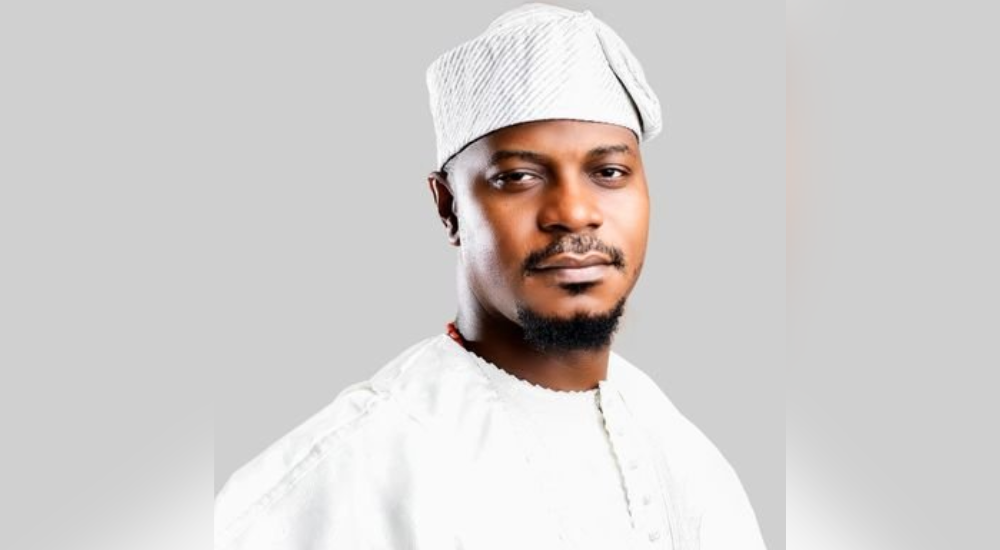
A Federal High Court in Lagos has struck out Oyefusi’s suit against Rhodes-Vivour and the African Democratic Congress (ADC), ending a legal challenge to the party’s Lagos governorship primary. The ruling, disclosed by Rhodes-Vivour in a post on X on Friday night, hinged on the Supreme Court’s position that disputes over the internal affairs of political parties are generally not matters for judicial determination.
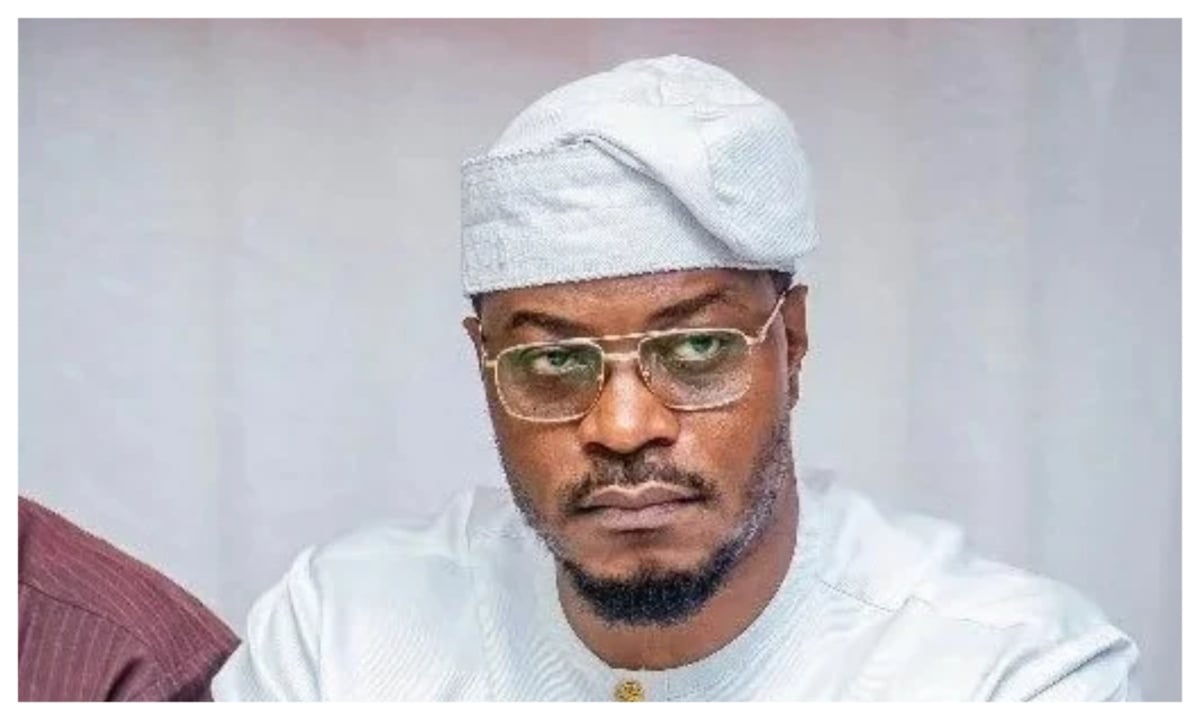
The case stemmed from the ADC’s Lagos goverrnorship primary, which produced Rhodes-Vivour as the party’s candidate. Princess Abiodun Oyefusi, who contested the outcome, alleged that votes credited to her were improperly transferred during the collation of results. Her legal representatives then approached the court seeking redress.
The court, relying on the Supreme Court’s recent stance, held that the issues raised fell within the ADC’s internal domain. It struck out the case. The decision also aligns with the Electoral Act 2026, which provides that courts shall not entertain suits relating to the intern.al affairs of political parties.
Why the ruling matter,s
The judgment removes a legal obstacle for Rhodes-Vivour as the ADC prepares for the 2027 Lagos governorship election. It also reinforces a growing judicial consensus that political parties should resolve their internal disputes without court intervention, a principle that has shaped Nigerian electoral jurisprudence in recent years.
Reacting to the ruling, Rhodes-Vivour called for unity within the ADC. He described continued litigation over the primary as unnecessary and distracting. “Our focus is on delivering a Lagos that works for all and to salvage our Lagos from cronyism, corruption and ineptitude,” he said. “Hence I reiterate my call for party unity so we can all work together to defeat the APC. Dragging cases in court, quite frankly, is unnecessary and distracting.”
Rhodes-Vivour said the party’s priority should be defeating the All Progressives Congress (APC) in the 2027 election. He urged members to work together rather than continue with court cases.
The dispute had arisen after the ADC primary, when Oyefusi challenged the collation process. According to reports, she claimed that votes recorded in her favour were transferred during the collation of results. Her legal team sought the court’s intervention, but the court declined jurisdiction.
The ruling is consistent with the Supreme Court’s established position that internal party affairs fall within the parties’ domain. The Electoral Act 2026 has also addressed the jurisdiction of courts over such matters, providing that courts shall not entertain suits or matters relating to the internal affairs of political parties.
Legal framework and political fallout
The decision underscores the limited role of the judiciary in resolving intra-party disputes. It also highlights the importance of internal party mechanisms for dispute resolution. For the ADC, the ruling clears the path for Rhodes-Vivour to focus on the 2027 governorship race.
The ADC has been positioning itself as a major opposition party ahead of the 2027 general election. Rhodes-Vivour’s candidacy in Lagos is seen as a key part of the party’s strategy to challenge the APC’s hold on the state.
The ruling comes amid broader political activity. The ADC in Enugu State recently criticised the local government election there, describing it as an “APC vs APC” selection process. The party also condemned the restriction of movement during the poll.
At the national level, the ADC’s presidential candidate, Atiku Abubakar, has criticised President Bola Tinubu’s economic policies, saying Nigerians are struggling with the rising cost of living. These developments suggest the ADC is sharpening its opposition stance ahead of the 2027 elections.
For Rhodes-Vivour, the court’s decision is a reprieve. It allows him to consolidate his candidacy and focus on building party structures. His call for unity signals an awareness that internal divisions could weaken the ADC’s chances against the APC.
What’s next
The ADC will now focus on preparations for the 2027 Lagos governorship election. Rhodes-Vivour’s message of unity is likely to dominate his engagements with party members in the coming weeks. The party’s ability to present a united front will be tested as it seeks to unseat the APC in Lagos.
Oyefusi has not yet indicated whether she will pursue other legal options. The court’s ruling, however, may discourage further litigation given the clear judicial stance on internal party affairs.
The case also serves as a reminder of the legal boundaries surrounding party primaries. As the 2027 elections approach, political parties across Nigeria will need to ensure their internal processes are transparent and fair to avoid similar disputes.
For now, Rhodes-Vivour remains the ADC’s Lagos governorship candidate. The party’s focus, as he stated, is on delivering a Lagos that works for all and defeating the APC. Whether that message resonates with voters will be determined at the polls.
Frequently Asked Questions (Oyefusi’s Suit Against Rhodes-Vivour)
Why did the court strike out Oyefusi’s suit against Rhodes-Vivour?
The court relied on the Supreme Court’s position that disputes concerning the internal affairs of political parties fall within the parties’ domain and are generally not matters for judicial determination. It also cited the Electoral Act 2026, which provides that courts shall not entertain suits relating to internal party affairs.
What was the suit about?
Princess Abiodun Oyefusi challenged the outcome of the ADC’s Lagos governorship primary, alleging that votes credited to her were improperly transferred during the collation of results.
What did Rhodes-Vivour say after the ruling?
Rhodes-Vivour called for party unity, describing continued litigation as unnecessary and distracting. He said the ADC’s focus should be on delivering a Lagos that works for all and defeating the APC in the 2027 election.
Related Articles
- Mexico vs Colombia: Márquez Debut Ends in Friendly
- Mexico vs Colombia 2026: Márquez Debut Ends in Defeat
- Spark Plug Replacement Cost: Fake Parts & Real Prices
- OPay Investing in People to Build a Better Nigeria
- Hyundai Elantra Parts: Maintenance Tips for N Models



Nigeria News
Nigeria Grants Aid: What NERSI And US Pacts Deliver
Nigeria grants aid through N50,000 NERSI cash transfers and unpublished US health pacts. What the record verifies, and what it still leaves out.


Two aid stories moved through Nigeria in the same season, and only one of them can be checked against a receipt.
On 30 October, the Minister of Humanitarian Affairs and Poverty Reduction, Dr Bernard Doro, announced that payments had begun under the National Emergency Relief and Stabilisation Intervention: N50,000 a month to vulnerable Nigerians, sent straight to a bank account or mobile wallet. In the same period, Nigeria appeared on a Council on Foreign Relations tracking list of more than a dozen African governments that have signed health memorandums with Washington since late 2025, agreements whose terms have not been fully published.
Nigeria grants aid to its own citizens through one channel and accepts it through another, and the evidence behind each is of very different quality. That gap, not the headline numbers, is the story.
What Nigeria Grants Aid Under NERSI Actually Changes
The mechanics of the cash programme are unusually specific for a Nigerian social intervention, and that specificity is what makes it verifiable. According to PUNCH, Doro said eligible beneficiaries receive N50,000 monthly, that the intervention is designed to cushion the effect of rising food prices and the high cost of essential goods, and that it will be reviewed regularly with beneficiaries notified before any adjustment.
The delivery model removes the queue. Beneficiaries do not apply, pay a fee or register through an agent. They receive an SMS from a licensed digital financial service provider asking for consent, and payment follows. The approved channels are ALAT by Wema (94523#), MoMo PSB (6710#), NairaGram (72600#), OPay (95520#) and Moniepoint (557327#). The ministry published a helpline, 0700-022-2222, and warned recipients not to share PINs or BVNs.
BBC Pidgin reported the same core claim: the government says the money goes directly to beneficiaries through mobile wallets, with no middle man.
What the announcement does not contain is just as important. It gave an amount and a channel, but no caseload, no total budget and no payment calendar. The Youth Economic Intervention and De-radicalisation Programme said in a Facebook post that beneficiaries were being notified, and advised those whose status read NOT SELECTED to wait for the next batch. The same post did not guarantee that everyone marked NOT SELECTED would be paid later. For a household, a confirmed N50,000 in a wallet is a real change. A NOT SELECTED status is not an outcome yet.
Why The US Health Pacts Signed By Nigeria Remain Unreadable
Nigeria’s second aid lane runs in the opposite direction, and here the announcement is the only solid fact. Al Jazeera reported that while Zimbabwe pulled out of negotiations and Zambia pushed back on clauses seeking access to critical minerals, several countries including Nigeria and Kenya went on to sign the health pacts. The terms remain unclear because the agreements have not been fully published.
The stakes are not abstract. African countries received $5.4bn in US assistance in 2024, much of it for health. After Washington suspended global health aid in January 2025 and dismantled USAID, Boston University’s Impactcounter tracker attributed 518,428 child and 263,915 adult deaths to the shock, along with close to 10 million new malaria cases. Zambia, which relies on PEPFAR for more than 80 percent of its HIV funding and free treatment for 1.3 million people, was told negotiations would end if no deal was inked.
Nigeria’s own terms are not public. That matters because the template is visible elsewhere. Senegal received $200m in overall US aid in 2024, about half for health, and is slated to get less than $100m over the next five years. Kenya’s $2.5bn deal was challenged in court, which suspended any part that might violate data privacy.
“Linking such aid to payoffs in the extraction of critical minerals smacks of exploitative practices,” Sarang Shidore, director of the Global South programme at the Quincy Institute for Responsible Statecraft, told Al Jazeera. “Reform in the foreign aid sector is badly needed, but this is not the way to do it.”
Where Nigeria grants aid without publishing terms, the accurate label is signed, not specified. Signing is an event. Coverage for a patient on antiretroviral therapy is an outcome.
British Council Grants And The Smaller, Checkable End
The third flow in this picture is small enough to audit line by line. The British Council awarded grants of up to £5,000 each to seven Nigerians under its 2026-27 Alumni UK Grant Programme, announced in Lagos on Thursday 19 November, for projects running five months. Four address climate and environment; three address inclusion and inequality.
May Tamara Stow will train 40 young women in Otuoke, Bayelsa State, to collect flood data from more than 200 households. Peter Abiye Banigo will train 30 informal solar technicians in Rivers State to handle discarded lithium batteries. Adelopo Abdulganiyu Omobolaji’s CircuRise targets 100 informal waste workers in Lagos. Bethel Ikenna Okeke will work with 100 girls and young women in the Durumi and Lugbe camps for internally displaced persons in Abuja. Charity K. Usifoh-Chenge expands a public health stewardship programme to Gombe and Nasarawa. David Chukwuma Izuogu’s Exam Equity for Girls reaches 150 girls in Lagos and Imo states. Opeolu Stephen Akinola will equip 50 graduates with disabilities with digital and employment skills.
Deputy Country Director Chilufya Besa was explicit about the limits. “A grant of up to £5,000 will not solve a national problem. It can, however, test an idea,” he said, adding that recipients must report on what they delivered, who they reached and what they learnt.
The Big Picture Is Scale And Proof
The three flows sit at wildly different sizes. A monthly N50,000 transfer to an unnamed number of households. A bilateral health arrangement of undisclosed value. A £5,000 project grant with a named lead and a five-month clock.
The reader’s test is simple. When Nigeria grants aid, ask three questions: who signed, how much, and what can be counted. NERSI answers two of the three. The British Council grants answer all three. The Washington health pacts answer one.
Frequently Asked Questions
How much is the Nigerian government paying under NERSI?
Eligible beneficiaries receive N50,000 monthly, according to Minister of Humanitarian Affairs and Poverty Reduction Dr Bernard Doro. The ministry said the intervention would be reviewed regularly in response to changes in the cost of living, with beneficiaries notified before any adjustment.
Do Nigerians need to apply or pay to receive the N50,000 relief?
No. Doro said beneficiaries are not required to apply, pay any fee or register through an agent. Payment follows an SMS consent request from one of the licensed providers: ALAT by Wema, MoMo PSB, NairaGram, OPay and Moniepoint.
What did Nigeria agree to in return for US health aid?
That is not publicly known. Nigeria is listed among countries that signed health pacts or memorandums with Washington, but the agreements have not been fully published, so the terms — including any data-sharing or minerals clauses — cannot be verified from the record.
 Follow AFRILATEST on Google News
FIRST TIME REACTIONS:
Be the first to leave us a comment – Nigeria Grants Aid: What NERSI And US Pacts Deliver, down the comment section.
JOIN US ON OUR SOCIAL MEDIA:

About Rosabella Eboh
Rosabella Eboh is an author at AfriLatest. With a passion for writing and a flair for creativity, she contributes original content and unique perspectives to the platform. Rosabella focuses on human-interest stories, cultural trends, and in-depth feature reporting.
View all articles by Rosabella EbohNigeria News
Nigeria’s NIP Keeps Africa’s Only Mature Payment Status
Nigeria’s NIP stays Africa’s only mature instant payment system in the 2026 SIIPS report, as ECOWAS picks Nigerian rails for a regional settlement plan.

Nigeria’s NIP remains the only instant payment system in Africa to hold the “mature” classification on AfricaNenda’s inclusivity spectrum. The status was confirmed, not newly won, in the 2026 State of Inclusive Instant Payment Systems report released on Thursday by the AfricaNenda Foundation with the World Bank Group and the United Nations Economic Commission for Africa. Two different claims are bundled into that headline, and only one of them moved this year: that the payment rails are built to a high standard, and that the market around them is producing measurable results.
The report counted 39 instant payment systems live across 43 African countries. Eleven were classified as progressed, 19 as basic and eight went unranked. Nigeria’s NIP was the only entry at the top, as Nairametrics reported.
Why Nigeria’s NIP Leads A Field Of 39 Systems
“Mature” is not a marketing word in this framework. AfricaNenda requires extensive payment use cases, affordable services, working consumer protection and a functioning route for disputing failed transactions. Systems are also judged on whether they carry government payments, business transactions and cross-border transfers, not only person-to-person transfers.
Nigeria’s NIP, operated by the Nigeria Inter-Bank Settlement System (NIBSS), climbed from basic in 2021 to progressed and then to mature, first announced at the 2025 report launch in Ezulwini, Eswatini. The 2026 edition records that it held the grade while other countries continued building.
What earns the grade, per THISDAY: heavy participation by banks, fintechs and non-bank operators; always-on digital access; simplified onboarding for low-income users; and a technology backbone that sustains high throughput with real-time settlement. Consumer protection and dispute resolution carried weight too.
The coverage figure is the sobering one. Twenty-three African countries now have systems rated progressed or mature, and those systems reach 56% of the continent’s adult population. The other 44% sit outside them.
Read the tables, not only the summary. The 2026 report states that “the remaining systems maintained their 2025 classifications, including ten already at progressed and one (NIP in Nigeria) at mature”, while elsewhere listing 11 progressed systems. That gap suggests one system moved up without the summary saying so.
The ECOWAS Hosting Deal Is The Change That Actually Happened
The most concrete new development came from Monrovia’s central bank, not from Abuja. Henry Saamoi, Governor of the Central Bank of Liberia, told reporters on the sidelines of the report launch in Mauritius that West African authorities are finalising a regional payment settlement system for ECOWAS, with Nigeria hosting the instant payment leg because of the country’s NIP experience.
Saamoi said a consultant engaged by ECOWAS recommended a three-country split: Nigeria for the instant payment system, Ghana for a backup, and the Central Bank of West African States in Senegal for the real-time gross settlement system. He said the arrangement was designed to answer governors’ fears that a single country would dominate the infrastructure. His account is reported here.
Settlement currency remains unresolved. Saamoi said no base currency has been chosen, that member states are onboarding to the Pan-African Payment and Settlement System, which settles in local currencies, and that a major decision on the proposed ECO single currency would be taken on Friday in Abidjan. The 2027 target for the ECO, he said, is unchanged.
The distance between the ranking and the ECOWAS plan is worth stating plainly. One is a published assessment of a live system. The other is a consultant’s recommendation endorsed by central banks, with no launch date attached to it.
NIBSS Is Already Building The Replacement For Its Own Flagship
The system being certified is also the system scheduled for retirement. NIBSS introduced the National Payment Stack in June 2025 as an ISO 20022-compliant national infrastructure with richer payment data, instant settlement and multi-rail capability. It processed 153,000 transactions in pilot as of June 2026.
Set that against the numbers Nigeria’s NIP already handles. Electronic payments through the platform reached N1.07 quadrillion in 2024, up 79.6% from N600 trillion in 2023, with volume up 15.5% to 11.2 billion transactions. The pilot figure is a rounding error beside the rail it will eventually replace.
That gap is the honest measure of where the migration stands. It carries a risk as well: when the new stack takes over, the maturity grade belongs to the older rail until a fresh assessment says otherwise.
Inclusion has a hardware problem too. In January 2026, NIBSS disclosed plans to explore offline payment options for Nigerians using basic mobile phones or without reliable internet. A system can be mature and still be out of reach for the people it was designed to include.
The Big Picture
Across the continent, 19 of 39 instant payment systems remain basic, several without merchant payments or complaint channels, according to the report. Nigeria’s NIP is not proof that Africa’s payment infrastructure has arrived. It is proof that a system can be assessed at the top of a scale while millions of people in the country around it remain outside that system. The grade is a floor, not a finish line, and for Nigeria’s NIP the next test is whether the platform built to replace it can hold the same standard.
Frequently Asked Questions
What does ‘mature’ mean for Nigeria’s NIP in the 2026 SIIPS report?
It is the highest tier on AfricaNenda’s Inclusivity Spectrum. Systems at that level must offer extensive payment use cases, affordable services, effective consumer protection and dispute-resolution mechanisms, and must support government payments, business transactions and cross-border transfers.
Did any other African instant payment system reach mature status in 2026?
No. Of the 39 instant payment systems tracked across 43 countries, 11 were classified progressed, 19 basic, eight unranked, and Nigeria’s NIP was the only system in the mature category.
What role does Nigeria’s NIP play in the planned ECOWAS regional payment system?
Central Bank of Liberia Governor Henry Saamoi said a consultant recommended a three-country arrangement in which Nigeria hosts the instant payment system because of its NIP experience, Ghana hosts a backup, and the Central Bank of West African States in Senegal hosts the real-time gross settlement system. The settlement base currency has not been decided.
FIRST TIME REACTIONS:
Be the first to leave us a comment – Nigeria’s NIP Keeps Africa’s Only Mature Payment Status, down the comment section.
JOIN US ON OUR SOCIAL MEDIA:
About Rosabella Eboh
Rosabella Eboh is an author at AfriLatest. With a passion for writing and a flair for creativity, she contributes original content and unique perspectives to the platform. Rosabella focuses on human-interest stories, cultural trends, and in-depth feature reporting.
View all articles by Rosabella EbohNigeria News
How to Invest in Nigeria: What Three Signed Deals Change
How to invest in Nigeria, read through the records: a $700bn mining framework, a deep offshore tax order and $5.79bn in World Bank-mobilised finance.

Dele Alake is Nigeria’s Minister of Solid Minerals Development, and the file he carries is the country’s most direct investment pitch. On the sidelines of the United Nations General Assembly in New York, Alake announced that Nigeria and the United States had signed an agreement to “deepen” American investment in Nigerian mining. The document was signed on the Wednesday; he announced it on the Thursday, as DW reported.
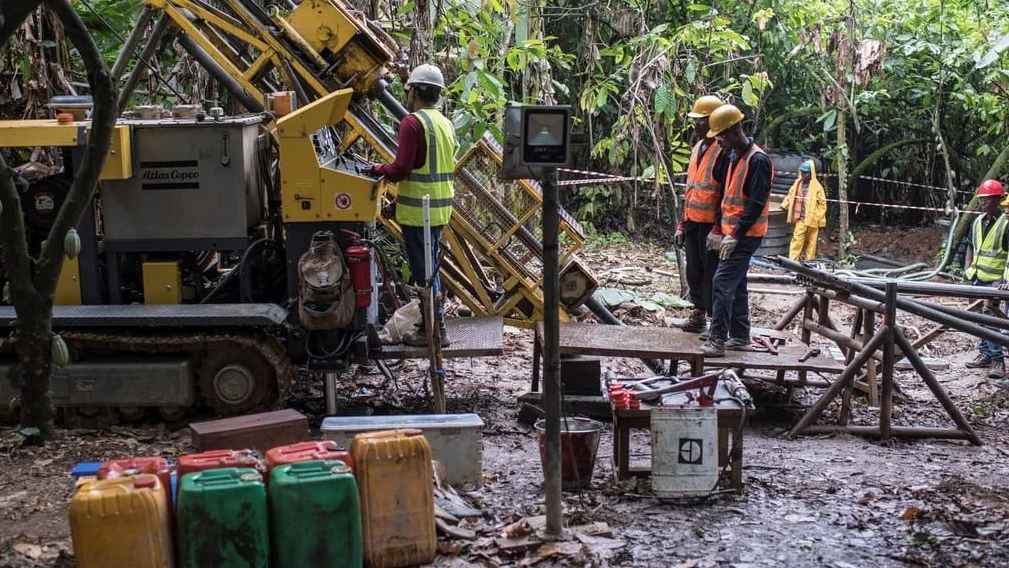
For anyone asking how to invest in Nigeria, that signature is the clearest new signal in the mining file. Alake put a number on the estate: mineral resources valued at about $700 billion. The framework’s stated scope covers geological data and exploration, mineral development and processing, infrastructure, and technical capacity.
What it does not do is name a single project. Alake said the agreement “would be used to identify viable projects,” which is an admission that the list does not yet exist. No disbursement figure was published either.
How to Invest in Nigeria Mining Begins With a Framework, Not a Cheque
Nigeria’s known deposits include lithium, gold, tin, gemstones, iron ore and phosphate. Lithium carries the sharpest commercial edge because it feeds the battery supply chains behind the global energy transition. Most of these minerals have until now left the country as raw ore.
“Nigeria cannot remain a source of raw materials while others capture most of the value,” Alake said. “We want more local processing, quality jobs, stronger skills and greater opportunities for Nigerian businesses.”
That is the policy claim, and the affected parties are specific: artisanal and industrial miners, refining firms that would need reliable power and feedstock, and host communities that carry the ground-level cost of extraction. DW reported that Nigeria’s mining sector remains mired in safety and environmental concerns. That sentence describes operating risk no signature removes, and it matters more to a plant manager than the $700 billion valuation does.
The Deep Offshore Order Trades Negotiation for Eligibility Rules
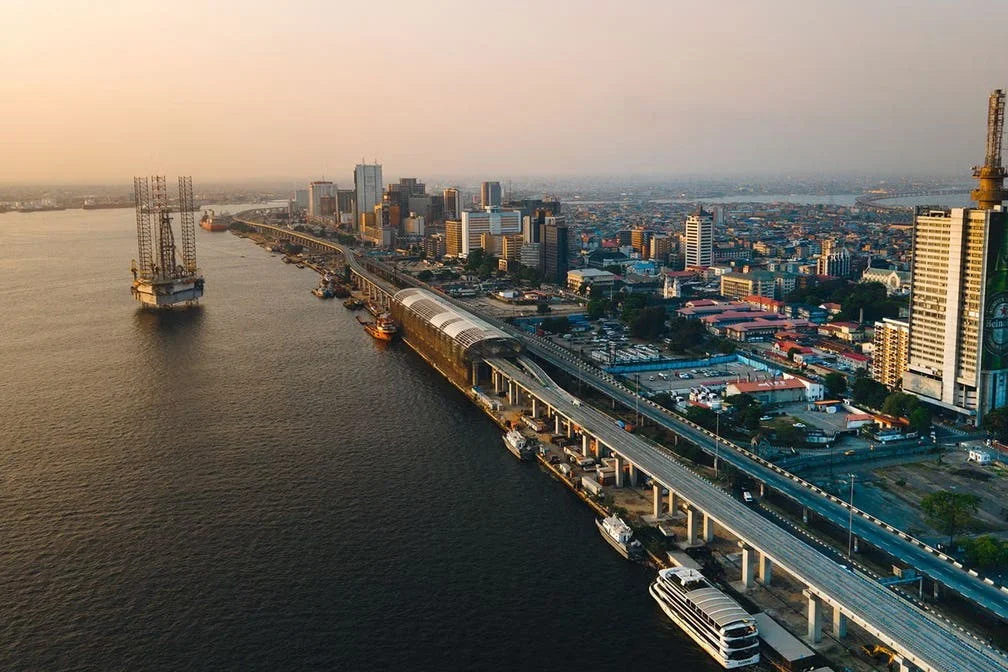
Mining is not the only file that moved. On August 11, 2026, President Bola Ahmed Tinubu approved the Deep Offshore Oil and Gas Projects Incentives (Tax Remission) Order, 2026, according to a State House statement issued by his special adviser on information and strategy, Bayo Onanuga.
The order is designed to unlock up to US$50 billion in deep offshore investment and restart capital-intensive developments stalled for decades, beginning with the roughly US$10 billion Bonga South West project. The mechanism is the part that matters: it replaces project-by-project negotiations with published eligibility criteria, and it enables NNPC Limited to amend eligible Production Sharing Contracts.
Olu Arowolo-Verheijen, the President’s special adviser on oil and gas, said projects qualifying under the framework will “maximise execution within Nigeria wherever commercially and technically feasible,” pointing to engineering, fabrication, marine logistics and technical services.
Tinubu framed the reform around certainty. “The countries that attract long-term investment are not necessarily those with the greatest natural resources,” he said. “They are the ones that provide the greatest certainty.”
That claim is testable, and the test is a final investment decision on Bonga South West. An order creates eligibility. A sanction creates spending.
Where the Smaller Cheques Are Actually Moving
The most documented capital flows in the Nigerian investment case are not in minerals at all. The World Bank Group reported mobilising up to $5.79 billion in private financing in fiscal year 2026, and its Nigeria components are itemised.
The Fostering Inclusive Finance for MSMEs in Nigeria program, known as FINCLUDE, pairs a $500 million package from the International Bank for Reconstruction and Development and the International Development Association with risk-sharing tools. It targets more than 250,000 micro, small and medium enterprises, with 30 percent of financing directed to women-led businesses, and is expected to mobilise nearly $1.89 billion in private financing while supporting an estimated 850,000 direct and indirect jobs, per the World Bank.
In agriculture, IFC mobilised $1.02 billion for Dangote Industries and $282.5 million for Indorama through refinancing and syndicated financing. The two projects hold an aggregate production capacity of 6.8 million metric tons per year of fertiliser and reach more than 10 million smallholder farmers. In telecoms, IFC anchored a $1.2 billion bond issuance by IHS Towers, drawing more than $1.1 billion from private investors.
Downstream, the movement is physical rather than contractual. Fynefield Petroleum, a subsidiary of Rainoil Limited, opened three filling stations — on Ikot Ekpene/Umuahia Road, on Inyang Street in Calabar, and on Ikom/Obudu Road — and received recognition on November 11 from the Cross River State Commissioner for Commerce and Industry, Dr Abigail Duke Orok, ThisDay reported. General Manager Harold O’Neill said the award “further strengthens our resolve to deepen our contributions to Nigeria’s energy sector.”
Three stations are not a national trend. They are a data point about where private capital still goes readily: distribution assets with fast cash cycles and visible demand.
The Evidence Test for How to Invest in Nigeria
For a household or a business, the practical answer to how to invest in Nigeria is that the entry points now arrive with documents attached, and the documents differ in strength. Mining has a signed framework, a $700 billion valuation and no published project list. Deep offshore has eligibility criteria and one named first project. MSME finance has a $500 million package, a 30 percent women-led target and a defined intermediary structure.
That gap between an order and a disbursed naira is where the announcements separate from the outcomes. Fynefield’s stations are open and trading. Bonga South West is not yet sanctioned. Alake’s $700 billion describes what is in the ground, not what has been committed to it.
Frequently Asked Questions
What did the Nigeria-US mining agreement actually commit to?
Nigeria’s Minister of Solid Minerals Development, Dele Alake, said the framework covers geological data and exploration, mineral development and processing, infrastructure, and technical capacity. He said it would be used to identify viable projects. No project list or funding amount was published with the announcement.
Who is affected by the Deep Offshore Tax Remission Order, 2026?
The order, approved by President Bola Ahmed Tinubu on August 11, 2026, replaces project-by-project negotiations with transparent eligibility criteria and enables NNPC Limited to amend eligible Production Sharing Contracts. It is aimed at unlocking up to US$50 billion in deep offshore investment, starting with the roughly US$10 billion Bonga South West project.
Which parts of Nigeria’s investment case have documented money behind them?
The World Bank Group reported mobilising up to $5.79 billion in private financing in fiscal year 2026. That includes a $500 million IBRD and IDA package under FINCLUDE for more than 250,000 MSMEs, $1.02 billion mobilised for Dangote Industries and $282.5 million for Indorama, and a $1.2 billion IHS Towers bond issuance that drew more than $1.1 billion from private investors.
FIRST TIME REACTIONS:
Be the first to leave us a comment – How to Invest in Nigeria: What Three Signed Deals Change, down the comment section.
JOIN US ON OUR SOCIAL MEDIA:
About Rosabella Eboh
Rosabella Eboh is an author at AfriLatest. With a passion for writing and a flair for creativity, she contributes original content and unique perspectives to the platform. Rosabella focuses on human-interest stories, cultural trends, and in-depth feature reporting.
View all articles by Rosabella Eboh-

 Car Reviews3 weeks ago
1955 Chevy Bel Air Restomod: What SEMA Really Proves
-
Savings & Investing4 weeks ago
Hidden Medicare Fees Draining Your Retirement Savings
-
Movies & TV4 weeks ago
Wizkid Starboy Desire Ft Banky W Shaydee: Fact Or Fan Fiction?
-
World News4 weeks ago
Sheinbaum No Proof Maduro: Mexico’s Test of US Evidence
-
Trend politics4 weeks ago
How 24-Hour Online Scrutiny Is Running Out Leaders
-
Health and Fitness4 weeks ago
Premature Ejaculation Treatment: Exercise vs Dapoxetine