
Fintech
PalmPay NightGuard: Secure Overnight Transfers
PalmPay NightGuard? Learn how to secure overnight transfers. Step-by-step guide for safe late-night transactions on the PalmPay app.

You want to send money at 2 a.m. without fear. PalmPay NightGuard is the new security feature that lets you do exactly that. It adds a layer of protection to overnight transfers, so you can move naira when you need to, even when the banks are closed. Here’s how to use it, why it matters, and the mistakes to avoid.
PalmPay, one of Nigeria’s biggest fintechs with over 500,000 agents nationwide, quietly rolled out NightGuard to tighten security on late-night transactions. The feature is built into the PalmPay app, which millions already use for transfers, bill payments, and card requests. If you’re one of them, you can activate NightGuard today. No need to visit a branch or call customer care.
Why NightGuard Exists

Overnight transfers are a goldmine for fraudsters. When you’re sleepy or in a hurry, you might miss red flags. NightGuard adds a checkpoint: it requires extra verification for transfers above a certain amount between certain hours. The exact threshold and hours weren’t disclosed in the source material, but the goal is clear: stop unauthorized transfers before they leave your account.
Think of it as a night watchman for your wallet. You don’t see it, but it’s there, checking IDs.
How to Set Up NightGuard on PalmPay
Step 1: Open the PalmPay app and log in. Make sure you’re on the latest version. If you haven’t updated, do it now from your app store.
Step 2: Go to Settings or Security. Look for “NightGuard” or “Overnight Security.” The exact menu name may vary, but it’s usually under security settings.
Step 3: Toggle NightGuard on. You’ll be asked to set a PIN, answer security questions, or enable biometrics (fingerprint or face ID). Choose what you can remember at 3 a.m.
Step 4: Confirm your linked phone number and email. This ensures you get alerts if someone tries to bypass the feature.
Step 5: Test it. Send a small amount to a friend at night. You should see the extra verification step. If it works, you’re set.
What NightGuard Means for Your Money
First, it reduces the risk of SIM-swap fraud. Fraudsters often strike at night when you’re asleep. With NightGuard, they can’t just initiate a transfer with a stolen PIN. They need the extra verification.
Second, it gives you peace of mind. You can sleep knowing that a large chunk of your balance isn’t moving without your explicit approval.
Third, it doesn’t slow down legitimate transfers. If you’re awake and need to send money urgently, you can complete the extra step in seconds.
Common Mistakes to Avoid
Mistake 1: Using a PIN you can’t remember. If you set a complex PIN and forget it, you’ll be locked out. Use something memorable but not obvious.
Mistake 2: Ignoring alerts. If you get a notification about a NightGuard verification attempt you didn’t make, act fast. Change your PIN and contact PalmPay support.
Mistake 3: Sharing your verification codes. No legitimate PalmPay staff will ask for your NightGuard code. Ever.
Mistake 4: Assuming NightGuard covers all transactions. It’s for overnight transfers, not card payments or bill payments. Those have their own security.
How NightGuard Fits into PalmPay’s Ecosystem
PalmPay has been expanding fast. Recently, it partnered with AfriGO, Nigeria’s national domestic card scheme, to let users request AfriGO cards directly on the app. That means you can now get a card that works at ATMs, POS terminals, and online, all from your phone. NightGuard complements this by securing the transfers that fund your card or move money between accounts.
PalmPay’s managing director, Chika Nwosu, said the company is focused on making banking smarter and more accessible. NightGuard is part of that push. It’s not just about adding features; it’s about making sure those features are safe to use at any hour.
What About Other Security Measures?
PalmPay already has standard security: PINs, OTPs, and encryption. NightGuard adds a time-based layer. It’s similar to what banks do with transaction limits, but more targeted. If you’re a frequent overnight trader—maybe you run a business that operates late—NightGuard won’t get in your way once you’re verified.
The Broader Context: Why This Matters Now
Nigeria’s fintech space is booming. More people are using apps like PalmPay for daily transactions. But fraud is also rising. The Central Bank of Nigeria and the SEC have been tightening rules. For example, the SEC recently granted fresh licenses to BGL Group firms, showing that regulators are active. Meanwhile, Access Holdings got shareholder approval to raise N40 billion via private placement, signaling that big players are shoring up capital. In this environment, security features like NightGuard are not just nice-to-have; they’re essential.
Your First Step Today
Open your PalmPay app right now. Go to settings, find NightGuard, and turn it on. It takes two minutes. Then test it with a small transfer tonight. If you don’t see the extra step, contact PalmPay support. Don’t wait until you’re a victim. Secure your overnight transfers today.
Remember, the goal isn’t to make transfers harder. It’s to make them safer. With NightGuard, you can send money at midnight without losing sleep.
Frequently Asked Questions
What is PalmPay NightGuard?
PalmPay NightGuard is a security feature that adds extra verification for overnight transfers on the PalmPay app. It helps prevent unauthorized transactions when you’re asleep.
How do I activate NightGuard on PalmPay?
Open the PalmPay app, go to Settings or Security, find NightGuard, and toggle it on. You’ll set a PIN or enable biometrics, then confirm your phone number and email.
Does NightGuard cost anything?
The source material does not mention any fee for NightGuard. It appears to be a free security feature for PalmPay users.
Related Articles
- From Scholarships to Skills: Global Push to Train Youth
- Ikere Chamber’s NACCIMA Admission Validates Vision
- iPhone 18 Pro Max Review: Price, Specs, Verdict
- Court Strikes Out Oyefusi’s Suit Against Rhodes-Vivour, ADC
- Mexico vs Colombia: Márquez Debut Ends in Friendly

Fintech
How to Save Money When the Sources Publish No Rate
How to save money advice from three new sources, and what they omit: no naira costs, no exchange rate, no lending rate for households to test.

There is no exchange rate in this story, and no interest rate either. A rate update on how to save money has to begin with that admission, because the three documents behind this guide — a holiday travel guide from Ally Financial, a Vermont library report, and BBC-sourced debt charity guidance — carry no naira figure, no lending rate and no savings rate. What they carry is behaviour: lists, caps, borrowed equipment, and a warning that some parents will skip meals so their children get a Christmas dinner with the trimmings.
The absence matters more than it first looks. Saving advice becomes testable only when it is priced. Without a rate or a cost attached, a reader can agree with every recommendation and still be unable to check whether it works for a household earning a fixed monthly sum.
What The Three Sources Actually Measure

The Ally Financial guide, distributed by Stacker through Richmond News, offers two survey shares and no money at all. It reports that 44% of consumers intend to travel for the holidays, and that 34% anticipate spending a little extra on holiday travel this year. Those are counts of intent, not costs. They do not say what a flight costs, what accommodation charges, or what a reader saves by flying at an off-peak hour.
The guide’s most concrete travel instruction — that early-morning or late-night flights, or a flight on Christmas or Thanksgiving, could mean lower prices and fewer crowds — is hedged with could and potentially. That is the honest wording when no fare data sits behind the claim. The remaining suggestions, from group rates to travel agents to rewards cards to travel insurance, arrive without a single price attached.
The BBC report on StepChange guidance shows a different kind of precision. The charity’s advice carries a date instead of an amount: finish a shopping list before Black Friday on 27 November, because it is only a discount if you were going to buy it anyway. That one sentence is the most verifiable line in the whole set, and it costs nothing to check.
The rest of the list is practical and unpriced. Budget for Christmas in full — presents, food and drink, travel, parties, postage, decorations and extras. Spread the cost beyond the December paypacket. Book train travel now, since advance tickets are cheaper when available. Cap the socialising bill. Check cupboards, fridge and freezer before the big food shop. Ask whether the repayments are affordable before buying on credit. Vikki Brownridge, StepChange’s chief executive, frames the problem around January rather than December.
Hold onto the distributional fact, because it is the only one offered. Barnardo’s warns that some parents will skip meals so their kids get a Christmas dinner with the trimmings. No percentage accompanies that warning. It identifies who absorbs the squeeze, but leaves the household to work out where it sits.
How A Vermont Library Puts A Number On Not Buying
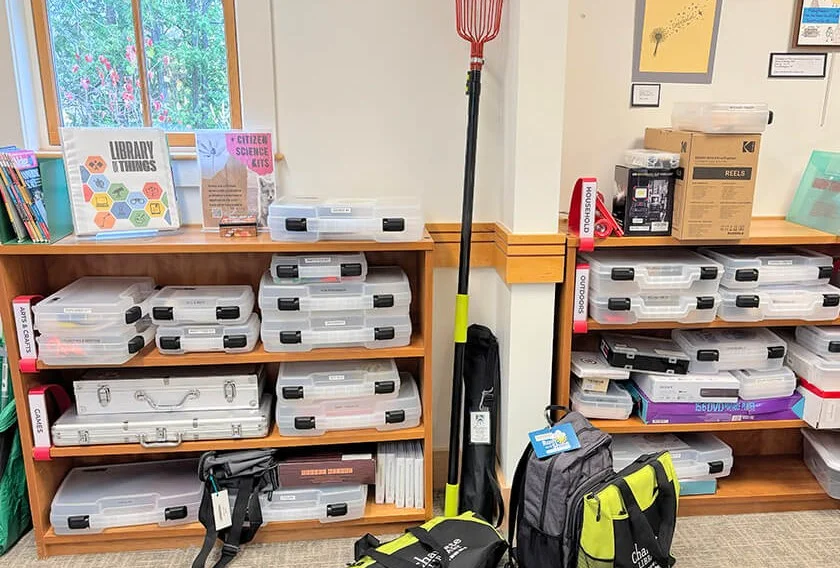
The Charlotte News report, dated 19 November 2026, is the only document in the set that attaches a figure to a method of saving. Charlotte Public Library’s Library of Things, which took shape around 2020 under director Margaret Woodruff, lends equipment to card holders for one week, renewable for a second week, against a signed waiver covering lost or damaged items.
The popular items are the ones a household uses once or twice. A food dehydrator. A canning set. An Extractigator for pulling buckthorn and honeysuckle. An induction cooktop that covers a broken stove, or lets a resident trial a replacement before buying. A Kill A Watt electricity monitor funded by the town’s Energy and Climate Action Committee. Selectboard member Lee Krohn borrowed a metal detector and found a survey marker buried for more than 30 years, then a water shutoff lost in his yard for decades.
Even here, the number is public rather than personal. A July 2026 town purchasing document shows Charlotte sought bids for $21,790 in equipment funded through the Vermont Land Access and Opportunity Board’s Community Resilience Hub Grant, with proposed kits possibly containing a shop vac, carpet cleaner, electric drill and hand truck, and a pressure washer under review depending on storage space. That $21,790 buys community access. What it saves an individual household is left for the household to calculate.
Where Naira Costs And Rates Go Missing
Readers in Lagos or Abuja get nothing direct from these documents. No exchange rate, official or market, appears in any of them. No bank fee, no loan rate, no naira price. A Nigerian household cannot use this material to weigh borrowing a canning set against buying one, or to judge what a December loan costs when the repayment lands in January.
Separating general education from individualized advice is the second gap. The MoneyHelper signposting in the BBC report is general education: free debt advice directories, tools to check benefit and grant entitlements, budget templates. None of it is a recommendation aimed at a specific person. The Ally guide’s suggestion to earn rewards on other purchases assumes a cardholder who clears the balance monthly, a condition it never states.
How To Save Money Without A Published Rate
Three actions survive the missing data. Write the full list before the discount event, and treat anything absent from that list as full price. Cap the category before spending starts, not after the statements arrive. And when a rate is the deciding factor, take it from the institution that publishes it, with a date attached, rather than from a lifestyle guide that never mentions one.
That is a thin return for a rate update, and it is the accurate one. A reader trying to learn how to save money in a market where published rates move daily should notice when the guidance, however sensible, never names a number.
Frequently Asked Questions
Do these sources give an exchange rate or an interest rate?
No. None of the three documents carries a naira exchange rate, official or market, a lending rate or a savings rate. The Ally Financial guide counts travel intentions, the StepChange guidance lists budgeting steps, and the Charlotte library report gives borrowing terms. A reader who needs a rate must take it from the institution that publishes it, with a timestamp.
How long can Charlotte residents borrow Library of Things equipment?
One week, with the option to renew for a second week, according to the Charlotte News report of 19 November 2026. Borrowers sign a waiver agreeing to use equipment responsibly and to cover the cost of items lost or damaged, and equipment must be returned directly to library staff during open hours.
What deadline does the StepChange guidance set?
Black Friday, 27 November, for completing a shopping list before discounts begin. The stated reason is that a reduction only counts as a discount if the item was already going to be bought. The same guidance recommends booking advance train tickets early, since those fares are cheaper when available.
 Follow AFRILATEST on Google News
FIRST TIME REACTIONS:
Be the first to leave us a comment – How to Save Money When the Sources Publish No Rate, down the comment section.
JOIN US ON OUR SOCIAL MEDIA:

About Paul Nwogo
Paul Nwogo is an engineer, published author, and the Head Manager at AfriLatest. He has written numerous books available on Amazon covering a diverse range of topics, including health, personal finance, relationships, work ethics, and scam survival. With his technical background and passion for writing, Paul now oversees the editorial direction of AfriLatest, delivering practical, accurate, and engaging content on trending news, music, and global lifestyle topics.
View all articles by Paul NwogoFintech
OPay Earns More From Lending Than Payments: What It Means for You
OPay earns more from lending than payments. Learn how this shift affects your wallet, your savings, and your loan options as a Nigerian user.

OPay earns more from lending than payments, and that changes how you should use the app. If you are one of the millions of Nigerians who open OPay for transfers, airtime, or bills, you are now using a lending company that happens to offer payments. That is not a bad thing. But it means your loan offers, your savings rates, and even your transaction limits are being shaped by a business that makes its real money when you borrow.
Here is how to read the shift, protect your wallet, and decide whether OPay’s credit products deserve a place in your financial life.
Why OPay’s Lending Business Matters To You

When a fintech makes more from lending than payments, it stops being a neutral pipe for your money. It becomes a bank in everything but name, minus the deposit insurance.
That matters because lending is where the profit is. Payment fees are thin. Interest on loans is fat. So the company’s incentives change: it wants you to borrow, repay on time, and borrow again.
For you, the upside is real. OPay and similar apps can offer small, fast loans that traditional banks will not give a trader in Onitsha or a salary earner in Ibadan. The downside is also real. Easy credit can trap you in a cycle of repayment that eats your monthly income.
Step 1: Check Your OPay Loan Offer Before You Tap It
Open the OPay app and look at the loan section. You will typically see a credit limit, a tenor, and a repayment amount. Before you accept, write down three numbers: how much you are borrowing, how much you will repay in total, and how many days you have.
If the total repayment is more than 20 percent above the principal for a 30-day loan, that is expensive money. Compare that to what a friend or a cooperative would charge you. If OPay is cheaper and you can repay from confirmed income, it can work. If you are borrowing to pay another loan, stop.
Step 2: Separate Your Payments Wallet From Your Borrowing Wallet
Use one OPay wallet for daily transactions and never keep a loan balance sitting there. If your loan disburses into the same wallet you use for transfers, you will spend it before the repayment date.
Move the loan money to the specific purpose immediately. Pay the supplier. Buy the stock. Settle the school fee. Then delete the temptation to redraw.
Step 3: Watch The Interest And Fees On Rollovers
Many digital lenders in Nigeria make their margin when you roll over a loan. The current rollover fee structure for OPay was not disclosed in the source material, so check your own app for the exact charge.
As a rule, if you roll over twice, you are likely paying more in fees than the original loan was worth. That is how people end up owing N80,000 on a N50,000 loan.
Step 4: Use OPay Savings Only For Short-Term Goals
OPay offers savings products, but remember that a lending-led business is not a licensed deposit bank in the same way your commercial bank is. Keep only money you will need within three to six months there. Your rent savings, your emergency fund, and your children’s school fees belong in a bank or a treasury bill.
The BNPL Warning Every OPay User Should Read
Buy now, pay later is growing fast. According to LendingTree, 35 percent of consumers were considering a BNPL loan in December 2024, and 47 percent of BNPL users had made a late payment. That is a warning, not a statistic.
OPay’s lending push follows the same playbook. Small loans feel painless until the repayment date. If you cannot pay cash for it today, a BNPL plan does not make it affordable. It makes it delayed.
What To Do When You Cannot Repay On Time
Call or chat with OPay support before the due date, not after. Ask for a restructuring or an extension in writing. Do not ignore the messages. Default on a digital loan can affect your ability to borrow elsewhere and may lead to aggressive recovery calls.
The student loan crisis in the United States, covered by PBS News, shows what happens when borrowers take on debt they cannot service. The lesson for Nigerians is simple: do not let a small loan become a long-term problem.
How To Compare OPay Loans With Other Options
Before you borrow, compare three things: total cost, speed, and flexibility. A bank overdraft may be cheaper but slower. A cooperative loan may be cheaper but requires savings history. A friend may be free but carries social risk.
OPay wins on speed and access. It rarely wins on price. Use it for emergencies and short gaps, not for funding a lifestyle.
A Simple Rule For Every OPay User
If OPay earns more from lending than payments, then your job is to make sure you earn more from using OPay than OPay earns from you. That means borrowing only when the return is clear, repaying early when you can, and keeping your savings where they are protected.
The first step to take today: open your OPay app, check your current loan offer and any active repayment, and write down the exact total cost. If it does not make sense, close the app and walk away. Your future self will thank you.
Frequently Asked Questions
Does OPay make more money from loans than from transfers?
Yes. OPay earns more from lending than payments, meaning interest and fees on loans now drive more revenue than transaction charges.
Are OPay loans safe to take?
OPay loans are safe if you can repay from confirmed income and the total cost is clear. Avoid rollovers, and never borrow to pay another loan.
Should I keep my savings in OPay?
Keep only short-term money in OPay savings. Long-term savings belong in a licensed bank or treasury bills for better protection.
Related Articles
- Fontaines D.C. Recruit Rosalía for ‘Where Is Gone?’
- Selma Blair Arrest: What Happened on Delta Flight 938
- 113 Million Nigerians Deprived of Health: What You Can Do
- Herbal Remedies: Aishat Alagbo’s Safe Use Guide
- 29MB AI Model Runs on a $10 Chip: Here’s How
FIRST TIME REACTIONS:
Be the first to leave us a comment – OPay Earns More From Lending Than Payments: What It Means for You, down the comment section.
JOIN US ON OUR SOCIAL MEDIA:
Fintech
OPay Files for $500M NYSE IPO: What Nigerian Investors Should Do
OPay files for $500m NYSE IPO and plans a secondary listing on NGX. Here’s what Nigerian investors should know and do next.

OPay files for $500m NYSE IPO, and that single filing changes how you should think about the fintech apps on your phone. The company wants to raise up to $500 million in the United States and has also secured board and shareholder approval to pursue a secondary listing on the Nigerian Exchange Limited (NGX).
This guide walks you through what the filing actually says, what it means for your money, and the concrete steps you can take now.
What The Filing Actually Says

OPay filed with the United States Securities and Exchange Commission (SEC) for an initial public offering estimated to raise up to $500 million, according to Independent Newspapers. The company plans to list on the NYSE under the ticker symbol OPAY.
The numbers behind the filing are the interesting part. First-half revenue more than doubled to $467.1 million, and net income rose to $90.9 million. For the 12 months ended June 30, 2026, OPay booked $806 million in revenue.
That is not small money for a company founded in 2017 in Singapore with its biggest market in Nigeria.
Where The Revenue Comes From
OPay does not make money from one source. It earns from transaction-based services (payments and acquiring), loan financing services (interest on self-originated loans), loan facilitation services (fees net of lender and insurance costs), and interest income from short-term investments supporting its savings products.
If you use OPay for transfers, savings, or loans, you are part of that revenue mix. The company also applies AI-driven risk analytics for fraud prevention and underwriting, which it cites as a key competitive strength.
How Big Is OPay In Nigeria
The filing states OPay was the number one finance app in Africa and the Middle East, with a 9.9 per cent market share based on monthly active users in the six months ended June 30, 2026. As of July 31, 2026, it was the country’s number two app across all categories based on daily active users.
Beyond Nigeria, OPay operates in Indonesia (loan facilitation), Egypt (merchant acquiring services), and Pakistan (merchant acquiring and consumer wallet services).
Step 1: Understand The Two Listings
There are two separate events here, and confusing them will cost you.
First is the primary listing on the NYSE. That is where the estimated $500 million raise happens. No pricing terms were disclosed, and the preliminary prospectus has not specified the offer price, number of securities to be sold, or expected proceeds.
Second is the secondary listing on the NGX. OPay obtained board and shareholder approval to pursue this after the NYSE listing completes, according to Nigeria Communications Week.
Step 2: Know What The NGX Listing Does Not Mean
The approval does not mean the Nigerian listing has been completed or that trading will begin immediately. OPay itself stated that the proposed Nigerian listing would depend on market conditions, regulatory approvals, and compliance with applicable Nigerian securities laws and NGX requirements.
The company has not disclosed the proposed size of the Nigerian offering or the percentage of its shares it intends to make available on the NGX. That matters because the scale of the opportunity for domestic investors depends on the number of shares available, the eventual pricing, the listing timetable, and the level of trading activity after admission.
Step 3: Watch The Valuation Gap
Reports surrounding the US IPO point to a valuation of approximately $4 billion. The joint bookrunners on the deal include Citi, Deutsche Bank, Standard Bank, and CICC. Other reporting names Citigroup, Deutsche Bank, and JPMorgan Chase as managing the US offering.
A $4 billion valuation on $806 million in trailing 12-month revenue is a specific multiple. Whether that holds at pricing depends on market conditions between now and the actual listing date.
Step 4: Decide How You Want Exposure
If you want OPay exposure, you have two potential routes.
Route one is buying OPAY shares on the NYSE after listing. That requires a broker with US market access, dollar funding, and tolerance for currency risk if you earn naira.
Route two is waiting for the NGX secondary listing. That keeps you in naira and inside a market you already understand. The trade-off is that you do not yet know how many shares will be available locally or at what price.
Step 5: Do Not Front-Run The Listing
There is no OPay stock to buy today. Anyone offering you pre-IPO OPay shares outside a registered platform is a red flag. The company has not priced the offering, and the preliminary prospectus has not specified the number of securities to be sold.
Mistakes To Avoid
Mistake one: assuming the NGX listing is guaranteed. OPay’s own filing cautions that even if the secondary listing proceeds, there is no guarantee it will generate an active trading market or achieve the anticipated expansion of its investor base and improvement in liquidity.
Mistake two: treating a $500 million raise as a $500 million valuation. Those are different numbers. The raise is the money coming in. The valuation is what the whole company is judged to be worth.
Mistake three: ignoring the concentration risk. OPay’s operations are heavily concentrated in Nigeria. That is a strength when Nigeria’s digital payments market grows and a vulnerability when regulation, currency, or consumer spending shifts.
Why This Matters Beyond OPay
The NGX has traditionally offered limited access to fast-growing private fintech companies. In August, Temi Popoola, chief executive of the Nigerian Exchange, urged the government to encourage major businesses generating substantial revenues in Nigeria to list locally, citing fintech companies including OPay and PalmPay.
The argument is straightforward: domestic investors should have an opportunity to participate in the financial value created by companies serving millions of Nigerians, rather than being excluded when those businesses seek public-market funding abroad. If OPay’s NGX listing proceeds, it could expand the range of technology-related investment opportunities on the exchange.
Your First Step Today
Open your broker app or call your stockbroker and ask two questions: do you offer access to NYSE-listed stocks, and will you support the OPay NGX listing when it opens? If the answer to both is no, start looking for a broker that does.
OPay files for $500m NYSE IPO, but the money decision is yours. Get your brokerage access sorted now, before the pricing terms drop and the queue forms.
Frequently Asked Questions
Can I buy OPay shares right now?
No. OPay has filed for an IPO but no pricing terms were disclosed. There is no OPAY stock trading yet on the NYSE or the NGX. Anyone offering you pre-IPO OPay shares outside a registered platform should be treated with suspicion.
When will OPay list on the Nigerian Exchange?
OPay has board and shareholder approval to pursue an NGX secondary listing after its NYSE primary listing, but no date has been disclosed. The company stated the listing depends on market conditions, regulatory approvals, and compliance with Nigerian securities laws and NGX requirements.
How much is OPay trying to raise?
The IPO is estimated to raise up to $500 million. Reports surrounding the US offering point to a target valuation of approximately $4 billion. The preliminary prospectus has not specified the offer price, number of securities to be sold, or expected proceeds.
Related Articles
- 113 Million Nigerians Deprived of Health: What You Can Do
- Herbal Remedies: Aishat Alagbo’s Safe Use Guide
- 29MB AI Model Runs on a $10 Chip: Here’s How
- Health Workers to Sue 20 Varsities Over Unpaid Allowance
- Taylor Swift Joins Beatles as Only Acts With 100 Weeks at No. 1
Receive alerts for OPay files for $500m NYSE IPO and more like it.
FIRST TIME REACTIONS:
Be the first to leave us a comment – OPay Files for $500M NYSE IPO: What Nigerian Investors Should Do, down the comment section.
JOIN US ON OUR SOCIAL MEDIA:
-

 Car Reviews3 weeks ago
1955 Chevy Bel Air Restomod: What SEMA Really Proves
-
Celebrities4 weeks ago
Celebrity Traitors Final Predictions: Ex-Players On Tactics
-
Celebrities3 weeks ago
Hailey Bieber PMDD Diagnosis Followed Son Jack’s Birth
-
World News3 weeks ago
Céline Dion Air Bass At Metallica’s Sphere: What’s Confirmed
-
Nigeria News3 weeks ago
NAJA Names Weststar Chairman Auto Legend For 2026
-
Africa News4 weeks ago
Stablecoins In African Trade Gain Ground, Costs Bite