Nigeria News
Nigeria’s NIP Keeps Africa’s Only Mature Payment Status
Nigeria’s NIP stays Africa’s only mature instant payment system in the 2026 SIIPS report, as ECOWAS picks Nigerian rails for a regional settlement plan.


Nigeria’s NIP remains the only instant payment system in Africa to hold the “mature” classification on AfricaNenda’s inclusivity spectrum. The status was confirmed, not newly won, in the 2026 State of Inclusive Instant Payment Systems report released on Thursday by the AfricaNenda Foundation with the World Bank Group and the United Nations Economic Commission for Africa. Two different claims are bundled into that headline, and only one of them moved this year: that the payment rails are built to a high standard, and that the market around them is producing measurable results.
The report counted 39 instant payment systems live across 43 African countries. Eleven were classified as progressed, 19 as basic and eight went unranked. Nigeria’s NIP was the only entry at the top, as Nairametrics reported.
Why Nigeria’s NIP Leads A Field Of 39 Systems
“Mature” is not a marketing word in this framework. AfricaNenda requires extensive payment use cases, affordable services, working consumer protection and a functioning route for disputing failed transactions. Systems are also judged on whether they carry government payments, business transactions and cross-border transfers, not only person-to-person transfers.
Nigeria’s NIP, operated by the Nigeria Inter-Bank Settlement System (NIBSS), climbed from basic in 2021 to progressed and then to mature, first announced at the 2025 report launch in Ezulwini, Eswatini. The 2026 edition records that it held the grade while other countries continued building.
What earns the grade, per THISDAY: heavy participation by banks, fintechs and non-bank operators; always-on digital access; simplified onboarding for low-income users; and a technology backbone that sustains high throughput with real-time settlement. Consumer protection and dispute resolution carried weight too.
The coverage figure is the sobering one. Twenty-three African countries now have systems rated progressed or mature, and those systems reach 56% of the continent’s adult population. The other 44% sit outside them.
Read the tables, not only the summary. The 2026 report states that “the remaining systems maintained their 2025 classifications, including ten already at progressed and one (NIP in Nigeria) at mature”, while elsewhere listing 11 progressed systems. That gap suggests one system moved up without the summary saying so.
The ECOWAS Hosting Deal Is The Change That Actually Happened
The most concrete new development came from Monrovia’s central bank, not from Abuja. Henry Saamoi, Governor of the Central Bank of Liberia, told reporters on the sidelines of the report launch in Mauritius that West African authorities are finalising a regional payment settlement system for ECOWAS, with Nigeria hosting the instant payment leg because of the country’s NIP experience.
Saamoi said a consultant engaged by ECOWAS recommended a three-country split: Nigeria for the instant payment system, Ghana for a backup, and the Central Bank of West African States in Senegal for the real-time gross settlement system. He said the arrangement was designed to answer governors’ fears that a single country would dominate the infrastructure. His account is reported here.
Settlement currency remains unresolved. Saamoi said no base currency has been chosen, that member states are onboarding to the Pan-African Payment and Settlement System, which settles in local currencies, and that a major decision on the proposed ECO single currency would be taken on Friday in Abidjan. The 2027 target for the ECO, he said, is unchanged.
The distance between the ranking and the ECOWAS plan is worth stating plainly. One is a published assessment of a live system. The other is a consultant’s recommendation endorsed by central banks, with no launch date attached to it.
NIBSS Is Already Building The Replacement For Its Own Flagship
The system being certified is also the system scheduled for retirement. NIBSS introduced the National Payment Stack in June 2025 as an ISO 20022-compliant national infrastructure with richer payment data, instant settlement and multi-rail capability. It processed 153,000 transactions in pilot as of June 2026.

Set that against the numbers Nigeria’s NIP already handles. Electronic payments through the platform reached N1.07 quadrillion in 2024, up 79.6% from N600 trillion in 2023, with volume up 15.5% to 11.2 billion transactions. The pilot figure is a rounding error beside the rail it will eventually replace.
That gap is the honest measure of where the migration stands. It carries a risk as well: when the new stack takes over, the maturity grade belongs to the older rail until a fresh assessment says otherwise.
Inclusion has a hardware problem too. In January 2026, NIBSS disclosed plans to explore offline payment options for Nigerians using basic mobile phones or without reliable internet. A system can be mature and still be out of reach for the people it was designed to include.
The Big Picture
Across the continent, 19 of 39 instant payment systems remain basic, several without merchant payments or complaint channels, according to the report. Nigeria’s NIP is not proof that Africa’s payment infrastructure has arrived. It is proof that a system can be assessed at the top of a scale while millions of people in the country around it remain outside that system. The grade is a floor, not a finish line, and for Nigeria’s NIP the next test is whether the platform built to replace it can hold the same standard.
Frequently Asked Questions
What does ‘mature’ mean for Nigeria’s NIP in the 2026 SIIPS report?
It is the highest tier on AfricaNenda’s Inclusivity Spectrum. Systems at that level must offer extensive payment use cases, affordable services, effective consumer protection and dispute-resolution mechanisms, and must support government payments, business transactions and cross-border transfers.
Did any other African instant payment system reach mature status in 2026?
No. Of the 39 instant payment systems tracked across 43 countries, 11 were classified progressed, 19 basic, eight unranked, and Nigeria’s NIP was the only system in the mature category.
What role does Nigeria’s NIP play in the planned ECOWAS regional payment system?
Central Bank of Liberia Governor Henry Saamoi said a consultant recommended a three-country arrangement in which Nigeria hosts the instant payment system because of its NIP experience, Ghana hosts a backup, and the Central Bank of West African States in Senegal hosts the real-time gross settlement system. The settlement base currency has not been decided.
 Follow AFRILATEST on Google News
FIRST TIME REACTIONS:
Be the first to leave us a comment – Nigeria’s NIP Keeps Africa’s Only Mature Payment Status, down the comment section.
JOIN US ON OUR SOCIAL MEDIA:

About Rosabella Eboh
Rosabella Eboh is an author at AfriLatest. With a passion for writing and a flair for creativity, she contributes original content and unique perspectives to the platform. Rosabella focuses on human-interest stories, cultural trends, and in-depth feature reporting.
View all articles by Rosabella Eboh

Nigeria News
How to Invest in Nigeria: What Three Signed Deals Change
How to invest in Nigeria, read through the records: a $700bn mining framework, a deep offshore tax order and $5.79bn in World Bank-mobilised finance.

Dele Alake is Nigeria’s Minister of Solid Minerals Development, and the file he carries is the country’s most direct investment pitch. On the sidelines of the United Nations General Assembly in New York, Alake announced that Nigeria and the United States had signed an agreement to “deepen” American investment in Nigerian mining. The document was signed on the Wednesday; he announced it on the Thursday, as DW reported.
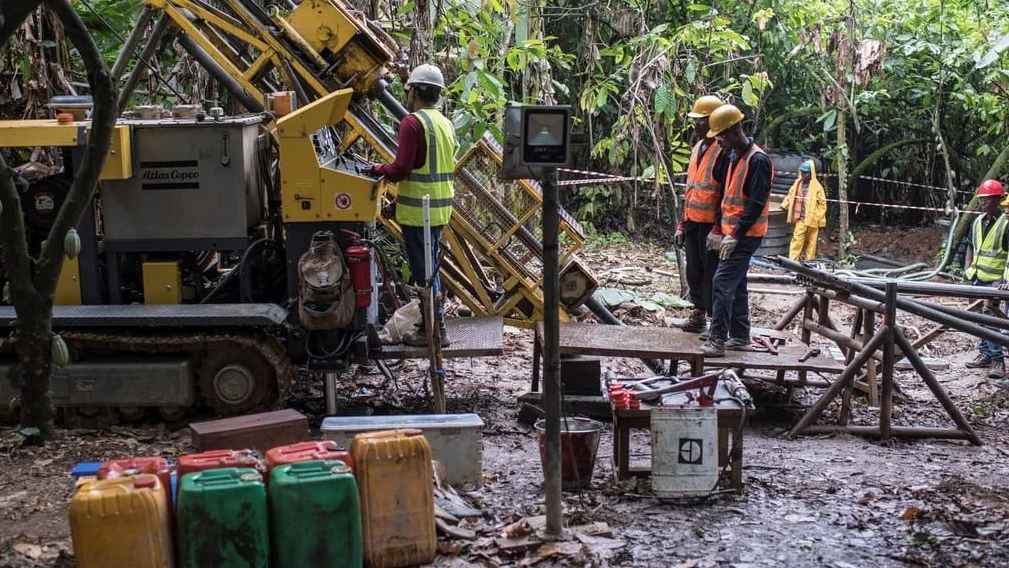
For anyone asking how to invest in Nigeria, that signature is the clearest new signal in the mining file. Alake put a number on the estate: mineral resources valued at about $700 billion. The framework’s stated scope covers geological data and exploration, mineral development and processing, infrastructure, and technical capacity.
What it does not do is name a single project. Alake said the agreement “would be used to identify viable projects,” which is an admission that the list does not yet exist. No disbursement figure was published either.
How to Invest in Nigeria Mining Begins With a Framework, Not a Cheque
Nigeria’s known deposits include lithium, gold, tin, gemstones, iron ore and phosphate. Lithium carries the sharpest commercial edge because it feeds the battery supply chains behind the global energy transition. Most of these minerals have until now left the country as raw ore.
“Nigeria cannot remain a source of raw materials while others capture most of the value,” Alake said. “We want more local processing, quality jobs, stronger skills and greater opportunities for Nigerian businesses.”
That is the policy claim, and the affected parties are specific: artisanal and industrial miners, refining firms that would need reliable power and feedstock, and host communities that carry the ground-level cost of extraction. DW reported that Nigeria’s mining sector remains mired in safety and environmental concerns. That sentence describes operating risk no signature removes, and it matters more to a plant manager than the $700 billion valuation does.
The Deep Offshore Order Trades Negotiation for Eligibility Rules
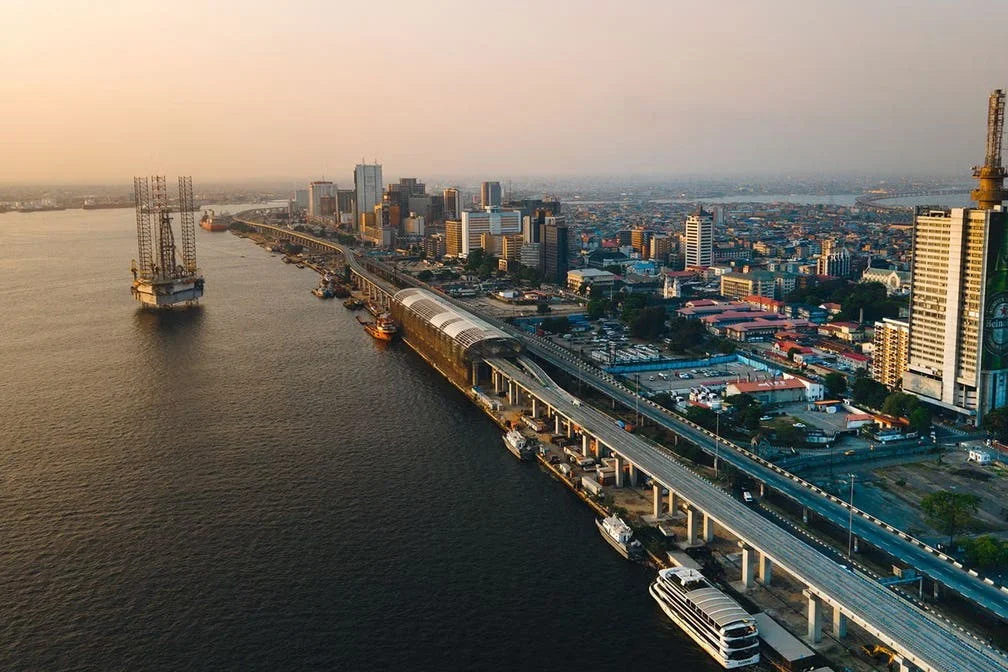
Mining is not the only file that moved. On August 11, 2026, President Bola Ahmed Tinubu approved the Deep Offshore Oil and Gas Projects Incentives (Tax Remission) Order, 2026, according to a State House statement issued by his special adviser on information and strategy, Bayo Onanuga.
The order is designed to unlock up to US$50 billion in deep offshore investment and restart capital-intensive developments stalled for decades, beginning with the roughly US$10 billion Bonga South West project. The mechanism is the part that matters: it replaces project-by-project negotiations with published eligibility criteria, and it enables NNPC Limited to amend eligible Production Sharing Contracts.
Olu Arowolo-Verheijen, the President’s special adviser on oil and gas, said projects qualifying under the framework will “maximise execution within Nigeria wherever commercially and technically feasible,” pointing to engineering, fabrication, marine logistics and technical services.
Tinubu framed the reform around certainty. “The countries that attract long-term investment are not necessarily those with the greatest natural resources,” he said. “They are the ones that provide the greatest certainty.”
That claim is testable, and the test is a final investment decision on Bonga South West. An order creates eligibility. A sanction creates spending.
Where the Smaller Cheques Are Actually Moving
The most documented capital flows in the Nigerian investment case are not in minerals at all. The World Bank Group reported mobilising up to $5.79 billion in private financing in fiscal year 2026, and its Nigeria components are itemised.
The Fostering Inclusive Finance for MSMEs in Nigeria program, known as FINCLUDE, pairs a $500 million package from the International Bank for Reconstruction and Development and the International Development Association with risk-sharing tools. It targets more than 250,000 micro, small and medium enterprises, with 30 percent of financing directed to women-led businesses, and is expected to mobilise nearly $1.89 billion in private financing while supporting an estimated 850,000 direct and indirect jobs, per the World Bank.
In agriculture, IFC mobilised $1.02 billion for Dangote Industries and $282.5 million for Indorama through refinancing and syndicated financing. The two projects hold an aggregate production capacity of 6.8 million metric tons per year of fertiliser and reach more than 10 million smallholder farmers. In telecoms, IFC anchored a $1.2 billion bond issuance by IHS Towers, drawing more than $1.1 billion from private investors.
Downstream, the movement is physical rather than contractual. Fynefield Petroleum, a subsidiary of Rainoil Limited, opened three filling stations — on Ikot Ekpene/Umuahia Road, on Inyang Street in Calabar, and on Ikom/Obudu Road — and received recognition on November 11 from the Cross River State Commissioner for Commerce and Industry, Dr Abigail Duke Orok, ThisDay reported. General Manager Harold O’Neill said the award “further strengthens our resolve to deepen our contributions to Nigeria’s energy sector.”
Three stations are not a national trend. They are a data point about where private capital still goes readily: distribution assets with fast cash cycles and visible demand.
The Evidence Test for How to Invest in Nigeria
For a household or a business, the practical answer to how to invest in Nigeria is that the entry points now arrive with documents attached, and the documents differ in strength. Mining has a signed framework, a $700 billion valuation and no published project list. Deep offshore has eligibility criteria and one named first project. MSME finance has a $500 million package, a 30 percent women-led target and a defined intermediary structure.
That gap between an order and a disbursed naira is where the announcements separate from the outcomes. Fynefield’s stations are open and trading. Bonga South West is not yet sanctioned. Alake’s $700 billion describes what is in the ground, not what has been committed to it.
Frequently Asked Questions
What did the Nigeria-US mining agreement actually commit to?
Nigeria’s Minister of Solid Minerals Development, Dele Alake, said the framework covers geological data and exploration, mineral development and processing, infrastructure, and technical capacity. He said it would be used to identify viable projects. No project list or funding amount was published with the announcement.
Who is affected by the Deep Offshore Tax Remission Order, 2026?
The order, approved by President Bola Ahmed Tinubu on August 11, 2026, replaces project-by-project negotiations with transparent eligibility criteria and enables NNPC Limited to amend eligible Production Sharing Contracts. It is aimed at unlocking up to US$50 billion in deep offshore investment, starting with the roughly US$10 billion Bonga South West project.
Which parts of Nigeria’s investment case have documented money behind them?
The World Bank Group reported mobilising up to $5.79 billion in private financing in fiscal year 2026. That includes a $500 million IBRD and IDA package under FINCLUDE for more than 250,000 MSMEs, $1.02 billion mobilised for Dangote Industries and $282.5 million for Indorama, and a $1.2 billion IHS Towers bond issuance that drew more than $1.1 billion from private investors.
FIRST TIME REACTIONS:
Be the first to leave us a comment – How to Invest in Nigeria: What Three Signed Deals Change, down the comment section.
JOIN US ON OUR SOCIAL MEDIA:
About Rosabella Eboh
Rosabella Eboh is an author at AfriLatest. With a passion for writing and a flair for creativity, she contributes original content and unique perspectives to the platform. Rosabella focuses on human-interest stories, cultural trends, and in-depth feature reporting.
View all articles by Rosabella EbohNigeria News
N31.5trn OMO Maturities Test Nigeria’s Rate Cuts
N31.55trn in OMO maturities hits Nigeria’s banks in Q4 2026. FMDA data explains why the CBN’s 350bp cut left lending rates at 29-35%.

The Central Bank of Nigeria walks into the final quarter of 2026 holding two numbers it has not reconciled. Its benchmark policy rate sits at 23 percent after a 350-basis-point cut at the September Monetary Policy Committee meeting. At the same time, N31.55 trillion of its own Open Market Operations bills fall due before the year closes.
The Financial Markets Dealers Association, in its November 2026 report State of Nigeria’s Financial Markets Q3 2026, calls those OMO maturities the single largest liquidity event of the quarter. The figure sits alongside N5.43 trillion in maturing Treasury bills, N1.76 trillion in Federal Government bond coupons and N217.5 billion in corporate commercial paper obligations.
What happens next turns less on the September announcement than on one operational choice: how much of that cash the CBN rolls over, and how much it lets sit in the banking system.
The Stance Behind The OMO Maturities
The central bank’s current position is looser than it was three months ago. September’s meeting cut the Monetary Policy Rate to 23 percent and lowered the Standing Deposit Facility rate from 22 percent to 20 percent. The Standing Lending Facility sits at 23.5 percent, leaving a corridor of 3.5 percentage points.
The banking system did not tighten into that cut. Average daily liquidity was N4.40 trillion in the third quarter, down from N4.86 trillion in the preceding quarter but still a surplus. The FMDA expects that surplus to hold overnight rates near the 20 percent deposit rate through the fourth quarter. A cash shortage would push them toward 23.5 percent instead.
The Cut That Never Reached The Loan Desk
Something verifiable did happen after the easing. Almost nothing changed at the lending desk. Average maximum lending rates across several sectors stood between 29 percent and 35 percent in October, the month after the cut.
That gap is the part of the story the headline rate hides. A trader financing stock, or a small firm borrowing for equipment, does not transact at 23 percent. They transact at whatever their bank quotes, and those quotes barely moved.
Two forces hold them up. The first is sterilisation. If the CBN absorbs the maturing cash through fresh auctions, interbank liquidity shrinks and money market rates stay put. The second is the federal government’s own appetite for naira debt.
Why N31.5trn In OMO Maturities Sets The Q4 Price
Treasury bill yields already show where investors think rates are heading. The 364-day stop rate fell from a peak of 17.70 percent in July to 15.89 percent at the September 23 auction, and held that level on November 11. Its true yield of roughly 18.9 percent sits below the 20 percent SDF rate, meaning buyers accepted a thinner return for liquid paper.
The scale of the OMO maturities is what makes the rollover call consequential. Allow a large share of that N31.55 trillion to stay in circulation and demand for government securities and equities firms up. Sterilise it aggressively and the cash available to financial institutions falls, slowing any decline in money market rates.
The fiscal side is not waiting. Net domestic borrowing reached N20.32 trillion by September 30, or 110 percent of the government’s N18.4 trillion full-year plan. It then sold N3.52 trillion in bonds during October and November. That supply competes directly with the CBN’s effort to pull yields down, and it caps how far bond yields can fall even as liquidity returns.
Equities absorbed part of the overflow. The Nigerian Exchange All-Share Index gained 9.5 percent in the third quarter, taking its year-to-date return to 61.4 percent at the end of September. Market capitalisation rose 10.9 percent to N163.1 trillion. The rally is domestically funded: domestic investors accounted for 92.9 percent of equity transactions in Q3, while foreign participation slipped to 7.1 percent from 11.3 percent in the previous quarter. Pension funds, with assets of N31.8 trillion in August and N17.8 trillion in federal government securities, remain the deep pocket that could shift allocation if yields keep sliding.

Naira, Reserves And The 2027 Election Calendar
The currency has not been a passive observer. The naira appreciated 3.8 percent on the official market to N1,329.16 per dollar at the end of September. Renewed dollar demand weakened it in November, and the FMDA recorded the parallel-market premium widening to 5.4 percent in early November.
External reserves fell by $508 million between October 30 and November 18, to $54.71 billion. The report flags the January 2027 election as a point where foreign portfolio investors could raise dollar demand.
Confidence is a separate variable, and it can move faster than any auction. On 1 September 2026 a false claim that OPay was shutting down its Nigerian operations spread online, urging customers to withdraw their money. The fintech, which says it has almost 50 million customers, held a press conference the next day; chief operating officer Dotun Daniel Adekunle said transactions were running normally and management had taken no decision to close (BBC Pidgin). A payment company is not a bank, but the episode showed how quickly a rumour can move money through this system.
For households, the two price signals point in opposite directions. Dangote Petroleum Refinery cut its petrol gantry price to N1,070 per litre through consortium marketers, down N60 from the N1,130 announced on November 18 and the lowest since July (BusinessDay). Fuel costs are easing. Credit costs are not.
What The OMO Maturities Will Tell Us By December
The FMDA lists four things to watch: the rollover of OMO maturities, the direction of Treasury bill yields, foreign portfolio flows and the planned launch of the repo market. It also expects progress on a non-deliverable forwards market before year-end, with swaps and options prepared for a possible first-quarter 2027 launch.
For a manufacturer paying 30 percent on working capital, none of that is abstract. September’s decision changed the central bank’s stated price of money. Whether the OMO maturities are rolled over or released will decide what that money actually costs in the first quarter of 2027.
The report itself sets the frame: the fourth quarter will be shaped by three competing forces, the CBN’s liquidity management, the government’s borrowing appetite and the naira’s ability to withstand renewed foreign exchange demand. Two of those three sit outside the central bank’s control.
Frequently Asked Questions
How much is maturing in Nigeria’s financial markets in Q4 2026?
The FMDA puts OMO maturities at N31.55 trillion, alongside N5.43 trillion in Treasury bills, N1.76 trillion in Federal Government bond coupons and N217.5 billion in corporate commercial paper obligations.
Did the September 2026 rate cut lower borrowing costs for Nigerian businesses?
Not measurably. The Monetary Policy Rate was cut by 350 basis points to 23 percent in September, but average maximum lending rates across several sectors were still between 29 percent and 35 percent in October.
Why do OMO maturities matter for the naira and equities?
How the CBN handles the maturing bills decides how much cash stays in the banking system. A large rollover release could firm up demand for government securities and equities, while aggressive sterilisation limits cash for financial institutions. The FMDA also flags foreign portfolio dollar demand ahead of the January 2027 election as pressure on the naira.
FIRST TIME REACTIONS:
Be the first to leave us a comment – N31.5trn OMO Maturities Test Nigeria’s Rate Cuts, down the comment section.
JOIN US ON OUR SOCIAL MEDIA:
About Rosabella Eboh
Rosabella Eboh is an author at AfriLatest. With a passion for writing and a flair for creativity, she contributes original content and unique perspectives to the platform. Rosabella focuses on human-interest stories, cultural trends, and in-depth feature reporting.
View all articles by Rosabella EbohNigeria News
Mallam Aminu Kano International Airport: Drugs, Cash, Runway
Mallam Aminu Kano International Airport seized 580,000 unregistered medicines, undeclared cash and cannabis in separate raids. What the records confirm.

Nigeria Customs officers at the Mallam Aminu Kano International Airport have handed more than 580,000 unregistered medicines to NAFDAC, the food and drug regulator. For a reader in Kano, that is not a customs statistic. It is the gap between a foreign factory floor and the shelf of a chemist in Sabon Gari.
The Kano/Jigawa Area Command of the Nigeria Customs Service said the consignment was intercepted on 9 June 2026 at the SAHCO Shed of the airport. A joint examination with the National Agency for Food and Drug Administration and Control confirmed the products carried no mandatory registration or certification for importation and distribution in Nigeria.
According to Punch, the haul comprised 575,440 tablets of various medicaments, 5,415 injections, 1,075 bottles of eye drops and 243 inhaler canisters. The handover took place at the Customs House in Bompai, Kano, with Acting Area Controller Deputy Comptroller Usman Adamu signing off and NAFDAC’s Azik Kanadi, an assistant director in the Ports Inspection Directorate in Kano, receiving.
What The Handover Document Does And Does Not Establish
The confirmed facts are narrow and specific: the date of interception, the pharmacy-level breakdown of the consignment, the joint Customs-NAFDAC examination, and the transfer of custody. Those are on the record in the service’s own statement posted on its X account.
What is not on the record is equally important. Neither account names the country of origin, the manufacturer, the importer of record, or the flight the goods arrived on. No arrest was announced. NAFDAC has not said whether the items will be destroyed, returned to sender, or tested for substandard composition.
Adamu warned importers and distributors to desist, and said the command would intensify surveillance. Kanadi said drugs that have not gone through regulatory evaluation pose serious health risks. Both are commitments about future conduct, not findings about this consignment.
Why Mallam Aminu Kano International Airport Keeps Appearing In Seizure Files
Look at the enforcement record across agencies and a pattern holds. The airport is not only a passenger gateway. It is a filter, and its busiest filter lane faces Saudi Arabia.
The Guardian reported on 11 March 2026 that the same Kano/Jigawa command intercepted an outbound traveller with $106,500 and another with 134,256 Saudi Riyals, both undeclared. Adamu described that as a money-laundering offence under Nigerian law and said the exhibits and suspects were handed to the EFCC for prosecution. A separate outbound passenger was stopped on 18 February 2026 with 22.80kg of silver metal bars concealed in baggage and no export document, an act Customs said breached Section 55(f) of the NCS Act 2023.
The National Drug Law Enforcement Agency has worked the same corridor. Its statement, carried by The Nigerian Voice, records the interception of Fatimah Ahmad on 16 October during outward clearance of an Ethiopian Airlines flight to Jeddah via Addis Ababa. A search found 511.75 grams of cannabis concealed in a gallon of palm oil. Her cousin, Abubakar Yahaya, was arrested at the airport car park after she told investigators he gave her the gallon. That claim is an allegation, untested in court.
Two cautions belong here. The NDLEA release gave dates without a stated year, which leaves the timeline unverifiable against this year’s calendar. And the agency’s Kano State command separately seized 30,100 tramadol tablets on the Zaria-Kano Road on 13 October; no public document links that land haul to any airport consignment, and it should not be presented as if one does.
The structural difference is worth stating plainly. Lagos ports handle volume, mostly containerised cargo cleared through manifests. Kano handles people, and people carry. Concealment inside a palm oil gallon or a traveller’s baggage defeats manifest-based screening entirely, which is why body-carried seizures cluster at airports on the Umrah and Hajj route.
Inside The N46 Billion Runway Approval
On the infrastructure side, the record is an announcement, not a completed project. At the commissioning of the remodelled and upgraded Muhammadu Adamu Dankabo Domestic Terminal, Aviation Minister Festus Keyamo said President Bola Tinubu had approved N46 billion for the resurfacing and reconstruction of the airport’s second runway.
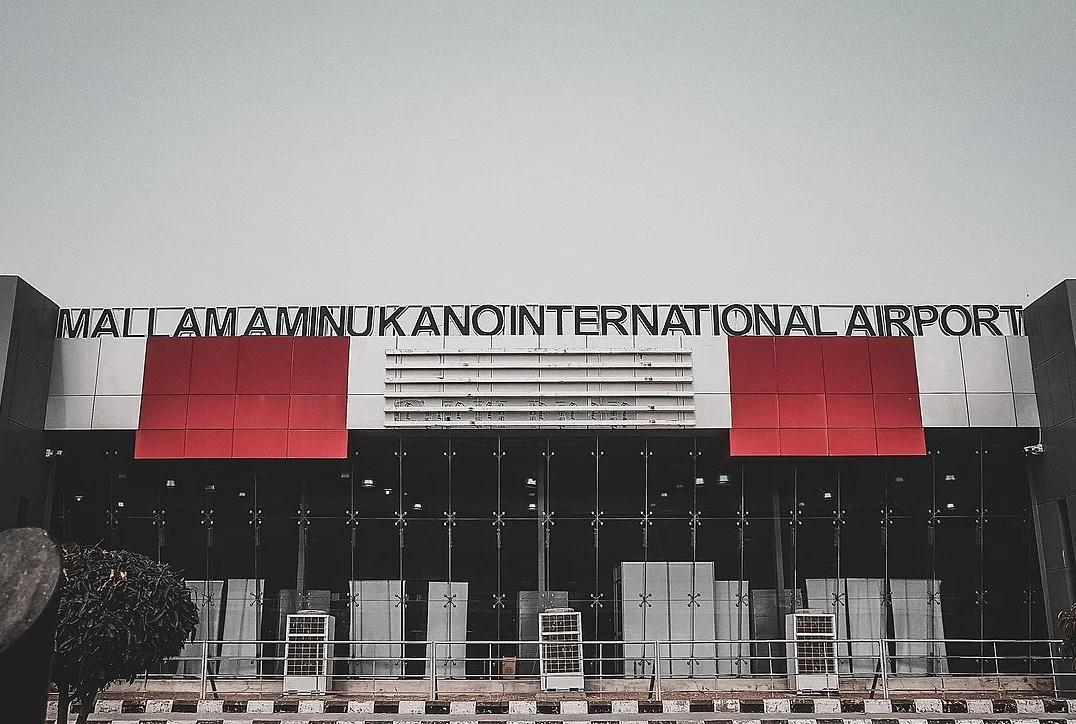
According to Channels Television, Keyamo also said upgrade work on the Hajj Terminal had begun, with contractors on site. FAAN Managing Director Olubunmi Kuku and board chairman Abdullahi Ganduje spoke at the same event. Kano’s Commissioner for Transport, Haruna Isa Dederi, represented Governor Abba Kabir Yusuf.
An approval is not a contract award, a mobilisation date, or a finished runway. The minister’s statement on the Hajj Terminal is a government claim not independently verified in any of these accounts. None of the four reports mentions new scanning or detection capacity at the airport, which is the equipment the seizures above actually test. Upgrading a terminal and resurfacing a runway make flying more comfortable. They do not, on their own, make a suitcase of tramadol easier to find.
What To Watch
Three dates matter. First, whether NAFDAC publishes the destruction or disposal record for the 580,000 items and names an importer. Second, whether the EFCC files charges in the undeclared currency case, or whether it quietly joins a file. Third, whether the N46 billion runway contract is advertised, awarded and dated, or remains a line in a speech.
The test of the Mallam Aminu Kano International Airport upgrade is not the terminal’s floor tiles or the length of the runway but the number of 2026 seizure records that cannot be produced in 2027. Until the enforcement agencies publish outcomes as reliably as they publish catches, the airport’s most documented function will remain the interception of what passes through it.
Frequently Asked Questions
How many unregistered medicines were seized at Mallam Aminu Kano International Airport?
The Nigeria Customs Service said the consignment exceeded 580,000 items: 575,440 tablets of various medicaments, 5,415 injections, 1,075 bottles of eye drops and 243 inhaler canisters. It was intercepted on 9 June 2026 at the SAHCO Shed and later handed to NAFDAC.
Were criminal charges announced in the Kano airport seizures?
No charges were announced in the pharmaceutical case. In the separate undeclared currency case, Customs said suspects and exhibits were handed to the EFCC for prosecution, but no filing has been publicly confirmed.
Has the N46 billion Kano airport runway project started?
Only the presidential approval was announced, by Aviation Minister Festus Keyamo. No contract award, mobilisation date or completion timeline was disclosed in the reports, so the project should be treated as approved, not implemented.
FIRST TIME REACTIONS:
Be the first to leave us a comment – Mallam Aminu Kano International Airport: Drugs, Cash, Runway, down the comment section.
JOIN US ON OUR SOCIAL MEDIA:
About Rosabella Eboh
Rosabella Eboh is an author at AfriLatest. With a passion for writing and a flair for creativity, she contributes original content and unique perspectives to the platform. Rosabella focuses on human-interest stories, cultural trends, and in-depth feature reporting.
View all articles by Rosabella Eboh-

 Car Reviews2 weeks ago
1955 Chevy Bel Air Restomod: What SEMA Really Proves
-
Savings & Investing4 weeks ago
Hidden Medicare Fees Draining Your Retirement Savings
-
JAMB & WAEC4 weeks ago
JAMB Admission Process: What Changed And What Is Still Talk
-
World News4 weeks ago
Sheinbaum No Proof Maduro: Mexico’s Test of US Evidence
-
Movies & TV4 weeks ago
Wizkid Starboy Desire Ft Banky W Shaydee: Fact Or Fan Fiction?
-
Trend politics4 weeks ago
How 24-Hour Online Scrutiny Is Running Out Leaders