Money & Finance
Voice Cloning Scams vs Phone Filters: What Works
Voice cloning scams cost Americans $893M in 2025. We compare carrier call filters with call-back verification and show which one holds up.


Two defences stand between a phone user and a voice cloning scam in 2026. One is a software stack: Stir/Shaken attestation, carrier spam labels, on-device call screening. The other is an unsociable human habit, treating every unrecognised call as hostile until it has been verified through a second channel. Only one of them costs money, and only one of them can be tested.
The testing has been done, and it is not flattering to the software. Hiya’s State of the Call 2026 report found that US consumers receive an average of 10 spam calls per week, and that 1 in 12 people lost money to a phone scam in 2025, at an average of $682. The FBI’s 2025 Internet Crime Report recorded $893,346,472 in AI-related losses across 22,364 complaints, inside a record $20.9 billion in total cybercrime losses, up roughly 26 percent from $16.6 billion in 2024, with complaints rising from 859,000 to more than one million.
Neither figure proves voice cloning scams are unbeatable. Both point at something narrower: the countermeasures in widest deployment defend the caller ID, while the attack has moved to the audio itself.

Stir/Shaken And Carrier Filters: What They Demonstrably Do
Stir/Shaken, mandated by the US Federal Communications Commission for major voice providers from 2021, is a cryptographic attestation system. It confirms which network originated a call and whether that network can vouch for the number, which makes a Caller ID display harder to fake. That is the whole of its design brief. It makes no claim about who is speaking, and it offers no protection against voice cloning scams.
Margot Saunders, senior counsel at the National Consumer Law Center, is blunt about the gap. Voice providers, she told CNET, “are able to rent thousands of phone numbers to telemarketers and scammers that allow the callers to technically comply with Stir/Shaken without revealing meaningful or accurate caller ID.” Her conclusion: “The numbers of unwanted calls are about the same as they have been for years.” That flat line is the space in which voice cloning scams have grown.
The FCC’s December 2023 rules tightened consent requirements for marketing calls and texts, but they only took effect in early 2025, and as Saunders notes, the enforcement mechanism is litigation. The threat of costly suits against US corporations placing calls is a slow lever, and it has no reach over a criminal calling from abroad to clone a voice.
Why Voice Cloning Scams Beat Caller ID

The cleanest evidence that caller authentication is the wrong control came from the Netherlands. Dutch police arrested two suspects, a 23-year-old from Vaassen and a 25-year-old from Ede, over a campaign that took more than €380,000 (about $425,600) from 170 victims of all age groups, according to reporting on the case.
The mechanics matter more than the total. Victims received calls carrying AI-generated audio clips impersonating banks and companies, were told to press 1, and were put on hold. A second person then posed as a bank fraud officer, said the debit card was blocked, and talked the victim into installing an app and tapping the physical card against the phone. The NFC chip data was relayed in real time to an accomplice at an ATM who withdrew cash.
Nothing in that chain required a spoofed number. The calls arrived legitimately, the audio did the impersonation, and the theft happened inside an app the victim installed voluntarily. Voice cloning scams of this shape leave attestation systems with nothing to inspect.
The economics explain the spread. Michael Machtinger, deputy assistant director of the FBI’s Cyber Division, told the Wall Street Journal that “AI-created fraudulent communications can look very official and very legitimate to even the most trained individuals.” A usable voice sample can be lifted from a social media video or an old voicemail greeting, which is why the FBI advises limiting public voice and video content. Voice cloning scams scale on whatever audio a target has already published.
Severity figures deserve care. A Broker Chooser report cited by KTNV puts Nevada among the top US states for AI-related scams, with victims losing an average of $36,000 per case. That is not comparable to Hiya’s $682, because one is an average across AI-enabled fraud cases and the other across everyone who lost money to any phone scam. Regional tallies of voice cloning scams confirm direction, not a single true average.
The Protocol That Costs Nothing
On price versus price, the gap is wide. Carrier spam-blocking add-ons frequently carry a monthly fee, and the National Consumer Law Center’s position is that unwanted call volumes have not moved. Apple’s iOS 26 call screening is free but only sorts calls; it does not verify a speaker. A safe word and a call-back rule cost nothing and work on a feature phone.

The procedure itself is simple. Do not answer numbers you cannot identify, because picking up confirms a live human and the number gets resold. Where a call must be taken, hang up and call back on a number published independently: the bank’s app, the utility’s website, the agency switchboard. Voice cloning scams depend on the victim staying on the line long enough to be moved.
Michael Wendlberger of the Legal Aid Center of Southern Nevada recommends a family safe word, so a cloned voice claiming to be a child in trouble can be challenged. William Voy of the Southern Nevada Senior Law Program notes that government agencies and utilities follow up in writing by post. Verify first, respond later. Urgency is the tell, not the technology: “I need $2,000 wired today” is the sentence to distrust.
For African users the layering differs but the conclusion holds. Nigeria’s dominant telephony control is SIM-to-identity registration, which binds a number to a person but says nothing about who is speaking or whether a Caller ID string was spoofed upstream, and there is no mandated attestation chain a fraudster abroad must traverse. The NFC-relay leg of the Dutch scheme also depends on contactless card infrastructure; in mobile-money markets the equivalent move is a fake agent or fake support line talking a victim through a transfer, where the cloned voice is the entire attack and no app install is needed. Voice cloning scams therefore travel wherever a voice sample is public, and in voice-note cultures that is most places.
Verdict
For identity, the human protocol wins on cost and on evidence. Voice cloning scams are cheap to run, they are being industrialised, and the only reliable check is a channel the caller cannot control. A filter stack still earns its place for nuisance volume: it cuts interruptions and will catch crude robocall campaigns. It should never be the thing a user trusts with identity.
Which wins for which use case? Keep carrier filtering or iOS 26 screening if the problem you want solved is ten spam calls a week. Switch to out-of-band verification for anything touching money, credentials, or family emergencies. Answer nothing, verify everything, and keep one shared word that never appears online.
Protect Your Family From Voice Cloning Scams
Reading about the mechanics of a voice cloning scam is terrifying, but knowing exactly what to do when the phone rings is the only thing that actually protects your money.
Because AI voice cloning is now the primary tool for scammers targeting seniors and small businesses, having a physical checklist is no longer optional.
The AI Voice Clone Scam Defense Manual provides the exact scripts to use, the safe words to set up with your family, and the step-by-step verification protocols to stop a scam before a transfer is made.
-
Price: $17.99 (Paperback) / $7.99 (Kindle)
-
Where to buy: [Get your copy on Amazon here|AMAZON BOOK_DIRECT LINK]
Frequently Asked Questions
Does Stir/Shaken stop voice cloning scams?
No. Stir/Shaken is designed only to verify which network originated a call and whether that network can vouch for the number, so Caller ID is harder to fake. The National Consumer Law Center’s Margot Saunders says providers can rent numbers that technically comply while hiding real caller identity, and that unwanted call volumes have stayed roughly the same for years.
Can a cloned voice fool someone who knows the person well?
It can. The FBI’s Michael Machtinger told the Wall Street Journal that AI-created fraudulent communications can look official and legitimate even to trained individuals. US fraud-prevention advisers recommend agreeing a family safe word in advance so a call claiming to be a relative in trouble can be tested.
What should I do if a caller claims to be my bank?
Hang up and call back on the number printed on your card or inside the bank’s own app. In the Dutch case, victims were told to press 1, were passed to a fake fraud officer, then were persuaded to install an app and tap their debit card against the phone so NFC data could be relayed to an accomplice at an ATM. No legitimate bank asks a customer to tap a card against a handset.
 Follow AFRILATEST on Google News
Receive alerts for voice cloning scams and more like it.
FIRST TIME REACTIONS:
Be the first to leave us a comment – Voice Cloning Scams vs Phone Filters: What Works, down the comment section.
JOIN US ON OUR SOCIAL MEDIA:

About Xavier Catherine
Xavier Catherine is the Technology Lead at AfriLatest. With a background in computer science and a focus on innovation, he oversees the platform's technology infrastructure. Xavier also contributes reporting on AI, gadgets, and cybersecurity, ensuring AfriLatest remains secure, reliable, and user-friendly.
View all articles by Xavier Catherine

Savings & Investing
Hidden Medicare Fees Draining Your Retirement Savings
Hidden Medicare fees, IRMAA surcharges and tax drag quietly drain retirement savings. See the 2026 figures and the steps that limit the damage.


The goal is to find the money that leaves a retirement account every month without ever appearing on a household budget line, and to price it before it compounds. In the United States the largest of those leaks are hidden Medicare fees: income-linked surcharges bolted onto Part B and Part D premiums, plus a tax drag that bills investment returns before they can compound. The arithmetic is unforgiving, and it is not purely American. A household planning in Lagos or London meets the same structure, a health cost rising faster than the income that must pay for it.
The figures are now specific enough to audit. The 2026 standard Medicare Part B premium is $202.90 a month, confirmed by the Centers for Medicare & Medicaid Services in November 2025. The surcharge that sits on top of that number is where most retirement budgets break.
Where The Hidden Medicare Fees Hide
The Income-Related Monthly Adjustment Amount behaves as a cliff, not a slope. In 2026, single filers whose 2024 income exceeded $109,000, and married couples above $218,000, fall subject to the surcharge. A single filer one dollar over that line moves from $202.90 to $284.10 a month for Part B, an extra $974.40 a year on the published figures, which the reporting rounds to nearly $1,000. At the top income tier the same premium reaches $689.90 a month.
The mechanism runs on a two-year look-back, and that is the detail retirees most often miss. Someone enrolling at 65 has premiums set by income earned at 63, a period when a salary, a bonus or a business sale may still have been running. The floor is equally unforgiving in the other direction: a married couple drawing $200,000 in retirement income pays nothing extra until one spouse dies, at which point the survivor is assessed against the single threshold of $109,000 and can be pushed into a surcharge by the same income that was previously exempt.
The Lifetime Bill That Sits Beside The Nest Egg
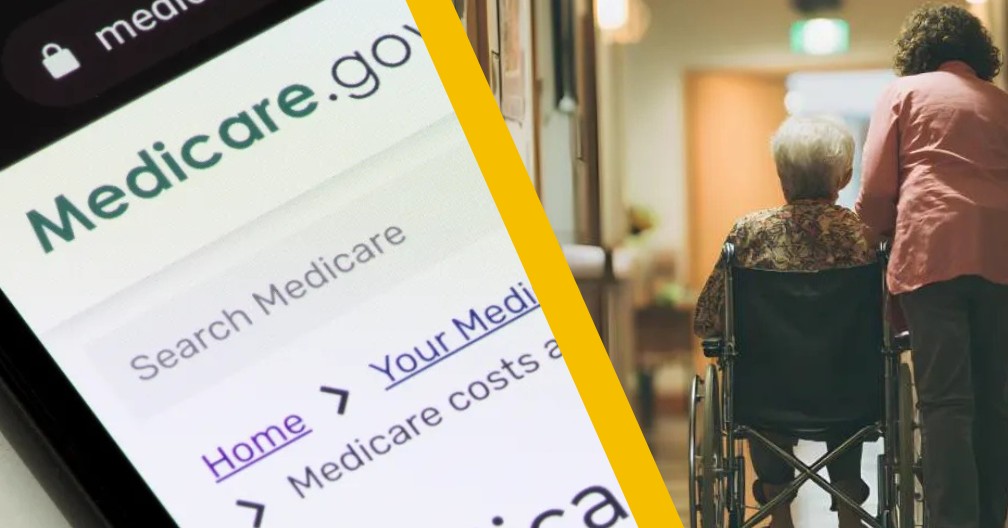
Premiums are only the visible layer. The HealthView Services 2026 Retirement Healthcare Costs Data Report projects that an average 65-year-old couple retiring in 2026 will pay $688,996 in Medicare premiums across their lifetimes. Add hearing care, vision care, copays, deductibles and dental care, and the total averages $955,411. That is a second retirement to fund, and it is usually absent from the balance sheet households build around their savings.
The escalation rate explains why. Health-related cost inflation is projected at 5.6% long term, while Social Security cost-of-living adjustments have run at 2.8% for 2026, with a 3.6% adjustment determined for 2027 on 14 October 2026. Healthcare costs are therefore climbing at roughly twice the rate of the benefit index meant to keep pace with them, a gap that widens every year of a twenty-year retirement.
Scale sharpens the point. In a 2025 BlackRock survey, Americans put the figure needed for a comfortable retirement at $2.09 million on average, a target the firm’s chief executive, Larry Fink, noted was higher than expected and beyond almost everyone’s reach. Roughly 51% of Americans expect to outlive their savings, according to Northwestern Mutual research, while life expectancy is projected to reach 80.4 years for all sexes by 2050. A longer life against a faster-inflating health cost is the whole problem in one sentence.
Where The Tax Drag Quietly Compounds
A taxable brokerage account is billed whenever a dividend or a capital gains distribution arrives, even if no share is ever sold. Each payment interrupts compounding, and over decades the interruption matters more than the tax rate. For older investors the drag is smaller in absolute terms but lands at the exact moment withdrawals begin.
Roth accounts change the equation twice over. Qualified withdrawals from a Roth IRA or Roth 401(k) are free of tax, including tax on dividends and capital gains distributions, and they are excluded from the income calculation that sets the surcharge. Health savings accounts are treated similarly when withdrawals cover qualified medical expenses, which makes them the only account type that is tax-free going in, tax-free growing and tax-free coming out for care.
There is a trap attached to the HSA. Contributions must stop once enrolment in Medicare begins, and where enrolment is delayed past 65, contributions must cease up to six months before enrolling in Part A or claiming Social Security.
Roth conversions carry a matching trade-off. Moving money from a traditional IRA to a Roth raises income in the year of conversion, which lifts that year’s tax bill and can trigger a surcharge two years later. The manoeuvre can be correct for some households and wrong for others, which is why the source material directs the undecided to a tax professional or financial adviser rather than to a rule of thumb.
Reading A $1,500,000 Plan As A Fee Audit
The clearest evidence of how fees carve up a withdrawal comes from a worked case. A single 64-year-old holding $1.5 million across a traditional 401(k), a taxable account and a Roth IRA applies the 4% guideline and draws roughly $60,000 gross in year one. Federal and state tax on a pretax withdrawal of that size lands near $8,000, against a 2026 single-filer standard deduction of $16,100 and a 12% bracket running to $50,400.
Pre-Medicare coverage then takes its cut. Marketplace premiums plus out-of-pocket costs commonly reach $11,000 for a single 64-year-old in the year before eligibility, compared with the $202.90 monthly Part B standard once Medicare begins. Inflation erodes roughly $4,000 of the fixed portion. What remains is about $37,000 of real discretionary spending, which is a long way from what $1.5 million appears to promise on paper.
At 67 the mathematics softens. A Social Security benefit of about $36,000 a year arrives, carrying a built-in inflation adjustment the portfolio cannot replicate, and the 4% draw problem becomes roughly a 2% draw problem.
A Naira Household Faces The Same Shape
Nigeria operates no equivalent of the surcharge table, since there is no national Medicare premium to which an income test could be attached. The structural leak is different, but its direction is identical. Private cover, renewals and out-of-pocket hospital bills are paid from income that does not carry an indexation mechanism, while medical inflation keeps climbing at the pace described above.
A purely illustrative naira calculation shows the scale without asserting any market figure. If a retirement health plan rises by ₦8,000 a month, ₦96,000 a year leaves the drawdown budget before a single hospital bill arrives, and that sum is removed from capital that would otherwise compound.
Relocation does not solve it either. A retiring household trading one tax regime for another can still lose the difference to housing and care costs, as the Florida case shows: owners of a $425,000 Miami home pay $617 a month in association fees, property tax assessments reset to market rate on purchase, and the state records just 17 personal care and home health aides per 1,000 adults aged 65 and older against a national average of 65. A tax advantage is one line of a budget, not the budget itself.
Steps For Plugging The Leaks
The first step is reconstruction. A household approaching 65 should pull the tax return filed two years earlier and write the modified adjusted gross income figure next to the published surcharge thresholds. That single comparison reveals whether a premium is being set by the current budget or by an old pay slip.
The second step is placement. Income-generating holdings belong in accounts whose distributions and qualified withdrawals stay outside the surcharge calculation, which is where the Roth and the health savings account earn their keep. The third is a cash buffer of two to three years of planned spending, held in short-dated instruments so that equities are never sold into a downturn to fund a premium.
Fourth, conversions belong in the bridge years, when wages have stopped and Social Security has not started, and they must be sized against the surcharge threshold rather than the tax bracket alone. Fifth, ask for a lifetime health cost projection rather than an annual premium quote, because a single year of premium tells a household almost nothing about a twenty-year liability.
The pitfalls are consistent. Treating the first premium as permanent, contributing to a health savings account after Medicare enrolment, and modelling only the married scenario all produce budgets that fail in year three rather than year one.
What To Do This Week
One action step matters more than the rest. Before the next enrolment window closes, a household should write its two-year-old income, its projected health costs to age 90 and its current premium on one page, then compare that page with the plan it is actually funding. Most hidden Medicare fees are legal, disclosed and avoidable in part, but only for households that have priced them in advance. Nothing here is individualized advice; it is general education, and any conversion, withdrawal or account decision should be checked with a licensed tax professional or adviser against a reader’s own numbers.
Frequently Asked Questions
What is the IRMAA surcharge and how large is it in 2026?
The Income-Related Monthly Adjustment Amount is an extra charge added to Medicare Part B and Part D premiums for higher-income retirees. In 2026 a single filer with 2024 income above $109,000, or a married couple above $218,000, is subject to it. A single filer just over the line pays $284.10 a month instead of the $202.90 standard for Part B, roughly $974 more a year, and the top tier reaches $689.90 a month.
Why does the surcharge use income from two years earlier?
The government applies a two-year look-back, so premiums at 65 are set by income earned at 63. A salary, bonus or business sale in that earlier year can therefore raise premiums in the year of enrolment, even if income has since fallen. A surviving spouse can also be pushed into the surcharge because the same retirement income is then tested against the single threshold.
How can a household legally reduce the impact?
Qualified Roth withdrawals are excluded from the surcharge income calculation, and health savings account withdrawals for qualified medical costs are treated similarly, provided contributions stop before Medicare enrolment. Roth conversions made in bridge years before Social Security starts can help if they are sized against the surcharge threshold, but they raise income in the conversion year and can lift the premium two years later, so professional guidance is required.
Receive alerts for hidden Medicare fees and more like it.
FIRST TIME REACTIONS:
Be the first to leave us a comment – Hidden Medicare Fees Draining Your Retirement Savings, down the comment section.
JOIN US ON OUR SOCIAL MEDIA:

            About Paul Nwogo
            Paul Nwogo is an engineer, published author, and the Head Manager at AfriLatest. He has written numerous books available on Amazon covering a diverse range of topics, including health, personal finance, relationships, work ethics, and scam survival. With his technical background and passion for writing, Paul now oversees the editorial direction of AfriLatest, delivering practical, accurate, and engaging content on trending news, music, and global lifestyle topics.
View all articles by Paul NwogoSavings & Investing
Global X Russell 2000 Covered Call ETF Declares $0.21
Global X Russell 2000 Covered Call ETF declares CAD $0.21 per unit for an Oct 30 record date. What the filing says — and what it does not.

Global X Investments Canada Inc. put a number on the table: CAD $0.21000 per security for the Global X Russell 2000 Covered Call ETF, ticker RSCC on CBOE. The ex-date and record date are 30 October 2026. The pay date is 6 November 2026. Holders take cash, or reinvested units if they are enrolled in the fund’s distribution reinvestment plan.
The number is precise. Its meaning is narrower than it looks.
A distribution declaration is an administrative event. It tells a holder how much cash leaves the fund per unit on a set date. It says nothing about whether the fund made money, nothing about the yield a new buyer would earn over the next twelve months, and nothing about the direction of the unit price.
Nothing moved on this news, and that is the correct reaction. The same October 2026 notice carries dozens of tickers, many declaring identical amounts on identical dates across monthly and semi-monthly schedules. It is a calendar release, not a market event.
Why the Global X Russell 2000 Covered Call ETF Payout Is Not a Yield
RSCC sits inside a suite that Global X markets as solutions for a range of market conditions. The mechanical part is the covered call structure. The fund holds a portfolio tied to the Russell 2000 small-cap universe and writes call options against it. Option premiums arrive as cash. In exchange, the fund surrenders part of the upside when small caps rally hard.
That trade has a signature. Income is steadier than the underlying index. Appreciation is capped in strong markets. Downside is not removed — a fall in small caps still flows into the unit price, less whatever premium was collected.
When the ex-date passes, the distribution is typically reflected as a reduction in net asset value per unit. A holder who receives CAD $0.21000 and watches the price fall by a comparable amount has gained nothing that day. Total return, price change plus distributions, is the measure that matters. The notice does not supply it.
The filing also discloses no net asset value, no assets under management for this specific fund, and no yield figure. Anyone quoting a yield from this press release is calculating it off an outside price source, not off the filing.
Why the Enhanced Line Pays More Per Unit
The same table carries RSCL, the Global X Enhanced Russell 2000 Covered Call ETF, at CAD $0.34000 per security, on the same dates and the same exchange.
The higher figure invites an obvious but wrong conclusion: that the enhanced version is the better product. Global X’s own cautionary language covers the gap. The company states that certain funds may use leveraged investment techniques that magnify gains and losses, producing greater volatility, and that those risks are described in the prospectus.
Leverage applied to a covered call strategy on small-cap equities does two things at once. It lifts the cash distribution per unit. It also enlarges the drawdown when the trade turns. The distance between $0.34 and $0.21 is compensation for risk, not a free upgrade.
Two further details sit in the filing. Global X states plainly that distributions for the ETFs will vary from period to period. And the table lists both RSCC and its RSCC.U line at CAD $0.21000, with currency shown as CAD on both rows — a designation holders should confirm against the fund’s own documents before assuming what settles in the account.
What the Filing Leaves Out, and Where Nigeria Fits
Two structural differences separate a Canadian listed fund from what a Lagos-based investor can reach.
The first is product availability. The Nigerian Exchange listed ETF range remains built around index trackers and commodity funds. A covered call wrapper, which depends on a functioning listed options market underneath it, is not part of that line-up. A Nigerian investor seeking this exposure is buying a foreign-listed security, which brings a brokerage with CBOE access, foreign currency funding, and the naira-to-funding-currency spread into the return calculation.
The second is currency. These distributions are declared in CAD. Naira outcomes depend on the exchange rate on the conversion date, and that rate can move further in a month than a monthly distribution pays.
Minimum investment amounts follow from the same set of facts. The notice gives no unit price, so the cash outlay for a single unit cannot be computed from the release. One unit is the practical minimum on an exchange, and a reinvestment plan only helps holders who already own enough for it to matter. For a Nigerian buyer, the effective minimum is set as much by brokerage floors and conversion costs as by the unit price. Small positions get eaten by friction before they compound.
Scale is worth noting but proves nothing about safety. Global X reports more than $55 billion in assets under management and more than 160 ETFs listed on major Canadian exchanges, and is a wholly-owned subsidiary of Mirae Asset Financial Group, which manages over $1 trillion across 21 countries. Size does not underwrite a small-cap option overlay.
The Dates That Actually Bind
Trading on or after the ex-date of 30 October 2026 does not carry the October distribution. Payment follows on 6 November. The November declaration, the next real data point, is not in this release.
For a holder, the framework is rolling. A monthly distribution means monthly re-pricing of income. One CAD $0.21000 figure says nothing about twelve months of cash flow, which is why the variation clause carries more weight than the headline number.
Investor Takeaway
The Global X Russell 2000 Covered Call ETF declaration is verifiable and specific: CAD $0.21000 per unit, ex-date 30 October 2026, pay date 6 November 2026, CBOE. Everything an investor actually needs — yield, NAV behaviour, total return, the effect of the option overlay on a small-cap drawdown — sits outside the notice, in the prospectus and the fund’s financial reporting. Treat the announcement as a calendar entry. Size positions against total return rather than against the distribution, and read the $0.21 and the $0.34 as amounts declared for one period, not promises about the next.
Nothing here is personalized financial advice. Global X states that the funds are not guaranteed, their values change frequently, and past performance may not be repeated. Covered call and leveraged strategies can lose money.
Frequently Asked Questions About Global X Russell 2000 Covered Call ETF
How much is the Global X Russell 2000 Covered Call ETF distribution for October 2026?
The notice declares CAD $0.21000 per security for RSCC, with an ex-date and record date of 30 October 2026 and a pay date of 6 November 2026. Payment is in cash, or reinvested units for holders enrolled in the fund’s distribution reinvestment plan.
Is RSCL the same fund as RSCC?
No. RSCL is the Global X Enhanced Russell 2000 Covered Call ETF, declared at CAD $0.34000 per security on the same ex-date and pay date. Global X states that certain funds may use leveraged investment techniques that magnify gains and losses, which increases volatility. The higher distribution per unit is not evidence of a better return.
Does the distribution notice tell me the fund’s yield?
No. The release discloses the cash amount per security, the ex-date and record date, the pay date, the currency and the exchange. It does not state the fund’s net asset value, its assets under management, or a yield. Global X notes that distributions will vary from period to period, so a single month cannot be annualised into a reliable income figure.
Can a Nigerian investor buy this ETF directly on the NGX?
No. The security is listed on CBOE in Canada. Reaching it from Nigeria requires a brokerage with access to that exchange plus foreign currency funding, which introduces conversion costs and exchange-rate risk into the return. A covered call structure of this kind is not part of the Nigerian Exchange’s listed ETF range.
Receive alerts for Global X Russell 2000 Covered Call ETF and more like it.
FIRST TIME REACTIONS:
Be the first to leave us a comment – Global X Russell 2000 Covered Call ETF Declares $0.21, down the comment section.
JOIN US ON OUR SOCIAL MEDIA:
About Paul Nwogo
Paul Nwogo is an engineer, published author, and the Head Manager at AfriLatest. He has written numerous books available on Amazon covering a diverse range of topics, including health, personal finance, relationships, work ethics, and scam survival. With his technical background and passion for writing, Paul now oversees the editorial direction of AfriLatest, delivering practical, accurate, and engaging content on trending news, music, and global lifestyle topics.
View all articles by Paul NwogoMoney & Finance
Dollar-To-Naira Exchange Rate Today: ₦1,332 vs ₦1,380
Dollar-to-naira exchange rate today: official ₦1,332, BDC ₦1,380. What the ₦48 gap costs on $100, $1,000 and tuition bills.

Every rate check begins with a promise: that the figure on the screen is the figure you will pay. On Tuesday, October 20, 2026, that promise held only for people who knew which counter they were standing at.
The dollar-to-naira exchange rate today quoted roughly ₦1,332 per dollar on the official Nigerian Foreign Exchange Market (NFEM) reference, against about ₦1,380 per dollar for a buyer walking into a Bureau de Change, according to Vanguard’s market report. That ₦48 gap per dollar is not a rounding error. On $100 it is ₦4,800. On a $10,000 overseas tuition payment it is ₦480,000.
What The Dollar-To-Naira Exchange Rate Today Quotes At The Counter
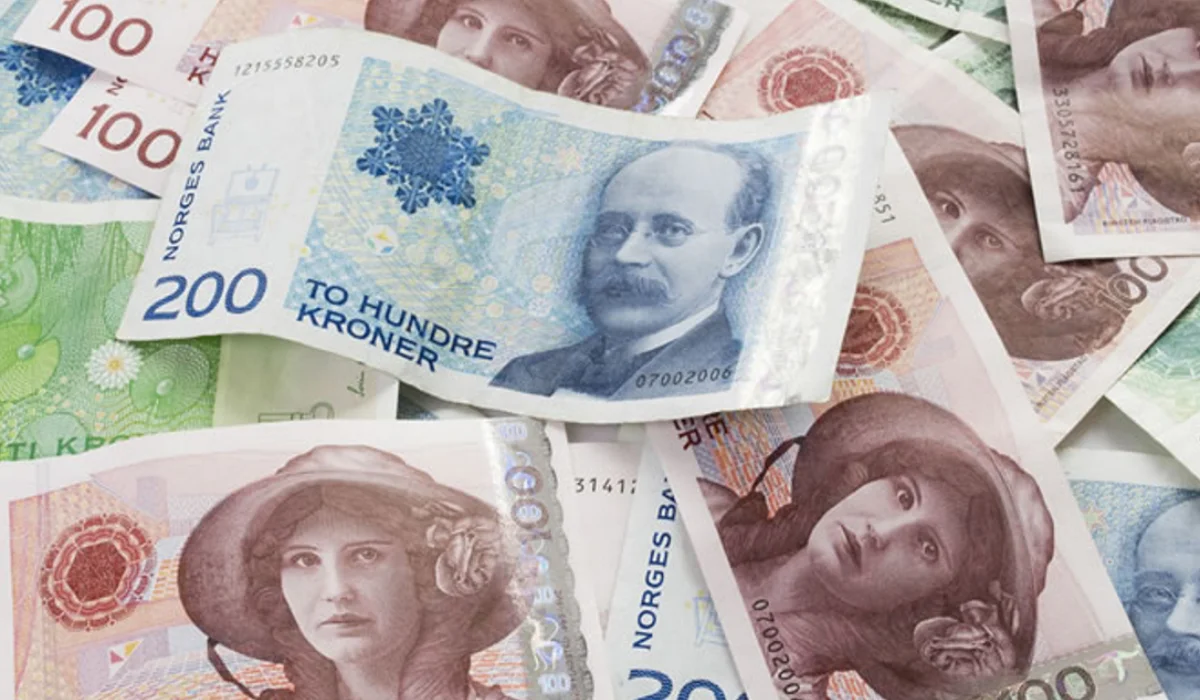
The published quotes for Tuesday morning read as follows: official NFEM reference near ₦1,332; parallel-market buying around ₦1,365; parallel-market selling around ₦1,380. Vanguard’s own conversion puts $100 at ₦133,200 through the official window and ₦138,000 at the parallel selling rate.
Monday’s numbers, reported separately by TechEconomy and Investors King, were wider still: official ₦1,333.54, parallel buying ₦1,375, parallel selling ₦1,390 — a ₦56.46 gap between the official rate and the street selling price.
Then there is a fourth figure. ExchangeRates.org.uk recorded USD/NGN near ₦1,328.22 at its 11:53 reading on Tuesday, down about 0.4% from Monday’s close.
Four numbers — ₦1,328.22, ₦1,332, ₦1,333.54, ₦1,334.20 — are not a contradiction. They are different measurements taken at different moments on different instruments. A volume-weighted reference rate, a closing rate and a live market reading are not interchangeable. A quote without a timestamp is a rumour.
The Fee Is The Spread, And It Moves While You Queue
BDC operators do not advertise a commission. Their margin sits inside the two-way quote.
On Monday the buying rate was ₦1,375 and the selling rate ₦1,390 — a ₦15 spread per dollar. Tuesday’s quotes show ₦1,365 and ₦1,380: the same ₦15 margin, on a slightly cheaper dollar. Anyone tracking the dollar-to-naira exchange rate today should watch that spread as closely as the headline figure.
For a household, the arithmetic is blunt. Selling $1,000 on Monday returned ₦1,375,000. Buying the same $1,000 on Monday cost ₦1,390,000. Between Monday and Tuesday the selling rate dropped ₦10 per dollar — ₦10,000 saved on a $1,000 purchase by waiting one day, more than most buyers can negotiate by walking between dealers.
The source reports also note that BDC quotes vary by location, dealer and transaction size. The published figure is indicative, not a price honoured across the country.
A ₦1,250 Forecast And What It Would Do To A Tuition Bill
Goldman Sachs kept its 12-month USD/NGN projection at ₦1,250, roughly October 2027, about 5.9% below Tuesday’s reading. Its three-month forecast sits at ₦1,300.
The bank’s reasoning, as reported: “On the other side of the terms-of-trade shock, we remain constructive on the Nigerian Naira,” with support from elevated FX reserves, higher oil export prices and portfolio inflows into high-carry instruments. Nigeria’s external reserves stood at $55.07 billion as of October 9, 2026.
Run the arithmetic on a $10,000 obligation. At ₦1,328.22 the naira cost is about ₦13.28 million. At Goldman’s ₦1,250 it would be ₦12.5 million — ₦782,000 less. That is real money for a family funding a master’s degree abroad.
Two cautions belong next to that figure. First, it is a forecast, not a commitment, and Goldman itself flags that the central bank “is still leaning against the currency appreciation pressures” — buying incoming dollars to build reserves can hold the rate back even when external finances improve. Second, many Nigerian households buy at the parallel rate, which does not track the official quote one-for-one.
Inflation belongs in the same conversation. September inflation fell to 14.63% from 15.39%, after the CBN reset its policy rate to 23%. The bank said members believed the current environment “supports such a recalibration without undermining the disinflation process.” A stronger naira lowers the naira cost of imports. Inflation at 14.63% still raises the cost of nearly everything else, which is why a cheaper dollar does not automatically feel like a cheaper month.
Is It Safe To Use The Parallel Market?
Safety here is about counterparty, not price. Both Vanguard and Investors King advise confirming the applicable rate with a bank or a licensed Bureau de Change operator before a transaction, and both warn that prices can change during the trading day.
The source material does not describe any receipt, refund or dispute-resolution mechanism for BDC transactions. That absence is the finding. A buyer who pays cash at a counter has little documented recourse if the notes fall short or the rate shifts mid-count. Licensed operators are the regulated channel. Unlicensed street dealers are not, and the space between a licensed quote and a street quote is where fraud lives.
None of the above is individualized advice. It is a checking routine: confirm the timestamp, confirm the two-way quote, compare the spread against the day’s movement, and confirm the dealer’s licence before cash changes hands.
The dollar-to-naira exchange rate today is best read as a price list with an expiry measured in hours. ₦1,332 on the screen, ₦1,380 at the counter, and a ₦4,800 difference on a $100 purchase — that is the real cost of the gap between the official window and the street, and it lands on students, travellers and importers before it lands on anyone else.
Frequently Asked Questions
What is the dollar-to-naira exchange rate today, October 20, 2026?
The official NFEM reference rate was approximately ₦1,332 per dollar. Parallel-market BDC quotes were around ₦1,365 for buying and ₦1,380 for selling. ExchangeRates.org.uk recorded a market reading of ₦1,328.22 at 11:53. All figures are indicative and change during the trading day.
How much is $100 in naira at today’s rate?
At the published quotes, $100 is about ₦133,200 at the official reference rate and about ₦138,000 at the parallel selling rate — a difference of roughly ₦4,800 depending on which channel you use.
Is Goldman Sachs’ ₦1,250 forecast a guarantee?
No. It is a 12-month projection for roughly October 2027, about 5.9% below the ₦1,328.22 reading on October 20. Goldman also notes the central bank has been leaning against currency appreciation, which could slow any move toward that level.
Receive alerts for dollar-to-naira exchange rate today and more like it.
FIRST TIME REACTIONS:
Be the first to leave us a comment – Dollar-To-Naira Exchange Rate Today: ₦1,332 vs ₦1,380, down the comment section.
JOIN US ON OUR SOCIAL MEDIA:

About Paul Nwogo
Paul Nwogo is an engineer, published author, and the Head Manager at AfriLatest. He has written numerous books available on Amazon covering a diverse range of topics, including health, personal finance, relationships, work ethics, and scam survival. With his technical background and passion for writing, Paul now oversees the editorial direction of AfriLatest, delivering practical, accurate, and engaging content on trending news, music, and global lifestyle topics.
View all articles by Paul Nwogo
-
 Startups1 month ago
What a Successful Dangote Refinery IPO Really Says
-
Health and Fitness2 weeks ago
Curly Hair Hydration: 5 Proven Steps That Actually Work
-
Tech & Gadgets3 weeks ago
Apple Watch and AirPods Fall Deals: Save $120 Today
-
Football1 month ago
South Carolina vs Alabama: Tide Roll to 35-10 Halftime Lead
-
Trending Entertainment News2 weeks ago
Taylor Swift Joins Beatles as Only Acts With 100 Weeks at No. 1
-
University Admissions1 month ago
UNILAG 2026/2027 Admission: Direct Entry & Post-UTME Guide
-
World News1 month ago
Carney Calls U.S. Tariffs a Miscalculation as Canada Retaliates
-
Football1 month ago
Mexico vs Colombia 2026: Márquez Debut Ends in Defeat