Stock Market
Naira Weakens Against Dollar Across FX Markets
The naira weakens against dollar across FX markets as FPI exits and Middle East tensions drive demand. See official vs parallel rates and what it means for you.

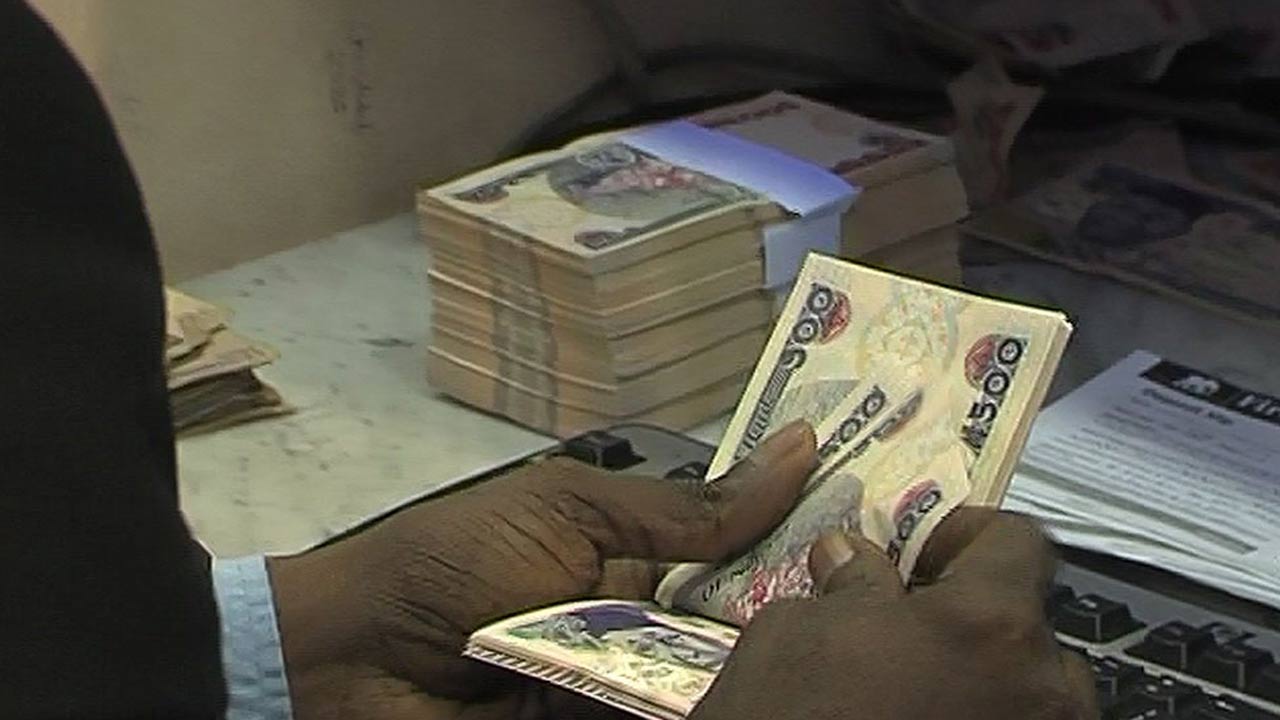
The naira weakened against the dollar across both the official and parallel markets this week, losing N29.87 week-on-week at the Nigerian Foreign Exchange Market (NFEM) to close at N1,393.26 per dollar on Friday, down from N1,363.39 the previous week. That is a 2.14 percent depreciation. In the parallel market, the naira fell N50 week-on-week to N1,420 per dollar, a 3.5 percent decline. The spread between the two markets narrowed slightly to N27.
If you hold dollars, your naira value just went up. If you need to buy dollars for school fees, travel, or imports, this week cost you more. Here is what moved the rate, what the Central Bank of Nigeria (CBN) did about it, and what you should watch next.
Why the naira weakens against dollar now
Two forces are at work. The first is global. Escalating tensions involving the United States, Israel, and Iran have pushed investors into safe-haven assets, and the dollar is strengthening against most major currencies. Crude oil rose about $20 per barrel in less than a week to around $94, adding to global inflation concerns.
According to Vanguard, the depreciation has been driven by rising dollar demand from Foreign Portfolio Investors (FPIs) exiting Nigeria in response to increased risk perception triggered by the war. A banking industry source said the CBN injected $500 million last week to moderate the impact of that demand.
The second force is local: liquidity. A market participant told BusinessDay that limited liquidity in the official market spills over into the parallel market, which is unregulated. Tight dollar supply amplifies any rise in demand.
Official vs parallel market: the numbers
On the official NFEM window, the naira opened the week at N1,378.02 on Monday and closed Friday at N1,393.26, a cumulative loss of N15.24 or 1.0 percent across five trading sessions. Day-on-day, it weakened N5.81 or 0.4 percent from N1,387.45 on Thursday.
In the parallel market, the currency traded at N1,425 per dollar on Friday morning, compared with N1,420 on Thursday, before closing at N1,420. Week-on-week, that is down from N1,370.
This comes after a February rally in which the naira strengthened 4.31 percent, defying late-month dollar purchases by the CBN aimed at preventing excessive appreciation, according to the Financial Market Dealers Association (FMDA). The CBN was mopping up excess dollar supply to avoid distorting returns for investors who bought local fixed income when the naira traded between N1,400 and N1,500 to the dollar.
In other words, the CBN has been intervening in both directions: buying dollars when the naira strengthens too fast, and selling dollars when it weakens too fast. That is a delicate balancing act.
What the CBN is doing to defend the naira
Beyond the $500 million injection, the CBN confirmed it has taken delivery of responsibly sourced gold refined to London Bullion Market Association Good Delivery standards into Nigeria’s foreign reserves. Total gold holdings now stand at about $3.5 billion.
The apex bank also disclosed that gross external reserves have risen to $50.45 billion, sufficient to provide about 9.68 months of import cover. CBN Governor Olayemi Cardoso attributed the accretion to stronger export earnings and rising remittance inflows, which have improved FX liquidity and supported investor confidence.
Earlier, Cardoso said net external reserves surged 772.18 percent over two years to $34.80 billion at the end of 2025, up from $3.99 billion in 2023. Gross external reserves were $49.69 billion as of February 27, 2026, per CBN data.
Analysts say the higher reserve buffer gives the CBN more firepower to stabilise the naira if global volatility persists.
What analysts expect next
Analysts at Financial Derivatives Company said the decline in the naira comes amid intensified dollar demand driven by escalating Middle East tensions. Cowry Asset Management noted the naira weakened across both the regulated official segment and the informal market.
The FMDA expects crude oil prices to continue offering a buffer. If inflows from crude increase due to rising global oil prices, the CBN would be expected to mop up excess liquidity to prevent the naira from reaching a point that could trigger investors. Market estimates suggest a full disruption of the Strait of Hormuz, which accounts for roughly 25 percent of global seaborne oil trade, could push crude toward $120 to $150 per barrel.
That would significantly improve Nigeria’s export revenues, though it could also fuel domestic inflation.
Muda Yusuf, CEO of the Centre for the Promotion of Private Enterprise, cautioned that while stronger oil prices could boost dollar inflows and stabilise the currency, higher energy costs globally could transmit inflationary shocks domestically, worsening household welfare.
Bismarck Rewane, MD of Financial Derivatives Company, said the naira is signalling stability rather than crisis, though he expects some depreciation in coming months. He projected the naira could trade between N1,400 and N1,450 per dollar over the next two months, citing increased inward investment, a surplus current account, rising gross external reserves, and the banking sector’s positive net foreign-asset position. He also described the naira as currently undervalued.
What this means for your money
If you earn in naira and spend in naira, the direct impact is limited unless you buy imported goods, which may become more expensive as businesses pass on higher dollar costs. If you are planning to travel, pay school fees abroad, or import goods, the parallel market rate matters more to you than the official rate.
At N1,420 per dollar, $1,000 costs about N1.42 million in the parallel market. At the official rate of N1,393.26, the same $1,000 costs about N1.393 million. The gap is real money.
For investors, the CBN’s dual intervention strategy cuts both ways. If you bought naira fixed income expecting appreciation, a weakening naira erodes your dollar-denominated returns. If you hold dollars, your naira value rises when the naira weakens.
The lesson from this week: Nigeria’s FX market is still heavily influenced by global oil prices and geopolitical risk. The CBN can smooth volatility, but it cannot control the direction of the dollar or the price of crude. Build your plans around a range, not a single rate.
If you need dollars soon, buying in tranches rather than all at once reduces the risk of catching the worst rate. If you are investing, match your currency exposure to your future spending needs. And if you are importing, factor in a buffer for further depreciation.
The naira weakens against dollar when external risks rise and local liquidity tightens. That pattern is unlikely to disappear soon.
Frequently Asked Questions
Why is the naira weakening against the dollar now?
The naira is weakening due to rising dollar demand from Foreign Portfolio Investors exiting Nigeria amid Middle East tensions, a stronger US dollar globally as investors seek safe-haven assets, and tight FX liquidity in the domestic market.
What is the CBN doing to stabilise the naira?
The CBN injected $500 million into the FX market last week to moderate dollar demand. It has also built up external reserves to $50.45 billion, added $3.5 billion in gold to reserves, and intervenes periodically to counter speculation.
What exchange rate should I use for planning?
It depends on your transaction. The official NFEM rate was N1,393.26 per dollar on Friday, while the parallel market closed at N1,420. Analysts project a range of N1,400 to N1,450 over the next two months, so plan with a buffer.
Related Articles
- Mexico vs Colombia: Márquez Debut Ends in Friendly
- Mexico vs Colombia 2026: Márquez Debut Ends in Defeat
- Spark Plug Replacement Cost: Fake Parts & Real Prices
- OPay Investing in People to Build a Better Nigeria
- Hyundai Elantra Parts: Maintenance Tips for N Models

Stock Market
Sterling Financial Holdings Relists on NGX at N77.00 After 1-for-10 Reconstruction
Sterling Financial Holdings relists on NGX at N77.00 after a 1-for-10 share reconstruction. Market cap unchanged at N527.5 billion. What it means for investors.

Sterling Financial Holdings Company Plc has completed its 1-for-10 share reconstruction and resumed trading on the Nigerian Exchange at a reference price of N77.00, up mechanically from N7.70 before the exercise. The company’s market capitalisation remained unchanged at about N527.5 billion.
The NGX delisted Sterling’s 68.50 billion existing ordinary shares on October 8, 2026, and simultaneously listed 6.85 billion reconstructed shares on Thursday. The exercise followed shareholder approval at the company’s Annual General Meeting, a High Court order and a no-objection from the Securities and Exchange Commission (SEC).
What The Share Reconstruction Means
The reconstruction consolidated every ten existing Sterling shares into one reconstructed share, reducing the company’s total outstanding shares by 90%. The corresponding tenfold adjustment in the reference price ensures that the company’s overall equity market value remains unchanged immediately after the reconstruction.
Cowry Asset Management cautioned investors against interpreting the adjusted price as evidence of a sudden increase in shareholder wealth. “The headline jump from N7.70 to N77.00 should not be mistaken for a market re-rating,” the firm said in a research note. “The share count has fallen by 90 per cent while the quoted price has risen tenfold, so market capitalisation is unchanged at about N527.5 billion and every shareholder retains exactly the same percentage ownership.”
For example, an investor who previously held 100,000 shares valued at N7.70 each would now hold 10,000 shares at N77.00, leaving the investment’s reference value unchanged at N770,000.
The company’s share capital also declined by approximately 90%, from N34.25 billion to N3.43 billion, while about N30.83 billion of the reduction would be transferred into a Share Reconstruction Reserve.
Analysts Warn Against Price Illusion
The reconstruction was first presented to shareholders ahead of Sterling Financial Holdings’ June 9 Annual General Meeting. The meeting also considered a fresh capital raise of up to $400 million, while the proposed reconstruction attracted mixed reactions from market participants.
Fractional entitlements were to be rounded down or sold in the market, with proceeds distributed proportionately to affected shareholders. Analysts previously raised concerns about possible effects on trading liquidity and shareholder value following the reconstruction.
Sterling’s first-half profit after tax increased 20.4% to N50.3 billion, while gross earnings stood at N279.6 billion. Some analysts cautioned that share reconstructions do not automatically improve earnings, dividends or the underlying financial position of a company.
“Investors who compare unadjusted history with post-reconstruction numbers will overstate growth tenfold, so restating the series is the first analytical task,” Cowry stated. “With the nominal number of shares available to trade now substantially lower, early sessions may see exaggerated price movements depending on free float and institutional positioning.”
Sterling Investors Await Price Discovery
Cowry Asset Management described the completed reconstruction as fundamentally neutral but strategically positive for Sterling’s capital-market profile. However, the firm cautioned that the N77.00 reference price should not be treated as an investment target or evidence of an improved valuation.
“We recommend that investors avoid reading the N77.00 listing price in isolation, and wait for adequate post-resumption price discovery and the company’s latest financial performance before making aggressive valuation calls,” the firm said.
The research firm said a stronger investment case would require sustainable earnings growth, attractive returns on equity and a compelling valuation relative to peers. At the close of trading on Friday, October 9, the share price closed flat.
For Sterling shareholders, the immediate implication is that their proportional ownership and the reference value of their holdings remain unchanged, while subsequent trading will determine whether the reconstructed shares attract a higher or lower market valuation.
Impact On Nigerian Businesses
The completion removes a long-standing corporate-action overhang from the stock, which last traded at N7.70 on September 22, 2026, before suspension. For small businesses and corporate treasurers holding Sterling shares, the key takeaway is that the reconstruction does not change the underlying value of their holdings. Any future gains or losses will depend on the company’s earnings, dividend policy and investor demand.
Investors will need to adjust historical share-price and share-count data when comparing Sterling’s performance before and after the reconstruction. The exercise may alter Sterling’s trading profile, but its longer-term share performance will still depend on financial results, investor demand and the valuation investors are willing to assign to the business.
As trading resumes, market watchers will focus on price discovery and whether Sterling’s improved capital-market profile attracts fresh institutional interest. For now, the N77.00 reference price is just that — a reference point, not a target.
Frequently Asked Questions
What does the Sterling Financial Holdings relisting on NGX at N77.00 mean for existing shareholders?
It means your proportional ownership and the reference value of your holdings remain unchanged. If you held 100,000 shares at N7.70, you now hold 10,000 shares at N77.00, still worth N770,000.
Why did Sterling Financial Holdings reconstruct its shares?
The 1-for-10 reconstruction was approved by shareholders, a High Court order and the SEC. It reduced the number of shares from 68.50 billion to 6.85 billion and adjusted the reference price, but did not change market capitalisation.
Should investors buy Sterling shares now that they trade at N77.00?
Cowry Asset Management advises investors to avoid reading the N77.00 listing price in isolation. Wait for adequate post-resumption price discovery and the company’s latest financial performance before making aggressive valuation calls.
Related Articles
- Natanael Cano Postpones Mexico Tour: Refunds & Health Focus
- Quartz Countertops Banned in California: What You Must Know
- Pixel 11 owners still waiting on Android 17 QPR1
- Apple Watch and AirPods Fall Deals: Save $120 Today
- Prime Big Deal Days Fitness Deals: 50% Off Top Gear
 Follow AFRILATEST on Google News
FIRST TIME REACTIONS:
Be the first to leave us a comment – Sterling Financial Holdings Relists on NGX at N77.00 After 1-for-10 Reconstruction, down the comment section.
JOIN US ON OUR SOCIAL MEDIA:
Stock Market
NGX Recovers N208 Billion as MTN, Oando Shares Rally
NGX recovers N208 billion as MTN Nigeria and Oando lead a market rebound. ASI up 0.13%. Here’s what it means for Nigerian investors and businesses.

The Nigerian Exchange (NGX) recovers N208 billion as MTN Nigeria and Oando Plc led a rebound from consecutive sessions of decline on Friday, October 9, 2026. Market capitalisation rose from N161.05 trillion on Thursday to N161.26 trillion, while the All-Share Index (ASI) advanced 321.05 points, or 0.13%, to settle at 248,363.55 points.
The index had touched a weekly low of 248,042.50 points on Thursday before Friday’s recovery. Total trading volume across equities reached 322,014,816 shares executed in 37,758 deals.
MTN Nigeria Communications Plc (MTNN) surged 2.69%, up N22.00, to close at N840.00. Energy player Oando Plc jumped 6.90% to N36.40. These price advances lifted key indices, pushing the NGX 30 Index up to 9,138.57, the NGX Oil/Gas Index to 6,005.98, and the NGX Consumer Goods Index to 4,033.36.
Strong percentage rallies in mid- and small-cap stocks provided vital upward momentum across the broader market. Regency Alliance Insurance Plc gained 10.00% to N0.77 from N0.70. Livestock Feeds Plc rose 9.58% to N13.15 from N12.00. Guinea Insurance Plc climbed 9.41% to N0.93 from N0.85. Chemical and Allied Products Plc (CAP) advanced 8.50% to N108.50 from N100. UPDC Plc appreciated 7.69% to N4.20 from N3.90.
Why MTN and Oando Drove the NGX Rebound
MTN Nigeria’s rally is the continuation of a remarkable turnaround. The telecom giant had reported a staggering N550 billion pre-tax loss in 2024, following a N178 billion loss in 2023. The company attributed the devastating performance to the sharp depreciation of the naira, which directly affected its foreign-denominated liabilities, especially tower lease obligations and other infrastructure-related contracts.
“In the foreign exchange market, the naira depreciated to N1,535/US$ by the end of 2024 (from N907.1/US$ on 31 December 2023), as businesses and consumers continued to grapple with escalating costs. These headwinds signiificantly impacted MTN Nigeria’s costs, particularly those related to tower leases and other foreign currency obligations,” said Karl Toriola, CEO of MTN Nigeria.
MTN Nigeria reported N1.67 trillion in FX losses between 2023 and 2024, with N926 billion recorded in 2024 alone. Finance costs jumped to N433 billion in 2024, bringing the two-year finance cost total to N669 billion. Accumulated losses rose to N607 billion, wiping out shareholders’ equity and pushing it to a negative net worth of over N458 billion by year-end 2024.
By Q1 2025, the tide turned. MTN posted a pre-tax profit of N202.6 billion, compared to a devastating N575.7 billion loss in Q1 2024. Reduced FX losses to N5.25 billion from N656 billion in Q1 2024, slower growth in finance costs, increased tariffs, and continued strength in data and fintech revenue streams drove the recovery.
By H1 2025, MTN Nigeria recorded a massive pre-tax profit of N419.6 billion, taking the half-year profit to N622.26 billion. This reduced its retained losses to N192.889 billion and shareholders’ funds to just N42 billion from negative N458 billion as of December 2024. MTN Nigeria may be just one profitable quarter away from reversing the two years of retained losses triggered by the naira devaluation and FX volatility.
According to Nairametrics, the consumer goods sector also posted a sharp turnaround. The seven companies that had reported a combined loss of N418 billion in Q1 2024 returned to a combined pre-tax profit of N289.8 billion in Q1 2025. By the end of Q2 2025, all consumer goods companies had returned to profitability with a combined pre-tax profit of about N264 billion.
Sectoral Performance and Market Breadth
The NGX Oil/Gas Index advanced from 5,996.24 on Thursday to 6,005.98 on Friday. The NGX Consumer Goods Index appreciated from 4,026.79 to 4,033.36, supported by gains in Unilever Nigeria Plc (+2.00% to N102.00), Nigerian Breweries Plc (+0.81% to N74.60), and Honeywell Flour Mill Plc (+0.59% to N17.00).
The NGX Industrial Index edged higher from 10,440.33 to 10,442.50, helped by CAP’s 8.50% gain. The NGX 30 Index rose from 9,124.73 to 9,138.57. The NGX Premium Index was up from 31,242.54 to 31,398.20. The NGX Growth Index climbed from 26,827.93 to 26,869.17. The NGX Lotus Islamic Index expanded from 22,918.08 to 22,981.25.
In contrast, the NGX Banking Index dropped from 2,639.74 to 2,614.79, weighed down by losses across key lenders. Fidelity Bank Plc fell 8.70% to N21.00 from N23.00. Access Holdings Plc declined 1.67% to N29.50. United Bank for Africa Plc dropped 1.59% to N43.30. Zenith Bank Plc lost 1.32% to N134.70. Guaranty Trust Holding Company Plc slipped 0.23% to N131.50.
The NGX Insurance Index similarly slipped from 1,088.85 to 1,081.10 as price declines in Coronation Insurance Plc (-7.26% to N2.30), Fortis Global Insurance Plc (-6.15% to N1.68), and NEM Insurance Plc (-4.24% to N28.25) offset strong rallies in Regency Alliance Insurance Plc (+10.00% to N0.77) and Guinea Insurance Plc (+9.41% to N0.93).
Moderate pullbacks were registered by the NGX Main-Board Index (down from 10,763.46 to 10,751.31), the NGX Pension Index (falling from 13,017.42 to 12,985.77), and the NGX CG Index (declining from 7,446.63 to 7,416.72).
Trading activity was concentrated in major commercial banking and insurance tickers. Zenith Bank Plc traded 31.69 million shares. Guaranty Trust Holding Company Plc (GTCO) logged 23.52 million shares. Acceiss Holdings Plc recorded 19.19 million shares. Fidelity Bank Plc saw 17.55 million shares exchanged. Guinea Insurance Plc traded 13.60 million shares, while Regency Alliance Insurance Plc moved 12.84 million shares.
The Main Board generated 237.12 million shares in 23,614 deals, while the Premium Board recorded 67.82 million shares in 11,220 deals. Trading volume was down 34.57% from 492.14 million shares on Thursday, while total deals fell 2.29% from 38,644 deals.
What This Means for Nigerian Businesses and Investors
The NGX recovers N208 billion as MTN and Oando shares lift the market, but the broader picture is more nuanced. The rebound shows that large-cap stocks, particularly those that have restructured their foreign exchange exposure, can drive market sentiment even when banking and insurance counters lag.
For small business owners and corporate professionals, the key takeaway is that currency stability remains the single biggest driver of corporate profitability on the NGX. Companies that carried heavy foreign-denominated debt, like MTN Nigeria, have seen their fortunes reverse sharply as the naira stabilized. Those that did not, particularly in the banking sector, are now facing pressure from other quarters.
According to Nairametrics, the market’s recovery was driven by “strong percentage rallies in mid- and small-cap stocks” including Regency Alliance Insurance, Livestock Feeds, CAP, and UPDC. This suggests that investors are hunting for value beyond the usual blue chips.
What to Watch
Investors should watch whether the banking sector’s decline continues or reverses in the coming sessions. The NGX Banking Index dropped 0.95% on Friday, with Fidelity Bank leading losses. If the banking sell-off deepens, it could cap further market gains.
Also watch MTN Nigeria’s next quarterly earnings. The company may be one profitable quarter away from clearing its retained losses entirely, which would mark a full recovery from the naira devaluation shock. For a company that was technically insolvent with negative shareholders’ equity of N458 billion in December 2024, that would be a significant milestone.
For Nigerian businesses, the lesson is clear: foreign exchange exposure can destroy or restore balance sheets quickly. Companies that hedged, restructured, or priced in the naira’s volatility are now reaping the rewards. Those that did not are still catching up.
Frequently Asked Questions (NGX recovers N208 billion)
What caused the NGX to recover N208 billion on October 9, 2026?
The NGX recovered N208.46 billion as MTN Nigeria surged 2.69% to N840.00 and Oando Plc jumped 6.90% to N36.40. These gains lifted the All-Share Index by 0.13% to 248,363.55 points, reversing consecutive sessions of decline.
Which stocks gained the most on the NGX on October 9, 2026?
The top gainers were Regency Alliance Insurance (+10.00% to N0.77), Livestock Feeds (+9.58% to N13.15), Guinea Insurance (+9.41% to N0.93), Chemical and Allied Products (+8.50% to N108.50), and UPDC (+7.69% to N4.20).
Why did the banking sector decline while the overall market rallied?
The NGX Banking Index dropped 0.95% as Fidelity Bank fell 8.70% to N21.00, Access Holdings declined 1.67%, UBA dropped 1.59%, Zenith Bank lost 1.32%, and GTCO slipped 0.23%. Bank losses offset gains in other sectors.
Related Articles
- Natanael Cano Postpones Mexico Tour: Refunds & Health Focus
- Quartz Countertops Banned in California: What You Must Know
- Pixel 11 owners still waiting on Android 17 QPR1
- Apple Watch and AirPods Fall Deals: Save $120 Today
- Prime Big Deal Days Fitness Deals: 50% Off Top Gear
FIRST TIME REACTIONS:
Be the first to leave us a comment – NGX Recovers N208 Billion as MTN, Oando Shares Rally, down the comment section.
JOIN US ON OUR SOCIAL MEDIA:
Stock Market
Crude Oil Market Rises as US-Iran Talks Stall: What It Means for Nigeria
Crude oil market rises on stalled US-Iran talks. Brent gains 14% in September. Here’s what Nigerian businesses need to know.
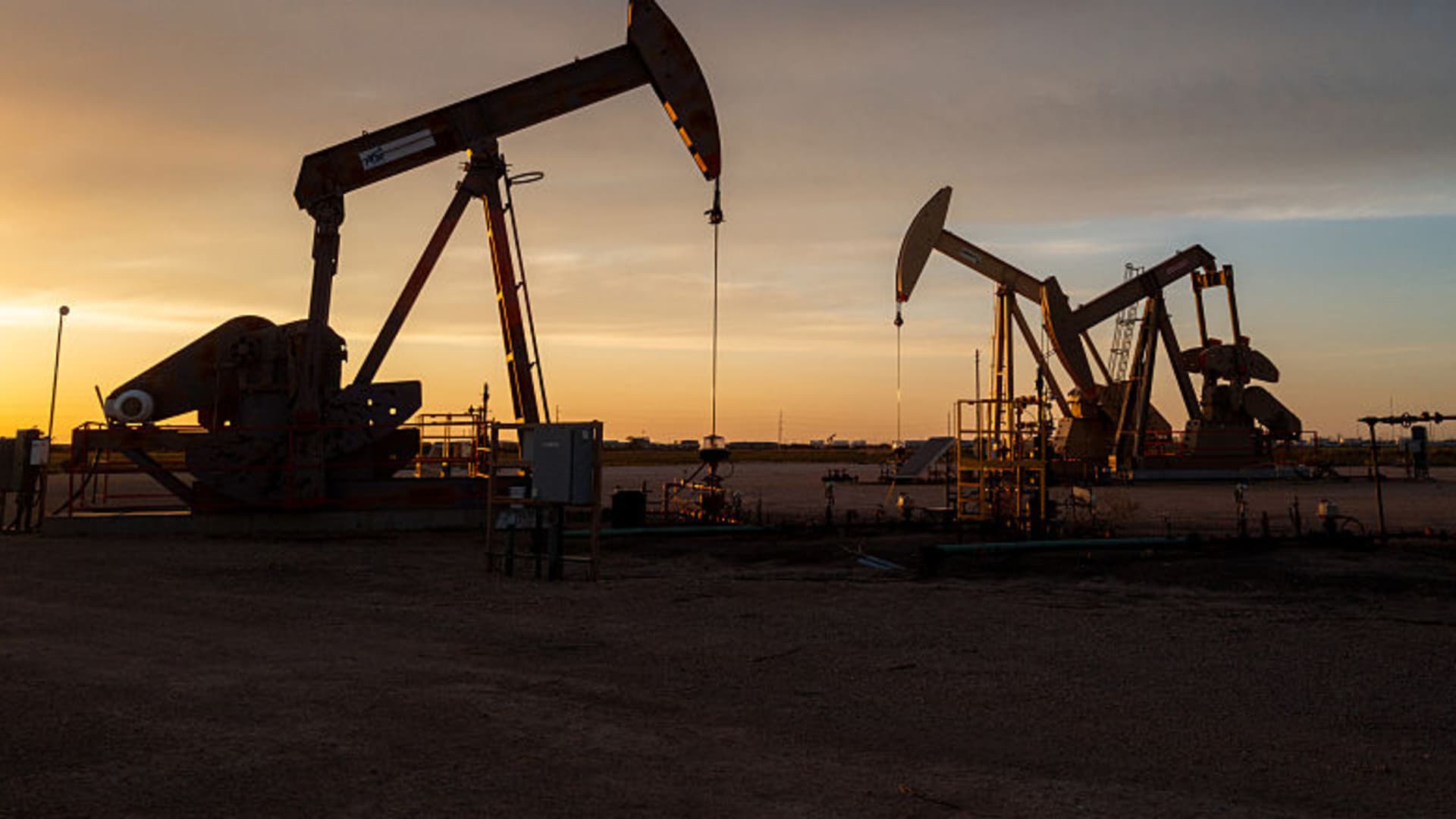
The crude oil market is rallying again, and Nigerian businesses will feel it at the pump, in freight costs, and on their import bills. Brent crude, the global benchmark, closed September up more than 14% — its biggest monthly gain since July — as stalled US-Iran peace talks kept supply fears alive.
The November Brent contract settled at $103.50 a barrel on Wednesday, up 0.9%, before expiring. The new front-month December contract jumped 1.9% to $98.03. US West Texas Intermediate rose 1.2% to $90.42. By Thursday, Brent had pushed past $100 again, trading at $100.36, while WTI climbed to $92.70.
What triggered the spike? A simple breakdown in diplomacy. US President Donald Trump denied reports by Axios and CNN that he was willing to ease sanctions on Iran and release frozen funds in return for concrete steps on Tehran’s nuclear programme. Qatar is still pushing shuttle diplomacy, but traders are not betting on a breakthrough.

The Strait of Hormuz — the waterway through which one-fifth of the world’s oil moves — remains blocked by Iran. That single fact keeps a floor under prices.
Why the Crude Oil Market Is Tight
Saudi Arabia has partially worked around the blockage. It resumed oil tanker loadings from its Red Sea port of Yanbu after restarting the East-West Pipeline, which bypasses Hormuz entirely. Goldman Sachs estimates Gulf oil exports have recovered to 23.3 million barrels per day, matching the 2025 average.
But crude is only half the story. Refined products — diesel, gasoline, jet fuel — are the real pinch point. US gasoline inventories fell by 1.7 million barrels to 204.4 million barrels last week, while distillate stocks dropped 2.3 million barrels to 105.2 million barrels, according to Energy Information Administration data. US crude inventories, by contrast, rose 922,000 barrels to 427.3 million barrels.
“Lower refining activity ushered in draws for both distillates and gasoline,” said Matt Smith, an analyst at Kpler. “Refining activity should gradually climb going forward, helping to protect product inventories from dropping to further lowly levels.”
The White House has urged the European Union to draw down emergency diesel inventories. Trump is also considering allowing sales of red-dyed diesel instead of a full export ban ahead of November midterm elections.
Who Wins and Who Loses
For Nigeria, the calculus is brutal. Africa’s largest crude producer earns dollars from oil sales, but imports nearly all its refined products. When Brent rises, government revenue improves on paper. When diesel margins spike — European diesel refining margins hit an all-time high of $95 per barrel on September 23 — Nigerian transporters, manufacturers, and farmers pay more.
US retail diesel prices fell 14.7 cents to $6.382 per gallon last week, but that is still $2.628 higher than a year ago. Naga.com analyst Frank Walbaum noted that diesel powers freight trucking, agricultural machinery, construction equipment, and industrial machinery. “The economic impact of diesel price increases is far more pervasive than gasoline price increases alone,” he said.
OPEC+ meets on Sunday, and two sources told Reuters the group is likely to keep production targets steady for November. That means no immediate supply relief.
China added to the squeeze on Thursday. PetroChina cancelled several October gasoline and jet fuel shipments, according to Reuters, as Beijing prioritises domestic supply. UBS analyst Giovanni Staunovo said the export ban “suggests concerns about domestic product availability.”
What Nigerian Businesses Should Do Now
First, budget for higher fuel costs. Diesel is the single biggest input cost for many small businesses — generators, delivery vans, production lines. If you have not reviewed your logistics budget this quarter, do it now.
Second, watch the naira. Higher crude prices usually mean more dollar inflow to the federation account, but they also raise the cost of refined product imports. The net effect on the exchange rate depends on how much of that oil revenue actually gets converted.
Third, track the US diesel export ban debate. If Trump restricts exports, US refiners may process less crude, which could paradoxically soften global crude prices while keeping refined product prices high. That is a different kind of pain.
Fourth, consider hedging or forward contracts for your fuel supply if you run a fleet. The spread between near-term and longer-term oil prices — known as backwardation — is steepening, which signals traders expect tightness now but relief later.
MUFG analysts summed up the market mood: “Recovering crude flows should temper supply-driven price pressures, although persistent product shortages and elevated freight costs are likely to keep the broader energy market tight.”
For Nigerian businesses, the message is clear: the crude oil market may calm down, but diesel and petrol prices will stay stubborn. Plan for the squeeze to last through the fourth quarter.
FAQ
Q: Why are oil prices rising now?
A: Stalled US-Iran peace talks, a blocked Strait of Hormuz, and falling US refined product inventories are keeping the crude oil market tight. Brent gained over 14% in September.
Q: How does this affect Nigerian fuel prices?
A: Nigeria imports most of its refined products. Higher diesel and gasoline prices abroad translate directly to higher pump prices and transport costs locally, even if crude oil revenue improves government earnings.
Q: What is OPEC+ likely to do?
A: Two sources told Reuters OPEC+ will probably keep production targets steady for November when it meets on Sunday. That means no immediate increase in supply.
Q: Should small businesses hedge fuel costs?
A: If you run a fleet or rely heavily on diesel, locking in forward contracts or reviewing logistics budgets now is prudent. The market expects tightness to persist through Q4 2026.
Frequently Asked Questions Rated!
Why are oil prices rising now?
Stalled US-Iran peace talks, a blocked Strait of Hormuz, and falling US refined product inventories are keeping the crude oil market tight. Brent gained over 14% in September.
How does this affect Nigerian fuel prices?
Nigeria imports most of its refined products. Higher diesel and gasoline prices abroad translate directly to higher pump prices and transport costs locally, even if crude oil revenue improves government earnings.
What is OPEC+ likely to do?
Two sources told Reuters OPEC+ will probably keep production targets steady for November when it meets on Sunday. That means no immediate increase in supply.
Related Articles
- Borno’s Multi-Billion-Naira Rehabilitation Scheme: Fueling Boko Haram?
- 5 Open-Source Android Apps to Unlock Your Device
- OPay Shutdown Rumour: What Customers Should Do
- NGX Market Cap Drops to N163.10 Trillion as Banking Stocks Drag
- APM Terminals Expands Scholarship Scheme: 2026 Guide
-

 Startups3 weeks ago
What a Successful Dangote Refinery IPO Really Says
-
Trending Entertainment News6 days ago
Taylor Swift Joins Beatles as Only Acts With 100 Weeks at No. 1
-
World News3 weeks ago
Carney Calls U.S. Tariffs a Miscalculation as Canada Retaliates
-
Fintech3 weeks ago
OPay No Dey Comot Nigeria: How to Verify Fintech News
-
Football3 weeks ago
Mexico vs Colombia 2026: Márquez Debut Ends in Defeat
-
Nigerian Business3 weeks ago
Moniepoint POS Network: How to Buy Dangote Shares
-
Fintech3 weeks ago
OPay Investing in People to Build a Better Nigeria
-
Black Celebrities3 weeks ago
Brandi Carlile: Rock Star in Her Prime, On Tour Now