Study & Education
FG Harmonises 2027 Exam Timetable For WAEC, NECO
The FG’s harmonised 2027 exam timetable targets August results and September admissions. What is confirmed, what is only proposed, and what it costs candidates.


The reputation of Nigeria’s external examination calendar rests on one unwelcome certainty: results arrive late, and admissions slip behind them.
The Federal Government wants to end that. A harmonised 2027 exam timetable, announced through the Federal Ministry of Education, proposes that WAEC, NECO, NABTEB and NBAIS release results by August 2027, clearing the way for tertiary admissions to open in September.
The plan was disclosed in a statement by the ministry’s Director of Press and Public Relations, Boriowo Folasade, after the Minister of State for Education, Prof. Suwaiba Sa’id Ahmad, met heads and representatives of the examination bodies at the ministry’s Abuja headquarters.

Read as a scheduling document, the 2027 exam timetable is tidy. Read as policy, it is a test of whether one ministry can hold five independent examination bodies to a shared deadline. The published details show how much of that test remains unanswered.
What The 2027 Exam Timetable Actually Sets Out
The Joint Admissions and Matriculation Board would run the Unified Tertiary Matriculation Examination from 15 to 25 March 2027, with results expected inside the same month.
NECO’s Senior School Certificate Examination occupies 1 April to 14 May. WAEC’s West African Senior School Certificate Examination runs 11 May to 18 June. NABTEB sits 1 June to 5 July, and NBAIS 10 June to 9 July. Results for those four are targeted for August.
The Guardian reported the same sequence, attributing it to the ministry’s late-Wednesday statement. Vanguard noted that the arrangement places the examination bodies under pressure to complete processing in time to meet the August target. Edugist dates the press release to 14 October 2026.
Two Overlaps The Harmonisation Leaves Standing
Simple arithmetic on the published dates exposes the first gap. NECO’s window closes on 14 May. WAEC’s opens on 11 May. A candidate entered for both faces four days of collision in the middle.
The second gap runs longer. NABTEB closes on 5 July while NBAIS opens on 10 June. The two windows intersect for roughly four weeks.
Body-level windows do not settle paper-level clashes, and the ministry’s statement frames clash-prevention as an aim rather than a completed outcome. Which papers move, and by how much, does not appear in the announcement. Until the individual papers are published, a candidate planning two entries is planning blind.
Proposal, Not Implementation
The distinction that matters most sits in a single line of reporting. Edugist notes that the ministry has not indicated whether the proposed timetable has received final approval from all the examination bodies.
The statement itself calls the dates proposed timelines. It names no penalty, sanction or fallback for a body that misses August. Compliance rests on continued engagement, a phrase the ministry used repeatedly, and on what it described as strengthened accountability.
Those are intentions. A published target with no consequence attached is a planning aid, not a guarantee.
Marking and moderation take as long as they take. Compressing a calendar does not by itself compress the script-processing chain, and the ministry has not published the capacity measures that would.
Candidates act on dates anyway. Accommodation is rented, offers are declined, a session is deferred, all on the strength of a calendar that for now exists only as a proposal.
What Changes For Candidates, Schools And Parents
TVC News reported that the UTME slot is earlier than usual, meaning registration and preparation shift forward, and that schools and tutorial centres will likely adjust their academic calendars in response.
Cost is the category the announcement touches only indirectly. No registration fee change was announced. What a fixed calendar changes is timing: parents can budget earlier for fees, mock examinations, transport and accommodation instead of absorbing them in an unpredictable cluster.
Access may prove the larger effect. Folding NABTEB and NBAIS into the same August results window brings technical, business, Arabic and Islamic studies candidates onto an admission timeline long dominated by conventional school leavers. That is the most consequential element of the plan, and the least discussed.
Outcomes remain the weakest link. A timetable does not teach anything. It does hand teachers a fixed revision horizon and give students a date to work backwards from, which is worth less than instruction and more than nothing.
The reform sits under the Nigeria Education Sector Renewal Initiative, the agenda of the Minister of Education, Dr Maruf Tunji Alausa.
Is The 2027 Exam Timetable The Right Fit?
For a candidate, the answer depends on how the 2027 exam timetable is used. Treated as a registration notice, it will mislead. Treated as a planning guide while the official timetables from JAMB, WAEC, NECO, NABTEB and NBAIS are awaited, it is among the more useful documents the ministry has issued.
The proposal earns its value only if August holds. It earns nothing if August slips after students have already planned around it.
Frequently Asked Questions
Have the 2027 WAEC, NECO and JAMB dates been confirmed?
No. The Federal Ministry of Education described the dates as proposed timelines. Edugist reported that the ministry has not indicated whether the proposed timetable has received final approval from all the examination bodies. Candidates should wait for official registration notices and final timetables from each body.
When will 2027 WAEC and NECO results be released?
The government is targeting August 2027 for the release of NECO, WAEC, NABTEB and NBAIS results, with JAMB UTME results expected in March 2027. These are targets, not published commitments with any stated penalty for missed deadlines.
Do NECO and WAEC timetables clash in 2027?
On the published dates, yes. NECO’s window closes on 14 May 2027 and WAEC’s opens on 11 May 2027, so the two intersect for four days. Whether individual papers collide depends on timetables that have not yet been released.
 Follow AFRILATEST on Google News
FIRST TIME REACTIONS:
Be the first to leave us a comment – FG Harmonises 2027 Exam Timetable For WAEC, NECO, down the comment section.
JOIN US ON OUR SOCIAL MEDIA:

About Rosabella Eboh
Rosabella Eboh is an author at AfriLatest. With a passion for writing and a flair for creativity, she contributes original content and unique perspectives to the platform. Rosabella focuses on human-interest stories, cultural trends, and in-depth feature reporting.
View all articles by Rosabella Eboh

Study & Education
Jon Gosselin Eldest Daughters: A Media Literacy Guide
The Jon Gosselin eldest daughters claim is circulating fast. Here is a five-step check students can use to separate a dated source from a headline.

The goal is simple: leave this page able to check a celebrity-family headline before you repeat it in a classroom, a campus radio segment or a family group chat. The test case is the Jon Gosselin eldest daughters claim now moving through feeds, and whether the reporting underneath it survives a five-minute audit.
Start with what is documented. No dated interview, livestream recording or direct quotation in the reporting available to this guide shows Jon Gosselin making an admission aimed specifically at his eldest daughters, the twins Mady and Cara. That gap does not make the headline false. It makes it unverified, which is a far more useful thing to teach.
A headline is a claim. A source is a person, on a named platform, on a date, saying words you can quote.

Step One: Find The Utterance, Not The Summary
Ask one question of any celebrity quote: where did the words first appear? If the answer is ‘a source close to the family’, you are holding a summary of a claim, not the claim itself.
Contrast two records. Tennis player Gael Monfils described his mental state on a Twitch livestream on October 26, quoted directly in AOL’s report: ‘The breakup with Elina hit me really hard. I’m not doing great mentally.’ Named platform. Named date. Verbatim words. That is what a checkable heartfelt admission looks like in the wild.
The Gosselin material is different in kind. The verifiable record is a set of separate, datable events reported by named outlets, not one confessional interview.
Step Two: Build A Timeline Before You Build A Story

ET reported that Jon Gosselin and Colleen Conrad ended a seven-year relationship, that the two grew up together in Wyomissing, Pennsylvania, and that they tried couples and family therapy before deciding they were better off as friends. The same report notes Conrad had a single mastectomy followed by a DIEP Flap procedure, and that her cancer was downgraded to stage 1 after surgery.
On August 7, 2025, Collin Gosselin, one of the sextuplets, posted a TikTok message addressed to his seven siblings. AmoMama quotes the post: ‘Forced apart, pitted against each other.’ In replies beneath it, Collin described physical and emotional abuse and said he would never put his own children in front of a camera. Those are his allegations, made in his own name, on a dated platform.
The same account records that Kate Gosselin’s lawyer, Richard Puleo, has maintained she did not intentionally harm Collin, and that Kate’s 2023 statement said Collin received ‘multiple psychiatric diagnoses’. Jon Gosselin has backed his son’s account and said he received ’50 to 60′ letters from the Department of Human Services over the years about children in the family.
None of that is a statement about the eldest daughters. That is precisely the point of the exercise.
What The Jon Gosselin Eldest Daughters Claim Actually Verifies
Run the check and the headline collapses into three verifiable facts and one blank. Verifiable: the Conrad split, Collin’s August 2025 post, and Kate Gosselin’s October hospitalisation after a dog collision fractured her tibial plateau, which Beliefnet sourced from her own TikTok posts and a TikTok Live from her hospital bed.
Blank: any dated utterance from Jon about Mady and Cara.
A student who submits that as a finding, three facts and one named gap, has produced better work than one who fills the gap with a guess. Editors can check a gap. They cannot check an invention.
Put a price on the error. A school media club that repeats an unverified family claim spends credibility with the one audience it cannot replace, the students who trusted it. That cost does not come back with a correction posted three days later, and it does not show up in any budget line.
Access has shifted as well. The primary statements in this story appeared on TikTok, a Twitch stream and Instagram, all free platforms with no wire subscription behind them. For a classroom with one projector and patchy data, the constraint is no longer the price of a news licence. It is whether the lesson teaches students to read the replies, where Collin made his specific claims, and not merely to watch the video.
Outcomes are the only honest measure of that training. A trainee who can name the platform, the date and the speaker behind every claim in a draft is employable. A trainee who can only summarise a headline is not.
One more discipline the Gosselin file demands. Separate allegation from finding. Collin’s account, Kate’s 2023 statement and Puleo’s denial are all on the record. None of them is a court ruling, and none of the outlets above claims to have produced one. Write it that way and the copy survives scrutiny from every side of the family dispute.
The action step is small and repeatable. Before you share, publish or teach the next Jon Gosselin eldest daughters headline, run five checks: named speaker, named platform, dated post, original recording, and a clear label on anything still alleged. If a check fails, say so in the copy. One labelled gap costs a writer nothing. One unlabelled invention costs a newsroom its readers.
Frequently Asked Questions
Did Jon Gosselin make a verified statement about his eldest daughters, Mady and Cara?
No dated interview, livestream recording or direct quotation in the reporting reviewed for this guide shows Jon Gosselin making an admission specifically about his eldest daughters. The documented record covers his split from Colleen Conrad, his son Collin’s public posts, and Kate Gosselin’s October medical emergency.
Which sources can a student cite for the Gosselin family story?
Three usable starting points: ET for the Conrad split and her cancer treatment, AmoMama for Collin Gosselin’s August 7, 2025 TikTok post and the family statements around it, and Beliefnet for Kate Gosselin’s hospitalisation and tibial plateau fracture. Each is dated and each names who said what.
How do you date-stamp a claim that starts on TikTok?
Capture the account handle, the post date, whether the video is original or a stitch, and whether the words appear in the video itself or only in the replies. Collin Gosselin’s specific allegations sit in the reply threads, not the original post, and that distinction changes how the claim should be reported.
FIRST TIME REACTIONS:
Be the first to leave us a comment – Jon Gosselin Eldest Daughters: A Media Literacy Guide, down the comment section.
JOIN US ON OUR SOCIAL MEDIA:
About Rosabella Eboh
Rosabella Eboh is an author at AfriLatest. With a passion for writing and a flair for creativity, she contributes original content and unique perspectives to the platform. Rosabella focuses on human-interest stories, cultural trends, and in-depth feature reporting.
View all articles by Rosabella EbohStudy & Education
Helping Students Make It to Year 2: What the Evidence Shows
Three documented school cases show why helping students make it to year 2 depends on audited data, not announced claims from incentives, AI or exams.
The question of helping students make it to year 2 sounds like an administrative detail. It is not. It sits at the point where behaviour policy, education technology and high-stakes testing collide, and three documented cases from the past year show how far apart the answers remain.
At one end is a public middle school in South Tallahassee that says two new programmes are changing student conduct. At the other is a private Chicago school charging $55,000 a year that has removed traditional teachers from the classroom. In the background sits the two-decade American experiment with test-driven accountability, which decides progression for millions of students by statute. Each case claims progress. None of the three has published the kind of independent evidence that would let a parent or a ministry of education verify it.
Three Programmes, Three Theories Of Progression
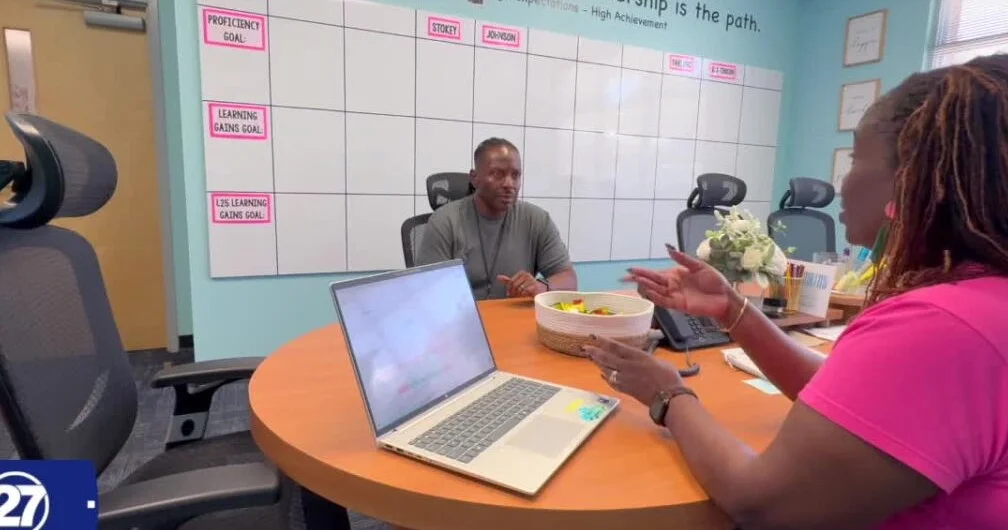
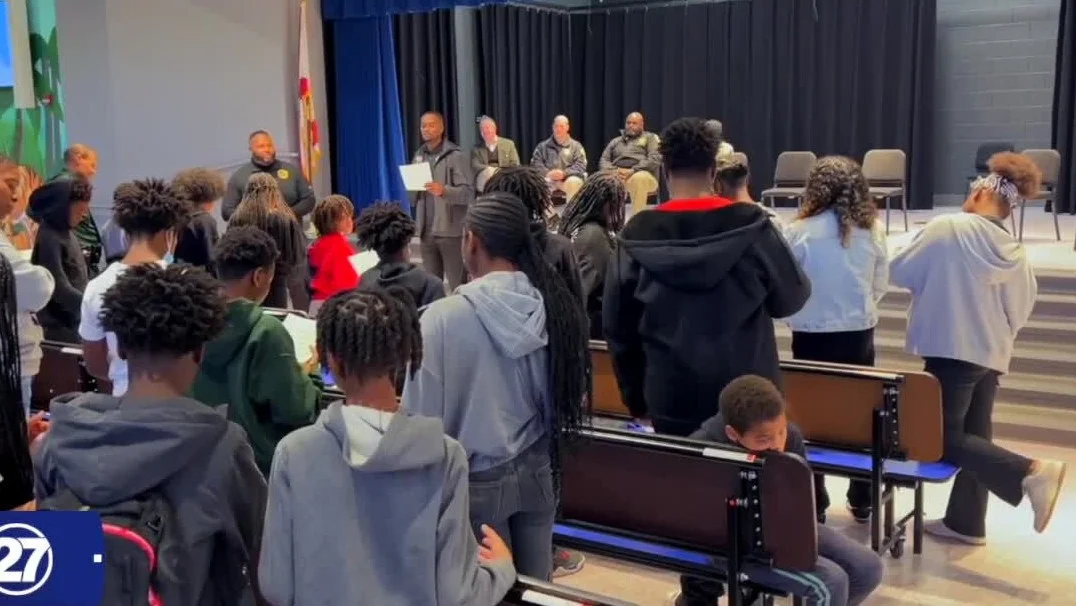
At Griffin Middle School in Northwest Tallahassee, Principal Kerri Anderson credits two initiatives introduced this school year. The first, Relax and Roar, gives students who meet behaviour and academic expectations 30 minutes of free time on Fridays. The second, SmartPass, is a digital hall pass that lets teachers track where a student is supposed to be and how long they have been out of class.
The programmes arrived against a specific backdrop. At a March 10 school board meeting, Leon County Superintendent Rocky Hanna said the district was still dealing with a troubling trend in student behaviour: “We have noticed an upper trend and aggressive behaviors by our students coming out of the pandemic that trend unfortunately has continued.”
Anderson told WTXL that the change shows up in daily routines. “They’re making it to class because they don’t want to miss Relax and Roar,” she said, adding that disciplinary referrals are “majorly down from last year.” The same report carried a limitation the school has not resolved: the station said it was still working to get the actual numbers comparing this year with last.
Alpha School’s answer is different in almost every respect. At its Chicago campus, which opened this fall for students in pre-K through eighth grade, there are no traditional teachers. Adults are called “guides,” and adaptive software handles academic instruction, which the school says lets students master core subjects in roughly two hours a day. Zane Shah, 13, an eighth grader, told CBS News that two hours of daily instruction covered what he had learned in a typical eight-hour school day.
Alpha says its students score in the top 1% on national standardised tests and that it does not screen applicants on previous grades or test scores. According to a February analysis by the University of Colorado’s National Education Policy Center cited by CBS News, only about one-third of Alpha guides have education training or degrees.
Helping Students Make It to Year 2 Requires Numbers, Not Narratives
Both schools describe gains. Neither has published externally validated results, and the gap matters most for the promotion decision that the phrase describes in most systems: a formal, consequential judgment about whether a learner advances.
Rebecca Winthrop, a senior fellow at the Brookings Institution who has visited Alpha’s campuses, told CBS News: “Parents should know that this is an experimental model. There’s no clear externally validated evidence around the results they claim.” Carol Corbett Burris of the Network for Public Education went further, describing Alpha as “less an effort to expand educational opportunity than an experiment in extracting maximum profit from schooling,” and saying a free Arizona charter built on the same TimeBack platform performed “dismally” compared with Arizona public schools.
The third case involves the machinery that governs promotion in much of the world. According to Britannica’s review of the testing debate, high-stakes achievement tests carry consequences for students, teachers and schools, including that “low scores can prevent a student from progressing to the next grade level.” The No Child Left Behind Act, signed on Jan. 8, 2002, mandated annual standardised testing in reading and math in grades 3-8 and again in grade 10. State spending on standardised tests rose from $423 million before the law to almost $1.1 billion in 2008. Barack Obama’s Race to the Top followed in 2009, offering states $4.35 billion in competitive funding tied in part to test results.
The African Evidence Gap In A Global Debate
None of the three sources cited here reports enrolment, retention or examination data from an African school system. That absence is not a footnote. It means any claim that a Friday reward, an adaptive-learning platform or a national exam gate would lift progression rates in African classrooms is a forecast, not a finding. Funding per learner, teacher supply, connectivity and the weight attached to terminal examinations vary by country, and the source material documents none of them.
What the three cases do share is a methodological habit worth naming. Each measures what is easiest to count: referrals at one school, a self-reported test percentile, a state’s testing budget. Each leaves the decisive question, whether a student actually advanced and then stayed on track, either unanswered or answered by the institution itself.

The Big Picture
The uncomfortable conclusion is that a reward system, an AI curriculum and a national examination are not variations on one idea. They are three different theories of what a school is for. The Tallahassee case says students need incentives and visibility. The Chicago case says they need pace and individualised instruction. The testing regime says the system needs a comparable number, whatever it costs in teaching time.
The evidence available so far supports a narrower point: helping students make it to year 2 is a claim that has to be audited, not announced. Until schools and systems publish referral counts, retention rates and independent test results across more than one cohort, the honest position is that all three approaches remain unproven. The cost of that uncertainty falls on the students who do not advance.
Frequently Asked Questions
What are the two new programmes at Griffin Middle School?
Relax and Roar rewards students who meet behaviour and academic expectations with 30 minutes of free time on Fridays. SmartPass is a digital hall pass that lets teachers track where students are supposed to be and how long they have been out of class. Principal Kerri Anderson credits both with reducing disciplinary referrals, though the school has not yet released the comparison numbers.
Has Alpha School’s academic model been independently verified?
No. Alpha says its students score in the top 1% on national standardised tests, but Brookings senior fellow Rebecca Winthrop told CBS News there is no clear externally validated evidence around the results the school claims. A February analysis by the University of Colorado’s National Education Policy Center found about one-third of Alpha guides have education training or degrees.
How do standardised tests affect whether a student advances a year?
According to Britannica’s review of the debate, high-stakes achievement tests carry consequences for students, teachers and schools, and low scores can prevent a student from progressing to the next grade level. The No Child Left Behind Act, signed on Jan. 8, 2002, mandated annual testing in reading and math in grades 3-8 and again in grade 10.
FIRST TIME REACTIONS:
Be the first to leave us a comment – Helping Students Make It to Year 2: What the Evidence Shows, down the comment section.
JOIN US ON OUR SOCIAL MEDIA:
About Rosabella Eboh
Rosabella Eboh is an author at AfriLatest. With a passion for writing and a flair for creativity, she contributes original content and unique perspectives to the platform. Rosabella focuses on human-interest stories, cultural trends, and in-depth feature reporting.
View all articles by Rosabella EbohStudy & Education
Sports Training Integration Into TVET: What Nigeria Approved
Nigeria’s sports training integration into TVET is a proposal, not a policy. Here is what learners must verify in writing before paying for any course.

The goal here is narrow. Anyone following the sports training integration into TVET should finish with three answers: what has been approved, who pays, and what a trainee leaves with. Everything else from the Abuja meeting is context.
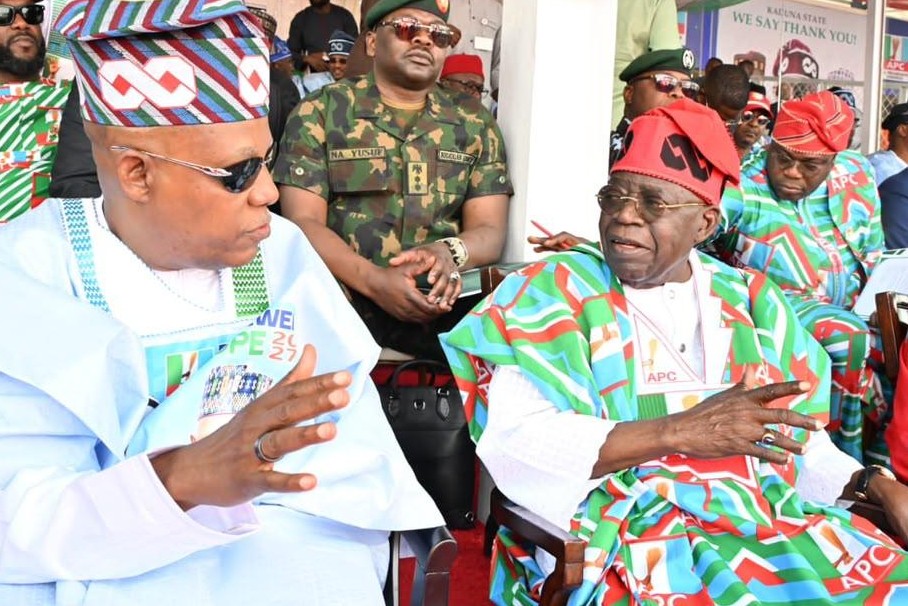
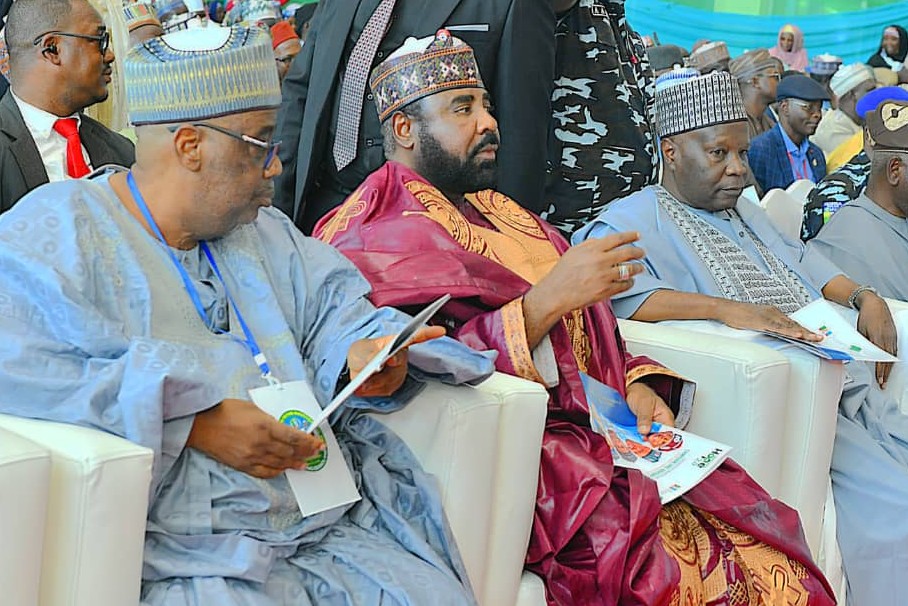
Here is the verified record. The Minister of Education, Dr Maruf Tunji Alausa, met the Director-General of the National Institute for Sports, Philip Shaibu, in Abuja. They discussed folding NIS training programmes into the Federal Government’s Technical and Vocational Education and Training platform. The Federal Ministry of Information reported that the aim is to equip young Nigerians with employable skills, expand job opportunities and strengthen the sports sector.
Notice the grammar of that sentence. It is an ambition, not a decision. The minister himself said further consultations would be required to establish the implementation framework. Neither published account of the meeting named a start date, a budget line or an intake figure.
What The Sports Training Integration Into TVET Proposal Actually Says
Two separate tracks were described in the same room, and conflating them is the fastest way to misread the news.
The first is a curricular framework. Alausa said it was developed with the National Universities Commission, the National Board for Technical Education, the National Commission for Colleges of Education, sports experts, the private sector and the National Sports Commission. It covers six areas: Sports and Exercise Science; Coaching and Development Science; Sports Management and Business; Sports Medicine and Rehabilitation; Sports Technology and Data Analytics; and Sports Law.
That framework is built for universities, polytechnics and colleges of education. It is degree-and-diploma territory, regulated by the NUC and the NBTE.
The second track is vocational. Alausa identified basic training, coaching and sports facility maintenance at the NIS as areas that could be folded into the national TVET platform, subject to the necessary approvals and programme requirements. Trainees could use the institute’s centres across eight states, with programmes of up to six months considered where appropriate.
These two things need different regulators, different money and different learners. A sports law module inside a university faculty and a six-month groundskeeping certificate in a private centre are not the same product. Announcing them together does not make them the same policy.
The Numbers That Decide Whether This Works
The minister put the national TVET programme’s reach at more than 250,000 trainees trained or graduated through roughly 1,200 centres over the preceding 12 to 18 months. About 98 per cent of those centres are privately operated. Trainees receive a monthly stipend of ₦30,000.
Those figures carry an awkward implication. If nearly every centre is private, the binding constraint on adding sports modules is not curriculum writing. It is accreditation and inspection capacity. Regulators would have to vet coaching, turf maintenance and fitness instruction in facilities they do not run. The six-area framework already exists on paper. The oversight machinery is the harder build.
The NIS side carries its own capacity question. Shaibu described expansion across the six geopolitical zones, more than 1,000 coaches graduated within a year, and a 2025 to 2035 strategic plan aimed at reducing dependence on government funding. That last detail deserves attention. An institute planning to wean itself off public money is simultaneously proposing to absorb a new cohort of subsidised trainees.
What A Learner Should Verify Before Paying
The employment cases the minister named are concrete: groundskeeping, pitch maintenance and games instruction, with local expertise replacing reliance on foreign workers. Shaibu named the matching constraint — a shortage of qualified games masters and certified coaches. He also cited Edo State’s decision to allocate five per cent of the 30 per cent continuous assessment score in primary and secondary schools to sports, a model that creates demand for exactly those coaches.
Until an implementation framework is gazetted, treat every offer as unverified. Ask five questions in writing: which body awards the certificate; how many contact hours the programme runs; whether the ₦30,000 stipend applies to this specific course; whether the centre holds current NBTE accreditation; and who supplies equipment for practical sessions. A centre that cannot answer all five is selling a promise rather than a qualification.
How Ghana’s Curriculum Review Compares
The continental comparison is instructive. Ghana’s education minister, Haruna Iddrisu, said a revised curriculum for kindergarten through junior high school, introducing coding, artificial intelligence, TVET and ethics, would be presented formally to the Ministry of Education and then sent onward to the President, Cabinet and Parliament, Citi Newsroom reported.
That is a visible pipeline with named stages. Nigeria’s sports proposal has cleared none of them. Blueprint’s account of the meeting confirms the minister’s language: a proposal, a suggestion to extend programme duration, and a reaffirmation of the ministry’s readiness to support. Readiness is not approval.
None of this makes the idea weak. The sports sector has genuine unfilled roles, and a coach certification pathway that lets retiring athletes earn is a sensible use of an institute that already exists. The problem is reporting. Education announcements in West Africa are routinely filed at the proposal stage and read by families as implementation.
The Action Step
If you are a student, parent, coach or centre operator, do one thing this month. Write to the National Board for Technical Education and the National Institute for Sports and ask when the sports training integration into TVET framework will be published, and which qualifications it will cover. Ask for the reply in writing.
Keep that reply. When a training centre advertises a sports coaching certificate next term, that document is your only reliable test of whether the programme is policy, or a press release.
Frequently Asked Questions
Has Nigeria officially approved sports training integration into TVET?
No. The Minister of Education proposed folding National Institute for Sports programmes into the TVET platform and said further consultations would be required to establish the implementation framework. No start date, budget line or intake figure was disclosed.
Which sports courses are covered by the new curricular framework?
Six areas: Sports and Exercise Science; Coaching and Development Science; Sports Management and Business; Sports Medicine and Rehabilitation; Sports Technology and Data Analytics; and Sports Law. The framework was developed with the NUC, NBTE, NCCE, sports experts, the private sector and the National Sports Commission, and is designed for universities, polytechnics and colleges of education.
Do TVET trainees still receive the ₦30,000 monthly stipend?
The minister cited ₦30,000 as the monthly stipend paid to trainees on the national TVET programme, which runs through roughly 1,200 centres, about 98 per cent of them privately operated. Whether that stipend would extend to new sports courses has not been stated, so confirm it in writing before enrolling.
FIRST TIME REACTIONS:
Be the first to leave us a comment – Sports Training Integration Into TVET: What Nigeria Approved, down the comment section.
JOIN US ON OUR SOCIAL MEDIA:
About Rosabella Eboh
Rosabella Eboh is an author at AfriLatest. With a passion for writing and a flair for creativity, she contributes original content and unique perspectives to the platform. Rosabella focuses on human-interest stories, cultural trends, and in-depth feature reporting.
View all articles by Rosabella Eboh-

 Car Reviews1 week ago
1955 Chevy Bel Air Restomod: What SEMA Really Proves
-
Startups2 months ago
What a Successful Dangote Refinery IPO Really Says
-
Health and Fitness1 month ago
Curly Hair Hydration: 5 Proven Steps That Actually Work
-
Savings & Investing3 weeks ago
Hidden Medicare Fees Draining Your Retirement Savings
-
Tech & Gadgets1 month ago
Apple Watch and AirPods Fall Deals: Save $120 Today
-
Health and Fitness4 weeks ago
9 Best Hair Thickening Shampoos for Men in 2026
-
University Admissions2 months ago
UNILAG 2026/2027 Admission: Direct Entry & Post-UTME Guide
-
Football2 months ago
South Carolina vs Alabama: Tide Roll to 35-10 Halftime Lead