
Trending Entertainment News
Iron Maiden 2027 Tour: 16 Final Dates, 2 Festivals
Iron Maiden 2027 tour adds 16 North American dates with Bullet For My Valentine and The Raven Age. Get dates, presale info, and why it’s the last run.


Iron Maiden are not done yet. The heavy metal legends have announced a 2027 North American run for their Run for Your Lives tour, and it will be the final leg of their 50th-anniversary celebration. The iron maiden 2027 tour news came Friday (Oct. 16), just as fans were preparing for the band to take a break from live performances next year.
Bassist Steve Harris explained the U-turn in a statement: “As many of our fans know, Maiden were planning on taking a break from live performances in 2027, but we’ve been enjoying this last leg in the USA and Canada so much that we all had a chat and decided we should take the show to parts we missed, particularly the North West and South East.”
The 2027 dates kick off April 14 at the Tacoma Dome in Tacoma, Washington, and wrap May 11 at UBS Arena in Belmont Park, New York. That’s 14 arena and amphitheater shows, plus two festival headline slots: Sonic Temple in Columbus, Ohio, on May 14 and Boardwalk Rock in Ocean City, Maryland, on May 16. According to Billboard, the tour will have played 107 shows by the time it concludes.
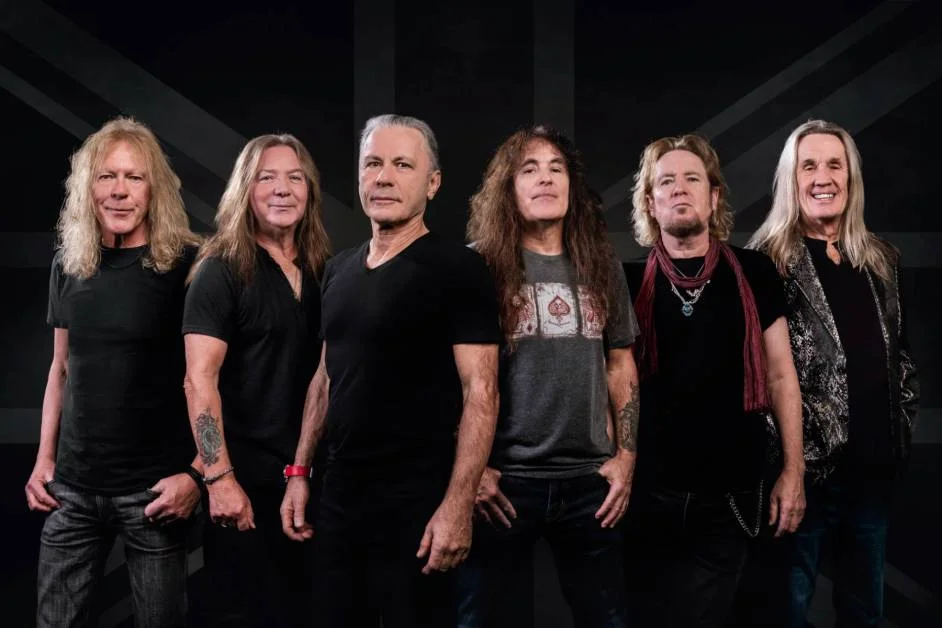
Bullet For My Valentine and The Raven Age will join as special guests. It marks the first time since 1983 that Iron Maiden has toured with two other British bands on the bill. That’s a serious piece of trivia for the old-school faithful.
Tickets go on sale to the general public Oct. 23, following an artist presale beginning Monday (Oct. 19). Additional presales will run throughout the week. Trooper VIP packages will also be available, with details at Iron Maiden’s website.
Why This Iron Maiden 2027 Tour Matters
This isn’t just another victory lap. The band is calling these dates “definitely the last” of the Run for Your Lives tour, per a press release. After this, the 50th-anniversary era is over.
Manager Rod Smallwood added context in a statement: “The first leg was terrific, huge sell-out crowds of all ages spanning multi-generations, some of the biggest shows we have ever played in North America… In fact it was so good we just have to come back and play some places we missed and bring Eddie’s Dive Bars with us!”
The 2026 leg included a sold-out stop at Tinley Park, Illinois, grossing $1,775,774 on Sept. 22, according to Pollstar. That’s real money, and it shows the demand is still there.
Harris also noted the festival challenge: “At festivals you are not just playing to your own fans so it’s always a challenge and we all love a challenge!”
What to Expect from the Setlist and Production
No official setlist has been confirmed for the 2027 dates, but if the previous legs are any indication, expect a career-spanning show with deep cuts and the classics. The production has been built around the 50th anniversary, and Eddie’s Dive Bars have become a fan favorite at the venues.
As Variety notes, Iron Maiden are 2026 Rock & Roll Hall of Fame inductees. That’s a nice feather in the cap for a band that has never had a track reach the Billboard Hot 100.
Full Iron Maiden 2027 Tour Dates
April 14 – Tacoma, WA – Tacoma Dome
April 16 – Vancouver, BC – Rogers Arena
April 18 – Portland, OR – Moda Center
April 20 – Wheatland, CA – Toyota Amphitheatre
April 22 – Chula Vista, CA – North Island Credit Union Amphitheatre
April 24 – San Bernardino, CA – Glen Helen Amphitheater
April 26 – Phoenix, AZ – Talking Stick Resort Amphitheatre
April 28 – Dallas, TX – Dos Equis Pavilion
May 1 – Tampa, FL – Benchmark International Arena
May 2 – West Palm Beach, FL – iTHINK Financial Amphitheatre
May 5 – Atlanta, GA – Lakewood Amphitheatre
May 7 – Raleigh, NC – Coastal Credit Union Music Park at Walnut Creek
May 9 – Hartford, CT – The Meadows Music Theatre
May 11 – Belmont Park, NY – UBS Arena
May 14 – Columbus, OH – Sonic Temple
May 16 – Ocean City, MD – Boardwalk Rock
*Festival dates
How to Get Tickets
The general onsale begins Oct. 23 at 10 a.m. local time. Artist presale starts Oct. 19 at 10 a.m. local time. Additional presales will run throughout the week. For festival on-sales, check the respective websites. Loudwire reports that Trooper VIP packages will be available.
Verdict: Should Fans Go?
Yes. If you’ve never seen Iron Maiden, this is your last chance to catch the Run for Your Lives tour. The band is still firing on all cylinders, and the addition of Bullet For My Valentine and The Raven Age makes it a strong bill from top to bottom.
Start with “The Trooper” if you’re new. It’s the song that gets every crowd moving, and live it’s an absolute monster. But honestly, the whole set is a greatest-hits package with a few surprises.
Don’t sleep on the iron maiden 2027 tour. These dates will sell fast, and once they’re gone, the 50th-anniversary era is done. Get your tickets, grab your Trooper beer, and scream for me.
Frequently Asked Questions
When do Iron Maiden 2027 tour tickets go on sale?
General public onsale begins Oct. 23 at 10 a.m. local time, following an artist presale starting Oct. 19 at 10 a.m. local time. Additional presales run throughout the week.
Who are the opening acts for the Iron Maiden 2027 tour?
Bullet For My Valentine and The Raven Age will join as special guests. It’s the first time since 1983 that Iron Maiden has toured with two other British bands.
Is this really the last Iron Maiden tour?
These dates are the final leg of the Run for Your Lives tour, which celebrates the band’s 50th anniversary. A press release states the 2027 dates “will definitely be the last” of this tour, but it doesn’t necessarily mean the band will never tour again.
Related Articles
- Keep curly hair hydrated this winter: 3-step layering
- Modern Warfare 4 Release Times: 3 Early Access Dates
- 9 Best Hair Thickening Shampoos for Men in 2026
- African Streaming Growth: 2 Nations, 1 Big Money Problem
- Best Documentary 2026: 1972 Cocktail Party Story
 Follow AFRILATEST on Google News
FIRST TIME REACTIONS:
Be the first to leave us a comment – Iron Maiden 2027 Tour: 16 Final Dates, 2 Festivals, down the comment section.
JOIN US ON OUR SOCIAL MEDIA:

Trending Game
Modern Warfare 4 Release Times: 3 Early Access Dates
Modern Warfare 4 release times explained: campaign early access Oct 16, DMZ Oct 20, full launch Oct 23. Preload is live now — here’s how to get in early.

Modern Warfare 4 release times are not one date. They’re three, and the first one has already passed for anyone who preordered digitally.
Call of Duty: Modern Warfare 4 rolls out in stages across Nintendo Switch 2, PlayStation 5, Xbox Series X/S, and PC. Campaign early access opened October 16. DMZ early access follows on October 20. The full game — multiplayer included — lands October 23 at midnight local time. If you bought a physical Standard Edition, none of the early windows apply to you. You wait for launch day like everyone else.
Here’s what each window actually gets you, and how to make sure you’re not stuck downloading 115GB while your friends are already in a lobby.

The Three Modern Warfare 4 Release Times That Matter
October 16: Campaign early access. Digital preorders only. Activision hasn’t published an exact unlock hour, so treat it as a rolling regional rollout rather than a synchronized global switch.
October 20: DMZ early access. Again, digital preorders only. Some sources predict a 10 AM PT unlock (1 PM ET / 6 PM BST), but Activision hasn’t confirmed that time. The official Call of Duty blog confirms the date and the digital preorder requirement, and notes that play time is subject to outages and time zone differences.
October 23: Full release, midnight local time. Multiplayer, the complete campaign, and everything else. This is the only date that applies to physical edition buyers.
One thing worth flagging early: the campaign is strictly solo. Radio Times confirmed there’s no co-op in the campaign, and Infinity Ward explained on X that “every aspect of Modern Warfare 4 is anchored in the game’s narrative.” If you want to play with friends, you’re waiting for the 23rd and heading straight to multiplayer.
How To Use The Preload Window Properly
PC preload is already live. That’s the single most useful fact in this whole rollout, because installing 115GB takes time you don’t want to spend on launch night.
The reported global preload schedule started October 14 at 9 PM PT, which rolled into October 15 for most regions: midnight EDT in New York, 5 AM BST in London, 12 PM CST in Beijing, 1 PM KST/JST in Seoul and Tokyo, and 2 PM AEST in Melbourne. PC players should check Activision’s platform-specific schedule separately — it listed PC preload for October 15 at 9 AM PT.
Preload availability varies by platform and storefront, so open your library and look for the download button rather than assuming your version unlocked on schedule.
Before you start the download, do four things. Free up SSD space — the published PC requirements list 115GB, per PC Gamer. Update your graphics drivers. Confirm the right content packs are selected in the launcher. Then check for a patch before you hit play, because the Call of Duty HQ update reset some settings for players.
That HQ update is worth understanding. It redesigned the interface, puts Modern Warfare 4 more prominently on the platform, and lets you manage individual content installations — roughly 38GB for multiplayer and 5GB for DMZ. Warzone and Black Ops 7 need their own separate updates, so your total download depends entirely on what you already have installed.
The DMZ Early Access Is The Real Story
DMZ is the mode most likely to pull you away from everything else, and the early access window gives preorder players four days with it before multiplayer even opens.
It’s an extraction shooter with persistent progression. You deploy into Hajin, fight AI forces and rival Operators, loot, craft, complete objectives, and try to reach the final exfil with your rewards intact. Squads or solo — your call.
Your home base is the Forward Operating Base, a navigable encampment where you stash loot, take Orders, and manage Active Duty Operators. Operators are mostly cosmetic, but they grow stronger as you survive deployments and earn Traits. Each one carries Dog Tags that improve in quality as they level, and Trait Points unlock across three trees — 66 Traits total, split evenly, with a maximum of 18 points before you hit Onyx III Dog Tag status.
If an Operator dies during a deployment, they go MIA and can’t redeploy until recovered. Vault Edition buyers get an extra Active Duty slot — three instead of two.
Operator Prestige is separate from standard progression and optional. Meet three requirements, hand over your Gear and in-game Funds, and your Traits reset in exchange for a random permanent Prestige Trait. You can earn up to three. After that, further Prestiges still work, they just stop granting new Traits.
What Arrives After Launch
Shipment lands October 27, four days after the global release. Its compact layout has always been the fastest route to weapon levels and camo unlocks, so if you care about progression, have your preferred loadouts ready before it drops.
Possession arrives October 29 as a limited-time mode, Infected follows October 30, and Season 1 begins November 6. That’s a two-week pre-season — short enough that early progression objectives are worth knocking out fast.
At launch you get Ground War locations (Wolf Stadium, Forest, Farmland), standard 6v6 maps (Cache, Coal, Lithium, Lotus), plus Kill Block and other arenas. Modes include Team Deathmatch, Domination, Hardpoint, Search, Kill Confirmed, Free-for-All, Gun Game, and Gunfight, alongside newer additions like Hijacked, Inflation, and Collateral.
Who Should Buy Early, And Who Should Wait
If you’re preordering digitally for the campaign or DMZ, the Standard Digital Edition gets you both early windows. The Vault Edition adds operator packs, weapon content, and that extra DMZ Operator slot — buy it for the extras, not for earlier access, because the early access benefit is identical.
Skip the early windows entirely if you bought physical, if you only care about multiplayer, or if you’d rather wait for reviews before spending. Nothing about Modern Warfare 4 release times rewards impatience beyond a few days of campaign and DMZ.
For everyone else: get the preload running today, clear the 115GB, and decide which content packs you actually want. October 23 at midnight arrives whether you’re ready or not.
Frequently Asked Questions
Do I need a digital preorder to play Modern Warfare 4 early?
Yes. Campaign early access on October 16 and DMZ early access on October 20 are limited to players who digitally preorder or pre-purchase the Standard Digital Edition or Vault Edition. Physical Standard Edition buyers get no early access and must wait for the October 23 launch.
Does the Modern Warfare 4 campaign have co-op?
No. The campaign is a solo experience. Multiplayer is a separate mode that unlocks with the full game on October 23, and Infinity Ward has said every aspect of the game is anchored in its narrative.
How much storage does Modern Warfare 4 need?
The published PC requirements list 115GB of available storage. Within Call of Duty HQ, multiplayer is roughly 38GB and DMZ is about 5GB, with Warzone and Black Ops 7 requiring their own separate updates.
Related Articles
- Burna Boy KCee Attend Jowizaza Newborn Party — Zubby Stole It
- Sleep Earbuds $60 Off: Anker Soundcore Sleep A20 Deal
- Athleticism Is the New Fitness Flex: Train to Move
- Ukrainian drones hit Russian data centers: Yandex outages
- Kojima on Joker 2: Why the Divisive Flop Will Age Well
Receive alerts for Modern Warfare 4 release times and more like it.
FIRST TIME REACTIONS:
Be the first to leave us a comment – Modern Warfare 4 Release Times: 3 Early Access Dates, down the comment section.
JOIN US ON OUR SOCIAL MEDIA:
Entertainment TV & Film
African Streaming Growth: 2 Nations, 1 Big Money Problem
African streaming growth is surging in Nigeria and Kenya, but PwC’s 2026 outlook shows monetisation is the real test. Here’s what fans and creators face.

Nigeria and Kenya are the two markets everyone in African streaming wants a piece of right now. PwC’s Africa Entertainment and Media Outlook 2026–2030, launched in Johannesburg on 13 October, puts OTT video revenue growth at 20.4% a year in Nigeria and 15.9% in Kenya through 2030. That is the headline. The fine print is where it gets uncomfortable.
Average annual revenue per subscription is projected to hit just $42 in Nigeria and $54 in Kenya by 2030. The global average sits above $100. So the audience is arriving fast, the money is not keeping pace, and the gap between those two facts is the whole story of African streaming growth right now.
Why The Subscriber Numbers Look Good And The Bank Balance Doesn’t

Kenya’s wider entertainment and media market is expected to reach $6 billion by 2030. OTT video revenue there is projected to more than double, from $15 million in 2025 to $31 million in 2030. Internet advertising nearly doubles too, climbing from $313 million to $603 million over the same period.
Nigeria’s overall E&M market is forecast to reach $5.3 billion by 2030, growing 6.9% a year. Big numbers. But low average revenue per subscription is explicitly flagged as a constraint on commercial returns, and that constraint shapes everything: what gets licensed, what gets produced, and what gets pulled off the shelf.
According to PwC’s outlook, a sustainable OTT proposition has to balance affordability, differentiation and monetisation. Translation: you cannot just keep charging more.
The Price Increase Nobody Wanted
Netflix raised prices in major markets including South Africa and Nigeria in 2025. Then came the harder signal. Showmax shut down at the end of April 2026, following earlier exits like BritBox in South Africa and the shutdown of Paramount Africa’s operations.
These aren’t small failures. Showmax was one of the most recognisable streaming brands on the continent. Its closure tells you that subscriber growth alone doesn’t pay the bills when data costs, payment fragmentation and price sensitivity eat into every naira and shilling.
Nigeria made that squeeze worse in early 2025, when the Nigerian Communications Commission approved a 50% telecom tariff increase. Rising data costs directly affect how much streaming people can afford to do. When watching a show costs more in data than the subscription itself, something has to give.
What Actually Works When Subscriptions Don’t
Ad-supported streaming is gaining real ground. France’s TF1+ launched across 22 Francophone African countries in June 2025, and South Africa’s SABC Plus recorded user growth milestones by February 2026. AVOD suits markets where affordability limits paid subscriptions, because the viewer pays with attention instead of cash.
Hybrid models are also spreading. YouTube Premium’s free tier plus paid upgrade is the template everyone studies. Local players are experimenting too: Circuits arrived in December 2024, Kava in August 2025, and EbonyLife ON Plus in November 2025, each testing pricing built around local audiences rather than imported assumptions.
Bundling is the other lever. Telecom-led moves, including MTN’s work with video software provider Synamedia, point to a future where streaming rides on the data plan rather than competing with it.
Why African Streaming Growth Still Has A Creator Problem
Here’s the part that doesn’t get enough attention. Audience growth doesn’t automatically become creator income. The TMCon Creators Report 2024 found that 54% of African creators earn less than N100,000 monthly, and 73.4% treat content creation as a side hustle rather than a full-time career.
Only 20.7% earn from sponsored content. Just 11.9% rely on ad revenue. Meanwhile, top creators in Nigeria, Kenya and South Africa can earn between $1,000 and $5,000 monthly by stacking multiple platforms and income streams. The ceiling exists. Very few people reach it.
Afrocritik’s analysis argues that future growth will depend on centralised, ecosystem-driven access rather than scattered subscription models that can’t sustain themselves. That’s a polite way of saying the current playbook is broken.
Gaming And The Attention Economy Nobody Prices Correctly
Gaming revenue is forecast to reach $431 million in Nigeria and $133 million in Kenya by 2030, growing faster than the global market in both countries. In Nigeria, social and casual games made up 77% of gaming revenue in 2025.
That matters because Nigerian data consumption is heavily influenced by streaming and gaming together, and internet access is overwhelmingly mobile. Every gigabyte spent gaming is a gigabyte not spent streaming. Platforms are competing for the same wallet, and the wallet is thin.
5G penetration by 2030 is forecast at 51.6% in Kenya and just 35.3% in Nigeria. Faster connections will help, but they won’t fix the pricing math on their own.
What To Watch Next
Cinema is quietly having a moment. Nigeria’s cinema revenue is forecast to grow from $10 million to $29 million by 2030, a 22.8% annual clip, with local films accounting for almost half of box office revenue in 2025. That’s a signal audiences will pay for the right thing, in the right setting, at the right price.
The lesson from Broadcast Media Africa’s report is blunt: advertising-led models, bundled subscriptions and flexible licensing will decide who survives. Audience growth without monetisation is just expensive popularity.
So when you open your streaming app tonight and notice another price hike, or another title that vanished, you’re watching the real African streaming growth story play out. The next two years will show which platforms understood that scale and affordability have to coexist. The ones that didn’t are already gone.
Frequently Asked Questions (African streaming growth)
Which African countries are leading streaming growth?
Nigeria and Kenya are the standout markets. PwC’s Africa Entertainment and Media Outlook 2026-2030 projects OTT video revenue growth of 20.4% a year in Nigeria and 15.9% in Kenya through 2030.
Why is monetisation still a challenge for African streaming?
Average annual revenue per subscription is forecast to reach only $42 in Nigeria and $54 in Kenya by 2030, well below the global average above $100. Rising data costs, price sensitivity and payment fragmentation make it hard to convert large audiences into sustainable revenue.
What happened to Showmax in 2026?
Showmax shut down at the end of April 2026. The closure followed earlier exits including BritBox in South Africa and the shutdown of Paramount Africa’s operations, highlighting structural challenges in sustaining large-scale streaming services across unpredictable African markets.
Related Articles
- Ukrainian drones hit Russian data centers: Yandex outages
- Kojima on Joker 2: Why the Divisive Flop Will Age Well
- GBU-43/B MOAB: Why This 21,600-lb Bomb Won’t Crack Iran
- Love Afrobeats? Score a 4LP Fela Kuti Box Set
- Tems: Writing Music Helps Me Heal, Release Pain
FIRST TIME REACTIONS:
Be the first to leave us a comment – African Streaming Growth: 2 Nations, 1 Big Money Problem, down the comment section.
JOIN US ON OUR SOCIAL MEDIA:
Entertainment TV & Film
Crystal Lake Ending Explained: 7 Twists That Change Jason
Crystal Lake ending explained: the Peacock prequel reveals Jason’s true origin, Project Argonaut, and why he can’t die. Here’s every twist.

Crystal Lake is Peacock’s eight-episode Friday the 13th prequel, and its finale rewrites everything you thought you knew about Jason Voorhees.
The show premiered October 15, with all eight episodes dropping at once. Set in the early 1970s, it follows Pamela Voorhees (Linda Cardellini) as she grieves the drowning of her son Jason (Callum Vinson) at Camp Crystal Lake. What looks like a straightforward slasher prequel turns into something stranger by the final two episodes. The Crystal Lake ending explained here is not a ghost story, and it is not a curse. It is corporate science gone wrong, and it changes how the entire film franchise reads.
Jason Voorhees Has a Father, and a Secret

Episode 6 introduces Elias Wittering, played by Hamish Linklater. Fans who caught the name in the closing credits knew immediately who he was: Jason’s father. The character was written for 1986’s Friday the 13th Part VI: Jason Lives but never filmed, and his name later surfaced in Jason Goes to Hell and various comics and games.
Elias is not a Voorhees. Pamela only took that surname after going on the run with Jason. In 1959 New York, she was Pamela Scott, a nightclub singer, pregnant by her boyfriend Elias, a salesman for Bellflower Chemical. After what looked like a miscarriage, Elias brought her to a Bellflower facility in Houston. The company said the baby could be saved. They married. She became Mrs. Wittering.
Then the treatments started, and the show’s seventh episode lays out exactly what they were for.
Project Argonaut and the Real Reason Jason Cannot Die
Bellflower was running Project Argonaut, an experiment designed to make human bodies survive nuclear war. Elias says the team replicated the cellular process of cockroaches so people could withstand radioactive fallout. Pregnant women in the trial were given procedures. Most of the babies were deformed, many died, and almost none could live normally.
Except Jason. He is the first successful product. As Elias puts it, trauma actually makes him stronger, and could spur accelerated physical growth. That single line accounts for his appearance, his increasing size across the films, and every wound he walks away from.
The show also explains Pamela’s instability. Bellflower gave her experimental mood stabilizers that altered her brain chemistry, and she stopped taking them after she learned the truth and fled with Jason to Crystal Lake. Her madness has a chemical source.
This is the most debated reveal in the series, and it turns a supernatural slasher into science fiction. The IGN breakdown of the finale notes that the franchise already went this direction once: 2002’s Jason X opens in 2008 with Jason held at a Crystal Lake Research Facility, where Dr. Wimmer, played by David Cronenberg, argues that his ability to regenerate damaged tissue cries out for more research. Bellflower is the answer Dr. Wimmer never got.
Who Killed Barry and Claudette
Episode 5 recreates the opening of the 1980 film almost shot for shot. Counselors Barry and Claudette sneak off together, and a POV shot shows the killer attacking them. Then the show keeps going. Pamela walks in on a murder already in progress.
The killer is Grace, played by Gwendolyn Sundstrom. She is 13, she was Jason’s only real friend, and she had just lost her mother, killed by Pamela without Grace knowing. She had also been spending time with an older group of hippie kids. That is a fourth killer in the franchise’s history, alongside Pamela, Jason, and Part 5’s Roy.
The Finale: 1971, Elias, and the Setup for 1980
In the present timeline, Pamela finally finds Jason, now fully grown with a bag over his head. He murders Elias, then attacks Pamela, and stops at the last second. A local shoots Jason, and he survives, because we now know he is essentially impervious to damage. A delirious Pamela says her son is strong, stronger than anyone gave him credit for.
That leaves the story exactly where the original movie begins: Pamela seeking revenge for a son who is not actually dead, while Jason lurks in the woods. The Inverse explanation of the ending makes the same point, that the show was meant to set up the first film’s twist and instead became a full sci-fi thriller.
Is It Worth Watching
The case against the show is real. IndieWire’s review argues that the penultimate flashback answers every question and the finale mostly sums up, effectively making a two-hour story stretched over eight. If you want the reveals without the padding, watch Episode 7 and Episode 8.
Cardellini is the reason to stay. She plays the forlorn recluse and the voracious hedonist with equal conviction, and Will Catlett’s police chief Levon Brooks is a genuine highlight. The kills are creative. The pacing is not.
One small note worth knowing: the snake Pamela frees from the camp pantry in Episode 1 is a deliberate nod to a real bull snake killed during the filming of the 1980 movie. Creator Brad Caleb Kane told Deadline no animals were harmed this time.
Who Should Watch Crystal Lake
If you have watched every Friday the 13th film and want the lore gaps filled, this is for you, and you can skip straight to Episode 7. If you want a lean slasher with tight pacing, the eight-hour runtime will test you. If you have never seen a Friday the 13th movie, start with the 1980 original, then come back. The Crystal Lake ending explained above only lands if you know what Pamela becomes.
The show has already done the hardest thing a prequel can do. It made a 45-year-old drowning scene mean something new.
Frequently Asked Questions (Crystal Lake ending explained)
Does Jason actually drown in Crystal Lake?
No. Jason survives his drowning at Camp Crystal Lake because of the Bellflower Chemical treatments he received as a baby through Project Argonaut. The show reveals he is essentially impervious to damage, which also explains his survival in later films.
Who is Jason’s father in Crystal Lake?
Elias Wittering, played by Hamish Linklater. He worked for Bellflower Chemical and oversaw Project Argonaut. The character was written for Friday the 13th Part VI: Jason Lives but the scene was cut and never filmed.
Why is Pamela Voorhees insane in Crystal Lake?
The show ties her instability to Bellflower. The company gave her experimental mood stabilizers that altered her brain chemistry, and she stopped taking them after learning the truth about the experiments and fleeing with Jason.
Related Articles
- Ukrainian drones hit Russian data centers: Yandex outages
- Kojima on Joker 2: Why the Divisive Flop Will Age Well
- GBU-43/B MOAB: Why This 21,600-lb Bomb Won’t Crack Iran
- Love Afrobeats? Score a 4LP Fela Kuti Box Set
- Tems: Writing Music Helps Me Heal, Release Pain
FIRST TIME REACTIONS:
Be the first to leave us a comment – Crystal Lake Ending Explained: 7 Twists That Change Jason, down the comment section.
JOIN US ON OUR SOCIAL MEDIA:
-

 Startups3 weeks ago
What a Successful Dangote Refinery IPO Really Says
-
Trending Entertainment News6 days ago
Taylor Swift Joins Beatles as Only Acts With 100 Weeks at No. 1
-
World News3 weeks ago
Carney Calls U.S. Tariffs a Miscalculation as Canada Retaliates
-
Fintech3 weeks ago
OPay No Dey Comot Nigeria: How to Verify Fintech News
-
Nigerian Business3 weeks ago
Moniepoint POS Network: How to Buy Dangote Shares
-
Football3 weeks ago
Mexico vs Colombia 2026: Márquez Debut Ends in Defeat
-
Fintech3 weeks ago
OPay Investing in People to Build a Better Nigeria
-
Black Celebrities3 weeks ago
Brandi Carlile: Rock Star in Her Prime, On Tour Now