Health and Fitness
Best Work Backpacks: 7 Editor-Tested Picks for 2026
Best work backpacks tested by Women’s Health editors. 7 picks for comfort, style, and storage. Find your perfect commute bag today.

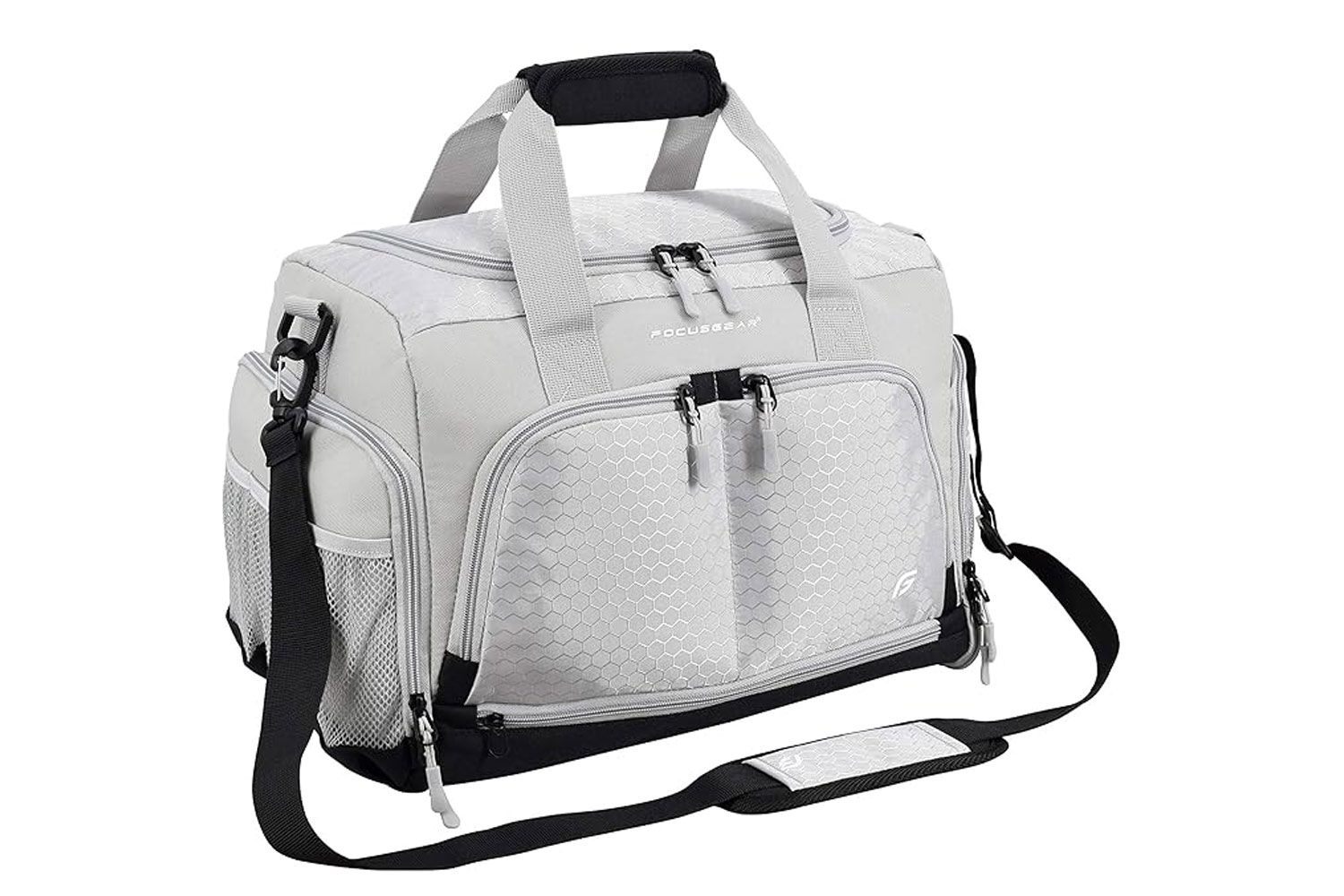
You want a work backpack that carries your laptop, your lunch, and your gym clothes without wrecking your shoulders. The best work backpacks solve that problem, and Women’s Health editors spent a month and a half testing them to prove it. Eight staffers carried these bags through commutes, office days, and errands. They judged comfort, storage, durability, and style. The result: a short list of backpacks worth your money.
Why Your Tote Is Failing You
A tote bag puts all the weight on one shoulder. That’s why your neck aches by 3 p.m. and why you keep switching arms on the train. A backpack distributes weight across both shoulders and your chest. Padded, adjustable straps do the heavy lifting. Contoured straps are even better because they follow your body’s shape and spread the load more evenly. Look for a cushioned back panel and breathable mesh, too. Those two features keep you from arriving at the office with a sweaty back.
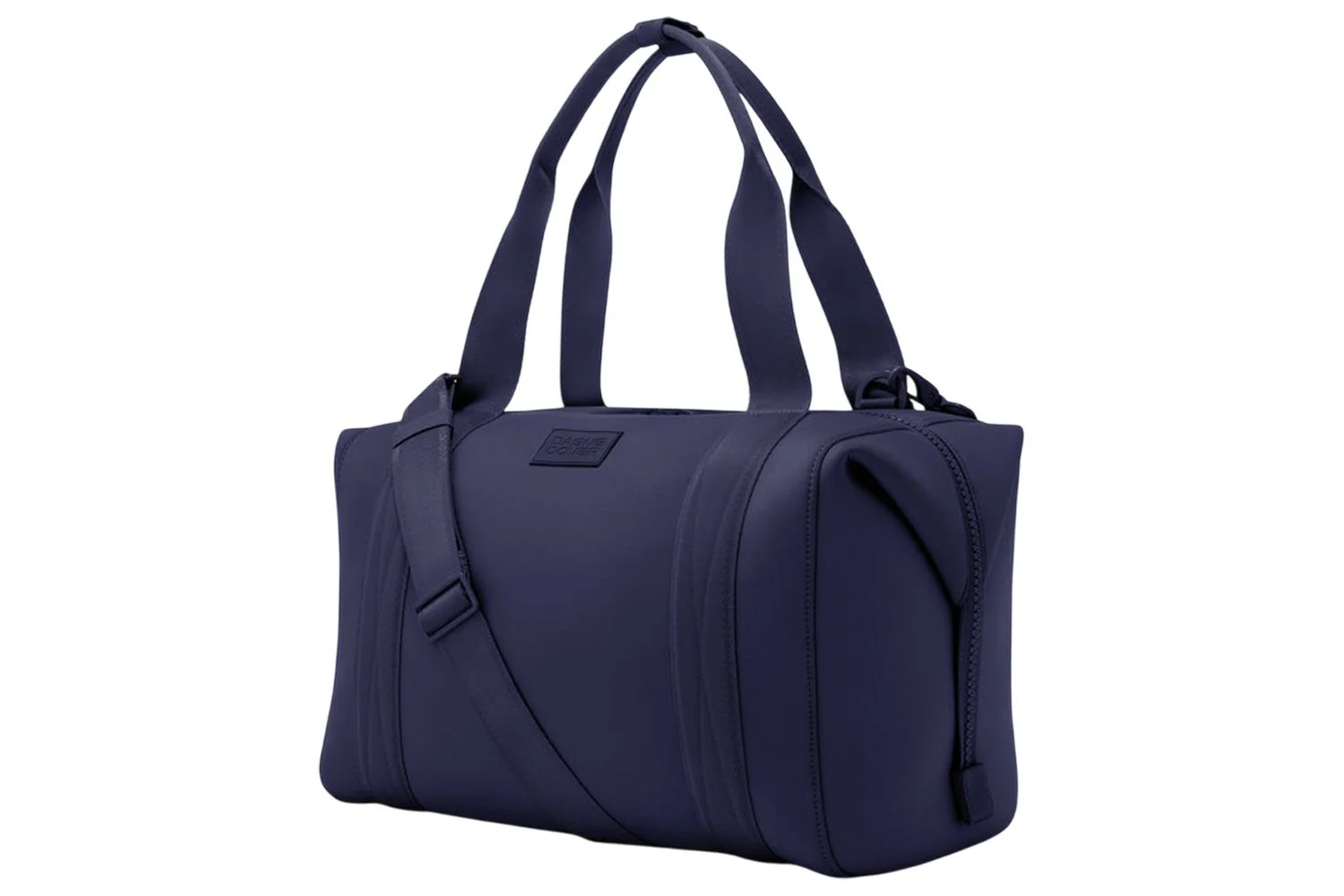
What to Look For in the Best Work Backpacks
Size matters more than you think. Most testers—women with office jobs who commute—preferred a 20L to 22L bag. If you want a work-and-travel hybrid, go 22L or larger. A dedicated laptop compartment is non-negotiable for most people. Extra pockets for your charger, keys, water bottle, and headphones stop you from digging through one giant abyss. And if you bring gym clothes or lunch, make sure there’s room. Style counts, too. This is a work backpack, not a hiking pack. A streamlined shape and neutral colorway will look right with your office clothes and your casual outfits.
Step 1: Measure Your Daily Load
Before you buy anything, empty your current bag onto a table. What do you actually carry every day? Laptop, charger, notebook, water bottle, snacks, gym shoes, a change of clothes? Write it down. Then match that list to a bag’s capacity. The Women’s Health testers found that 20L to 22L handled most commutes. If you regularly pack shoes and a lunch, lean toward 22L or up. Don’t guess. A bag that’s too small frustrates you daily. One that’s too big tempts you to overpack, and then you’re carrying 15 pounds on your back.
Step 2: Prioritize Comfort Features
Comfort is the whole reason you’re switching from a tote. Check for padded, adjustable shoulder straps first. Contoured straps are a bonus. Next, look for a cushioned back panel and breathable mesh. Those keep the bag from digging into your spine and trapping heat. The Shape team also noted that water-resistant or waterproof materials matter, especially if you commute in unpredictable weather. A bag that soaks through in a downpour will ruin your laptop and your day.
Step 3: Organize Your Essentials
A good work backpack has pockets inside and out. You want a dedicated laptop sleeve, a water bottle holder, and small zippered compartments for keys, wallet, and chargers. Some bags add a shoe compartment or a trolley sleeve for travel. The more pockets, the less time you spend rummaging. But don’t overdo it. Too many tiny pockets can be as annoying as none. Find a balance that matches how you actually pack.
Step 4: Test the Bag in Real Life
Buy from a store with a good return policy. Load the backpack with your actual daily gear. Wear it around the house for 20 minutes. Adjust the straps. Does it dig into your shoulders? Does it slide off? Does the back panel feel breathable? If you can, take it on a short walk. The Women’s Health team tested their picks for six weeks. You don’t need six weeks, but you do need more than a two-minute try-on. If it fails at home, return it.
Mistakes to Avoid
Don’t buy a backpack just because it’s trendy. A viral bag might not fit your laptop or your commute. Don’t ignore the return window. Don’t assume one size fits all—your torso length and shoulder width matter. And don’t overlook the weight of the empty bag itself. A heavy bag adds to your load before you’ve packed a single thing. The best work backpacks feel light even when they’re full.
What the Editors Actually Recommend
The Women’s Health team tested a range of stylish work backpacks. They carried them to the office, on commutes, and through daily errands. After weeks of real-world use, they narrowed it down to the ones they’d actually recommend. The key takeaways: comfort comes from padded, contoured straps and a breathable back panel. Storage comes from thoughtful pockets. Style comes from a clean shape and neutral colors. You don’t need to spend a fortune, but you do need to match the bag to your routine.
For more details on the specific models and testing process, see the full guide from Women’s Health. If you’re also looking for a gym bag that doubles as a work bag, the Shape team’s picks offer similar insights on pockets, materials, and durability. And if you’re investing in skincare devices for your post-work routine, the Women’s Health microcurrent guide covers what dermatologists recommend.
Your First Step Today
Grab your current bag and empty it. List everything you carry. Then measure the total weight and volume. That list is your shopping checklist. The best work backpacks for you will match that list, fit your frame, and feel comfortable after a mile. Start there, and you’ll stop dreading your commute.
Frequently Asked Questions
What size work backpack should I get?
Most women with office jobs who commute prefer a 20L to 22L bag. If you want a work-and-travel hybrid, go 22L or larger. Testers who carry gym clothes or lunch often lean toward 22L and up.
What features make a work backpack comfortable?
Look for padded, adjustable shoulder straps, contoured straps for ergonomic fit, a cushioned back panel, and breathable mesh panels. These distribute weight evenly and prevent shoulder and neck strain.
How long should I test a work backpack before deciding?
Load it with your actual daily gear and wear it around the house for at least 20 minutes. Adjust the straps and check for digging or sliding. If possible, take a short walk. The Women’s Health team tested their picks for six weeks, but you can get a good sense in a day.
Related Articles
- GBU-43/B MOAB: Why This 21,600-lb Bomb Won’t Crack Iran
- Tems: Writing Music Helps Me Heal, Release Pain
- Big Walk Dev Explains Lack of Xbox: A Masterstroke or Missed Opportunity?
- Amazon Bee AI Devices: Frontier vs Eclipse Compared
- Billy Joel Health Update: Hydrocephalus Tests Before Tour
 Follow AFRILATEST on Google News
FIRST TIME REACTIONS:
Be the first to leave us a comment – Best Work Backpacks: 7 Editor-Tested Picks for 2026, down the comment section.
JOIN US ON OUR SOCIAL MEDIA:

Health and Fitness
Hair Dye Safety: What Works, What Doesn’t, What’s Unproven
A practical hair dye safety guide: patch tests, bleach timing and scalp care, using celebrity colour changes as a cautionary case study.

The outcome you want is straightforward: a new colour that looks good, holds up, and leaves your scalp where it belongs. The fastest way to lose it is to copy a celebrity’s finished result while skipping the part of the process nobody photographs. That gap is where hair dye safety usually fails.
Jacob Elordi spent a weekend in New York City hiding his. According to Elle, the actor was photographed on two dates with Kendall Jenner, at Paranormal Activity on Broadway on Saturday and outdoors in fall layers on Sunday. He wore a beanie both times and added a hoodie on the second day for extra coverage. Even so, a patch of blond showed at the back of his hat. He has not said why he changed colour, and he has not shown the full look.
That concealment is a useful starting point for a health conversation, because it separates the outcome from the process. Blond is a result. Testing, timing and a professional who knows what your scalp can take is the process. Most hair damage happens when someone chases the first without the second.

Why Hair Dye Safety Matters More Than The Shade
Your scalp is skin. It absorbs, it reacts, and it remembers.
A dye applied to a calm scalp and the same dye applied to skin that is already irritated or freshly relaxed are not the same event. Dermatologists and dye manufacturers have long recommended patch testing before application, and most box kits carry the instruction on the leaflet. Allergic reactions to hair colour are a recognised, documented problem, not a freak accident. This is the strong end of the evidence: contact allergy to dye chemicals exists, it can develop after years of uneventful use, and once it appears it tends to persist.
The weak end is where most online argument lives. Questions about repeated dye exposure and long-term cancer risk have been studied for decades with mixed results. Research is still ongoing. No single study justifies panic, and no single study justifies dismissal either. Anyone who tells you the matter is settled is selling something.
What the celebrity coverage does establish is narrower and more reliable: professionals do not apply colour to an untested scalp, and they do not treat colour as a five-minute decision.

Hair Dye Safety Steps That Actually Hold Up
First, patch test 48 hours ahead. A small amount of dye behind the ear or on the inner forearm, left alone, tells you what your immune system thinks before your whole head finds out. Skip this and you are gambling on a reaction you cannot undo.
Second, be honest about your hair’s history. A relaxer, a recent henna application or a bleach job from six weeks ago changes what the next chemical can safely do. Salons in Lagos, Accra and Nairobi handle this daily, and the good ones ask. If yours does not ask, volunteer it.
Third, treat bleach as the serious step it is. Lifting dark hair to blond means removing pigment, and removing pigment means chemical stress on the shaft. Doing it in one sitting to save time raises the odds of breakage and scalp burns. Two sessions with a gap between them is slower, and safer.
Fourth, know what natural means on a label. Henna and herbal dyes are not automatically gentler. So-called black henna has been repeatedly flagged by dermatologists and regulators because it is often mixed with the same dye chemicals used in conventional colour, and applied to skin rather than hair. A plant on the box is not a safety guarantee.
Fifth, space out chemical services. Colour, relaxer and bleach inside the same fortnight is a schedule for damage. Give the scalp weeks, not days.
The Mistakes That Undo Everything

The biggest one is chasing a specific shade in a single appointment. The second is dyeing over an irritated scalp because an event is coming. The third is assuming a salon visit is protection. A salon reduces risk. It does not remove risk, and no stylist can test your immune system on your behalf.
None of this is exotic. Hair dye safety is mostly bookkeeping: what your scalp has already been through, and when.
It is worth noting that AOL reported Jenner’s platinum bob at the end of October, worn for a Paris, Texas Halloween costume. The same report notes she had gone blonde before, for looks referencing Pamela Anderson and Marilyn Monroe. Even with professional teams, this is a repeated, staged exercise across years, not one dramatic afternoon. AOL also reported that actor Paul Anthony Kelly went bleach blonde for a television role, in his case with highlights styled around the part rather than a full-lift from dark.
Meanwhile, AOL UK reports that Olivia Jade has been photographed in New York with art dealer PC Valmorbida following her reported split from Elordi. Personal lives move quickly. Scalp recovery does not.
Your First Step Today
Before you book anything, arrange a patch test. If you are using a box dye, test with the product you intend to apply, not a different brand. If you are going to a salon, ask to be tested before the appointment, and if they refuse, take your scalp somewhere else. That single step is the difference between hair dye safety being a phrase in an article and something you have actually done.
The realistic result is a colour you wanted, on a scalp that is not itching, weeping or shedding. You will not get certainty about every long-term question, because nobody can give you that today. What you get is control over the risks that are known and manageable, and a habit of not treating a preliminary headline as a diagnosis.
Frequently Asked Questions
Do I really need a patch test before dyeing my hair?
Yes. Patch testing 48 hours ahead is standard guidance from dye manufacturers and dermatologists. It will not predict every reaction, but it is the cheapest way to find out whether your skin tolerates a product before it goes on your whole scalp.
Is hair dye linked to cancer?
The research is mixed and still ongoing. Studies over several decades have not produced a settled answer, and no single study justifies either panic or dismissal. The risks that are well documented and manageable are skin-related: irritation and contact allergy.
Are natural or herbal dyes safer than conventional ones?
Not automatically. Products marketed as black henna, for example, have been repeatedly flagged because they are often mixed with the same dye chemicals found in conventional colour. Read the ingredient list rather than the front of the box.
FIRST TIME REACTIONS:
Be the first to leave us a comment – Hair Dye Safety: What Works, What Doesn’t, What’s Unproven, down the comment section.
JOIN US ON OUR SOCIAL MEDIA:

About Paul Nwogo
Paul Nwogo is an engineer, published author, and the Head Manager at AfriLatest. He has written numerous books available on Amazon covering a diverse range of topics, including health, personal finance, relationships, work ethics, and scam survival. With his technical background and passion for writing, Paul now oversees the editorial direction of AfriLatest, delivering practical, accurate, and engaging content on trending news, music, and global lifestyle topics.
View all articles by Paul NwogoHealth and Fitness
Bauchi Trains Health Workers In Nutrition Commodity Forecasting
Bauchi trained health workers in nutrition commodity forecasting for MMS and iron-folic acid. What the method fixes, and where the evidence thins out.

The outcome you want is unglamorous. A pregnant woman walks into a primary healthcare centre in Ganjuwa and the iron and folic acid tablets are on the shelf. Not ordered, not in transit, not promised for next week. On the shelf, that morning.
Reaching that point is an arithmetic problem before it is a clinical one. Someone has to know how many women will attend next quarter, how many tablets each will need, how much is already in the store, and when the stock already sitting there expires. Bauchi State has just taken a group of health workers through that arithmetic under the name nutrition commodity forecasting.
The two-day exercise, run by Nutrition International with the Bauchi State Primary Health Care Board and the Bauchi State Drugs and Medical Consumables Management Agency, covered multiple micronutrient supplementation (MMS) and iron and folic acid supplementation (IFAS), Leadership reported. Participants came from four local government areas and included maternal and child health officers, nutrition focal persons, essential drugs officers, store officers, procurement staff and logisticians.
What Nutrition Commodity Forecasting Actually Fixes
Both supply failures hurt patients, and they hurt differently. Understocking means a woman leaves the clinic without tablets. Overstocking means money sits on a shelf until it expires, and that same money is unavailable for something else it was meant to buy.
Asabe Emmanuel Lekwot, Nutrition International’s state coordinator, put both in one frame: overstocking and understocking alike can undermine the delivery of nutrition services. Forecasting is the discipline that sits between those two failures. It treats nobody. It decides whether the treatment exists when the patient arrives.
That distinction matters in a country where nutrition commodities compete for the same scarce naira as everything else in a facility’s budget. A forecast that is wrong by a wide margin does not just create an empty shelf or a full store. It makes the next budget request easier to dismiss.
The Steps, In The Order That Works

First, choose the forecasting method that matches the data you actually hold. The Bauchi sessions covered four approaches: consumption-based forecasting, service-based forecasting, morbidity-based forecasting and demographic forecasting. Consumption-based uses records of what was dispensed. Service-based uses expected attendance at the facility. Demographic uses the population the facility serves.
Second, pull the real records. Facilitators built the practical exercises around consumption records, demographic information and health service statistics. This is where most facilities stall, because the numbers exist but are scattered across registers.
Third, convert those records into a requirement figure for a defined period, whether a quarter or a year.
Fourth, compare the figure with stock on hand, and check expiry dates. Pharmacist Ubale Ahmed, the lead facilitator and warehouse manager, described sessions built around identifying excess stock and monitoring expiry, not only calculating what to order.
Fifth, cost the requirement. Lekwot’s framing is that accurate forecasting lets a facility state its commodity and funding needs over a specific period, which is what makes procurement and distribution planning possible.
Sixth, put the number into a budget document. Ahmed noted the timing: ministries, departments and agencies were preparing their 2027 Annual Operational Plans. A forecast that misses that window is an academic exercise.
Seventh, write it up. Participants were introduced to technical report writing and to using forecasting results as evidence for advocacy and resource mobilisation.

Where The Evidence Holds And Where It Thins
The methods themselves are not experimental. Consumption-based and service-based quantification are standard supply-chain practice, and the failure modes named at the training are ordinary ones. Ahud Juji Madaki, officer-in-charge of Dabe Primary Healthcare Centre, described how thin knowledge of quantification leads workers to order beyond actual need, leaving stock to accumulate. That is a mechanism, not a hypothesis.
What the reporting does not establish is whether the training changed anything measurable. There is no baseline stockout rate for the four local government areas, no list of facility counts, no post-training availability check. Bauchi has 20 local government areas; this covered four. A two-day workshop producing better forecasts is a reasonable expectation, but expectation is not evidence. Research on how training translates into supply-chain performance at facility level is still ongoing, and anyone claiming a verified drop in stockouts from this exercise would be going beyond what has been published.
The clinical side deserves the same care. Multiple micronutrient supplementation is not a fringe product, but its guidance is not unconditioned either. The World Health Organization’s antenatal care recommendations frame MMS during pregnancy with qualifications attached, including use in the context of rigorous research. That is a signal worth holding onto: procurement decisions and clinical certainty are two different things, and neither should be borrowed from the other. Vitamin supplements are not a cure for poor maternal diets, and no forecasting system, however accurate, feeds anyone.
Mistakes That Undermine Nutrition Commodity Forecasting
Ordering from instinct instead of registers. The commonest error described by participants is ordering more than the data supports, because the cost of running short feels worse than the cost of a crowded store. It is not.
Ignoring expiry until the audit. Excess stock that expires is not a cushion. It is a loss that has already happened.
Building the forecast after the budget is set. If the number arrives after the annual operational plan is signed, the facility spends another year working around a figure it did not choose.
Treating the technical report as paperwork. The report is the document that carries the facility’s requirement into a conversation about money. Left in a drawer, it changes nothing.
Training one person and stopping there. Haima Ahmad of Kafin Madaki Primary Healthcare Centre singled out the practical sessions as the most valuable part of the training. Skills learned hands-on survive transfers of staff better than those absorbed from a slide.
Umar Alhaji Shehu of Faguji Primary Healthcare Centre in Giade made the point that closes the case for the method: the same skills apply beyond nutrition commodities, to ordering across other essential services. That is the real return. Not a single better tablet order, but a facility that can count.
The first step is available today and costs nothing. Walk to the store, count what is on the shelf, write down the expiry dates of the oldest stock, and put that against the last three months of dispensing records. If the two numbers do not tell a sensible story, the facility has a nutrition commodity forecasting problem, and it is better to find it now than at the end of the quarter when a woman is standing at the counter and there is nothing to give her.
Frequently Asked Questions
What is nutrition commodity forecasting?
It is the process of calculating how much of a nutrition product, such as iron and folic acid tablets or multiple micronutrient supplements, a health facility will need over a set period. It uses records of past consumption, expected service attendance, demographic data or disease patterns, then compares that figure with stock on hand and expiry dates so orders and budgets match real need.
Does this training prove Bauchi has reduced stockouts?
No. The published report describes the training content and participants but gives no baseline stockout data and no post-training measurement. Better forecasting is a reasonable expectation from the skills taught, but a verified change in commodity availability would require facility-level data before and after, which has not been reported.
Are multiple micronutrient supplements a proven treatment for poor maternal nutrition?
They are a supplement, not a treatment for poor diet. The World Health Organization’s antenatal care recommendations include multiple micronutrient supplementation during pregnancy with conditions attached, including use in the context of rigorous research. Accurate forecasting ensures the product is available if a facility decides to provide it; it says nothing on its own about clinical benefit.
Receive alerts for nutrition commodity forecasting and more like it.
FIRST TIME REACTIONS:
Be the first to leave us a comment – Bauchi Trains Health Workers In Nutrition Commodity Forecasting, down the comment section.
JOIN US ON OUR SOCIAL MEDIA:
About Paul Nwogo
Paul Nwogo is an engineer, published author, and the Head Manager at AfriLatest. He has written numerous books available on Amazon covering a diverse range of topics, including health, personal finance, relationships, work ethics, and scam survival. With his technical background and passion for writing, Paul now oversees the editorial direction of AfriLatest, delivering practical, accurate, and engaging content on trending news, music, and global lifestyle topics.
View all articles by Paul NwogoHealth and Fitness
Health Workers Welfare: How To Track Nigeria’s Promises
Nigeria’s health workers welfare promises need scrutiny. Here is how to track pay arrears, staffing data and what the evidence actually shows.

If you walk into a Nigerian general hospital this month, what you want is not complicated. You want a clinician who is present, a machine that works, and a payroll that has already paid the person treating you. Everything in the current wave of announcements about health workers welfare in Nigeria is supposed to serve that single outcome.
Whether it will is a different question, and it is the one worth asking.
What The Health Workers Welfare Announcements Actually Say
In Abuja, Vice President Kashim Shettima launched the Community Health Programme Continental Acceleration Plan 2026–2030 at the Continental High-Level Forum on a Fit-for-Purpose Health Workforce. According to VON, he described a future “where workers are guaranteed legal recognition, certification, dependable salaries, supervision and careers,” and warned that “the nation cannot afford the luxury of taking its community health workers for granted.”
The plan lists governance, primary care integration, workforce development, digital systems, service delivery, financing, supplies and accountability as its drivers. That is a policy framework. It is not a payslip.
In a separate negotiation, the Federal Government averted a planned indefinite strike by the National Association of Resident Doctors after talks at the Presidential Villa chaired by Chief of Staff Femi Gbajabiamila. The Guardian reported that both sides agreed one-week timelines for salary and promotion arrears, the call-duty allowance dispute at LUTH, and the professional allowance template. House officers are now to be paid before the 10th of each month. Outstanding demands included CONMESS arrears, an adjustment raised from 25 to 35 per cent, and 19 months of accumulated professional allowance arrears.
Note what is fixed and what is not. A timeline is a promise about process. An amount is a commitment about money.
The armed forces, in a separate announcement, received the second kind. Military pay rose 30 to 80 per cent across ranks, effective September 1, covering roughly 250,000 personnel and lifting the annual wage bill from N660 billion to N924 billion, per the same Guardian report. Health workers received a one-week implementation window and a strategy document. Both are real. They are not the same currency.
Why The Shortage Numbers Matter More Than The Speeches
At Nigeria’s first official World Brain Day, Chika Okwuolisa of Brain and Spine Foundation Africa cited 169 neurosurgeons serving more than 230 million Nigerians, Vanguard reported. That works out to roughly one neurosurgeon for every 1.36 million people. She also pointed to hospitals without CT scanners and patients turned away because no trained specialist was on duty. The Permanent Secretary, Daju Kachollom, announced a Brain Health Desk under the National Mental Health Programme and the start of work on a National Brain Health Agenda.
This is where credible reporting and credible evidence part company, and readers should notice it.
Strong, checkable facts in these reports: the union’s own arrears figures, the negotiated timelines, and the assault count. The NARD president said 31 doctors and more than 20 other health workers were attacked in ten months. Strong structural facts: a specialist ratio no serious health system would defend, and the recruitment of more than 30,000 health professionals into federal facilities over two and a half years, as President Tinubu stated through Health Minister Ali Pate at the West African College of Physicians jubilee in Abuja, per Punch.
Weaker, still-preliminary claims: that a Brain Health Desk, a national agenda, or a continental acceleration plan will change retention. None of the reports attaches a costed budget line, a staffing target, or a start date to those structures. That does not make them useless. It makes them unproven, and unproven is the correct word until a number appears.
Why Pay Alone Rarely Stops The Japa Wave
Tinubu pledged to “stem the trend of Japa so that we have the people coming back to serve in our region,” pointing to doubled medical education quotas and strengthened specialist institutions. Recruitment is measurable. Retention is not, and the reports offer no retention figure at all.

The reasons health workers leave, as experts quoted in these reports describe them, are not salary alone: poor working conditions, limited training opportunities, career progression, and personal safety. The safety point is now on the legislative table, with a push to classify assaults on health workers as aggravated offences. That is a proposal. It is not yet law.
How To Track Health Workers Welfare Promises Step By Step
Step one: look for the circular, not the communiqué. A deal becomes real when a payment instruction with an amount and a date reaches payroll. The Villa meeting included IPPIS and Cash Management officials for exactly this reason.
Step two: follow the money into the 2027 budget. The Collective Bargaining Agreement computations are meant to be concluded for inclusion there. Check whether a figure appears, and whether the 25 to 35 per cent adjustment is reflected in it.
Step three: count people, not pledges. Ask for the number of specialists on staff, the number of house officers paid, and the date salaries actually land. The 169 specialist figure and the 30,000 recruitment figure are the kind of numbers that can be re-checked a year from now.
Step four: track assault reports facility by facility. The Ministry’s announced directives on hospital security and public awareness campaigns can be verified locally, by asking whether your hospital has changed anything since.
Mistakes To Avoid When Reading Welfare Headlines
Do not treat a launch as a payment. Do not treat recruitment as retention. Do not assume money resolves equipment shortages, because a well-paid neurosurgeon without a CT scanner still cannot treat a stroke. And do not read a single advocacy figure as an audited national register. Treat it as a signal worth verifying, which is a job the ministry should be doing alongside the public.
The Result You Should Expect
A functioning ward, not a signed agreement. The realistic test of the current push on health workers welfare is whether the one-week timelines hold through the next payroll cycle, whether the assault legislation moves from proposal to statute, and whether the brain health structures acquire budgets. Research on what retains health workers is still ongoing, and Nigeria is running the experiment in public, with real patients inside it.
Your First Step Today
If you work in the health system, ask your facility’s administration for the last three pay dates and the current call-duty allowance status, in writing. If you are a patient or a relative, ask the ward how many specialists are rostered this week. Neither question requires a policy document. Both produce a fact. And facts about health workers welfare, unlike communiqués, can be checked.
Frequently Asked Questions
Did the Nigerian government actually increase health workers’ pay?
What the reports establish is a set of agreed timelines, not a new pay scale. Resident doctors secured one-week implementation windows for salary and promotion arrears, resolution of the LUTH call-duty allowance dispute, and a professional allowance template, plus a guarantee that house officers are paid before the 10th of each month. The 25 to 35 per cent adjustment and the CONMESS arrears were still being worked out, with Collective Bargaining Agreement computations headed for the 2027 budget.
How serious is Nigeria’s brain specialist shortage?
Brain and Spine Foundation Africa cited 169 neurosurgeons for more than 230 million Nigerians, which is roughly one specialist for every 1.36 million people. The same event highlighted hospitals without basic diagnostic equipment such as CT scanners. The government responded by announcing a Brain Health Desk and a National Brain Health Agenda, but neither had a published budget, staffing target or start date in the reporting.
Will better pay alone stop Nigerian doctors from emigrating?
Nothing in the available reporting supports that conclusion. Experts quoted in the coverage point to working conditions, limited training opportunities, career progression and personal safety alongside pay. The government has also cited the recruitment of over 30,000 health professionals in two and a half years, but has not published a retention figure, so the effect on the japa wave remains unmeasured.
FIRST TIME REACTIONS:
Be the first to leave us a comment – Health Workers Welfare: How To Track Nigeria’s Promises, down the comment section.
JOIN US ON OUR SOCIAL MEDIA:
About Paul Nwogo
Paul Nwogo is an engineer, published author, and the Head Manager at AfriLatest. He has written numerous books available on Amazon covering a diverse range of topics, including health, personal finance, relationships, work ethics, and scam survival. With his technical background and passion for writing, Paul now oversees the editorial direction of AfriLatest, delivering practical, accurate, and engaging content on trending news, music, and global lifestyle topics.
View all articles by Paul Nwogo-

 Car Reviews1 week ago
1955 Chevy Bel Air Restomod: What SEMA Really Proves
-
Startups2 months ago
What a Successful Dangote Refinery IPO Really Says
-
Health and Fitness1 month ago
Curly Hair Hydration: 5 Proven Steps That Actually Work
-
Savings & Investing2 weeks ago
Hidden Medicare Fees Draining Your Retirement Savings
-
Tech & Gadgets1 month ago
Apple Watch and AirPods Fall Deals: Save $120 Today
-
Health and Fitness4 weeks ago
9 Best Hair Thickening Shampoos for Men in 2026
-
University Admissions2 months ago
UNILAG 2026/2027 Admission: Direct Entry & Post-UTME Guide
-
Football2 months ago
South Carolina vs Alabama: Tide Roll to 35-10 Halftime Lead