
Money & Finance
Naira Gains N1.31 Against Dollar at NAFEM: What It Means for You
Naira gains N1.31 against dollar at NAFEM to close at N1,329.16/$1. Learn what this means for your money and the risks of FX volatility.


The naira gains N1.31 against dollar at NAFEM, but that small move hides a bigger risk: the gap between official and black-market rates can widen without warning, and your money is exposed if you don’t understand how it works.
On Wednesday, September 30, the naira closed at N1,329.16/$1 at the Nigerian Autonomous Foreign Exchange Market (NAFEM), up from N1,330.47/$1 the previous day. That’s a gain of N1.31, or 0.09 percent, according to data from BusinessPost.
But the same day, the naira fell against the pound sterling by N5.97 to N1,766.59/£1 and depreciated against the euro by 50 kobo to N1,510.06/€1. At the black market, it stayed flat at N1,370/$1, and at the GTBank FX desk, it traded flat at N1,338/$1.
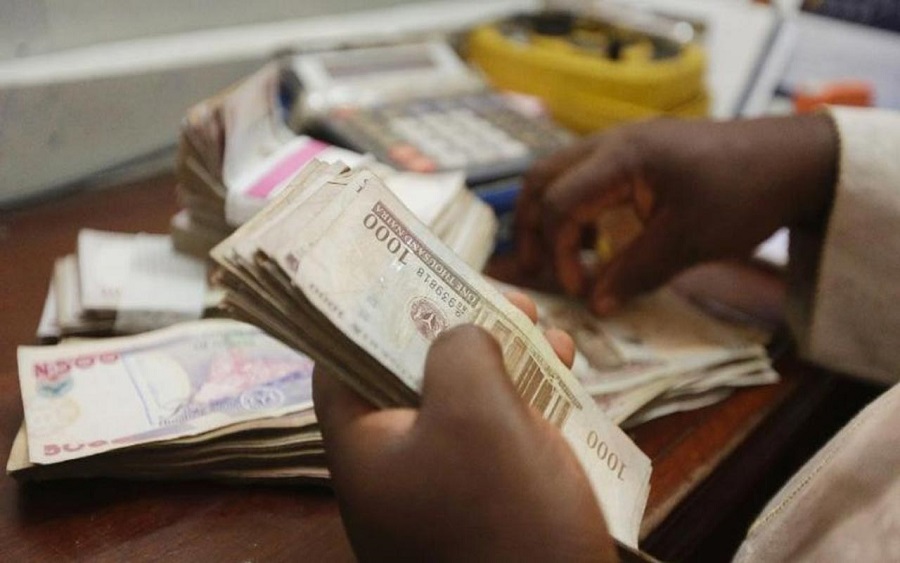
That tiny N1.31 gain is not a reason to celebrate. It’s a warning sign that the FX market is still fragile.
What the Naira Gains N1.31 Against Dollar at NAFEM Really Means
The official NAFEM rate is what banks, exporters, and investors use. The black market rate is what many ordinary Nigerians use for cash transactions. When the two rates move in different directions or stay far apart, it creates confusion and risk.
On September 30, the official rate was N1,329.16/$1. The black market rate was N1,370/$1. That’s a gap of about N41 per dollar. If you need dollars for travel, school fees, or imports, that gap matters. You could pay N41 more per dollar if you buy from the black market instead of through official channels.
Earlier in 2024, the gap was even wider. In February, the naira appreciated to N1,440/$1 in the parallel market while NAFEM closed at N1,435.53/$1, narrowing the gap to N4.47, according to Vanguard. But by October 2025, the gap had widened again to roughly N50–N60 per dollar, with NAFEM at about N1,444/$1 and the black market at N1,490–N1,495/$1.
This spread is the risk. It can shrink or widen based on CBN policy, foreign inflows, and demand from importers and travelers.
How the Risk Works: Policy, Liquidity, and Demand
The CBN has been trying to stabilize the naira through policy changes. In January 2024, it removed the cap on how International Money Transfer Operators (IMTOs) could quote exchange rates. Previously, IMTOs had to quote within -2.5% to +2.5% of the previous day’s closing rate. The new circular (TED/FEM/FPC/GEN/001/003) allowed them to quote based on prevailing market rates on a willing seller, willing buyer basis.
The idea was to attract more dollar inflows into the official market. Aminu Gwadabe, president of the Association of Bureau De Change Operators of Nigeria (ABCON), said the removal would reduce diversion of remittances to the parallel market. “The likely impacts will be an increase in liquidity in the market which will influence exchange rate and stability positively,” he said.
But policy alone doesn’t control the market. On September 30, interbank turnover increased by 122.9 percent to $179.577 million from $80.582 million, with the number of deals rising to 94 from 37. Gross foreign exchange reserves also soared to $54.6 billion in mid-September, the highest in over 18 years.
Yet the naira still fell against the pound and euro. And the black market rate remained N41 higher than the official rate. That shows the risk: even with more dollars and higher reserves, the naira can weaken against other currencies and the parallel market can stay expensive.
Warning Signs You Should Watch
If you earn in naira and spend in dollars, watch these signs:
1. The gap between NAFEM and the black market. If it’s above N30 per dollar, you’re paying a premium for cash dollars. If it’s below N10, the markets are closer to alignment.
2. Daily turnover at NAFEM. When turnover rises, liquidity is improving. When it falls, the naira may face pressure. On September 30, turnover was $179.577 million. On a weaker day, it could be half that.
3. CBN policy announcements. The removal of the IMTO cap in January 2024 led to an 8.57 percent appreciation in less than 24 hours, with the naira moving from N1,520/$1 to N1,400/$1 in the parallel market, according to BusinessDay. But those gains can reverse quickly if the policy doesn’t attract enough inflows.
4. Movement against other currencies. The naira gained N1.31 against the dollar but lost N5.97 against the pound. If you’re traveling to the UK or Europe, your naira buys less, even when the dollar rate improves.
The One Habit That Protects You
Don’t chase the daily rate. Instead, set a target rate for any dollar transaction you need to make. If you need to pay school fees in dollars, decide the maximum naira rate you’re willing to pay. If the market offers a better rate, buy. If not, wait.
This habit protects you from panic buying when the naira is weak and from selling too early when it strengthens. It also forces you to compare the official and black-market rates before every transaction.
For example, if you need $1,000 for travel, the difference between N1,329/$1 and N1,370/$1 is N41,000. That’s real money. By checking both rates and using official channels when possible, you keep more naira in your pocket.
The naira gains N1.31 against dollar at NAFEM may look small, but it’s a reminder that the FX market is still volatile. The CBN’s policies, foreign reserves, and global demand for dollars all affect your money. Stay informed, compare rates, and don’t let a tiny gain make you complacent.
If you’re an importer, a traveler, or someone sending money home, the gap between official and parallel rates is your biggest risk. Watch it, understand it, and plan around it. That’s how you protect your naira.
Frequently Asked Questions
What does it mean when the naira gains N1.31 against the dollar at NAFEM?
It means the official exchange rate moved from N1,330.47/$1 to N1,329.16/$1, a 0.09 percent appreciation. A smaller number of naira is needed to buy one dollar at the official window. However, this small gain may not reflect the black market rate, which was N1,370/$1 on the same day.
Why is the black market rate different from the NAFEM rate?
The NAFEM rate is determined by willing buyers and sellers in the official market, including banks, exporters, and investors. The black market rate is set by street traders and is influenced by cash demand, supply, and access to official channels. The gap between them can range from under N5 to over N60 per dollar, depending on market conditions.
How can I protect my money from naira volatility?
Set a target exchange rate for any dollar transaction and stick to it. Compare official and black market rates before buying or selling. Use official channels when possible to avoid legal risks and higher costs. Keep an eye on CBN policy announcements and daily NAFEM turnover as warning signs of future movements.
Related Articles
- APM Terminals Expands Scholarship Scheme: 2026 Guide
- Dangote IPO Cross-Border Push Tests African Markets












Money & Finance
Money Circles: Licensed Ajo Apps And Their Scam Copies
Money circles moved from ajo meetings to licensed apps. Fake groups copy the format. How the scam works, red flags, and where to report it.

The message arrives in a WhatsApp group with a screenshot attached: a circle paid out ahead of schedule, no interest, no collateral, contribution monthly, first payout to whoever joined earliest. Two payouts land on time. Then the administrator deletes the group and the number stops connecting.
That is the scam method behind the current wave of fake money circles, and it borrows its credibility from something real. Ajo and Esusu are not new to Nigeria. The Guardian Nigeria notes that household finance in the country was powered for decades by women saving in groups and men running cooperatives that lent interest-free to members for school fees or trading stock. Researchers including Siwan Anderson and Jean-Marie Baland have studied the model through gender and welfare lenses. The common thread in that literature is trust as a commitment device: when you are socially bound to a group, you rarely let the group down.
What has changed is that the format now has a licensed version and a criminal imitation, and the two look almost identical on a phone screen.

The Licensed Version Is Checkable
The Guardian Nigeria reports that Rank, formerly Moni, is a Central Bank of Nigeria-licensed institution with banking services provided through Rank Microfinance Bank, meaning user funds sit inside a regulated financial institution rather than an unregulated wallet. The stated mechanic is capital upfront, repaid at zero interest. The report’s illustration is ₦100,000 accessed upfront and repaid at ₦10,000 monthly for ten months.
That illustration is arithmetic, not a complete cost disclosure. The report does not state an origination fee, a late-payment penalty, a credit-bureau reporting arrangement, or what happens when a member defaults mid-cycle. It also cites more than $100 million paid out to users in the past year — a dollar figure, in a naira market, with no naira equivalent and no default rate attached. None of the source documents reviewed for this article carried a visible publication date. The payout number should be read as a company claim awaiting independent confirmation, not an audited figure.
Where Money Circles Stop Being Ajo
Fraudulent money circles attack the model at its weakest joint, and they do it in three recognisable ways.

The first is impersonation. An app or a page borrows the name and branding of a licensed lender, collects contributions, and never connects to the microfinance bank behind the real brand. The licence may genuinely exist. It is simply not attached to the account receiving your money.
The second is sequencing fraud. A genuine circle pays out in a defined rotation. A fraudulent one recruits continuously, uses later joiners’ contributions to pay earlier joiners, and collapses when recruitment slows. The arithmetic is that of a ponzi scheme, dressed as a community.
The third is the advance fee. A payout is promised on condition of a registration, guarantor or release payment made before any money comes back. Once that payment clears, the payout does not arrive.
All three exploit the same gap. The old ajo worked because a defaulter had to face the group at the next meeting. A stranger behind a profile photo carries none of that cost.
The Household Cost When Money Circles Fail
Demand for these products is not irrational. The World Economic Forum puts the formal MSME finance gap at about $5.2 trillion and the informal gap at $2.9 trillion. Roughly 70% of MSMEs in developing markets lack adequate financing, and World Bank data cited in the same analysis puts around 40% of formal MSMEs as credit-constrained, with 19% fully constrained and 21% partially constrained.
Against that backdrop, losing a ₦100,000 contribution to a fake circle is not a rounding error. The Guardian’s own example — ₦10,000 a month for ten months — describes the scale most households actually operate at. One failure removes a term’s school fees or a single restocking cycle for a trader.

Formal lending tightens exactly when informal demand rises. Allianz Trade, citing ECB survey data, notes that Basel III lifts the minimum capital requirement from 8% to 10.5% and that funding costs for low-quality corporate credits could rise by more than 100 basis points. The SME Supporting Factor offsets about 23.81% of capital requirements, but only on exposures of EUR 1.5 million or less. The structural lesson travels: when bank credit gets more expensive, households route around banks. The informal route has no capital buffer and no regulator’s balance sheet behind it.
Red Flags Before You Join A Group
Check who holds the money, not who markets it. A claim of a CBN licence only matters if the licensed microfinance bank is named and the funds are held there rather than in a personal account.
Check the rotation. If the payout order can be changed after you join, the commitment device is already gone.
Check for any payment requested before a payout. Fees that arrive before money does are the clearest single signal.
Check whether the administrator can be identified outside the app. That is the whole enforcement mechanism in an ajo, and it is the first thing a fraudster removes.
How To Report And What To Expect
Keep evidence before you escalate: screenshots of the group, transfer receipts, the receiving account number and bank name, and the app or page that recruited you. Report the transaction to your bank, complain to the CBN, and file with the police.
Licensing changes the route, not the outcome. A complaint against a licensed operator of money circles has a supervisory channel behind it. Money sent to a personal account outside a licensed institution generally has no deposit-protection mechanism attached, and recovery in those cases is rare rather than routine.
None of this is a recommendation to join any specific product. It is general education about how the mechanics work and where the costs land.
Stay Safe
The honest reading is that money circles have not changed the underlying trade-off. Pooling works when the group can enforce repayment and fails when it cannot, and a smartphone does not manufacture enforcement where none existed. A licensed app improves the odds because the pool sits inside a regulated institution. It does not make a circle risk-free, and it does not make an unlicensed imitation safe. Verify the institution holding the money before the first contribution leaves your account — that one check separates a savings plan from a transfer to a stranger.
Frequently Asked Questions
Is the new app-based version of ajo different from a traditional contribution group?
The mechanic is similar but the custody differs. The Guardian Nigeria reports that Rank operates through Rank Microfinance Bank under a CBN licence, so user funds sit inside a regulated institution rather than an unregulated wallet. In a traditional ajo, the pot sits with a collector or a member, and enforcement depends entirely on social pressure.
What does a ₦100,000 circle actually cost?
The published illustration is ₦100,000 taken upfront and repaid at ₦10,000 monthly for ten months, which totals ₦110,000 at a stated zero interest rate. That is arithmetic only. The source material does not disclose origination fees, late-payment penalties, default treatment or credit-bureau reporting, so the full cost cannot be verified from what has been published.
How do I tell a licensed circle from a scam?
Identify the institution holding the funds, not the brand advertising the product. If a licence is claimed, the named microfinance bank should be verifiable with the CBN and the money should land in an account belonging to that institution, not a personal account. Any payment demanded before a payout, or any payout order that can be altered after you join, should be treated as a stop signal.
 Follow AFRILATEST on Google News
FIRST TIME REACTIONS:
Be the first to leave us a comment – Money Circles: Licensed Ajo Apps And Their Scam Copies, down the comment section.
JOIN US ON OUR SOCIAL MEDIA:

About Paul Nwogo
Paul Nwogo is an engineer, published author, and the Head Manager at AfriLatest. He has written numerous books available on Amazon covering a diverse range of topics, including health, personal finance, relationships, work ethics, and scam survival. With his technical background and passion for writing, Paul now oversees the editorial direction of AfriLatest, delivering practical, accurate, and engaging content on trending news, music, and global lifestyle topics.
View all articles by Paul NwogoSavings & Investing
NGX Tech Stocks: eTranzact’s 10% Jump Versus MTN
NGX tech stocks: eTranzact rose 10% on N18.67m turnover while MTN traded N1.01bn flat. A comparison of risk, ticket size and exit.
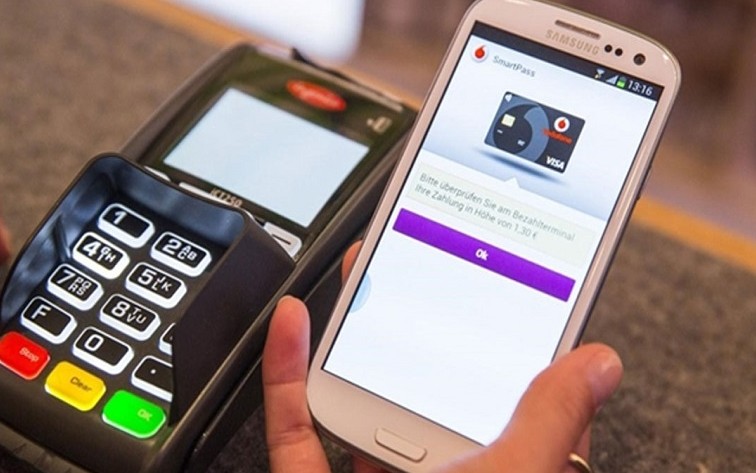
Two choices sat on the same board on the same afternoon, and they tell opposite stories about ngx tech stocks.
eTranzact International closed Thursday, October 29, 2026 at N17.60, up 10 percent, adding N1.60 to a previous close of N16. It traded 1.07 million shares worth about N18.67 million. MTN Nigeria closed flat at N825 on 1.24 million shares worth roughly N1.01 billion, the highest transaction value among the eight technology and telecommunications companies reviewed that session, according to Nairametrics.
One stock moved a lot on little money. The other moved nowhere on a great deal of money. That gap is the real subject of this comparison, not the 10 percent in the headline.
Four Things To Settle Before Any Return Talk
Risk is the chance of losing part of your capital permanently, not the size of a single day’s price move. A stock that rises 10 percent on thin turnover can fall the same way next week.
Diversification means spreading money so that one company’s failure does not decide your outcome. Holding one small-cap technology name is not diversification, however promising the sector looks.
Liquidity is how much you can sell without pushing the price down. It is measurable. eTranzact’s N18.67 million of turnover against MTN’s N1.01 billion is a liquidity comparison, not a popularity contest.
Minimum investment is the price per share multiplied by whatever lot or broker minimum applies. One eTranzact share cost N17.60 that day. One MTN Nigeria share cost N825. One Airtel Africa share cost N6,300. A fixed budget therefore buys very different share counts, and any fixed per-trade charge eats a larger slice of a small ticket than a large one.
Why The NGX Tech Stocks Board Looks Uneven Over One Session
Eight stocks were tracked. eTranzact led with 10 percent, Legend Internet added 1.47 percent to N3.45, Chams rose 0.30 percent to N3.33 on 6.41 million shares, and Omatek fell 0.74 percent to N1.35. MTN Nigeria, Airtel Africa, Computer Warehouse Group and NCR Nigeria all closed unchanged.
The All-Share Index rose 1,200.24 points, or 0.47 percent, to 254,083.02, with N57.36 billion traded across 35,821 deals. eTranzact’s N18.67 million was roughly 0.03 percent of that value. A 10 percent gain on a rounding error of market turnover is what thin trading produces; it is not a verdict on the business.
The session before had gone the other way. The index fell 0.44 percent to 252,882.78 on Wednesday, October 28, wiping N718.95 billion off market capitalisation. Two consecutive sessions, two opposite headlines, no new information about any company’s earnings.
Reading eTranzact Against MTN Nigeria On Fundamentals
eTranzact recently changed hands at the top. Trademarks Global Concepts Limited acquired a 56.18 percent stake, and board changes followed. No 2026 earnings figures appear in the trading report, so the 10 percent move cannot be tied to any disclosed result in the material reviewed.
The last detailed numbers in that body of coverage are older. Technext recorded a half-year 2023 profit of N1.01 billion, up 149 percent from N408 million, on revenue of N17.37 billion, itself up 49.37 percent. The share price moved from N3.50 to N7.40 between the start of that year and November 22, 2023. On quoted figures, without adjusting for corporate actions the sources do not mention, that N7.40 compares with N17.60 on October 29, 2026.

The longer record carries a warning. A 2019 company profile documented a N3.1 billion loss after tax for full-year 2018 against a N208 million profit in 2017, after First Bank of Nigeria reported an N11.49 billion fraud on the Fundgate platform on March 8, 2018. The Central Bank of Nigeria later directed that the net liability be split equally at N5.75 billion each, with N5.95 billion recovered from Smart Micro Systems shared the same way. The CBN also ordered the removal of the chief executive and two directors. Free float stood at 10.06 percent then, below the 20 percent main-board requirement. The trading report does not give a current free-float figure.
MTN Nigeria’s session data says only that buyers and sellers met at N825 in size. A dated description in the same coverage notes more than 70 million subscribers, which speaks to scale rather than to valuation. Nothing in the source material supports a claim that either stock is cheap or expensive.
Legend Internet shows why price and profit diverge. Its results for the year ended July 2026 put profit down 90.73 percent to N13.21 million and revenue down 7.44 percent to N1.10 billion, with borrowings up to N1.14 billion from N75.23 million. Its shares still gained 1.47 percent on October 29 and lost 5.80 percent in an earlier session reported by Investors King.
Costs, Exit And Who Each Stock Suits
Brokerage commission, exchange and clearing charges, and the spread between bid and offer all apply. On a N20,000 position, a minimum fee is a larger percentage drag than on a N2 million position. That arithmetic favours larger tickets and penalises small, frequent trades in any ngx tech stocks holding.
Exit is the second cost. Selling N18.67 million worth of eTranzact in a day took a full session. Selling N1.01 billion of MTN Nigeria also took a session, but at far greater depth. An investor who may need the money within a year is exposed to whatever price the order book offers on the day.
A small saver putting in irregular amounts should weigh ticket size and exit before a leaderboard. A shareholder who can hold through drawdowns and read filings should weigh ownership concentration, governance history and disclosed profit. Neither path is free of risk, and past price movement does not predict the next one.
For a first-time buyer with limited capital, the flat, heavily traded stock is the easier instrument to enter and leave, at the cost of a high price per share. For a buyer already diversified and willing to accept wide price swings, the smaller payments company is a concentrated bet whose case must rest on dated filings, not on a single 10 percent Thursday.
This article is general information, not financial advice. It does not recommend buying or selling any security. Prices and figures are as reported for the dates cited and change daily. Consult a licensed stockbroker or adviser before investing.
Frequently Asked Questions
Does a 10 percent one-day gain mean eTranzact is a good investment?
No. The 10 percent figure describes one closing price against the previous close on October 29, 2026. It does not measure the company’s profit, its cash flow or its valuation, and no 2026 earnings were cited in the trading report. A single session’s move is a price event, not a return.
Why does liquidity matter more than the percentage gain for small investors?
Liquidity determines whether you can sell at a fair price when you need the money. eTranzact traded about N18.67 million of value that day; MTN Nigeria traded about N1.01 billion. A thin order book means a sell order can move the price against you, which turns a paper gain into a smaller realised one.
What is the minimum amount needed to buy these NGX tech stocks?
The source material gives share prices, not broker minimums. One eTranzact share closed at N17.60 and one MTN Nigeria share at N825 on October 29, 2026, with Airtel Africa at N6,300. Actual minimums depend on your broker’s board lot and fee schedule, so the cash outlay must be confirmed with a licensed dealer.
FIRST TIME REACTIONS:
Be the first to leave us a comment – NGX Tech Stocks: eTranzact’s 10% Jump Versus MTN, down the comment section.
JOIN US ON OUR SOCIAL MEDIA:
About Paul Nwogo
Paul Nwogo is an engineer, published author, and the Head Manager at AfriLatest. He has written numerous books available on Amazon covering a diverse range of topics, including health, personal finance, relationships, work ethics, and scam survival. With his technical background and passion for writing, Paul now oversees the editorial direction of AfriLatest, delivering practical, accurate, and engaging content on trending news, music, and global lifestyle topics.
View all articles by Paul NwogoMoney & Finance
Voice Cloning Scams vs Phone Filters: What Works
Voice cloning scams cost Americans $893M in 2025. We compare carrier call filters with call-back verification and show which one holds up.

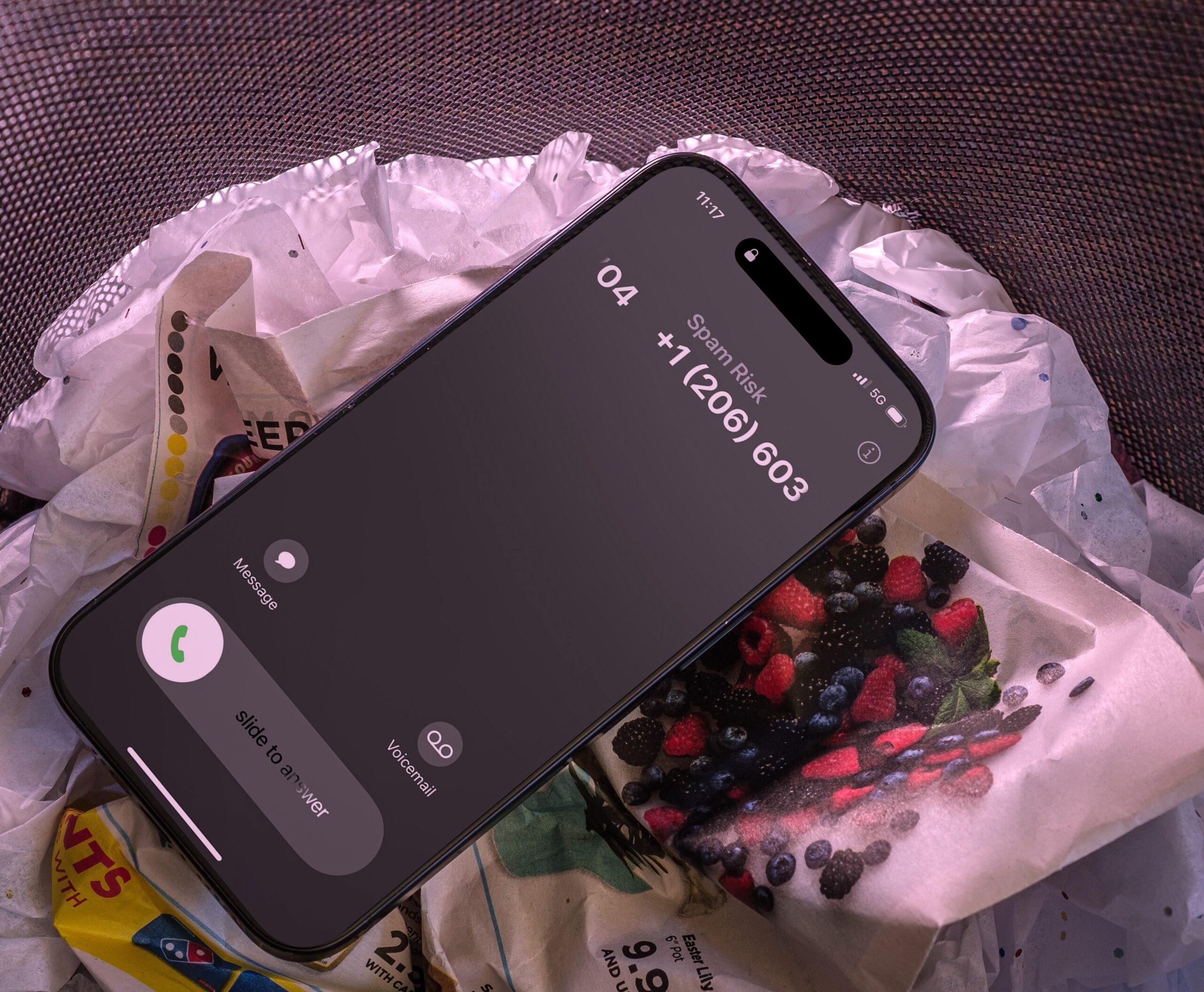
Two defences stand between a phone user and a voice cloning scam in 2026. One is a software stack: Stir/Shaken attestation, carrier spam labels, on-device call screening. The other is an unsociable human habit, treating every unrecognised call as hostile until it has been verified through a second channel. Only one of them costs money, and only one of them can be tested.
The testing has been done, and it is not flattering to the software. Hiya’s State of the Call 2026 report found that US consumers receive an average of 10 spam calls per week, and that 1 in 12 people lost money to a phone scam in 2025, at an average of $682. The FBI’s 2025 Internet Crime Report recorded $893,346,472 in AI-related losses across 22,364 complaints, inside a record $20.9 billion in total cybercrime losses, up roughly 26 percent from $16.6 billion in 2024, with complaints rising from 859,000 to more than one million.
Neither figure proves voice cloning scams are unbeatable. Both point at something narrower: the countermeasures in widest deployment defend the caller ID, while the attack has moved to the audio itself.

Stir/Shaken And Carrier Filters: What They Demonstrably Do
Stir/Shaken, mandated by the US Federal Communications Commission for major voice providers from 2021, is a cryptographic attestation system. It confirms which network originated a call and whether that network can vouch for the number, which makes a Caller ID display harder to fake. That is the whole of its design brief. It makes no claim about who is speaking, and it offers no protection against voice cloning scams.
Margot Saunders, senior counsel at the National Consumer Law Center, is blunt about the gap. Voice providers, she told CNET, “are able to rent thousands of phone numbers to telemarketers and scammers that allow the callers to technically comply with Stir/Shaken without revealing meaningful or accurate caller ID.” Her conclusion: “The numbers of unwanted calls are about the same as they have been for years.” That flat line is the space in which voice cloning scams have grown.
The FCC’s December 2023 rules tightened consent requirements for marketing calls and texts, but they only took effect in early 2025, and as Saunders notes, the enforcement mechanism is litigation. The threat of costly suits against US corporations placing calls is a slow lever, and it has no reach over a criminal calling from abroad to clone a voice.
Why Voice Cloning Scams Beat Caller ID
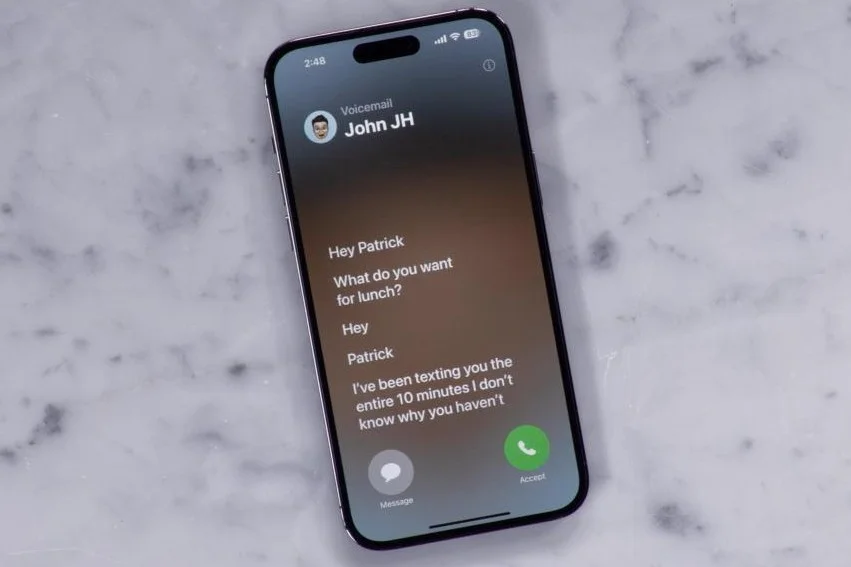
The cleanest evidence that caller authentication is the wrong control came from the Netherlands. Dutch police arrested two suspects, a 23-year-old from Vaassen and a 25-year-old from Ede, over a campaign that took more than €380,000 (about $425,600) from 170 victims of all age groups, according to reporting on the case.
The mechanics matter more than the total. Victims received calls carrying AI-generated audio clips impersonating banks and companies, were told to press 1, and were put on hold. A second person then posed as a bank fraud officer, said the debit card was blocked, and talked the victim into installing an app and tapping the physical card against the phone. The NFC chip data was relayed in real time to an accomplice at an ATM who withdrew cash.
Nothing in that chain required a spoofed number. The calls arrived legitimately, the audio did the impersonation, and the theft happened inside an app the victim installed voluntarily. Voice cloning scams of this shape leave attestation systems with nothing to inspect.
The economics explain the spread. Michael Machtinger, deputy assistant director of the FBI’s Cyber Division, told the Wall Street Journal that “AI-created fraudulent communications can look very official and very legitimate to even the most trained individuals.” A usable voice sample can be lifted from a social media video or an old voicemail greeting, which is why the FBI advises limiting public voice and video content. Voice cloning scams scale on whatever audio a target has already published.
Severity figures deserve care. A Broker Chooser report cited by KTNV puts Nevada among the top US states for AI-related scams, with victims losing an average of $36,000 per case. That is not comparable to Hiya’s $682, because one is an average across AI-enabled fraud cases and the other across everyone who lost money to any phone scam. Regional tallies of voice cloning scams confirm direction, not a single true average.
The Protocol That Costs Nothing
On price versus price, the gap is wide. Carrier spam-blocking add-ons frequently carry a monthly fee, and the National Consumer Law Center’s position is that unwanted call volumes have not moved. Apple’s iOS 26 call screening is free but only sorts calls; it does not verify a speaker. A safe word and a call-back rule cost nothing and work on a feature phone.
The procedure itself is simple. Do not answer numbers you cannot identify, because picking up confirms a live human and the number gets resold. Where a call must be taken, hang up and call back on a number published independently: the bank’s app, the utility’s website, the agency switchboard. Voice cloning scams depend on the victim staying on the line long enough to be moved.
Michael Wendlberger of the Legal Aid Center of Southern Nevada recommends a family safe word, so a cloned voice claiming to be a child in trouble can be challenged. William Voy of the Southern Nevada Senior Law Program notes that government agencies and utilities follow up in writing by post. Verify first, respond later. Urgency is the tell, not the technology: “I need $2,000 wired today” is the sentence to distrust.
For African users the layering differs but the conclusion holds. Nigeria’s dominant telephony control is SIM-to-identity registration, which binds a number to a person but says nothing about who is speaking or whether a Caller ID string was spoofed upstream, and there is no mandated attestation chain a fraudster abroad must traverse. The NFC-relay leg of the Dutch scheme also depends on contactless card infrastructure; in mobile-money markets the equivalent move is a fake agent or fake support line talking a victim through a transfer, where the cloned voice is the entire attack and no app install is needed. Voice cloning scams therefore travel wherever a voice sample is public, and in voice-note cultures that is most places.
Verdict
For identity, the human protocol wins on cost and on evidence. Voice cloning scams are cheap to run, they are being industrialised, and the only reliable check is a channel the caller cannot control. A filter stack still earns its place for nuisance volume: it cuts interruptions and will catch crude robocall campaigns. It should never be the thing a user trusts with identity.
Which wins for which use case? Keep carrier filtering or iOS 26 screening if the problem you want solved is ten spam calls a week. Switch to out-of-band verification for anything touching money, credentials, or family emergencies. Answer nothing, verify everything, and keep one shared word that never appears online.
Protect Your Family From Voice Cloning Scams
Reading about the mechanics of a voice cloning scam is terrifying, but knowing exactly what to do when the phone rings is the only thing that actually protects your money.
Because AI voice cloning is now the primary tool for scammers targeting seniors and small businesses, having a physical checklist is no longer optional.
The AI Voice Clone Scam Defense Manual provides the exact scripts to use, the safe words to set up with your family, and the step-by-step verification protocols to stop a scam before a transfer is made.
-
Price: $17.99 (Paperback) / $7.99 (Kindle)
-
Where to buy: [Get your copy on Amazon here|AMAZON BOOK_DIRECT LINK]
Frequently Asked Questions
Does Stir/Shaken stop voice cloning scams?
No. Stir/Shaken is designed only to verify which network originated a call and whether that network can vouch for the number, so Caller ID is harder to fake. The National Consumer Law Center’s Margot Saunders says providers can rent numbers that technically comply while hiding real caller identity, and that unwanted call volumes have stayed roughly the same for years.
Can a cloned voice fool someone who knows the person well?
It can. The FBI’s Michael Machtinger told the Wall Street Journal that AI-created fraudulent communications can look official and legitimate even to trained individuals. US fraud-prevention advisers recommend agreeing a family safe word in advance so a call claiming to be a relative in trouble can be tested.
What should I do if a caller claims to be my bank?
Hang up and call back on the number printed on your card or inside the bank’s own app. In the Dutch case, victims were told to press 1, were passed to a fake fraud officer, then were persuaded to install an app and tap their debit card against the phone so NFC data could be relayed to an accomplice at an ATM. No legitimate bank asks a customer to tap a card against a handset.
Receive alerts for voice cloning scams and more like it.
FIRST TIME REACTIONS:
Be the first to leave us a comment – Voice Cloning Scams vs Phone Filters: What Works, down the comment section.
JOIN US ON OUR SOCIAL MEDIA:

About Xavier Catherine
Xavier Catherine is the Technology Lead at AfriLatest. With a background in computer science and a focus on innovation, he oversees the platform's technology infrastructure. Xavier also contributes reporting on AI, gadgets, and cybersecurity, ensuring AfriLatest remains secure, reliable, and user-friendly.
View all articles by Xavier Catherine-

 Car Reviews6 days ago
1955 Chevy Bel Air Restomod: What SEMA Really Proves
-
Startups2 months ago
What a Successful Dangote Refinery IPO Really Says
-
Health and Fitness4 weeks ago
Curly Hair Hydration: 5 Proven Steps That Actually Work
-
Savings & Investing2 weeks ago
Hidden Medicare Fees Draining Your Retirement Savings
-
Tech & Gadgets1 month ago
Apple Watch and AirPods Fall Deals: Save $120 Today
-
Health and Fitness4 weeks ago
9 Best Hair Thickening Shampoos for Men in 2026
-
University Admissions2 months ago
UNILAG 2026/2027 Admission: Direct Entry & Post-UTME Guide
-
Football2 months ago
South Carolina vs Alabama: Tide Roll to 35-10 Halftime Lead