World News
Happy Halloween Wishes 2021: The Record Behind The Greetings
Happy Halloween wishes 2021 explained: Fauci’s safety call, Lee Street’s return and the NBA’s costume feed, with Africa’s missing dateline.


Happy Halloween wishes 2021 were, on the surface, the least newsworthy text of the year: pumpkin puns, candy jokes and one-liners about being the cutest pumpkin in the patch. Yet the volume of those greetings, and the outlets that published them, forms a verifiable record of something larger. The question worth asking is not which of the best happy halloween wishes 2021 were wittiest, but what the greetings documented at a moment when public health guidance, municipal logistics and celebrity social feeds all moved in the same direction.
Halloween is observed on October 31 and celebrated in many western countries, according to Hindustan Times, which assembled images, wishes, greetings and messages for Facebook, WhatsApp and other platforms. That format matters. Lifestyle desks build wish-list articles when reader demand is high, and in October 2021 the demand was high.
The Question Behind Happy Halloween Wishes 2021

The answer sits in a single sentence from a local news report. The Lee Street trick-or-treating tradition in Old Town Alexandria, Virginia, was canceled in 2020 due to Covid, and in 2021 it was expected to draw a large turnout, The Zebra reported. The same report said Dr. Fauci had declared trick-or-treating to be safe, which it described as the final confirmation the Lee Street residents needed to proceed with the event.
That is the pivot. Halloween 2021 was not simply another October 31. It was the first in the pandemic era in which the ordinary activity behind every greeting, the doorbell, the bowl of candy, the street full of costumes, had been publicly endorsed rather than discouraged.
The greetings were the consumer-facing layer of that decision. The verifiable record sits underneath them.
What The Verified Record Shows
Three kinds of evidence converge, and they do not carry equal weight.

The first is municipal and community logistics. Yvonne Callahan, a Lee Street resident and vice president of the Old Town Civic Association, said the event began more than 25 years ago and has grown each year despite having no formal organiser. In 2019, a single home counted giving out more than 4,000 pieces of candy in four hours. Families with young children typically begin going door to door around 5:00 pm, with crowds dispersing between 8:30 and 9:00 pm. The Alexandria Police Department confirmed it would block off the street for safety, and Senator Mark Warner’s office confirmed his family would take part again. Residents who prefer not to participate simply leave their front lights off.
The second is the celebrity layer. NBA.com aggregated social posts from players including LeBron James, Damian Lillard and his family, Ayesha Curry, Carmelo Anthony and Robin Lopez, alongside team accounts that posted through the weekend of October 30 and 31, 2021. That item is aggregation rather than reporting: it curates Instagram and Twitter posts and invites readers to check back for updates. It verifies costume choices and public visibility, not any larger claim about the season.
The third is historical framing. Hindustan Times traced Halloween, also called All Hallows’ Eve, to the Celtic festival of Samhain, which marked the end of the summer harvest and the beginning of the dark, cold winter. The Celts, in areas now called Ireland, the United Kingdom and northern France, believed the dead returned on Samhain and wore costumes made from animal skins to ward off unwanted spirits, leaving feasts on tables outside.
Africa, The Global Gap, And What 2021 Did Not Change
The Africa dimension requires a discipline the coverage itself did not supply. None of the sources sampled for this article contained an African dateline. The 2021 record consists of an Indian outlet’s lifestyle round-up, an American local news report and a United States sports league’s social aggregation. Hindustan Times framed Halloween as an observance of many western countries, and nothing in the material contradicts that framing.
Analysis, not confirmed fact: the structural difference is visible in what the sources treat as ordinary. Lee Street’s event depended on single-family housing stock, a police department able to close a road, a senator’s staff handing out candy and residents able to opt out by switching off a porch light. Those are municipal capacities, not cultural universals. Where that infrastructure is absent, Halloween messaging travels as content rather than as an event, and a Nigerian reader is more likely to encounter happy halloween wishes 2021 forwarded on WhatsApp than a closed residential street.
Attribution discipline matters here. Dr. Fauci’s assessment reaches this record second-hand, paraphrased by a community newspaper rather than quoted from a primary transcript. Residents’ confidence that outdoor settings and masks would keep people safe is their own assessment, not a public health finding. The 4,000-piece figure is one household’s self-reported 2019 tally.

What the sources do not contain is equally instructive. There is no attendance count for 2021, no municipal tally of participating households and no African comparison point. Any claim that Halloween 2021 returned to normal is an inference, not a measurement. The confirmed facts are narrower: an event canceled in 2020 was scheduled to return, a street was to be closed, and a public health figure was reported to have called trick-or-treating safe. The pre-pandemic candy count functions as a benchmark, not a result.
Summary
The lesson of happy halloween wishes 2021 is that the greetings were never the news. The news was the permission behind them: a reported public health green light, a police closure, a senator’s confirmed appearance and a league’s curated feed, all dated to late October 2021. Read that way, the year’s best happy halloween wishes 2021 are evidence of reopening, not of wit, and the absence of an African dateline is part of the same record, showing where the infrastructure of the holiday does and does not exist.
Frequently Asked Questions
When was Halloween 2021 celebrated?
Halloween is observed on October 31, so Halloween 2021 fell on Sunday, October 31, 2021. Coverage of related events ran across the preceding weekend.
Why did trick-or-treating return in 2021?
The Zebra reported that Dr. Fauci had declared trick-or-treating to be safe, which the report described as the final confirmation Lee Street residents in Alexandria, Virginia, needed to proceed. The Lee Street event had been canceled in 2020 due to Covid.
Did any African country feature in the 2021 Halloween coverage?
None of the sources sampled for this article contained an African dateline. Hindustan Times described Halloween as celebrated in many western countries, and the other sources were a United States local news report and an NBA social media round-up.
 Follow AFRILATEST on Google News
Receive alerts for happy halloween wishes 2021 and more like it.
FIRST TIME REACTIONS:
Be the first to leave us a comment – Happy Halloween Wishes 2021: The Record Behind The Greetings, down the comment section.
JOIN US ON OUR SOCIAL MEDIA:

About Clare Dominic
Clare Dominic is the Editor at AfriLatest. With a background in journalism and a passion for storytelling, she oversees the editorial process to ensure content is accurate, engaging, and relevant. Clare works closely with contributors to maintain the highest standards of journalistic integrity across all news, sports, and lifestyle coverage.
View all articles by Clare Dominic

World News
Fugitive Belgian Soldier Jürgen Conings Found Dead
The fugitive Belgian soldier Jürgen Conings, who threatened a virologist and stole rocket launchers, was found dead after a month-long manhunt.
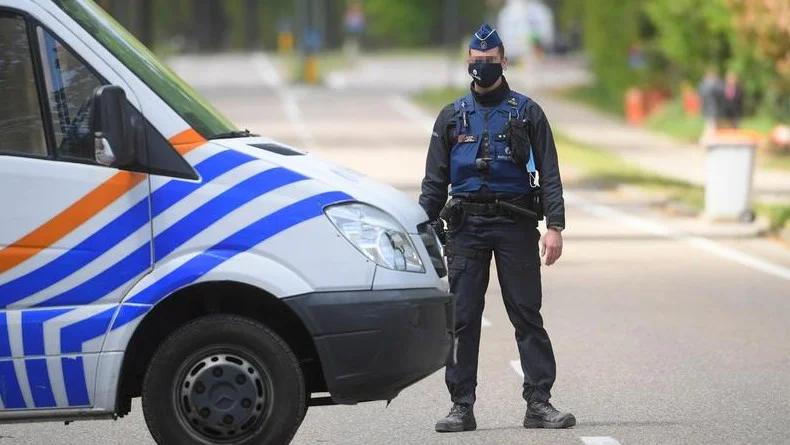
Jürgen Conings is dead. The fugitive Belgian soldier, a 46-year-old shooting instructor who walked out of his barracks with anti-tank rocket launchers on 17 May, was found in woodland near the Dutch border on Sunday, ending a month-long manhunt that pulled hundreds of police and troops into the Limburg countryside and forced a leading virologist into hiding.
Federal prosecutors said the body found in the Dilserbos woods near the town of Dilsen-Stokkem was Conings “according to the first elements of the investigation”, and that early observations pointed to suicide by firearm. The inquiry, they stressed, is not closed. Belgium’s defence ministry later confirmed the identification, with the defence minister and chief of staff stating that the soldier “has been found dead”.
Claims that the fugitive Belgian soldier spent a particular evening exploring a target before he vanished are not part of those official findings. What prosecutors have placed on the record is narrower and more serious: Conings left letters for his wife and for police setting out assassination plans and naming Marc Van Ranst, the virologist who led Belgium’s public health response to the pandemic, as a target.
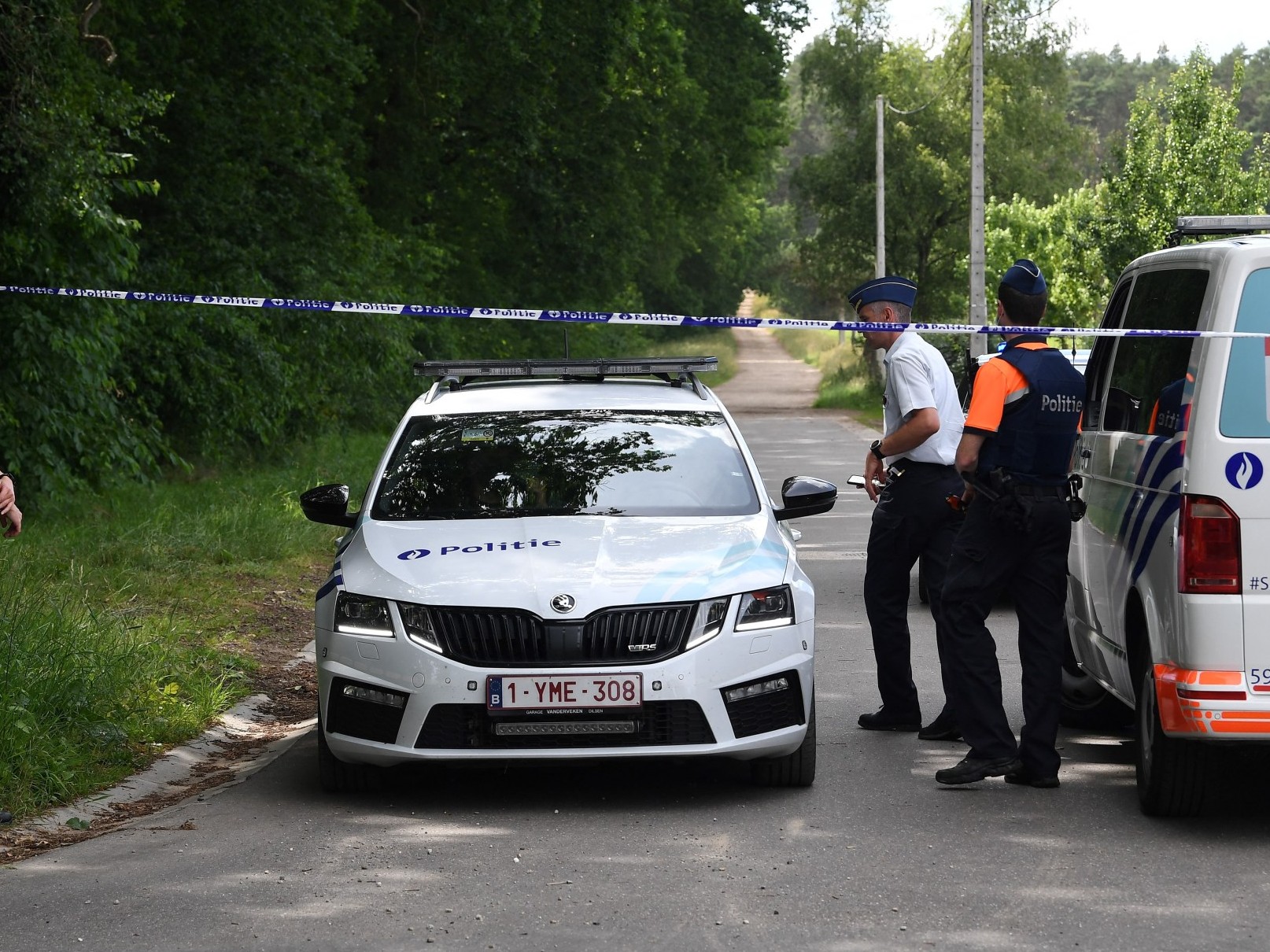
Van Ranst and his family had been moved to an undisclosed safe house. “The threat was very real,” he told the BBC from that location earlier this month. On Sunday he wrote that his thoughts went out to Conings’s relatives and children, “for them this is very sad news, because they lose a father, a relative or a friend. He told De Morgen that the discovery was a relief above all for his 12-year-old son.
Belgian authorities had already been hunting the fugitive Belgian soldier for weeks by the time his abandoned car was recovered, containing four anti-tank rocket launchers and ammunition.
The Fugitive Belgian Soldier Who Outran A Watch List
Conings was not an unknown quantity to the Belgian state. He had a three-decade military career and a reputation as an expert marksman. He was on an anti-terrorism watch list for suspected far-right views, one of at least 30 soldiers being monitored by the country’s threat analysis unit, according to the BBC. He had been handed disciplinary sanctions after making threats and racist remarks on Facebook.
He was nonetheless allowed to keep working with weapons, and to draw them. Before disappearing, the fugitive Belgian soldier had hoarded heavy weaponry in the barracks where he was stationed, including anti-tank missile launchers. Politico reported that the haul in his car also included a machine gun and several grenades.

That combination — a monitored extremist with an armoury and a professional grasp of how to use it — turned a missing-persons case into a national security crisis, and then into a political one. The question Belgian media kept asking about the fugitive Belgian soldier has not been fully answered: how does a soldier flagged to the threat analysis unit retain access to the armoury?
Why The Fugitive Belgian Soldier Targeted A Virologist
The targeting dimension carries the widest implications. Van Ranst had become a lightning rod for conspiracy theorists, Covid-sceptics and the Flemish far right during the pandemic, and Belgium’s restrictions were among Europe’s most bruising, with more than 25,000 virus-linked deaths and one of the highest per-capita tolls on the continent, according to DW.
The fugitive Belgian soldier’s grievance was written down: he could no longer live, he said in his letters, in a society where “politicians and virologists have taken everything away from us”. That framing — a state employee recasting public health officials as the authors of a personal dispossession — is the connective tissue between one man’s radicalisation and a wider political current.
It was visible within days. A Facebook page backing the fugitive Belgian soldier gathered tens of thousands of members, reported at 45,000 to 50,000 before the platform removed it. Supporters marched behind banners reading “Jürgen’s life matters” and “As 1 behind Jürgen”. Defence Minister Ludivine Dedonder condemned the online backing, singling out support coming from inside the armed forces themselves.
What A Month Of Saturation Policing Achieved
The operational response was enormous and, in the end, almost incidental. Hundreds of security personnel and several helicopters scoured northeast Belgium for weeks in pursuit of the fugitive Belgian soldier. The body was found by Johan Tollenaere, mayor of Maaseik, while cycling in a stretch of woods few people visit; he smelled a strong odour, thought immediately of Conings and called police, he told VRT. A month of saturation policing was resolved by a passing cyclist’s nose.

Structural comparison is instructive. Belgium’s machinery for flagging radicalised service members existed and functioned at the level of surveillance: the fugitive Belgian soldier was on the list. The same machinery did not sever his access to lethal materiel. The distance between “monitored” and “disarmed” is a governance gap rather than an intelligence gap, and it is one that militaries with thinner vetting infrastructure would recognise. Where weapons accountability is looser and civilian oversight weaker, a watch-listed soldier presents a sharper problem still. That is analysis, not a finding of this investigation.
Nor is the affair a purely Belgian anomaly. It was a stress test of whether a state can police an ideology that has adherents inside its own uniformed services. Belgium’s initial answer, delivered in public and under parliamentary pressure, was that it had not.
What The Case Leaves Behind
The search for the fugitive Belgian soldier is over. The argument about how he was able to operate is not. Belgium now faces a familiar sequence: a review of weapons-access rules, a debate about extremism screening inside the military, and a reckoning with the online ecosystem that made a wanted man into a folk hero.
The legacy of Jürgen Conings will be settled less by the woodland where he died than by whether the watch list that named him is ever connected to the armoury that armed him. Until that link is repaired, the exposure that produced one fugitive Belgian soldier — clearance without consequence, monitoring without disarmament — remains open to the next man with the same access and the same grievance.
Frequently Asked Questions
Who was Jürgen Conings?
Conings was a 46-year-old Belgian shooting instructor with a three-decade military career. He was on an anti-terrorism watch list for suspected far-right views and had been disciplined for threats and racist remarks before he disappeared on 17 May 2021 with weapons taken from his barracks.
How was the fugitive Belgian soldier found?
His body was found on Sunday in the Dilserbos woods near Dilsen-Stokkem, close to the Dutch border. Prosecutors said initial observations pointed to suicide by firearm and that the investigation was continuing. The defence ministry later confirmed the identification.
What does the case reveal about weapons oversight in Belgium?
Conings was among at least 30 soldiers monitored by Belgium’s threat analysis unit, yet he retained access to military weapons and had hoarded heavy arms in his barracks. The gap between being monitored and being disarmed has driven criticism of the government and calls for a review of access rules.
Receive alerts for fugitive Belgian soldier and more like it.
FIRST TIME REACTIONS:
Be the first to leave us a comment – Fugitive Belgian Soldier Jürgen Conings Found Dead, down the comment section.
JOIN US ON OUR SOCIAL MEDIA:
About Clare Dominic
Clare Dominic is the Editor at AfriLatest. With a background in journalism and a passion for storytelling, she oversees the editorial process to ensure content is accurate, engaging, and relevant. Clare works closely with contributors to maintain the highest standards of journalistic integrity across all news, sports, and lifestyle coverage.
View all articles by Clare DominicWorld News
Truce in Oleshky Begins as Residents Ate Weeds to Survive
A US-brokered truce in Oleshky began at 3am local time, letting aid reach residents who ate garden weeds, hours after Russian strikes hit Kyiv.

A US-brokered truce in Oleshky took effect at 3am local time on Tuesday (0100 GMT), opening a narrow window for aid to reach a Russian-occupied city where residents have been cooking garden weeds to survive and where Kyiv believes as many as 200 children remain.
Ukrainian officials and Russia’s defence ministry both said the limited ceasefire was holding. Russia’s defence ministry said it stopped firing toward the city of Kherson, on the opposite bank of the Dnipro River, at 04:00 Moscow time (0100 GMT) to prepare for the humanitarian operation. Dmytro Lubinets, Ukraine’s parliament commissioner for human rights and head of the Ukrainian negotiating team, wrote on Facebook: “I confirm that the Ukrainian side is honouring its commitments.”
The White House said last week that US First Lady Melania Trump had secured the arrangement. No party has published an end date.
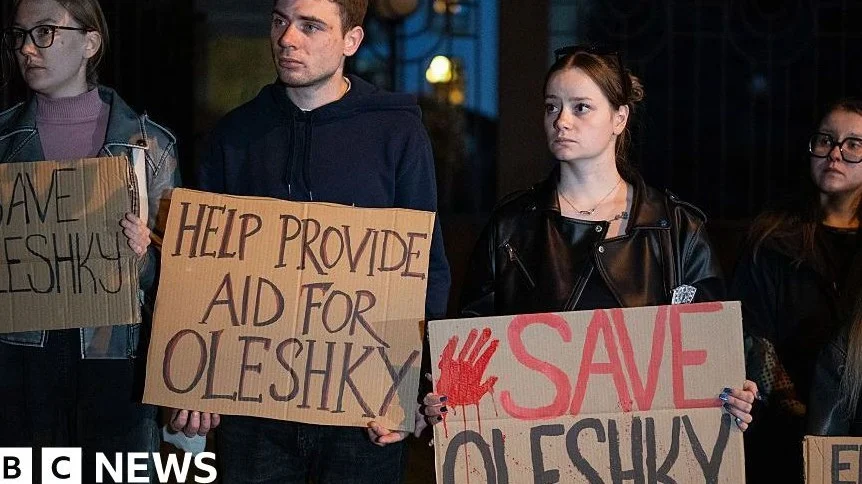
A Truce In Oleshky Begins Without A Named Monitor
Neither Russia, Ukraine nor the United States has said who will monitor the truce, or released operational details of the aid delivery and evacuation meant to accompany it. Agence France-Presse reported it could not immediately verify whether fighting had decreased.
Verification is harder still because contact with the city is unreliable. The BBC reported that communication is patchy and that many residents are reluctant to describe conditions for fear of reprisals from Russian authorities.
The only announced media embed is the US cable network Newsmax, which said it had been granted “exclusive television access” to accompany observers entering the city on Thursday. The Russian military does not routinely grant international media access to areas under its occupation, including Oleshky.
Why Oleshky Residents Ate Weeds While Waiting For Aid
Before Russia’s full-scale invasion in February 2022, Oleshky was home to about 24,000 people. Russian forces seized it in the first days of the war. No shops are open. The city has had no electricity, gas or water for three years. Routes out are mined and exposed to drone attack, which makes leaving as dangerous as staying. The 2023 destruction of the Kakhovka dam caused major flooding along the Dnipro and heavily damaged the city.
“They’ve forgotten what bread is. You need flour for bread, and there’s not even flour left,” Olga, a former resident in contact with two families still inside, told AFP.
Pope Leo XIV appealed earlier this month to Vladimir Putin to allow food and medical aid into Oleshky and a safe evacuation, and urged Volodymyr Zelensky to cooperate with Moscow on a ceasefire. Last month the Kremlin acknowledged that the city faced “a critical situation” and “problems with supplies of food and medicine”, while saying its military was working to resolve them and blaming Kyiv.
Even the size of the trapped population is contested. Kyiv believes up to 6,000 people, including 200 children, remain in the city and surrounding areas, with about 1,700 still inside the city itself, according to the Guardian. Ukrainian and US estimates cited by AFP put the current population at around 2,000, including as many as 50 children. Russia’s human rights commissioner, Yana Lantratova, said on Monday that most of those who wished to leave had already done so, “entirely of their own volition”.
The difference between 50 children and 200 children is not a rounding error. It is the measure of how little independent data exists about a city both sides have controlled with force.
Kyiv Was Bombed Hours Before The Truce In Oleshky Took Effect
Late on Monday, Russian strikes hit the Ukrainian capital. Mayor Vitali Klitschko said one person was killed and that medical facilities, including an intensive care unit, were damaged. The Guardian put the number of wounded at eight; the BBC reported 14 injured. Zelensky said a ballistic missile struck the grounds of a university campus, adding that the missiles hit crowded areas with no military facility nearby. Klitschko later said a strike damaged the Southern Bridge, including metro infrastructure, and that train services across it were suspended.

Zelensky also said Ukraine had waited nearly a month for US defence secretary Pete Hegseth to sign off on missiles for Patriot and NASAMS air-defence systems.
Elsewhere, Romania said a network “coordinated” from Russia was involved in starting a fire on 14 September near an arms factory in the central city of Brasov. Two Belarusians and a Ukrainian were involved, authorities said; two were tracked down and remanded in custody in Germany, and the third is at large in Poland. Russia’s embassy in Bucharest could not immediately be reached for comment, and Moscow has repeatedly denied such accusations. Russia’s defence ministry said its forces struck a vessel in the Black Sea carrying cargo for the Ukrainian military. Before that strike, at least eight cargo ships had been hit off the coasts of Nato members Romania and Bulgaria in three weeks, with 34 sailors reported dead or missing. A Ukrainian drone strike on Bryansk killed one person and injured six.
Friday’s Evacuation Is The Real Test
The truce is meant to let supplies into Oleshky and allow roads to be cleared of mines so residents can leave in an evacuation planned for Friday. Russia’s defence ministry said units of its Dnepr group had been conducting “engineering reconnaissance” and clearing main access roads of “explosive and booby-trap devices”. Army chief Valery Gerasimov said the safe passage of a humanitarian convoy would be facilitated.
Zelensky has warned that routes demined by Russia will ensure civilians leaving Oleshky head toward Russia and stay there. Residents also fear Russian checks of phones and online activity for signs of Ukrainian sympathies. One woman told the BBC she had stepped on a landmine and was in hospital after two operations, unsure whether she could join the evacuation.
Three-way talks between Washington, Moscow and Kyiv are set to resume in November after a months-long hiatus, frozen since the United States and Israel launched joint strikes on Iran in February.
What to watch is narrow and concrete: whether convoys actually move on Friday, whether anyone independent is permitted to record who leaves and where they are taken, and whether the truce in Oleshky survives longer than the humanitarian window it was built around. The strikes on Kyiv the same week are the reminder that a local pause changes the terms of one city’s suffering, not the war around it.
Frequently Asked Questions (truce in Oleshky)
When did the truce in Oleshky begin?
It entered force at 3am local time on Tuesday (0100 GMT). Russia’s defence ministry said it stopped firing toward Kherson, across the Dnipro River, at 04:00 Moscow time. No end date has been announced by Russia, Ukraine or the United States.
Who brokered the Oleshky ceasefire?
The White House said last week that US First Lady Melania Trump secured the arrangement. Ukraine’s human rights commissioner Dmytro Lubinets said the operation is being carried out with her mediation and coordination, in cooperation with Russia’s commissioner for human rights, Yana Lantratova.
How many people are still in Oleshky?
Estimates differ. Kyiv believes up to 6,000 people, including 200 children, remain in the city and surrounding areas, with roughly 1,700 inside the city itself. Ukrainian and US estimates cited by AFP put the current population at around 2,000, including as many as 50 children. The pre-war population was about 24,000.
Receive alerts for truce in Oleshky and more like it.
FIRST TIME REACTIONS:
Be the first to leave us a comment – Truce in Oleshky Begins as Residents Ate Weeds to Survive, down the comment section.
JOIN US ON OUR SOCIAL MEDIA:
About Clare Dominic
Clare Dominic is the Editor at AfriLatest. With a background in journalism and a passion for storytelling, she oversees the editorial process to ensure content is accurate, engaging, and relevant. Clare works closely with contributors to maintain the highest standards of journalistic integrity across all news, sports, and lifestyle coverage.
View all articles by Clare DominicWorld News
Epstein Email in Botstein Resignation ‘Highly Suspicious’
A forensic report calls the Epstein email behind Leon Botstein’s Bard resignation ‘highly suspicious’, raising questions about document provenance.

Leon Botstein spent more than half a century building his reputation at Bard College, serving as its president and later in other senior posts. He gave up his remaining roles there on Oct. 7. The Epstein email that precipitated that resignation is now the subject of a forensic challenge — commissioned not by his accusers but by Bard’s own Board of Trustees, as Inside Higher Ed reported.
The board hired FTI Cybersecurity, which delivered its report on Oct. 19. The firm concluded there is a “strong substantive basis for questioning the authenticity, integrity, and origin” of the correspondence. Its summary line was blunter: “While it is not possible at this time to establish with certainty that the exchange was entirely fabricated, indicators are clear that it is highly suspicious.”
Why the Epstein Email Report Questions Authenticity

The disputed material is a May 2014 exchange, redacted versions of which are public in the Department of Justice’s Epstein Library. It was publicised earlier this month by U.S. Rep. Jamie Raskin, who has been investigating Botstein’s and others’ ties to Epstein since June. The exchange includes a question from Botstein to Epstein about a woman Epstein trafficked, identified as Jane Doe: “Is [Jane Doe] for me, or are you keeping her for yourself.”
FTI’s most concrete finding concerns provenance. Investigators said they did not find the disputed emails on Bard’s own servers, in the college’s Google Vault records, in “available historical correspondence” or in logs from a 2017 server migration. “These reviews establish that, as of July 2017, the Disputed Emails did not exist on Bard’s servers,” the report states.
The exchange survives only inside a forwarded message that Epstein sent to himself, according to the report. The original email from Botstein to Epstein does not appear in the DOJ’s published files. “The quoted correspondence was not accompanied by the native transmission metadata or independently preserved source records necessary to establish the original sender, message chronology, or integrity of the quoted content,” FTI wrote, adding that quoted text can be edited without altering the headers of the forwarding message.
Two formatting anomalies reinforced the doubt. The quoted dateline reads “Sent: thurs 6 AM,” a format that does not match other emails between the two men, which carry weekdays, calendar dates, a year and time stamps to the second. The datelines are also out of sequence: Botstein’s reply appears more than five hours before Epstein’s original message was supposedly sent.
FTI did not identify who might have altered or fabricated the material, or why. There is precedent for fabrication on Epstein’s side. In 2013 he sent himself a series of emails suggesting Microsoft co-founder Bill Gates had an extramarital affair and sought illicit drugs; those messages were never sent to Gates, who denied the allegations.
Inside Botstein’s Rise and the Resignation
Botstein’s tenure is the reason a single document carries so much weight. He served Bard for more than half a century, a stretch long enough to make him synonymous with the institution and to give him standing well beyond it.
His resignation statement on Oct. 7 framed the decision as protective rather than as an admission. He did “not want to see even false allegations about me put the institution I have served for more than half a century at any risk,” he said. In a later emailed statement responding to the FTI findings, he repeated his denial. “As I previously said, I did not author or send that email,” he wrote. “I appreciate the effort to find the truth.”
Bard College said it retained FTI to “determine the veracity” of the Epstein email exchange. “Bard is a community that believes in transparency and the right to due process,” a spokesperson said, adding that the college’s review of the other claims in Raskin’s letter “remains ongoing” and that it is committed to establishing the facts.
What the Epstein Email Dispute Means for Institutional Accountability
Raskin’s office disputes the significance of the forensic questions about the Epstein email. A spokesperson said the message “comes from DOJ’s file release under [the Epstein Files Transparency Act]” and that the congressman’s team had “confirmed that the email in this document, despite DOJ’s coverup and redactions, was Botstein’s work email address.” The spokesperson added: “we are not relying on this email alone but on a trove of other email exchanges between Botstein and Epstein, and Epstein and Jane Doe.”
That argument has a limit, and it is the crux of the matter. An address on a document establishes a mailbox, not an author. The FTI report does not clear Botstein; it says the record cannot yet be authenticated in either direction. The gap between “not authenticated” and “fabricated” is the difference between an open question and a conclusion, and public argument has collapsed the two.

The same discipline applies to Raskin’s wider claims. His Oct. 7 letter said he had received “deeply troubling whistleblower reports that Botstein used his position on Bard’s campus to influence Title IX proceedings and protect sexual predators on the Bard faculty.” Those are allegations under investigation, not findings of fact.
They nonetheless reshaped the campus. Students and alumni protested against sexual abuse after the letter became public. One alumna alleged that Kyle Gann, a composer and music professor who has taught at Bard since 1997, assaulted her in 1998. Gann has been placed on administrative leave while the college investigates. “Ensuring a safe environment for every member of the Bard community is our top priority,” a college spokesperson said, noting that an independent external investigator is examining the alum’s allegations.
For universities far from Bard’s campus — including institutions that increasingly rely on digital records in misconduct proceedings — the case sets a hard standard. A document that exists only as a forwarded quote, stripped of metadata, carrying a truncated dateline and timestamps that run backwards, cannot by itself bear the weight of a career. Neither can a resignation.
What remains confirmed is narrow. A report exists, Bard paid for it, and it calls the Epstein email highly suspicious while declining to call it fake. Botstein maintains he never wrote it. Raskin maintains the wider file is damning. Until an independent party authenticates the underlying message or establishes who assembled it, the public record holds two competing readings of the same document — and no verified answer to the question that ended a half-century tenure.
Frequently Asked Questions
What did the FTI Cybersecurity report actually conclude about the Epstein email?
FTI said there is a “strong substantive basis for questioning the authenticity, integrity, and origin” of the exchange and that indicators are clear it is “highly suspicious.” The firm stopped short of declaring the emails fabricated, stating it was not possible at this time to establish that with certainty.
Why did Leon Botstein resign if he denies writing the email?
In his Oct. 7 statement Botstein said he did not want to see even false allegations about him put Bard College at risk, after more than half a century of service there. He resigned from all of his remaining positions and has repeated that he did not author or send the email.
Is the disputed Epstein email the only evidence against Botstein?
No. A spokesperson for Rep. Jamie Raskin said the congressman’s investigation relies on a trove of other email exchanges between Botstein and Epstein, and between Epstein and Jane Doe, as well as whistleblower reports about Title IX proceedings at Bard that remain under review.
FIRST TIME REACTIONS:
Be the first to leave us a comment – Epstein Email in Botstein Resignation ‘Highly Suspicious’, down the comment section.
JOIN US ON OUR SOCIAL MEDIA:
About Clare Dominic
Clare Dominic is the Editor at AfriLatest. With a background in journalism and a passion for storytelling, she oversees the editorial process to ensure content is accurate, engaging, and relevant. Clare works closely with contributors to maintain the highest standards of journalistic integrity across all news, sports, and lifestyle coverage.
View all articles by Clare Dominic-

 Startups1 month ago
What a Successful Dangote Refinery IPO Really Says
-
Health and Fitness2 weeks ago
Curly Hair Hydration: 5 Proven Steps That Actually Work
-
Tech & Gadgets3 weeks ago
Apple Watch and AirPods Fall Deals: Save $120 Today
-
Trending Entertainment News2 weeks ago
Taylor Swift Joins Beatles as Only Acts With 100 Weeks at No. 1
-
World News1 month ago
Carney Calls U.S. Tariffs a Miscalculation as Canada Retaliates
-
Football1 month ago
South Carolina vs Alabama: Tide Roll to 35-10 Halftime Lead
-
University Admissions1 month ago
UNILAG 2026/2027 Admission: Direct Entry & Post-UTME Guide
-
Football1 month ago
Mexico vs Colombia 2026: Márquez Debut Ends in Defeat