Ai News
Terrorists Could Exploit AI Weapons: Nigeria’s 5-Step Warning
Nigeria warns terrorists could exploit AI weapons. Learn 5 steps to counter AI-driven threats, from deepfake detection to regional cooperation.


You want to protect your community from the next wave of digital deception, and Nigeria’s security agencies have just issued a stark warning: terrorists could exploit AI weapons to spread chaos. The Chief of Defence Staff, Gen. Olufemi Oluyede, warned that AI-generated videos, manipulated images, and cloned voices are already being used to mislead the public and endanger troops. This isn’t a distant threat. It’s happening now, and you can take concrete steps to defend against it.
Understand The Threat Landscape
Terrorist groups like ISWAP, Boko Haram, and Jama’at Nusrat al-Islam wal-Muslimin are moving faster than state procedures. According to the African Union Counter-Terrorism Centre, these groups use cheap, accessible technologies to recruit via social media, move funds through mobile money and cryptocurrencies, and fly drones across borders. They also use artificial intelligence to tailor propaganda and evade detection. The warning from Nigeria is clear: terrorists could exploit AI weapons not just in physical attacks but in information warfare that undermines public trust.

MI5 chief Sir Ken McCallum has echoed this, stating that AI could give terrorists access to bioweapons or generate new pathogens if guardrails fail. He noted that AI is already supercharging the cybersecurity contest and that terrorists have been caught seeking to exploit AI to improve reconnaissance and attack methodologies. The threat is real, but it hasn’t fully materialised yet. That gives you a window to act.
Step 1: Verify Before You Share
Your first line of defence is scepticism. Deepfakes and AI-generated videos are designed to trigger panic. Gen. Oluyede urged journalists to verify sensitive operational information with Defence Headquarters before publication. You should do the same: before sharing any shocking video or image, check the source. Look for inconsistencies in lighting, shadows, and audio sync. Use free tools like InVID or Google Reverse Image Search to trace the origin. If it’s from an unverified social media account, treat it as suspect.
Step 2: Strengthen Digital Literacy In Your Circle
The National Counter-Terrorism Centre (NCTC) is training security experts in cyber threat intelligence, open-source intelligence, digital forensics, and blockchain analysis. You can adopt similar practices. Teach your family and colleagues to recognise AI-generated propaganda. The Nigerian military is investing in AI-enabled decision support and joint intelligence fusion, but public awareness is equally critical. A single AI-generated video could undo months of operational gains, as Oluyede warned. Share this knowledge widely.
Step 3: Report Suspicious Content
If you encounter content that appears designed to incite fear or undermine confidence in the Armed Forces, report it. The Defence Correspondents Association of Nigeria (DECAN) conference highlighted the need for collaboration between the media and the military. You can flag suspicious posts to platforms and to local authorities. The AUCTC’s Cybersecurity Capability Programme (A3CP) 2026–2030 emphasises private-sector collaboration because much of the infrastructure exploited by terrorists is privately owned. Your report could disrupt a propaganda campaign.
Step 4: Support Regional Cooperation
The threat doesn’t respect borders. The AUCTC training in Abuja brought together experts from West Africa and the Sahel to share tactics. You can support this by staying informed about regional security initiatives and advocating for better funding. Former Senate President Ahmed Lawan called for defence budgets to be placed on first-line charge to ensure predictable funding. When your community understands the stakes, you can push for policies that close the digital space to violent extremists.
Step 5: Prepare For Bioweapon Misuse
The most serious potential danger, according to McCallum, is AI’s potential to change the stakes on existing or new bioweapons. While this threat hasn’t fully emerged, you can advocate for stronger biosafety measures in your local institutions. The UK’s AI Security Institute is working with MI5, GCHQ, and MI6 to tackle these risks. Nigeria’s warning should spur similar collaboration. Stay informed about biosecurity policies and support efforts to monitor AI’s dual-use potential.
What This Means For You
The warning that terrorists could exploit AI weapons is a call to action, not a reason to panic. By verifying content, educating others, reporting suspicious activity, supporting regional cooperation, and advocating for biosecurity, you become part of the defence. The technology will keep evolving, and so must your vigilance. Start with one step today—verify the next video you see before you hit share. That small habit could prevent a cascade of misinformation and save lives.
For more details on the AUCTC’s findings, read the full report. For MI5’s assessment, see WION’s coverage. And for the Nigerian military’s deepfake warning, visit The Guardian Nigeria.
Frequently Asked Questions
What specific AI threats did Nigeria warn about?
Nigeria’s Chief of Defence Staff warned that AI-generated videos, manipulated images, and cloned voices are being used to mislead the public, incite fear, and endanger troops. The AUCTC also highlighted terrorists’ use of AI for propaganda, recruitment, and drone operations.
How can I tell if a video is AI-generated?
Look for inconsistencies in lighting, shadows, and audio sync. Use tools like InVID or Google Reverse Image Search to trace the source. Verify with official channels before sharing.
What is the AUCTC doing to counter these threats?
The AUCTC is training experts in cyber threat intelligence, open-source intelligence, digital forensics, and blockchain analysis. It also promotes regional cooperation and private-sector collaboration through its Cybersecurity Capability Programme (A3CP) 2026–2030.
Related Articles
- Keep curly hair hydrated this winter: 3-step layering
- Modern Warfare 4 Release Times: 3 Early Access Dates
- 9 Best Hair Thickening Shampoos for Men in 2026
- African Streaming Growth: 2 Nations, 1 Big Money Problem
- Best Documentary 2026: 1972 Cocktail Party Story
 Follow AFRILATEST on Google News
FIRST TIME REACTIONS:
Be the first to leave us a comment – Terrorists Could Exploit AI Weapons: Nigeria’s 5-Step Warning, down the comment section.
JOIN US ON OUR SOCIAL MEDIA:













Ai News
Battlefield 6 Skins: 5 Pistols, Secuty Typo, AI Uproar
Battlefield 6 skins spark AI accusations over ‘secuty’ typo and five pistols. See DICE’s response and what it means for you.
Battlefield 6 skins are under fire after players spotted a soldier wearing five pistols and a patch that reads ‘secuty’ instead of ‘security.’ The errors have fueled accusations that developer DICE used generative AI to design the cosmetics. Battlefield 6 skins are the latest flashpoint in a growing debate over AI-generated assets in paid games.
What Exactly Is Wrong With The Skins
The most glaring issue is a skin featuring a soldier with a Batman-style mask (minus the ears) and five pistols strapped to his chest. One Reddit poster joked, ‘Because switching to your pistol, secondary pistol, tertiary pistol, quartenary (sic) pistol, and quinary pistol is faster than reloading, soldier!’ The misspelling of ‘quaternary’ in the joke mirrors the actual typo on another skin.
That other skin has a patch that says ‘secuty’ — presumably meant to be ‘security.’ A post on X read, ‘Secuty 😭 It’s AI #Battlefield6.’ Another user wrote, ‘I believe it’s almost impossible to deny anymore that EA/DICE is using AI for the skins in #Battlefield6. At least in the concept phase — and then anything that looks even remotely ‘cool’ just gets rubber-stamped.’
A third skin shows a bomb disposal juggernaut with thick body armor but a completely exposed head. He’s also carrying magazines for small game hunting rifles that don’t exist in Battlefield 6. ‘Fps .22s probably take like 2 full mags to kill someone,’ one X user said. Another joked, ‘Not to mention he’s carrying super finicky mags for a .22 varmint rifle.’
How DICE Responded
IGN has asked EA for comment, but so far there’s been no official statement on the AI accusations. However, Battlefield 6 lead producer David Sirland recently returned from vacation and immediately engaged with the community on X, asking, ‘What irks you with BF6 right now?’ The post drew over half a million views and 2,000 replies in 12 hours. Sirland addressed many issues — maps, recoil, dispersion, and a laser targeting bug — but did not specifically comment on the skin controversy in that thread.
According to PC Gamer, Sirland acknowledged problems with the server browser, hit registration, aim assist, and more, promising fixes in an upcoming patch. The skin issue wasn’t among the topics he addressed.
Why Players Are Crying AI
The errors — a misspelled word, illogical gear placement, and weapons that don’t fit the game’s arsenal — are classic signs of AI-generated content. Generative AI often produces text that looks right at a glance but contains subtle mistakes, and it can combine elements in ways that don’t make sense. In a paid cosmetic item, those mistakes feel like a rip-off.
AI is perhaps the hottest topic in the video game industry right now. Fortnite developer Epic Games has gone all-in on generative AI, and scrutiny is intense. When assets contain clear errors, especially ones you pay for, players are quick to suspect AI. As IGN notes, ‘fans aren’t giving DICE the benefit of the doubt.’
It’s possible these issues are the result of human error. But given the current climate, that benefit of the doubt is in short supply.
What This Means For Battlefield 6 Players
If you’re playing Battlefield 6, you’ve likely already encountered other issues. Cheating has been a problem since the beta, with aimbots and wallhacks appearing despite EA’s Javelin anti-cheat and Secure Boot requirement. Polygon reported that EA banned a player shown cheating in a viral video, but cheat sellers continue to operate.
On the gameplay side, a secret sniper nerf makes sniper rifles randomly miss unless you’re playing the Recon class, according to streamer Stodeh. That’s on top of bloom and dispersion issues that Sirland says will be addressed in the next major patch.
The skin controversy adds to a sense that Battlefield 6 launched with rough edges. For a game that costs money — and sells cosmetic items on top — players expect polish. Spelling errors on paid skins undermine that expectation.
How To Evaluate Skins Before You Buy
If you’re considering buying Battlefield 6 skins, here’s a practical approach:
1. Zoom in on the preview. Check for text, patches, and gear placement. If something looks off, it probably is.
2. Look for consistency with the game’s world. Magazines for weapons that don’t exist in the game are a red flag.
3. Wait for community reviews. Reddit and X are quick to spot errors. A day or two after release, you’ll know if a skin has issues.
4. Consider the value. If a skin has obvious flaws, don’t reward the practice with your money.
DICE hasn’t confirmed whether AI was used, so features weren’t fully confirmed. But the evidence players have gathered is compelling enough to warrant caution.
Alternatives To Paid Skins
If you’re uneasy about the quality of Battlefield 6 skins, you can simply not buy them. The game includes base cosmetics, and you can earn some through gameplay. Alternatively, other shooters like Call of Duty and Fortnite offer extensive cosmetic systems — though Fortnite’s use of AI has also been a topic of debate.
For now, Battlefield 6 skins remain a sore spot. The community’s reaction shows that players are paying attention to detail. If DICE wants to rebuild trust, it needs to address the errors directly — and explain how they happened.
Who Should Buy Battlefield 6 Skins
If you’re a die-hard Battlefield fan who values self-expression in-game and you’re willing to overlook occasional flaws, you might still find skins you like. But if you expect flawless, hand-crafted art for your money, you should hold off until DICE cleans up its act. The ‘secuty’ patch is a small typo with a big message: even virtual gear deserves a proofread.
Frequently Asked Questions
Did DICE use AI to create Battlefield 6 skins?
DICE has not confirmed whether AI was used. Fans suspect it due to spelling errors like ‘secuty’ and illogical gear placement, but it could also be human error.
What is the ‘secuty’ typo?
One Battlefield 6 skin has a patch that reads ‘secuty’ instead of ‘security,’ which players cite as evidence of AI generation.
How many pistols are on the controversial skin?
The skin features five pistols attached to the chest pockets of a tactical vest.
Related Articles
- Keep curly hair hydrated this winter: 3-step layering
- Modern Warfare 4 Release Times: 3 Early Access Dates
- 9 Best Hair Thickening Shampoos for Men in 2026
- African Streaming Growth: 2 Nations, 1 Big Money Problem
- Best Documentary 2026: 1972 Cocktail Party Story
FIRST TIME REACTIONS:
Be the first to leave us a comment – Battlefield 6 Skins: 5 Pistols, Secuty Typo, AI Uproar, down the comment section.
JOIN US ON OUR SOCIAL MEDIA:
Ai News
OpenAI claims ex-employee took 100+ files to Apple
OpenAI claims ex-employee took 100+ confidential files to Apple, including unreleased device images. Here’s what the filing says and what it means.

OpenAI claims ex-employee took 100 confidential files, and the company wants a court to decide whether those files are now shaping Apple’s hardware roadmap. The allegation landed Wednesday in a filing tied to the ongoing trade secrets fight between the two companies. According to The Verge, the unnamed worker moved more than a hundred documents to personal accounts before walking out the door.
The story has a twist that matters. Apple sued OpenAI first, back in July, accusing two former Apple employees of carrying confidential engineering data to the ChatGPT maker. OpenAI denied it then. Now OpenAI is doing the accusing, and the target is Apple.
What OpenAI Actually Alleges
The filing describes an employee who worked at Apple, joined OpenAI for six months, then went back to Apple. On June 2, 2026, his final day at OpenAI, some files were allegedly sent just after midnight Singapore time, per The Register.
The documents allegedly included detailed images of at least one unreleased OpenAI device, engineering and manufacturing data, supplier information, project files, and specs for cosmetic finishes. There were also reports on coating and sealing hardware components.
That last detail is not trivial. Cosmetic finish standards and coating reports are the kind of material that takes years and millions of dollars to develop through trial and error. You cannot reverse-engineer a finish from a marketing photo. You can shortcut it from a spec sheet.
OpenAI also claims the former employee gave a presentation about OpenAI’s product plans to Apple’s senior leadership, including Apple’s vice president of operations in Asia. The company links that presentation to Apple’s new HomeView smart display and the broader slate of devices Apple revealed this week.
“That presentation appears to have happened months ago — and now, armed with that information, Apple is making a new push into AI-enabled products,” OpenAI said in the filing.
Apple’s Response
Apple says it has policies in place to stop new hires from bringing over confidential material from previous employers. The company told Reuters it found no evidence supporting OpenAI’s allegations and hasn’t responded to requests for more information. A spokesperson said Apple has strict rules and found nothing to back the claim.
Apple did not immediately respond to The Verge’s request for comment.
The Timing Is Awkward
The filing surfaced the same day as a key hearing in the case. US District Judge Edward Davila said he was “highly likely” to side with Apple on its request for an injunction barring ex-Apple employees now at OpenAI from using Apple’s proprietary information, according to Bloomberg. He was less receptive to Apple’s demand for a forensic inspection of all OpenAI devices and code repositories, calling it a “huge ask.” Apple reportedly agreed to narrow the inspection to a handful of former employees.
So both companies are asking courts to believe the other one stole secrets. Apple’s July lawsuit named Chang Liu, a former senior system electrical engineer, and Tang Yew Tan, a former VP of product design. Liu allegedly kept an Apple-issued laptop and used a software bug to access confidential files after leaving. The complaint says he celebrated the access in a message on a colleague’s laptop, writing “LOL” and calling it “so funny.” Tan allegedly emailed himself supplier information before his exit.
OpenAI denies those claims outright. “We have no interest in other companies’ trade secrets,” the company said in July.
What This Means For Anyone Building Hardware
Trade secret litigation between hardware companies is not new, but the speed and scale here are unusual. Two companies with no shipped competing product in the same category are already fighting over who saw whose supplier list.
For engineers and product managers, the practical lesson is unglamorous. Your personal email is discoverable. Your final week at a company is logged. Midnight timestamps in a court filing look exactly as bad as they sound.
For anyone watching the AI hardware race, the more interesting question is what Apple actually does next. The HomeView display and the other devices announced this week are real products with real ship dates. Whether they were informed by OpenAI documents is something only discovery will settle.
OpenAI wants the court to establish whether its confidential information reached Apple and whether there are grounds for counterclaims. The New York Post reports that no counterclaims have been filed yet.
Where It Stands
Nothing is proven. OpenAI has allegations, a forensic investigation it says is ongoing, and a court filing. Apple has a denial, a policy statement, and its own pending lawsuit. Judge Davila has signaled he leans toward Apple on the injunction but pushed back on the scope of the inspection.
The case will grind on through discovery, and the documents both sides produce will matter more than the press coverage. For now, OpenAI claims ex-employee took 100 files it considers its most valuable hardware work, and Apple says it has seen no evidence of it.
If you work in hardware and you are about to change jobs, the safest move is the boring one. Leave the laptop. Leave the files. Leave the supplier spreadsheet. The next company will not thank you for it in court.
Frequently Asked Questions (OpenAI claims ex-employee took 100)
What exactly did OpenAI accuse the former employee of taking?
According to the filing, more than 100 confidential files including detailed images of at least one unreleased OpenAI device, engineering and manufacturing data, supplier information, project files, cosmetic finish standards, and reports on coating and sealing hardware components.
What does Apple say about the allegations?
Apple says it has policies preventing new employees from using confidential information from previous employers and that it found no evidence supporting OpenAI’s claims. Apple did not immediately respond to The Verge’s request for comment.
How does this relate to Apple’s earlier lawsuit against OpenAI?
Apple sued OpenAI and two former Apple employees in July 2026, alleging they took confidential hardware information to OpenAI. OpenAI denied those claims. This new filing is OpenAI’s counter-accusation within the same broader trade secrets case.
Related Articles
- GBU-43/B MOAB: Why This 21,600-lb Bomb Won’t Crack Iran
- Big Walk Dev Explains Lack of Xbox: A Masterstroke or Missed Opportunity?
- Amazon Bee AI Devices: Frontier vs Eclipse Compared
- Billy Joel Health Update: Hydrocephalus Tests Before Tour
- Grian Chatten Solo Album: Will It Be Festival-Ready?
FIRST TIME REACTIONS:
Be the first to leave us a comment – OpenAI claims ex-employee took 100+ files to Apple, down the comment section.
JOIN US ON OUR SOCIAL MEDIA:
Ai News
Jailbroken PS5s Run Local AI Models at 124 Tokens/sec
Jailbroken PS5s now run local AI models at over 100 tokens per second. Here’s how the PS5LM fork works, what hardware it needs, and what to expect.
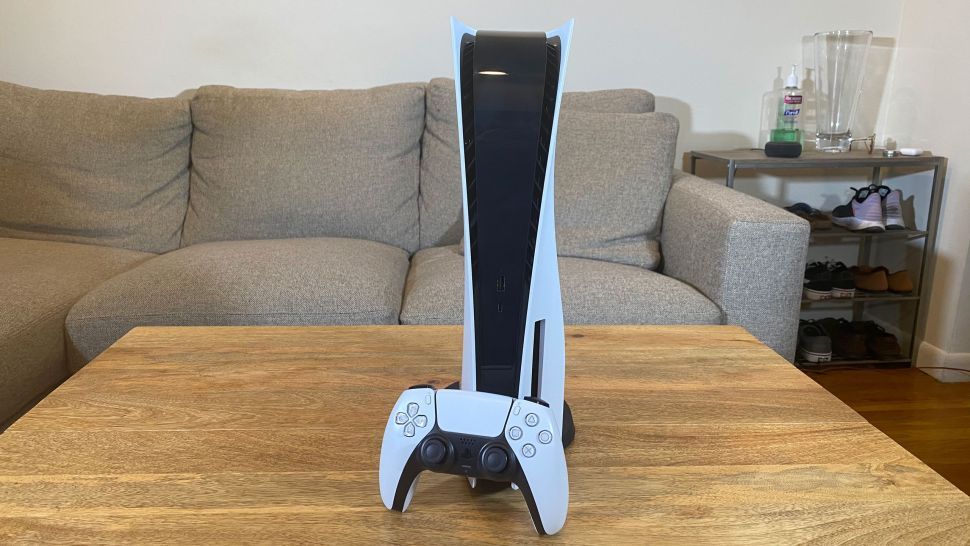
You want to run a local AI model on hardware you already own, without renting cloud GPUs or buying a $2,000 graphics card. A jailbroken PS5 can now do that. A new fork of PS5LM runs natively on the console, taps the GPU, and pushes smaller models past 124 tokens per second. That is not a typo, and it changes what a used PlayStation is worth to anyone who tinkers.
This guide walks through what changed, what you need, and how to think about the tradeoffs before you start.
What The New Fork Actually Does

The original PS5LM project came from GitHub user cobanov, who posted an unofficial port of llama.cpp to Reddit about two weeks ago. That version ran as a payload on the CPU, which meant it hijacked the processor and inserted the language model alongside the home screen and system services. The catch: RAM access was capped at roughly 6.25 GiB, because holding more would freeze the home screen. A 6.8 GiB model would crash the system outright.
Reddit user u/AdIllustrious7246 forked it and went native. By using PS5_Vulkan, a port of the RADV graphics driver that sends instructions to the PS5 GPU, the fork unlocks the AMD GPU that Sony normally keeps locked down. Native execution also raises usable memory to about 11.4 GiB.
The result: a 27B parameter model like Qwen3.8-27B runs at 20 tokens per second. Smaller models fly. Gemma 4 E4B hits 61 tokens per second. Llama 3.2 3B reaches 124 tokens per second.
What You Need Before You Start
A jailbroken PS5. This is not a soft mod. The exploit scene for the PS5 is narrower than the PS4’s, and firmware versions matter enormously. If your console is on a patched firmware, you are out of luck for now.
A working PS5_Vulkan setup. This driver port is what makes GPU access possible. Without it, llama.cpp can only crawl along on the CPU. The Vulkan layer is the bridge between homebrew code and the AMD silicon inside the console.
A model file that fits. The fork supports up to roughly 11.4 GiB of RAM, so quantized models in the 3B to 27B range are the sweet spot. Llama 3.2 3B is tiny and fast. Qwen3.8-27B is the ambitious pick.
Patience. This is a homebrew workflow. Expect to read GitHub issues, follow Reddit threads, and troubleshoot driver quirks. The payoff is a console that doubles as an offline AI assistant when you are not gaming.
How To Run It, Step By Step
Step 1: Confirm your firmware and exploit path. Check your PS5 system version before anything else. The jailbreak community tracks compatible firmware on Reddit and Discord, and the wrong version means no homebrew at all.
Step 2: Install PS5_Vulkan. This is the graphics driver port that opens GPU compute. Without it, the PS5 GPU stays locked and your model runs on the CPU with a hard memory ceiling. Follow the project’s setup notes carefully, because driver installation is where most people get stuck.
Step 3: Load the PS5LM fork. Grab u/AdIllustrious7246’s fork of cobanov’s llama.cpp port. This is the version that runs natively rather than as a CPU payload, and it is the one that unlocks the extra RAM.
Step 4: Pick your model. Start with Llama 3.2 3B if you want to see the dashboard light up immediately at 124 tokens per second. Move to Gemma 4 E4B at 61 tokens per second for better output quality. Only load Qwen3.8-27B if you can tolerate 20 tokens per second, which is roughly conversational reading speed.
Step 5: Open the dashboard. The fork ships with a live dashboard showing tokens per second, GPU and CPU usage, power draw, temperatures, and how memory splits between the model and the KV cache. Watch the temperature line the first time you run a 27B model. Consoles were not built for sustained compute loads.
Step 6: Connect the web UI. The fork works with llama.cpp’s web UI, so you can chat with the model from another device on your local network using a browser. That turns the PS5 into a quiet server in the corner of the room.
Tips, Limits, And The Honest Tradeoffs
The PS5 GPU is not fast by modern standards, and it does not have much RAM. That is exactly why this works as a curiosity and not as a replacement for a dedicated AI rig. A desktop with a recent graphics card will still beat it on large models.
Commenters on the original coverage are already joking about a repeat of the crypto mining GPU crisis, where consoles got bought up for compute instead of games. That comparison does not hold. The GPU and RAM shortage we are living through is driven by large AI data centers, not by a few thousand jailbroken PlayStations. The PS5’s hardware is simply too modest to move those markets.
What it does move is the value proposition for hobbyists. If you already own a jailbroken console, you now have an offline AI assistant that costs nothing per token and never sends your prompts anywhere. For anyone in a region where cloud API costs or unreliable connectivity are real obstacles, that matters more than benchmark numbers.
Where To Go Next
Try the smallest model first, watch the dashboard, and get comfortable with the workflow before you push a 27B file onto the console. If the temperatures hold and the tokens keep flowing, the next step is pointing the llama.cpp web UI at your phone or laptop and using the PS5 as a household AI endpoint. The jailbroken PS5s running local AI models at over 100 tokens per second are not a threat to the data center. They are a reminder that the hardware sitting under your TV has been capable of more than Sony ever intended, and someone finally proved it.
Frequently Asked Questions
Do I need a jailbroken PS5 to run local AI models?
Yes. The PS5LM fork and PS5_Vulkan driver only work on jailbroken consoles. Stock firmware blocks homebrew entirely, and the compatible firmware range is narrow.
How fast is the PS5 at running LLMs?
According to the developer’s testing, Llama 3.2 3B runs at 124 tokens per second, Gemma 4 E4B at 61 tokens per second, and Qwen3.8-27B at 20 tokens per second.
Will this cause another GPU shortage like crypto mining?
Unlikely. The current GPU and RAM shortage is driven by large AI data centers, and the PS5 does not have a fast enough GPU or enough RAM to affect those markets.
Related Articles
- Big Walk Dev Explains Lack of Xbox: A Masterstroke or Missed Opportunity?
- Amazon Bee AI Devices: Frontier vs Eclipse Compared
- Billy Joel Health Update: Hydrocephalus Tests Before Tour
- Grian Chatten Solo Album: Will It Be Festival-Ready?
- Pro Dota 2 Player Claims He Had to Play a Match to Prove Identity
FIRST TIME REACTIONS:
Be the first to leave us a comment – Jailbroken PS5s Run Local AI Models at 124 Tokens/sec, down the comment section.
JOIN US ON OUR SOCIAL MEDIA:
-

 Startups3 weeks ago
What a Successful Dangote Refinery IPO Really Says
-
Trending Entertainment News1 week ago
Taylor Swift Joins Beatles as Only Acts With 100 Weeks at No. 1
-
World News3 weeks ago
Carney Calls U.S. Tariffs a Miscalculation as Canada Retaliates
-
Fintech3 weeks ago
OPay No Dey Comot Nigeria: How to Verify Fintech News
-
Football3 weeks ago
Mexico vs Colombia 2026: Márquez Debut Ends in Defeat
-
Fintech3 weeks ago
OPay Investing in People to Build a Better Nigeria
-
Nigerian Business3 weeks ago
Moniepoint POS Network: How to Buy Dangote Shares
-
Spare Parts3 weeks ago
Spark Plug Replacement Cost: Fake Parts & Real Prices