World News
Owen Thiele Tinder Campaign: What Is Actually Verified
The Owen Thiele Tinder campaign casts him as a dating wildlife narrator. What is confirmed, what is promotional, and what remains undisclosed.

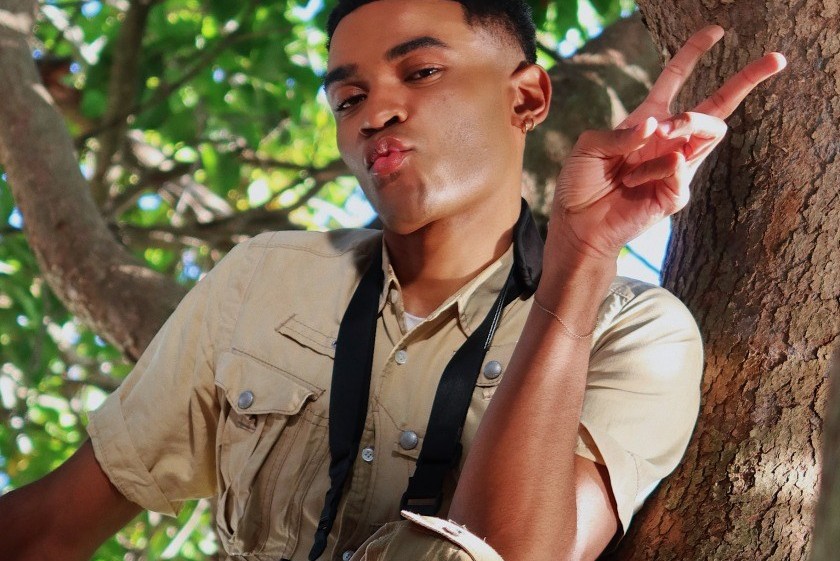
Owen Thiele, the 30-year-old actor who plays Anton on FX’s Adults, is the face of a new Owen Thiele Tinder campaign for Group Hangouts, a feature that lets groups of friends meet other groups.
The spot was directed by twin sisters Fa and Fon Watkins. In it, Thiele narrates Gen Z dating as a wildlife documentarian, borrowing the cadence of Sir David Attenborough while watching people instead of birds. Variety reported the campaign and published an interview with Thiele on how it came together.
The verifiable core is small. Thiele appears in the advertisement. Fa and Fon Watkins directed it. The concept is bird-watching repurposed as people-watching. Everything past that point — media spend, target markets, release schedule, performance — has not been disclosed in the material available.
What The Owen Thiele Tinder Campaign Actually Confirms
The creative decision is specific. Thiele said the directors pitched a concept where he was bird-watching that was in fact people-watching, and that he signed on immediately. He also confirmed what he did not do: a British accent.
“I didn’t do a British accent, which is honestly the best, I think Tinder would have taken a fall of some kind,” he told Variety. “Stocks would have been down if I had done that.”
He was not new to the brand. Thiele said he had already been reading Tinder advertisements on his podcast, describing the company as a collaborative partner before the Group Hangouts approach. That is the confirmed record. The unconfirmed part is commercial: no figures, no named markets, no dates.
One caution applies to the whole package. A celebrity interview tied to a product launch is a promotional document as well as a factual one. Thiele’s description of the shoot can be checked against the finished video. His assessment of the campaign’s appeal cannot be checked against anything yet.
Ten Years Together, And A Pair Of Cut-Out Hands
The campaign is a second pass at an old assignment. Thiele has been with celebrity stylist Jared Ellner for a decade. Three months into the relationship, he said, a Tinder representative asked the couple to appear in a campaign.
“Our faces were cut out and it was just our hands interlocked,” he said. “So our hands are somewhere on a Tinder ad.”
Off screen, Thiele describes himself as an unreliable matchmaker. Most of his friends are single, he said, and his setups usually fail — with one exception. A friend he introduced to another friend has now been with that partner for eight years.
The feature itself is a structural shift, not just a slogan. As described, Group Hangouts moves the product from pairs into groups, which is a different social format from the one-to-one matching the brand was built on.
A Crowded 2026, With One Unanswered Question
The spot lands in a busy stretch, and the surrounding facts are checkable. Thiele confirmed that FX has not greenlit a third season of Adults, despite the second season ending with a kiss between his character, Anton, and Paul Baker. He said the writers have told the cast nothing. He also appears in the announced 13 Going on 30 sequel and in Peaked, an A24 comedy directed by his childhood friend Molly Gordon, working alongside Connor Storrie.

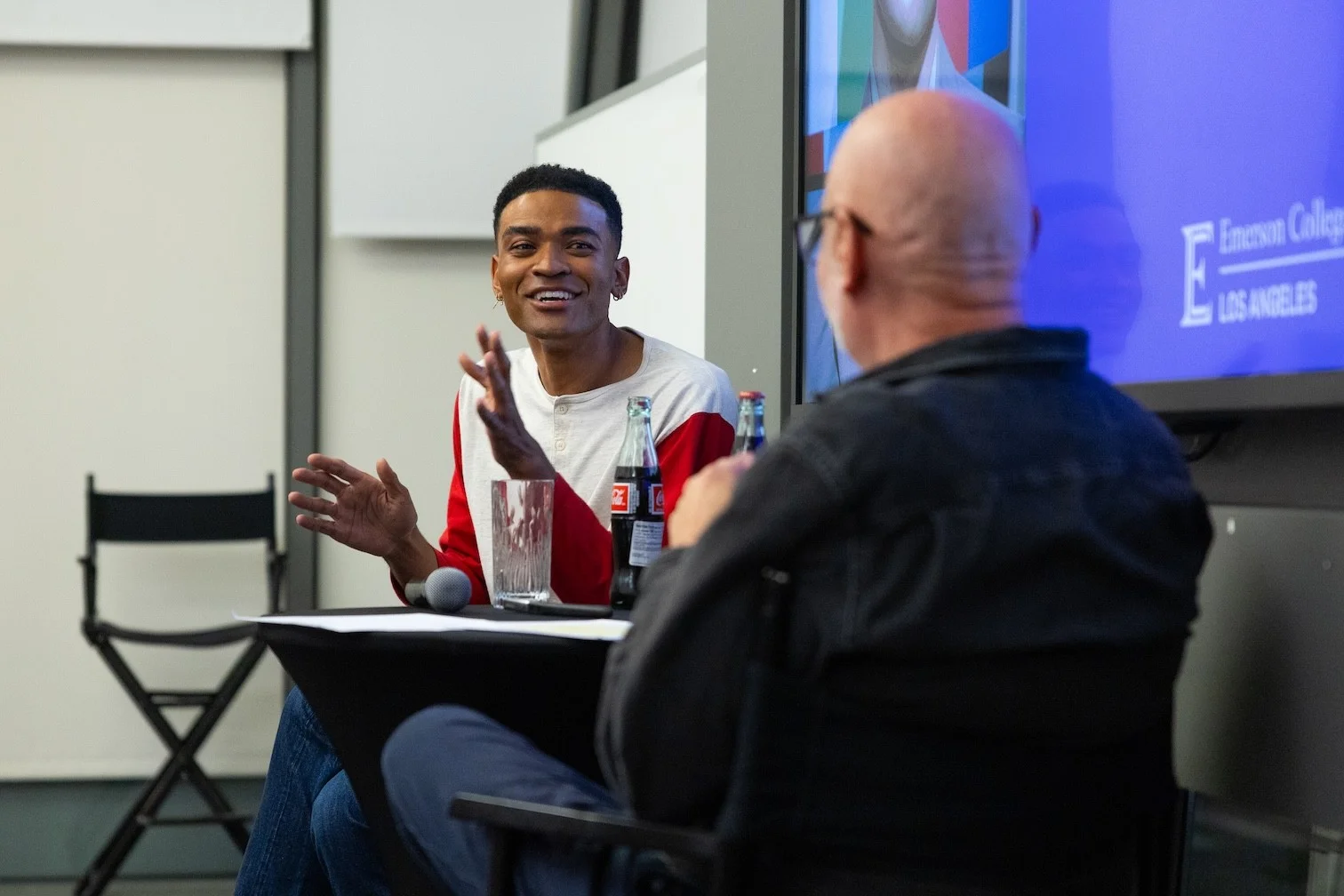
His wider public record is documented. On September 28 he spoke at Emerson College Los Angeles, where he discussed playing a Black queer character and said, “I’m so proud to be a Black queer on a Hulu show.” He also described the network rewriting Anton after the pilot to be lighter and closer to his own personality.
People reported that he posed with Andrew Garfield at the Academy Museum Gala on October 17, weeks after the two shared Delta Flight 958 from Los Angeles to New York, which diverted to Albuquerque on September 9. Delta’s statement said the aircraft diverted “due to a smoky odor in the aircraft” and landed uneventfully.
That timeline explains the casting logic. Thiele is a working actor with network credits, a podcast and a viral moment behind him — visible, but not saturated. Brands use that profile for targeted attention rather than blanket reach.
Why African Readers Should Separate The Ad From The Feature
Nothing in the source material places the campaign in any African market. No language versions, no broadcast windows, no local ambassadors, no pricing or availability detail for Group Hangouts itself.
For readers in Lagos, Nairobi, Accra or Johannesburg, the honest reading is this: a global celebrity campaign is evidence of marketing, not evidence of product availability. The two move on separate schedules. A viewer may see the spot on social platforms long before a feature appears in their own app, or never see it at all if the buy is restricted to specific regions. The test is not whether the advertisement travels. It is whether Group Hangouts does.
What To Watch
Three signals matter. First, whether Tinder publishes market-level detail for Group Hangouts, which would turn a creative talking point into a measurable rollout. Second, whether the spot is cut down or localized, a common indicator of where a brand intends to spend.
Third, Thiele’s calendar. A third season of Adults remains unannounced. Season two of Overcompensating, the Prime Video comedy in which he plays George, has no release date, though creator Benito Skinner told Thiele’s podcast that George is “a much bigger character” in the new run.
Until Tinder answers the distribution question, the Owen Thiele Tinder campaign is best read as what it is: a well-documented piece of casting with an undocumented commercial footprint.
Frequently Asked Questions
What is the Owen Thiele Tinder campaign promoting?
It promotes Group Hangouts, a Tinder feature that, as described in reporting on the campaign, lets groups of friends meet other groups of friends. Thiele appears in the spot as a wildlife-style narrator observing Gen Z dating.
Who directed the Tinder advertisement starring Owen Thiele?
Twin sisters Fa and Fon Watkins directed the spot, according to Variety’s interview with Thiele. He said they pitched the bird-watching concept that became the ad.
Has Tinder said where or when the campaign will run?
No market list, release schedule or spending figure was disclosed in the available material. That includes African markets, which are not mentioned in any of the reporting reviewed.
Is Adults renewed for a third season?
Not yet. Thiele said a third season has not been greenlit and that the writers have not told the cast what would happen to Anton and Paul Baker.
 Follow AFRILATEST on Google News
FIRST TIME REACTIONS:
Be the first to leave us a comment – Owen Thiele Tinder Campaign: What Is Actually Verified, down the comment section.
JOIN US ON OUR SOCIAL MEDIA:

About Clare Dominic
Clare Dominic is the Editor at AfriLatest. With a background in journalism and a passion for storytelling, she oversees the editorial process to ensure content is accurate, engaging, and relevant. Clare works closely with contributors to maintain the highest standards of journalistic integrity across all news, sports, and lifestyle coverage.
View all articles by Clare Dominic

World News
Sheinbaum No Proof Maduro: Mexico’s Test of US Evidence
Mexico’s Sheinbaum no proof Maduro stance set an evidence test in 2025. The January 2026 Caracas raid answered it with force, not disclosure.

The core issue is not whether Nicolas Maduro is in custody. It is what counted as proof before he was taken, and who was required to show it.
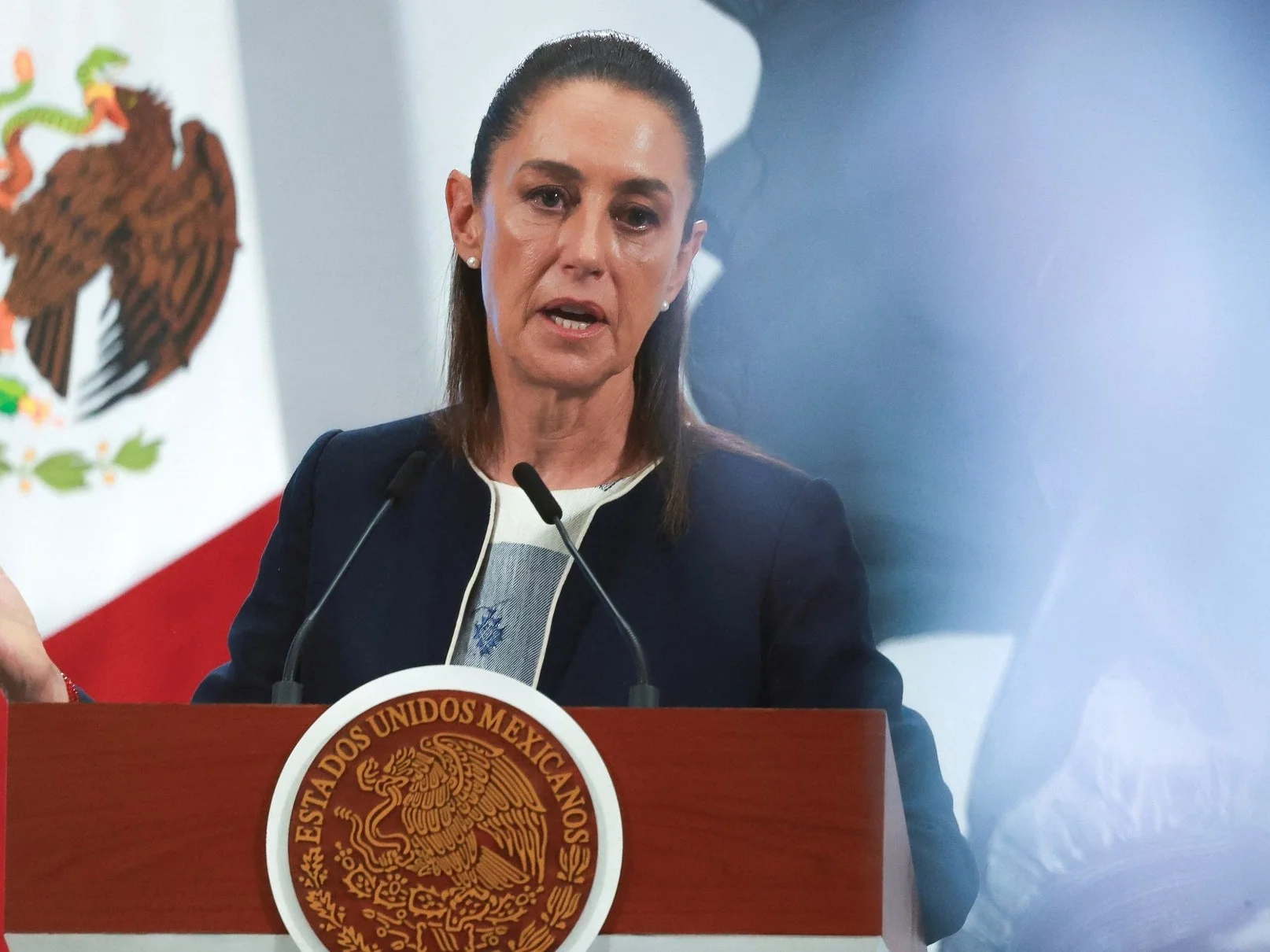
On 8 August 2025, Mexican President Claudia Sheinbaum used her daily morning news conference to answer a question about United States allegations that Maduro ran drugs with Mexico’s Sinaloa Cartel. She said the accusations were new to her, that Mexico had opened no investigation into them, and that Washington should publish whatever it held. “On Mexico’s part, there is no investigation that has to do with that,” she said. “As we always say, if they have some evidence, show it. We do not have any proof.” The exchange was reported in full by Al Jazeera.
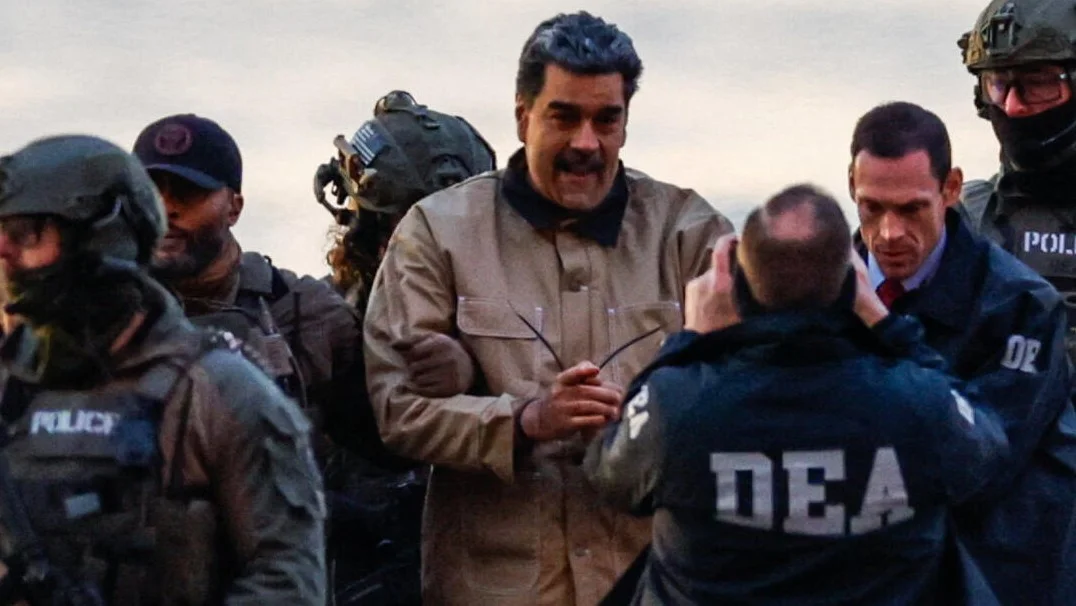
That answer — the Sheinbaum no proof Maduro position — became the hinge of the entire affair. Five months later, US special forces seized Maduro in Caracas and flew him to New York to face narco-terrorism conspiracy charges. An allegation had been converted into a military operation. The underlying evidence, in the public record reviewed, was never laid out in comparable detail.
Sheinbaum No Proof Maduro: A Standard Set In August 2025
Her statement was not made in a vacuum. One day earlier, the US Department of Justice had doubled its reward for information leading to Maduro’s arrest to $50m — the third increase in a pressure campaign that began at $15m during Donald Trump’s first term and rose to $25m in the final weeks of the Biden administration after Venezuela’s contested 2024 election.
Attorney General Pam Bondi said in a video that “Maduro uses foreign terrorist organisations like TdA [Tren de Aragua], Sinaloa and Cartel of the Suns to bring deadly drugs and violence into our country,” adding that the Drug Enforcement Administration had seized 30 tonnes of cocaine linked to Maduro and his associates, nearly seven tonnes of it linked to Maduro himself.
The claim of command and direction did not rest on consensus intelligence. A declassified US intelligence memo from May 2025, cited in the same reporting, assessed that “while Venezuela’s permissive environment enables TDA to operate, the Maduro regime probably does not have a policy of cooperating with TDA and is not directing TDA movement to and operations in the United States.” That is a narrower finding than the political rhetoric, and it speaks to direction, not to trafficking in general.
Venezuelan Foreign Minister Yvan Gil dismissed the Bondi allegations as “the most ridiculous smokescreen ever seen.” Mexico’s contribution was more awkward for Washington: a partner state, asked to corroborate cartel links on its own soil, said it had nothing.
What The Public Record Actually Shows
The operation itself is documented. US forces struck Caracas in the early hours of Saturday 3 January 2026, captured Maduro and his wife Cilia Flores, and transported them by warship to the United States. Trump said Washington would “run” Venezuela at least temporarily and tap its oil reserves. PBS NewsHour’s rolling coverage recorded the sequence hour by hour, including the arrival in New York.
The human cost is now a matter of official Venezuelan accounting. Officials said at least 24 security officers were killed; Cuba and Venezuela jointly said 55 of their military personnel died, while Venezuela’s attorney general referred to “dozens” of civilian and military dead without a breakdown. Interim president Delcy Rodriguez decreed seven days of mourning for those who “gave up their lives defending Venezuela and president Nicolas Maduro.”
The political aftermath is equally concrete. Rodriguez insisted that “the government of Venezuela is in charge in our country, and no-one else,” and that “there is no foreign agent governing Venezuela.” She appointed former central bank director Calixto Ortega Sanchez to the top economic post, citing an ECLAC projection of 6.5 percent growth for 2025. Trump, meanwhile, said interim authorities would sell 30 million to 50 million barrels of oil to the United States at market price, executed through the energy secretary. France 24’s live coverage tracked those announcements as they were posted.
The information environment around the raid was itself contested. A widely shared video of crying Venezuelans thanking Trump, reposted by Elon Musk, was confirmed to be AI-generated, part of a cluster of false or recycled clips purporting to show public celebration.
Sovereignty, Precedent And The African Reading
Allied governments split along a predictable seam. Spain’s Pedro Sanchez called the raid a “terrible and very dangerous precedent” whose aim appeared to be regime change and control of energy resources. Germany’s Friedrich Merz called the legal classification “complex” and said Berlin would take time. Canada’s Mark Carney, whose government never recognised Maduro’s 2018 mandate, urged respect for international law and the Venezuelan people’s right to decide their own future. Congressional Black Caucus members called the operation “a grave and illegal abuse of power.”
Columbia law professor Matthew Waxman, a former Bush administration national security official, flagged the property question underneath the oil arrangement: “a big issue will be who really owns Venezuela’s oil?”
The African reading of this case is not sentimental. The African Union’s habitual response to unconstitutional change of government has been suspension of the offending state — a multilateral, procedural penalty applied after a domestic rupture, not a unilateral armed removal followed by an external oil arrangement. No comparable mechanism exists for a drug-trafficking allegation against a sitting head of state. For African capitals, the operative lesson is structural: where a foreign power asserts that a leader is a criminal actor, the standard of proof is whatever that power says it is.
Sheinbaum’s consistency is instructive. On 30 April 2026 she refused to extradite a sitting Mexican governor indicted in New York, saying Washington had not submitted “compelling proof” and that “we are not permitting a foreign government to say what is the future of Mexico,” as the Los Angeles Times reported. The doctrine she applied to Maduro in August 2025 was the same one she applied to her own officials.
The big picture is a change in the evidentiary rules of the international system. The Sheinbaum no proof Maduro argument was treated in mid-2025 as a diplomatic nuisance; by January 2026 it had been overtaken by warships and an oil purchase, without the public disclosure she requested. That sequence, not Maduro’s guilt or innocence, is what other governments will study — because it establishes that a demand for proof can be answered with force rather than evidence, and that the answer may one day be addressed to them.
Frequently Asked Questions
What exactly did Claudia Sheinbaum say about proof linking Maduro to the Sinaloa Cartel?
At her morning news conference on 8 August 2025, Sheinbaum said Mexico had no open investigation into the US allegation and that her government held no proof. She said: “On Mexico’s part, there is no investigation that has to do with that,” and “if they have some evidence, show it. We do not have any proof.” The remarks followed the US decision to double its reward for information leading to Maduro’s arrest to $50m.
Did the United States ever publish the cartel evidence it cited?
The public record reviewed does not show the specific cartel-link evidence described by US officials in mid-2025 being released in comparable detail. Maduro was charged in New York with narco-terrorism conspiracy after his capture on 3 January 2026. A declassified US intelligence memo from May 2025, cited in reporting on the dispute, assessed that the Maduro government probably did not have a policy of cooperating with Tren de Aragua and was not directing its movement to the United States.
Why does this matter outside the Americas?
The case sets a precedent about evidentiary standards between states. The African Union’s usual sanction for unconstitutional change is suspension of a member after a domestic rupture, applied multilaterally. The Venezuela operation was a unilateral armed removal followed by an announced external oil arrangement, with the underlying allegation not publicly substantiated in full, which is the element other governments are likely to study.
Receive alerts for Sheinbaum no proof Maduro and more like it.
FIRST TIME REACTIONS:
Be the first to leave us a comment – Sheinbaum No Proof Maduro: Mexico’s Test of US Evidence, down the comment section.
JOIN US ON OUR SOCIAL MEDIA:
About Clare Dominic
Clare Dominic is the Editor at AfriLatest. With a background in journalism and a passion for storytelling, she oversees the editorial process to ensure content is accurate, engaging, and relevant. Clare works closely with contributors to maintain the highest standards of journalistic integrity across all news, sports, and lifestyle coverage.
View all articles by Clare DominicWorld News
Happy Halloween Wishes 2021: The Record Behind The Greetings
Happy Halloween wishes 2021 explained: Fauci’s safety call, Lee Street’s return and the NBA’s costume feed, with Africa’s missing dateline.

Happy Halloween wishes 2021 were, on the surface, the least newsworthy text of the year: pumpkin puns, candy jokes and one-liners about being the cutest pumpkin in the patch. Yet the volume of those greetings, and the outlets that published them, forms a verifiable record of something larger. The question worth asking is not which of the best happy halloween wishes 2021 were wittiest, but what the greetings documented at a moment when public health guidance, municipal logistics and celebrity social feeds all moved in the same direction.
Halloween is observed on October 31 and celebrated in many western countries, according to Hindustan Times, which assembled images, wishes, greetings and messages for Facebook, WhatsApp and other platforms. That format matters. Lifestyle desks build wish-list articles when reader demand is high, and in October 2021 the demand was high.
The Question Behind Happy Halloween Wishes 2021

The answer sits in a single sentence from a local news report. The Lee Street trick-or-treating tradition in Old Town Alexandria, Virginia, was canceled in 2020 due to Covid, and in 2021 it was expected to draw a large turnout, The Zebra reported. The same report said Dr. Fauci had declared trick-or-treating to be safe, which it described as the final confirmation the Lee Street residents needed to proceed with the event.
That is the pivot. Halloween 2021 was not simply another October 31. It was the first in the pandemic era in which the ordinary activity behind every greeting, the doorbell, the bowl of candy, the street full of costumes, had been publicly endorsed rather than discouraged.
The greetings were the consumer-facing layer of that decision. The verifiable record sits underneath them.
What The Verified Record Shows
Three kinds of evidence converge, and they do not carry equal weight.

The first is municipal and community logistics. Yvonne Callahan, a Lee Street resident and vice president of the Old Town Civic Association, said the event began more than 25 years ago and has grown each year despite having no formal organiser. In 2019, a single home counted giving out more than 4,000 pieces of candy in four hours. Families with young children typically begin going door to door around 5:00 pm, with crowds dispersing between 8:30 and 9:00 pm. The Alexandria Police Department confirmed it would block off the street for safety, and Senator Mark Warner’s office confirmed his family would take part again. Residents who prefer not to participate simply leave their front lights off.
The second is the celebrity layer. NBA.com aggregated social posts from players including LeBron James, Damian Lillard and his family, Ayesha Curry, Carmelo Anthony and Robin Lopez, alongside team accounts that posted through the weekend of October 30 and 31, 2021. That item is aggregation rather than reporting: it curates Instagram and Twitter posts and invites readers to check back for updates. It verifies costume choices and public visibility, not any larger claim about the season.
The third is historical framing. Hindustan Times traced Halloween, also called All Hallows’ Eve, to the Celtic festival of Samhain, which marked the end of the summer harvest and the beginning of the dark, cold winter. The Celts, in areas now called Ireland, the United Kingdom and northern France, believed the dead returned on Samhain and wore costumes made from animal skins to ward off unwanted spirits, leaving feasts on tables outside.
Africa, The Global Gap, And What 2021 Did Not Change
The Africa dimension requires a discipline the coverage itself did not supply. None of the sources sampled for this article contained an African dateline. The 2021 record consists of an Indian outlet’s lifestyle round-up, an American local news report and a United States sports league’s social aggregation. Hindustan Times framed Halloween as an observance of many western countries, and nothing in the material contradicts that framing.
Analysis, not confirmed fact: the structural difference is visible in what the sources treat as ordinary. Lee Street’s event depended on single-family housing stock, a police department able to close a road, a senator’s staff handing out candy and residents able to opt out by switching off a porch light. Those are municipal capacities, not cultural universals. Where that infrastructure is absent, Halloween messaging travels as content rather than as an event, and a Nigerian reader is more likely to encounter happy halloween wishes 2021 forwarded on WhatsApp than a closed residential street.
Attribution discipline matters here. Dr. Fauci’s assessment reaches this record second-hand, paraphrased by a community newspaper rather than quoted from a primary transcript. Residents’ confidence that outdoor settings and masks would keep people safe is their own assessment, not a public health finding. The 4,000-piece figure is one household’s self-reported 2019 tally.

What the sources do not contain is equally instructive. There is no attendance count for 2021, no municipal tally of participating households and no African comparison point. Any claim that Halloween 2021 returned to normal is an inference, not a measurement. The confirmed facts are narrower: an event canceled in 2020 was scheduled to return, a street was to be closed, and a public health figure was reported to have called trick-or-treating safe. The pre-pandemic candy count functions as a benchmark, not a result.
Summary
The lesson of happy halloween wishes 2021 is that the greetings were never the news. The news was the permission behind them: a reported public health green light, a police closure, a senator’s confirmed appearance and a league’s curated feed, all dated to late October 2021. Read that way, the year’s best happy halloween wishes 2021 are evidence of reopening, not of wit, and the absence of an African dateline is part of the same record, showing where the infrastructure of the holiday does and does not exist.
Frequently Asked Questions
When was Halloween 2021 celebrated?
Halloween is observed on October 31, so Halloween 2021 fell on Sunday, October 31, 2021. Coverage of related events ran across the preceding weekend.
Why did trick-or-treating return in 2021?
The Zebra reported that Dr. Fauci had declared trick-or-treating to be safe, which the report described as the final confirmation Lee Street residents in Alexandria, Virginia, needed to proceed. The Lee Street event had been canceled in 2020 due to Covid.
Did any African country feature in the 2021 Halloween coverage?
None of the sources sampled for this article contained an African dateline. Hindustan Times described Halloween as celebrated in many western countries, and the other sources were a United States local news report and an NBA social media round-up.
Receive alerts for happy halloween wishes 2021 and more like it.
FIRST TIME REACTIONS:
Be the first to leave us a comment – Happy Halloween Wishes 2021: The Record Behind The Greetings, down the comment section.
JOIN US ON OUR SOCIAL MEDIA:
About Clare Dominic
Clare Dominic is the Editor at AfriLatest. With a background in journalism and a passion for storytelling, she oversees the editorial process to ensure content is accurate, engaging, and relevant. Clare works closely with contributors to maintain the highest standards of journalistic integrity across all news, sports, and lifestyle coverage.
View all articles by Clare DominicWorld News
Fugitive Belgian Soldier Jürgen Conings Found Dead
The fugitive Belgian soldier Jürgen Conings, who threatened a virologist and stole rocket launchers, was found dead after a month-long manhunt.
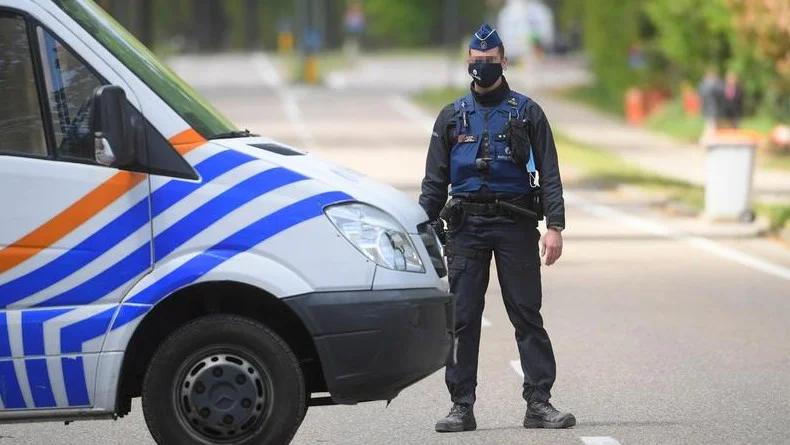
Jürgen Conings is dead. The fugitive Belgian soldier, a 46-year-old shooting instructor who walked out of his barracks with anti-tank rocket launchers on 17 May, was found in woodland near the Dutch border on Sunday, ending a month-long manhunt that pulled hundreds of police and troops into the Limburg countryside and forced a leading virologist into hiding.
Federal prosecutors said the body found in the Dilserbos woods near the town of Dilsen-Stokkem was Conings “according to the first elements of the investigation”, and that early observations pointed to suicide by firearm. The inquiry, they stressed, is not closed. Belgium’s defence ministry later confirmed the identification, with the defence minister and chief of staff stating that the soldier “has been found dead”.
Claims that the fugitive Belgian soldier spent a particular evening exploring a target before he vanished are not part of those official findings. What prosecutors have placed on the record is narrower and more serious: Conings left letters for his wife and for police setting out assassination plans and naming Marc Van Ranst, the virologist who led Belgium’s public health response to the pandemic, as a target.
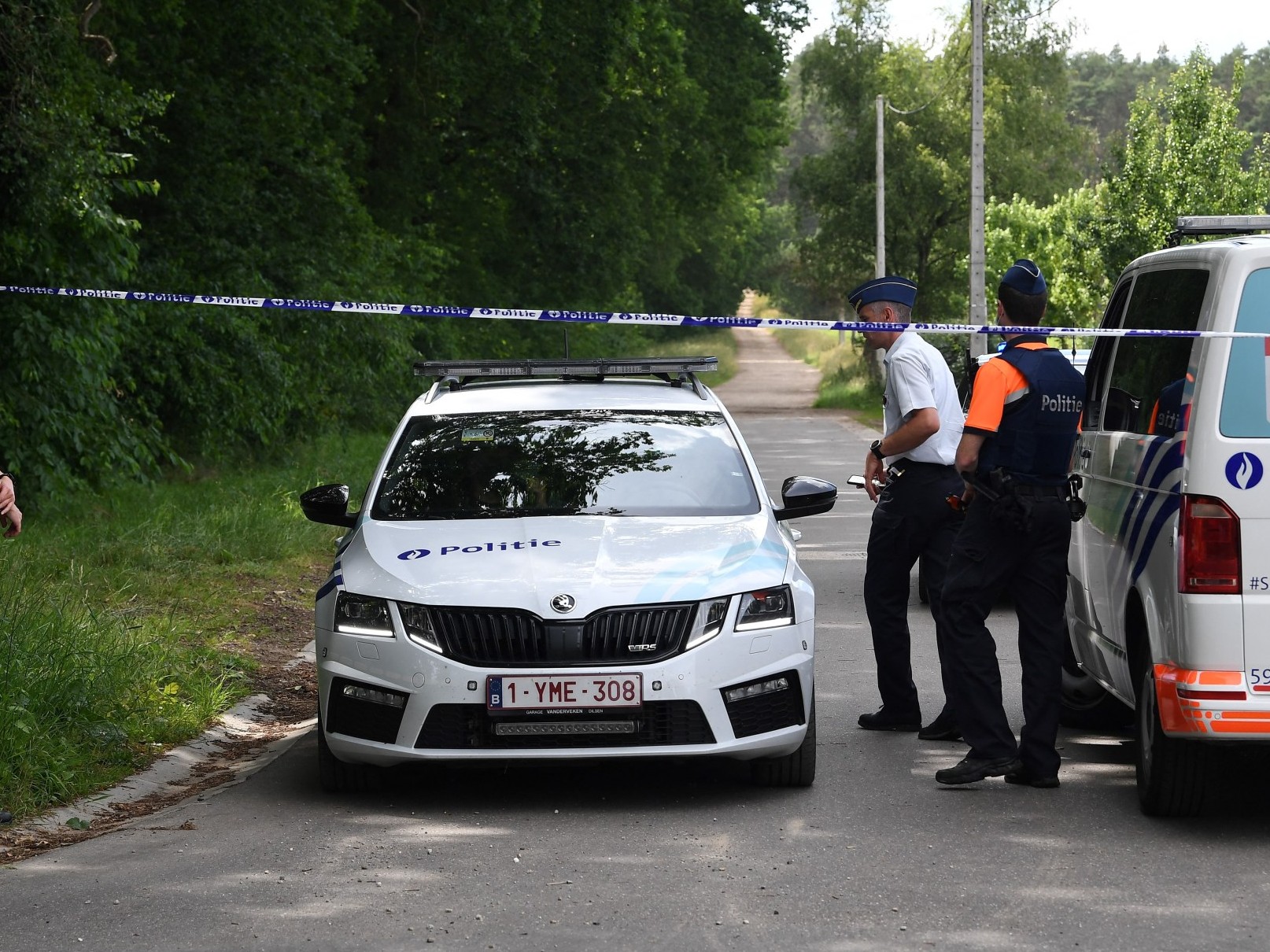
Van Ranst and his family had been moved to an undisclosed safe house. “The threat was very real,” he told the BBC from that location earlier this month. On Sunday he wrote that his thoughts went out to Conings’s relatives and children, “for them this is very sad news, because they lose a father, a relative or a friend. He told De Morgen that the discovery was a relief above all for his 12-year-old son.
Belgian authorities had already been hunting the fugitive Belgian soldier for weeks by the time his abandoned car was recovered, containing four anti-tank rocket launchers and ammunition.
The Fugitive Belgian Soldier Who Outran A Watch List
Conings was not an unknown quantity to the Belgian state. He had a three-decade military career and a reputation as an expert marksman. He was on an anti-terrorism watch list for suspected far-right views, one of at least 30 soldiers being monitored by the country’s threat analysis unit, according to the BBC. He had been handed disciplinary sanctions after making threats and racist remarks on Facebook.
He was nonetheless allowed to keep working with weapons, and to draw them. Before disappearing, the fugitive Belgian soldier had hoarded heavy weaponry in the barracks where he was stationed, including anti-tank missile launchers. Politico reported that the haul in his car also included a machine gun and several grenades.
That combination — a monitored extremist with an armoury and a professional grasp of how to use it — turned a missing-persons case into a national security crisis, and then into a political one. The question Belgian media kept asking about the fugitive Belgian soldier has not been fully answered: how does a soldier flagged to the threat analysis unit retain access to the armoury?
Why The Fugitive Belgian Soldier Targeted A Virologist
The targeting dimension carries the widest implications. Van Ranst had become a lightning rod for conspiracy theorists, Covid-sceptics and the Flemish far right during the pandemic, and Belgium’s restrictions were among Europe’s most bruising, with more than 25,000 virus-linked deaths and one of the highest per-capita tolls on the continent, according to DW.
The fugitive Belgian soldier’s grievance was written down: he could no longer live, he said in his letters, in a society where “politicians and virologists have taken everything away from us”. That framing — a state employee recasting public health officials as the authors of a personal dispossession — is the connective tissue between one man’s radicalisation and a wider political current.
It was visible within days. A Facebook page backing the fugitive Belgian soldier gathered tens of thousands of members, reported at 45,000 to 50,000 before the platform removed it. Supporters marched behind banners reading “Jürgen’s life matters” and “As 1 behind Jürgen”. Defence Minister Ludivine Dedonder condemned the online backing, singling out support coming from inside the armed forces themselves.
What A Month Of Saturation Policing Achieved
The operational response was enormous and, in the end, almost incidental. Hundreds of security personnel and several helicopters scoured northeast Belgium for weeks in pursuit of the fugitive Belgian soldier. The body was found by Johan Tollenaere, mayor of Maaseik, while cycling in a stretch of woods few people visit; he smelled a strong odour, thought immediately of Conings and called police, he told VRT. A month of saturation policing was resolved by a passing cyclist’s nose.
Structural comparison is instructive. Belgium’s machinery for flagging radicalised service members existed and functioned at the level of surveillance: the fugitive Belgian soldier was on the list. The same machinery did not sever his access to lethal materiel. The distance between “monitored” and “disarmed” is a governance gap rather than an intelligence gap, and it is one that militaries with thinner vetting infrastructure would recognise. Where weapons accountability is looser and civilian oversight weaker, a watch-listed soldier presents a sharper problem still. That is analysis, not a finding of this investigation.
Nor is the affair a purely Belgian anomaly. It was a stress test of whether a state can police an ideology that has adherents inside its own uniformed services. Belgium’s initial answer, delivered in public and under parliamentary pressure, was that it had not.
What The Case Leaves Behind
The search for the fugitive Belgian soldier is over. The argument about how he was able to operate is not. Belgium now faces a familiar sequence: a review of weapons-access rules, a debate about extremism screening inside the military, and a reckoning with the online ecosystem that made a wanted man into a folk hero.
The legacy of Jürgen Conings will be settled less by the woodland where he died than by whether the watch list that named him is ever connected to the armoury that armed him. Until that link is repaired, the exposure that produced one fugitive Belgian soldier — clearance without consequence, monitoring without disarmament — remains open to the next man with the same access and the same grievance.
Frequently Asked Questions
Who was Jürgen Conings?
Conings was a 46-year-old Belgian shooting instructor with a three-decade military career. He was on an anti-terrorism watch list for suspected far-right views and had been disciplined for threats and racist remarks before he disappeared on 17 May 2021 with weapons taken from his barracks.
How was the fugitive Belgian soldier found?
His body was found on Sunday in the Dilserbos woods near Dilsen-Stokkem, close to the Dutch border. Prosecutors said initial observations pointed to suicide by firearm and that the investigation was continuing. The defence ministry later confirmed the identification.
What does the case reveal about weapons oversight in Belgium?
Conings was among at least 30 soldiers monitored by Belgium’s threat analysis unit, yet he retained access to military weapons and had hoarded heavy arms in his barracks. The gap between being monitored and being disarmed has driven criticism of the government and calls for a review of access rules.
Receive alerts for fugitive Belgian soldier and more like it.
FIRST TIME REACTIONS:
Be the first to leave us a comment – Fugitive Belgian Soldier Jürgen Conings Found Dead, down the comment section.
JOIN US ON OUR SOCIAL MEDIA:
About Clare Dominic
Clare Dominic is the Editor at AfriLatest. With a background in journalism and a passion for storytelling, she oversees the editorial process to ensure content is accurate, engaging, and relevant. Clare works closely with contributors to maintain the highest standards of journalistic integrity across all news, sports, and lifestyle coverage.
View all articles by Clare Dominic-

 Startups1 month ago
What a Successful Dangote Refinery IPO Really Says
-
Health and Fitness2 weeks ago
Curly Hair Hydration: 5 Proven Steps That Actually Work
-
World News1 month ago
Carney Calls U.S. Tariffs a Miscalculation as Canada Retaliates
-
Tech & Gadgets3 weeks ago
Apple Watch and AirPods Fall Deals: Save $120 Today
-
Trending Entertainment News2 weeks ago
Taylor Swift Joins Beatles as Only Acts With 100 Weeks at No. 1
-
Football1 month ago
South Carolina vs Alabama: Tide Roll to 35-10 Halftime Lead
-
University Admissions1 month ago
UNILAG 2026/2027 Admission: Direct Entry & Post-UTME Guide
-
Football1 month ago
Mexico vs Colombia 2026: Márquez Debut Ends in Defeat