World News
Eight Days in Thailand: A Port Call, A Record, A Warning
Eight days in Thailand frames two dispatches: a US carrier crew’s record deployment and a Nigerian reporter’s infrastructure comparison.

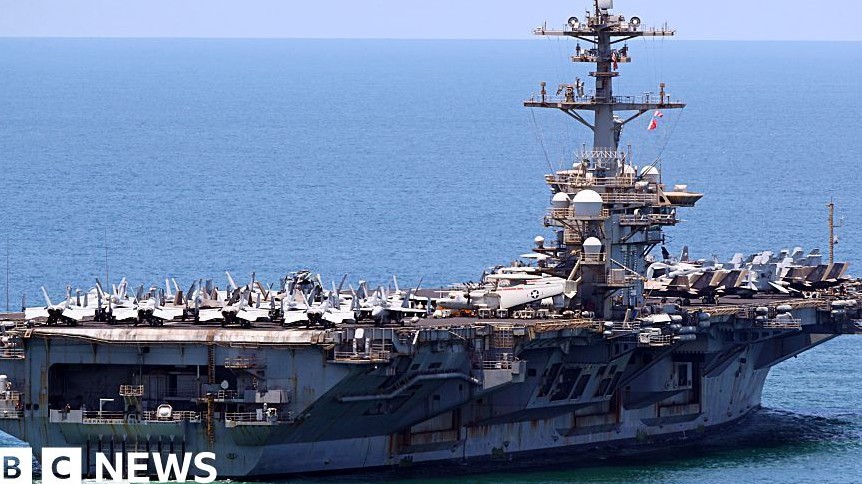
How long does it take to see how a state treats the people who depend on it? Two unrelated dispatches that surfaced around the same news cycle settle on the same unit of measurement: eight days in Thailand. One is a letter from the acting US Navy secretary about a warship that spent 286 days at sea. The other is a Nigerian reporter’s account of covering the 2026 International Monetary Fund and World Bank Group Annual Meetings in Bangkok.
They share a city and a duration. They share almost nothing else, except that both turn on the same question about what a government owes the people inside its system. Read side by side, they also show how much of a global story is documented fact, how much is official denial, and how much is one observer’s honest impression.
What the Lincoln Letter Confirms, and What It Does Not
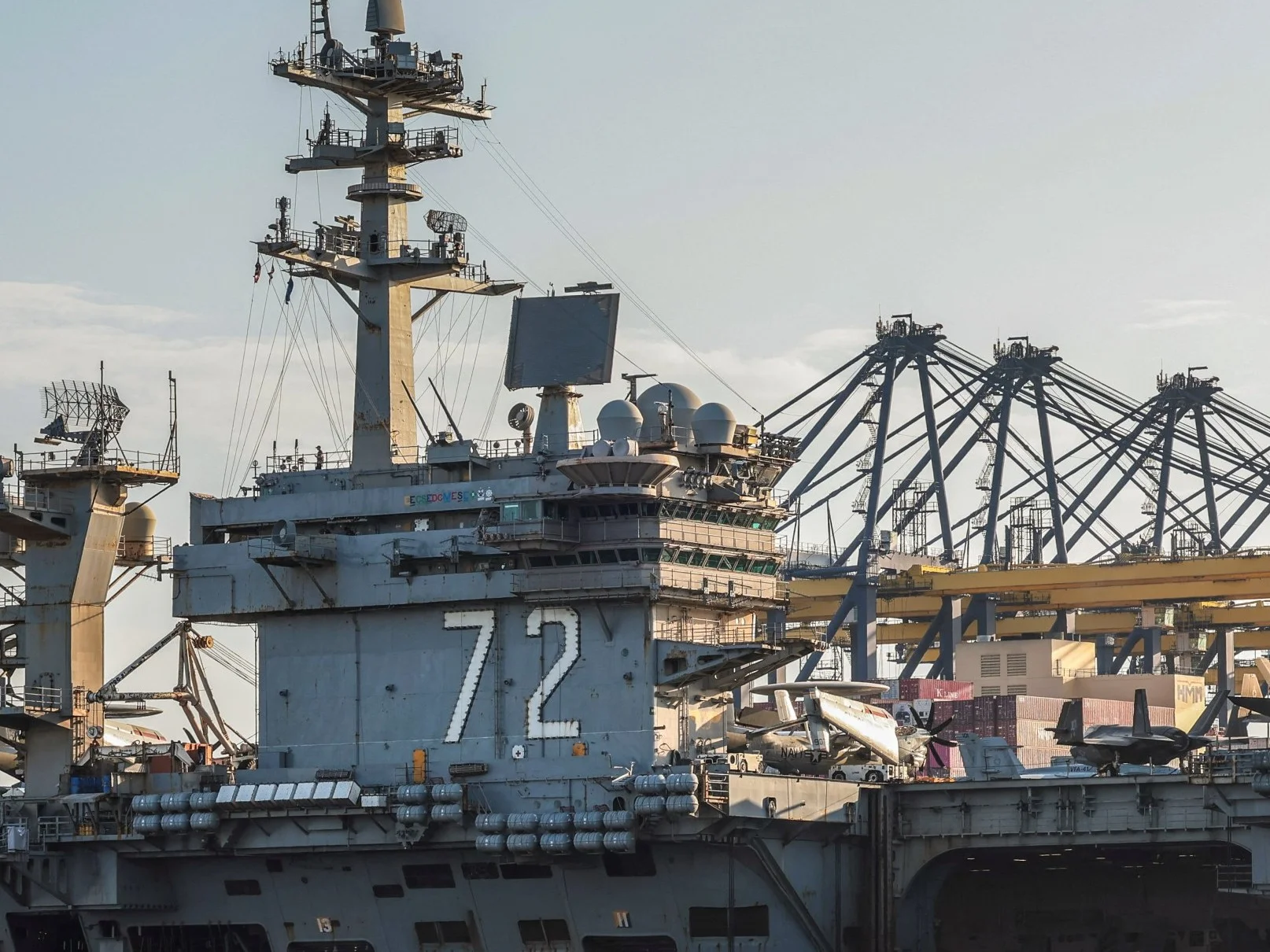
Acting Navy Secretary Hung Cao’s letter to Senator Kirsten Gillibrand, a New York Democrat on the Senate armed services committee, was sent on Tuesday. It confirms eight suicide attempts across the USS Abraham Lincoln carrier strike group during its deployment, and states that no service member died by suicide.
Cao wrote: “Since the beginning of Lincoln’s deployment, there have been a total of eight suicide attempts across the strike group.” He attributed them to “the Lincoln crew and sailors from the carrier airwing, strike group and destroyer squadron staff, escorting destroyers and all embarked aviation squadrons.”
Al Jazeera reported that at least two involved attempts to go overboard. Cao’s letter describes two directly: an air wing sailor who jumped overboard in early August and was “quickly recovered”, treated and transferred off ship; and a sailor who tried to go overboard in March and was stopped by shipmates.
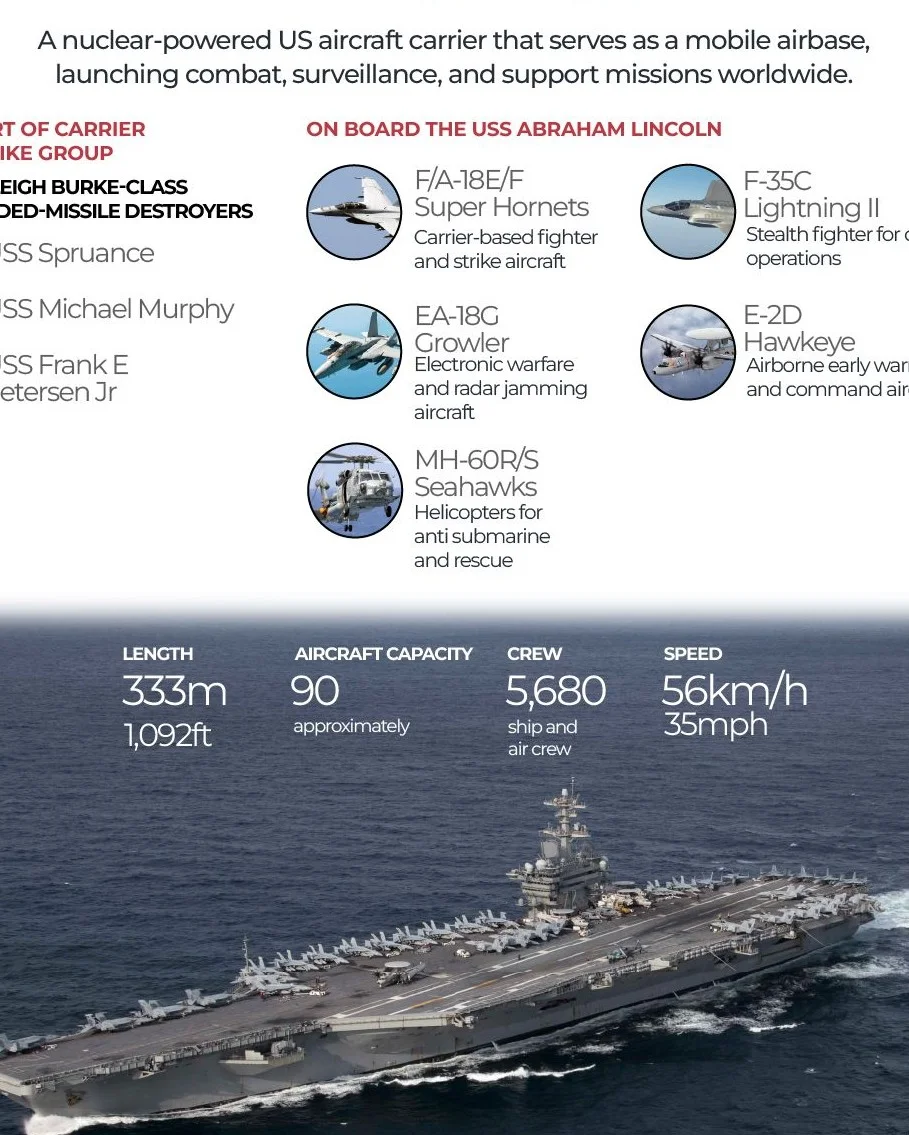
The timeline is documented. The Lincoln left California in November 2025 for the South China Sea, was rerouted in January to the US Central Command region, and took part in combat after the US-Israel war on Iran broke out at the end of February. It carried roughly 5,000 crew, made one brief port stop in December, and was at sea for 286 days before the crew disembarked in Thailand on September 1 — a record for the longest deployment. The ship had been due home in May; that date was repeatedly extended.
Cao’s letter also concedes material facts the Navy had earlier played down. Resupply limits during “major combat operations” cut main course options at meals from two to one. The ship had temporary “localized piping failures” and problems with its reverse osmosis desalination units. The acting secretary said repairs were completed and that potable water is tested daily.
Eight Days in Thailand Becomes a Measuring Stick
The Thailand the Lincoln’s crew reached was, by the BBC’s account, a stop of bars, malls and beach areas — the first time many of them had stood on land in months. Separately, TheCable published a Nigerian journalist’s first-person piece titled “Eight days in Thailand: the kind of Nigeria I want my children to see”, written after covering the IMF and World Bank meetings at the Queen Sirikit National Convention Centre.
The reporter used the BTS Skytrain and the MRT underground daily, paid fares “in the tens of baht”, and noted that the Skytrain opened in 1999 and the first underground metro line in 2004. Visits to Terminal 21, Platinum Fashion Mall and Chatuchak Weekend Market followed. There was no power outage at the hotel during the trip.
The piece is careful in ways much commentary is not. It states plainly that the air felt cleaner on the routes walked, then labels that “a personal observation, not a scientific comparison”. It concedes that eight days in Bangkok cannot describe every neighbourhood in Thailand, that the country has its own congestion, inequality and air-pollution problems, and that the World Bank classes it as an upper-middle-income economy rather than a high-income one.
That honesty matters, because the central comparison — Bangkok’s rail network against commuting in Lagos or Abuja — is a hypothesis, not a finding. The verifiable anchors are the opening dates of the rail lines and the World Bank income classification. The Nigerian side of the ledger is described in general terms: time and money lost in transit, reliance on informal transport, generator fuel and maintenance costs. No measured Nigerian figures are offered. A reader should notice that gap rather than fill it in.
What the Denials Did Not Dispute
President Donald Trump called the ship “beautifully maintained” and dismissed reporting on conditions as a “CNN fake news report. Defense Secretary Pete Hegseth said the reports had been “completely misrepresented” and that “we make sure every ship, every crew, every captain has everything we can provide them at every single moment”. CENTCOM chief Brad Cooper visited the ship and said the team was “standing tall with immense, justified pride”.

None of those statements disputed the eight attempts. The figure came from the administration’s own acting Navy secretary, in writing, to a senator.
Gillibrand said in a statement to the BBC on Wednesday: “What Trump and Secretary Hegseth dismissed as ‘fake news’ turned out to be serious and deteriorating conditions for our service members.”
The wider data is not in dispute either. A USNI News analysis of military data found suicide remains a leading cause of death in the Navy and Marines, and the Veterans Administration reports higher suicide rates among veterans than among Americans who never served. A study of 956 sailors released in January 2025 found that personnel aboard Navy ships suffer the highest rates of “serious psychological distress” of any US military branch, citing poor habitability, noise and schedules that leave inadequate time for sleep.
Why the Thailand Stopover Carries the Story
US media reports have tied the ship’s supply shortages to Iranian attacks on US military sites in the Middle East, notably heavy damage to the naval base in Bahrain. The Navy was reportedly forced to use Diego Garcia in the Indian Ocean as its main hub, some 3,540km from where the Lincoln was operating in the Gulf.
Harlan Ullman, a retired senior naval officer, told Al Jazeera that extended deployments “erode the readiness and capability of that ship the longer it’s at sea”, adding that ships of that complexity need maintenance that cannot be done under way. Port access is not a footnote. It determines whether 5,000 people get shore leave, hot water and fresh food.
That is the same variable the Nigerian reporter measured from the opposite direction: whether a city’s transport, drainage and power let ordinary people plan a working day.
One fact should be stated plainly. Neither source specifies how long the Lincoln’s crew stayed in Thailand. The eight days in Thailand belong to the reporter’s trip to Bangkok, not to the Navy’s timeline. Anyone merging the two is inventing a detail.
The eight days in Thailand that produced both dispatches will not settle any argument about US naval readiness or Nigerian infrastructure. They do establish something narrower and more useful: that a letter to a senator, a rail line opened in 1999, and an observer’s admitted bias are three different kinds of evidence — and that a reader who cannot tell them apart will be governed by whichever one is repeated loudest.
Frequently Asked Questions
How many suicide attempts were confirmed on the USS Abraham Lincoln?
Acting Navy Secretary Hung Cao told Senator Kirsten Gillibrand in a letter sent Tuesday that there had been eight suicide attempts across the carrier strike group during the deployment, and that no service member died by suicide. At least two involved attempts to go overboard, according to Al Jazeera.
How long was the USS Abraham Lincoln at sea?
The carrier left California in November 2025, was rerouted to the Middle East in January, and had been at sea for 286 days when the crew disembarked in Thailand on September 1, a record for the longest deployment. The ship had originally been due home in May.
What does ‘eight days in Thailand’ refer to?
It is the title of a Nigerian journalist’s account of covering the 2026 IMF and World Bank Group Annual Meetings in Bangkok. It does not describe the length of the USS Abraham Lincoln crew’s stopover in Thailand, which neither the BBC nor Al Jazeera specifies.
 Follow AFRILATEST on Google News
FIRST TIME REACTIONS:
Be the first to leave us a comment – Eight Days in Thailand: A Port Call, A Record, A Warning, down the comment section.
JOIN US ON OUR SOCIAL MEDIA:

About Clare Dominic
Clare Dominic is the Editor at AfriLatest. With a background in journalism and a passion for storytelling, she oversees the editorial process to ensure content is accurate, engaging, and relevant. Clare works closely with contributors to maintain the highest standards of journalistic integrity across all news, sports, and lifestyle coverage.
View all articles by Clare Dominic

World News
New Zealand Jails Man In Trade-Based Money Laundering Case
New Zealand jailed a man for laundering drug proceeds via used-car exports to Nigeria, its first trade-based money laundering prosecution.

A New Zealand court has sentenced a 46-year-old man to three years and four months in prison for laundering the proceeds of drug crime through a second-hand vehicle export business that shipped cars and spare parts to Nigeria. The Auckland District Court handed down the sentence on Friday after the man pleaded guilty to three money laundering charges and one representative charge of knowingly providing false export information. The case is the first prosecution to arise from a trade-based money laundering investigation by New Zealand Customs, and that detail carries more weight than the prison term itself.
The defendant was not named in the account published by Galaxy TV. A co-defendant is still facing court proceedings, so the file is not closed.
How Operation Ozark Moved Money From Auckland To Nigeria
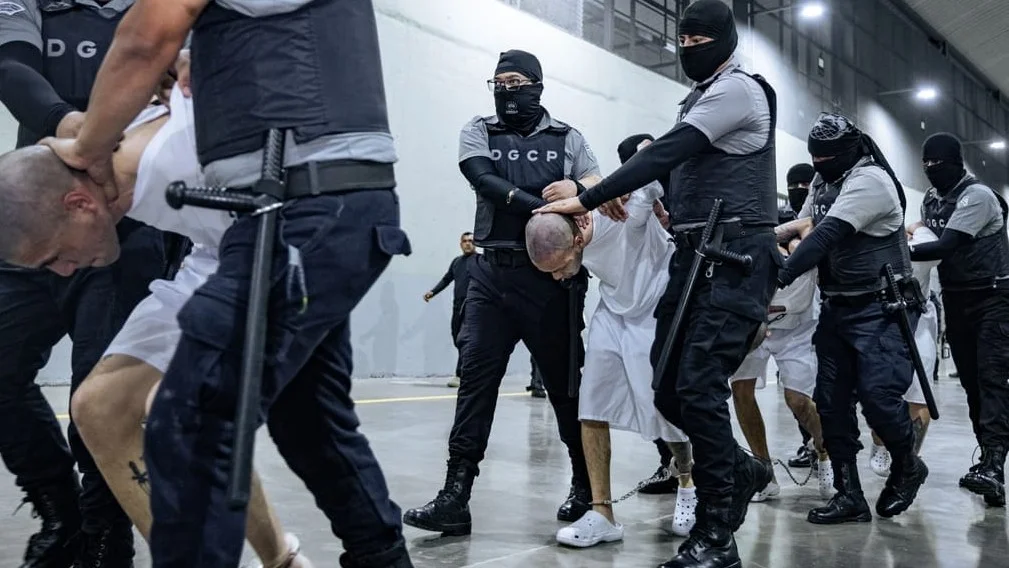
Customs codenamed the inquiry Operation Ozark. It ran between November 2020 and April 2024 and, according to investigators, used a second-hand vehicle and spare parts business to disguise cash linked to drug offences. Cash allegedly tied to drug activity bought used vehicles and parts inside New Zealand. Those goods left the country in 101 separate shipments to Nigeria, were sold there, and the proceeds were deposited into an overseas business account.
Customs put the traced total at no less than NZ$459,600 transferred to Nigerian bank accounts. A joint search of the man’s Auckland home by Customs and police turned up at least NZ$100,000 in cash. The paperwork was rigged as well: false export declarations understated the value of some vehicles and gave incorrect manufacturing years in others.
The same operation, run with international partners, intercepted 12 packages containing about 22.6 kilogrammes of methamphetamine and 34 grammes of cocaine. The parcels were stopped both inside New Zealand and overseas. Customs describes what it uncovered as an alleged international drug trafficking network. The published account does not state what charges, if any, followed from those seizures.
Why Trade-Based Money Laundering Is Harder To Police Than Cash
Nigel Barnes, acting manager of Customs investigations, described a closed loop. “Operation Ozark exposed an international cycle of offending, involving drugs destined for New Zealand, criminal funds used to buy goods here, vehicles and parts exported to Nigeria, and the proceeds deposited into overseas accounts,” he said. “Profit is the lifeblood of transnational and serious organised crime.”
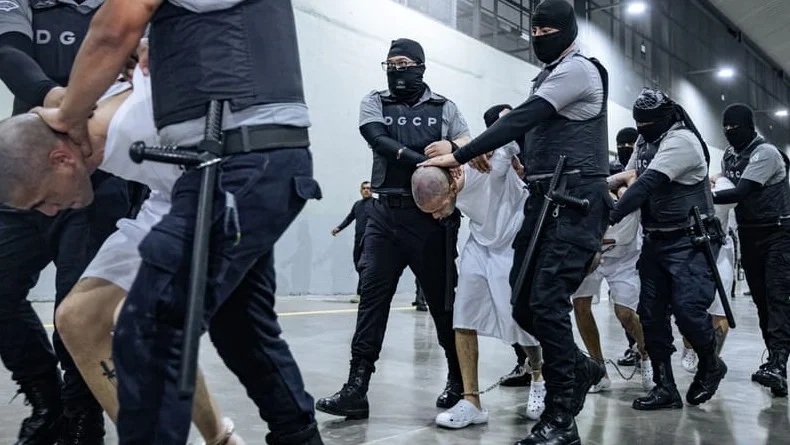
The structural problem is visibility. Bulk cash crossing a border is a physical event that dogs, scanners and bank reporting can catch. A container of used cars is an ordinary commercial event. Trade-based money laundering hides the value inside the invoice rather than the cargo. That is why the false declarations matter: understating a vehicle’s value is not a clerical slip here, it is the mechanism. Barnes said Customs relies on trade records, border information and financial intelligence, alongside domestic and international partners, to find the anomalies.
Not everything about the scheme is public. The available account does not explain how the New Zealand and Nigerian sides of the invoicing reconciled, nor whether the vehicles sold in Nigeria at a genuine market price or at an inflated one designed to shift value. Those gaps matter to anyone trying to copy the detection method.
One Launderer Jailed While Washington Pardoned A Crypto Founder
The contrast with the United States is stark. As BBC reported, President Donald Trump pardoned Changpeng Zhao, founder of Binance, who was sentenced to four months in prison in April 2024 after pleading guilty to violating US money laundering laws. Binance itself pleaded guilty and was ordered to pay $4.3bn after a US investigation found it helped users bypass sanctions.
“Binance turned a blind eye to its legal obligations in the pursuit of profit,” then-Treasury Secretary Janet Yellen said when the plea was announced in 2023. “Its wilful failures allowed money to flow to terrorists, cybercriminals, and child abusers through its platform.” White House Press Secretary Karoline Leavitt called Zhao’s prosecution “an overly prosecuted case by the Biden administration” and said Trump had used his constitutional authority to correct overreach.
The pardon drew objections from inside the president’s own coalition. Palantir co-founder Joe Lonsdale wrote that Trump had been “terribly advised” and that “it makes it look like massive fraud is happening around him in this area”. Senator Elizabeth Warren called the decision a “kind of corruption”. Asked about it, Trump appeared not to know who Zhao was, asking: “Are you talking about the crypto person?” He later said the pardon came at the “request of a lot of good people.
Set the two cases side by side and the enforcement picture is uneven. An operator who moved a few hundred thousand dollars through used cars goes to prison in Auckland. The founder of the world’s largest crypto exchange, whose company paid a multibillion-dollar penalty over sanctions and money laundering failures, receives a presidential pardon. Both outcomes sit within the law. Only one is likely to deter.

What Nigeria’s End Of The Chain Still Leaves Open
The New Zealand case establishes flow in one direction: drugs into New Zealand, criminal cash into vehicles, vehicles into Nigeria, proceeds into an overseas account. What it does not establish is what happened at the Nigerian end. The published account does not say whether Nigerian authorities were asked to trace the NZ$459,600, whether the receiving accounts were frozen, or whether anyone in Nigeria faces investigation. No Nigerian agency is quoted in the file.
Nigeria features in other drug enforcement files. Pakistan’s Anti-Narcotics Force said it arrested 20 Nigerian nationals in Islamabad and Rawalpindi and recovered 4.432 kilogrammes of cocaine, methamphetamine and cannabis, according to Galaxy TV. Those are allegations, and two of the suspects were already on bail in an earlier narcotics case. The two files are unrelated. The parallel is narrower: destination and transit countries in Africa carry a larger share of the enforcement burden than the casework usually reflects.
The Bigger Picture
The recorded detail here is small — one man, NZ$459,600, 101 shipments, three years and four months. The mechanism it documents is not small. Trade-based money laundering turns ordinary trade routes into return channels for criminal cash, and it scales wherever customs agencies lack the data-matching capacity to test declared values against real ones.
New Zealand’s answer so far is prosecution plus intelligence sharing. Whether that reduces reoffending is a separate question. DW reported that the Serco-run prison in Auckland claims a 13.6% two-year reoffending rate, against 34% for government-run prisons, a figure that speaks to what happens after sentencing rather than during investigation. The trade-based money laundering case secures the conviction. It does not answer whether the accounts in Lagos were ever examined, and that omission is where the next chapter of this story sits.
Frequently Asked Questions
What was the New Zealand man sentenced for?
A 46-year-old man was sentenced at Auckland District Court to three years and four months in prison after pleading guilty to three money laundering charges and one representative charge of knowingly providing false export information. Customs said cash linked to drug offences bought used vehicles and parts in New Zealand, which were exported to Nigeria and sold, with proceeds deposited into an overseas business account.
How much money was traced in Operation Ozark?
New Zealand Customs said at least NZ$459,600 was transferred to Nigerian bank accounts across 101 shipments between November 2020 and April 2024. A joint search of the man’s Auckland home by Customs and police also found at least NZ$100,000 in cash.
Why is this called trade-based money laundering?
Because the value was moved through legitimate commercial shipments rather than bulk cash. Falsified export declarations understated vehicle values and gave incorrect manufacturing years, so the invoice rather than the cargo carried the hidden value. Customs said this was its first prosecution arising from a trade-based money laundering investigation.
FIRST TIME REACTIONS:
Be the first to leave us a comment – New Zealand Jails Man In Trade-Based Money Laundering Case, down the comment section.
JOIN US ON OUR SOCIAL MEDIA:
About Clare Dominic
Clare Dominic is the Editor at AfriLatest. With a background in journalism and a passion for storytelling, she oversees the editorial process to ensure content is accurate, engaging, and relevant. Clare works closely with contributors to maintain the highest standards of journalistic integrity across all news, sports, and lifestyle coverage.
View all articles by Clare DominicWorld News
Julia Fox’s Preppy Purple Look Adds a Prada Bowling Bag
Julia Fox’s preppy purple look pairs a Sofia Testino polo, purple leather skirt and reversible jacket with a 2000 Prada bowling bag. What is verified.

Julia Fox’s preppy purple look — an ivory polo with a purple collar and green stripe, a purple leather pencil skirt and a reversible checked jacket, all credited to the designer Sofia Testino — was photographed alongside a black-and-white geometric Prada bowling bag from the Spring/Summer 2000 collection, according to Harper’s Bazaar.
That single sentence carries almost the whole of the verified record. The report names the garments, the designer and the bag. It does not name the event, the city or the date.
For readers outside the celebrity-fashion cycle, that gap matters more than it first appears. A photograph proves what was worn. It does not prove why, where, or on whose authority the credit was assigned.

What the Julia Fox Preppy Purple Look Actually Consists Of
The top is the Air Hostess Polo: a fitted, short-sleeved ivory piece with a purple collar, a stripe of green, an elongated button placket and a rounded deep V neckline trimmed in purple and green.
The skirt is the Air Hostess Arrow Skirt, a purple leather midi pencil skirt carrying arrow motifs across the front. Over it, Fox wore the Work Woman Jacket, cut with a structured silhouette and padded shoulders. One face is cream checked wool; the reverse is pale-blue satin with contrast checked panels. Brown ribbed cuffs finish it.
She added semi-sheer black tights and periwinkle patent-leather wedges, also from Sofia Testino, and carried the Prada bag.
All of that is garment identification drawn from photographs — the strongest evidence available for a sighting of this kind, and also the narrowest. The source report publishes no price for any Sofia Testino piece. It gives no release date and no indication whether the garments are current stock, archive or custom. Neither the designer nor Fox is quoted.

A Preppy Thread Runs Through a Documented Run of Outfits
The preppy purple look did not arrive in isolation, and the surrounding record is better dated than the look itself.
On August 5, Fox attended a HIM Training Camp Creator Event in Venice, California, wearing a striped polo-shirt-cape-bodysuit hybrid and white tights printed with faux tattoos, with her pleated skirt functioning as a purse, per InStyle.
On September 10, she wore a long-sleeved crimson bodysuit with a built-in button-down peering underneath — a look Bustle described as carrying a preppy vibe — with fishnet tights, a khaki trench coat and Christian Louboutin heels retailing at $1,095.
In London, arriving at Global studios for Capital Radio, she wore a black blazer, white button-up shirt and matching tie, a pleated miniskirt and platform heels, with silver chains hung with keys and safety pins threaded through the jacket and skirt, the Daily Mail reported. That outlet gave her age as 35.
At the 2026 CFDA Fashion Awards, she wore a tulle Miss Claire Sullivan dress made using world maps, according to Harper’s Bazaar.
Those dates do not form one verified calendar. The London appearance is dated only to a Wednesday. The purple look carries no date at all. What the record does establish is that preppy is a description applied by journalists, not a category the designer or the wearer has claimed.

Why the Prada Bowling Bag Carries the Most Verifiable Weight
Of every element in the outfit, the bag is the only one the source describes as recurring: Harper’s Bazaar calls it her go-to bowling bag. That makes it the single item with a documented track record beyond one photograph.
The rest is a fresh credit. Sofia Testino is named as the designer of the polo, the skirt, the jacket and the wedges. Until the label or Fox confirms the pieces — and neither has, in the material available — the attribution rests on one outlet’s identification.
Fox has been explicit about how she regards the machinery that produces such images. Every famous person calls the paps on themselves, she told British Vogue, adding that she would never put on a Dolce & Gabbana outfit and call the paps, calling it cheesy, cringe and inherently uncool. InStyle quoted the remarks.
That quote settles nothing about this particular set of photographs. It does establish that Fox is a source with a stated position on staged visibility — a position that makes her a less neutral narrator of her own image than a press release would be.
The wider point is structural. A street-style photograph travels globally within hours, while the garment credit behind it usually traces to a single magazine caption. Outlets in Lagos, Nairobi or Accra that pick up the image inherit that thin sourcing without inheriting its caveats.
What to Watch
Three developments would move this from a photograph into a record: a statement from Sofia Testino confirming the pieces, a named event and date for the sighting, and confirmation of whether the garments are retail, archive or custom. None of the three exists yet.
The bag is the exception. A Spring/Summer 2000 Prada bowling bag is an object with a fixed origin, and its reappearance is the one part of this preppy purple look that can be checked against something other than a caption.
Until then, the useful discipline is the same one that applies to any viral image: separate what the photograph shows from what the headline asserts.
Frequently Asked Questions
What pieces made up Julia Fox’s preppy purple look?
Harper’s Bazaar identifies a Sofia Testino Air Hostess Polo in ivory with a purple collar and green trim, a purple leather Air Hostess Arrow Skirt with arrow motifs, a reversible Work Woman Jacket in cream checked wool and pale-blue satin, semi-sheer black tights and periwinkle patent-leather wedges. She carried a black-and-white Prada bowling bag from the Spring/Summer 2000 collection.
Is the event and date of the purple outfit confirmed?
No. The Harper’s Bazaar report names the garments and the designer but does not state the event, the city or the date. Other Fox appearances are dated — August 5 in Venice, California, September 10 in Los Angeles, and a London radio visit reported only as a Wednesday — but none is linked to the purple look in the available material.
Has Sofia Testino or Julia Fox confirmed the outfit credits?
Neither is quoted in the source material. The designer attribution rests on one outlet’s identification of the garments, and no price, release date or confirmation of whether the pieces are retail, archive or custom has been published.
FIRST TIME REACTIONS:
Be the first to leave us a comment – Julia Fox’s Preppy Purple Look Adds a Prada Bowling Bag, down the comment section.
JOIN US ON OUR SOCIAL MEDIA:
About Clare Dominic
Clare Dominic is the Editor at AfriLatest. With a background in journalism and a passion for storytelling, she oversees the editorial process to ensure content is accurate, engaging, and relevant. Clare works closely with contributors to maintain the highest standards of journalistic integrity across all news, sports, and lifestyle coverage.
View all articles by Clare DominicWorld News
Jamaica vs Mexico: Marquez Winless Run Hits Five
Jamaica vs Mexico ended 3-2 in Kingston, leaving Rafael Marquez winless in five matches and the Reggae Boyz a draw from the Nations League semifinals.

Rafael Márquez is the head coach of Mexico’s national team, and five matches into the job he does not have a win. Jamaica beat Mexico 3-2 at the National Stadium in Kingston on Saturday, a result that leaves the Reggae Boyz needing only a draw in Tuesday’s return leg in Monterrey to reach the CONCACAF Nations League semifinals, per the Associated Press match report. The Jamaica vs Mexico quarterfinal has stopped being a formality.
The scoring sequence is documented and not in dispute. Jesús Gallardo’s own goal put Jamaica ahead in the 28th minute, Renaldo Cephas doubled the lead in the 46th, and Richard King converted a penalty in the 63rd. Gilberto Mora pulled one back in the 70th and Julián Quiñones scored in the 81st.
The defeat extended Mexico’s winless run to five matches under Márquez, who replaced Javier Aguirre after the World Cup. The AP report describes it as one of the worst managerial starts in the history of the Mexican national team.

What The Jamaica vs Mexico First Leg Confirmed
Three claims about this tie sit in different evidentiary categories, and the distinction matters more than the scoreline.
The result is confirmed: a 3-2 home win, five goal events, a two-goal lead cut to one. The lineups are confirmed, published before kickoff by World Soccer Talk — both sides in a 4-3-3, Jahmali Waite in goal for Jamaica, Raúl Rangel for Mexico, Rudolph Speid and Márquez in the technical areas.
The forecast is not. Sports Illustrated predicted Jamaica 0-1 Mexico, reasoning that “the talent disparity is simply too significant to ignore.” That was a projection, not a fact, and Kingston answered it.
SI also documented Jamaica’s injury list in detail: goalkeeper and captain André Blake, winger Leon Bailey and striker Bailey Cadamarteri were all unavailable, along with Dearai Gray, Kevon Lambert and Tyreece Campbell. The depleted squad won anyway. A structural explanation that fails on the night is not an explanation; it is a hypothesis with a bad record.
Continuity Was The Whole Point Of Márquez’s Appointment
Márquez arrived with a defender’s credibility — a former Barcelona centre-back — and two years inside the setup as Aguirre’s assistant. That tenure ended with a Round of 16 exit against England at the World Cup.
Nine of the eleven Mexican starters from that England defeat were back in the XI on Saturday. The retention was deliberate, and it is the most revealing fact in the tie. A coach promoted from within inherits institutional knowledge and the unresolved problems of the previous cycle in the same package.
The team sheet showed what Márquez trusted: Rangel behind Israel Reyes, César Montes, Johan Vásquez and Gallardo; Mora, Luis Romo and Érik Lira in midfield; Santiago Giménez, Roberto Alvarado and Quiñones up front. Montes, Mora and Quiñones had all returned from injury, according to SI, which framed their availability as the tie’s decisive boost. Two of the three scored. Mexico still lost.
Why Kingston Travels Beyond Concacaf
The historical record favored Mexico heavily and honestly. SI noted El Tri had won 23 of 29 Jamaica vs Mexico meetings and was unbeaten in the last six before Saturday. That is verified history. It also carried no predictive weight once the match started.
For audiences in Africa and elsewhere outside the region, the mechanism is familiar. Regional heavyweights get described in the language of inevitability — bigger squad pool, stronger league exports, deeper tournament habit — and that language is mistaken for a result. Jamaica’s squad is a counter-example with a paper trail: Anderson at Blackpool, Clarke at Walsall, Cephas at Qarabağ, Dixon scoring in the Serbian league. None of that reads as a side that should beat Mexico 3-2. All of it describes a team organized enough to do it.

Jamaica has not qualified for a World Cup since France ’98 and sits at No. 66 in the rankings. Those numbers are accurate and, on this evidence, insufficient.
What Monterrey Requires, And What The Record Leaves Open
The second leg of the Jamaica vs Mexico tie is scheduled for Tuesday, Nov. 17, at Estadio Monterrey, per the Star-Telegram’s tournament guide. Jamaica advances with a draw. Mexico must win by two goals to take the tie outright; a one-goal Mexico win levels the aggregate, and the published previews reviewed for this article do not specify whether extra time or penalties follow. That procedural detail is missing from the record and should not be assumed.
The aggregate winner meets the United States or Haiti in the semifinals, with the U.S. leading that tie 6-0 after the first leg. The semifinal is set for SoFi Stadium in Inglewood, California, in March.
Mexico entered as the defending Nations League champion, having won the 2024-25 edition; the U.S. has taken three of the four tournaments played. That is the standard against which Márquez will be measured, and it is a standard set by a previous squad.
Legacy, Or Five Matches
Márquez’s coaching legacy now depends on a two-goal margin in Monterrey. Win by two and the Kingston defeat becomes an away leg absorbed; win by one and the tie goes somewhere the published record does not describe; fail to win and the argument that a promoted assistant could convert a World Cup squad into a contender reduces to a five-match sample with no victories in it.
The Jamaica vs Mexico return leg will not settle whether Márquez is a good coach. It will settle whether the continuity project gets a second window to prove anything at all.
Frequently Asked Questions
Who won the Jamaica vs Mexico Nations League quarterfinal first leg?
Jamaica won 3-2 at the National Stadium in Kingston, per the Associated Press. Goals came from a Jesús Gallardo own goal in the 28th minute, Renaldo Cephas in the 46th and a Richard King penalty in the 63rd, with Gilberto Mora and Julián Quiñones replying for Mexico.
What does Mexico need in the second leg in Monterrey?
Mexico must win by two goals to advance outright. A one-goal win levels the aggregate, and the published previews reviewed do not state whether extra time or penalties would follow. Jamaica advances with a draw.
Is Rafael Márquez still without a win as Mexico coach?
Yes. The Kingston defeat extended Mexico’s winless run to five matches under Márquez, who succeeded Javier Aguirre after the World Cup. The AP described it as one of the worst managerial starts in the Mexican national team’s history.
FIRST TIME REACTIONS:
Be the first to leave us a comment – Jamaica vs Mexico: Marquez Winless Run Hits Five, down the comment section.
JOIN US ON OUR SOCIAL MEDIA:
About Clare Dominic
Clare Dominic is the Editor at AfriLatest. With a background in journalism and a passion for storytelling, she oversees the editorial process to ensure content is accurate, engaging, and relevant. Clare works closely with contributors to maintain the highest standards of journalistic integrity across all news, sports, and lifestyle coverage.
View all articles by Clare Dominic-

 Car Reviews2 weeks ago
1955 Chevy Bel Air Restomod: What SEMA Really Proves
-
Startups2 months ago
What a Successful Dangote Refinery IPO Really Says
-
Health and Fitness1 month ago
Curly Hair Hydration: 5 Proven Steps That Actually Work
-
Savings & Investing3 weeks ago
Hidden Medicare Fees Draining Your Retirement Savings
-
Tech & Gadgets1 month ago
Apple Watch and AirPods Fall Deals: Save $120 Today
-
Health and Fitness1 month ago
9 Best Hair Thickening Shampoos for Men in 2026
-
University Admissions2 months ago
UNILAG 2026/2027 Admission: Direct Entry & Post-UTME Guide
-
Football2 months ago
South Carolina vs Alabama: Tide Roll to 35-10 Halftime Lead